Wandering Billy

48 Hour Film Project

Lights, Camera, Panic!


By Billy [Eye] Ingram

“We’re a species that rushes through everything, then complains that time flies.”     Steve Maraboli

I recall reading an article by Jeri Rowe back in 2004 about The 48 Hour Film Project being held in Greensboro, the first city in North Carolina to host this worldwide competition that originated in Washington, D.C., three years earlier. The idea is that individuals or teams create a short motion picture, from concept to completion, in just 48 hours, with all teams starting at the same time — 7:30 on a Friday night, in our case.

First, some ground rules: The movie must run between four and seven minutes, contain a certain prop (this year was keys) and a line of dialogue (“Don’t lie to me”), plus a particular character (in this instance, a musician named Duane or Diana Fortran). Details may vary, but these are the general parameters, whether you’re making a 48-hour film in Greensboro, Rome, Lisbon or any of the more than 120 cities participating around the globe.

Over the last 18 years, this hambone has been lucky enough to mug for the silver screen maybe 10 times in various 48 Hour Film Project productions. This was my fourth for Evan Wade’s Stumblemuse Productions. Wade swears this year will be his final frenzy of filmmaking, which is hard to fathom given the enthusiasm he brings to the event. He’s served in one position or another almost every season, the last dozen as producer. “As I went through my 30s, feeling unsatisfied and looking for a new pursuit, I found a certain satisfaction and glee during the 48 Hour Film Fest,” Wade says. “The weekends are always highlights of any particular year, a great networking opportunity that keeps art alive in my heart, helps bolster my confidence as a leader while developing friendships that will last a lifetime.”

At the Friday evening kickoff this year, each team blindly selected two genres to pick from: science-fiction, comedy, western, film noir . . . you get the idea. Given a choice between drama or family film, we settled on the latter. It was decided I would play the lead — just my luck that I banged up my face a couple of nights earlier while avoiding tripping over the cat. Basically, I fought the wall and the wall won.

The next morning, cast and crew got together for the first time. Already there was turmoil. When an Italian restaurant was needed at the last minute, I suggested we decamp to New York Pizza on Tate Street where bar manager Gavin Holden was receptive to the idea of us filming there. This Slip ’N Slide approach to filmmaking is inherently exciting, developing characters and scenarios on the fly, in the moment. Fortunately, Evan Wade had assembled a team of top professionals with years of experience behind them. Director Ken Randall and Matt Amick, director of photography, engaged in guerrilla filmmaking at its finest. Under their pilotage everything looked and sounded pro all the way, moving deftly, quickly through scenes. After just six hours on Saturday afternoon we were done.

For my role — a washed up, one-hit wonder trying to convince his son to go into the music business — I was lucky to be partnered with a very talented actor, Chris Pierce. Our back-and-forth was more like stage acting, which generally requires eye contact, whereas with film it’s often advantageous to cheat a bit to the right or left of your co-star, showing more of your face to the camera. Together we ad libbed our way around the written word, with a lot of our funnier, off-the-cuff scenes ending up on the digital cutting room floor.

My character was a raspy, bitter, high-strung contrarian — basically a walking heart attack. Spoiler alert for a six-minute film: He has one. In the bar at NYP no less. Talk about an ignominious demise.

In my experience with making 48-hour films, anything that can go wrong will. Flexibility is essential to getting things done on schedule. When a location fell through, I suggested we regroup at my place nearby, a four-plex built in 1930 that has been a background for dozens of motion picture and TV productions.

Not so bad, comparatively. Another team lost a crucial cast member due to a car accident on Saturday, necessitating reshooting everything next day. And when the organizers say you have only 48 hours, they mean it. One group found out the hard way after turning in their film 30 seconds late.

Our own nail-biter came during post-production. “Everything seemed fine until the audio started getting out of sync,” Wade tells me, referring to the crunch Sunday evening, deadline rapidly approaching. “We laughed nervously. [Editor] Louis Bekoe frowns and we make the fix. It happens again. Ten minutes later, we watch the ‘final cut’ again, now all flustered, when [production assistant] Lisa Steele notices the required line is missing . . . at which point, Louis’ main computer crashes.” With only 13 minutes to spare, they somehow beat the clock.

Screenings of all 28 submissions took place at the Carolina Theatre the very next weekend. This year was the first for our new city producer Mike Dickens. For a position with loads of responsibility and no pay, he did a bang-up job of coordinating everything. When he’s not wrangling cinematic cats, Dickens serves as webmaster/digital operations specialist at UNCG.

A total of 15 films were selected for the “Best Of” night held a week later where awards were handed out in 13 categories. Our contribution, Chitarra’s Requiem, won Best Special Effects, while Best Film of 2022 went to those that are fools, which will go on to represent the Gate City at Filmapalooza 2023 with the possibility of a screening at the Festival de Cannes next year.

My personal favs this year were BUSK by Good Gravy Productions; Biggest Fan by Hot Batteries; Friends and Funerals, a comedy written, directed and edited by My Big Fat Fabulous Life star and dapper dresser Lennie Alehat; Reconsidered Ghosting by 13th Pygmy Productions; and Kawabunga Productions’ Grandpa’s House.

Best in show was, in my opinion, the genuinely hilarious National Sneak Some Zucchini Onto Your Neighbor’s Porch Day by Colonel Popcorn Productions (awarded Audience Favorite: Group A). Turns out there really is a National Sneak Some Zucchini Onto Your Neighbor’s Porch Day, celebrated the day after this clever amuse-bouche wrapped. (Some of these films are viewable on YouTube.)

Acting is mostly something to dabble in today, but I started out my professional career in my teens as a working actor. From 2003–2006, I was writing and appearing on programs for VH1 and Bravo, while, a few years ago, I was almost cast as a murderous sex pervert on Death Row for a cable network series. Very disappointed at not snagging that part — I was far creepier and infinitely more nauseating than the guy they cast!

While Evan Wade won’t be at the helm next summer, hopefully some other team will recruit this scenery chewer for another wild weekend of frenetic filmmaking.  OH

Billy Ingram produced, directed and starred in his first television production at 11-years old, broadcast on The Kiddie Scene with Mr. Green in 1968 with a script lifted out of Cracked magazine. Find him on IMDb and watch his 2022 48 Hour Film Project at YouTube.com/watch?v=UNJFZRT8Y8E.

O.Henry Ending

Good and Dead

And totally down-to-earth

Story and Photograph by Ashley Walshe

Our neighbors are the best. They’re very quiet, very private — I’ve never actually seen them. But I should mention that they’re also quite dead.

Last spring, my husband and I, newlyweds, moved into an RV near Lake James as sort of a romantic venture. We live at the end of a private drive shared with other RVers (mostly weekend warriors) and a few retirees with swanky prefabs and sweeping views of the Blue Ridge Mountains.

Our view is a little different. Just beyond the camper’s east-facing windows — and I do mean just beyond them — 11 white crosses are staggered among windswept pines, a sparse fringe of mountain laurel and a dusting of vibrant moss. Most of the crosses are wooden, one is broken; a handful are PVC replicas. Two actual headstones, weatherworn as the crooked trees, blend in with the rugged landscape.

The site is decidedly understated. No fencing; no benches; no fancy signage. Propped against the base of a lichen-laced pine, a wooden plank marks “Dobson Cemetery” in hand-painted lettering.

I make it a point to greet the Dobsons each day, same as I would any neighbors. There’s Alexander (d. 1876), who lived to be 83; and Cora J. (obviously dead but stone illegible); and about a dozen others. Lord knows how many bones rest six feet below. But I find comfort in the Dobsons’ quiet presence. So far as I can tell, they don’t seem to mind ours.

My fascination with cemeteries began six years ago while visiting my great aunt in Eau Claire, Wisconsin. Shirley was dying of bone cancer, and I was there to help her sort through her worldly possessions. It was a tender time.

While Shirley was facing her mortality in a literal sense, I was navigating a different kind of loss: a heart-wrenching breakup. After supper, I’d venture down the street for a stroll through one of the city’s oldest burial grounds, Lakeview Cemetery. There, perhaps for obvious reasons, my grief felt welcome. Yet so did my dreams of a full and happy life. As I wove among the ancient trees and motley gravestones — the living and the dead — my perspective shifted. We’re not here for long. What will we do with the time we’ve got?

Which brings me back to our camper with a view.

We see our share of white-tailed deer. Birds come and go. But you can imagine we don’t get a ton of human foot traffic back here. We’d had none, in fact, until the other morning.

We were dining on the back deck when our neighbor — a live one from a few lots down — appeared like an apparition amidst the wooden crosses. Our startled dog went ballistic.

“Sorry to disrupt your brunch,” Dave chimed as he tromped heavily through the lot. Despite having lived here for over two years, he’d never felt inclined to visit the cemetery until hearing that the Dobsons “may or may not” be related to Daniel Boone.

He came. He saw. He seemed utterly unimpressed. We returned to our peaceful graveside picnic.

That our dead neighbors might be kin to an American trailblazer certainly intrigued me, but after a bit of fruitless digging — online, mind you — I gladly surrendered the search. The way I see it, they’ve all crossed the veil into that good night. They’re all pioneers. Besides, it’s often the mystery that keeps life interesting. 

On that note, dear neighbors, I’m really glad you’re here. I hope you won’t mind if I keep saying hi. But it’s really OK if you don’t answer.  OH

Ashley Walshe is a former editor of O.Henry magazine and a longtime contributor of PineStraw.

City House, Country House

How the Jacksons ended up with two old homes — and contentment

By Ross Howell Jr.

Photographs by Amy Freeman


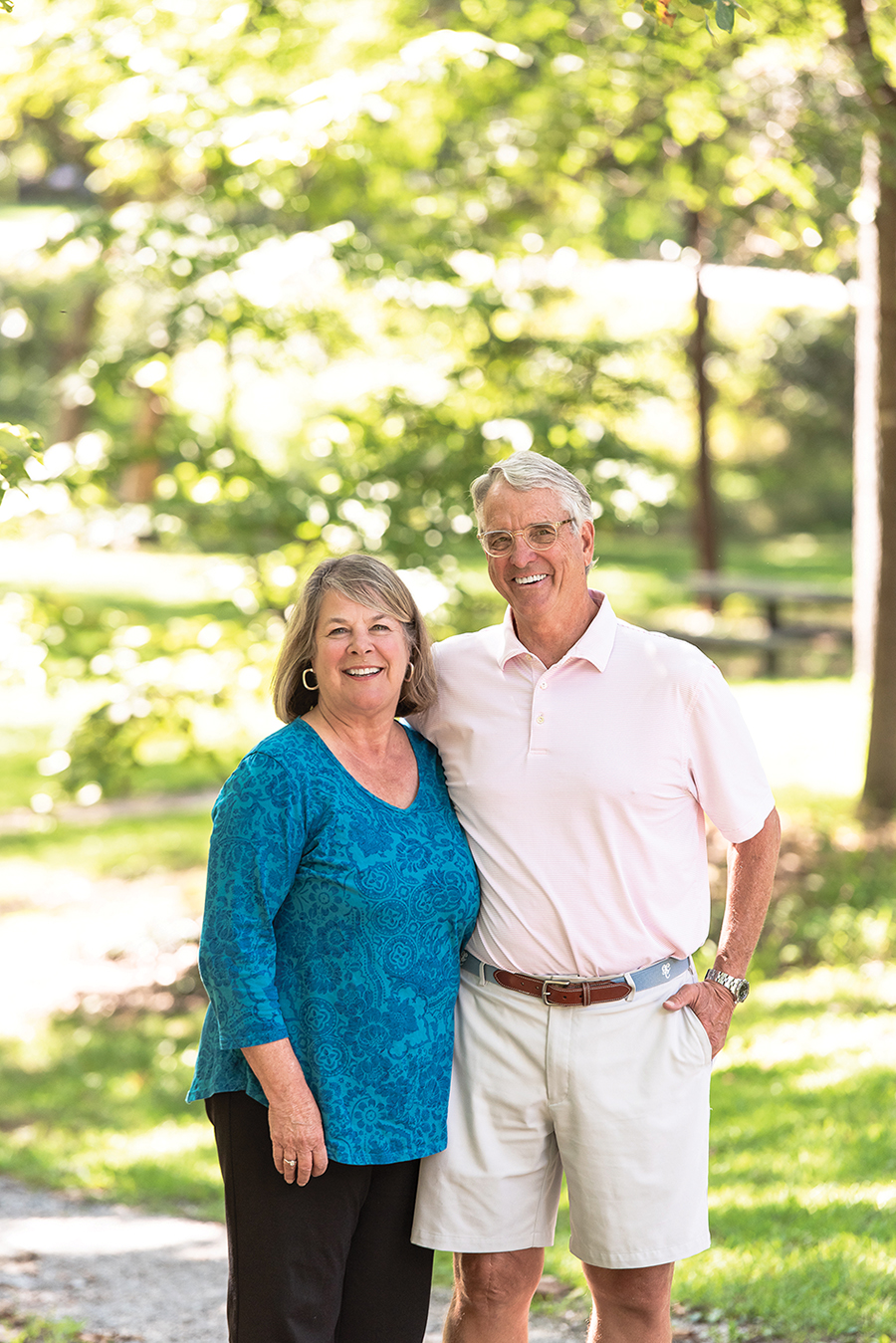
On a summer evening, I’m sitting with my neighbors, Jane and Randy Jackson, in the living room of their house overlooking Fisher Park.

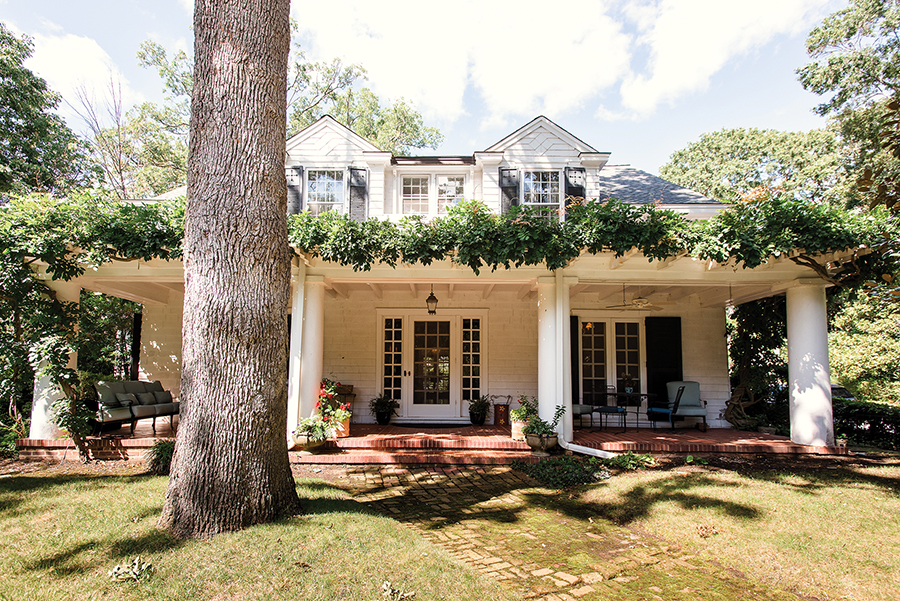
Shaded by big oaks and a magnolia, it’s a graceful old home that I’ve admired ever since I moved into the neighborhood 13 years ago.

Jane grew up in Winston-Salem, graduated from Reynolds High School and went off to Agnes Scott College in Decatur, Georgia. Randy grew up in Birmingham, Alabama, moving with his family to Atlanta when he was in 10th grade.

“Football was my life in high school,” Randy says. So when the University of Alabama phoned him in Georgia, asking him to try out as a walk-on, he gave up his plan to study marine biology at the University of Florida.

After going through two-a-day practices, an injury and doubts about his ability to play at such a high level, Randy decided to give up football. He finished his freshman year at Alabama and transferred to Georgia Tech.

“My Dad was between jobs,” Randy explains, “and paying out-of-state tuition, so I decided to come back to Georgia to help with finances.”

It was a good move.

In Atlanta, Randy met Jane on a blind date. They were married during her senior year at Agnes Scott.

The next year, Randy entered his first year of study at the Medical College of Georgia.

“She went through medical school with me,” Randy says.

“In a house with no air conditioning in Augusta, Georgia,” Jane adds. “And pregnant.”

“She’s a tough, tough girl,” Randy says, beaming at his wife.


Later, the couple moved to Jane’s hometown of Winston-Salem for Randy’s internship and residency at Wake Forest University School of Medicine, then on to Greensboro for private practice in 1982.

“We loved Fisher Park,” Jane says, “but, back then, younger kids were picked up early and bussed a long way to school.” The Jacksons didn’t want their 5-year-old daughter, Alice, and 8-year-old son, Freeman, spending so much time aboard a bus.

So they settled into a small house on Elmwood Drive in Irving Park.

“There were 28 kids on that street who were between my two children’s ages,” Jane says.

“I would come home from the hospital and be attacked by these little kids,” Randy laughs. “I’m not talking about one or two. I’m talking about a whole herd of them!”

“And we had Page High School kids, too,” Jane adds.


Remembering how important sports had been to him as a youth, Randy decided to spring for a “sport court” in the backyard of their house.

“And there we were,” Jane says, “inundated with all this medical school debt.”

Randy’s facility had a basketball hoop and tennis nets. Children played there constantly, and neighborhood dads enjoyed pickup basketball games, too.

“It was like a community center,” Jane recalls. “We used to call it Jackson Park.” They smile, reflecting on the memories.

“So we lived there for a while and then we moved to another house a little bit bigger a couple blocks away,” Randy says. “Then our kids finished high school . . .”

“And went off to college,” Jane finishes.

With Freeman and Alice out of the nest, you may think we’ve come to the point in the story where the Jacksons will purchase the graceful, cedar-sided Fisher Park house where we’re sitting, with its metal-picketed fence draped with ivy and thick-columned front porch festooned with wisteria.

Nowhere near it.


Not long after the Jacksons had moved into their first little house on Elmwood, they purchased property in Summerfield.

“Randy had always wanted a farm,” Jane explains.

“We had nothing on it,” Randy says. “Just land and a pond.”

One evening, while the Jacksons were attending a pop-up supper at a home in Irving Park, they noticed a picture of a log cabin hanging over the fireplace. Seeing their interest, one of the guests commented, “There’s a cabin like that up in Virginia near Smith Mountain Lake.”

“Maybe you’d like something like that on your farm,” he added.

To which Jane replied, “I’d love that.”

The price for the log cabin was reasonable, but it would have to be dismantled and moved to the Jacksons’ property.

“So I thought, maybe I could put it up!” Randy laughs. “I’m strong, I used to play football!”


After the cabin in Virginia had been thoroughly photographed and the logs meticulously numbered, it was Jane who followed the truck transporting them to Summerfield.

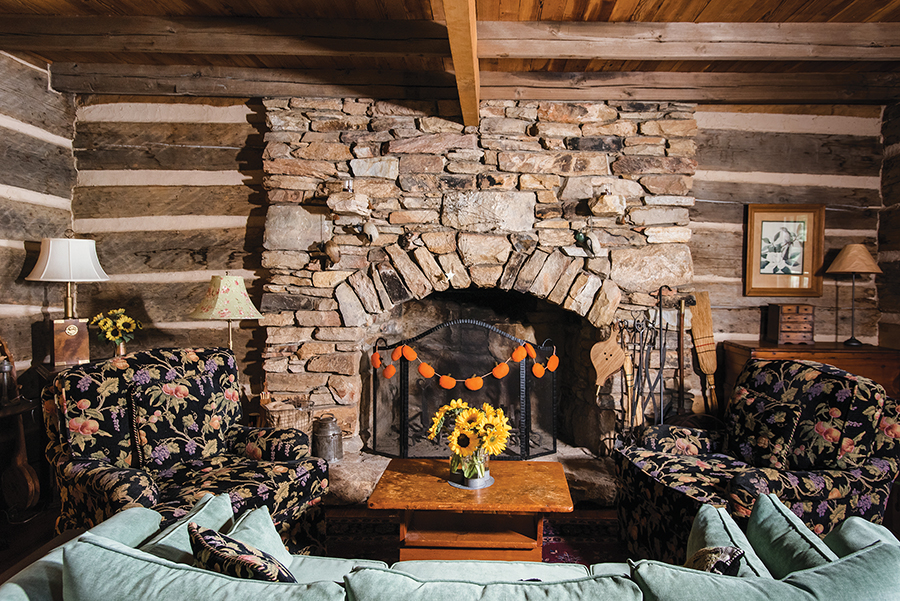
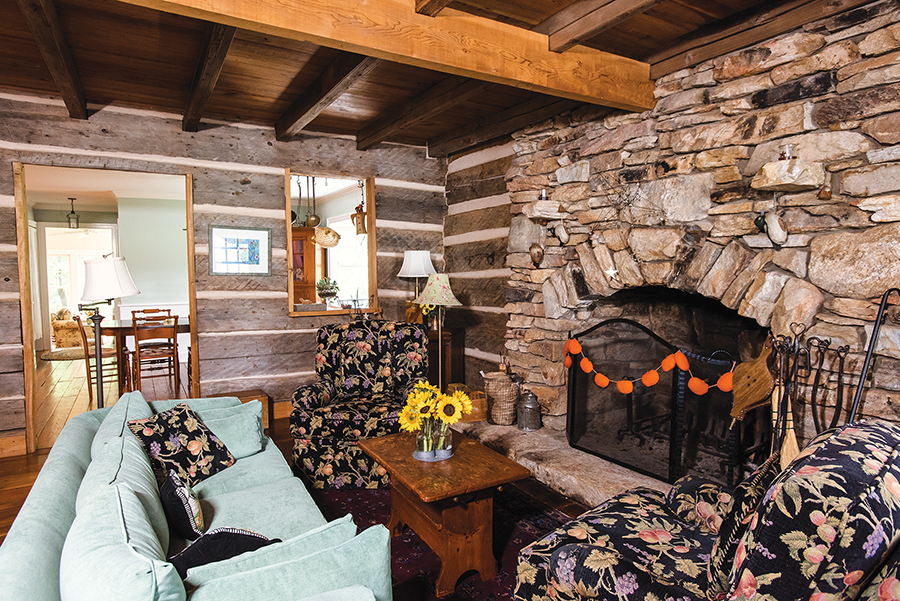
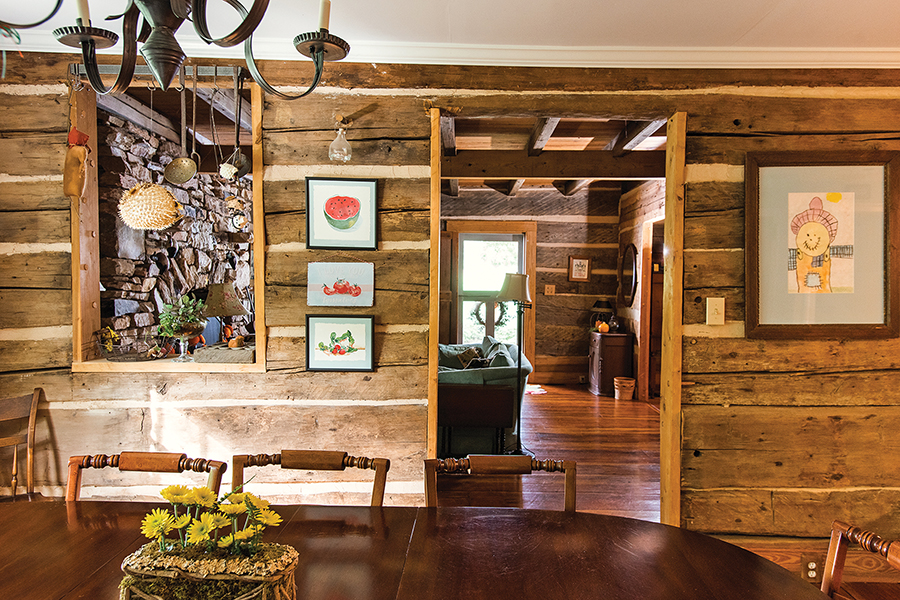
“Those logs aren’t what you see in tobacco barns,” Jane says. “They’re 16-inch oak and chestnut.”

Thinking she’d like the cabin situated with a view of the pond, she guided the truck to that corner of the property to unload.

“They dumped them like a huge pile of pickup sticks!” Randy exclaims. “And each one of those pickup sticks weighed 300 or 400 pounds.”

Then Jane reconsidered. It was humid near the pond, she reflected, plus they didn’t own the land beyond, so there was no telling how the view might change in the future.

“I don’t feel good about this,” she said to Randy. The logs would have to be moved to another location.

“All I had was a Ford Bronco,” Randy says.

“So I bought an old tractor, a John Deere 1010,” Randy says. “I had a boom and chain I’d hook up to the three-point hitch on the back of the tractor, and I’d put the chain around a log, pick it up and drag it to the new location.” He placed the logs atop rocks to help prevent rot and arranged them by number.

“Sort of like the walls had fallen over,” Randy says. “It took forever.”


“We didn’t know what we were doing,” Jane adds.

They recruited their children on weekends to remove nails and pieces of tarpaper siding that had once covered the logs.

“The kids thought it was like prison camp,” Jane chuckles. “They’d call all their friends, trying to get them to come help.”

Eventually the Jacksons built a shelter to keep the old logs out of the rain. That was the first structure on the property.

Randy asks Jane if she remembers how long the process took.

“Six years,” Jane answers, and pauses. “You know, they built the Biltmore in six years.”

She’s right —1889 to 1895 — and we share a big laugh.

Finally, the time came when the Jacksons were ready to have a foundation built and begin erecting the logs. After much research and reading, Randy decided that the task might be more than he and his antique tractor could undertake.

While driving out U.S. Highway 220 at Guilford Courthouse National Battleground Park, he’d noticed that a log barn and log house were being restored. One day when he saw men working, he decided to stop and speak with them.

There he introduced himself to the man who seemed to be supervising the work, Si Rothrock.

“I know where there’s a log house on the ground that has logs bigger and fatter than those logs,” Randy said to Rothrock. “Furthermore, the logs don’t have cathedral notches or half-dovetails, they have full dovetails.”

“You know where there’s a house like that?” Rothrock asked.

“Oh, yeah,” Randy said. “It’s only a few miles from here.”

Turns out, Rothrock was one of the owners of Reidsville Building Supply Co., a business founded in 1920 by Rothrock’s grandfather. Over the years, Rothrock had become an expert at restoring old log houses.

“He’s like a genius,” Randy says. “He could write books.”

Rothrock agreed to ride out to Summerfield with Randy to have a look. When they arrived, he began to examine the logs closely.

“This is a very rare thing you’ve got here,” Randy recalls Rothrock saying.

He told Randy because of the large size of the logs and the fact that they were fashioned with full dovetail corners, the cabin likely was built by German workmen sometime before the Revolutionary War.

“Something like this shouldn’t be wasted,” Rothrock said. “Maybe somebody who knows something about it should put this up.”

Randy agreed.

The Jacksons tell me how they marveled at the craftsmanship of Rothrock’s subcontractors. They were rough-and-tumble country boys, but they were true artists in stone and wood.

“I loved watching the stone mason,” Jane says. “You wouldn’t believe how big those boulders he worked with were. He was unbelievable.”

“His name was Frank Norton,” Randy says. “He had the best eye.” Randy tells me how the cabin foundation looks like dry stack stone from the outside, but, in fact, is held by mortar on the inside.

Even with experienced, knowledgeable workmen, “it was a long, drawn-out process,” Randy says.

Some of the original logs were in such poor condition that replacements had to be made. Randy took this handiwork on himself, cutting trees on the property and shaping them using a broadaxe, just as German workmen would’ve done back in the day.

Cleaning the old logs, and fashioning and curing new ones continued. Sometimes they were hoisted by crane into position, only to be lowered back down because the dovetails didn’t fit properly and had to be redone.


Jane recalls a plumber having trouble getting the right size elbow to install under the house. He came inside and asked to use the phone, not realizing that she could hear his conversation from the kitchen.

Jane remembers him saying to his buddy on the phone, “You won’t believe this place, it’s like The Beverly Hillbillies.”

There was a pause, and then he said, “No, before they got the crude.” Again, we enjoy a good laugh.

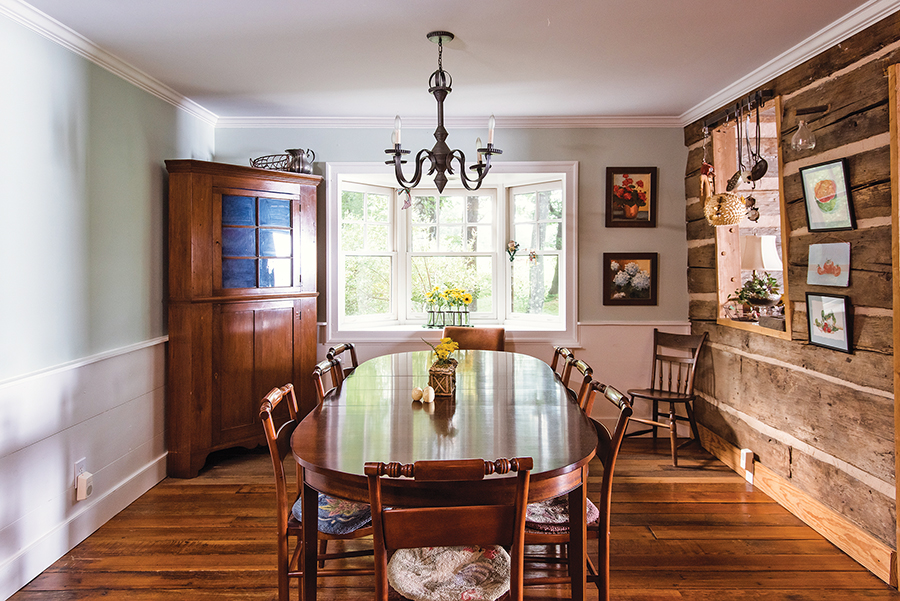
And the Jacksons continued to pitch in with the work. Jane installed the molding for the kitchen windows and trimmed the pantry. Randy concentrated on the never-ending task of chinking logs. They both sanded the floors by hand — some of them wood from the original cabin, some reclaimed lumber from an old schoolhouse.

“There’s absolutely nothing about this place that is anything but unusual,” Randy says.

The cabin had one bathroom. Up a stairway from the living room was a bedroom they called “the barracks,” which featured five single beds where they could pack in children coming home from college with their friends. And there was a snug little bedroom under the roofline of the kitchen. The Jacksons built a shed onto the cabin that begat another, including a large, bright sunroom.

“The house is like a chambered nautilus,” says Jane. “One thing after another.”

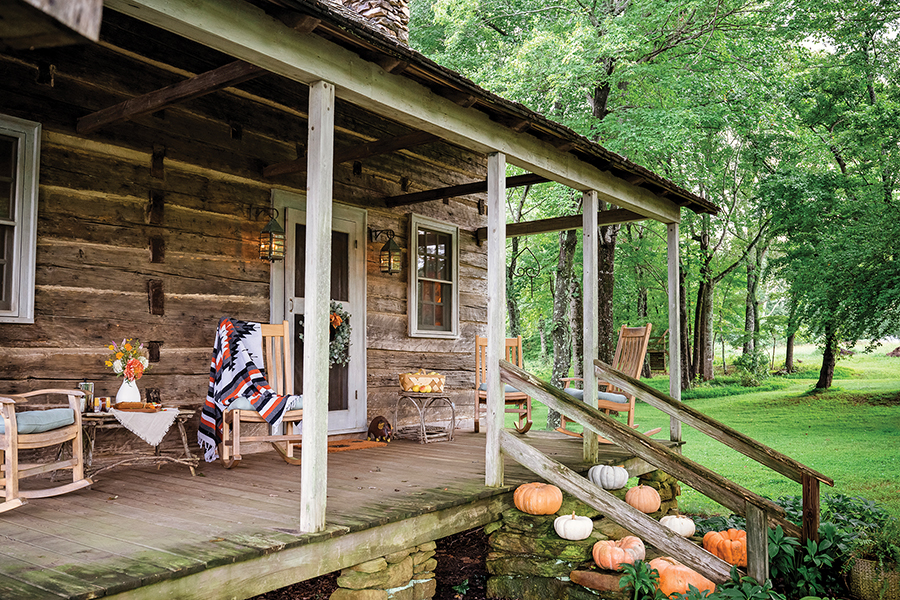
With the cabin now habitable and the children no longer at home, the Jacksons sold their Irving Park house and moved to Summerfield, where they remained full-time for 12 years. Daughter Alice was married at the farm. When grandchildren came along, they celebrated birthdays there and played in the pastures and woods.

“Why would you want to live anywhere else?” visiting friends would often ask the Jacksons.

Which brings us to the city house.

“Randy’s still practicing medicine then, and there’s a hospital merger,” Jane recalls.

That meant that he was on call to hospitals in Reidsville, Randleman, Siler City, Lake Norman, Statesville and elsewhere.

“Sometimes I’d be driving home after being up all night and fall asleep in the car,” Randy adds.

The Jacksons decided they needed a place in Greensboro, which is more centrally located. They were looking for a small townhome or even an apartment.

But when a tennis buddy told Randy about a home in Fisher Park on the market, the Jacksons decided to have a look in the neighborhood that had first attracted them.

“The way the house smelled, the way it looked, reminded me so much of my Grandma’s house,” Randy says. “She was the neatest lady.”

Though they knew they didn’t need the space, Randy and Jane decided they had to have this lovely old place.

“It’s an illness,” Jane laughs.

The house had once been on the Greensboro Symphony Guild’s Tour of Homes, and a News & Record article described the big front porch as its most impressive feature. The house was designed by Greensboro architect Raleigh James Hughes in the colonial revival style and was built about 1915 for F. P. Hobgood, a local attorney.

“A subsequent owner, Cadillac dealer E. B. Adamson, made considerable changes to the house in 1949,” the N&R article continues. Adamson oversaw the creation of “a 9-foot-wide hall that runs through the house and opens onto a backyard garden.”

“With its 10-foot ceiling, hardwood floor and spacious feel, the hall is the home’s second most dramatic feature,” the article concludes.

Most any visitor would agree.


While the Jacksons made improvements when they purchased the house in 2004, they’ve just recently finished another renovation, converting a sleeping porch, small bathroom and what had been a study for a previous owner, retired Guilford College professor Bill Carroll, into a large master bedroom on the first floor — as had been specified in the architect’s original drawings — along with a spacious bathroom.

The Jacksons give me a tour. Jane points out the many windows and tells me how light floods the rooms, especially in the morning. They show me the new powder room for party guests, and where the Christmas tree gets placed in the hall for the holidays.

“We’ve been in this house as long as any house we’ve been in, other than the farm,” Randy says, as I’m preparing to leave. “We love this place.”

“We goofed with the grandchildren, though,” Jane says.

There are six grandkids in all — three in Charlotte and three in Wilmington.

Randy explains that he’s asked the older grandchildren if he ever needed to sell the farm, would that be a problem? He tells me they solemnly informed him they would get together with their parents and buy the farm.

“With their allowances,” Jane adds, a twinkle in her eye.

“So many memories,” Randy says. “We could never sell the farm.”  OH

Ross Howell Jr. is a contributing writer to O.Henry. His historical novel, Forsaken, is available at bookstores and online.

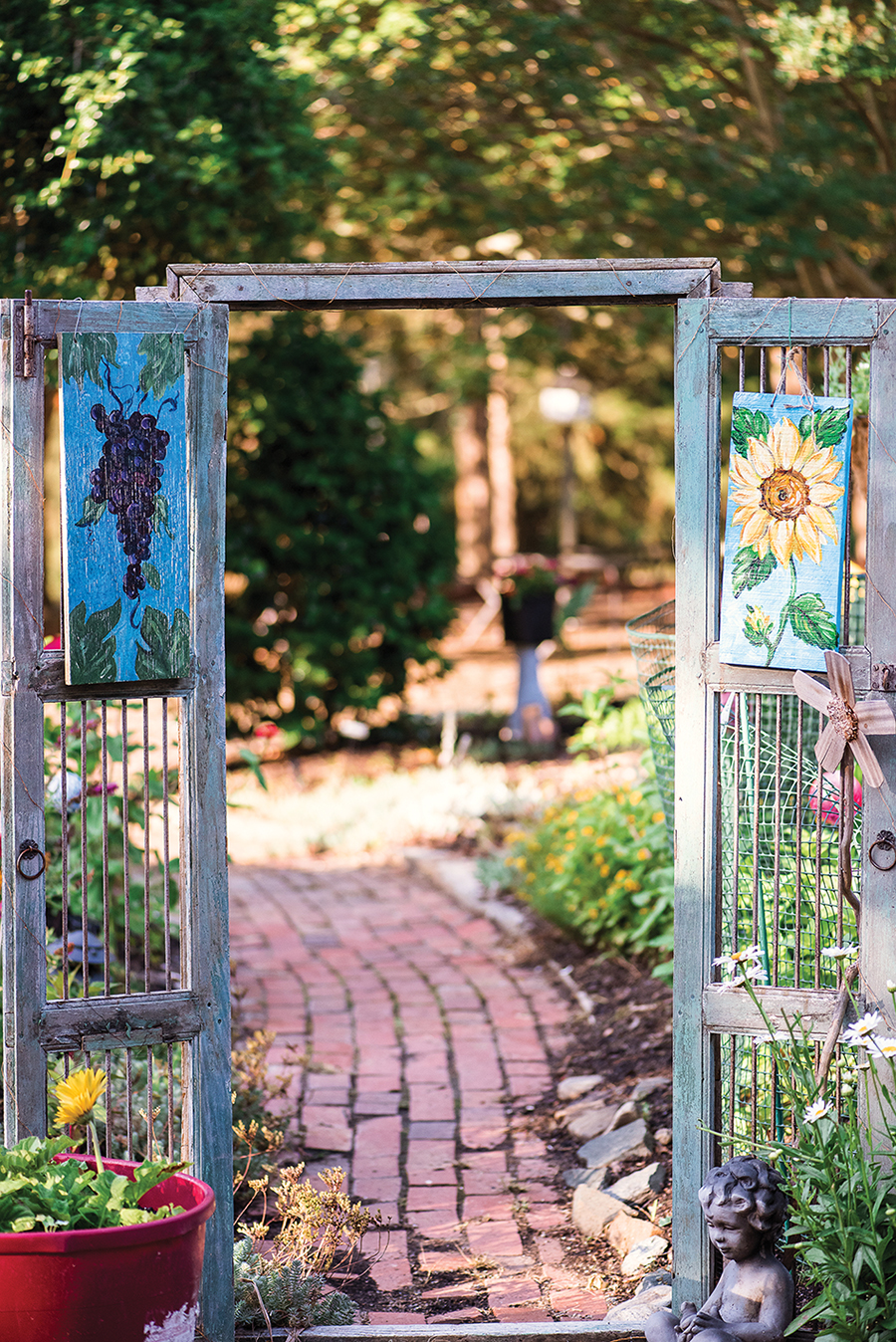
Simple Abundance

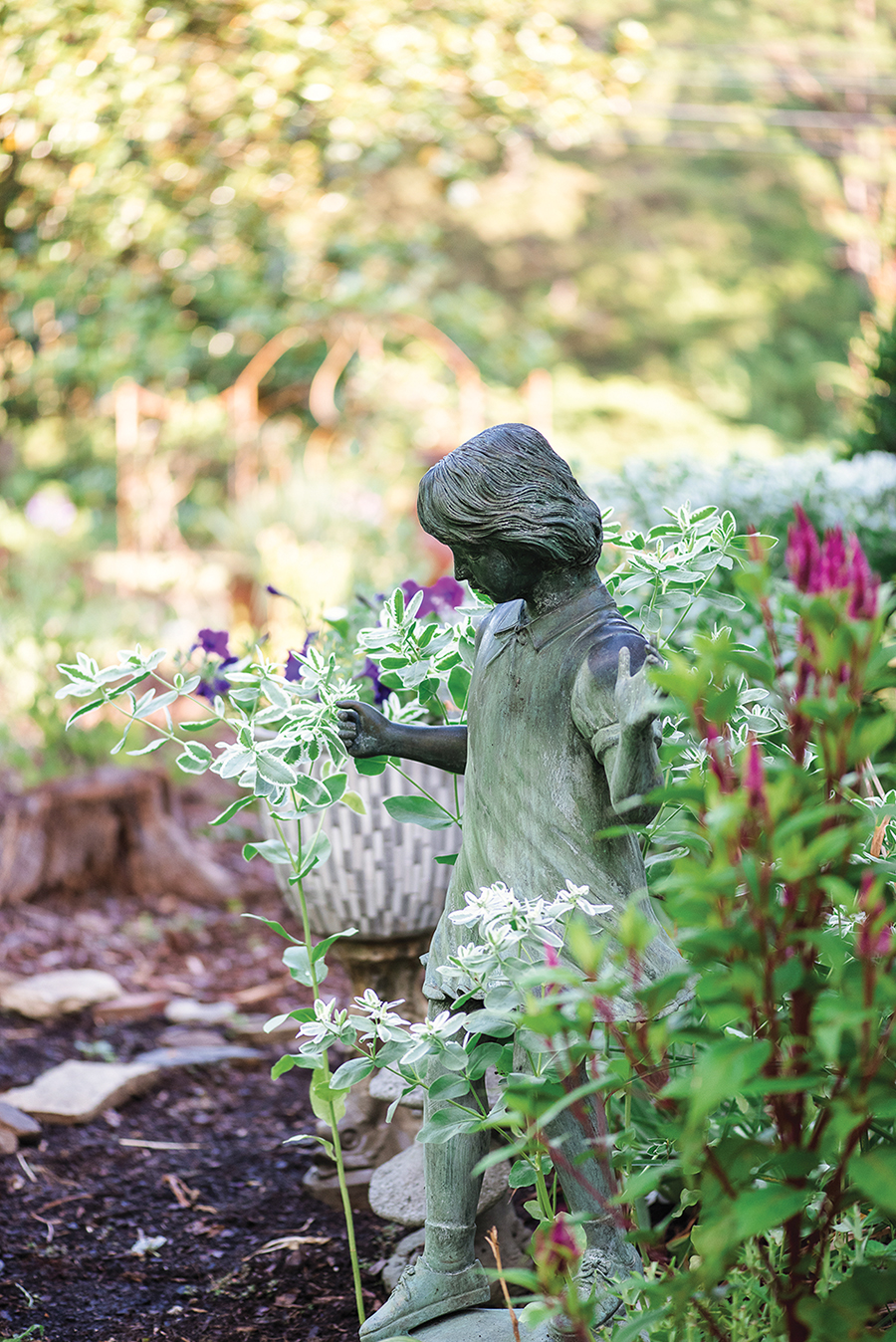
A colorful and lush garden embodies the spirit of its gardener

By Cynthia Adams     Photographs by Amy Freeman


Martha Yarborough has been up since 7 a.m., the thermostat hovering at 80 degrees and nary a breeze. A lesser person would have stayed in the shade.

But not Yarborough, a petite, energetic woman in a state of perpetual, sunny-side-up motion.

Time spent weeding, hoeing, mulching, watering and fussing in 3 acres of flower beds and veggie gardens is meditative therapy for the scrappy gardener. Most of her gardens are recently created, and by her own hand.

“The gardens happened as you see them in the last three or four years.” Transformative, productive years. One sign placed by a pathway simply reads, “Gratitude.”

She insists she couldn’t be happier during these solitary hours. Nor more grateful. “On a perfect day, I’m out in the yard doing gardening, heavy labor. I enjoy people and being connected. I enjoy entertaining a lot.” But, Yarborough emphasizes, “my alone time is in the garden.”

“Listen, I feel very strongly, when we are blessed,” she adds, “we are commissioned to bless others. Gardening presents life lessons all the time. When you’re cutting flowers, giving them away, it’s cyclical. The more you give away, the more that comes.” 

“I learned from fellow gardeners and I started doing things,” she says. “You can’t be afraid; if it doesn’t work out you just change it.”

Almost organically, Yarborough found a daily rhythm. After rigorous gardening follows meditation, or reading from favorite writer Sarah Breathnach’s Simple Abundance.

She will later work with a charitable interest in town, hike or cycle.

But occasionally, Yarborough gardens for 10 hours at a go.

In the Triad, Yarborough is best known for her devotion to education, arts and culture. This May, she hosted a Shared Radiance Performing Arts production of Shakespeare in the Garden, featuring Richard III, each act taking place in differing locations on the property. The War of the Roses was waged amidst actual roses, with an actual black steed and knight in armor making a convincing appearance on her front lawn. 

Yarborough had seen the horse and rider at another event, and convinced them to come to the outdoor theatrical fundraiser.


“I take it to the hilt,” she admits. “Anything.” 

She is especially supportive of working women. “I am 78, so I would like to be living an engaged life . . . being involved in my community and with family and friends.”

Until her husband Gordon’s death in 2006 following a 20-month battle with ALS, a neurodegenerative disease, the couple dedicated themselves to education and civic projects. Gordon, aka Yogi, owned High Point furniture concern, Yarborough and Company. (She wisecracks: “Not the most original name, huh?”) 

While her husband excelled in business, Yarborough dedicated herself to education and students with special needs, ultimately working as a coordinator with exceptional children in the Guilford County Schools. In 2015, Yarborough gave $1 million to her alma mater, Greensboro College, funding scholarships.

In the mid-70s, Yarborough and Yogi moved to a mini-farm rimmed with a pond and pastures, where they raised sons Preston and Austin. When the boys were teens, she reentered the workplace and resumed teaching at-risk and special-needs students for 16 years, retiring in 2008.

But with newfound time, Yarborough leaned into gardening for its many benefits, becoming a Master Gardener in both Guilford and Davidson counties. Her gardens exponentially expanded.

Yarborough has survived more than one ordeal to arrive at this particular place of grace and fearlessness. “I learned from fellow gardeners and I started doing things,” she says. “You can’t be afraid; if it doesn’t work out you just change it.”

Sitting in the sunroom surrounded with floral paintings, she has her computer stationed with a view of the gardens. Recently installed solar lights become glowing orbs at dusk, making the garden “look like a fairyland!”


Offering a tour, Yarborough grabs a hat, surveying newly created beds in the front of the house where none existed merely a year ago. (There was a dirt track for her son’s bikes once, she points out.)

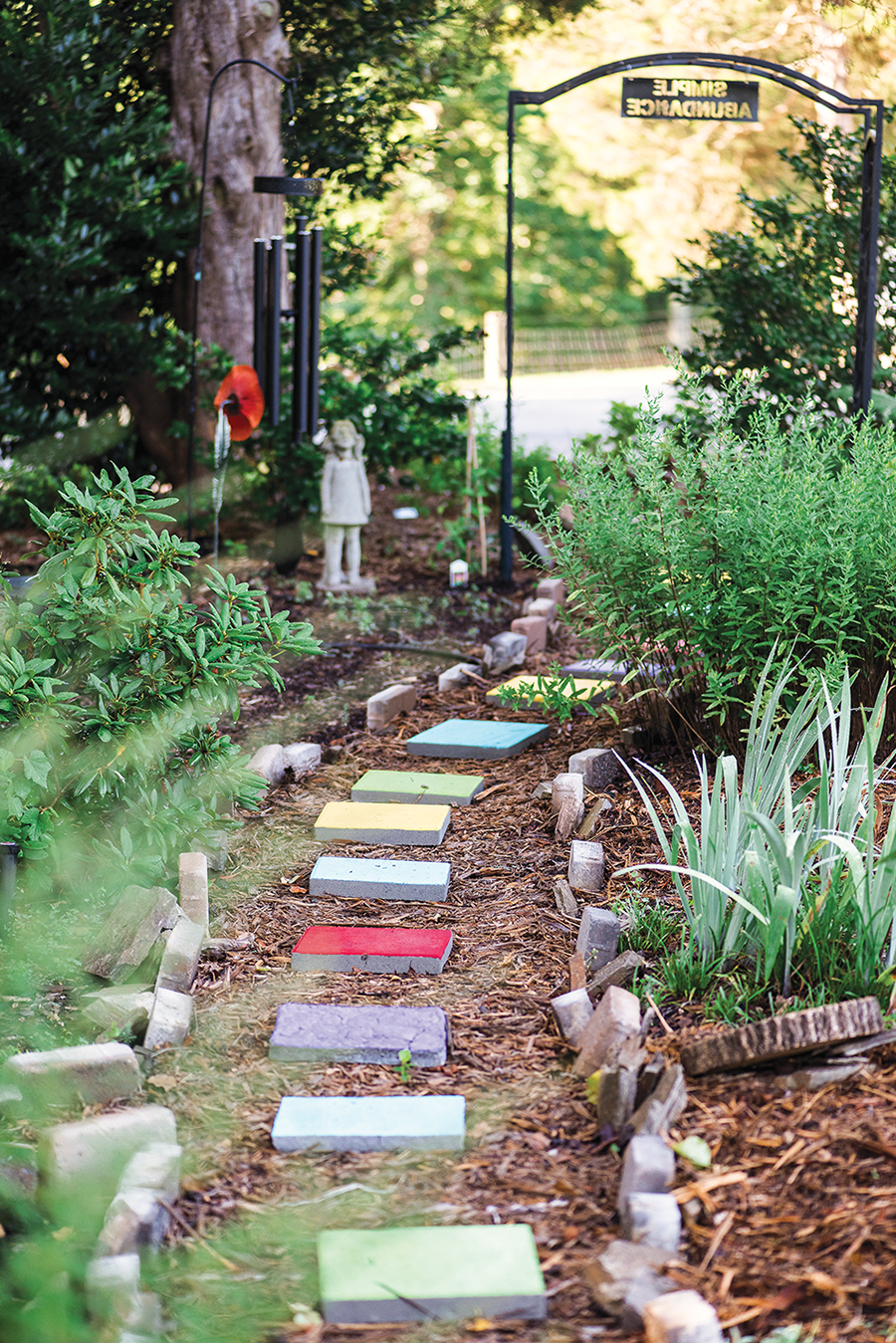
Notably, a winding path is named the Simple Abundance walk.

She stops and kneels, naming plants by both their common and botanical names. “These little seeds . . .” she coos, bending over an immaculate bed. “These seeds! You plant them and they turn into something so beautiful! It never ceases to amaze me!”

“Then, when people have given you plants — and I have plants from people who have died — I feel they are living right on,” Yarborough smiles, rising up to her feet.

How does she do this, all by herself? She thinks of her acreage like a house, albeit one with uninvited guests.

“In my head, I have many rooms. And you can’t work on every room every day. You have deer that come. You have varmints that come in . . . and you have to work around it.” She adds, “The deer have eaten all my day lilies but you have to move on!” 

Yarborough’s face clouds briefly while inspecting another bed. Vividly pink and leggy cleome, which seem to be taking over, must come out. “It’s too much!” 

She walks across colorful, hand-painted stepping stones (she is painting at least another 80 to complete a new pathway) en route to a vegetable garden, enclosed with a fence featuring a mural created by artist Dana Holliday. 

“Advice from a Butterfly” adorns the wooden fence boards. “Take yourself lightly,” is the core message, along with letting your true colors show. Holliday painted another mural of red poppies featured at the rear of Yarborough’s fastidious ranch home.

Meanwhile, Holliday, who also hikes, is in the British Cotswolds. But she emailed questions to pose to her good friend. “What drives Martha, and where does she get her endless energy and enthusiasm?” she wondered. “She can fall off a 40-foot cliff in Nova Scotia and not only survive, but come home and do a TV interview.”

A cliff?

It seems that five years ago, the 5-foot, 1-inch, 100-pounder fell into a ravine and was airlifted to a hospital by rescuers with the Royal Canadian Mounted Police.

But that traumatic event seems to be shrugged off, relegated to a footnote in Yarborough’s colorful and intrepid life. 

In short, she has long since moved on to climb another mountain. “You only live once,” Yarborough says firmly.

What she prefers discussing is having a purpose in life.

So, she talks about education, the arts, fundraising — the cliff story comes much later, after she has walked the farm. Wearing a teal-colored hat and her face wreathed in smiles, Yarborough points out the many plantings identified with descriptive markers: Blackberry lilies. Callas. Lambs ear. Dahlias. Allium.  Poppies. Lenten roses. More lilies. Clematis.

Flower beds blossom everywhere the eye falls, each lovingly nurtured. Each appropriate to its season.


“As you know,” she says, “gardening’s a lot of work. I love the manual labor. I’m not a designer. I’m a worker.”

Is this all her own work?

“I just have a mower,” Yarborough answers, meaning a man who mows the property. The weeding, the planting, the tending, she says firmly, allowing herself a modicum of pride, are hers alone.

There is detectable pride, too, in Women in Motion, which she helped found in 2015. This initiative supports working women in High Point, Jamestown, Archdale and Trinity. 

More stories tumble out. 

Yarborough describes a side gig, ushering at the Greensboro Coliseum since 2006, in order to enjoy events like bull riding, which tickle her. “I wasn’t going to sit home,” she confides, staying even busier following Yogi’s death.   

Then, pandemic isolation grounded her. She coped by staying in motion, walking and cycling. “I called a friend and I said, ‘Let’s hike every trail in Greensboro!’ We walked 10–12 miles a day.”

She learned to find joy in ordinary moments and purpose in rescuing animals.

Only after exhausting all subjects does Yarborough settle into the Canadian misadventure.

The calibration of the conversation changes, slowing. 

In 2017, she was hiking with the travel group, “Roads Scholars,” in Nova Scotia. “It was our first day out — a group of about 15 of us, with no cell phones. So, we went up to these waterfalls. And looking up, I said, ‘I want to go on up there.’ So about six of us went up the mountain. Coming down, I moved over to let somebody by me. The bank gave way. I fell 40 feet into a rock ravine. No cell phone coverage and so . . . ” Her voice trails off. 

Somersaulting to the bottom of a stony ravine, Yarborough fell atop the backpack that saved her.

“People thought I had died. They said I flipped over. Well . . . I remember, vaguely, sitting up, and then they knew I wasn’t dead,” Yarborough explains with preternatural calm.

“They airlifted me to the hospital in Halifax [Nova Scotia]. The only thing I had was a broken collar bone and a punctured lung! It was absolutely unbelievable.”

“The Canadian Mounted Police called my son Preston and said, ‘Your mother has fallen off a mountain. You need to come get her.’” 

In a few days, hospital staff asked Yarborough, “‘Where do you think you’ll be staying for the next two weeks? Because you cannot fly.’ So, Preston, who works for the Center for Creative Leadership, was in Vermont,” she recalls. “He took me to Boston. Then my son in Austin flew in and took me home.”

The aftermath of this trauma?


“I don’t have time to waste,” she says matter-of-factly of her recovery.

The next year, she hiked Montana’s Glacier National Park. She threw herself even more energetically into life. 

“I love people,” she offers, by way of explanation. Seeking connection, she hiked, biked, camped, traveled and sought every possible outlet in the natural world.

Mostly, Yarborough devoted more time to her gardens, carving 3 of 9 acres expressly for beauty, flowers and vegetables. 

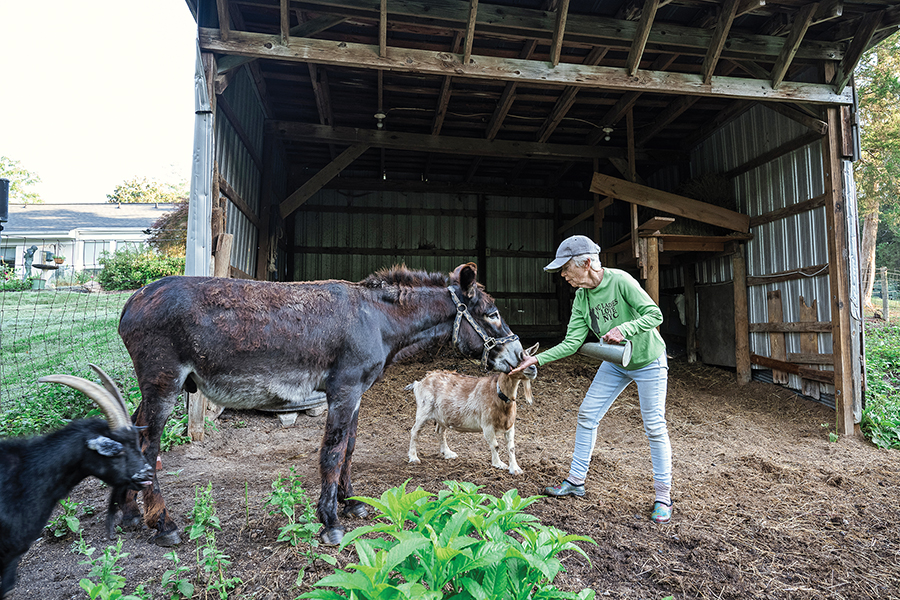
Six acres remain in pasture where farm animals graze and find sanctuary. One of her two miniature donkeys, two of the three goats and a miniature horse have been rescued. Most are from Red Dog Farm Animal Rescue Network.   

At meal time, the diminutive animals come running, nearly bowling their petite mistress over. No pushover, Yarborough firmly takes charge, ordering the more aggressive goat to give shyer animals space.

“I think when I fell and not only survived, but survived without a lot of physical traumas, I realized I was left here for a reason,” Yarborough says while feeding her menagerie of animals. “It’s important to live every day with purpose.”

“People who don’t know me think I’m prim and proper all the time . . . but I’m not. I don’t perceive myself as coming across that way. Because I’m real. I try to be real.”

But people knew her that way before, didn’t they?

Yarborough pauses. She thought so. But she’s loosening up, she admits later. She is hosting a group of women for a Grace and Frankie night with a dinner she will cook, and howls at how funny the Netflix series is.

Later, she emails to say “I was in my garden at 6:45 a.m. today.” 

A week later, Yarborough sends a short message while camping during 95-degree weather and torrential rains. “Guess where I camped last week? Hagan-Stone Park. Tent. [Friend] Sherry Raeford and I camped together.” 

Near her driveway is a sign, a coda, visible while leaving:

“For each of us, there is a desert to travel. A star to discover. And a being within ourselves to bring to life.”  OH

Home Grown

Picture This

Adventures in leveling up a home


By Cynthia Adams

As the homeowners run errands, a TV Land remodeling team sneaks in and transforms their grubby home.

Junk is hurled out and carpet ripped up! But guess what else? Someone eventually has to hang the damn artwork.

Inspired, I launched our own home refresh, reorienting furniture, dragging sofas and chairs from one room to another.

Which eventually necessitated moving artwork. Picture hanging inevitably involves hammering nails into our plaster walls, something that hasn’t always gone well in the past.

Nails are trouble with a capital T.

Trouble, as when a construction worker consulted a dentist, who found a six-inch nail in the roof of his mouth, shot clear into his brain. (No doubt, he had been farting away with a nail gun.) 

The dentist – also male – congratulated him that if you had to have a nail in the brain, his was lodged in the ideal place.

Strangely, picture rehanging seemed to suddenly interest my husband for one reason: a new laser level. He ripped it from the package, casting a glowing red line, like Star Wars weaponry. I wanted to rehang the pair of pictures, not destroy them. 

He hung the first. “’Bout right?”  he muttered manly, nails held in his mouth, eyeing the second. 

Then he placed the fist-sized gizmo onto the wall. The red line snaked around the corner, leading into the hallway. 

Grunting slightly, he held the second picture wire by yet another gadget. 

“Now,” he announced, squinting appraisingly, “I will align the next picture.”

The red laser was so mesmerizing I fell to thinking of ways to harness its powers. Before suggesting things that required aligning, like the washing machine, my husband commanded, “Now!”

“Now what?!”

“Now you must help me determine if the second frame aligns properly with the first.”

Well, duh! It suddenly seemed that the project was tipping unfairly from he who possessed fancy tools to me, who possessed only naked vision.

As I spied with my little eyes, the pictures appeared altogether wonky.

“Why aren’t you helping?” he complained.

“Helping how?”

“Can’t you make sure the pictures are STRAIGHT?” He perched on the top of a chair, dangling the second picture from the picture hanging tool. “Look, I can’t hold this much longer,” he panted.

“Hmm,” I said uncertainly.

“Hmm – what?” he shouted. “Is it STRAIGHT?”

“Isn’t that what the laser thingy is for?” I retorted. 

He climbed down from the chair, fixing me with a stare.  “It probably IS. But…” he floundered. “I didn’t . . .”

A long pause. 

“. . . read the instructions before I hung the first picture.”

Taking the picture from his hands, I gave him a dirty look.

He shot the laser around the room, taking aim at a sleeping schnauzer.

“Stop it!”  I commanded.

Sheepishly turning off the laser, he chewed his lip. 

“What good is that thing?” I scoffed.

“Well. It’s a great tool,” he retorted.

With our bare eyes and hands, heaving and fussing, we managed to get the heavy pictures reasonably realigned.

After which, I noticed a series of braille-like puncture marks in the wall.

“What’s that?” I asked, pointing.

“Uh, that’s where I affixed the laser level to the wall,” he replied.

“You mean it makes holes in the wall!?” 

“That’s the only thing I don’t like about it,” he answered. Dead serious. 

“Well, I never!” I huffed, before suggesting we plug the holes with toothpaste, a trick I’d read somewhere. He scowled and retreated to the basement. As I repaired to the bathroom for toothpaste, I grabbed my sonic toothbrush, too. I returned to find my husband swiping paint across the puncture holes. 

Removing the pulsing toothbrush, I gurgled through the froth, “Look!”

“What now?”

The paint he’d dabbed over the puncture marks was a different shade.

Next year, I swear, he’s getting the Handyman Paint Matcher for his birthday. OH

Cynthia Adams is a contributing editor to O.Henry.

Almanac

By Ashley Walshe

October is the wisdom weaver, spinning the invisible to light, capturing the ephemeral, then letting it all go — again and again.

On this crisp autumn morning, waves of yellow leaves release themselves to the damp earth, and golden light illuminates a silver orb. Glistening with beads of dew, the spider web is a work of wonder. A series of concentric whorls and radial lines resembles the helm of an ancient ghost ship; the thumbprint of an unseen giant; a chandelier turned sideways. Dripping like crystals from tidy spirals of silk, hundreds of water droplets hold within them tiny worlds of ever-shifting beauty and light. Until the dew dries, each leaf falls 1,000 times. Until the dew dries, a hidden world is manifest.

The garden spider knows three things: creation, destruction and the space in-between. In other words: Nothing will last. She isn’t afraid of starting over.

In the evening, when the shadows take life and the owls cackle like witches gone mad, the black and yellow spider will swallow her own web. The same wind that sends colored leaves swirling will carry a fresh line of silk from one swaying tree to another, the bridge from which the weaver spins anew.

Tomorrow, the air will be cooler; the light, softer; the leaves, a brighter shade of gold. The spider, silent at the navel of her orb, will wait for her next cue. It’s neither time to build nor devour. And yet, the leaves continue to spill. The crows are roosting by the hundred. An invisible force is stirring, whirling at the center of all living things.


Flickering Lights

Before the first winter squash was gutted and carved to resemble a ghoulish floating head, early Irish immigrants fashioned jack-o’-lanterns from turnips and mangelwurzels (root vegetables used as fodder). Why? Tradition. And to ward off evil spirits, of course.

Have you ever seen a face hacked into a hollowed-out turnip? By comparison, our pumpkin “jacks” appear quite jolly. If you’re really trying to spook your neighbors this year, consider whittling a bushel of root veggies for the front porch. Or not.

Pumpkin Craft

Sure, you can roast the seeds (toss with oil and sea salt, then bake for 20 minutes at 350 degrees). But what of all the pumpkin guts?

If you’re one to add pumpkin to everything but the compost pile — muffins, oatmeal, waffles, cookies, soup — try making a purée. It’s like pie filling, minus all the sugar and spices. And it’s pretty simple:

First, remove the seeds (you’re roasting them anyway, right?). Next, steam the pulp until it’s tender (about 30 minutes), let cool, then use a potato masher or food processor until pulp is smooth and creamy. Freeze the excess.

Yes, a sugar pumpkin will taste better. But a carvin’ pumpkin is more fun.  OH

Short Stories

We Want the Fairytale

Seeing Julia Roberts and Richard Gere on the big screen was enough to leave our hopelessly romantic hearts swooning for years. The thought of seeing their characters’ story take the stage accompanied by an original score of painfully tragic yet blissfully sweet music . . . well, we’re with Vivian — so good, we almost peed our pants! The Tanger Center is kicking off its 2022-23 Broadway season on Tuesday, October 25, with Pretty Woman: The Musical, one of the most beloved romantic stories of all time. Missing it would be a big mistake. Big. Huge! If after the curtain closes you’ve decided your heart belongs to the theater, treat yourself to season seats and enjoy the theatrics all year long with equally show-stopping performances of Cats, Beetlejuice, Disney’s FROZEN and other shows you’ll like better than The Pirates of Penzance. Info: tangercenter.com/broadway-packages/broadway.

A Rebellious Act

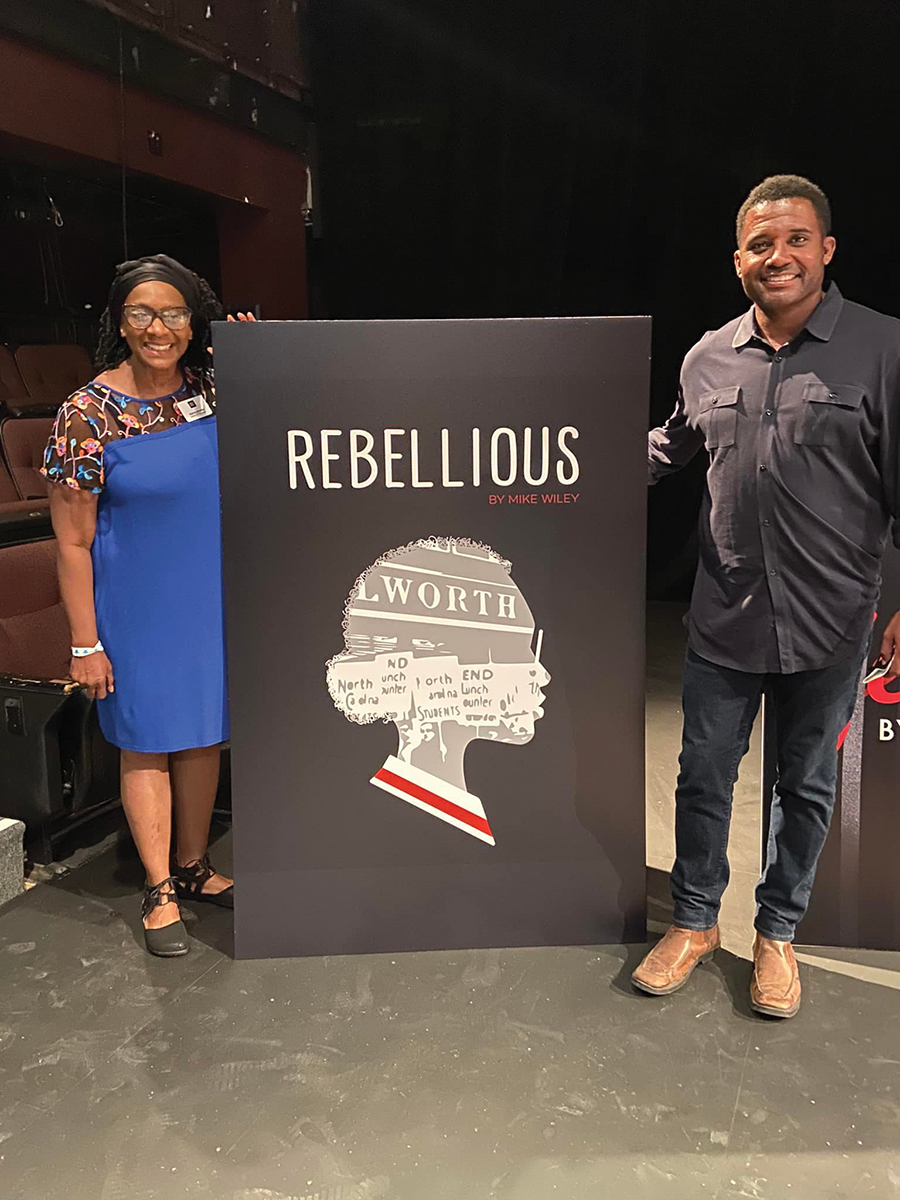
The curtain is ready to open again: Triad Stage is back in the spotlight with a bang! Greensboro’s got more history than those on-again-off-again high school sweethearts we know all too well, and the world premier production of Rebellious is setting that scene October 4–23. This tale of four Bennett Belles navigates the complexities of friendship, brutal racism and oppression during the sit-in movement, pulling the curtain back to reveal how the Gate City suddenly found itself on the world stage in the ’60s. Will the young women take a stand and be “rebellious,” or will conformity win out over justice? Don’t wait in the wings — get your tickets or season passes now to find out. Info: triadstage.org.


Shake and Bake

Ladies, loosen up those apron strings and pass the butane torch to the man of the house. The Women’s Resource Center’s beloved fundraising event, Men Can Cook, is back and tastier than ever. Endless sampling, live entertainment and a silent auction are on the plat du jour, all catering to the desires of food connoisseurs and local baking legends alike at 5:30 p.m., Saturday, October 22. After the famous-in-their-own-kitchen chefs dazzle you with their culinary craft, it’s only a batter of time before you’ll be craving a savory sip to wash it all down. An array of small-batch crafted libations will raise spirits and shake ‘em up. We’re no Gordon Ramsay but if you’re in need of a taste test, we’ve mastered the art of chowing down. Info: womenscentergso.org.


Sad Girl Autumn

We might have those post-summer blues, but we’re embracing our feelings this year and tapping into our outlet of perfectly curated sad girl (or guy) anthems instead — deflection at its finest! Two-time Tony-nominated and Grammy-winning Eva Noblezada is entering the Greensboro Cultural Center’s Van Dyke Performance Space with plenty of beautifully-soul-shattering songs to add to the queue. With a set list she’s referred to as her personal “Rainy Day Playlist,” she stands not only as the figurehead for us melancholic-music indulgers, but an inspiration to creative performers everywhere as she shares the Broadway tunes that started it all. Grab some tissues, pause the 10-hour loop of wallowing tunes on Spotify and bless your ears with the raw emotion that exudes from Ms. Noblezada at 8 p.m., Saturday, October 15. Info: creativegreensboro.com.


Pretty Woman from Ukraine

In a heart-breaking tale of love and lust, money and class that inspired such films as Pretty Woman and Moulin Rouge, Ukrainian Diva Yulia Lysenko will sing the title role of Violetta in one of the world’s most beloved operas, Verdi’s La Traviata. Lysenko, a powerful soprano who recently emigrated to the United States from Ukraine after beginning her career at the Lviv National Opera, plays a courtesan, famous in Parisian high society. The bourgeois Alfredo, a romantic poet played by Orson Van Gay II who falls hopelessly in love with Violetta, is willing to sacrifice family and fortune for true love. Can two people from opposite ends of the social spectrum make it work? No matter what happens, it’s worth your time to just take in the “vivid and effortless” singing of Lysenko in a Piedmont Opera presentation. But bring plenty of Kleenexes. Catch La Traviata October 21, 23 and 25 at Stevens Center of UNCSA. Info: piedmontopera.org/copy-of-la-traviata.


Calling All O.Henry Essayists

Several years ago, we introduced a personal essay contest that was a big hit with readers and creative writers of the Triad. It was called “My Life in a Thousand Words.” More than a hundred essays were submitted. And we’re no mathematicians, but that seems to add up to over 100,000 words read. The stories both delighted and sweetly tortured our staff as we tried to settle on a dozen or so entries that captured our hearts. Though there were ultimately first-, second- and third-place winners designated, all of the finalists saw their works printed in our pages.

Having rested our eyes a bit, brandy glass in hand, we’re ready give it another go.

The theme of this year’s “My Life in a Thousand Words” contest is The Year That Changed Everything.

Was it the unforgettable year you got married (or divorced), went to college (or dropped out), saw the light, kissed the blarney stone, joined the army, ran for president, met Mick Jagger, had a baby, ran away with the circus, spiritually awakened — or, like many of us, just survived?

Only you can tell the story. And we’d love to read it. 

Same modest guidelines apply: Deadline is December 24, 2022. Submit no more than 1,000 words in conventional printed form. Shameless bribes and free (expensive) gifts welcome. Flattery also works.

Send to: cassie@ohenrymag.com


Ogi Sez

Ogi Overman

Well, brothers and sisters, I’ve got good news and bad news — and good news again. First, it’s October, which is always good. Need I enumerate the myriad wonders of the month? Nope, just walk out your front door and B-R-E-A-T-H-E.

On the bad side, after this installment, Ogi Sez will ride off into the sunset. After a fun eight-year run, it’s time to put me out to pasture.

But, hold on there, Bucko, the pasture can wait. The powers that be of this fine publication have decided that my talents can best be utilized elsewhere. Henceforth, my byline will appear often as a feature writer, specializing in music — but not exclusively. There are hidden gems all over this borough and we aim to continue ferreting them out.

Now, on to the business at hand.

• October 1, Ramkat: If you’re looking for the perfect blend of bluegrass, Americana and stage presence out the ying-yang, Scythian is your band. I make a point to see them every year at MerleFest, and they never disappoint.

• October 7, Doodad Farm: Generally, Doodad owners Dean and Laurel Driver lean toward local and regional acts. But several years ago they befriended Driftwood, a stellar Americana band from upstate New York. Since then the group has made a point to route its tours through here. These four will knock you out.

• October 8, High Point Theatre: When thinking of Scottish music, two names come to mind: the Tannahill Weavers and Dougie MacLean (who used to play with them). The Weavers, named after poet Robert Tannahill, aka “the Weaver Poet,” took Scottish music worldwide six decades ago and 18 albums later are still going strong.

• October 16, Tanger Center: The female face (and voice) of jazz piano has got to be Diana Krall. Her cosmic contralto and lilting licks have earned her two Grammys and eight albums that have debuted atop the Billboard Jazz Albums chart. That Elvis Costello is one lucky dog.

• October 20, Carolina Theatre: If music soothes the savage beast (which it does), then pianist-songwriter-author-storyteller Jim Brickman is the Beastmaster. Sit back and relax as his “Brickman Across America” tour comes to town. You’ll feel better coming out than you did going in.

Poem

Crow at Dawn

Find me in the fold,

the crease between light and darkness,

where the silver sliver of a crescent fades

and the first hint of daylight approaches,

where I can still slip into the shadows,

and playfully balance between

morning and night.


Find me in the branches of the moonlit trees,

among the silken threads of webs,

as if I’ve just woken,

as if I haven’t been larking about all night,

basking in the freedom

that only comes

when the weary world sleeps.


Find me, sprightly greeting the day,

as the sun starts to lay its golden rays

upon my silky black wings,

and I must swallow the darkness

of the night,

keeping it as a part of me,

honoring who I am

even in the brightest of sunlight.

— Cassie Bustamante

Bookshelf

October Books


We asked our community, contributors and staff to tell us what books we’d find currently in their grasp. What resulted is a fresh mix of new-to-us nonfiction and literature as well as books worth revisiting. If you’d like to be a part of our O.Henry Readers Club, send along a short note with a few sentences telling us what page-turner is currently keeping you up at night. Email cassie@ohenrymag.com.

We have Always Lived in the Castle by Shirley Jackson is one of my favorite horror novels. It’s not gory or outright terrifying. There is a certain unsettling chill that crawls down your spine throughout the novel. If you want to feel uncomfortable, this is the perfect book. It is just so creepy and fantastical and mysterious. I have always loved the book’s ability to draw out such emotions. Not fear, but discomfort.

— Scuppernong Books intern Ingrid Lander

Nina Riggs’ The Bright Hour, published posthumously in 2017, makes me wish that I still lived on Mendenhall Street, to be nearer her creative sphere. Emerson’s great-great-great granddaughter, Riggs earned an MFA in poetry from UNCG, and this bears testament to both. Her triumphant beauty and translucence rend me.

— contributing editor Cynthia Adams

What I’m re-reading this fall is George Cukor: A Double Life by Patrick McGilligan. Considered the greatest women’s director of Hollywood’s golden age, he was also the only openly gay director in Tinsel Town, the real reason he was fired from Gone With The Wind.

— contributor Billy Ingram

Apparently I’ve been under a rock, but I didn’t know of North Carolina author Sarah Addison Allen until Wiley Cash highlighted her in our August issue. Rather than picking up her recent release, Other Birds, I started closer to the beginning with The Sugar Queen, so far a beautifully written story about family secrets with loads of sweet food references, perfect for Halloween candy season.

— managing editor Cassie Bustamante

Beth Macy and I met at neighboring author tables in Nashville “watching people line up to buy J. D. Vance’s book,” as Beth tells the story. She’s since written Dopesick, an unforgettable book about our country’s opioid addiction crisis. I’m now reading its sequel, Raising Lazarus, about everyday heroes helping us to recover.

— contributor Ross Howell Jr.

The Book of Two Ways by Jodi Picoult truly took my breath away. It’s a heart-wrenching story of paths taken, passed over and revisited that left me stunned and wanting more. I found myself reflecting on my own life’s journey with new eyes. I may never recover from reading this book, and I’m not sure that I want to! As a nerdy aside, you’ll learn a surprising amount of Egyptian history!

— reader Sarah Ross Thompson

Ten years ago, as a son of the South and integration, I was in search of a book that could help me come to terms with the racial disparities I continued to see in America. A friend recommended David W. Blight’s sweeping and eye-opening Race and Reunion, which accomplished the task and more. No event in our history imprinted its horrors upon the national consciousness as did the American Civil War, shaping a collective act of remembering that was equal parts fantasy and forgetting. Blight superbly recounts how failed Reconstruction and the mythology of the Lost Cause sewed the seeds of the racial gap that remains today — a Civil War we are all struggling to come to terms with. An engrossing history that’s more relevant today than ever. 

— founding editor Jim Dodson  OH