Life’s Funny

By Maria Johnson

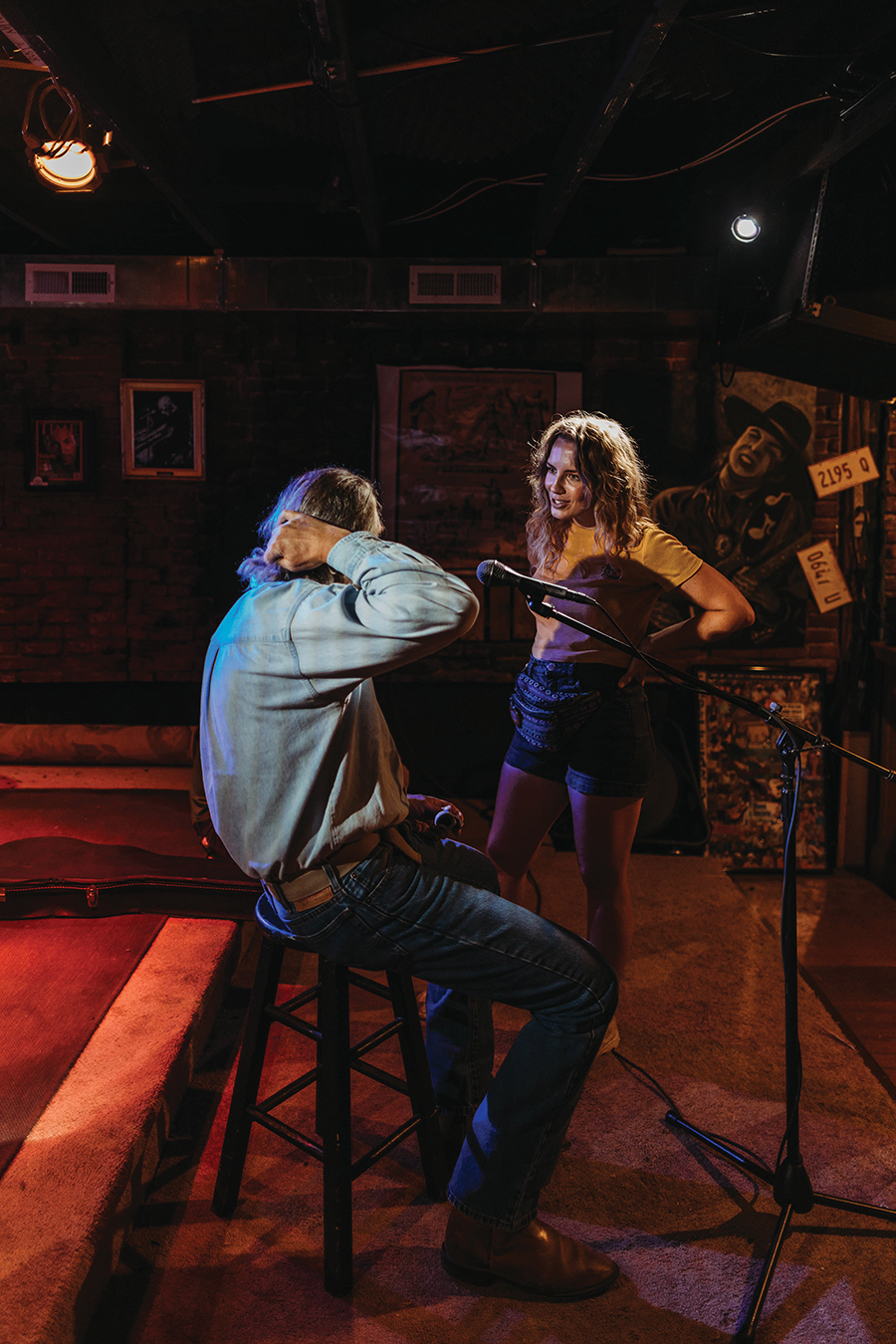
Eric Trundy is pacing around the stage, doing a bit about the grief he felt after his friend, Rene Luna, another comedian, died of testicular cancer last year.

Trundy confesses that he was sobbing as he was cleaning house, begging God to let him see Luna one more time. In the middle of his mourning, he saw a fly on the wall. He snaps a rag at the wall behind the stage to demonstrate what happened next: The fly dropped.

At that moment, he tells the crowd, it occurred to him: What if reincarnation is real?

What if God heard his prayer and . . .

The crowd laughs. They get it.


Trundy is a funny guy.

Not just because he’s a professional comedian.

And not just because of his hair, sort of bouffant mohawk that rides high on his white-walled head. It’s a very stand-up cut. Cough-cough. And not just because — but honestly, largely because — of port-city mouth, which spits f-bombs and carries an implicit challenge: “You-lookin’-at-me?”

It’s not even because he once worked as a professional wrestler named Rage.

Fact.

No, Trundy — a fireplug of a guy who grew up in New Bedford, Massachusetts, and looks like he’d just as soon slug you as hug you —  is funny because he describes himself as “a crier.”

Meaning that he cries. Easily. With tears.

“I just love feelings, you know?” he says as he reaches for another tissue. Of course, the tissue box holder looks like a Rubik’s Cube because we’re sitting on the intentionally gaudy set of his YouTube talk show, a place that looks like your grandmother’s house. If your grandmother ran a bordello. In Vegas.

The point is, Trundy loves emotions. All of them. Not just the happy ones.

“It turns out, happy is shit without sad,” he sniffs.

Now feels like a good time to say that you should catch Trundy — and a raft of other comics — at the North Carolina Comedy Festival in downtown Greensboro this month.

Why? Because they hold up a mirror with their stories. If all goes well, you laugh at them — and yourself.

“It’s why people watch comedians,” Trundy says. “There’s more vulnerability.”

Trundy is one of the most vulnerable, and funniest, guys around.

He’s a regular at The Idiot Box Comedy Club, the epicenter of the comedy festival, which will use six stages across the city. Idiot Box owner Jennie Stencel started the festival in 2018. This year’s lineup is the biggest ever, featuring 300 comedians from all over North America.

Trundy has been a crowd favorite every year.

“Eric lights up a stage and a room,” says Stencel. “He draws the audience in and gets them to laugh at life’s difficulties and his own struggles, but sometimes it’s just plain joy and silliness . . . He could be headlining all over the country.”

That’s not hype. Trundy, 45, played coast-to-coast, at some of the nation’s biggest comedy clubs until about six years ago, when he was leveled by depression, a blue note that has been sounding since his childhood, which was marred by many forms of abuse.

As a teen, Trundy soothed himself with alcohol and comedy. He devoured cassette tapes of his favorite comics: George Carlin, Richard Pryor and Rodney Dangerfield.

“I listened to comedy like other people listened to music,” he says.

The habit persisted for years, even as Trundy held down a successful career servicing industrial wastewater treatment systems in Virginia and North Carolina.

When podcasts became popular, he heard comedians talk about getting their starts at open mic nights.

That’s why he stepped on stage at The Idiot Box one Thursday night in 2011.

“I got a few laughs, and I was hooked,” he says. “It’s a small dose of what it feels like when you fall in love …except it’s a whole room full of people understanding you. It’s intimate.”

He quit his job and hit the road, which brought a new round of pressures. When Trundy and his wife divorced, a friend, comedian Anthony Lowe, let him stay at his family’s cabin in the woods.

“I don’t think I would have survived had Anthony not helped me,” Trundy says.

As partial repayment of the kindness, Trundy recently produced and directed A Bee in a Bird Suit, a comedy special for Lowe, now Annie Lowe, a transgender woman.

“I’m very lucky that one of my best friends is who she’s supposed to be, and I know for a fact that someone will watch that special and an opinion will change,” Trundy says. “The more you listen to people, the more empathy you have.”

Trundy’s developing new projects for himself, too.

He hosts a YouTube talk show called NBH, short for the ironically titled Never Been Happier. In a recent episode, he and comic pals Nick Ciaccia and DeJahzh Hedrick make fun of machismo by kicking around the idea of a birth control pill for men.

“It would need a masculine name,” says Ciaccia.

“It’s gotta be tough to swallow,” says Hedrick.

“They’re not like little pills,” Ciaccia imagines. “They’re big pills.”

“Lots of jagged edges,” Hedrick adds.

“They taste bad,” Ciaccia says, lapsing into a deep voice. “But I gotta take it.”

“Take it with a beer,” Trundy chips in. “It’s shaped like a pretzel.”

He’s also shaping new bits for the stage, unafraid to show the, um, cracks in his life.

He tells the story of rock climbing at a waterfall with a friend. On the way out, Trundy bent down to play with a cairn, a stack of rocks that marked a trial.

“This lovely, tender gentleman — I think he was Hispanic — walks up to me and says ‘Excuse me. Your pants is broken.’”

Trundy had split the seat of his pants while rock climbing.

“I had been showing my ass to everybody for a good four or five minutes. This guy was so polite. He was letting me off the hook. He said, ‘Oh, you know, it happened to me one time, too.’” Trundy, who’s planted in a wing chair on the empty set of his talk show, giggles about how a stranger tried to ease his embarrassment by sharing that he’d shown his ass to the world, too. It worked.

Trundy shakes his head. “F****in’ adorable.”  OH

Trundy will headline a show Sept. 9 at The Crown at the Carolina Theatre. To learn more about the festival, which is scheduled for Sept. 2-12, go to nccomedyfestival.com.

Maria Johnson is a contributing editor of O.Henry.

Poem

Cardinal

Like a spot of blood against the blue sky,

a Cardinal perches on the shepherd’s hook

where I hang suet and a cylinder of seed-feeders

I gave Sylvia for her last Mother’s Day.

The birds are a gift to me now. Her beautiful

ashes fill a marble blue urn and rest

near one of her crazy quilts in the foyer to welcome visitors.

Buddha is there on a table and guards her keepsakes,

a cleaned-out bookshelf holds her high school portrait,

a cross-stitch she made for me. Every little corner

has its memory of how short a sweet life can be.

— Marty Silverthorne

From Collected Poems of Marty Silverthorne

Home Grown

Cooking Up Mischief

Stewing over the last laugh

By Cynthia Adams

There was much joking in my childhood home, mostly inspired by our father, a trickster of the first order.

Little — certainly not religion nor politics — was off limits but for an unfunny gray area: Ted Koppel and food. 

Newsman Ted Koppel was my father’s unassailable source. After Koppel reported on sex trafficking, my father was apoplectic when a younger sister and I booked a trip to Cancun. Our refusal to cancel our trip, belittling Koppel’s reportage, outraged Dad.

Another untouchable? To even slightly malign our mother’s cooking, caused Dad to swiftly veer from ha-ha to oh hell no! 

My father also held sacrosanct the Old Hickory House, a dimly-lit Charlotte roadhouse on North Tryon serving cue and, to my sister and I, decent Brunswick stew. 

A Yelp reviewer wrote, “Looks like the kind of place your parents’ doctor/lawyer/accountant met his receptionist for ‘overtime’ work back in the ’60s.’”

It was unwittingly campy, untouched by market research or a decorator’s hand, with an unchanging atmosphere that no one would mistake for a chain. After an hour spent inside one of its cave-like booths, emerging into the light of day was nearly blinding. 

One Saturday, Dad called saying he was coming through Greensboro en route to his farm in Rogersville, Tennessee. My older sister happened to be visiting, and I was warming stew for her, knowing our shared passion for Hickory House’s smoky, perfectly cornmeal-thickened stew.

I quickly thawed another quart for our Dad, telling my sister I was going to have some fun.

On arrival, he strode directly to the stove.

“Mmmmm! Is that what I think it is?”

I grinned.

Dad gave a weak smile. I lacked cooking cred.

He warned, “You know I will have to be honest with you.”

I nodded, handing him a generous bowlful. He raised a small spoonful to his lips, hesitated, then ate heartily.

He shook his dark, full hair, proudly styled into an Elvis Presley tidal wave effect. “Old girl, you’ve done it! It’s as good as Hickory House’s!”

Seriously? I was stunned into silence. My sister earnestly studied the tabletop as if ancient runes lay there.

How did you do it?” he pressed.

“Beginner’s luck, I guess,” muttering a lie that caused me to flush red.

My sister’s eyes were huge as he ate two bowls. My sister and father, sharing our table without our extended, large family, was a first.

Unbeknownst to us that day, it was also a last.

Dad would not survive another year, suffering a fatal heart attack at 61.

My sister cornered me at our father’s casket as I weepily marveled at his shocking gray hair. 

“The funeral home washed out the Grecian Formula,” I whispered. She swatted me, hissing, “Shut up!”   

Her face darkened. “You are unreal!  You never owned up, did you?”

“To what?”

“Lying to Daddy. You let him die thinking you made that damn stew!”

She was always the good cook — not me.

I nodded sheepishly. 

“I thought he would know I can’t cook!” I protested.

My sister was unconvinced. “Face it,” she said. “You loved it. You really and truly got him.”

I leaned in, whispering to his now expressionless face, “Daddy, I’m sorry I lied about the stew.”

My sister’s big heart failed too, and she would follow him to an early grave. Other doors closed to the past. The Old Hickory House ceased operating its open pit after 60 years of roadhouse wonderment.

And somewhere in the Great Hereafter, my father believes his lying daughter learned to cook — unless my sister set him straight.  OH

Cynthia Adams is a contributing editor to O.Henry.
Almanac

The summer ended. Day by day, and taking its time, the summer ended.

— James Baldwin, Just Above My Head

September takes you by surprise again.

She told you she was coming. Tried to, anyway. Back in July, when the butterflies were puddling on the wet earth, she sent her first announcement — a tulip poplar leaf: half orange, half yellow.

“See you soon,” she scribbled across its waxy surface.

Perhaps it slipped through the cracks.

In August, when the hummingbirds were weaving among hibiscus, she scattered a few more notes. The marbled muscadine leaf, swirled with gold, brown and rust. The crimson maple leaf, brilliant as a summer flower. The star-shaped sweetgum leaf, splotched like a palette with autumn’s fiery hues.

Somehow you missed them.

Suddenly, it seems, September is here, playfully tugging at the loose threads of summer.

But she doesn’t just surprise you once.

On cool mornings, she permeates the air, perfume thick with earth and musk. Now and again, she pinches your cheeks; tousles your hair. Her very presence is electric.

The trees shiver and blush.

Chimney swifts and swallows haunt the evening sky with dark, flickering clouds.

A screech owl sings out, voice quavering like a treble violin.

Now that she’s got your attention, she begins to unravel the golden season leaf by marbled, rust-colored leaf. She doesn’t rush, nor does she dawdle. She just sips the light from the summer sky, strips the green from the rustling trees and, sometimes, surprises herself.

Equinox Flower

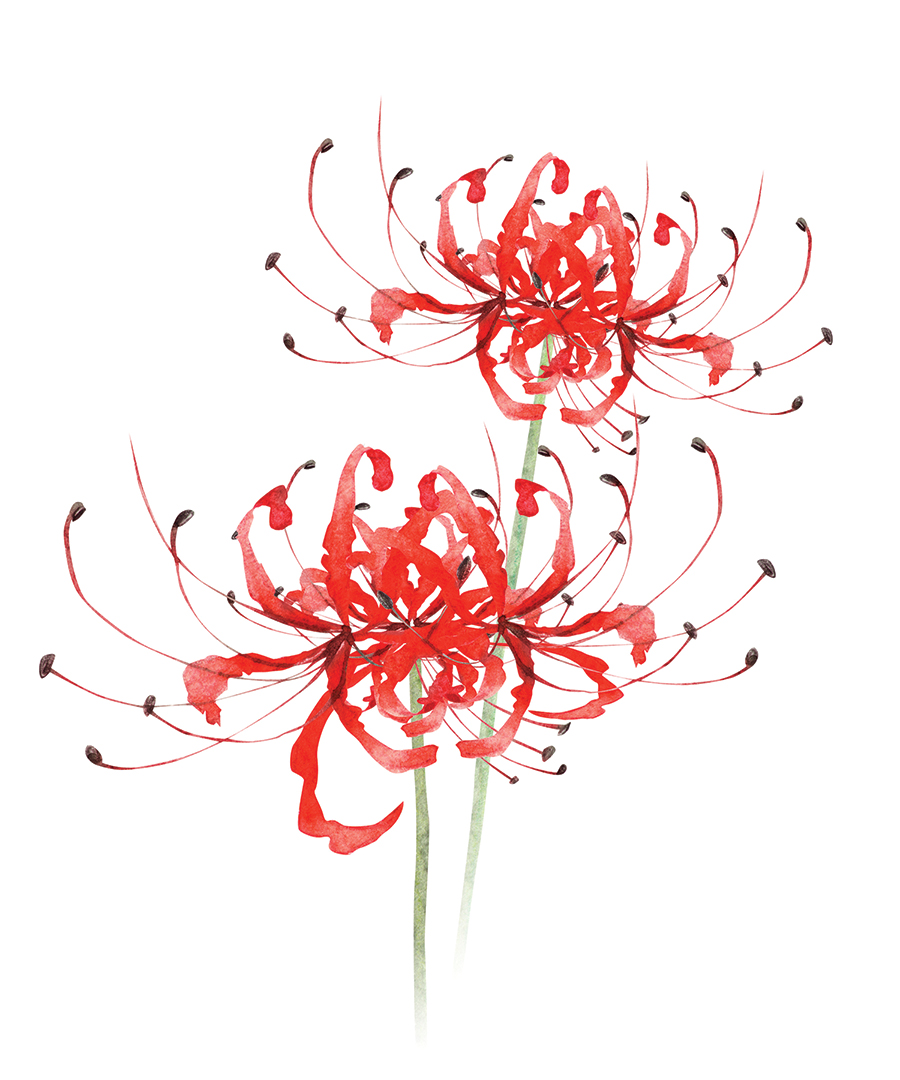
The apples are falling. Figs, drooping. And among the early fall bloomers — crape myrtle, chrysanthemum and autumn crocus — one has a name truly fit for the season: the equinox flower. Lycoris radiata (also known as the red spider lily, red magic lily and surprise lily) bloom on naked stalks, often after a heavy rainfall. The coral-red blossoms comprise an explosion of curled petals with long stamens that resemble the legs of a you-know-what (see alternate names). Winter foliage follows.

In Japan, the name for the red spider lily — Manjushage — means “flower of the heavens.” While this dazzling flower is often associated with death and the afterlife, don’t let that stop you from planting it in your own garden. The butterflies love them. Japanese rice farmers use them to deter mice. But should they attract the lost soul of some distant ancestor, ancient Buddhist text tells that this eye-catching beauty will help to guide them along.


On This Harvest Moon

The full harvest moon rises on Saturday, Sept. 10 — 12 days before the autumnal equinox, aka, the first day of fall.

And what of the harvest?

Garlic, garlic, garlic. Bushels of apples and sweet, plump figs. Potatoes, tomatoes and greens galore.

Don’t forget the honey.

The days are growing shorter. As the golden season fades, savor what is here, now: the nectar and fruits of a waning summer. OH

Greensboro’s Emerging Artists

Three women cultivate joy, connection and self-discovery through their work

By Cassie Bustamante    Photographs by Bert VanderVeen

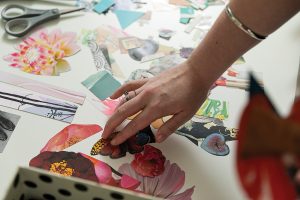
Creating art is not for the meek. It’s gritty and emotional, filled with trial and tribulation, plus hours upon hours of grueling, behind-the-scenes labor such as stretching canvases, tediously cutting out tiny images from magazines until the hands start cramping or digging into the deepest parts of one’s soul. But as any artist knows, the hunger to create can’t be ignored.

Yet, an artist’s bravest act is being vulnerable enough to share your work with the world. Our city has cultivated a community that welcomes up-and-coming artists with open arms, and new creatives are arriving on the scene regularly, excited to be a part of the artistic and collaborative energy thrumming throughout Greensboro.

After all, the connection and community the Gate City provides are often what the artist seeks through her work — especially in a post-pandemic world.

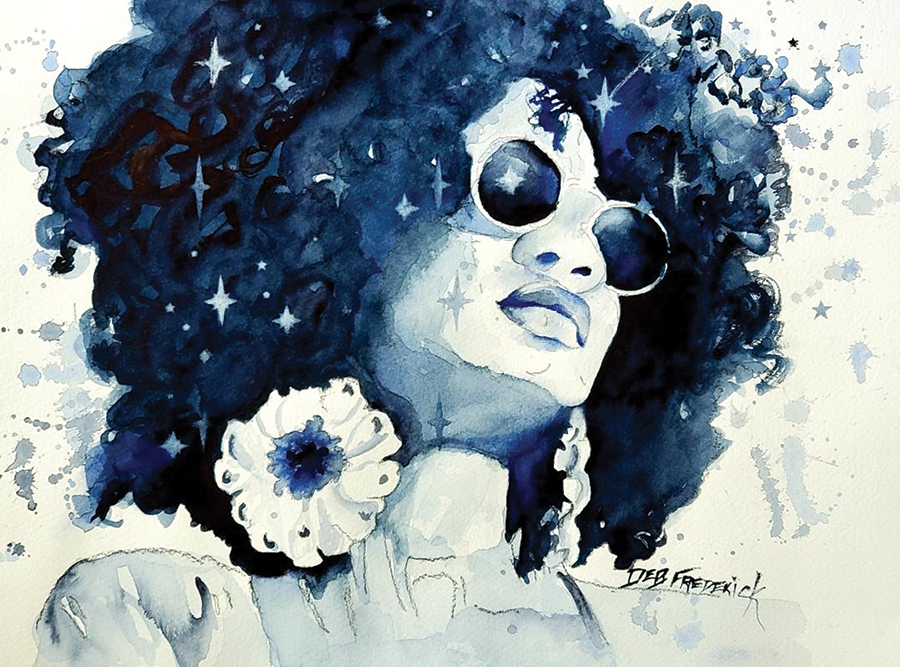
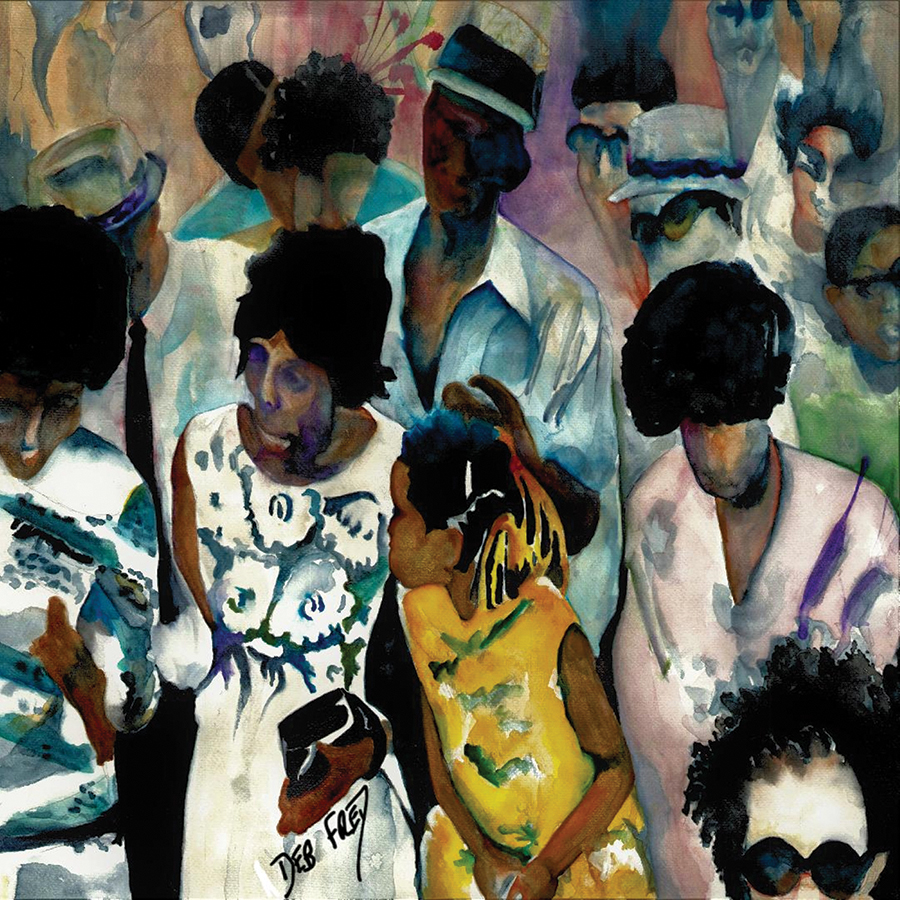
We’re introducing three local artists who you may not yet know, but won’t soon forget. Each brings something unique to the art world, ranging from vibrant, music-inspired watercolors, to collage that explores transformation, to acrylic paintings that celebrate the wonder of the female body.

Surrealist Salvador Dalí once said, “A true artist is not one who is inspired but one who inspires others.” These “true artists” have brought their work forth as a way to tell their stories while inspiring others to see and feel their own truths.


Reneesha McCoy | While the childern sleep

Perfect beauty in imperfection — that is what Reneesha McCoy sees in the world around her.

Whether it’s in her own body, the chaos of life or the so-called blemishes on her artwork, McCoy lives her life in a way that honors the raw state of being human, perfectly — or, rather, imperfectly — all of which is reflected in her paintings.

For several years, McCoy felt something tugging at her to create, but it was the 2019 birth of her son, Phoenix, that gave her the push to heed that call, leaving behind a 10-year retail career. After trying her hand at multiple endeavors, her partner, Scott, also an artist, suggested she consider art.

In 2020, with no professional training, McCoy picked up a paintbrush. “I kept thinking, ‘I have this feeling and I need to express it,’” she says. The 33-year-old mother of two trusted her instincts.

“I just kept trying and trying,” she says, “until I was like, ‘Wow — I’m an artist.’”

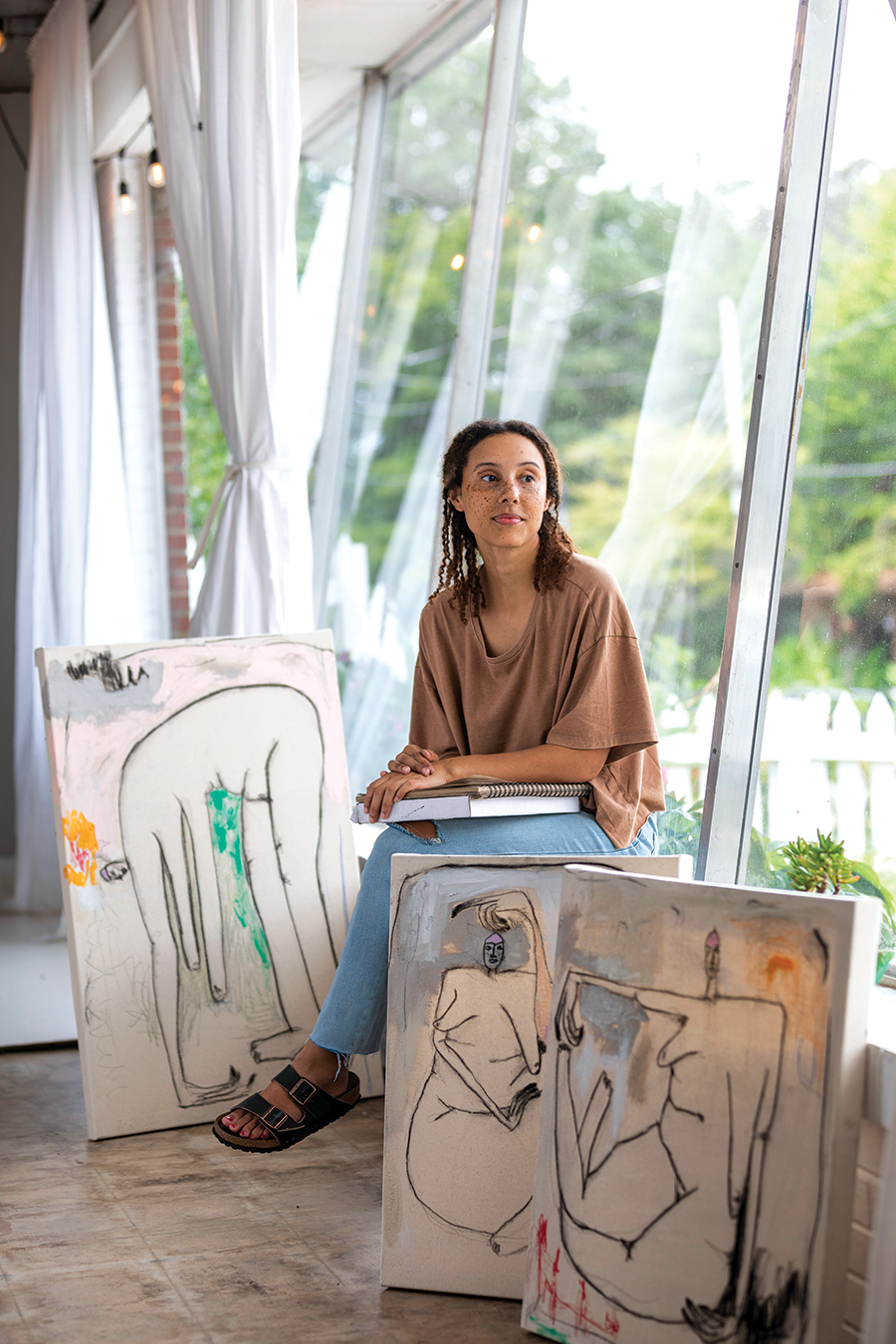
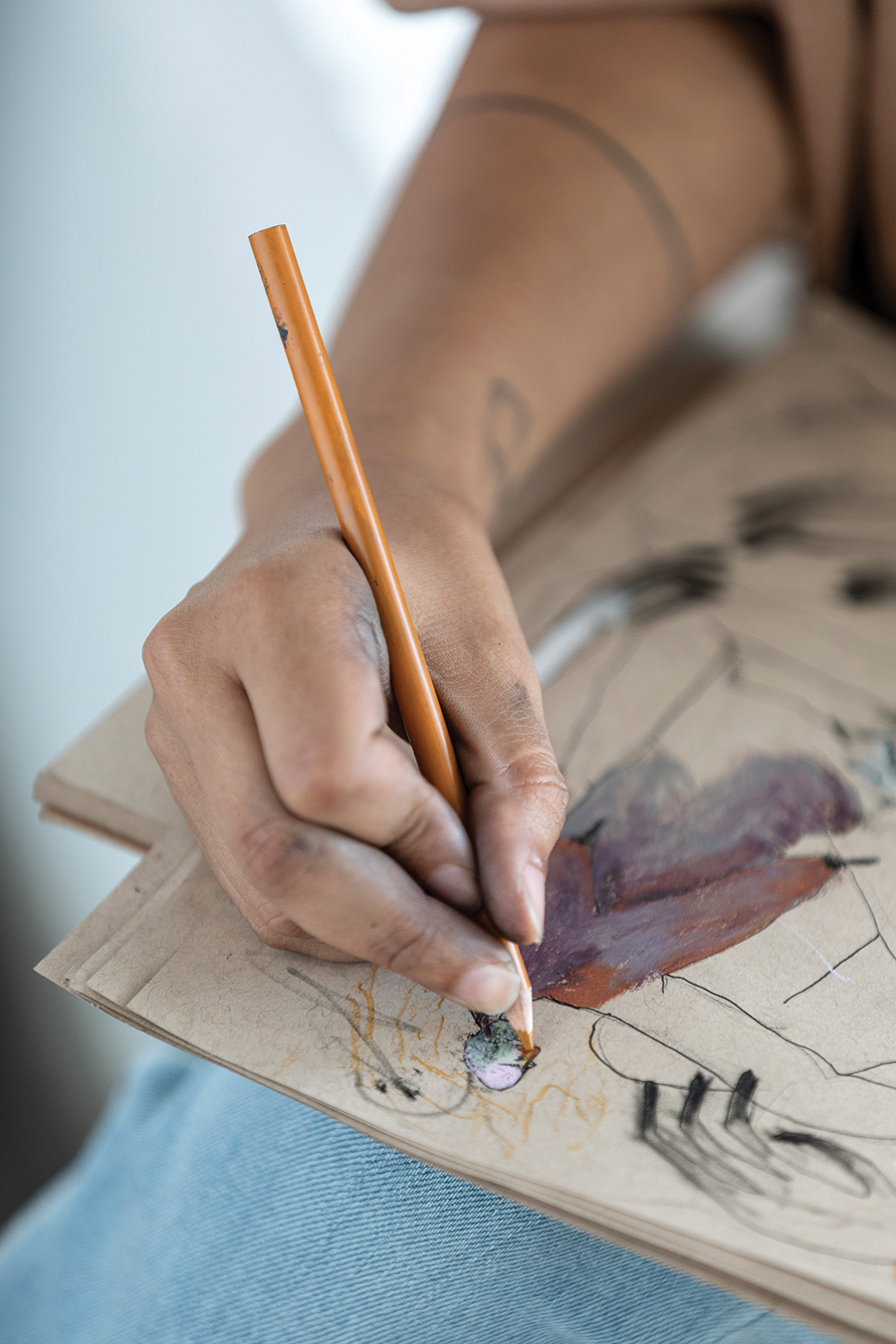
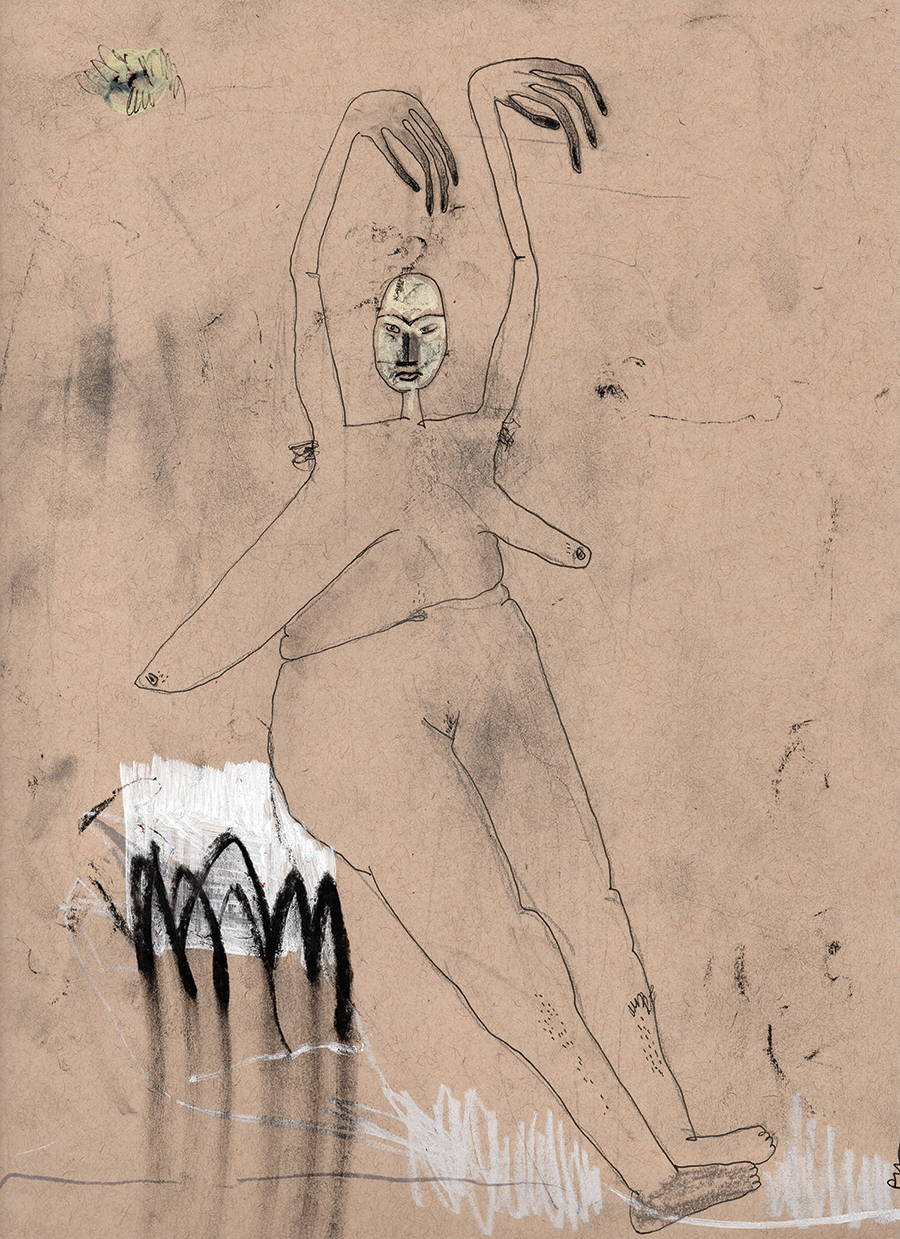
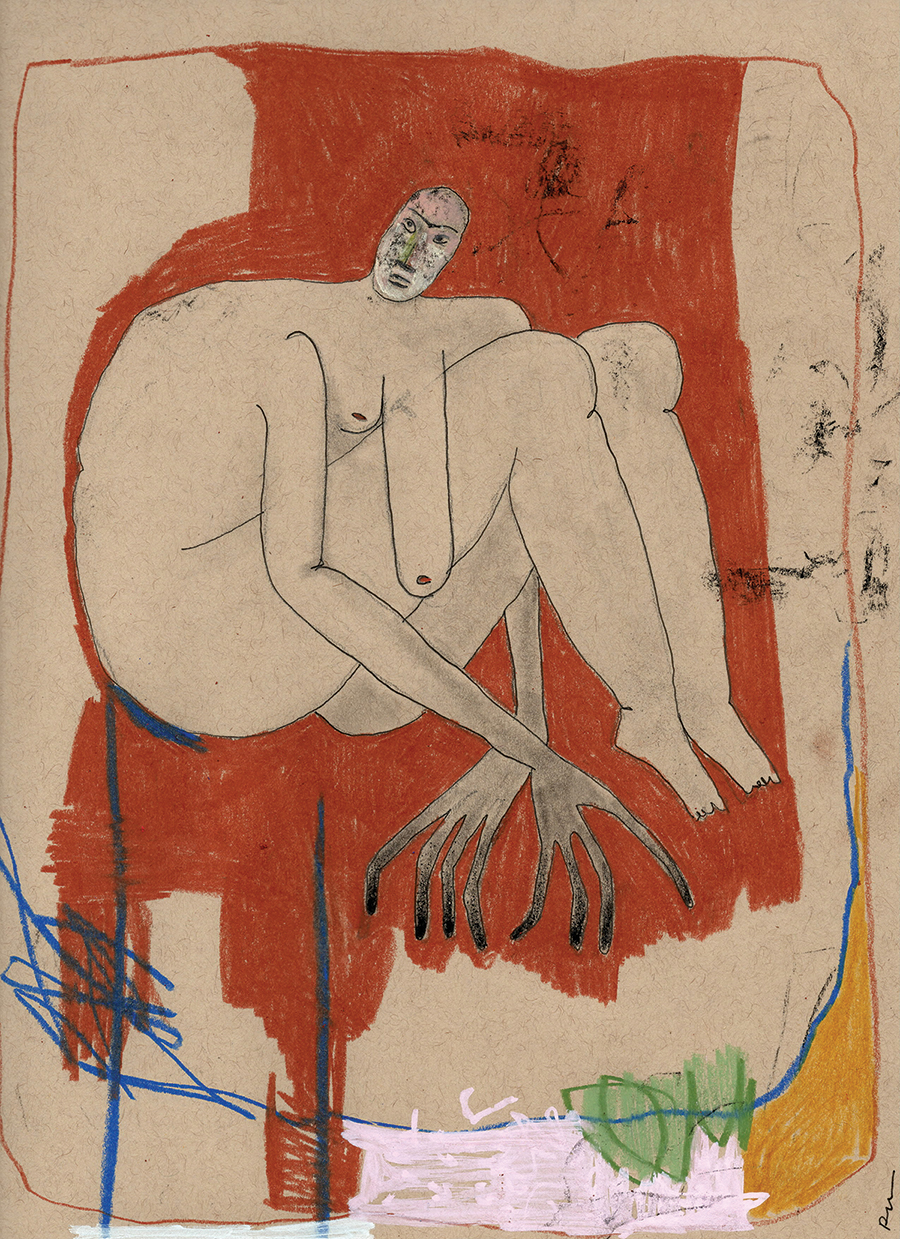
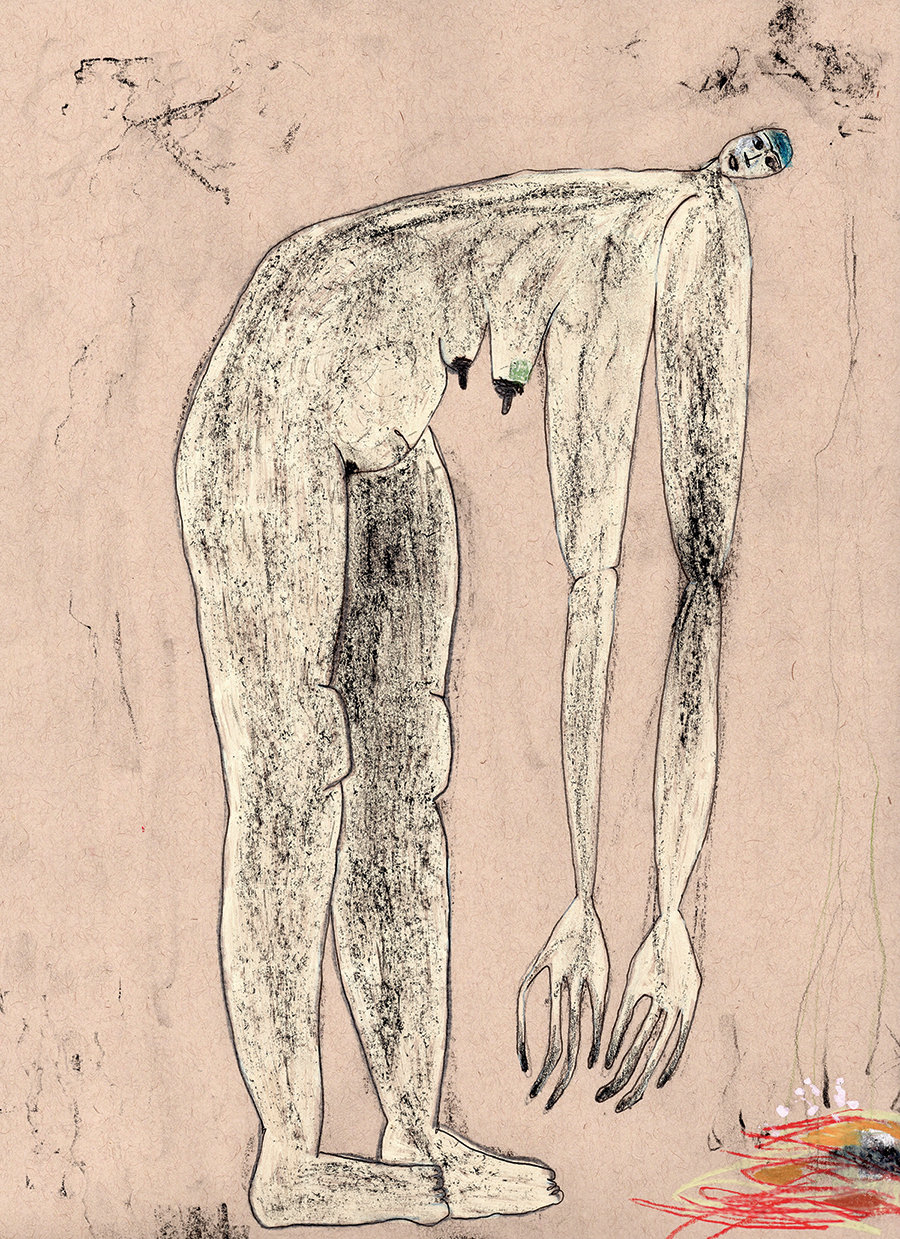
Inspired by the changes her body has undergone through childbirth and breastfeeding, her own raw emotions, and her desire to be inclusive, McCoy’s paintings feature nude female forms with a mix of skin tones, posed in a manner that often expresses insecurity. She uses acrylics, which are quick drying, allowing her to paint while her children sleep.


Left:  I Knew I Could Fly
Middle: Everybody Danced and I Sat Still
Right: I Cook Berries on the Fire
9 x 12 inches, Charcoal, colored pencil, graphite, ink pen and marker on paper, 2022

Working through her thoughts on her canvases, McCoy notes, “It is not only that I am just releasing everything. It’s also that it means something to someone else.” 

McCoy’s paintings have given her back the one thing she was missing from her retail job — human connection. Posting on social media allows her to engage directly with customers and followers. “I’ve had people tell me,” she says, “‘Hey, that’s how I felt.’”

Relatability is at the heart of every canvas she touches. “We all go through things,” she says, adding that her work is “not just about the body — it’s about life.”

While McCoy now paints to support herself and her family, she still feels the tug that started it all, that urge to create. Even as exhausted parents to 3-year-old Phoenix and 1-year-old Penelope, McCoy and Scott reach for their work every day, painting in their living room while the kids nap. “We should probably nap and sleep,” McCoy laughs, “but we don’t do that because [our work] makes us happy and whole.”

She adds, “I would choose this life right now, this journey, over anything.”

As a woman who has struggled with insecurity throughout her life, painting has given McCoy a confidence she never expected.

“When I worked in retail,” she says, “I was always on the path of ‘Who am I?’”

It seems McCoy has finally found the answer. “If you go back through all my journals, there’s a lot of ‘just be,’ and I didn’t know what that looked like,” says McCoy. “And now I do from my art.” 

Leaning into the essence of her being, she has stepped into her true self, an artist.

Learn more about Reneesha McCoy and see her work at rnwulf.com.


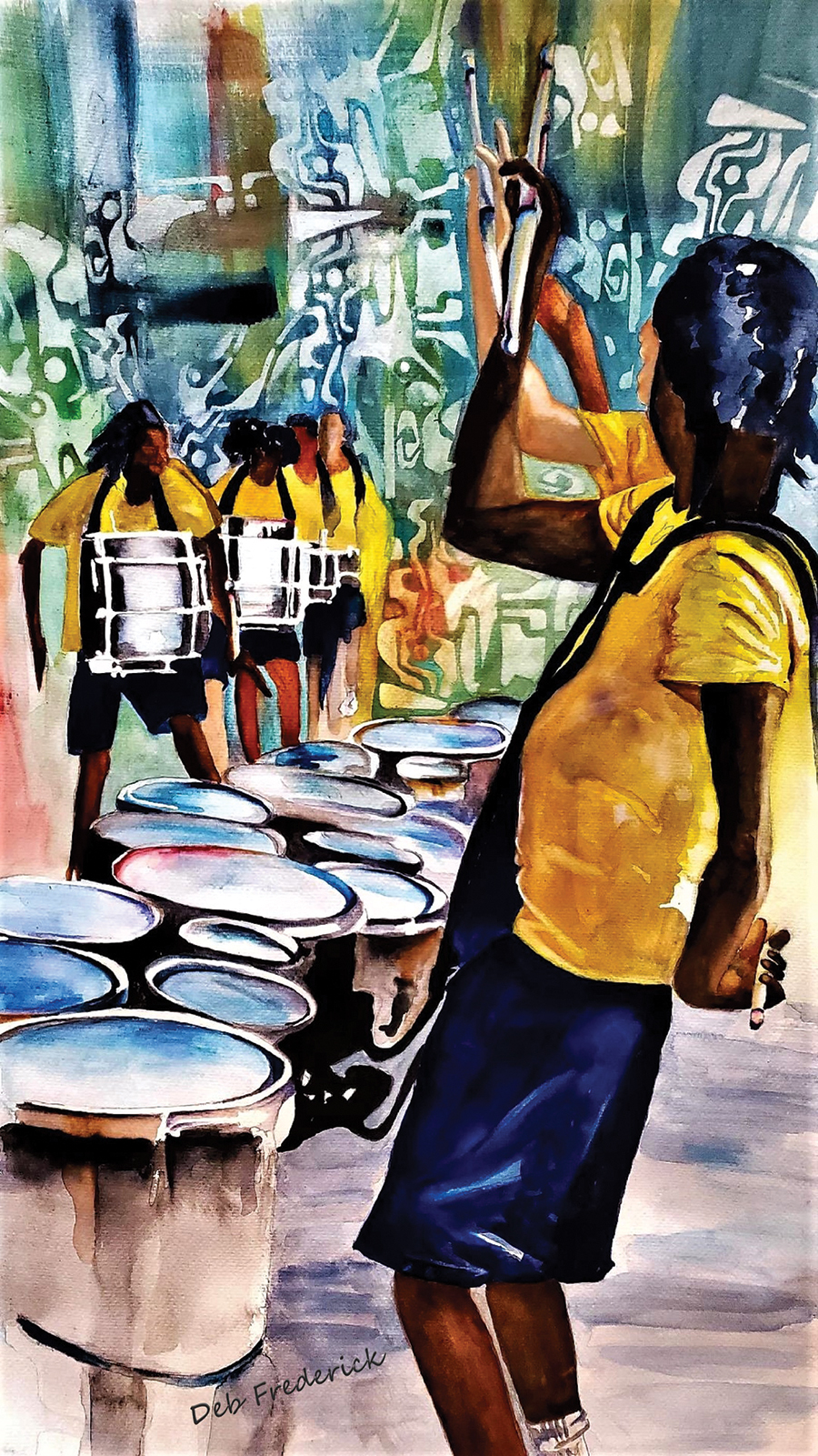
Right: Band Beats Proud

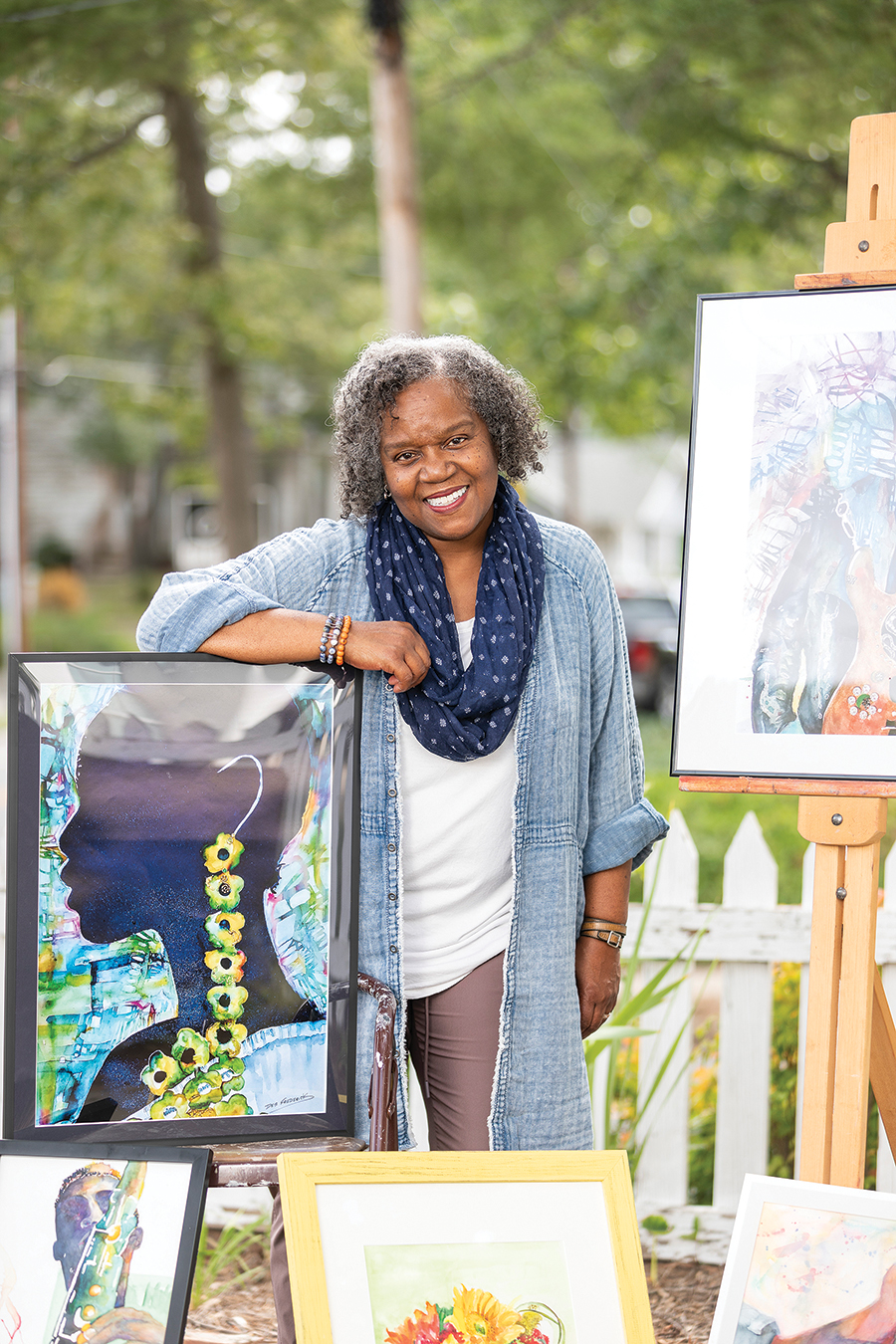
Deb Frederick | Designed for joy

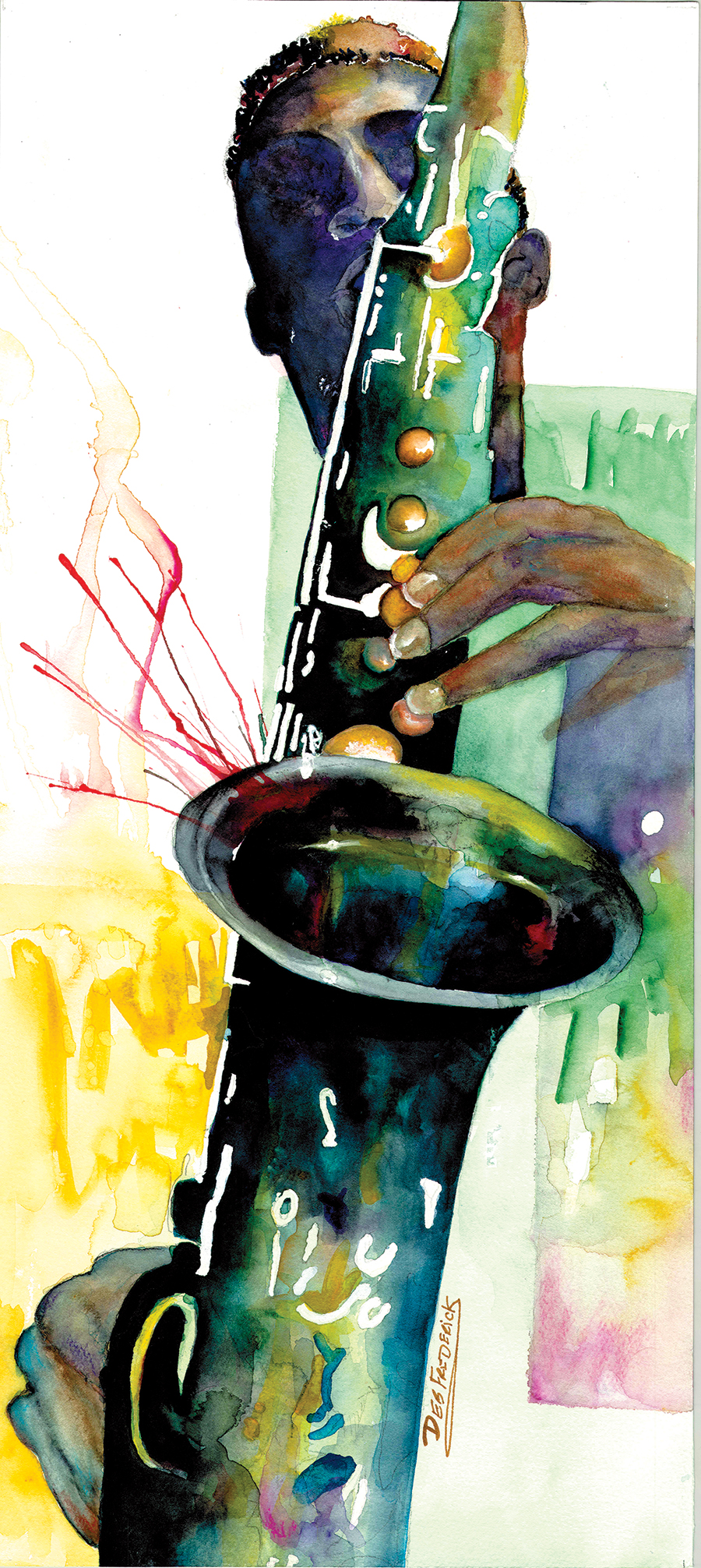
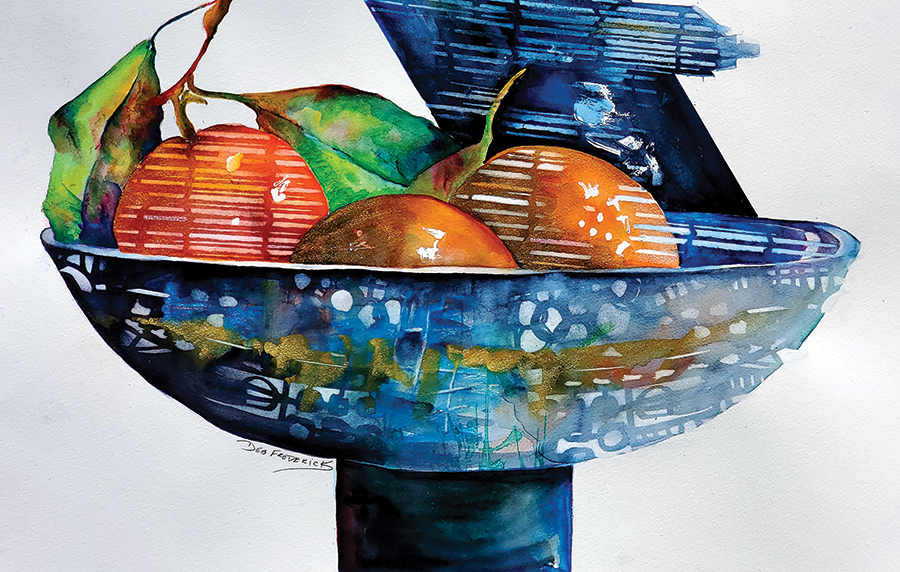
Petite in stature, Deb Frederick is a force when it comes to radiating high-vibe energy, her joy and lust for life obvious to anyone who meets her. It’s no wonder that her bold watercolor paintings reflect her vivacious spirit and love for music and culture.

As a child, Frederick discovered she had natural talent when she tried her hand at drawing “Winky,” a character on the back of a cereal box, for a contest — and won. “From then on,” she says, “my parents supported me and my art.”

Her sketches evolved into paintings and her paintings evolved into an exploration of lifestyle. In 1981, she earned her B.F.A. degree from the University of the Arts in Philadelphia. Marriage and children soon followed. While painting was her passion, Frederick decided to take a lucrative position with a textile company, noting that her “creative skills could be transferred to an industry where creativity is needed.”

Little did she know that her fashion design career would take off, allowing her to travel the world and discover new countries and cultures. Though it meant she wasn’t painting, as she says with a laugh, “I’m not mad about it.”


Left: Saxophone
Right: Super Fruit

When the COVID pandemic struck in 2020, Frederick wasn’t surprised when she was laid off because, she suspects, of her age and salary. Her 35-plus year apparel design career came to an end, but — in typical Frederick fashion — she found joy in her situation. “It didn’t feel like I fell,” she notes. Shortly after, she picked up her paintbrush again.

“Safe,” a painting that she’ll never sell, was her way “back in” to the world of watercolors. Inspired by a moment caught between American Idol contestant Samantha Diaz and her grandmother, it features a beaming Diaz, locked in her grandmother’s tight embrace. Frederick, who was born in Panama but left the country as a small child, never met her own grandmothers. Imagining that their arms would have comforted her similarly, she painted with a heart full of love, noting that two heart shapes can be subtly made out in forms of the two figures.

Upon finishing “Safe,” she stood back in awe, whispering, “Did I do that? I forgot I could do that.”

Since then, Frederick has taken her brush to several sheets of watercolor paper, receiving praise from friends, family and the community, just as she did from her parents years ago. Recognizing that many children aren’t as fortunate, her hope is to mentor young people who “have the drive and desire,” but are lacking the “110 percent support” she had growing up.


Left: Retro Modern Woman
Right: Sundresses and Festivals

Frederick’s being sizzles with palpable enthusiasm when it comes to sharing her art, whether it’s through her own creations or teaching. “There’s so much more to discover,” she says, “and I’m excited about the journey.”

Learn more about Deb Frederick and see her work at debfredart.com.


Jessica Dame | The therapy of flight

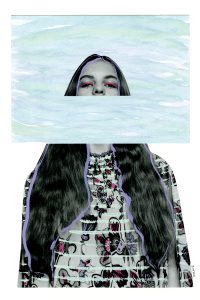
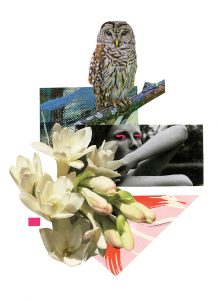
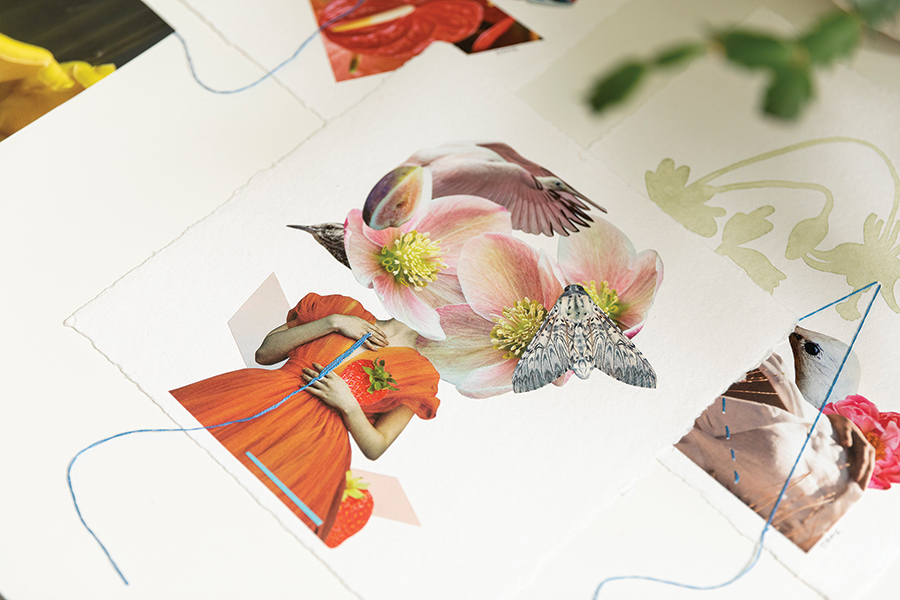
Nature is full of surprises. Take the wren, for example. A bit of an understated bird. That is, until you hear one sing. The same might be said of Jessica Dame. Shy and unassuming, the longtime librarian expresses herself in bold and surprising ways through her collage work, blending bright floral and avian imagery with the female figure, juxtaposing striking black ink with flirty colors.

In a world that’s dominated by digital collage, Dame, 36, appreciates the nostalgia of an art form that influenced the pop-culture scene throughout her ’90s youth. “Part of what makes [analog collage] therapeutic and great is that you’re getting away from the screen,” she says. “You’re doing something with your hands.”


Left: Head Above Water. Watercolor, acrylic gouache, and paper.  9 in x 12 in. 2018.
Right: Barred Owl. Paper and acrylic gouache. 9 in x 12 in. 2019.

Dame notes with a laugh that from an early age she was collaging, illustrating and publishing her works. “My oldest memories,” she says, “are of making books about whales and unicorns when I was a kid.” Her love of imagery and books led her to earn a B.A. in art history from Christopher Newport University in Newport News, Va., as well as a Master’s in library science and information from the University of South Carolina.

In 2019, Dame uprooted her life, leaving her career behind to move to Greensboro from Columbia, South Carolina, with her partner, who had accepted a position at UNCG. New to the city and out of work when COVID entered the scene, she temporarily lost her mojo, but soon found her footing again. She told herself, “Don’t cover up the desire [to create] with chores,” finding time and space to reconnect to her art.

Like many in 2020, Dame discovered bird-watching, journaling what she saw. She’d always been infatuated by birds because “they’re so free and so elegant, so beautiful.”

Her most recent collages feature birds paired with florals, an underlying theme of blooming, something she seems to be doing herself. While nature has always been prevalent throughout her work, lately she’s been exploring the idea of transformation. “I don’t know why quite yet,” she says. “I’m seeking that through my art.”

A past piece features a female figure clothed in a black slip-dress, whose head is replaced by lotus blooms. “I was reading about the lotus flower and how they grow in mud,” says Dame. “They’re so pristine and beautiful, but can’t grow without that mud. It’s such a Zen metaphor for life.”

Strawberry Shortcake. Paper and string. 8 in x 8 in. 2022.

And, it seems, the sacred water lily is a perfect metaphor for Dame, who is flourishing creatively after a challenging stage of life.

Recently, Greensboro’s Historic Magnolia House hung four Dame pieces in the guest bedroom named for James Baldwin. She decorated her own floral ink illustrations, layering in collage pieces that feature Baldwin’s written works.

What’s next for Dame? “Right now, just keep making stuff.” But it should be no surprise that this librarian-turned-artist’s ultimate dream is to see work on the cover of a book. OH

Learn more about Jessica Dame and see her work at jessicadame.com/collage.

Cassie Bustamante is managing editor of O.Henry magazine.

The Omnivorous Reader

Little Press Success

Big things can come in small packages

By Stephen E. Smith

Since its founding by professor Ronald Bayes in 1969, St. Andrews Press at St. Andrews University in Laurinburg has earned a reputation as one of the most consistent and persistent small presses in the country — which is no insignificant accomplishment considering that the average small press has a lifespan of five years. Within the last few months, under the editorship of Ted Wojtasik, the press has released two books that deserve a wide audience. The first is Ruth Moose’s The Goings on at Glen Arbor Acres, a collection of interrelated stories about life in an assisted living facility.

Moose has long been a creative force in the North Carolina writing community. She has published two novels as well as numerous collections of short stories and poetry. Her work has appeared in Atlantic Monthly, Redbook, Ladies Home Journal and Our State magazine, and she taught for 15 years on the Creative Writing faculty at the University of North Carolina in Chapel Hill.

Moose’s latest collection will not disappoint readers who are seeking to escape the everyday stress of politics and pandemic surges, neither of which is mentioned in these stories. There may be “goings on” aplenty at Glen Arbor Acres, but only of a benign nature. In “The Major’s Gun,” a character observes: “You have to be so careful around this place. One misheard word and the gossip goes rampant” — which is pretty much the source of the collection’s recurring conflicts.

Moreover, readers won’t be troubled by stories about characters who undergo overwhelming misfortunes that culminate in disasters of epic proportions. Glen Arbor is no Keseyesque Cuckoo’s Nest. There’s no Nurse Ratched in the medication room, no physical or verbal combat, no racial utterances to be heard, or even a mildly offensive exclamation that might raise a wary eyebrow. Moose’s slice-of-life stories simply offer readers a window into the everyday dilemmas of Glen Arbor’s elderly residents who eat, drink and sleep in the gossipy microcosm where fate has deposited them. If they are allowed enough freedom to cause a mild degree of mischief, they’re always on the lookout for a new source of intrigue. They’ve identified an antagonist, Miss Anne Blackmore Rae (Miss ABR aka Always Be Right), the director of  Glen Arbor, and a male protagonist, the Major, a resident who functions as an authority figure who might right trifling wrongs, a tired old god the ladies can turn to in times of emotional discomfort.

Moose focuses on her characters’ foibles and eccentricities — there is a nudist yoga teacher, a wig maker, a troll-like man who intrudes himself into the ladies’ daily walks, and the mystery of the director’s runaway dog who may or may not be dead. The most “teachable” story involves a resident who submits a poem to a national poetry contest and is notified by mail that she is a finalist who should attend a dinner meeting to receive her award. Of course, it’s a scam perpetrated on the unsuspecting — in this case, the elderly — but the aspiring poet buys a new dress and attends the ceremony. She doesn’t win (there’s a surprise), but she’s received by her peers at Glen Arbor as a literary luminary, proof that there is success to be had in the waning years, and that good friends value us for who we are, not for what we do.

There’s a good deal of irony and wit in Moose’s stories, even if her characters don’t see themselves as the object of humor, even when the situation and context are obviously comic, and readers will find themselves amused and charmed by her subtly crafted narratives.

Another recent St. Andrews Press publication, Collected Poems of Marty Silverthorne, is justification enough for supporting small presses. Silverthorne died in 2019, and it’s unlikely, regardless of his talents as a poet, that a mainstream or university press would publish a book by an author who isn’t around to promote it at readings and in bookstores.

As a poet, Silverthorne had talent and perseverance to spare. He devoted himself to writing verse while working for 30 years as a counselor for persons suffering from alcohol and drug addiction. Left a quadriplegic after a motorcycle accident in 1976, he faithfully dictated his poems to a caregiver and companion, and until the pandemic, he was a steadfast participant at regular meetings of the North Carolina Poetry Society.

Silverthorne is a “plain language” poet. His poems are straightforward retellings of the events that shaped his life, the loss and redemption, the small pleasures he experiences, the troubles and pain a person in his predicament suffers, as in “Inside of Me,” where the poet muses on what others expect of him after accepting his disability: Inside of me you expected to find/a motorcycle wrapped around a tree,/whiskey bottles beside the road./You did not expect to find daffodils/blooming in a pine thicket,/crape myrtles close enough/to threaten their beauty//Inside of me you expected to find/the soiled pages of Penthouse./You did not expect Yeats and Keats/on a linen table cloth,/one large candle with a wavering flame,/a bottle of chardonnay.

Much of Silverthorne’s later poetry was written while mourning the loss of his wife, as in “Delicate Ashes:” . . . Back at home our neighbor held you in his hands,/his fingers around the beautiful blue bowl/of your body, the delicate ashes of your life . . .

Silverthorne makes rich and various uses of rhetorical devices — humor, anger, wit, irony, and juxtapositions of conflicting and indecorous feelings. In doing so, he has left readers with a rich record of a life lived to the fullest despite almost overwhelming adversity.

We are fortunate that St. Andrews Press and other small presses continue to publish books that might otherwise, for reasons unrelated to literary quality, go unread. The pandemic has hit little presses hard. Readings at bookstores and arts organizations have dropped off, and live audiences are difficult to gather in dangerous times. If you’d like to encourage small press publishing, buy their books. Poets and Writers magazine lists over 370 such literary entities that desperately need our support.  OH

Stephen E. Smith is a retired professor and the author of seven books of poetry and prose. He’s the recipient of the Poetry Northwest Young Poet’s Prize, the Zoe Kincaid Brockman Prize for poetry and four North Carolina Press Awards.

O.Henry Ending

Embracing Juno

The tarot reading — and tattoo — that changed my life

By Corrinne Rosquillo

In 2018, I visited New Orleans for the first time. It’s a magical city, full of history and an old energy that cannot be described, only felt. It was where I received my first tarot reading — not from some Creole witch (missed opportunity, I know), but from an elderly white man with a calming presence.

I don’t remember his name now. I wish I did. I’m sure it was something like John or Mark. Ordinary, simple — fitting. He did a standard reading with twelve cards. The first eleven of them are a blur, but the final card — the card meant to represent me — still appears in my mind’s eye with crystal clarity: Juno, Queen of the Gods, a force to be reckoned with. That, and the reader’s parting words: “You are your own worst enemy. You can accomplish anything if you get out of your own way.”

I cried because I knew it was true. His words resonated, touching something deep within me that had been there all along, a continuing theme throughout my life. That’s what tarot does — it doesn’t tell you your future or some hidden secret of the universe. It points out what’s right in front of you that you’ve been too busy, too distracted to notice.

At the time, I struggled with anxiety and depression. I still do; I probably always will. But I got the message loud and clear.

I paid him via Venmo and left.

Fast forward to 2019, when a knee surgery plunged me into the deepest depression of my life, a depression that almost killed me. Key word: almost. I’m still here, winning battles against myself.

Those words, spoken to me years ago, still resonate. I knew in 2019 that I wanted to create a permanent reminder for when my depression would inevitably rear its ugly head again. This year, I finished that reminder with the help of Gene Cash at Seven Sagas Tattoo Studio.

I took a look at the classic Roman Juno and made her mine. I have a woodblock-style crane on my right shoulder that represents my first triumph over depression, so I thought, why not a Japanese Juno? Some of her classic symbols are still there: the peacock feathers, the spear, the moon, the lotus. The words beside her, written in Japanese, are a constant reminder to me: “watashi no kataki wa jibun.” My enemy is me.

But my favorite element of the whole piece? If you look carefully, the top line of the moon isn’t finished. It’s intentional, an aesthetic called “wabi sabi” in Japanese. It’s about appreciating beauty that is “imperfect, impermanent and incomplete” in nature. Fitting.

Juno is on my right arm to remind me that I am a goddess, capable of overcoming anything. So long as I believe it, I know I will.

To that tarot reader, wherever you are, thank you for awakening the divine in me.  OH

A goddess with a gorgeous tattoo of Juno on her arm, Corrinne Rosquillo is a regular contributor to O.Henry.

Tea Leaf Astrologer

Virgo

(August 23 – September 22)

Before a Virgo bakes a pie, they have already sliced it a dozen times in a dozen different ways. They have considered everything: how the vegan butter might affect the flakiness of the crust; whether the pie should be chilled before sliced; which knives to use for scoring and cutting; et cetera, et cetera. We know you’re analytical. But birthdays are meant to be fun. No need to dissect the flavor out of every slice. You’ll kill your own buzz.

Tea leaf “fortunes” for the rest of you:

Libra (September 23 – October 22)

The knots will untangle themselves.

Scorpio (October 23 – November 21)

Don’t overthink it.

Sagittarius (November 22 – December 21)

Rinse and repeat.

Capricorn (December 22 – January 19)

Three words: Know your audience.

Aquarius (January 20 – February 18)

Cut the rope. You know what I’m talking about.

Pisces (February 19 – March 20)

The answer is chocolate.

Aries (March 21 – April 19) 

Take a breather.

Taurus (April 20 – May 20) 

You’re paddling upstream again.

Gemini (May 21 – June 20)

Do they know that it’s a game to you?

Cancer (June 21 – July 22)

Someone needs a hug.

Leo (July 23 – August 22)

Go for the upgrade.  OH

Zora Stellanova has been divining with tea leaves since Game of Thrones’ Starbucks cup mishap of 2019. While she’s not exactly a medium, she’s far from average. She lives in the N.C. foothills with her Sphynx cat, Lyla. 

The Creators of N.C.

The Feature Is Female

The future might be, too

By Wiley Cash

Photographs By Mallory Cash


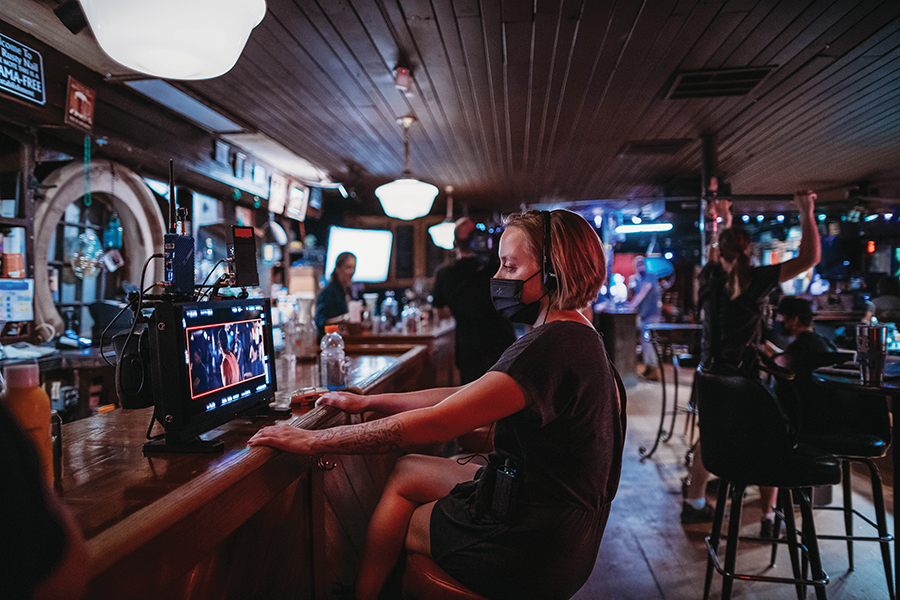
Erika Arlee and Kristi Ray, co-founders of Wilmington’s Honey Head Films, grew up on sets. For Erika, one of her first on-set experiences was as a child growing up in Chapel Hill during the making of Attack of the Killer Dog, which she wrote, directed and co-starred in with her sister and one of their friends. Recalling the intensity of her childhood fascination with film, Erika says, “I wanted to make movies, and I wanted to hold the camera so badly.” Her early special effects included a plush stuffed animal dog that was tossed at the actors from offscreen so they could be, in fact, attacked by a killer dog.

For Kristi, who grew up in rural eastern North Carolina near New Bern, her first on-set experiences also took place at home, and included casting, producing and directing her older sister and cousin in back porch performances of Beauty and the Beast, Grease! and other movies that had left their mark. “I was always the director and the producer and the costumer,” she says. “And I would cast my cousin and my sister in the lead roles to get them to participate, and then I would play every other character that no one wanted to play.”

Regardless of whether they were handling stuffed animals while shouldering boxy VHS cameras or perusing thrift stores to outfit a cousin for a homemade play, both Erika and Kristi can trace their creative drive to those early days as girls who were desperate to see their dramatic visions come to life on the stage and screen.

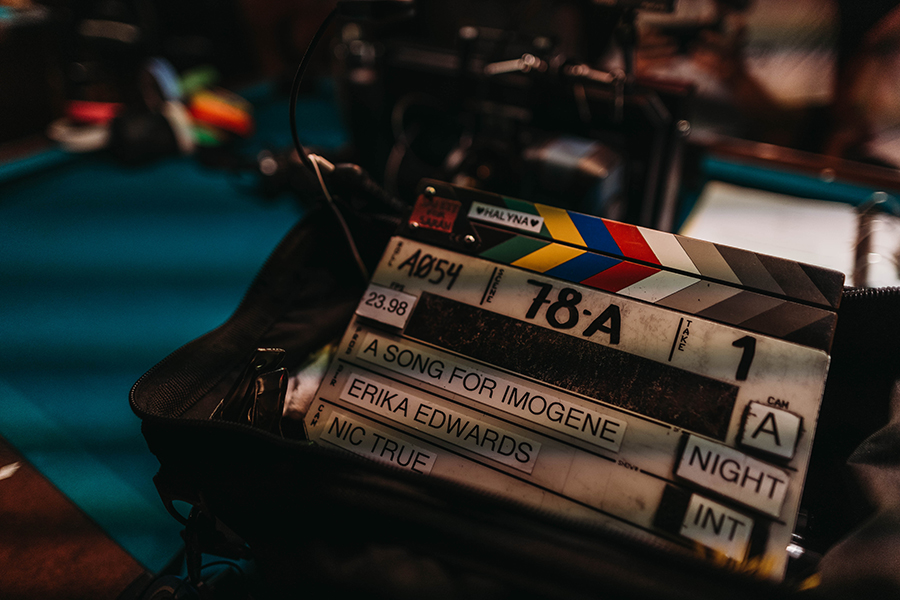
That energy, which is apparent to anyone who spends any amount of time with these two women, combined and gathered force to create A Song for Imogene, the first feature-length film by Honey Head. While Erika and Kristi’s paths to filmmaking seem preordained, their path to one another was a little less certain.

After growing up in Chapel Hill, Erika attended the University of North Carolina, double majoring in English and dramatic arts with a minor in creative writing. Although she’d always been drawn to film, it didn’t seem like something that was accessible on campus or in town, but Erika had seen Broadway productions, so she threw herself into acting and dance, thinking those outlets might be the only way for a Southern kid from a small town to find the stage. She never lost her interest in film or her desire to hold the camera, however, and by 2014 she was living in Wilmington, auditioning across the Southeast and working behind the camera with local writers and producers.

Unlike Erika, who headed east to Wilmington after college, as a 17-year-old Kristi went west to Los Angeles to pursue acting after high school. “I probably ran out of money like a year into my journey there,” she says. “I came back to North Carolina and auditioned for a feature film that was being produced in the Triangle, and I got cast in the lead role.” Kristi’s performance as Charlotte in Pieces of Talent was noticed, and she was soon offered a scholarship to the Lee Strasberg Theatre and Film Institute in New York. As much as she benefited from her education, Kristi found that the atmosphere in New York wasn’t as supportive as the film community in North Carolina, so she came home and settled in Wilmington.


I don’t know how many successful relationships, business or otherwise, begin on Craigslist, but this one did. Erika had joined with a local actor to write and shoot a horror film that featured a number of their friends, but they needed a female lead, so she posted a call on Craigslist, which Kristi happened to find and answer. Their bond was almost immediate. Soon, the two women were filming one another for audition reels, reading scripts together, and sorting through what seemed to be a shrinking market of opportunity for young women in the film world.

Aside from vapid roles that relied on little more than youth and appearance, “there just wasn’t anything interesting for young women that we were finding,” Erika says.

“This was the time when Winter’s Bone almost won an Oscar and there were a lot of really cool roles out there, they just weren’t around the Southeast, and they weren’t being offered to blonde girls who looked anything like us,” Kristi says. “We wanted to prove that we could play someone who wasn’t just a cute little girl at the mall.”

Erika wrote a short film about two sisters called Lorelei that was written specifically for her and Kristi so they could reach toward what they knew was the full range of their abilities. The story of two women settling their mother’s estate in rural North Carolina eventually served as the backstory for A Song for Imogene, which stars Kristi and was directed by Erika.

The two women who had come up through the ranks while shooting one another’s audition tapes are now at the helm of a feature film that’s in post-production and positioned to go out on the international film festival circuit. The relationship they’d built during their formative years, and through the experience of writing and shooting commercial work, had created a foundation that now guided them.

“Erika’s an incredible director. She was the first female director I’d ever worked with, so there’s this huge trust that I’ve always had,” Kristi says. “And her writing is really good, so it’s hard to do it poorly.”

The crew for A Song for Imogene was 70 percent female, including eight female interns from university film programs from around the East Coast. For many of these young women, it was their first time on a film set. Erika and Kristi allowed them to explore what interested them while also playing key roles in the production. While they watched the interns bond they couldn’t help but recall their own experiences of doing the same just a few years earlier. Now, they had become the teachers and mentors.

“When these young women go out into the professional world and work on sets, they won’t be afraid,” Kristi says. “They will have already gotten their anxiety out the door in a safe environment with us.” Erika and Kristi hope that the experience will leave these young women more mental space and emotional energy to collaborate and build community.


Pondering their own struggles in the industry while witnessing their interns thrive, Erika and Kristi had an idea about how to help the next crop of female filmmakers enter film programs or step onto sets with confidence. They partnered with educator Sam McCleod to create a summer camp, called Shoot Like a Girl, that focuses on female filmmakers from the ninth to 12th grades.

“We’re trying to get them at that stage where they’re a little bit more reserved,” Erika says.

The two-week camp, which kicked off its inaugural session in July, allowed the girls to learn cinematography, wardrobe, lighting and grip, screenwriting and directing. By the end of the camp they were casting and shooting their own short films. To ensure that the experience was accessible to girls regardless of their economic circumstances, Kristi and Erika were able to raise $18,000 from community partners to fund seven of the 12 girls at the camp. They’re excited to see what this first group will do next.

“To feel this empowerment and to be in a cohort of women is something that’s going to be invaluable,” Kristi says.

Erika and Kristi’s new film, A Song for Imogene, is certainly a female feature, and, with Honey Head and Shoot Like a Girl, the future of film might be, too.  OH

Wiley Cash is the Alumni Author-in-Residence at the University of North Carolina at Asheville. His new novel, When Ghosts Come Home, is available wherever books are sold.

Birdwatch

Songster in the Shrubs

The Eastern towhee hides to survive

By Susan Campbell

“Drink your tea, drink your tea,” the loud, emphatic call comes from dense shrubbery right outside our front door. It is the voice of a common, but frequently overlooked, Eastern towhee. It is hard to imagine that such a persistent songster could keep so well hidden, but towhees’ larger size makes them a target for predators, and keeping hidden is the survival strategy they employ. Belonging to the sparrow family, they are short-billed birds found in brushy or grassy habitat. The bird’s name originates from its typical “tow-hee” call.

Many backyard birdwatchers in central North Carolina are rather confused when they finally catch their first glimpse of a towhee. Is it some kind of oriole? Perhaps it is a young rose-breasted grosbeak? Males are quite colorful with rufous or chestnut flanks set against a white belly with a black hood, back and wings as well as a long black and white tail. The bill, too, is jet black. Females sport brown feathers instead of black but still have rufous sides. Their legs are long and powerful: good for kicking around debris in search of insects and seeds. Towhee eyes, which are usually dark red, may be orangey in the Sandhills population. Farther east, individuals have irises that are a striking pale yellow.

Eastern towhees are found, as their name implies, throughout the eastern United States. Here in the Southeast, they are year-round residents, although we do have some wintering individuals that breed further north. Their diet is variable, consisting of a variety of invertebrates (insects, spiders, millipedes) during the breeding season. However, in colder months, towhees can also be found scratching for seeds dropped by other birds from feeders. Their heavy bill allows them to take advantage of a variety of seeds. The powerful jaw muscles associated with such a strong bill make it a formidable weapon. If attacked, a towhee can inflict quite a bite. Males will viciously attack each other during territorial disputes and may inflict mortal wounds from grabbing the head or body of an opponent. Conflict is not infrequent where food is abundant, so the potential for fights exists throughout the year in our area.

It is not uncommon for Eastern towhees to raise three broods in a summer. Each brood involves three to five young. Nests are simple affairs, in short shrubbery or even directly on the ground. As a result, nestlings often do not remain in the nest long after their eyes open and downy feathers cover their bodies. They will move around noisily begging from the adults. Young towhees instinctively run for cover if their parents sound the alarm.

A little known fact about this species is that it was first described by some of the earliest Europeans to arrive in the New World. The artist-cartographer John White noticed towhees during his visit to the English colony on Roanoke Island in 1685-86. It was this trip that documented the colony’s disappearance — the Lost Colony. White’s unpublished drawings of both males and females predated the famous work of Mark Catesby in Natural History of Carolina, Florida and the Bahama Islands in the 1700s, since republished with a modern perspective as Catesby’s The Birds of Colonial America.  OH

Susan Campbell would love to receive your wildlife sightings and photographs at susan@ncaves.com.