Home Grown

HOME GROWN

Susie Baby and Teddy

Long gone but never forgotten

By Cynthia Adams

My elegant friend, Dixie, a former model, once dressed for the office in Ferragamo heels and sleek skirts.   

Heads swiveled whenever she glided past, a study in grace. But it was her kindness that drew us to her.

As a native Charlestonian, Dixie remains the closest thing I have known to gentility. Her historic apartment contains finely curated antiques, textiles and books, both inherited and found heirlooms. She calls it “the Nest.” 

Now, a health issue keeps her mostly Nest-bound. Still, she spends her days staying current, reading poetry, clipping items from The New Yorker, which she sends to friends, and dispensing small gifts to the postman and neighbors. 

Dixie asked me to bring chocolates, her favorite thing in all the world, to enjoy and share as COVID raged. Standing at a careful distance outside on the fire escape, I made the delivery as she shared news about a newborn great-grandaughter.

We were both introspective. Undone by the anxieties of a pandemic, we moved to parenting, especially in such a time, and how easily parents inflict injuries. Moldering injuries too easily retrieved. 

Dixie quietly mentioned Susie Baby, her doll. In her child’s mind, Susie Baby was real, beloved.

When Dixie was a small child, her strict parents firmly enforced bedtime. Once tucked in, she was not allowed to get up. During a lashing storm, Dixie searched among the blankets to reassure Susie Baby.   

Susie Baby was not there. 

Dixie lay abed, remembering that she’d played with Susie Baby outside before dinner, bath and bedtime, before the violent storm struck. She could not go to Susie Baby’s rescue.

At daybreak, she flew outside and found Susie Baby. 

“Her face was disfigured, and I think part of it was in fragments.”  Dixie recalled, her voice tremulous.

She felt as shattered as her doll. As if it were a death.

A tear glimmered at the memory.

Perhaps a better, more restrained listener than I would have waited, letting Dixie’s story — and its obvious pain — settle there. But my mind had traveled back, too.

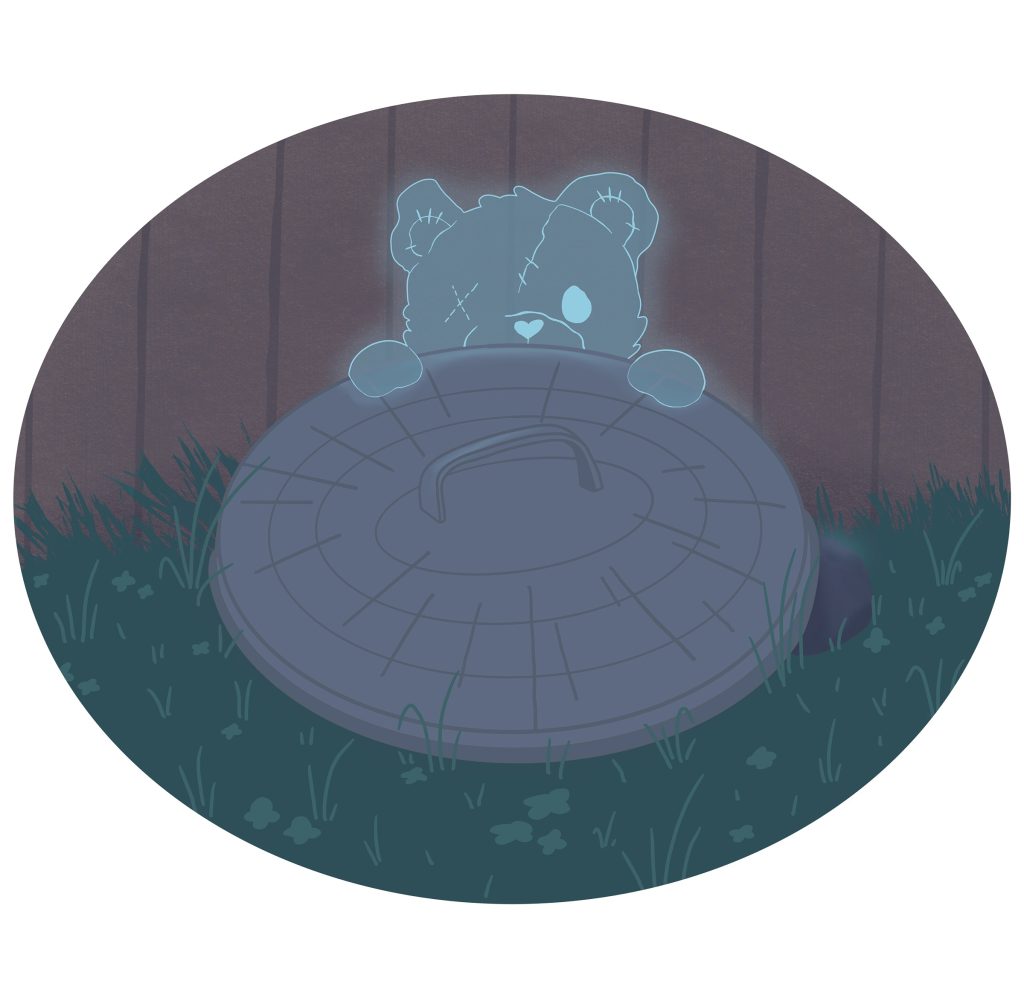
Despite myself, I began talking about Teddy, a bear I much preferred to dolls as a child. A bear who had grown smelly and tattered. 

To me, though, Teddy was perfect, even more perfect than my shape-shifting, carefree, imaginary friend Pixie. After all, he was tactile, soft and worn.

Whereas Pixie rambled the world seeking adventure, Teddy was a constant. Never far from my side, Teddy was an anchoring source of comfort, especially at night when all manner of monsters lurked. Nor did Teddy judge whenever I had, as actress Catherine O’Hara called it, a nighttime “oopsie daisy.”

My germophobic mother decided the bear was dangerously unhygienic. While I was out playing with a friend, she tossed Teddy in the trash.

Like Dixie’s loss of Susie Baby, I traced the loss of Teddy.   

Dixie quietly listened, allowing a second tremulous tear to fall without wiping it away.

Afterward, I waved goodbye to her where she waited on the fire escape, Dixie’s pale, elegant hand raised in farewell. 

With the world roiling with the terror of a plague, we had summoned up our oldest friends, our first comforters. Susie Baby. Teddy. 

Memoirist Alexandra Fuller writes, “sit still and observe what disturbs you.”

There is remembering, but then there is the harder thing, the only thing left. 

Since I can’t summon forgetfulness, could I forgive?

Winter is for the Birds

WINTER IS FOR THE BIRDS

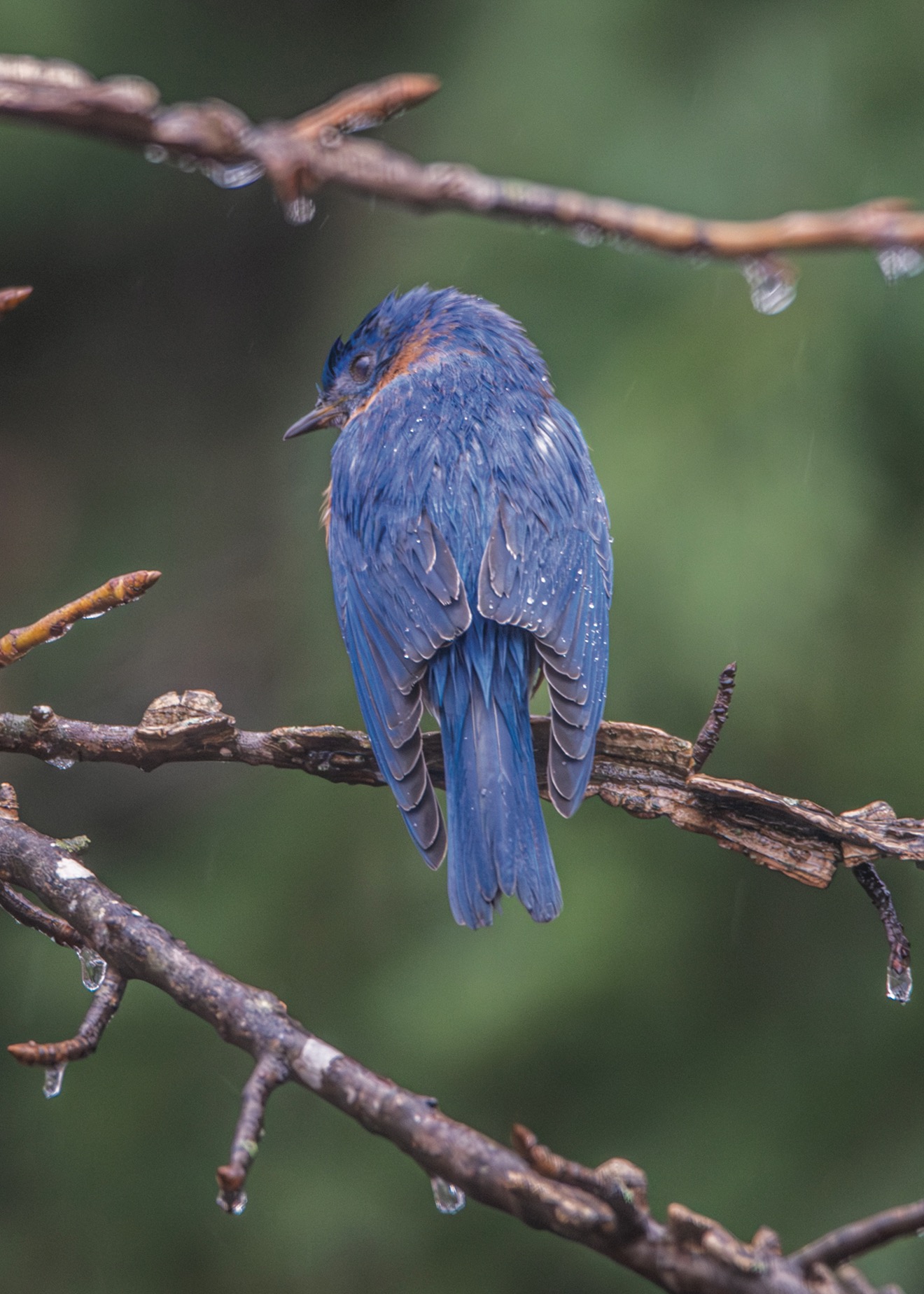
You can always count on a blue-headed vireo to make sure you don’t miss your morning alarm. After all, the early bird gets the worm.
This red-shouldered hawk ruffles some feathers as it swooshes in on his prey.
Considered to bring good luck, a red cardinal shows off surrounded by heaps of frosty snow.
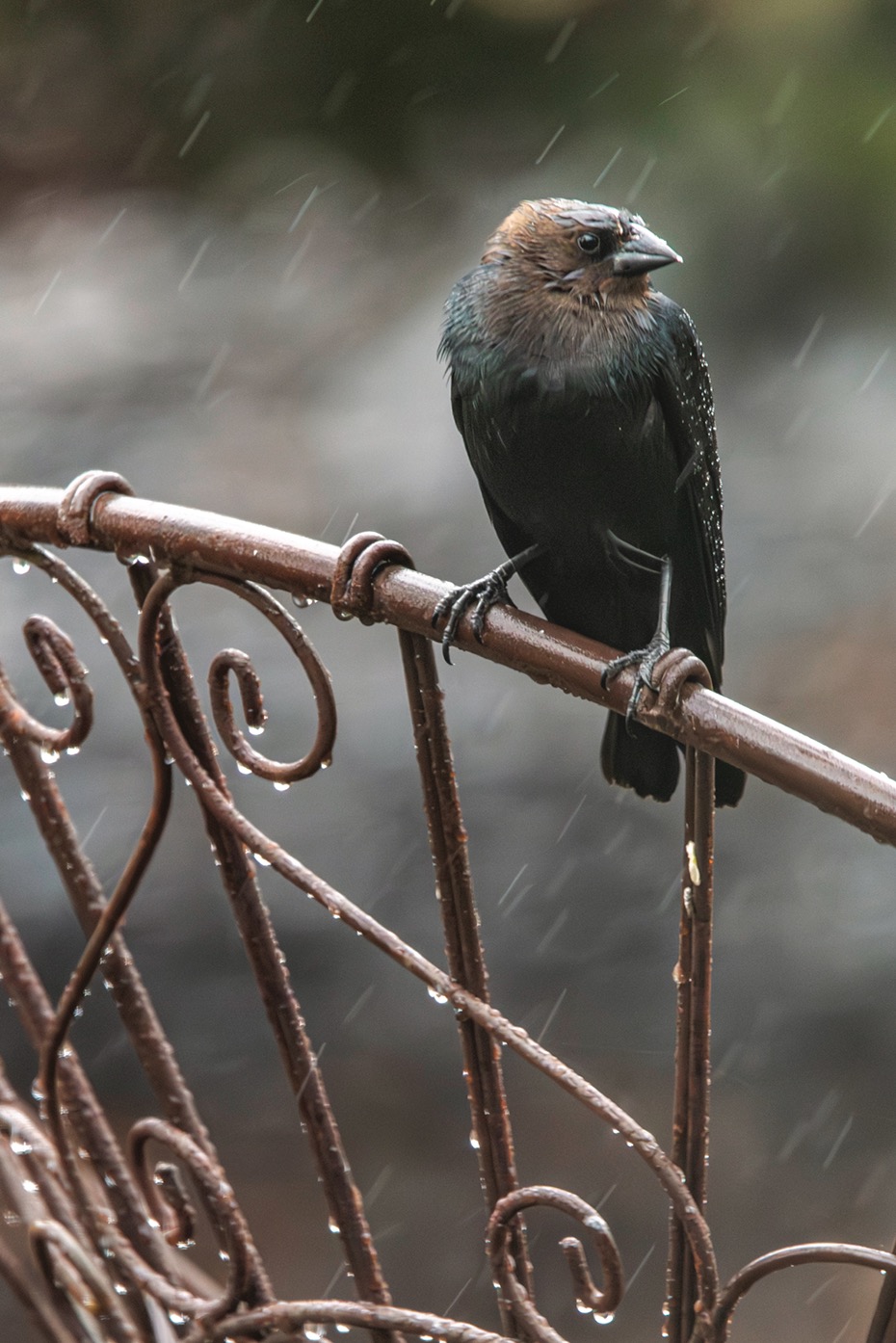
This female northern cardinal, though not as vibrant as her male counterpart, is unmissable with a beak as bright as hers.

Winter is for the Birds

Lynn Donovan focuses on our bright-beaked buddies

By Joi Floyd

With the brisk, wintry temperatures approaching and the holidays in full swing, you’re sure to hear about the partridge in a pear tree — over and over again. But the real tweet of the town comes from our favorite chirping, warbling friends. Though most birds of a feather flock together, you’re bound to find one or two different breeds cozying up next to each other for warmth. Whether gathering leaves and tiny twigs for nesting or feasting on tasty nuts and seeds, these sweet tweeties stick close together. Photographer Lynn Donovan captures our precious woodland buddies in action as they face the snowy — we can hope — season.

Birdwatch

BIRDWATCH

Watching Big Red

A glimpse of a magnificent hawk

By Susan Campbell

Now that the leaves are off the trees, certain wildlife is a lot easier to spot. Without the cover of dense vegetation, birds in particular are more obvious, and larger birds, such as hawks, can be truly eye-catching. Of these, the largest is the red-tailed hawk. Just about everyone has at least glimpsed one of these magnificent individuals on a large branch of a dead tree, a fencepost or a power pole.

Red-tailed hawks are the largest species in the genus Buteo that breeds in the eastern United States. Although they are not a common sight, they can be found across North Carolina year-round. In the winter, red-taileds may be joined by migrants from points north. These big hawks are found in any type of open habitat — from mountain balds to open parkland, agricultural fields and more.

Identifying adult birds is not too difficult if you can get a good view of their namesake reddish tails. Otherwise, the species has a dark brown back, a streaked bellyband and a pale breast with a dark head. Juvenile birds will not sport the colorful tail, but they will still have dark streaks on the belly and a dark head. Both have long, wide wings that they tend to hold in a slight “V,” or dihedral, when soaring. Being birds that hunt by sight, they spend a lot of time either perched from an elevated vantage point or soaring at great heights looking for prey.

Red-taileds catch mainly mammals but are not very picky eaters. They will grab anything, from mice to rabbits. Sometimes they will eat a snake and even catch a bird or two. Also, they may take advantage of carrion.

Breeding for these birds is a major undertaking. Red-taileds require a sturdy nest each spring. It will be several feet across and at least a couple of feet deep in order to keep the young family safe. The adults will frequently reuse a nest from a prior season (if nesting was successful there), adding a few new sticks to the exterior as well as strips of bark and dried vegetation to the cup. Typically, the nest is in the very top of a large tree, although they may use a rock ledge or even a man-made structure such as a billboard or stadium lighting. Brood size is typically one to five young that hatch following three to four weeks of incubation. It will be another nine weeks or so before they are ready to leave the nest.

There is a famous red-tailed pair that has been raising a new family on the Cornell University campus for 10 years. The nest site, located adjacent to buildings I frequented for classes during my undergrad days, is equipped with the most high-tech spyware on the market. It is under surveillance from the time the pair return in early spring through fledging of the year’s youngsters via a Cornell Lab of Ornithology webcam. The female, not surprisingly dubbed “Big Red,” has raised numerous youngsters with the assistance of two different mates over the past decade. “Arthur” succeeded “Ezra” as her mate a couple of years ago. Each year these birds have produced one or more successful youngsters under the sharp watch of lab researchers, as well as to the delight of local birders. Tune in to the webcam in early March, when the pair are expected to return for the 2026 breeding season. I promise that it will be educational, fun — and very addictive. 

Lowe and Behold

LOWE AND BEHOLD

Lowe and Behold

A Greensboro home sparkles from a dash of family tradition with a merry-making twist

By Cassie Bustamante     Photographs by Amy Freeman

The stockings on Charlie and Linda Lowe’s mantel are hung by the chimney with care. But they aren’t your ordinary, run-of-the-mill stockings. Nope, these five-of-a-kind stockings, in a soft, gold tone, are shaped whimsically, curved like an elf’s boot, trimmed and monogrammed in an orange-coral. And let’s not forget the pleated, black-and-white striped cuff.

The gold stocking fabric came from a Greensboro Symphony Guild Super Sale, back when they were held at Printers Alley. “I went with a friend of mine,” says Linda, “and there was a pair of drapes for next to nothing, like 20 bucks, and it was that beautiful, quilted fabric.” She snagged the deal, knowing she could Maria von Trapp those curtains and give them new life somehow. “It had all the trim and everything.”

“That is how an artist shops,” says Charlie. “They see other things in things.” His blue eyes twinkle proudly. And the beard on his chin? Well, it’s as white as the snow, naturally. Though Charlie, Linda’s jolly little helper elf and husband of 39 years, wears his a little more closely cropped than Saint Nick’s.

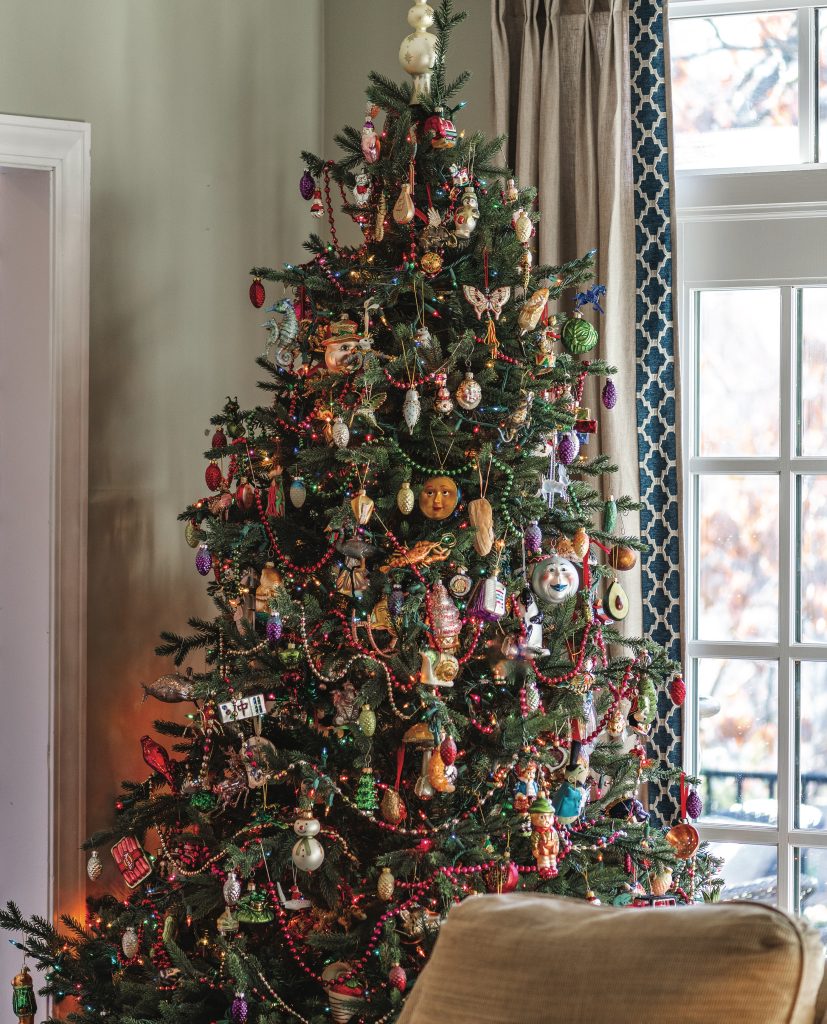
More symphony drapery panels surround the base of the couple’s Christmas tree, serving as a make-shift skirt. Mercury-glass beads in red and silver swag from bough to bough. The beads, purchased sometime in the 1960s from Friendly Shopping Center’s Woolworth’s, which Linda and her mom frequented, are a glimmering reminder of childhood Christmases. Linda says she inherited her love of Christmas decorating along with the beads from her mother, who passed away 30 years ago.

“My mom always played the organ in the living room where the tree was,” says Linda, “and she said I would just lie down under the tree and look up at the lights.” Her mom also told her how she’d cry at the first signs of the tree’s imminent death as it dropped needles on her.

Of course, some mementos are perhaps better cherished only once a year. A bell, also from 1960s Woolworth’s, plays — very annoyingly, says Linda — “Jingle Bells” when you pull its chain. As the keeper of the family bell, to this day, she calls her older brothers on Christmas and plays it over the phone as a prank. “Sixty plus years of doing that!”

Charlie, too, has fond memories of his boyhood Christmas tree. His parents both grew up on farms without much else to their families’ names, so when it came time to celebrate the holidays with their only son, Charlie recalls the tree overflowing with gifts for him. “My parents lavished me,” he says. But his mom brought one of her favorite farm traditions with her into her young family — a fresh cedar tree.

His mother, who passed away in 2016, regaled him with stories from her own childhood about cutting and hauling the chosen tree straight from the family’s farmland. “She and her sister finally got to the age to be trusted with an axe,” says Charlie, “and they would go out on the farm, and find the tree that they loved, and down it went.” And how old did one have to be to wield an axe? “Oh, they were probably 6, 7 or 8.”

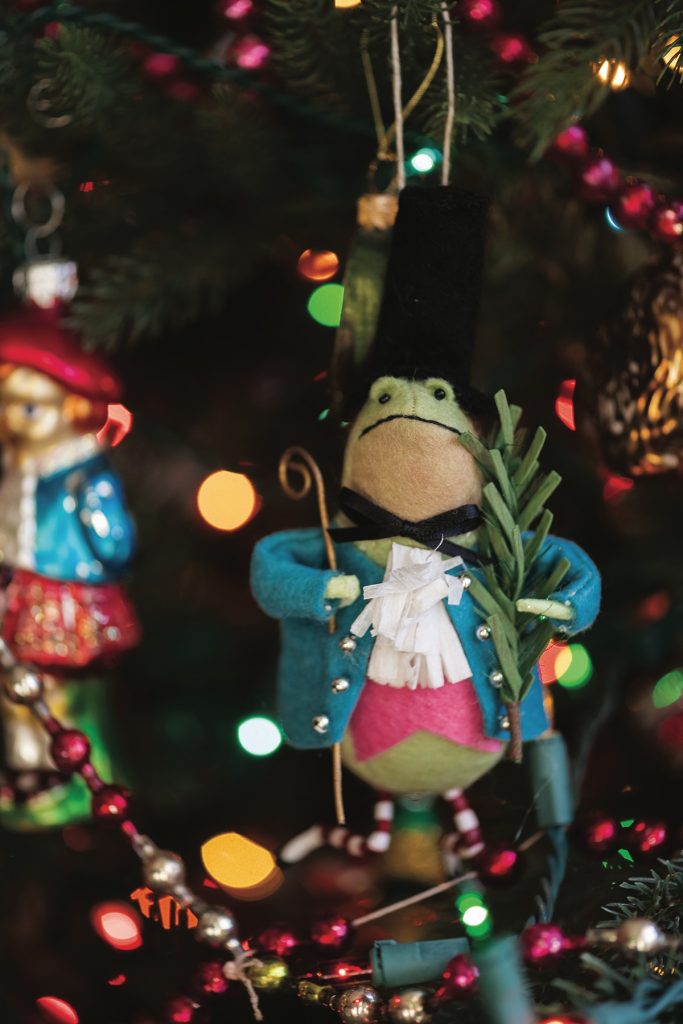
“I saved all of her — what’s now vintage — Christmas stuff,” says Linda of Charlie’s mom’s decorations, everything from plastic candelabras with red bulbs to ornaments.

Linda and Charlie have been celebrating Christmas together for almost four decades. Married since 1986, they have, between them, three grown children — Alex, Rebecca and April — four grandchildren and one great-grandson. Linda was a customer at the camera shop where Charlie worked as a sales associate. He’d ask her out and she’d say no, but, eventually, as with the film in the lab, a romance developed.

After a quick courtship, the couple married and began their lives together. Both are retired now. “I retired early because of Mom and Pop,” says Charlie, who cared for his parents in their final years. Linda retired from a long career as a graphic designer that included 20-plus years with the News & Record.

But, as young parents, they were always on the go. Dropping their young children off with the grandparents, they’d haul cameras, lighting and lenses to shoot weekend weddings together. “I don’t know how we did it, but we did,” says Linda.

They worked long hours, but still found the energy to infuse some holiday magic into their own children’s memories. Before the internet even existed and clever Christmas ideas were easily found, Linda’s mother was making Santa’s boot prints on the hearth by setting down a pair of boots, sprinkling something white — perhaps confectioner’s sugar or flour — around them, lifting them off and leaving behind evidence that the jolliest elf had, in fact, been there. Linda took a cue from her mom and did the same for her kids using sprayable fake snow.

Plus, Linda decked the halls of their home and did the holiday shopping for the kids and extended family. “I look back and I am like, good grief.”

Charlie looks at his wife knowingly. “That’s what moms do,” he says. “They fill in the space.”

But Linda doesn’t just fill in the space. Her decorations, especially the ones she’s made herself, are over the top, and changed out year after year. As she unboxes her attic-full of holiday decor each year, she says, “I just pick things up and reinvent the wheel.”

In fact, when Linda sees something she likes, she wonders how she can recreate it in her own unique way. One item she knocked off her to-do-my-way list? A fox doll. Linda, who used to horseback ride, has collected hunt scenes and equestrian decor for years, and had always coveted a fox dressed for the hunt. When she couldn’t find exactly what she wanted — “they always look like bears or something” — she set her mind to making one by needle felting, something she’d never done before.

“Of course, I jump right into things,” she says. “I don’t start small.” She made one tiny bird as practice and then went full speed into crafting her fox, who sits on her entry bench for the holidays, greeting guests. He’s a few feet tall and his face is expertly crafted with a naturally sly expression. A riding helmet sits atop his head and, of course, he’s wearing a red riding jacket with gold buttons, all of it needle-felted. No small feat for her first foray into the craft.

Upon the encouragement of a friend, Linda, who used to belong to Daughters of the American Revolution, decided to enter her fox into their annual D.C. craft show in the doll category. “And it won best of show,” she says, as in winner of the whole shebang.

“Another art form that she dabbled in. She has the touch,” says Charlie. Whereas in the North Pole, Santa gets all the credit, Charlie simply can’t resist touting his own “Mrs. Claus’s” talents.

There is also the large painting in her kitchen nook. She’d gone to High Point Market with a friend and spotted a heron painting. “Gosh, I could do that,” she recalls thinking, and set up an easel right there in her kitchen to get the lighting just right as she painted. To add a touch of Linda Lowe signature whimsy, she put the bird in a blue-and-white basin, bubbles pouring out.

“But you know, in reality, they’re tromping around in mud all day,” muses Charlie. “They have got to do something! You gotta get that goop off somehow.”

A footbridge in the background of the painting is coral, a color Linda particularly loves. To set her kitchen table for the holidays, she used festive wrapping paper as a runner, edging it with scalloped, peach-colored ribbon she scored at Anthropologie. “Of course, I bought every roll!”

In the dining room, swags of greenery and blush-colored faux pomegranates adorn an unsigned vintage painting of, they’re guessing, George Washington. The fruit picks up on the colors in Linda’s custom cornices, though they weren’t custom built for this space, and — this should come as no surprise — were found at an estate sale, Parker Washburn’s to be exact. She, of course, Linda bubbles, was the daughter of Leon Oldham, founder of Leon’s Beauty School, and Aileen “Mrs. Leon” Oldham, and the estate sale was located inside the old, stone home the couple once lived in on Elm Street.

They’d need new side panels to work for Linda’s purposes, so Charlie suggested he could just make new ones. In his years of working at the camera shop, he’d honed his own carpentry skills by building store walls and fixtures. Plus, Linda recalls at their former home, “He made an amazing gate and fence for our patio.”

Charlie, ever so humble about his own accomplishments, says, “I used to like to piddle a little bit with woodworking and things like that.”

Linda knew Charlie could build her whatever she wanted, but what she wanted was to reuse something with history from an iconic Greensboro home. New side panels in place, thanks to Charlie, she recovered the cornices in a soft blue, floral fabric, piped in red. The blue blends into the Benjamin Moore Gossamer Blue on the walls.

In the living room, the mantel is decked out in nontraditional holiday colors — chartreuse and orange. The built-in bookcases that flank it feature books, blue-and-white transferware and white foo dogs that once belonged to Linda’s mom. But on the white mantel, orange foo dogs stand out and stand guard on either side, swags of greenery draping down with orange ribbon and chartreuse ginkgo leaves interwoven. “I have a thing about things being symmetrical,” she says.

The tree, however, remains traditional. And, she quips, “I only put up one big tree!” For as long as she can remember, she’s decorated the tree by herself. “It’s not a theme tree. It’s always got the same ornaments, same beads.” She especially loves a tree that’s covered in glass baubles reflecting the shine of her rainbow lights.

Did the kids help when they were little? “I would let them hang their stuff along the bottom,” says Linda, then, under her breath adds, “Then I’d go back and fix them.”

“My job is to hand them to her,” notes Charlie.

For years, the couple purchased a real tree, usually from Wagoner’s tree lot. But sometimes, Linda notes, the family would take off for West Jefferson, on a quest for that quintessential Currier and Ives moment, “which never went quite that smoothly!” 

After Charlie’s mother, who still loved the smell of fresh cedar in the home, passed, Linda caved and bought an artificial tree. The one she wanted came prewired with white lights, so Linda figured out how they were attached and painstakingly rewired it with her own strings of colored lights. “A big operation,” notes Charlie.

“I still haven’t found the right topper,” notes Linda. “I’ve never had one that’s like, ‘That’s it!’” An angel, a bow, a star — you name it — nothing has hit that high note. Once, they even hung a Moravian star from the ceiling above the tree.

“And then we just adjusted the tree under it,” says Charlie. “That was a collaborative idea.”

Linda walks into a room featuring four corner cabinets, each cabinet filled to the brim with vintage cameras Charlie has collected, mostly Nikons, but Canons and other models as well. The cabinets, mostly scored at estate sales, are by Greensboro’s iconic Benbow Furniture, now closed.

Does she decorate inside these cabinets at Christmas, too? Nope. “Don’t touch my stuff,” Charlie says with a smirk.

Charlie points to a particular black-and-silver Nikon. “This is [from] like 1951, something like that. This was occupied Japan, after WWII.  Nikon started out making telescopes and microscopes, and then went into cameras because that was something you could sell,” he says. “And we were trying to make their industry work so they could support themselves.”

“I figured I have the rest of the house, I can let him have this room,” she says with a chuckle.

“You’re not going to open that door, are you?” Charlie asks Linda teasingly as they approach the first-floor bedroom, which now serves as Linda’s craft room.

“Yeah, I am,” she says. “You know I am.”

What they both assume is a cluttered mess is actually an artist’s treasure box, overflowing with tools and materials a creative person would have a field day with. One very tall wall is piled high with various small, handmade shelving units, including one her brother made as well as her grandfather’s old shaving stand. Her vision for it? “The Harry Potter wand shop, where everything was just stacks of books.” Fitting, as this, indeed, is where the magic happens. Paints, colored pencils, glues, markers, ribbons, brushes and all sorts of crafting supplies line the shelves. An old, wooden spoon rack holds wax seal molds.

On another wall hangs a gallery of paintings and sketches from throughout the years — some by Linda, some by her mom, who was also an artist — and even a floral painting that’s been in the family for years. Linda also spent time during COVID organizing her family’s history and has rows and rows of photo albums dated by year. In fact, during that time, Linda created two round family “trees,” one for her family of origin and one for Charlie’s. Never one to follow the beaten path, hers are more garden than tree. The names, arranged in a circle, form a sort of labyrinth of hedges that resembles an English boxwood garden. They now hang in the dining room.

On the project table in the middle of her craft room sits a current project — a mirror adorned with shells she’s been collecting for years.

“If I can spill the beans a little bit,” says Charlie, “we’re trying to get a beach house.” The couple has spent the last few months searching for a property on Sunset Beach or perhaps Ocean Isle, something they can vacation at with their family but also rent out.

“I’ve been beach-deprived my whole life and I’m like, ‘You know what? I’m going to the beach!’” Linda says. “I’ve got so much stuff piled up back there!”

“I have always said about Linda,” quips Charlie, “too much is never enough.”

Simple Life

SIMPLE LIFE

If Wishes Were Wheelbarrows . . .

Then babies would ride

By Jim Dodson

Twenty years ago, as part of our move home to North Carolina from Maine, I gave my beloved Chevy truck to a local kid who thought Christmas had come early. “Old Blue,” as I called her, was getting on in years and prone to stalling out from time to time. But, oh, how I loved that lady truck. She gave our tribe many fine memories, including a 6,000-mile camping-and-fly-fishing trip across the golden West with my 7-year-old daughter, Maggie, and our dog, Amos, that became the premise for a bestselling book and even a modest little film. 

Last Christmas, friends may recall, still pining for Old Blue, I jokingly wished that Santa would bring me a shiny new Chevy pickup truck. To help the old fella out, I even began scouting local Chevy dealers, hoping to find a deal on a nice new or used pickup truck that had my name on it. Unfortunately, the trucks I liked had eye-popping price tags, bad news for a recessionary Santa.

On one level, I’m glad my truck wish failed to come true. On another, everywhere I went in the city over the following year, I seemed to see fancy pickup trucks with old, white dudes like me behind the wheel, an unnaturally cruel sight for a fellow quietly suffering from years of truck lust.

So, I asked myself: What the heck does an old dude like me who lives and gardens in a quiet suburban neighborhood really need with a shiny new pickup truck?

The answer is nothing. Or pretty much nothing. 

On the other hand, if Santa had indeed brought me the shiny, new pickup I’d wished for, this year I could have impressed my neighbors by hauling home the largest Christmas tree ever in the back of my truck, a Currier and Ives scene for the age of consumer excess.

Instead, as usual, we purchased a lovely little fir tree at the roadside lot where we’ve found the “perfect” holiday tree for many years and drove it home on the roof of my elderly Outback. It looked sensational with its tiny lights glowing from our den’s picture window on a deep December night.

Still, old wishes die hard.

During an afternoon trip to the grocery store the other day, just when I thought my truck lust finally a thing of the past, a white-haired fellow about my age parked beside me and climbed out of a beautiful, cobalt-blue Sierra Denali 1500. It was a real beauty, and for a crazy, covetous moment, I wished I had one just like it.

“How do you like your rig?” I cordially asked.

He beamed. “It’s absolutely fantastic. Gave it to myself when I retired last year. One of the new self-driving models with four-wheel drive and a crew cab that’s perfect for hauling our four grandkids around town.” He added it had all the latest high-technology toys plus real leather seats and a super sound system.

“Feel free to take a seat in it, if you’d like,” he graciously offered.

I thanked him but declined the offer and wished him happy grandkid-hauling, then went on my way, realizing that I evidently hadn’t quite gotten my yen for a shiny new pickup truck completely out of my system.

Fortunately, my next stop was Lowe’s Home Improvement, which brought me back to Earth. As I loaded 10 bags of mulch and a hundred pounds of organic garden soil plus several bags of dried manure into my trusty old Outback “garden car,” I realized some things are simply never meant to be.

Besides, suddenly I spotted something by the store’s front doors that I truly wanted and needed more than a fancy new pickup truck.

A row of shiny new wheelbarrows.

The act of making wishes is as old as the invention of the wheel.

In ancient European folklore, wishing wells were places where any spoken wish — often accompanied by a coin tossed into the water — was thought to be magically granted. The ritual itself was a means of connecting with the divine and requesting blessings or favors. Wishing wells, in fact, exist in the lore of almost every world culture and still have a place in modern society, often found in spiritual and historic gardens, and even used in contemporary fundraising campaigns. And don’t forget, as Jiminy Cricket pointed out, when you wish upon a star, your dreams may come true.

In the modern context, however, the word “wish” simply means “a desire or hope for something to happen,” which makes me hear my late papa’s voice on the subject.

He was something of an armchair philosopher. One of his favorite expressions was “Whatever is worth wishing for, son, is worth working for.”

Probably because I was such a wishful kid, I heard this pithy bit of armchair wisdom dozens of times while growing up. 

As an early reader of adventure books, for example, I wished and dreamed to someday be another Rudyard Kipling or Edgar Rice Burroughs, maybe even Jules Verne. Later, my literary wish grew into being the next T. H. White or Ernest Hemingway.   

On another front, because I was a kid who was happiest in nature, in a garden or on a golf course, I wished to someday be either a forest ranger or someone who built beautiful gardens for a living, maybe even a golf course designer.

None of these wishes came true.

Or did they? Fueled by such youthful desires, I grew up to become a newspaper reporter like my father and found that I was even more drawn to stories about real people, history, nature, poets and things that make dreamers wish for a better world. Along the way, I’ve also built five landscape gardens and even designed a popular golf course.

In short, I’ve lived long enough to know the old man was right — that if we wish for anything, including a better world, we all must work to make it happen. 

So, whether by starlight or ancient wishing well, this Christmas I’m wishing for a couple very special things: More goodwill and kindness to each other in our troubled human family, and a safe and happy delivery for my daughter’s baby girl, due to arrive on Christmas Eve.

As a new grandpa, I can’t wait to tool my first grandchild around in my shiny new wheelbarrow.

Life’s Funny

LIFE'S FUNNY

Prescription for Success

Summerfield native Patrick Ball was born to play his hit TV role

By Maria Johnson

This holiday season, if you’re ambling the trails around Greensboro’s Lake Brandt and you think you’ve just passed the dimpled Dr. Frank Langdon from hit TV series The Pitt, you’re probably right.

That is, you’ve likely seen Patrick Ball, the Guilford County native who plays Langdon on the Emmy-winning HBO Max medical drama, soon to be in its second season.

Patrick, 36, plans to spend Christmas with his parents, Lee Ann and Jim Ball of Summerfield.

“Every time I go home, I run these trails,” Patrick says in a telephone interview. “I’ve run them in different chapters of my life. Returning to a familiar place, it becomes kind of my yardstick for growth.”

Since he left home, Patrick has done a heck of a lot of growing as an actor and as a person.

“He has integrity,” says his dad, proudly.

“He has found his way,” says his mom, relief audible in her voice.

As an actor, Patrick has experienced freakish success in the past year.

The one-in-a-million odds of any actor striking it big are very much like those of becoming a professional athlete.

Patrick’s newborn celebrity is astonishing, too, because the role that vaulted Patrick from dramatic obscurity to A-list luster so closely parallels the real-life careers of his parents.

Patrick plays the chief resident in a gritty Pittsburgh emergency room.

Lee Ann, now retired, was a registered nurse for Cone Health for almost 44 years, half of them spent in the emergency room.

“It was my passion,” she says.

Jim, also retired, worked for 40 years as a paramedic for Guilford County Emergency Medical Services. In the early 2000s, he held the record for saves in the field, meaning he basically brought 79 people back to life.

At home, when their kids were young, Jim and Lee Ann never talked about their high-stakes work, and Patrick, the oldest of three, had no interest in following their footsteps.

But he had a taste for high-risk/high-reward situations, a flair for the dramatic and a way of making his presence known.

“He was born with a big voice,” says Lee Ann, laughing. “He was louder than any other child, and he boomed at you if he had something to say.”

Energetic and adept at expressing himself physically, Patrick played recreational sports in Summerfield.

At Northwest Guilford High School, he was a member of the wrestling, basketball, baseball and football teams — briefly.

“We had him grounded the entire four years,” says Lee Ann, adding that she spent many hours praying for her oldest child.

“He was a pill,” says his nurse-mom, intending no pun.

“Patrick liked to test his boundaries,” adds Jim.

Later, on the phone, Patrick is more direct.

“I was a problem child,” he says, recalling how his parents stayed on him about sloughing off homework and smoking weed.

All they wanted for him, he says, was to find a constructive pursuit that he was passionate about and apply himself.

A possibility glimmered in high school.

Patrick and a couple of friends auditioned for an honors drama class because some older guys they admired took the class.

“They listened to Radiohead and Death Cab for Cutie,” Patrick says. “We thought they were the coolest guys in the world.”

The class was something of a dud, covered by a disinterested coach after the usual teacher went on maternity leave.

After a month of watching movies, Patrick and his pals started producing their own shows. They performed scenes from Tennessee Williams plays. They organized a school-wide variety show.

“That was a really cool feeling — to collaborate with a group of friends and make something out of nothing,” Patrick says.

“It was crucial to my formation as an actor because nobody was telling us we had to do it . . . we were able to follow our own curiosity and our own initiative and develop our own hunger.”

Opportunity winked again during Patrick’s freshman year at UNCG, where he enrolled in media studies, hoping to get into broadcast journalism.

A theater friend asked Patrick to help him out by appearing in a 10-minute scene for class. John Gulley, the head of UNCG’s theater studies, caught Patrick’s turn and urged him to join the program.

He did and won the lead role of Jack Tanner in Man and Superman, a dense George Bernard Shaw play.

Patrick, who had kicked off college with a couple of alcohol-related arrests, saw the role as a make-or-break moment.

“I focused for the first time in my life,” says Patrick, who describes himself as having ADHD.

He memorized his lines — a skill that comes easily to him — and showed up for rehearsal ready to go “off book,” without a script.

The late Josh Foldy, a UNCG theater professor who’d studied acting at Yale, thought Patrick could make it as a professional actor.

He wasn’t the only one. When Patrick and his senior classmates traveled to New York City for a showcase in early 2013, industry pros urged Patrick to move to the city immediately. He hesitated because he planned to perform with the N.C. Shakespeare Festival in High Point that spring. The work would land him a union card with the Actors’ Equity Association, a rite of passage for stage actors.

When the ailing festival canceled the spring show, Patrick jetted to New York a few credit hours short of his undergraduate degree.

“The iron is hot. I’m going now,” he says.

More than a decade of journeyman acting followed. Patrick crisscrossed the country to do regional theater. Back home in New York, he worked a slew of odd jobs: tearing tickets for the East River Ferry; driving a moving truck; working on a paint crew; handing out promotional cell phones at New York Fashion Week; serving at restaurants, bars and coffee shops.

His income and career path were all over the place. He considered teaching drama for stability.

At the urging of his childhood friend James Mieczkowski, now an Emmy-winning producer for PBS North Carolina, Patrick detoured to Yale, where he took a Certificate in Drama in 2022.The certificate converted to a Master of Fine Arts degree when Patrick finished his UNCG bachelor’s degree online later that year.

He taught a couple of summer classes at Yale. He landed a bit part on Law & Order.

It wasn’t enough.

He was done with acting, he told his parents.

He came home, ran the trails around Lake Brandt and interviewed for a fundraising position at High Point University.

He waited for an answer.

In the meantime, Moisés Kaufman, an acclaimed director who wrote the movie The Laramie Project, asked Patrick to do a play in Miami.

Dramatic tension mounted when HPU offered Patrick the job.

Patrick asked if he could start in three months, after the play wrapped. HPU said OK.

In a reversal worthy of the big screen, Patrick did the Miami play, met his girlfriend, actress Elysia Roorbach, declined HPU’s offer and moved back to New York.

That spring, in 2024, he did three Zoom auditions for the L.A.-based producers of The Pitt.

Patrick visited his parents in May.

He ran the trails.

The producers called. Could he get to L.A. for a screen test in two days?

Give me three, and I’ll be there, said Patrick.

The producers agreed.

Patrick showed his parents the pilot script.

“They said, ‘This checks out. This is real medicine,’” he remembers.

In L.A., Patrick mentioned to the show’s producer and star Noah Wyle that he’d read Wyle’s mom was a nurse and added that his mom was, too.

“‘Oh, so you get it,’” said Wyle.

Patrick explained how he understood the character of Langdon.

“I said, ‘I’m not here to play Hot Doctor. I know for a fact that working in an ER is blue-collar work. It’s ditch digging, and that’s how I’m gonna play it.’”

He got the part.

Fifteen episodes later, he’s a bona fide star, and, like it or not, fans regard him as a hot doctor — with his vivid blue eyes, hank of dark hair and a punctuated chin reminiscent of Kirk Douglas.

A hot doc who knows his stuff.

Patrick says he has been inundated with emails from medical professionals thanking him and his castmates for accurately portraying life in the emergency room.

The intensity, the procedures, the variety of cases, the physical demands, the emotional whipsaws — all of it rings true to them, including the episode in which Langdon gets caught stealing drugs from the hospital’s pharmacy.

It’s a legitimate issue in the medical community, says Patrick, and it’s a situation that resonates with him personally.

Almost four years sober, he knows very well the subtle ways of addiction.

“I want to tell that story as responsibly as possible,” he says.

Which brings us back to the holidays, a time of gifts and gratitude.

Patrick Ball will come home to celebrate both.

He’ll hold his new baby niece.

He’ll sit on the back porch and talk with his dad.

He’ll thank his mom for her continued prayers and patience.

And he will run the trails, taking measure of his life, which, he says, seems like a miracle.

“I spent 15 years auditioning for film and TV and traveling across the country doing theater, and waiting, and getting close to life-changing opportunities,” he says.

“Then the thing that comes through is telling this story that’s so close to home? It really does feel . . .”

He reaches for the right word.

“Providential.”

Omnivorous Reader

OMNIVOROUS READER

Finding Everyman

Breaking a 19th century code

By Anne Blythe

Anybody who delights in being an attic archaeologist and parting the curtains of cobwebs in dim, dank corners to excavate layers of dust and forgotten family history will find much to like in Cipher: Decoding My Ancestor’s Scandalous Secret Diaries.

Jeremy B. Jones, an associate English professor at Western Carolina University, was digging around in boxes at his grandmother’s house one day when he came across a newspaper clipping that proved to be a golden ticket taking him back in time to the 19th century and the fascinating life of an ordinary man.

That man was William Thomas Prestwood, Jones’ great-great-great-great-grandfather, who had traveled many of the same lands and roads Jones has. Learning the details of his kinsman six generations removed was anything but typical family lore handed down from one generation to the next. Prestwood, as the newspaper clipping from 1979 revealed, had been a prolific diarist, but not the kind of journal keeper who seemed intent on preserving his life story beyond his death 166 years ago.

The details of the daily life of this militia man, Appalachian farmer, teacher, philosopher and prolific philanderer might have been lost to the annals of time had a man not salvaged a stash of Prestwood’s hand-sewn journals from a Wadesboro house scheduled for demolition in 1975. Those notebooks weren’t filled with the elegant and elaborate penmanship of the 19th century. They were written in code, a series of shapes, numbers and symbols that added an element of intrigue that eventually landed them on the desk of a state archivist.

Unable to solve the mystery of what the journals’ author had written, the archivist copied a few pages and sent them off to a National Security Agency cryptanalyst who had retired in the Appalachian Mountains. The expert in encryption and decryption quickly cracked the code, eventually transcribing the journals’ pages, revealing the many brief but telling details of an Everyman’s life in the Carolinas.

Prestwood wrote about collecting turkey eggs, hunting for a horse on the loose, farming, visiting neighbors, drinking rum, eating watermelon, playing music, strife with his father, the births of his children, deaths in the family, dreams, and his many sexual conquests and unrequited longings worthy of Tom Jones. He gives a glimpse of a public hanging and even the eclipse of 1821 — not with the flourish of a wordsmith but in the short sentences or fragments of an ordinary person.

“In 1859, a forgettable man died,” Jones writes in the opening sentence of Cipher’s first chapter. “He left behind bedclothes, a spyglass, cooking pots and an umbrella. He left history books and algebra books and mineralogy books and Greek grammar books and astrology books.” He lists the daughters and sons who preceded Prestwood in death and the debt he left behind, a sum that his “landholdings and scattershot of personal property — sold for a total of $11.94” didn’t cover. Prestwood, Jones writes, “entered the ground penniless.”

The journals he left behind, the treasure trove that Jones learned about from the yellowed 1979 newspaper article in The Asheville Citizen-Times — have proven to be priceless, though. They give a glimpse, as the codebreaker wrote, “of the very essence of Everyman’s life from the cradle to the grave.”

Jones toggles between Prestwood’s life and his own, turning to archives, property records and other historical accounts to help flesh out his ancestor’s story. Occasionally, he fills in gaps with his own imagination and hypotheticals to further a narrative that includes slave ownership and womanizing.

Jones struggled with whether he should lay bare the details of a long-dead man’s thoughts and his comings and goings. After all, those specifics were cloaked in a code cracked more than a century after the last journal entry.

“He’d blanketed his shin-skinning and corn-planting and woman-laying in code for a reason, and what right did I have to come along two hundred years later and run my fingers along the edges of his life in a library in the middle of the state?” Jones asked himself while viewing the diaries in a special library collection in Raleigh. “Was I shrinking his life by bringing it out into the open, making him smaller than he ever was, less of a man?”

In Cipher, Jones not only has brought Prestwood to life again — scandalous warts and all — he has created a memoir of sorts, a depiction of his own everyday life exploring today’s connection to this country’s complicated past. Jones has given us yet another chapter in Everyman history, an interesting read for anyone who likes to look at what America once was and has become. 

Wandering Billy

WANDERING BILLY

Do You Hear What We Hear?

It’s all about knowing where to listen

By Billy Ingram

“Music is the great uniter. An incredible force. Something that people who differ on everything and anything else can have in common.” ― Sarah Dessen

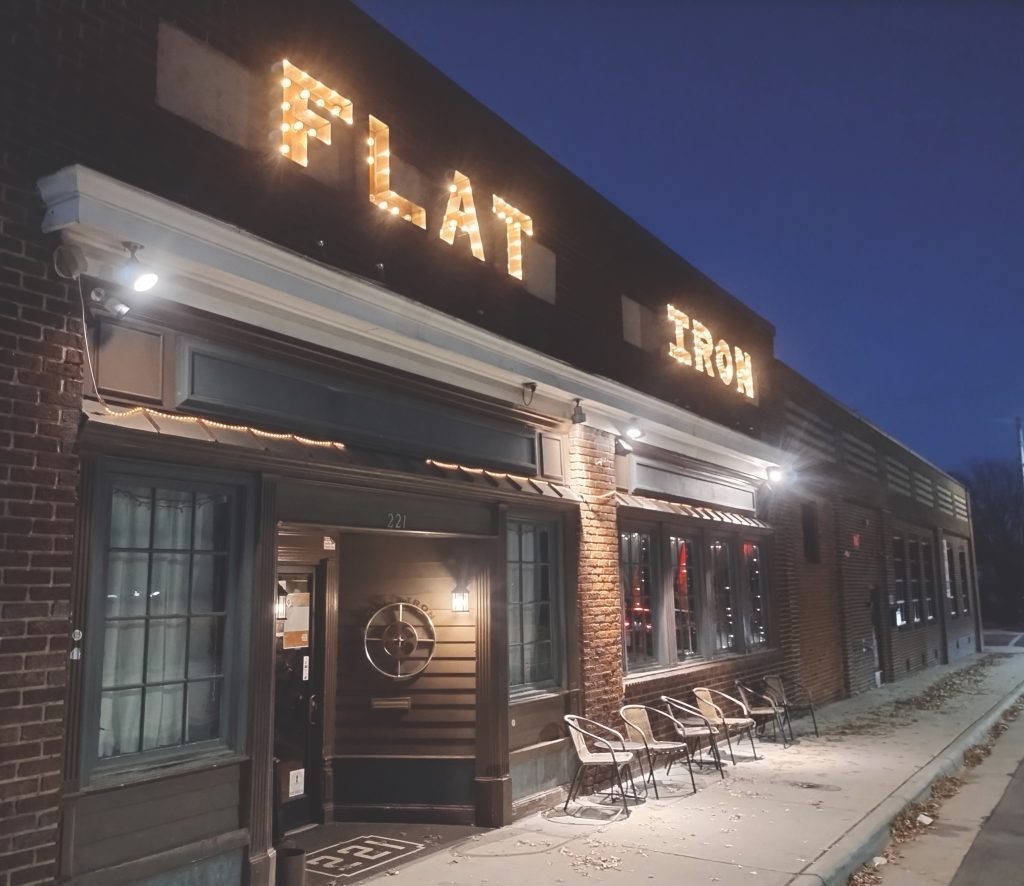
This Christmas Eve yule find me swinging and swaying on Summit Avenue when the world-renowned Sam Fribush Organ Trio unfurls their firehose of funky jazz gyrations at Flat Iron.

Fribush has proven to be a truly transcendent analog-tronic trouper luxuriating in that funky Philly sound of the ’60s and ’70s with no hint of nostalgia. Nimble fingers soulfully sweep across the keys of antiquated electric Hammond organs, manifesting sounds soaring with vibrant verve typified by Booker T. and the M.G.s’ Green Onions or Billy Preston’s organic tracks, “Outa-Space” and “Will It Go Round in Circles.” In my estimation, Sam Fribush promises to be the most exciting musical talent to surface from our city in this century. Back on American soil after touring Europe, this melodic maestro originally graced our pages in September 2024, you may remember.

Additionally, there’s an embarrassment of musical riches downtown this December at Flat Iron, a rousing roster of folk performers with deep Southern roots dabbling in a variety of genres. Fribush and company aren’t the only confirmed crowd-pleasers at Flat Iron delivering some sizzle to this time of tinsel and tensile kinfolk.

Originally an A&P grocery store in the late 1920s, the Flat Iron building was a derelict by 1997 prior to being done-over by developer Dawn Chaney, who told me, “It was boarded up when I bought it.” For a decade or so, The Flatiron (one word back then) served, and famously overserved, as a dive bar for day drinkers and clipped-winged nighthawks. After a dormant period, Common Grounds’ Dusty Keene resuscitated this space in spectacular fashion to become a live music venue in 2019. Josh King and his wife, Abby Spoon, took over three years ago.

Over a couple of decades, Josh King established himself as a distinguished, singularly gifted local singer-songwriter. When very few area bands were attracting national attention, King and cohorts scored successfully with House of Fools, formed in 2004 after a demo he and Matt Bowers recorded on the fly landed them a deal with California-based Drive-Thru Records. “They had some bigger pop-punk bands on the label and we weren’t that at all.” King confesses he reluctantly hopped on board. “We took the opportunity and ran with it and were able to do some cool stuff.”
That eponymously titled album’s reception, coupled with criss-crossing the country DIY style, resulted in Alternative Press magazine declaring House of Fools one of the “100 Bands You Need To Know in 2006.” Band lineup musical chairs and label leaving preceded House of Fools’ self-released second album in 2011, Versus the Beast. Subsequently, members have since migrated over to other projects.

As for owning a club, that was a concept confined to dinnertime discussions,“not something we actually thought would happen,” King admits somewhat sardonically. “The timing just sort of lined up.” A notion not so far-fetched, given his wife’s years of experience bartending, followed by a considerable career in mental health, both indispensable skills handy for handling honky-tonk habitués.

Small, intimate performance spaces like this, geared toward local and touring up-and-comers, constitute the core of any city’s musical milieu. Flat Iron is where our indie scene beats best. A few December bookings on my list to check off:

á

Promoter Tim Coleman sponsors a night of full-throated folk on December 11, headlined by Bob Fleming and The Cambria Iron Co. One of my favorite singer-songwriters of all time, Fleming’s solo strumming of his punkish confessions caught my ear and eye a decade ago. He possessed a stage presence shrouded with uncharacteristic shyness, a charismatic reluctance belying his Bukowski-esque runes. Now content sharing the spotlight, Fleming is decidedly more relaxed, jaunty even, since settling in with his muse (my supposition, anyway), co-vocalist Dawn Williams, and three fellow travelers. He’s a vocal powerhouse, pouring forth electrified, country-fried, soulful Southern rock.

Raised in Appalachia, Cliff B Worsham opens the evening. A founding member of Asheville metalcore sensation Secret Lives of the Freemasons before launching RBTS WIN, his hip-hop-inspired melodies were once vaguely reminiscent of Elliot Smith. “Then he got sober,” Coleman confides about Worsham’s return to his folk-music roots, “and he’s been doing his Appalachian Americana thing for a couple of years now.” Sandwiched ’twixt those two will be Johnson City’s Jacob Danielsen-Moore, strumming the style of porch music Andy and Opie might be relaxin’ to until Aunt Bee gets wind of his lyrics and chases that stranger back into the hills. Through darkly personal and occasionally twisted scenarios, for the last several seasons, he’s enthralled audiences on the Old Gods of Appalachia tour. “He’s just authentic when it comes to his music,” Coleman rightly declares. “There’s an honesty to what he does that you can connect with.” He’s right.

á

American Songwriter magazine proclaimed Greensboro’s own Abigail Dowd’s “eager vocals are accompanied by toe-tapping instrumentals that create a package of sonic warmth. It’s a friendly reminder that life’s blessings are happening in the here and now.” Dowd’s monthly Singer-Songwriter Series happens every third Tuesday, a fortuitous occasion for those interested in exploring the creative process by sitting in on conversations between working, folk-oriented tunesmiths.

King says Dowd, a self-described “song catcher,” is “bringing in artists she meets out on the road or at conferences. Top-notch talent, they’ll drive here just to do this with her.” Past participants include Dawn Landes (The Liberated Women’s Songbook), Ordinary Elephant, Demeanor, and Gold- and Platinum-record-selling artist Jason Adomo. On December 16, it will be Josh King joining Dowd on stage. “I was writing songs as soon as I learned my first two chords on guitar, in fourth grade,” says King. For an example of his resonate recordings, visit Youtube: Josh King’s Into the Blue.

á

The aforementioned funktastic Sam Fribush arrives on December 23, chock full of Chuck Pinckney’s dynamic drum beats bolstering Will Darity’s spellbinding guitar flourishes, all three freestyle jazz masters. This triumphant triumvirate just returned after 16 packed performances barnstorming across 27 European and U.K. cities. Thanks to Vince Guaraldi, over the last 60 years, jazz has become sonorously synonymous with our holiday soundtrack, on par with Dean and Bing, so the lucky 100 or so attendees can expect a funk-infused feast casually wrapped in rapturous ribbons of radiant tonality. Tickets for this will sell faster than a 1999 Furby.

á

This year, Flat Iron landed a grant from Live Music Society, a nonprofit providing support for smaller venues — “also giving North Carolina artists an opportunity to obtain free assets like a new bio, photo shoots, and live audio and video recording,” Spoon explains. Everything is produced on-site, “so they can do as many takes as they want and both of our engineers are really good at mixing.”

As for Josh King’s extracurricular activities, he recently hosted a House of Fools reunion and periodically jams with The Finns, a highly sought after wedding and corporate confab party band cultivating a sizable fan following.

On the flip side, despite an ideal location and enthusiastic following, that thin line between thriving and barely surviving is minuscule but crucial. Flat Iron would undoubtedly benefit from a benefactor with business bonafides. Leaping into the exciting, every once in a while profitable world of live music? Discuss over dinner.

For other events, visit flatirongso.com.

Sazerac December 2025

SAZERAC

December 2025

Making a Mark

After graduating from Savannah College of Art and Design May 31, 2015, Blythe Leonard turned down an offer to work with Ralph Lauren, despite her background in fashion. Instead, she made a beeline back home to Thomasville.

By June, she had created her own brand of handcrafted leather goods and opened shop April 1, 2016. “I placed an order for my sewing machine before I even graduated.” 

The other part of her plan was to support other “makers.”

“I wanted to uplift locals. I have a service heart; I’m always hoping to help people up.” Blythe smiles. “It is Hallmark-y.”

Today, Blythe Leonard Leather at 606 Davidson St. features her hand-crafted goods. Miranda Kerr and the late Diane Keaton are among celebrities who have owned her handbags.

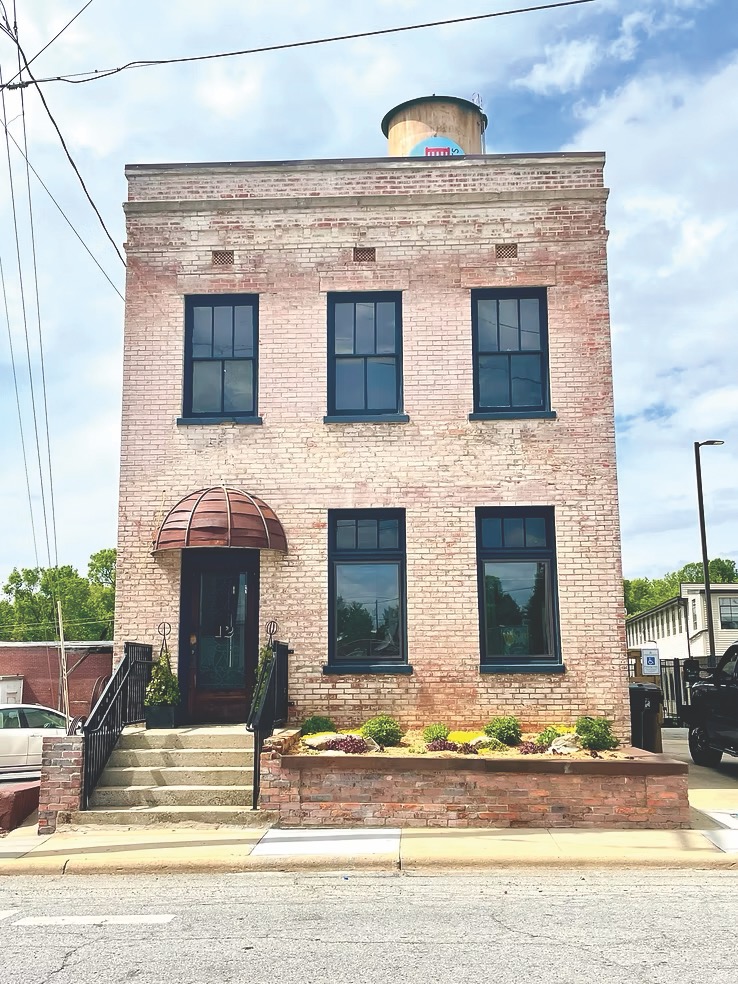
Her second location, 12 East Guilford St., was once headquarters for Lambeth Furniture Company, precursor to giant Thomasville Furniture.

She bought the 1898 building on October 1, 2020. 

With support from entrepreneurial parents Jane and Mark Leonard, third-generation owners of Hill Spinning Mill in Thomasville,

and a slew of paid and volunteer labor, a spiffy remodel resulted in the perfect showcase for one-of-a-kind items. Leonard transformed the down-on-its-luck building during the pandemic, stocking two stories with the work of 100 artists.

Maker’s Market opened on May 29, 2021.

Now, nearly 350 “makers” produce wares sold in artful displays: handmade jewelry, pottery, gardening tools, specialty food items and artwork — all using American materials. “If they make candles, even the glass they pour the candles into has to be made in the U.S.,” says Blythe.  Her woodworker brother, Nick, creates cutting boards and 16 other woodworkers sell everything from spoons to ornaments. 

Blythe considers the quality, pricing and work of friendly makers. “I won’t work for or with anybody that’s rude,” she insists.

Come the holidays, Blythe casts a wider net for those who cannot make the trek to historic Thomasville. 

“We are always looking for avenues to bring customers to our makers so that they are successful. So, we reached out to Piedmont Crossing [a Thomasville retirement community] to see if we could set up a tour bus to come visit the store.” 

On-site pop-up shops have grown popular.

Maker’s Market recently co-hosted a pop-up at Pennybyrn, extending invitations to other retirement communities.   

Blythe says the residents appreciated the opportunity to shop where they live since many use walkers, canes or wheelchairs.

Meanwhile, Blythe’s writing about how she got here. Her working title, “A Whole Lot of Faith and a Whole Lot of Crazy,” looks back on the exciting past decade. 

“I tell people I must be crazy to have opened a second business during COVID.” — Cynthia Adams

Unsolicited Advice

In 2021, PBS declared, “The misunderstood fruitcake has a magnificent shelf life — and history.” In fact, it dates back to ancient times. Perhaps the one your neighbor brought you last Christmas was, in fact, a relic of the past. Antiquated or not, we’ve got some alternative uses for that unwanted fruitcake your family is likely to forgo in favor of snowman-shaped sugar cookies.

Small and dense, it’s practically a brick, making it a perfectly weighty doorstop — though we don’t endorse building your home from fruitcake. Great for holding the door while you hustle through with present-laden arms, we recommend changing it out before spring and the onset of ants, though we cannot confirm that they’ll even eat it.

Sliced, you can take out some of that holiday angst on the ice with a family-friendly game of fruitcake hockey. 

Need a moment of om? Maybe a little hip release? Stretch yourself into the pigeon, a yoga pose that opens up those flexors and glutes, and rest your forehead on the next best thing to a yoga block — Aunt Helen’s fruitcake.

When all else fails, listen to the advice of your old buddy, Sam-I-Am. Don’t be a fruitcake Grinch. Try it! Try it! And you may . . . actually like it. Especially after a festive meal of Green Eggs and Ham.

Just One Thing

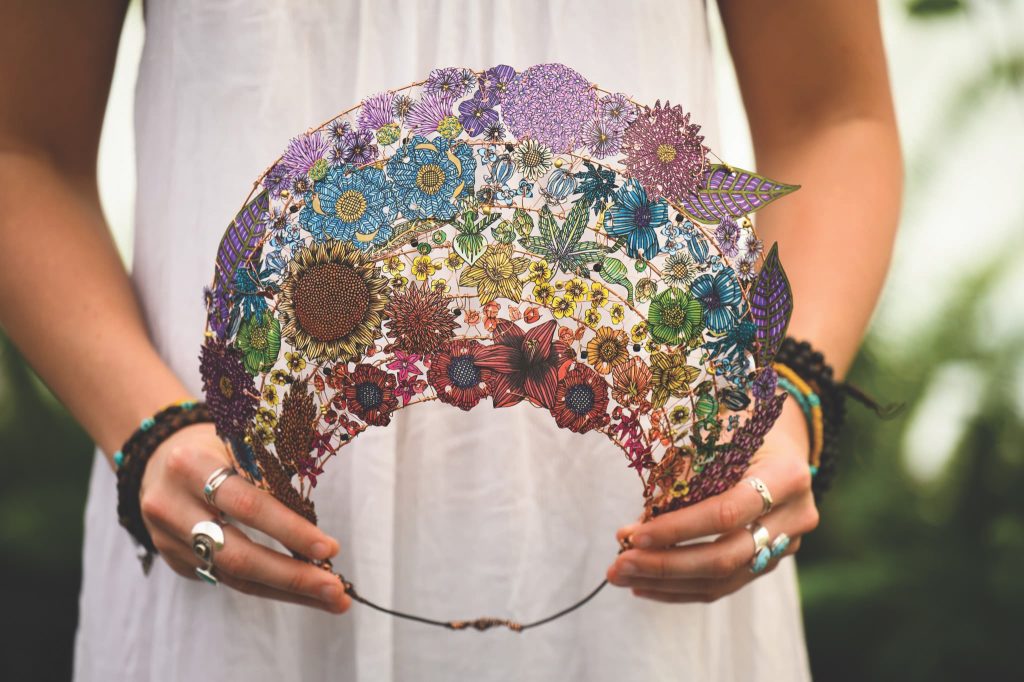
Every year, Greensboro’s GreenHill Center for NC Art gathers the works of over 70 artists state-wide in one glorious, two-month-long exhibit. Winter Show, now in its 46th season, has become a Gate City staple for both art connoisseurs and those who believe in supporting local artists. No matter where you land, you’ll find something unique that grabs your attention — perhaps one of Asheville creator Heather Divoky’s crowns. Divoky, who describes herself as “an artist, designer, and sometimes-poet,” utilizes marker and ink on paper, copper wire, and beads to fabricate these one-of-a-kind fashion statements. Divoky draws “in all sorts of fantastical, deeply detailed ways” to create vibrant, fanciful crowns, allowing you to wear her wildest whimsies — everything from moths and possums to celestial bodies and flora. Pictured here is Pride I, a royal rainbow of blooms. While we’re told this specific crown won’t be at Winter Show, we do know that ones similar will be on display in all their crowning glory. Want a head start? Don’t miss Winter Show’s First Choice event from 5:30–7:30 p.m., Thursday, Dec. 4, or Collector’s Choice from 7–10 p.m., Saturday, Dec. 6. The Public Opening follows from 1–3 p.m., Sunday, Dec. 7. Info: greenhillnc.org/winter-show-2025

Carol W. Martin collection at the History Museum

Window on the Past

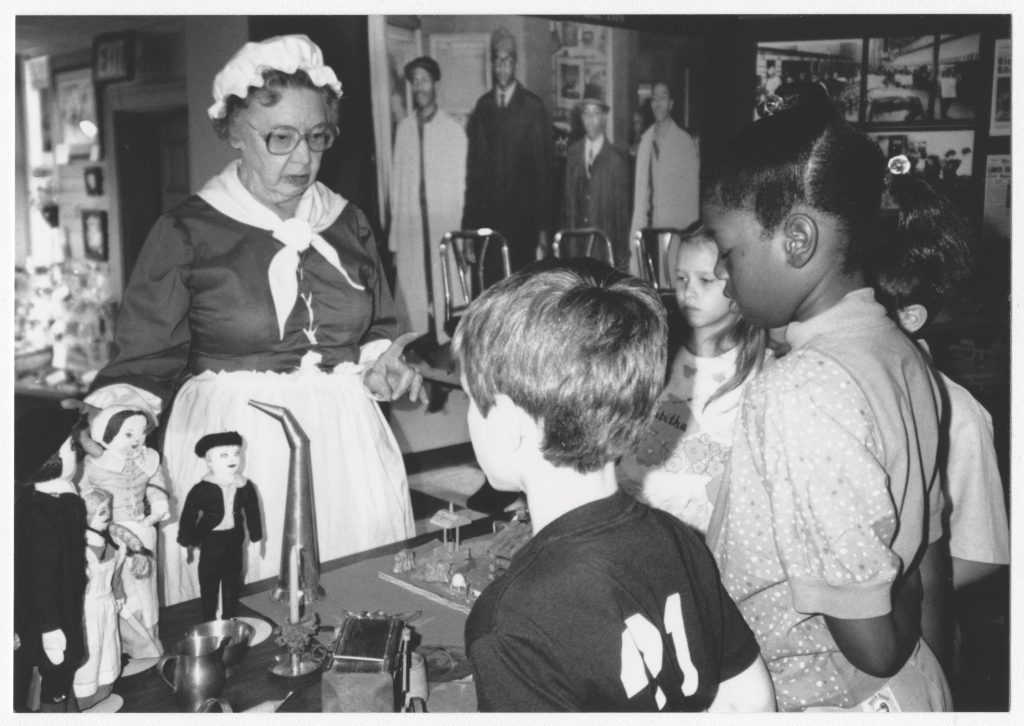
Many of the traditions we have in Greensboro have stayed the same, including holiday storytelling. Pictured is Elizabeth Holder, a volunteer at the Greensboro History Museum during the 1990s, using miniature figurines to relay the Moravian settlers’ history to Global Studies Magnet School students. Some things never change — like the snap of the perfect Moravian cookie.

Tea Leaf Astrologer

TEA LEAF ASTROLOGER

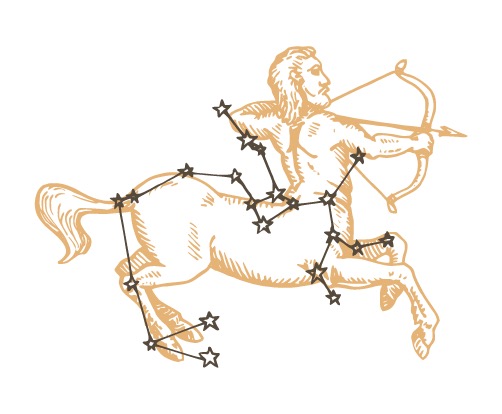
Sagittarius

(November 22 – December 21)

There’s a fine — and in your case, blurred — line between passionate and possessive. When Venus struts into Scorpio on Nov. 6 (where she’ll glamp out until month’s end), that line is primed to become a short leash if left unchecked — and nobody wants to be on the other end of that. A word of advice: Don’t smother the fire. Tempted as you may be to cling fast and tight, a little space will keep the coals glowing red hot.

Tea leaf “fortunes” for the rest of you:

Capricorn (December 22 – January 19)

Go easy on the eggnog. 

Aquarius (January 20 – February 18)

Keep a knuckle of ginger on standby. 

Pisces (February 19 – March 20)

Add a splash of maple syrup. 

Aries (March 21 – April 19) 

Fold in a little extra sweetness.

Taurus (April 20 – May 20)

Reshuffle the deck. 

Gemini (May 21 – June 20)

Dress for an adventure. 

Cancer (June 21 – July 22)

Make way for true romance.

Leo (July 23 – August 22)

Use your mulligan.

Virgo (August 23 – September 22)  

Stretch those hip flexors. 

Libra (September 23 – October 22)

Try not to overextend yourself. 

Scorpio (October 23 – November 21)

Serve yourself the first slice.