Art of the State

ART OF THE STATE

Warp & Weft

The color-jangled painting of Barbara Campbell Thomas

By Liza Roberts

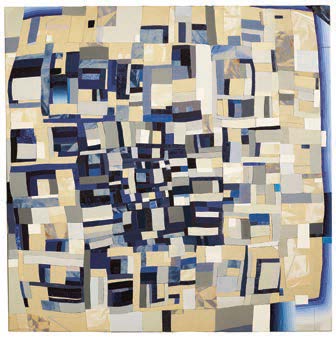
The paintings of Barbara Campbell Thomas are often warped, subtly but unmistakably. Their geometry, the linear shapes and pieces and colors that comprise them, have a slightly distorted quality. Rectangles implied, but some appear to have had a bounce or inhaled a lungful of air. Others seem to have been shaken up or spun around. That’s partly due to the kinetic energy they capture, which seems to indicate recent — even ongoing — movement.

It’s also because they are surprising. Campbell Thomas calls these works paintings, but a careful look makes it clear they are made mostly of pieced fabric. They’re quiltlike, hand-sewn, dimensional. Stretched in unexpected ways. And then painted.

“The pulling and the tension is still an important part of it,” she says. “It’s become even more magical. I spend all of this time in this initial phase, and I kind of have an idea of what it’s going to look like when I finish. Then I put it up, and it’s interesting to see what has been pulled and how the image has come to life in a different way.”
Campbell Thomas is the director of the School of Art at the University of North Carolina Greensboro and has taught there for more than two decades. Her resume is filled with solo and group exhibitions at museums and galleries around the country. Last year alone, her work was shown in solo and two-person exhibitions in Chicago, Illinois; Milwaukee, Wisconsin; Charlottesville, Virginia; and Columbus, Ohio. She has been awarded a number of prestigious residencies including at the Virginia Center for Creative Arts, and has been a recipient of a North Carolina Arts Council fellowship.

When she takes on a new body of work (like the 10 paintings she’s currently preparing for a November exhibition at Charlotte’s Hidell Brooks Gallery), she approaches it with the businesslike, step-by-step planning of a senior academic administrator — but she executes that work with daring and intuition. Campbell Thomas has learned to navigate this duality effectively with time, even as her art has become increasingly complex and her process more fully immersive.

“The piecing and sewing portion has become more complicated and elaborate, involving a lot more small pieces of fabric,” she says. “I’m understanding that layer of the process in a deeper way, so I’m spending more time in that part of the process.”

The stretching of the pieced fabric, which creates its cantilevered quality, comes next.

Once this “ground” of her paintings is set, Campbell Thomas hangs them all around her in her studio. In that way, her physical space can better reflect her “headspace,” she says, “and then the imagery: I understand better what it wants to be.” She can visualize how paint and collage will eventually come together upon these sewn surfaces: “The visual movement of the pieces feels like the big strokes,” she says, “and the collage will be how I refine them, add nuances or cover things that need to be pushed back down. The paintings become more refined. I begin to understand how to contend with the edges.”

Inside and Out

The studio where she does this work, next to her house in rural Climax, North Carolina, is about 14 miles south of Greensboro. It is a color-jangled, layered collage of a space, overflowing with textiles, history, tradition, mysticism, books, paints and threads and fabrics of every imaginable color, pattern, size and shape.

What’s outside — the fields and trees and open expanse of nature — is just as important. “I live out in the country and walking has been very important to me for my whole life. Walking on country roads, being in a beautiful landscape, has always been a touchstone,” she says.

Lately, Campbell Thomas has been trying to create “landscapes” of a different sort. “What would it be to create landscapes that are suggestive of our interior landscape? How do we create spaciousness for ourselves internally? I’ve been thinking about inhabiting a body, and what it means to inhibit a body that feels somehow spacious internally.”

The fractalized nature of her paintings, and the way they often begin in the center and move out to the edges, is her way of representing that phenomenon: “That’s me grappling with that question: how do we inhibit interior spaciousness?’

Fabric as Paint

Navigating dichotomies fuels other types of her work, too. The line where quilting ends and painting begins is one more puzzle to ponder, as is the difference between a painting (or, her version of a painting) and a quilt (a distinct form of art which she also makes).

It’s something she’s often asked about, and something she thinks about a lot. But even as piecing and sewing has become a more comprehensive part of her painting process, she has no doubt that what she makes are paintings. “My orientation as an artist is born in paint, absolutely, and the framework I still operate within has matured and evolved from an understanding of paint as a material,” she says. “That continues to inform everything.”

That dialogue began many years ago with her mother. She’s the one who taught her daughter how to quilt. But it extends through her family tree, to her grandmother and great-grandmothers, makers and stitchers and quilters all. Campbell Thomas has their names listed on her studio wall as inspiration and as a reminder of her heritage. The art journals she carefully keeps are bound with cloth covers made by her mother, who sends her a regular supply.

In these journals, she examines her process and her purpose. Abstraction, she says, allows her to say things she can’t with more literal or figurative types of work. “I’m really fascinated with my sense that there is more to the world than what we can see, and of course that starts to tap into realms of the spirit,” she says. “On the one hand, I’m engaging in this intensely material endeavor, through paint; through fabric. But there’s also this way that this engagement, which is now well over 20 years for me, is a way into spirit.”

Modern Life

MODERN LIFE

Modern Life

Based in Greensboro, the NC Dance Festival celebrates its 35th anniversary of showcasing the state’s best contemporary dancers

By Maria Johnson    Photographs by Lynn Donovan and Brandi Scott

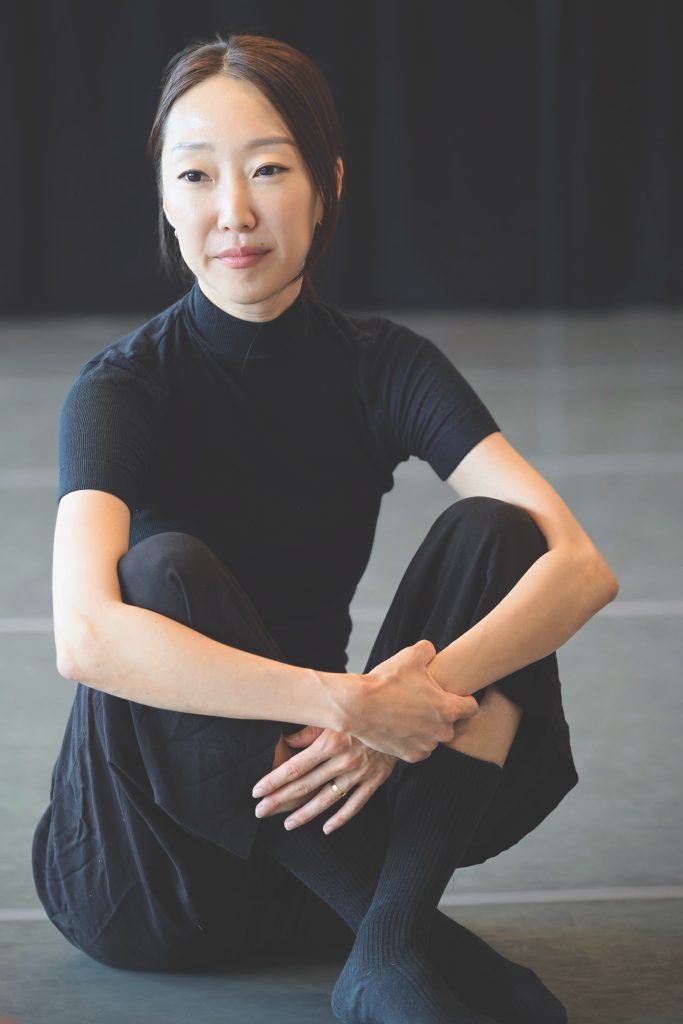
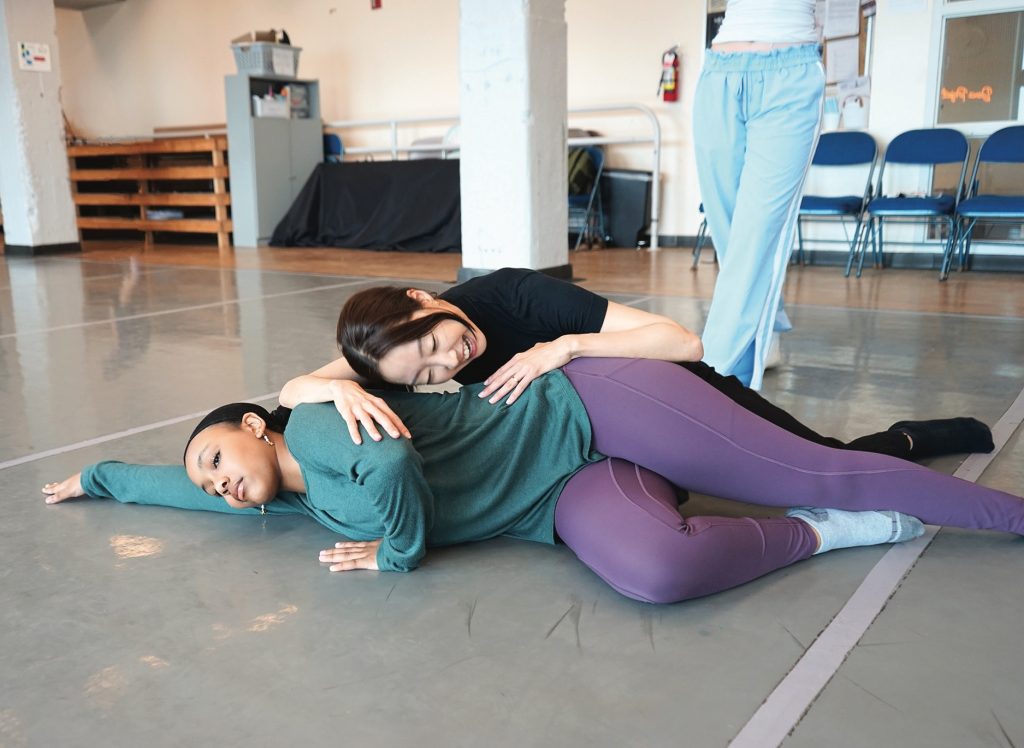
Bathed in fluorescent studio lights and stepping lightly over a cushioned vinyl floor, Jiwon Ha shows her young students how to bolster a fellow dancer who wants to descend gracefully to the ground during a modern piece.

The mechanics are tricky, so Ha, who is remarkably youthful at 40, demonstrates by leaning way over to her right. Dressed head-to-toe in black, she appears as slight and springy as an eyelash.

Her left leg leaves the ground as she reaches the tipping point. She urges her charges to act quickly as gravity does its thing.

“Catch me! Catch me!” she says, hopping on her right foot to stay upright.

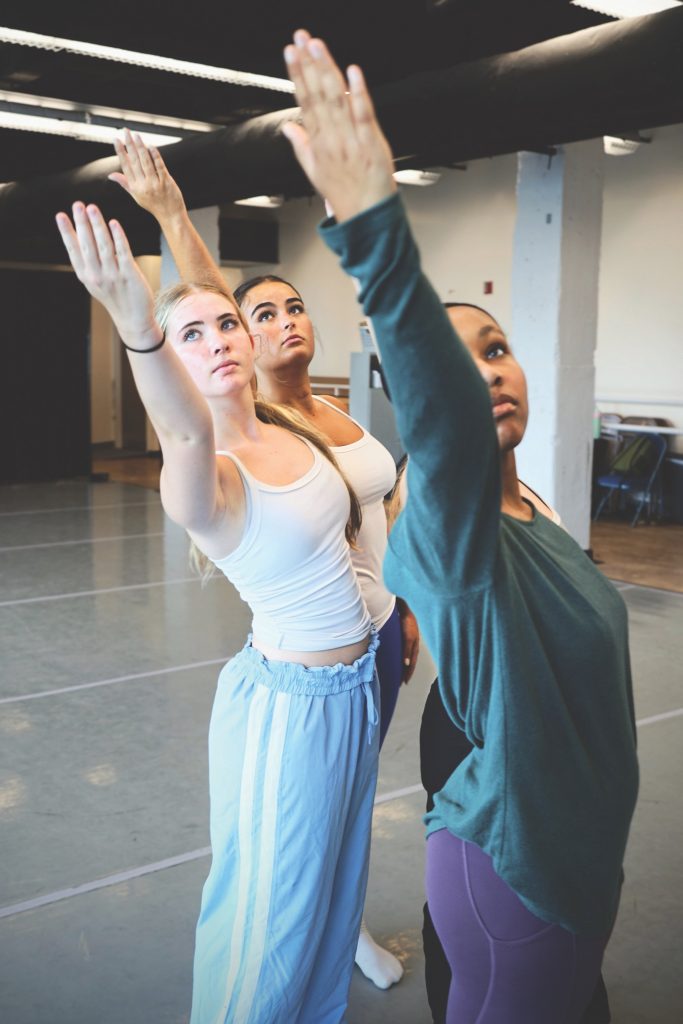
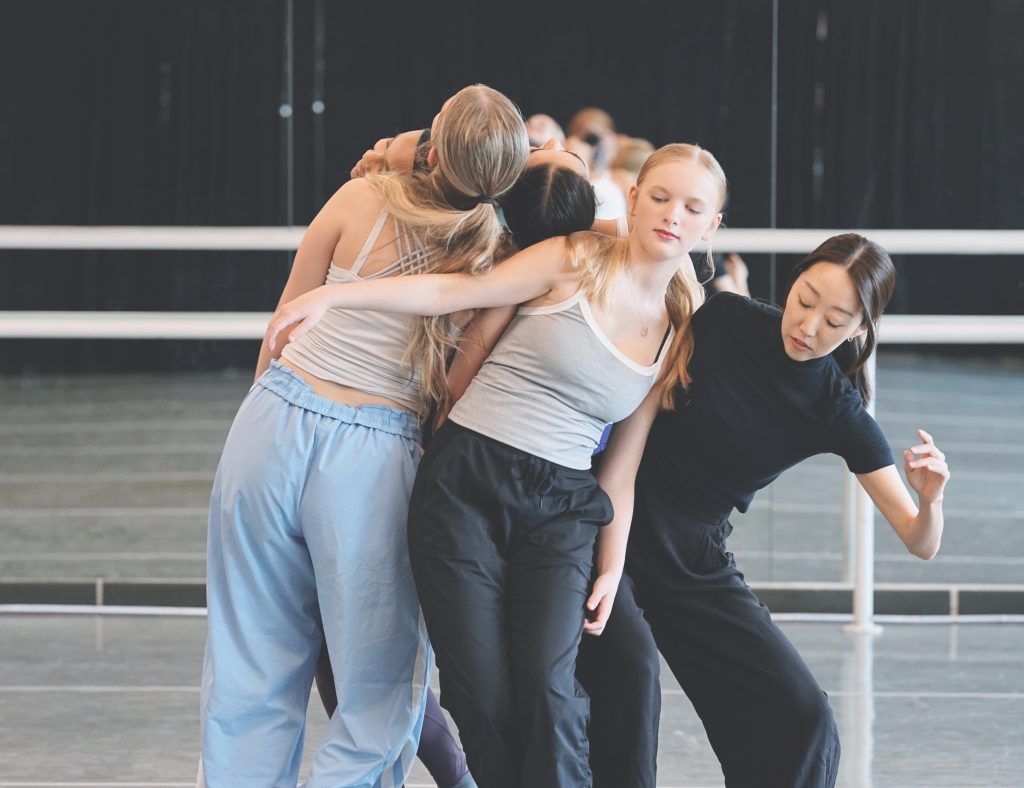
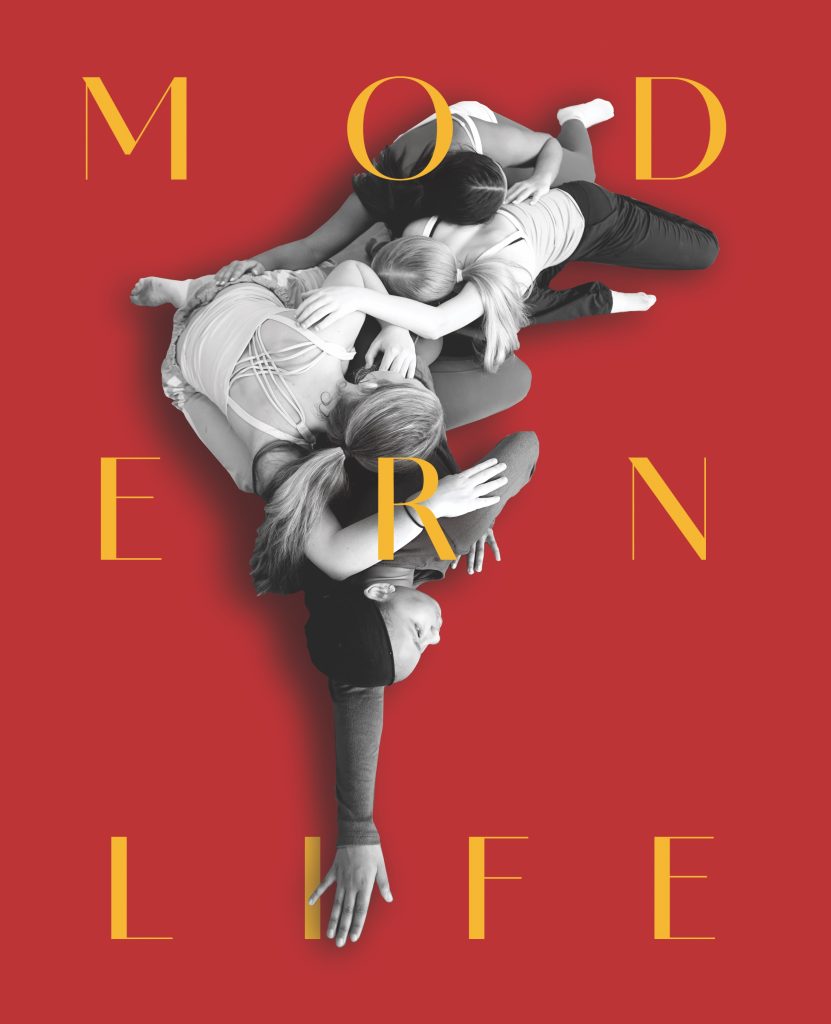
Four teenage girls — all students at Dance Project, a Greensboro-based nonprofit devoted to the art of choreographed movement — rush to grab her by the leg, arm and waist.

Suspended in mid-air, Ha uses the moment to teach: Once the counterweight is right, and the stress is balanced, it’s easy to land softly and rebound again. The underlying structure must be right.

It’s a concrete lesson in the importance of support.

The NC Dance Festival gets it.

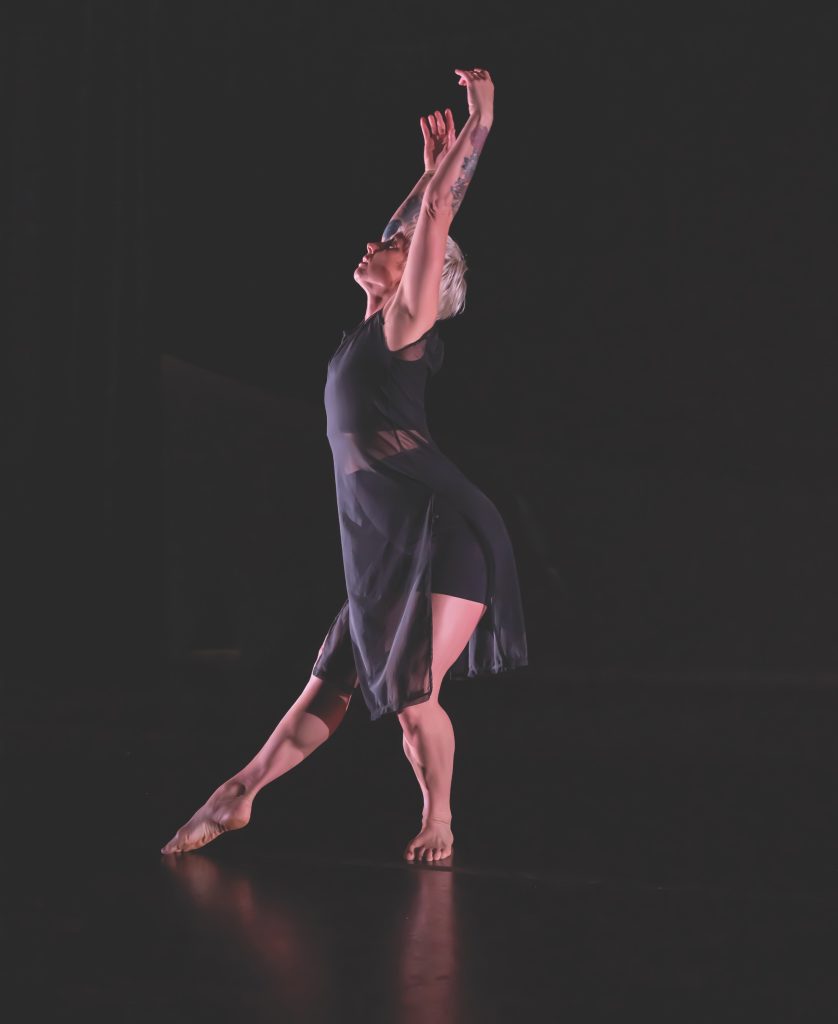
On October 18, the annual gathering, which is organized by Dance Project, will mark 35 years as the primary showcase for the state’s modern dancers.

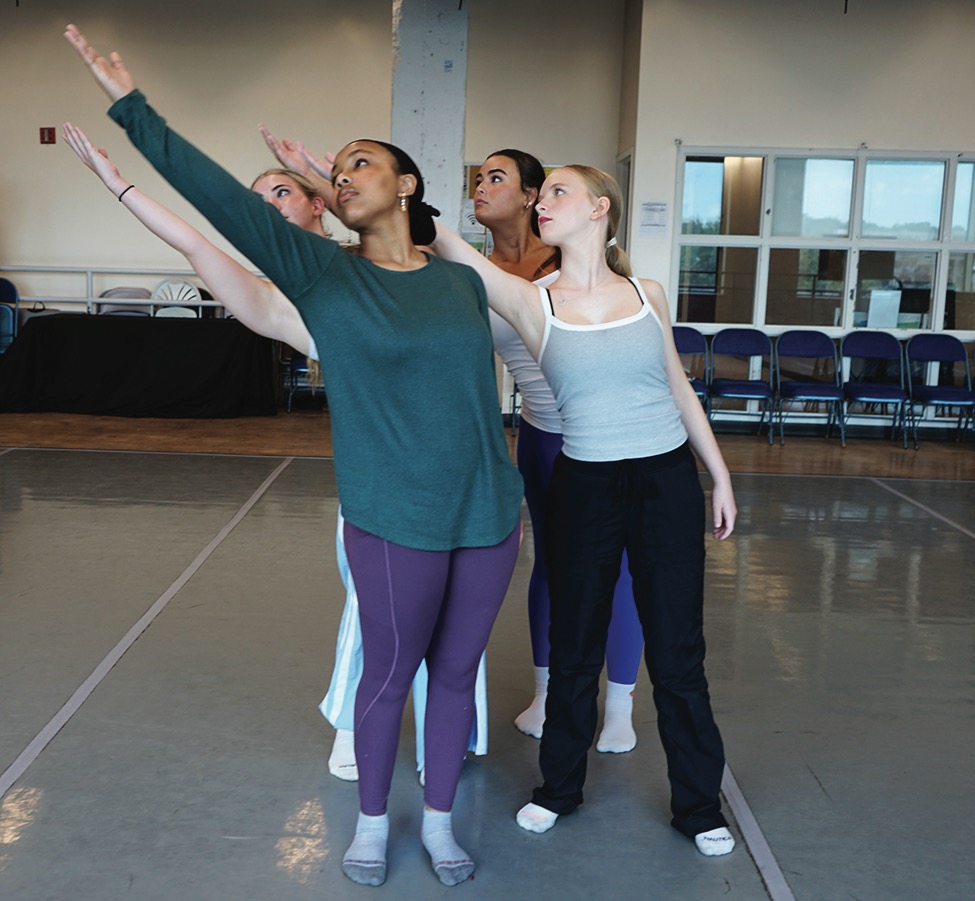
The mainstage program for that day will include some of Ha’s students, who’ll appear as a pre-professional group.

On November 7, the young cast will perform again at a special show for students who have been exposed to dance in local elementary, middle and high schools. Both times, the pre-professional dancers will execute a piece created by Ha, which expresses the emotions of adolescence.

“I want to create a dance piece that will connect with the artists and audience members as well,” Ha says. “I’m super-pumped to be a part of the North Carolina Dance Festival.”

Sure, Durham has the American Dance Festival, which pulls from a nationwide pool of talent, but Greensboro’s celebration is distinct because it focuses solely on modern dancers across the state.

That was the vision of the late Jan Van Dyke, who founded Dance Project as a harbor for her own performing company in 1973. Working with university dance programs around the state, Van Dyke launched the festival almost 20 years later, in 1991, with the goal of growing community support for dance.

The festival traveled from campus to campus for several years. Then came a phase of performing at off-campus venues. Since COVID, the festival has centered mostly on the Greensboro Cultural Center’s cavernous Van Dyke Performance Space, a stage named for the festival’s founder, who died of cancer in 2015.

With Dance Project headquartered a couple of floors above, Van Dyke’s spirit still looms large in the cultural center and in the local dance community 10 years after her passing.

A celebration of her life, co-hosted by Dance Project and UNCG’s School of Dance, will be held on September 28 and will include light refreshments, storytelling and videos of Van Dyke’s work. The event would be a good place for the dance-curious to dip a toe into the festival.

“Some people are a little intimidated by dance — maybe they don’t understand it,” says Anne Morris, executive director of Dance Project and the festival. “We try to open the doors to understanding.”

In crafting the mainstage program for next month’s festival, Morris and her board of adjudicators, who reviewed submissions without knowing who the choreographers were, have tried to assemble a varied menu.

“We work really hard to curate a show that’s a pretty good mix of a lot of things,” says Morris, adding that viewers will see elements of hip-hop, ballet, tap and other genres.

Not charmed by the style of an individual piece?

“Stick around,” Morris urges. “You might find something you like.”

The festival lineup includes an appearance by Stewart/Owen Dance, a well-known company in Asheville. They will perform a work that was commissioned by the American Dance Festival.

“It involves fronts, putting on a mask to be what you think society expects of you,” says Morris. “At times, it has a vaudeville feel.”

Other mainstage artists include:

Alyah Baker, an assistant professor of dance at UNC-Charlotte. Combining dance with feminist activism, she draws on the work of Black poets Nikki Giovanni and Lucille Clifton.

Eric Mullis, choreographer and co-director of the Goodyear Arts space in Charlotte. The multi-talented Mullis is also a Fulbright Scholar and an associate professor of philosophy at Queens University. Fascinated by motion-capture technology, his performance will include video projections of color and movement.

Chania Wilson, a native of Clayton and a 2021 graduate of UNCG’s School of Dance, will present an excerpt from her Duke University master’s thesis performance. The six-person work, called There is a Ladder, deals with documenting the experiences of Black women in dance.

The thought of returning to Greensboro brings back fond memories for the 26-year-old Wilson. She remembers visiting the city to attend a high school dance day at UNCG.

“I was blown away when I got here,” she says. “I loved the energy — how the community and faculty and students engaged. I thought it was the ideal college environment.”

As a student at UNCG, Wilson says, she was tried by circumstances. The university’s main dance studios were under renovation during her freshman year and her classes were scattered to other stages.

“I made a lot of memories sprinting across campus,” she says.

COVID arrived during her junior year, forcing her to attend classes via Zoom. She recalls being in her off-campus apartment on Spring Garden Street, putting a batch of banana bread in the oven, setting her laptop on the breakfast bar, joining an online class, and doing a West African dance in a 4-by-4-foot space she’d cleared by moving her couch aside.

“Doing West African dance on Zoom was interesting because of the drumming. Sometimes, there would be a lag, and I was like, ‘I know I’m not on beat, but I’m trying.’ It was definitely an era,” she says, laughing now about the experience.

“I think every generation has an element of, ‘Oh, we had to work through this to make us stronger.’ For me, I realized that I dance for the sake of being around other people and community.”

Jiwon Ha found similar comfort in the Piedmont’s dance community. She and her husband, John Ford, a software developer from Greensboro, moved here from her native South Korea in 2016.

Ha was wary of relocating because of anti-immigrant sentiment expressed by some Americans during the national election year, but dance allowed her to make connections easily.

“I’m so grateful that dance is a universal thing,” she says. “Once we move the body, we are all the same.”

For a while, she struggled with understanding English, especially English soaked in Southern accents.

“Now I say ‘Y’all’ very naturally, and sweet tea is my new drink,” she says. “I’m grateful that I moved here at that time after all.”

As a dance teacher at Elon University, UNC School of the Arts, and Dance Project, Ha is experienced at guiding young students. She taught teenagers at a dance conservatory in South Korea. There, she says, the teacher-student dynamic is hierarchical. Here, she says, the relationship is more egalitarian, with American students being prone to share ideas with teachers.

“They’re more vocal, which I appreciate,” she says. “It’s a newer generation, and I’m very grateful that I can work with them.”

Her rapport with students is evident in the studio, where she steers them with a keen eye while issuing gentle corrections and ample praise.

“Fall.”

“Rise.”

“Softly walking.”

“Reaching out.”

“Latching arms.”

“Eyes sparkling.”

“Good”

“Nice.”

“Beautiful.”

Ha uses the Graham technique, as in the legendary dancer Martha Graham, which emphasizes the contraction and release of spine. Cupping the hands and spiraling with an open, lifted chest are two hallmarks of the technique.

Ha is quick to demonstrate to her students, often dancing beside them. When they veer off course, she nudges them with a light touch to the arm or back. The dancers appreciate her hands-on approach.

“Jiwon is really specific, and I like that because it allows me to work on my technique and choreography while feeling really comfortable,” says 15-year-old Heba Shawgi, a student at The Early College at Guilford.

From dance, she says, she has learned lessons that apply to school and personal relationships as well.

“It’s important to be yourself and realize everybody makes mistakes,” Shawgi continues. “Everybody is going through the same learning process.”

Sitting on the floor, chatting with Ha after their class, the girls share what modern dance has meant to them: a place to build physical strength and skills; a place to find friendship and connection with like-minded people; and a place to grapple with emotions, especially the anxiety that can come from comparing oneself to others, whether in school or in the studio.

“It’s hard not to compare yourself to others,” says Sophie Kohlphenson, 17, a student at Weaver Academy. “You have to constantly remind yourself that you’re not gonna dance like the person next to you. It’s definitely a process I’m still trying to work through.”

The young dancers are quick to offer advice to festival-goers who might not be familiar with modern dance.

“I would just tell them to lean into it,” says Jessica Smith, 14, also a student at Weaver. “You can’t really make much of modern dance if you don’t take it all in.”

Sometimes a dance will provide an obvious story, they say. Other times, the works will be less narrative and more abstract, just as with paintings and other fine art.

“Everyone is going to interpret it differently,” says Sid Dixon, 16, a Grimsley High School student. “Take it how you want it. You don’t have to understand it to watch it.”

Later, Ha expands on their thoughts, providing a few more handholds — or footholds, as the case may be — for new audience members.

“Even if someone doesn’t know much about modern dance, there’s still a lot to enjoy: the physicality; the strength it takes; the emotion in the movement; or simply the satisfaction of watching a group move together as one,” she says.

“There’s also something really beautiful about its in-the-moment nature. It’s here, and then it’s gone, just like life. I hope all audience members can sit back and enjoy without feeling pressure to analyze.”

Home Grown

HOME GROWN

If Life is a Highway, Where’s the Off Ramp?

Tales of peril on the open road

By Cynthia Adams

Recent legislature forbidding distracted driving briefly flickered in the news. Its marketing featured a driver speeding along with a shaggy dog, its head hanging out the window.

Plenty of us recall a time when children or pets could pretty much ride anywhere they would fit inside a vehicle. Heck, even plopped on open-air truck beds. Which is actually still legal for farmers going to and from market.

The 1950s and ’60s ushered in a new era for family travels, and plenty of us couldn’t wait to hit the road. My imaginary friend, Pixie, and I had no trouble squeezing into the family sedan or Dad’s old pickup at any opportunity — I loved riding standing up beside my father with my left arm looped around his neck. There was always room for Pixie beside me, of course.

A nation newly traversed by interstates, thanks to initiatives by President Eisenhower, made a journey a heckuva lot easier. (My Great Uncle Miles regaled us with stories about him and his brother John navigating a trek westward in a “Tin Lizzie,” an atlas their only guide. Upon reaching the Rockies, Uncle Miles said the Model T ended their crossing by rolling backwards down the mountain, having insufficient engine power.

But now the road was open and calling, and rural folk were catching the travel bug.

A friend recalled squeezing above the back seat into the rear window niche of a two-toned, yellow-and-white ’56 Chevy destined for the nation’s capital. (He, too, grew up in a time before children’s safety car seats, seatbelts or any safety constraints.)

“You’d be arrested now,” he chuckled, recalling napping in that window nook as the family vehicle set off. His grandmother, along with his mother, and great uncle and aunt “piled into one car and drove seven hours.” 

He woke as they rolled to a stop when they neared D.C., his aunt seeking directions to the closest dime store. He was ordered to remain in the car with his uncle, forestalling the inevitable begging for a toy. 

His Aunt Nettie huffed back after leaving the dime store, “We’re going home!”

His crestfallen mother entreated, “But why?”

“You can tell all you need to know about a town by the quality of their dime store,” she answered scornfully. “We haven’t lost anything here.”   

His Uncle Elmer turned the Chevy around, driving straight back to Burlington. 

Whatever happened in the dime store was not discussed. Did they fail to stock her favorite snuff? “Aunt Nettie was a closet snuff dipper. Beehive [brand].”

I remembered a misadventure of my own in my aunt’s drab-green, ungainly Plymouth she’d named Zesta.

One summer’s morning, my aunt and my mother packed the car for a husband-free trip to Cherry Grove, a family beach, suitcases strapped to the roof. 

There was ample room for 5-year-old me to stand on the Naugahyde rear seat and watch the road retreating behind us as morning dissolved into afternoon. Pixie, my compact friend who looked exactly like Speedy in the Alka-Seltzer ads, was not along for the adventure.

Suddenly, the green Samsonite cases the two sisters had lashed to the roof broke free and I delightedly watched them bounce along the highway in our wake. Out spilled pajamas, clothing, toiletries and unmentionables. I giggled as motorists did their best to avoid them, veering wildly behind us. 

My mother swiveled around. “What is so funny?”

I pointed to the scene behind us. “Our clothes! In the highway!” 

My mother screamed.

My aunt screeched to the side of the road, Zesta’s white-wall tires kicking up a dust cyclone. 

“What in the world?” my mother shouted at me. “Why didn’t you tell us?”

Our aunt was a striking woman, leggy, tanned and outdoorsy. More than one driver slowed just to get a better look at the blonde wearing beige Bermuda shorts, a halter top and white Keds. I myself couldn’t take my eyes off my aunt as she gathered up our belongings as best she could, darting in and out of traffic. Passing cars tooted. 

My mother, the prissy one, shouted at her older sister to be careful as she stood cautiously by in a sundress, her hair and makeup just so.

My aunt rescued some pieces from the ditches and roadside, all of it soiled. We continued on our way, the sisters sobered and quiet. “I had a brand-new bottle of Tweed cologne,” my aunt sighed. 

“Did ya’ll get new clothes,” asked my friend as we laughed about our road trips gone sideways. 

“Of course not,” I answered. 

Once at Cherry Grove, we would sit in the sand and eat grape popsicles, plus I  rode the surf in an inflatable float.

I still had my blue bathing suit, which I called my “bathing soup.” And my Teddy, too, which I was wise enough to know could not have survived being stuffed into the airless suitcase.

Pixie was away on an Alaskan adventure, which was just as well, I decided. There would be much to tell him when we both returned.

Omnivorous Reader

OMNIVOROUS READER

Horrors at Sea

The sordid tale of the Zorg

By Stephen E. Smith

A few chapters into Siddharth Kara’s The Zorg: A Tale of Greed and Murder That Inspired the Abolition of Slavery, you might consider putting the book aside. After all, we live in a world fraught with grievance. Why burden ourselves with crimes committed 245 years ago?

The answer is obvious: Ancient injustices are the source of contemporary injustices. Cruelty begets cruelty. So you’ll likely continue reading The Zorg, despite the graphic inhumanity it depicts.

Kara is an author and activist who studies modern slavery. He has written several books on slavery and child labor, including the New York Times bestseller and Pulitzer Prize finalist, Cobalt Red, and he has much to tell us in his thoroughly researched and skillfully crafted narrative of the Zorg massacre, which serves as a disturbing yet obligatory lesson for contemporary audiences. 

In late 1780, the Zorg, a Dutch ship, set sail for Africa’s Gold Coast to take on a cargo of Africans to be sold in the New World. Such slaving enterprises were common. It’s estimated that more than 12 million captive human beings were transported on 35,000 voyages between the 16th and mid-19th centuries, so the Zorg was unusual only in the exceptional misfortunes that befell its crew and captive cargo.

After reaching its initial destination in Africa, the Zorg was captured by British privateers, and the ship was loaded with more than 440 enslaved humans, twice the number it was equipped to carry. The British captain, who had little experience commanding a slave ship, and his crew were ill-prepared to make the journey; nevertheless, they set sail for Jamaica. Poor seamanship, faulty navigation, rough seas, and a lack of food and water plagued the enterprise. The Zorg missed Jamaica and had to retrace its journey. The human cargo suffered greatly, sickness took its toll on the crew, and the ship’s water supply ran low. Eventually, the crew had to decide who would live and who would die.

The first to be tossed overboard were the women and children, followed by the weaker male captives. It was a heartless and brutal business, and 140 human beings were sacrificed for the “greater good.”

Such atrocities were not uncommon in the slave trade. Still, Kara’s graphic, novelistic description of these events is compelling without being gratuitous. The massacre of the innocent Black captives will be disturbing for anyone unfamiliar with the horrors of the Middle Passage, and those readers schooled in the inhumanity of the slave trade will find themselves moved to a new level of compassion. Kara’s skills as a writer and his deft storytelling bring history to life, and readers with any sense of empathy will react with genuine horror.

But the story of the Zorg doesn’t end there. When the captain, crew and surviving slaves found their way to Jamaica, the slave trading syndicate that had financed the voyage made a claim against the insurers of the enterprise, hoping to recoup the value of the human cargo that had been jettisoned. A trial followed, and a jury found that the murder of Africans was legal — they were simply a commodity — and the insurers must pay. Each lost slave was valued at $70, about the price of a horse.

Still, the controversy might have faded from memory — what was the loss of a few African captives? — but it was soon learned that the Zorg had arrived in Jamaica with a surplus of fresh water that had been taken aboard during a storm at sea. With the water supply replenished, the crew continued to dispose of the weaker captives so they might obtain more insurance money — in other words, the captain and crew committed insurance fraud. The verdict was appealed, and a protracted legal battle ensued between the insurers and the trading syndicate. The resulting public uproar catapulted the sensational story onto the front pages of England’s most prominent newspapers, transforming what might have been an insignificant controversy into a protracted struggle that would end the English slave trade with the Slave Trade Act of 1807, which in turn ignited the abolitionist movement in the United States. It would take the cataclysmic Civil War to decide the matter in America.

Slavery may be outlawed in every country, but it persists. According to the latest Global Estimates of Modern Slavery (2022) from Walk Free, the International Labour Organization and the International Organization for Migration, 49.6 million people live in modern slavery in forced labor and forced marriage, and roughly a quarter of all victims of modern slavery are children. The concept of slavery — the notion that a dominant culture or race remains superior to a once enslaved race — has not been purged from our hearts and minds.

For readers who aren’t interested in history but are fascinated by horrific tales, The Zorg fits the bill. The Russian writer Maxim Gorky, who knew something about imprisonment and slavery, understood our fascination with the terrible. “I know of genuine horrors, everyday terrors,” he wrote, “and I have the undeniable right to excite you unpleasantly by telling you about them in order that you may know how we live and under what circumstances. A low and unclean life it is, and that is the truth . . . one must not be sentimental, nor hide the grim truth with the motley words of beautiful lies. Let us face life as it is.”

At the very least, Kara’s skillfully crafted narrative will leave readers wondering how future generations will perceive the inequities and struggles of the tragic times we live in.

The Zorg will be available online and in bookstores Oct. 14.

The View Finders

The View Finders

The View Finders

O.Henry photographer Amy Freeman focuses on family

By Cassie Bustamante     Photographs by Amy Freeman

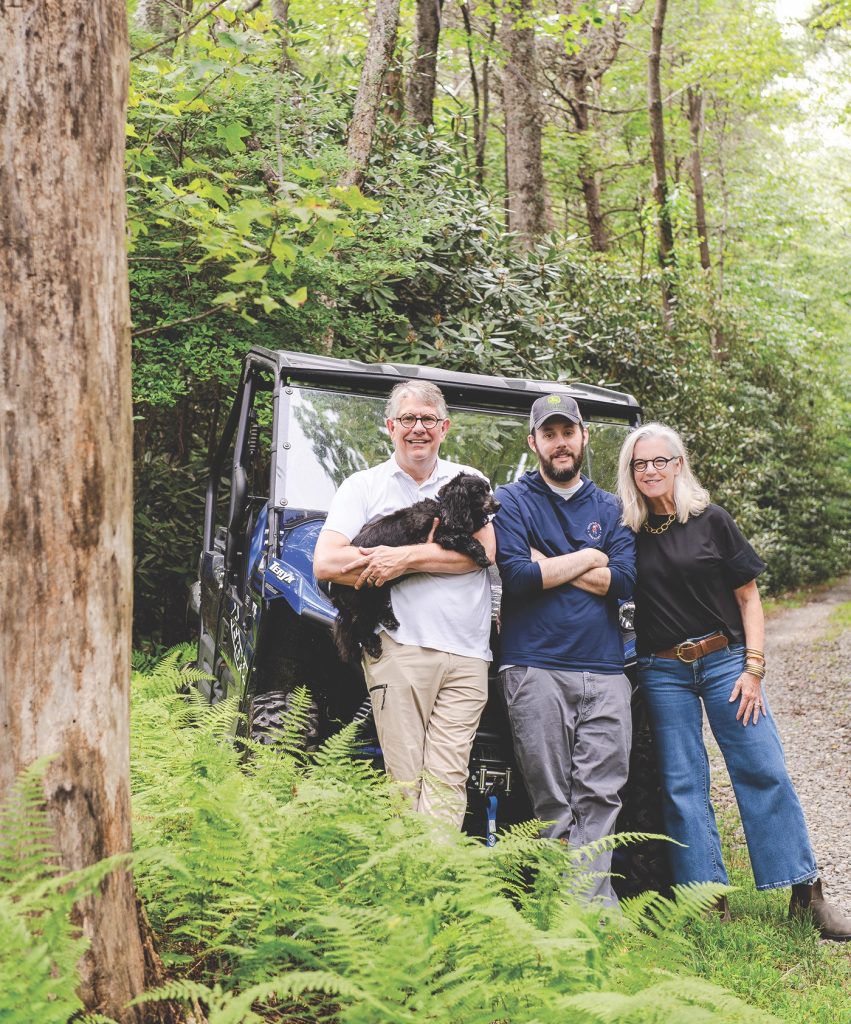
As any photographer knows, life can change in a flash. After years of hunting for a mountain retreat, O.Henry photographer Amy Freeman’s search became more urgent. Her family — husband, Peter, and son, Louis — needed a place where they could escape into nature while spending valuable time together. “It’s been a dream for a long time, a really long time,” she says.

“We’d been looking for years,” agrees Peter. Thirty years, in fact, since Louis was just a small child. They’d perused properties in Brevard, Asheville, Banner Elk, Blowing Rock, you name it, sticking within the borders of North Carolina.

As many others did during the early days of COVID, Amy recalls, the family leaned even more into finding a peaceful getaway. “We decided one random Saturday we would go look up in the Roaring Gap area, but — accidentally — we didn’t get off early enough and we ended up on the Fancy Gap exit instead.” They’d crossed over into Southern Virginia. “And, we were like, this is kind of great.”

Suddenly, they had their sights set in a new direction across the North Carolina border just as a curveball came their way. In October 2020, Louis, then 32, was diagnosed with myotonic dystrophy type 1, a form of muscular dystrophy that leads to progressive weakness of the body’s muscles. For a long time, doctors thought perhaps Louis had Asperger’s Syndrome, a form of autism. Amy and Peter, however, weren’t so certain.

“Nothing ever made sense to me because he’s so smart, but just struggled in certain areas,” says Amy. Louis graduated from High Point University in 2011 with a bachelor of science degree and works at Freeman Kennett Architects, founded and co-owned by none other than his architect father, who’s been in the business for over three decades. But Louis is not just book smart. In fact, Amy says, “You should follow him on TikTok. He’s got some hilarious videos. He has a wicked sense of humor.” (You can find him there at @musculardystrophy88.)

Armed with a diagnosis, their mountain home checklist now had new must-tick boxes. “Travel time,” says Peter. Anything longer than an hour-and-a-half in the car can be a challenge for Louis. “The other consideration, the biggest, was that we didn’t want to find a place where he’d have to go up a lot of steps.”

In order to afford the second home, the family decided Louis could move into a single-level downstairs apartment in Peter and Amy’s townhome and sell his place. He was willing to give it up if it meant they could have a mountain house, but they all still wanted their own spaces. “Architecturally, we were looking for a place that would give us separation under the same roof,” says Peter.

“We all need a break from each other,” he quips. Amy chuckles knowingly.

On Peter’s 60th birthday, just as the family was headed home from a weekend at the beach celebrating, Peter came across a home on Zillow that he thought they needed to see. Back in High Point the very next day, Peter called the listing agent. Right away, the family, including Coco the dog, who travels everywhere with them, hit the road and headed to Hillsville. The home provided every necessity they’d listed, including no steps and adequate separation of space.

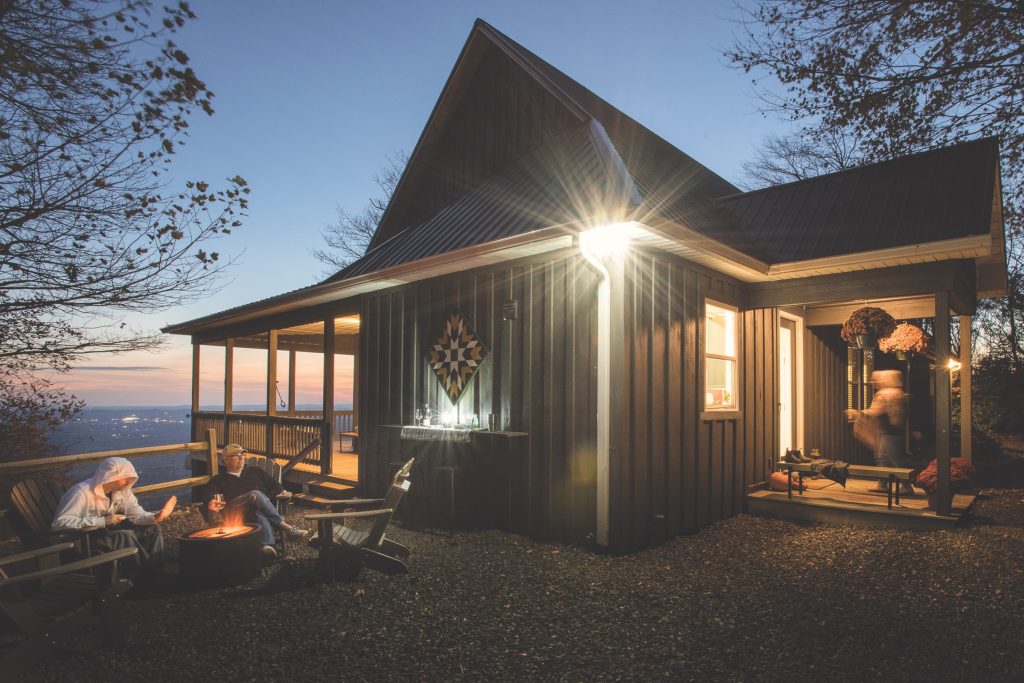
Plus, the home offered even more than they could have imagined. Beetling on a rocky perch just off the Blue Ridge Parkway, the house’s wraparound porch serves as a premium seat to the best show in town — Pilot Mountain amidst an ever-changing kaleidoscope of sky and stars.

“But,” Amy says, “we were like, I don’t think we can afford this.”

“It was super scary,” admits Peter. He consulted with his brother, Trey, who already owned a couple of properties, hoping he could advise them on making it work with their tight budget. 

“Are we crazy?” Peter asked Trey.

Trey came to see the home and saw an opportunity. He offered to go in on the purchase and make the house an Airbnb rental 70% of the time, making the financial leap a lot less scary.

With Trey, the Freemans bought the home and quickly got to work, making basic cosmetic changes to prep it for rental. On the main level, the walls were painted a soft neutral. Amy selected Benjamin Moore’s White Dove. But their painter had the color matched at Sherwin Williams and, Amy says, “it was very different.” When she first saw it, she wept. “But I’ve learned to love it.”

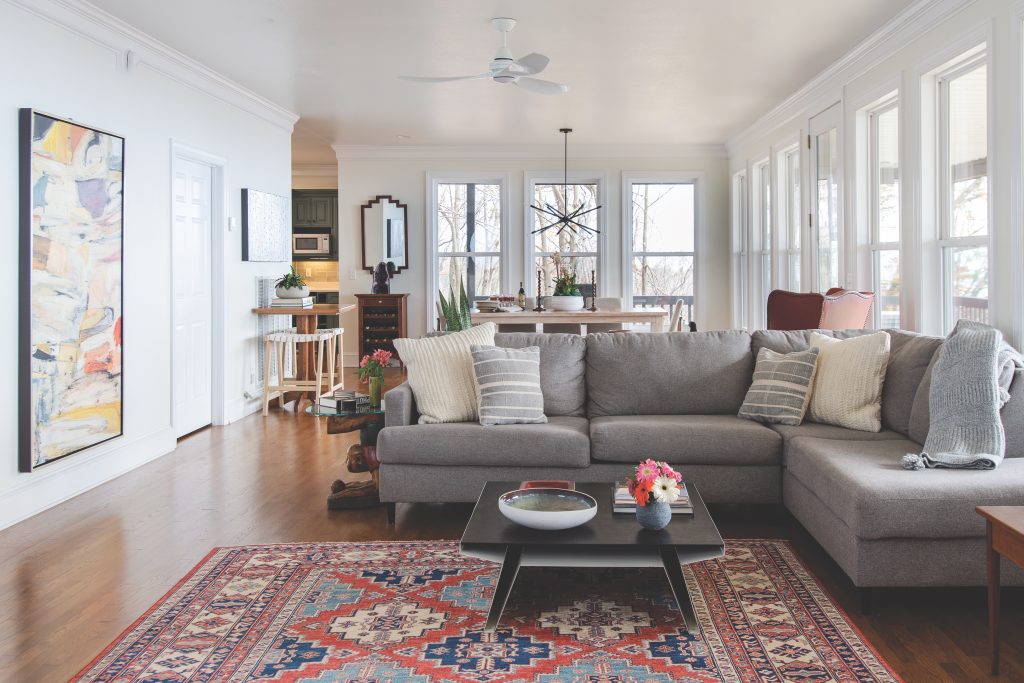
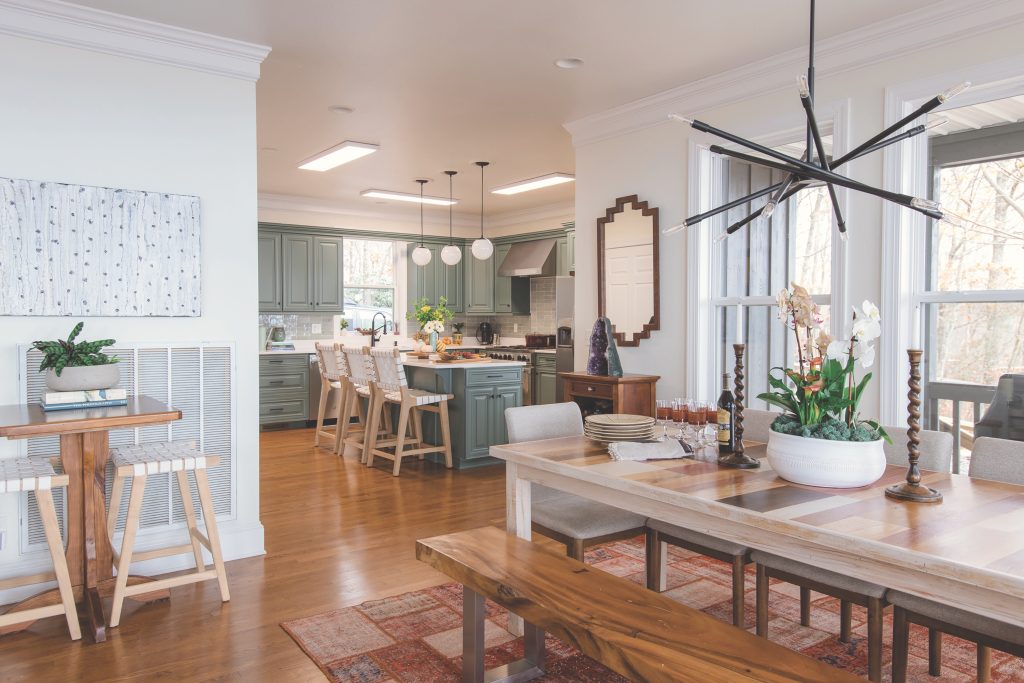
Before, bedrooms were a carnival of color, in chartreuse-green, mustard and poppy-red. The Freemans had everything coated in calming, rental-friendly neutrals. The previous owner left furnishings behind, so they repurposed what they could. An old gun cabinet was transformed into a bookcase. The rest, they cobbled together, bringing bits and pieces from home that had been passed down from their parents and were sitting in storage, like Amy’s father’s red, leather chair and her parents’ oriental rugs. They supplemented with items from Louis’ former condo, such as his sofa.

The once-plain fireplace — “it was just a hole,” says Amy — was decorated with large-scale, charcoal-gray tile grouted in high-contrast white. The tile had been leftover from their own bathroom floor at home. A proper mantel the couple ordered from Wayfair was the icing on the cake. Now, Amy says, visitors often comment on the fireplace. “And I am like, that’s my bathroom floor! I usually walk on that!”

In the kitchen, Amy says, they saved a ton of money by keeping the existing cabinetry and countertops. “We have a problem replacing something that’s perfectly good.”

“That’s our attitude,” agrees Peter. “We’re not cramping the landfill.”

With their inexpensive cosmetic updates, the house was ready to rent out to mountain-seeking vacationers. While the Airbnb share idea enabled the Freemans to purchase the house and they found much success with the rental, Amy says, “We found out very quickly that’s not why we got it.”

“Louis fell in love with it,” says Peter. “He kind of blossoms up there. And I think that made us feel really good, that he was kind of taking to it.”

Unlike Peter, Trey, who owns a house in Athens, Ga., and another in WaterColor, Fla., found he wasn’t able to get to Hillsville often. He wanted to rent the home out even more. Amy and Peter weren’t ready to give up what already little time they spent there. Their wheels started turning.

They were newly invigorated and determined to find a way to buy out Trey. Amy blurts out, “We manifested it!”

Peter chuckles. “Well, we sold our office building.”

“OK, we sold our office building, but, I mean, I manifested it,” Amy says teasingly.

With the house now 100% theirs, the Freemans removed the Airbnb listing and got to work putting their personal stamp on the place.

“We love a project!” says Amy.

Unlike many couples who struggle DIYing together, Amy and Peter have always gotten along incredibly well throughout the process. “It really is amazing that I can almost finish her sentences and she can finish mine,” Peter says of planning designs with his wife.

Inside, they updated the kitchen by painting the cabinets a soft, spruce green and replacing the once brown-hued countertops with white quartz. What brought it all together was the backsplash tile, which came from “a new, cool sample” Peter had gotten in at the architecture firm that happened to match perfectly, Amy recalls.

“It is nice to be in the business,” says Peter.

They began bringing more personal pieces from home. A side table the couple purchased from Pier1 Imports the first year of their marriage features a little upside-down man holding a glass top. Amy recalls thinking that its $60 price tag was too rich for their newlywed blood. “Somehow,” she says, “it survived over the years.” Now, a true conversation starter, it sits next to the living room sofa.

A large Cordial Campari vintage marketing poster print Amy and Peter purchased at Rooster’s on State Street 25 years ago hangs on the kitchen wall. Nearby on a perpendicular wall, a caustic-wax painting that looks like a birch tree anchors a table and two stools. It was a birthday gift to Amy last year from her friend, local artist Dana Holliday. “It’s my most treasured piece of art.”

The biggest change they made was painting the exterior, which is constructed of hardy cypress, a dark shade of charcoal. “Peter walked around the house 1,000 times, considering, and finally decided he wanted to go darker,” says Amy.

“Peter never brags on his design chops,” Amy continues, “but I am here to tell you he imagines things that I typically can’t wrap my brain around.” The Freemans originally thought they’d use a natural wood trim, but, around that time, Amy photographed a July 2023 story for O.Henry, “Beyond the Back Door.” She was inspired by an outbuilding Otto & Moore had renovated and painted a similar charcoal, but its door was a cool shade of blue. In the end, they opted for a “dark, greenish blue,” says Amy, and now the home blends in with the hardwoods that surround it.

While they still have other projects they’d like to slowly chip away at — perhaps an art studio —  they’ve made the Hillsville home all theirs. “Now it doesn’t feel like we’re just going up to our Airbnb for the weekend,” says Amy. “It feels like home.”

Most Fridays, the family hops in the car, with Coco, of course, and heads to the Blue Ridge Mountains for the weekend. “We breathe the minute we get off of 74 and start to rise up the mountain,” says Peter, audibly exhaling.

Able to unplug for a bit, the Freemans spend their days visiting the nearby Floyd Farmers Market, Primland Resort or Chateau Morrisette, which was founded by William Morrisette of Greensboro’s Morrisette Paper Co. Current co-owner Melissa Morrisette, the founder’s daughter-in-law, has become an incredible friend. “We are welcomed like family when we are at the winery.”

And when they don’t feel like venturing out, the 4-acre property and its surrounding area offers plentiful rest and recreation. There’s fishing nearby, which Peter hopes to get into when he retires one day. Just 10 minutes from the house is a very short but beautiful hiking loop Amy loves to trod. But, she quips, even a trip to the mailbox can be a walk through nature’s wonder.

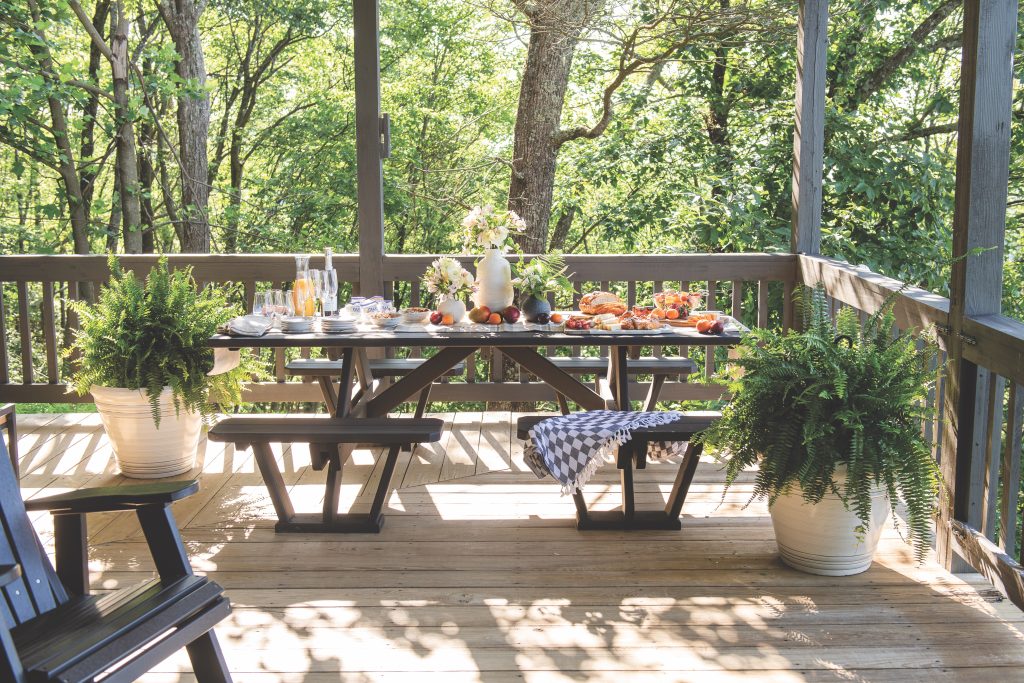
“Porch time, as we like to call it,” Amy says, is a favorite family pastime, and Peter agrees. The first thing he does every morning is step outside onto the expansive porch to take in the view.

“One of the things that Amy said years ago when we first started this process was, ‘I want to go somewhere with big sky,’” recalls Peter. “And that always stuck with me.” Looking out to Pilot Mountain in the distance, the sun setting off to the right in a rainbow of misty blues, golden oranges, all the way to fiery red, there’s no denying her wish was granted here. In fact, you can catch both the sunrise and sunset from this vantage point on the porch — and plenty of “big flyers,” including pileated woodpeckers.

“It just feels like you’re in a treehouse and nothing else in the world exists,” Amy muses.

But the biggest blessing this house has bestowed upon the Freemans is the freedom it’s given Louis. Once an avid snowboarder and golfer, Louis is yet again able to adventure outdoors, thanks to a side-by-side — a utility task vehicle (UTV) Amy was totally against at first. A fallen tree that was blocking their driveway, however, changed her mind.

Up at the house by herself, she called her neighbors to see if they could help her clear the small tree. Mariah, who’s around Louis’ age, cruised on over on her side-by-side with a Bear Saw. She cut the tree and then used a winch attached to her side-by-side to pull the tree away. Immediately, Amy says, “I go in the house and call Peter and say, ‘Y’all can go ahead and get that side-by-side. I think we need one.’”

In fact, Amy says, she’s had to reframe her perspective on other things, too. “Nowadays,” she says, “we bring the party to us.” Rather than venturing out to visit friends, they welcome guests to stay at their Hillsville home with them. Two extra en-suite bedrooms, Amy notes, provide lots of privacy.

Life’s given the family unexpected circumstances, “but then you just realize that’s OK,” says Amy. If not for living under the same roof with Louis, “I would never have gotten his humor. I would have never been able to see that part and how strong and courageous he is.”

It’s a privilege, Peter agrees. Most parents, he adds, don’t get to know their children as adults in the way that they’ve been able to know Louis. “We all get so much more connected with the Earth and nature,” he says. And, it seems, to one another.

“We’re the three musketeers,” quips Amy.

Tea Leaf Astrologer

TEA LEAF ASTROLOGER

Virgo

(August 23-September 22)

Perhaps this will come as a shock: You don’t have all the answers. Let the mystery ignite your passion this month. Let it be juicy. Let it break your snarky gremlin of an ego. When Mercury guides your focus inward on Sept. 2, mind the negative self-talk as you strive toward new growth. On the 19th, Venus will shine a spotlight on unrealistic expectations. Take note. And on the 21st, the new moon and solar eclipse spell new beginnings. But not without a pickle of an ending. 

Tea leaf “fortunes” for the rest of you:

Libra (September 23 – October 22)

Inhale and lengthen the spine; exhale and gently twist.

Scorpio (October 23 – November 21)

Taste as you go.

Sagittarius (November 22 – December 21)

Just say what you mean.

Capricorn (December 22 – January 19)

Lace up your dirt-kicking boots.

Aquarius (January 20 – February 18)

It’s time for a new novel.

Pisces (February 19 – March 20)

Deep clean the fridge, stat.

Aries (March 21 – April 19)

Bring your journal along.

Taurus (April 20 – May 20)

Three words: Almond oil, darling.

Gemini (May 21 – June 20)

Your only job is to listen.

Cancer (June 21 – July 22)

Someone needs a salt bath.

Leo (July 23 – August 22)

Sign up for the workshop.

Almanac September 2025

ALMANAC

September

By Ashley Walshe

September is the letter you don’t see coming. The one you will memorize. The thorn and the balm for your aching heart.

Dear one, summer writes in florid longhand. This won’t be easy. I love you, and I must go.

Your head spins. You can smell her on the pages, in the air, on your skin — the spicy-sweet amalgam of pepperbush, honeycomb and night-blooming jasmine. You steady yourself and keep reading.

Her tone is as soft as lamb’s ear, gentle as butterfly, warm as field mouse. Still, your heart feels like an orchard floor, each word a plummeting apple. Not just the fruit wears the bruise.

You can never lose me, she writes. Close your eyes and feel me now.

Sunlight caresses your face, chest and shoulders. At once, you’re watching a movie reel of summer, recalling the riot of milkweed, the tangles of wild bramble, the deafening hum of cicadas.

Picnics and hammocks. Daydreams and dragonflies. Puffballs and palmfuls of berries. It’s all right here.

When you open your eyes, you notice a lightness in your chest — a shift.

Yes, a yellow leaf is falling. But, look. Wild muscadine climbs toward the dwindling sun, singing silent vows in golden light.

You can chase me if you wish, she writes, her script now hurried. Or, you can be as fruit on vine: purple yet unbruised, ripe with sweetness and steadfast as the seeds you hold within you.

Bird Candy

If you think our flowering dogwoods put on a show in early spring — striking white (or pink) bracts popping against the still-leafless woods — just wait until month’s end, when its ripe berries bring in waves of avian passersby.

Of course, there are the usual suspects: mockingbirds and jays; woodpeckers and warblers; cardinals, catbirds, thrashers and thrushes. But if you’re lucky, those clusters of brilliant red berries could conjure migratory wonders such as the scarlet tanager, the rose-breasted grosbeak or even a rowdy troupe of cedar waxwings to your own front yard.

According to one online database (wildfoods4wildlife.com), the flowering dogwood berry ranks No. 29 on the “Top 75” list of wildlife-preferred berries and fruits. While blackberries top the list, flowering dogwood ranks above persimmon, plum and black cherry (note: ranks were determined by the number of species that eat said fruit, not by its palatability). If curated by tastiness — or mockingbird — sun-ripened figs would have surely made the cut.

Lucky Charms

On Sept. 19, three days before the Autumnal Equinox, look to the pre-dawn sky to catch a thin crescent moon hovering ever close to brilliant Venus. Although a lunar occultation of the Morning Star will be visible from Alaska and parts of Canada (that’s when the moon passes directly in front of the planet), we’ll witness a conjunction more akin to charms dangling from an invisible chain.

The Show Must Go On

THE SHOW MUST GO ON

The Show Must Go On

UNCSA’s Chancellor Cole looks to the school’s bright future

By Billy Ingram

Over a quarter century has passed since my last visit to what was then simply known as “School of the Arts.” (Don’t call it that today — they’ve graduated!) Touring their campus over the summer, I was amazed at University of North Carolina School of the Arts’ expansion, with the addition of three enormous, Hollywood-style sound stages, extensive wardrobe and wig departments, an airplane hangar-sized set-painting facility, state-of-the-art imaging studio, and even a quaint city street backlot facade alongside a three-screen movie theater where the RiverRun International Film Festival is held each year. During that late-1990s visit, I donated a bundle of movie posters I had labored on years earlier in Tinsel Town, one of which (Superman IV) was framed outside the theater’s entrance.

I have returned to meet with Brian Cole, now in his sixth term as chancellor of UNCSA. This year marks the 60th anniversary of the university and, while there will be cake — there’s always cake — Cole is aggressively fixated on a future fraught with unprecedented challenges fueled by rapidly evolving technology and ingrained predaceous business practices threatening to upend every aspect of the arts. He’s clearly up to the task.

UNCSA concentrates on five core disciplines: drama, music, filmmaking, design & production, and dance, with both high school and college curricula. Cole comes from the symphonic side. His pro career started when he apprenticed with the Cincinnati Symphony under the tutorage of one of music’s most eminent maestros, Grammy-winning Paavo Järvi. He went on to teach at the University of Cincinnati College-Conservatory of Music before circling the globe waving his conductor’s wand before a multitude of illustrious orchestras.

“I think arts and artists are critical to our society and this place plays a critical role in producing those artists,” Cole asserts, seated in his window-rimmed chancellory overlooking a busy corner of campus. “Creativity is why we are successful — because artists are the ultimate problem solvers.”

UNCSA is home to a wealth of expert educators connected to and, in many cases, still actively participating in their attendant industries. “That hands-on experience is something we’re known for,” Cole says. “Producing people ready to create, being job-ready on day one, especially in the production areas. That’s not something other places can really claim to the same degree.” The school is on track for record enrollment this fall, maybe because of its almost unmatched media exposure in recent months. “People know of us because of the training, but also because we’ve had this incredible impact on all these industries with some notable alumni who are doing amazing work.”

Our media landscape is inexorably shifting, Artificial Intelligence being well past its nascent six-fingered-hands phase. The unexpectedly rapid acceleration of AI’s ability to seamlessly (shamelessly?) complete complex artistic tasks is a pedal to the, ahem, mettle of anyone with creative aspirations.

“We’re having some substantive conversations right now about creating a strategy for this,” Cole says. “It is definitely starting to have a substantial effect on the film and TV industry, on the visual arts, and the music industry. It is an incredibly disruptive technology that has vast potential for good and bad.” A Chancellor’s Task Force has been convened to address how to navigate a new world emerging out of generative AI. “We’re looking at our industry partners who might be able to provide resources for students, faculty and staff. What are the positive ways this is already being used? What are the negatives and how can we get out in front of that?”

While a number of universities are investing heavily in AI, there’s a tendency to focus on so-called hard skills or STEM (science, technology, engineering and mathematics). “I don’t hear as much from arts-training institutions. One of the most important things is, whether it’s music or a poster or a film, if you don’t hear or see the human’s voice in it, then it’s a failure.” Cole quotes a sports analogy coined by Oscar-winning director Steven Soderbergh about AI: “It’ll help you get down the field quicker, but it will never get you into the end zone.”

This administrator has faced game-changing outbreaks before, having barely transitioned from dean of the School of Music to chancellor when COVID shut everything down. “Solutions we came up with were incredible because of the passion and the creativity of the people on this campus,” says Cole, who may have had in mind that well-worn trope: The show must go on. “I have not seen any other institution in the country from that time period that was doing more, or, in many cases, anywhere near as much as we were and doing it safely.” Carrying on with musical, dance and drama performances, the students were on stage, but the audience caught it via livestream.

Chancellor Cole is equally mission driven when it comes to establishing an intellectual property paradigm for emerging talent. What exactly would that look like? “A nonprofit media publishing arm promoting the work of the artists of our ecosystem,” he explains. Those artists include “alumni and faculty, but to some degree current students when they are in that launch period.” For now, UNCSA Media is primarily concentrating on music with plans to venture into other artistic avenues represented on campus. “We’ve got four or five albums out or in the works. The key to creative and career success in the future is leveraging the ownership of what you create. And often that had been the thing leveraged over artists.”

It’s called show business. Taylor Swift’s years-long, multimillion dollar effort to wrest control of her early albums and songwriter royalties is an au courant example of an artist signing a lopsided deal in exchange for industry advancement.

Cole recalls discussing that conundrum with legendary pop star John Oates over dinner one evening. “Hall & Oates is the most successful musical duo of all time, Rock & Roll Hall of Fame . . . you’d be surprised how much longer it took in their career to really make any money.”

Perhaps not as well known to the public is UNCSA’s live-in high school curriculum, which emphasizes artistic pursuits while simultaneously offering more conventional course work. “We have alums that come from very small towns and now they’re in really substantial, incredible careers in the arts,” notes Cole. “There was nothing for them in their hometown but they met someone who knew of this high school in North Carolina that was training students in the arts, where you could also have a great academic education as well. For North Carolina residents, there was no financial barrier — our state supports that.”

The chancellor aspires to enroll an additional hundred high schoolers once a larger dorm is completed. “We already have programs in music and dance and drama and visual arts. We want to certainly expand those but we also want to create a filmmaking concentration. I don’t think there is another one in the country at the high school level.”

As if Cole didn’t have enough to do on-campus, he is also overseeing one major off-campus project, an $85.3-million renovation of the Stevens Center. “It is essentially our biggest high-tech classroom and learning laboratory,” he says, “an important cultural center for professional organizations in our community and for what UNCSA does there.” When completed, it will be a venue where all departments collaborate to mount major productions utilizing actors, dancers, musicians, backstage crews, costume, lighting and set designers, even atypical variables like “animatronics and robotics technicians working in live entertainment. We’re very fortunate that, through the generosity of the state, we’re keeping those skills on pace as well.”

Cole still allows time for conducting, both in country and abroad but less so on campus. “We have great artists and teachers here, so I don’t want to take too much away from them. For the last two years I conducted our Nutcracker production at the Tanger Center. Big success.” For 2025’s holiday tip-toeing at Tanger, however, Cole will pass the baton to someone else. “It’s good for students to work with different conductors — not just for the orchestra, but also the dancers.”

Reflecting on the passage of 60 scholastic cycles since that inaugural class of ’65, Chancellor Cole muses, “The founders were thinking we would be like the Juilliard of the South. And it very much was. Now I kind of think of Juilliard as the UNCSA of the Northeast.”

Just kindly try to refrain from referring to it as School of the Arts.

Behind the Curtain

Cynthia Adams

Susan Turcot, whose parents live in Greensboro, went on to have a distinguished film and television lighting career in Hollywood after attending UNCSA. Her credits include mega-hits Independence Day, The Negotiator, Titanic, Panic Room, Pleasantville, The Rat Pack and The Bird Cage. Her skill set? Dimmer board, lighting and rigging, among other specialties.

Her proud parents, Bud and Sharon Turcot, rented out a Sedgefield theater for a private showing when Titanic premiered.

“They gave out tissues and Life Savers,” she recalls with a laugh. Guests filed out of the theater wiping their eyes and Susan regaled them with stories about the set, cast and crew at an afterparty. That Titanic gig, however, couldn’t have delighted her folks more as it grossed over $2 billion, becoming the highest grossing film of its time.

She self-deprecatingly jokes that only her parents’ friends know she has rubbed elbows with the rich and famous and never name drops. Turcot also worked on the top-rated TV sitcom Two and a Half Men.

She didn’t enter UNCSA intending to specialize in dimmer board and rigging: “When I was there [at UNCSA], it was different.” She graduated in the 1980s with a concentration in design and production.

“Of course, there was no film [concentration] then, only theater. It was dance, drama, music, and design and production.”

Turcot left after graduation to pursue opportunities in California and found her niche. She keeps work options open, she says, even if she has been remiss about keeping her resume current. Now, at home in Los Angeles, where she has lived and worked most of her adult life, Turcot says a lot of her fellow graduates are active in the industry there.

In its 62 years, UNCSA has graduated alumni who work in a multiplicity of artistic careers, grabbing headlines well beyond the Triad. Many become notable musicians, actors, screenwriters, directors, producers and dancers. Much larger numbers who graduated from UNSCA’s five professional concentrations work behind the scenes in performing, visual and moving image arts.

UNCSA’s arts-based education produces many unsung heroes of the industry. Imagine a film when the lighting is too harsh — or dim. Or the sound is faulty. Or the casting is all wrong. Or the makeup and costumes are amateurish.  

Those in “above the line” roles belong to composers, graphic designers, photographers, producers, directors, actors, musicians and writers. Those who execute on a technical, granular level, include “below the line” professions such as casting directors, production designers, costume designers, editors, cinematographers, camera work, set design, sound recording, makeup artists, sound, electrical and lighting technicians.

Many of those names are not always known to the arts and entertainment audiences. But you do know these talented alumni by their work.

Paul Tazewell, BFA ’86, concentrated in costume design and technology as a student from Akron, Ohio. Since then, he has steadily contributed to a body of creative work recognized as artistically and historically significant.

On March 2 earlier this year, Tazewell made school history when he won the Academy Award for Costume Design for Wicked, becoming the first UNCSA alum to win an Oscar. 

He also made Oscar history as the first Black man to achieve that distinction. Plus, he has two Tonys on his shelf, for Death Becomes Her and Hamilton, plus a Primetime Emmy Award.

As an extra feather in the school’s cap, UNCSA quickly posted the news that Wicked was not only nominated in 10 different categories, but won two, scoring a second Oscar for production design. The original stage director, Joe Mantello, and the film’s casting director, Tiffany Little Canfield, both alums, contributed to the stage and screen versions.

Tazewell attributes much of his artistic identity to his N.C. alma mater.

“It was here that I first began to love myself — to trust my own voice. To trust my own vision of myself. And that love has shaped everything since,” he recently said in a commencement speech delivered to the school’s newest grads.

As UNCSA graduates have steadily migrated into professional careers in film, in touring productions, in music, and on Broadway — others are entering newer fields in digital media. 

Photographer and director David LaChapelle attended high school at UNCSA, which he has since called his “big break.” This coming from a man whose early work was with Andy Warhol’s Interview magazine. His museum-worthy body of work has appeared in the world’s top magazines plus a vast collection of music videos and includes signature photographs of celebrities such as Michael Jackson, Uma Thurman and Elton John.

Earlier this year, the North Carolina Museum of Art hosted two exhibitions of LaChapelle’s work. On display at its two locations in Winston-Salem and Raleigh were more than 80 prints, drawings and videos.

Tanase Popa, who graduated in 2006, studied stage management. Now, he pairs the right talent with the right project. He has since earned a Peabody and an AFI award, and has had multiple Emmy and Golden Globe nominations for his work in television and film. He has worked on popular series including Glee and American Horror Story.

The press-averse alum eschews the spotlight. “I want to be the one behind the scenes putting it together,” Popa said in a 2020 interview for the school’s website.

“I never looked at myself as someone who was creative in the sense that I need to write or be a director to put the pieces together that way. I always loved finding the right people for the right project.”

Not every career is spent on the Great White Way or working behind the Klieg lights of Hollywood. Training in production and design easily lends itself to work in an artful aspect of consumerism.

If you’ve shopped at Saks Fifth Avenue, you’ve seen the work of UNCSA alum Connor Matz, who directs the mega-retailer’s windows, visuals and interiors.   

Meanwhile, entrepreneurial alum Destinee Steele has built a successful business and career in Florida working as a wig-and-makeup artist since her professional training at UNCSA.

In each case, their creative work is their calling card.

And when you’ve finished a movie that was so good, you just don’t want to leave the theater as the cast of characters behind the scenes scrolls on and on, remember that it’s a reminder how many people work in any production. These unsung creatives get little credit beyond the mention of their name. 

Finish your popcorn and read on. Odds are good that those talents — with names like Turcot, Tazewell, Mantella, Canfield and Poppa — honed their skills at UNCSA.

Poem September 2025

POEM

September 2025

On the Way Home

from my father’s funeral,

a mime is performing on the corner,

laid out on the concrete like a corpse,

pulling herself up with an invisible rope

as if hope were a cliff to climb,

then levitates over a pretend chair

as if preparing to eat, drinking

an empty glass of air, her palms

bringing into being the nuanced

shape of bread to be broken.

I sit on the edge of a scrap of plywood,

a makeshift seat, perch as if on a ledge

heeding the gravity of all the unsaid.

Everything her eyes imply is about

the last meal I shared with my father.

“Do you hear me?” she hints

with her hands that have

become her voice, her frown

a phrase, a black drawn-on tear

a lost syllable, then,

as though life were something tangible,

sets up an imaginary ladder,

points to a nebulous cloud

she intends to reach, waving goodbye

as she begins to climb into the sky.

— Linda Annas Ferguson

Chaos Theory

CHAOS THEORY

Forever Home

Turns out, you can’t stay forever

By Cassie Bustamante

When my only daughter, Emmy, was born 18-and-a-half years ago, I was immediately overwhelmed. With love, sure, but mostly with life. I already had a 17-month-old toddler, Sawyer, at home. My husband, Chris, traveled a lot for work. How on Earth was I going to survive with two little ones in diapers by myself? Now, it’s been just a couple of weeks since we sent Emmy off to her first year of college at Penn State, and I don’t know how I will manage without her here.

While Sawyer was a busy, on-the-move preschooler, Emmy, from a very early age, could sit and color contentedly for hours. I remember leaving her once, just 2 at the time, in our playroom so I could tend to Sawyer upstairs in our little split-foyer home. I felt panicky during the minutes I was away from her, but, when I returned, she sat in the same chair, still happily doodling with crayons in an array of bright colors. Before taking my seat next to her, I stared in wonder. Who was this calm, creative child?

Don’t get me wrong. It wasn’t all Crayola rainbows and tissue-paper butterflies. With that artistic spirit comes a bit of environmental chaos. In fact, numerous studies have linked messiness with creativity. I can confirm that the spot where I sit in my home writing for this very magazine is surrounded by an impending avalanche of books, magazines, pens and papers threatening to send a half-drunk cup of room-temperature coffee flying onto the rug. Emmy’s space was her bedroom and, boy, did she express herself within its walls. For my own sanity, I usually just kept the door shut. Out of sight, out of mind. And, yes, I know this is rich coming from someone who’s just declared her space a wreck too.

But, on occasion, I’d spend the better part of my day giving her bedroom a thorough cleaning while she was in school, blissfully unaware of my intrusion. Armed with trash bags to stuff with garbage and donations, I’d sift through every nook and cranny. It was a challenge, to say the least, but the reward was worth it: little glimpses into her sparkling soul. In her desk drawers, I’d discover illustrated fairy tales she’d written. On the walls of her closet, she’d hung pictures of hearts and stars with motivational sayings, things like “You were meant to shine bright.”

She’s always used a mix of words and colors to communicate; it’s no wonder she ended up working on her Grimsley High School yearbook and plans to study journalism. Once, when she was 8 and had gotten in trouble, she left me a note on our kitchen island: “I am sorry for the way I acted. I was being a total jerk. It’s just that a lot of people have been mean to me. Love, Emmy. P.S. I hope you understand.” How can you stay mad at that?

Generally, she shied away from reading her own writing aloud, but, every once in a while, she couldn’t resist. Two weeks after leaving me that heartbreaking note, she penned a tune she titled “Forever Home.” Thankfully, 37-year-old me had the foresight to capture the moment she sang it to me, her crystal-blue eyes twinkling as she smiled proudly.

Now, a decade later, I’m back at home after loading all of her worldly belongings into our SUV and dropping her off in State College, Penn. My finger hovers for a moment and then I hit play on that video. Her squeaky little voice fills my ears as tears fill my eyes:

Forever home, you’re never alone

You’re always with someone,

Say hello, say goodbye,

Say hello, change your mind,

’Cause you’re with someone,

And even if you’re not,

You’ll still have us.

Once again, I feel overwhelmed. Somehow, I managed to get through those years of having two little ones in diapers. So much, in fact, that a decade later, we even decided to add a third, Wilder, who is almost as old as Emmy was when she wrote that song. And no, I don’t know how to keep going without her here every day, but I know I will. And I hope that she knows that no matter where life leads her over the next four years and beyond, we are always with her and we remain her steadfast “Forever Home.”