Burgin Ross’ Special Collection of Memories

Burgin Ross’ Special Collection of Memories

A 1974 UNCG grad’s African artifacts tell the tale of her journey

By Cynthia Adams     Photographs by Bert VanderVeen


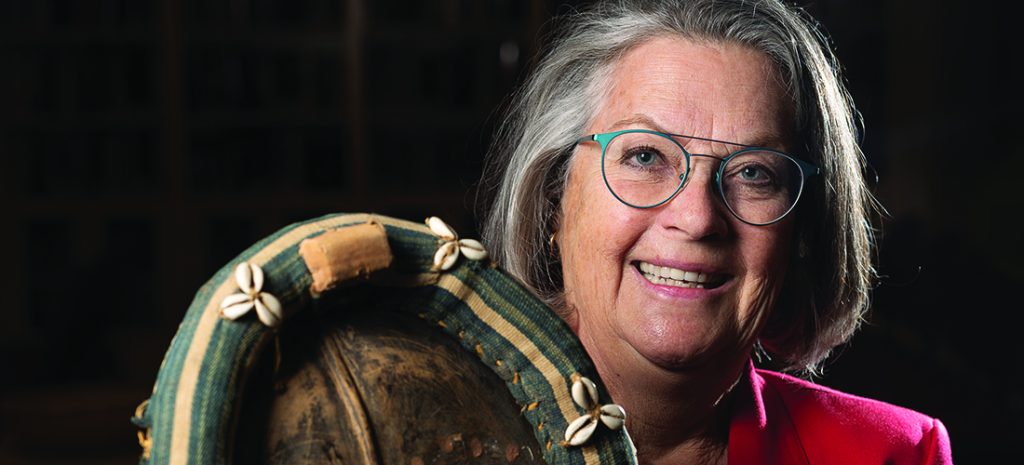
In the summer of 1974, Brenda Burgin Ross, a new graduate of UNCG, said her goodbyes to family in the North Carolina mountains before undertaking a 5,000-mile journey into sub-Saharan Africa. While many of her fellow graduates might prefer a lark abroad, she chose a life-changing experience using her new degree in Liberia, a small country no larger than Ohio.

“I was pretty sheltered,” she says. “I grew up between Marion and Old Fort, east of Asheville. I had never been out of the U.S. before.”

She mocks herself, saying she added extra vowels to words like right, light and night as riiight, liiiight and niiiight when she first arrived in Greensboro. Ross noticed other students pronounced the same words differently, in a clipped way, with a short “i” sound. “I kept my mouth shut in the beginning.”

Ross had entered UNCG as a math major, then changed to nutrition. Once armed with a degree, she signed up with the Peace Corps, requesting placement in Africa.

The gregarious, green-eyed brunette favored low-slung bell bottom jeans and clogs. She was known to her college friends as Burgin — a step toward her new identity.

In June of 1974, just shy of her 22nd birthday, Ross arrived in Monrovia, the capital city of Liberia.

Over six weeks at a Peace Corps training site, volunteers “learned some language, but mostly learned about cultural traditions, local foods, and were given ideas and materials to use in my work as a health volunteer.” The trainees learned a smattering of the nation’s 16 different dialects, although English is the country’s official language. Ross purchased basics such as plates, cups, pots and pans, sheets, towels, and kerosene lamps. Before traveling with an official from the Ministry of Agriculture to the village of Juarzon, she stocked up on “oats, flour, sugar, tins of butter and cheese, and powdered milk”

Ross traveled light, with just a medium-sized suitcase and backpack. Other volunteers filled their cases with toilet paper; she packed contact lens supplies, books, camera equipment and minimal clothing, leaving toiletries and nonessentials behind.

They made their way south over rutted dirt roads with dust swirling during the equatorial dry season. The perpetually hot, dry season would inevitably give way to an equally sweltering rainy season.

“They have two seasons, rainy season and dry season,” Ross learned. “You welcomed dry season, but then all you wanted was a day of rain.”

Their trip took nearly three days.

“Was I eager to have an adventure?” She nods yes. There was an underlying, personal mission, too. Ross’ sights were set upon two goals: first, forging her own identity — complicated by having an identical twin. Secondly, as a child of the Kennedy era, she wanted to use her education do something meaningful, if not noble.

She was well on her way to breaking with her twinned past when she chose the Peace Corps, a decision she had made in 1970. Meanwhile, her twin, Glenda, stayed stateside to enter nursing.
   

As twins, “we slept in the same bed. Our mother dressed us alike until we were 13 years old. We were called ‘Brenda/Glenda,’ or ‘the twins,’” Ross says with a grimace. “When we got into high school, we developed separate friends and interests.”

In photos, she looks like a young Ashley Judd. “I was a baby, wasn’t I?” she muses.

The Peace Corps was also still young. Founded in 1961, it was a goodwill initiative created by President John Kennedy, who visited Liberia while in office. The nation was founded in 1822 by freed American slaves as Africa’s first independent nation.

As a nutritionist, Ross would serve as an informal ambassador while helping Liberians improve their dietary standards. Ideally, this would boost Liberians’ life spans and their general quality of life.

When the ministry official left her in Juarzon and returned to Monrovia, reality set in.

“From that point, I was on my own.”

There were 35 Peace Corps volunteers placed around the country — but Ross was the only volunteer given a solo assignment. And it “had been four or five years” since a previous volunteer had been placed in Juarzon.

She moved into “a nice house with screens to keep out mosquitos and mice. I had no running water, plumbing or electricity, but [it] had a cement floor and was built of cinder blocks.”

“I wasn’t scared. Except for snakes, rats, dysentery and malaria. I was eager to see the world,” she says. Despite encountering everything she feared, she remained filled with youthful enthusiasm and seldom regretted her decision, apart from the existential loneliness. Books and magazines were hard to come by apart from trips to Monrovia.

“But I had the protection of the U.S. government,” she adds.

She has no memory of the first night in that simple hut. Then, a memorable event. Ross heard drumbeats, then the footsteps of a group of women approaching her house. They called out, insisting she come out to join them.

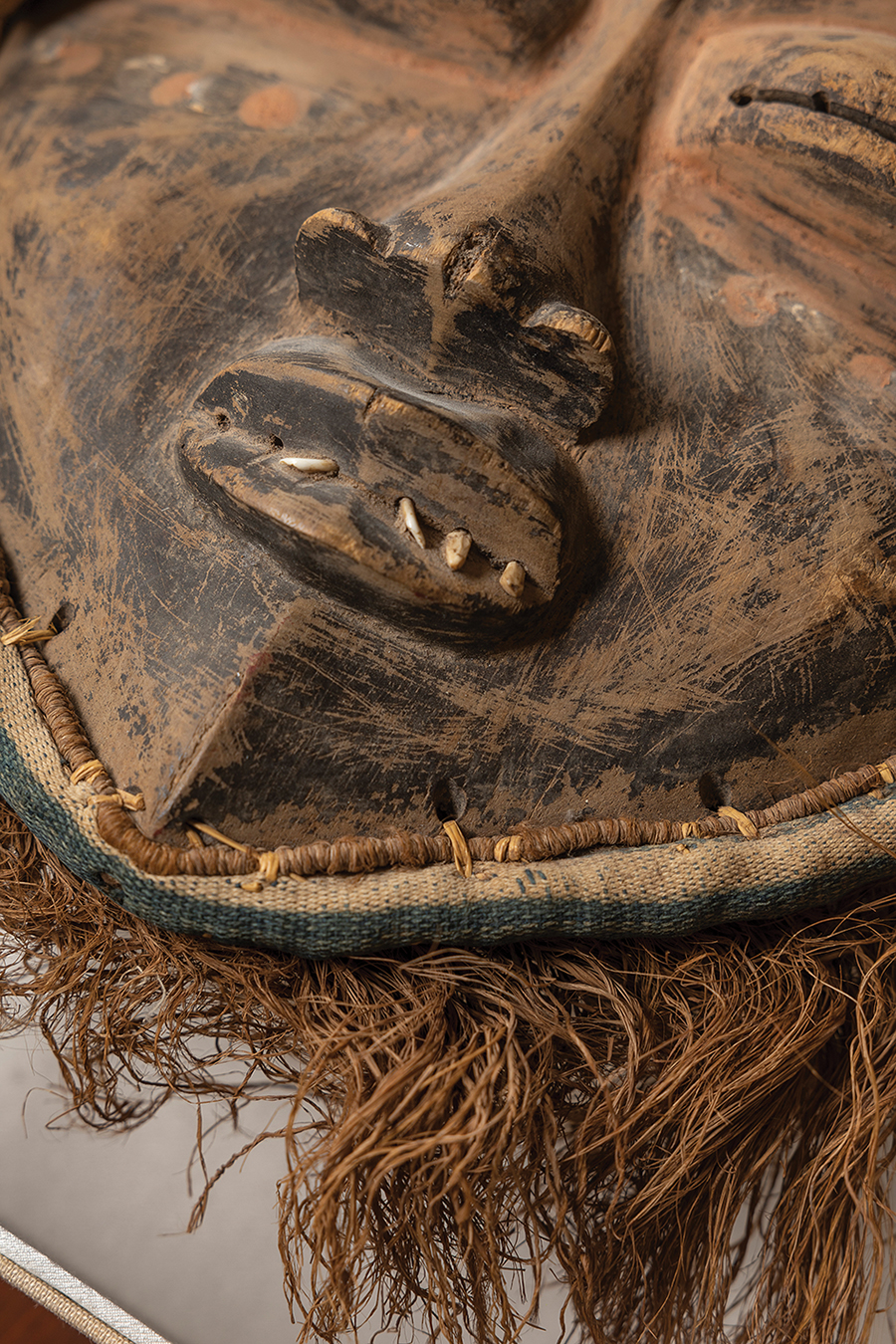
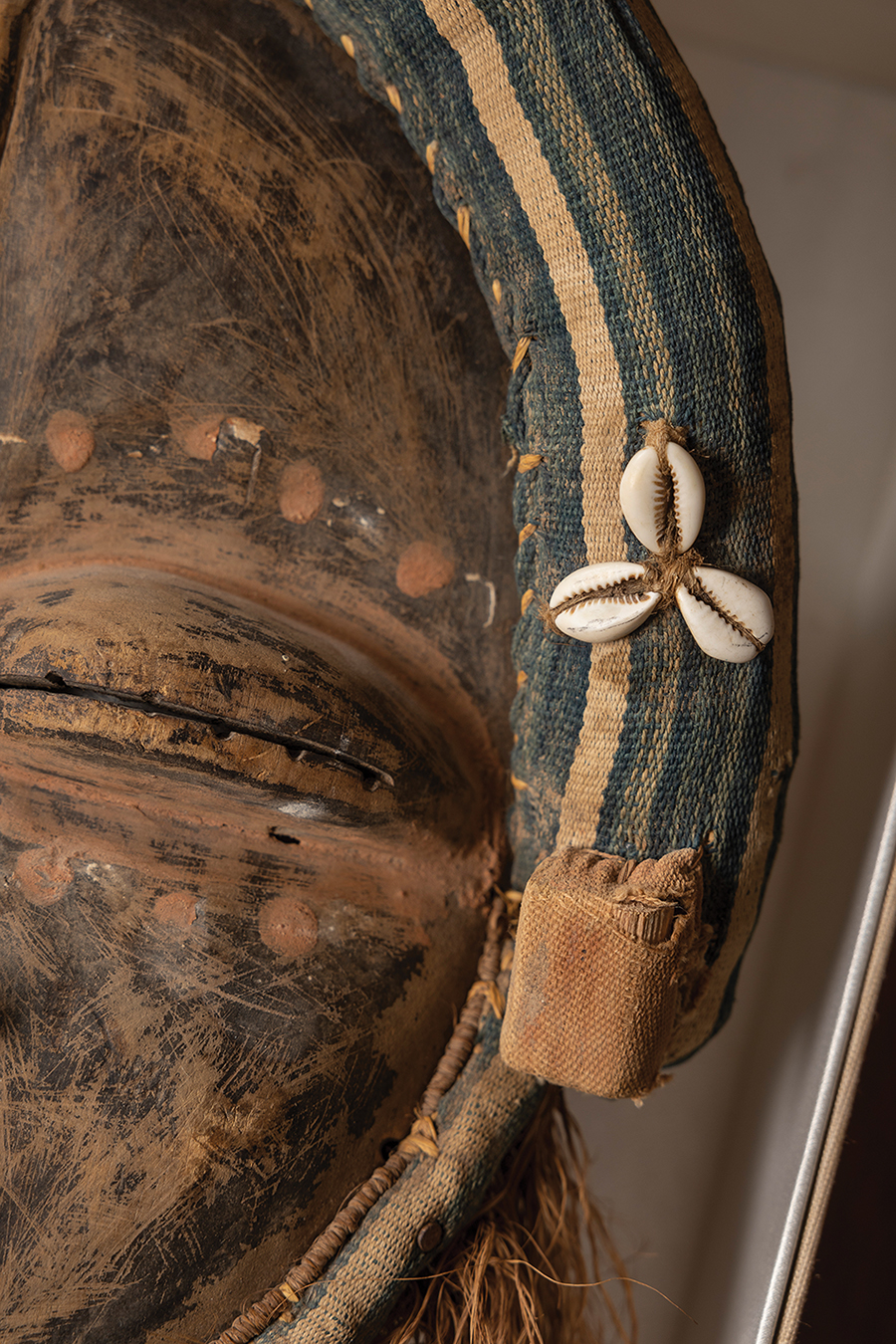
“Within my first few weeks there, I was called out one night to meet ‘the devil.’ Drums were playing, a bonfire was burning, and I initially thought, ‘This is going to be bad.’ Approaching the bonfire, I saw the ‘devil’ dancing. The ‘devil’ is just a spiritual figure covered in cloth, straw and with his face covered by a wooden mask.”
   

Ross’s adrenaline pumped. “He danced toward me, grabbing me around my waist, at which point I screamed and the villagers laughed.” Ross learned that the masked, dancing devils were purposeful. They came to the village to influence an election or to celebrate an important village elder upon his death. “I knew then that I was safe,” she says, “and that this was the way I was being presented to the village!”

When rainy season arrived, the incessant rain falling on the rooftop didn’t disturb her — but the rats on the roof did. “But they couldn’t get into my house,” she adds.

She swiftly discovered that nutritional advice was the smallest part of her work. Villagers were far more eager to learn skills like hand sewing, knitting and crocheting. Yet Ross’ best attended lecture was when she was invited to discuss birth control.

Because Liberia is polygamous, males faced the challenges of supporting several wives, having fathered multiple children. She noticed men also gathering closer to hear her lecture.

Regardless of their feelings about polygamy, Ross and other volunteers were cautioned against imposing their personal beliefs.

Ross preferred to interact one-on-one, talking to the women as the men worked outside the home. She never refused gifts of food as she went house to house. The village diet was largely vegetarian, although dried fish (“boni”) and canned mackerel were common. “Fish head soup was popular,” given the proximity to the coast.

Local foods included boiled cassava, palm butter, potato greens, collard greens and soups — made of okra, peanut, pumpkin, even palm oil. Limes, lemons, pineapple, papaya, pineapple, tomatoes and coconut were plentiful. Rice, a staple, was mostly imported from China.   

The price of avoiding rudeness meant “I gained 30 pounds,” she says ruefully. While the locals ate from a common bowl, they would bring her a separate bowl and spoon.

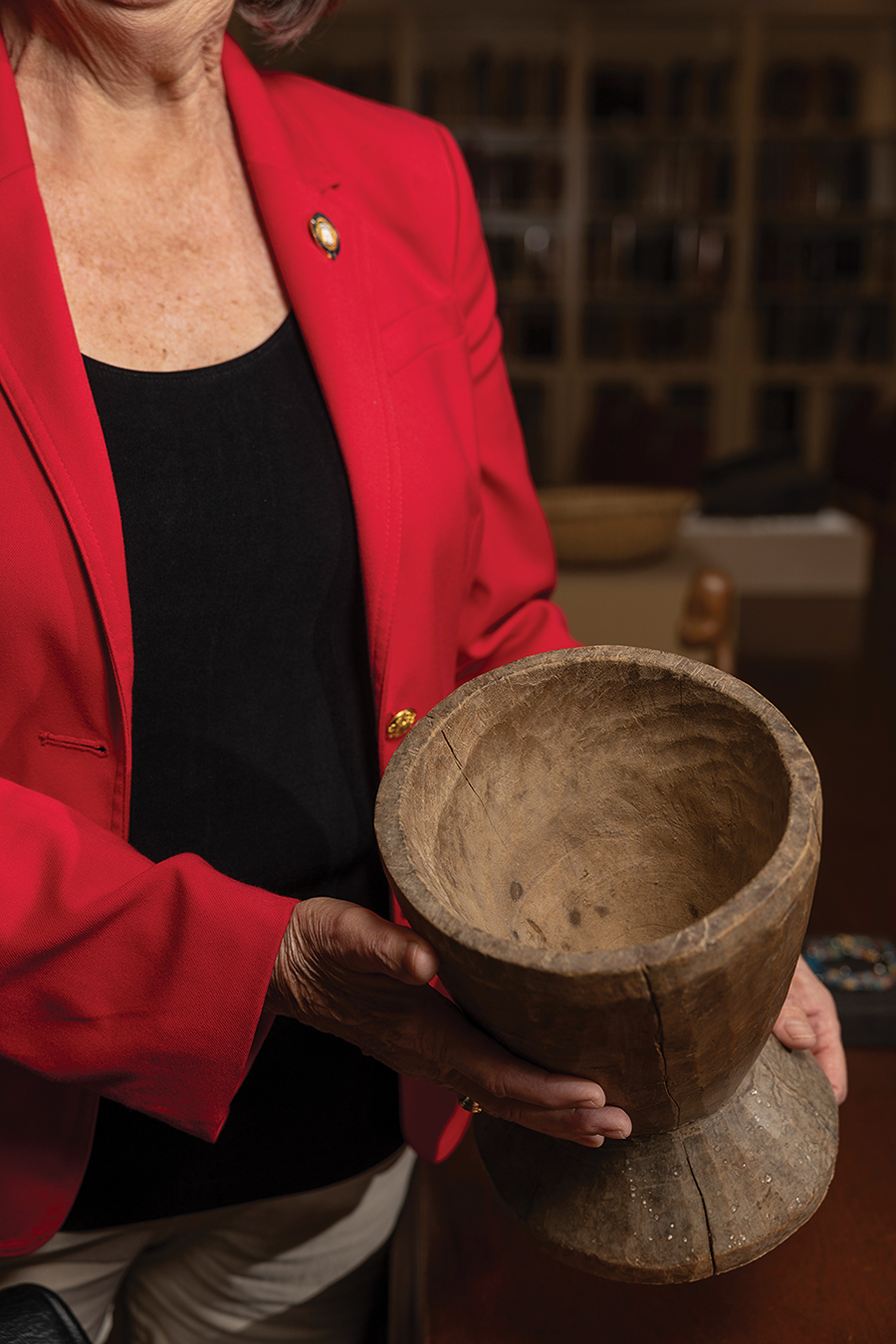
Ross mastered making palm butter using a large mortar and pestle.

“They also have mortars of many different sizes, using them for crushing peanuts for peanut soup, mashing cooked palm nuts for palm butter, or for separating the chaff from the rice kernels they grew.”
 

Coping with unfamiliar foods, unsafe drinking water and equatorial weather were all difficult. She sought medical help in Monrovia while suffering with dysentery and endured two bouts of malaria. Educating the villagers about boiling drinking and cooking water was an ongoing effort.

And she missed having electricity, running water and indoor toilets.

“I never got used to outhouses,” she stresses. “You had to bang on the side of the outhouse at night, because the snakes would come in seeking the cool.” She also tried to adapt to taking “bucket baths.”

Villagers called her “Missy” and later, “Jahla,” which translated to “happy girl.” No more Brenda/Glenda. 

When a set of twins was born, the sole survivor was named Brenda in her honor. “I often wonder what happened to her, how she’s doing,” Ross muses.

In May of 1976, she left Liberia when her father suffered a fatal heart attack. The Peace Corps flew her home, cutting her two-year assignment a month short. 

In time, Ross, her twin and their spouses opened Los Amigos, a Mexican restaurant in Winston-Salem. She worked in food and nutrition services at Duke University Medical Center and later at numerous corporations. Ultimately, she consulted with hospices and retirement homes while earning a graduate degree in gerontology and teaching. Ross became a UNCG instructor in 2010, eventually becoming an associate professor in nutrition.

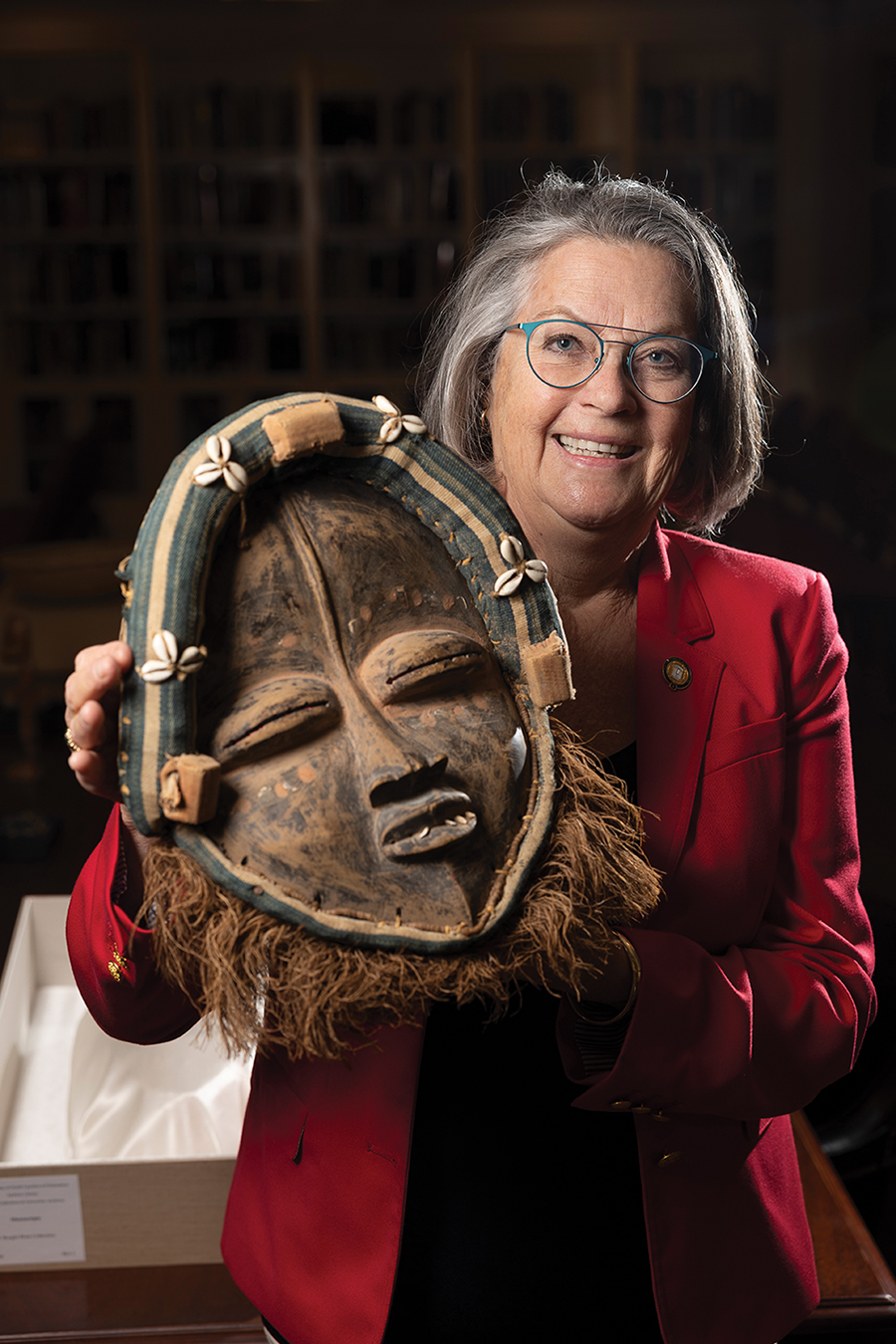
Retiring last year, she made the decision to donate seven Liberian artifacts to UNCG’s Special Collections, pieces that she had kept in her campus office. She called these “precious possessions.”
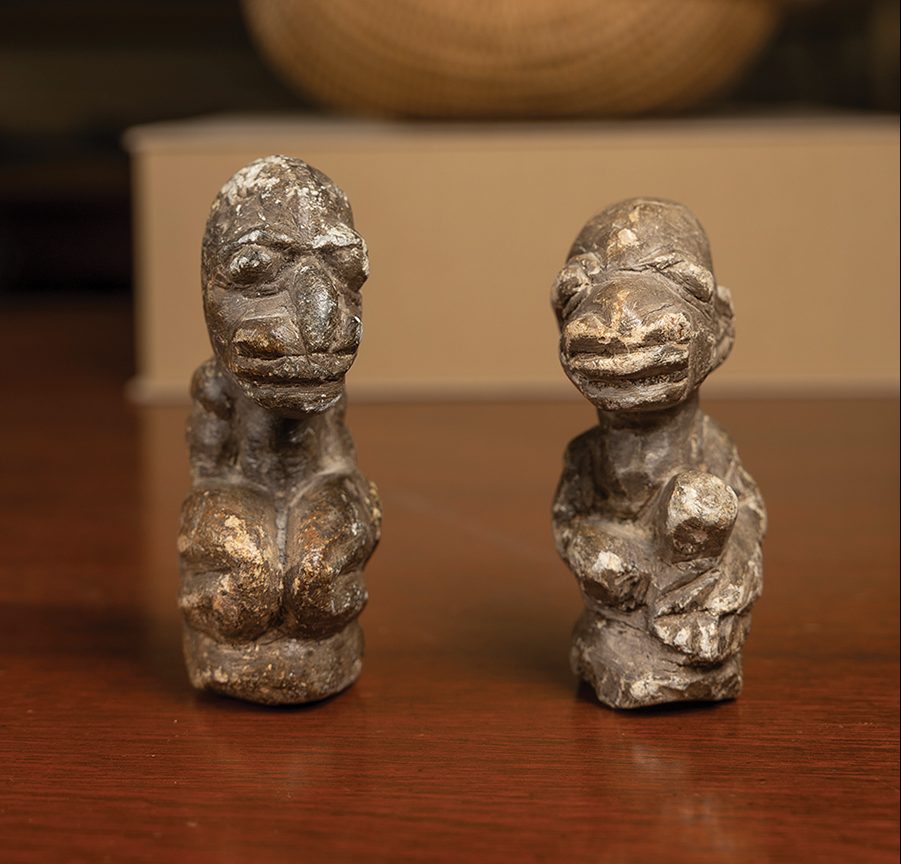
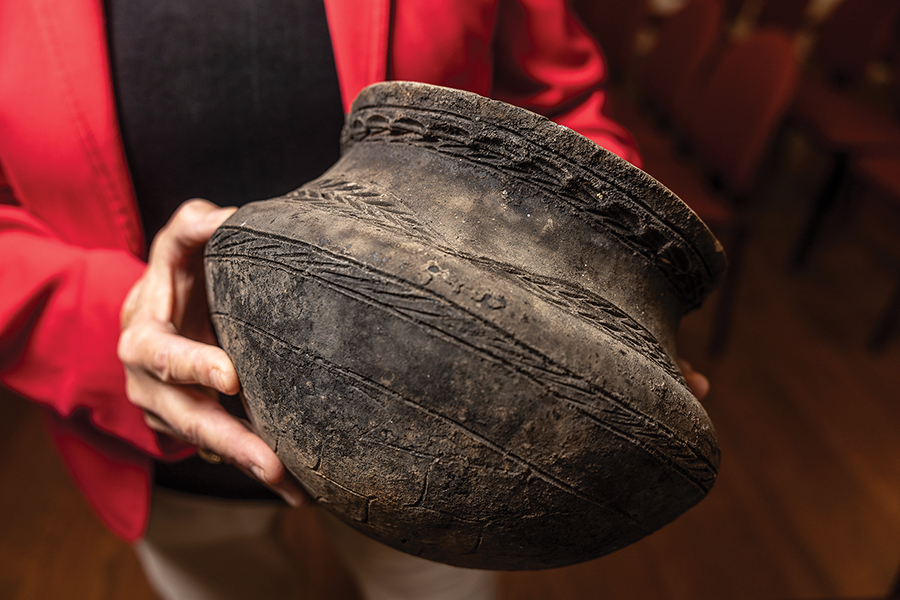
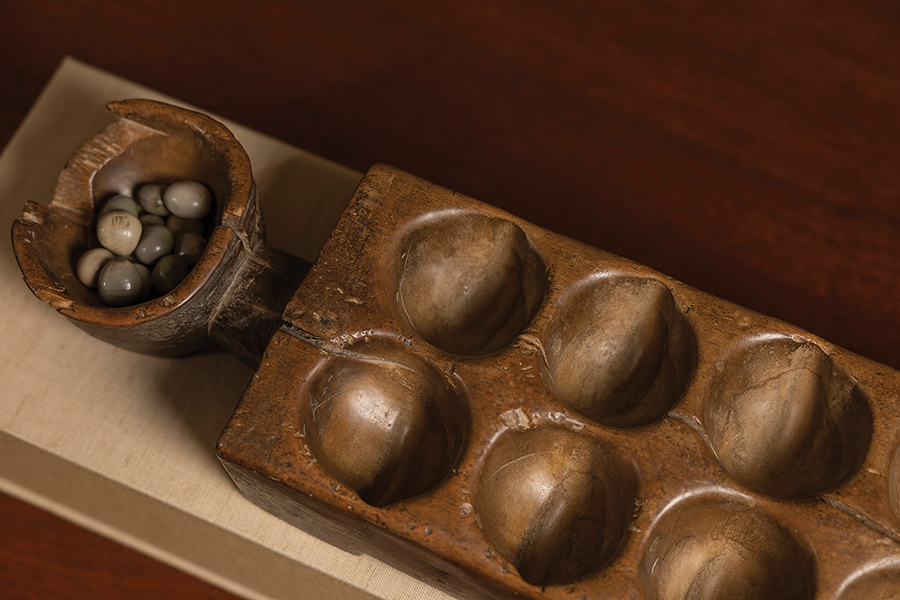
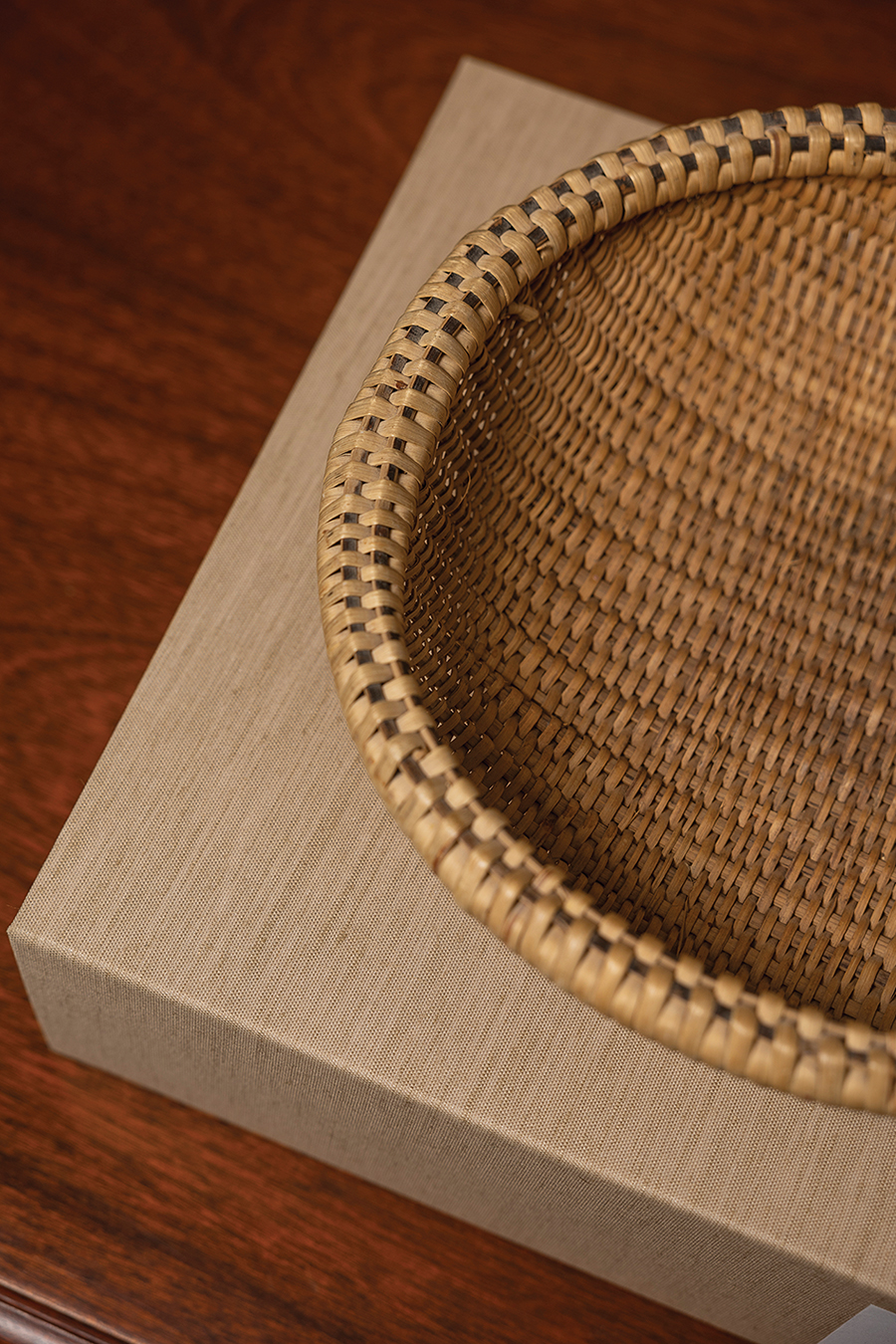
Included were a ceremonial mask, a clay cooking pot, sifting basket, wooden mortar, a primitive “mancala” board game and two bracelets.

“The wooden mortar was used by my friend and neighbor, Esther, to crush dried pepper for cooking. Liberians put hot pepper in every dish they make,” Ross explained when presenting the collection late last year to a group of anthropology faculty, friends and students.

“I was given the mortar the day prior to leaving, along with a live chicken to ‘taken to my ma.’ We cooked the chicken and had a group dinner.”

Ross gave Esther her own mortar, one she had used throughout her stay, in thanks.

“The mancala game was given to me by another Peace Corps volunteer,” she says.

The mask, believed to be Liberian, is the centerpiece of the collection. It is identical to the one the dancing devil wore in Juarzon, a gift from Ed Lipschitz when researching West African masks.

“Ed ate dinner with me every night during the months he stayed in the village,” says Ross. “The mask was a ‘thank you’ for those meals.”

Lipschitz later became a curator at the Smithsonian’s National Museum of African Art.

In passing along the personal artifacts, Ross honors the place that bookended the beginning and end of her career. “None of my career would have happened without my education at UNCG,” she says, adding she is deeply moved by her alma mater’s response to the gifts.

“My story has come full circle.”  OH

Botanicus

Botanicus

Blowing Rock Hydrangeas

And their Greensboro roots

By Ross Howell Jr.

If you’re planning a fall foliage trip to the mountains, you might want to add an earlier excursion to your calendar.

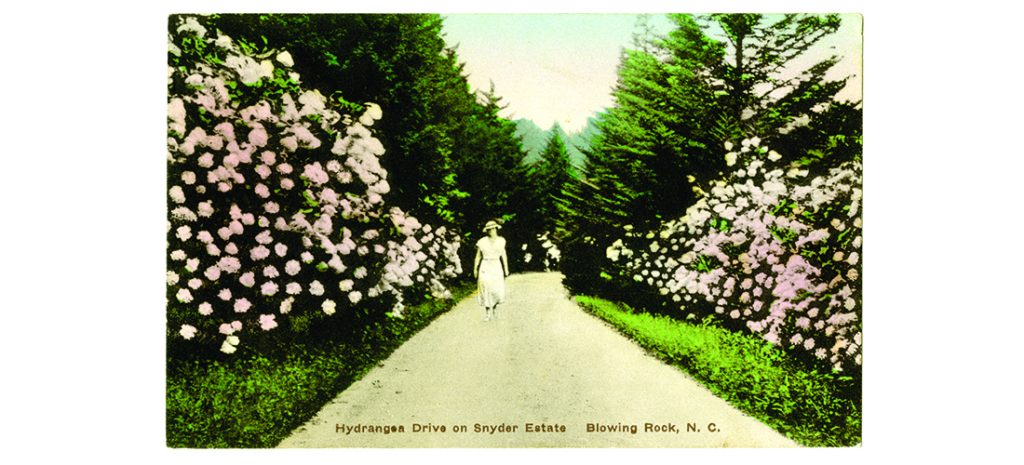
By late August, the Hydrangea paniculata in Blowing Rock reach their peak. These white, cone-shaped beauties — along with their ball-shaped relatives (Hydrangea macrophylla) — are abundant in neighborhoods and gardens throughout town. (A fan of North Carolina native plants, I’ve landscaped our place with Hydrangea quercifolia.)

Greensboro textile magnate Moses Cone and his wife, Bertha, were serious conservationists who played a major role in this visual delight.

In 1900, the Cones began to plant a variety of native and non-native plants on the grounds of Flat Top Manor — their 3,400-acre estate overlooking the town of Blowing Rock.

According to the National Park Service, among the shrubs and trees the Cones planted were “PeeGee” hydrangeas (Hydrangea paniculata “Grandiflora”, or PG), imported from Japan — popular with American landscapers in the 19th century.

Some of the Cones’ original hydrangeas can be seen on the southern side of Bass Lake, one of the water features of the estate, now Moses H. Cone Memorial Park.

For the blossoms of these century-old shrubs, we can thank the Blue Ridge Parkway Foundation and volunteer Bob Stout — now chairman of BRPF.

Moving from Charlotte to the mountains after his retirement from a 40-year career in food service, Stout says, “I needed something to do.”

And do he did.

Working with the National Park Service as a volunteer under the direction of now-retired NPS interpreter ranger Chuck Robertson, Stout and other volunteers — like my Blowing Rock friend, Greensboro native Eric Miller — began to clear the Bass Lake hydrangeas of the wild shrubs and pines that had overgrown them.

The clearing process was followed by careful pruning of the hydrangeas and, later, soil improvement.

“I’ve personally counted some 460 of the original PeeGee hydrangeas,” Stout proudly adds.

But you can find hydrangeas all around the Blowing Rock area.

Susan Sweet has lived with her husband, David, in Greystone — a neighborhood outside Blowing Rock that overlooks the eastern continental divide — for the past 16 years. There are many hydrangeas in Greystone, but Sweet, a past president of the Blowing Rock Garden Club, insists she doesn’t know anything about growing them.

“I just sit back and enjoy the show,” Sweet says.

And she always takes note of a PeeGee in a neighbor’s yard.

“It’s always so full of blooms,” Sweet says. “Some are as big as a good-sized water pitcher!”

While she may claim ignorance about cultivating hydrangeas, Sweet knows plenty about preserving them.

For years, she harvested hydrangea blossoms for the Blowing Rock Women’s Club. Members collected hydrangeas late in the season to create dried arrangements, selling them at Blowing Rock’s “Art in the Park” events to raise money for local students’ college scholarships.

“You have to cut the blossoms at just the right time,” Sweet explains, “when they’ve turned pink, but haven’t started to turn brown.” She and fellow volunteers gathered hydrangeas in bunches of about five, hanging them upside down under shelter.

“You want stems at least two feet long,” she adds. “The blossoms dry out in about a week and hold their color beautifully.” The dried arrangements will last for an entire winter.

Sweet’s fellow women’s club member, my mountain neighbor, Jane Meyers, remembers another tradition, the “Hydrangea Ball” at the Blowing Rock Country Club. Meyers moved to town with her late husband, Mark, from Coral Gables, Florida, in the late ’80s.

Meyers tells me when she attended her first hydrangea ball in 1994, she and her husband realized that “these people really know how to party!”

Mandy Poplin, director of membership, marketing and communications at BRCC, says the hydrangea ball was always “the last big, formal party of the summer.”

BRCC member Valerie Purcell is a physician who lives in Blowing Rock’s historic Robert O. Colt III house with her husband, Peter, also a doctor. She tells me that the ball, a black-tie event, was “very, very successful for many years.”

Poplin adds that the party is now called the “President’s Ball.”

“We still incorporate hydrangeas into the ball decorations,” Poplin continues. “When those blooms start showing tinges of pink, we know winter’s coming.”

So don’t you miss the tradition of Blowing Rock’s hydrangeas this season. They never disappoint.  OH

Ross Howell Jr. is a contributing writer to O.Henry magazine. Please send your garden or history ideas to ross.howell1@gmail.com.

In Good Taste

In Good Taste

A Slice of Summertime

A savory “fruit” tart

Story and Photograph by Jasmine Comer

I used to think that all produce was the same. But when it’s grown on local farms or even in your own backyard with a lot of love and care, you definitely can taste the difference.

When I was growing up, I didn’t particularly care for tomatoes. My mom would make BLTs and she had to watch me peeling them off the sandwich. They say your taste buds change every seven years. I’m not sure how true that is, but as I get older, I’m learning to love what my mother knew was one of nature’s sweetest, yet savory fruits. Sure, eat them raw, but roasting them, as in a tomato tart with Gruyère cheese, brings out their sweet, robust flavor. Either way, you can’t lose.

When it comes to summer meals, I want something light and refreshing. This crispy tart checks those boxes, with basil adding a sweet, peppery note. And the addition of three kinds of cheese — buttery Gruyère, cream and Swiss — helps balance the sweet and sour of the tomatoes. I’m all about having the perfect combinations of textures and flavors when it’s time to eat. After all, a winning recipe is all about balance. And, please, adapt it to your own taste with your choice of cheese and herbs. Trust your intuition and go with what the heart wants when you’re in the kitchen.

There’s no right or wrong way to do anything when it comes to cooking. My only rules? Don’t overthink and have fun. I hope this recipe will be something you can enjoy creating — and eating! — in your kitchen this summer.

Roasted Tomato Tart with Gruyere

Ingredients

1 puff pastry sheet

1 egg, beaten

3 ounces cream cheese, brick style, softened

1/3 cup shredded Gruyère cheese

1/3 cup shredded Swiss cheese

3/4 teaspoon dried basil or 1 tablespoon chopped fresh basil

2-3 medium tomatoes, sliced

Grated parmesan and basil for serving

2 tablespoons fresh basil for serving

2 tablespoons grated parmesan for serving

Salt and pepper to taste

Directions

Preheat oven to 400°F. Place the puff pastry on a baking sheet lined with parchment paper. Cut into six pieces. Use a sharp knife to score the edges of each piece of the puff pastry leaving about an inch all the way around.

Brush the border of each piece of puff pastry with the egg wash.

In a small bowl, combine the cream cheese, gruyère cheese, Swiss cheese and dried basil. Add salt to taste.

Spread the cream cheese mixture onto each piece of puff pastry, using about a tablespoon per piece.

Slice the tomatoes about a quarter of an inch thick. Place them on a plate or surface of your choice lined with paper towels. Salt the tomatoes. This will draw the moisture out of them and intensify the flavor. Let them sit for six to seven minutes.

Layer the tomatoes onto each piece of puff pastry. Season with pepper. Bake for 20–25 minutes or until the edges of the puff pastry are golden brown.

Top with fresh basil and parmesan if desired.  OH

Jasmine Comer is the creator of Lively Meals, a food blog where she shares delicious, everyday recipes. You can find her on Instagram @livelymeals.

O.Henry Ending

O.Henry Ending

The Chipmunk

An uninvited houseguest makes an imprint

By Marianne  Gingher

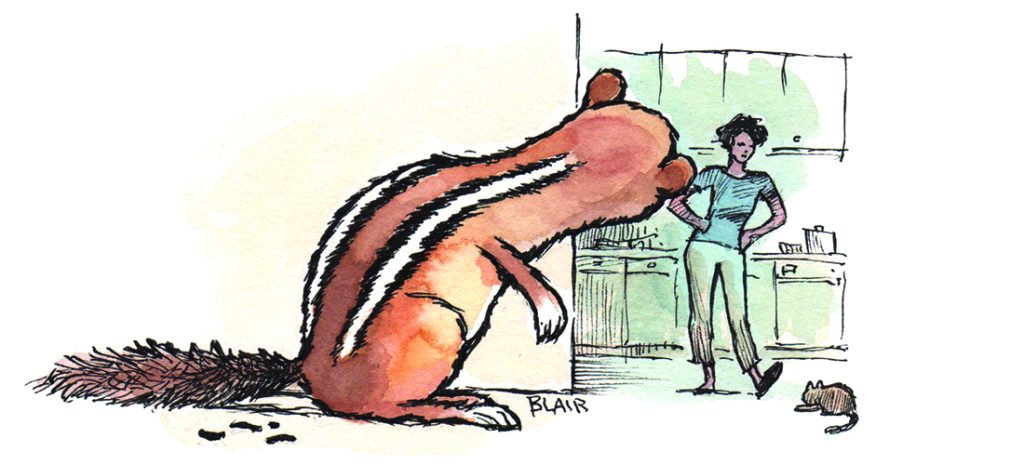
At the beginning of the 2020 pandemic, a chipmunk enters my house and will not be caught — not by my cat or the Havahart trap I bait with peanut butter. Day after day, she won’t take the bait.

Next, my 3-year-old dishwasher breaks. First world problem, a broken dishwasher, right? It seems a certain order is breaking down between appliances going haywire and wild animals invading my house. I call a repair service and am told that parts for this dishwasher are on backorder from Mars. No matter. I happen to be a dish washer — in the way I am not a stove or a refrigerator.

A month passes, pandemic time, so that weeks go by like years and years like weeks, and nobody can remember with any authority what happened when. The dishwasher is still broken, I know that much, and Chippy’s still on the loose. I hear her scuttling under the stove, shifting herself around to get ever more comfortable. Mornings, when I make coffee, I find tufts of insulation in front of the oven door, as if she’s been rearranging her furniture. She’s had a chance now to study my habits and my cat’s habits and hedge her bets as to when it’s safest to venture out. I find less-than-savory evidence of her adventures whenever I sweep. Once in a while, when I’ve been especially quiet, she’s skittered out and encountered me. She screams! I scream! Clearly, we are not meant to be roommates.

Daily, I bait the trap with fresh peanut butter, but catch nary a whisker. On warm days, I leave the backdoor open, hoping a sniff of fresh air will entice her to brave a jailbreak. Has her long captivity made her forget how to be a chipmunk? Has mine made me forget how to be human? My cat’s catness seems in jeopardy (since he can’t catch a chipmunk) and he looks depressed.

When the appliance man delivers the new dishwasher motherboard, he wears pristine coveralls, clean cloth booties over his shoes and a super-duper N-95 mask. He carries a large briefcase with all sorts of digital testers and gleaming repair instruments inside. He arranges all his tools on drop cloths and removes the dishwasher’s worn out organs with the care and precision of a surgeon. “A bit of bad news,” he says as he finishes tidying up. “I found small animal droppings under there. Possibly you have a rodent problem?”

That day, I go to the grocery store and, on a hunch (I’ve done some research), buy some pricey rabbit/gerbil/hamster food specifically “for rodents.” I have refrained from thinking seriously about the fact that Chippy is a rodent. I bait the Havahart with renewed determination and . . . voila! In the cage, she’s calm, cocking her little chipmunk head to observe me better as I carry her outside. I feel tenderly connected, like Snow White on the brink of a song.

The pandemic asked us all to get better at waiting. I marvel at the patience of the chipmunk who knew only the wild green flickering world before her estrangement from it. Trapped in a house, her immense aliveness had to learn to be still. She spent six weeks dodging a gargantuan human and Isis, the cat, gobbling any dusty crumb she could find, waiting, no exit strategy. During her lockdown, nothing was certain, except that the hawk who frequently glides over the neighborhood would not be picking her off. Wherever she scampered, I know she’s enjoying the pandemic’s easement as much as I am this summer.  OH

Marianne Gingher has published seven books, both fiction and nonfiction. She recently retired from teaching creative writing at UNC-Chapel Hill for 100 years.

Poem July 2023

Poem July 2023

Clay Banks

The creek is old and its banks are steep.

Its flow never stops its work of remaking.

Clay like this wants to keep its form

though scoured by the storm-carried silt,

pitted as by earthbound lightning strikes.

Water is turned by jutting granite,

milky quartz, even soft sandstone,

all of it red with rust going green

as first the ferns unroll their fronds

and vines tease the air with soft thorns

the way childhood returns in old age.


A friend told me how his mother, who

is now constantly looking for her home,

who can’t recognize him or his sister,

was happy to play ball with his toddler,

with his new puppy. She tossed the ball

against the brick patio wall with a spin.

The dog and child ran with confused joy.

Sometimes they fell over each other.

His mother always caught the ball.

She was the only one who seemed to know

exactly where the ball would bounce.

— Paul Jones

Paul Jones is a professor emeritus at The University of North Carolina at Chapel Hill. His latest collection of poetry is called Something Wonderful.

Greensboro’s Jeanaissance

Greensboro’s Jeanaissance

One legacy at a time, denim is on the rise again

By Billy Ingram     Photographs by Mark Wagoner 

It was a solemn promise Evan Morrison made to his grandmother on her deathbed that would lead to one of the most improbable outcomes imaginable. He’d just returned from grad school in the City of Light and was looking after her. “She asked that I stay here and make Greensboro a better place,” he recalls. Morrison had no way of knowing then that his pathway forward would result in the return of denim manufacturing to our city. Ensconced in his office atop the historic White Oak Mill, he tells me,  “We’ve had so many retirees come here just pouring tears, knowing that this still is happening.”

Denim isn’t just in our jeans. It’s in Greensboro’s — and Evan Morrison’s — genes. Growing up in the Gate City, he attended Buttons and Bows day care in a converted mill house where the walls were adorned in navy and gold, the colors of Cone Mills. His mother worked at Moses Cone Hospital and an aunt was a pattern maker at Blue Bell.

What led to Greensboro becoming the denim capital of the world? The path was forged in the 1890s when two brothers with an entrepreneurial spirit moved to the city and built, first, Proximity Manufacturing Company to produce denim, and then, 15 years later, White Oak Mill, the largest denim mill in the world and the largest cotton mill in the southern United States.

Life was unimaginably rugged in the latter part of the 19th century, which found Americans in need of clothing that could hold up against the elements and rigors of farming. Recognizing that largely untapped market, Baltimore wholesale grocers Moses and Ceasar Cone relocated to Greensboro in 1895 to take advantage of that opportunity. A year later, Cone’s Proximity Cotton Mill, so named because of its adjacency to growing fields and cotton gins, began weaving denim for work clothes. Over the next decade, Cone added two more Greensboro plants, Revolution Cotton Mills and White Oak, producing flannels and denim 24/7.

In a loft above Coe Brothers Grocery on South Elm Street, Hudson Overall Company was formed in 1904. Business was so brisk, the outfit opened a much larger denim factory a block away on South Elm and Lee Street (now Gate City Boulevard) in 1919. Renamed Blue Bell, it became the world’s largest overall manufacturer. Over time, it bought up various regional brands, including Casey Jones Overall and that company’s nascent, largely unrealized Western line, Wranglers. Blue Bell hired Ben Lichtenstein, aka Rodeo Ben, a famous tailor to professional cowboys, movie and bluegrass stars, to design what they called Blue Bell’s Wranglers brand. Introduced to the public in 1947, the name was later shortened to Wrangler.

Organized, it’s been said, by disgruntled Blue Bell employees in the 1930s, Greensboro Overall Company began operations on Carolina Street, manufacturing less expensive Blue Gem coveralls. Both companies’ products were made from Cone fabric. Blue Gem’s label with the radiant gemstone states proudly, “Made of CONE deeptone® DENIM.”

By the 1940s, Cone Mills was number one in the world for denim production, world leader for indigo consumption and world output leader in denim fabric. Levi Strauss & Co. in San Francisco was becoming increasingly dependent on Cone for its 501 line of blue jeans that had become an unlikely fashion statement almost overnight.


At White Oak during the peak years, 3,000 looms were aligned in rows down a cavernous corridor stretching outward so far that if you were positioned at the end of the line, bent down to floor level, and looked forward, the curvature of the earth would only allow you to see where the floor and ceiling converged.

Already in possession of the Lee brand, VF Corporation acquired Greensboro Overall Company and Blue Bell in the 1980s. The Blue Bell label was scuttled while the company focused on Wrangler. VF’s strategy? If their products couldn’t beat the number one jeans manufacturer, Levi’s, having both the number two and three spots would result in more combined sales. It worked and, by the time VF relocated its headquarters to Greensboro in 1998, it had become the world’s largest publicly traded apparel company.

As Evan Morrison pondered the future following his grandmother’s passing in 2013, “I knew I wanted to work in denim. That’s what our city’s known for.” At that time, there were only eight denim mills operating in America. Locally, Cone’s White Oak Mill was running full tilt with several months lead time. “Made in the USA was a major selling point then,” Morrison recalls. “I thought, ‘Well, there’s no brand in Greensboro making jeans or denim products out of cloth woven in Greensboro. So if we start a business like that, we could be the only one of our kind in the Western Hemisphere.’”

Morrison partnered with William and Tinker Clayton to create Hudson’s Hill in 2013 to market clothing and accessories made from Cone denim. Things were going well until, in 2017, Cone announced that their only active mill, White Oak, was ceasing operations, despite producing 1 million yards a year with 46 weaving looms running nonstop. With that closing, a 122-year legacy of denim manufacturing in Greensboro came to an abrupt end with no reasonable expectation that it would ever return.

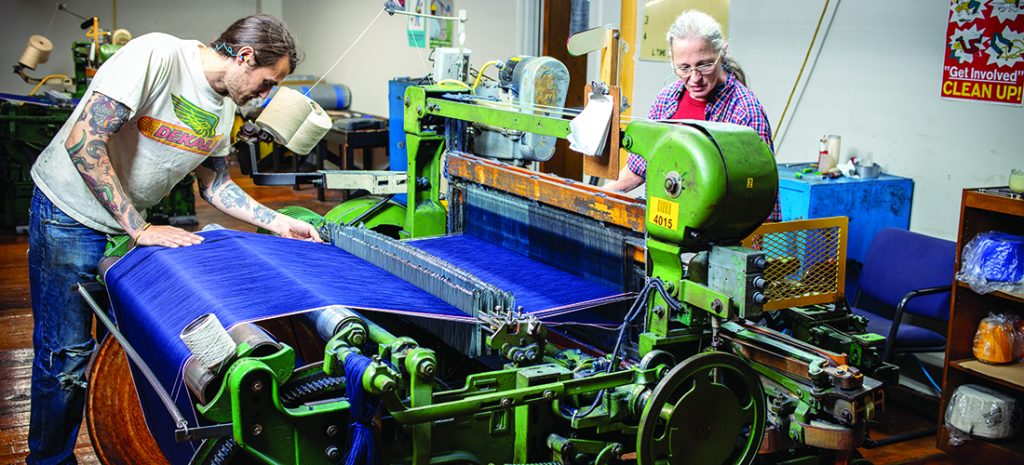
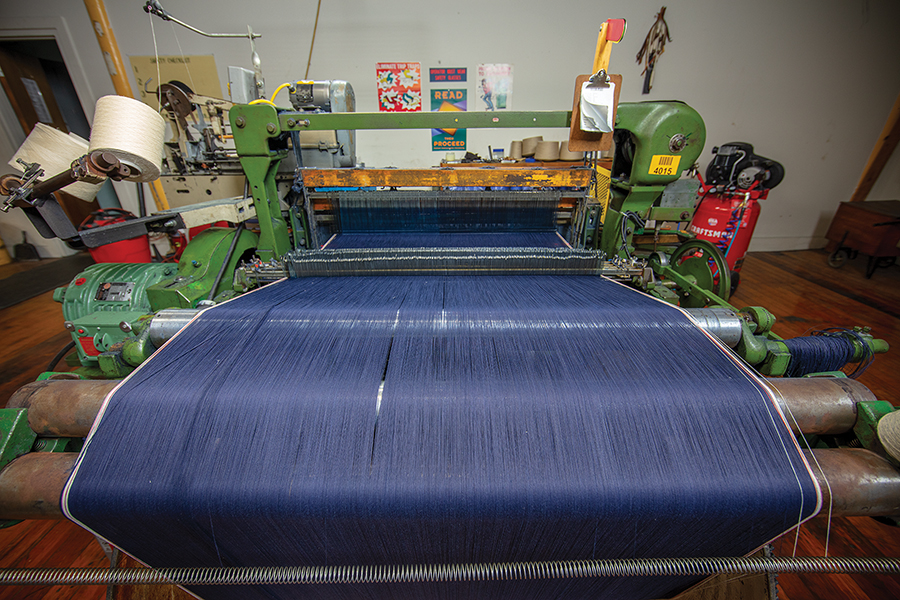
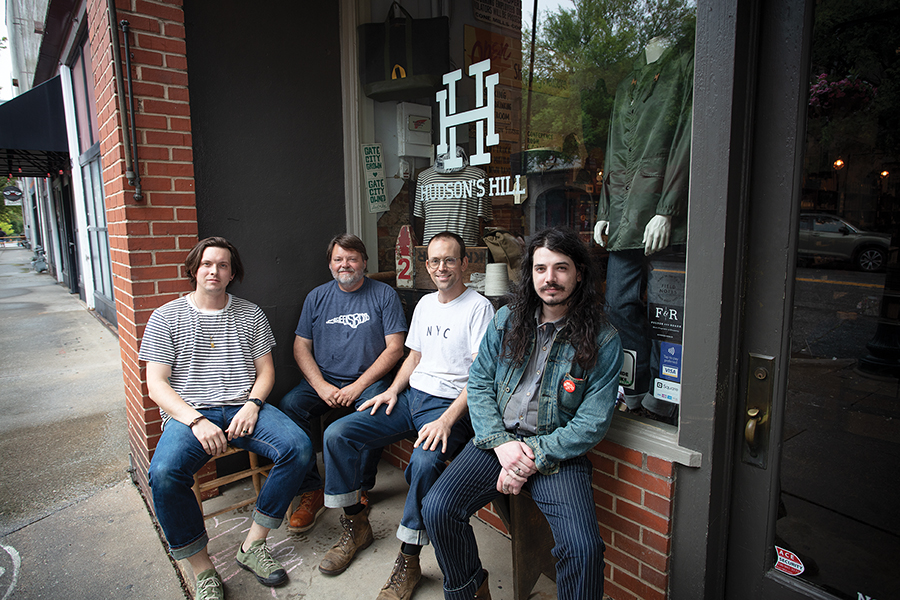
L to R: Evan Morrison, Chip Hardeman, Bud Strickland, Debbie Lindsey and Greg Redelico, representing Proximity Manufacturing Company, a weaving business producing selvage denim woven on Draper shuttle looms at White Oak Mill. Morrison is director of operations; Hardeman is general manager; Strickland is on the board  of advisors; Lindsey is a weaver; and Redelico is superintendent.


“It was like, ‘Oh my God, what are we gonna do?’” Hudson’s Hill’s business model had just imploded. “I cold-called and met with the new owner of the property, Will Dellinger, who owns JW Demolition.” Morrison posited that Cone denim’s methodology was the equivalent to Coca-Cola’s secret recipe. “This is the house that made Levi’s, Blue Bell, Lee, OshKosh and Carhartt famous — when a pair of blue jeans became iconically American. People immigrating to the U.S. have a vivid memory of their first pair of jeans. It was a symbol of a better life.”

In 2019, with an agreement in place to lease a portion of the White Oak Mill, Evan Morrison and a group of business professionals across the state formed a nonprofit called the White Oak Legacy Foundation, or W.O.L.F. Morrison approached Cone Denim, asking if they could take possession of the remaining two looms at White Oak with a promise that somehow they’d figure out a way to put them to good use. “We drew up a deed of gift that basically says they’ll give them to us through the nonprofit.” When Cone donated those last remaining looms, Morrison points out, “Essentially, they gifted them to the city. So the people of Greensboro now own our history. W.O.L.F. is the nonprofit that cares for it.”


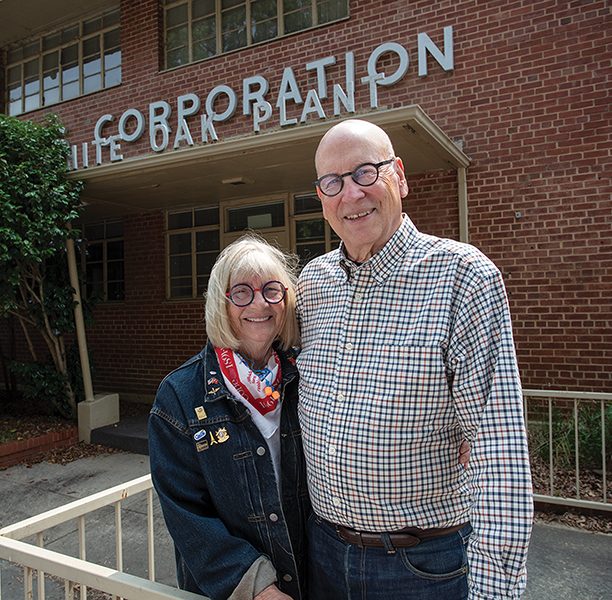
Original founders of Denim 101 Jill Amidon Strickland and Bud Strickland, shown here, helped W.O.L.F. relaunch an education program in 2021 through volunteering. The rebooted Denim 101 has become so popular that every course has a waitlist. When the couple first launched the program several decades ago while working for Cone Mills at White Oak, Bud worked in product development and Jill worked in quality assurance. 


An abundance of Cone Mills veterans in the area possessing a decades-long understanding of supply chains and contacts helped W.O.L.F. map out a workable business plan. “So we started renovating these looms in December of 2019 and, by March of 2020, we were ready to fire them up,” Morrison recalls of the initial run. “We wove our first couple of inches and then, of course, all the plastic parts that had dry rotted broke. So it took another month to find all those parts and rehab the machines to get them back up and running.” By May, those looms were weaving five days a week, “but they don’t weave very fast.” For Morrison, that presented a challenge. “I have an M.B.A., and an entrepreneurial spirit. So let’s figure out how to do as much as we can with what little we’ve got.” Know how to spot a true entrepreneur? “I do all the machine fixing and all of the rebuilding myself,” Morrison says.


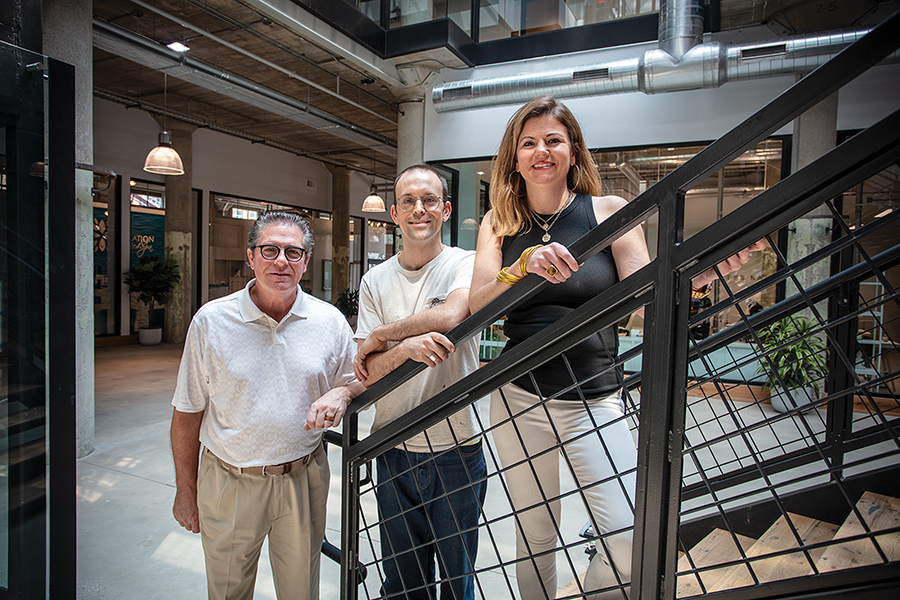
L to R: Nick Piornack, Evan Morrison, Karen Little, representing Revolution Mill, located in NE Greensboro, formerly the world’s largest flannel and corduroy mill and part of the Cone Mills family of textile mills, now historically renovated and owned by Self-Help. Since 2013, it has hosted a collection of textile exhibits, ephemeral objects and historical equipment that has helped showcase its history throughout its mixed-use campus. Nick serves as general manager, Evan oversees special projects, while Karen serves as property manager at Revolution Mill.


W.O.L.F. has four defining pillars: Make, Remember, Learn and Create. Working looms represent the “Make” portion of W.O.L.F. “Remember” is being manifested as an American Denim Museum downstairs at White Oak on the heels of Morrison’s previous historical installations at various locations over the last decade. Cruise around town and you’ll spy statues of pairs of blue jeans put in place when Evan Morrison first coined the moniker, Jeansboro, now synonymous with our city.

“The ‘Learn’ side is Denim 101,” Morrison explains. “There used to be a big event here called The Denim School. Designers would come for a couple of days and learn, from bale-to-fabric-to finishing, how things actually got made.” By chance, his across-the-street neighbors, Bud and Jill Amidon Strickland, founded that program in the ’80s. “I asked them to come back on and help us. We’ve put on six sold-out programs and everybody from Gap to Levi’s, Lee, Wrangler, Cone Denim, Cotton Incorporated, with students from N.C. State, A&T, UNCG all attending.”


The “Create” aspect means staying on the cutting edge, just as Cone Mills was recognized worldwide for modernizations. “The first air-conditioned plants,” Morrison points out. “First to develop ‘S’ jeans, which is like a recovery denim that has stretch but doesn’t stretch out. First to weave denim with the new, natural indigo being grown in the United States. So many firsts.”

That spirit of innovation lives on at White Oak. The first pair of jeans in the Western Hemisphere woven on shuttle looms with hemp as a component was recently developed there. “Last year, we wove some of the first ever bio-based, plant-based indigo,” Morrison notes. “It doesn’t use any chemicals, just natural elements.”

To attain a custom shade of denim for a more distinctive look, 20,000 linear yards of yarn has to be ordered. “We can only handle about 4,000,” Morrison says. In order to act big but stay small he came up with the idea of “weft out.” In a typical pair of jeans, “the blue that goes through the loom is called the warp and it gets filled with what’s called weft.” Generally, that weft is white, creating the lighter hue you see inside your jeans. “I thought, ‘What if we just flip the fabric backwards?’ So we started Weft Out, which is our trademark, using filling yarn to create a custom color.”


Morrison unfolds a bolt of a fabric revealing an astonishing effect — vibrant hues of turquoise, gold and orange, with indigo playing a supporting role on the back side. “This is something that we sell to really high end fashion companies for $3,000 [per pair of] jeans. It does take a lot more time.”

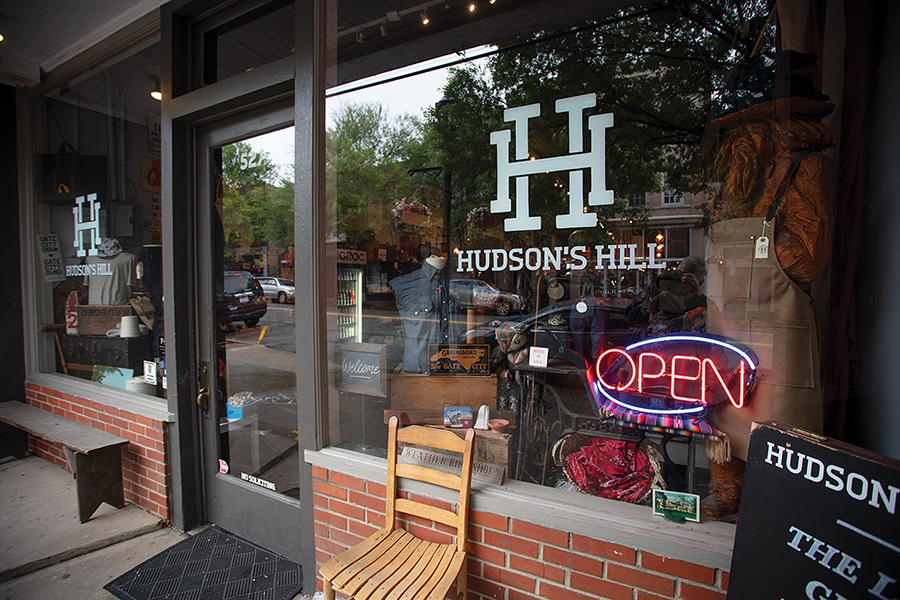
A little closer to home than $3,000 jeans, one hopes, is the aforementioned Hudson’s Hill, where Evan Morrison began this journey ten years ago, a stylish storefront situated next door to where Hudson Overall/Blue Bell was established well over a century ago. Stocked exclusively with products made in America, with a hefty percentage produced right here in North Carolina, I liken it to shopping at the Ralph Lauren store in Beverly Hills, albeit more compact.

Inside Hudson’s Hill, hip haberdasher J.R. Hudgins points out a line of jeans not likely found outside of New York or Los Angeles, saying, “Tellason is like an entry level gold standard for the shop right now, affordable for an America made pair of jeans.” A grouping of classically styled jackets catches my eye. “These are from a company called Mr. Freedom,” Hudgins says. “I love them because he’s a French designer who has a very Western aesthetic but with a European cut, higher cut arm holes, much trimmer body, not as boxy.” There are, of course, store-branded jeans and jackets constructed from found dead stock: “Fabric Cone Mills or another local producer stopped making and we found enough to make some pants or jackets out of it,” he explains. “Once these sell, that’s it.”

L to R: William Clayton, Tinker Clayton, Evan Morrison and John Hudgins, representing Hudson’s Hill: The Last Great American-Made General Store, located in downtown Greensboro on S. Elm Street. The Claytons (father and son) and Morrison are co-owners, while Hudgins serves as store manager.    

E-commerce aside, Hudson’s Hill’s local customer base is augmented by visitors here on business from larger cities and abroad. “That’s the clientele for a lot of the higher ticket items,” Hudgins says. “Yes, if our store was in Brooklyn, we’d probably be a lot more successful. But we couldn’t do things the way we do if we weren’t here in Greensboro.”

Headquartered on Green Valley Road, Cone Denim still operates factories in Mexico and China, and — as you read this — it’s relocating its headquarters to Revolution Mill. The circle of life and all that. And still innovating with Flash Finish technology and Mission Zero Waste to be more eco-efficient.

Adjacent to Evan Morrison’s workspace/studio at nearby Revolution Mill, old Cone manufacturing equipment sits on display. “I might be leaving my work at the end of the day, kind of frustrated because something’s gone wrong,” he tells me, “and I’ll walk out of my office and look over and there’s a granddad [crouching down] with his grandkid telling them, ‘I used to work on these machines in this building when I was a young person.’ And that’s the tackling fuel, to quote The Waterboy.”  OH
Those interested in Greensboro history might find Billy Ingram’s book, EYE on GSO, to be perfect summer reading. Available from bookstores and on Amazon.


The Legacy of Moses Cone

© Carol W. Martin/Greensboro History Museum Collection.

Just months after the employees of the combined Proximity, White Oak and Revolution Mills celebrated their fourth annual picnic in 1908, newspapers around the country proclaimed that Moses Cone, the “Denim King,” was dead at the age of 51. However, weaving and manufacturing of denim in Greensboro was still in its infancy.

Having left no last will and testament, under North Carolina law, 50 percent of Cone’s estate would have to be surrendered to the state. His brother, Ceasar, and Moses’ wife, Bertha, negotiated with state officials to park his holdings into an account, allowing Bertha to live comfortably until her death in 1947.

Moses Cone holding his niece, Isabel Cone, ca. 1907.

Photograph © Greensboro History Museum Collection


Per that aforementioned agreement, that trust was then donated, along with a sizable patch of centrally located real estate, for the construction of a hospital to be named for Moses Cone. But there was one stipulation: If the Cone name ceased to be associated with the hospital, ownership would revert to Moses’ living descendants.

That’s why, no matter how many times Cone Health may be purchased, merged or rebranded, the name Cone will always be front and center.


Big Screen Jeans


Right: Stranger Things, Left: Yellowstone

Greensboro’s own Wrangler jeans are taking a noticeable star turn on hot TV series like Yellowstone and Stranger Things. Truth to tell, if you recognize any label or logo in the scene of a television production, it’s almost certainly paid for. 

Product placements are a bit more subtle today than back in the 1980s when characters would play an entire scene in front of a Pepsi machine. Or, think back upon ET’s intergalactic hunger for a relatively unknown candy, Reese’s Pieces, considered the first mega-successful product tie-in of all time after M&Ms passed on the opportunity.

Wrangler’s first product placement campaigns started back in 1947 when their rough-and-ready denim jeans were first introduced to the public, leather labels stitched on the backsides of big name rodeo stars to reach the targeted rugged individual demographic. To a certain extent, that still holds true.

Wrangler is only one of a number of Triad companies that have been purposely inserting their products into scenes and sponsoring television programs since the medium’s earliest days. With deep pockets, Big Tobacco was one of the first industries to see the potential in television. In fact, in the 1950s and ’60s, sponsors had more control over the content of TV programs than the networks did.

  Walker

Headquartered in Greensboro, P. Lorillard Tobacco Company sponsored classic shows like Ted Mack’s Original Amateur Hour, which found Old Gold’s Dancing Cigarette Pack and The Little Matchbox tap-tap-tapping across the small screen in the early-1950s. Lorillard’s Newport logo was featured prominently on ’60s sensations like The Price is Right and Petticoat Junction.

R.J. Reynolds took an integrated sponsorship approach with seamless transitions as a primary advertiser on The Flintstones when that cartoon series debuted in 1960. “Winston tastes good like a cigarette should,” especially when Fred Flintstone and Barney Rubble would sneak around the cave to light one up while the wives continued doing all of the chores. Camels became synonymous with The Phil Silvers Show.

Reynolds’ Kent cigarettes sponsored The Dick Van Dyke Show. Cast members happily puffed away in one minute skits while Steve McQueen stepped out of character to peddle Viceroys on Wanted: Dead or Alive. Vicks VapoRub, manufactured (until 1985) by Greensboro-based company Richardson-Vicks, was another ubiquitous TV advertiser in the 1960s and ’70s.

In 1952, Greensboro’s Burlington Industries became the first textile manufacturer to advertise on television. By the 1960s and ’70s, its brash, bold, percussive spots became woven into the fabric of nighttime television, punctuating programs like The Waltons and The Mary Tyler Moore Show. When Burlington did its yearly opinion survey in 1975, 70 percent of those sampled recognized the brand from watching television.

So the next time you spy a pair of men’s Greensboro jeans on a Western-themed show like Walker or Outer Range, know that Wrangler is continuing a decades-long tradition of Triad firms influencing the television programs we watch in both large and small ways.

Tea Leaf Astrologer

Tea Leaf Astrologer

Cancer

(June 21 – July 22)

Your capacity to experience the gamut of human emotions is extraordinary. And yet, while you’re busy making an Olympic sport out of mood swings, those who love you are left floundering. This month, prepare to stick a landing that will dazzle even your most grounded of companions. Use this sober moment to communicate your heart’s desires. Because here’s the gold: Your high lifts up the world.

Tea leaf “fortunes” for the rest of you:

Leo (July 23 – August 22)

Try not to pick at the scab.

Virgo (August 23 – September 22)

Step one: Relax your shoulders. Step two: Seriously? Shoulders first.

Libra (September 23 – October 22)

May as well enjoy the ride.

Scorpio (October 23 – November 21)

Cut yourself some slack.

Sagittarius (November 22 – December 21)

The sign couldn’t be more obvious.

Capricorn (December 22 – January 19)

The heart always knows.

Aquarius (January 20 – February 18)

You’re in the clouds again.

Pisces (February 19 – March 20)

But is it your monkey? Your circus?

Aries (March 21 – April 19) 

Just because it’s uncomfortable doesn’t mean it isn’t good for you.

Taurus (April 20 – May 20)

Cleanup on aisle life.

Gemini (May 21 – June 20)

You’ll hear what you want to hear.  OH

Zora Stellanova has been divining with tea leaves since Game of Thrones’ Starbucks cup mishap of 2019. While she’s not exactly a medium, she’s far from average. She lives in the N.C. foothills with her Sphynx cat, Lyla. 

omnivorous reader

Omnivorous Reader

Discovering a Dutch Master

A life story ringed with mystery

By Stephen E. Smith

Convincing a friend that a work of art you love is worthy of his or her attention can be disheartening.

You: “See the inner darkness and the outer brightness of the painting, how the sense of circumambient air drifts evenly through the scene?”

Friend: “How much is that thing worth anyway?”

Our unabashed enthusiasm is too often dashed by indifference. Or, worse yet, by that Antiques Roadshow inclination to ignore anything other than a painting’s monetary value.

Given our confusion as to exactly what art is and what it means, it’s little wonder we tend to reject uninvited suggestions as to what we should like or dislike. That’s the challenge facing art critic Laura Cumming in Thunderclap: A Memoir of Art and Life & Sudden Death. Since childhood, she has been enamored of A View of Delft, With a Musical Instrument Seller’s Stall, by Dutch artist Carel Fabritius (1622-1654). Now she wants us to love it, too.

Cumming has been the art critic for The Observer and was a senior editor of the New Statesman magazine, both British publications. Her book The Vanishing Velazques was a New York Times bestseller. In her latest offering, she writes with keen insight and obvious affection for the Dutch masters — Rembrandt, Vermeer, Avercamp, Ruisdael, De Hooch, etc. — but the focus of her memoir is on the less celebrated Fabritius, known for having painted The Goldfinch, The Sentry, as well as A View of Delft. Fabritius is considered a minor Dutch master, primarily because so little of his work survives, but Cumming maintains that he’s no less accomplished than Vermeer and Rembrandt, and that he’s deserving of greater recognition. Unfortunately, precious little is known about Fabritius’ life, and it’s assumed that most of his paintings have not survived. We do, however, know about his death.

The “Thunderclap” in Cumming’s title alludes to an explosion near a convent in the city of Delft, where 80,000 pounds of stored gunpowder exploded on Monday, October 12, 1654. The detonation injured a thousand, destroyed hundreds of wooden homes and left a hundred people dead, including Fabritius, his apprentice and the subject of the portrait he was painting at the time. Fortunately, his best-known painting, The Goldfinch, was rescued from the rubble.

Although Fabritius was a student of Rembrandt, he’s seldom mentioned by his contemporaries, and documentation concerning his personal life is sparse. His wife and child died early, and, like most Dutch painters, Fabritius was deeply in debt. His isolation is reflected in The Goldfinch, his lesser-known The Sentry and two brooding self-portraits, which are little enough upon which to base a lengthy aesthetic exposition. “I go round and round this tiny tale,” Cumming writes, “this life circling out from the village of Middenbeemster, ringed with mystery. It is a man’s whole life. Yet I can get no more of him, except perhaps through his art. He is like a suicide who takes his secrets away with him.”

The “memoir” element of Thunderclap focuses on Cumming’s father, James Cumming (1922-1991), a painter of “semi-figurative art.” Cumming admired her father’s artistic dedication, but his inclusion in the narrative seems mildly intrusive when explicating the likes of the Dutch masters. Certainly, his influence is felt in the love Cumming has for art, but the connection to her narrative is tenuous at best.

But Cumming recalls with pleasure the art she discovered growing up in Scotland, and the magnificence of the paintings she observed on a childhood visit to the Netherlands. The bulk of her beautifully written text is devoted to explicating the art produced by those Dutch masters, and the book offers colorful images of the paintings she explicates.

Americans, for all our lack of aesthetic depth, are nonetheless capable of appreciating how art relates to our everyday lives. Grant Wood’s American Gothic, for example, is an immensely popular masterpiece that illustrates through the subtle use of symbolism most of our aspirations and contradictions — the individual vs. collective wisdom, religion, the American Dream, the virtues of hard work, the relationship between the sexes, upward social mobility, etc. — and the subtle social criticism in Childe Hassam’s Washington Arch in Spring is apparent to any careful observer. Ethnocentric tendencies aside, it’s possible to discern much about the cultural history of a foreign country by studying its art. This is where Cumming’s insights are essential.


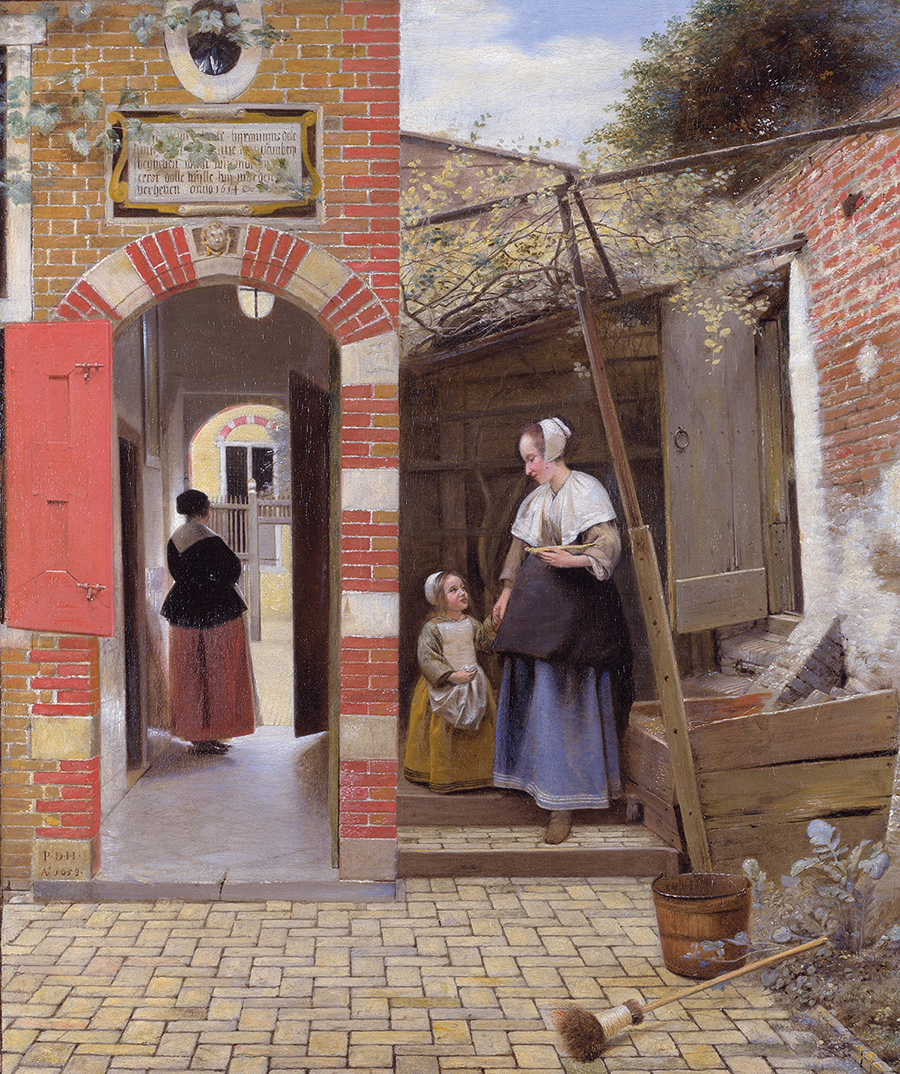
Her description of De Hooch’s The Courtyard of a House in Delft is representative of her work: “. . . the brickwork lying in its separate courses, the paint exactly imitating mortar; the dusty blue of the weeds and ivy, the clear light of the street; then the wonderful set of rhyming shapes — the scarlet shutter on one side, its wooden counterpart on the other; the oval window in the stonework and its glass twin in the hallway, the recession of arch inside arch inside arch that takes the eye right through the corridor and out in the street of Delft.”

Reading Cumming’s meticulous descriptions opens the reader’s perception of the accompanying paintings. Her precise prose takes readers on an excursion through the Rijksmuseum and the Golden Age of Dutch Art. It’s a tour worth every ounce of effort.   

No book, especially a book on art, is for everyone. But Thunderclap comes close. Keep an open mind. And if you’re not interested in art, you can take solace in the fact that the masterpieces Cumming presents are priceless, deserving of a jubilant Antiques Roadshow “Wow!” with the turn of every page.

Thunderclap: A Memoir of Art and Life & Sudden Death will be in bookstores in mid-July. If you find it enthralling, you might also enjoy Donna Tartt’s 2014 Pulitzer Prize-winning novel The Goldfinch.   OH

Stephen E. Smith’s latest book, Beguiled by the Frailties of Those Who Precede Us, is available from Kelsay Books, Amazon and The Country Bookshop.

simple life

Simple Life

The Wish Book’s Final Chapter

Saying a fond farewell to Sears’ last remaining North Carolina store

By Jim Dodson

I learned that the last Sears department store in North Carolina honest-to-goodness brick and mortar store — was closing. Out of simple curiosity, and a dose of nostalgia, I went to pay my respects.

Truthfully, I hadn’t set foot in our local shopping center’s Sears since purchasing a new Craftsman lawnmower there more than five years ago. Happy to report, it’s been a fine mower.

Before that, my last visit to Sears was probably as a kid in the mid-1960s when, fueled by the firm’s famous “Wish Book” Christmas catalog, every kid I knew haunted the toy department at the downtown Sears retail store during the run-up weeks to the holiday. My first bicycle came from Sears, and was later parked outside the store the year my buddy Brad and I innocently drifted from the toy department into the adjacent lingerie department to stare in wonder at the display mannequins in all their undergarmented glory. As she escorted us to the exit doors, the unamused clerk with the pointy-blue eyeglasses refused to believe we were simply looking for presents for our moms.

That iconic downtown store, in any case, is now a giant hole in the ground, awaiting construction of a swanky office building as time, life and commerce march resolutely on.

Let’s pause and have a moment of fond reflection for — as Smithsonian recently described it — “The retail giant that taught America how to shop.”

Sears began modestly in 1887 when a former railway lumber salesman named Richard Sears moved to Chicago to partner with an Indiana watchmaker named Alvah Roebuck to launch a catalog selling jewelry and watches. Both men were still in their 20s. Six years later, they incorporated as Sears, Roebuck and Company, putting out a 500-page catalog that sold everything an American farmer or thrift-conscious housewife could ask for at a “fair price,” shipped directly to the customer.

In a nation where most Americans still resided on farms or in small towns, this marketing model exploded like a prairie fire, fueling the growth of urban factories. Even Henry Ford was said to have studied the Sears marketing model for making and selling his cars. The company’s first stock certificates were sold in 1906. “If you picked up a big enough chunk of stock when the company went public,” writes Investopedia, “you’d never have to work again.”

The first Sears retail store opened in Chicago in 1925. Four years later, on the eve of the Great Depression, the company was operating 300 stores around the country. By the mid-1950s, the number topped 700. By then, the corporation’s reliable Kenmore appliances, lifetime-guaranteed Craftsman tools, DieHard auto batteries and Allstate Insurance were beloved household names in America’s ballooning mass consumer culture. The stores followed the consumer’s migration from Main Street to shopping centers and, eventually, suburban malls.

Perhaps the company’s most enduring product line was introduced in 1908 when a Sears executive named Frank Kushel came up with the idea of kit houses sold through a specialty catalog called “The Book of Modern Homes and Building Plans,” offering 44 styles of mail-order homes ranging in price from $360 to $2,890. Generally shipped by rail, house packages provided everything down to screws and nails, including pre-cut and numbered framing lumber, flooring, doorknobs, wiring and plumbing.

Between 1908 and 1947,  an estimated 75,000 Sears kit houses — from Bungalow to English Cottage, Craftsman to Queen Anne — were shipped to Americans. Old House Journal notes that unknown Frank Kushel’s Modern Home Program wielded as much impact on the development of American architecture as famous contemporary Frank Lloyd Wright.

Sears boasted that its houses were built to last, explaining why thousands of them remain highly prized, lovingly restored jewels in older neighborhoods across America, relics of a bygone golden consumer age.

By the 1970s,  the firm owned the tallest skyscraper in the world in Chicago, was among the first to introduce home internet services, and jumped into the real estate, credit card and financial services businesses.

Perhaps it was too much for the gods of commerce to tolerate. Critics pointed to the company’s legal affrays over sex and race discrimination and a business model fueled by corporate hubris. 

In 1993, just shy of its 100th anniversary, Sears discontinued its famous catalog. Walmart was now the nation’s leading retailer, and Americans were suddenly buying things “online.” One year later, a former hedge fund guru named Jeff Bezos started up an online book service called Amazon, pretty much putting the finishing nail in the coffin of the historic brand. After 75 years on Wall Street, Home Depot took Sears’ place on the Dow Industrials. As the company’s sales steadily spiraled downward, a forced marriage with K-Mart in 2004 failed to stem the hemorrhage.

In January 2017, shortly before I purchased my Craftsman mower, the iconic tool brand was sold off to Stanley Black & Decker.

Less than a year later, in October 2018, Sears filed for bankruptcy.

Last December, the company emerged from bankruptcy but announced the liquidation and closing of all its remaining stores. According to reports, less than a dozen made it to this spring. Only one in North Carolina.

Which is why, out of some strange, old fashioned sense of brand loyalty or happy memories of lawn mowers and provocative lingerie mannequins, I felt a final farewell trip was in order.

Bright yellow “Going Out of Business” banners festooned the building. I wandered through looking at the remaining stock items. Fifty-percent bargains were everywhere. I looked at Kenmore refrigerators, top-line Samsung dishwashers and GE Elite ovens, all half-price.

I decided on a lightweight Craftsman toolbox to remember the place by, a steal at $27.

On my way out, I paused to chat with a clerk, Janice, who has worked for Sears for more than two decades. “It makes me really sad to think that Sears is going away for good,” she said. “Like millions of Americans, everything in my house as a young married woman came from Sears. I guess nothing lasts forever, does it?”

She surprised me with a sudden, feisty grin. “You know, I think if we’d only stuck with catalogs, by golly, we’d have beaten Amazon and still be going strong!”

I loved her company spirit. I wished her well.

Then I went home to mow my lawn.

Whenever the math of this world doesn’t quite add up — when the sad subtractions outnumber the hopeful additions, or vice versa — I find temporary comfort by mowing my lawn. Crazy, I know. But it briefly puts things in perspective.

Besides, my Craftsman mower never lets me down.  OH

Jim Dodson can be reached at jwdauthor@gmail.com.

The Creators of N.C.

The Creators of N.C.

The Art of Life

Perseverance with paint and canvas

By Wiley Cash

Photographs By Mallory Cash

In 2013, painter Tom Ward went to the beach to die. He and his wife, Mary, both natives of Long Island, New York, had been living in Durham for 11 years when he was diagnosed with amyotrophic lateral sclerosis, more commonly known as ALS, a disease that affects the nerve cells in the brain and spinal cord. Over time, people with ALS lose control of their muscles, including the muscles used to eat, speak and breathe. Most die of respiratory failure within three to five years.

“I didn’t know how long I was going to live,” Tom says one afternoon in late May while we are sitting in his living room in Wilmington, several of the gorgeous paintings he’s completed over the years hanging on the walls around us. He smiles a wry smile. “And I kept thinking, It’ll be too bad if I croak in Durham.”

“We’re beach people,” he says. “We love the beach. When we were young and dating, even after we were married, we spent a lot of time on the Long Island beaches on the South Shore and the North Shore. So when I got the diagnosis we came out to Wilmington and looked around. And that’s how we got here.”

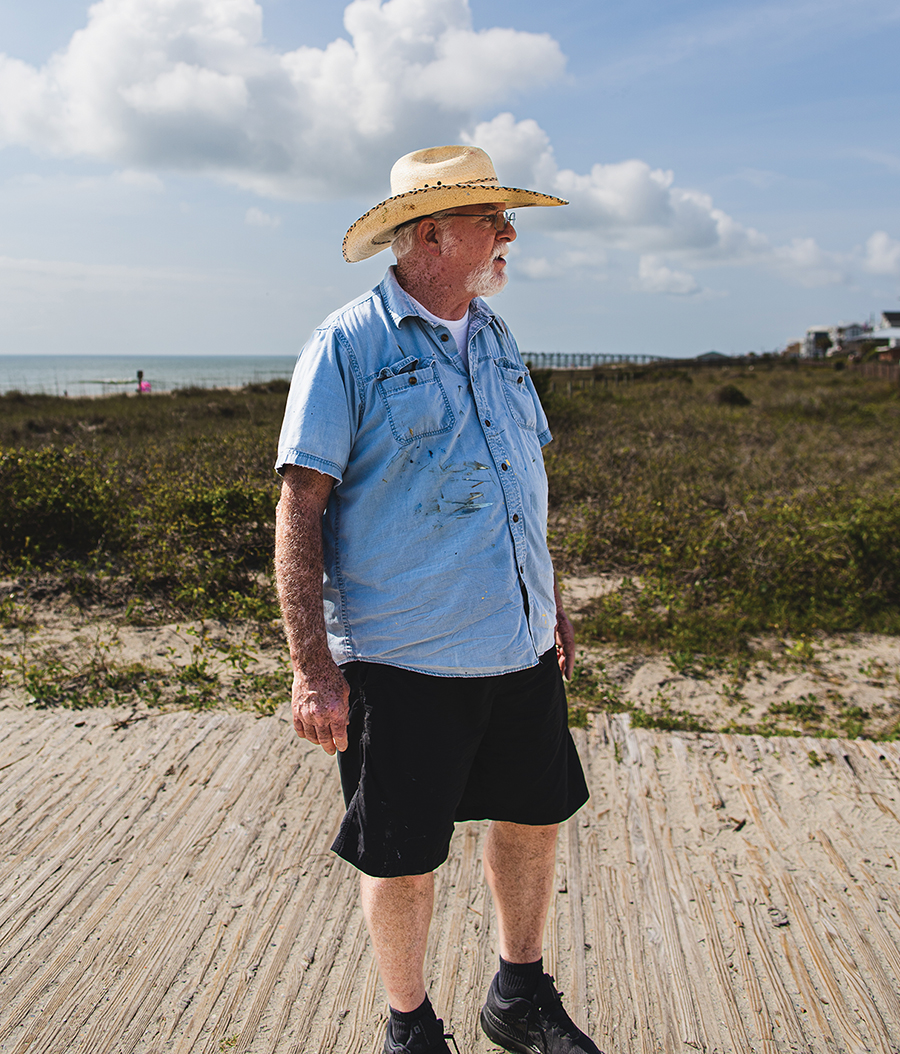
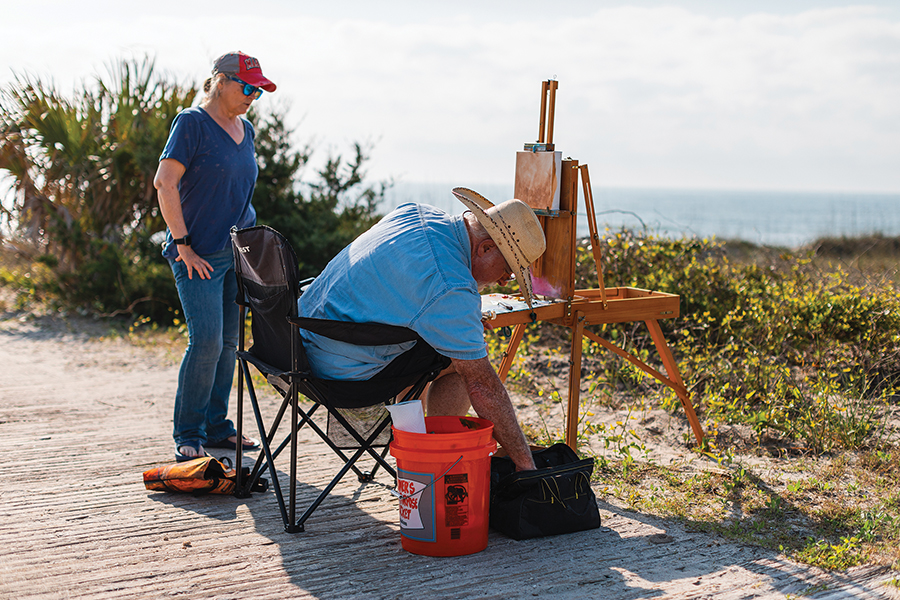
Only 10 percent of those diagnosed with ALS live beyond a decade, and Tom can be counted among those few. His disease is mercifully slow moving, and some days he feels well enough to take a trip to the beach with Mary’s assistance to paint en plein air; Fort Fisher is a favorite spot. Other days, when his body does not feel like his own, he works from home, taking his motorized wheelchair into his studio, where he moves onto a padded chair positioned in front of his easel. Throughout his battle with ALS, and its attendant and unpredictable ups and downs, painting has been a constant in Tom’s life. So has Mary’s support and advocacy.

In 2016 Mary was named a fellow by the Elizabeth Dole Foundation, whose mission it is to empower and support the military caregivers who care for America’s ill, wounded or injured veterans. A former Marine (Is there really such a thing as a former Marine?), Tom, like other veterans, is two times more likely than a civilian to develop ALS. Mary has spent years advocating for caregivers like herself and for veterans like Tom, even authoring three books on issues from navigating veterans benefits to service dogs to her own’s family’s experiences with war after the couple’s son served in Iraq and Afghanistan.

But it’s not in her national efforts that Mary’s support for Tom is most apparent. It is more evident in the small moments of their day-to-day lives: her leaving the conversation to get him a glass of water; her gently correcting his memory or assisting him as he parses the details of one of my questions. And Tom is just as devoted to Mary as she is to him, supporting her through two graduate degrees and careers as diverse as a public school teacher and a hospital administrator. It was the latter position that caused the couple to move from New York to Durham after she accepted a job at Duke Hospital.

But as much as their relationship is based on intangible evidence of love and support, the larger moments still loom in their shared past, perhaps none larger than the moment in 1993, after 13 years of marriage, when Tom contracted encephalitis and, after a lengthy treatment, showed signs of cognitive impairment that affected his executive functions. Suddenly, a man who’d served in the Marines and forged a career in risk management for an insurance company in Manhattan was having trouble parsing step-by-step instructions and remembering simple tasks like picking up their 9-year-old daughter and 10-year-old son from school. Tom’s symptoms forced him to retire from a busy job, and he suddenly found himself seemingly without purpose for the first time in his life.


“When our kids were growing up, I had to appear to them to be industrious in some way,” he says. “That was just my personal rule. I couldn’t sit on the couch and give into the thing and let that thing rule me, let the fatigue rule me.”

A year or so into Tom’s battle with the long-term symptoms of encephalitis, he and Mary found themselves in an art gallery not far from their home in upstate New York. Tom had always appreciated art, but he’ll be the first to admit that he didn’t know much about it.

“I thought all painting was called impressionism,” he says, laughing. “I didn’t know there was something called classical realism or other styles of painting. I thought impressionism meant painting like someone would think all cars are Chevys without knowing about Buicks or Pontiacs or Peugeots.”

Even though Tom didn’t know much about painting, that day in the gallery he couldn’t help but be struck by the work of an artist who signed their paintings “V. Walsh.” Tom approached the gallery owner and learned that V. Walsh was a woman named Virginia. On impulse, Tom expressed an interest in studying under Walsh, and he left his phone number with the gallery owner. Within a few weeks he and Virginia Walsh were setting up their easels side by side, a master and an apprentice with zero experience.

I ask Tom what drew him to Walsh’s work, what it was about her paintings that day in the gallery that caused him to make a decision that would change his life.

“She turned a form,” he says, referring to a painter’s ability to give the illusion of depth on a flat surface. “It was a painting of a plum that had a quarter sliced out, and the slice was laying as a half-moon shape on a tabletop. It was the light striking the flesh of the plum and the color that she put there. And then you could see the interior of the plum where the slice had been removed. Her use of color was just so perfect. It just grabs the eye. That’s what made me say, ‘Wow, that’s it. I want to do that.’”

Walsh agreed to work with Tom, but their time together got off to a rocky start. It was Walsh’s practice to educate by example, and she and Tom would regularly set up their easels and paint en plein air together for hours at a time. She was particular in the way she wanted his paints and materials organized, but to her frustration, Tom seemed unwilling to comply. Walsh ended up calling Mary in frustration to break the news that she couldn’t work with Tom because of his obstinate disposition. When Mary discovered that Tom hadn’t shared his struggles with executive function with his new mentor, she told the teacher that her pupil wasn’t being obstinate; he simply didn’t have the ability to comply without explicit, patient direction. Things went more smoothly after that, and Walsh and Tom continued to work together, painting outdoors through a number of seasons to exhibit for Tom the exquisite yet too often unnoticed changes the natural world undergoes when one truly pays attention.

Both his attention to detail and his deeply felt portrayals of the natural world are evident in Tom’s work almost 30 years after his lessons with Virginia Walsh, though sometimes his ALS makes it difficult for him to render detail as easily as he once could. Take the use of his palette knife when he works with it, rather than a brush, to apply a smooth layer of paint to the canvas.

“I’m just not getting the cut of the knife in a way that portrays what I’m seeing in my mind,” he says. “That’s ALS. The thought in my brain that tells my hand what to do either gets lost completely or is received in a garbled fashion. So my hand’s not really doing what I’m asking it to do.”

But, just as he has throughout his life, whether as a Marine or a businessman or a new painter struggling with organizing his paints and materials, Tom finds a way to adapt. And, as usual, Mary is by his side. No matter what comes next, it will happen to them together. And it will happen by the sea.  PS

Wiley Cash is the Alumni Author-in-Residence at the University of North Carolina at Asheville. His new novel, When Ghosts Come Home, is available wherever books are sold.