Poem February 2025

POEM

February 2025

The Fog

Some say strong winds and hard rain sing,

but I love the more subtle things:

stillness as mists make frost and dew,

the time between crickets and wren

before the cruel light crawls in

and work takes me away from you.


Drunk with sleep but almost aware

that we are more real than dreams,

but much less sure and far more rare.


Not cold silence, that’s too extreme

though the loudest leaves go quiet

as fog fills in what we forget.


The sun starts showing silhouettes.

Stalled clocks whisper: “Not yet. Not yet.”

— Paul Jones

Ushering In Love

USHERING IN LOVE

Two couples share their love for performing arts at the Tanger Center

By Cassie Bustamante   

Photographs by Mark Wagoner

While sitting on the large concrete orbs in the LeBauer Park playground as our youngest son played with a pal, my husband, Chris, spied a silver-haired couple strolling by holding hands.

“Aaaaw, how cute,” he said. “That couple matches.”

“Of course, they match,” I replied. “They’re wearing their usher uniforms and are clearly on their way to work at the Tanger Center.” As soon as the words escaped my lips, I knew I had to know who these people were. What kind of couple, in their golden years, still hold hands and go to work together? I looked at Chris and wondered, could that be us one day?

I immediately reached out to the Tanger Center and learned that there was more than one gainfully employed couple who ushered in guests awaiting theatrical and musical entertainment.

The couple we spotted in the park, Allen and Anita Greenstein, will celebrate their 60th wedding anniversary later this year, and Dale and Starr Harrold just rounded their 50th year of marriage in 2024.

Inside the walls of the Tanger office, I sat down with both couples to learn more about them and also to try to crack the code to a long and happy marriage.

Allen & Anita Greenstein

Sixty-one years after the fact, Allen and Anita Greenstein easily recall falling in love with
one another.

“We met in a house plan. A house plan is a poor man’s fraternity,” says Anita, a 4-foot-8-inch spitfire of a woman. “I was supposed to meet another fellow and instead I met him.”

“And that was it,” says Allen.

“And that was it,” repeats Anita.

At the time, Allen was a senior attending The City College of New York and Anita was an undergrad at Pace Institute. Having grown up in New York, both regularly attended Broadway shows from a young age. “We dated and went to all the theaters,” says Anita.

But Allen quickly rattles off an exact date: Feb. 7, 1964, their first date. On a tight budget, Allen scraped his nickels and dimes together to take her to the movies that night, where they saw an Audrey Hepburn film. “I can’t remember exactly which one,” he says, “but I knew something was percolating at the time between us, which is why I remember the date.”

For 30 years after that, Allen gave Anita flowers one full week before Valentine’s Day. “And for 30 years, she said, ‘What’s this for?’ So I stopped.” His eyes crinkle in the corners as he stifles a giggle.

After they were married, on Aug. 14, 1965, Allen went on to earn his doctorate in clinical psychology.

“And I got a doctorate in keeping him happy. And I got a PHT,” quips Anita. “Putting hubby through.”

The Greensteins left New York behind for plain old York — in Pennsylvania — where Allen set up his psychology practice and they raised a family. For 36 years, Allen practiced there and even launched a large mental health program with Anita working by his side.

“She took care of the clerical staff, a lot of administrative stuff. I supervised all the professional staff,” says Allen. “She did her thing, I did mine.”

“We don’t do anything separate,” says Anita. A fact the couple is clearly proud of is that theirs was the first mental health facility to computerize for billing, record keeping and “things of that nature.”

While they left New York City behind, they took with them their shared passion for theatre. Anita became active in the York Little Theatre (now The Belmont Theatre), acting, dancing — which she preferred to acting — and even handling publicity. Allen recalls hitting the stage as well, playing Captain Hook in a Little Theatre production for children.

And, over the years, the couple has become convinced that live theater is good for a community’s mental health. How? “Let me get my speech ready,” Allen answers. “It’s usually a very positive experience and it’s great to go in and have your spirits lifted by the story, by the talent, by the music. It’s beautiful.”

After a moment of further consideration, he continues. “And even when the topic is not so bright and cheery, some of these things need to be discussed. It’s a great outlet for lifting your spirits or provoking some discussion.”

Eventually, Allen retired from his practice and the couple relocated to the Sunshine State, Florida. Their love for live theatre and stage shows once again followed them and they found their way to the Sunrise Theatre in Fort Pierce, Fla.

There, Anita thrived in a position as team lead, managing a crew of 42 people to cover a 1,200-seat theater.

“It was the graveyard of old singers,” Allen jokes.

Anita scoffs defensively.

“Well,” he admits, “Tony Bennet was there.”

And yet, the couple thoroughly enjoyed the many “old singers” that traveled through the theater, where they were able to interact with artists such as Kenny G, Debbie Reynolds, Joan Rivers and Howie Mandel, to name a few. Anita recalls having a serious heart-to-heart with Ms. Reynolds about osteoporosis.

But a real magic moment for Anita was having her photo taken with Air Supply’s Russell Hitchcock, whose arms are wrapped around her petite frame in the picture. Her entire face glows as she reminisces about that moment and sings: “Just when I thought I was over you, just when I thought I could stand on my own, oh baby, those memories come crashing through . . .”

But it was Willie Nelson who left a mark on both of them.

“You want to know a real good story?” asks Anita.

“Willie Nelson!” exclaims Allen. “We were Willie Nelson’s body guards.”

Anita proceeds to tell the story of how a crazed female fan came forward when it was autograph time and proceeded to climb on stage with Willie. As the Shakespeare line goes, “Though she be but little, she is fierce.” Anita got her down. “She pulled her off!” Allen says proudly of how his wife managed to get a woman much larger than herself off the stage.

As a thank you for her heroism, Willie gave Anita one of his signature bandanas, says Allen.

“A clean one,” she quips. “All the others were dirty.”

Despite the countless exciting interactions with celebrities, the Greensteins felt the call to Greensboro, where their daughter, Barbara, lived with her husband, UNCG Provost Alan Boyette, and their kids. They landed in the greener pastures of North Carolina in 2017 and soon got wind that a new theater was due to open in 2020.

Given their experience and charismatic personalities, the Greensteins were a natural fit to become ushers at the Steven Tanger Center for Performing Arts. Of course, the COVID pandemic delayed the scheduled opening, which was to happen on March 20, 2020, with the renowned Josh Groban. Instead of the theater opening its doors, the entire world shut down.

But a year-and-a-half later, when home-grown songbird Rhiannon Giddens performed the first show at Tanger on September 2, 2021, “We were there,” says Allen.

At Tanger, the two continue to share their passion for stage with guests. They love greeting guests as they arrive, getting them amped up for the show they’re about to see, and view their team of fellow ushers as family. According to Allen, the best part of his role is “to see the wonder in their face, that’s very sparkling.”

Looking back on almost 60 years of marriage, Anita says, “I still can’t believe it — it’s kind of amazing.” So, what’s the trick? “Because I love him,” Anita says simply.

While they don’t travel or get out as much as they used to, Allen says that what he loves most is “just being together and having a good time.”

Despite the countless celebrities they’ve interacted with, the stars in the Greensteins’ eyes still shine only for each other.

Dale & Starr Harrold

After 50 years of moving all over the Southeast and raising two daughters, Dale and Starr Harrold appreciate nothing more than spending time at home together. Sitting by their fireplace, each with a book in hand, they relax, “just being cozy and comfortable,” says Starr.

How about a date night out to dinner? Nope, the couple, now in their 70s, would rather be home. “I do the cooking, she does the cleaning,” says Dale.

As undergrads at Western Carolina University, Dale and Starr ran in the same circles. Before they even dated, Starr was taken by how Dale treated others. “He would be the first to say, ‘Can I get you something to drink? Can I get your coat?’” she recalls. “He was just marvelous.”

As many great love stories do, it all came down to one fateful night, when Starr’s friend, Pam, who was dating Tate, a fraternity brother of Dale’s, said that Tate was going to bring along a date for her. She had no idea who it was going to be, when in walked Dale.

“I found out later that he had dated everyone on the three stories of my dorm and I just happened to be last,” she says with a laugh. It turns out he’d saved the best for last.

“That was 1971, and here we are, folks,” she says in her soft-spoken manner.

Dale, two years ahead of Starr in school, says he stuck around for her, earning his MBA while she finished up her degree to later become a speech pathologist. Once they both graduated from their programs, they married in 1974 and then, “We moved together,” says Dale.

“All over,” adds Starr.

Up until his retirement in 2022, Dale worked as a banker and consultant for companies such as Self-Help Credit Union, C.J. Harris and Company, plus First Union National Bank and other commercial banks. His job took the Harrolds all over North Carolina and Florida and had them relocating every 18 months to three years. Starr got used to it, knowing that when Dale walked in the door and said, “Guess what?” it was time to pack again. The couple spent a total of 19 years in various Florida cities, where their two daughters were born.

To accommodate the many moves, Starr constantly landed new speech pathologist roles in hospitals, rehab centers, schools and even in-home healthcare. In one school, Dale notes, her office, which was a former laundry room, had a large hole in it. “I could tell you if it was raining or windy,” Starr quips.

Throughout all of those location changes, community theater became “a great family outlet,” says Starr. “We’ve been very fortunate because no matter where we lived, they had community theater.” And Starr was no stranger to the stage. She recalls a love of piano, singing and dancing that stretches as far back as the second grade, where she was the leader of a little kids’ band.

Dale, too, could hold his own as a performer. In fact, he once landed a leading role in a production of Bye Bye Birdie, portraying Harry MacAfee.

Like the Greensteins, the Harrolds have accumulated a heaping pile of hilarious theater moments over the years. For Dale, the one that stands out the most was during a Lumberton production of Fiddler on the Roof.

“Our Tevya,” he says, “when he said ‘Tradition!’ he stepped off the stage and went 10 feet down —”

“— into the pit!” Starr finishes the sentence.

“He was a retired command sergeant major from the paratroop,” Dale continues. “He broke a keyboard, but he knew how to roll.” The show went on, but for the following performances, a local mattress company laid down mattresses in the pit area — just in case.

When their own daughters were small, like their parents, they took a shine to musical theater and participated in a program called Broadway Babies that allowed them to travel and perform. “They even sang at Disneyworld,” says Dale.

Starr chimes in, “They used to open the season at Pinehurst.”

Their older daughter, also named Starr — “Starr Jr.” — remained passionate about the stage as she grew up and even considered studying theater at Duke. In the end, she opted for practicality and became a lawyer now living in Greensboro with her husband, also a lawyer, along with their two kids. But, just like Mom and Dad, she couldn’t stay away and landed a part-time role as usher at the Tanger Center. “She’s an original Tanger employee,” says Dale.

The couple’s younger daughter, Suzanne Bell, eventually shied away from the stage, even though, they say, she had the vocal chops for it. She also had the grades and now works remotely in Mebane for Johns Hopkins, “if that tells you anything,” says Dale proudly. “She does their human drug trials.”

Like Starr Jr., Suzanne has two children, including the Harrolds’ one and only granddaughter, Ruby. Starr’s hope for all of her grandkids? “I wish, wish, that they could develop the love [of theater] that we all have!”

It was their daughters and grandchildren that drew the Harrolds to make a home in Greensboro. Previously, after many years of moving, the couple settled for about 10 years in Starr’s hometown, Concord, so that Starr, an only child, could take care of her own mother as well as aunts and uncles who never had children. Once they were gone, Dale asked his wife, “What would you think about moving closer to the kids?”

After many years of moves, she was tired of reinventing herself professionally. “I said, ‘I’ll go if I can retire’ . . . and he said, ‘I think we can make that work,’” recalls Starr. In 2014, they made what they hope will be their last move.

And when the Tanger Center opened seven years later, the Harrolds immediately bought season tickets for the whole family. Each time they attended a performance, they noted how kind all of the employees were to them. “No matter how beautiful the site, no matter how terrific the performance is, it’s how you’re greeted that makes you feel good,” says Starr.

With Dale also retired, the couple answered the call when they saw that Tanger Center was hiring ushers. During her interview for the job, Starr recalls saying, “It’s OK if you accept one of us but not the other. We’re still going to be season ticket holders!”

Luckily, they didn’t have to face that dilemma and both were hired. And that kindness that they recall from when they were solely patrons? They pass it on. “That’s what brought us in and that’s what’s continued,” says Starr.

Plus, working there has provided an unexpected bonus. “It’s the most wonderful feeling in the world, like you belong, a true family,” says Starr of her fellow staff members. The Harrolds proudly say that they’ve become the mom and pop of their team. “In fact, we’re taking one of the ushers that we met here to have surgery Friday morning.”

“She just said that when she needs something, she always feels best with us,” adds Starr, her face glowing warmly as in tribute to her name.

That kindness that initially drew Starr to Dale seems to be the couples’ modus operandi — and the secret to a long and loving marriage, according to Starr. “It’s him. It’s truly all him. He is probably the kindest person . . . the reason that we’re doing well is 99 percent because of him.” And, she adds, through all of their own tribulations — including frequent relocations and taking care of ailing family — he has remained steadfast and calm.

“I think you’re understating yourself here,” Dale counters.

“It’s just been a good partnership,” Dale continues. “We each bring different skill sets and sometimes different perspectives to the same issue. She has a whole skill set that I lack, so we complement each other.”

If we were to draw a Venn diagram with their individual skills, the overlap would be in warmth and generosity.

“To get to be a part of Tanger,” says Starr, “it’s been one of those cherry-on-top scenarios of things you’ve done in your life.” And if you’re lucky enough to be welcomed into the Tanger Center by the Harrolds, it will surely be the cherry-on-top of your theatrical experience.

Birdwatch

BIRDWATCH

Early Nesters

Winter suits great horned owls

By Susan Campbell

It is mid-winter across the Old North State: a time of cold temperatures, wet weather and hints of the longer days to come. Despite the seemingly inhospitable conditions, there is a group of birds already preparing to raise new families: owls. Of the three species that are regulars in our area — great horned, barred and eastern screech-owl — great horned owls are the first of the year to breed.

Being nocturnal creatures, owls are not as appreciated or as well understood as other raptors. Though owls are known for their impressive ability to locate and catch prey under the cover of darkness using their phenomenal hearing and night vision, few people are acquainted with their natural history. Great horneds are adapted to breed very early, well ahead of their cousins, the hawks, when rodents are plentiful and nesting locations are unoccupied by other species.

Great horned owls, whose name originates from ear-like feather tufts on the top of their heads, are one of the most common owls in North America. They can be found in a variety of habitats across the continent. This species is considered the top avian predator in most ecosystems with individuals preying on assorted small mammals and birds, including other owls. Great horneds are even capable of displacing eagles if they are so inclined. These birds are non-migratory, and individuals associate with the same mate year-round on an established territory. In our area, they are found in open agricultural fields, mixed grassy and wooded areas like golf courses, and in both pine stands and hardwood forests. Until late fall, when they begin their distinctive hooting, they tend to go unnoticed.

Pairs of great horneds begin courtship calling or “dueting” around Thanksgiving. The four-hoot reply of the female is somewhat higher pitched than the hooting of the male. Mates typically strengthen their bond by the end of December. In January they will choose a nest site, usually a nest built by another species such as a red-tailed hawk, crow or even gray squirrels. They make few improvements other than perhaps lining their nest with some of their soft body feathers. The female lays one to five eggs, and then both adults share incubation duties for the next month. When the young hatch, they are covered in thick downy feathers but must be continuously brooded by the parents for the first two weeks, until they are large enough to thermoregulate independently.

Even though the temperatures are chilly, nights are long and mean more hours for the parents to hunt food for their ravenous offspring. At eight weeks, the youngsters begin to make short flights away from the nest, though they are closely watched and fed by their parents for several more weeks. Like the adults, the immature owls have gray, brown and black striped plumage, which is effective camouflage against the nest or vegetation during daylight hours.

Although hearing a great horned owl calling at night in winter is not terribly unusual, seeing one during daylight is a special treat — no matter what.

O.Henry Ending

O.HENRY ENDING

Chocoholics Beware

Lemon might be gaining on you

By Ruth Moose

A chocoholic I am not. On a desserts table with lots of chocolate and other dark delights I can take or leave the chocolate stuff. I leave it for those who would kill their own mother for a bite of anything chocolate. Not me. I don’t even, forgive me friends, like Oreos. No. Never. I must be in the minority everywhere.

A friend told me that once in the ditch of despair during a diet, and dying for chocolate, she had not trusted herself to have even the least bit of chocolate of any kind in her house. Then, in sheer desperation, she climbed high and hunted deep in every corner of every cabinet and finally hidden behind rusted tins of Old Bay and boxes of baking soda, she laid her hands on a long forgotten and now dusty can of pure cocoa. She pried off the lid and dug in, eating every smidge with her bare hand then licking her fingers. That’s desperation. That, my friends, is a chocoholic!

I grew up with good Scottish people who, if it came to the last crumb on the plate, would fight over a caramel layer cake or, even better, a brown sugar pound cake with burnt sugar icing. I’ve seen it happen at church picnics and potluck dinners.

In a show of support for anything other than chocolate I once entered a cupcake contest sponsored by the Chapel Hill Historical Society. First prize, $100. I wanted to see if something, anything, could beat chocolate.

So I spent some weeks developing a lemon cupcake. Not just any old lemon cupcake but an over-the-top and knock-your-senses-to-the-moon lemon cupcake. I mixed. I baked. I tasted. I added. I subtracted. Until I finally ended up with marinating some mango and embedding it in the middle. I made a lemon icing, fluffy and tart, and in a flourish, sprinkled on shredded coconut. It even looked prize winning.

On the day of judging the downtown historic house had three rooms filled with tables full of cupcakes. Rows, double and triple deep, with cupcakes. Every kind of chocolate. It was chocolate heaven. The air felt heavy with the scent of chocolate, so heavy you could taste it when you breathed in.

I felt very small, greatly outnumbered, and wished I had never in a million years decided to take on the world of chocolate. I was a very small David in a room filled with cocoa Goliaths. Until, out in the front yard, filled with cupcake lovers who paid $10 for as many as they could eat, the judges announced their decisions. Third went, of course, to one of the many, many chocolate cupcakes. No surprise.

I held my breath and hugged the tiny amount of hope I still had left. Second went to . . . Shaggy Lemon Cupcakes with Marinated Mango in the Middle. Mine! I got a fancy, official award certificate and a $25 gift card from a local stationery shop. Later, one of the losers said to me out of the corner of her mouth, “Your title’s what won it.”

I didn’t care. Lemon had placed. Lemon had beaten out chocolate.

The first prize, the big prize winning cupcake — when it was announced and the 13-year-old girl went up to claim her award and get her $100 check — was a plain-Jane vanilla cupcake with plain vanilla icing. After gasping, the applause was wide and astonished. Not only had lemon beaten out chocolate, vanilla had, too. The judges praised the texture of the vanilla cupcake and, of course, the delicate but absolutely perfect flavor of vanilla.

So there you go, chocoholics. You may outnumber those of us of other persuasions, but we still sometimes win a prize or two. Sometimes.

Omnivorous Reader

OMNIVOROUS READER

The Heart of Appalachia

Discovering a long-forgotten love

By Anne Blythe

Appalachia and its resilient people have been in the news digging out from the path of destruction carved through the mountainous region by the powerful remnants of Hurricane Helene. Vice President JD Vance rose to political prominence, in part, based on his 2016 depiction of the region in Hillbilly Elegy: A Memoir of a Family and Culture in Crisis. Isabel Reddy, a science writer based in Chapel Hill who has turned her hand to fiction, tells another story of Appalachian life in her debut novel, That You Remember.

Reddy takes readers to the fictional Otter Creek Hollow, a Kentucky coal country “holler” full of men with “miner’s mascara” — that perpetual dark smudge of coal around the eyes — and the cast of women who rile, nurture and support them. Reddy, herself the daughter of a former coal company president, brings the miners, company executives and townspeople to life in a poignant page-turner about love, self- discovery and impending catastrophe.

The story starts when Aleena Rowan Fitzgerald receives a box from her brother with her deceased father’s desk diaries enclosed. It’s 2019, and Aleena, the mother of two college-age daughters, is in the midst of a divorce that has forced her to examine who she was, who she is, and who she wants to be.

Aleena’s dad, Frank Rowan, spent much of his working life away from their Connecticut home, either at his New York City office or on the road. “Here was a man who, from looking at his desk diaries, could schmooze with politicians and owners of large conglomerates, who flew all over the place and dined at the most fashionable hotels and restaurants,” says Aleena. After the family company bought Otter Creek Mining Company, an acquisition Rowan initially described as “another truck mine teetering on the edge of bankruptcy in a backwoods ravine,” Frank visited Otter Creek Hollow often, trying to learn the lay of the land. 

As Aleena flips through pages about her father’s work life, including his trips to Otter Creek, she finds a slip of paper with the name “Sara” scrawled on it three times. If it had been only once, it might not have piqued her interest, but three times sets Aleena on a journey from her Connecticut home to Kentucky coal country. “I wondered what Sara was like. If there even was a Sara,” Aleena adds.

Frank Rowan and Sara Stone come to life as Reddy blends the past with the present, taking readers down into the coal mines with the clanks, rumbles, smells and signs of peril while fleshing out the characters who live their lives above ground in the restaurants, homes and businesses. They are not the caricatures of Appalachia so often portrayed in modern literature and art. The people of Otter Creek Hollow are warm, giving and protective of one another while often exhibiting a hard-won, home-grown worldliness. The protagonists are multilayered and complex, much like the geography of the region itself. They offer pearls of down-home wisdom, and encircle one another during their trials and tribulations. Reddy crafts them with sensitivity and an understanding gained through her own trips to Appalachia, and the conversations she had with the people who live in the hills and valleys there.

Sara has an enigmatic air when the mere mention of her name in the beginning pages of Reddy’s novel opens the door to Aleena, inviting her into the narrative. But when she and Aleena come face to face and Sara invites her into her home, Reddy flashes back almost 50 years to 1970, before Otter Creek Hollow is obliterated by a Thanksgiving Day dam breach that sends a 30-foot tidal wave of black, fiery slurry and debris through the hollow, scooping up homes, people, cars and infrastructure in its path.

It is long ago, before the disaster, when Sara and Frank meet at a fishing hole, two people caught in a world they don’t necessarily want to be in. Dead-set against getting romantically involved with a miner, Sara has dreams of leaving the valley, going to college and finding a more fulfilling job than being a waitress. Frank is a fledgling executive entrenched in a family business that seems more focused on profits than the safety of the coal country communities.

Their bond is quick, but both want to keep it secret. He’s married, with an alcoholic wife and three children (including Aleena) at home. She has brothers who would not be so warm and inviting if they found out she was being romanced by an “operator,” the generic name for the owners and operators of the mines.

The novel is loosely based on Reddy’s discovery of her own father’s work diaries and the 1972 Buffalo Creek mining disaster in West Virginia that killed 125 people and left nearly 5,000 without a home after three coal waste lagoons failed and sent a 30-foot wave careening through a 10-mile hollow at 35 miles per hour. The fictional Otter Creek Hollow disaster also left 125 dead and nearly 4,000 homeless — a cataclysmic event still very much on the minds of survivors 50 years later, when Aleena finally meets Sara in the flesh.

“This long journey, which seemed so foolish, had such a surprising result,” Aleena concludes at the end of her hunt. “I felt like I’d been given the father, the one I’d always wanted, my dad. He was a complicated man, but a loving one.”

Reddy’s writing is as fast-paced and vivid as the dam break she describes, tugging and pulling at the hearts and sensitivities of readers as they go along. The disaster looms as large as the love story, half a century old. “Your father was a unique man, I’d say,” Sara tells Aleena of the brief affair. “I suppose there was that tough businessman side of him, but that’s not the side he showed me. Our time together was kind of separate from the world.”

Then after a pause, Sara adds: “He had a good heart.”

That You Remember does, too.

Home Grown

HOME GROWN

Dial “M” for Modern Inconvenience

Sorry, bad connection

By Cynthia Adams

Remember the shared family phone — with rotary dials and unruly cords? Our phone (green) was in the kitchen, which was the most trafficked room in the house. Phone conversations were about as private as calls placed in a Moscow hotel.

Many things were available in that kitchen. Cold chicken, or even a fruit cobbler, awaited in the (harvest green, according to Good Housekeeping magazine) Frigidaire. A pitcher of sweet tea sweated on the matching avo-green counter.

The one thing never to be found there was privacy. 

At least one of my four siblings was always at the fridge, back lit by the harsh fluorescent lights that turned the healthiest skin a sickly pallor, hungrily waiting for something. Cagey as they were, sometimes it was a ruse to gather intel to use against me.

I’ve no idea why that incredibly sturdy phone didn’t pop right out of the wall, given repeated efforts by my teenage self to strain that cord far enough for just a modicum of privacy. Stretched taut as a bungee, the cord would barely allow me to pull the handset into the dining room, where I spoke in the lowest possible register. Barely audible to the person I called, whatever I said was almost certainly overheard. 

Weaponizing my secrets, the youngest would use blackmail for rides to school, candy or paying his debt at the school office. (He charged a ridiculous amount of paper, pencils and basics. I’ve no idea what he did with it all — maybe resold them?)

One of my sisters should have been recruited by the CIA, given her skill at parsing out barely audible mumbles. Her sense of hearing was uncanny. She learned to lip read from a school friend whose parents were deaf.

My dilemma worsened when I was bussed to a high school that was a 30-minute drive by car but an hour away by school bus. If I wanted to make Friday night plans with friends, I had to do so by Thursday night via phone or in person at school. Regrettably, most of my friends were close to Charlotte, therefore long distance, meaning my phone calls were easily flagged by our father when the dreaded bill arrived. 

Only local calls were “free,” meaning included with monthly service. Then, too, you had to rent your actual phone. Some families had both a parents’ line and a children’s line — but we didn’t.

When Southern Bell’s monthly bill arrived, I wanted to run straight to the charcoal grill and burn it before my father could scrutinize it with the narrowed eyes of a bookie. The damning details! Numbers dialed, location, length in minutes and cost.

Anchored adjacent to the kitchen table, the phone stood in relief against wallpaper printed with tiny copper pots and pans. Dad wanted it close to the head of the table for two reasons: As payor of the phone bill, he strictly dictated the phone’s usage; also, this meant he could take a call while eating. 

Whenever it rang, my father would push back from his meat and vegetables to answer. He owned farmland and a small business, rife with problems.

For his offspring, the rule was non-negotiable: no phone calls during the dinner hour, which Southerners still called “supper.” The midday meal was called dinner. 

The second phone in a household of seven children and adults was an aqua-colored “Princess” phone that resided on my mother’s bedside table. Mind you, not a separate line, merely a second phone. (Anyone could pick up in the kitchen and eavesdrop on a call made in our parents’ room.)

Both my grandmothers’ phones were on “party lines” (multi-party lines), which they shared with a group of other rural homes — and any household on a party line could eavesdrop on anyone else on their party line. Providers formerly connected multiple homes in rural areas to the same telephone line, saving money when service to more remote areas was costly. It also meant you had to patiently wait your turn to place a call if the line was in use.

This ensured nonstop entertainment for my paternal grandmother, Hallie, who loved eavesdropping and knew pretty much anything about her neighbors — who was selling some land or a horse, or who had sold their soybeans too low. She would phone Pat, my mother’s mom, with the newsiest news.

In 1971, Southern Bell ended party lines in North Carolina, which is probably why our grandmothers’ health plummeted.

While weeding this early morning, I noticed every other passerby staring at their phone, shuffling zombie-like along as their dogs tugged them.

Then I checked my phone straight after walking the dogs. And eating breakfast. And showering. And dressing. And at the stop light en route to work.

And it struck me why Americans seem less intelligent today: We were smarter when we only had land lines.

Even with the advent of early cellular phones, given the high cost and high call rates they commanded, our time and that of others were still considered more valuable.

Phones did not dictate the parameters of our lives then.

We hung up the phone and simply walked away.

Why Does No One Look Like Me?

Why Does No One Look Like Me?

Why Does No One Look Like Me?

How Tobe, the first book respectfully published for Black children, came to be

By Billy Ingram

A little more than 85 years ago, Greensboro played a pivotal role in the creation of a groundbreaking children’s storybook written expressly for African Americans. In an era during the 1930s when insulting stereotypes and vulgar characterizations pervaded almost every facet of American pop culture, Tobe was published by the University of North Carolina Press in 1939.

Up until then, there were few publications that provided Black youth with identifiable role models, with one notable exception: The Brownies’ Book, a monthly magazine edited by W.E.B. Du Bois that was published from January 1920 through December 1921. Black youngsters simply didn’t have any storybooks depicting Black characters.

The impetus for Tobe came after a white Chapel Hill elementary schoolteacher, Stella Gentry Sharpe, was asked by one of her Black students, “Why does no one in my books look like me?” In 1936, she set out to write a children’s book geared toward African American kids. Basing the text on the experiences of a young boy and his family who were farming on land rented from her husband, Sharpe snapped photos to illustrate the stories herself. “A little book for the enjoyment of other children” is how she described her project.

Over the next two years or so, Sharpe dropped in on her subjects, the McCauley family, almost daily. “The children knew I was writing a book about the games we were playing and the things we were doing,” she wrote about the experience. “But I don’t think they realized it was going to be a real book.” The name Tobe she conjured up, but otherwise Sharpe used the actual first names of the McCauley kids in her script.

The finished manuscript presents a series of relatable tales about day-to-day life on a farm, seen through the eyes of 6-year-old Tobe. The reader sees him wading in a brook, going to school, attending church and helping with harvesting crops, along with his two sets of twin siblings, two older sisters and a brother. Also featured in the book are his mother and father, plus a cat named Tom, Boss the dog, a pet goat, baby chicks and his extended family’s horses and assorted livestock.

A representative storyline:

Riding In a Tire:

Big Boy, Little Boy, and I are too big to ride in a tire.

William says that it makes him dizzy, but Rufus likes to ride in a tire.

He gets in the tire and we roll it in a smooth place.

If we go over bumps, it hurts his head.

Rufus says, “Everything stands on its head when I ride in a tire!”

I wish I could ride in a tire. I want to see trees and houses standing on their heads.

Sharpe used standard storytelling found in children’s fiction, whether it be Curious George or Goodnight Moon.

Her book was quickly acquired in 1936 by W. T. Couch, director of University of North Carolina Press, whose 14-year tenure had not been without controversy. He’d been known to push through publications expressing “unorthodox” views about the South related to race, religion and economics. In 1927, he edited a book of folk sketches with an introduction by Pulitzer Prize-winning playwright Paul Green (The Lost Colony) that read in part, “as the white man fails the negro fails and as the negro rises the white man rises.” That phrase sparked an emergency meeting of the University’s board of directors to consider recalling the book for reprinting with a less contentious intro. The board changed its mind when informed the hardcover was already in the hands of reviewers.

Couch was pleased with the narrative of Tobe, but decided the accompanying photography wasn’t up to the press’s standards. In 1938, he approached photographer Charles A. Farrell, a Piedmont resident he recently signed for a volume devoted to North Carolina coastal fishermen.

Farrell and his wife, Anne, had moved to Greensboro back in 1923, buying The Art Shop, which, then a camera and art supply business, he relocated in 1930 to where Lincoln Financial’s downtown entrance is today. (Founded in 1899, The Art Shop is still thriving in its current location on West Market Street.) Farrell was also employed as Greensboro Daily News’ first professional photographer.

When, in the spring of 1938, Couch asked Farrell to lens images for, “a supplementary reader for negro and white schools,” it occurred to Farrell that a family he was familiar with, Arthur and Priscilla Garner and their offspring, would make ideal subjects for Tobe. After all, they lived in the small African American farming community of Goshen, about 10 minutes down Randleman Road, just outside of (then) Greensboro city limits. Goshen was renowned in The Gate City for being home to the Red Wings, an all-Black semipro baseball team who slugged it out Monday nights at World War Memorial Stadium, facing Negro Major League franchises when they were cruising through town.

After sample photos of the Garner family and their surroundings were submitted for approval, the publisher agreed wholeheartedly with Farrell’s choice. With a proposed retail price of $1.00 (about $22 in today’s money), the photographer would be compensated $3.00 per published print plus 2% of the wholesale price for each book, with another 8% going to the author. In private, Couch confided to Farrell that he was willing “against the advice of his board of directors” to risk the loss of $2,000–3,000 (around $65,000 in today’s currency) to mount this project, as a social experiment, if necessary, “and as a gesture toward interracial good feeling.”

This was a leap in more ways than one. Juvenile storybooks had been predominantly — if not exclusively — illustrated with colorful graphics, so its format of text paired with black-and-white photos was highly unusual, possibly unprecedented. Photoshoots for Tobe began in June 1938 and continued through that October.

Farrell’s approach was meticulous, with each setup offering the publisher choices featuring subtle variations in stance and demeanor. For instance, unpublished images of the mother and father reading in front of a radio, a familiar tableau in 1930s advertisements and magazine covers, demonstrates how the photographer positioned his subjects in various ways in front of two distinctly different radio consoles. The parents’ focus alternated between holding reading material or knitting in their hands while their faces held far-away gazes, the kind that came over folks listening to The Shadow or The Jack Benny Program.

With most of the happenings in Tobe taking place outdoors, it was crucial for Farrell to have his foreground subjects sharply focused with a background in recess, a method known as the bokeh effect (aka your phone camera’s “portrait mode”). This was achieved using a large format Graflex Speed Graphic. Considered by many to be America’s first and last great camera, it had two shutters and a maximum exposure speed of 1/1,000 second. Capable of rendering greater detail than 35mm film, that same apparatus was employed to snap the flag being raised at Iwo Jima in 1945 and Irving Klaw’s pinup pics of Bettie Page a decade later.

For Tobe, Farrell introduced through his photos a typical middle-class, agrarian existence — by post-Depression era standards, anyway — portraying a Black family whose lifestyle was comparable to white farmers; albeit a parity confined within the boundaries of these images.

Told through unencumbered stagings in varying shades of grey, Farrell’s vicarious aperture provides readers with an unwritten understanding of what real kids got up to in that era. No artifice, ego or self-consciousness is evident on the faces of these common folk, fully engaged in innocent pursuits and seemingly unaware of the lens or of any potential for posterity. One somewhat complex storyline (for this genre anyway) had the title character standing up to a bully, portrayed by one of the neighbor kids:

I put the tin box in my pocket
Then I went to the mail box.
The big boy was there.
He came near me.
Then I took the lid off my tin box.
I said, “Please don’t make me throw this pepper. It is not good for the eyes.”
He put his hands over his eyes.
Then he ran as fast as he could.
He ran and ran.
I do not know how far he went, but he never came back.

Holiday celebrations in particular impart some fascinating perspectives. For Halloween, as was the practice of the day, the brothers fashion grotesque masks out of old sacks and scraps. Later, when Mother is asked why Santa arrived with their gifts a day early on Christmas Eve via a ’36 Ford Coupe rather than down the chimney, she replies, “Next year he may come in an airplane!”

While fully immersed in this project in 1938, Farrell came across a newly-released children’s storybook that was outwardly very much like Tobe in concept and execution. Illustrated with photographs, The Flop-Eared Hound by white author Ellis Credle relates the story of a Black Southern boy living in a ramshackle shack “underneath a honey-pod tree” with his sharecropping “Mammy” and “Pappy.” In the book, little Shadrack Meshack Abednego Jones, who answered to the nickname Boot-jack, forms a friendship with a mischievous, spotted stray pup. Despite the unfortunate monikers and problematic nomenclature, the publication was uncharacteristically respectful; every individual spoke perfect English, as opposed to the Black characters in, say, Margaret Mitchell’s 1936 book, Gone with the Wind, and the story concludes with a beaming Boot-jack, in his handsome sailor’s outfit, attending the circus, where a clown presents him with a Mickey Mouse balloon.

With a degree of apprehension that their efforts would be perceived as an imitation of The Flop-Eared Hound, Farrell immediately brought this to the attention of Couch. Couch took this under advisement.

After photography was completed, editor Alice T. Paine at UNC Press was placed in charge of guiding Tobe to completion alongside designer Andor Braun. “As you will see,” Paine wrote to Farrell in March 1939 after production wrapped up, “the type and spacing have been designed to make the book as easy reading for children as possible. This also differentiates it from The Flop-Eared Hound, which has a different type and spacing.”

Farrell offered several suggestions concerning what order the stories in Tobe should appear, almost all of which were heeded. The only reservation anyone involved had was concerning the book’s ending. “It is true the book really does not have a conclusion,” conceded Paine before its May 1939 publication, but, she reasoned, “there are worse things than stopping when you were through.”

The book was very well received by the press and libraries around the country. With an initial print run of 4,200 copies, reception was so enthusiastic, especially in the South, that UNC Press expressed a hope that the book might potentially sell 10,000 copies. That prompted the press to take out a prominent ad in Publisher’s Weekly and provide financial subsidies for booksellers wishing to advertise Tobe in newspapers.

By March 1941, Tobe had sold over 11,000 copies, earning Farrell a total of $83.97 in royalty payments. In June of that year, Farrell and Sharpe were contacted by a Greensboro law firm on behalf of Arthur Garner, who felt his family deserved a cut of the profits from the book they’d posed for and devoted so much time to.

Farrell’s reply came in the form of a letter to Mrs. Garner. “After two years,” he wrote, “the University Press has just barely paid the cost of publishing the book and has no returns for the many expenses connected with the editing and designing.” Pointing out their collective intention was never to make money but to create a book that nonwhite children could take pride in, he stated, “The feeling between white people and colored people all over America is better, without a doubt, because you and your children have been publicly presented as natural and normal parts of American society.”

Talk of a lawsuit faded, but, in a fit of anger that initially ensued, Farrell’s correspondence reads as less than charitable in his assessment of the Garners and African Americans in general, referring to Arthur in stereotypically demeaning terms such as “shiftless” and “unintelligent,” while grousing to Couch, “I’ll admit having a dark brown taste in my mouth today.”

In 1941, Sharpe approached New York City-based Grossett & Dunlap about the possibility of a sequel, Tobe at Eight. Based on the favorable publicity and relatively strong sales the initial book generated, the publishing firm accepted her offer, eagerly contacting Charles Farrell about beginning photography as soon as possible while the Garner kids were still the right age. Sharpe, however, never submitted a manuscript. By the summer of 1945, around 21,000 copies of Tobe were in circulation with an additional print run of 15,000 being prepped.

It’s true, Tobe didn’t significantly alter the landscape when it came to children’s literature. Author Jane Dabney Shackelford unabashedly used it as a template of sorts when she wrote her 1944 storybook, My Happy Days, featuring a suburban African American family.

Unsurprisingly, it wasn’t until 1962 that another major children’s book revolving around a child of color would be released. A Caldecott Medal winner, The Snowy Day by white author Ezra Jack Keats depicts a Brooklyn boy’s delight in waking up to a wintery wonderland. It became a cross-cultural bestseller, in part because the text never mentions race — the kid just happens to be Black.

Despite measurable progress in civil rights during the 1960s, that pernicious minstrel show and Stepin Fetchit imagery was so ingrained in American culture that, when the first Black character was introduced in the comic strip Dennis the Menace in 1970, he was depicted with bug eyes and pigmentation so dark you couldn’t discern where the face ended and the hairline began. He grinned too broadly through thick, white lips. Indignation and protestations were immediate and forcefully expressed around the country. Newspaper editors, who should have known better when they saw the drawing to begin with, were strong-armed into publishing abject apologies. The clueless cartoonist himself couldn’t fathom what the controversy could possibly be all about.

On the brighter side, that was two full years after Charles Schulz introduced the world to the imminently respectable Franklin in Peanuts. It’s telling that Schulz threatened to end Peanuts, the most popular strip in America, which ended up earning him millions of dollars, if editors whited-out Franklin’s shading lines as many Southern papers were requesting to do. They feared that showing multiracial kids attending school together would inspire a subscriber freakout. It didn’t.

In 2019, UNC Press published Tobe: A Critical Edition: New Views on a Children’s Classic. Besides reprinting the book itself, there are exhaustive essays penned by Dr. Benjamin Filene covering, in great detail, every aspect of the book. It’s a deep dive into its history and cultural impact.

“It’s a timely topic in a certain way,” Dr. Filene tells me. “Even though the book is obviously old and dated in many respects, it raises questions about race and children’s representation that are very current. I think people are fascinated — I was, too — by the quasi-documentary aspect to it, which is unusual for a children’s book nowadays.” While the book was never intended to be a documentary, “and you certainly can’t just treat it straightforwardly as a documentary source, it’s an unusual resource that gives us a one of kind glimpse into the past.”

In his research leading up to a traveling exhibition, which coincided with Tobe’s 75th anniversary in 2014, Dr. Filene made contact with some of the former Garner children. “I think they were a little puzzled at first,” he recalls. “Why? Who was I? Was I tracking them down? But they remembered the book for sure and there was a lot of pride in being represented in a published book.” For the Garners, the book serves as a snapshot of one childhood summer and fall, but, also, Filene says, “a window into a very close-knit rural life that they had grown out of as they lived their adult life, a glimpse into daily life for an African American community that really is not that well documented in other respects or in other ways.”

Tobe himself, Charles Garner, returned to Goshen for the 75th-anniversary celebration. “He was pleased to remember it,” Dr. Filene says about reminiscing with Garner. “But he said explicitly that this book had not changed his life in any way and that was the main thing that he carried with him through his adult life.”

Active with the Hillsborough Historical Society, Stella Gentry Sharpe lived out her life as a schoolmarm before writing a 1947 short story titled “Tobe and the Coon” and an obscure children’s book, Tildy, which featured an African American theme and was published in 1965. She was 86 when she died in 1978.

Farrell’s anticipated collection of essays and images focused on coastal fishing communities, sensitively photographed and developed, was never completed. Judging from a multitude of vibrant, revelatory images (donated to the State Archives of North Carolina) from those four years spent exploring Cedar Island, Mann’s Harbor and other hard-scrabble seafood harvesting villages that were populated heavily by people of color, Farrell was a masterful chronicler of North Carolina enclaves that were going otherwise unobserved by the contemporary outside world.

A potentially iconic career was tragically cut short by an unspecified mental illness exacerbated by a so-called “ice pick lobotomy” (transorbital lobotomy). Performed on Farrell by a Greensboro doctor in 1948, it left him cognitively impaired and creatively neutered. (Sometimes performed with an actual ice pick, that procedure was employed frequently on women exhibiting an independent streak or men struggling with same sex attractions.) In 1977, Farrell passed away at Greensboro’s Friends Homes at the age of 83.

Lacking a prolific portfolio doesn’t diminish the inherent charm, artistry and insight Charles A. Farrell infused into his body of work. He held an unwavering commitment to capturing moments of verity with black-and-white clarity. His dedication can be traced back to an imaginary boy named Tobe, whose personality emerged vividly via the framing of an unassuming visionary. And it was all made possible by an unlikely publisher in the Deep South who was convinced that a more equitable world could be forged, albeit in some minute way, through unvarnished portraiture reflecting basic human dignity and universality.

Sazerac February 2025

SAZERAC

Unsolicited Advice

This February, we’re shooing away Cupid because we are already fully committed. And before you go and shack up with someone, it might be wise to take inventory of the little habits that follow your potential mate as surely as his or her shadow. Because, no, you can’t change them — really, you can’t. The question you should be asking yourself: Can you live with them? Or without him or her? Here is a short list of deal-or-no-deal habits to consider:

1. Close talking, as in nose-to-nose. At first, it’s like, “Oh wow, they just can’t get close enough to me!” But that can escalate into “I can’t breathe.”

2. Leaving the toilet seat up — or down, depending on how you found it. Not a big deal until you get up at 3 a.m. to use the bathroom and either baptize the seat or fall into the cold basin water. Try getting back to sleep after that.

3. Talking with a mouthful of food. They’re so excited to talk to you! How sweet. Or perhaps Mama never taught them manners. Either way, bolus — aka chewed up food — upon your brow? Eeew. 

4. Passing gas at the dinner table. Actually, no question about it — deal breaker. Run.

Come to think of it, we might recommend sticking with the single life.

Seen & Heard

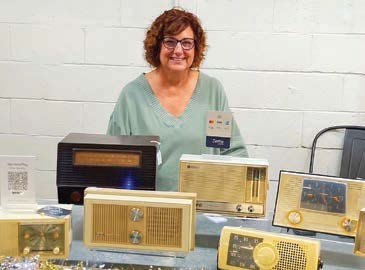
I happened across Taja Mahaffey while she was standing behind her booth at the Greensboro Farmers Curb Market, surrounded by Zenith, General Electric, Westinghouse and Sylvania solid-state radios from the 1960s and earlier. As these appliances harken from an era even before stereo broadcasting, I had to ask, “Why?” 

“I was in a thrift shop one day and bought a vintage radio. I just thought how neat it would be to bring it back to life,” she explains. “I found a Bluetooth speaker kit that I could insert into it, tried it and it worked.” 

That was around nine months ago and Mahaffey, who resides in Summerfield but lived in Greensboro most of her life, has been scouring estate sales and flea markets ever since. She searches high and low for those vanishing examples of mid-century American ingenuity, often colorful, futuristically designed, with molded-plastic packaging.

“I’ve probably adapted 50 or more,” she says. “It just depends on when I can find what I’m looking for in good shape and at a good price.” Mahaffey, under the name Songbird Designs, also offers her groovy gadgets for sale at Main Street Market & Gallery in Randleman, where these whimsical looking Bluetooth receivers come with a USB chord for recharging. 

I’m especially enamored with her idea of taking those modular clock radios your (great-) grandmother had bedside or on the kitchen counter, then reimagining them as devices tuned in to your tunes today — not to mention the convenience of a built-in timepiece for the few of us remaining who remember how to read an analog clock! 

Just One Thing

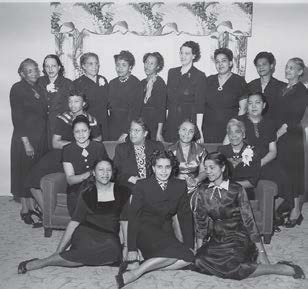
What a range of age among the members gathered in the 1950s meeting of the Alpha Art Club, the Triad’s oldest-known African American women’s club. One hundred years later, the club is still going strong, celebrating their centennial with a photo exhibit at the High Point Museum, including an hour-long video of members’ sharing their time in the club. Rishaunda Moses, immediate past president, reflected recently that the club’s founding members initially “would get together to socialize, have tea, make doilies or just chat.” She went on to tell  The High Point Enterprise that the club transitioned in the mid- to late-1920s to promote civic betterment. The club has persevered through the Great Depression, World War II, the Civil Rights Movement and a global pandemic and will continue moving forward with its mission: “lifting others up.” Today, that work comes in the form of supporting the NAACP, offering a mentoring program called the Legacy Foundation and providing scholarships. Info: highpointmuseum.org.

Piano Man

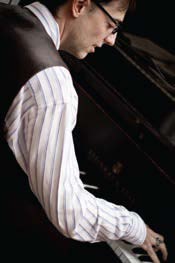
Musician Mark Hartman is in the air so often his Facebook persona is “Mark on a Plane.”

The New York-based pianist and composer conducts, arranges and composes for theater and concerts worldwide.

“I have to say, I love tiny airports. They make me so happy!” Hartman’s award-winning career spans both on and off-Broadway hits, and international theater as well.

When he taxis into our little PTI, however, he’s probably thinking about things he’s missed about home. Having grown up in Arcadia, between Lexington and Winston-Salem, his stomach is often rumbling at the thought of ‘cue.

Specifically, “Speedy’s in Lexington.”

Even in the air, you’ll likely see Hartman with a pencil in hand. Pencils are a talisman.

“I am oddly superstitious about pencils. If I start a musical marking in my score with a specific pencil, I will keep it and use it all the way through opening.”

To the delight of his friends — and strangers alike — he made a rare Triad appearance recently. At the invitation of the Anne Griffith Fine Art Museum at Red Oak Brewery (before stops in Saratoga, N.Y., and then to Guthrie Theater in Minneapolis), Hartman chatted to the crowd as he played from memory, hardly glancing at the keyboard. Few realized he had only recently laid his father, Wayne, to rest, who was a catalyst for his musical awakening. During childhood, Hartman “plunked around on musical toys,” including a toy piano at his grandparents’ house, where he discovered early on he could repeat melodies and songs he had heard by Elvis Presley, Nat King Cole and Helen Reddy. 

As a youngster, he performed in various churches, encouraged by his minister father. By high school, Hartman was already playing for musicals and theater productions. His favorite North Davidson High School teacher, Sherri Raeford, took him to his first college theater performance (Chicago at Catawba College).

“I got into musical theater originally because it appealed to my love of music, lyrics and storytelling.” But, as his career has propelled forward, he says, “The thing I love most is connecting with another artist — in hopefully great material — to make something personal and individual and more satisfying than either of us could do on our own.” 

He lists Leonard Bernstein, Fats Waller, Joni Mitchell, Stephen Sondheim and Leonard Cohen as a few of his influences. Throughout his own career he has appeared with cabaret greats such as Lorna Luft, Chita Rivera and Jennifer Holliday.

“Many things set Mark aside as a high school student,” says Raeford. “One was that he was a walking encyclopedia when it came to his knowledge of musicals and musical theater.” But for the intimate gathering of art and music lovers at a museum in Whitsett, Hartman slipped into what he loves, after weeks of coping with the loss of a parent. 

Launching into a musical reverie over three hours long, teasing out 40 or more songs, he wove them together in a casual, cabaret style.

He smiles gently at the mention of Cohen’s “Hallelujah,” insisting “it is not a sad song.” In Hartman’s hands, it was reinvented, the plaintive words inexplicably transformed.

Those present received a master class in the power of music to extend beyond entertainment, to heal.

Sage Gardener

Although I don’t currently brew beer, I’ve had experience in beer making since my dad donned a yellow rain suit and a Nor’wester rain hat to uncap the bottles of home-brew that were exploding in our basement, which, by the way, sent a wonderful aroma up through our heating vents. I made beer in college when it was more exciting because it was a federal offense, using canned Blue Ribbon malt and, I shudder to think of it — bread yeast to get things going. (Let’s not bring up the subject of yeast infections some females blamed on my beer.) Later, in grad school, an English-beer-loving friend and I graduated to ordering malt extract and hops extract, both imported from the U.K. It was with the extract, which turned the beer into the equivalent of IPA, that my love affair with hops began.

Fast forward a half-century later and I’m finally contemplating planting hops in my garden this spring. The always helpful N.C. State Extension Service had a good piece stating that 80 small farms were growing hops successfully in the state. If they can do it, I decided, so can I. I’ve been wanting to grow hops since I learned the  species name, Humulus lupus, meaning “small wolf,” referring to the plant’s tendency to strangle other plants as a wolf does a sheep. In other interesting tidbits, I learned that hops grow on “bines,” not vines. (A bine twists around something, and always in a clockwise direction, whereas a vine grows in tendrils, in various directions.) I was told I could expect growth of  up to 12 inches a day. It went on to mention how hops will grow up almost anything, reaching heights of up to 25 feet. While sipping on a mug of Old Speckled Hen, I envisioned a tangle of hops that would give the wisteria at the back of my property some competition.

Stephanie Montell writes on the morebeer.com platform that “Growing hops at home is easy if you know the tricks of the trade.” She points out that it’s the female flower (like another plant I know) that are all-important. It seems that only the female plant is able to produce the actual hop “cones.” She went on to warn gardeners not to plant hops near electrical power lines to avoid what I’ll term kudzuification.

Loamy, well-drained soil. Check. Lots of manure. Check. One hundred and twenty frost-free days. Check. Plant in early spring, no later than May. Can’t wait and probably won’t.

Hops grow from rhizomes, which I need to mail order. N.C. State suggests which varieties will thrive most anywhere in the state. First year? Not much growth while the plant establishes its room system. “Instead, look forward to the second year when hops are full grown and produce healthy crops of fragrant flowers,” she says.

But here’s what’s going to be tough. Beginners, she says, “have a tendency of letting every shoot grow and climb. Although this is understandable, leave only selected shoots and trim the weaker ones at ground level . . . to force the strength of the root into the hardier shoots.” Whatever. My wife does something similar with our tomato plants and it drives me nuts. But a side-by-side experiment demonstrated she knew what she was talking about.

Finally I learn that all but 4% of hops are grown in the Pacific Northwest, where, I am told, one acre can produce enough dried hop cones for 135 to 800 barrels of beer. I have a quarter-acre under cultivation, so that means I need to limit my annual brewing to between 34 and 200 barrels. I can hoppily manage that.

Simple Life

SIMPLE LIFE

The Pleasures of a Good Old Age

Miracles can come true, it can happen to you

By Jim Dodson

Not long ago, I heard an elderly gentleman in a coffee shop comment to a younger friend, “Someday, when you’re as old as I am, you will look back on your life and realize that everything is a miracle.”

His words brought to my mind Albert Einstein’s famous quote on the subject: “There are only two ways to live your life. One is as though nothing is a miracle. The other is as though everything is a miracle.”

Though it varies slightly from country to country, age 72 is the global median lifespan of most people on the planet — the statistical onset of “old age.”

This month, I turn 72.

Am I worried? Not so much. True, I walk more slowly and with more care these days due to a pair of arthritic knees, the painful legacy of 40- to 50-year-old sports injuries and having probably walked too many golf courses for one duffer’s life. By the time you read this, however, I hope to have a new left knee replacement for the new year with a second one on the way. Talk about a miracle.

Like many older folks my age, I’ve also survived cancer once and am winding up a second waltz with the dreaded disease, reportedly doing quite well, thanks to my brilliant young doctors and the miracles of modern medicine.

Despite these physical challenges, I’ve never felt happier or more productive. This seems to be a common trait among active elders who find the arrival of so-called old age to be a liberating force and an opportunity to experience life on a new and more meaningful level. A true case of attitude is altitude, as the saying goes.

One of the rarely mentioned gifts of being old is realizing what you no longer need or care about.

Two years ago, I donated half of my home library, roughly 300 books, to a pair of charities. This year, I plan to give another 200 away, leaving me approximately a hundred books I cherish and will continue to read again and again until my light in this world permanently dims.

At my pragmatic wife’s suggestion, I also went through my clothes closet and sent a large donkey cart’s worth of fine clothing I haven’t worn in more than two decades to a wonderful thrift shop owned by Freedom House, a local organization that provides drug rehabilitation programs to women. I hope whoever purchases the two fine custom suits, five Brooks Brothers blazers, nine crested-wool golf sweaters, eight pairs of worsted-wool slacks and 19 golf shirts will enjoy them with my blessing. Seriously, who needs 21 solid white golf shirts anyway?

Speaking of gratitude — and something of a miracle — I’ve reached an age where watching sports of any sort feels like a colossal waste of time. I’d rather take a long walk with the dogs, read a new book or watch seasonal birds at the feeder.

This is no small change. Once upon a time, now fading fast into memory, I was the original sports-mad kid who played every game in every season and died a little death anytime my favorite golfers and favorite professional sports teams lost. A decade ago, as my passion for all sports mysteriously began to wane, I wondered if this was because I’d changed — or if the games themselves had?

The answer is probably both. The sports teams I once worshipped, college and professional alike, were generally true hometown affairs where you could name (and root for) every player on the roster. This made the games feel much more personal and relevant. Today, almost all sports are shaped by staggering amounts of money flowing through their ranks. Not long ago, I heard about a local high school junior who recently signed with a major college program and pocketed $50,000 in NIL money. Add legalized sports betting to the state of our games and you may have a fast road to ruin for millions of fans who care less about the games than their payoff.    

The real beauty of aging, I long ago realized, is the light that comes from the soul. Reaching statistical old age brings with it freedom to do your own thing along with the opportunity to forge new paths and adventures.

“A good old age can be the crown of all our life’s experiences,” wrote Helen Nearing, “the masterwork of a lifetime.” Considerably late in life, Nearing and her husband, Scott, became world famous advocates of simple living and pioneers of the organic farming movement in America. Helen lived to be 91. Scott, 100.     

As Helen points out in her lovely book, Light on Aging and Dying, Socrates learned to play the lyre — and wrote his most famous poems — in his dotage. Thomas Edison was still inventing at age 92; Michelangelo did some of his finest work past 80; and Frank Lloyd Wright, at age 90, was considered the most creative architect in the world.

Likewise, numerous poets and artists proved to be at their creative best in their good old age. Thomas Hardy, Robert Frost and Carl Sandburg did some of their best work past 80. Ditto artists Goya, Titian, Manet, Matisse and Chagall. Shortly before his death at 91, Picasso said, “Age only matters when one is aging. Now that I have arrived at a great age, I might just as well be 20.”

Almost every day, we read about some octogenarian who still runs marathons or a septuagenarian who just climbed Mount Everest — for a second time. The list goes on and on.

“I am so busy being old,” wrote author and playwright Florida Scott-Maxwell in her 90s, “that I dread interruptions.”

As for this relatively new septuagenarian, one who will soon have new knees but no interest in running marathons or climbing mountains, I find the simple beauty of the natural world, a deepening spiritual life, a love of dogs and friends, plus an unquenchable passion for writing books reason enough to celebrate arriving at the ripe old age of 72.

The truth is, I’ve always enjoyed being with older people. And now that I’m one of them, I have no intention of slowing down.

That’s proof that everything really is a miracle.

Wandering Billy

WANDERING BILLY

The Belle of the Wrecking Ball

The corner of Bellemeade and Elm faces demolition again

By Billy Ingram

“To put it rather bluntly, I am not the type who wants to go back to the land; I am the type who wants to go back to the hotel.” — Fran Lebowitz

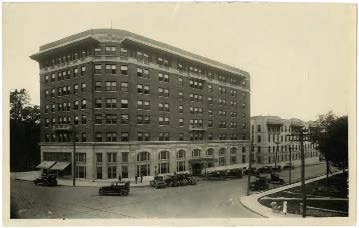
Could it be that, twice in one lifetime, I’ll be there to witness the destruction of a massive structure on the southwest corner of North Elm and Bellemeade? The city plans to soon demolish the seven-story parking deck erected there in 1989. It’s worth noting that 70 years before that date, on this very spot in 1919, one of the most distinguished establishments in the Southeast debuted to tremendous fanfare: the O.Henry Hotel, which, for decades, exemplified Greensboro’s exacting sense of luxury and refinement, distinguished by its cosmopolitan vision for the future.

Greensboro has a long history of hospitality going back to stagecoach days when, 200 years ago, George Albright kept an inn on East Market Street with plenty of hay in the barn for the horses. Nor was the hair those nags shed wasted since it was stuffed right into the inn’s mattresses.

The city’s first upscale hotel was the Benbow House, originally located where the Woolworth’s/International Civil Rights Center & Museum is today. In May of 1871, it was declared to be the finest in North Carolina by its first lodger, Governor Zebulon B. Vance. Demand led to other rooms for rent on South Elm: McAdoo House, Hotel Huffine, Guilford Hotel and the Hotel Clegg, all richly appointed and refined architecturally in full view of the train station with a tendency towards inopportune tinderboxing.

The landscape changed dramatically in 1919 with the debut of the thoroughly modern, eight-story O.Henry Hotel, the largest in the state. Its construction and completion was funded through community stock subscriptions. Designed to be a full-service facility that rivaled any in New York City, it featured 200 luxurious rooms with private baths (another 100 were added later), plus a pharmacy, newsstand, gift shop, ballroom, beauty salon, Merle Norman Studio, and formal dining room, all encircling a striking two-story lobby with a cascade of a dozen or more columns adorned in dark oak paneling with marble footings rising upward then rounding at the ceiling in dramatic fashion. Under foot, an enormous expanse of mosaic tile flooring was accented with sumptuous carpeting, everything warmly lit from above by sleek, minimalistic, blown-glass chandeliers.

Homages to the hotel’s namesake abounded, including a library devoted to O.Henry and illustrations from his stories decorating hallways where guests could leave their shoes outside the door for shining or clothing for overnight dry cleaning. Valet parking was available and, because liquor was illegal to purchase in Greensboro until 1952, a bellhop named “Snag” was happy to procure someone’s preferred libations. 

The immediate success of the stately O.Henry led to the 1927 construction of a much taller, world-class hotel a few blocks away. Standing statuesquely on the corner of Davie and East Market streets, the 13-story King Cotton Hotel was the height of Art Deco splendor. First Lady Eleanor Roosevelt whistle-stopped there in 1942 and it’s where movie star Joan Crawford glammed up in 1957 before christening a local Pepsi bottling plant.

The O.Henry lost no luster, remaining the preferred place to play and stay during the 1930s and ’40s for celebrities such as F. Scott and Zelda Fitzgerald, as well as Big Band stars Guy Lombardo and Benny Goodman. Local radio legends Bob Poole and Willie began broadcasting their WBIG morning show in the mid-1950s from a studio tucked under the hotel’s main floor, which was part of a mall with a barber shop, cigarette stand and coffee shop. The sub-floor was also home to the Merchants and Manufacturers (M&M) Club, basically a glorified pool hall, card room and day-drinking barroom for local businessmen.

I was a frequent visitor to the O.Henry on Saturday mornings in the late-1960s, searching for the latest comic books from its newsstand, positioned to the left of the Elm Street entrance. Selecting a four-color DC from the comic rack, I’d march over to the front desk to pay. Even under diminished circumstances, I could appreciate the hotel’s impressive atmosphere, a grande dame retaining an air of sophistication rapidly vanishing from the world outside her doors.

By the late-1960s, winos and degenerates were populating the nearby King Cotton Hotel, drunkenly tossing their empties out of windows, glass shattering on the sidewalk below or atop unsuspecting pedestrians. In 1971, I was among the throng of thousands who gathered on an unseasonably warm October Sunday morning to witness the King Cotton’s erasure from the skyline by way of a newly refined controlled demolition method that is now commonplace — dethroned by a series of carefully choreographed explosions that, in mere moments, leveled the building into its own footprint.

Around that same time, the O.Henry was purchased and was being operated (unsuccessfully) by a hotel chain out of Tulsa, Okla., who, in the spring of 1975, shut it down. But, a few months later, the chain allowed it to be converted into a residential complex populated by recently divorced men and, in the absence of any such institutions, a sort of assisted living facility, without any staffing to support even a small influx of displaced senior citizens.

Inevitable, perhaps, that one of those elderly residents would doze off with a lit cigarette, igniting an early morning blaze on January 15, 1976, sending thick, black smoke bellowing down the fifth floor hallway, creating zero visibility conditions for disoriented tenants needing to be rescued by firefighters. One hysterical man clinging to a minute window ledge outside his room was yanked to safety via ladder truck. All 56 occupants were displaced after the Fire Department declared the building unsafe.

Repairs were made, but the O.Henry Hotel never fully recovered; a nearly deserted downtown Greensboro was no longer a desirable destination.

Photos taken while awaiting the executioner in 1979 highlight the stripped, bare lobby and a dining room with plaster peeling away and draperies hanging resolutely crisp and neat alongside windows gleaming in the sunlight. The lobby’s geometrically playful tile flooring remained as vivid as when it welcomed the first guests eight decades hence with the marble front counter and elaborate light fixtures still intact. It was the sinking of a Titanic.

With so little going on in the area during that time, a parking lot of that size in that spot was totally unnecessary. But eventually it became essential, especially after the Steven Tanger Center for the Performing Arts appeared across the street. Was it theater-goers’ extra wear and tear that wore and tore this concrete structure to such an extent that it will now cost millions to remove and replace? That sound you hear is your taxes going up.

Expecting an O.Henry ending? If you insist. On Tuesday afternoons I work — more like hang out — in a comic shop. Affixed to one wall is the O.Henry Hotel’s actual comic book rack, likely installed in the 1940s, featuring a header illustrated with cowboys and funny animal characters, and lettering proclaiming, “DELL comics are GOOD comics.” The very metal frame I pulled 12-centers from as a preteen more than half a century ago.

With a nod to the late Paul Harvey, “And now you know . . . the rest of the story.” And how old I am.