It Was a Mall World After All

IT WAS A MALL WORLD AFTER ALL

It Was a Mall World After All

Travel back to long before online commerce was conceived

By Billy Ingram

In 1987, the debut album and single by 15-year-old pop star Tiffany hit No.1 on the Billboard Hot 100 chart, making her the youngest artist to do so. What was truly remarkable was how she accomplished this feat. Industry insiders credited her performing in shopping malls around the country, the de facto town square of just about every city in America.

No nearly-forgotten phenomenon exemplified the halcyon days of the ’80s and ’90s like shopping malls. Those cavernous cauldrons of commercialism bubbled over in abundance, thanks to a booming economy and a populous stricken with consumption-itis. When primetime soaps like Dallas and Dynasty demonstrated that “Greed is Good” and those who die “with the most toys win,” malls were where you showed up to show out. So ingrained in daily life, you could purchase a ticket at a mall cineplex to watch a movie taking place in a shopping mall.

Greensboro’s first shopping mall was more than a decade in the making, dating back to 1961 when real estate speculator Joseph Koury publicly broke ground on a game-changing commercial and residential development with a staggering adjusted-for-inflation price tag of half a billion dollars.

For the magnum opus, to compliment his newly-created collage of cul-de-sacs known as the Pinecroft neighborhood, Koury engaged Leif Valand, modernist architect behind Cameron Village in Winston-Salem and Swann Middle School (then Charles B. Aycock Junior High) in Greensboro, to design a 1,000,000-square-foot retail complex housing 95 businesses, to be anchored by  three of the city’s most prestigious department stores: Belk, Thalhimers and Meyer’s, rebranded as Jordan Marsh. He called it Four Seasons Mall.

The city’s first climate-controlled shopping mall was an immediate success, with glass and reflective surfaces abounding, gleaming escalators transporting customers standing practically toe-to-toe to a heavenly multitude of unfamiliar storefronts. Each step forward illuminated by a veritable Oz of vibrant logos, wondrous epicenters of excess exuding themselves in every direction, with laminated bricks circling central gathering spaces festooned with flourishing foliage, a brash but bewitching work of architectural wizardry this reimagining of Main Street USA was.

In addition to long-established local merchants such as Prago-Guyes, Schiffman’s and Saslow’s Jewelers, Four Seasons assembled an impressive collection of national and regional clothing and accessories merchandisers, peddling wares almost exclusively influenced by what New York City fashionistas were cat-walking that year.

Catering to the ladies were Lerner Shops (stylish but affordable), Joseph R. Harris Co. (understated sophistication), Hofheimer’s shoes, Lillie Rubin (cocktail attire), Miller & Rhoads (high fashion out of Richmond, Va.), and Thom McAn (footwear). For the junior miss, Deb Shops, 5-7-9, Kaleidoscope, Brooks Fashions and Robins, catering to the pleated-skirt and high-waisted-slacks set. For men’s attire, there was National Shirt Shop (in business downtown since 1932), Mitchell Tuxedo, Frankenberger’s (with a Charleston flair) and The Hub.

Stylish jeans and westerns shirts were stocked at Chess King, The Ranch, Just Pants and Wrangler’s Roost. Headquartered in Charlotte, Wrangler’s Roost had no apparent relationship to the Wrangler corporation, which might explain why they weren’t around for very long. 

Four Seasons shoppers stopped for a quick nosh at Chick-fil-A for their new 99-cent, saucy, pulled Chick-n-Q sandwich or Piccadilly Cafeteria. But the unparalleled Mr. Dunderbak’s Old World Market and Cafe served bottled Meister Bräu lager to wash down Deutschland reubens and kraut n’wursts. This was Cherry Hill, N.J.,’s idea of a Bavarian Beerhaus ― the Sopranos would have loved it there.

Record Bar proved to be Greensboro’s premier vinyl purveyor until Peaches Records opened a few years later farther down High Point Road. Paying for your purchases wherever you shopped generally meant having cash on hand. While Bank of America issued the first nationally accepted, general use charge cards in 1958, paying with plastic didn’t actually enter the mainstream before the early-1970s. One reason is that, without a male cosigner, women were ineligible to apply for any line of credit until 1974, which, coincidentally or not, coincided with the proliferation of shopping malls.

Accepting credit cards was time-consuming. Once handed over to the clerk, the card had to be cross-referenced against a weekly-updated booklet of stolen account numbers before a receipt, three carbon copies attached, was filled out by the salesperson detailing the item purchased and amount due. The clerk then retrieved the “Knuckle Buster” stored under the counter and stuck it on the surface with suction cups attached to the base, which secured the several pound device. After slotting the customer’s BankAmericard into the mechanism, sales slip positioned on top, shop associates shoved a weighted rolling head over them, imprinting the receipt with the raised name and numbers from the card.

Four Seasons’ overwhelming allure prompted Friendly Shopping Center’s owner, Starmount Co., to construct its own enclosed retail complex. Anchored by Montaldo’s and conceived as a more upscale experience, Forum VI emerged in 1976 with 40 storefronts surrounding a distinctly moderne yet cozy courtyard flooded with oversized houseplants, all lit in soothing, golden tones. An elegant jewel box of predominantly local retailers that, for various reasons, never really caught on. Only the restaurants, Japanese steakhouse Kabuto and K&W Cafeteria, were consistently drawing crowds — but at hours not particularly advantageous to the mall’s interior tenants.

Debuting simultaneously was Carolina Circle Mall, by far that Bicentennial summer’s brightest retail star. With a reported $25-million price tag ($142.3 million in today’s dollars), “North Carolina’s Unique Shopping and Entertainment Wonderland” was located on the opposite end of town on what was formerly a 220-acre dairy farm bordering U.S. 29, 16th Street and Cone Boulevard.

As a teenager, I attended the grand opening in August of 1976. I’m kinda like a cat with an urge for exploring every aspect of my environment, but, unlike a cat, I left no scent behind at Carolina Circle. Thanks to its proximity to a nearby sewage treatment plant, a sickening stench was already permeating the air. On warm, breezy afternoons that putridity proved overpowering.

Undeterred, on opening day nearly 4,000 cars jammed the parking lot as UNCG students costumed as Alice in Wonderland characters greeted eager consumers inside. Most impressive was the ’70s futurist Montgomery Ward exterior accented with thousands of individual yellow, orange and red glazed tiles surrounding the entrance.

A disappointing number of outlets migrated over as well as duplicates of Four Seasons’ franchises including Belk, Piccadilly Cafeteria and the ever-present Chick-fil-A. Carolina Circle’s maze-like layout allowed for a more intimate feeling with smoked-glass panels, dark-colored handrails and brown, terrazzo flooring.

While the overall effect was warm and fuzzy, the major attraction for many was the first floor Ice Chalet, Greensboro’s only skating rink. Surrounding that slick surface was a food court consisting of Orange Julius, Chick-fil-A and New York Pizza. Started by two Sicilian-Americans from New Jersey, Charles Sciabbarrasi and Ray Mascali, NYP made so much dough they quickly opened another pie hole on Tate Street. That’s still there while Mascali sells slices and pies at NY Pizza on Battleground.

Saturday Night Fever exploded across movie screens in December ’77, infecting the populace with disco fever. Urgent care for disco fever was The Current Event dance club at Carolina Circle, where underaged teenagers gyrated underneath a disco ball rotating on its axis, sending shards of light across its expansive orange, yellow and black under-lit dance floor and backlit pylon barriers. One lingering feverish side effect? An overwhelming desire for ”wild and crazy guys” to possess that white, polyester, three-piece suit John Travolta wore to seduce the nation — and Karen Lynn Gorney. J. Riggings sold them on the second floor, where they were, like every highly desirable item, literally chained and mini-padlocked to the display rack.

The city’s (possibly the state’s) first skateboard park opened along the eastern end of the parking lot, closest to the sewage plant. Those concrete bowls proved a popular spot for both teenagers and younger kids, despite required knee pads and helmets. That skate park was short-lived, as was the outdoor Hawaiian Surf Water Slide retired pro wrestler John Powers opened in 1978.

The proliferation of easily accessible credit cards in 1980s and ’90s ushered in an era of haute couture from designers Betsey Johnson, Donna Karan, Liz Claiborne, Tommy Hilfiger, Perry Ellis, Guess, Ralph Lauren and my favorite, Ton Sur Ton, found at Express, Gadzooks, Claire’s, Merry-Go-Round and Mervyn’s stores. And unless someone possessed a perfectly pear shaped rear end, no man or woman ever looked right in those impossibly tight Jordache stonewashed jeans.

Sharper Image hawked high-tech gadgets no one knew they needed — computer bridge games, massaging chairs, Truth Seeker vocal stress detectors — with eye-popping price tags. Farrah Fawcett posters, cheap jewelry, infinity mirrors and goofy geegaws were Spencer Gifts’ oeuvre. Would it surprise you that they are behind those invasive pop-up Spirit Halloween shops?
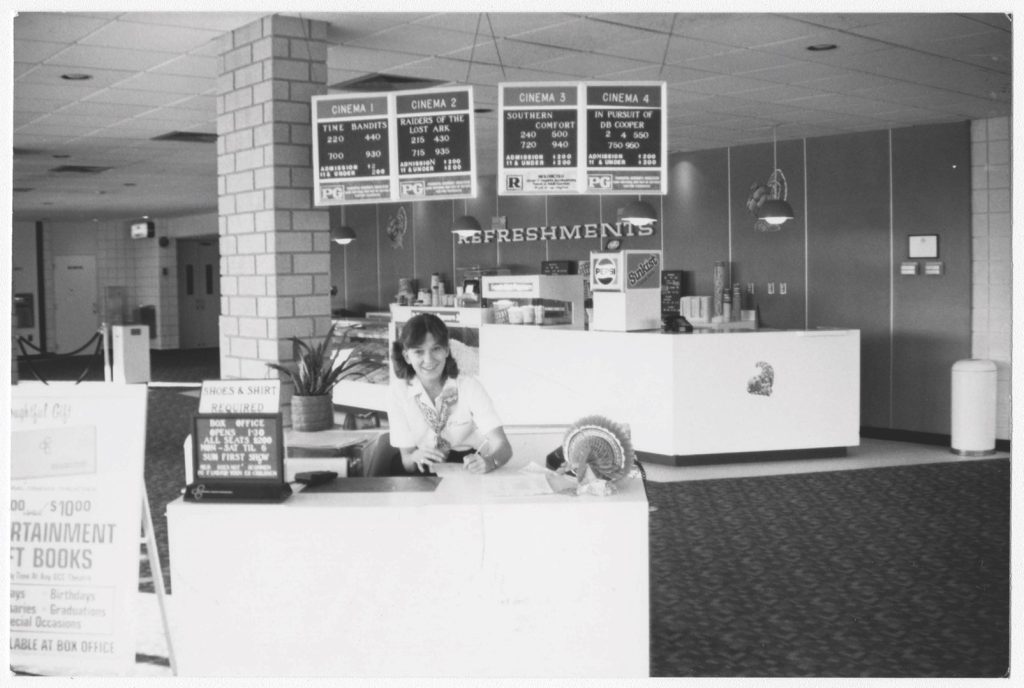
Despite the hype, a requisite steady stream of shoppers never materialized for Carolina Circle. In 1986, the property was offloaded at a loss for $21 million. The new owner pumped an additional third of that investment into major renovations, including a spectacular pink, neon-like facade leading into a significantly brighter interior highlighted by enormous, pastel-colored butterflies, which hovered overhead, along with a new name, The Circle. On re-opening day, a choir resolutely standing center stage belted out the “Hallelujah Chorus,” but the resulting redux proved a resounding flop. Many a heart melted when the Ice Chalet was removed — too expensive they said — in favor of a $250,000 carousel decorated with Greensboro landmarks. The drain circling continued unabated.

Changing hands again for a mere $16 million in 1993, The Circle’s asking price was undoubtedly negatively affected by an incident that happened two years prior. A father, on an outing with his daughters, was gunned down outside of Montgomery Ward. The Greensboro Police Department establishing a satellite station inside the shopping center only served to solidify its seedy reputation.

Imagine my horror upon discovering around that same time that my 70-year-old mother was still frequenting The Circle’s Belk — which was hanging on by a thread, but one of the few retailers left due to rampant gang activity. I implored her to stop, but she liked the salespeople. After that conversation, I accompanied her whenever she shopped there.

Strolling the mall interior as she perused the racks, around a third of the storefronts were darkened caves, even Great American Cookie Company was crumbling. “If a terrorist came in and blew up the mall,” one demoralized merchant groused in 1996, “The headline would read, ‘Mall Blows Up, Nobody Injured.’” Well, there’d be my mom . . .

As a Hail Mary play, The Circle descended into an assemblage of storefront tabernacles alongside a fitness center before its 2006 date with the wrecking ball. Currently the site of a Walmart Superstore, the only physical remnant still standing is Montgomery Wards’ one-time tire-and-auto center on 16th Street.

In 2015, the scant remaining Forum VI retailers were unceremoniously evacuated for transforming the interior into an office complex. Kabuto objected; after almost 40 years, its hibachi hadn’t cooled. Determined to continue, its owners built a stand-alone pagoda on Stanley Street, where they still enjoy a bustling business today. The only remaining holdout at Forum VI is K&W Cafeteria, still serving up the same recipes, its mid-’70s dining-room decor perfectly preserved.

Out of curiosity, on a recent weekday afternoon I ventured out to Four Seasons Towne Centre. Employees outnumbered the zombie-like walkers in attendance, and blank wall installations covered over a depressing array of abandoned storefronts. The escalator wheezed, stuttered and clanked under the weight of my 150-pound frame, the sole passenger on its downward trajectory. Today’s star attraction appears to be the senses-shattering, potentially seizure-inducing bowling alley/arcade located in Jordan Marsh’s (later Ivey’s) voluminous former ground-floor entrance.

I asked friends born in the ‘80s and ’90s about their own mall memories. They didn’t have any. One remarked he had no need for the mall because he already had a girlfriend in high school. Perhaps this impression was because, sometime in the 2000s, the mall experience had devolved into a latchkey kids’ land of the lost, somewhat akin to a primitive dating app like Tinder, a convenient hookup venue where joy seekers simply slid left into Forever 21 when spying someone undesirable.

A pity shopping malls ultimately came to represent in-person purchasing’s very own Alamo, where retail desperados collectively mounted one final assault to squeeze the last possible dollar from antiquated business models they knew were totally unsuitable for the new frontier. Now, they’re a relic of our nation’s overwhelming desire for escaping into fortresses where ease of attainment meant atonement; momentarily, that is, until the creditors came calling.

Omnivorous Reader

OMNIVOROUS READER

From Poetry to Prose

Creating a finely crafted debut novel

By Stephen E. Smith

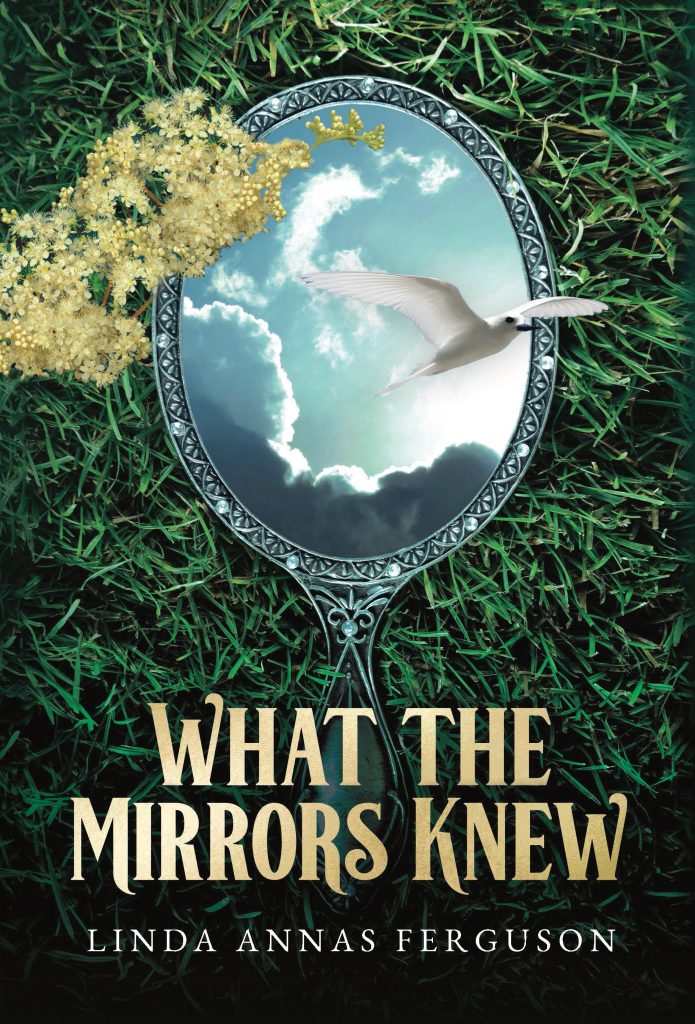
On an unseasonably cool August night in Charleston, South Carolina, I’m sitting in Kaminsky’s Dessert Café with Linda Annas Ferguson, whose first novel, What the Mirrors Knew, arrived that day in the form of 500 paperback and hardcover books. (The official release date was Sept. 21.) She’s glowing with that nervous anticipation felt by every author of a freshly published work — she’s proud, exuberant, anxious and pleasantly overwhelmed by her achievement. She’s seen the germ of an idea to completion, and the fruits of her labor are contained in a beautifully designed novel of almost 400 pages that pleads to be read by appreciative readers.

This isn’t Ferguson’s first book. She began her writing career as a poet and has successfully published and marketed five books of poetry. Her poem “On the Way Home” appeared in our September issue.

Still, I am keenly aware that writing poetry can, oddly enough, be an encumbrance. When a writer proficient in one genre tests his or her talent in a different form — a novelist writes poems, a playwright turns to poetry, etc. — we’re often skeptical, wondering how much professional skill will carry over. Who can recite one of the poems from Hemingway’s first book, Ten Poems? How many of us have read Faulkner’s The Marble Faun? So here’s the question: Will the accomplished poet become the clumsy apprentice to the novel?

Turns out that narrative poetry was Ferguson’s training ground, so she experienced a natural transition to prose. Upon reading her novel — having escaped the shadow of Kaminsky’s Tollhouse Bourbon Pecan Pie to delve into the haunting darkness of What the Mirrors Knew — it’s apparent that her poetic skills are readily transferable.

“My writing life began with telling stories through poetry,” Ferguson says. “Unlike many writers who were influenced at a young age, I only started writing seriously when I was around 30 years old. I scribbled my family stories in journals which eventually became poems.”

Ferguson’s novel is a lyrical blend of spirituality and philosophy, featuring sharply drawn characters who emerge as wholly believable. Her use of dialogue is sharp and sparse, and the narrative is enriched by an energized prose style that propels the reader ever forward. Stir in a touch of philosophy, spirituality, mystery and romance, and you’ve got a first-class novel that reads like the work of a seasoned professional. More importantly, the narrative embodies a strong sense of resonance, a lingering afterglow that will leave the reader pondering the moment.

“In some ways my novel is similar to a long poem, with one particular chapter in it serving as a volta, a turning point, as in a sonnet. I haven’t written a great deal of sonnets, but many poems, even free verse and especially narrative ones, have a turning point about two-thirds of the way through.”

Ferguson is also influenced by film, conceiving her chapters as scenes from a movie. “I visualize it all in my mind as if I am present in each scene,” she says. “I’ve always enjoyed the transition from scene to scene in films. At the end of one chapter I have a bee beating its wings against a glass window, and the next chapter begins with a friend rapping on the back door glass. Because of what film has instilled in me, transitions seem to come without much conscious plotting.”

Leaving Charleston’s blessedly cool weather behind, the question that occurs to me in the moment is what strategy Ferguson has contrived to promote her novel. She’s had experience running a small bookstore and obviously has “a business head,” but the marketplace for books is highly competitive. Chain and local bookstores have partnered with major publishers to feature readings by their new authors. The competition is keen for time and space to make appearances, often squeezing out small, independent presses. Moreover, online platforms featuring books can place another barrier between the writer and consumer. Unless you’re John Grisham, Stephen King or James Patterson, your books aren’t likely to fly off the shelves without some vigorous umph from a promotional entity.

But Ferguson has a plan. “Creating good content on social media is critical in this environment of cyberspace interaction,” she says. “My first step was to expand my presence to two Facebook accounts, two Instagram accounts (one personal and one professional), and one LinkedIn account. I have quite a few followers on Facebook, but I don’t just create posts. I build friendships as I congratulate other writers on their accomplishments, and they connect with what I am doing. I join groups where we can share our successes and issues and support each other.”

Initially, Ferguson vacillated about creating a video trailer for the book, but she’s glad she did. It includes a narrator, music, quotes from the novel and a beautiful video of Ireland. Besides posting it on social media, she can upload it to a personal YouTube platform.

“And one thing I would add, which readers will find prevalent in my writing, is that I take stock in how the universe seems to help those who have a dedication to their path, regardless of where they are on it. ‘Intention, attention, and commitment’ are good promises to make to yourself. Keep writing and publishing!”

Which is precisely what Linda Annas Ferguson has done. She’s liberated her imagination, pressed the power button on her computer and written a novel. She’s done something that anyone who’s determined to write a book can do — if they have the skill, nerve and determination to do it. The big job, the hard work of putting it in the hands of readers, lies ahead.

Home Grown

HOME GROWN

Dressed to Depress

A fit about ‘fits

By Cynthia Adams

I’m all for casual wear. Blue jeans outnumber all else in my closet. 

My grandmothers would roll over in their graves — probably still in girdles in the afterlife — if they saw me wearing a T-shirt and jeans to a work meeting. Like their friends, they wore dresses daily, unless, say, gardening and sometimes even then. And beneath their simple frocks, torturous girdles held everything firmly in place. 

Certainly, until my Mama starved herself to her goal, she wore a girdle anytime she gussied up. Which was almost all the time — because Mama, as she often made clear, had dreams. She dressed for the life she aspired to, a glamorous life like that of the film and soap opera stars she adored.

And she swore up and down they wore girdles.

“Shape wear” is what such undergarments are called now, rebranded as such by reality show celebrities. “Girdle” is an outmoded expression that might just puzzle younger folk. Defined by Merriam-Webster: a woman’s close-fitting undergarment often boned and usually elasticized that extends from the waist to below the hips. A girdle, I will stress, by any other name, be it the cutesy “Spanx” or “Skims,” is still an instrument of torture — and I never intend to wear one. 

(Round is a perfect shape, by the way.)

Comfort, certainly among my Southern kin, had no place. 

My grandmothers wore hats, too, when they dressed up, which meant no part of their body, not even their head, was comfortable. These were not boho bucket hats. They were as bizarrely shaped as the fascinators beloved by the Brits. Often, they were placed on a perilous angle requiring actual hat pins to hold in place. Getting a flu shot or a root canal might exempt them from hat wearing, but, even then they wore their Sunday best, strictly necessitating girdles, hose and heels. 

Flats were for invalids and old age pensioners, I was taught. Suitable only for shuffling to and fro when reduced to shuffling only.

Of course, the world changed. Girdles (excepting Spanx, or on those recovering from back surgery or suffering from hernias) grew rare. Even fewer folk wore hats. Or dressed up for anything but an occasion, such as a wedding or funeral. 

Even a funeral isn’t a sure thing when it comes to graveside mourners kitted out in veils, hose and heels, looking like prime suspects in a British whodunnit. 

It’s disappointing, frankly, that funerals don’t merit sartorial suffering anymore.

As far as root canals or any other medical procedure goes, patients no longer put as much effort — if any — into their appearance as my grandmothers once did. I learned this on morning walks, winding through a medical park, where multitudes arrive for medical appointments. 

The scrubs-clad staff arrive dressed for business. 

But the patients? They check in wearing jeans, shorts, T-shirts, flip-flops or sneakers — basically, whatever they might wear to wash the dog.

Or less.

One morning, a young woman exiting a suite of eye specialists stepped into view, wearing what appeared to be a skimpy two-piece swimsuit. As in an actual bikini. 

What an eye test!

I gawped. Speaking of dogs, when did Southerners decide to just let themselves go?

Mama never went to a doctor’s appointment, the DMV or the A&P without hair and makeup done. Her outfit — heels, purse and, always, clip-on “ear bobs” — carefully chosen. None of it was chosen for comfort. The heels made her bunions throb, and the clip-ons made her ear lobes pulse with pain. But, like Clairee in Steel Magnolias, Mama firmly believed “the only thing that separates us from the animals is our ability to accessorize.”

As I tugged a garbage can to the street Sunday afternoon, a woman and her daughter walked past with a Collie. The middle-aged mother wore a skimpy nylon sports bra and even skimpier shorts. No top.

The dog was the most modestly dressed of the three. 

Mama wouldn’t have gone to her own back porch wearing her underwear with a pair of shorts. Not even if the only creatures in sight were raccoons.

My mind screamed. “God’s nightgown! That woman’s walking down the street in a bra!”

Comfort is a peculiar thing. I get comfort, especially when it comes to shoes, I truly do. And, dear readers, I get body positivity. That mother is comfortable with herself in a way I can never be. 

Having never understood Madonna’s embrace of underwear as outwear, bralettes as tops or lacy, colorful bra straps deliberately revealed, it seems I have officially entered the Age of Concealment. 

I personally prefer to have all my bits fully covered as my age accelerates past all legal speed limits. 

That makes me comfortable.

But to the consternation of my elders, I, too, once rebelled against being trussed up like a Thanksgiving turkey in underwire bras and infuriating pantyhose. 

“But, Honey,” my Daddy would say as he frowned at my low-slung bell bottoms. “Look at your Mama. Dress like you own the bank, not like you need a loan.”

He groaned as I strutted away on Pee-wee Herman-style platforms: “What on God’s Earth have we come to?”

Simple Life

SIMPLE LIFE

I See the Birds

How I learned to look up and live more fully

By Jim Dodson

November is the month I take stock of the year’s happenings, the ordinary ups and downs as well as the unexpected challenges and graces that come with being alive and kicking in 2025. This year,
however, I’m looking back a bit further.

Two years ago, seemingly out of the blue as my oldest golf buddy, Patrick, and I were setting off on a golf adventure across Southern England, celebrating our mutual 70th birthdays and 60 years of friendship, I was diagnosed with prostate cancer. Talk about a trip buzz killer. 

Naturally, I was surprised to discover that I was one of a quarter million American men who annually develop prostate cancer. But perhaps I shouldn’t have been.

My dad, you see, discovered his prostate cancer at age 70. He chose to have his prostate surgically removed and went on to live a productive and happy life for the next decade. My nickname for him was “Opti the Mystic,” owing to the extraordinary faith and unsinkable optimism that carried him to the very end.

A few  years later, as I was completing work on my friend
Arnold Palmer’s memoir, A Golfer’s Life, the King of Golf was also diagnosed with the disease. Likewise, Arnie had just turned 70. He went straight to the Mayo Clinic and had his prostate removed. He lived a full life, reaching 87 years.

Experts say that most prostate cancers occur in men without a family history, though they concede that there may well be a family gene factor involved. In retrospect, I like to think that I was simply destined to follow the leads of the two men I admired most — a unique medical case of “like father, like son, plus his favorite boyhood sports hero.”

Joking aside, I chose a different treatment path than my dad and Arnie because, as I learned, there have been tremendous medical advances in prostate cancer treatment since their dances with the disease, providing modern patients a much greater chance of living out their natural life expectancy.

Thus, under the direction of an outstanding urologist named Lester Borden and veteran Cone Health oncologist Gary Sherrill, I chose six weeks of targeted radiation therapy followed by 24 months of a relatively new “super drug” my oncologist called “the Cadillac of prostate treatment.” 

During the discussions of options, I quipped to Lester (a fellow golfer) that I hoped to publish at least three more books on golf before I exited the fairways of life and someday shoot my age, the quest of every aging golfer. I also assumed that the golf trip to England was now out of the question.

Lester smiled. “You’ll have three books and maybe more,” he said. “Meanwhile, the best thing you can do now is to go play golf with your buddy in England and have a great time. That’s the best medicine.” 

So, off we went. And though it turned out to be the statistically wettest week since the  Magna Carta, Patrick and I had a wonderful journey from Southern England’s east coast to west, seeing old friends and playing 18 nine-hole matches through howling winds and sideways rain over seven of Britain’s most revered golf courses. Somehow, amazingly, our roving golf match wound up being tied — in retrospect, perhaps the perfect ending and just what the doctor ordered. My prostate problem hardly entered my mind.

During our last stop at a historic club called Westward Ho, where we were both overseas members for many years, we had a delightful lunch (probably for the last time) with our dear friend, Sir Charles Churchill, 90, a legend in British golf circles, who reveled in our soggy tales of a golf match nobody won. The real winner, Charles reminded us, was our enduring friendship.

As anyone who makes the cancer journey understands, or quickly discovers, optimism and faith are essential tools in the fight against this merciless disease. 

Upon our return I resolved to spend the rest of my days with more optimism, good humor and a deeper gratitude for the life and work I’ve enjoyed — along with an awakened empathy for others who aren’t as fortunate.

The tools in my kit include a keen (if somewhat private) spiritual life that I exercise every morning when I chat with God under the stars. Plus, I often ask his (or her) advice throughout the day, especially when I’m watching birds at the feeders in early morning or late afternoon.

One of the surprising gifts from this period was a song I heard by chance — or maybe not? — called “I See the Birds,” by a gifted songwriter named Jon Guerra.

I was stuck in heavy city traffic, late for a lunch date and stewing over the insane way people drive these days, when this incredible song from God-knows-where mysteriously popped up on my music feed.

I see the birds up in the air

I know you feed them

I know you care

So won’t you teach me

How I mean more to you than them

In times of trouble

Be my help again   

By the end of the song, I was fighting back tears. It’s from a beautiful album simply titled “Jesus” that’s based on the Book of Matthew.

That song became the theme of my two-year journey back to health. I still listen to it at least once a day.

I also turned to the timeless wisdom of the old friends who line my library bookshelves.

“Don’t waste your life in doubts and fears,” advised Ralph Waldo Emerson, one of my favorite non-golfing heroes. “Spend yourself on the work before you, well assured that the right performance of this hour’s duties will be the best preparation for the hours or ages that follow it.”

With that guidance, the work before me during my cancer journey included the pleasure of publishing my most rewarding book and finishing a landscape garden that I’ve worked on for a decade. I also received a new left knee that might someday improve the quality of my golf game.

Best of all, we learned that my daughter, Maggie, is pregnant with a baby girl, due Christmas Eve, finally making me a granddad. Talk about a gift from the universe.

The final touch came last week when oncologist Gary Sherrill provided the good news. “You’re doing great,” he said. So, I’m doubling down on the things I’ve learned from my unexpected journey.

To judge less and love more. To thank my maker and see the birds up in the air.

Who knows? Maybe someday this budding grandpa may even shoot his age.

Sazerac November 2025

SAZERAC

November 2025

Just One Thing

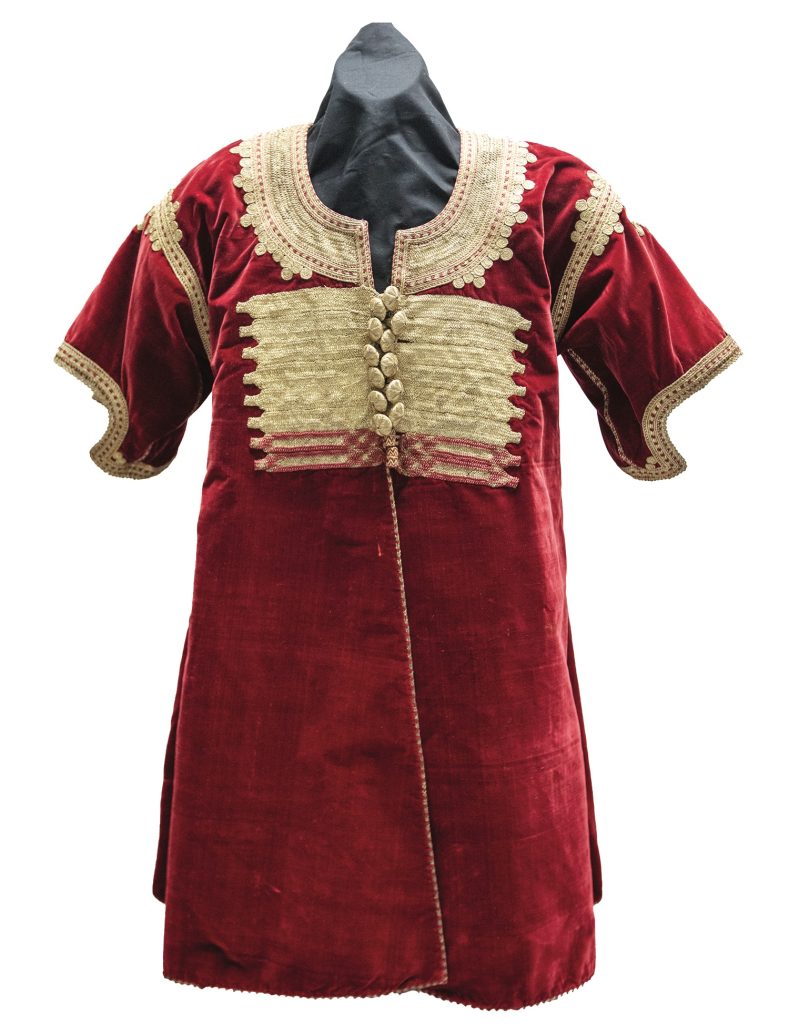
There’s nothing like a history museum celebrating, well, its own long history. On November 11, the Greensboro History Museum unveils an exhibit honoring its centennial: GHM100: Treasures. Legacies. Remix. Featured, you’ll find rarely seen museum goodies, including what Curator of Collections Ayla Amon says is her personal favorite in the collection, a Tunisian kaftan that was given to Dolley Madison in 1805 by Sidi Soliman Mellimelli. It is said that Mellimelli wrapped the Tunisian garment — made of red velvet, lined with green silk damask and decorated with gilt silver thread — around Dolley as a gift intended to bring childbearing fortune to her and husband James Madison, who was then serving as U.S. Secretary of State. Fabricated from heavy, luxury materials, it’s not just a cloak, but a work of art that Amon says is a must-see in person. Notably, Mellimelli was the first Muslim envoy to come to the United States. He came, hoping to avert a war between Tunis and the U.S., who had violated a treaty by capturing Tunisian vessels. At the conclusion of his visit, he sent a letter to James Madison. The letter concludes, “With heartfelt regret I shall leave this Country while our affairs wear so inauspicious a complexion . . .” Behold the kaftan along with 100 years of archival treasures at the Greensboro History Museum. Info: greensborohistory.org/exhibition/ghm100-treasures-legacies-remix

Window on the Past

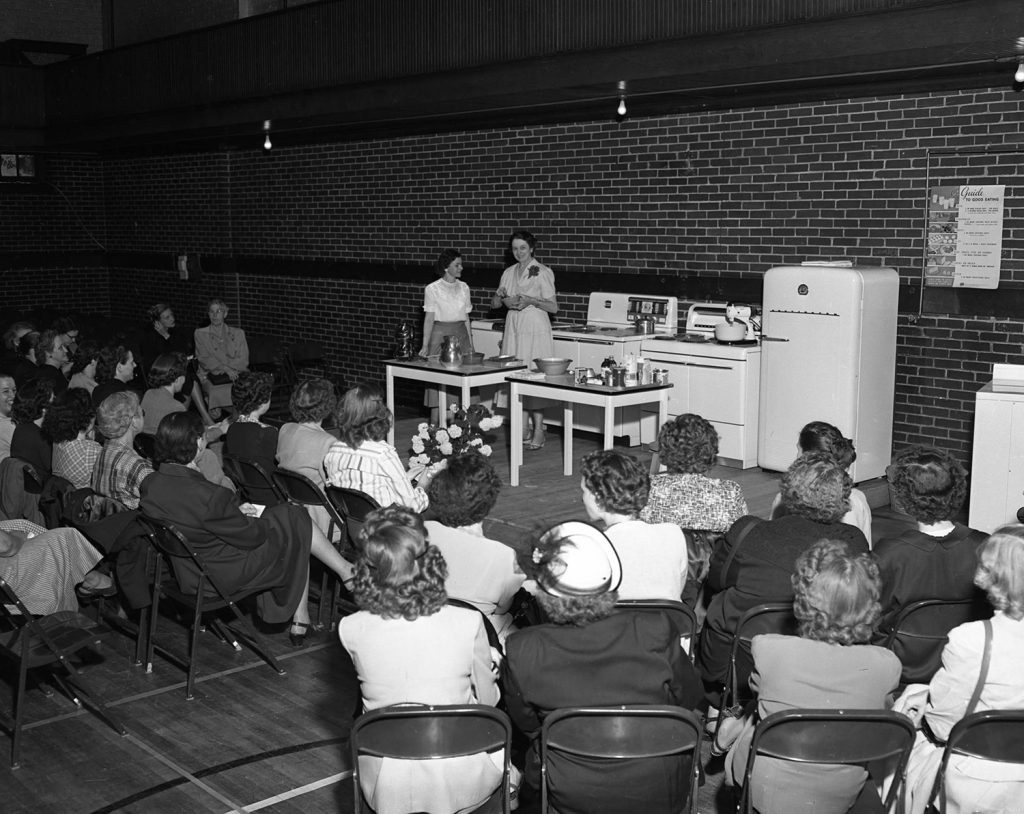
At a 1950s Cone Mills Cooking School demo, we aren’t sure what’s being said, but we imagine it’s along the lines of what came out of Lessons in Chemistry’s Elizabeth Zott: “Children, set the table. Your mother needs a moment.” As Thanksgiving chaos rolls around, we gently remind you to take a moment for yourself, too.

Sage Gardener

Why wait until New Years Day to serve collard greens? If, after reading this, collards don’t make an appearance at your Thanksgiving or Christmas feast, you’re not paying attention.

Collard greens are bristling with vitamins A, C, K and B-6, plus iron, magnesium, folate, potassium — and lots of silica in the form of sand — that is, if you don’t rinse them twice. My rule of green thumb: Rinse thrice just to be nice.

Speaking of the rinse cycle, let’s talk about cleaning your colon with fiber, which reduces inflammation and balances blood sugar. The Cool Kids comedian David Alan Grier observes that collards “get outta you faster than they get in you.”

Before they began making their appearance served upon crisp linen table cloths in tiny boîtes, collards were seen as poor folks’ food, with recipes for cooking them imported by enslaved people along with, unwillingly, themselves. They thrive in nutrient-poor soil and adverse conditions, making them ideal for hard times.

Lutein. Zeaxanthin. Don’t worry about pronouncing them. You’ll soon see that these sulfur-rich compounds (along with our old friend vitamin K) guard against age-related eye diseases. 

And go ahead and savor that second glass of wine. The sulfur-rich compounds in collards clean out your liver.

Kamala Harris confessed that her collard green recipe is so popular she uses her bathtub to wash her big mess of collards around the holidays.

If you have a slab of fatback and fry it up, and also have some leftover cornbread from your Thanksgiving Day feast, you have all the makings for a collard-green sammie as featured in Bon Appétit. May we recommend the addition of some Texas Pete.

If people are worried about eating the official state vegetable of South Carolina (where more collards are grown than anywhere else), just tell them they’re eating Brassica oleracea.  

Grey Poupon

One day, when I was 7, the jar of Grey Poupon appeared in our refrigerator, heavy and rare as an apple in our steak-and-potatoes house.

After Dad’s shift at the print shop, I asked him about this new jar of mustard. He turned to me, setting down his Busch Light, shook his head, and said, “Your mother is trying to be all fancy.”

“Have you tried it?” I asked.
“It’s just mustard,” he said.

The next morning, I peeked around the corner as my father made his daily ham and cheese. After dipping the butter knife into the Grey Poupon, he brought it to his tongue, nodded as if satisfied, then slathered a generous helping on his sandwich.

When I stepped into the kitchen, he jumped, as if I’d caught him in some dirty act.

Unsolicited Advice

November is about giving more than just thanks for your many blessings — it’s about giving back. These days, donating money to a near-and-dear cause is just a simple QR code away, but it’s not always that easy when your budget is tighter than your post-pecan-pie pants (never mind that thin slice of pumpkin pie you also ate — it barely counts). True, November might be hard on your waistline, but we’re gonna make it easier on your bottom line with things you can give other than Benjamins.

Stuff. Local organizations are often in need of gently used clothing, toys, furnishings and decor. Closet more stuffed than your vegan cousin Nina’s tofurkey? Clean it out while doing some good in the world. Somewhere, Marie Kondo is sitting at her Thanksgiving table, full of gratitude for the millions of us who are sparking some joy in the world — and her wallet.

Skills. Got a special talent that could be of service? Maybe you’re a website designer who can level up your fav nonprofit’s site. Service with a smile — and style. As MLK Jr. once said, “Life’s persistent and most urgent question is, ‘What are you doing for others?’” Don’t be caught without an answer.

Energy. Instead of giving 5K, register to run a 5K for a cause. Maybe this is the year your family turns into the one we all love to hate. You know ‘em — they show up to the Turkey Trot in matching costumes that should make it hard to jog, but they still finish in the lead, having barely broken a sweat.

Time. Carve out a little of your most precious commodity to spend it volunteering in a soup kitchen or playing with shelter pups. Bonus if you bring home Fido and give him a home for the holidays and fur-ever after. And since we’re talking about time here, maybe he could even be your loyal watch-dog.  

Up. After that last joke, this is what we’re giving.

Merry Makers

“I feel like my art is love made visible,” muses Katie Podracky, a teacher and first-time vendor at Merry Merry Market this year. “I love that people who know nothing of that story can come to it and also feel some type of hidden connection.” Katie takes inspiration from North Carolina, the state in which she was born and raised. The vibrant scenery and lively nature — who doesn’t love a galloping white-tailed deer or the sound of a rushing waterfall from time to time? — influence her canvas. After a little mountain climbing and several animal encounters from her local state parks, Katie and her husband became avid outdoor lovers. “I had a friend tell me, ‘Oh you should paint something’ and I was like, ‘Oh that’s a good idea, let’s do that’ and it really connected me to North Carolina.” Katie says she learned a lot about her home state through her art.

Katie has long loved Merry Merry Market and is excited to be on the other side of the vendor table this time around. “I tell all of my friends and my students that Merry Merry Market is such a great event because they collect quality vendors who happen to be local artists.” Katie’s paintings, plus accessories, home decor and other artisan wares, are among the many items you could buy as a gift for a family member, friend or even for yourself. We always enjoy the saying, “one for you, three for me.” And, as if that wasn’t enough to draw your attention, a portion of the $5 admission will be donated to BackPack Beginnings, a nonprofit that connects children and their families with the resources they need to develop and grow. So, mark your calendars to get some much needed holiday shopping done at Merry Merry Market, 9 a.m.–8 p.m., Wednesday, Nov. 19, at Revolution Mill’s Colonnade Events Center. Did we mention the bar opens at 5 p.m.? Info: merrymerrymarketgso.com.

Wandering Billy

WANDERING BILLY

Seas the Moment

Andy Zimmerman heads windward with a new documentary

By Billy Ingram

“That’s what sailing is, a dance, and your partner is the sea. And with the sea you never take liberties. You ask her, you don’t tell her.” ― Michael Morpurgo

Andy Zimmerman has performed a Herculean feat in transforming the downtown area south of the railroad tracks around Elm Street. What was once a losing hand of forgotten, abandoned buildings languishing for untold decades is today a royal flush of vibrant hubs where you’ll now find SouthEnd Brewing, transform GSO, Fainting Goat Spirits and Forge Greensboro among other former eyesores he’s renovated elsewhere.

I met with Zimmerman to explore his latest effort on the largely unfinished but impressive second floor of yet another recovery mission, the original Blue Bell jeans plant on South Elm and Gate City Boulevard (rechristened Old Greensborough Gateway Center). The hat he’s wearing today is not that of downtown developer but executive producer. He’s been working on an upcoming documentary entitled Mavericks & Multihulls, a tribute to the multihull legends of seafaring, those amazing young men and their sailing machines.

That’s not a non sequitur. The company Zimmerman founded and retired from before arriving in Greensboro a couple decades ago, Wilderness Systems, was a leader in the production and design of kayaks, “probably the No. 3 manufacturer in the world,” he notes. “Certainly No. 1 as it relates to brand. Between the companies that I owned and started, we made over a million kayaks.”

Under the WindRider label, Wilderness Systems fabricated more trimarans, a variation on the catamaran, than anyone anywhere. “The catamaran, as one of the designers likes to put it, is kind of a condo on the water — it’s commodious.”

“The trimaran has three hulls, the main hull, which is where you live,” Zimmerman points out for those who know little about watercrafts, aka me, “and then the two outriggers. You can call them training wheels,” making them faster and more stable than most other boats.

WindRider also manufactured hydrofoil sailboats, the cool, sleek models where the hull rises up out of the water at top speeds. “For me, it was a manufacturing accomplishment of a lifetime,” Zimmerman remarks about the difficulty of the build, which required some 800 components. The America’s Cup speedsters, he notes, “have trimmer ends, they’re doing 50 plus miles an hour in hydrofoils. The other boats we made money on, but the hydrofoil? No. It was the joy of creating.”

Questing for the creative is what led to his collaboration with Jim Brown, multihull sailing pioneer and high seas adventurer, as well as the impetus of this documentary. Mavericks & Multihulls chronicles the extraordinary lives of six sailing-world superstars, the aforementioned Brown, Woody Brown (no relation), Rudy Choy, Arthur Piver, James Wharram and Dick Newick.

Besides a shared connection with wind, waves and salty spray, Zimmerman points out that every one of the watermen spotlighted in this film was an extreme risk taker. “I met Jim [Brown] and was immediately attracted to his way of life,” he says. “Jim built a boat in his backyard. He took his two kids and his wife in Santa Cruz and said, ‘I don’t like the druggie scene here. I don’t like the Vietnam scene here. I wonder when the world’s going to blow up?’ And he said, ‘We’re getting on a boat.’” Brown and his family sailed the seas for three and a half years. “Went to Central America, South America and homeschooled his kids. Then came back when his wife said, ‘OK, I’m ready to get off the boat.’”

United Kingdom subject James Wharram was polyamorous, and some would call that alone off-the-charts bravery. “He’d have two, three women on his boat, they switched nights, they’d sleep together. This was back in the ’60s. Peace, love and waterbeds,” says Zimmerman. But the ultimate waterbed? “He turned people on to living on the water and adventure, traveling.”

While Wharram was all wild wanderlust — and just plain lust — Dick Newick was all about speed. “If he could take a pound out of the boat, he’d do it to make it go faster.”

Woody Brown, on the other hand, was a self proclaimed nature boy. “‘I want to be out in nature,’ he said,” quotes Zimmerman. “‘I don’t want motors, I want to sail.’” In that pursuit, he devised the first modern catamaran. “He reinvented the fin. He was a big surfer, too,” legendary, in fact. Living to the ripe age of 96, in his later years residing in Hawaii, Brown was a pioneer in chartering catamarans, taking groups of 40 or 50 people out on short oceanic sunset-viewing voyages.

Zimmerman recruited local filmmakers Michael Frierson and Kevin Wells, both with impressive documentary bona fides, to translate these stories to the big screen. To begin with, they conducted multiple interviews with Jim Brown, dating back to 2015. Many others who are passionate about sailing are featured, including Steve Callahan, who survived 76 days adrift in the Atlantic, and multihull designer and Mainer John Marples.

Frierson and Wells were busy editing when I spoke with them. “There’s an immense amount of footage shot by [Canadian cinematographer ] Scott Brown [again, no relation to Jim or Woody Brown]. That’s the primary source material from the current period,” Frierson says. In addition, Jim Brown contributed thousands of photographs along with 250 hours of footage he’d lensed over the decades.

The Mariners’ Museum and Park in Norfolk, the largest maritime museum in the country, made available their archives of motion-picture reels dating back to the dawn of the 20th century. “The footage is in every format known to man,” Wells notes. “Super 8, 16 mm film, DV cam video. So dealing with all the different resolutions has been challenging.”

Documentary filmmaking is like assembling pieces of a puzzle, or maintaining that fine line between devil and the deep blue sea, a rewarding yet daunting task crafting a narrative from random clips and pics shot by a multitude of unrelated individuals. “You’re finding the story out of all this,” Wells says about the challenging process to achieve an even keel. “You know there’s a story there — there’s probably a hundred stories there — but where is your focus? That part has been a lot of fun.”

What surprised Frierson and Wells most after diving into Mavericks & Multihulls (mavericksandmultihulls.com)? “That these guys were fairly accomplished carpenters,” Frierson replies. “They’re building their own boats and sailing them to Tahiti before GPS . . . The sense of self-reliance and guts that they had is just amazing.”

Wells concurs. “I think that’s representative of what a lot of these people think. They’re doing things, that to me, are extraordinary, but they think it’s very ordinary. Building these contraptions and sailing off with their family in the middle of the ocean is still crazy to me.”

“Jim Brown is 92. He lives life so large and he’s writing a book,” Zimmerman remarks with obvious admiration for the film’s unlikely leading man. “He just wants to stay busy and engaged in life. And I’m not sure I know anybody more engaged in life than Jim.” Legally blind now, Jim Brown can no longer navigate, but he’ll never fully surrender his life aquatic. With his own hands, no surprise, he’s constructed a tiny house on top of a trimaran, one manufactured by Zimmerman’s former company. “So he can keep his boat right there on the water at his house in Tidewater, VA. And he goes and stays in that when it’s not too hot or too cold.”

As for Zimmerman’s future, his mainsail is set for steering into the calm blue yonder. “I’ve got one big project left in me.” After that, his licked finger is in the wind. “I wouldn’t mind living on a boat. I’m a minimalist now. It goes back to the overwhelming sensation I had as a young man when I realized that freedom is actually available. I frickin’ love it!”

Glory Days

GLORY DAYS

Glory Days

These men aren’t kids anymore, but when they were, they forged a legacy

By Ross Howell Jr.

Photographs by Tibor Nemeth

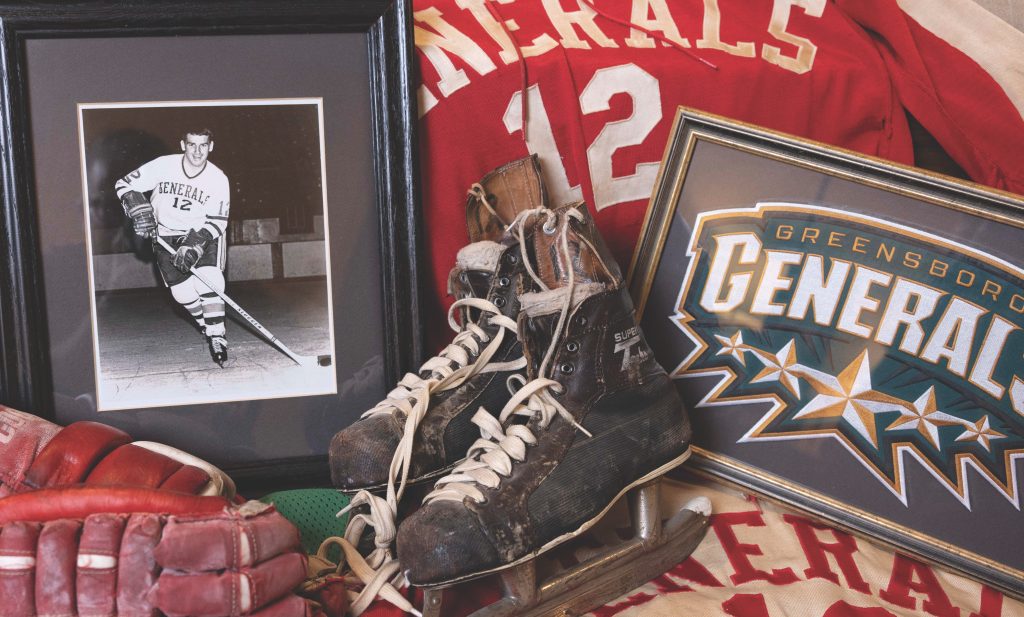
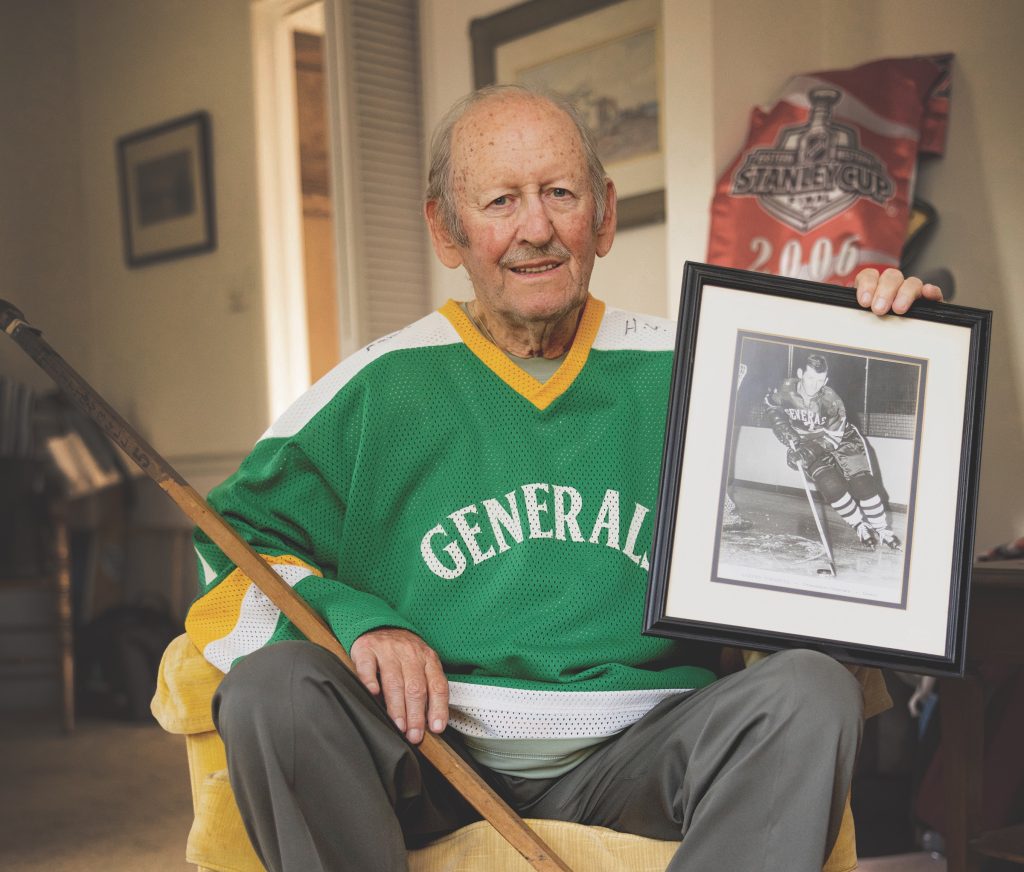
Former Greensboro Generals ice hockey players Ron Muir, Harvard Turnbull and Stu Roberts have a pretty good idea of what our new professional team, the Greensboro Gargoyles of the East Coast Hockey League, have on their minds.

A league championship.

That’s something the Generals, the city’s first professional hockey team, achieved in the 1962–1963 season of the old Eastern Hockey League. (A later franchise, the Greensboro Monarchs, won the ECHL championship title in the 1989–1990 season.)

After I schedule an interview with Ron Muir, I find it to be wonderfully apt that he lives just across the road from the Guilford Courthouse National Military Park and its monument to General Nathanael Greene.

One old general near another.

Muir’s 89 years old now, and I’m greeted at his door by two of his daughters, Elaine Miller and Susie Barham. Elaine teaches elementary school in Blowing Rock and Susie lives in Myrtle Beach.

Muir is sitting in a big recliner and is wearing a Wayne Gretzky jersey — for those of you who don’t follow the sport, Gretzky is a legendary National Hockey League player from Canada who was nicknamed “the Great One.” A hockey game set on mute slashes across the flat-screen TV facing Muir’s chair.

Hailing from small-town Seaforth, Ontario, between Lake Huron and Lake Erie, Muir was an athlete’s athlete — playing soccer, lacrosse, football, baseball and, of course, hockey.

“I decided I wanted to play professional hockey when I was about 10 years old,” Muir says.

Ron Muir

“He’s always had his goals,” Elaine laughs.

And play professional hockey he did. Before moving his young family to Greensboro for the 1960–1961 EHL season at age 25, he’d already played professionally in Canada for three years. Standing 5 feet 11 inches tall and weighing a bruising 190  pounds, Muir played left wing.

Because of his experience and age, many of his teammates looked at him as a father figure.

“Many of them were these 18-, 19-year-old boys, and their families were all back in Canada,” Elaine says.

“At Christmas, Mom and Dad would have a huge party, and the whole team would show up in our little house,” she adds.

Muir remembers that the person who convinced him to join the Generals was the late Don Carter, who was from Toronto. The two men were the same age and had first met at a Chicago Blackhawks tryout in St. Catharines, Ontario.

When they saw each other again at a training camp, Muir had been scouted by an EHL team in Johnstown, Penn., and was ready to sign with them.

Carter was already a star with the Generals. Playing defenseman, he stood 5 feet 11 inches tall, and weighed 185 pounds.

“So Carter says to me, ‘Ron, you don’t have to go to Johnstown. Come on, we’ll go to Greensboro. I played there last year and it’s a good town,’” Muir recalls.

“I thought, hell, I haven’t signed a contract,” Muir continues. “So, I signed up with the Generals’ manager, who was also at the camp, and loaded up for Greensboro.”

“My father drove us down,” Elaine says. “It was a two-day trip back then, and Susie and I were toddlers.”

“And we just ended up staying,” Muir says.

Two more daughters came along, Sandy and Cindy, and both still live in Greensboro. After Muir’s first wife passed away, he remarried, and a stepson, Jason, became family, too. Now Muir has nine grandchildren and four great grandchildren.

The first season Muir and Carter skated together as Generals, the team made the finals. The second season, they won the EHL championship.

In those days, there was no Plexiglas around the rink, just boards and wire. The girls would sit close to the ice, and, when Muir skated by them, they’d shout, “Hey, Dad!”

“The kids from the other hockey families would be all around us in the crowd,” Elaine says. “It was great.”

Greensboro was a hockey town — and “the Generals were superstars,” Elaine says.

“My husband, Eric, played little league hockey,” she adds. “So he knew about Dad long before he met me.”

Susie laughs.

“Oh, yeah, my husband knew Dad before he ever asked me out,” she chimes in.

Elaine smiles.

“We’d date these guys, and they’d say, ‘You’re Ron Muir’s daughters?’ That was a bonus.”

Harvard Turnbull suggests we meet for a drink at Fleming’s Prime Steakhouse & Wine Bar. Turnbull is 84 years old. Originally from Toronto, he skated at the center position for the Generals, standing 5 feet 9 inches tall and weighing 160 pounds.

Though he was an experienced and skilled hockey player, Turnbull was still a teenager with a dream of making the National Hockey League (NHL) when he arrived in Greensboro. Signing with the Generals represented a big step toward achieving that dream.

Turnbull met with members of the Generals’ staff at the Sedgefield home of businessman Stanley Frank, one of the founding owners of the team, to finalize his contract.

“So, they said, ‘What do you want?’” Turnbull recalls.

“I said, ‘You fill it out and I’ll sign it.’ That’s how green I was. I was going to turn pro. It was like I was going to walk on water.”

Fortunately for Turnbull, coach Ron Spong made sure the contract included generous bonuses each time the team advanced in the playoffs.

Harvard Turnbull

And that was the Generals’ championship season.

“I went out and bought a new convertible,” Turnbull laughs.

“It was amazing,” he says. “We were treated like kings.”

Turnbull tells me as many as 5,000 fans would show up to watch the team play in a charity softball game. He and his teammates could play the Sedgefield golf course anytime they wanted. They were often invited into the homes of civic leaders and successful entrepreneurs.

The late Anne Cone was one of the owners of the Generals team in its glory days. A benefactor of UNCG’s Weatherspoon Art Museum, she was the wife of Cone Mills heir Benjamin Cone, mayor of Greensboro, 1949–1951, who passed away in 1982. The couple lived in a graceful Greensboro Country Club mansion.

“Anne Cone was absolutely wonderful,” Turnbull says. “She would invite us single guys to her house for dinner about once a month.”

Among the bachelor invitees was Bob Boucher from Ottawa.

As the story is told, when Cone was in Chamonix, France, on a ski trip, she learned that Boucher, who was playing European hockey, had been arrested in Italy for fighting and couldn’t make bail. Cone managed to have him released and flown to Greensboro, where he skated for the championship team at right wing, standing 5 feet 9 inches and weighing 170 pounds.

“Bobby was a character,” Turnbull says. “So, we’d be at one of Anne’s dinner parties, and Bobby’s sitting at the head of the table where she had all these buttons, and he’d push a button and a servant would come in. Then he’d push another and a wine steward would come in.”

“He was just pushing buttons to see what would happen,” Turnbull laughs. “But Anne was cool — she didn’t have a problem with it.”

Yes, the high life was “plush,” as Turnbull likes to say, but the sport of ice hockey could be punishing, especially in those days.

He shows me a photo.

“That’s Ron Muir in front of the net and I’m taking a shot on goal,” Turnbull says. “Listen, I could really shoot the puck back then, probably get it close to 100 mph.”

He places a fingertip on the goalie’s head in the photo. The goalie’s not wearing a face mask, let alone a helmet.

“If the puck had hit him in the head,” Turnbull muses, “it probably would’ve killed him.”

He shows me another action photo, snapped right at the moment an opposing player knocked Turnbull completely over the boards and into the stands.

“That was very painful,” he says. “But I came right back out on the ice.”

Turnbull tells me that his nose was cut so badly once when he was playing in Canada that it had to be sewn back on. He’s had teeth knocked out, fingers broken and suffered numerous concussions.

“You know what they called the EHL back in my day?” Turnbull asks.

“They called it ‘the meatgrinder league,’” he says, nodding slowly. “That’s how crazy it was.”

Turnbull believes if his teams had “proper helmets, proper rules,” maybe he wouldn’t have suffered so many injuries, which continue to plague him in his golden years.

“Still,” he concludes, “I’d do it all over again.”

Stu Roberts

I meet up with Stu Roberts at the Chick-fil-A just off Battleground Avenue.

Roberts is a native of St. Catharines, Ontario, and arrived in Greensboro in 1966. Although he was just 19 years old, he had already been playing for the St. Catharines Black Hawks, a Canadian junior ice hockey team, for four seasons. He stood 5 feet 7 inches tall and weighed 175 pounds, and didn’t waste any time making an impression in the EHL.

Roberts won the rookie of the year award in 1966–1967.

“I was fast, and that was my game,” he says. “And I could score goals. One year, I scored 62 goals in 72 games. Wonderful year.”

Roberts tells me that he wasn’t a bruiser like Muir and Carter — he used his speed to avoid the hits.

And he knew how to please the crowd.

“I’m not bragging, but I’m proud of the fact that I won most popular player three years in a row,” Roberts says. “I used to tell Coach Spong I’d rather keep the people happy than win any other award.”

As long as the fans were behind him, he adds, “I knew I could keep my job.”

One of Roberts’ daughters, Ashley Barker, drops by the Chick-fil-A to show me some of her Dad’s memorabilia.

Among the items is a newspaper article written by a St. Catharines reporter the summer after Roberts’ second season as a General.

The writer called Roberts “Mr. Excitement.”

“He’s a gambler, often diving, literally, across the ice to get the puck,” the reporter wrote.

The crux of the article?

That Roberts was a huge fan of another speedster — No. 43, stock car driver Richard Petty. So much so that he visited Petty in Randleman, who obliged Roberts by letting him try out the driver’s seat in No. 43. Not on the track, of course.

I ask Roberts about the teams the Generals faced in his eight-year career here.

“I’m telling you, we had some great teams,” Roberts says.

“Our nemesis was the Charlotte Checkers,” he continues. “We used to go to Charlotte on a Friday night and fill the place, and come back to Greensboro on Saturday night and fill the place. It was really good rivalry.”

And there were the Roanoke Valley Rebels, originally the Salem Rebels, in Virginia.

“We used to skate in the old Salem Civic Center, but then they built the Roanoke Civic Center, which was a beautiful rink,” Roberts says.

There were the Nashville Dixie Flyers and the Knoxville Knights in Tennessee.

And, yes, even back then, two teams from the Sunshine state — the Jacksonville Rockets and St. Petersburg Suncoast Suns.

“We carried 18 players on the team and did most of our travel by bus,” Roberts says. The bus had about 20 seats and the remaining space was set up with double-deck bunks.

“We had some good times,” he continues. “I remember a lot of bus rides in a lot of snow, getting from Greensboro to Nashville, or Nashville to Knoxville, or Knoxville to back home.”

Roberts pauses for a moment.

“I think maybe people have forgotten about the Greensboro Generals,” he muses.

I tell him about how many fans I’ve seen — some even high school age — who’ve been wearing old Generals jerseys at the Gargoyles media events I’ve attended. His face brightens.

“You know, I want to thank Greensboro,” Roberts says. “I skated on some great teams. I met my wife, Amanda, here. We raised our kids here. It’s been a wonderful ride.”

And who knows? Maybe our Greensboro Gargoyles in their inaugural season will create some glory days of their own.

The Flying Gargoyles

THE FLYING GARGOYLES

The Flying Gargoyles

Photographs by Tibor Nemeth

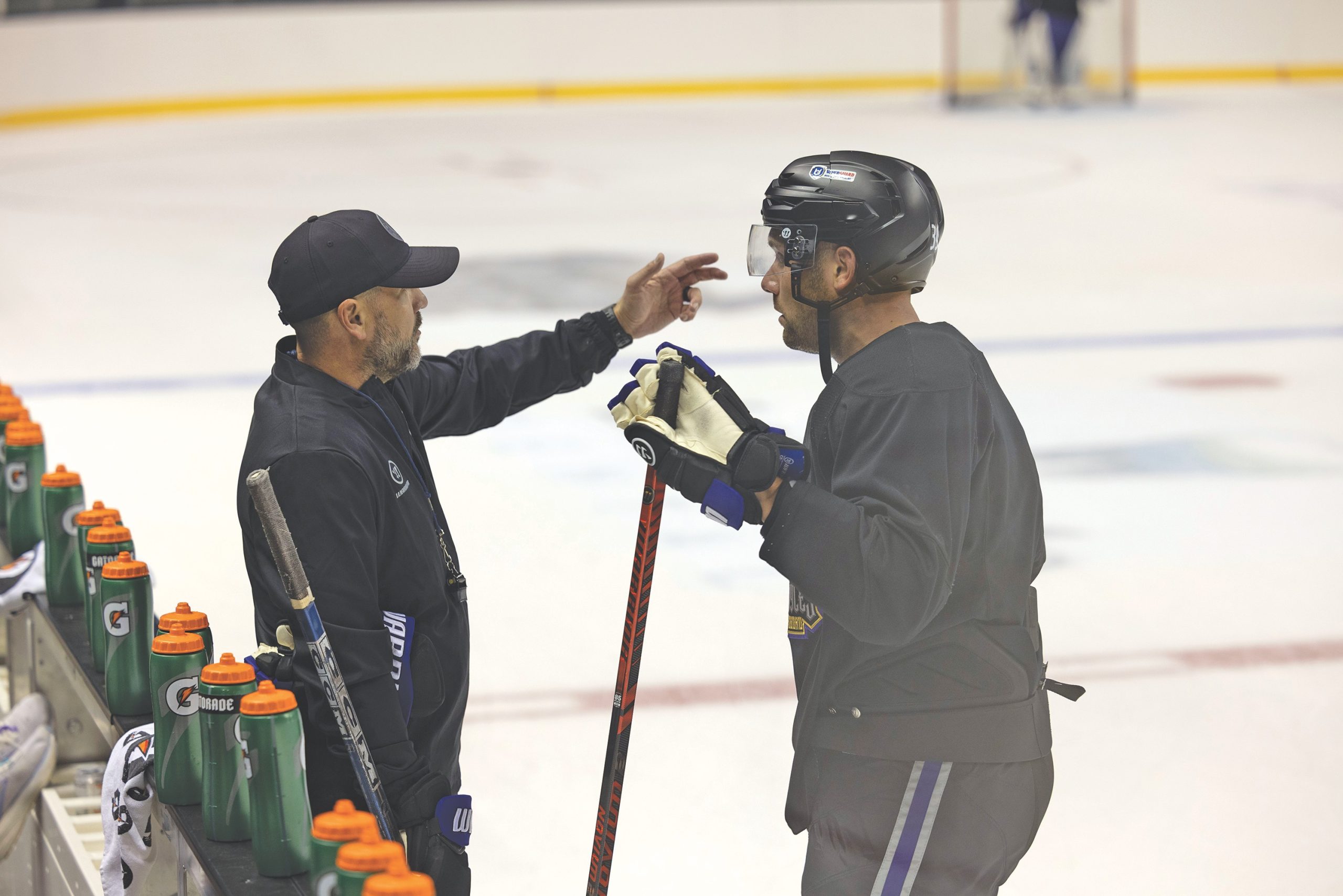
We sent photographer Tibor Nemeth to capture Gereensboro’s newest hockey team, the Gargoyles, warming up on the ice before their season kicked off in October. You can find the rest of their opening season schedule at gargoyleshockey.com.

Tea Leaf Astrologer

TEA LEAF ASTROLOGER

Scorpio

(October 23 – November 21)

There’s a fine — and in your case, blurred — line between passionate and possessive. When Venus struts into Scorpio on Nov. 6 (where she’ll glamp out until month’s end), that line is primed to become a short leash if left unchecked — and nobody wants to be on the other end of that. A word of advice: Don’t smother the fire. Tempted as you may be to cling fast and tight, a little space will keep the coals glowing red hot.

Tea leaf “fortunes” for the rest of you:

Sagittarius (November 22 – December 21)

Stick to the recipe.

Capricorn (December 22 – January 19)

Pack a lint roller.

Aquarius (January 20 – February 18)

Thaw before cooking.

Pisces (February 19 – March 20)

Don’t overwork the potatoes.

Aries (March 21 – April 19) 

The shortcut won’t be worth it.

Taurus (April 20 – May 20)

Go easy on the garlic.

Gemini (May 21 – June 20)

Cling wrap, baby.

Cancer (June 21 – July 22)

The dishes are piling up again.

Leo (July 23 – August 22)

Shake the rug, darling.

Virgo (August 23 – September 22)

Dare you to bust out the fine china.

Libra (September 23 – October 22)

Serve yourself an extra slice of grace.

NC Surround Sound

NC SURROUND SOUND

Sounds of a City

Music with a connection to place

By Tom Maxwell

Alex Maiolo is a creature of pure energy. It’s not that he talks fast or acts nervous — he’s simply an ongoing conversation about electronic music, geography and whatever else happens to capture his interest. He’s also a singular kind of globetrotter, one who doesn’t sound pretentious about it. He loves Estonia’s capital, Tallinn, so much he made music with the place, a 2021 conceptual performance he called Themes for Great Cities.

Conceived as one of his two main pandemic projects — the other was getting better at making pizza — the musical idea took on a life of its own even as the flatbread faded. He invited Danish musician Jonas Bjerre, Estonian guitarist and composer Erki Pärnoja and multi-instrumentalist Jonas Kaarnamets to collaborate. What resulted was something that felt improvised, unpredictable and exhilarating.

“Even though I was living in Chapel Hill, I was trying to think about, well, what do you miss when you miss a city?” he says.

The obvious things — favorite restaurants, familiar streets — were only part of it. Beneath that, Maiolo sensed a deeper, subconscious connection to place that might be expressed musically. He seized upon the idea of treating the city itself as a collaborator. “I wanted to write a love letter to this incredible city by gathering elements of it and assembling them in a new way,” he says. Sounds and light readings became voltages; voltages became notes. “Every synthesizer is just based on the assemblage of voltages,” Maiolo says. “So, if you have voltages — particularly between negative five and plus five volts — you can make music.”

The group collected source material across Tallinn: gulls shrieking overhead, rainwater rushing down a gutter, chatter in a market, the squeak of trams, cafeteria trays clattering at ERR (Estonia’s equivalent of the BBC). A custom-built light meter called the Mõistatus Vooluringid — “mystery circuit” — captured flickering light and converted it into voltages. These inputs were then quantized, filtered and transformed into sound. Tallinn became what Maiolo called “our fifth band member. And just like with any band member, you can say, ‘Hey, that was a terrible idea’ or ‘way to go, city — that was a good one.’”

From the outset, the goal was to create something that felt alive. “We wanted happy accidents,” Maiolo says. “Quite frankly, I wanted to be in a situation where something could go wrong.” Unlike a pre-programmed, pre-recorded synthesizer session, Themes for Great Cities was designed to court risk through completely live and mostly improvised performance — to create the same adrenaline rush that test pilots might feel, only with much lower stakes. “No one was going to crash,” Maiolo says.

That philosophy made the project’s debut even more dramatic. Originally slated for a 250-seat guild hall built in the 1500s, the show was suddenly moved to Kultuurikatel, a former power plant that holds a thousand. Then came another surprise: The performance would be broadcast live on Estonian national television, with the nation’s president in attendance. “It was far beyond anything I had imagined,” Maiolo admits. “I thought we were going to play to 30 people in a room.”

Visuals by Alyona Malcam Magdy, unseen by the musicians until the night of the show, added a surreal dimension. Estonian engineers captured the performance in pristine quality. “It all came together,” Maiolo says. “The guys I was doing this with are total pros.” The recording was later mixed and pressed to recycled vinyl at Citizen Vinyl in Asheville. Unable to afford astronomical mailing expenses, Maiolo split 150 LPs between Estonia and the United States, carrying them in his luggage.

Though imagined as a one-off, Themes for Great Cities continued to evolve. The group returned to Estonia in 2022 for a new performance in Narva, reworking parts of the score and staging it in a former Soviet theater. “We didn’t record that one because it was similar to the first. But when we do Reykjavik, we’ll record that one and hopefully release it,” he says. Yes, Iceland looks like the next destination. The plan is to work partly in the city and partly in the countryside, where light, landscape and weather can all feed into the music.

The ensemble has grown tighter, but Maiolo emphasizes the lineup will be flexible, with an eye toward incorporating local musicians. Vocals may be added in future versions, perhaps improvised or even converted into voltages to manipulate the electronics. “Anything is possible,” he says.

Though he now lives in San Francisco, Maiolo continues to think of North Carolina as part of his creative geography. He still has his house in Chapel Hill, stays connected to Asheville’s Citizen Vinyl, and carries his records home through RDU.

Maiolo and his partner of seven years, Charlotte, are to be married in Saint-Germain-des-Prés in Paris. Her father, a German who came of age during World War II, once spent a year in San Francisco immersing himself in jazz. Even now, as he struggles with dementia, he plays clarinet and listens to Fats Waller and Oscar Peterson. The sense of music as a lifelong companion, capable of anchoring memory and identity, is yet another thread running through Maiolo’s work.

Ultimately, what began as an experiment has become an ongoing series of collaborations. Each city brings its own textures, rhythms and surprises. Each performance is both a portrait and a partnership. “At the end of the day, it just kind of sounds like music,” Maiolo says nonchalantly, as if jamming with an entire city is an everyday thing.