Almanac December 2025

ALMANAC

Almanac December

By Ashley Walshe

December is a skein of yarn, a simmering stockpot, a cat curled by the fire. Cast on. Breathe in the warming spices. Listen to the wisdom of gently crackling oak.

Wood and wool hold memories of winters past: silver storms; frost-laced mornings graced by tender sunbeams; resplendently starry nights.

You study your hands, slightly dry, recalling all they have held this year; all they have released. They tucked seeds into dark earth, plucked wildflowers, cupped sun-ripened berries, healed wounds, watered plants, wiped tears, prepared meals, gathered kindling.

Knit one, purl one; repeat.

When the fire pops, the cat unfurls like a spring fern, stretches out its toes, then drifts again into dream world.

Knit one, purl one; repeat.

As the cat stalks summer crickets and field mice behind closed eyes, you lay down your craft, stoke the fire, head for the stovetop. Lifting the lid, you unlock memories of winters past, mashing the now-soft apples as you inhale the spicy-sweet amalgam.

Back at the fire, you cradle a mug of homemade cider, watching the steam dance as whiffs of cinnamon and allspice ignite your senses. You look at your hands again, marvel at how they’ve been shaped by nature and time; at their wisdom, softness and resilience; at what they might yet hold. 

The cat yawns. You set down the cider, pick up the yarn. Knit one, purl one; repeat.

Winter’s Deep Sleep

For the natural world, life is slowing down.

Honeybees are clustered in their hives. Box turtles are burrowed in shallow soil. And black bears — over 20,000 of them in our mountain and coastal regions — amble to their dens, where cubs will be birthed in the heart of winter, during mama’s deep, long sleep.

When life feels busy, lean into the wisdom of our animal kin. Slow down. Get cozy. Remember that rest is a gift you can give yourself.

Homemade with Love

The holidays are upon us. Flickering candles and flashing lights spell Hanukkah, Kwanzaa, Christmas and Yule. But what of the lesser-known holidays? The weird and downright wacky ones?

Take Pretend to Be a Time Traveler Day, for instance, celebrated on Dec. 8. National Cat Herders Day (Dec. 15). Or National Ugly Sweater Day (the third Friday of December).

There’s a day for roasting chestnuts (Dec. 14), regifting (Dec. 18) and swapping homemade cookies (Dec. 22). 

And here’s one that might prove fun and fruitful: Make a Gift Day, on Dec. 3. Get creative. Let go of perfectionist tendencies. Pure and simple is part of the charm.

Life’s Funny

LIFE'S FUNNY

A Pause with Mrs. Claus

A kitchen-table convo with her local ally, Mebane Ham

By Maria Johnson

It’s 80 degrees in September when Mebane Ham answers the door in full red-velvet regalia.

Her floor-length smock is cinched in back with a bow.

Her cuffs are trimmed in white fur.

Her cap, edged in lace.

Her ears, evergreen, dripping with Christmas tree earrings.

Her face is flushed and radiant.

Or maybe she’s just burning up.

“Here, this is for you,” she says, handing me a candy cane adorned with a ribbon while begging me to take extras back to the office. “You can’t buy just one these things.”

Sometimes, it’s hard to tell where Mebane Ham ends and Mrs. Claus, as in spouse o’ Santa, begins.

Twinkly blue eyes?

That’s 71-year-old Mebane, especially post-cataract surgery.

Same goes for Mrs. Claus, who is also 71, give or take a few centuries.

Rosy face and ready laugh? That’s Mebane, once the extra blush is applied. It’s also Mrs. Claus, considering the windburn that comes from living at the North Pole.

A propensity to hug people? That’s Mrs. Claus. And most definitely Mebane.

A fondness for telling it like it is, sparing no adjectives?

That’s Mebane, for sure, when she’s off the elfin clock.

But no way is that her Mrs. Claus, who’s a safe haven for children, a protector of young ears and hearts.

“That’s how I portray her,” Mebane says with a steel thread in her voice.

She — Mebane, that is — first believed in Santa when she was a kid growing up on St. Andrews Road, which was then a dirt road, in Greensboro’s Irving Park.

Her mother was a stay-at-home mom. Her dad was a salesman. Every December, the family went downtown to take in the department store windows that were dressed for the holidays.

Somewhere in her home in the Dunleath Historic District, Mebane has a picture of her and her siblings with Santa.

“As the youngest of four kids, I learned real quick that the longer you believed, the longer you got stuff,” she says with a hearty heh-heh-heh.

She grew up believing in Santa, without paying much mind to Mrs. Claus, who was a minor character, at best, in the Christmas stories she heard.

It wasn’t until she’d moved away then came back home to help care for a mom with dementia that she got the idea that she could be Mrs. Claus, or at least find the Mrs. C in herself.

It helped that her friend, Eloise Hassell, asked in the early aughts if Mebane would take her place as a seasonal Mrs. Claus at the Barnes & Noble bookstore in Friendly Center, where she told stories during a weekly children’s hour.

At first, Mebane winged it, conflating the story of Little Red Riding Hood with the fairy tale of Goldilocks and the Three Bears — and adding a Christmas twist.

“The parents looked at me like, ‘What kind of drugs are you on?!’”

The next time, Mebane read from a new Christmas book for children. It went much better. After the story time, the kids asked questions. Mrs. C was quick on her clogs.

“What’s your first name?” they asked.

Merry, of course.

“Why are you wearing a wig?”

You should see what riding in a sleigh does to your hair.

“What do you do at the North Pole?”

Who do you think teaches the reindeer to fly? Or shows Santa how to use the GPS?

“How long have you and Santa been married?”

Hundreds of years. Or at least it feels like that sometimes.

“Why aren’t you wearing a wedding ring?”

Oh, my gosh! I took it off to bake cookies with the elves last night and forgot to put it back on.

Later, Mebane recounted the ringless story to a friend who then donated her deceased mom’s gold wedding band to the cause.

“She would love knowing that you’re wearing it for this reason,” the friend said.

After a while, word got around about the married lady who dressed in red and could be hired by the hour.

Mebane — who by then ran her own business devoted to helping small businesses and nonprofits do media and community relations — booked more gigs as Mrs. C.

As opposed to Renaissance or a Victorian figure, she fancied herself a 20th-century character, like the ruddy Santa who appeared in Coca-Cola ad campaigns from 1931 to 1964.

She took her jolly self to Christmas parades in Greensboro and Charlotte, where she rode on floats with the Mister.

She popped into office parties.

She strolled the sidewalks, doling out candy canes at the Festival of Lights in Greensboro. If a kid dropped a candy cane and it broke, Mrs. C. asked for it back and replaced it with a new stick. Cracked candy canes, she said, made excellent reindeer chow.

If a child started stomping candy canes in the name of reindeer nutrition, Merry/Mebane made it clear the reindeer had enough food — so cut it out, kiddo.

Mama Christmas don’t play. But she does have a soft heart.

At retirement homes, Merry/Mebane started Christmas carols for the residents, whose memories were in various stages of repair. They took over after a couple of verses. Some had not spoken in months.

She built gingerbread houses at country-club family events. 

In Winston-Salem, she held small audiences with children with auditory issues. Santa, with his booming voice, could overwhelm them.

Mrs. Claus was softer, more approachable. They came to her.

“By the end, we were down on the floor, reading and playing. They were making eye contact with me. To do that, and see the difference you can make . . . ”

Merry/Mebane’s voice trails off.

Like the seasons themselves, Christmas has changed, and Mrs. Claus has changed with them.

Budget cuts prompted a health-care agency to nix her visits to retirement homes.

Ditto the chain bookstore.

But Merry/Mebane, who also volunteers at the front desk of Holy Trinity Episcopal Church, keeps popping up, at an hourly rate much cheaper than that of a typical Santa. Pay equity, it seems, has not reached the North Pole.

“I don’t make thousands of dollars doing this,” says Merry/Mebane. “I do this because I like it. I get my warm jollies out of this.”

She makes 10 to 20 appearances a year.

She still does parades.

And office celebrations.

And the Festival of Lights, where kids literally come running for her.

She still visits the kids with special needs in Winston-Salem.

Last year, she volunteered at a children’s home in Crossnore, which had been hit by flooding from Hurricane Helene.

Benefactors paid a locally owned bookstore, Scuppernong, to supply wrapped, hardcover Christmas books for the kids. Merry/Mebane delivered Where’s Waldo? to the children, read with them, encouraged them to be good people.

Here, at her kitchen table, within view of a quote tile that says “If you’re not a bad influence, I’m afraid we can’t be friends,” she allows that Mrs. Claus is another side of worldly, wise-cracking Mebane.

“Mebane Ham cares, is concerned and worries,” she says, her blue eyes growing dewy under frosty curls.

“This is something I can do about it. It’s kindness.” 

Almanac November 2025

ALMANAC

Almanac

By Ashley Walshe

November is the mother of quiet wonders.

Rainbows in spider silk. Wood ducks, migrating by moonlight. The slow-beating heart of a box turtle in brumation.

She gives and gives, offering her final mild days, her cool-season greens, the last of her berries, nuts and seeds. 

“Eat up,” she says to the wild ones. “There’s plenty here to go around.”

Bird and squirrel delight in her sweet and earthy fruit. Fox and deer, too. A feathery frost gilds mottled oak leaves on the first frigid morning.

When weary spider spins her silken sac, a cradle for a thousand eggs, the mother leans in close.

“Go now,” she whispers to the weaver. “Your work is done. Your babes shall know the tender kiss of spring.”

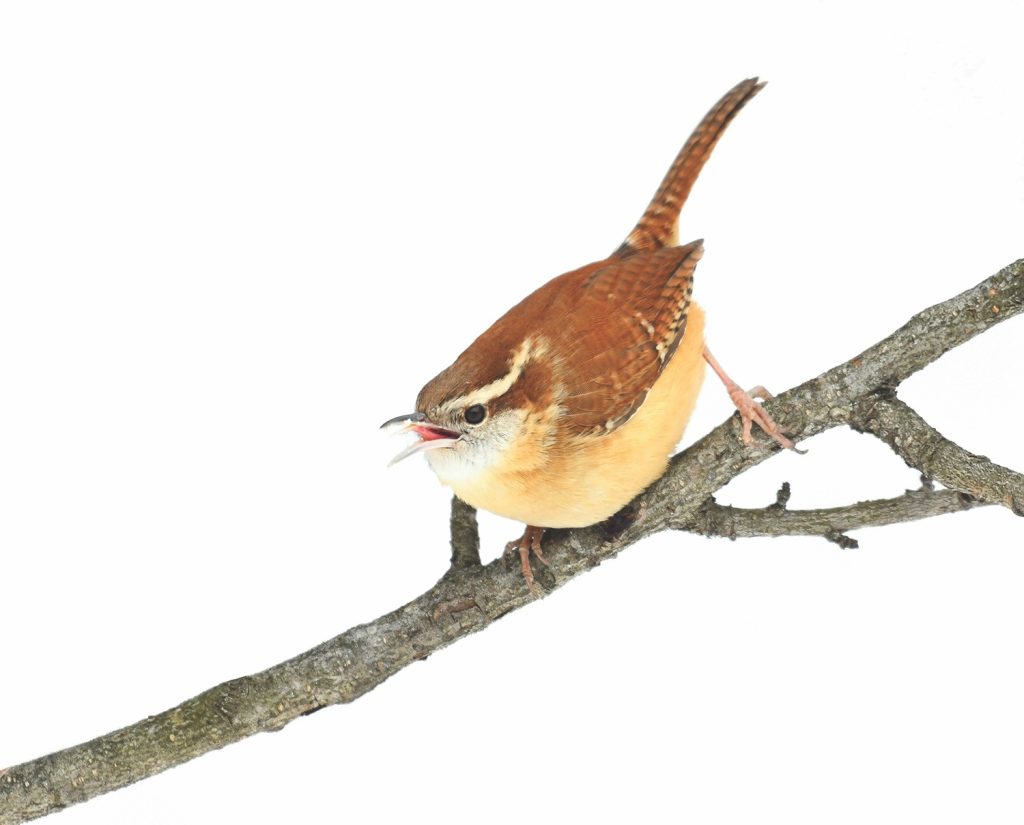
Wren song rings through chilly air. The last colored leaves gleam like stained glass in a light-filled cathedral. The altar remains blessed with beautyberries, acorns, persimmons and rosehips.

“Nourish yourself well,” the mother commands, folding moldy fruit and spoiled nuts into her womb-dark soil, where even the dead leaves are precious.

“I can use this,” she murmurs of what’s gone to rot. “Nothing will be wasted.”

Deciduous trees drift toward dormancy. Black snakes seek out burrows. Wood frogs prepare to freeze solid.

By and by, the great mother readies herself for winter’s deep, long sleep.

Surrendering her beauty back to the hard, damp earth, she strips away all she has to give: a humble banquet for the wild ones; what precious light remains; a bouquet of blessings in the name of quiet wonder.

But there is always a November space after the leaves have fallen when she felt it was almost indecent to intrude on the woods . . .     
— L.M. Montgomery,
Anne of the Windy Poplars

Inner Peace Casserole

A no-fuss recipe you’ll return to again and again. Simple, nourishing and gentle on the system, this soothing side dish is an unexpected crowd-pleaser at the most dynamic of family gatherings — and a treat the day after, too.

Prep and cook time: n/a

Yield: immeasurable

Ingredients

6 bushels of gratitude

3 pecks of grace

1 heaping cup of humor

4 dollops of kindness

1 pinch of forgiveness

1 dash of compassion

A dusting of birdsong

A breath of fresh air

Sunshine (if available)

Directions

Combine all ingredients. Stir and breathe slowly. Break for a kitchen dance party. Repeat.

Note: Modify ingredients to your taste. Sprinkle in some new ones. Leave out what doesn’t serve you. Make this recipe your own.

Do the Mashed Potato

If one plans to mash potatoes for the Thanksgiving masses, one knows they must double the batch. But does one have a plan for that whopping load of leftovers?

Three words: mashed potato pancakes.

If you haven’t tried them (there are several recipes available online), do yourself a favor and whip out the skillet. This isn’t a maple syrup-type situation. Think sour cream and chives. Think breakfast, lunch or dinner. Think no further.

You’ll thank yourself for mashing the extra mile. Especially if the fam is still visiting.

Chaos Theory

CHAOS THEORY

Just You Wait

From social to print media

By Cassie Bustamante

As I sit at my dining room table waiting for my Zoom call to begin, I wonder whether it was such a good idea to have planted myself in front of the giant, whimsical sun I painted on the wall behind me. It’s the fall of 2020 and I am interviewing for a job. It’s a local position, but with COVID lingering in the air, most interviews are being conducted online. Ashe Walshe, then editor of O.Henry magazine, pops up on my screen. Even though I can only see the digital manifestation of her, it’s enough to pick up on her earthy, bohemian vibes.

“Why do you want this job?” she asks me, her hazel eyes genuinely curious. The role in question is that of digital content creator. If I land it, I’ll be writing the O.Hey Greensboro email newsletter and handling social media.

“Well, I really feel like the universe pointed me here,” I blurt out without thinking, a usual habit of mine. Immediately, my mind starts whirling: Why did I say that? There’s no way they’re hiring you now! You sound insane!

But when I see Ashe’s face on my screen, something about the tilt of her head, the slight upturn of the corner of her mouth and the bob of her chin-length, dark curls tells me that she’s absolutely tickled by my response.

A few days later, I’m trudging up a big hill in our neighborhood, panting and pushing my 2-year-old, Wilder, in a stroller, when my phone rings.

“Is now a good time?” Ashe asks, hearing my breathiness across the line.

As a mom to a toddler, is there ever really a “good time” for anything? “Yes!” I say with false confidence.

And just like that, a week later in mid-November, I mask up and head to the O.Henry magazine office to meet my new boss and start training, diving headfirst into the weeks of O.Hey’s gift guide, already mapped out. Though I’m now juggling a busier schedule, working when Wilder is at the Childhood Enrichment Center a few mornings a week, something sparks in me. I find complete and utter joy in learning to write in the pun-filled, playful O.Hey voice.

Months into the job, once I’ve gotten to know Ashe better — and I’ve discovered that our spirituality is aligned — I divulge the truth behind my answer that day on Zoom, about how the universe pointed my arrow toward O.Henry.

I had been writing a home decor and DIY blog for over 10 years, eventually creating social media content in order to stay relevant and to drive website traffic. But I’d grown tired of it — the delight it once brought me was gone. Instagram had lost its appeal as a place to connect and instead became a place to keep up. Ready for something new — but what, I did not know — I hired a coach, Chandra Kennett, who I’d actually “met” through Instagram. She asked me what it was that I really wanted to do, deep down.

“Well, I actually love writing Instagram captions, silly poems and personal essays. And I know that I want to make genuine connections with my local Greensboro community,” I answered. “But I don’t even know what I could possibly do with that.”

“You wait,” Chandra responded. She’d done my human design, a holistic, self-knowledge practice that is, admittedly, very woo-woo. “You’re a manifesting generator and your strategy is to respond, so for now, you just wait for what shows up.”

Wait? Anyone who knows me knows that patience is not one of my strong points. If it is even one of my points at all. But I trusted her and I painstakingly waited. In the meantime, I’d sit on my porch in the dark of the morning and pray: Show me what’s next on the path. I do not need to see the destination, but show me the next step and I will take it.

A month later, as I was out walking my dogs at 5:30 in the morning, I crossed paths with a neighbor I hadn’t yet met: the one and only Jim Dodson.

He stopped me and introduced himself, explaining that he was founding editor of O.Henry magazine. We’d only lived here for a year-and-a-half and I had a little one, a teen and a tween at home. In all honesty, I hadn’t heard of it. But I nodded my head along, pretending I knew all about it.

“We’re thinking of doing a story on children’s pandemic art and I noticed your daughter has done several chalk drawings in your driveway. She’s quite talented. Do you think she’d talk to us?”

Emmy is not the extrovert that I am, so I got his email address and told him I’d look into it as my dogs yanked me along, raring to go.

A few days later, I sent along some photos of Emmy’s handiwork — Baloo from Jungle Book, Homer Simpson, Rapunzel, to name a few — as well as a link to a post on my website, where I’d featured a colorful, cheery piece she’d painted for our pandemic porch. Shortly after that, Jim called me. “I have a job that I think you might be perfect for.”

And that, I tell Ashe, is how I came to be on that Zoom interview with her.

“Well,” she says, “that’s some kind of magic. However it happened, I’m glad you found your way here.”

“Me, too,” I say. Five years later, Ashe and I remain good friends, even though she’s answered the call of the mountains. I no longer write O.Hey — Christi Mackey has seamlessly taken over — but now sit in the editor’s seat of O.Henry, still just as grateful to be here. And, if you asked me now why it is that I want this job still today, I’d tell you that I found everything I was waiting for right here.

Omnivorous Reader

OMNIVOROUS READER

From Poetry to Prose

Creating a finely crafted debut novel

By Stephen E. Smith

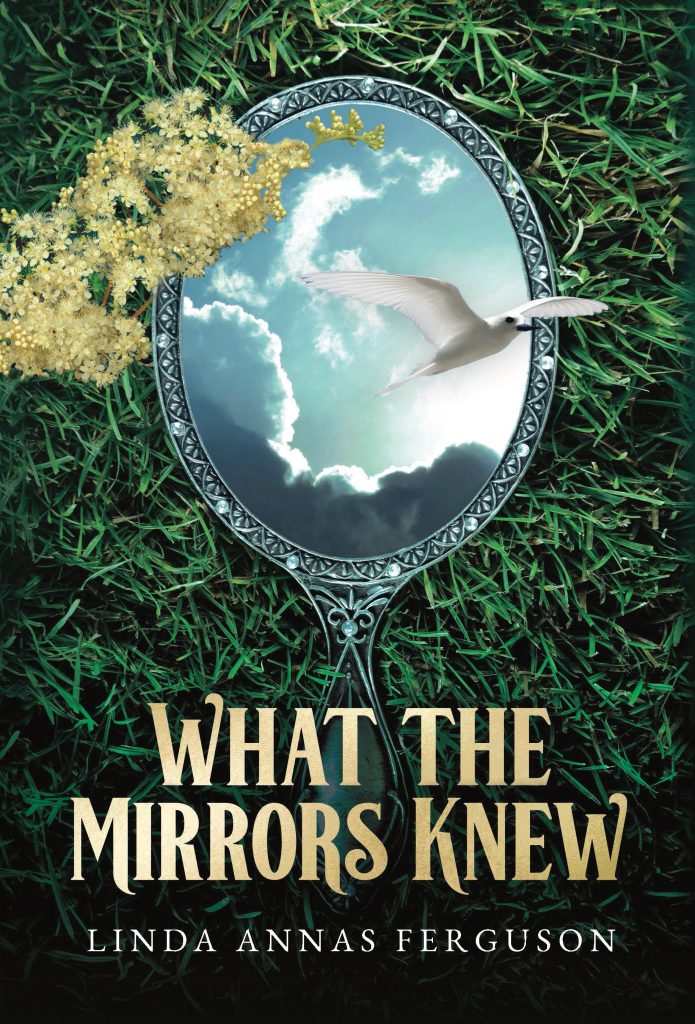
On an unseasonably cool August night in Charleston, South Carolina, I’m sitting in Kaminsky’s Dessert Café with Linda Annas Ferguson, whose first novel, What the Mirrors Knew, arrived that day in the form of 500 paperback and hardcover books. (The official release date was Sept. 21.) She’s glowing with that nervous anticipation felt by every author of a freshly published work — she’s proud, exuberant, anxious and pleasantly overwhelmed by her achievement. She’s seen the germ of an idea to completion, and the fruits of her labor are contained in a beautifully designed novel of almost 400 pages that pleads to be read by appreciative readers.

This isn’t Ferguson’s first book. She began her writing career as a poet and has successfully published and marketed five books of poetry. Her poem “On the Way Home” appeared in our September issue.

Still, I am keenly aware that writing poetry can, oddly enough, be an encumbrance. When a writer proficient in one genre tests his or her talent in a different form — a novelist writes poems, a playwright turns to poetry, etc. — we’re often skeptical, wondering how much professional skill will carry over. Who can recite one of the poems from Hemingway’s first book, Ten Poems? How many of us have read Faulkner’s The Marble Faun? So here’s the question: Will the accomplished poet become the clumsy apprentice to the novel?

Turns out that narrative poetry was Ferguson’s training ground, so she experienced a natural transition to prose. Upon reading her novel — having escaped the shadow of Kaminsky’s Tollhouse Bourbon Pecan Pie to delve into the haunting darkness of What the Mirrors Knew — it’s apparent that her poetic skills are readily transferable.

“My writing life began with telling stories through poetry,” Ferguson says. “Unlike many writers who were influenced at a young age, I only started writing seriously when I was around 30 years old. I scribbled my family stories in journals which eventually became poems.”

Ferguson’s novel is a lyrical blend of spirituality and philosophy, featuring sharply drawn characters who emerge as wholly believable. Her use of dialogue is sharp and sparse, and the narrative is enriched by an energized prose style that propels the reader ever forward. Stir in a touch of philosophy, spirituality, mystery and romance, and you’ve got a first-class novel that reads like the work of a seasoned professional. More importantly, the narrative embodies a strong sense of resonance, a lingering afterglow that will leave the reader pondering the moment.

“In some ways my novel is similar to a long poem, with one particular chapter in it serving as a volta, a turning point, as in a sonnet. I haven’t written a great deal of sonnets, but many poems, even free verse and especially narrative ones, have a turning point about two-thirds of the way through.”

Ferguson is also influenced by film, conceiving her chapters as scenes from a movie. “I visualize it all in my mind as if I am present in each scene,” she says. “I’ve always enjoyed the transition from scene to scene in films. At the end of one chapter I have a bee beating its wings against a glass window, and the next chapter begins with a friend rapping on the back door glass. Because of what film has instilled in me, transitions seem to come without much conscious plotting.”

Leaving Charleston’s blessedly cool weather behind, the question that occurs to me in the moment is what strategy Ferguson has contrived to promote her novel. She’s had experience running a small bookstore and obviously has “a business head,” but the marketplace for books is highly competitive. Chain and local bookstores have partnered with major publishers to feature readings by their new authors. The competition is keen for time and space to make appearances, often squeezing out small, independent presses. Moreover, online platforms featuring books can place another barrier between the writer and consumer. Unless you’re John Grisham, Stephen King or James Patterson, your books aren’t likely to fly off the shelves without some vigorous umph from a promotional entity.

But Ferguson has a plan. “Creating good content on social media is critical in this environment of cyberspace interaction,” she says. “My first step was to expand my presence to two Facebook accounts, two Instagram accounts (one personal and one professional), and one LinkedIn account. I have quite a few followers on Facebook, but I don’t just create posts. I build friendships as I congratulate other writers on their accomplishments, and they connect with what I am doing. I join groups where we can share our successes and issues and support each other.”

Initially, Ferguson vacillated about creating a video trailer for the book, but she’s glad she did. It includes a narrator, music, quotes from the novel and a beautiful video of Ireland. Besides posting it on social media, she can upload it to a personal YouTube platform.

“And one thing I would add, which readers will find prevalent in my writing, is that I take stock in how the universe seems to help those who have a dedication to their path, regardless of where they are on it. ‘Intention, attention, and commitment’ are good promises to make to yourself. Keep writing and publishing!”

Which is precisely what Linda Annas Ferguson has done. She’s liberated her imagination, pressed the power button on her computer and written a novel. She’s done something that anyone who’s determined to write a book can do — if they have the skill, nerve and determination to do it. The big job, the hard work of putting it in the hands of readers, lies ahead.

Home Grown

HOME GROWN

Dressed to Depress

A fit about ‘fits

By Cynthia Adams

I’m all for casual wear. Blue jeans outnumber all else in my closet. 

My grandmothers would roll over in their graves — probably still in girdles in the afterlife — if they saw me wearing a T-shirt and jeans to a work meeting. Like their friends, they wore dresses daily, unless, say, gardening and sometimes even then. And beneath their simple frocks, torturous girdles held everything firmly in place. 

Certainly, until my Mama starved herself to her goal, she wore a girdle anytime she gussied up. Which was almost all the time — because Mama, as she often made clear, had dreams. She dressed for the life she aspired to, a glamorous life like that of the film and soap opera stars she adored.

And she swore up and down they wore girdles.

“Shape wear” is what such undergarments are called now, rebranded as such by reality show celebrities. “Girdle” is an outmoded expression that might just puzzle younger folk. Defined by Merriam-Webster: a woman’s close-fitting undergarment often boned and usually elasticized that extends from the waist to below the hips. A girdle, I will stress, by any other name, be it the cutesy “Spanx” or “Skims,” is still an instrument of torture — and I never intend to wear one. 

(Round is a perfect shape, by the way.)

Comfort, certainly among my Southern kin, had no place. 

My grandmothers wore hats, too, when they dressed up, which meant no part of their body, not even their head, was comfortable. These were not boho bucket hats. They were as bizarrely shaped as the fascinators beloved by the Brits. Often, they were placed on a perilous angle requiring actual hat pins to hold in place. Getting a flu shot or a root canal might exempt them from hat wearing, but, even then they wore their Sunday best, strictly necessitating girdles, hose and heels. 

Flats were for invalids and old age pensioners, I was taught. Suitable only for shuffling to and fro when reduced to shuffling only.

Of course, the world changed. Girdles (excepting Spanx, or on those recovering from back surgery or suffering from hernias) grew rare. Even fewer folk wore hats. Or dressed up for anything but an occasion, such as a wedding or funeral. 

Even a funeral isn’t a sure thing when it comes to graveside mourners kitted out in veils, hose and heels, looking like prime suspects in a British whodunnit. 

It’s disappointing, frankly, that funerals don’t merit sartorial suffering anymore.

As far as root canals or any other medical procedure goes, patients no longer put as much effort — if any — into their appearance as my grandmothers once did. I learned this on morning walks, winding through a medical park, where multitudes arrive for medical appointments. 

The scrubs-clad staff arrive dressed for business. 

But the patients? They check in wearing jeans, shorts, T-shirts, flip-flops or sneakers — basically, whatever they might wear to wash the dog.

Or less.

One morning, a young woman exiting a suite of eye specialists stepped into view, wearing what appeared to be a skimpy two-piece swimsuit. As in an actual bikini. 

What an eye test!

I gawped. Speaking of dogs, when did Southerners decide to just let themselves go?

Mama never went to a doctor’s appointment, the DMV or the A&P without hair and makeup done. Her outfit — heels, purse and, always, clip-on “ear bobs” — carefully chosen. None of it was chosen for comfort. The heels made her bunions throb, and the clip-ons made her ear lobes pulse with pain. But, like Clairee in Steel Magnolias, Mama firmly believed “the only thing that separates us from the animals is our ability to accessorize.”

As I tugged a garbage can to the street Sunday afternoon, a woman and her daughter walked past with a Collie. The middle-aged mother wore a skimpy nylon sports bra and even skimpier shorts. No top.

The dog was the most modestly dressed of the three. 

Mama wouldn’t have gone to her own back porch wearing her underwear with a pair of shorts. Not even if the only creatures in sight were raccoons.

My mind screamed. “God’s nightgown! That woman’s walking down the street in a bra!”

Comfort is a peculiar thing. I get comfort, especially when it comes to shoes, I truly do. And, dear readers, I get body positivity. That mother is comfortable with herself in a way I can never be. 

Having never understood Madonna’s embrace of underwear as outwear, bralettes as tops or lacy, colorful bra straps deliberately revealed, it seems I have officially entered the Age of Concealment. 

I personally prefer to have all my bits fully covered as my age accelerates past all legal speed limits. 

That makes me comfortable.

But to the consternation of my elders, I, too, once rebelled against being trussed up like a Thanksgiving turkey in underwire bras and infuriating pantyhose. 

“But, Honey,” my Daddy would say as he frowned at my low-slung bell bottoms. “Look at your Mama. Dress like you own the bank, not like you need a loan.”

He groaned as I strutted away on Pee-wee Herman-style platforms: “What on God’s Earth have we come to?”

Simple Life

SIMPLE LIFE

I See the Birds

How I learned to look up and live more fully

By Jim Dodson

November is the month I take stock of the year’s happenings, the ordinary ups and downs as well as the unexpected challenges and graces that come with being alive and kicking in 2025. This year,
however, I’m looking back a bit further.

Two years ago, seemingly out of the blue as my oldest golf buddy, Patrick, and I were setting off on a golf adventure across Southern England, celebrating our mutual 70th birthdays and 60 years of friendship, I was diagnosed with prostate cancer. Talk about a trip buzz killer. 

Naturally, I was surprised to discover that I was one of a quarter million American men who annually develop prostate cancer. But perhaps I shouldn’t have been.

My dad, you see, discovered his prostate cancer at age 70. He chose to have his prostate surgically removed and went on to live a productive and happy life for the next decade. My nickname for him was “Opti the Mystic,” owing to the extraordinary faith and unsinkable optimism that carried him to the very end.

A few  years later, as I was completing work on my friend
Arnold Palmer’s memoir, A Golfer’s Life, the King of Golf was also diagnosed with the disease. Likewise, Arnie had just turned 70. He went straight to the Mayo Clinic and had his prostate removed. He lived a full life, reaching 87 years.

Experts say that most prostate cancers occur in men without a family history, though they concede that there may well be a family gene factor involved. In retrospect, I like to think that I was simply destined to follow the leads of the two men I admired most — a unique medical case of “like father, like son, plus his favorite boyhood sports hero.”

Joking aside, I chose a different treatment path than my dad and Arnie because, as I learned, there have been tremendous medical advances in prostate cancer treatment since their dances with the disease, providing modern patients a much greater chance of living out their natural life expectancy.

Thus, under the direction of an outstanding urologist named Lester Borden and veteran Cone Health oncologist Gary Sherrill, I chose six weeks of targeted radiation therapy followed by 24 months of a relatively new “super drug” my oncologist called “the Cadillac of prostate treatment.” 

During the discussions of options, I quipped to Lester (a fellow golfer) that I hoped to publish at least three more books on golf before I exited the fairways of life and someday shoot my age, the quest of every aging golfer. I also assumed that the golf trip to England was now out of the question.

Lester smiled. “You’ll have three books and maybe more,” he said. “Meanwhile, the best thing you can do now is to go play golf with your buddy in England and have a great time. That’s the best medicine.” 

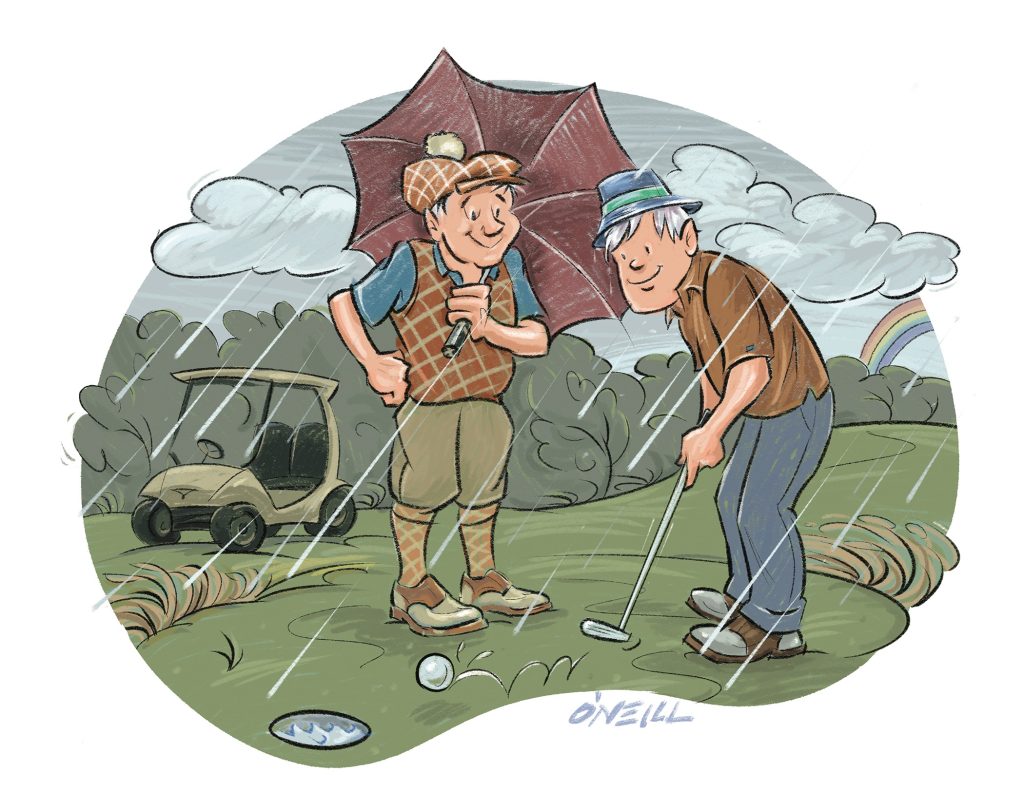
So, off we went. And though it turned out to be the statistically wettest week since the  Magna Carta, Patrick and I had a wonderful journey from Southern England’s east coast to west, seeing old friends and playing 18 nine-hole matches through howling winds and sideways rain over seven of Britain’s most revered golf courses. Somehow, amazingly, our roving golf match wound up being tied — in retrospect, perhaps the perfect ending and just what the doctor ordered. My prostate problem hardly entered my mind.

During our last stop at a historic club called Westward Ho, where we were both overseas members for many years, we had a delightful lunch (probably for the last time) with our dear friend, Sir Charles Churchill, 90, a legend in British golf circles, who reveled in our soggy tales of a golf match nobody won. The real winner, Charles reminded us, was our enduring friendship.

As anyone who makes the cancer journey understands, or quickly discovers, optimism and faith are essential tools in the fight against this merciless disease. 

Upon our return I resolved to spend the rest of my days with more optimism, good humor and a deeper gratitude for the life and work I’ve enjoyed — along with an awakened empathy for others who aren’t as fortunate.

The tools in my kit include a keen (if somewhat private) spiritual life that I exercise every morning when I chat with God under the stars. Plus, I often ask his (or her) advice throughout the day, especially when I’m watching birds at the feeders in early morning or late afternoon.

One of the surprising gifts from this period was a song I heard by chance — or maybe not? — called “I See the Birds,” by a gifted songwriter named Jon Guerra.

I was stuck in heavy city traffic, late for a lunch date and stewing over the insane way people drive these days, when this incredible song from God-knows-where mysteriously popped up on my music feed.

I see the birds up in the air

I know you feed them

I know you care

So won’t you teach me

How I mean more to you than them

In times of trouble

Be my help again   

By the end of the song, I was fighting back tears. It’s from a beautiful album simply titled “Jesus” that’s based on the Book of Matthew.

That song became the theme of my two-year journey back to health. I still listen to it at least once a day.

I also turned to the timeless wisdom of the old friends who line my library bookshelves.

“Don’t waste your life in doubts and fears,” advised Ralph Waldo Emerson, one of my favorite non-golfing heroes. “Spend yourself on the work before you, well assured that the right performance of this hour’s duties will be the best preparation for the hours or ages that follow it.”

With that guidance, the work before me during my cancer journey included the pleasure of publishing my most rewarding book and finishing a landscape garden that I’ve worked on for a decade. I also received a new left knee that might someday improve the quality of my golf game.

Best of all, we learned that my daughter, Maggie, is pregnant with a baby girl, due Christmas Eve, finally making me a granddad. Talk about a gift from the universe.

The final touch came last week when oncologist Gary Sherrill provided the good news. “You’re doing great,” he said. So, I’m doubling down on the things I’ve learned from my unexpected journey.

To judge less and love more. To thank my maker and see the birds up in the air.

Who knows? Maybe someday this budding grandpa may even shoot his age.

Sazerac November 2025

SAZERAC

November 2025

Just One Thing

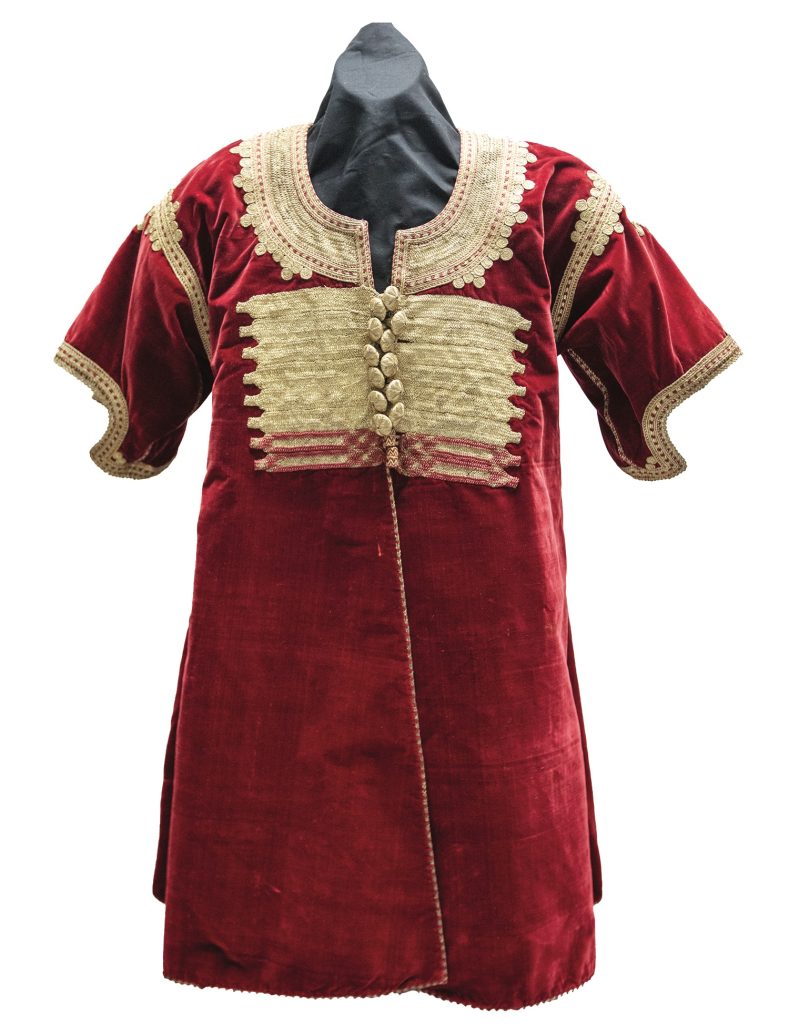
There’s nothing like a history museum celebrating, well, its own long history. On November 11, the Greensboro History Museum unveils an exhibit honoring its centennial: GHM100: Treasures. Legacies. Remix. Featured, you’ll find rarely seen museum goodies, including what Curator of Collections Ayla Amon says is her personal favorite in the collection, a Tunisian kaftan that was given to Dolley Madison in 1805 by Sidi Soliman Mellimelli. It is said that Mellimelli wrapped the Tunisian garment — made of red velvet, lined with green silk damask and decorated with gilt silver thread — around Dolley as a gift intended to bring childbearing fortune to her and husband James Madison, who was then serving as U.S. Secretary of State. Fabricated from heavy, luxury materials, it’s not just a cloak, but a work of art that Amon says is a must-see in person. Notably, Mellimelli was the first Muslim envoy to come to the United States. He came, hoping to avert a war between Tunis and the U.S., who had violated a treaty by capturing Tunisian vessels. At the conclusion of his visit, he sent a letter to James Madison. The letter concludes, “With heartfelt regret I shall leave this Country while our affairs wear so inauspicious a complexion . . .” Behold the kaftan along with 100 years of archival treasures at the Greensboro History Museum. Info: greensborohistory.org/exhibition/ghm100-treasures-legacies-remix

Window on the Past

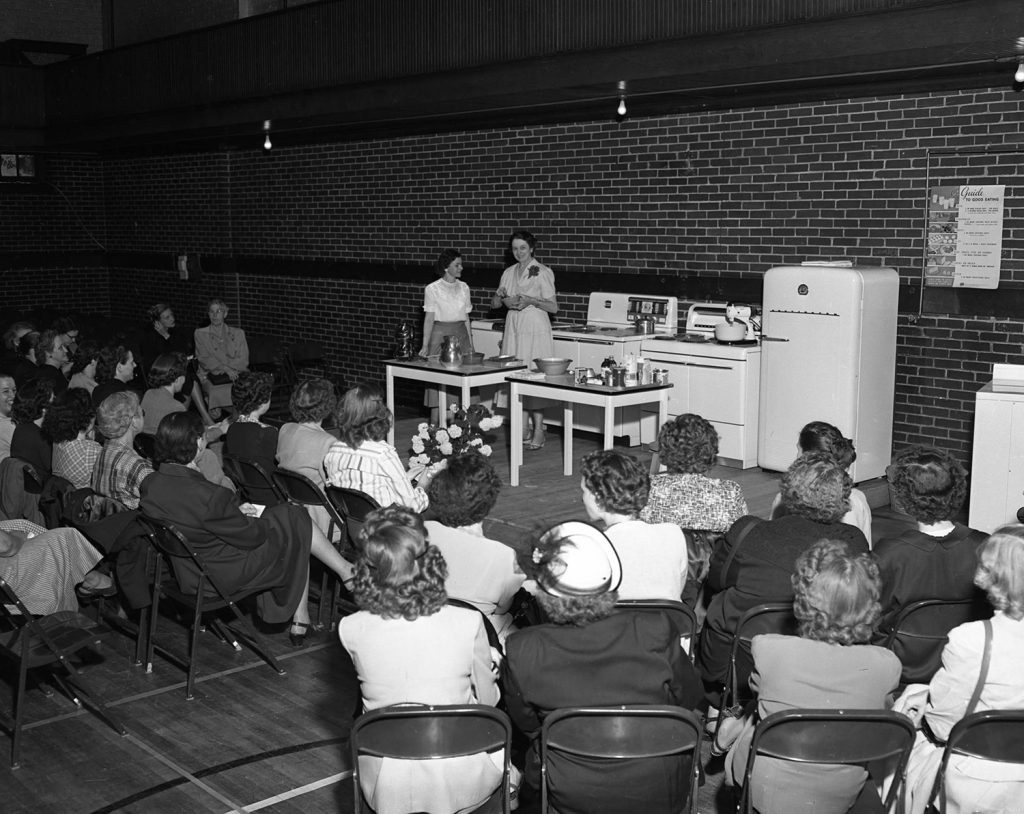
At a 1950s Cone Mills Cooking School demo, we aren’t sure what’s being said, but we imagine it’s along the lines of what came out of Lessons in Chemistry’s Elizabeth Zott: “Children, set the table. Your mother needs a moment.” As Thanksgiving chaos rolls around, we gently remind you to take a moment for yourself, too.

Sage Gardener

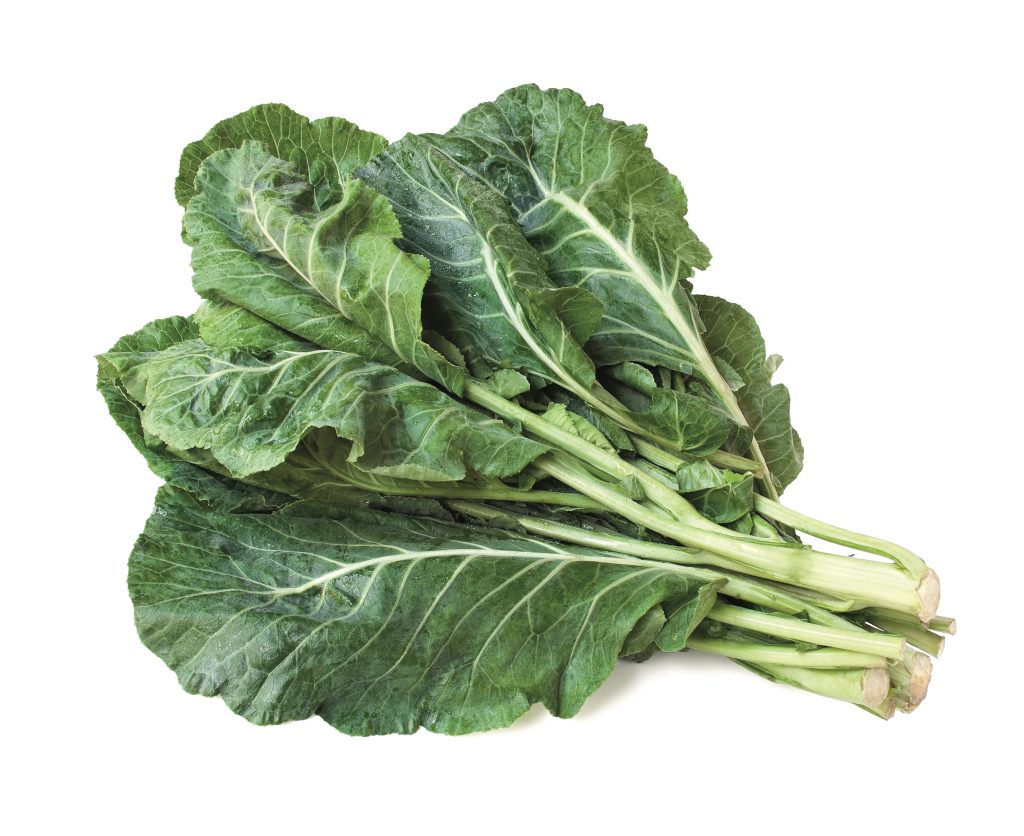
Why wait until New Years Day to serve collard greens? If, after reading this, collards don’t make an appearance at your Thanksgiving or Christmas feast, you’re not paying attention.

Collard greens are bristling with vitamins A, C, K and B-6, plus iron, magnesium, folate, potassium — and lots of silica in the form of sand — that is, if you don’t rinse them twice. My rule of green thumb: Rinse thrice just to be nice.

Speaking of the rinse cycle, let’s talk about cleaning your colon with fiber, which reduces inflammation and balances blood sugar. The Cool Kids comedian David Alan Grier observes that collards “get outta you faster than they get in you.”

Before they began making their appearance served upon crisp linen table cloths in tiny boîtes, collards were seen as poor folks’ food, with recipes for cooking them imported by enslaved people along with, unwillingly, themselves. They thrive in nutrient-poor soil and adverse conditions, making them ideal for hard times.

Lutein. Zeaxanthin. Don’t worry about pronouncing them. You’ll soon see that these sulfur-rich compounds (along with our old friend vitamin K) guard against age-related eye diseases. 

And go ahead and savor that second glass of wine. The sulfur-rich compounds in collards clean out your liver.

Kamala Harris confessed that her collard green recipe is so popular she uses her bathtub to wash her big mess of collards around the holidays.

If you have a slab of fatback and fry it up, and also have some leftover cornbread from your Thanksgiving Day feast, you have all the makings for a collard-green sammie as featured in Bon Appétit. May we recommend the addition of some Texas Pete.

If people are worried about eating the official state vegetable of South Carolina (where more collards are grown than anywhere else), just tell them they’re eating Brassica oleracea.  

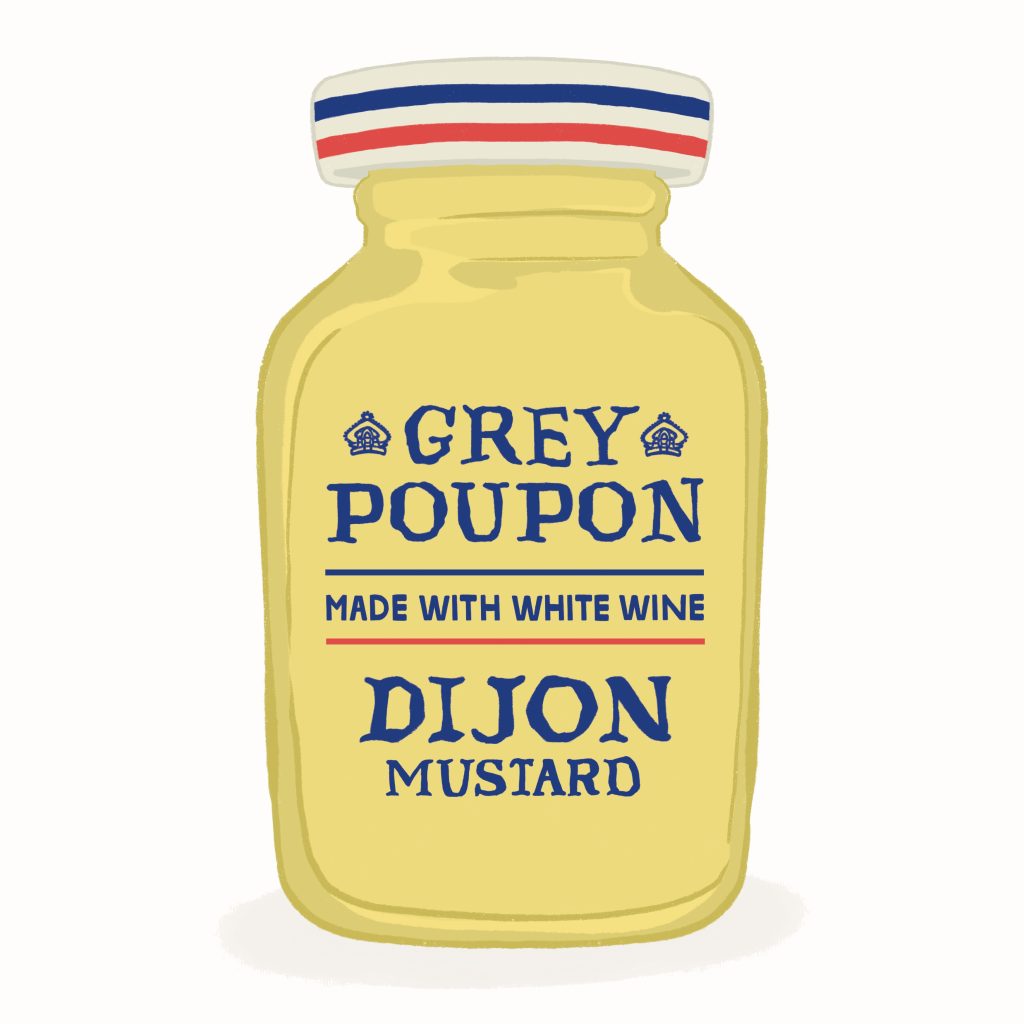
Grey Poupon

One day, when I was 7, the jar of Grey Poupon appeared in our refrigerator, heavy and rare as an apple in our steak-and-potatoes house.

After Dad’s shift at the print shop, I asked him about this new jar of mustard. He turned to me, setting down his Busch Light, shook his head, and said, “Your mother is trying to be all fancy.”

“Have you tried it?” I asked.
“It’s just mustard,” he said.

The next morning, I peeked around the corner as my father made his daily ham and cheese. After dipping the butter knife into the Grey Poupon, he brought it to his tongue, nodded as if satisfied, then slathered a generous helping on his sandwich.

When I stepped into the kitchen, he jumped, as if I’d caught him in some dirty act.

Unsolicited Advice

November is about giving more than just thanks for your many blessings — it’s about giving back. These days, donating money to a near-and-dear cause is just a simple QR code away, but it’s not always that easy when your budget is tighter than your post-pecan-pie pants (never mind that thin slice of pumpkin pie you also ate — it barely counts). True, November might be hard on your waistline, but we’re gonna make it easier on your bottom line with things you can give other than Benjamins.

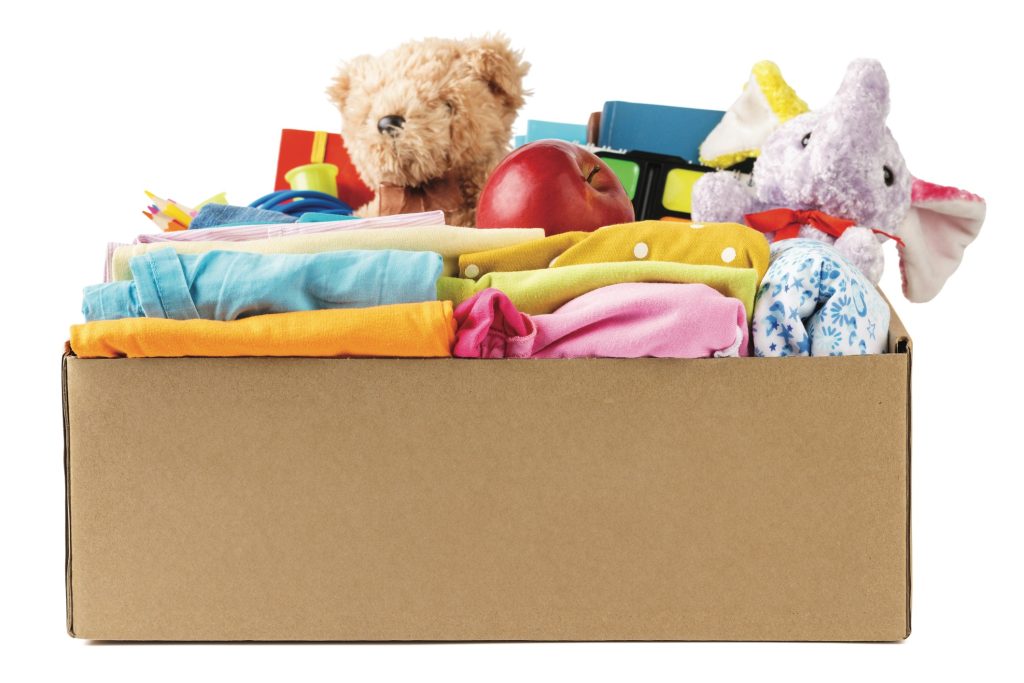
Stuff. Local organizations are often in need of gently used clothing, toys, furnishings and decor. Closet more stuffed than your vegan cousin Nina’s tofurkey? Clean it out while doing some good in the world. Somewhere, Marie Kondo is sitting at her Thanksgiving table, full of gratitude for the millions of us who are sparking some joy in the world — and her wallet.

Skills. Got a special talent that could be of service? Maybe you’re a website designer who can level up your fav nonprofit’s site. Service with a smile — and style. As MLK Jr. once said, “Life’s persistent and most urgent question is, ‘What are you doing for others?’” Don’t be caught without an answer.

Energy. Instead of giving 5K, register to run a 5K for a cause. Maybe this is the year your family turns into the one we all love to hate. You know ‘em — they show up to the Turkey Trot in matching costumes that should make it hard to jog, but they still finish in the lead, having barely broken a sweat.

Time. Carve out a little of your most precious commodity to spend it volunteering in a soup kitchen or playing with shelter pups. Bonus if you bring home Fido and give him a home for the holidays and fur-ever after. And since we’re talking about time here, maybe he could even be your loyal watch-dog.  

Up. After that last joke, this is what we’re giving.

Merry Makers

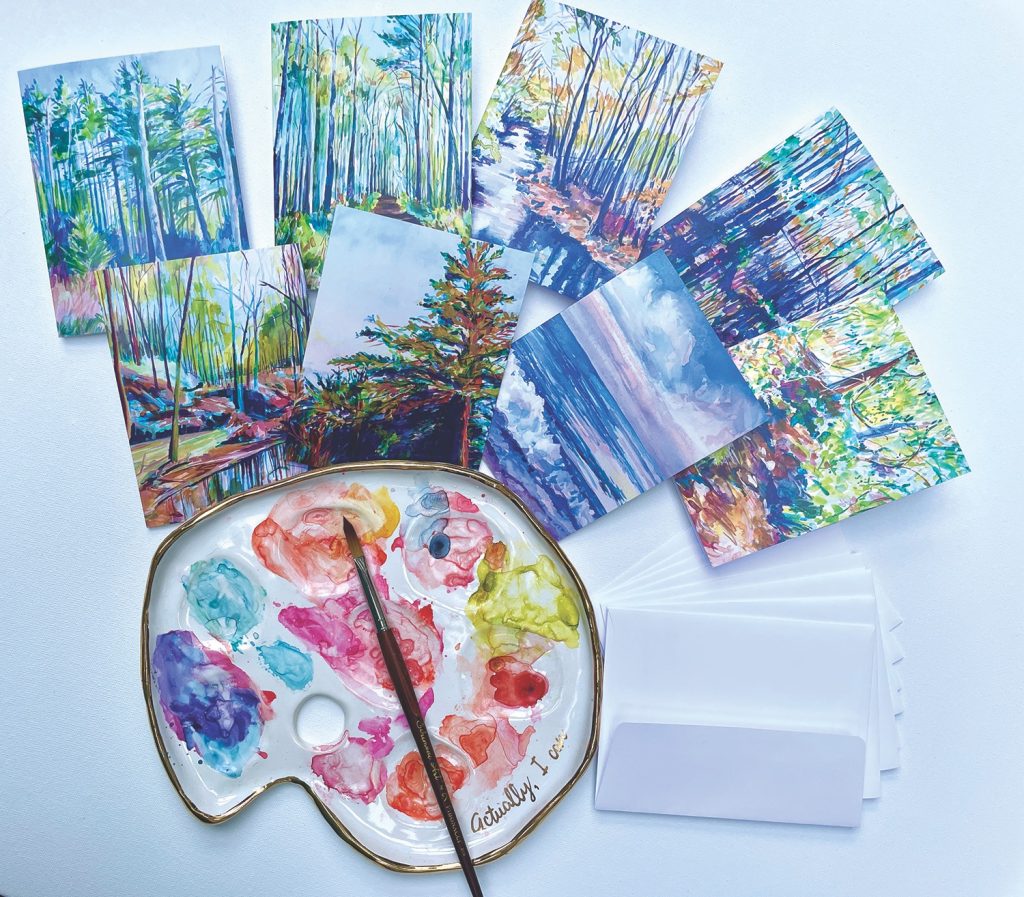
“I feel like my art is love made visible,” muses Katie Podracky, a teacher and first-time vendor at Merry Merry Market this year. “I love that people who know nothing of that story can come to it and also feel some type of hidden connection.” Katie takes inspiration from North Carolina, the state in which she was born and raised. The vibrant scenery and lively nature — who doesn’t love a galloping white-tailed deer or the sound of a rushing waterfall from time to time? — influence her canvas. After a little mountain climbing and several animal encounters from her local state parks, Katie and her husband became avid outdoor lovers. “I had a friend tell me, ‘Oh you should paint something’ and I was like, ‘Oh that’s a good idea, let’s do that’ and it really connected me to North Carolina.” Katie says she learned a lot about her home state through her art.

Katie has long loved Merry Merry Market and is excited to be on the other side of the vendor table this time around. “I tell all of my friends and my students that Merry Merry Market is such a great event because they collect quality vendors who happen to be local artists.” Katie’s paintings, plus accessories, home decor and other artisan wares, are among the many items you could buy as a gift for a family member, friend or even for yourself. We always enjoy the saying, “one for you, three for me.” And, as if that wasn’t enough to draw your attention, a portion of the $5 admission will be donated to BackPack Beginnings, a nonprofit that connects children and their families with the resources they need to develop and grow. So, mark your calendars to get some much needed holiday shopping done at Merry Merry Market, 9 a.m.–8 p.m., Wednesday, Nov. 19, at Revolution Mill’s Colonnade Events Center. Did we mention the bar opens at 5 p.m.? Info: merrymerrymarketgso.com.

Wandering Billy

WANDERING BILLY

Seas the Moment

Andy Zimmerman heads windward with a new documentary

By Billy Ingram

“That’s what sailing is, a dance, and your partner is the sea. And with the sea you never take liberties. You ask her, you don’t tell her.” ― Michael Morpurgo

Andy Zimmerman has performed a Herculean feat in transforming the downtown area south of the railroad tracks around Elm Street. What was once a losing hand of forgotten, abandoned buildings languishing for untold decades is today a royal flush of vibrant hubs where you’ll now find SouthEnd Brewing, transform GSO, Fainting Goat Spirits and Forge Greensboro among other former eyesores he’s renovated elsewhere.

I met with Zimmerman to explore his latest effort on the largely unfinished but impressive second floor of yet another recovery mission, the original Blue Bell jeans plant on South Elm and Gate City Boulevard (rechristened Old Greensborough Gateway Center). The hat he’s wearing today is not that of downtown developer but executive producer. He’s been working on an upcoming documentary entitled Mavericks & Multihulls, a tribute to the multihull legends of seafaring, those amazing young men and their sailing machines.

That’s not a non sequitur. The company Zimmerman founded and retired from before arriving in Greensboro a couple decades ago, Wilderness Systems, was a leader in the production and design of kayaks, “probably the No. 3 manufacturer in the world,” he notes. “Certainly No. 1 as it relates to brand. Between the companies that I owned and started, we made over a million kayaks.”

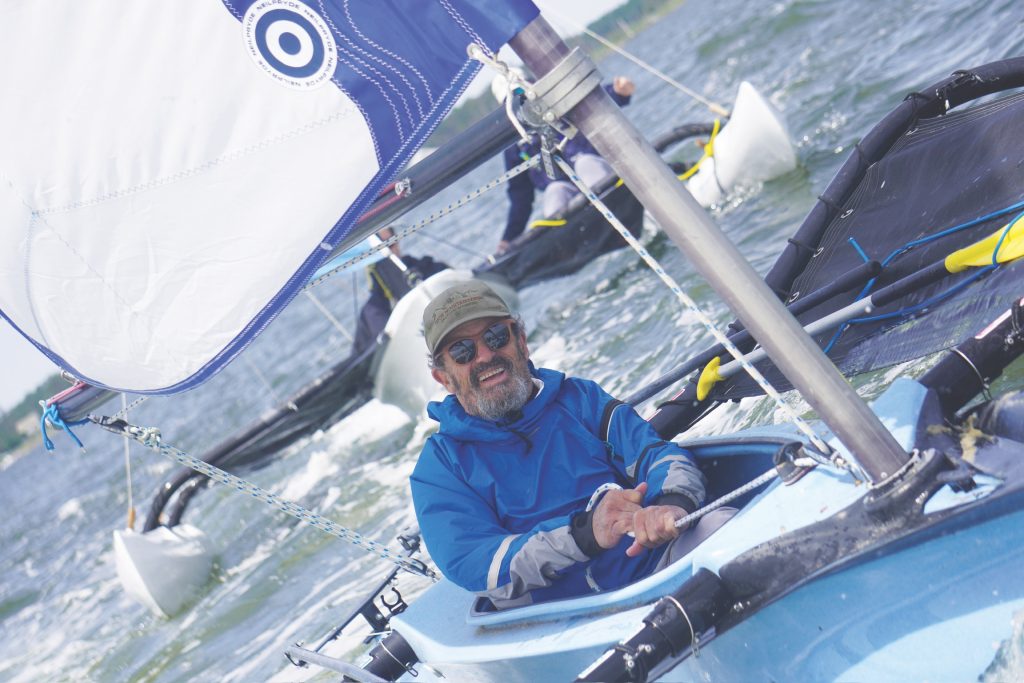
Under the WindRider label, Wilderness Systems fabricated more trimarans, a variation on the catamaran, than anyone anywhere. “The catamaran, as one of the designers likes to put it, is kind of a condo on the water — it’s commodious.”

“The trimaran has three hulls, the main hull, which is where you live,” Zimmerman points out for those who know little about watercrafts, aka me, “and then the two outriggers. You can call them training wheels,” making them faster and more stable than most other boats.

WindRider also manufactured hydrofoil sailboats, the cool, sleek models where the hull rises up out of the water at top speeds. “For me, it was a manufacturing accomplishment of a lifetime,” Zimmerman remarks about the difficulty of the build, which required some 800 components. The America’s Cup speedsters, he notes, “have trimmer ends, they’re doing 50 plus miles an hour in hydrofoils. The other boats we made money on, but the hydrofoil? No. It was the joy of creating.”

Questing for the creative is what led to his collaboration with Jim Brown, multihull sailing pioneer and high seas adventurer, as well as the impetus of this documentary. Mavericks & Multihulls chronicles the extraordinary lives of six sailing-world superstars, the aforementioned Brown, Woody Brown (no relation), Rudy Choy, Arthur Piver, James Wharram and Dick Newick.

Besides a shared connection with wind, waves and salty spray, Zimmerman points out that every one of the watermen spotlighted in this film was an extreme risk taker. “I met Jim [Brown] and was immediately attracted to his way of life,” he says. “Jim built a boat in his backyard. He took his two kids and his wife in Santa Cruz and said, ‘I don’t like the druggie scene here. I don’t like the Vietnam scene here. I wonder when the world’s going to blow up?’ And he said, ‘We’re getting on a boat.’” Brown and his family sailed the seas for three and a half years. “Went to Central America, South America and homeschooled his kids. Then came back when his wife said, ‘OK, I’m ready to get off the boat.’”

United Kingdom subject James Wharram was polyamorous, and some would call that alone off-the-charts bravery. “He’d have two, three women on his boat, they switched nights, they’d sleep together. This was back in the ’60s. Peace, love and waterbeds,” says Zimmerman. But the ultimate waterbed? “He turned people on to living on the water and adventure, traveling.”

While Wharram was all wild wanderlust — and just plain lust — Dick Newick was all about speed. “If he could take a pound out of the boat, he’d do it to make it go faster.”

Woody Brown, on the other hand, was a self proclaimed nature boy. “‘I want to be out in nature,’ he said,” quotes Zimmerman. “‘I don’t want motors, I want to sail.’” In that pursuit, he devised the first modern catamaran. “He reinvented the fin. He was a big surfer, too,” legendary, in fact. Living to the ripe age of 96, in his later years residing in Hawaii, Brown was a pioneer in chartering catamarans, taking groups of 40 or 50 people out on short oceanic sunset-viewing voyages.

Zimmerman recruited local filmmakers Michael Frierson and Kevin Wells, both with impressive documentary bona fides, to translate these stories to the big screen. To begin with, they conducted multiple interviews with Jim Brown, dating back to 2015. Many others who are passionate about sailing are featured, including Steve Callahan, who survived 76 days adrift in the Atlantic, and multihull designer and Mainer John Marples.

Frierson and Wells were busy editing when I spoke with them. “There’s an immense amount of footage shot by [Canadian cinematographer ] Scott Brown [again, no relation to Jim or Woody Brown]. That’s the primary source material from the current period,” Frierson says. In addition, Jim Brown contributed thousands of photographs along with 250 hours of footage he’d lensed over the decades.

The Mariners’ Museum and Park in Norfolk, the largest maritime museum in the country, made available their archives of motion-picture reels dating back to the dawn of the 20th century. “The footage is in every format known to man,” Wells notes. “Super 8, 16 mm film, DV cam video. So dealing with all the different resolutions has been challenging.”

Documentary filmmaking is like assembling pieces of a puzzle, or maintaining that fine line between devil and the deep blue sea, a rewarding yet daunting task crafting a narrative from random clips and pics shot by a multitude of unrelated individuals. “You’re finding the story out of all this,” Wells says about the challenging process to achieve an even keel. “You know there’s a story there — there’s probably a hundred stories there — but where is your focus? That part has been a lot of fun.”

What surprised Frierson and Wells most after diving into Mavericks & Multihulls (mavericksandmultihulls.com)? “That these guys were fairly accomplished carpenters,” Frierson replies. “They’re building their own boats and sailing them to Tahiti before GPS . . . The sense of self-reliance and guts that they had is just amazing.”

Wells concurs. “I think that’s representative of what a lot of these people think. They’re doing things, that to me, are extraordinary, but they think it’s very ordinary. Building these contraptions and sailing off with their family in the middle of the ocean is still crazy to me.”

“Jim Brown is 92. He lives life so large and he’s writing a book,” Zimmerman remarks with obvious admiration for the film’s unlikely leading man. “He just wants to stay busy and engaged in life. And I’m not sure I know anybody more engaged in life than Jim.” Legally blind now, Jim Brown can no longer navigate, but he’ll never fully surrender his life aquatic. With his own hands, no surprise, he’s constructed a tiny house on top of a trimaran, one manufactured by Zimmerman’s former company. “So he can keep his boat right there on the water at his house in Tidewater, VA. And he goes and stays in that when it’s not too hot or too cold.”

As for Zimmerman’s future, his mainsail is set for steering into the calm blue yonder. “I’ve got one big project left in me.” After that, his licked finger is in the wind. “I wouldn’t mind living on a boat. I’m a minimalist now. It goes back to the overwhelming sensation I had as a young man when I realized that freedom is actually available. I frickin’ love it!”

Tea Leaf Astrologer

TEA LEAF ASTROLOGER

Scorpio

(October 23 – November 21)

There’s a fine — and in your case, blurred — line between passionate and possessive. When Venus struts into Scorpio on Nov. 6 (where she’ll glamp out until month’s end), that line is primed to become a short leash if left unchecked — and nobody wants to be on the other end of that. A word of advice: Don’t smother the fire. Tempted as you may be to cling fast and tight, a little space will keep the coals glowing red hot.

Tea leaf “fortunes” for the rest of you:

Sagittarius (November 22 – December 21)

Stick to the recipe.

Capricorn (December 22 – January 19)

Pack a lint roller.

Aquarius (January 20 – February 18)

Thaw before cooking.

Pisces (February 19 – March 20)

Don’t overwork the potatoes.

Aries (March 21 – April 19) 

The shortcut won’t be worth it.

Taurus (April 20 – May 20)

Go easy on the garlic.

Gemini (May 21 – June 20)

Cling wrap, baby.

Cancer (June 21 – July 22)

The dishes are piling up again.

Leo (July 23 – August 22)

Shake the rug, darling.

Virgo (August 23 – September 22)

Dare you to bust out the fine china.

Libra (September 23 – October 22)

Serve yourself an extra slice of grace.