Creators of N.C.

Creators of N.C.

The Right Tracker

On the trail with Charles Frazier

By Wiley Cash

Photographs By Mallory Cash

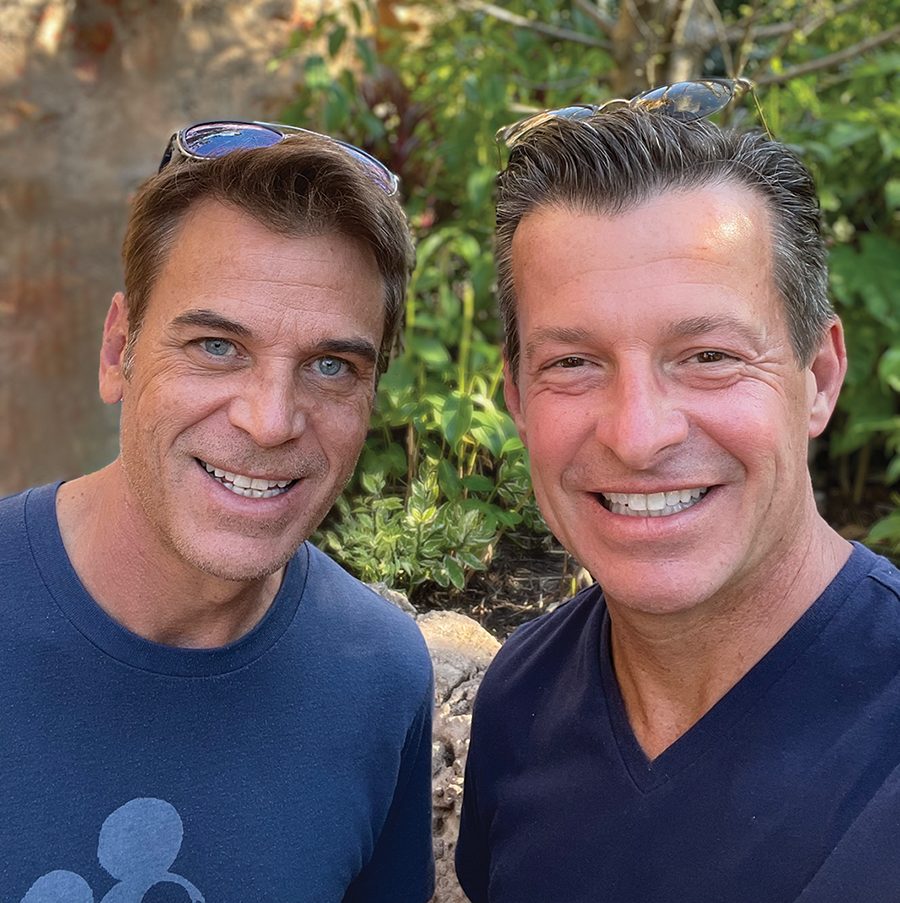
The first time I met Charles Frazier was in Asheville back in the spring of 2016. Along with several other authors, we had been invited to participate in a fundraiser at the Asheville Community Theater. I knew most of the authors there that evening, but I didn’t know Charles, and I was nervous about meeting him. Like most people in the world, I had read Cold Mountain after it won the National Book Award in 1997, and then I saw the Oscar-winning film, which starred Nicole Kidman, Jude Law and Renée Zellweger, when it was released in 2003. I’d read the two novels he’d published in the intervening years. My love for them only contributed to my nervousness at the idea of meeting their author.

But apparently Charles Frazier wasn’t one bit nervous about meeting me. He walked right up to me backstage and said, “I was up in Hot Springs a few months ago, and I saw that you were scheduled to do an event in town. I left a note for you at the public library. Did you get it?”

Reader, I was too shocked that Charles Frazier even knew who I was to be shocked by his reliance on paper technology. Needless to say, we’ve been friends ever since. He joined me onstage a year later for an in-conversation event for the launch of my novel, The Last Ballad, and I did the same for him when his novel, Varina, was released in 2018. We’ll be back onstage together on April 10 on the campus of UNC Asheville for the launch of his latest novel, The Trackers, a book that will both please and surprise fans of Charles Frazier.

There’s an old saying that serious writers never write the same book twice, and Charles never has, but he has almost always written about the same places, which is to say Appalachia and the Southern United States. The surprise that’s in store for readers is that The Trackers, which is set in Depression-era America, ranges far afield from the swamps of Florida to the big skies of Wyoming to the sooty factory towns and transient camps of the Great Northwest. But readers who loved Charles’ previous novels will find echoes of those works in his new one. Like Cold Mountain, The Trackers is the story of a man on a quest. WPA mural painter Val Welch is in pursuit of Eve Long, the wife of a wealthy rancher who has absconded with a priceless piece of artwork, and like Thirteen Moons (2006), the new novel is awash in era-appropriate research, from automobiles to art and architecture to the politics of the New Deal. Like Nightwoods (2011), The Trackers expertly employs noir tropes like tight, scene-driven dialogue and dark, ominous settings, and like the titular character in Varina (2018), Eve Long is a dashing, magnetic heroine: a former runaway turned traveling honky-tonk singer who finds herself married to a wealthy political hopeful before pulling the plug on it all and disappearing without a trace. Her husband, who is sponsoring Val’s mural project in a local post office, makes Val a financial offer he can’t refuse: track Eve and find out where she is, why she left, and, most importantly, who she really is.

According to Charles, it was nearly 10 years ago when the idea for the novel that became The Trackers first came to mind.

“We were up in Boone, and I was just killing time,” he says. “I visited the post office, which has one of those Depression-era WPA murals. After that I had more time to kill, so I went to the library at Appalachian and looked up information about WPA projects, specifically the Treasury Department art projects. One of the first images I saw was a photograph taken inside one of those small post offices, and there was a mural in progress on the wall with two young guys working on it. Standing on the floor looking up at them was an older guy and a woman. They were both well-dressed, and I thought, OK, there’s a story here.”

As the story rattled around in his mind over the following months and years, Charles dispatched with one of the two mural artists and focused on a single artist and how he might interact with the well-heeled couple who were watching him work. Artist Val Welch and rancher Jake Long and his mysterious wife Eve were born.

Charles and I are standing in the midcentury modern house he and his wife, Katherine, own in Asheville, a home that’s not quite ready for them to inhabit. Like many people in post-pandemic America, they’re waiting on the right contractor to come along to update the house and make it fully habitable. For now, Charles has set up a writing desk in the light-filled living room, a stone fireplace against one wall and tall windows opening to the yard, where, despite it being mid-January, the view is alive with greenery.

I think about Inman, Ada and Ruby, the three characters who drove the narrative in Cold Mountain, and ask Charles if there’s something that spoke to him about using a similar triangulation of characters in The Trackers.


“Well, that’s one of the things that appealed to me while writing this book. I could keep a handle on the relatively limited number of characters because I have a problem sometimes with expansion,” he says. “Having that very clear arrangement of characters helped me keep it under control and forced me to focus on trying to keep the book short. But, in The Trackers, Eve is the reason the triangle exists. I never lost sight of her as the main character.”

Eve is no doubt the main character. Even when she’s not on the page, her presence drives the action and tension. And even though this book is relatively short in comparison to some of his longer novels, many of the scenes feel expansive because Charles allows them to breathe and exist as the reader witnesses them in what feels like real time. One scene that comes to mind unfolds over a long night in the swamps of Florida when Val encounters Eve’s former in-laws, a dangerous band of lawless folks who are as suspicious of Val’s outsider status as they are of his questions about their former daughter-in-law’s whereabouts.

“That was a really fun scene to write,” Charles says. “It was fun to get that rhythm, that really slow, heavy rhythm to the dialogue and pacing. This is the point in the novel when Val is beginning to learn that he is truly in over his head.”

There were points in writing The Trackers when Charles began to fear that he was in over his head too, especially when the pandemic struck and he could not make use of the location scouting that had benefited all of his previous novels and brought the realities of place and landscape to the page. But he had an ace or two up his sleeve when writing about the West and about Florida: He and Katherine spent the bulk of the 1980s living in Colorado with their young daughter, and after Cold Mountain was released, they resided full time on a horse farm in central Florida. Of course the process of writing The Trackers was full of research, but when you read the novel and encounter far-flung Western states, the boggy swamps of Florida and people who understand horses intimately, you are encountering worlds that Charles Frazier knows well.

If you read the novel, you might also be reminded of a literary genre Charles also knows well: the travel narrative, which his novels certainly borrow from, especially Cold Mountain and Varina. But it is his lesser known first book, Adventuring in the Andes, a travel guide published by the Sierra Club, that most reflects his love for the genre.

During the long years of writing The Trackers, especially during the COVID lockdown, travel was on Charles’ mind, and he was itching to get out West and look around, but he found himself settling for photographs, music and art that was resonant of the West in the 1930s, especially Woody Guthrie and Diego Rivera. But writing a novel as complex and rich as The Trackers is hard, and it takes a long time, despite how many books you’ve published before or how many millions of copies they’ve sold.

“It doesn’t get any easier,” Charles says. “At least it hasn’t gotten any easier for me. And I’m just an enormously disorganized writer. Every time I finish a novel I’m a little bit surprised.”

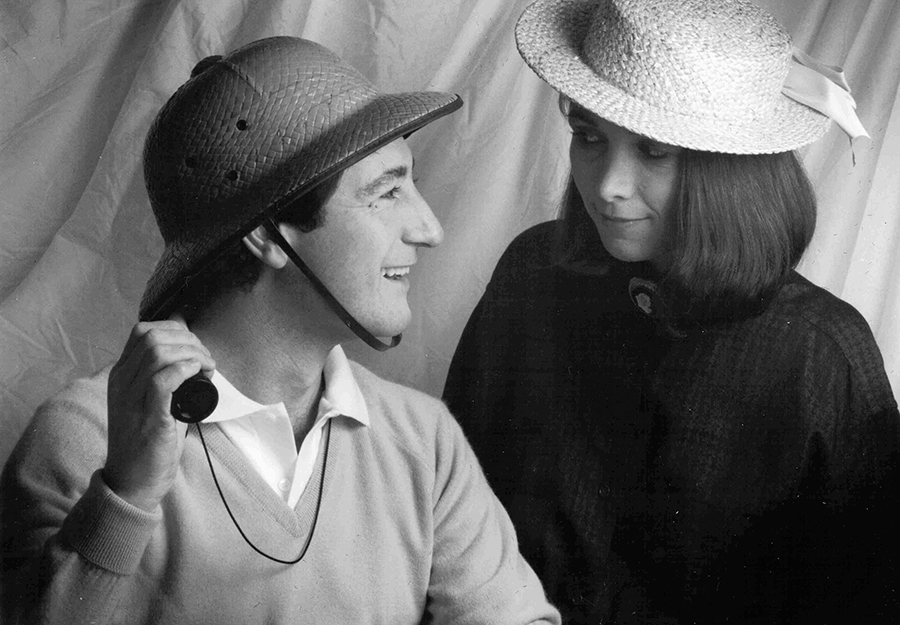
As if to give insight to the expanse of hours spent at his desk, he shows me the tiny slips of paper he uses to record his word counts along with the dates of his daily writing sessions. When I look at his handwriting I can’t help but be reminded of the note he left for me in Hot Springs years earlier, and I wonder how Val Welch would go about tracking it down.

Well, I’m no tracker. So, to the people of Hot Springs, North Carolina, if you find a little slip of paper that contains a message that Charles Frazier wrote to Wiley Cash years and years ago, do me a favor, hang onto it until I’m back in town.  OH

Wiley Cash is the Alumni Author-in-Residence at the University of North Carolina at Asheville. His new novel, When Ghosts Come Home, is available wherever books are sold.

Simple Life

Simple Life

A Little Stuffed Potato Wisdom

Lessons from full-grown tater tots

By Jim Dodson

Someone once said to me that it’s not happiness that makes one grateful, but gratitude that makes one happy.

Looking back, I may have seen this poetic syllogism scrawled on an ancient stone wall several years ago while hiking with my wife in Tuscany (where every graffiti artist is a philosopher-in-training). Or maybe I heard Oprah Winfrey say it in one of her SuperSoul Conversations that the aforementioned wife suggested that I listen to on long drives.

Whoever said it, I’m grateful for its pithy wisdom because I’ve suddenly reached an age where I know it to be true.

Back in February, I turned 70, a milestone that took me by surprise.

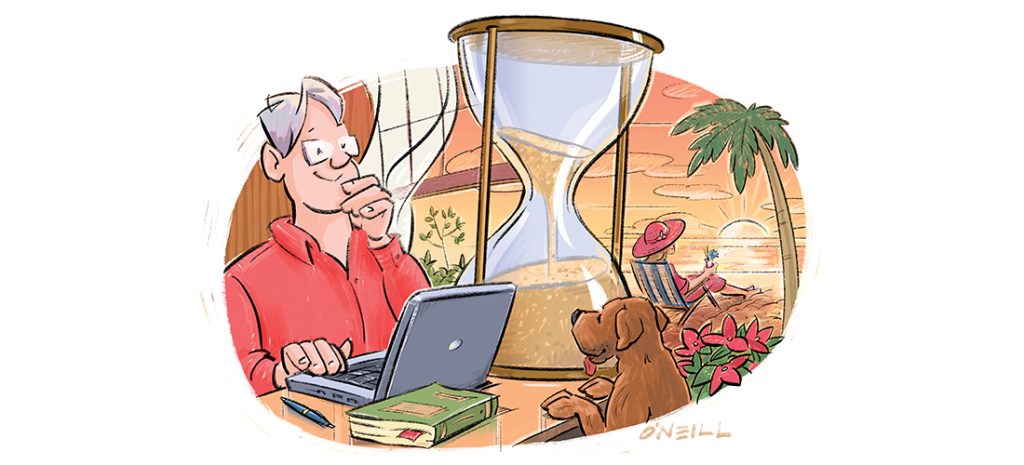
It’s not that I was unprepared. In truth, I’ve enjoyed getting older and slowing down a bit, giving me the chance to notice the evening sky.

Also, I am not alone in this epic journey into the great gray age and the unknown, as my late father — who lived a full and active life right up to a week before he died at 80 — used to joke. According to the U.S. Census Bureau, there are 69.2 million baby boomers alive and kicking today in America, the second-largest population group next to our children, the millennials (73.9 million born between 1981 and 1996 ). My particular group was born in 1953 ands falls somewhere in the lower middle of the boomer years between 1946 and 1964.

According to the latest actuarial projections used by our friends at the Social Security Administration to calculate how much longer the agency will have to give us back all the money we spent decades putting into the system, my age and gender group — males aged 70 — can expect to live another 14.5 years, while our female counterparts come in at a 16.75. Good for them, I say! Sell the house, dump the stocks, give away the dog and go sit on a beautiful beach in Tahiti for the rest of your days!

By the way, that’s exactly what my wise but cheeky and younger wife Wendy says she plans to do with her giddy 10 extra years after I check out of the Hotel California.

Meanwhile, according to the CDC’s Center for Health Statistics (NCHS), life expectancy at birth in the United States declined nearly a full year from 2020 to 2021, a worrying dip from 77.0 to 76.1 years that is the lowest level since 1996, probably due in part to a thing called COVID. The 0.9 year drop in life expectancy in 2021, along with a 1.8 year drop in 2020, was the biggest two-year decline since 1921–1923, years in which the Spanish flu wiped out millions worldwide, including my own maternal grandmother.

Actuarially speaking, it could be worse, of course. Afghanistan’s current life expectancy is just a hair over 56 years, considerably shorter if the Taliban’s Morality Police catch you whispering about the need to educate girls and women.

Singapore’s life expectancy, on the other hand, is a bonny 86.5 years. Perhaps this means that Dame Wendy — the future merry widow — should consider moving there instead of Tahiti (which has a mere life expectancy of 78.82 years) where she’s likely to make lots of older gal pals living the good life off the insurance money on a lovely Asian beach. As any veteran foreign traveler knows, however, Singaporeans are obsessed with public cleanliness and strict social order. Littering, chewing gum in public or failing to flush a public toilet can land you a whopping $1,000 fine, while showing your bare feet or skin of any sort can earn you three months in jail. That sensational black one-piece my 61-year-old lover debuted at the pool last summer probably won’t fly with Singapore’s own Morality Police. So on second thought, perhaps I won’t suggest Singapore and just leave well enough alone. That’s probably the wisest thing I’ve learned from being happily married for 20-plus years.

The point of all these dizzying numbers, as Oprah or any Tuscan street poet with spray paint can tell you, is to live the best life you can and be damned grateful for whatever time you have left.

That’s exactly what my fellow members of the Stuffed Potatoes Lunch & Philosophy Club try to do on a daily basis. 

For the moment, there’s just three of us in the club. We meet every other week or so in the shadowy booth of a popular restaurant to discuss the current state of the world, the wonders of our grown children and the enduring mystery of our wives.

Remarkably, as this March dawns, all three of us will have turned 70 by the end of the month. Joe hit the mark in late January, I did so in early February, and Patrick achieves the milestone later this month.

I’m told none of us actually looks 70 years old, though wives, golf pals and fellow Stuffed Potatoes can scarcely be considered objective sources.

For that matter, we probably don’t even act like old men, save for when we complain about dodgy knees and idiots who run red lights. As a kid, I once asked my lively grandmother on her 84th birthday if she was afraid of dying. She grinned and patted my rosy little cheek. “Not a bit, sugar pie,” she said. “Just afraid of falling.” 

None of the Stuffed Potatoes, I can reliably report, are afraid of dying. We’re too busy for that.

January Joe is a professional forester helping set aside beautiful lands for future generations. Patrick, the marketing whiz — I fondly call him the “Irish Antichrist” — is keeping the national economy afloat. And I’m just a humble scribbler trying to finish three books this year alone.

Given that we collectively amount to 210 years of accumulated life experience, I put to my fellow Stuffed Potatoes a timely question the other day: What is the one thing you’ve learned in 70 years?

January Joe, our resident sage, didn’t hesitate. “There are wonders ahead. Don’t fight them — just surrender!” This from a lovely fellow who gets to walk in the woods for a living and surrenders most weekends to the joy of several beautiful grandbabies.

My old friend, Patrick, offered with a hearty laugh, “There’s no good news or bad news. It’s all information. Just keep doing what you do and don’t look back.” The Irish Antichrist means business.

As for me, I hope to finish half a dozen more books over the 15.5 years I may or may not have left. Only time will tell.

In the meantime, we have a joyous new puppy named Winnie and a garden that is springing gloriously back to life by the minute.

I’m deeply grateful for both, not to mention a fabulous wife who says she really has no interest in going to Singapore or Tahiti. And was probably only joking. 

That makes me a really happy guy.  OH

Jim Dodson is the founding editor of O.Henry.

Home Grown

Home Grown

Ready to Pounce

A game of cat and alpha

By Cynthia Adams

I was so eager to break the glass ceiling that I began eyeing the work exits if the ceiling showed no signs of cracking. Some bosses made exits easier than others.

My first real job paid peanuts, but the boss was a rock star in the civil rights movement. I was idealistic enough to love the grant-funded dead-end work. When the grant expired, I accepted a permanent job with a lackluster boss, only to discover a telling omen.

My desk overlooked a cemetery.

Between the new boss’s whispery voice and the graveyard view, I flapped my wings daily just to get my blood flowing, achieving minimal career velocity.

I moved on to an international corporation with real pay and prospects, and two bosses. All they shared in common were New York backgrounds and human bodies.

One, a pipe-sucking, tweed-wearing adman with a lofty vision of himself, drove a Volkswagen Thing. Despite his eclectic exterior, he was a dullard counting the days to retirement. The other, a Dapper Dan right out of Mad Men, was fresh out of rehab — imposed after he infamously peed off the boss’s deck at a Christmas party.

Dapper Dan was utterly brilliant, but bitter about his ex-wife, who had recently left him.

Unfortunately, I reminded him of her. He immediately nicknamed me (ugh) Cat Turd.

No longer bored, I pointedly ignored the insult.

Slowly, the embittered one found grace, thanks to a relentless pursuit of recovery (although my feline excrement moniker stuck). He invited me to hear him speak at AA meetings — for once, he knew what he was talking about — sharing the program and his spiritual practice. Soon, I recognized toxic relationships of my own. Dapper Dan’s recovery helped me leave a painful marriage and recover myself, too.

Next, I found yet another colorful boss (imagine Colonel Potter on M*A*S*H). He was no alcoholic, but rewarded late workers with a splash of Dewar’s in our coffee mugs. I didn’t like Scotch, but adored the irreverent man.

I was recruited away from that job, but soon remorseful, as the new boss, a shameless sycophant, was Colonel Potter’s opposite.

Soon, I hastened to my final corporate gig — working alongside a vainly handsome, abusive alcoholic: “Mr. Alpha.” 

What are the odds? Seemed I also reminded Alpha of his ex-wife.   

I am ashamed to admit how thrilled I was when Alpha revealed himself by lewdly insulting an off-duty police officer at a work event. Arrested on suspicion of DUI, he dispatched me to find cash for his bail. Before I did, I whispered to the arresting cop, “Take his belt. He’s probably a suicide risk.” 

Of course, Alpha was far too in love with himself for self-harm.

Alpha began making moves upon our shared assistant, who tearfully reported it to me. Human resources was overseen by Alpha’s pal and she refused to go there.

How to stop Alpha?

The answer surfaced while I was scanning articles for a work project.

I enlisted friends far and wide to mail articles on workplace harassment to Alpha — printing or typing his address.

I played a long game, and nervously waited.

Eventually, Alpha summoned me to his corner office. 

“Shut the door,” he growled.

“Stop it. Right now,” Alpha demanded, face reddened. 

“Stop what?” I asked, temples pounding.

“You know what,” he said. “I’m warning you.” 

“If you tell me exactly what it is you want me to stop, I’ll certainly try,” I bluffed quietly.

Alpha glowered. His mouth opened. Then closed.

“Get out,” he snarled. 

I padded away. 

From that day forward, Alpha stopped pawing our assistant. Even so, I knew that even a Cat Turd had only nine lives and pondered my exit, praying I would land on my little cat feet.  OH

Cynthia Adams is a contributing editor to O.Henry.

Botanicus

Botanicus

Remembrance of Things Past

Old-fashioned bleeding heart

By Ross Howell Jr.

A heart shape signifying romantic love was already a popular symbol on Valentine’s Day cards way back in 1846, when botanist Robert Fortune returned to England after a three-year-long expedition to the Far East.

As a youth, the Scotsman had apprenticed in local gardens, then taken a position with the Edinburgh Botanical Garden. He was serving as a superintendent with the Royal Horticultural Society garden in Chiswick when he was commissioned to search for plants in Asia.

During his trek, Fortune endured shipwreck, pirates and fever, entering China in disguise, since acquiring plant specimens for export to Europe was strictly forbidden.

Among the many plants that Fortune sent home to England were a beautiful tea rose called “Fortune’s double yellow,” a Chinese windmill palm (Trachycarpus fortunei) and a Japanese anemone, along with various tree-peonies, azaleas and chrysanthemums.

Fortune also sent a kumquat (Citrus japonica) and a flowering plant that would become a Valentine’s Day tradition.

Lamprocapnos spectabilis had long been cultivated in the gardens of northern China, Japan and Korea and was also found in the wild.

The bleeding heart.

Fortune had brought to England nature’s living manifestation of the romantic heart, arranged in delicate, pendant rows of red or pink. Later in the 19th century, the bleeding heart made its way into American gardens.

The first blooms I remember seeing grew by the Dutch door that opened from the kitchen to the garden in the mountain farmhouse where my mother was born. The foliage of those plants reached about to my chin, and each pendant heart was considerably larger than my thumb.

The lobed shape of the bleeding heart was so different from other flowers I’d discovered in the fields and woods. They didn’t seem real. Their deep red color was the shade of my mother’s lipstick.

Descendants of Fortune’s Asian plants — like the ones I’m recalling here — have come to be called “old-fashioned” bleeding heart.

Recently I inherited two when my wife, Mary Leigh, and I purchased a townhouse in Blowing Rock.

I noticed them sprouting on a steep, partially shaded bank the first spring we were there. They bloomed feebly. Their foliage faded by early June.

That summer I became friends with one of our neighbors. Turns out, we’re the same age. He’s a cigar-smoking, whiskey-drinking, pacemaker-wearing man with hands like bear paws, a successful entrepreneur, a gifted, self-taught artist, and a curmudgeon.

One day when I was on the bank pruning a rhododendron, my neighbor told me the bleeding hearts had been planted by his wife. She’d passed away suddenly the first night Mary Leigh and I spent at our place. We saw the EMT vehicle but knew no one in the neighborhood at the time and had no idea what had happened. They’d been married for 43 years.

That fall I scattered a little topsoil and layered the steep bank with leaves and hardwood mulch. The following spring, the bleeding hearts answered.

They produced thick foliage that cascaded down the bank with a profusion of pink hearts.

Sometimes from the kitchen window I’d see my neighbor stop to look at the plants when he was out walking his Pomeranian, a gift from his late wife.

A smile came to my face — watching that big, grumpy old man with the fluffy, little dog on a leash, gazing at the bleeding hearts on the bank.

I’m sure he was thinking about his wife. Just as I was thinking about my late mother.

Well done, Robert Fortune.

It’s good to remember those we love and those we’ve loved.

Happy Valentine’s Day!  OH

Ross Howell Jr. is a contributing writer to O.Henry. Interested in bleeding heart varieties, old-fashioned or native? Visit the University of Wisconsin-Madison Horticulture Extension www. hort.extension.wisc.edu and the North Carolina Native Plant Society, www.ncwildflower.org.

A Legacy of Loving Energy

A Legacy of Loving Energy

A couple turns a former childhood home into an estate venue

By Cassie Bustamante   •   Photographs by Amy Freeman

Fashion Designs CassB

Models Kylie Nifong Nyger Catrice

Fashion Stylist Eutasha Simmons

Floral Designs Bea Morad

In January of 1984, Michael Newell, the youngest of six children, came home as a newborn to a stately brick three-level house, completed just in time for his arrival. Sitting on 16 acres in Pleasant Garden and thoughtfully designed by his parents, McArthur and Dottie Newell, it was a place where they raised their family and hosted large parties and events. Sadly, after Newell’s father passed away in 2002, rooms that had once been filled with life became unused and closed off. Now, almost 40 years since first crossing its threshold, Newell — and his wife, Marche Robinson — are pouring blood, sweat and tears into his former childhood home, making it once again a place for lively gatherings.

After sitting empty for some time, his mother was considering putting the house on the market. Then, in 2017, an idea popped into Newell’s head. “I don’t even know why I thought it would be a really cool wedding venue,” he reflects. But the house had served as home to so many events over the years, from bridge club gatherings with tables spread throughout the main floor to homecoming parties — and even his own sisters’ wedding receptions.

Shortly after the discussion began, Newell found himself engaged to Marche Robinson, his long-time love. “We were both working and planning a wedding, so there wasn’t really the room to be thinking about it seriously,” recalls Robinson.

And so it was that on October 19, 2019, the couple wed in The Merrimon-Wynne house, an estate venue in downtown Raleigh, closer to the home in Brier Creek where they were living at that time. Throughout their wedding planning process, Newell says, “Every step I was taking in that house, I was thinking about this house. It was boiling inside of me at the time.”

As time went on, he remembers “constantly being bombarded by what was possible.” And then one day he found himself saying, “Let’s buy the house, renovate it and let it still be a place that has a legacy of loving energy.”

Robinson, who could easily picture what could be, says, “An estate venue like this, they’re kind of rare. . . This house was already the perfect place.”

Newell and Robinson discussed it with his siblings and his mother. “She was actually really excited about it and super open to it,” says Newell.

“She loved the idea,” adds Robinson. She loved it so much that she envisioned having her 80th birthday party there. And, in fact, the couple hosted the celebration at The Newell House in early November of 2022 as their first major affair. It was what that they both refer to as “a full circle moment.”

Of course, the house needed major renovations to become the classic, polished gem it is today, but these two are no strangers to long hours of hard work.

Newell works as a lawyer and is co-owner of Dame’s Chicken & Waffles’ Chapel Hill and Cary locations. Robinson is a lawyer-turned-influencer and shares her content on instagram at @marcherobinson. She’s also the founder of Isaline, a clean, vegan and cruelty-free beauty brand.

Both grew up with hard-working parents as role models. Newell’s father was an OB-GYN who often left the house in the middle of the night to deliver babies. Robinson’s father was a Greensboro entrepreneur who started his own businesses, Scott Tree Service and Scott’s Cleaning Service.

“He would get up in the middle of the night after working all day and go clean these buildings,” she recalls, “and I would beg to go because I was a Daddy’s girl.” Seeing him work so hard to create something of his own instilled an entrepreneurial spirit in Robinson that didn’t scare her away from taking on this project.

With a plan in place, the couple moved forward in creating what would become the estate venue it is today, which they’ve branded The Newell House. Right away, they enlisted the help of “brother-in-law” Howard (actually Newell’s sister’s husband’s brother). According to Newell, he’s a “fix-it-all, handy, design” kind of guy. With his skills and ability to visualize with Robinson, they started making strides.

Newell, in awe of how Howard and Robinson could picture what was possible in a space, says, “I was just like, ‘Can y’all see the things you’re saying? Is your mind making this? Because my mind is just hearing words!’” Fortunately, he trusted their vision completely.

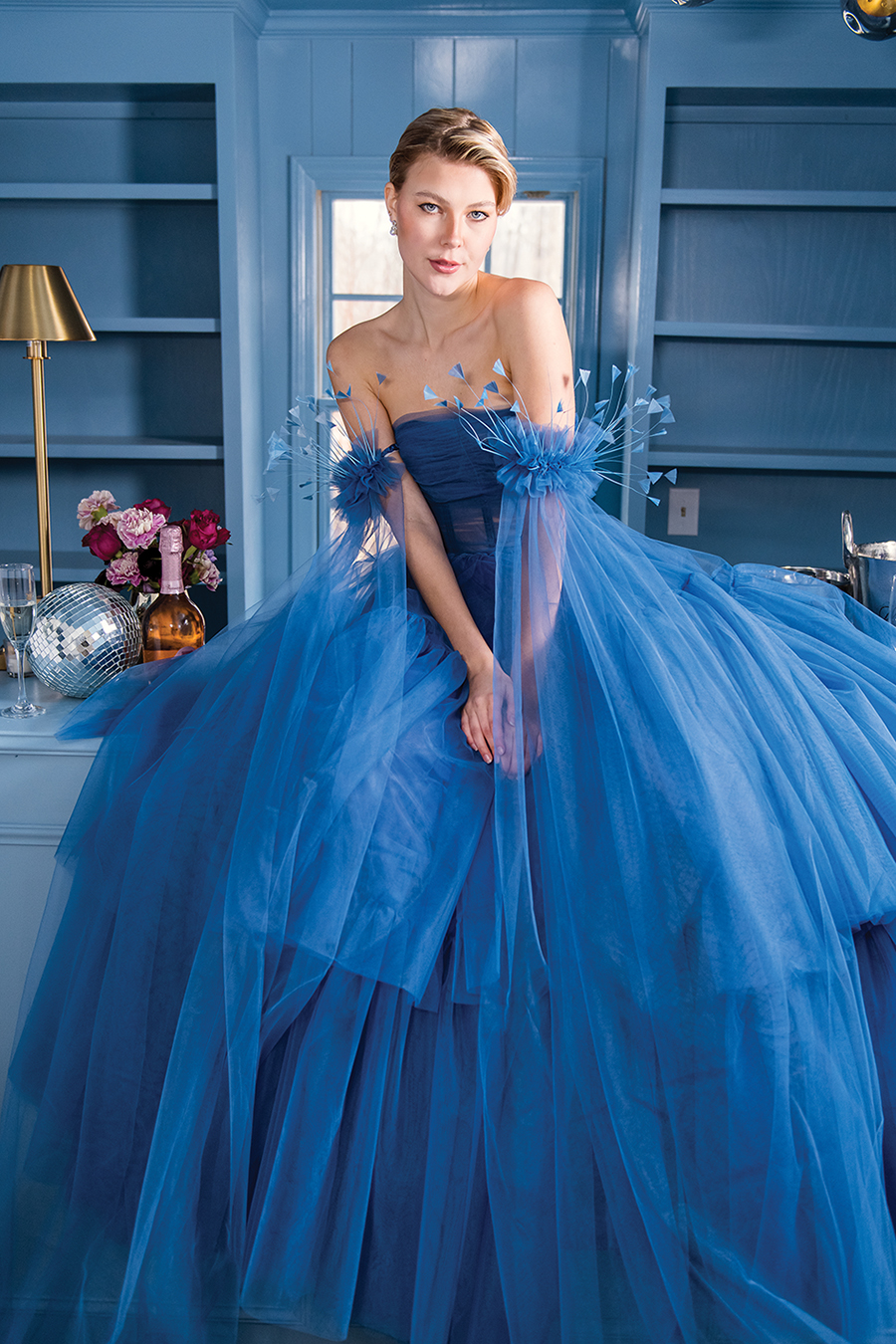
Howard, who fully grasped Robinson’s modern-with-vintage-charm aesthetic, added picture frame moldings — a classic Georgian touch — and built several pieces of furniture. Robinson points out a custom-made florist’s work table as well as three movable bars he created, one of them a popular shade of blue. “Everyone loves blue,” says Robinson. “I feel like the sky, especially when it’s so sunny out, is just the perfect shade of blue so I feel like it just brings a little of that in.” And, yes, she adds, Newell is a UNC Chapel Hill alum.

A non-movable bar sits in the basement level “speakeasy” — an inky green space the couple named after Newell’s father, calling it the McArthur Lounge. Now his favorite area of the house, Newell says, “It was supposed to be probably my dad’s man cave.”

Robinson adds, “But every video and every photo, it’s like their dad is down here watching TV and it’s like — there are kids everywhere!”

While his father never got to use it as a true man cave, Newell and Robinson have made it into a space that would perfectly suit its original intention, complete with a bar, moody walls, lounge tables with upholstered banquette seating and even a separate room with a poker table. It’s the ideal space for an intimate private party or a place for a groom to prepare with his groomsmen.

As with any renovation, the overhaul did not come without unexpected bumps along the way. The home still boasted its original ceilings — popcorn ceilings that were popular from the mid-’40s to the early-’90s. Robinson knew she wanted them gone, but Newell wasn’t convinced. Eventually, she prevailed.

“They removed the popcorn ceilings and then someone flushed a toilet,” recalls Robinson. “And it just started dripping everywhere!” The “popcorn” had been absorbing the unseen drops of water leakage. Robinson quips, “See, I saved you money! I saved you money!”

Another snafu arose from the foyer’s trademark feature, a 24-inch tile, charcoal-and-white checkerboard floor. The original flooring was checkered as well and Robinson wanted to “keep that classic look, but make it a little more modernized.” Unfortunately, mishaps resulted in breakage and they ran out of tile a week-and-a-half before the date of their first affair, a Sip & See open house set for September 24, 2022. Unable to find the same tile anywhere locally, Robinson called the manufacturer directly and was told, “It looks like we have some in Georgia.’” The very next morning, Newell and Robinson drove to Southern Georgia to retrieve the tile, bringing it back to Pleasant Garden at 10 p.m.“ And then the next day the guy was supposed to come and do the tile and couldn’t come because he was sick . . . ,” Robinson says, able to laugh about it now. Finally, with just 24 hours until the Sip & See, tile installation was complete. “And it was all worth it!” says Robinson.

While they had their fair share of tribulations during the renovation, many pieces fell easily into place. Newell and Robinson, who met as tweens at Mendenhall Middle School, maintained several local connections and friends in the area who ended up serving them well.

On a visit to a local nursery, Newell ran into an old childhood buddy, Landon, who’d just moved back to the area about six months earlier. Knowing that Landon had culinary expertise, Newell decided to approach him to help provide in-house catering.

“I just felt like it fell together in a way that it was meant to be,” says Robinson. “Because what are the odds that he moves back from New York, was doing catering, went to culinary arts school,” . . . and happened to be at the garden center that fateful day.

According to Robinson and Newell, Landon, whose horticultural experience has enhanced his gastronomy skills, utilizes fresh-from-the-garden, roots-still-attached ingredients. Robinson says, “Everyone who’s come to our events was like, ‘This is the best meal!’”

In the week prior to hosting that first Sip & See at The Newell House, Robinson recalls the help and hard work of Landon and another childhood friend, two of Newell’s best friends.

“I feel like that is a core memory for me,” says Robinson. “That week leading up to that Sip & See, it was me, Michael, our brother-in-law, Howard, and then it was Landon and David, who’s also a friend that grew up here. His parents still live literally right down the street.” She adds, “We really put, obviously, a lot of love into the house, but the fact that it can be friends that grew up coming to the house [now] helping is really cool.”

In addition to an in-house catering service, The Newell House also offers an in-house florist, who, you guessed it, just so happens to be a friend of Newell and Robinson.

Like Newell and Robinson, Adeola Glover wears many hats: lawyer, mother, and owner and lead designer of Bea Morad. “We both have these creative sides to us that you don’t really get to use when you’re doing [legal] contracts,” says Robinson. “And so she started her floral company right before we got married — we were her first wedding.”

Robinson reflects on hiring Glover to create the florals for own big day, knowing that every entrepreneur has to have that “first” client. “Sometimes we see these really successful people and businesses . . . you forget that they had to have their first job. If nobody took that chance, then they wouldn’t be where they are,” she muses. “And it’s kind of like with the venue, the first couple that gives your venue the chance. You know, you need that couple that breaks the ice.”

And have they booked The Newell House’s first wedding? Yes. In fact, the first marriage celebration is booked for October 22, 2023, just two days after the couple’s third anniversary, one day after Robinson’s birthday and two days after Dottie Newell’s birthday. But, in a true full-circle moment, the bride, who is getting married on her own late father’s birthday, was delivered into this world by none other than McArthur Newell, OB-GYN.

Newell smiles as he recalls his father as “this big figure that everybody came to. Super funny, always ready to talk.”  While he insists that he isn’t quite the talker his dad was, it’s clear that he’s working hard, like his father did, to build something lasting for his family.

“Obviously I can’t fill his shoes,” says Newell, “but being able to be there for my family, my mom, everybody else . . . and bring people happiness  — I don’t think I could have done it in a better way than doing this.”   OH

For more information or to schedule a tour of The Newell House, visit thenewell.house.

Cassie Bustamante is editor of O.Henry magazine.

A Tale of Three Couples

A Tale of Three Couples

From cars to kismet, local marrieds share what brought them together 

A Highly Calibrated Meeting of Minds Under the Hood

Photograph: Kayla and Vincent Mulisano

In the classic comedy, My Cousin Vinny, actress Marisa Tomei steals the scenes with her encyclopedic knowledge of cars. It isn’t far from Greensboro’s own Kayla Mulisano, co-owner at Autologic of Greensboro. 

She and Vincent Mulisano are not only a couple, they work shoulder-to-shoulder at Autologic, where they’ve built a following among car aficionados. (They frequently work on cars from as far as Charleston, S.C.) Vincent, the master technician, founded the business in 2007. Kayla is the service manager.

“We work differently,” Vincent says, each one playing to his or her strengths.

He insists that “car chicks” didn’t turn his head. But — when he first got to know Kayla, her mechanical aptitude appealed.

Vincent adds shyly, “She was drop dead gorgeous and she knew cars.” Falling for Kayla happened very, very fast in his telling.

Kayla met Vincent through her older brother, but only in passing. In 2009, they began dating while she was working in BMW restoration at Korman Autoworks by day and taking college courses by night. “If I needed help on a car that none of my guys could figure out, he could help.”

“It started with a car thing. It began as just enjoying each other,” says Kayla. He admits he had serious thoughts about their relationship within six months. “It was pretty fast. I knew right off the bat,” he says.

In May of 2015 Kayla left Korman, joining Vincent at Autologic.

Well before then, by 2009, they were a couple. He began thinking about putting a ring on her finger, later spending months poring over the design with a friend who dealt in diamonds.

“I was the one, you had to hit me on the back of the head with a bat,” she says. “I liked his brain and his sense of humor. He made me laugh.” 

“It was a whole bunch of everything all at once,” a clearly smitten Vincent says. “Okay, she’s gorgeous. She knows cars. She’s quick witted. Snaps back with jokes. Say something snarky and she has a reply. Laughs, smiles. Acts like a girl, and giggles.”

And he liked Kayla’s proclivity to change her hair color with the seasons, and her feminine aspect.

Not just another car chick. 

But there was a shared romance with cars. Both have had personal project cars. Both did high performance driving (“racing” to mere mortals) events. For a long time, automobiles claimed a huge chunk of their lives. When they grew involved in animal rescue with greyhounds, they did less of those activities.

In 2011, Vincent planned his proposal. He called ahead to Bleu restaurant in Winston-Salem and asked to be seated in a certain place. To entice her to dress up, Vincent led Kayla to think they were meeting a valued friend and his wife. (“He’s like a father figure to me. She — Kayla— was very nervous about that.”) 

“We get to Winston-Salem and the friend calls,” he says.

“Mysteriously calls as we’re getting out of the car,” she interjects, to cancel meeting them.

They were seated, ordered wine, and then, Kayla says, “He slapped a piece of bread out of my hand,” at which she explodes with laughter. Vincent was so nervous he admits he was struggling, trying to hold her attention while wrestling with the timing of the proposal — sabotaged by the arrival of the bread basket. He had a dreaded sense she would figure it all out and his surprise would be ruined.

“She was starting to feel something was going on and had a lot of nervous energy,” Vincent patiently explains. He absolutely couldn’t stall any longer. “So, I decided it was time.” 

He got down on bended knee “as she was doing these nervous nibbles,” Vincent laughs. Kayla hadn’t even noticed his princely kneel. “She had missed me completely,” he says — until she didn’t. He pantomimes her spluttering and blowing the bread out of her mouth. 

Then Kayla saw the ring.

He thought she’d say yes. “She said yes,” he says, smiling.

Five years later, they married at Topsail Island, October 26, 2016. In their wedding picture, they are standing in the sand, smiling hugely, with Elsha, an Irish wolfhound, at the forefront.

Officiant Reverend Skip did the honors, Kayla says.

“We were — soulmates — is an easy way to say it,” she says, “but we truly are.”


A creative duo tie the knot

Photograph: Chris King and Doug von der Lippe

Chris King and Doug von der Lippe can thank a treadmill and a goodhearted matchmaker for their relationship. Both entrepreneurs, von der Lippe is co-owner of Twin Brothers Antiques, formerly Shoppes on Patterson, in Greensboro, where identical twin Bruce is his partner. King is co-owner of Aqua Salon & Spa in Greensboro.

Von der Lippe says that “Our creative backgrounds allow us to understand and respect the hard work and dedication to a craft to become successful.”

“Chris and I first met back in 1999 — I think. We were both living different lives,” he says. He met King through his partner at the time. “I was a graphic designer and was asked if I could help with packaging graphics for a health food line that Chris’s partner was launching.”

Then von der Lippe moved to Florida where he lived and worked long term. Years later, his father, Eric von der Lippe, former director of the Greensboro Science Center, grew unwell, prompting his return to Greensboro in 2011. 

“My dad’s health was changing and it was time to come back home to help with his care and be closer to home and family.”

Soon came an opportune gym visit.

“I was at the gym on a treadmill running and a friend, Kathy, was on the treadmill next to me,” he explains. The friend asked a lot of questions, after having not seen von der Lippe in some years. “Questions like, where are you living, what are you doing for work, how are the kids, who are you seeing or dating, etc.?” But her last question was the kicker, von der Lippe says, and he told her he was seeing no one. The friend quickly asked if there was anyone he would like to go out with. 

“Without hesitating I said, ‘I wonder what Chris King is up to these days?’”

He still isn’t sure how his name happened to come to mind, yet adds, “I am so happy it did.”

As it turned out, Kathy had an appointment with King that week.

In rapid sequence, the matchmaker connected the two by phone and they planned to meet. “We had our first date [lunch date] at M’Coul’s Public House in downtown Greensboro and that is all it took.” That was April 18, 2011.

First impressions remain strong, adds von der Lippe:

Von der Lippe’s first impression of King was “Amazing blue eyes, looks like a model, handsome, genuine.”

King’s first impression was that von der Lippe was “a polite Southern gentleman, magnetic, who left an impression.”

After their date, both report there was an instant attraction to each other. “We definitely both felt that this could be significant,” admits von der Lippe.

“We dated for one-and-a-half years, then moved in together, and in 2014, when same sex marriage became legal in North Carolina, we knew we wanted to get married and make our blended family one,” he says. 

King and von der Lippe were married at the Congregational Church of Christ in a late morning ceremony on November 22, 2014. Von der Lippe’s children, Gabrielle, 21, and Grayson, 17, participated. Afterward, they all gathered in the fellowship hall and feasted on Honey Baked ham and other noshes.

Eight years later, commonalities outweigh the couple’s differences: “Love of family, caring, concerning, DIY’ers, love of the beach, wearing the same size — and — we can share our wardrobes,” von der Lippe jokes. 

King’s favorite thing about his partner is his love for and devotion to his children.

Von der Lippe says, “The glue in our relationship is our willingness to support each other no matter what. We always know that we have each other’s back. We are each other’s ‘ride or die’ partners for life.”


Two Couples, Two Weddings and a Broom Closet

Photograph: Don and Cynthia Adams

Lastly, a kismet story. 

I met my husband one golden autumn day at a Greensboro music festival. A fixup.

When a former colleague arrived with a guy in tow, a slow burn ensued. The afternoon was supposed to be a gal’s outing — gabbing about work and listening to tunes.

As for the new guy, he came along due to bassist Stanley Clarke’s jazz.

I mostly ignored the Fixed Up, who had the pleasing lilt of South Africa.

But that afternoon, I learned that it happened to be Fixed Up’s birthday. I believe that for at least one of the 365 days we earthlings spin around the sun in the vastness of space, one should be special. 

There should be cake. And tiny candles, pressing back against that universal darkness, to paraphrase Jim Dodson. 

And a wish granted.

Fixed Up eventually confessed that he was thinking of returning home to South Africa.

Relieved that this would be a friends-only relationship — after all, Fixed Up practically had one foot out the door — I thawed. 

We arranged platonic movie dates and hung out. He was educated, charming, progressive. Cultural references sometimes baffled him given TV was late (1976) in coming to South Africa.

As for me, there was a slow dawning.  Then, a stronger intuition. 

This man was supposed to be in my life.

I watched as he wistfully fanned pictures from home across the kitchen table: climbs in the Drakensberg, Table Mountain draped in clouds overlooking picturesque Cape Town. Paarl and the Winelands, the bush and game parks, exquisite Cape Dutch architecture.

His world. His home.

And Fixed Up was homesick.

Another night, over a glass of wine, he quietly told me he was on the cusp of resigning from his job. He seemed sad, as if he had failed himself. 

As an avid traveler, I opened my mouth to say, I will visit you.

But instead, independent of my brain, my mouth said, you’re not leaving. Fixed Up looked at me sharply. 

You’re staying here and marrying me.

In my memory, he left hastily as my cheeks flamed. 

He phoned a few days later to ask, “When?”

What had I done? 

Rattled, I blustered, saying work was terrible that week. A dance ensued. 

Six weeks later, we both ran out of excuses. 

We got a marriage license, thinking it best to elope. Perhaps Asheville . . . far from family who would question my sanity.

There we discovered our license wasn’t valid outside Guilford County, and the wedding was deferred

Otherwise, we had a wonderful time. Inscrutably, I bought him a dulcimer kit in Biltmore Village. I warmed to my intended. To Fixed Up’s affability, intelligence, good manners. Kindness.

We returned from Asheville in time to attend my friend’s wedding — a posh evening affair at Blandwood Carriage House. 

The bride, twice divorced, was beautiful, a highly strung artistic creature. She had a scrumptious gown (with makeup artist and hairdresser), string quartet, white tulips flown in from Holland, colossal cake and reception, and flowing champagne. 

As she floated down the aisle, you could hear breaths catching.

For the evening, I had paired a vintage dress with pearls and a veiled hat I’d bought at a yard sale, feeling Chanel-esque.

We fidgeted through the ceremony, thinking of our failed elopement.

“I’m here, you’re here, a minister’s here,” my intended whispered. “Let’s get married here.”

“We don’t even know the minister!” I hissed. “That’s not how things work here.” 

His look said, just watch me.

I was drinking wine when Fixed Up returned looking flushed and triumphant.

“Chuck says he’ll marry us. Put your glass down!”

We agreed no one could know; it would be horrible to steal someone’s wedding. Which is exactly what we were about to do. Our plans to slip outside were dashed by sleet: “It’s ice-balling,” my fiancé reported, utterly in awe of sleet — a complete novelty.

We stole through the basement surreptitiously looking for an empty room.

Finding a utility closet, we squeezed inside with Chuck. Needing Chuck’s wife as a witness, all four of us pushed against mops, brooms and buckets, which meant leaving the door ajar in order to breathe.

After vows, we danced, exultant, hugging our secret.

Before they departed on a Colorado honeymoon, after the cake cutting ritual, photos and champagne toasts, it seemed only right to tell the couple. “Take all the tulips home with you!” the bride exclaimed. 

It snowed, and my new husband spent a great deal of that night overwhelmed by its beauty.

The next day, a Monday, we returned to work, outwardly the same sort of different as before.

We skirted telling others. Because . . . who gets married at someone else’s wedding? Women told me that “they could never.” Men would high five my husband.

Our wedding benefactors did not last through the honeymoon. The bride returned home a few days later alone, never to discuss why. 

Weeks became months. Months became years. We are old marrieds now; stubbornly loyal, accustomed to one another. Quirky in the same places.

And we have no idea how it has worked, but it has.   OH

Home Grown

Home Grown

Mama Buys a Horse

To have and to hold the reins

By Cynthia Adams

After decades of a volatile marriage, Mama had had enough.

Their Richard Burton/Liz Taylor stalemates were nuclear — often ending with bling. She loved jewelry, and Daddy liked extravagant gestures.

Our cash-strapped father loved land, cars and antiques. Once, he bought an Elvis Presley pink Caddy, then a horse-drawn carriage, displacing Mama’s Lincoln.

Her passions were big cars and hair and fashion.

My parents had eloped as teens, hiding the marriage license under the living room rug. When Mama developed a baby bump, they pulled back the rug.

They produced five young’uns. Daddy bought farmland — and baubles, pacifying Mama, who hated debt and his roaming eye. Arguments were the soundtrack to our childhoods.

Decades of stress, gravy and biscuits did their worst. He developed gout, “sugar,” and angina.

Mama developed breast cancer like her mother before her. Daddy, distraught, railed about disfiguring mastectomies, convinced of “laser alternatives.” She chose to excise it.

What couldn’t be removed was a metastasizing sense of betrayal.

Mama believed she had kept up her end of the marital bargain — at least all but the “in sickness and in health” part, which Daddy was failing, too.

She accepted a job assisting an elderly couple, packed up the Lincoln, and she and her best friend, Linda, left their husbands.

The left-behind men were a mess.

Daddy was bewildered. Their longstanding, unwritten contract was that if he capitulated, she was mollified.

A divorce required selling farmland.

“I’ll give her what she wants and she’ll come back,” he groaned.

She didn’t.

Daddy sourly predicted she couldn’t handle money, grousing, “She’ll blow right through it.”

She did.

We helplessly watched the wreckage.

Linda’s new boyfriend, Eddie, liked horses. Mama soon reported, “I’ve bought a horse! And the cutest riding outfit,” producing a picture of a quarter horse with a Western saddle.

Previously indifferent when we kept horses, Mama never learned to ride.

Our newly buxom Mama posed for Glamor Shots with an eye to the future, and her spending diversified beyond implants and horses.

She invested with hairdressers Perry and Terry in a startup florist business after a trip to Disney. Perhaps they twisted Mama’s arm; she’d returned with it in a cast.

The “Flower Pot” closed within 70 days. Seemed none of them knew or cared about actual floral work.

Next, she purchased an audacious ring in Miami, which we dubbed the Super Bowl ring.

Mama invested, then leapt out, taking a drubbing. “I’m not cut out for the stock market,” she frowned.

I inquired about her horse with no name. “Oh, I don’t know where it is,” she waved, sunlight setting her ring ablaze.

“You don’t know where it is?”

“Eddie’s taking care of it,” she said. “Somewhere. I’m not really a horse person.”

As it turned out, Eddie and Linda were over; Linda had reconciled with her husband.

Mama’s bank account dwindled . . . a missing horse . . . bad stocks . . . an empty Flower Pot. She began working at a consignment shop, easily affording new outfits every day.

Mama never looked better.

When Daddy died of a heart attack at 61, Mama sat with me all night as I sobbed.

“Your Daddy brought me a mess of collard greens a week ago,” she confided. “I sort of think he wanted us to get back together.”

I know he did, I gurgled through Tammy Faye-ugly tears.

Mama bought an extravagant spray of roses for his coffin.

Daddy had left her $10,000 to buy a diamond.

In death as in life, everything — and nothing — was resolved.  OH

Cynthia Adams is a contributing editor to O.Henry.

Poem February 2023

Poem February 2023

spring and some

the woman coming toward me

wears a red cape. she smiles

she likes my red hat and

she says so. the temperature

is dropping rapidly, the wind

is rising. they had predicted

rain and possibly snow; i

had not believed them. still

my red hat threatens to

blow away and her red cape

swirls about her. she says

i like your red hat, i smile

and say i like your red cape.

spring is coming by the

calendar, a red letter day,

but this day the temperature

drops, the wind blows up,

rain and possibly snow loom,

and we pass. red hat. red cape.

          — joel oppenheimer

Omnivorous Reader

Omnivorous Reader

Hitting the High Notes

A debut novel delivers a musical thriller

By Anne Blythe

Brendan Slocumb’s literary debut, The Violin Conspiracy has been billed as a mystery, a musical thriller that takes readers across continents on a page-turning hunt for a valuable Stradivarius violin. While the story is suspenseful enough, the whodunnit is not much of a mind-boggler in the end. The true hair-raiser revealed in this coming-of-age story is the institutional racism that persists in the classical music world and the talented musicians of color these stubborn customs threaten to mute.

Slocumb is familiar with the story. He grew up in Fayetteville, received a degree in music education from the University of North Carolina Greensboro, and has performed in symphonies, where he typically is one of few Black men playing a violin.

Only 1.8 percent of musicians performing in classical symphonies are Black, Slocumb writes in an author’s note attached to the end of the novel. Only 12 percent are people of color.

“Music is for everyone,” Slocumb writes. “It’s not — or at least shouldn’t be — an elite aristocratic club that you need a membership card to appreciate: it’s a language, it’s a means of connecting us that’s beyond color, beyond race, beyond the shape of your face or the size of your stock portfolio.

“Musicians of color, however, are severely underrepresented in the classical music world — and that’s one of the reasons I wanted to write this book.”

Readers are plunged into the story of Rayquan “Ray” McMillan, Slocumb’s protagonist, in a New York hotel room “the morning of the worst most earth-shattering day” of his life.

The aspiring violinist orders scrambled eggs, juice and coffee from room service for him and his girlfriend. Lost in thought in the shower, he ponders the fingering of Tchaikovsky’s Concerto, the piece he plans to play almost a month later at an international competition. When he prepares to leave New York on a flight home to Charlotte, he discovers that inside the case that typically holds his nearly priceless violin — a Stradivarius his grandmother (unaware of its immense worth) had given to him as her grandfather’s old fiddle — was a white Chuck Taylor shoe with a ransom note on a sheet of paper folded in thirds.

SEND $5 MILLION

IN BITCOIN FROM BISQ

TO WALLET 34U69AAV89872

Not only does the note launch an international investigation into the whereabouts of the violin, it serves as the instrument to delve back into Ray’s boyhood and the school music classes that changed the trajectory of his life.

Like Slocumb, Ray grew up in North Carolina in a family that expected him to “get a real paying job” instead of taking a path toward a classical music career in a world where few people looked like him. Instead of encouraging her son to follow his dreams, Ray’s mother told him to “stop with that noise,” take the GED and get a job at Popeyes so he could help with the family expenses.

Ray meets a music teacher who becomes a mentor who pushes him beyond such confining expectations and encourages him to join a world where he would be the quintessential underdog, an endearing and hardworking protagonist who is easy for readers to rally behind.

Ray’s grandmother, Nora, recognizes his affinity for music and pulls out an old “fiddle” from her closet for him to practice on in the summer, when the school rentals were not available. It had belonged to her grandfather, a former enslaved man, who had a musical gift, too.

That “fiddle,” spruced up and revealed for what it was, quickly drew interest from extended family members who were more interested in its value than in Ray — until he became a rising star in the classical music world and a bit of a media darling able to coax a better living than they had imagined from its strings. Not only does his own family seek to share in the value of the instrument, Ray has to fend off claims of ownership from the family that had enslaved his great-great-grandfather. None of them appreciates the questioning they face when Ray’s dilemma casts suspicion on them all.

As Ray frets over the whereabouts of his kidnapped violin, leaving most of the investigation to law enforcement and an insurance agent, he also has to continue practicing for the international Tchaikovsky competition. His musical talent transcends the bow and strings in his hands. Even without his prized hand-me-down, the unlikely competitor is a real contender, one who will not be held back by ransom notes and side dramas.

Through a cast of characters, some better developed than others, readers learn about the jockeying of musicians in the classical world, vying for bragging rights that come with lucrative invitations to perform solos and lead prestigious symphonies. Ray describes the difficulties that a Black artist — especially one from humble roots without exclusive connections from famous conservatories — faces as he pursues his passion.

“You work twice as hard,” Slocumb writes. “Even three times. For the rest of your life. It’s not fair, but that’s how it is. Some people will always see you as less than they are. So you have to be twice as good as them.”

Ray didn’t need his PopPop’s instrument on the international stage. Though the kidnapped Stradivarius remained missing during the competition, his talent shone brightly. As opportunities from around the world came his way, he got the clue that helped him — not the team of investigators he’d relied on — discover who slipped the sneaker into the violin case.

There’s a crescendo when Ray opens a door, testing his theory about who made off with the family heirloom. “PopPop’s fiddle — his own most prized Stradivarius violin — grinned up at him unharmed,” Slocum writes. “Perfect.”

In the end, without totally spoiling the whodunnit, it really doesn’t matter where the violin is throughout the pages of Slocumb’s mystery. Its presence and absence string together a tale that will strike a chord.   OH

Anne Blythe has been a reporter in North Carolina for more than three decades. She has covered city halls, higher education, the courts, crime, hurricanes, ice storms, droughts, floods, college sports, health care and many wonderful characters who make this state such an interesting place.