O.Henry Ending

O.Henry Ending

Grammar? The Horror!

He’s not silently correcting what you’ve just said in his head

By David Claude Bailey

When people ask me what I do for a living, I tell them I fix other people’s grammar — then explain I’m an editor. Do people tend to get just a bit self conscious about their speech patterns afterwards? Probably, and although I sense them choosing their words just a bit more carefully as they speak, they needn’t. I’m not silently correcting their grammar. I’m what’s referred to among English majors as a descriptive grammar guy. In my rarely humble opinion, prescriptive grammar, which is all about prescribing what’s correct while proscribing errors, is a lost cause. According to a 2016 Huffington Post poll, only 12 percent of respondents complained that improper grammar in a text message would bother them “a lot,” with 53 percent of respondents being bothered “somewhat” or “not very much.” Thirty percent responded that bad grammar bothered them “not at all.”

I saw that coming decades ago when I taught English and Latin at Salem Academy, where I’d scribble on students’ papers in red ink, “Not spelled that way — yet — but keep on trying.”

Language evolves, changing hourly. (By the minute on the internet.) In certain historical eras, scholars tell us, it’s far more plastic. Methinks ours is one of them.

According to the History Channel, Shakespeare’s name was spelled more than 80 different ways during his lifetime — including Shaxberd — my favorite. The HC goes on to point out that the Bard himself “never spelled his name ‘William Shakespeare.’” Instead his John Henry spilled onto paper as “Willm Shakp,” “Willm Shakspere” and “William Shakspeare.” So, according to the man who didn’t worry about spelling bee or not to be, we’ve been misspelling his name for centuries. That was, of course, before Samuel Johnson attempted to impose standard spelling and grammar on his fellow Brits with the 1775 publication of his Dictionary of the English Language.

But back to our time. Let’s just tackle “to boldly go where no one has gone before,” my Klingon friends. OMG! Captain Kirk split an infinitive — a faux pas worse than splitting some of those tetchy molecules on the atomic chart. He put the adverb “boldly” between the “to” and the “go” of the infinitive form. I myself was attacked fiercely by a religion prof at Wake Forest during my master’s oral exam for that very crime. That, however, is based on the Victorian world’s worship of the Romans and Latin grammar, where splitting verbs was anathema. But let’s not split hairs about it.

And how about who/whom? For years, I’ve avoided “whom” in most sentences in O.Henry magazine. Why? Because I firmly believe something like half of our readers stop and wonder whether “whom” is right in any usage, while the other half come to a dead stop parsing the sentence and losing sight of the story.

Yes, I hear you, grammar grannies and grandpas. Sometimes I’m one of you. My pet peeve, which sometimes has me shouting at my radio during All Things Considered, is the use of “and” for “to” with infinitives, as in “I’ll try and use correct grammar.” In a grammatically perfect world, one would say, “I’ll try to use correct grammar.”

But does anyone really have trouble understanding the former? Does looking down at others’ speech elevate my social station or makes me feel superior and more educated than others? “Guilty,” I say. If you’ve read this far, you probably have your own peeve. “Would of,” “could of,” “should of”? The Oxford comma, which the Associated Press and this magazine abjure? If you were an English major, it might be the waning of the subjunctive mood. How about the conflating of its, it’s/ your, you’re/ they’re, there and their? The apostrophe is dying, folks, but the language isn’t.

I like to compare what’s going on with grammar to what’s happened to Auguste Escoffier’s haute cuisine, once rigidly taught and slavishly followed in the finest restaurants. Now, fusion, the mixing of dishes from different cultures, is all the rage. In our melting pot of polyglot with English being universally accepted as the internet’s lingua franca, “standard” American English is getting fused, bruised and misused. And we might as well embrace it.

So, fellow grammar geeks, I say that it’s over, and it’s high time to boldly go where no language has gone before.  OH

David Claude Bailey is a contributing editor to O.Henry. If you want to question or amend his grammar, mail him your corrections on the back of a $1,000 bill.


Tea Leaf Astrologer

Tea Leaf Astrologer

Libra

(September 23 – October 22)

To (pick a verb, any verb), or not to (same verb). Such is the life of a Libra. On October 4, the existential turmoil will subside when Mercury (the messenger planet) enters your sun sign, offering the clarity of thought and speech you so desperately desire. Enjoy it while it lasts. The new moon solar eclipse on October 14 has the potential to incite some wildly dramatic changes. Treat yourself to a restorative day of self-care. Frankly, you’re going to need it.

Tea leaf “fortunes” for the rest of you:

Scorpio (October 23 – November 21)

Turn the compost.

Sagittarius (November 22 – December 21)

Moisturize.

Capricorn (December 22 – January 19)

Check the expiration date.

Aquarius (January 20 – February 18)

Someone needs a larger pot.

Pisces (February 19 – March 20)

The animals are trying to tell you something.

Aries (March 21 – April 19) 

Stick to the plan.

Taurus (April 20 – May 20)

Don’t spoil your supper.

Gemini (May 21 – June 20)

Phone a friend.

Cancer (June 21 – July 22)

Consider the scenic route.

Leo (July 23 – August 22)

Three words: mineral foot soak.

Virgo (August 23 – September 22)

It’s funnier than you think.  OH

Zora Stellanova has been divining with tea leaves since Game of Thrones’ Starbucks cup mishap of 2019. While she’s not exactly a medium, she’s far from average. She lives in the N.C. foothills with her Sphynx cat, Lyla. 

Life’s Funny

Life’s Funny

A Drop in the Bucket

On second thought, better make it two or three

By Maria Johnson

It was a Halloween shocker, delivered by a small superheroine who landed on my front porch last fall.

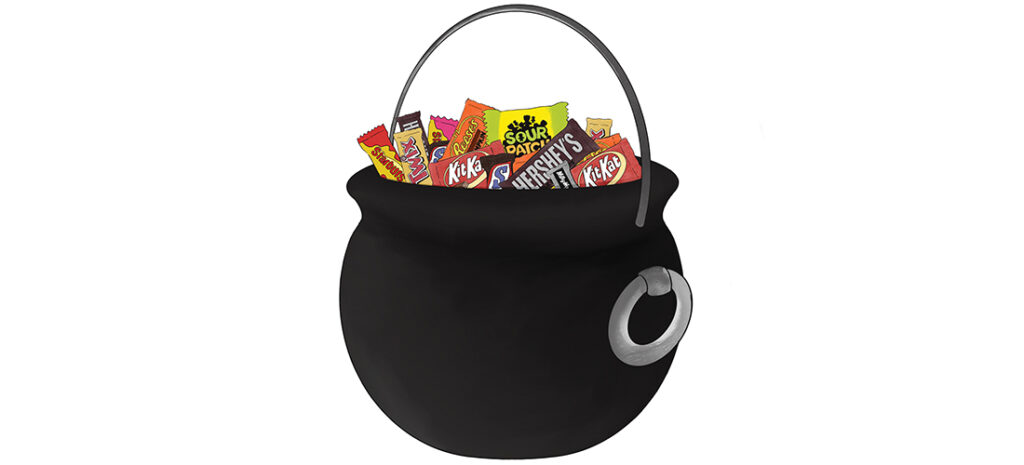
I dropped a piece of candy into her plastic jack-o’-lantern, which was filled to the brim with treats.

She looked down, cocked her hip and sighed.

What? I thought to myself. What could this girl possibly not like about Laffy Taffy?

Everything, apparently.

“I don’t really like that. Could I trade for something else?” she asked, eyeing the other treats in the dish I held.

I’ll be honest: My first reaction was to say, “What ever happened to saying ‘thank you?’ and trading with your friends later?”

But her parents were standing at the curb, waving and smiling, so I smiled tightly and said through clenched teeth, “Sure . . . honey . . . how about a . . . Snickers?”

She swapped and sprinted away.

I closed the door and dropped my jaw.

I had just been strong-armed by a pint-sized Wonder Woman.

Later, I shared my distress with our grown sons during a weekly video chat.

“OHMYGOD, Mom!” said The Older One. “You gave her one piece of candy?!”

“What’s wrong with that?” I protested.

“Don’t be that mom, Mom,” added The Younger One.

“Look, she didn’t need any more candy. She had a bucket full, OK?”

“OHMYGOD!!!” they hooted together.

Apparently, I was candy-shaming the young lady.

What was going on? Had the Halloween Handbook changed?

For answers, I turned to a panel of experts, a few of my neighbors’ children, whom I invited over for lemonade and cookies one night.

Allow me to introduce them by name, age and what they’re considering dressing up as this Halloween:

Sonja, 10, rat charmer, possibly reflecting her status as proud rat owner.

Wilhelmina, 7, tiger, a decision she underlines by curling her hands into claws.

Hendrik, 7, robot. Or possibly a pumpkin. Could go either way.

Olivia, 5. The field is wide open. Could be a monster. Or a Batgirl. Or a cheetah. Don’t press her on this.

Connor, 3, definitely appearing for the second year in a row as a T. Rex. Only bigger this time because he’s 3, not 2.

To begin our session, I told them about my experience last Halloween. They nodded in sympathy — whether for me or the girl, I’m not sure. But they were polite. They agreed to guide me. Below are excerpts from our recorded conversation with my comments in italic.

What is a normal amount of candy for someone to give out? How many pieces?

Sonja: Like three to two. Or, if it’s a bigger piece, one.

Describe a bigger piece.

Sonja [holding fingers about 6 inches apart]: Like this long.

A full-size candy bar?

Sonja [nodding]: Like if you got a Kit Kat, it would be one.

So, one Kit Kat would equal two what?

Hendrik: Starbursts.

Sonja: Two Snickers.

Fun-size Snickers?

Sonja [nodding]: Chocolate is really good. I prefer white chocolate.

Hendrik: I prefer white chocolate. But then I also really like dark chocolate. But I like white chocolate better.

What are some great candies?

Sonja: KitKat, Snickers, Twix.

Hendrik: Starbursts, Sour Patch Kids, Sour Punch Twists.

Connor [loudly, in T. rex mode]: Mmmm!

Olivia: Jelly beans.

Jelly beans? Really? For Halloween? Any particular kind?

Wilhelmina [giggling]: Rainbow!

Olivia [giggling more]: Unicorn!

Rainbow, unicorn jelly beans? Is that a thing?

Hendrik [sounding world-weary]: No, that is not a thing.

Olivia: I have a really good one: Cookies.

Cookies in packs?

Olivia: [Smiles charmingly, suggesting she would like to start a trend]

Wilhelmina: Reese’s cups, and thennnnn Sour Patch Kids, and thennnn Giggles.

OK, let’s be honest here: What are the worst candies?

Sonja: I don’t really like those gummy hamburger things.

Those are nasty.

Sonja: Also, those gummies shaped like soda bottles. [Panel groans in agreement] They try to make them taste like soda. But they don’t.

Anyone else? No one? There’s no other bad candy?

[Silence]

OK, next question: If someone is giving out Halloween candy, is it better if they hand you the pieces or let you pick it.

[Panel responds in unison]: LET YOU PICK!

So they would say, “Pick two or three pieces?”

[Panel nods]

Connor [again as full-throated T. Rex]: I want MORE! [Then, sweetly] Can I have more lemonade?

Yes, Connor. So, what’s the worst thing y’all ever got for trick-or-treat?

Sonja: Pokémon cards. I don’t like Pokémon. And baseball cards.

When I was a kid, the worst thing you could get was a small box of raisins.

Sonja: I love raisins. But I’ve never gotten any.

Hendrik: I love raisins, too. The white ones.

Wilhelmina: Yummy! White chocolate!

Sonja [firmly]: It’s not white chocolate! It’s yogurt.

Olivia: I’d eat them, too. I’d eat one. Or two. Or three.

Hey, do you know that cartoon, It’s the Great Pumpkin, Charlie Brown?

Sonja: I don’t think I’ve ever seen it.

OK, well, Charlie Brown goes trick-or-treating, and he gets a rock. What would you do if that happened to you?

Sonja: I’d be pretty happy because then I could paint the rock.

Gosh. That’s a great way to look at it.

Olivia: I wouldn’t a bit be happy.

Would you say anything to the person who gave you the rock?

Wilhelmina: Thank you! And then I would paint it with a waterfall, and a forest, and flowers, and grass, and . . .

Hendrik: You’re gonna need a big rock for that.

You know what? Somebody told me they knew a dentist who gave out toothbrushes and little tubes of toothpaste. What would you think of that?

Sonja: I would love it. Then you could have a doll’s toothbrush.

Wilhelmina: If it wasn’t an electric one, I would use it for my stuffies. But if it was an electric one, I would use it for myself.

Hendrik: I would be happy because . . . my dad uses my toothbrush. His broke.

Sonja [defending their father’s dental honor]: It was an electric one. He used the battery part.

Hendrik: Is the recorder still playing?

Yes. OK, if someone gave you some candy that you really didn’t like, would you ever send it back?

[Panel responds “NOOOO!” in unison, except for Olivia, who nods.]

Olivia, you would?

[Nods]

What would you say?

Olivia: I would say, “No, thank you.”

Hendrik: Well, that’s a good answer.

Olivia, would you ask to trade, like the girl did?

Olivia: If I really didn’t like it, I would trade. But if I kinda liked it I would keep it.

Hendrik: Connor wants another cookie.

Ok, here, Connor. Last question: Do you guys ever trade candy?

Hendrik: Oh, yes, yes, yes!

Tell me.

Hendrik: I’m trading Snickers for Sour Patch Kids.

Sonja: I trade a whole bunch. I’ll trade Kit Kats for Snickers since I love Snickers.

Olivia: I trade with Hendrik sometimes.

Hendrik [turning to Olivia]: Oh, you trade some tricky candy! [Turning back to me] We have this habit. If Olivia doesn’t like it, I like it. And if I don’t like it, she likes it.

This is a match made in heaven.

Wilhelmina: They’re dating.

Wait, are you guys dating? Is that true?

Olivia: No! We’re not even close.

Wilhelmina: They’re dating.

Olivia: No!

Hendrik: We only like each other! We’re not even best friends! We are nowhere near dating.

Is there anything else about candy that’s important to know?

Sonja: I don’t understand how some people will be walking around with huge sacks and I just have my little bucket.

Hendrik: Connor wants another cookie.

There we have it. Chocolate and sour candies are best. Two to three pieces each. Pick your own. Rocks and raisins are acceptable. Olivia and Hendrick are not dating. And Connor wants another cookie.  OH

Maria Johnson is a contributing editor of O.Henry. Email her at ohenrymaria@gmail.com.

Sazerac October 2023

Sazerac October 2023

Unsolicited Advice

Halloween — the one time of year that it’s acceptable to dress up like Blond Ambition World Tour-era Madonna. Every other time we don the look, we get nothing but side-eye from our office mates. We’re dropping some easy-to-pull-off holiday looks, inspired by one of our fav subjects: the English language.

Looking for a couples costume? One of you can sport an English tweed suit, white beard and round glasses — and don’t forget the trademark cigar — while the other wears a simple slip. Together, you’re a Freudian slip.

Stop in the name of literacy! All you need is a whistle, a police cap and a “Grammar Police” tee to play the part. We’re happy to let you borrow ours.

Colon or semi-colon — do we really need to go there?

Another twofer? One person dresses as a dog-walker with a leash around the neck of the other, dressed as Santa. Subordinate Claus, anyone?

Put on your most starched button-down and toss on a driving cap plus suspenders for added effect. Lastly, use black construction paper to cut out a comma and adhere it to your belly.  You’ll be the most welcomed — and dapper — Oxford comma we’ve ever seen.

Lasting Legacy

Saliba Isa Hanhan
APRIL 18, 1940 – AUGUST 2, 2023

I know that you’re smiling down at me as I struggle with this, Saliba Hanhan.

“You’re a writer, aren’t you?” you’re saying. “This should be easy for you.” You have a mischievous twinkle in your eyes and that smile incorporating every muscle in your face.

Yes, Saliba, you were a chemist, a professor, a gourmet, a shopkeeper extraordinaire, a gardener, a cook and a masterful formulator of recipes. But you were also an astute philosopher, a lifelong student, and a collector of fascinating friends and interesting knowledge, which you generously shared with others. But your children — your daughter, Emily, and two sons, Easa and Omar, each of whom continues to share the glow and energy that kept us coming to your store, even when it was 30 miles away — were your real legacy, of which you were so justly proud.

“I just got a cheese in that your friend Jim’s gonna love,” I can hear you saying, “but it may not be stinky enough for you.” And when we’d get home and start unpacking, I’d often find a heel of a Parmigiano-Reggiano or the bone of a Serrano ham that you slipped in. “You know what to do with it,” I can hear you saying.

I don’t know what makes someone “great.” Fame? Fortune? Power? None of which you cared about. Your greatness went beyond conventional definitions of worldly accomplishments. What made you great was how you followed your heart, found what made you happy and then managed to share that happiness day in and day out with others. It’s a greatness that goes beyond the grave, which is why, once again, I can hear you saying, “David. That’s a bit too much. Calm down.”   
  — David Claude Bailey

Calling All O.Henry Essayists

Don’t forget to enter our annual 1,000-word essay contest, themed “The Kindness of Strangers.” Details can be found here: ohenrymag.com/sazerac-september-2023.

Window to the Past

Photograph © Carol W. Martin/Greensboro History Museum Collection

Kids in the 1940s: ″Trick-or-treat, give us Fig Newtons to eat!″

Kids today: “′Made with real fruit?′ What else ya got?”

Sage Gardener

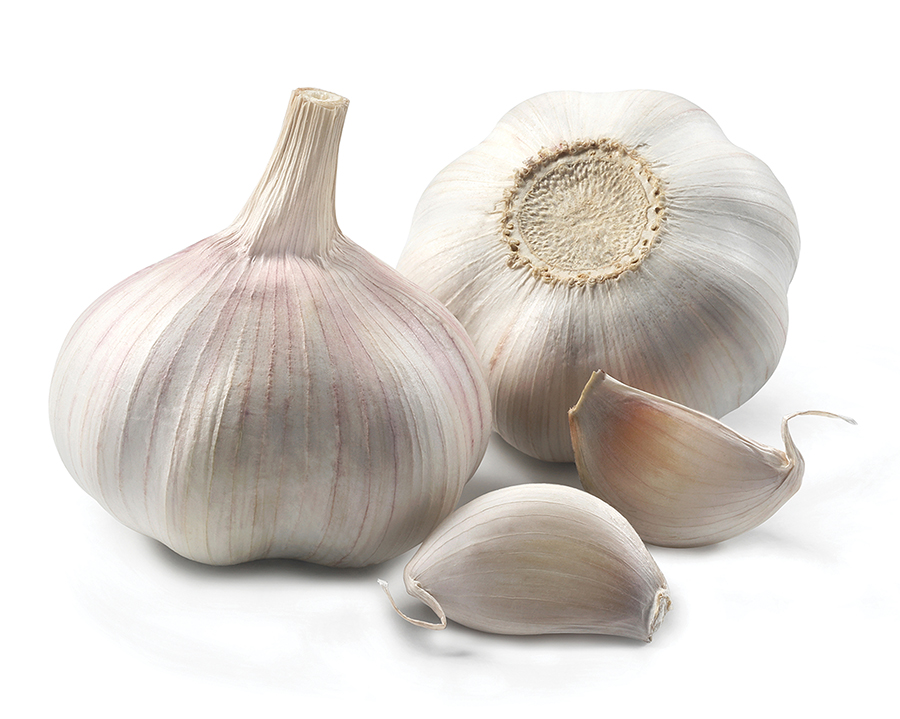
Garlic has been around for at least 5,000 years, but its reputation has hardly improved.

Esteemed by the Egyptians, Greeks and Romans for its medicinal properties, fed to workers, soldiers and oarsmen to increase their stamina, and touted for increasing sexual potency, garlic has long been “disdained by the aristocracy” and denigrated by love poets such as Horace, according to the Oxford Companion to Food. Never mind that Pliny the Elder listed 61 remedies prepared from garlic or that it’s still used in China today as an antibacterial, antifungal and antithrombotic agent. Admittedly, garlic’s after-odor is a tad odiferous — fetid, putrid, foul and rank, according to some of my former office mates. So one of the prime reasons I’ve been looking forward to retirement is eating as much garlic as I want, whenever I want. Garlic confit. Basque garlic soup. Aioli by the spoonful, ladled on a baguette. Garlicky harissa. Kimchi. Forty-clove garlic chicken à la Julia Child, who once wrote in The Boston Globe, “40 cloves may not be enough.” And with the arrival of fall, it’s high time to get it in the ground. According to the Central N.C. Planting Calendar, the ideal planting time for garlic is from September 15 to November 30.

Don’t sweat the frost. As our warm fall temperatures shift to colder, freezing days and nights, the bulbs sprout and take hold, waiting for warm spring days to reach their green tentacles out of the hay covering them. (It’s called vernalization.) Garlic thrives on nitrogen, so top dress your plants in February with composted manure. And if you’re planting hardneck garlic (look it up), by all means harvest the scapes and pop them, sautéed, into an omelet with blue cheese. (Removing the scapes increases bulb size by as much as 30 percent.) The bulbs will fill out by summer, just in time for pico de gallo and pesto. Tie the harvested plants in bundles and hang them high from the eaves of a shed or garage for four to six weeks so they cure. By then, it’s almost time to put some of them back into the ground. (No need to worry about cross-pollination because each plant is a clone of its parent.) Plant your largest cloves to get bigger bulbs next year. And, when vampires take wing on the night on October 31, think about baking a big batch of roasted-garlic, chocolate chip cookies (https://www.food.com/recipe/garlic-chocolate-chip-cookies-28771). Sink your fangs into that.         David Claude Bailey

Just One Thing

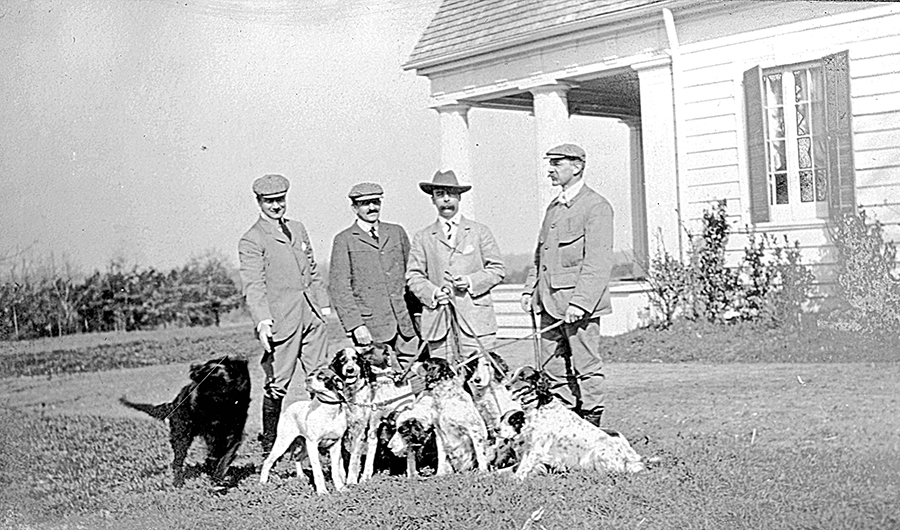
Whether or not you’re a fan of blood sports, history cannot be erased: Less than 120 years ago, some of the richest and most influential captains of American industry traveled hundred of miles to Jamestown to realize their most cherished dream — killing a dozen or more birds in one afternoon. In this photo taken in front of Deep River Hunting Lodge (most likely by renowned sports photographer J.C. Hemment), millionaire industrialist and lodge owner Clarence Hungerford Mackay, sporting the fedora, holds the leads of a pliant pack of bird dogs. The setters and pointers were trained by Englishman Edward Armstrong, whose family shared the photo and other artifacts on display at the High Point Museum in Field & Feathers: Hunting at Deep River Lodge, 1895–1935. The gentleman standing next to Mackay with the handsome, dark mustachio is William Kissam Vanderbilt II, says Marian Inabinett, curator of the museum’s collection. The tall and dapper huntsman facing Mackay seems to be Reginald Ronalds, whose great-grandfather was Pierre Lorillard II. Deep River Lodge, designed by noted Gilded Age architect Stanford White, was the grandest of a number of hunting lodges across central North Carolina. “It’s a forgotten story, but for decades America’s wealthiest men enjoyed hunting bobwhite quail that thrived among the woods and open farmland in the center of the state,” says Inabinett. “Also on display are a suitcase and steamer trunk with great travel stickers on them, a bottle of Champagne from the lodge’s wine cellar, lots and lots of ocean liner memorabilia, and even some steamship tickets for hunting dogs,” she says. The exhibit will be open through January 31, 2024. Other photos and images can be seen via the museum’s app and on its Facebook page. Info: www.highpointmuseum.org and www.facebook.com/HighPointMuseum

Simple Life

Simple Life

Farewell to Golf

But With Apologies to Sam Snead, Not Just Yet

By Jim Dodson

It began with a few simple questions on a beautiful October evening last year as my best friend — and oldest golf rival — and I were walking up the ninth fairway of the club where we grew up playing and still belong. As usual of late, Patrick Robert McDaid and I were all square in our friendly nine-hole match.

As we approached our tee shots in the fairway, he suddenly said: “Can you believe we both turn 70 next year?”

I laughed. “If I forget, my aching left knee reminds me every morning.”

Pat also laughed. “Isn’t that the truth.”

I could tell, however, that something else was on his mind, the benefit of more than 58 years of close friendship. We began playing golf with — and against — each other the year we turned 12.

“Do you think we’ll take one of those trips again?” he asked.

We both knew what he meant.

Over the 40 years I worked as a columnist and contributing editor for several major golf publications, my oldest pal and I had roamed the Holy Land of Golf, as we call it — Scotland, England and Ireland — more than half-a-dozen times in each other’s company, often on the spur of the moment with few, if any, arrangements made in advance, armed only with our golf clubs and hall passes from our wives.

Before I could reply, he chuckled and added, “Remember that time in Scotland when you locked the keys in our rental car and we had to stay another night at that guest house near Southerness?”

“How could I forget it? You’ve never let me live it down.”

“The owners invited their crazy neighbors over just to hear your golf stories.”

“Actually, it was your crazy fly-fishing stories they wanted to hear. You were more fun than a drunken bagpiper.”

“Good whisky helped.”

We hit our approach shots onto the green. I lagged my 20-footer to the edge of the cup and tapped in. As he stood over his 10-footer for birdie, he reflected, “I loved those trips. All those great old courses and golf on the fly.”

As I watched, he rolled his birdie putt dead into the cup, sealing my fate with a 1-up victory. It was an annoying trend of late. His short game had gotten markedly better from years of regular practice, while mine had declined from benign neglect. I sometimes joked that moving to Pinehurst — the Home of American Golf, as it’s rightly known —  was the worst thing I could have done to an aging golf game because I had no regular buddies to play with. I arrived there in 2005 a 2.5 index player and left a decade later a limping 10.5. All work and little play had left Jimmy one step closer to dufferdom.   

“I’m thinking we should do it one last time before the boneyard summons,” Pat declared.

“You’re probably saying it because, for the first time in half-a-century, you’re regularly beating me.”

“That’s true,” he admitted as we walked off for me to buy the beer. “But it would be even sweeter to finally beat you in some of the classic courses you love best.”

Pat is a persuasive fellow, probably the reason he’s such a successful industrial go-to guy for one of the nation’s leading home improvement chains. To begin with, he’s blessed to the marrow with “the craic,” a delightful Irish slang word derived from Old English that denotes a natural ability to charm and engage almost anyone in friendly conversation. I’d witnessed my old friend work his Celtic magic too many times to deny its validity. Some years back while chasing the ball around Ireland, a mutual friend with a wicked sense of humor bestowed Pat the perfect nickname of “The Irish Antichrist,” owing to his supernatural ability to disarm and coerce a smile from almost everyone we met. More than once, I must concede, we drank for free for the evening.   

Over his latest victory beer, I told Pat something Sam Snead said to me almost 30 years ago as we were playing the Greenbrier’s famous Old White course on a similar autumn afternoon. I was there to write about him for my “Departures” golf column. Sam liked me, in part because I was good friends with his best friend, Bill Campbell, the legendary amateur. Snead was almost an honorary son of Greensboro where he won the Greater Greensboro Open a record eight times, including six times at Starmount Forest, where Pat and I were soon sitting at the bar with our beers.

“How old are you now, son?” Slammin Sam asked me that faraway afternoon.

“Just turned 40, Mr. Snead.”

“What a great age. That’s the prime of life — makin’ good money, got a wife and kids, probably playin’ your best golf ever. I wrote a book about that called Golf Begins at Forty. You should read it.”

I promised to lay hands on a copy — when I got old.

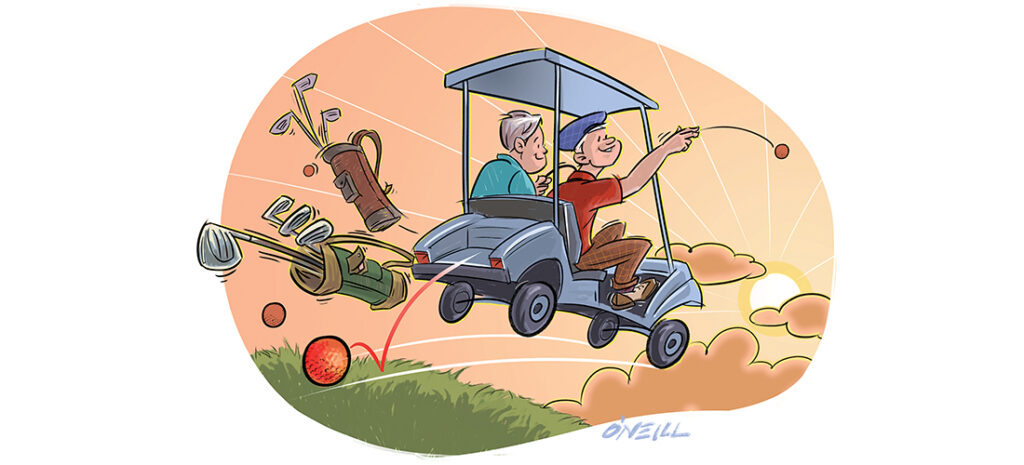
“But here’s the thing,” he went ahead. “Someday you’ll blink your eyes and be 70 or 80 years old. It’ll happen that fast, you’ll hardly believe it. You’ll suddenly be saying farewell to golf. That’s when you better grab hold of as many golf memories as you possibly can. That’s the beauty of golf. If you keep after it, you can play till your last breath. No other game on Earth let’s a fella do that.”

I watched him tee up his ball. “Just so you know,” he added over his shoulder, “I got plans to play at least to 100.”

And with that, 81-year-old Samuel Jackson Snead striped a splendid drive to the heart of the 17th fairway.

“So, who won the match?” demanded the Irish Antichrist.

“That’s not the point,” I said as we sat at the bar. “Sam was just sharing a little golf wisdom about enjoying the game as one ages.”

“Good for him. I guess this means we’re off to the Holy Land next year. By the way, I get at least four strokes a side.”

“No way. Three for 18,” I said firmly, pointing out the three-stroke difference in our official handicap indexes. This was nothing new. Over five plus decades, we’d argued about everything from the prettiest Bond girl to the absurdity of orange golf balls.

A good friend, it’s said, knows all your best stories, but a best friend has lived them with you.

Over 10 days near summer’s end, in the 58th year of our friendship, we played eight classic British golf courses during the heaviest rains in England’s recorded history. It was a slog, almost impossible at times as gale force winds blew our handicaps to pieces. Between us, we easily lost a dozen golf balls.

But we had the time of our lives.

Somehow, unforgettably, we ended up in a tie.  OH

Jim Dodson is the founding editor of O.Henry.

Chaos Theory

Chaos Theory

Through the Wringer

Laughter, rinse, repeat

By Cassie Bustamante

Questionable choices? I’ve made a few. After all, I’ve been known to snip my own bangs when I get bored, despite the fact that my husband, Chris, thinks they’re “awkward”. I’ve attempted to pop deep pimples even though the results are always the same — a bigger blemish with a scab on top. The last time I did that, I even pointed to it as I said to Chris, “I will learn nothing from this.”

But I’ve been known to make good decisions, too — like when I walked down the aisle — bangless, mind you — to marry Chris 20 years ago in late September, 2003. I know this to be true, because I’ve put him through the wringer in the two decades since saying “I do.” In fact, just a month or so after our nuptials, I tested the waters, accidentally, and discovered just how my new husband would handle a costly slip-up.

That fall, I was employed as a personal trainer at Cross Gates Athletic Club, a family-friendly gym in Slidell, Louisiana. As is often the case in that profession, I worked split shifts, training in the early- to mid-morning hours and again in the evening.

On one particular morning, my stomach churns, a cacophony of gurgling, rumbling sounds. You know the ones. I rush home for my midday break, parking my car in the driveway, certain I’ll pop some Pepto and be back on my feet. But things get progressively worse and the realization strikes: I’ve been hit with food poisoning.

I call into the gym to cancel any remaining appointments and decide to move my car, a standard transmission VW Jetta, into the garage since I won’t be going anywhere anytime soon.

Once in the driver’s seat, I turn the key in the ignition, catching a blur of activity in the corner of my eye. In my unwell haze, I’ve not fully closed the door from the kitchen to the garage, and Charlie, our Houdini-like beagle, has spied his opportunity for freedom, shoving the door fully open with his snout.

In my panic, I drop the clutch and the Jetta jolts forward, crashing right into our washing machine. Stunned, I glance back at the kitchen door, but Charlie is nowhere to be found.

After turning the car off, I dash inside and find him trembling under our bed on the complete opposite end of the house. He’s petrified, but at least he’s safe.

Back in the garage, I stare at the washing machine in disbelief. Nervously, I dial Chris.

“Hey, so . . . um . . . I kind of ran my car into the washing machine,” I tell him, explaining the events that led to the collision.

There’s a pregnant pause as I prepare for his wrath. Instead, he explodes in laughter. Once he’s able to speak again, he asks, “OK, well, does it still work?”

“Lemme check. Oooooh, yes! Water is running!” I pause. “Scratch that, all the water is coming out at the bottom.”

“OK, well, it’s no big deal,” he says. “We’ll go get a new washing machine this weekend,” he continues. “You’re all right and so is Charlie.” Another giggle escapes his lips and I picture him on the other end of the line, shaking his head.

A week later, as Sears delivers our brand-new machine with the bonus free haul-away service for the old appliance, the driver says, “I’m not even going to ask what happened.”

But I’ll tell you what happened. I discovered that I’d married a man who would help me find the lightness in tough situations and be by my side “for better, for worse, for richer, for poorer, in sickness and in health,” with bangs or without. And while appliances can come with a high price tag, knowing I’ve chosen a great partner is priceless.  OH

Cassie Bustamante is editor of O.Henry magazine.

Sazerac September 2023

Sazerac September 2023

Unsolicited Advice

Every fall since the inception of Pinterest, it happens. Free, pretty printable, “Fall Bucket Lists” in pastels, oranges and sage greens take over the internet. And we think to ourselves, “Yes! This season, I will learn to knit, pick a bushel of apples, make a pie from said apples, preserve colorful leaves and do all the autumnal sort of things!” And then the winter arrives and all you have to show for it is one sad, empty PSL cup with your name spelled wrong. Forget that! We’ve made some updates that’ll have you knocking out this list faster than you can say apple spice cake.

  1. Bake pumpkin bread. OH: Who has time for that? Buy it at the grocery store and burn that pumpkin spice candle you got last fall. All the vibes with none of the stress.
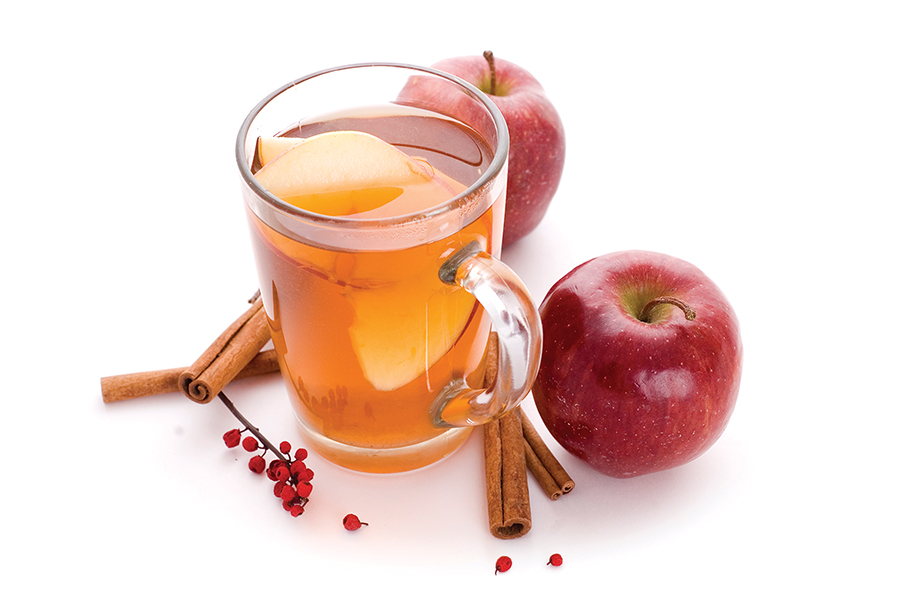
  2. Make and sip warm apple cider. OH: Pass us a refreshing hard apple cider, please and thank you.
  3. Build a scarecrow. OH: Why? What did those crows ever do to you? Instead, make a — really scary — scarehuman and keep those nosy neighbors at bay.
  4. Go leaf-peeping. OH: Is there a tree outside your window? Look at it. Congratulations, you’ve peeped leaves. Check one off!
  5. Have a bonfire. OH: Got kindling? May we suggest that fall bucket list printout? Or past issue of OH? Consider it adaptive reuse.

Just One Thing

Coinciding with the N.C. Folk Festival, local artist Greg Hausler, owner of Wonky Star Studios, hosts a solo show at Greensboro’s Project Space, right next to Cincy’s Downtown, on September 5–9. “Color, Cloth & Chaos” features over 30 of Hausler’s works, which are far from traditional. In fact, Hauser suggests his style is a mashup of Marcel Duchamp, Jackson Pollock and Claude Monet with a little street art sprinkled in. “My paintings incorporate repurposed clothing that adds texture, depth and history to the canvas,” says Hausler. Look for everything from undergarments to socks and jeans. Push Play, which traveled to Belgrade, Serbia, for the 2022 Biannele Art Salon, features “a frozen heart that’s being reset.” To create it, Hausler used one of his old flannel shirts — peer closely and you will see the buttons — and a work glove, which has become the hand that’s about to press play. Of this piece, Hausler says that the heart represents “the place where all the inspiration has to go for it to come to fruition.” For more information, visit wonkystarstudios.com.


Sage Gardener

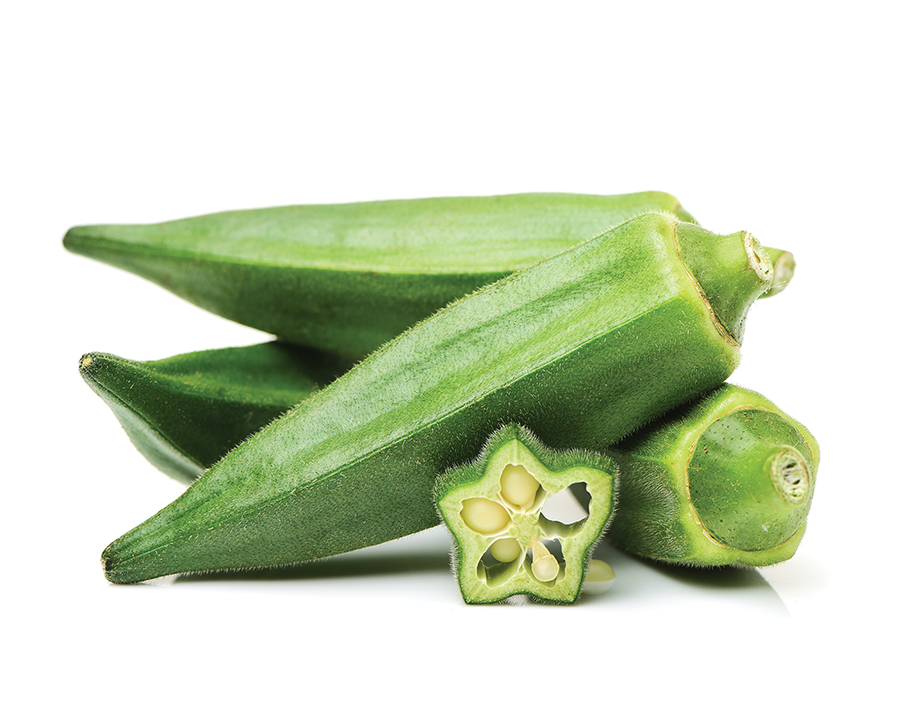
Okra is the Rodney Dangerfield of vegetables. Whenever I post about it on Facebook, some of my “friends” seem to think I’m urging them to partake of sizzling serpents au gratin. But no less an authority than Jessica Harris, author of High on the Hog, says it is “perhaps the best known and least understood” of Southern vegetables. I encourage you to read Harris’ account of how okra made its journey from Africa on slave ships to Southern “Big House” kitchens, where Black cooks introduced it into dishes such as turkey-neck soup. Since then, it’s become a chic addition in some of America’s hottest boîtes. Whether stewed in fiery New Orleans Creole gumbo or simply dredged in corn meal and fried, Southerners have been wolfing down okra for centuries. And why not? It is among the most heat- and drought-tolerant vegetables on the planet, even thriving in our Tar Heel red clay. Cultivated in the Middle East and India for millennia, the Greeks, Romans and Egyptians knew all about okra. The first mention of it in the New World was in 1619. Thomas Jefferson suggested snapping it from the plant rather than snipping it. My wife, Anne, cooks it to perfection, butter-frying the tiniest, just-picked pods in an a blistering-hot cast-iron pan.

So what’s not to like? “Okra is often spurned because of the gluey, even slimy texture it can present,” one food writer opines. C’mon. Let’s get it out there: Okra can be gooey, gloppy, gloopy, gummy and my favorite description, mucilaginous. But that’s only if you don’t have a clue about what you’re doing. Pick it small. And one British writer advises to treat it like the Mogwai in Gremlins films: “If you want it to stay cute, don’t get it wet.” Pat or brush it to remove dirt, just as you do with mushrooms. Cook it whole; frying it helps. “One way to de-slime okra is to cook it with an acidic food, such as tomatoes,” suggests one cook. And it’s good for you, lowering cholesterol and blood sugar levels, boosting your immune response and improving your gut health. Unless it doesn’t: “Okra contains fructans,” cautions another online source, saying okra can cause diarrhea, gas, cramping, bloating and a lingering onset of death — or maybe that was something else. Maybe my Northern friends are right; after all, okra is in the same family as cotton, hibiscus, musk mallow and even the notorious durian. But as you’re reading this, I very well might be whipping flour into a pan of smoking oil to make a roux à la Paul Prudhomme for some shrimp gumbo Ya-Ya.

And running through my mind will be a jingle from humorist Roy Blount: “You can have your strip pokra/ Give me a nice girl and a dish of okra.”    David Claude Bailey


Happy Trails

Just completed and opened by the Piedmont Land Conservancy in May, the main Caraway Forks Trail at Caraway Creek Preserve wanders through massive oaks and towering hickories to a historical artifact, a massive stone “check” dam dating back to the 19th century. Rather than forming an impoundment, check dams were built by farmers to slow down the flow of creeks and rivers during floods for silt retention and to protect their crops. Caraway Creek actually runs right under the dam to snake its way through shady bluffs and beetling ravines. Visit piedmontland.org.


Calling All O.Henry Essayists

Several years ago, readers responded enthusiastically to a contest challenging them to write an essay entitled “My Life in a Thousand Words.” Last year, we revived our challenge with a theme of “The Year That Changed Everything.” And this year, in honor of our namesake, who was known as one of America’s most popular  — and highest-paid during his time — short story writers, we’re thrilled to announce that the 2023 O.Henry Essay Contest is all about “The Kindness of Strangers.”

We’ve all had a moment in our lives when someone we didn’t know stopped without hesitation to lend a hand.

When our family was new to a small, rural Maryland town, my daughter, Emmy, 4 at the time, took a dance class in a home basement studio up a bit on South Mountain, where we rarely saw human life, but did see bears. Unbeknownst to me, I’d accidentally left the overhead interior light on in my car when I parked, which became all too obvious when we left class at 8 p.m. on a cold, starlit October night. My husband, Chris, was out of town and there was no one I knew to call. I didn’t have any friends yet. A father of a fellow dancer saw my distress and drove us home. That was 12 years ago.

And now, we want to hear your story — whether you were on the receiving or giving end of that helping hand.

Of course, there are some rules:

  • Submit no more than 1,000 words in conventional printed form. Essays over 1,000 will be shredded and used in our office hamster’s cage.
  • Deadline to enter is December 24, 2023.
  • Top three winners will be contacted via email and will be printed in a spring 2024 issue.
  • Email entries to cassie@ohenrymag.com

We can’t wait to hear the clickety-clack of keyboards across the Triad as you write your stories — stories that are sure to remind us of all the goodness that exists in the world.

— By Cassie Bustamante, editor


Growing Goodwill

Survey four of the Triad’s youngest residents and one of them will tell you they face food insecurity. Share the Harvest board president Linda Anderson, a retired educator, does her best to improve that grim statistic. Sometimes, she says, it’s as simple as grabbing a hoe or driving a truck.

“There are times during the growing season when our gardens are overflowing with vegetables and we don’t know what to do with the excess. This is when Share the Harvest can help both the gardener and the individuals in need,” says Anderson.

Anderson says donations have grown since 2012 from a few community and church gardens donating food to local nonprofits into an expanding program benefitting organizations, collecting and distributing food to the needy via various programs offering meals and food pantries. For its 10 core volunteers, the need has motivated them to collect, coordinate and distribute donations from groceries, restaurants, gardens, farmers markets and even N.C. State A&T University’s farm.

From May through October, the growing season, they collect, aggregate, then store fresh products at a central collection site for distribution.

“In the beginning, the first year, we had 1,200 pounds of veggies. Last year it was 15,241 pounds received.” See sharetheharvestguilfordcounty.org for more information.      By Cynthia Adams


Simple Life

Simple Life

Squirrelly Business

A seedy family of rodents drives an old dude nuts

By Jim Dodson

Another summer is ending.

And once again, the squirrels have won.

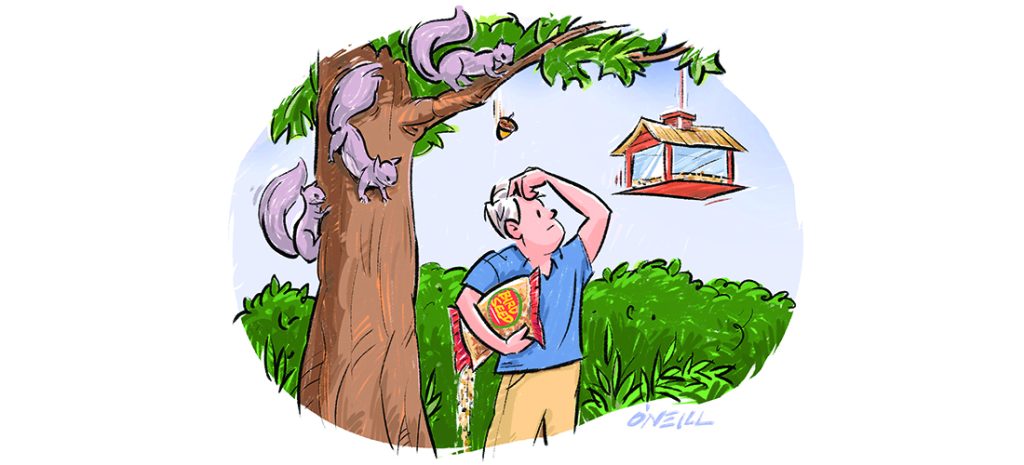
Last year about this time, you see, I made a promise to myself — not to mention the many wild birds that regularly visit our four hanging feeders — to find a way to outfox the large crime family of gray squirrels that inhabits Old George, the handsome maple tree that anchors our front yard.

The problem began rather innocently six years ago when we moved back to the heavily forested neighborhood where I grew up and rescued George from death by English ivy. The old tree flourished and, one afternoon, I noticed a couple gray squirrels had taken up residence in a hollow nook halfway up the tree. They seemed to be a respectable couple, perhaps elderly pensioners looking for a nice place to tuck in for their quiet retirement years. Our property is also home to several towering oaks, so come autumn there would be a plentiful acorn supply.

I hung a couple bird feeders by wires from George’s upper branches. Soon the wild birds were all over them. What a peaceable kingdom it seemed.

The next spring, however, there were four squirrels residing on Old George. Clearly, they were no elderly pensioners, for within months, two baby squirrels appeared and I found a juvenile delinquent regularly helping himself to premium birdseed, scattering it on the ground below the feeder, having somehow slid down the 10-foot wire like a paid assassin from a Bond flick.

He soon returned with two bushy-tailed pals from across the street. Word was out. Party at the Dodson house, all-you-can eat birdseed buffet, pay no attention to the old dude waving his arms and shouting obscenities.

By the next year there were at least seven or eight tree squirrels residing on Old George, a budding Corleone family of furry rodents regularly raiding the feeders, costing me a bundle just to keep them filled up. I bought expensive “squirrel-free” feeders and fancy bird feeder poles equipped with “baffles” guaranteed to keep the gymnastic raiders on the ground. These sure-fire remedies, alas, only baffled me because they posed only a minor challenge to the squirrels. So I made a deal with the big fat squirrel that seemed to be the head of the family. Whatever they found on the ground at the feet of Old George was theirs to keep. Thanks to the jays, the sloppiest eaters in the bird kingdom, there was plenty of seed for them to gorge on. For a while, this protection racket seemed to work until one afternoon as I was filling up “their” feeder, I heard a pop and turned to find the big fat crime boss squirrel dead on the ground. He’d been pushed off a high limb where two younger squirrels were looking down with innocent beady-eyed stares. Just like in the movies, a younger more ambitious crime boss was in charge.

I considered giving up and moving to northern Scotland. Instead, I asked my neighbor, Miriam, a crack gardener and bird fancier, how she handled pesky squirrels. By “crack gardener,” I don’t mean to suggest that sweet elderly Miriam was growing crack cocaine, merely that if anyone could tell me how to stem the tide of ravenous tree squirrels it was Miriam. She’d lived in the neighborhood for 40 years. She is my turn-to garden and bird guru.

Miriam thought for a moment before coming out with a chilling laugh. “They’re impossible to stop.” She pointed to her Jack Russells. “That’s why I have Jake and Spencer. They do a pretty decent job on the squirrels and chipmunks.” She admitted that she always wondered whether squirrels are the smartest or dumbest of God’s creatures. “How can squirrels be so smart they can get into any kind of bird feeder — but always stop suicidally in the middle of the street whenever a car is coming?”

It was a good question I had no time to ponder.

Our other neighbors down the block, Miriam explained, had taken to humanely trapping their squirrels and releasing them in the countryside. “But I read somewhere that if you don’t take them more than 10 miles out of town, they’ll come straight back.”

That was all I needed — country cousins joining the feast.

Next, remembering my former neighbor, Max, I actually gave thought to arming myself with a Daisy BB gun. It’s right there in the second amendment, after all — the right to bear arms against unreasonable threats from hostile elements, both domestic and foreign. True, the Constitution doesn’t mention thieving gray tree squirrels per se, but one doesn’t have to be a strict constitutional originalist to interpret the broad meaning of those historic words.

Max was my neighbor down in Southern Pines, a fabulous gardener famous for his giant tomatoes, succulent sweet corn and luscious collards. To protect his bounty from the herds of deer that roam the Sandhills, Max essentially erected a Russian-style penal colony around his veggie garden, complete with electrical voltage and 24-hour monitoring system.

The first evening I dined with Max and his beautiful wife, Myrtis, as the salt and pepper came my way on the lazy Susan, I noticed a large jar of Taster’s Choice — circa 1976 — festooned with several sheets of notepaper attached by rubber bands. The sheets were covered with dozens of dates written in tiny, neat handwriting.

“What are these dates?” I asked. “The last time you tried really old instant coffee?”

Myrtis laughed. “Oh, no. Those are dates of Max’s squirrel kills. He shoots them.”

Max just smiled. “Haven’t had a squirrel problem in years. It’s either them or my vegetables.”

I was in the presence of evil genius, a terminator of problem squirrels.

Call me a tree-hugging man of peace — Rocky and Bullwinkle were my favorite childhood cartoon characters — but I decided to forgo the gun and simply rely on Miss Miriam’s way to put the fear into the furry crime family that inhabits Old George.

Nowadays I wait until I see them climbing up poles, dangling upside down to feed or diving insanely from tree limbs onto our feeders, whereupon I strategically release our 75-pound Staffordshire pit bull and fleet-footed border collie-spaniel puppy and watch the merry chase begin. There’s been more than one narrow escape and parts of furry tails have been brought back to master of the hounds.

True, it’s not a permanent solution to the problem. But for now, Gracie and Winnie enjoy the exercise and I am sending an unmistakable message to the squirrelly Corleones.

They’d best stay out of the middle of the road when this old dude is at the wheel.  OH

Jim Dodson is the founding editor of O.Henry.

Almanac September 2023

Almanac September 2023

September is the last stand of sunflowers — thick with bumbles and honeys — wistfully facing east.

Sown in the softest days of summer, when early berries fairly tumbled from their vines, the seeds of these yellow giants held more than plumule and root. They held the glory of summer, a timeless cure-all, the warmth and likeness of the sun.

Weeks after their shoots burst through fertile earth, the sunflowers whispered patience. Ever reaching toward the light, their stalks grew tall and sturdy; their rough leaves wide as open palms. Soon, the buds emerged — tidy cinch purses as splendid as stars — holding their treasures tight.

Summer burst in all directions. Cicadas emerged screaming. Queen Anne laced meadows and roadsides. Thistle and clover reigned supreme.

Butterflies teetered on purple coneflowers, feasted on milkweed, drifted among sage, sedum and hibiscus.

At last, when early giants withered on their fibrous stalks, the luminous beauties unfurled.

Summer fades. And yet, the last wave of sunflowers beams.

Here now, they sing.

The bees know, sharing communion at their golden centers. Whirling in ecstasy. Humming an ancient prayer for grace.

We know, too. We hold tight to summer — let it transform us — then wistfully look toward the autumn sun.


New beginnings are often disguised as painful endings.   — Lao Tzu


The Thick of It

Muscadine season is here at last.

Hypnotically sweet, this native grape thrives in the sticky heat of our Southeastern states, ripening from late August through early October. Ranging in color from greenish bronze (we call them scuppernongs) to deep purple, this thick-skinned whopper (Vitis rotundifolia) is the official fruit of North Carolina.

Muscadine wine. Muscadine jelly. Muscadine grape hull pie.

For some, muscadines by the handful take the cake.

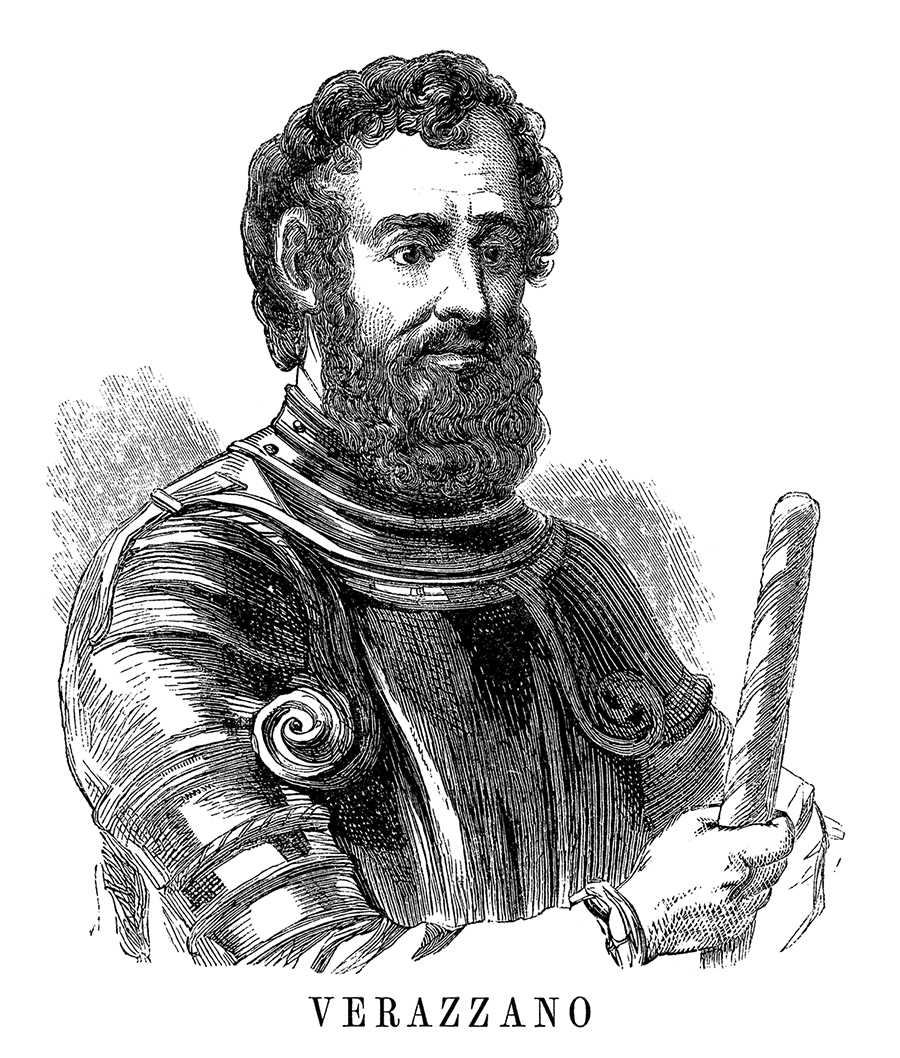
According to the State Library of North Carolina’s online encyclopedia, early English explorers of the Outer Banks reported that this fruiting vine “covered every shrub and climbed the tops of high cedars.” This was 1584. Italian explorer Giovanni da Verrazzano wrote about the curious “white” grape some 60 years prior.

Perhaps you’ve heard of the half-acre “Mother Vine” in Manteo, now over 400 years old? Planted by Croatan Native Americans or, perhaps, settlers of the Lost Colony, this legendary scuppernong is the oldest known cultivated grape vine in the country. It’s aging, no doubt, like a fine, sweet wine. 


Crisscross Equinox

Apples blush. Whippoorwill sings his final song. Things end and things begin.

The autumnal equinox occurs on Saturday, September 23. As the turn of the season graces us with equal amounts of day and night, we prepare for the final harvest. We celebrate the abundance here now, soak up the remnants of summer, and ready ourselves for the darkening days.  OH

Wandering Billy

Wandering Billy

Poetry Is Life

And life is poetry for Greensboro’s first Poet Laureate

By Billy Ingram

“Poetry is just the evidence of life. If your life is burning well, poetry is just the ash.”      – Leonard Cohen

For the first time ever, the City of Greensboro has appointed a Poet Laureate, Josephus Thompson III. Some people might envision a pointy-headed intellectual with a snowy beard spouting iambic pentameter while safely ensconced inside an ivy-covered garret. In contrast Josephus is a tall, lithe 46-year old who appears considerably younger in person.

It was a fourth grade classroom assignment that led Josephus into discovering his previously undiagnosed love for wordplay. “I won a fourth place ribbon for an essay about my father,” he tells me. “And I was ecstatic that I won fourth place.” Later, in high school, Josephus composed a poem for an English course that he performed in front of the entire student body. “I got a few accolades for it and I was like, people like my writing. I should do more of it.”

Although it’s a part of every school’s curriculum, “So often the poetry that we hear — the Mayas, the Frosts — it doesn’t sound like us, doesn’t look like us,” Josephus remarks about society’s overall failure to connect students to creative expression. “It’s all about education through correlation, something they can actually relate to.” This dichotomy led to the creation of The Poetry Project in 2005 for, “using poetry to teach, inspire and build the communities that we call home.”

What began inside individual classrooms turned into packed school assemblies. “When I go into a space, maybe 70 percent of the kids probably don’t like poetry,” Josephus says. “They think it’s whack, it’s boring. But when I’m able to relate it to hip-hop, to music, to empowering their voice, all of a sudden the light switch goes on. They’re like, ‘Wait a minute. You wanna hear what I have to say?’”

Over time, Josephus developed a scintillating Monday through Thursday curriculum rooted, but not mired, in traditional English Language Arts. “Then on Friday,” he says, “I’ll bring in a poet, a singer, a rapper, a guitar player, so they are able to see what we’ve talked about all week in real life.” Wildly popular, this avant-garde bard poetically pied piper-ed impressionable audiences, winning over a multitude of restless, attention deficient pupils, a paroxysm attributable not only to Josephus’ charismatic delivery, but also his impressive lexiconical athleticism.

Funded primarily by fees for service plus occasional grants, The Poetry Project has provided literacy-based programming not only in Guilford and Forsyth Counties, but also in Harrisburg, VA, and as far afield as Malaysia and the Phillippines. “I had the pleasure of performing with the Greensboro Symphony in 2019,” says Josephus. “It was phenomenal.” For that event, every third and fourth grader in the county school system was transported to Grimsley High School’s auditorium for five daily jam sessions, experiencing for themselves Josephus’ participatory prestidigitation. The result? It’s poetry emotion: “A thousand kids singing along and chanting.”

“I’m able to talk about the fact that the money is in songwriting,” Josephus remarks, explaining that most youngsters don’t realize musical artists generally don’t compose their hit songs. “The people that write the music are sitting at home collecting a check, a lot more than the singer. By the end of the class everyone wants to be a writer.”

Having piqued students’ interest, Josephus realized budding authors had nowhere to hone their craft. “There’s a place for Frisbee, and basketball and soccer, but, if you’re going to be a writer, where do you go?” To fill that void, Josephus partnered with the McGirt-Horton branch of the Greensboro Public Library to establish an after-school outlet for aspiring scribes. “Every person has a voice,” Josephus says of his motivation. “Everyone wants to be heard, period.”

As a side gig that has since expanded exponentially, Josephus launched The Poetry Café at Triad Stage in 2009 to serve as a launching pad and showcase for emerging regional wordsmiths. It was then that one of his mentors, D. Cherie’ Lofton, at that time operations manager and content manager for N.C. A&T State University’s radio station, began urging him to adapt his concept for the airwaves. “I didn’t want to be on the radio, but I had no idea the number of people I could reach.” It took Lofton more than a year to talk him into it, but in 2012 Josephus began broadcasting The Poetry Café over 90.1 FM, WNAA.

Earlier this year, The Poetry Café became a weekly syndicated radio show, airing Sundays at 6–7 p.m. on WUNC radio, recorded in his studio on the second floor of Triad Stage. “We already have artists that are coming now to Greensboro to be featured on the show because it’s statewide.”

Last year, Josephus created a monthly retreat called Poetry Field Trip in conjunction with the Van Dyke Performance Space located in downtown’s Cultural Center. “We were able to bring in 300 kids for 90 minutes to experience poetry up close and personal with a full band,” Josephus says, somewhat amazed. “Before they leave, I’m giving autographs to fourth graders — as a poet in Greensboro.”

Josephus is on track to host a combined 3,000 kids for October’s Poetry Field Trip at the Van Dyke Performance Space (info@thepoetryproject.com). “Beginning at 9 a.m., there’s ‘Poetry is Life’ breaking down what poetry is, how it connects,” our Poet Laureate explains. “In the afternoon, we do a second part called ‘The Cypher: From the Page to the Stage.’ The same kids can come back and write their own poetry, then get up on stage to perform it. Three hundred kids coming in the morning and the afternoon for a full day field trip.”

It’s not just about poetic license, but poetic licensing. The Poetry Café is headed to the National Public Radio convention this month. “The goal is to pick up another 10 to 12 stations,” Josephus says, “so the show will be national by the end of the year.” He’s already submitted a proposal to PBS North Carolina. “We’d love to get on their network with The Poetry Café, featuring North Carolina artists, which means advertising dollars.”

In April of 2024, The Poetry Project returns to Tanger Center. “We’re talking about video, audio, all of that being accessible, sellable and licensable,” Josephus notes. In 2025, he’s looking to export The Poetry Café to London, Dubai and Durban, South Africa. Having grown up a military brat with frequent upendings, he says, “I’ve been to those places, so I know it’s possible.”

Set the clock for inevitability. “As Poet Laureate of Greensboro, it’s my due diligence to make it happen,” Josephus contends. “We’re setting the mold, breaking barriers, proving every single day that poetry is life and life is indeed poetry.”  OH

Billy Ingram is O.G. — Original Greensboro.