Wandering Billy

Wandering Billy

Hiding in Plain Sight

Seventy-five years of Lawndale Shopping Center and the oldest bar in Greensboro

By Billy Ingram

“He realized suddenly that it was one thing to see the past occupying the present, but the true test of prescience was to see the past in the future.”   — Frank Herbert, Dune

Seventy-five years ago, southbound transients riding the rails typically leapt from open boxcars around Cornwallis Drive as locomotives slowed their roll into Greensboro city limits. In 1949, those so-called “hobos” would have undoubtedly been surprised to encounter a row of storefronts that was rapidly devouring a major portion of a wooded oasis they’d been bivouacking in for decades. To accommodate this nascent shopping center, the city extended a boulevard running parallel to the tracks that previously began at Cornwallis, a street once known as Fairfield, rechristened in the 1920s as “Lawndale.”

A further encroachment on their leafy lair — directly behind that emerging retail corridor overlooking Irving Park Elementary — was a collection of handsome duplexes under construction on Dellwood Drive and a freshly carved cul-de-sac called Branch Court.

By the time I started third grade in the 1960s, that emerging shopping center from 1949 had become a bustling Lawndale Shopping Center. As an 8-year-old, I was expected to walk to my home on Hill Street from Irving Park Elementary, a 1.5-mile trek. Yes, uphill both ways and it snowed year-round. On school days, a quarter rested in my pocket to pay for cafeteria slop, but I skipped lunch on Tuesdays and Thursdays. Those days, new comic books were released, 25 cents being the exact amount required to buy two DCs (12 cents each with a penny tax). So as soon as the bell rang, I’d hightail it in the opposite direction of our house, to Lawndale Shopping Center.

Lawndale Shopping Center was a genteel, modestly upscale row of clothing stores, druggists, hair salons and neighborhood taverns in the mid-’60s, a lineup practically unchanged from the very beginning.

Entering Lawndale Shopping Center from Sunset, past Bill Blake’s Texaco, was Mr. & Mrs. Q-Ball (Elizabeth’s Pizza today), erected a full decade after the strip was fully completed in 1954. This was the city’s first and only co-ed pool hall, open until midnight and decorated in space-age splendor with blue-and-tangerine gaming tables, a pink-tiled ladies lounge and gleaming vending machines surrounding multicolored, molded plastic seating.

Nearby was The Pied Pier Lounge (Boo Radley’s Tavern now). When the waitress at Brown-Gardiner’s lunch counter left to tend bar there, it ignited a cause célèbre. That place was widely known to be a (gasp!) gay bar, although no such place was allowed to legally exist.

A few doors down was my fave place growing up, Franklin Drug Store (a Hookah lounge in 2024 — wait, what?!?). With seven locations around town, Franklin’s at Lawndale was almost 10,000 square feet, packed with nearly anything a kid could desire: a soda shop, two comic book spinner racks fronting rows and rows of magazines and paperbacks surrounding the opening for an escalator, which led to a cavernous toy store below that sold everything seen on the teevee and more.

Mom’s favorite clothing boutique was Gin-Ettes (Acme Comics today), specializing in the Mary Tyler Moore look during the 1970s. Sadly, that boutique closed in the late-1990s after more than 50 years. The optometrist’s office now next door was The Briar Patch, where I picked out my back-to-school Lacoste shirts as a preteen. My bristles were buzzed for the first time by Gilmer (Ed) Jones at Lawndale Barber Shop (it’s been the Hair Shop for decades).

For the most part, if you lived in Irving or Latham Park, your drug store of choice was either Brown-Gardiner or my parent’s preference, advantageously located in the Lawndale Shopping Center, Crutchfield-Browning, both offering speedy delivery and charge accounts so mom’s lithium ’script never ran out. And the liquor store was right next door to the drug store — how convenient? Both were located under what is currently the Hannah’s Bridge sign.

The Big Bear Super Market (“The Thrifty Store That Saves You More!”) anchoring this retail daisy-chain wasn’t just air-conditioned in the summer; it was refrigerated, a veritable meat locker. As soon as bare feet hit that store’s frosty Formica floor, you were engulfed in bone-chilling frigidity, no matter how hot it got outside.

Every purchase at Big Bear earned shoppers a scratch-off ticket listing three horses competing in three races in that Saturday’s 6 p.m. broadcast of Off To The Races on WFMY. If one of your designated nags came in first, you got $100; place and show netted a few bucks or S&H Green Stamps. Every week there was a fresh list with dozens of local winners posted.

Despite original tenant Scruggs Florists closing very recently, there is some comforting continuity. For instance, Head Hunter Salon has been styling and profiling in the same location for an impressive 50 years.

Surprisingly, there is one remaining original tenant from 1949: Lawndale Drive-In, by far the oldest bar in Greensboro, once a popular watering hole for Irving Park businessmen wishing to avoid country club stuffiness. This was affectionately known in those days as Mrs. Mac’s, referring to owner and barkeep Bernice McCloskey, whose husband founded this saloon in 1942 in a more rural setting before relocating here seven years later. After his untimely death, she became LDI’s proprietress.

Lawndale Drive-In was a happy hour bar then and it still is, only open from 4–10 p.m. on weekdays, longer hours on weekends. I vividly recall wandering past this joint en route to Crutchfield-Browning as a youngster, oftentimes to pickup Mother’s tampons and other icky stuff (how embarrassing!). Seemed like that barroom door was always open, the afternoon sun illuminating an unbroken row of men seated at the bar. I wondered then, “Can you make money doing that?”

My last visit was some 20 years ago, but what I discovered on a recent visit to Lawndale Drive-In is a proper but casual dive bar, populated primarily with long-time regulars who made this stranger feel welcome. A back patio was added in the 2000s when the place changed hands, but not much else is different from back in the day. LDI’s grandfathered-in decor and weathered wooden bar lends an air of warmth to the surroundings. More importantly, the beer is served refreshingly ice cold.

Is there more comfort in familiarity than in any contempt that it might breed? Looking back, a wealth of memories are triggered by Sach’s Shoe Store, G.I. 1200 surplus store, Sports & Hobbies Unlimited, Lawndale Music House, Warren’s Toyland, Piedmont Jewelers and Straughan’s Book Shop.

Well into the 1990s, randos could be found guzzling Thunderbird in what was left of the woods between Lawndale and Branch Court. There’s hardly a tree surviving today. And so what if pedal pushers and penny loafers have given way to hookahs and THC dispensaries? Lawndale Shopping Center remains to this day a disparate collage of locally owned enterprises, precisely as it always has been for three quarters of a century now.  OH

Billy Ingram wishes to dedicate this article to the late Linda Spainhour Cummings, a very talented artist and poet who will be fondly remembered at Page High’s 50-year reunion of the class of ’74.


Almanac February 2024

Almanac February 2024

February wakes us gently.

Deep in our late-winter slumber, we dream of wild violets and dandelions; the return of hummingbirds; the green and quivering kiss of spring.

Swaddled in ancient stillness, our hearts ache for warm earth and fragrant blossoms; snap peas and crimson clover; chorus frogs and velvet-soft grass. February knows. Still, we mustn’t be ripped from this rich and fertile darkness. We mustn’t be startled, forced or rushed.

As the pink breath of dawn illuminates a leafless kingdom, a barred owl pierces the silence with a rousing incantation. Within our womb-like chrysalis, we shift and wriggle, reaching for our wild longings, tilting our face toward the beckoning sun. Prayers for patience on her tongue, the wise one lets us sleep, stroking our hair as we flit between worlds.

Soon, the cardinal will sing of bloodroot, crocus and flowering quince. Soon, a mourning cloak will flutter among the bleak and frigid landscape.

As we drift toward this vernal threshold, February invites us to linger. She knows that our souls require deep rest. She trusts our natural rhythm. She softly guides a sunbeam to our winter-weary bones.

The bluebird scouts a nesting site. The red fox grooms her kits. As sure as the daffodils rise from naked earth, we will open our eyes, awakened by the quickening pulse of our inner spring.

I know him, February’s thrush,
And loud at eve he valentines
On sprays that paw the naked bush
Where soon will sprout the thorns and bines.   

— George Meredith,
    “The Thrush in February,” c.1885

Outside the (Chocolate) Box

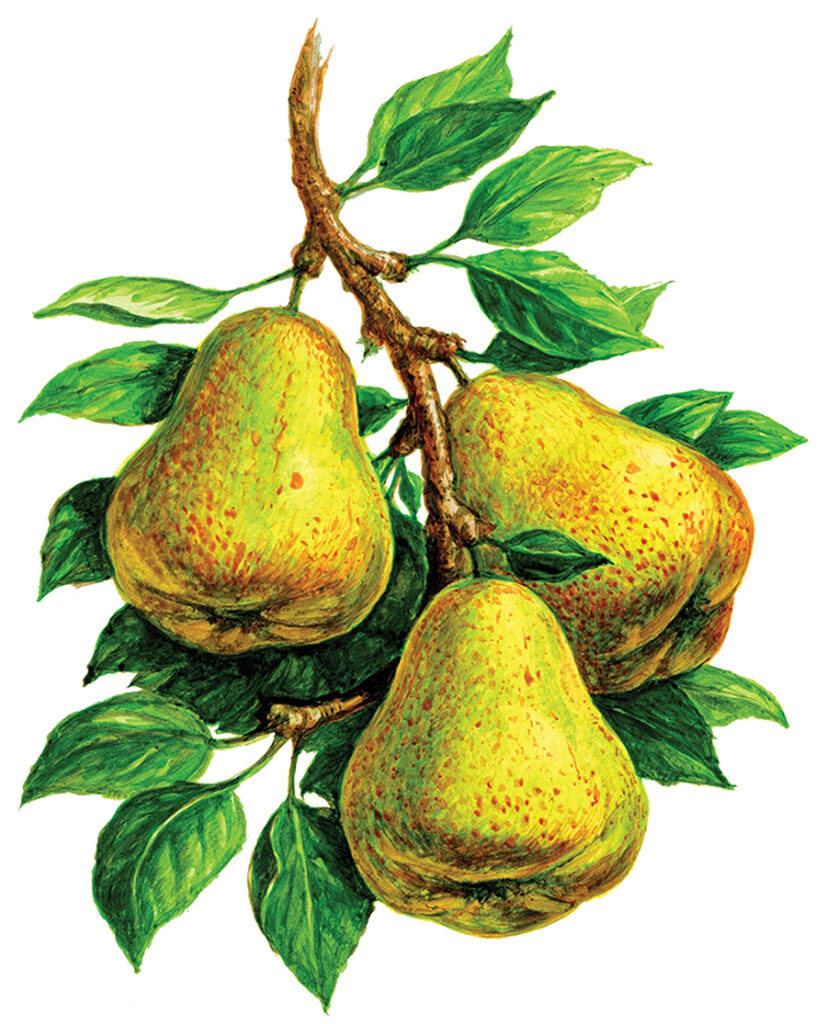
There are flowers, and there is fruit. But if you’re looking to dazzle your green-thumbed sweetheart on Valentine’s Day, consider gifting a fruit tree, which ultimately offers both.

Apple, fig, persimmon, pear and plum are among the recommended fruit bearers for our state. Choose cultivars that thrive in the particular soil and climate you’re working with, plant it with a kiss, then let the tree enchant the gardener year after year.

Year of the Dragon

The Chinese (Lunar) New Year is celebrated on Saturday, Feb. 10. Get ready for the Year of the Wood Dragon, the last of which delivered Beatlemania and the U.S. Civil Rights Act of 1964.

If ever you’ve heard “The Great Race” fable — that is, how the Jade Emperor determined the sequence of the 12 animals associated with the Chinese calendar — then perhaps you recall the honorable qualities of the dragon (fifth sign of the zodiac), who stopped to help the creatures of the Earth rather than easefully crossing the finish line first. Those born under the Year of the Wood Dragon are the wayshowers. They’re here to dream up a better world, and have the vigor and drive to roll up their sleeves and get the job done.  OH

Birdwatch

Birdwatch

A Rare Winter Visitor

Keep an eye out for the snow bunting

By Susan Campbell

No bird in North America conjures up an image of midwinter like the snow bunting. These open country birds of the North are well adapted to cold and snow, as their name implies. The species is migratory and so may be found in the northern half of the U.S. in winter. Individuals are not at all a common sight this far south. However, they may show up here and there during the colder months. So, it is good to be aware — and know what to look for.

Snow buntings breed in rocky areas on the tundra during the late spring and summer. They nest in crevices between rocks, using moss and down to create a soft cup. In the fall, when temperatures plummet and the days shorten, these birds take off in a southerly direction for more hospitable locations. Typically, they show up in weedy fields and along lakeshores, but they can also be found at the coast on sandy beaches.

These birds typically have more white plumage in the summer — especially the males. This is the result of feather wear (not different feathers) during the cooler months after a post-breeding-season molt. Males are white with black backs, wingtips and tail tips. Females are grayish, but even they have white bellies and flanks. In winter, their plumage contains brownish hues such that they blend in well with the vegetation, as well as the sand or soil in their preferred feeding habitat. They are truly birds of the ground and so are rarely seen perched in trees or on wires. In flight, they are quite distinctive year-round with large white wing patches and white rumps. And if traveling with others, they will produce an array of odd, loud noises: They may rattle, buzz and/or twitter.

Single snow buntings may be easily overlooked. They do not tend to flush until the last second. Between the fact that they are so well camouflaged and that they tend to be silent, they are often missed even at close range. Furthermore, they are not typically found at feeding stations, preferring larger natural areas to backyards.

Although there have been no reports of these special little birds sighted in central North Carolina yet this season, there has been a flock of up to two dozen on the Outer Banks this winter. They have been observed feeding on the seeds of sea oats and other dune grasses since early December on the south side of Oregon Inlet. If you happen to be out that way in the next several weeks, you may be able to find them. Flocks may move around frequently, leapfrogging over one another as they search for their next meal. Simply stroll the dunes watching for movement around the vegetation, and be sure to listen for their raspy calls. The group sticks together by frequently vocalizing. Keep an ear out and you may be rewarded with a glimpse of this rare winter visitor. OH

Susan Campbell would love to hear from you. Feel free to send questions or wildlife observations to susan@ncaves.com.

Home Grown

Home Grown

And Just Like That…

I learned sologamy is a thing

Kicker: Marrying yourself is called sologamy. Self-marriage is legal in all 50 states. Yet it took a 5-year-old to tip me off.

By Cynthia Adams

While hacking at a tangle of ivy and Virginia creeper, our neighbor, Warren, approached the fence. He swung a toy sword while wearing the expression of someone who wanted to unburden himself.

When I complimented his red kicks, he solemnly nodded, his blonde curls bouncing, and studied his feet as if surprised to find them there.

His small fingers reached through the chain link fence to pet Patch, our Schnauzer. Generally friendly, Patch responded with a small growl, even as his tail wagged happily.

Like kids, dogs are unpredictable.

“Sorry, Warren,” I apologized. “He’s grouchy today.” 

“So is Baxter,” he pointed out, nodding. Baxter, a wire-haired rescue, is mercurial. We worked hard to end incessant fence fighting between Bax and Warren’s two dachshunds.

“How’s preschool going?” I asked, still weeding. Wrong topic.

He muttered something unintelligible. His frown deepened. Muddling along, I gathered the little guy was interested in planting vegetables. “Plant some popcorn,” I suggested, trying to elicit a laugh.

“You can’t grow popcorn!” Warren replied. But, after thinking, he changed his mind and his face brightened. “It’s corn!” 

So, I suggested he grow popsicles.

“You can’t grow those!” he protested, spluttering. Warren was a tough audience. “You have to go to the South Pole to get popsicles!” Nonetheless, he agreed to include me in his next polar order.

Garden and snacks exhausted, I again broached the subject of school. One girl in particular seemed to dominate Warren’s thoughts, but he struggled to explain how. I’ll call her Julia.

I gathered that Julia perplexed him — naturally, irritation can mask fascination between the sexes.

“You know what she said?” he asked, frowning and walloping a magnolia with his sword, venting his frustration. 

What might a precocious girl say? I couldn’t guess.

“She said Obama married himself.” He gave the tree trunk another hearty stab before fixing me with a long look. Waiting.

I mumbled, “Is that right?” 

Warren muttered something to the intractable magnolia, not bending to his will, and lashed it once again. 

“That doesn’t sound right to me,” I said, trying to read Warren’s reactions. “You can’t marry yourself.”

This was comic fodder. My mind flashed to a TV show from the 1960s, The Linkletter Show. It was the sort of comment Art Linkletter drew when interviewing kids ages 5–10 for a popular segment called “Kids Say the Darndest Things.” 

But Warren had me thinking. 

Beyonce’s song, “All the Single Ladies,” pointed to a clue: Single women have long outnumbered married ones in the U.S. and in the U.K. 

Seems that sologamy, self-marriage, self-partnering had many names, and was legal and well documented.

When and where it began is unclear, but, in a 2003 episode of the dramedy Sex and the City, the main character, Carrie Bradshaw, declared she would just marry herself. Ostensibly to fight the unmarried woman stigma. Of course, that was fictional. Real life examples weren’t hard to find and include:

Supermodel Adriana Lima said “I do to me” in Monaco in 2017.

Actress Emma Watson “self-partnered” in 2019. 

Also, closer to home, American Idol winner Fantasia Barrino (from High Point) embraced sologamy by putting a ring on her own finger. Barrino later married Kendall Taylor — which self-marrieds can do — in 2015.

Bigamy? No. The self-married can legally other-marry.   

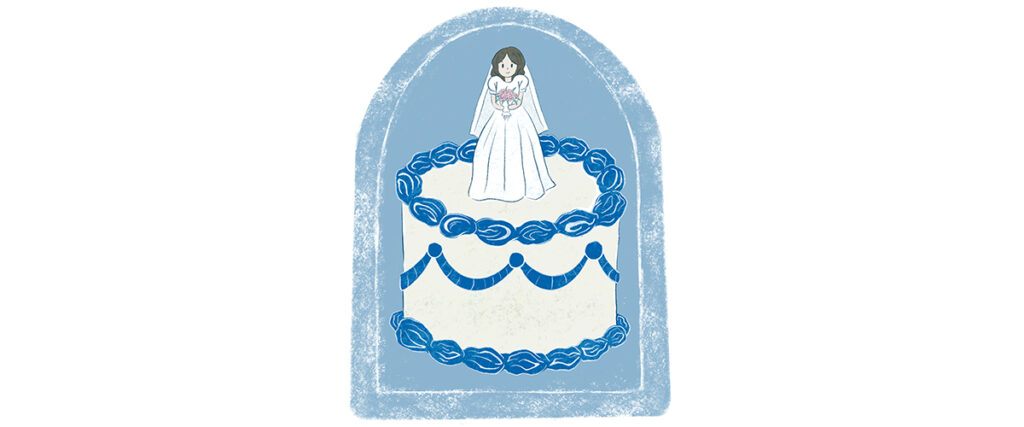
Singletons going the self-marriage route may or may not wear a wedding gown, may or may not buy themselves a nice ring, and may or may not have a wedding cake for their big day. But they report feeling affirmed, ready to vow eternal love henceforth. 

To themselves. 

“This is not a Bridget Jones-like tragic story,” wrote Ariane Sherine in a Spectator piece entitled “Marriage for One” four years ago. “If we can’t find a knight in shining armor, we make alternative arrangements.” 

Warren, abandoning his sword, was now on his trampoline, whooping and hollering. I mopped my brow, observing his spring-loaded joy, which didn’t require another to be complete.   

Perhaps young Julia’s wouldn’t either.

It was a new time.

Knight be damned.  OH

Cynthia Adam is a contributing editor to O.Henry magazine.

Tea Leaf Astrologer

Tea Leaf Astrologer

Aquarius

(January 20 – February 18)

Let’s be honest: The foundation is crumbling. So, too, are the walls. That’s Pluto in Aquarius for you, and for the next 20 years, the planet of destruction, death and rebirth will shake us to our collective core. You were, quite literally, born to show us a new way forward. When the North Node of Destiny links up with Chiron (the wounded healer) on February 19, there’s no stopping you from sharing your weirdest, wildest imaginings out loud. Bring on the renaissance, space cake.

Tea leaf “fortunes” for the rest of you:

Pisces (February 19 – March 20)

A box of chocolates, minus the gooey, pink nougat.

Aries (March 21 – April 19) 

Three words: milk of magnesia.

Taurus (April 20 – May 20)

There’s more than one way to peel an orange.

Gemini (May 21 – June 20)

Try not to scare off the neighbors.

Cancer (June 21 – July 22)

Apply rose water.

Leo (July 23 – August 22)

Gentle pressure will suffice. 

Virgo (August 23 – September 22)

Soften the muscles in your face.

Libra (September 23 – October 22)

What if there isn’t a wrong way?

Scorpio (October 23 – November 21)

Best not to skim the fine print.

Sagittarius (November 22 – December 21)

If you can’t laugh at yourself, there’s work to do yet.

Capricorn (December 22 – January 19)

Tighten your bootstraps.  OH

Zora Stellanova has been divining with tea leaves since Game of Thrones’ Starbucks cup mishap of 2019. While she’s not exactly a medium, she’s far from average. She lives in the N.C. foothills with her Sphynx cat, Lyla.

Art of the State

Art of the State

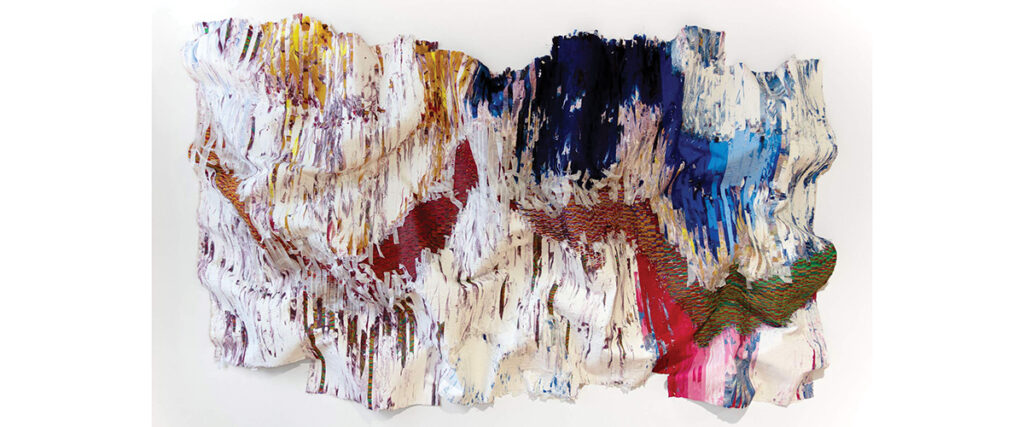
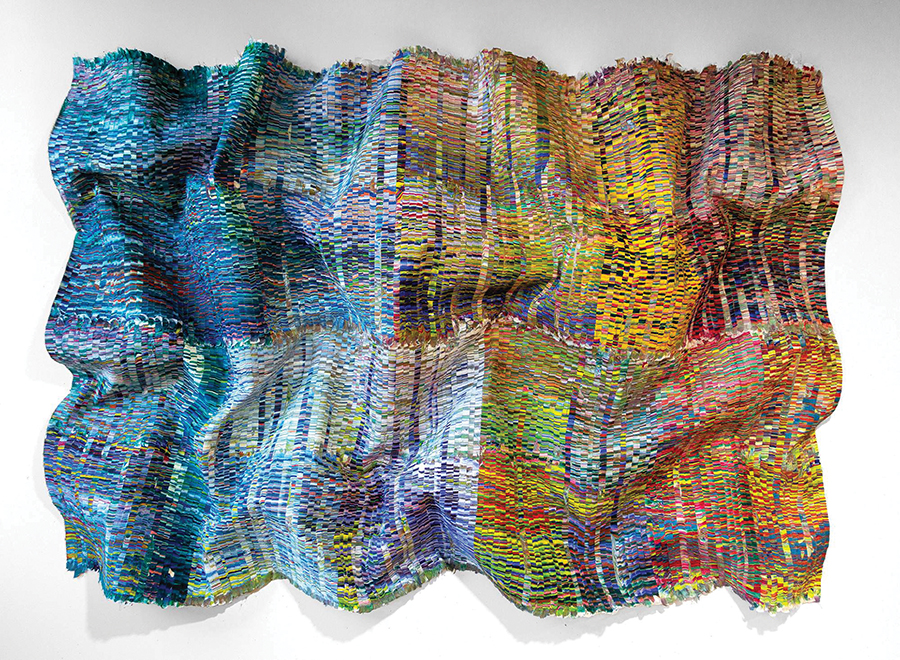
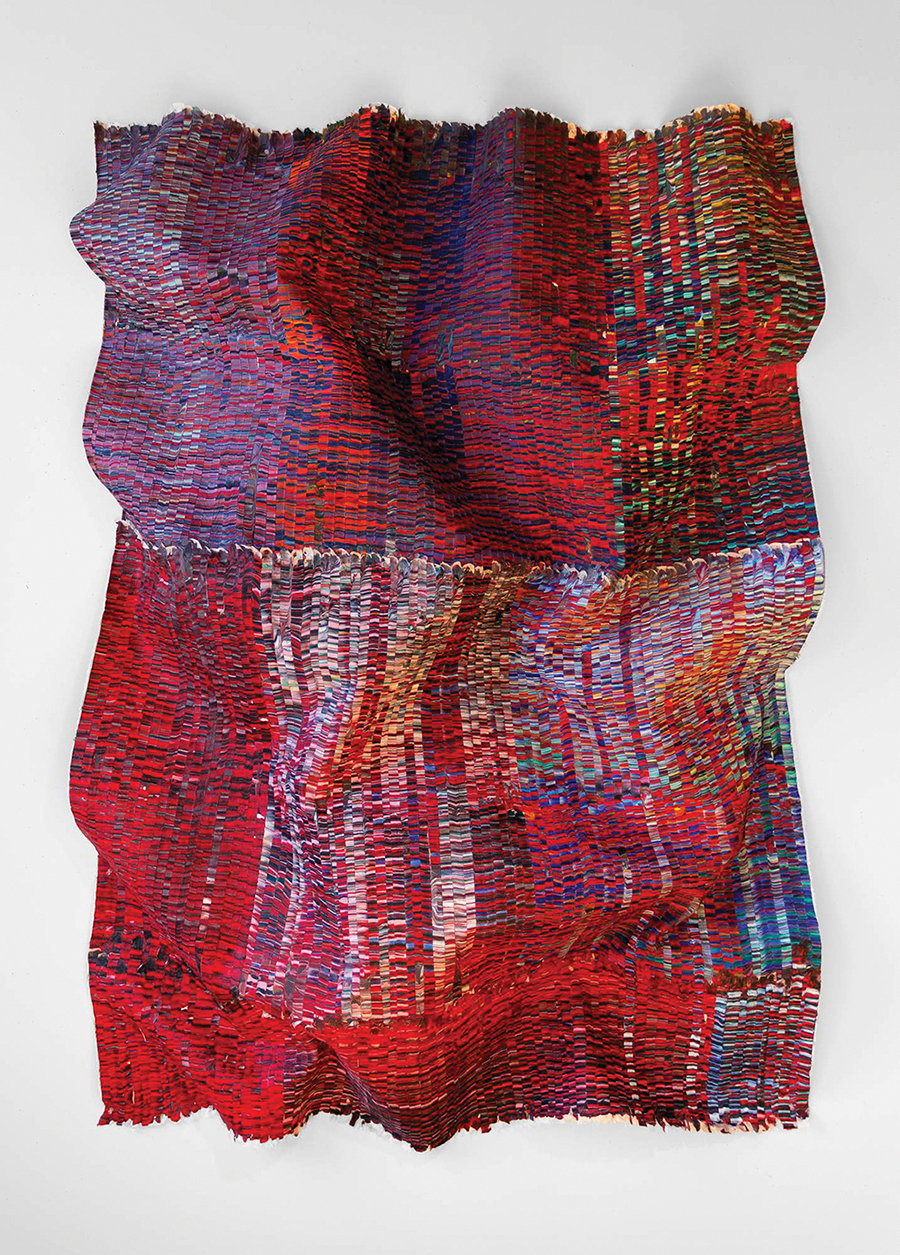
Feature image: Cham (Encounter No.9), 2023, Hand cut silk, acrylic, canvas mounted on wall, 84 x 120 in.


Sculpture in Silk

Kenny Nguyen’s unique medium weaves tradition with ingenuity

By Liza Roberts

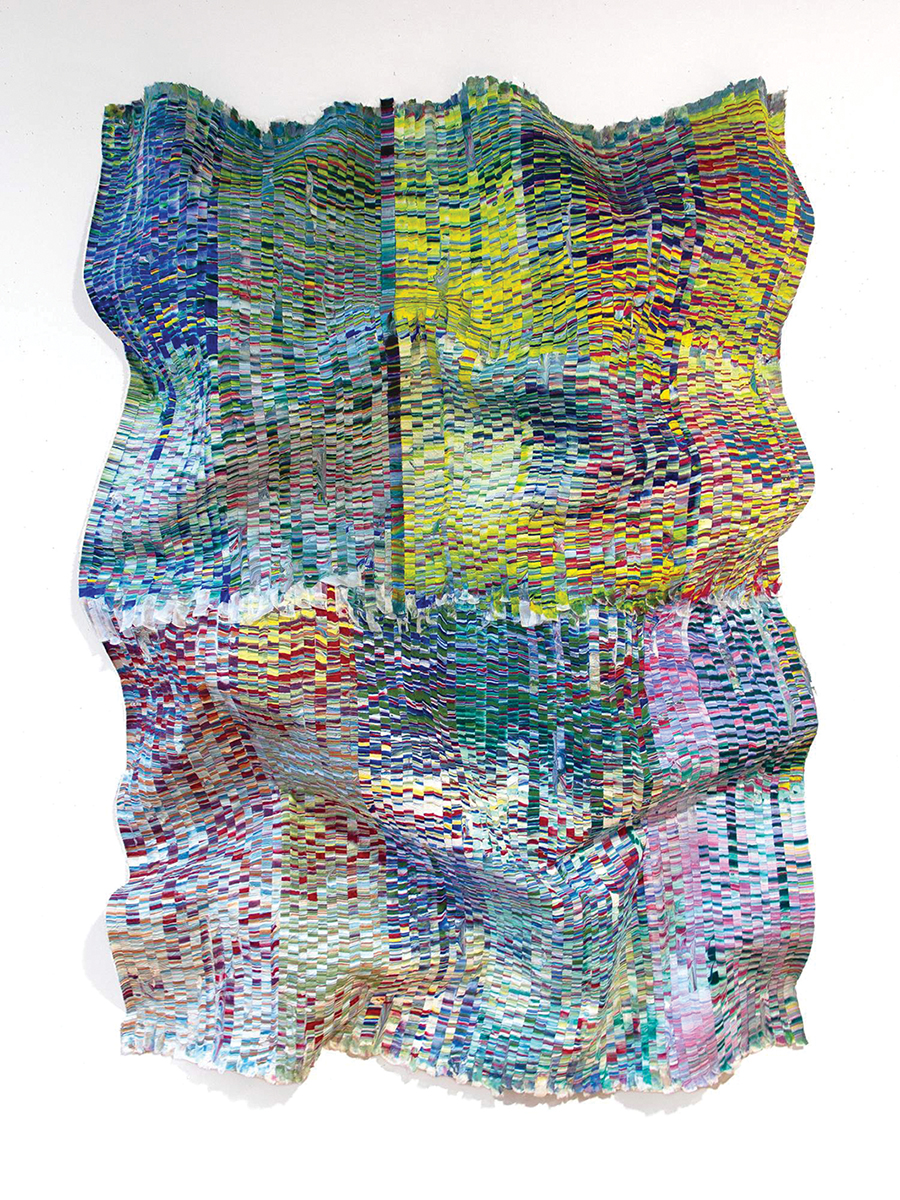
“Every time I start a piece, I imagine there’s a body underneath it,” says Quoctrung Kenny Nguyen, a former fashion designer who makes rippling, three-dimensional sculptures out of paint-soaked silk. “Instead, there’s this absence of a body, in sculptural form. I think it’s beautiful like that.”

Torn into strips, dredged in paint and affixed to unstretched canvas, Nguyen’s silk segments fuse to become a malleable but sturdy material that he molds with his hands and pins in place. Every time he hangs a piece, he changes the pin placement — and with it the object’s shape, shadow and energy. Some have a “more architectural feel,” others are more organic.

These works explore and illustrate Nguyen’s experience with reinvention, cultural displacement, isolation and identity. His chosen material — with its direct ties to the cultural history of his native Vietnam, where the fabric is revered and traditional “silk villages” keep ancient production techniques alive — is a key component. “Identity is changing all the time,” he says, “and the work keeps evolving, in a continuous transformation.” It all begins with the fabric in his hands. “Silk is already a transformation: from the silkworm, to the silk thread, to a piece of silk. So it’s holding a metaphor.” More than one: “People see silk as a very delicate thing,” he says, “but actually it’s one of the strongest fibers on earth.”

Right: Encounter Series No.5, 2023, Hand cut silk, acrylic, canvas mounted on wall, (Approx.) 72 x 120 in.


Nguyen’s work has earned him solo exhibitions and dozens of awards, residencies, grants and fellowships all over the world. It began to take off commercially in a big way during the pandemic, when he began using Instagram to share images of his pieces, and after Los Angeles-based Saatchi Art named him a Rising Star of 2020, one of the 35 “best young artists to collect” under the age of 35 from around the world. He now has art consultants and galleries representing his work all over the country and in Europe, and has had to move his studio out of the garage of his family home and into a former textile mill to keep up with demand. He no longer works alone, with three assistants (all art students from UNC Charlotte) helping him with prep work, photography and studio management. His biggest challenge is no longer finding an audience; it’s managing the business.

Nguyen couldn’t have imagined this kind of success when he immigrated here in 2010 from Ho Chi Minh City with his family. He was 19 and had a BFA in fashion design from the University of Architecture Ho Chi Minh City. But he couldn’t find a job and spoke no English. “It was just a culture shock. You can’t communicate with anybody. You feel so isolated. Homeless, in a way. I was struggling,” he says.

Art called him. Nguyen enrolled at UNC Charlotte to study painting — Davidson artist Elizabeth Bradford was one of his teachers — and found himself yearning for a way to incorporate his own culture and passions into the work. In the end, the way those came together was a happy accident.

During the summer of 2018, three years out of UNCC, Nguyen had just arrived at an artist’s residency in rural Vermont, where he planned to continue painting the “very flat, very traditional” types of canvases he’d been creating until that point. He realized that in his rush to get out the door, he’d left a container with most of his colorful paints and brushes behind. In fact, he realized that he’d managed to bring only three materials with him: a bucket of white paint, skeins of silk and some canvas. “What can you do with that?” he wondered. He began ripping pieces of silk, dredging them in paint, affixing them to canvas, “and you know, it just happened.”

Left: Encounter Series No.1, 2023, Hand-cut silk fabric, acrylic paint, canvas, mounted on wall, 84 x 65 in.

Middle: Encounter Series No.9, 2023, Hand-cut silk fabric, acrylic paint, canvas, mounted on wall, 48 x 63 x 5 in.


Quickly, he decided he was on to something: “The material was speaking for itself.” Bits of transparent silk dripped off his canvases, letting light shine through. “I decided I didn’t want the frame anymore. I decided: Let’s sculpt it.”

To get there, though, he knew he’d have to manipulate his silk in new ways. “Silk has such a value in the Vietnamese culture,” he says. “For me, to destroy a piece of silk, to cut it into pieces . . . that’s a big deal for me. I pushed myself to do that.”

He hasn’t stopped. “The work is evolving in such an amazing way,” he said in late December. “I’ve just been in the studio nonstop, producing work.” Nguyen says that kind of work ethic has been crucial to his success. Some of it is rooted in his early years working in fashion while in school, some of it is hard-wired, and a lot of it is simply about his love of the work.

“The more that I work with the materials, the more I realize how it works and the more capacity I have,” he says. He’s experimenting with large-scale work, which can be challenging to mold in lasting sculptural forms, but not impossible. His largest works are now as many as 40 feet long, and he makes them in five or six different segments, which he then sews together. “It’s not evolving in a straight line,” he says. “There are a lot of tests, and a lot of failures. Little accidents happen, unexpected things happen, and I pick up on that.”

When he’s not working on commission for collectors with requests for particular dimensions or colors, Nguyen often goes right back to where he started, letting colors and shapes come to him intuitively, sometimes reworking old pieces that didn’t originally come together, pulling out paints he hasn’t used in a while, relying on instinct. His materials never stop inspiring his creativity. “It amazes me,” he says, “that the material, this silk, can hold a sculptural form.”  OH

This is an excerpt from Art of the State: Celebrating the Art of North Carolina, published by UNC Press.

Life’s Funny

Life’s Funny

Project Runway

Sitting on a tarmac is boring: Sitting beside a tarmac is another story

By Maria Johnson

“Here comes one!”

Conversation freezes and heads swivel to the horizon, where two bright beams glow, side by side, above a distant tree line.

“Oooooh, that’s a big one,” says our airplane-obsessed friend, whose birthday we are celebrating with a parking lot picnic beside a runway at Piedmont Triad International Airport.

The four of us, all empty nesters, are way beyond the age of coveting stuff. Well, most stuff anyway.

Experiences, time together, moments that morph into stories and embed as warm memories — that’s what we prize.

So, recently, our wee gang has been celebrating birthdays with daytime excursions that introduce us to new places and people.

During one of these forays, a friend who was not being fêted at the moment came clean about her obsession with all things aero. As a young woman growing up in Rockingham County, she tinkered with the idea of becoming a flight attendant. That dream never took off, but her fascination with soaring above it all persisted.

As an adult, she regularly asked flight crews for tours of cockpits; bought toy jetliners with battery-powered engines and lights “for the grandchildren.” She even bought a captain’s hat from a former Piedmont Airlines pilot.

Side note: If you ever want to see a bunch of 60-plus North Carolinians get misty-eyed, ask them about Piedmont Airlines. It really was the best. Sigh.

Anyway, our well-traveled pal also revealed how much she loved to watch airplanes take off and land. She said she liked to imagine who was aboard, where they were going, what it was like there, and what the passengers would do when they got there.

Escapism? Totally.

The rest of us knew what we had to do for her birthday: Find a place to watch planes come and go. I remembered that there used to be a diner near PTI where you could catch the action aloft. An internet search confirmed that the restaurant had closed, but a few clicks later, I landed on a website called planespotters.net, where jet-heads post their favorite viewing sites.

A recon mission was called for. One pal piloted. I co-piloted, translating the map app’s instructions because who the heck knows what 500 feet looks like when you’re going 60 miles an hour? Just turn left where that blue car is coming out.

We cased several parking lots, some right next to the runways. I’m quite sure we appeared on several security cameras.

To dispel fear — and reduce the odds of being placed on a TSA watchlist labeled “HUH?” — we waved at the control tower as we drove past. Several times.

Maybe it was the time of day, late one afternoon in the fading light of fall, but we didn’t see much action.

The next day, I stuck my head in at one of GTCC’s aviation training buildings, “yoo-hooed” my way down a hallway and found a darkened classroom where three young men sat at computer screens doing . . . we’ll call it homework.

“Hey, fellas, I know this sounds weird, but do y’all know of a good place to watch airplanes take off and land?”

“Yeah, I know a great place,” one of the guys said, popping out of his seat and walking over to show me a map on his phone.

He pointed me to a gravel lot off Old Oak Ridge Road.

I drove right over. Jackpot.

I dropped a pin and shared it with our foursome. We booked a date.

A couple of weeks later, we packed up camp chairs and a knee-high table.

One of us brought fruit and crackers.

Another brought Biscoff cookies and packs of almonds.

Another brought prosecco.

The birthday girl brought her captain’s hat, which she wore proudly as we cheered and waved at the passing planes.

They looked so small, even the big ones, when you considered that these sleek aluminum tubes carried so many people, each connected to their own constellation of lives. The passengers would scatter as soon as they claimed their bags, and yet, for a precious few ticks of the clock, they were on the same trip.

Was it any different on the ground, at our makeshift celebration only a stone’s throw from barbed wire and warning signs?

Between the drones and roars overhead, we turned to our seat mates and talked of the things circling our hearts. Of joys and worries. Of health and family and friends.

As we chatted, sunset painted the sky in neon pink and somber purple.

A flock of starlings, headed for their evening roost, rippled like a flag in the sky.

The nighttime lights of the airport emerged like the skyline of a city.

Other people came and went from the parking lot: a lone young man perched on his motorcycle; a middle-aged woman and her small dog; a young couple who spent most of their time taking pictures of themselves and their car.

Small eddies of humanity swirled and dissipated here.

We were one of those swirls, sitting in a tight circle on a dusty patch of gravel, wrapped in throws against the deepening chill as we sipped and nibbled, nodded and mmm-ed, rode the crosswinds of laughter and tears, and occasionally looked to the clouds and let our imaginations fly.

We were determined to enjoy the ride.  OH

Maria Johnson is a contributing editor of O.Henry magazine. Email her at
ohenrymaria@gmail.com.

Omnivorous Reader

Omnivorous Reader

Dicey Drama in Haiti

Looking for treasure but finding trouble

By Anne Blythe

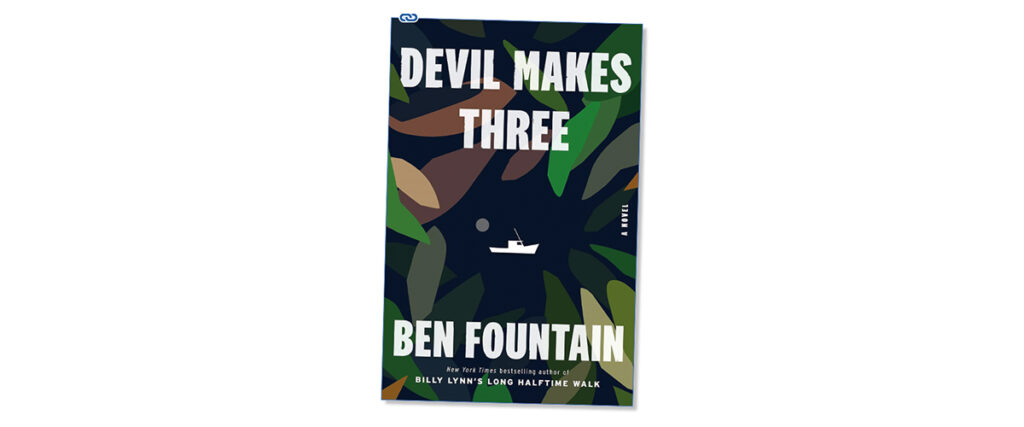
Given the political fracture in this country and the intensified drumbeat of questions about the survival of democracy, it might seem daunting to tuck into Ben Fountain’s Devil Makes Three: A Novel.

The sheer size of the North Carolina native’s latest book — 531 pages — is intimidating enough. When you throw in that it’s a deep dive into life in Haiti immediately following the 1991 military coup that sent President Jean-Bertrande Aristide into exile, you might be tempted to put this novel about abusive power, excessive greed and dictatorship back on the shelf and save it for a less divisive time.

Don’t do that. Instead, open Fountain’s work of fiction. Let the story pull you from a once blissful beachfront through streets littered with butchered corpses and the headless body of a mayor, to crumbling estates, voodoo priestesses and treasure hunts on the turquoise waters lapping against the former French slave colony fallen under the rule of an oppressive military regime. A political thriller and adventure-filled page-turner, Devil Makes Three explores a country in turmoil from different angles through four main characters in their 20s.

Matt Amaker is a rootless American college dropout drawn to Haiti with unrealized ambitions after circulating through the Caribbean as a “dive gypsy.” Alix Variel, the ambitious and beguiling son of a prominent Haitian family, persuades Matt to come with him to Haiti to start a dive shop of their own catering to a wave of the expected tourism before the coup upended the country’s dreams of democracy and prompted international trade embargoes.

Despite the upheaval, Matt and Alix have not given up all hope on ScubaRave being a successful business, and turn their attention to hunting Conquistador treasure and artifacts in the under-explored ocean waters off Haiti.

“Haiti has treasure,” Alix tells Matt while they are smoking a joint and pondering their future.

One wreck he was aware of had as many as 12 cannon among the wreckage. If they were bronze, they could attract high-end collectors, deep-pocketed people who might pay as much as one Saudi oil prince had — $600,000 for a pair of cannon.

“Why the hell are we messing with scuba,” Alix asked. “We should be hunting treasure all the time.”

“Because it’s a really stupid business, that’s why,” Matt responded. “A few people make some money and everybody else loses their shirt. It’s like Vegas, the lottery, it’s mainly just luck. You happen to dig over here instead of a quarter mile over there, that’s the difference between a fortune and wasting your life. Screw that. It’s too random for me . . . Treasure is trouble.”

That prognostication is a driving line of the novel, which also focuses on Audrey O’Donnell, a rookie CIA officer, a sharp and aspiring government agent also known as Shelly Graver, who quickly finds herself involved in ethically questionable drug deals and agency-supported operations to keep Aristide out of power.

All the while, she wrestles with the part of her job that calls for manipulating people, even as she’s romantically involved with Alix. Audrey’s belief that it is in Haiti’s best interest “to integrate into the global economy, which last time she checked, was overwhelmingly trending toward the free market American model” puts her in direct opposition to Misha, Alix’s sister and a love interest of Matt’s.

Misha returns to Haiti in the midst of researching and writing a thesis at Brown University with a working subtitle “Psychological Rupture in the Literature of the Black Atlantic.” Instead of going back to school while her homeland is in tumult, she goes to work at a public clinic where the CIA tries to mine the medical records of her patients to test their political loyalties. “The coup d’etat had unfolded as a kind of twisted affirmation of her still gestating dissertation,” Fountain writes.

In a country where the minimum wage was $5 a day in the early ’90s, Misha wrestled with “the contradiction of the lived experience” in her homeland. “Once again Haiti was instructing the world, pushing ahead of the historical curve, and it was paying the price in blood and grief,” Fountain writes. “Why take to the streets if you are already free, as you’d been told every day of your life you were. Forget your slack stomach and aching back, your weary mind. Whatever else might be said or alleged of him, Aristide gave voice to, made visible, the contradiction of the lived experience of the country.”

Despite their differences, Misha and Audrey come together to help save Matt and Alix from the throes of dangerous and misguided adventures brought about by their attempts to “float up” bronze cannon. The men find themselves being arrested by soldiers on “conspiracy to commit terrorism charges” and are thrown in prison.

Haiti’s top general, however, has a keen interest in scuba diving and treasure hunting, and springs Matt from prison on a working furlough to help find Christopher Columbus’ Santa Maria before the 500th anniversary of its sinking in December 1492.

By making Haiti the focus of Devil Makes Three, Fountain is able to weave themes of power, politics, race, history, capitalism, globalism, voodoo and the legacy of plantation slavery throughout the novel using the characters’ dialogue as they down rum and tonics, smoke marijuana and feast on creole dishes.

Whether it’s Fountain’s description of Port-au-Prince as a city with “a dull orange haze hanging over everything like a fulminating cloud of Cheetos dust” or his tightly knit storylines, this Dallas-based lawyer-turned-writer, born in Chapel Hill, raised in Elizabeth City and Cary, gives the reader a lot to digest.  OH

Anne Blythe has been a reporter in North Carolina for more than three decades covering city halls, higher education, the courts, crime, hurricanes, ice storms, droughts, floods, college sports, health care and many wonderful characters who make this state such an interesting place.

Hidden Figure

Hidden Figure

How a Black washerwoman helped free 15 slaves

By Ross Howell Jr.

Photograph by Bert VanderVeen

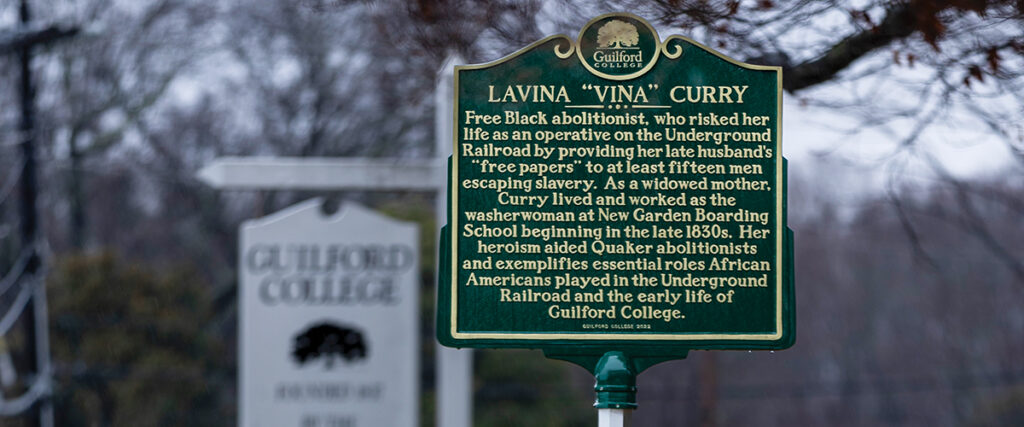
Lavina Curry.

We don’t know where “Vina” was born or how she died. We have no likeness of her — no etching or drawing.

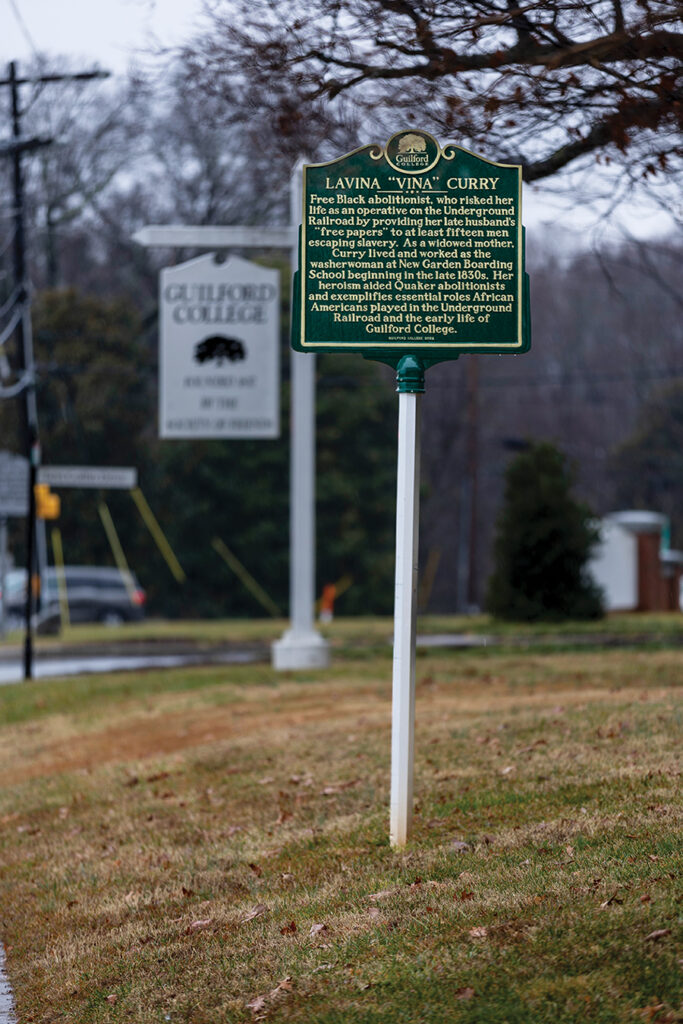
Yet a Guilford College historical marker honors what she did.

Professor emerita Adrienne Israel played an essential role in preserving and telling Vina’s story.

Israel retired from Guilford in 2019, after teaching history there for 37 years. One of her most popular courses was a study of the Quaker community, the local free Black population and the roles individuals played in helping slaves escape North Carolina via the Underground Railroad.

And one of those individuals was Levi Coffin, a Quaker abolitionist born on a Guilford County farm in 1798. His family moved to Indiana in 1826 to avoid persecution for their antislavery views. Historians estimate that Coffin assisted in the escapes of more than 3,000 fugitive slaves during his lifetime.

“Most of the stories about the Underground Railroad were framed around white abolitionists,” Israel says.

“But I was convinced that free Black people in the Greensboro area must’ve been involved, too,” she adds.

Evidence was hard to come by.

Then Israel found a memoir written by a cousin of Levi Coffin, published in 1897.

“There was a free negro named Arch Curry, living near our home, who died a few years after father,” wrote Addison Coffin, whose father died in 1826.

“His widow’s name was Vina; she was the washerwoman for the boarding-school for several years,” Coffin continues. He describes Vina as a “shrewd and discerning” woman who had kept “her husband’s free papers” on hand after his death.

The “boarding-school” was the New Garden Boarding School, predecessor to Guilford College. “Free papers” were documents drawn up by county courts to certify a Black man was a freeman and not a slave.

Vina allowed individual fugitive slaves to use Arch’s papers as identification.

“This was done 15 times to my knowledge,” Coffin writes. He explains that after the fugitive reached freedom, Levi would return the “stolen” papers to the widow.

“This was done occasionally with other papers,” Coffin concludes, “but none were ever used like those of Arch Curry.”

There it was.

A local free Black person helping the Underground Railroad — if Israel could prove “Arch” and “Vina” existed.

Women were rarely named in early records, so Israel started searching for Arch.

Deed books showed that in 1820 a Black freeman named Archibald Curry had purchased land on Brushy Creek in Guilford County, and, a year later, more land on Horsepen Creek. Between the 1820 and 1830 censuses, Curry’s household grew from himself, his wife and two children to seven children — four male and three female.

His name doesn’t appear in the 1840 census, so apparently Arch died about the time Coffin had noted in his memoir.

And Arch’s widow?

The 1840 census counted three female “free colored persons” at New Garden Boarding School.

Among the women was washerwoman Vina Curry, age 55.

Assisting Israel in confirming Vina’s identity was Quaker archivist and special collections librarian Gwen Erickson, who located entries in the school’s ledger for “Lavina Curry.” No entries for Lavina are found after 1843.

It was Erickson who secured funding for the historic marker, dedicated in 2022 as part of a national consortium of universities studying slavery. Erickson says the marker reminds us that there were more free Black citizens who worked with the Underground Railroad and “continue to go unnamed.”

It was up to Sarah Thuesen, associate professor of history at Guilford, to involve students with the project, working with classes to draft the text inscribed on the historical marker.

Thuesen says that while her students had some idea about the school’s role in the Underground Railroad, “they probably never would’ve heard the name of Lavina Curry if not for this effort to recognize all freedom fighters, white and Black.”

And retired professor Israel?

She’s on the trail of one of Vina’s daughters.

“Her name is Sarah,” Israel says. “She moved to Indiana with her husband, a free Black man named Richard Ladd, who had been accused of helping a fugitive slave.”

There’s pride and delight in the professor’s voice.  OH

Ross Howell Jr. is a contributing writer.

O.Henry Ending

O.Henry Ending

Backseat Smooching

The joyride home from elementary school

By David Claude Bailey

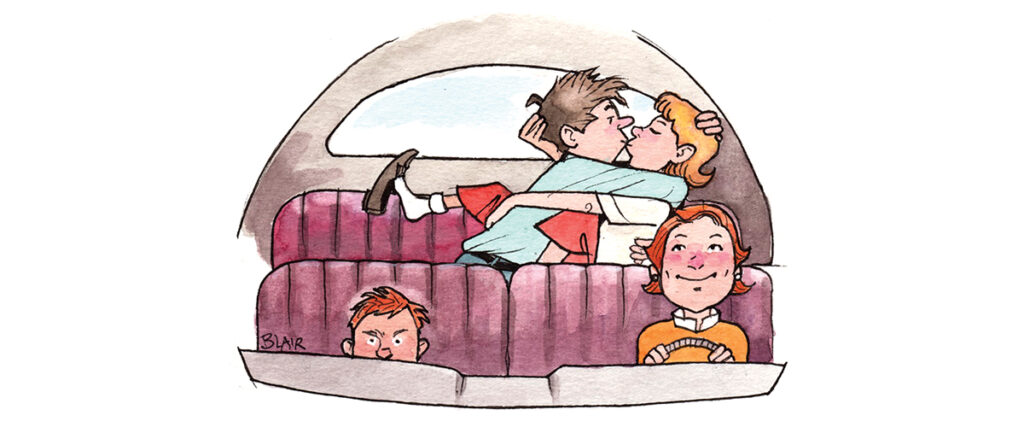
This is a story about pre-adolescent smooching, but the pre-teen boy in me wants to start with the car, a huge 1947 Pontiac Streamliner with those sweeping, flared fenders favored in gangster movies. (My father had a 1954 V-8 Pontiac Star Chief, a sleek and powerful car with an illuminated face of an Indian as a hood ornament. But Dad’s car didn’t hold a candle to the Streamliner, with its sleek, Jaguar-inspired lines and capacious interior.) This automobile was obviously the choice for those who dreamed of a luxurious and fabled life on the big screen.

Our chauffeur, Marian Orren, always perfectly coiffed, would pick up her son, Frank, plus me and our classmate, Evelyn, from elementary school every afternoon.

The Art Deco radio with golden illuminated buttons and dials would be aglow in the middle of the dashboard. From its mouth-like speaker, which looked like a howling mask from a Greek tragedy, the latest Hit Parade tunes would pour, setting the scene. “Volare.” “All I Have To Do Is Dream.” And, oh my God, the “Witch Doctor.” The back seat was big enough to host a party, but Evelyn and I would settle into the plush, cushy, tufted seats, and slide into the corner. Before we’d reached the stop sign, we were locking lips.

Who knows why and how we got started with this passionate car-noodling. I, with one eye, was bullied all day long, and the idea of someone caring about me, much less showering me with kisses, was the high point of each day. I’ll never forget Evelyn, my first sweetheart.

We were in fourth or fifth grade and our dalliance was limited, neither of us even close to the fervor of adolescence. And maybe that was a good thing.

Frank would sit in the front seat, begging his mother to make us stop. She, in fact, encouraged us, and we’d carry on until the Streamliner pulled up to the curb of 602 Boyd Street, where I reluctantly hauled the coat I’d shed and my army pack out the side door.

Evelyn came to a recent high school reunion all the way from New York City and we had an absorbing and long chat, catching up on our various trajectories.

And then I said, “What was all that smooching about?”

If Evelyn had a good answer, I didn’t hear it. Maybe I’d had one too many gin and tonics.

But magic comes to mind.  OH

David Claude Bailey still enjoys kissing in cars and can sometimes be found fogging up the windows of his 1981 Jeep CJ-7 with his wife of 56 years, Anne.