Home Grown

HOME GROWN

Sugar Baby

Jonesing for a fun-sized fix

By Cynthia Adams

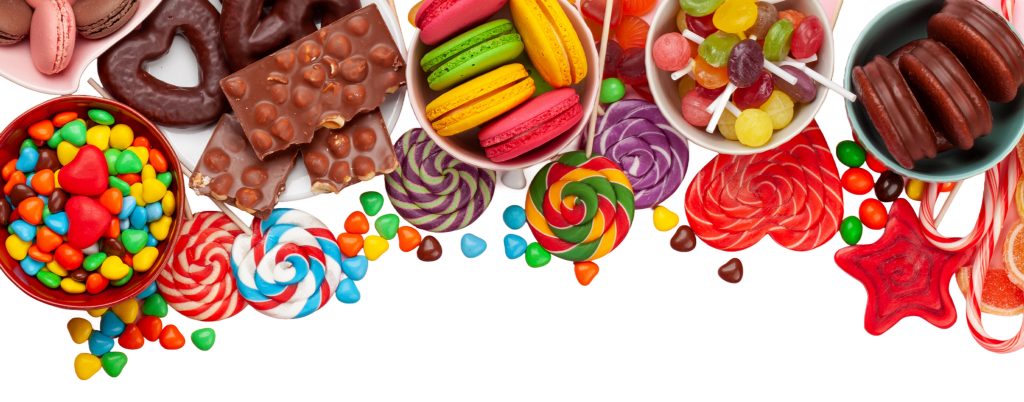
A fantastical shot of ice cream, jawbreakers and pastries make me drool like one of Ivan Pavlov’s dogs.

This sugar-charged chassis of mine has an internal engine that purrs at the sight of gooey sweets — then splutters and stops. Demanding a refill. 

A saner person, someone free from sugar addiction, may ask how it took root. Some claim they are salty people. Or savory people. Actually, I like those food groups too.

As it happens, we were born this way.   

A taste for sugar is hard-wired into human anatomy. 

“The brain is dependent on sugar as its main fuel,” says Vera Novak, associate professor of medicine. “It cannot be without it.” Scientists have found half of all sugar energy in the body is used by — get this — the brain.

In my case, too, there was a sugar pusher. Enter my father, Warren, the alpha of sugar addiction.

A dedicated sweets guy, our dad was known to make evening forays into Charlotte to Krispy Kreme, 50 miles roundtrip, returning with two dozen raspberry- filled pastries. Was he really responsible? Obviously, he had a very large brain, one practically demanding he stoke it with sugar.

Consider this: Krispy Kreme makes 5 million doughnuts daily. Statistically, that’s a lot of sugar-munching/brain-feeding, so Warren was hardly alone. 

He never met Winston-Salem founder Vernon Rudolph, but, if he had, dad would have definitely shaken his hand and invited him home for supper. (After licking the icing from his own.)

Warren would also have shaken the hand of Forrest Mars, creator of M&M’s candies. Fun-sized fact: Initially, the hard-shelled candies were sold exclusively to the U.S. Army during WWII. 

Dad loved those multicolored, sugar-shell-covered bits of chocolate, and so did I. When I was a child, he would sometimes take me on work trips, iconic brown packets of M&M’s marching across the molded dashboard. 

“If I start nodding off or acting sleepy, shake me and keep talking to me,” he ordered, knowing the sugar high would keep me chatty.

The neighborhood “juke joint” was where my sugar fixation became, well, fixed by the age of 5. The store possessed two marvels: a juke box and a multitude of candies. My quarters were stretched between playing favorite tunes and buying sweets.

Munching on a Butterfinger or a Baby Ruth, I’d dance, joyously spinning like a Sufi.

I didn’t snack on Snickers (originally Marathon, renamed for the Mars family’s favorite horse), but rectified that mistake later. The Snickers rebrand elevated it to the top-selling candy globally.

During my childhood, adults weren’t that worried about sugar.  Mornings called for sugary cereals like Alpha-Bits. I arranged the crystalline letters with my spoon to spell SWEET, one of my favorite words, sneaking in extra spoonfuls of sugar and just enough milk to keep five letters afloat.

The only milk I actually liked was the sugar-jazzed chocolate variety.

Grape juice, more syrup than juice, kept my child-sized lips perpetually encircled with a blurry smear of purple. After school, I craved ice cream or cookies. 

Ironically, children in my household weren’t allowed sweet tea until age 12, but were permitted Tang (thank you, NASA!), Orange Crush or Nehi grape. 

Grocery shopping now as a grown woman, I don’t stick to the store perimeter, as nutritionists advise. Even if I start out in the produce or fresh fruit sections, my cart pulls itself straight to the aisle of Forbidden Fruits. Namely, fruit-flavored gummies and candies. Goodies practically throw themselves into the shopping cart, my resolve melting faster than a Dairy Queen Blizzard on a sunny July day. In go jolly-looking jars of marshmallow fluff, sweet jams and bags of chocolates.

When in need of a fast fix, I binge on Nutella (spooned straight from the jar) or, recently, handcrafted Kilwins’ fudge (a gift to my husband) — or once, an entire bag of Dr. Atkins sugar-free candies.

Resolve is a strange animal. My hand reaches for crunchy peanut butter — natural, of course — when I’m feeling resolute. When it fades, anything can happen. After resisting the priciest chocolates still in their gilded gift box, I turn instead to a beguiling tin of Marks & Spencer’s Christmas cookies (called, quaintly, “biscuits”). Next, I hit hard candies, my emergency sweets stash, crunching away like a badger.

The night before my physical, despite being fearful of bad lab results, I polished off most of a “sharable”-sized bag of plain old chocolate M&M’s after a “healthy” dinner. Then I wolfed down more M&S biscuits.

(My glucose results were not great.) 

My dopamine-hooked brain once put my sugar fixation to good use — when weaning myself from smoking. Swapping one oral fixation for another, I kept a large bag of M&M’s in my desk drawer, finally leaving cigarettes behind. 

But, sadly, not sugar.

Some years ago, Delancey Street Moving and Trucking (whose innovative work programs support those overcoming addiction) moved us from our Westerwood home to Latham Park. My husband was called away, so I hustled alongside the movers.

At day’s end, we all flopped down on the driveway, sweaty and famished. Ripping into a bag of Snickers, I offered them around. The guys shook their heads, each lighting up a cigarette.

One gave a piercing look.

“I used to use,” he said, explaining how heroin derailed his life as a pharmacist.

“What’s your addiction?” 

With a jolt, I realized he’d spotted it. 

“Sugar,” I confessed. Taking a deep drag, he nodded knowingly.

Omnivorous Reader

OMNIVOROUS READER

Sense of Urgency

The stories that need telling

By Stephen E. Smith

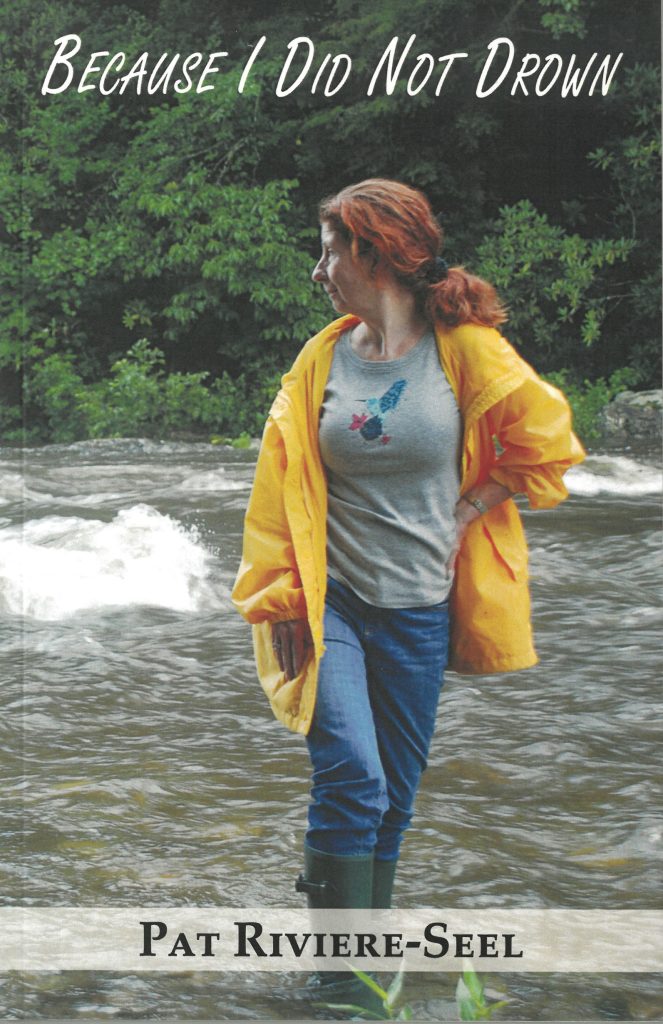
It happens to every writer. The moment comes, sometimes sooner than later, when it’s clear that he or she won’t live long enough to write every story that needs telling. The unwritten stories can be offered as spoken anecdotes, which, of course, vaporize the moment they’re uttered, so getting the stories down in print becomes a source of energy and inspiration. Pat Riviere-Seel’s collection, Because I Did Not Drown, derives its urgency from her desire to have the stories remembered — and to be remembered herself. “How long will the work of art last? Who will remember the artist . . . ?” she writes in her essay, “Unknown Artist.”

Reviere-Seel is the author of four poetry books, most notably the well-received The Serial Killer’s Daughter, which was published in 2009 by Charlotte-based Main Street Rag Press. Because I Did Not Drown explores both the exceptional and mundane — “kitchen talk,” the need for perseverance, the joy of pets (in this case cats), a stray fig plant growing by the back stoop, gun control, the loss of old friends, food lovingly prepared, an enthusiasm for jogging, “disenfranchised grief,” extraterrestrials, etc. Each prose chapter is written in straightforward journalistic prose and intended to convey helpful insights into contemporary life.

She begins her collection by recounting her personal experience with the COVID shutdown. She ends the book by detailing the ill effects of the pandemic’s aftermath, topics few writers have tackled (Sean Dempsey’s A Sad Collection of Short Stories, Cheap Parables, Amusing Anecdotes, & Covid-Inspired Bad Poetry is an amusing exception). This reluctance to write about the COVID experience can be attributed to what readers and writers might perceive as proximity aversion: the shock of COVID is still too much with us, and we’ve yet to sort out its spiritual and political implications. Reviere-Seel takes up the subject head-on: “But as the pandemic stretched into a second year, I became more frustrated, angry, and cranky. I missed my poetry group. I missed my friends. . . . We stayed home. We wore masks. We stayed six feet apart. We were grateful to be alive. . . . What had begun as a public health issue became a political issue. The usual anti-vaccine talk mingled with the talk of ‘the government can’t tell me what to do.’” Her concluding essay, “After the Pandemic,” suggests that kindness is the only possible remedy for a virus that continues to mutate: “Be kind. Most of us did not want to infect our family, our friends, our neighbors, or the checkout clerk at the grocery store who showed up for work every day. Genuine kindness is a balm, a gift, a grace.”

In her chapter “Talking About It,” she is straightforward about her struggles with breast cancer. “I didn’t talk about my experience with breast cancer,” she writes, but the death of an aunt who ignored a lump in her breast inspired her to share her experience. “Early detection and medical advances in treatment have meant that breast cancer is no longer the death sentence so many feared fifty years ago.” Her interaction with the medical community will be of particular interest. When she was denied an immediate needle biopsy, she reacted appropriately. “Nice was not working so I threw a fit, a nice-woman-goes-feral southern ‘hissy fit.’ A redhead-gone-rogue tantrum . . .  I was paying for a service, medical care, and I wanted — no, demanded — a say in when and how that service was delivered.” Her story is a paradigm for all women and men who find themselves caught up in our often lethargic and convoluted medical system.
The course of her disease followed a predictable path, but she made the necessary decisions to preserve her life. The description of her battle with breast cancer is timely, honest, reassuring and possibly lifesaving.

Following each of the prose passages, a poem explicates or explores the theme of the preceding chapter. The poems are well written and could stand on their own as a chapbook. “After the Diagnosis,” for example, follows the chapter on breast cancer:

There are nights — more

than you ever thought you could endure —

when sleep will not come

your thoughts — no, not thoughts —

the deep well of unknowing appears

endless. You try summoning

visions of sunrise, a shoreline, bare feet

running across packed sand. But morning

fog covers this foreign landscape.

Everything you knew for sure yesterday

washed away with the tide, predictable

too the magical thinking, maybe. Abandon

the dock, row your way into the nightmare, further

out is the only way back.

The use of verse to add emotional impact to the short personal essays may strike some readers as unnecessary. At the very least, the transition from journalistic prose to poetry is complex, requiring a complete shift in sensibility and focus. Nevertheless, she forces readers to grapple with many of our most vexing problems. 

Chaos Theory

CHAOS THEORY

From Sourdough to Salem

Making a list and checking things off

By Cassie Bustamante

The Roman god Janus, after whom January was named, had two faces, one that looked to the past and one that looked to the future, symbolizing his domain over beginnings and endings. Last fall, too many endings piled up suddenly. Within the span of one week, a friend’s brother died unexpectedly, we said goodbye to a book club pal’s husband, an integral part of the Greensboro community whose effervescent life was cut much too short by cancer, and another friend tragically lost her beloved dog — all of this a month after my own Aussie-Weimaraner sidekick crossed the rainbow bridge. This perfect storm of grief and loss left me stunned and looking inward, and, frankly, ready to forge my own new beginning.

Plus, I’d just read about Greensboro Public Library’s “One City, One Book” pick, My Father’s List, by Laura Carney. When Carney discovered her late father’s bucket list among his belongings, she decided to honor him by checking off the boxes left incomplete. Instead of pondering how I want to be remembered, hopefully decades from now, I thought about how I want to live.

Inspired by Carney and driven by the mission to make the most of my days, I texted one of my best friends: “It’s a few months away, but next year in January, instead of a big goal for the year, I am going to make a 2026 bucket list and fill it with things I want to do.” No lofty goals of writing my first book or finally having six-pack abs. (At 47, it might be time to toss in the gym towel on that one.)

In December 2024, this particular friend and I had together decided to tap into our creativity in 2025, meeting once a month for a craft night. We managed only a few, but those rare evenings were precious to me. Our young kids would play while we made denim bracelets, pounded flowers — zero stars for that one, a total fail — and caught up on each other’s lives.

Her reply came almost immediately: “Could one of our craft nights be to make a tangible bucket that we put these little notes into?”

A couple hours later, another text came — this time, an image of a Halloween-decorated porch featuring a little cauldron. “Also . . . cauldron for bucket list?”

It was a big ol’ “yes” from me. I love all things witch adjacent. After all, I was named after a witch, Cassandra, on the vampire-themed soap opera of the 1960s, Dark Shadows, and I grew up not far from where the infamous Salem witch trials took place. I’m just accepting my destiny. Crystals sit on my dresser, a manifestation candle on my nightstand. I do not own a Ouija board — that’s a portal too far for me.

In December, I took some time to jot down my very own “cauldron list.” The idea is that, upon completion, I drop the slip of paper featuring the written task into the cauldron:

Write a short piece of fiction. Some people say you should do something that scares you each day and this one definitely makes my knees quake.

Learn to make sourdough bread. Yes, I’m six years late to this trend, but do you know what never goes out of style? Crusty, carby, sourdough bread. In fact, it’s been around for possibly more than 6,000 years. But, in my house, it only sticks around for a day or two.

Get a colonoscopy. Not nearly as appealing as some of my other items, but necessary. To ease my mind around this one, I just googled “what happens during a colonoscopy” and do not recommend you do the same.

Take Wilder on the challenging hike at Stone Mountain State Park. At just 7, he doesn’t know it, but he’s in training to hit up Yosemite, Yellowstone, Acadia and many more national parks with me and my husband, Chris.

Read Just Kids by Patti Smith. I bought this book five years ago and have yet to crack it open. My own editor even asked me recently if I’d read it. “Well, I own it. Does that count for something?” Nope.

Make an autumnal pilgrimage to Salem, Massachusetts. This trip has been on my mental bucket list for years and it’s time to pay homage to the witches who have gone before me.

And the list goes on — but not too much. The point is to embrace my life, not consume what little free time I already have. A year from now, I hope I can tell you that 2026 was the year that I learned to live each day like it was a new adventure, that my cauldron is full of tiny slips of paper. But if that isn’t the case, perhaps one of my own children will one day unearth my unfinished work and set about putting another drop in the bucket — or another slip in the cauldron, as it may be.

Barbecue, Bourbon, Boutiques

BARBECUE, BOURBON, BOUTIQUES

Barbecue, Bourbon, Boutiques

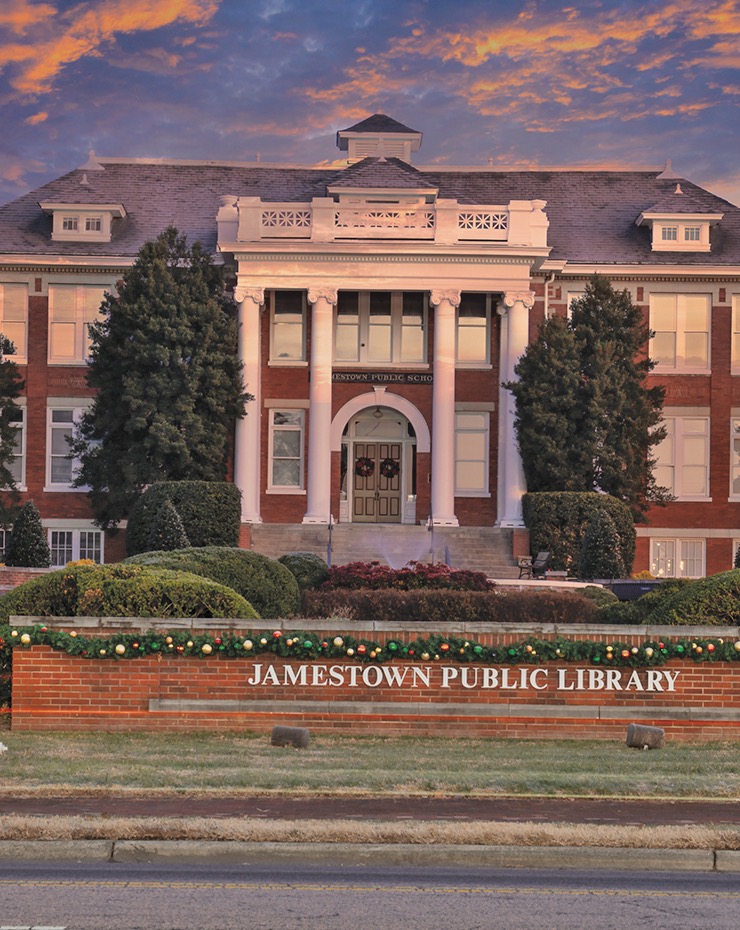
A journey into Jamestown

By Danielle Rotella Guerrieri

Photographs by Laura Gingerich

On a crisp, chilly day with a deep indigo-blue sky overhead, I maneuver my car through a couple of smooth turns into historic downtown Jamestown. Oak and cedar behemoths line my path before being replaced by skinny, black rod-iron light posts, all protecting the quaint village center, comprised of nine one-or two-level buildings. Historic Jamestown, a mere 12 miles from downtown Greensboro, is one of the oldest established communities in the Triad, a hidden gem tucked between Greensboro and High Point, offering enough locally owned eateries and boutiques to make it worth blocking out a whole day on your 2026 calendar.

Since the COVID pandemic ended, Jamestown has been focusing on revitalization in the form of newly emerging shops and eateries — an impressive transformation I’ve witnessed in the short four years since I lived there.

Excited to explore, I meet my friend, Janna, for a full day of shopping and exploring. But first, we fuel up on caffeine at Kindred Coffee. Engulfed by the smoky, rich, chocolatey aroma as we walk in the door, we’re greeted by owner Greg Pittman’s friendly face behind the counter. Pittman and his mom, Marsha, opened Kindred in late 2022 after their online coffee subscription and Cause Roast coffee truck business took off.

“We wanted to create a space where people felt loved and cared for when they’re here,” says Pittman. Jamestown didn’t have a dedicated coffee shop at the time, so it was an easy transition to shift their coffee operation to the space at River Station Twist. After sipping my cuppa espresso, I’m rarin’ to go.

At Second Chance Closet, a boutique-like thrift store that opened in the former Wells Fargo building in 2024, all proceeds go toward Chance Walters Ministry, operated by owners Kacie and her husband, Chance Walters. “The reason we succeed,” says Kacie, “is word of mouth and being part of such a tight-knit community.” Filled to the brim with clothing for all ages, it doesn’t look like a former bank until you veer to the right and notice the formal wear section housed in an old vault. Janna finds a long, alabaster sweater coat for $12.99, and I snag a funky, avocado-green, animal-print sweater for $6.99 — deals we definitely can’t pass up.

Guilford + Main, a large clothing and home goods shop that opened in 2021, is owned by Lisa Perdue and run by her daughter, Alexis Turner. Silver Gallery, its sister store, has been a shopping staple at Friendly Center in Greensboro for 25 years. But, notes Turner, “We have more space here than Silver Gallery, so we can carry more things.” A pair of earrings, gold spikes glimmering on a cream-colored loop, draws my attention, while Janna picks out a few $5 silver dangles from their sprawling bracelet bar.

Strolling back down Main Street, it’s hard to miss Jamestown artist John Firesheets’ enormous sea-blue mermaid-and-squid mural painted on the side of The Soap Lady. Flanked by inviting black front porch rockers, Soap Lady’s creaky screen door announces our arrival to owner Susan Stringer, who’s greeting us with a genuine ear-to-ear grin. In business in Jamestown for 27 years, Stringer expanded to her larger storefront in 2012, where she’s been selling her handmade artisanal soaps and lotions ever since, and has added pottery, soy candles, cards, and many other locally crafted goods to her inventory. Stringer makes all the soaps, body wash, shower gel, sugar scrub, lip balm, body powder and bath bombs using an olive oil base and other natural ingredients. “We have a lot of people going through issues like cancer and radiation, and they can’t use fragrances,” says Stringer, “and using a real soap makes a huge difference.”

Our bellies soon start growling, so we stop for lunch at Southern Roots, one of several eateries on Main Street. Full Moon Oyster Bar, Simply Thai and Black Powder Smokehouse are just as enticing, but walking into Southern Roots is similar to breezing through your favorite aunt’s sunlit beach house — you feel right at home. But, please, keep your shoes on! Owner Lisa Hawley uses her family’s Southern recipes, supporting local farmers and sustainable agriculture. As Hawley puts it, “Our food is prepared with love.”

Our charming waitress, Sydney, takes our orders. Janna can’t resist her favorite gluten-free meal: flat iron steak with a bourbon glaze, cheese grits and Crowder beans, while I select a cup of chicken-and-dumpling soup and a chicken salad sandwich half on buttery, toasted sourdough.

Satiated, we walk a few doors down for a sweet treat, as the mix of sweet and savory scents emanating from Cakes by B’s Blue House Bakery tickles our cold noses and lures us inside. There, we find owner Bridgid Murphy, who co-owns it with husband Bob, whipping up her rosemary goat cheese quiche. Murphy has been satisfying the town’s sweet tooth in her adorable blue house for the last 10 years, preparing everything from caramel-and-pecan-pie bars to savory gluten-free cheddar biscuits. “Our quiches and chocolate chip cookies are incredibly popular,” says Murphy. “We also have a fun one called ‘What the Heck.’“ What the heck, you’re wondering. “It’s devil’s food cake,” she says, “with cookies-and-cream filling and vanilla buttercream on top.” When she first opened, she aimed to have a bakery that doubled as a community haven, and she delivers with baking and decorating classes, meet-the-candidate events during election season, food truck festivals and a trunk-or-treat every Halloween. We snag a batch of Murphy’s famous chocolate chip cookies before our next shop.

Feeling like we entered a high-end art gallery, we step into Bottone Home, a design and decor store with “home vibes on point” owned by Kody Bottone. After we ooh and aah at the exquisite leather chairs, funky modern vases, smooth-edged end tables and enormous wood sculptures, Bottone tells us the shop opened just last year and the company also manages interior design projects. My eyes are immediately captivated by Greensboro artist Erin Beck’s paintings, featuring broad brushstrokes of deep burgundies, vivid emerald greens and auburns, beautifully capturing florals, nature and still lifes. Her paintings make a vibrant splash against Bottone Home’s modern, neutral furnishings.

As 5 o’clock looms, we head up the street to meet our husbands for drinks and dinner. Crafted cocktails call our names as we enter Barrell & Co., where we’re struck by low lighting and smooth jazz and the calming, clean, soothing aroma of tobacco mixed with vanilla. Opened last year, owners Ket Jones, Matt Lokercome and Paul Lothakoun designed the space for enjoying elegant cocktails while phones take a back seat and conversation takes hold. Old fashioneds and smoked fashioneds are ordered, although, not being a huge bourbon fan myself (yet!), I sample a few varieties, courtesy of Jones, and I discover I just might like Eagle Rare.

Black Powder Smokehouse is our dinner pick — a high-energy barbecue restaurant so good they opened a second location in Asheboro. The smoked turkey breast, jalapeno sausage, and pork spare ribs beckon, but we opt for the ever popular, beef brisket, barbecue pork and chicken. Opened in 2019 by pitmaster Keith “Big Brisket” Henning, in a converted 1920s gas station, the establishment features beautifully preserved old gas pumps and massive garage doors that open for outdoor seating on warm days. Four sauces line each table, from house signature sweet sauce to “The Heat,” a hint of fire for spicy enthusiasts. Between us, we share crunchy, cool coleslaw — an excellent heat cleanser — golden-to-perfection tater-tot casserole and an elevated take on mac-and-cheese, smoked gouda kicking it up a notch.

As a yawn stretches across my face, we make plans to return another time for drinks at Potent Potables followed by live music at The Deck. Bags and belly full, I start my short drive home, the historic Jamestown street lamps flickering and fading in the rearview.

Jamestown History

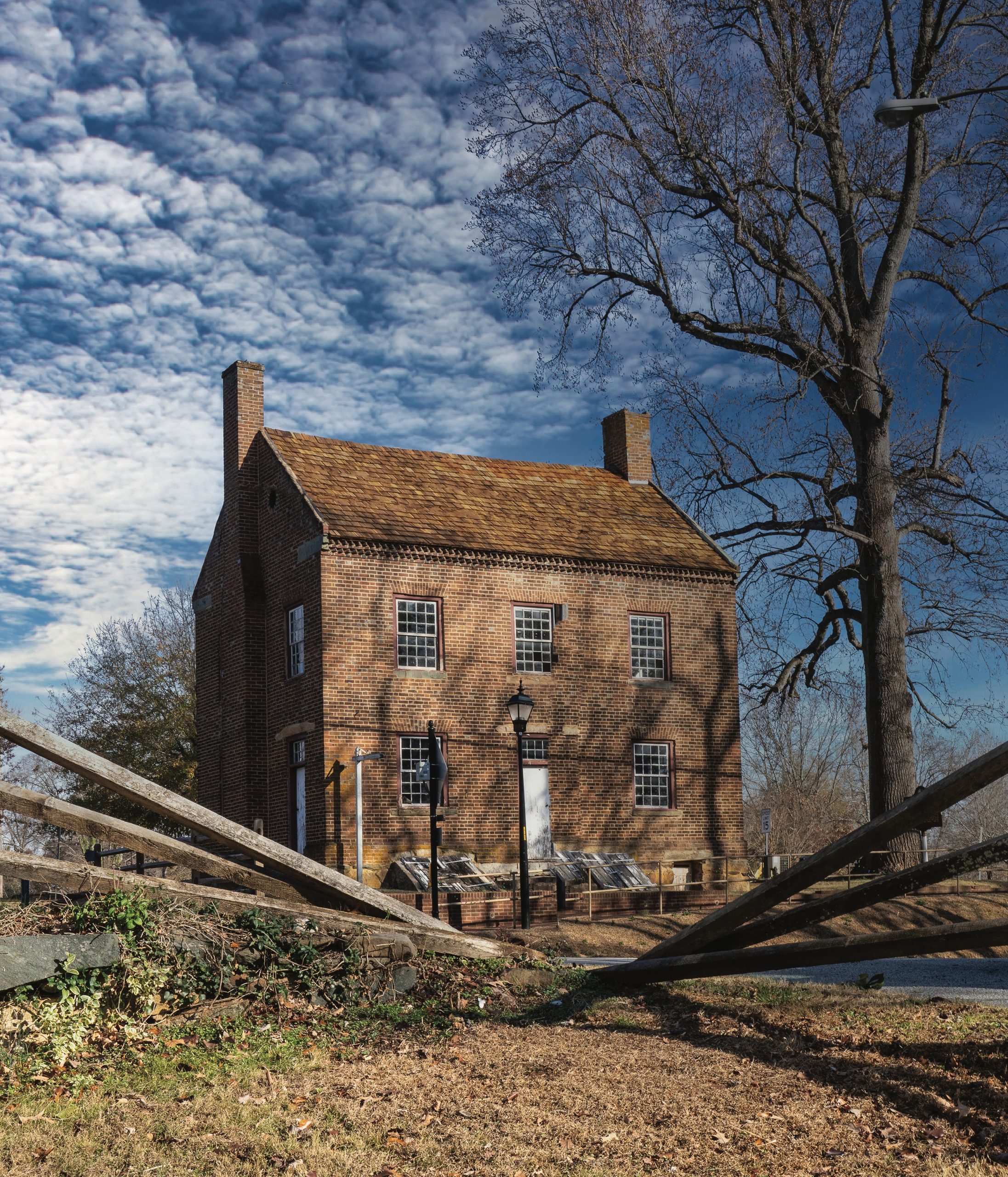
Laid out as a community in 1792 by prominent Quaker George Mendenall, the official town of Jamestown was chartered in 1816 and named for George’s father, James. At Mendenhall Homestead, the home of George Mendenhall’s son, Richard, built in 1800, I’m accompanied by two tour guides, Will Ragsdale and Jay McQuillan, members of the Historic Jamestown Society. McQuillan serves as president, and Ragsdale is the grandson of William and Mary Elizabeth Ragsdale, who previously owned the property and later donated it to the Historic Jamestown Society, which they helped start.

Walking through a sunken summer kitchen in the original part of the house, I imagine Richard taking off his wide-brimmed hat to duck into the cramped room. He expanded the home before marrying Mary Pegg in 1812, adding a parlor and sitting rooms downstairs, as well as bedrooms upstairs, which, in addition to the couple’s seven children, sometimes housed their many out-of-town visitors.

“Quakers welcomed any travelers in; it was part of their makeup and religion,” explains Ragsdale, “Quakers were also focused on education and human rights, believing that women were just as capable and able to learn and do everything men could do.” A black-and-white photo from the 1840s shows the first faculty of Guilford College, half of them women. The school was founded by Quakers, including members of the Mendenhall family.

Stored in the property’s Bank Barn, the Stanley Murrow false-bottom wagon serves as a reminder of how Quakers helped transport enslaved Black people to freedom in the early to mid-1800s. May we all take a note from the Quakers and support those in need through compassionate service and think of everyone in our community as a “friend.”

Almanac January 2026

ALMANAC

January

By Ashley Walshe

January is an ancient remembering; a rush of cold; the crunch, crunch, quiet of naked woods.

This new day, sunlight caressing the frigid earth, inspiration knocks with the clarity of woodpecker drumming against towering pine. Bundled in layers, you lace up your boots, leash up the dog, make for the leaf-littered trail in the open, unobtrusive forest.

Crisp air fills your lungs with a sense of wildness, each breath sharpening your instincts, expanding your horizon, deepening your kinship with the natural world. As dead leaves rustle beneath feet and paws, the wisdom of animal awakens within you. This isn’t just a walk in the wild. It’s a homecoming.

Despite the bleakness of this winter landscape, the sting of the cold, you feel a surge of bold and blissful aliveness. At once, emptiness becomes threshold of infinite possibility. At once, the unseen sings out.

Opossum tracks spell midnight wanderings. A circling hawk graces a vibrant blue sky. Dog presses warm snout to damp earth and listens.

You listen, too, noting the rhythm of your breath, the cadence of your footsteps, the distant crack of hoof upon fallen branch.

Beyond a young beech tree, its pale leaves suspended like a murmuration of ghosts, half a dozen white-tailed deer stand invisible against the sepia backdrop. But here’s the thing: A veil has been lifted; your vision, clarified. You can sense the wild stirrings of these hollow woods. Your breath in the cold is living proof.

Keeping it Real(istic)

The New Year has a way of making us believe that anything is possible — and why not? But we do love to set lofty (read delusional) goals for ourselves, don’t we?

Who thought this was a good idea?

The ancient Babylonians were perhaps the first. Some 4,000 years ago, during their 12-day Akitu festival, “promises to the gods” were made to earn their favor or repay debts. The ancient Romans adopted this ritual to honor Janus (god of beginnings, transitions and time), while early Christians reflected on past transgressions and resolved to “be better” at the start of the bright, new year.

“New Year’s resolutions” entered modern vernacular by the 19th century, becoming a largely secular practice. This year, should you make a promise to yourself, earn your own good favor by breaking large goals into smaller steps. And, whatever your commitment, do it from a place of genuine desire — not just because you think you should.

New Year, New Earth

Suppose we resolved to live in greater harmony with the Earth this new year. Small changes can make a big impact. Below are a few suggestions to deepen your relationship with the natural world and, perhaps, reduce your carbon footprint. Feel free to make your own vow, of course. This is strictly between you and Mama E.

  • Wake up to watch the sunrise
  • Support your local farmers market
  • BYO reusable shopping bags
  • Choose native plants and pollinators for the garden 
  • Ditch bottled water (and single-use plastics) 
  • Visit your local nature preserves 
  • Spend more time barefoot on the earth  
  • Pause to watch more
    sunsets 

Sazerac January 2026

SAZERAC

Sage Gardener

Each year my wife, Anne, and I combine New Year’s resolutions with the annual barrage of seed catalogs to make our garden plans for the season. This January, we’re resolved to finally grow romanesco, a cultivar of cauliflower that is brilliantly chartreuse and looks like the intergalactic sister of cauliflower and broccoli on LSD. Next on our list is mâche, aka cornsalad or lamb’s lettuce, which crowds the produce section of Spain and France, but is relatively unknown here. Very mild with a slightly nutty note, it was regarded as a weed for years in Europe, so we figure it ought to thrive like all the other weeds that crowd our vegetable beds. Something we have not seen in Spain, despite recent trips to visit our newly sprouted granddaughter, is the black Spanish radish. Reputed to have “an earthy, spicy, bitter and pungent flavor,” and, yes, black on the outside, why wouldn’t we plant them? And we’ve always wanted to try the candy-cane striped Chioggia beets, so this is the year, we’ve decided we’re going to. After all, beets thrive in our soil. Salsify, radicchio and cucamelons are on our list, the latter described by epicgardening.com’s “27 Unusual and Rare Vegetables to Grow This Season” as “adorable grape-sized fruits that look like baby watermelons and taste like tart cucumbers.” Aaaaaw. Who doesn’t like a cute vegetable?

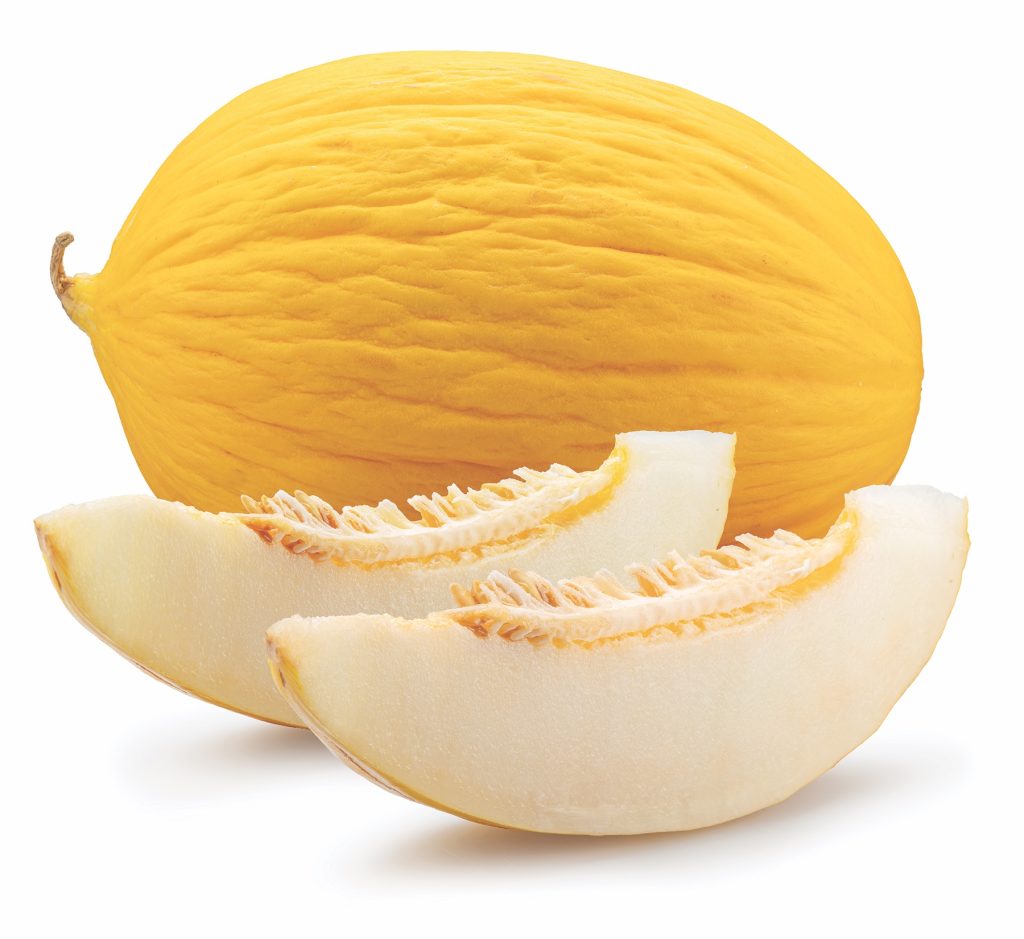
In the way of past successes with out-of-the-ordinary veggies, Anne and I recommend planting goober peas — can you say boiled peanuts? Sea Island field peas were both a culinary and gardening success and, like peanuts, they’re great at crowding out weeds as a ground cover. Another import from Spain is the Canary melon. Oval and yellow, it has a creamy texture, with a sweet, slightly musky taste. We’ve also had great success with purple green beans, which garnered comments from our neighbors, such as “Well, I never.”

In the “Don’t Plant” category, we would list heritage okra, the seeds of which we got from Old Salem, but which had the texture of a canine chew toy. Not even our dog would eat it. Malabar spinach goes gangbusters, is hearty and resists pests, but maybe that’s because of its taste, which reminded me of various inedible plants I tried as a kid. Jerusalem artichokes are fun, but be careful. Yes, you can eat them like potatoes, but they are definitely a moveable feast; and, if you let them, they’ll take over your entire garden. I should add to our long list of flops — celeriac, which we tried again and again, but never got beyond seedlings. Parsnips, kohlrabi and rutabagas have all fizzled for us, but maybe that’s the weather, our soil or the Sage Gardener’s lack of sagacity. We’ve always wanted to grow rhubarb, but decided not to after a yankee in our community garden repeatedly tried with limited success.

On my personal gardener’s bucket list? Dragon fruit. Also corn smut, which only visited my corn once, but I didn’t get around to cooking it before it grew so smutty it looked X-rated. I’ve also dreamed of growing the vaunted corpse flower. And while we’re on the subject of mutability, how about a century plant, which is monocarpic, meaning it only flowers at the very end of its long life, which is more like 10–30 years rather than 100. Granted, at 78, what are the odds of my seeing it bloom? But nothing ventured, nothing grown. — David Claude Bailey

Window on the Past

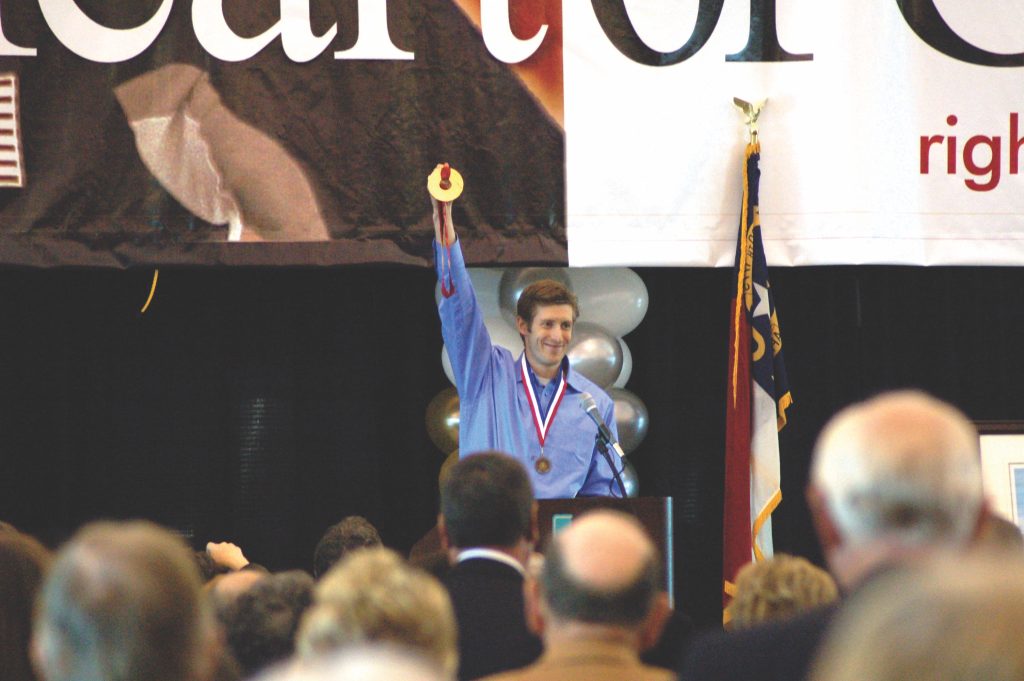
Born and raised in Greensboro, Olympic speed skating champion Joey Cheek is seen here celebrating his 2006 Winter Olympic gold medal win at a luncheon held that March at the Greensboro Coliseum. Cheek, who had trained for this moment since he was a child and had won three bronze medals prior, skated his way into history and, this year, marks the 20th anniversary of his victory.

Just One Thing

“So, I got out there that first day and took a bunch of pictures and was going like, ‘Whoa, there it is. I can see it.’” David Brown, a photographer native to Greensboro, talks about his experience with switching from film photography to digital photography, which produced this landscape photograph he titled The Red Barn. “I packed up all my 4×5 cameras, my film cameras and my Nikon digital and headed out,” he said. Brown, an avid fan of scenic landscapes, thought it’d be a great idea to start shooting them, which gave him the idea to haul his gear to the northernmost portion of the U.S. “I went up to Minnesota, then across the Northern Plains and then down to the Rockies and down to the Southwest, Arizona and all the rest of it.” Now, if you ask Brown where in the eastern slope of the Rockies he was when he captured this scene, he wouldn’t be able to tell you. But, what he could tell you is that switching to digital cameras changed the way he viewed photography forever. Getting to experience the Northern High Plains was just the icing on top. This photo and more of Brown’s work will be premiered at the Revolution Mill’s Central Gallery, Jan. 2–March 27, with a reception from 5–7 p.m., Saturday, Jan. 17. “That’s the whole genesis of the Central Gallery thing, I was cranking these things out. It was saving my sanity at a time of social turmoil and gave me something to focus on, no pun intended.”  — Joi Floyd

Unsolicited Advice

While you create your New Year’s resolutions and start to consider which habits should stay and which should go, don’t forget to add hot tea instead of coffee to the list. Overrated and overconsumed, coffee is out and a fresh cuppa is in. This year, we’re rewinding the times and replacing coffee breath with health benefits, such as lower blood pressure and easier digestion. There’s nothing like waking up early in the morning, slowly sipping your steaming Earl Grey before crying kids, unpacked lunch boxes and the school bus that you’ve almost missed four times this year jolt you awake. But this new habit? You’ve got it in the bag — and here are just a few of its benefits.

Oolong (Wūlóng) Tea: Aside from the fact that the name is fun to say — and not to be confused with Wu-Tang — this tea flaunts strong antioxidant properties. You’re sure to beat any cold that comes fighting your way, hence the Wu-Tang confusion.

Green Tea: Whether you prefer it brewed hot or ice cold, green tea is a great swap for that, er, steep matcha. With lower calories and caffeine concentration, it’ll leave those matcha mavens green with envy. 

Herbal Tea: If you’re tired of having that heavy, bloated feeling every time you eat breakfast, this may be the tea for you as it aids digestion. It also comes in more flavor varieties than December’s candy canes, including peppermint. But, sorry, not including Skittles.

Masala Chai Tea: With a black tea base, masala chai tea improves heart health while serving up warmer, spicier vibes than a gingerbread latte. You know what they say — a cup of masala chai tea a day, keeps the coffee breath away!

A Perfect Obituary

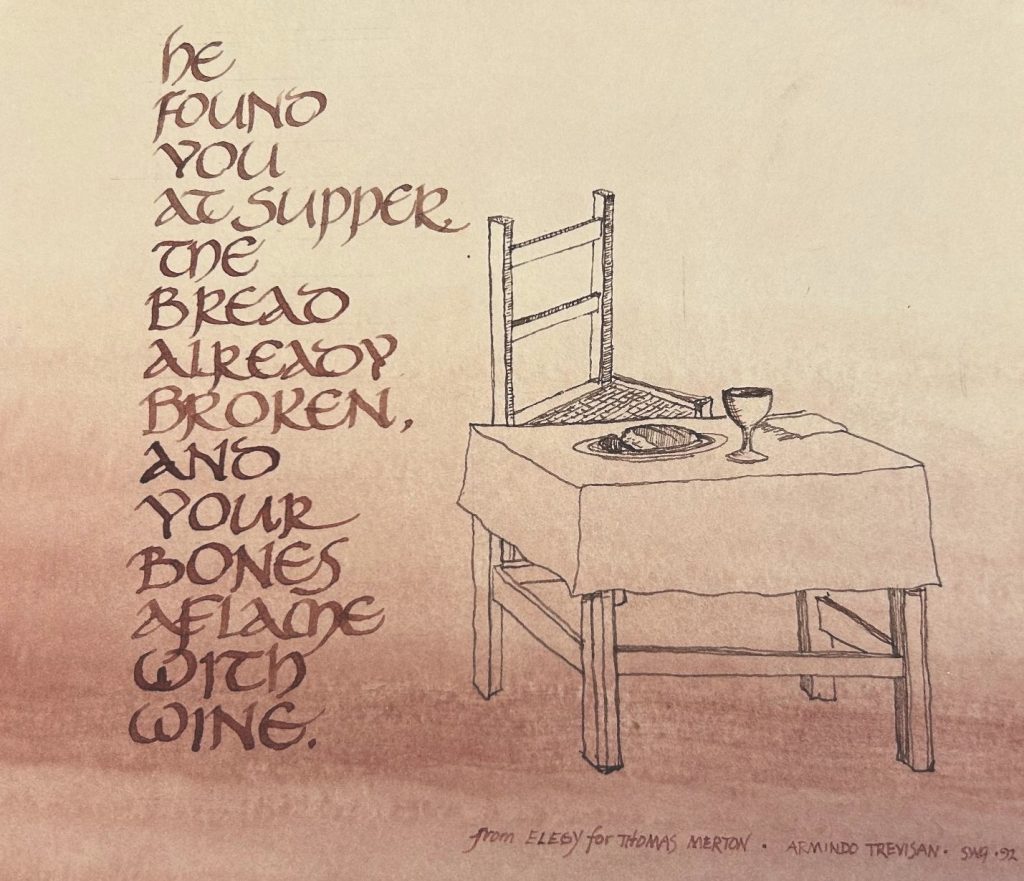
Several years ago, following the tragic death of Thomas Merton, I experienced what seemed to me to be a perfect obituary. I was reading Armindo Trevisan’s poem, Elegy for Thomas Merton, and one line brought me to a great pause: “He found you at supper, the bread already broken and your bones aflame with wine.”

Merton was a monk and mystic, well known through his books, other writings and stories from his life at a Trappist monastery, Abbey of Our Lady of Gethsemani, in Kentucky. Trevisan, a Brazilian theologian and poet, must have read deeply Merton’s writings.

It is Trevisan’s profound affirmation of Merton’s eucharistic life that continues to grip me. I wonder if Merton experienced an epiphanic moment in his life like I did as a 16-year-old attending a Maundy Thursday service at St. Stephen’s Episcopal Church in Richmond, Virginia. I suspect that is when my yearning for eucharist in my spiritual journey took root. For several years now, weekly Wednesday evenings receiving the consecrated elements of bread and wine in All Saints Chapel at Holy Trinity Episcopal Church’s Stillpoint service has nourished that eucharistic hunger. I do not want to be anyplace else.

Those 15 words, beginning with “He found you at supper,” that brought me to a gasp propelled me to my dear friend, Sally Gant, who often used her talent as a calligrapher to take words that set my heart soaring and craft them into an even greater thing of beauty. I have a file full of them! One day when I join Merton and Trevisan in that great cloud of witnesses who watch us run our race, we will share the joy that Sally’s artwork brought us.

    David C. Partington

A Culinary Course in Community

A CULINARY COURSE IN COMMUNITY

A Culinary Course in Community

Tina Firesheets and Ling Sue Withers weave women’s stories into supper

By Cassie Bustamante

Photographs by Bert VanderVeen & Nancy Sidelinger

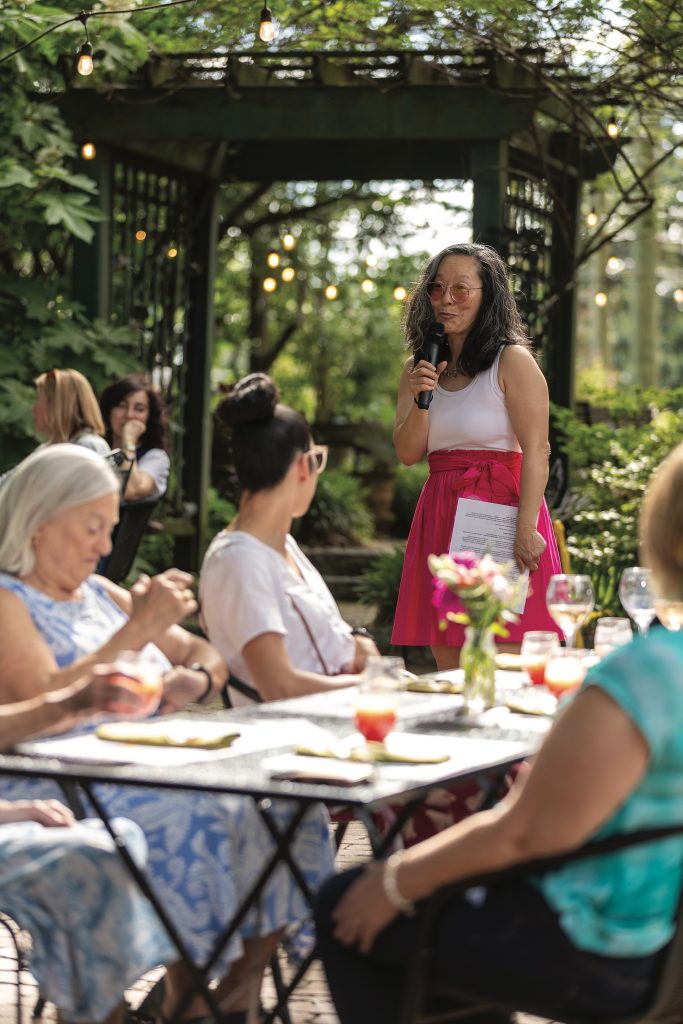
When Tina Firesheets first watched the documentary, Bite of Bénin, an idea took root. “I don’t let go of an idea,” says Firesheets, who describes herself as a “writer, daydreamer and creative thinker.” She immediately texted longtime friend Ling Sue Withers. Thus began the conversation that would eventually turn into disCOURSE dining, culinary experiences for women, by women, where culturally diverse dishes are served with a side of sensory storytelling.

“I reached out to Ling Sue because we both love food and we both love culture,” says Firesheets. Plus, she adds, “If you want to get anything done, you want her to be involved.”

“I sat down and watched [the documentary] in one night,” says Withers. “And I cried.”

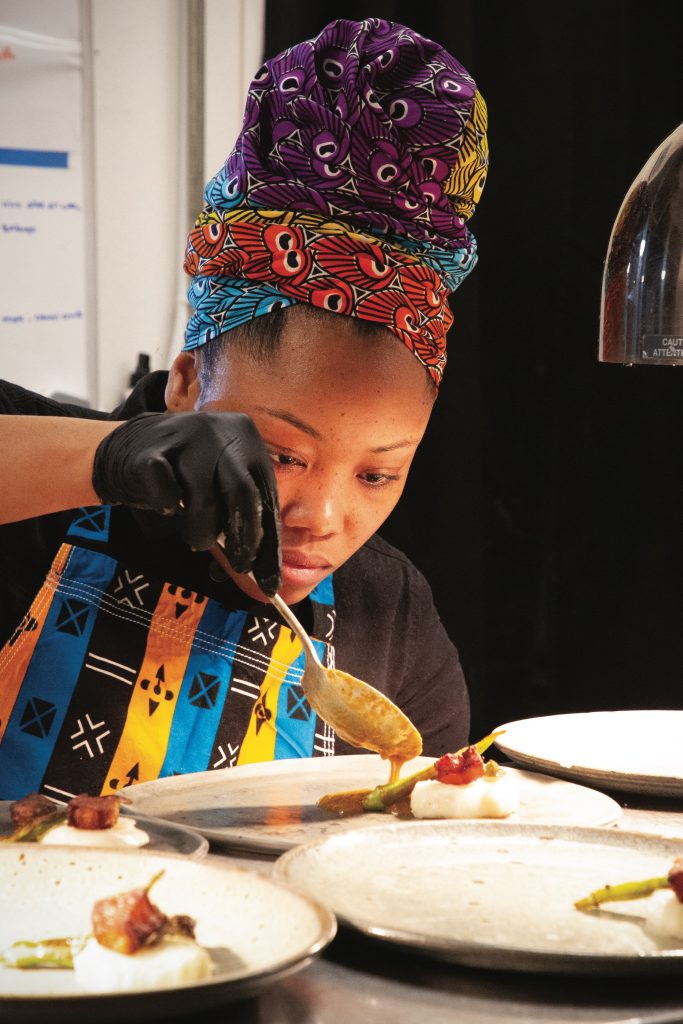
The film centers around North Carolina Restaurant & Lodging Association (NCRLA) 2023 Chef of the Year Adé Carrena. Carrena, a Durham-based chef whose Neo-African chops won her the top spot on Food Network’s Chopped last summer, currently serves as culinary director of Triangle Central Kitchen, a nonprofit dedicated to turning food waste into culinary training and community meals. She was adopted at the age of 10 from Bénin, West Africa, because her birth parents desperately wanted a better life for her. Instead, says Withers, Carrena and her younger sister were adopted into a “horrible” household in America.

Carrena’s story of adoption — and eventually healing — especially moved Withers, a Chinese American “Air Force brat” with family in Taiwan who grew up in the tiny town of Maiden. Like Carrena, she, too, had also experienced “a lot of childhood trauma.”

Firesheets, who grew up in Western North Carolina, was adopted from Korea; her adopted mother was Japanese and her father white. She, too, felt a connection with Carrena. At the time, she had been working as associate creative director for Pace Communications and had been introduced to Carrena through a project Pace was doing with NCRLA. “We just kind of bonded that day because we’re both adoptees and we both kind of had traumatic adoptee experiences,” says Firesheets.

Both Firesheets and Withers felt a strong desire to spread Carrena’s message. “It’s really about healing and how she healed through food and how food helped her reconnect to her country and her family,” says Firesheets.

At the root of it all, though, was the shared passion the disCOURSE founders have for food — and not just food, but unique culinary experiences meant to be savored.

Once, as a birthday gift to Withers, Firesheets took on planning an Atlanta excursion, although Withers is by vocation a professional planner. Withers is a festival organizer who has worked with the North Carolina Folk Fest since its inception and has also amped up her resume with Greensboro’s Solstice Festival and the Piedmont Blues Preservation Society. “Taking a trip? I will make you a spreadsheet,” she says. “Pregnant? I will make you a spreadsheet.”

But, this time, Firesheets took on the daunting task of creating a spreadsheet for the spreadsheet queen herself, filling it with must-visit restaurants, including notes about where they needed to eat while the food was fresh and where they could load up their coolers to haul it home. “I knew then,” says Withers, “lifelong — life-long — friends.”

On another trip, the two visited the mountain town of Sylva, where Firsheets introduced her pal to her favorite restaurant, Dalaya Thai Cuisine, owned by James Beard Award-nominated Chef Kanlaya “Gun” Supachana. In the dead of winter, the place was hopping, no indoor seating available. Undeterred, the two claimed an outdoor seat. Who cares that they could see their breath? Next thing they knew, other diners followed suit and soon the patio was as packed as the dining room. Worth the bitter chill? Definitely. “Her food is so stinking good,” says Firesheets.

At home in her Greensboro kitchen, Withers, too, is an excellent cook. Firesheets admits that she’ll “drop anything” to attend one of her pal’s famous dinner parties. “If I had plans elsewhere, I would just cancel.”

Fueled by their shared love of food and ignited by Carrena’s story, the two women jumped into action. Firesheets had formerly been involved with Ethnosh, an organization that hosted ticketed events highlighting local and mostly immigrant-owned restaurants until COVID shuttered its operations in 2020.

Less than four years later, disCOURSE began plotting its very first event featuring Chef Adé Carrena at Machete, which owner Tal Blevins generously allowed them to use, in January 2024.

Venue and chef locked in, the two women began reaching out to potential guests, hand curating a group of women who exhibited, according to Firesheets, “diversity in culture, professions, experiences.”

On top of that, says Withers, their theme mirrored Carrena’s own story: healing. And they wanted “to bring together women to have a serious connection.” So, they skipped the alcohol — opting instead to serve mocktails — played the documentary and gave Carrena the floor in between dishing out her Neo-African bites.

“We had an idea of what we would like to accomplish,” says Firesheets, “but she leveled up the storytelling.”

It was Carrena’s idea to incorporate an African handwashing ceremony before food was served. “Most people had never experienced that,” says Firesheets.

Ashley Madden, who was in attendance at that very first event, believes ritual is important to women in general. “Just to have that experience and to start with that cleansing, everyone is starting with a fresh slate,” she says. “I thought that was really beautiful.”

Madden also notes that she came away having made new friends — a mother and daughter who were seated at her table — and she was introduced to a chef she wasn’t familiar with prior. “Ade [Carrena] has gone on to do Food Network and I feel like I am just in her corner,” she says. “I am just cheering her on.”

During that first disCOURSE dining event, Withers, who prefers to be in the background observing, watched as women made connections and held thoughtful conversations around various subjects. “It’s exactly what we had wanted.”

But that begged the question both women wondered aloud. “How are we going to top that?”

Just a few months later, in May 2024, they hosted their second event, a kimchi tasting at Potent Potables in Jamestown. The chef was Eunice Chang, owner of The Spicy Hermit, a Durham-based company that creates traditional and seasonal kimchi using fresh, locally farmed produce. (Kimchi is a traditional and often quite spicy Korean form of pickled vegetables.)

To make the meal more substantial, Withers pan-fried sausages from Moonbelly Meat Co., a woman-owned business based in Durham. And this time, the women introduced alcoholic beverages.

“We did a kimchi michelada [beer paired with lime, salt and hot sauces] because The Spicy Hermit also has a kimchi bloody Mary mix,” says Withers, adding that it “was really awesome.” A couple other cocktails and mocktails were on the menu, too.

The Spicy Hermit event also introduced occasional workshop add-ons. After a February 2025 event featuring an array of dumplings by Durham-based Sister Liu’s Kitchen, Chef Cuiying Liu, who came to America from China in 2013, taught attendees to handmake their own. Madden opted for the add-on and admits that hers weren’t quite as good as Chef Liu’s. “Although mine were great because I made them,” she says, “but, gosh, it just made you appreciate what goes into that!”

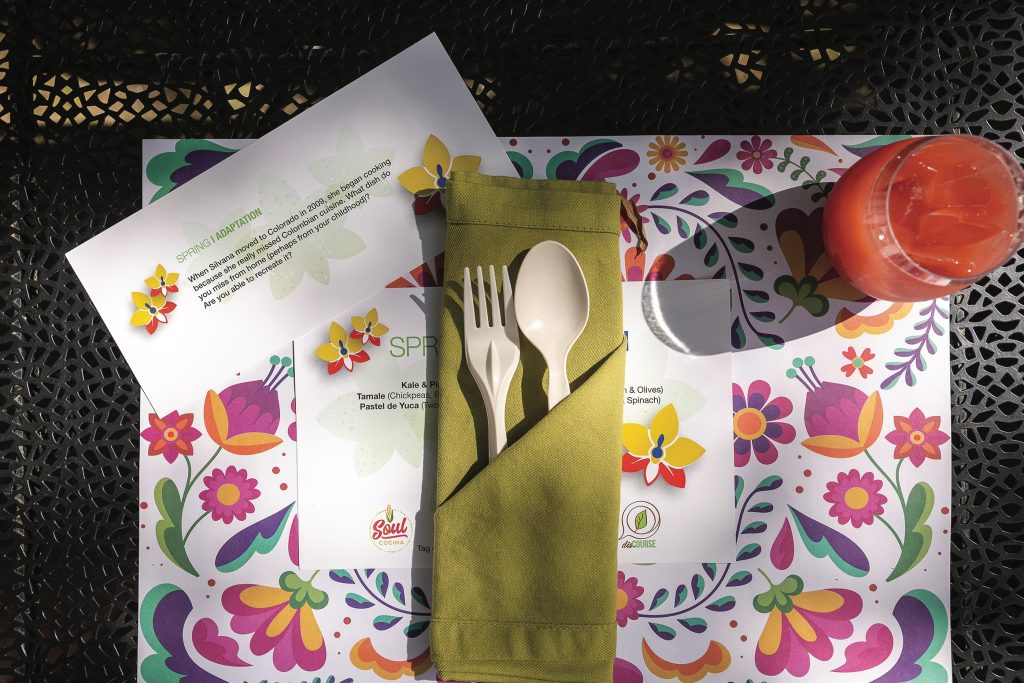
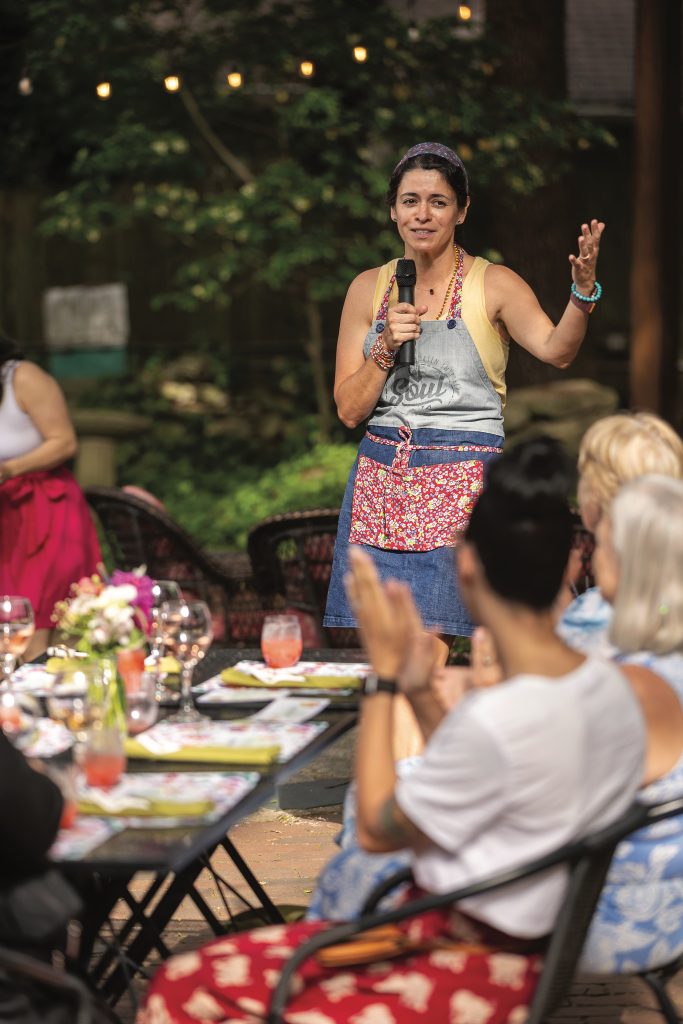
To build on the sense of community disCOURSE was creating, Firesheets and Withers began adding conversation cards to tables. For example, at their May 2025 event featuring Durham based Chef Silvana Rangel-Duque, the Colombian owner of Latin-infused, plant-based Soul Cocina, one card read: When Silvana moved to Colorado in 2009, she began cooking because she really missed Colombian cuisine. What dish do you miss from home (perhaps from your childhood)? Are you able to recreate it?

Of course, as any entrepreneur can tell you, growing something from nothing is often a case of two steps forward and one step back.

And disCOURSE has not been without its setbacks. At their 2024 summer event featuring Greensboro’s Shafna Shamsuddin, owner of cardamom-infused frozen dessert company Elaka Treats, they ran into some technical difficulties. “We could barely get it scooped in time to serve it,” says Withers. “It was starting to melt already.”

In the end, Withers said they had a blast but learned something: “We’re skipping summer!”

Then there was the 2025 closing event, which had been planned to a T for October 19. The chef was none other than Winston-Salem’s Jordan Rainbolt, owner of Native Root, who uses indigenous ingredients of the Southeast. Rainbolt, whose own native roots are Cherokee and Choctaw, had been the 2024 finale chef, hosted at Moonbird Sanctuary. Firesheets and Withers describe that event as “magical.” But, for whatever reason, this time around, the tickets just weren’t selling as anticipated. They were going to have to cancel.

Was it a tough decision? “We made it actually in about 5 minutes!” quips Withers.

“I didn’t see it as a failure or disappointment,” adds Firesheets.

While most things have worked out for disCOURSE dining, Firesheets says that they don’t stress when it doesn’t. “It’ll be what it is. Even when things didn’t fall into place with this last one, you know.”

Now, they’ve got their eyes focused on the future — the immediate future, that is, as they take it “season by season.” They’re currently on the hunt for a coastal Carolina chef. “We just need to find her,” says Firesheets.

So, why bring in women from outside Greensboro when there are many talented female chefs right under our nose? “We wanted to bring chefs from outside the area so that women here could hear their stories,” says Firesheets. After all, it’s the cultural stories that are at the heart of disCOURSE. Plus, she notes, their events have to offer something attendees can’t otherwise access by going to a locally owned restaurant or food truck. As she puts it, they need “some reason to come to our event and pay more.”

But, she teases, though they are tight-lipped as of now on who it is, they’ve decided to include a Greensboro-based chef in the 2026 season of disCOURSE. They can, however, spill who their 2026 opener will be — none other than Chef Kanlaya “Gun” Supachana, made possible, Firesheets says, by a private donor who wishes to remain anonymous, but is a fan of the disCOURSE mission. (That event is scheduled for the afternoon of Sunday, February 22, at Machete.)

While those ticket sales help Firesheets and Withers pay their chefs and venue hosts fairly, they admit to needing support to be able to keep going and to bring in even more chefs.

“Ling Sue and I actually make very little,” says Firesheets.

“There was one where we walked away with 33 bucks each,” adds Withers. Enough to grab an order to go from the featured chef? Yep, “and that’s pretty much what we do, exactly what we do!”

Thankfully, their goal is not monetary. “It started from a place of inspiration, passion, and when it ceases to be that, then we won’t do it,” says Firsheets.

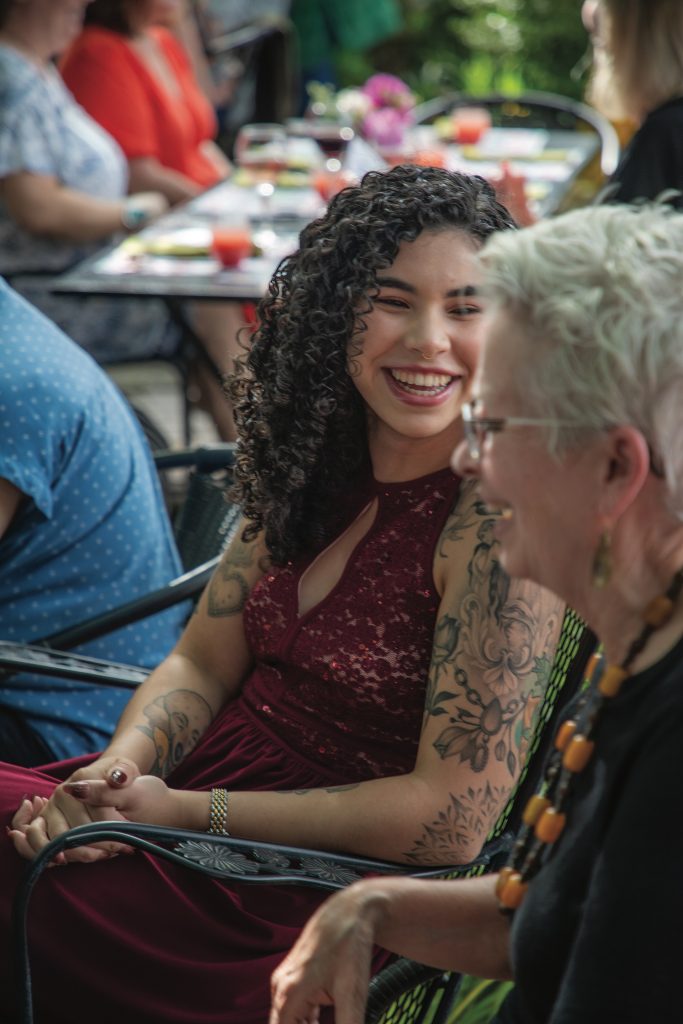
First-time disCOURSErs Lindsay Morgan and pal Emily Morris ventured to last spring’s Soul Cocina event held in the backyard of Double Oaks on a sweltering day. While they spent time catching up after not seeing one another for a while, a solo attendee sat with them and asked if she could join the conversation. That wouldn’t happen at your standard Starbucks, says Morgan.

Morris agrees. “A lot of community was built here and that’s amazing.”

Marci Peace, who has attended a few disCOURSE events, says, “It’s so important right now to have space to have conversations. With everything, with people pitted so much against each other, it’s important.”

From the beginning, Firesheets and Withers have served course after course of connection, conversation, community and cultural cuisine with a goal of sharing women’s stories. Theirs, it seems, is still being told, bite by bite.

O.Henry Ending

O.HENRY ENDING

A Last Last Name

Heading into 50 with a nifty new surname

By Danielle Rotella Guerrieri

At the beginning of our fifth date, I finally knew how to pronounce Tom’s last name. After walking into 1618 Midtown’s entrance on a scorching July evening, the hostess asked if we had a reservation, and he kindly replied, “Yes, it’s under Guerrieri.” Needless to say, I spent a chunk of that dinner silently pronouncing his name in my head.

For the first chapter of my life, I had a unique name that I loved — Danielle Rotella. Easy to pronounce, no middle name. Government forms have three blank spaces for your full name, and I discovered, from frustrated government employees, that I couldn’t leave the “middle name” box blank, because, as one agitated DMV employee told me when I got my first driver’s license in 1991, “It looks like it was left blank by mistake.” I quickly learned to always write “NMN” for “no middle name” in that space.

At 26, I took on a third name when I married my first husband. Scooting Rotella to the middle name spot was a relief, knowing I wouldn’t have to write the three-letter acronym anymore, although I quickly realized that some folks thought I hyphenated my name, and one of my relatives wrote Danielle Rotella-Adams for more than 15 years on my birthday cards.

When I became a mom in my 30s, I wanted my two boys to have middle names, mainly so they didn’t have to deal with the whole “NMN” hindrance. Call it a family legacy or call it lazy for not wanting to scroll through that huge baby-name book a million more times, but both of my sons have Rotella as their middle name. Sleep-deprived and exhausted, I filled out my firstborn son’s birth certificate at Women’s Hospital two days after he entered the world on a sweltering late August day in 2007. I carefully made sure the stern administrator sitting next to me could clearly read my handwriting so there would be no question that he had three names. I love that we share this name, even though, now, as teenagers, my sons may cringe at having an unusual family name. They’d probably rather have something more common there — Peter, Joseph, Andrew or, frankly, anything that isn’t Rotella. 

My 40s took me on a wild ride. With two young boys at home, I went through a divorce, became a single mom, helped care for my own mom after her dementia diagnosis, lived through a pandemic and shifted my career. Don’t get me wrong, there were bright spots, too. It’s also when I met Tom, watched my little sister get married and become a mom, celebrated one brother’s engagement and another’s path to college — a true whirlwind.

Now, at age 50, I’m writing a new chapter at the halfway point of my life and with a new name. You guessed it, Tom and I are now newlyweds, and I get to switch around my name boxes yet again. Despite the hassle of filling out oodles of online name change requests, there’s a newfound excitement I feel each time I hit “submit.”

Yes, a lot has happened since that fifth date with Tom eight years ago, when I first imagined him being the one I could spend the rest of my days with. Just last week, we walked into GIA’s entrance and were greeted by the smiling host, who asked if we had a reservation.

“Guerrieri,” I said confidently. His eyebrows raised in confusion as he quickly peeked back at his reservation list, then back at my face, my pronunciation clearly not jiving with the name he read.

“It’s pronounced, ‘Gary-air’ and rhymes with ‘derriere,’” I added. The name is nothing like its spelling, but it has distinction and sophistication – exactly how I hope to mark my next 50 years.

Tea Leaf Astrologer

TEA LEAF ASTROLOGER

Capricorn

(December 22 – January 19)

Having been in “go” mode since birth, you may not understand the degree to which your natural drive and goal-crushing prowess triggers those around you. This isn’t to say you should play small (you’re incapable) or slow down (hoofers gonna hoof it). Rather, when the shade-throwers cast their slights and snubs, try not to adopt their perceived failures as your own. This month, with Saturn in Pisces amplifying your softer side, embrace it. 

Tea leaf “fortunes” for the rest of you:

Aquarius (January 20 – February 18)

Now, think bigger. 

Pisces (February 19 – March 20)

Cancel the membership. 

Aries (March 21 – April 19) 

Consider a new deodorant.

Taurus (April 20 – May 20)

Your cuticles require some attention. 

Gemini (May 21 – June 20)

Try subbing sugar for dates. 

Cancer (June 21 – July 22)

Baby steps, darling. 

Leo (July 23 – August 22)

Make time for a morning stretch. 

Virgo (August 23 – September 22)  

Keep the receipt. 

Libra (September 23 – October 22)

Two words: wardrobe overhaul.

Scorpio (October 23 – November 21)

Ever heard of a dry brush? 

Sagittarius (November 22 – December 21)

Dance like nobody’s gawking.