Chaos Theory

CHAOS THEORY

Why DIY today what you can DIY tomorrow?

Ceilings and other unfinished projects

By Cassie Bustamante

When it comes to house projects, my husband, Chris, and I have an unspoken motto: Why do today what you can put off until right before you need to sell your home?

Just before we moved to Greensboro, our project procrastination caught up with us. I kneel atop a 5-foot-tall, mint-green, vintage shelving unit in our kitchen, my neck craned toward the ceiling I’m painting. Tiny, white droplets fleck my dark-brown hair. Nearby, Chris feeds our infant son, Wilder, stuffing lukewarm spoonfuls of mushy, Gerber oatmeal with a touch of homemade applesauce into the little guy’s hungry, gummy, baby-bird maw.

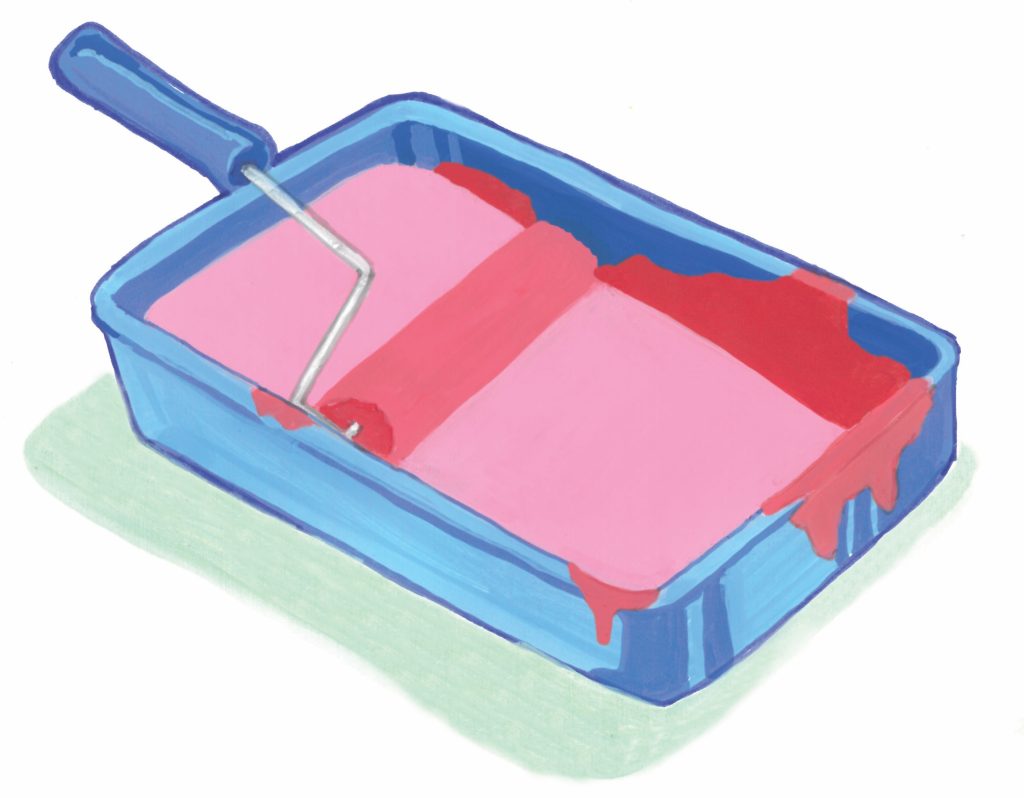
In our house, painting is a tag-team endeavor. Chris is the roller, while I am the cutter-inner. After many years spent creating content for my DIY blog — mostly paint projects — and refinishing furniture for my vintage-furniture storefront, I’ve got a steady hand, one that requires no blue tape. Chris, on the other hand, is more like a bull in a paint-your-own-pottery shop — not so good with the details but great with the brute force required for rolling. So, as soon as I swipe paint on the last of the kitchen ceiling edges, I hop down and swap places with him. He douses a roller in white paint while I take over with Wilder.

“Why do we do this to ourselves?” I say, exasperated. “All of these projects we let pile up over the seven years we’ve lived here and now we’re cramming them into seven weeks!” Light fixtures to replace, countertops to update, a half-dead maple tree along the driveway to chop down and, obviously, ceilings to paint.

“And, you know,” says Chris, “none of these projects are that bad. It’s the getting them all done in rapid succession that’s killer.” He pauses and I can practically read the thought bubble that’s forming over his head. “Let’s not do this in our next house.”

I nod enthusiastically. “Let’s get things done over time so that we can actually enjoy the results of our own blood, sweat and tears,” I say, rubbing 6-month-old Wilder’s button nose with my own. “That’s right, Mommy and Daddy are not going to procrastinate in our new house!”

A couple short months later, we say goodbye to that home and its freshly-painted ceilings, and make our way to Greensboro, where a 1966 Starmount Forest ranch home waits for us. Sure, it needs some updating, but it ticks so many of our boxes as a family of five — four bedrooms, three bathrooms and a great location.

The kitchen, however, is never going to work for us. While I am a huge fan of reusing what you can, the original cabinetry only allows space for a 24-inch oven. A baking sheet full of dino-shaped chicken nuggets? Forget it. And I can stop fantasizing about hosting Thanksgiving with an oven like that. So, just months after moving in, we hire a contractor to renovate our kitchen, updating it with new cabinetry, new flooring and fixtures, a hammered-brass sink from locally-owned Thompson Traders, and, of course, new appliances, including a gorgeous, white-and-gold, 30-inch Café oven.

As the renovation crawls closer to its completion many months later, I tell the contractor, “We’ll take care of all the painting.” We just want our house back — no more workers tromping around, no more plastic sheeting, no more construction dust. “Trust me, we can handle that part.”

“OK, if you’re sure,” he says.

“Oh, I’m sure.”

Once the contractor and his accoutrements have quite literally left the building, we spend a weekend coating the walls in white. I give the new built-in banquette and molding a touch of easy-to-clean sheen with semigloss in the same shade. And it looks fresh and finished — as long as you don’t look up. “We’ll save the ceiling for next weekend,” I say to Chris as I scrub my brush clean. “I’m too tired to think about it right now.”

Approximately 150 weekends — or three years — later, our ceiling finally has its moment with paint. While we’ve grown so tired of looking at the dull, drab ceiling in its primed state, apparently we haven’t been tired enough to actually push up our sleeves and do it ourselves. Nope, the first thing we do when I go back to work full-time is hire out the work. All I have to do is select the color: Sherwin Williams’ Romance at 75% saturation, a lovely, warm shade of blush. No argument from Chris, who’s just happy to have it done.

Well, almost done. You see, the painters arrive on a sweltering July day and our AC is working overtime. The two vents in the kitchen ceiling are dripping with condensation, making it impossible for paint to stick to them.

“Don’t worry about it,” I tell the concerned painter as he shows me the issue. “We can easily get to it when the weather cools this fall.”

It’s been almost four years and, as I sit at my kitchen banquette writing, I steal an upwards glance at the vent closest to me, stark white against the soft-pink ceiling. Really, how hard could it be to just slap some paint on it when I’m done writing? Not hard at all, but we’re not ready to list our home anytime soon.

In Good Taste

IN GOOD TASTE

Sweet Spring Layers

A strawberry cheesecake parfait

Story and Photograph by Jasmine Comer

I’m currently in a full-blown parfait phase. While they’re traditionally served as a dessert using ice cream, health-conscious millennials now think of them as yogurt bowls, and they’ve become my breakfast staple. But really, they’re good any time of day. I usually start with a Greek yogurt base and layer in seasonal fruits — it was apples all winter — plus granola, nuts or a drizzle of nut butter. Once you add a sweetener of your choice, something like honey or natural maple syrup, you are all set. The real draw for me is the texture and flavor play: You get that perfect mix of creamy, crunchy, salty and sweet. But the best part? How little effort it actually takes. Of course, you can go full-on indulgence and make it a true, rich and decadent dessert. Though I’m not suggesting you eat that for breakfast.

This recipe is a love letter to effortless kitchen adventures. Even for those of us who find peace in cooking, there are days when standing by the stove feels like a chore — especially as the temperature rises and the last thing you want to be is tethered to a hot oven.

Enter the strawberry cheesecake parfait: Think of it as cheesecake’s laid-back, sophisticated cousin. It’s a deconstructed masterpiece that layers silky cheesecake mousse with the bright, macerated sweetness of seasonal strawberries and the salty-sweet crunch of buttery graham cracker crumbs. This may be your first foray into dessert parfaits, but given the high-reward, low-effort ratio, it certainly won’t be your last.

Strawberry Cheesecake Parfait

Ingredients

Cheesecake Filling

14-ounce can sweetened condensed milk not skim, please

Two 8-ounce blocks cream cheese, room temperature

1 teaspoon vanilla extract or paste

Graham Cracker “Crust”

1 1/2 cups graham cracker crumbs

1/4 cup melted butter

2 tablespoons sugar

Pinch of salt

Cinnamon to taste, optional

Strawberry Topping

1 pound strawberries, sliced

1/4 cup sugar

1 tablespoon lemon juice

Zest of half a lemon

Directions

For the cheesecake filling: In a large bowl, using a hand or stand mixer, blend ingredients until smooth and creamy. Refrigerate for at least 30 minutes, or overnight; the longer the better.

For the graham cracker layer: Right before you are ready to assemble your parfait, using a spoon, mix ingredients until combined in a medium bowl.

For the strawberry topping: Just as you are ready to assemble your parfait, mix the strawberries with the sugar, lemon juice and zest together until combined in a medium bowl. Let sit for 20 minutes so the strawberries can release their natural juices.

Using a glass of your choice, start with a layer of graham cracker crumbs, followed by a layer of the cream cheese mixture and then the strawberries, using approximately 3 tablespoons of for each layer.

Sanctuary

SANCTUARY

Sanctuary

A Kernersville gardener creates a native plant refuge

By Ross Howell Jr.    Photographs by Lynn Donovan

Ever heard of a plant rescue?

Me neither.

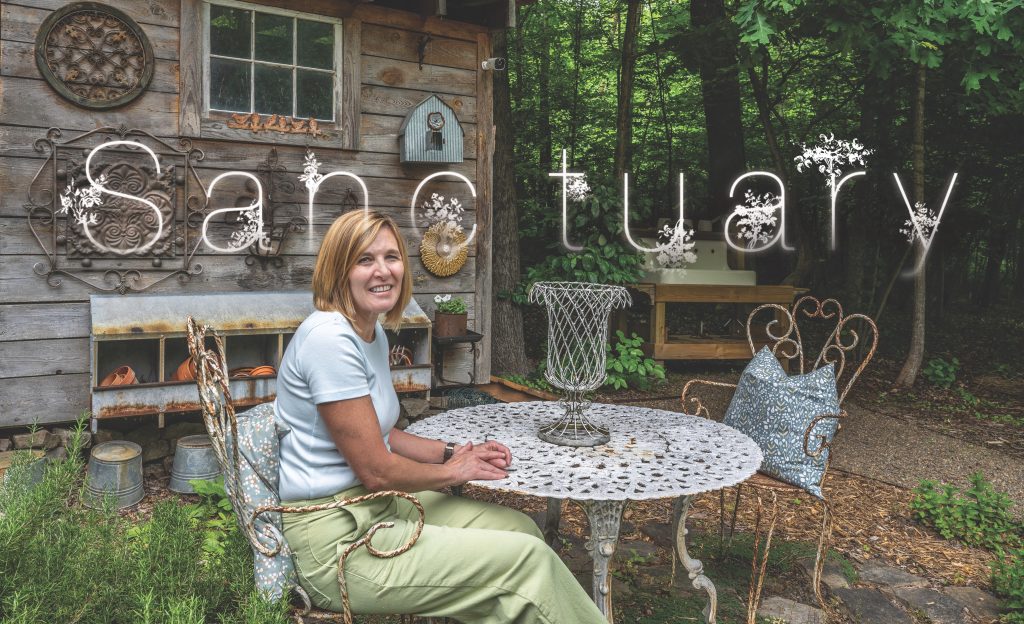
Not until Kelly Gage toured me around her woodland garden.

Gage grew up on a tobacco farm in Davidson County, where her grandmother and mother were avid garden club members. After earning a degree in biology at UNCG, Gage took a job as an environmental manager for Guilford County, working with geologists and engineers to enforce surface-water and groundwater regulations. 

For more than 20 years, Gage and her husband, Bobby, had lived in the same house where she had, of course, designed and maintained all the landscaping. Fourteen years ago, they decided to build a new home.

The couple selected a 6-acre wooded site outside Kernersville that had been left untended for 75 years and was overgrown with poison ivy, Chinese viburnum, privet and Japanese stilt grass.

One of the first decisions the Gages had to consider was where to build on the property. They decided to remove a patch of loblolly pine trees and site the house there.

“That really opened up space,” Gage says.

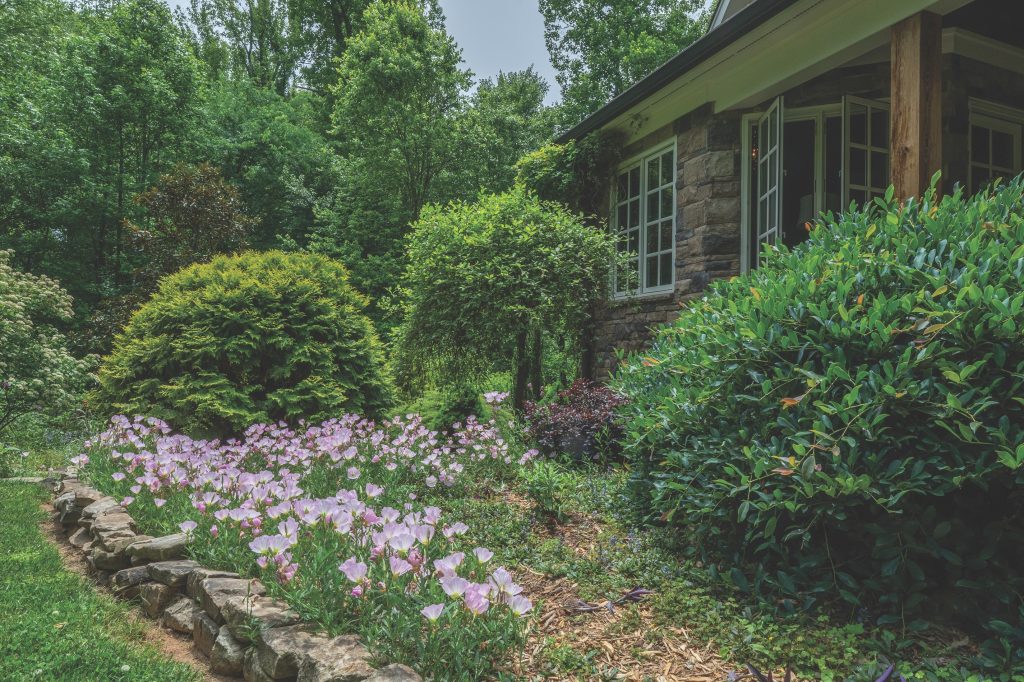
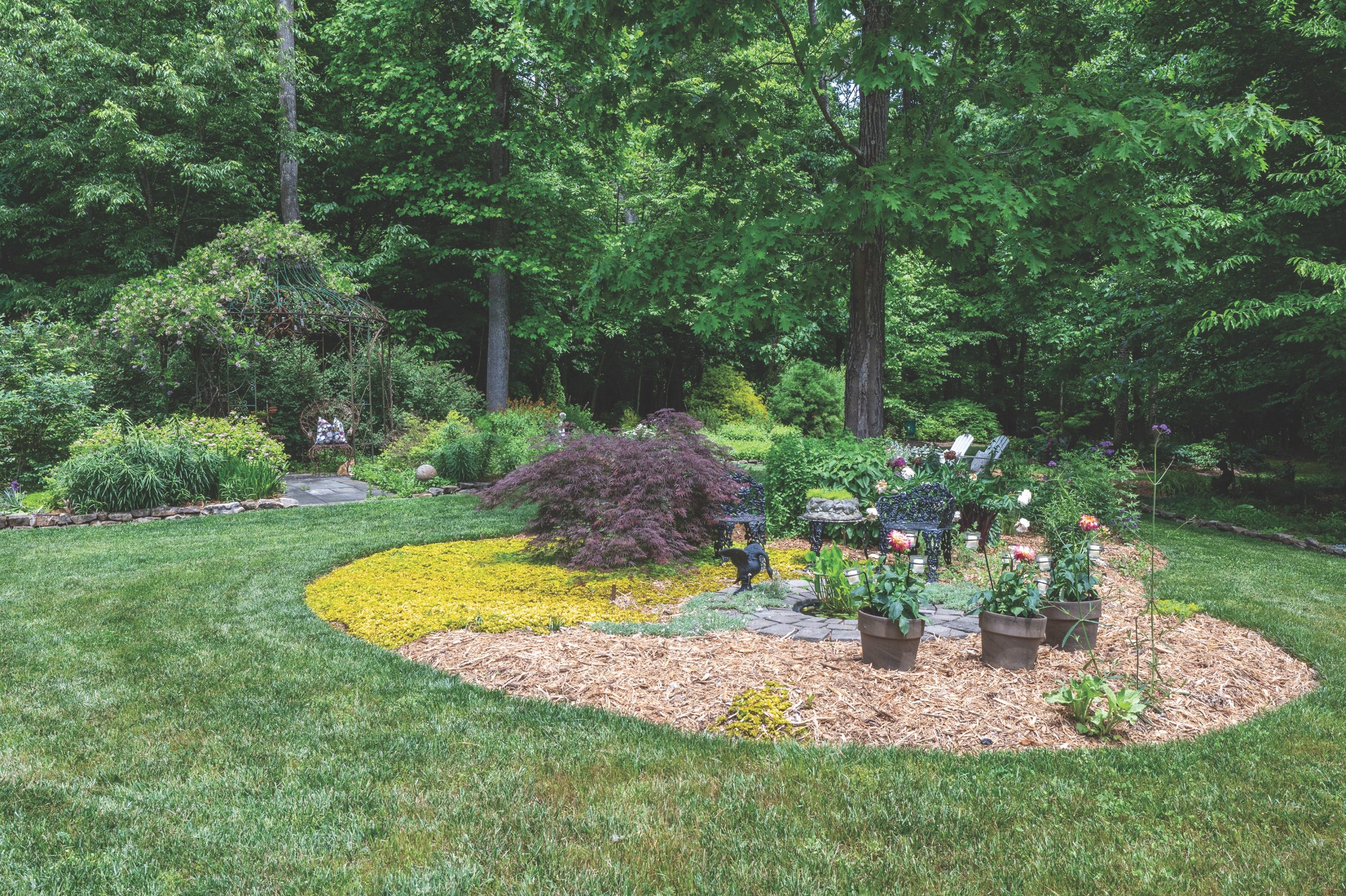
And that’s where we’re standing, in dappled sunlight at the edge of a broad planting bed in front of the house. The trees resound with birdsong.

 “At first, we had a lot of sun, but now we have a lot of shade,” Gage muses. With the pines removed, overstory trees such as oaks, maples, poplar and beech have flourished, along with understory trees such as redbud, dogwood, sassafras and sourwood.

She points out a tree with shimmering, green leaves.

“That’s an umbrella magnolia,” Gage says. “It has the second-largest leaf in the magnolia family.” Over time, she’s found many of these natives on the property.

“This one just happened to be close to the house,” she continues. “It’s just the loveliest tree.”

Gage’s voice is calm and measured. It reminds me of one of my favorite elementary school teachers. As she describes the magnolia, you hear inflections of admiration and affection in her voice.

She’s discovered many other indigenous plants that had been overgrown or suppressed altogether, including swaths of columbine, creeping phlox and at least five different species of native fern.

“Once you disturb the soil, some of the seeds and spores that have been lying dormant start to show up,” she says. “Management makes a real difference in woodland areas.”

“I’ve always liked plants,” Gage continues. “But I got really interested in natives when we were settling into this property, trying to understand how to manage the invasive, non-native plants here.”

In 2018, Gage joined the North Carolina Native Plant Society (NCNPS), which is celebrating its 75th anniversary this year. Through education, conservation and advocacy, the organization works to protect native plants throughout the state.

“The members of the society are very generous people,” Gage says. “We do a lot of seed swapping and plant trading.” And they share a deep well of knowledge and experience.

Since 2023, Gage has served on the NCNPS executive board as membership chairman, recruiting new members, developing new chapters (there are currently 11 across the state) and producing educational materials.

On her property, she has cataloged more than 700 different species of plants, shrubs and trees, and estimates that about 600 of them are natives.

As we begin to stroll, Gage points out and names the plants, sometimes by the Latin name, sometimes by the common. The names flow from her lips like a familiar melody.

“Anemone, Phlox subulata . . . autumn fern, sensitive fern, Christmas fern, hosta . . . Monarda . . . Alternanthera, Baptisia . . . mountain mint, Solidago, Rudbeckia Henry Eilers . . .” she intones.

Gage tells me that she sometimes mixes hellebores among natives because they deter the deer. She’ll plant daffodils for the same reason.

Though some native plant purists might object, she enjoys introducing exotics like the pineapple lily, native to South Africa.

“I love them,” Gage says. “They’re really cool plants.” They produce bract clusters crowned with foliage that look like tiny pineapples.

“And here is my native amethyst falls wisteria,” she says. “It was beautiful last week. Coming up under that is native Clematis viorna.”

Gage explains that she prefers bedding her plants.

“People who are first learning about native plants tend to think only about meadow settings,” she says. “But meadows are hard to maintain,” Gage adds. “Organized beds are easier to control. And your homeowners’ association won’t be after you,” she says with a laugh.

As we walk, Gage points out more plant types. Then she pauses.

“That’s Amsonia hubrichtii, which has just finished blooming,” she says. “It has this gorgeous, golden-yellow foliage in the fall.”

“Growing next to it is silverrod,” Gage continues. “It’s a variety of goldenrod that’s white. It’s lovely. I got it on a plant rescue.”

“What’s a plant rescue?” I ask.

Ah, the perfect question for the NCNPS board member responsible for membership.

Plant rescues, as it turns out, represent an important society activity.

Following clear protocols, a long-time NCNPS member who specializes in rescues works out agreements on the society’s behalf with owners, engineers and builders to gain access to land slated for development. Some tracts span thousands of acres that will be built on over decades, while others are relatively small. Entities prefer working with the NCNPS because their rescue efforts are covered by insurance.

Properties are photographed and clearly marked by surveyors. Accompanied by experts to help with plant identification, a rescue team of about 15 volunteers collects native plants that will go to botanical gardens, art museums, school and community gardens, as well as to the properties of volunteers.

“The only rule is that none of the rescued plants can be resold,” Gage says.

Do volunteers need big gardens to provide sanctuary for the rescues?

“The typical volunteer takes plants home to a quarter-acre neighborhood lot,” Gage answers.

As we continue our tour, we come upon a couple of my boyhood favorites — jack-in-the-pulpits and trilliums.

Jack-in-the-pulpits are perennial natives that reproduce vegetatively by sprouts from their corms or sexually by their spadix (Jack) and spathe (pulpit), yielding bright-red berries in the fall. Plants can be male, female or both, and can change sexes season to season. The trained eye can detect the plant’s sex by the number of leaflets it produces.

As for the trilliums, Gage has at least half a dozen varieties.

“I purchased most of them at UNC Charlotte Botanical Gardens sales,” she says. Others were gifted to her by friends.

“If you’re going to grow trilliums, you better have time,” Gage cautions. “It takes about seven years for them to get established.”

As we continue to walk, she points out blue wood asters, white wood asters, mayapples and another plant that came to her garden as a rescue — dittany.

“It’s a neat little subshrub that has these beautiful, tiny pink blooms,” Gage says. “It likes really dry soil.”

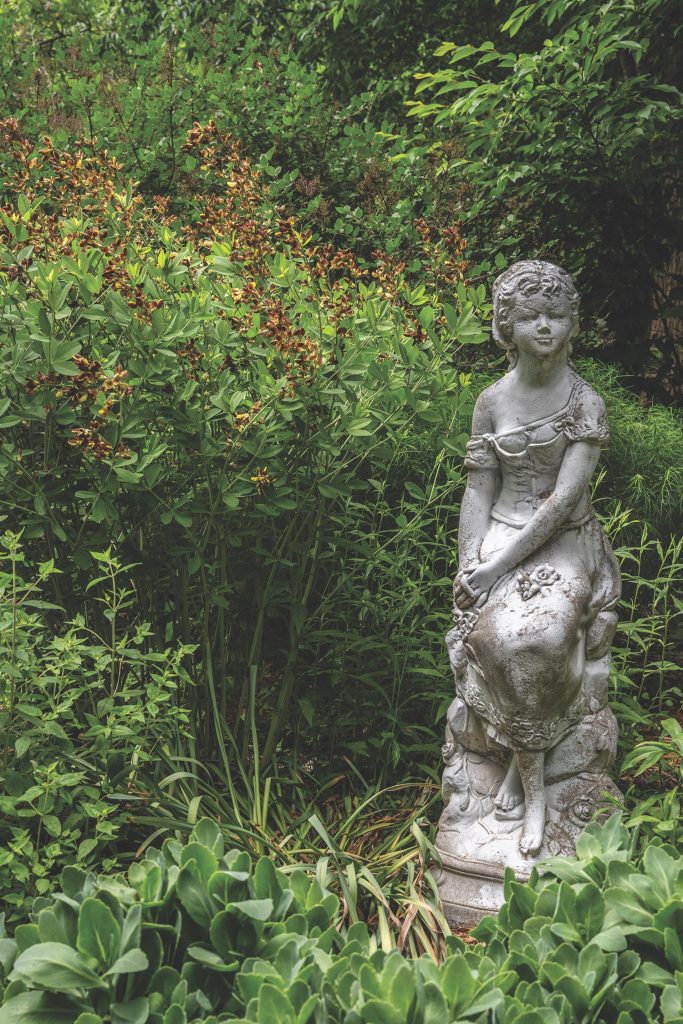
Growing in a shaded bed are yellowroot, wood poppy, glade mallow, wild ginger and phacelia. In a moist area at woods’ edge is a group of taller plants.

“Now these, I just pull out in handfuls,” Gage says. “There are always so many!”

Carolina impatiens — often called jewelweed — is an annual that produces prodigious amounts of seed. Deer love to eat them and they have medicinal value, as well.

“Occasionally, we have gentlemen who cut firewood come by and ask if they can have some of the impatiens,” Gage says. “Apparently, the fluid in the stems will prevent poison oak or cure a case of it.”

We start to head back toward the house. She continues to point out plants along the way.

“Joe Pye weed . . . rattlesnake fern . . . bear’s breeches . . . that’s partridge berry over there — it came from a rescue,” she continues.

“And this is native star hibiscus coming up,” Gage says. She pauses and smiles. “Everybody thinks it’s marijuana!”

Close by the path is a plant with paired leaves shaped like butterfly wings.

“That’s twinleaf,” Gage says. “I just love this plant. It has little white flowers.”

Finally, we pause next to a tree with a wonderful name.

“This is a Carolina silverbell tree,” Gage announces. “In spring, it has gorgeous, papery white flowers. This is my favorite tree.”

When I ask Gage about the future of her sanctuary garden, she smiles.

“Well, we’re in the process of buying 4 more acres from a neighbor, so we’ll have 10 acres,” Gage says.

“The new property is loaded with poison ivy,” she continues. “Some of the vines are as thick as your forearm. And I’m allergic!”

Gage acknowledges that she’ll probably have a half-acre cleared professionally before she starts gardening there.

She hopes one day to have created a sanctuary similar to the Emily Allen Wildflower Preserve in Winston-Salem.

“Our long-term vision is to stay on this land as long as we are physically able,” Gage says. “But we look forward to having the property serve an educational purpose one day.”

For now, she’ll keep tending to her acreage and adding more North Carolina native plants, one rescue at a time.

O.Henry Ending

O.HENRY ENDING

Farm to Fable

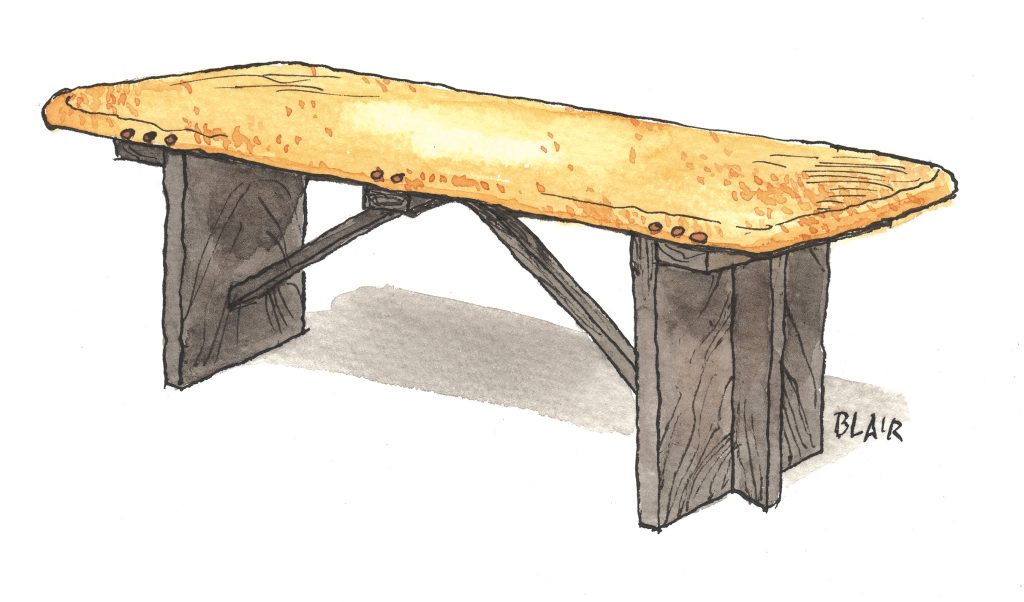
A handmade bench sings its story

By John Adamcik

Our family’s kitchen bench sings. Farm songs, mostly. Warm and friendly tunes, passed down through generations.

Some might think it’s the old wood and nails, creaking in protest after decades of heavy use.

Or North Carolina heat and humidity working on the wood Grandpa chose when he built the plank bench for his family of 11 to use in their Michigan farmhouse.

I know better. It’s what’s inside the bench that makes it serenade.

My mother was an upholsterer. When I was young, she’d pay me to remove fabric from heirloom sofas, loveseats and armchairs. By 10, I’d learned how to pull rusty staples and tacks from a frame without damaging the antique, hand-carved wood. I could look at a piece in Mom’s shop and tell you whether the innards were foam, straw or horsehair. 

Just as I can tell you what’s in almost any upholstered furniture, I know what’s in our family’s bench.

It’s stuffed with memories from family gatherings, where Grandma kept court at the dining room table. Her encouraging smile remains in my mind’s eye, a reminder of her unconditional love for all of us in her family. There’s residue from orange Kool-Aid she kept in the fridge for frequent visits by us grandkids. Dregs of the beer Dad and my uncles drank, the kind advertised on TV during Detroit Tigers games in the ’70s. Smoke from cigars the guys enjoyed while playing pinochle in the living room (once the farm granary, before the grandparents moved the family there in the 1940s).

There are echoes of laughter and prayers. Grandpa’s jokes, told in half-Polish/half-English. Silhouettes of the tornado of 1951. An undecipherable howl from an uncle struck by lightning as a boy (he lived). A soft groan of shock from another uncle when he got skunked as a youth.

My grandparents were humble people whose lives reflected their faith, love of family and commitment to our mid-Michigan community. The city’s main employer — Dow Chemical, at the time the world’s largest single chemical plant — emerged in the 1800s to mine and transform the area’s subterranean salt deposits into useful components. Grandpa worked there. Dad and my uncles, too. Salt of the Earth, some said. The area. The people. My grandparents.

The bench is packed with testimonies of their farm life.

Early in Mom’s career she lovingly reupholstered the bench for Grandma with embossed, golden polyvinyl chloride fabric jokingly advertised as the shed “hyde” of a mythical creature (but which came from a factory much like our town’s). Ornamental brass tacks still hold the fabric on the bench’s scuffed brown paint.

When Mom moved to Florida years later, she grew as an artisan. Her skill and work ethic built a client list of the retired, the wealthy and the famous. When a fashion model’s Siesta Key home was featured in a national design magazine, Mom’s work filled every page of that spread. 

My wife and I inherited the bench. I’m keeping it “as-is.” No repainting or recovering it. My kids can do that someday, if they want.

Mom stays with us now. She enjoys sitting on the bench, visiting with family and friends or keeping watch on the stove. The bench sings to her more than anyone.

I understand, because I know the song.

Life’s Funny

LIFE'S FUNNY

Holy Mole-y

Coping with tunnel vision

By Maria Johnson

A woman dressed in gardening boots, jeans and a hoodie, her hair stuffed under a ball cap, walks across her backyard gingerly, dousing the grass with the sudsy contents of a gallon sprayer.

Her cell phone rings in her pocket.

She puts down the sprayer and checks her phone. It’s her mom. She answers.

“What are you doing?” her mom asks brightly.

“Do you really want to know?” Gardening Woman asks.

“Mmhmm,” her mom says.

“I’m spraying the yard with castor oil,” Gardening Woman says.

Silence.

“For moles,” Gardening Woman adds, for context.

“I’ll talk to you later,” her mom says.

It’s late winter. The snow has melted.

The Gardening Couple’s backyard is bursting with promise.

The grass they sowed last fall is coming on, bright green, even in the shady spots.

The maples tease them with ruddy buds.

The crocuses are croaking. Not in a morbid way. No, rather in the tree frog way: cheerfully chirping notes of yellow and purple on the fringes of the natural area, which is landscape-talk for “places they don’t even try to grow things any more.”

Finally, the Gardening Couple has almost finished renovating their raised-bed garden, which had fallen prey to a cycle that many gardeners will recognize: wood rot, which draws bugs, which draw bug-eating critters, which draws a Gardening Dog, who tears the ever-living snot out of the frames.

Board by board, the couple’s Gardening Dog dismantles the frames so thoroughly and so quickly, the Gardening Couple conjectures later, that she must have a YouTube channel on the subject.

“Hi, everyone,” she would say merrily. “Gardening Dog here. Today, we’re gonna take down these raised beds in just a few hours.”

All this happens while the Gardening Couple “works” inside.

“Where is Gardening Dog?” one of them asks blithely.

“Oh, she’s dogging around in the backyard,” the other says.

“Oh, good,” comes the reply.

Lalalala.

This is how society crumbles. Good people tend to their daily lives while the paws of destruction dig away under their noses.

This is also why the Gardening Couple is very familiar with people who work at Lowe’s.

“How’s the family?” the Gardening Woman asks someone in a red vest.

“Good. You back for more cedar boards?” her vested friend asks.

“Yep. Hey, can we have some of these doughnuts meant for contractors?” Gardening Woman asks.

“Sure! You paid for them!”

Hahaha.

Like that.

Anyway, the Gardening Couple’s new, improved raised beds, made with slotted concrete blocks at the joints — burrow into that, critters — is almost finished and ready for the planting of cool-weather greens, flowers and veggies.

Proudly, the Gardening Couple walks outside laden with shovels and dreams. They anticipate the spring day, just a couple of months away, when they will host a small gathering to celebrate the marriage of their older son and his wife. Guests will stroll through the yard, marveling at the peacefulness of their little Eden, the beauty of springtime in the Piedmont, the craftsmanship of the raised beds.

“Did you see the slotted blocks on the corners?” they’ll whisper over their plates.

“And the way they chiseled the cedar planks — which were a tad too wide — to fit the slots snugly?”

“In all my days, I’ve never seen such arugula.”

“Breathtaking.”

These are the thoughts that fill the heads of the Gardening Couple as they walk outside one sunny afternoon to finish their project.

Suddenly, the reverie is shattered.

[CLANK] “OOOOOHHHHH-NOOOOOOOOO!!! ARGGGHHHHHHH!”

The Gardening Woman drops her shovel, grips her head in her hands, falls to her knees, and screams to the heavens.

Half the yard looks like a munitions-testing ground.

Craters yawn with freshly churned dirt.

Patches of new turf lie asunder.

Muddy trenches meander like . . . molehills.

Gardening Dog bounds up, tongue lolling, tail wagging, nose crusted with dirt.

“Yo, family, check it out!” she seems to say. “I took care of those moles for ya!”

Gardening Man looks crestfallen. According to his telling, his life has been one protracted battle with moles.

He retells his war stories: how, as a kid, he helped the maintenance man at his Catholic grade school dispense of moles in the lawn with poisoned peanuts, smoke bombs and pitchforks.

Gardening Woman frowns. She is not a poisoned peanuts, smoke bombs and pitchfork sort of person. Gardening Man knows this.

He continues his epic poem, telling how the moles found him again, early in his marriage to Gardening Woman.

Fortunately, their dog at the time turned out to be a “moler” who brought family members dead moles as gifts. Gardening Man rewarded the dog with bites of steak to reinforce the habit.

Soon, the tunnels and trenches disappeared.

If the current Gardening Dog has ever unearthed a mole, which she must have, she has never shared the bounty.

The thought occurs to Gardening Woman that the mole might have gone into another dark tunnel — Gardening Dog’s digestive system — only to be reintroduced to the yard as fertilizer.

Gardening Woman thinks of mole holes, in every sense of the term. She thinks of how Gardening Dog loves to lick people’s arms and legs.

Ew, she thinks.

There must be a better way.

Gardening Woman reads up on moles. They eat grubs and worms.

Yuck.

But OK.

She looks at galleries of mole pics, absorbing the details of their faces. They have bright red button noses, which sounds cute except the rest of them look like Freddie Krueger plushies, with knife-like fingernails and scrunched-up eyes.

Mole huggers says they’re helpful creatures that aerate your lawn.

Mole haters says they’re destructive pests that ruin lawns.

Gardening Woman thinks they are both.

She is fine with moles being moles, just not where she wants people to mingle, on level ground, and praise her arugula.

She is willing to coexist.

She reads about battery-powered lawn spikes that emit a low-frequency hum, supposedly repelling moles. The problem is, they don’t work very well. Like parents who don’t love, but get used to, their children’s music rattling the walls, it appears that moles don’t love, but learn to live with, vibrating ground.

The safest and most effective way to discourage them — moles, not children — seems to be by soaking the lawn with a solution of castor oil, liquid soap and water.

Like many creatures, it seems, moles do not like the taste of castor oil.

Gardening Woman wonders why any animal that eats grubs would be put off by castor oil, but she accepts the premise and orders a gallon of pure castor oil, enough to purge the city in preparation for a world-record attempt at Most Colonoscopies in a Metro Area in a 24-hour Period. But no. According to Amazon, this is “landscaping” castor oil, a mole and vole deterrent.

Whatevs, Gardening Woman decides. Either way, we’re talking mole runs.

She mixes the oil with lavender-scented Castile soap and water and applies the concoction to the tilled up earth. Never has so much laxative smelled so lovely.

It rains for two days.

On the third day, Gardening Woman ventures out. Gardening Dog follows her to inspect the moonscape.

No new hills.

No new trenches.

Gardening Dog seems uninterested in the wasteland.

Gardening Woman makes a note to buy top soil and grass seed and start over at ground zero. There’s just enough time for grass to sprout before the gathering.

She goes to the “natural area” to check on spring buds.

When she turns around, Gardening Dog is digging again, this time in the un-oiled part of the yard.

What’s that sound? A muffled, maniacal Freddie Krueger laugh coming from under the sod?

The castor oil has worked. Sort of.

Gardening Woman scolds Gardening Dog, marches inside, finds the sprayer and silences her phone. 

Sazerac April 2026

SAZERAC

Art to Heart

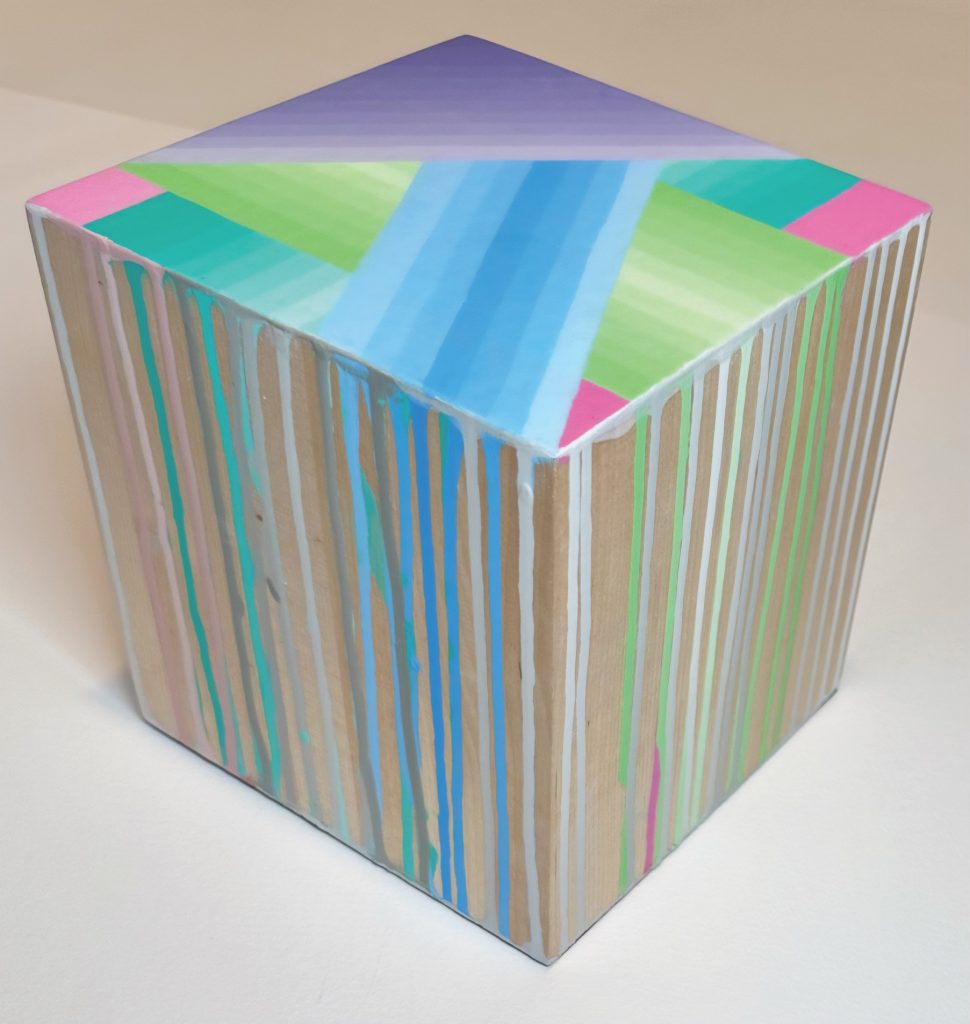
“What I’ve realized, regarding how long I’ve been doing it, is that you don’t get better, you just change,” says artist Matthew Micca, whose work will be featured at GreenHill Center for NC Art beginning April 10. Micca, an Asheville resident and contemporary abstract artist who breaks the mold, strives to always produce art that he’s proud of — even if it’s something that has completely strayed away from his norm. From drawing illustrations in his earlier years to falling in love with abstract art, Micca has decided to set aside his panel paintings and, instead, try out three-dimensional cubes that encapsulate his contemporary artist mind. “About a year and a half ago, I figured out how to merge my paintings and bring it to the 3D realm in a way,” he says. He found the switch from 2D to 3D to be easier than expected. His technique involves painting his design on one flat surface of the cube while the excess paint drips down its sides. Asked what he thinks about his previous work, he says: “I recognize that it’s good, but I can’t do that now because I’m past that.” Art, Micca says, is ever changing and constantly moving. He wishes more artists would take risks and evolve their art, which, if you can pluck up the courage to do so, can pull you out of your comfort zone and into daring and bold expression. “I think I’ve gotten braver through the years,” he muses. While his work has changed over time, one thing has remained the same: “My work has always been a mix of geometric and organic forms.” While his shapes, patterns and evolving mediums allow him to express himself, he’s fascinated by viewer interpretations as well. “I love to hear what people see in my work,” he says. So when you catch Micca’s solo exhibition of his 3D-cube work at GreenHill Center for NC Art through June 20, be sure to let him know what you see. Info: greenhillnc.org/exhibitions.

Just One Thing

Art is many things to Greensboro artist Jonathan Vizcuña, but quiet isn’t one of them. Vizcuña believes art should speak for itself — and loudly, at that. With its shiny, eye-catching embellishments, his art illustrates his feelings. “As an artist, that’s one of your goals. I want to have the opportunity to, through my art, fill with joy, touch with emotion and communicate many things to many people,” he says. Years ago, while working as a web designer, he started expressing himself through a hobby he didn’t expect to take off the way it did. “I’ve gone through every single title in web design. That has always been my world. Now, sculpting has become a more personal expression, much slower,” Vizcuña explains. For him, sculpting is a much more intentional process than working on paper. He describes himself as having quiet confidence, unassuming and never boasting but, instead, letting his art toot its own horn. He’s been often told by others that he “should be proud” of his art. “I’m not saying I’m not proud of it, but I never thought I would get so much exposure with my sculptures,” he says. From getting his first exhibition in Deep Roots to now exhibiting at The Center for Visual Artists, Vizcuña has put hours upon hours into sculpting because he believes in the power of his art. If you’re a sucker for art that speaks to — or, in this case, roars at — you, check out Vizcuña’s Apex Noir, seen here, at The Center of Visual Artists exhibit, We Art GSO, through April 18. Info: mycvagreensboro.org/WE-ART-GSO.

Window on the Past

For National Poetry Month, we wanted to highlight the work of a not-so-ancient poet — and no, we’re not talking about Shakespeare. Douglas Cartland, a Gate City resident in the early 1900s, wrote a poem about renowned Greensboro-born writer William Sidney Porter, better known as O. Henry. Cartland calls him “Greensboro’s hero, Greensboro’s star, Greensboro’s outstanding light, Greensboro’s sun in the darkest night.” With words like these, Cartland may have just fancied himself the ‘Boro Bard.

Welcome to the Wordshop

Wanna shake up your reading and writing? Greensboro Bound Book Festival returns April 9–11, celebrating diverse voices and stories with American Kaleidoscope as its theme. Three days of literary activities culminating in one full day of downtown events include perspective-shifting author chats, a palette of poetry, a collage of kiddo content and, of course, reflective — and perhaps refractive — writing workshops. That’s where O.Henry comes in to play.

We’ve teamed up with the festival to lead a few of Saturday’s workshops at the Greensboro Public Library’s Central Library. First, from 10–11:15 a.m., O.Henry editors Cassie Bustamante and David Claude Bailey will reflect on their own path of bringing back to life their personal experience. In a session entitled “That’s My Story,” they’ll offer tips and caveats about coaxing memory into words. Got a memoir ’bout to bust out of your brain? Chapter one starts here.

Then, from 11:30 a.m.–12:45 p.m., O.Henry contributor, author and TVparty! creator Billy Ingram takes you on a journey to your next career with “Writing as a Second or Third Act.” Billy’s worked in big-time advertising as well as entertainment. These days, he spends his time unearthing Greensboro gems in his monthly “Wandering Billy” column and writing gritty features for O.Henry. An actor at heart, he knows something about entering the scene stage, whoops, write after a completely different career

Do you panic when you have to interview a subject? Book your sesh from 1:30–2:45 p.m. with O.Henry founding editor and New York Times-bestselling author Jim Dodson, who leads “The Art of the Research Interview.” After spending years traveling, researching and interviewing along the the Great Wagon Road for his 2025 release, The Road That Made America, Jim’s more than got the chops to teach you how to ask the right questions that allow the conversation to flow freely from your interviewee. We’ve always found that free-flowing whiskey helps, but we’re sure Jim’s got better methods.

Putting a cap on the workshops, Erica Miriam Fabri, author of the 2025 Jack McCarthy Book Prize winner, Morphology, leads “Making the Public Personal: Writing Autobiographical Poetry Inspired by Current Events” from 3–4:15 p.m. Curious how you can use your own autobiography to provide future generations with the true — and poetic — story of the cultural movements or social and political conditions shaping your life? Learn to use your voice as a measure for the times.

No matter what skill it is you’re shooting to sharpen, we’re here to help you find and cultivate your story. After all, we’re writing prose.

And don’t miss out on a full line-up of talented authors, beginning on April 9 with No. 1 New York Times-bestselling author Casey McQuiston, whose book, Red, White & Royal Blue, was made into a 2023 film. Find the schedule of events here: greensborobound.com/2026-festival.

Unsolicited Advice

For the lot of us, 2016 was an era in itself. Groovy, new music albums and the upsurge of pop-culture references, thanks to rising social media, made the year nostalgic. And though it’s worth a scroll through our camera rolls, there is one part of 2016 we keep coming back to — the fashion trends. Some were iconic and some were not so much, but, you’ve got to admit it, no one was rocking ripped, high-rise jeans better than us. It was an experimental year to say the least and we’ve grown through our choices in clothing since then, but it’s hard to focus on current ‘fit picks when we’re mentally stuck a decade before. So we’ve provided a list of trends we advise you to stay away from this time around.

Skinny jeans? More like leg traps — bonus points if they looked like they’d been run over by a lawnmower. Hard to get into and even harder to get out of, these infamously tight jeans have burned a hole — bigger than the purposefully placed one on their knees — in our memory forever. Luckily, we’ve evolved to clothing with a little flare. Never again will we let skinny jeans reemerge from our bin in the attic and never again will we let our legs suffer in a vacuum-seal fit.

Fried, dyed and laid to the side, our hair was nothing more than a rainbow experiment. Arguably one of the most tedious trends — thanks to grown-out roots — ombré hair was a trend of self-expression and individuality. It’s not ridiculous to say that every once in a while we have the urge to grab some hair dye and bring the hot-and-hued hairdo back, but lest we forget the clumps of hair and the big chop that followed.

Paired with a denim jacket and a snapback, thigh-high boots were a sign of the times. Leather, suede or pointed, these boots were versatile and everywhere. We saw them on celebrities, family and even friends. What’s the downside, you say? These boots, turns out, were not made for walking — sure to bring blisters and callouses, but, luckily for us, this 2016 trend didn’t stick to us as tightly as these boots did.

Home Grown

HOME GROWN

Dial M for Miss You

A local wind phone welcomes users to call their lost loved ones

By Cynthia Adams

Dana White doesn’t know exactly what captivated her when she learned about wind phones on National Public Radio. Was it longing to reach out to a dearly departed relative?

Was it a call to connect? 

White, a woman with healthy boundaries, isn’t saying. 

Yet many also feel a mysterious attraction to wind phones, a concept originating in Otsuchi, Japan.

Since the first wind phone appeared 15 years ago on a windswept mountain, created by a grieving man, Smithsonian magazine estimates more than 200 wind phones have been installed in the U.S. alone. A wind phone — a disconnected phone perfect for expressing deeply held feelings of loss or grief — may seem outmoded in a digital age of instant connectivity.

Here, the wind alone bears the message.

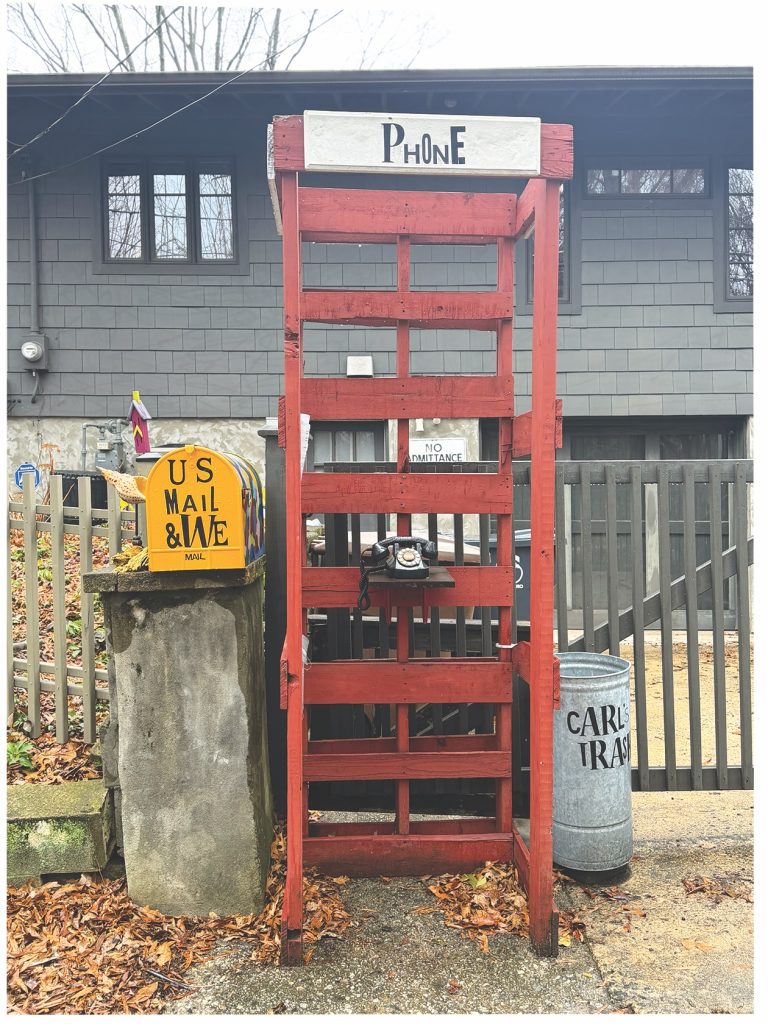
The premise is basic. A vintage phone, often with a rotary dial, is typically placed in some remote, sometimes haunting location, though it’s not unheard of to find them in cities. Walkers on a nature trail may happen upon an old phone mounted to a tree.

According to a CBS News Sunday Morning segment, people hiked to such a phone within a California forest, there for the purpose of unburdening themselves.

The bereaved used the phone to leave messages borne away by the wind without a trace — hence the name.

But sometimes wind phones are installed in built structures or phone booths.

Simple or elaborate, the wind phone becomes the receiver of longing, for reconnection with a deeply missed someone or something.

In White’s case, however, her wind phone seems to have evolved like a highly personalized art project; one long mulled over. In her spare time, she likes making art in a home studio. So, when White spotted what she believed could become the raw materials for such a project, she set about creating one.

“In February 2022, I was hanging out with friends at Fishers Grille and saw a large crate next to a dumpster and thought, That could be a phone booth!”

Fishers Grille co-owner Doug Jones said the shipping container was free for the taking. White’s boyfriend, Steve Dabbs, collected the crate in his truck and thus began her new project.

“No telling what my friends, family and neighbors thought as they listened to me going on and on about it, but none of them discouraged me,” she says four years later.

Since White’s phone was created, wind phones began popping up throughout the state, more recently in Charlotte, Oak Island and Sunset Beach. Ian Dunn placed a wind phone at historic Oakwood Cemetery in Raleigh. (At this writing, there is at least one other in Raleigh.)

Having now lost several family members without the opportunity to say goodbye, I instantly connected with the concept.

White fashioned the phone and booth from upcycled materials, just like the crate, painting the open booth barn red. After mounting an old rotary wall phone inside, she placed a “Phone” sign on the top.

“I finally set it out next to the sidewalk in May 2022 with a note explaining what it is, and pens and paper for people to leave notes.”

Well satisfied, White says, “It gets a lot of traffic and feels pretty private, considering the location.”

“While some [who use her phone] are aural, others are more visual and prefer to write/read,” she explains.

White also gets a kick out of watching adults explain the concept of the wind phone to children. From her perch on a kitchen stool, she notices some users come often. At times, she meets people who are deeply curious about the phone. White smiles. “When I’m asked, ‘Does it work?’ I always respond ‘Of course, it does.’” Disappointingly, the vintage phones occasionally disappear.

“As we’re now on our third phone, I welcome anyone’s old phone for which they no longer have a use,” she writes later — not a terrible average given it has been four years since the wind phone’s installation.

On a whim, I dial my childhood phone number: Tuxedo 8-2372. A throwback to when the prefixes were actually pneumonic devices, they related to the letters and numbers on a rotary dial. Naturally, the number is no longer in service. My voice, too, simply drifts away on the wind.

In the silence, I imagine my father’s singular way of answering: “Yell-o! This is Warren!” and my heart does a little twist. I have not heard his voice since his sudden death in 1990.

Since, I’ve discovered what’s called a “Goodbye Line,” which allows users to bid farewell to people, places and things. Once connected, a recording reflects that: “This payphone, like us, is here now but won’t be forever.”

Omnivorous Reader

OMNIVOROUS READER

The Forest Primeval

Finding identity in a Hemlock

By Anne Blythe

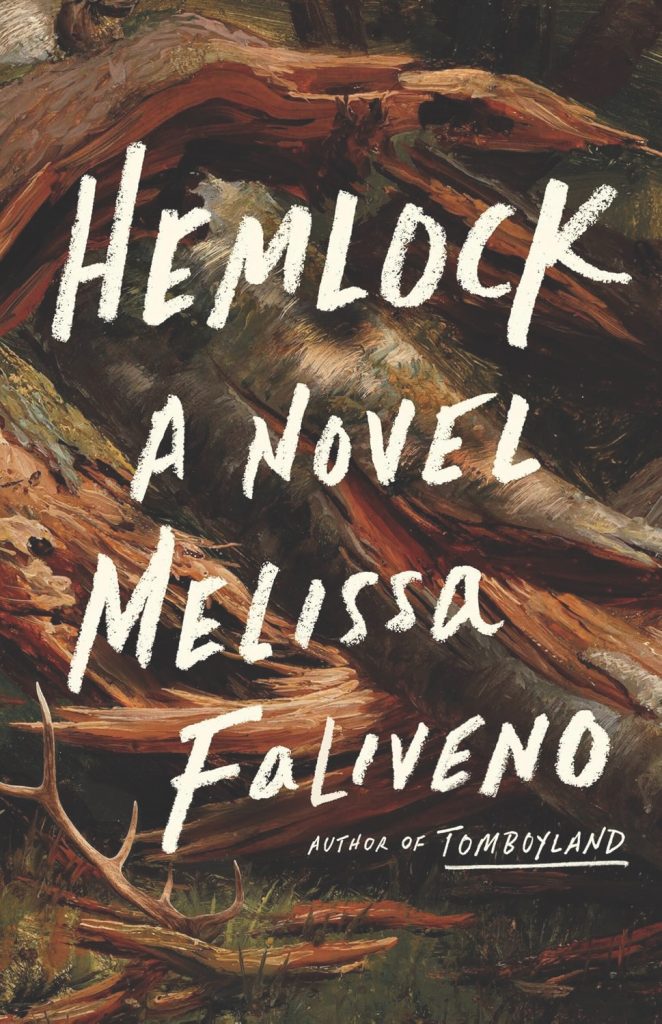
Midway through Melissa Faliveno’s Hemlock: A Novel, her protagonist, Sam, awakens after a night of many beers and shots, disoriented in the thick of the Wisconsin Northwoods.

The ground is wet with dew. Damp leaves cling to her body. She has no idea where she is nor how she got there. On the forest floor where she finds herself, far below the canopy above, small shade-tolerant trees and plants survive in the low light, providing a vital layer of sustenance for the wildlife living among them. As Sam emerges from her oblivion, confused but unafraid, the word “understory” pops into her mind.

“She whispered the word to herself and thought of things that live in the light, and things that live in the dark. How whole worlds and realities can exist in things unspoken and unseen,” Faliveno writes. “How there’s a story told aloud, in the open, above the surface of things, and there’s a story beneath it, that one must look much harder to find.”

Hemlock, Faliveno’s debut novel, is as layered as the Northwoods, a vast expanse of dense coniferous and hardwood forests, glacial lakes and rustic cabins and cottages. It’s a story of self-discovery — a dreamlike exploration into addiction, inherited generational trauma, gender identity and sexuality. It’s also a story that defies genre.

In Hemlock, Faliveno, a University of North Carolina at Chapel Hill creative writing professor, pulls from Gothic tropes: a gloomy cabin in an isolated area, a non-traditional damsel in distress, ancestral curses and a talking deer that —no matter how hokey it sounds — works. At the same time it’s a love story, sinister and sultry, and a tribute to nature that teeters between reality and fantasy.

We meet Sam, a 38-year-old Wisconsinite, when she’s had 10 stable, booze-free months with her boyfriend, Stephen, and their cat, Monster. She’s on her way from their Brooklyn apartment to “Hemlock,” her family’s desolate cabin nestled in the heart of the Northwoods. Once a place of family togetherness for Sam and her parents, a creepy vibe had settled into the cabin ever since her mother’s eerie walk into the woods, never to be seen again.

As the miles and days roll by, Sam’s fragile grip on reality becomes even more tenuous. In her dreams, the cabin is a huge, “hulking, looking thing with endless doors and hallways, walls that seemed to breathe; a maze of passages that changed shape and stretched on forever; into nothing.” In reality, it is “a normal little house, with four normal walls, a normal little porch and chimney” that her father built for retirement but now is ready to sell.

As Sam replaces broken floorboards and repairs things, she’s living in virtual seclusion, a marked difference from the urban frenzy of New York City. The rot of the cottage and surrounding area hollowed out by recession creeps into her mind and she begins to slip back into old behaviors. Just one beer turns into one more. Then a sixpack. Then one brandy old-fashioned, and another before an empty bottle awaits her on the counter in the morning. Amid the slip from sobriety, Sam wrestles with whether she wants to return to her boyfriend, her job as a magazine editor and the life she built in New York.

The novel — a probe of the indecipherable space between one place and another, one gender and another, one sexuality and another and past and present— is not always an easy read. It can be frustrating and exhausting watching Sam settle into a buzz that, no matter how hard she tries, cannot quiet the persistent whisper of her emotional unraveling.

Can the Midwest she fled ever be home again? Does she identify as a man, woman or something else more fluid that’s not so easily defined? Can she eschew the booze that is part of her culture and escape the throes of addiction passed down from her grandmother to her mother and on to her?

Somehow, though, Faliveno’s vivid and descriptive writing keeps pulling you back in. She makes you feel like a confidant, a trusted but objective friend who can help Sam as she tries to break free from the expectations of a world with deeply entrenched norms and stereotypes.

Faliveno is very introspective, pondering a wide range of topics, any one of which probably could have anchored a book. Despite the dark themes in Hemlock, there is beauty in the ugliness and light in the understory.

Almanac April 2026

ALMANAC

April 2026

By Ashley Walshe

April is a wild maiden, slowly waking.

Before she opens her eyes, she lets the stream of birdsong trickle through her inner landscape, lap against organ and bone, awaken her from the inside out.

Listen. Each trill and warble, an invocation. The dawn chorus, a polyphonic composition of her many dulcet names.

Awaken, Maiden! they sing. Awaken, Ostara! Awaken, Goddess of Spring!

As morning sunlight dances across her face and shoulders, she wiggles her fingers and toes, smiles at the tender kiss of sunbeam, then gently unfurls.

When at last her eyes greet the light of day, the wonder astounds her. She presses her feet into the soft earth, where constellations of glittering dewdrops adorn bluets and clover, and feels the pulse of all creation.

The rhythm moves her. As her feet caress the fertile soil, wildflowers spring forth. Dwarf crested iris. Bluebells. Yellow lady’s slipper. Lub-dub. Lub-dub. Lub-dub.

Hips swaying now, a swirl of swallowtails envelope her in a kaleidoscopic dream. Bees circle hypnotically. Nectar-drunk hummingbirds flash by like jewel-toned meteors.

As she shimmies toward the flowering dogwood, fragrance and color spilling in her wake, pink-and-white bracts appear on bare branches like a spray of immaculate vows.

In graceful flow, the maiden reaches for a dogwood sprig, tucks it into her tousled hair, and drifts along, unhurried.

Like the birds, she calls the names of all awakening. Like the maiden, all of life responds.

Puddle Party

Nothing says spring is here like the site of early swallowtail drifting among native perennials. But have you ever stumbled upon a cluster of them “puddling” together in the mud? Absolute magic.

Supping essential nutrients from the wet earth (namely, sodium and amino acids), male swallowtails absorb that which nectar alone can’t provide. Why? For the offspring, of course. But isn’t everything?

Want to attract butterflies to your own neck of the woods? First and foremost: Forgo pesticides. Consider host plants for the garden (i.e. milkweed for monarchs, violets for fritillaries, pawpaws for zebra swallowtails). According to Conserving Carolina, native trees such as oak, cherry and willow each support hundreds of species of lepidoptera (winged insects including moths and butterflies). Or, fuel their flight with nectar a la purple coneflower, goldenrod, blazing star, black-eyed Susan, ironweed and aster. Everybody wins.

I would spend a morning

With an April apple tree,

Speaking to it softly,

And laughing out in glee.

All the summer sunshine

And all the winter moon

Are shining in the blossoms

That will be gone so soon.
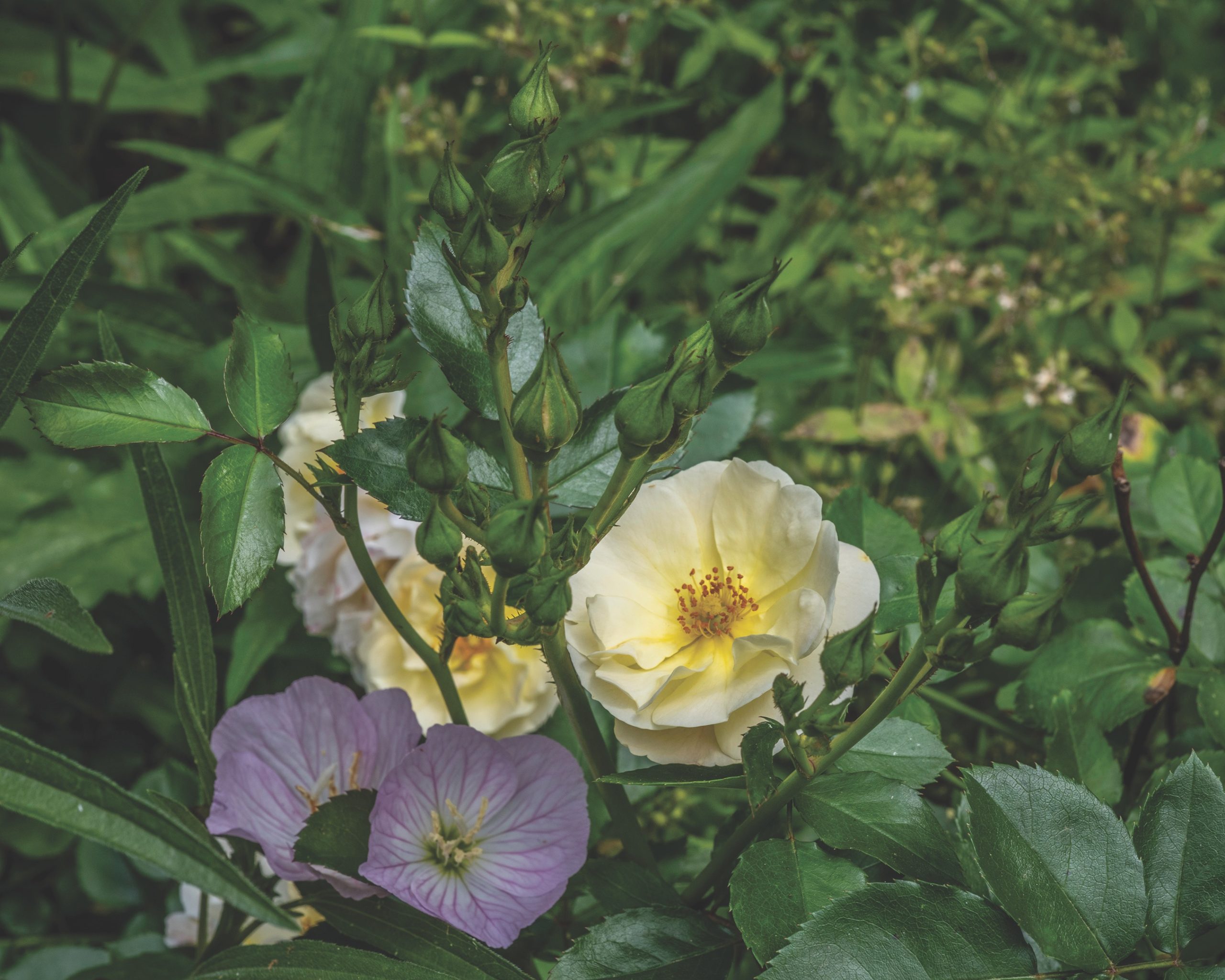
George Elliston, “April Morning,” Through Many Windows, 1924

Words of Wisdom

“In the spring, at the end of the day, you should smell like dirt.”

— Margaret Atwood