Poem July 2026

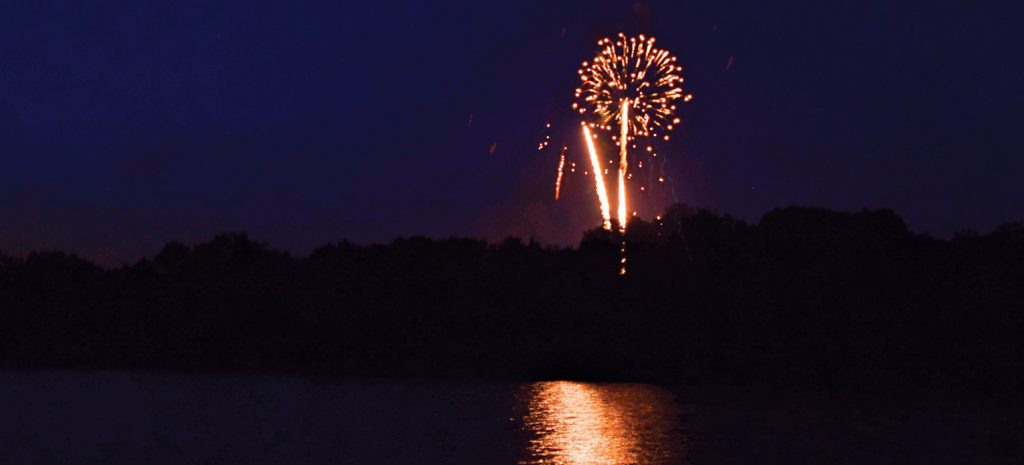
The little boat at anchor in black water sat murmuring to the tall black sky.
A white sky bomb fizzed on a black line.
A rocket hissed it’s red signature into the west.
Now a shower of Chinese fire alphabets,
A cry of flower pots broken in flames,
A long curve to a purple spray, three violet balloons —
Drips of seaweed tangled in gold, shimmering symbols of mixed numbers,
Tremulous arrangements of cream gold folds of a bride’s wedding gown —
A few sky bombs spoke their pieces, then velvet dark.
The little boat at anchor in black water sat murmuring to the tall black sky.
— Carl Sandburg
Carl Sandburg (1878-1967) was a poet, biographer, journalist and editor. He was awarded three Pulitzer Prizes, two for poetry and one for a biography of Abraham Lincoln.


By Marianne Gingher
One dreary afternoon, I hear my cat door flap open and glimpse a small orange cat slipping towards the kitchen. My own cat, Dewey Moon, is sawing logs on the sofa beside me. Normally, if any stranger breaches his castle, Dewey puffs to twice his size and leaps to investigate.
I follow the little orange guy, and he notes me matter-of-factly. In fact, I have never met a less intimidated cat burglar. I scoop him up — a featherweight. One eye is blue and one is green. He has a white face, white chest, white paws. Otherwise, he is the pale-orange color of a Dreamsicle. There is immense trust in that little poker face.
His tag informs me that he lives a few houses away; he has people, but what a cold, rainy day it is, and so I feed him. In my house, if you appear to be waylaid by trouble or weather, I feed you. He eats a bowlful and follows me back to the sofa. Dewey awakes, stretches, rubs noses with the little guy, offers to make him a cup of tea. Little guy says he’s already had refreshments, then makes himself right at home, licking a few remaining raindrops from his fur and nuzzling into a throw-blanket. After his nap, he meows to be let out, and I watch him trot confidently in the direction of his home.
The next day, I walk to his house and find him taking a sun bath on his porch. We wave fondly at one another.
“Do you know that cat?” I ask a neighbor.
“Everybody knows George,” the man says. “He’s feeling displaced these days.”
“Why?”
“There’s a new baby at his house.”
•
The baby’s name is Owen. I soon meet the entire family because George loses his collar over the weekend, and I report it to his mom, Madison. “I’ve already ordered a new one,” she says. “Thanks for looking out for him. Hope he’s not being a nuisance.”
I confess that I fed him, that he is pals with Dewey and that the three of us sometimes nap together. I suggest that, if George became my cat, it would be OK.
“Making friends is George’s thing,” Madison tells me. “He gets free range because we want him to be his authentic self. You’ll love his new collar. It fits a bon vivant like George.”
It is a red bowtie.
•
Everybody who meets George loves him. He shows up whenever I have visitors and glad-hands around the room, like he’s running for office.
•
One Halloween, George is hanging out with Dewey and me when Madison and husband Carr bring their kids by to trick-or-treat. After she sees them together, daughter Ellis starts planning George’s and Dewey’s wedding.
•
George is 18, possibly older. He also has serious kidney issues. But does he ever whine about his ailments? No, siree. Life is for the living, George insists, batting around a cat toy, then jumping on Dewey’s head.
•
When Madison lets me know that George has died (“gone over the rainbow” is how she puts it), after I have wept a good long while, I feel the need to write about him. The writer Sandra Cisneros once told me that the way to write about grief is to write about the presence of a lost loved one, not their absence. And my dear friend George keeps on being present. Through him, I’ve become friends with his funny and spirited family, a gift that endures.
He was not my cat, and maybe he was not a cat at all. You begin to think that way when your doorway has been brightened by a radiant someone who seems to transcend the limitations of their species while making the world a better place. OH
Marianne Gingher is a Greensboro writer, artist and puppeteer who lives with her beloved cat, Dewey Moon.

By Cassie Bustamante
Photographs By Liz Nemeth
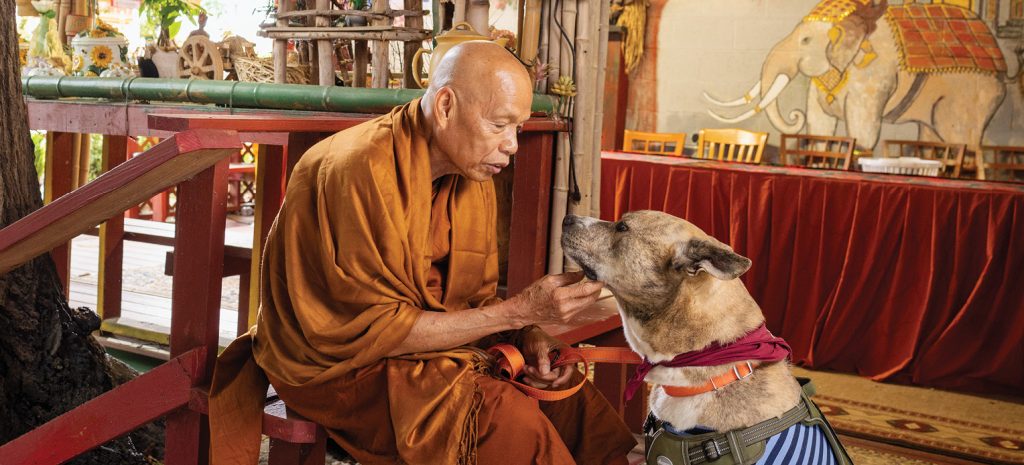
On an early-spring afternoon, Hannah Kohler drove up to High Point’s Buddhist temple in a Guilford County Animal Services van. Inside the vehicle was a gift for one of the resident monks, the Venerable John Manivong. The gift was a dog, but not just any dog. This was a special-needs dog, a three-legged canine with the improbable name of Hopper.
Before that moment, Hopper, a brindle-coated beauty, had spent months at the Guilford County Animal Services shelter on Guilford College Road, where staff had guessed him to be an Akita mix. Akitas, according the American Kennel Club, are muscular, double coated and descend from ancient Japanese lineage. In fact, in Japan, the “venerated” breed is thought to be a symbol of good heath, happiness and a long life — all things the shelter hopes its rescues will find. Stuart Belcher, an animal care technician at the shelter, says, “Our biggest mission is just to get them comfortable, feeling safe, and then help them find their perfect person.”
Where better to feel a secure and loving presence than by the side of a Buddhist monk? According to Buddha Weekly, dogs embody much of what Buddhists strive for and can guide us humans toward love, responsibility and living in the present moment. Perhaps a young dog could teach an old monk new tricks.
Wat Prakeonaramith, the High Point temple, is a center for traditional Buddhist practices including daily alms, food offerings and Laotian New Year celebrations. Plus, the temple hosts three-day forest retreats that promote contentment, something well-nourished dogs are pros at.
When Hopper arrived in late March, it was love at first nuzzle for Manivong, who is known as Yapho John out of respect for his elder wisdom. “He have three legs, but I love it,” he says. The 76-year-old native of Laos made news earlier this year when he joined in the Walk for Peace, supported by a walking stick as he traveled from Charlotte to Greensboro’s Grandover Resort. (Due to his age, the organizers didn’t want him to do more than that, but he was able to travel later, meeting at the Washington, D.C., finish point.)
Despite the immediate bond between monk and mutt, Hopper, who is estimated to be a little over 2 years old now, had to be sent back to the shelter from whence he came to comply with the temple’s strict protocol regarding gifts.
“It was a heartbreaking thing,” says Hannah, communication coordinator for Animal Services. The shelter, she says, had been operating under the assumption that the temple was aware of Hopper’s adoption. But, according to the temple coordinator, Andy Le, any gift requires approval from the temple board. The tripod dog, it seemed, hadn’t found his forever home quite yet.
Before meeting Yapho John, Hopper had been patiently waiting for his human. For reasons the shelter staff couldn’t fathom, no one scooped up the lovable pup who bubbled with personality. With his love of toys and walks — and even companionable silence — he was the ideal pup. “That’s why I was so shocked that it took him a while to get adopted because he just checks all the boxes,” says Stuart. “But I think sometimes the three legs can make some people very apprehensive.”
A quadruped canine at the time of his December 1, 2025, arrival, Hopper was discovered as a stray when someone called him in because their chickens were all riled up. Clearly, he was on the hunt for his next meal, though hobbling along due to an obviously serious back left leg injury. But, notes Stuart, “You could tell he wasn’t ready to give up or anything.”
Shortly after his intake, the shelter vets made the tough decision to amputate. The staff had already taken to calling him Hopper, but now the question arose as to whether or not his name could be perceived as insensitive for a three-legged dog. In the end, they decided that he looked a little like Hopper from the paranormal TV series Stranger Things, a character, much like this affable mutt, who never gives up. “He was always determined,” Stuart says. “You know, you could not get that guy to slow down — ready to meet people, ready to go, ready to play, ready to interact. So he definitely fit the name.” As for that amputation, it didn’t seem to phase him one bit. He kept putting one paw in front of the other and was made available for adoption on December 27.
It would be over three months before Hopper would find his home. Prolonged stays happen more than the shelter staff would like. The shelter houses upwards of 100 dogs and 50 cats at a time and some, sadly, eventually, are put down, such as the extremely ill or those who are injured beyond the state Hopper was in.
Left: Stuart Belcher and Hannah Kohler sidle up next to 4-year-old Lucy, a 95 lb cuddlebug who’s looking for her next lap
Middle: Big Boy, a 3-year-old lab mix, is a gentle soul seeking someone to stroll softly and slowly with him through the world
Right: Mama Woods, a 6-year-old, sits, shakes and high-fives – especially when a pup cup is involved – but she’ll happily sit by your side
“There’s always going to be at least 10 or 20 dogs that are going to fall through those gaps every month, that people just don’t notice,” Stuart says. “But if you keep trying, even though it’s five months later, all it takes is that one person coming in.”
In Hopper’s case, his one person was Yapho John. After just a few hours together, says Andy, “They got attached to each other. So, Yapho John tells the temple board, say, ‘Pretty please, a cherry on top, I want the dog.’”
Yapho John made his plea and waited for the board to deliberate Hopper’s fate.
Four or five days later, says Hannah, the shelter got word that his adoption had been approved. She and one of the intake staff members loaded him up in one of the animal control vans and headed to the temple, where Yapho John was waiting. The reunion? “It was like a Disney moment!” exclaims Hannah, who admits that the way this adoption went down was rather unconventional. “It’s not what we recommend. But he fell in love with the dog, regardless.” Smiles stretched across both dog and human faces as Yapho John repeated the words, “I missed you, Hopper.”
The day Guilford County Animal Services made the news social-media official? April 1. “A couple people thought we were pulling a prank,” says Hannah. “But, no, it was for real. Hopper found a home.”
Now, a few months later, Hopper has settled in, spending his days by Yapho John’s side. “I like to walk outside all the time,” says Yapho John. “He will follow me everywhere.”
Stuart now admits she’d had one little concern about Hopper’s new home: “He might be too energetic for an old monk.”
Yet, when it’s time to meditate in the temple, Hopper waits patiently just outside the door for Yapho John. Stuart says she and her coworkers initially erupted at the thought of Hopper just sitting and meditating. “We all laughed. We said, ‘If anybody needs to meditate though, it is Hopper!’”
So far, the Buddhist way of life is suiting Hopper just fine.
“I am so happy,” says Yapho John, his faithful companion by his side. OH
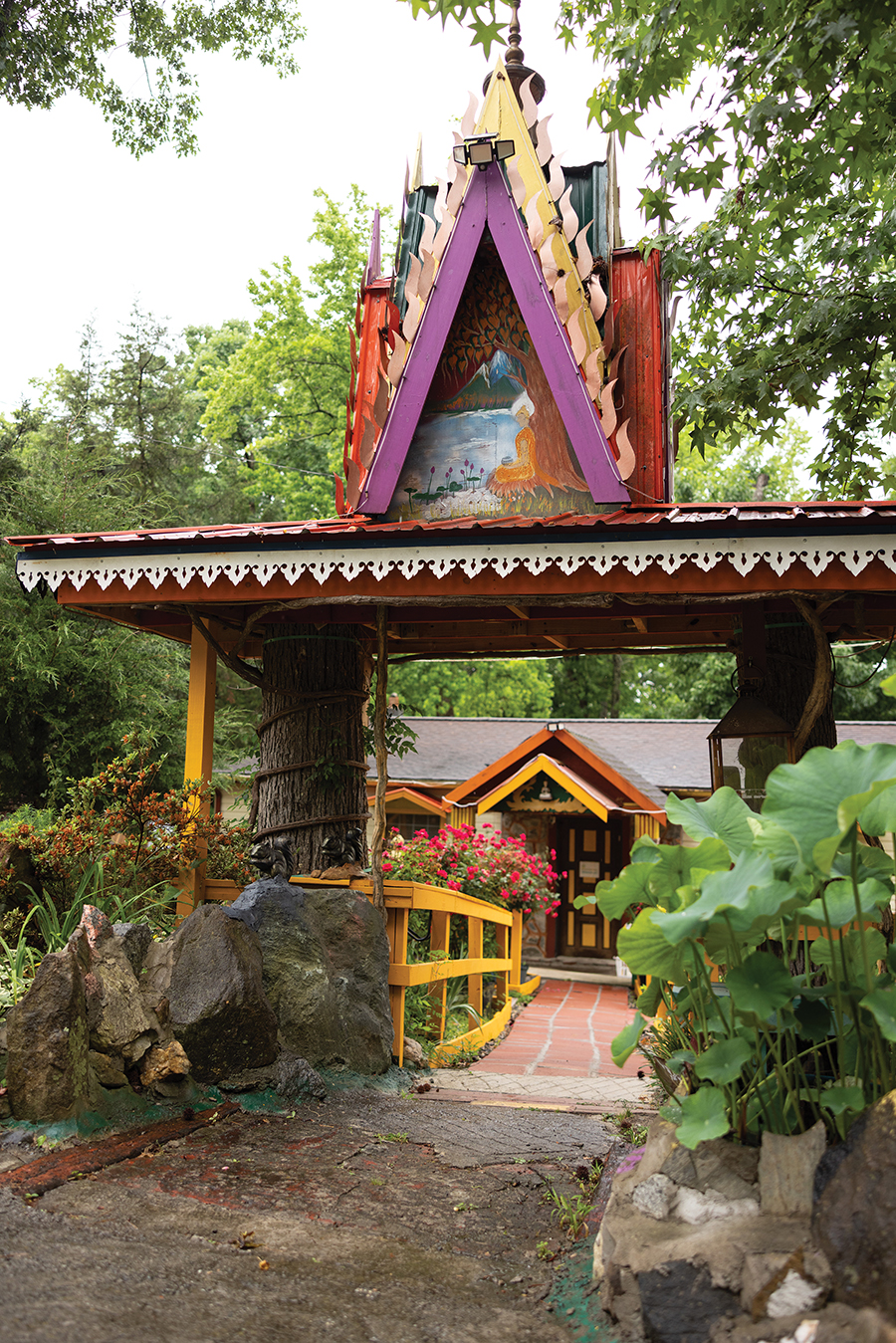
Though it’s located a stone’s throw from Interstate 74, the Wat Prakeonaramith temple is a colorful, woodland oasis. Vibrantly-painted buildings, fences, murals and shrines adorn the hub of the 14-acre property “where Lao Cultural Tradition melds with Buddhist Forest Tradition.” Here, the two resident monks, John Manivong, aka Yapho John, and Venerable Dr. Pra Maha Ajahn Wichian, adhere to a strict discipline that includes eating one meal a day, celibacy, detachment from worldly belongings and meditation — often by walking in the woods — with a goal of enlightenment.
Founded in 2016, Wat Prakeonaramith welcomes visitors and volunteers in an environment that fosters peace, compassion, wisdom and connection to nature. The temple even hosts an annual Lao New Year festival every April where guests can immerse themselves in the culture for a weekend. The monks not only serve as role models of what it means to let go of material longing, but also lead no-cost meditation retreats on site.
Yapho John only became a monk a little over a year ago. Before that, he’d been married with grown children. His new companion, Hopper, he jokes, has filled him with so much love that it’s like having another child. Prior to his adoption, the shelter had guesstimated Hopper’s birthday to be on the same day Yapho John became a monk, so the temple celebrated both last month.
His former wife, Sandy Manivong, now serves as secretary of the temple board. The two first stepped onto the path to enlightenment together. “Sell our house, everything,” she says. “We’re still trying to practice to the point that we won’t attach to anything,” she adds. “We try to free our spirit.”
Sandy explains how to free the spirit using a metaphor of a cup full of water. In goes salt, representing dukkha, or negative emotions and suffering. Suffering is just part of the human experience, whether it’s financial, physical or emotional. But through releasing attachment to material things or sending loving thoughts to those who have wronged you, you fill your cup with more water, diluting its saltiness. In the Buddhist principle of reincarnation, what you do in this life flows over into the next one, creating karma, which is inherently neither good nor bad. Ideally, each life cycle, or samsara, that you go through will be purer than the last. The ultimate goal is to reach nirvana, the point where the cycle ceases.
“So when we pass, we just, nothing will come back,” says Sandy, also in her 70s. “We just kind of let go.”
For Yapho John, simply practicing Buddhism wasn’t enough. He chose to become a monk, abandoning belongings and shaving his head to symbolize the letting go of vanity. When he set out on that spiritual path, the plan was to go to Laos, where he would practice mindfulness in the forest, meditating and connecting with nature. “But this temple needed help,” says Sandy. “So that’s why we end up here.”
At first glance, the temple buildings are a kaleidoscope of bright colors, painted in vivid reds, turquoises, yellows and greens. But, temple coordinator Andy Le points out, “We need a better living condition — living conditions, building conditions.”
He gestures to a breezeway ceiling that connects two buildings. “This is not really up to code in some ways.” The meditation space, he says, could use temperature control.
“When you go in there, it’s too hot, too cold, too hot,” says Yapho John, who would like to welcome guests to meditate with him in a comfortable space.
The first night Hopper slept at his new home, Yapho John worried that Hopper might be cold. “I could not sleep all night,” he says, noting that he eventually got up from his own bed to bring Hopper a blanket.
Now that Hopper has found his home at the temple, those much-needed donations have been on the rise, allowing for the purchase of a fence and doghouse for him. Plus, toys and other goods have been dropped off. Some have even bought items from the temple’s Amazon wish list.
Maybe with enough funds, Andy jokes, the large property could serve as home to more dogs.
To find out more, visit watprakeonaramithhp.org.

By Billy Ingram
“A small town has as many eyes as a fly.” — Sonya Hartnett
As a 19-year-old in the summer of ’76, I landed a gig as an ensemble player in a new, outdoor drama, The Liberty Cart: A Duplin Story, written by Randolph Umberger. He’d penned another open-air theatrical production debuting that year, Strike at the Wind!, a Lumbee Indian pageant performed in Pembroke. Liberty Cart was set, both in story and in fact, in Kenansville (pop. 900 then, a bit less today), situated between here and the coast. Kenansville was an unassuming hamlet only accessible by traveling down two-lane roads before the I-40 extension was completed in the 1990s.
All of the 10 professional actors hired for Liberty Cart portrayed multiple roles with the exception of one. Tom Hull solely played Phenius Pickett, a wise, old, time-traveling pushcart peddler who wove together oft-told tales of Duplin County lore as seen through the prism of the Kenan family’s Revolutionary War experience and beyond, into war-torn South in 1864. The Kenan family’s claim to fame, so far as I can tell, is that they were fabulously wealthy, thanks to the oil and gas business. To this day, it’s a philanthropic surname splashed across multiple buildings on the UNC-Chapel Hill campus.
Having spent little time in small towns without high and low tides, I wasn’t sure what to expect. Certainly not strutting center stage into a bewildering psychodrama soon surreptitiously swirling around us.
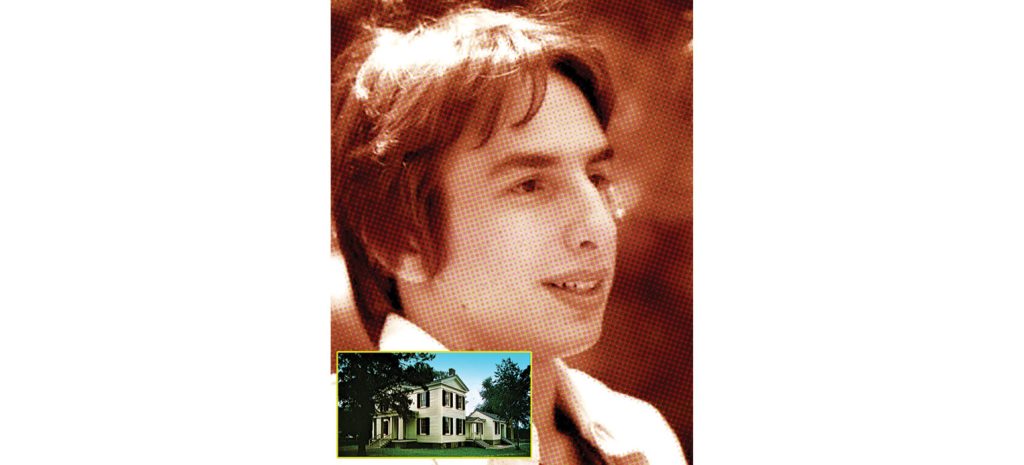
In an art form rooted in North Carolina theatrical tradition, Tom Hull was already a bona fide outdoor-drama star, having portrayed the comical drunk Old Tom in Lost Colony for a decade. Tom, myself and a trio of other cast members bunked together in a three-bedroom house that I christened “Freedom Shack” due to its location directly next door to Liberty Hall, the Kenan family ancestral home, which played a central role in our production. It was the town’s one claim to fame, a historical tourist attraction then and now. Following a month of rigorous rehearsal, Liberty Cart opened on July 29. I was assigned five character parts, including the first boo-hiss villain, Henry McCulloch, a British fop seated atop a luxuriously appointed barge carried aloft by servants. I also played a shady land speculator there to stump for a tax stamp scheme steaming the colonies leading up to the Revolutionary War. The Richlands-Beaulaville Advertiser News described my performance as an “absurdly humorous interpretation of the King’s representative.” On the front page, no less. I wonder now how I was able to finish a single play. Constructed to last for years, those period costumes were woolen saunas in the brutally humid summer swelter.
During down time, Tom and I were home a lot, content to read away lazy afternoons. Tom, a New York City resident, was genuinely loving the change of scenery and relished serving as de-facto housemother, cooking meals most nights partly out of necessity. The lone restaurant in this no-stoplight town, the Tastee-Freez, had bug sprayers positioned above the dining room tables for spritzing insecticide into the air — RAID raining down on your cheeseburger and fries every few minutes.
There was a quaint little diner across Main Street from Freedom Shack, but it had closed recently, rumored to have been forced out of business because the proprietor was African American. I talked the guy into opening just for us at noon. So every day, this gentleman took our orders — pork chop sandwiches were a favorite — then strolled next door to the Piggly-Wiggly for what he needed to prepare our lunch while we howled with laughter watching The Gong Show on TV.
Along with Tom, my Freedom Shack roommates were Roger Dale Jackson, Kevin Flanigan and David Elliott. With a thick head of red hair, Roger was one of the sweetest people I’ve ever met, intensely serious about acting as were the others. I really looked up to Kevin, incredibly effective in that outdoor setting as the handsome, smoldering young firebrand. Two seasons earlier he’d wowed audiences in a major role in Horn in the West. David was athletic, no affectations, and once brought along his Labrador retriever, who absconded with a roast we left marinating on the kitchen counter.
One of my best friends from college, “Sweet” Val McCaw, was also cast in Liberty Cart. Her dramatic moments are still talked about in Kenansville. No, really, especially her turn as Mammy Till chasing Yankees from Liberty Hall’s kitchen. Because of the time periods depicted, Val was relegated to playing domestics, which ultimately didn’t sit well with her, being a proud, independent, young Black woman.
Supporting players, dozens of all ages, were recruited from nearby Wilson, Warsaw, Rose Hill, Wallace and Beulaville. They were some of the nicest folks I’ve encountered in life, but I quickly became aware of awkward, sideways glances from shopkeepers and pickup trucks when Val and I meandered around the four or five local businesses that constituted a downtown. Unbeknownst to us, it was a downright scandal that the whitest teenager God ever blanched and a Black co-ed were flagrantly lollygagging around town together. A local mechanic having a fling with one of the actresses, their relationship consummated on the back steps of sacred Liberty Hall, informed us that townspeople routinely tracked us via their CB radios. Val was mortified . . . that anyone would consider for a moment that we were a couple!
Val had the last laugh, however. At a cast party meet-and-greet held in Freedom Shack’s backyard, with Kenansville’s hoi polloi in attendance, Val stepped from the house, screen door slapping shut behind her, and announced, “Billy, I left the jeans I borrowed from you yesterday on your bed.” Jaws dropped and eyes popped like beasts in a Tex Avery cartoon.
The only cast member with a car, I had deputies hugging the back bumper of my ’72 Dodge Dart Swinger while driving.
Discovering one morning that someone had sideswiped my Swinger, parked overnight on the street, naturally I attempted to file a report with the Sheriff for insurance purposes. Peering above mirrored sunglasses, fully reclining in his swivel chair like the stereotypical good ol’ boy with a badge in every Southern noir movie ever filmed, he blithely commented that he knew who was responsible but wasn’t going to do a damned thing about it. In the rural South of the ’70s, everyone knew their place; if not, it would be made plain to you at some point.
Whereabouts of most of the cast is a mystery. Roger Dale Jackson was seen in a dramatic role in a 1985 episode of AfterMASH, passing away in 2020. Tom Hull died in 2009. I wish I’d had a chance to talk with him again. Of all the cast members, we were the closest as he was the first openly gay person I ever met. Tom moved to Wilmington in the 1980s, where he had a stellar stage career, appearing in occasional movies like Raw Deal in 1986, a role that found him ruthlessly pummeled by Arnold Schwarzenegger. Pretty funny we both ended up working on that same project, myself as a West Coast movie poster artist for the film. Val McCaw married her high school sweetheart, William, enjoying the love of a warm and close-knit family in Colorado.
In a return visit to Kenansville a few years back, I discovered several changes. The town has an intersection with a stoplight now. Liberty Hall is even more of a tourist attraction today, but our beloved Freedom Shack was long ago demolished for additional parking. Liberty Cart closed in 1990 and the amphitheater is covered over in kudzu, but several locally owned restaurants thrive there today, including a soul food joint that residents rave about. OH
Born and raised in Greensboro, Billy Ingram moved to downtown in the 1990s after a career in Hollywood as a key member of the design team the ad world has dubbed, “The New York Yankees of Motion Picture Advertising.”


By Cassie Bustamante
Years ago after our beagle, Charlie, died at the age of 13, I remember my much more practical husband, Chris, saying to me, “Now, we will be a one-dog family.” I nodded in agreement as I, fingers crossed, scratched behind the long, tan, velvety ears of Charlie’s younger “brother” — 10-year-old basset-beagle mix, Jake.
Months later, as the ninth birthday of our son, Sawyer, rolls around, I broach the subject. “What do you think we should get Sawyer this year?” I ask, before blurting out, “He really misses Charlie. What if we found him a rescue — maybe a retriever who can play fetch?”
Scouring local rescue listings, filter set to “retrievers,” my heart does a little flip when I see one puppy’s photo. I make a preliminary visit to his foster home and know this dog is zero part retriever. Even though his litter mates are all mutts, two puppies look exactly like Weimaraners with short, grayish fur and blue eyes, and a couple others clearly resemble Australian shepherds in tan, brown and white. But this little guy? He has a look all his own, a perfect, unique combo of the two. Retriever or not, I’m already head-over-heels in puppy love.
Before long, Chris, Sawyer and Sawyer’s little sister, Emmy, meet — and fall for — the tiny, fuzzy, greige puppy with smiling hazel eyes and white-tipped paws. Even before the pup comes home, Sawyer selects a Jabba-the-Hut stuffed toy, chewy (as in texture, not as in Chewbacca) teething treats and a turquoise-and-red gingham collar. He names him Catcher, excited to toss a ball with his new pal.
A blend of two anxious breeds, Catcher is anything but a retrieving kind of playmate. He’s a velcro dog, meaning he’s always under our feet and won’t explore the backyard — not even with Jake — unless his people are with him. When we walk him, he takes his shepherding job very seriously, barking loudly at all other dogs we come across, clearly an order to fall in line. While gruff-sounding, he absolutely refuses to step in wet grass and will avoid a puddle at all costs, earning him the nickname “Prissy Paws.”
Eventually, we adopt yet a third dog, a small, deaf miniature schnoodle pup named Snowball who follows Catcher around, just as Catcher once did to Jake. And then, at the age of 13, Jake, riddled with spinal arthritis, takes his final walk. Catcher steps into the role of alpha.
Catcher shamelessly does become a sort of retriever, but only of food and ice cubes. When the freezer door opens, he comes running, Snowball following his lead since she can’t hear the action herself. He stands watch as Snowball chows down each morning just in case she leaves any morsel of kibble behind.
We learn to keep all food off the kitchen counters — except for that one very full tray of holiday cookies my mom lovingly baked for us. Headed out in various directions, we accidentally left the dogs alone in the house, tantalized by the smell of butter and sugar wafting out from under its Saran Wrap seal. We return home to empty muffin-pan liners that once housed cookies strewn everywhere, scarcely a crumb in sight. Snowball, who doesn’t hear the car pull up, is gleefully licking the floor when the front door opens. Meanwhile, Catcher hides under the dining table with a look that I assume is guilt but soon discover is intense gastrointestinal distress. One soiled and discarded area rug later, he’s absolutely fine and, I assure Chris, “He will learn nothing from this.”
And so, it seems to us that he will live forever — or at least until 13 like Charlie and Jake. But, just a couple months after his 11th birthday, he falls ill suddenly and there’s nothing we can do. On another hot, late-July day, Chris, Sawyer, Emmy and I once again surround him as we did the day we brought him home. “You are a good boy,” I choke out through tears. We all tell him how loved he is as we stroke his ears, his back, his muzzle. And then we let him go.
Back at home, that afternoon, a bright-white gardenia blooms outside the window where I work. The bush had dropped its last blossom of the season a couple weeks earlier. I point it out to Chris, certain that Catcher is letting us know he’s at peace. I can tell by the look on his face he’s not buying it.
Snowball mopes around the house, grieving, too, but we give her extra treats and snuggles. Chris strokes her fluffy ears, sighs, and says to her, but more to me, “Well, I guess we will be a one-dog family now.”
While I know I need time to process my own feelings, I also know that we are solidly, forever a two-dog kind of family. Or three.
Months later when I begin to put together our bi-annual O.Henry pet issue, the one in your paws right now, I am treading dangerous waters. Of all things, I decide to write about a local monk whose new best friend was just adopted from Guilford County Animal Services (see page 42), which involves emailing shelter employees, researching their rescue services and watching videos they’ve posted on social media. The algorithms do their thing and suddenly my Facebook feed is nothing but sweet snouts in need of new homes. Cue Sarah McLachlan’s “Angel” and grab some tissues.
A video of a timid, rust-and-black hound mix catches my eye. I show Chris, fully aware of his soft spot for hounds. A smile spreads across his face and I can tell he’s in — that is, until his logical brain takes over. He sighs. “Do we really need another dog, Cassie?”
“It’s not about what we need,” I answer.
Just a few days later, the morning after Emmy returns home from her first year of college, Cider, our brown-eyed hound, comes home, too. OH
Cassie Bustamante is editor of O.Henry magazine.

By Susan Campbell
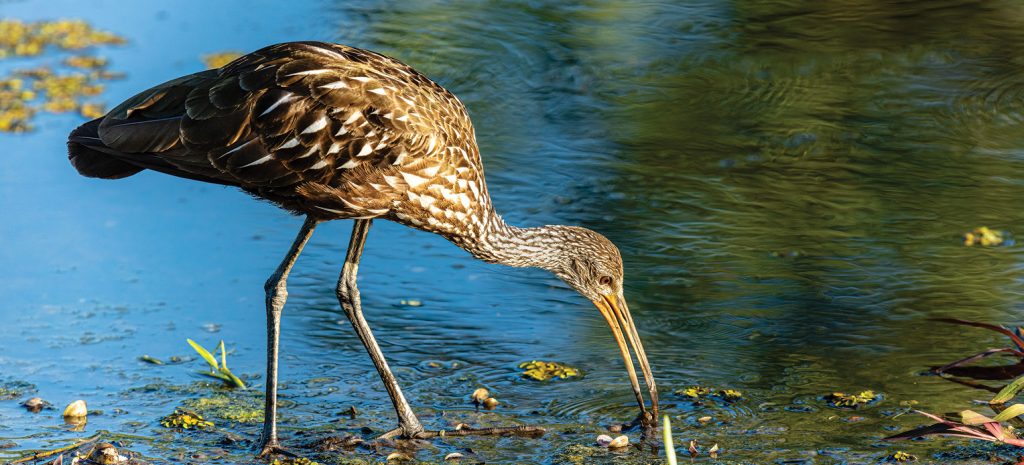
The limpkin is not a familiar bird to many in our area, but this good-sized wader isn’t a complete stranger to North Carolina. Over the years there have been plenty of sightings, and there is a good chance there will be plenty more — so much so that the species may be breeding here before much longer.
Although we hear a lot about birds that are in trouble — those disappearing from their usual haunts as a result of habitat loss, climate change, predation by invasive species, etc. — there are some that are actually becoming more widespread. Slowly but surely, the limpkin is one of these.
Limpkins, native to the subtropical region of the Americas, are wading birds that eat a variety of aquatic invertebrates. They are brown with white spangles and blotches, long legs and, most importantly, a relatively long decurved bill. Appearing a lot like a heron or ibis, they are actually more closely related to rails, those secretive smaller birds found lurking in marshy habitat. Their slightly offset bills are specialized for extracting the bodies of apple snails from their twisty shells, but they are equipped to get into a variety of mussels and clams as well. It is thought that the bird’s name originates from its halting gait as well as an odd running style when pursued.
Here in the U.S., limpkins were once confined to the wetter parts of Florida as well as the coastal marshes of the Gulf Coast states. Over the past few decades, however, they have been spotted farther north in Georgia and southern South Carolina. Given that they now even breed in a few locations “south of the border,” it’s no wonder that individuals have been spotted here in our state. The first was reported along the North Carolina coast (no surprise) in 1975, but in more recent years, they have been found in the Piedmont, too. There have also been a handful of sightings in our western counties. I saw my first N.C. limpkin during the summer of 1998 in a marshy water hazard at a golf course community close to New Bern.
The expansion of this species can be connected to multiple factors. First, invasive mollusks such as Asiatic clams and apple snails have become more abundant in freshwater systems across the Southeast in recent years. That spread of a ready food source, coupled with warmer winters, has provided additional habitat for limpkins. Furthermore, increasingly frequent and prolonged drought within their historic range has resulted in more birds roaming northward in search of the wet habitat they require.
With the summer of 2026 likely to be a dry one in the Southeast, it is very likely some limpkins will arrive here in the weeks ahead. A number of individuals showed up late in the summer of 2023 and persisted well into the fall. If you happen to be out at any of the larger reservoirs, or even along a creek or near a retention pond, keep an eye out — you just might spot one of these unusual creatures on the prowl for a meal or a new summer hangout. OH
Susan Campbell would love to receive your wildlife sightings and photos. She can be contacted by email at susan@ncaves.com.


By Ross Howell Jr.
Photographs by Becky & Bert VanderVeen
Ask anyone in the Greensboro Fire Department, and they’ll tell you rookie year is tough.
Sure, you’ve survived training, passed your exam and received your city employee number. But for months you’re still on probation and can be fired for shortcomings in your performance, conduct or attitude.
And while you’re learning the job and getting accustomed to an unusual work schedule, you’re also trying to prove yourself in the eyes of fellow firefighters — and meet strict GFD standards for performance, conduct and safety.
It’s a delicate balance between standing out and blending in.
But for one GFD rookie, it’s not possible to blend in.
She attracts attention wherever she goes. Maybe it’s that lush, flaxen mane that glints in the sunlight. People call out to her by name. And word is, she got the job because of the boss, Fire Chief Jim Robinson.
Now that’s pressure.
But if Natty, the young female golden retriever who is GFD’s first therapy dog, is feeling the heat, she sure doesn’t show it.
Most days, you’ll find her at the department’s public safety training facility next to Fire Station 1 on Church Street, chilling — the ill-informed might say napping — by the desk of her handler, Capt. Shawn Hyatt, who runs the Emergency Medical Technician (EMT)-training program for all GFD staff and trainees.
Natty may look relaxed, but, like her handler, she has a big job.
“When Chief Robinson was named to his position, one of the first things he said that he wanted was a therapy dog for firefighters,” says Patty Potter, a retired anesthesiologist who serves as president of the Greensboro Firefighters Association. It’s a relatively new nonprofit organization established to support the morale, community engagement, and physical and mental health of GFD members. Raising funds to bring on Natty was the association’s first project.
“Ed Kitchen, who is a board member of our association, also serves as president of the Bryan Foundation,” Potter says. “They provided the donation for a therapy dog.”
Not long after, Natty was picked up from a breeder in Asheboro. She was 8 weeks old.
“So, here we are,” Potter adds, laughing.
Natty wags her tail.
“For first responders, there’s a lot of stress,” Hyatt points out. “The hours are crazy, they see plenty of trauma and sometimes they come up with unhealthy ways of trying to cope.”
“The chief had seen health issues in the department,” Potter explains. “Alcoholism, drug use, depression, potential suicide — things like that.”
Hyatt nods in agreement.
“Those aren’t just department issues,” he says. “Those are national issues.”
A Greensboro native, Hyatt worked in construction before earning his EMT certification. He has 12 years with GFD — two as a captain.
“When I got my own station, I had a bunch of young guys on the crew,” Hyatt says. He recalls a shift when he took his firefighters on a stressful emergency call.
“I’d seen stuff like that probably a dozen times, so I could just move on,” he continues. But Hyatt realized that his younger firefighters might have never experienced anything like what they’d just witnessed.
Back at the station, he got them together to talk about the call and see how they were doing.
“I learned that was something important to do,” Hyatt remembers.
Although she’s still new to the job — still a puppy for that matter — Natty has participated in a similar session. Recently, firefighters returned from a difficult call and reached out to Hyatt to see if he and Natty would come by their station.
“So we drove out,” Hyatt says. He told the firefighters that he wasn’t there for a counseling session, that nobody was expected to speak if they didn’t want to.
“What I saw in that environment was that Natty can be a conversation starter,” he continues. “The guys just seemed to relax and open up, and we hung out for a while and talked.”
Carol Key, GFD deputy chief of essential services, points out an interesting aspect of firefighters’ response to stress.
“Many times, when someone has been on a severe call and we suggest they take time off, they reject that idea,” Key says. “They actually prefer to be around the people who work with them.”
That fact has led to the development over the years of a robust GFD peer support teams program that has become an important component of maintaining firefighter health.
The support teams’ work is strictly confidential, so Key is not privy to any conversations, but she knows that the groups are very active. Support teams are sometimes requested by other fire departments — even as far away as Florida.
“Natty can be a part of that effort,” she continues. “If a peer can show up with a dog and help a firefighter calm down, that’s very valuable.”
Golden retrievers are noted for being friendly, eager to please and gentle — ideal for the role of providing solace. But Hyatt points out that Natty’s disposition is more important than her breed.
“You’re looking for the right dog with the right personality and giving her good, basic obedience training,” he says. The goal is to develop a dog who remains calm and does her job, even when facing distractions or stress.
“Dogs, by themselves, are a kind of therapy,” Hyatt says. “Any dog.”
Studies have shown that interacting with a dog reduces cortisol, the hormone associated with stress, releases oxytocin, the hormone associated with feelings of well-being and happiness, slows heart rate and lowers blood pressure.
“But it’s not like we’re thinking, ‘Alright, now we’ve got a dog and everybody’s going to be fine!’” Hyatt adds, smiling.
“Natty’s just another piece of the puzzle that helps us address the mental and emotional health of the people in our department,” he concludes.
Natty recently returned to Greensboro after a couple of weeks in Charlotte, where she completed additional work with her original trainer, a retired fireman.
“She’s still a work in progress,” Hyatt says. “But she’s doing great.”
When Natty’s not at the training facility, she’s at home with Hyatt and his family and their two dogs.
“She’s a part of the family now,” he adds.
Hyatt continues her training daily, working in 20-minute sessions on obedience and interaction with people in public spaces.
Not as large as the fireman’s helmet she was photographed next to when she first arrived at GFD, Natty’s getting to be a big girl now, weighing in at 45 pounds. When she’s fully grown, she’ll tip the scales at around 60 pounds, roughly the weight of the full turnout gear — including breathing apparatus — that firefighters wear when they answer a call.
Service dogs, as you’d expect, must wear service vests.
Hyatt shakes his head.
“She went through a phase where she just exploded,” he says. “She outgrew the first vest we bought so fast, I decided to wait and see how much bigger she was going to get.”
Natty lifts her head, raising her ears to listen as several police academy recruits pass through the training facility lobby, heading for an EMT class. The space reverberates with the laughter of a group of firefighters talking nearby.
Natty yawns and stretches out on her side.
I ask Hyatt what he believes Natty would want readers to know.
“Just how important she is, how happy she makes everybody, how she loves people,” he replies. “That’s her job,” he adds. “To be Natty.” OH
Ross Howell Jr. is a contributing writer.


By Cynthia Adams
Illustration by Cambpell Pringle
The flapdoodle in our household began when my friend asked about our potentially rescuing Buffy, whose elderly owner had died.
As his owner grew weak and debilitated, Buffy was relegated to the horse barn. He had already lost most of his “inside” manners and was nearly feral when we picked him up.
If Buffy was compatible with our senior dogs, we would keep him ourselves. Either way, we would at least help place a Yorkie who seemed to know he possessed star power. This Buffy was no vampire slayer — just a tiny, prickly terrier, I cooed when we met.
Looks, dear readers, can be deceptive.
The pup was small enough to fit in my workbag. That is, if I could have wrestled the toffee-colored charmer, as strong and feisty as a Tasmanian devil, into it. He seemed determined to remain with the horses, which was not an option. I coaxed him into my arms, and we returned to Greensboro to introduce him to our pack.
Of course, this all happened just as we were leaving for a long-planned vacation. Our dogsitter agreed to tend to a third dog — along with our deaf and blind senior mutt and aging mini-Schnauzer.
We swiftly learned Buffy had no desire to adapt to our older, cranky territorial dogs. On return from our weeklong trip, most of the first floor and furniture had been marked by an ambitiously assertive Buffy. Several wooden floors were damaged. Worse, Buffy was not just a terrier, but a terror.
The dogsitter was exasperated. Buffy, she reported, was incorrigible. She suspected, as we did, that Buffy had never been socialized, accustomed to being the one and only alpha dog.
Weeks later, chaos continued.
We reluctantly decided to find a loving home where Buffy, the cutest possible anarchist, could happily dominate.
Working with a pet daycare, we distributed flyers with a picture of photogenic Buffy explaining his history. We stressed what seemed best, an older owner with no other dogs. Unless we found such a home, Buffy would remain with us. With the help of the doggie daycare staff, we began fielding eager interviews.
One day, the daycare called to tell us that a retired lady had come in seeking to adopt, having lost a previous Yorkie who “looked exactly like Buffy.”
She was a cutie herself; the perfect match! Buffy seemed to agree, practically jumping into the woman’s arms at first meeting. My heart soared. After subsequent meetings and checking references, we packed up Buffy’s new bed, bowls and toys. The duo left all smiles — even the tiny terror seemed to grin.
Periodically, I checked on Buffy. They were happily ensconced in Raleigh, her new owner reported. But trouble in paradise ensued.
“I’m concerned about Buffy,” the woman announced over the phone one night without preamble.
Uh-oh. Here it comes, I thought. Was it his old habit of peeing on furniture?
Was he unwell? Nope, Buffy’s health was excellent. She nervously cleared her throat. He has issues, she said.
“I took him to Bible study with me, just like I used to take my Alfie. But, Buffy acted horribly.”
What had happened? I gulped.
“I don’t want to say, it’s so vulgar,” she answered. Vulgar? A Yorkie?
Finally, she spoke. “Buffy humped his toy! Right there at Bible study. Everybody saw it.”
I joked. “Maybe Buffy isn’t a Baptist?”
The woman was unamused.
We agreed to talk in a few days, and I suggested Buffy not accompany her to the meetings. Wouldn’t that resolve it?
The next time we talked, Buffy’s owner remained upset, despite admitting that otherwise, his behavior was mostly good.
“He has a sex problem,” she reluctantly reported. “Buffy likes to sleep on the chaise in my bedroom, right where Alfie slept.”
I took a deep breath, completely uncertain where this was going.
“He looks straight at me and humps his toy. Like he’s goading me. It’s indecent!” she cried.
My heart broke for the miscreant Yorkie. I told her I would come for him.
“No,” she replied slowly. “He’s testing me. But I’ll keep praying on it.”
Eventually a détente was reached. I wasn’t sure I had to know exactly how.
Still . . . I wondered. Was Buffy back in Bible study? Was he swaddled like Alfie on the chaise, peeking innocently at his devout owner?
I considered the many reasons she relented: Buffy’s button nose? His bright little eyes? That perky swagger!
Or did Buffy leverage the power of the unrepentant? For, as my God-fearing Baptist grandmother said, “The good Lord sure does love a sinner.” OH
Cynthia Adams is a contributing editor to O.Henry magazine.


 July is a carnival of butterflies.
As sunlight saturates the riotous garden, yellow and black visions float from Joe-pye weed to purple coneflower, pausing at each blossom like boats anchoring at tiny, teetering berths.
Seconds pass. Nectar passes through proboscis. Yet, time stands still.
Imagine breaking out of chrysalis to emerge here, in the lushness of summer. Kissing each flower. Delighting in an endless banquet. Relishing a lifetime in 10 ambrosial days.
These wonders leave us awestruck.
In sweeping fields, where grass cicadas and katydids broadcast themselves, buckeyes startle wrens and warblers with their wild, wide-eyed wingspots.
Life drifts blissfully along.
Silver-spotted skippers wish upon electric purple blazing star. Painted ladies worship cosmos flowers. Fritillaries flit among zinnia and thistle.
Walk through the forest, where summer azures appear as paper crafts, moonlit fairies, dainty apparitions. Dip your feet into the creek’s cool waters. Feel time slow when a winged one lights upon your salt-laced finger.
Embody the transmission. Move at the speed of summer. Taste the earth through your feet as you walk upon it. Let the flowers guide you.
Here, where milkweed and monarch embrace, sip the nectar of the ephemeral. Slower. Slower. Slower, still.
Anchor yourself in this moment. Delight in the banquet. Relish in the wonder of these timeless days, this fluttering carnival of a lifetime.
The butterfly counts not months but moments, and has time enough.
— Rabindranath Tagore
 The summer garden spills.
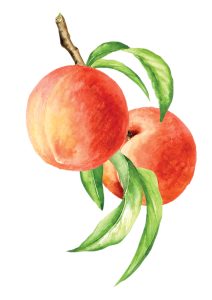
Tomatoes swell on the vine. The corn silks tell of peak sweetness. The berries grow fat in the life-giving sun. The peaches are popping, too.
The annual N.C. Peach Festival takes place in Candor (Peach Capital of N.C.) July 16–18. Among the festivities: a hot wing competition, live music in the park, family fun and homemade peach ice cream. Get the sweet-and-juicy scoop at ncpeachfestival.com.
 It wouldn’t be summer without fresh watermelon, the nasal cries of nighthawks and — oh, yes — poison ivy.
You know the rhyme: Leaves of three, let it be. But what of the antidote?
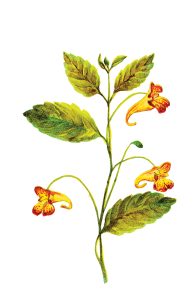
Enter jewelweed, the tall, native beauty thriving along stream banks and moist woodland edges. Also called orange balsam, orange jewelweed, spotted jewelweed and spotted touch-me-not, this self-seeding summer annual is known by its orange, trumpet-shaped blossoms, which dangle from the plant like fiery pendants.
Native Americans used jewelweed as medicine, applying sap from its stem and leaves to relieve skin irritations, including rashes from poison ivy and stinging nettle.
Thanks to nature’s endless brilliance, it’s common to find jewelweed growing wherever poison ivy runs wild. And guess who adores those tubular flowers? Hummingbirds love its sugary nectar, making them a primary pollinator for this summer-blooming plant ally. OH

By Warren L. Bingham
It’s 2026, which means it’s time to celebrate America’s semiquincentennial. Since semiquincentennial sounds like a dreaded medical procedure, the celebration’s formal organizers just call it America 250. For this special anniversary, we should do more than the customary overindulgence in hot dogs, ice cream and fireworks on the Fourth of July. We should remember.
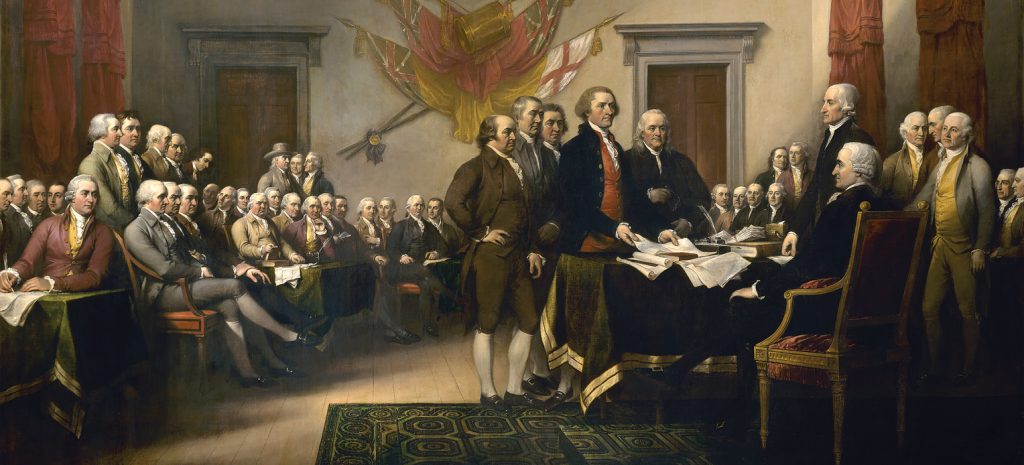
Sometime before the last Roman candle brightens the sky, you should consider paying tribute to three important Founding Fathers whom you’ve likely never heard of: William Hooper, Joseph Hewes and John Penn, the trio from North Carolina who signed the Declaration of Independence, which is, after all, the reason for all this merrymaking and bottle-rocketing. The Fourth is about the Declaration.
The three North Carolinians were among a total of 56 signers of the Declaration. Great Britain considered all of them to be traitors, for which they risked their lives. The last line of the Declaration summarizes the gravity of the signers’ commitment: We mutually pledge to each other our lives, fortunes, and our sacred honor. Had the American rebellion failed, the signers would have likely been executed in the public square. Or as Benjamin Franklin, the oldest signer of the Declaration at the age of 70, observed, “We must all hang together or assuredly we shall hang separately.”
In July 1776, the Continental Congress, composed of delegates from the 13 British colonies lining the Atlantic Coast from
New Hampshire to Georgia, had been in session in Philadelphia for over a year. Hooper, Hewes and Penn, selected by their peers in North Carolina’s Provincial Congress, represented North Carolina. The primary topic was governance and whether the Colonies should seek independence from Great Britain.
The Colonies had recently ousted royal governors, and now Colonial assemblies were trying to figure out how to best govern themselves — but the people were still subjects of King George III, and a good number of Americans liked it that way. Many felt it was beneficial to remain with Great Britain, and numerous English, Scots and Scots-Irish settlers had known only loyalty to the king. Some historians describe the Revolutionary War as America’s first civil war.
News of deadly skirmishes in New England perpetrated by British troops against local militia, combined with King George III’s uncompromising efforts to tax and regulate the Colonists, increasingly drove Americans to question their loyalty to the Mother Country. The women of eastern Carolina were notably engaged in their own protest of the crown and the British Parliament. Fifty-one women, led by Penelope Barker of Edenton, lent their names in the fight against tyranny when they staged the Edenton Tea Party in 1774. Parliament had passed several taxes on imported British goods, and the ladies of Edenton called for a boycott of British imports.
As debates about independence crept along in Philadelphia, delegates would come and go, tending to matters at home. Among the dozens of delegates from the 13 Colonies, rarely was everyone present at the same time. Travel was hard — the trip by horse from North Carolina to Philadelphia took two to three weeks.
In North Carolina, momentum for self-governance was growing. In May 1775, Mecklenburg County leaders met in Charlotte and publicly resolved their desire for independence. Then, in April 1776, the North Carolina Provincial Congress put forth the Halifax Resolves in which North Carolina became the first Colony to call for independence from Great Britain. From that action in Halifax comes a significant claim: North Carolina — First in Freedom.
In January 1776, Thomas Paine, a theretofore little-known writer and thinker, released his pamphlet, Common Sense, which strongly advocated for American independence from Great Britain. Written for the masses, Paine called monarchies absurd and implored Americans to unite, proclaim independence, and create a democratic government. Paine’s words resonated. Common Sense was a bestseller. As the season turned from spring to summer, throughout the Colonies, the call for independence was as hot as the weather. The delegates in Philadelphia got the message.
On July 4, 1776, the Continental Congress set forth the Declaration of Independence, which spelled out grievances with Great Britain and specifically with King George III. The collective body declared the “united” States of America to be free and independent states, absolved from all allegiance to the British Crown.
The Declaration was the seed of the future, but the lower case “u” in united, as printed in the Declaration, meant that each state was sovereign. For the time being, the states within their new independence would move forward in a loose alliance. That alliance took on the British military, and after eight years of battles and skirmishes from New Hampshire to Georgia and all the land in between, independence was secured in 1783.
Despite their noble role in representing North Carolina in Philadelphia, Hooper, Hewes and Penn are relatively unknown today. They all died in their late 40s, and though they made continued contributions to the fledgling state of North Carolina after July 4, 1776, they never became widely heralded. Though each man is recognized by historical markers and tributes at their graves, there are no places in North Carolina named in their honor.
There are, however, places around our state for some of the big founding names. The town of Washington is on the Pamlico River, and the town of Jefferson is in the Blue Ridge. Franklin County is named for Ben, as is Franklin Street in Chapel Hill. Fayetteville is named for Lafayette, the young French officer who served under Washington. Thanks to a modern Broadway play, practically everyone now knows Alexander Hamilton. Hip-hop has proven to be a Revolutionary educator.
Even though he wasn’t from North Carolina, Gen. Nathanael Greene has several namesakes here, enough to make other Revolutionary leaders green with envy: Greensboro, Greenville and Greene County are all named in honor of the general. Additionally, a Greensboro brewer produces Natty Greene beer. Cheers!
Beyond its signers of the Declaration, North Carolina produced its share of founding heroes. Some of them are honored with county namesakes: Nash, Harnett, Moore, Jones, Lenoir and Sampson were all North Carolinians and founding leaders, but there are no counties named for Hooper, Hewes or Penn.
None of our signatories were originally from North Carolina, but that was not unusual in their day. In the 1770s, it’s thought that over half the residents of North Carolina had come from somewhere else. It was a time of significant population growth and resettlement, and newcomers were plentiful in the state. People came from other states and abroad seeking land and opportunity, bringing new talents and skills, and new ways of thinking.
In 1776, William Hooper was a Wilmington lawyer, but he had previously lived in Campbelltown (present-day Fayetteville) and at one time served in Royal Gov. William Tryon’s legal department. Hooper had been a Royalist, a reminder that everyone in the Colonies was a subject of the king. His wife was the former Anne Clark, daughter of a New Hanover sheriff.
Born to a prominent Boston family in 1742, Hooper’s father was the second rector of Trinity Church. His son graduated from Boston Latin for his prep education, then earned both a bachelor’s and a master’s degree at Harvard University. Trinity Church, Boston Latin and Harvard are all still up and running. In addition to his formal training, Hooper studied law in Boston in the early 1760s under Boston lawyer James Otis, who was known for his strong advocacy of Colonial rights.
At the time of the Declaration, Joseph Hewes was a well-established Edenton merchant who had served in Colonial assemblies for 20 years. Hewes was in import-export trading and was a shipbuilder. Born on his family’s large farm in Kingston, New Jersey, in 1730, Hewes completed his formal studies at Kingston Friends School and was apparently bound for college at Princeton but — in today’s vernacular — turned pro instead. Strong-willed and ambitious, Hewes was drawn to commerce and in lieu of college, sought practical training as an apprentice to a Philadelphia merchant.
After five years of dock work and learning the trading business from the cargo hold up, Hewes struck out on his own, at first in Philadelphia. But by 1755, he was making a life and career for himself in Edenton. Hewes was engaged to marry the well-connected Isabella Johnston of Edenton, sister of Samuel Johnston, a future North Carolina governor. The Johnstons’ uncle was former Royal Gov. Gabriel Johnston. Sadly, Isabella Johnston died after a short illness before her marriage to Hewes could take place, and Hewes never married.
By 1776, John Penn was a known advocate for independence. A Virginia native who grew up on a small farm near the Rappahannock River in Caroline County, Penn was born in 1741 to a hard-working farm family. Though he received little formal education in his late teens, after the death of his father, he could afford to take time to study the law. John Adams famously said, “All Virginia geese are swans.” Yet, despite his Virginia birth and rearing, Penn was more goose than swan — but an ambitious, hard-working, smart goose.
Unlike Hooper and Hewes, he was not of the Eastern North Carolina elite. He lived in Granville County, in the northern Piedmont, where he farmed and maintained a successful law practice. His wife, the former Susannah Lyme, was a native of Granville County, and their marriage is what brought Penn there. He was more typical of back country settlers who lived simpler lives and distrusted both the Crown and the Eastern North Carolina elite.
Though Penn was ready sooner than most to move on from Great Britain, Hooper and Hewes were not early rabble-rousers for independence. In fact, in 1775, Hewes was among the leaders in the Continental Congress that offered the Olive Branch Petition to King George, an offer for a reset in relations between the Americans and British through peaceful means. The offer was rebuffed by George III.
Frustrated by repeated British affronts, heavy taxes and regulations, enforced at times by corrupt officials, the North Carolina signers grew to accept that independence was the inescapable course. Hooper, Hewes and Penn were amiable colleagues, but not close friends. Their bond was a shared belief in the principles of self-governance, democracy and individual freedom — the spirit of ’76.
The North Carolina trio had challenges during the ensuing war. Hooper’s home, Finian, was situated on 100-plus acres on Masonboro Sound south of Wilmington. The British bombed and burned Finian, and Hooper and his entire family were forced to flee to Hillsborough, where they lived out their lives.
Leaving his family, farm and law practice for long periods, Penn attended more days of the Continental Congress than any other North Carolinian. Over the years, he was a member of 15 or more Congressional committees. Back home, Penn was involved in equipping and supplying both the North Carolina militia and soldiers of the Continental Army.
During the war, Hewes was in Philadelphia more than in Edenton, often using his knowledge and skill in trade and shipbuilding to help the American cause. He was in effect the first secretary of the Navy. As the war raged, his health worsened and he grew increasingly weak, probably from malaria. He died in his Philadelphia rooming house in 1779 and was laid to rest nearby in Christ Church Burial Ground, just a few hundred yards from where he signed the Declaration of Independence.
If not the authors, the three Carolinians — Hooper, Hewes and Penn — were witnesses and signatories to what historian Walter Isaacson has characterized as The Greatest Sentence Ever Written. “We hold these truths to be self-evident, that all men are created equal, that they are endowed by their Creator with certain unalienable rights, that among these are Life, Liberty and pursuit of Happiness.”
That’s not nothing. OH
Warren L. Bingham is a speaker, writer and author of George Washington’s 1791 Southern Tour.
We use cookies to improve your experience on our site. By using our site, you consent to cookies.
Manage your cookie preferences below:
Essential cookies enable basic functions and are necessary for the proper function of the website.
Statistics cookies collect information anonymously. This information helps us understand how visitors use our website.
Google Analytics is a powerful tool that tracks and analyzes website traffic for informed marketing decisions.
Service URL: policies.google.com (opens in a new window)
SourceBuster is used by WooCommerce for order attribution based on user source.