Poem February 2023




















A local clothier paves the way for haute couture
By Cassie Bustamante • Photographs by Amy Freeman
 During a game of hide-and-seek at a family friend’s house, 9-year-old Cassidy Burel found herself in a closet filled with glitzy garbs. When the fashionable homeowner discovered her and allowed her to try on an extravagant piece, Burel knew she had found her calling.
“It was decadent, glamorous. The way that I felt in that [clothing], I knew that was something I wanted to continue to feel,” says Burel, her dark chocolate eyes sparkling at the recollection of that moment. As she grew in age, she realized she could actually cultivate a career in the clothing industry and share her passion for fashion with others. “I knew I wanted to participate with other women and make them feel that way.”
Now, at the ripe age of 26, Burel, owner of CassB, seems well on her way to making her mark in the haute couture world, fulfilling her own dreams as well as those of brides-to-be and fashion-conscious clients. But it hasn’t come without hours of behind-the-scenes hard work, unforeseen pivots and willingness to trust her instinct, fueled by sheer drive. And it almost didn’t happen.
With her sights set on a career in fashion design, Burel, a Hickory native, made a solid plan and stuck to it — aside from a “five-minute detour” into engineering, her father’s own field, but one she found rather “boring.” She studied at Catawba Valley Community College for two years, then transferred to UNCG to study apparel design.
Before arriving on campus at UNCG in 2016, Burel had never even threaded the needle of a sewing machine. Within the span of her four years there, she worked relentlessly, eventually even taking the seat as president of Threads, the university’s student-run fashion club.
It was during her time on campus that she designed and sewed her first wedding dress, created for her best friend just three years after learning to sew. And that was the moment she knew she loved “making wedding gowns, loving being a small part of someone’s special day and making them feel confident.”
With her impressive undergraduate portfolio and strong work ethic, Burel was poised for success upon graduation with two job offers: one from a small fashion house in New York City and another in Boston. However, with the COVID pandemic shutting down much of the country during that spring of 2020, both offers were rescinded.
After a week-and-a-half of sinking into the weight of that disappointment, Burel said to herself, “Well, I still have to pay the bills.” She put her sewing skills to work, fabricating over 2,000 masks, and then took a job fulfilling orders at Target while she plotted out a new plan.
By fall of that year, shops had begun re-opening their doors. “It was my mentality that I wanted to work for someone, get a little more experience,” says Burel. “Instead of fully diving head-on into my business, I actually started working for a bridal boutique here.” Her time spent there offered her an education in consumer sales and client interactions. And under the guidance of two experienced shop seamstresses, she developed her sewing skills to the point that she felt confident to go out on her own in March of 2022.
“It was two years of the absolute intense pressure that I needed to go, ‘I can do this now,’” says Burel.
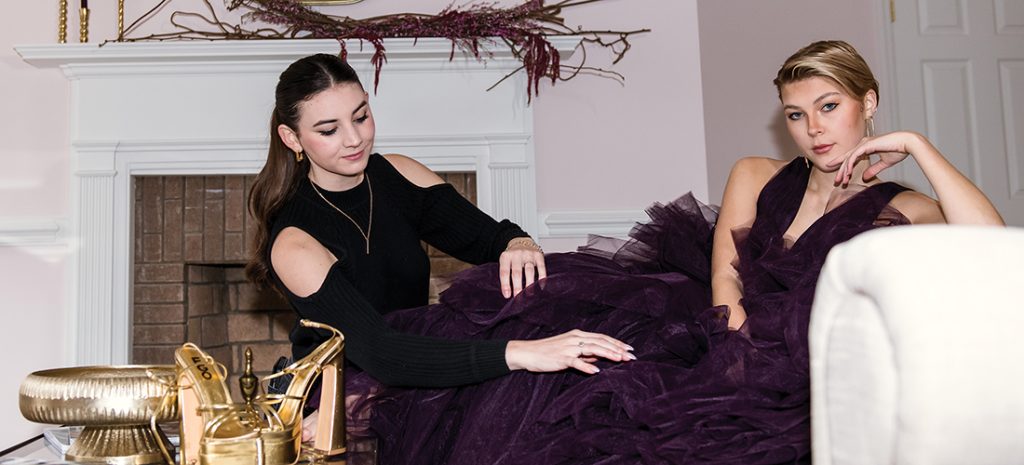
Now, six-and-a-half years after embarking on her fashion design journey at UNCG, Burel has designed several wedding dresses that “cater to the modern bride,” plus bridesmaid dresses and unique custom pieces that speak to her style, one that she describes as “very avant-garde, very glamorous, very nontraditional — and unexpected is what I really like to trademark on everything that I make.” Big tulle gowns have become her signature.
And who would be her dream client? Not one person, per se. “I would love to see my designs on the MET gala,” says Burel, referring to “fashion’s biggest night out,” the Metropolitan Museum of Art’s fundraiser. “One day, I would like some really fabulous he/she to put my look on and walk down the runway,” she says, her heart-shaped face aglow at the thought.
Though her post-graduation gig in the home to the MET gala — New York City — did not pan out, Burel has pivoted and paved her own way, working doggedly towards her dream, a dream that’s changed with the changing times.
These days she has her sights set on creating her own New York style fashion house right here in the Tar Heel State. While she recognizes it’s not the first place people think of when they consider high fashion, she sees the opportunity that lies within North Carolina.
And she’s received several affirmations that she’s landed in the right place for her business. Recently, Rose Shockley, “a beautiful client who works in the High Point furniture industry,” commissioned Burel to create a special piece for her Gatsby-themed birthday party.
“She said, ‘I want the wow,’ and I was like ‘I’ve got you on the wow,’” recalls Burel. Since most clients want to “tone it down,” Burel, who is “trying to do feathers and sequins and glitter and beading and all this stuff,” was ecstatic at the opportunity to go all out with a client who wanted the look to be “way too much.” The result? A one-of-a-kind champagne-colored, heavily-embellished mermaid tulle gown, complete with an ostrich feather bolero and a matching beaded purse.
“The dress . . . was everything I ever dreamed of and more,” says Shockley. “I felt so elegant and timeless in this piece,” which she refers to as “the most gorgeous gown I have ever worn.”
As for Burel, she lives by what she tells all of her potential clients, “Know this: You will not find anyone as excited to make [your gown] for you as I am.”
While this rising fashion star once assumed she’d call one of the major fashion meccas home, she’s realized that “God had a different plan for me.
“Maybe this is exactly where I’m supposed to be. Because I pushed and pushed and pushed to find opportunity elsewhere.” After trying her hardest to knock down doors that kept closing, Burel says, “I don’t want to say I gave up because that’s not what happened. It’s more that I took an alternative turn in attitude towards exactly where we are right now.” OH

A groovy roll in the hay with some guys and dolls on the outskirts of town
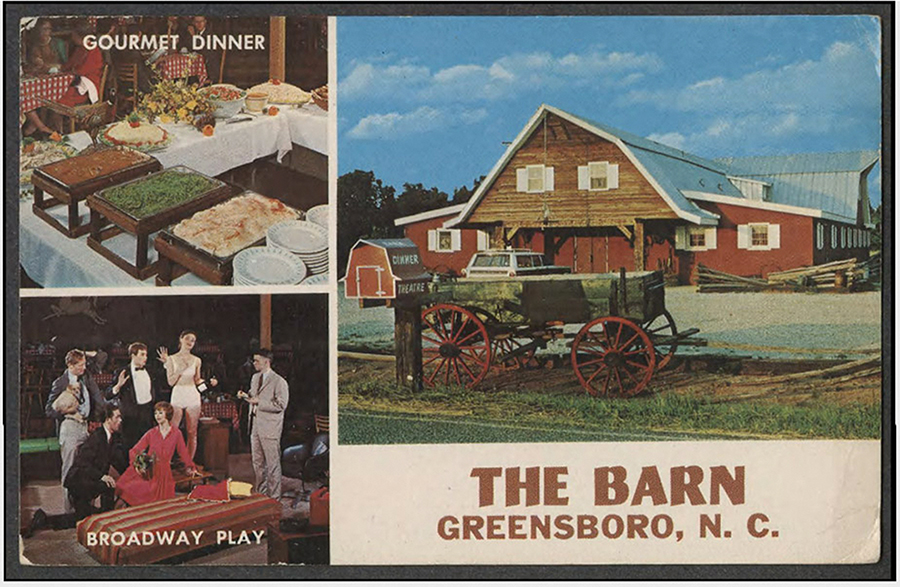
This is not the story of a place, but a snapshot from a bygone era, when a madcap company of young, stage-hungry performers were tossed into a singing and dancing whirlwind of entertainment that blossomed into lifelong friendships and happily-ever-after romances.
The Barn Dinner Theatre on Stage Coach Trail, the oldest continuously running dinner theater in America, has treated our community to remarkable performances for almost 60 years now, providing an outlet for creative expression by artists who have inspired generations of actors and directors.
The very first Barn Dinner Theatre was established in Roanoke, Va., in 1964 by Howard Wolfe, followed quickly that same year by The Barn in Greensboro. Within a short span, 27 Barn Dinner Theatres spread out across the country, concentrated mostly in the South. Wolfe’s insurance underwriter, Conley Jones Sr., took notice of how phenomenally successful this “play with your food” dinnertainment concept was. Conley, who died in 2015, ultimately purchased The Barn in Greensboro.
Productions were cast and produced by J. G. Greene in New York City, then directed in Roanoke before making their way to Greensboro, on to Atlanta, down to Marietta in Florida, and out to the other Barns. As soon as one show moved on, another was positioned to hit the ground running.
Advertisements touted the fact that “New York actors” were staging Broadway quality shows. Performers were guaranteed a six-month run with dinner and a free room on the premises. Stars who came through town in the 1960s included a young Fannie Flagg, Robert Blake and Mickey Rooney, but most of the working actors were unknowns.
After an all-you-can-eat buffet, the “Magic Stage” with actors and props in place descended from above via hydraulic motors. Within a minute the show was underway.
“I got called in by [UNCG theater department head] Herman Middleton,” actor Bobby Bodford says of his introduction to The Barn in 1969. “He said that the Barn Dinner Theatre had lost an actor and was looking for a young male that could learn lines quickly. This was early afternoon and I had to go on that night.”
Bodford was told by Conley Jones that his salary would be $50 a week plus tips, “And I said, ‘Tips for what?’ And he said, ‘You’ll wait tables up until about 20 minutes before the show.’” This was the era of brown bagging, and, in North Carolina, no alcoholic drinks were served. Customers brought their own booze and ordered whatever they wanted to mix it with.
At the end of each performance the actors would line up near the exit where customers had to walk past them. “I didn’t want to do it,” Bodford recalls. “The New York actors told me, ‘No, you definitely want to do this. You watch, they’ll shake your hand and remember you waited on them, run back to the table and put down a few bucks.’” One summer Bodford bought a motor home just from his gratuities. Not long after, professional waiters were hired and actors started making more than $50 a week.
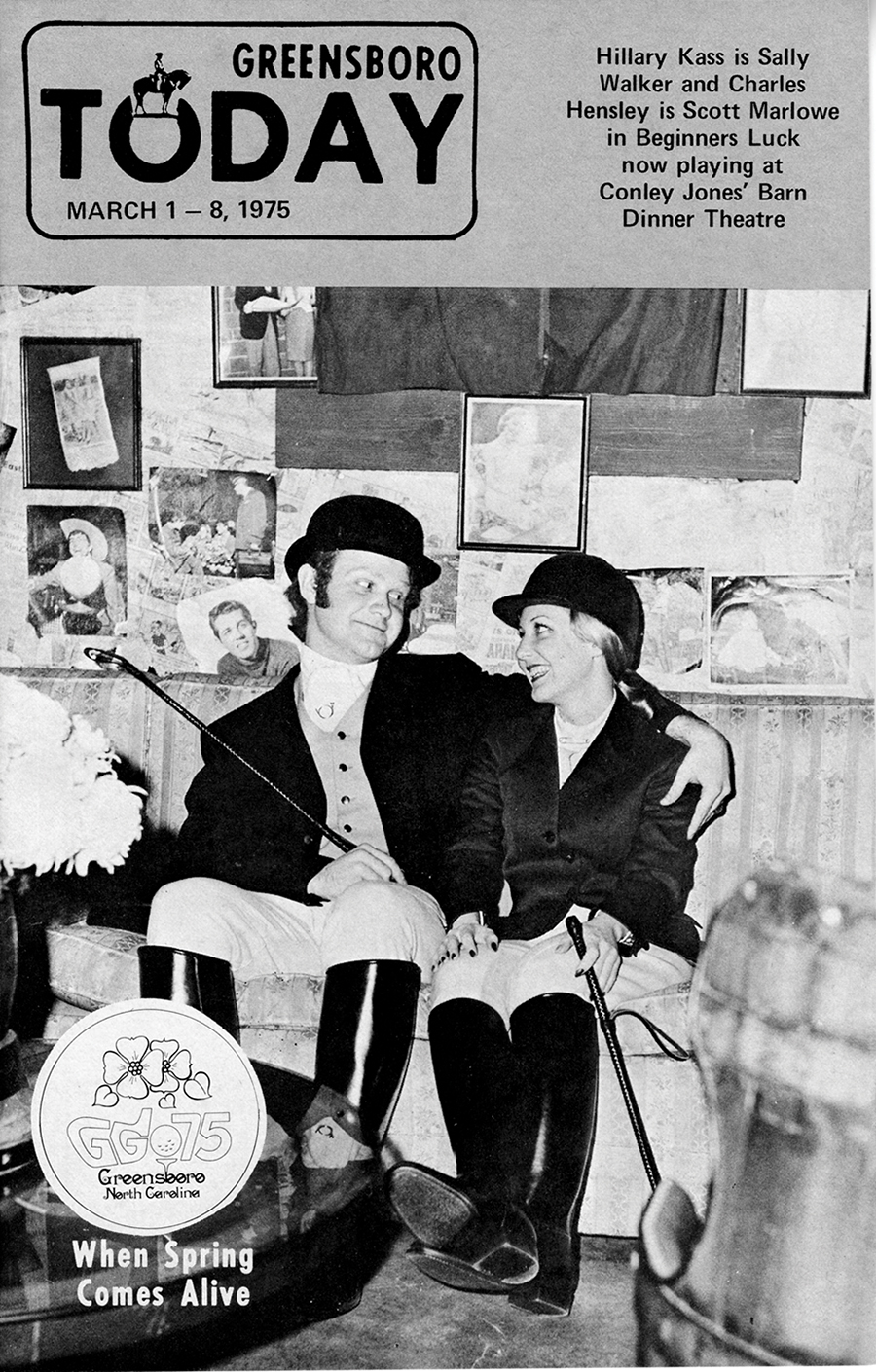
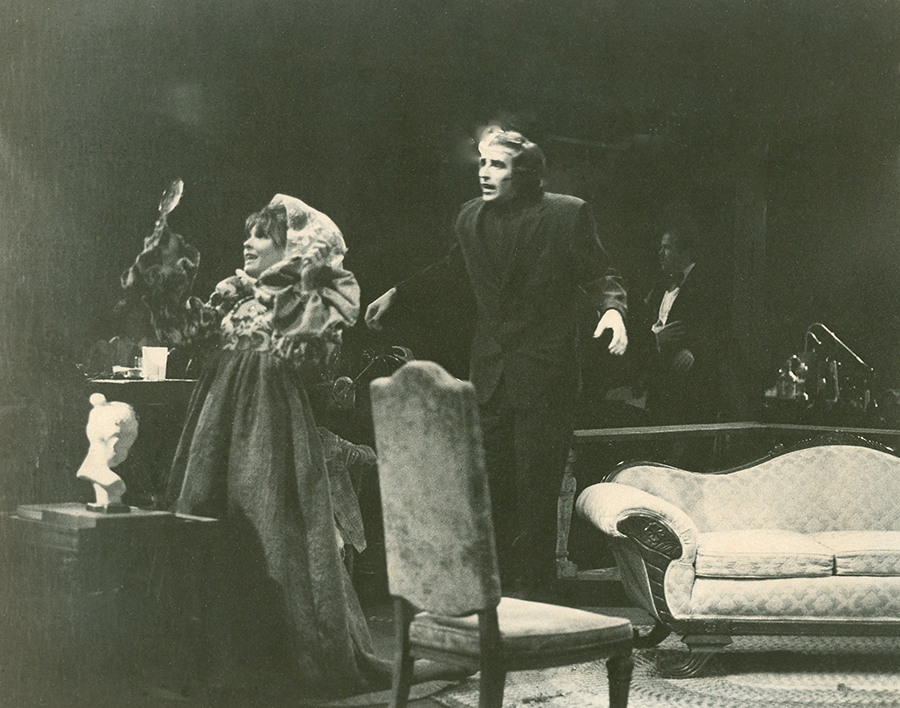
Around 1969, some of the theater owners in the chain decided it would be more cost effective to hire their own actors and produce plays themselves. “They would refuse to pay the franchise fees,” Bodford says. Eventually a court ruled that theater owners could do as they please, even use The Barn name. “Once they figured that out, theaters started cropping up everywhere,” Bodford says. The Barn Dinner Theatre here switched over to locally produced productions as well. Still, almost every night the house was sold out.
Barry Bell was studying drama at UNCG when he first became associated with The Barn. “We weren’t supposed to work out there or do theater anywhere but school, but I did anyway,” he says. “The first couple of shows I did there were in 1969, so I missed Robert De Niro by two years.”
Did De Niro actually appear at The Barn? “My cousin, Michael Lilly, was wardrobe on Raging Bull,” Bell says. “De Niro told him, yeah, he was there. As the lead in a play called Tchin-Tchin, this was one of the budding actor’s first paid gigs, receiving $80 a week for a performance described as, “heart-warming” and “a delightful escape into romantic comedy.” De Niro was quoted as saying he enjoyed his experience in Greensboro, but Conley Jones circulated a rumor that the 23-year-old actor was fired because he refused to wait tables.
“Somebody was supposed to direct a show and didn’t come down,” Bobby Bodford says about transitioning from actor to director. “It was one of those things like, well, somebody’s gotta do it. Once I started directing, I really didn’t want to act anymore.” Not having to hang around for the monthlong run of the play, “I could open up a show here, then go to Tennessee and open a show there. I really enjoyed that more.”
James (Jimmy) Fisher was in graduate studies at UNCG in 1974 when Bodford cast him in one of his shows. “It was a play called Beginner’s Luck,” Fisher recalls. “The first play I directed was called Spinoff. Neither of them are great dramatic works. They were the kind of sitcom things that were very typical in those days.”
“It’s a funny thing about the theater,” Fisher says. “Because you really do build relationships very, very quickly — relationships that you remember the rest of your life. And sometimes you never see those people again, you know?” Bodford was directing Fisher in a production of Annie Get Your Gun starring an actress from New York, Dana Warner. “After a considerable effort on my part,” Fisher says, “she finally went out with me. And we’ve been married for almost 46 years.”
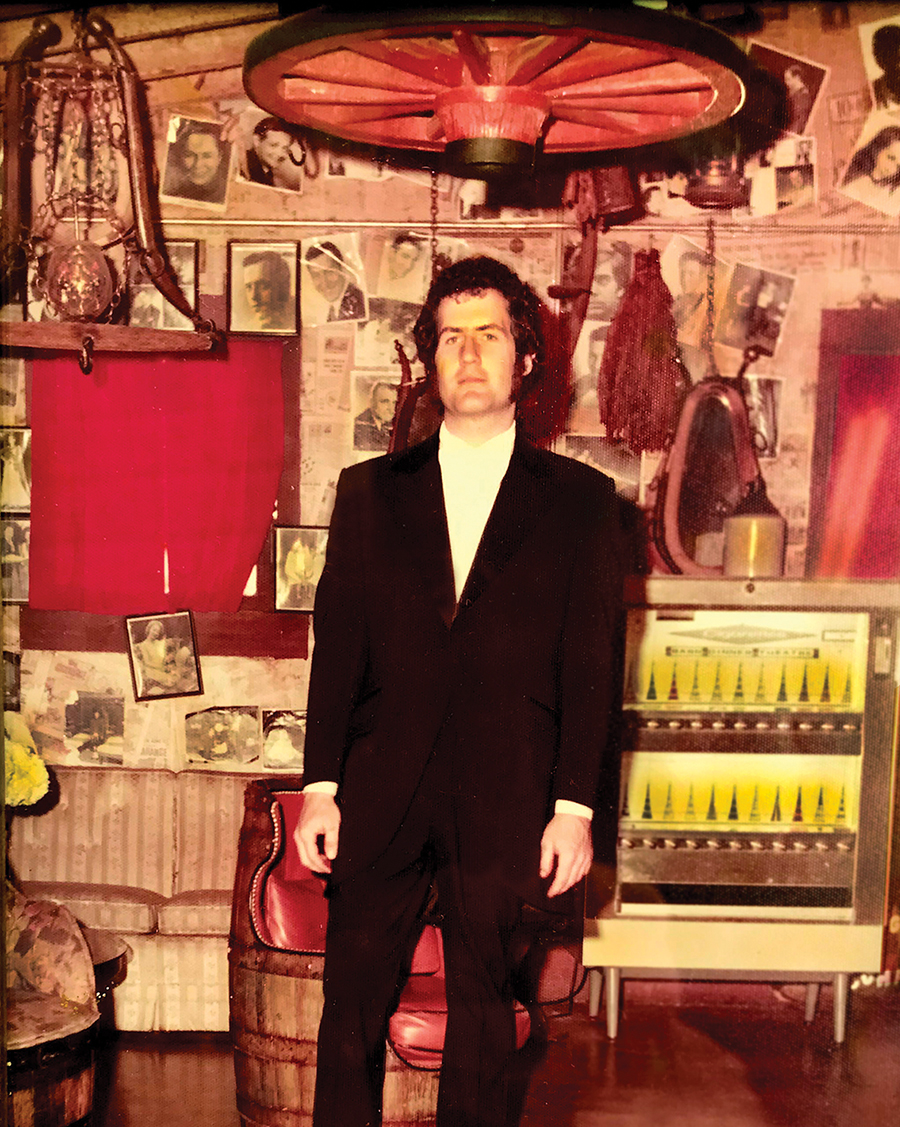
Katina Vassiliou Madison had been appearing in productions at Page High School and with Livestock Players in the early ’70s. As an undergrad at UNCG she made her debut at The Barn. “I jumped at the opportunity,” Madison tells me. “You rehearsed all day for two weeks and then boom, you had to be ready to perform two matinees and performances every night. Your energy had to always stay up.” Madison accepted a day-time position in the reservation office. When not onstage, she served wine and beer in the lobby. “I’d be stage manager, whatever job they had open,” she says. When an actor’s zipper ripped open on stage it fell on Madison to stitch it up: “I had to get down on my hands and knees to sew up his fly in the lobby,” she says. “You can imagine how funny that looked. I can vividly remember thinking, ‘Please God, don’t let anybody go to the restroom at this moment.’” Naturally there were mishaps and mischief galore this is the theater after all.
“A rat fell out of the vent one time into somebody’s plate,” Bodford recalls. “Conley came over and said, ‘I am not gonna charge you for that. You got something extra special for free.’ Seriously, and then he just left.”
“Brenda Lilly was playing a Cockney maid,” says Mina Penland recalling an onstage prank. “An actor named Randy Ball packed his suitcase with bricks and she’s supposed to go off the stage with it but she couldn’t lift it. So she ad-libbed for 10 minutes and the audience loved it.”
“In Last of the Red Hot Lovers, there’s a scene where Barry Bell’s character has to roll a joint,” Bodford recalls. “Barry said, ‘I’ve been told if you take Lipton tea and roll it up, it kind of has the same smell.” After a few performances smoking that tea, “We’re sitting in the green room when two detectives come in and want to go through our props because somebody said they’re smoking marijuana on the stage at The Barn Dinner Theater.”
It’s a distinct, irreplicable, zen-like experience when everything clicks, audiences and actors become like one, momentarily inhabiting a world entirely unto themselves. After the final bow, it takes hours to decompress from a peculiar form of exhilarating exhaustion. “We had lots of wild parties running around in the field behind the Barn, butt-naked, drunk . . . ” Bodford says. “That’s something you probably shouldn’t write.” Oops!
Conley Jones was, by all accounts, a colorful character who wore pistols in a holster on his hips, parading around like the caricature of a Southern sheriff — the sort of person who had people continually thinking, “I can’t believe you just said that out loud.” He considered actors a necessary evil. “He didn’t understand that we were the reason he was there,” Bodford says. With “no love for theater and no knowledge of how it worked,” Jones would refer to the players as “them goddamn actors.”
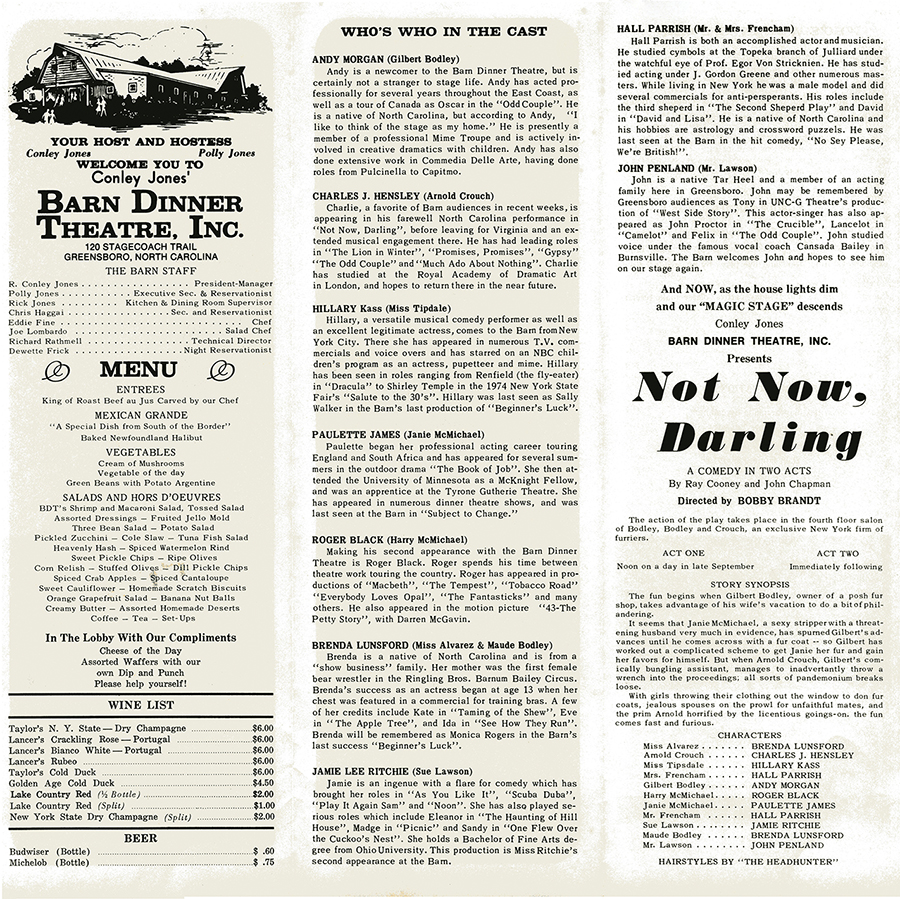
The performers’ quarters upstairs could house around eight people. An intercom system allowed them to monitor the show going on downstairs. “This big actor named Steve accidentally walked into Conley’s office one night and he was listening into our rooms,” Bodford recalls. “Steve was so upset the next morning he got a screwdriver and disabled every single one of them. And Conley never said a word about it.”
Barry Bell returned from working in New York to run The Barn from 1981 until 1992. “I did Fiddler on the Roof three times,” he says. “Fiddler and Oklahoma were licenses to print money. We normally ran straight plays about four-and-a-half weeks and musicals about six. I think Oklahoma ran like 16 weeks.”
The most difficult aspect of Bell’s tenure was dealing with The Barn’s owner, who could, at times, engage in shady practices. “Conley Jones finally got caught and burnt by the IRS,” Bell recalls. “I got a check for almost $7,000 and the waiters were getting checks for 3,500 bucks.” On the other hand, Bell says, “If a show sold really well, Conley would come up to me the next morning and say ‘Thank you Barry, thank you a lot,’ and stick $600 in my pocket.”
Barry Bell insists the buffet was good for what it was. “They always had that huge steamship round of beef. And the giant halibut, some of them 150, 160 pounds that were five feet long. A lot of people loved that fish, but, to this day, I can’t eat halibut or roast beef.”
Lorrie Lindberg, who was in grad school at UNCG in the early ’80s when she began working at The Barn, recalls “I did A Couple of White Chicks Sitting Around Talking and Cat On a Hot Tin Roof.” Lindberg worked at a few out-of-town venues after she graduated. “When I came back to Greensboro, I had been told by tons of people that I needed to meet Barry Bell, but we never were in The Barn at the same time.” Bell would be in New York when Lindberg was at The Barn or vice versa. “Everybody that had told us that we needed to meet each other were all standing in the lobby at The Barn because I was dropping off a friend of mine who was doing The Mousetrap. They were all in that show that Barry was directing. So they all saw us meet in the lobby at the Barn.” That was 1983, “We started living together maybe a week after that and we’ve been together ever since.”
As one of several Barners who moved to Los Angeles to pursue a career, Bobby Bodford eventually found himself working as Angela Lansbury’s costumer on Murder She Wrote. “She liked what I did and she liked working with me,” he says of the legendary actress. “But she was always saying, ‘Go back to the theater.’” Bodford had fallen in love on the courthouse steps of the Back to the Future set and was now married. “I never understood why the heck I was in Los Angeles.” Wanting children but having no desire to raise them in the City of Anything but Angels, in 1992, “We decided we were going to move back to Greensboro and Angela was delighted to hear it.”
Barry Bell severed his ties with the theater in 1992. That’s when, on the road to Greensboro, Bobby Bodford received a most unexpected phone call. “Conley Jones heard that I’m coming back and he says, ‘I’ve got people here that say you would never direct another play for me.’ I went, ‘Oh, no, I will! I don’t have a job,” he recalls. It felt something like home and Bodford spent the rest of the ’90s as The Barn’s creative director. “It was more sophisticated than it had been previously. It was a big deal. I think even then it was six or eight bucks for dinner and a show.”
Lots of young actors who cut their teeth at The Barn went on to bigger things. “Beth Leavel, who just won a Tony a couple of years ago, worked at The Barn a bunch,” Bell says. Lillias White achieved stardom after wowing audiences in Barn presentations of Love Machine and The Color Purple. Nominated twice for a Tony Award, White brought it home in 1997 for Best Featured Actress in a Musical. Winning both an Obie and Drama Desk Awards for her musicality, she’s well-known to youngsters as the voice Calliope in the Disney flick Hercules.
When Conley Jones passed away in 2015, Ric Gutierrez had been manager and producer at The Barn for two decades. Barry Bell and Lorrie Lindberg moved to Richmond, where they both taught at Virginia Commonwealth University. He has since retired. Bobby Bodford still directs theater productions in the area. “My wife Nicole became a member of our theatre family the minute my friends met her. I’m no longer Bobby — it’s Bobby and Nicole,” he says.
“I ended up teaching in Indiana for 29 years,” James Fisher says of his post-Barn days. “My wife, Dana, and I talked all the time about retiring in Greensboro. UNCG was looking for a department head and got in touch with me about the possibility of applying.” Fisher served as head of the theater department at UNCG from 2007 until he retired in 2019, winning multiple awards for excellence and authoring several books.
“It’s all interwoven,” Fisher says upon reflection. “Barry Bell, Billy Wagner, Bill Rollerson, Jan Powell, Charlie Hensley, Michael and Brenda Lilly, on and on. These are people who have come in and out of our lives over what is now getting close to 50 years. We always talk about getting together and doing one more show. I doubt it’ll ever happen, but it’s fun to think about.” OH
An abundance of thanks to Barn alumnus Charlie Hensley who provided connections to these esteemed performers and educators, allowing this humble scribbler to witness from the wings a magical moment of theater history.
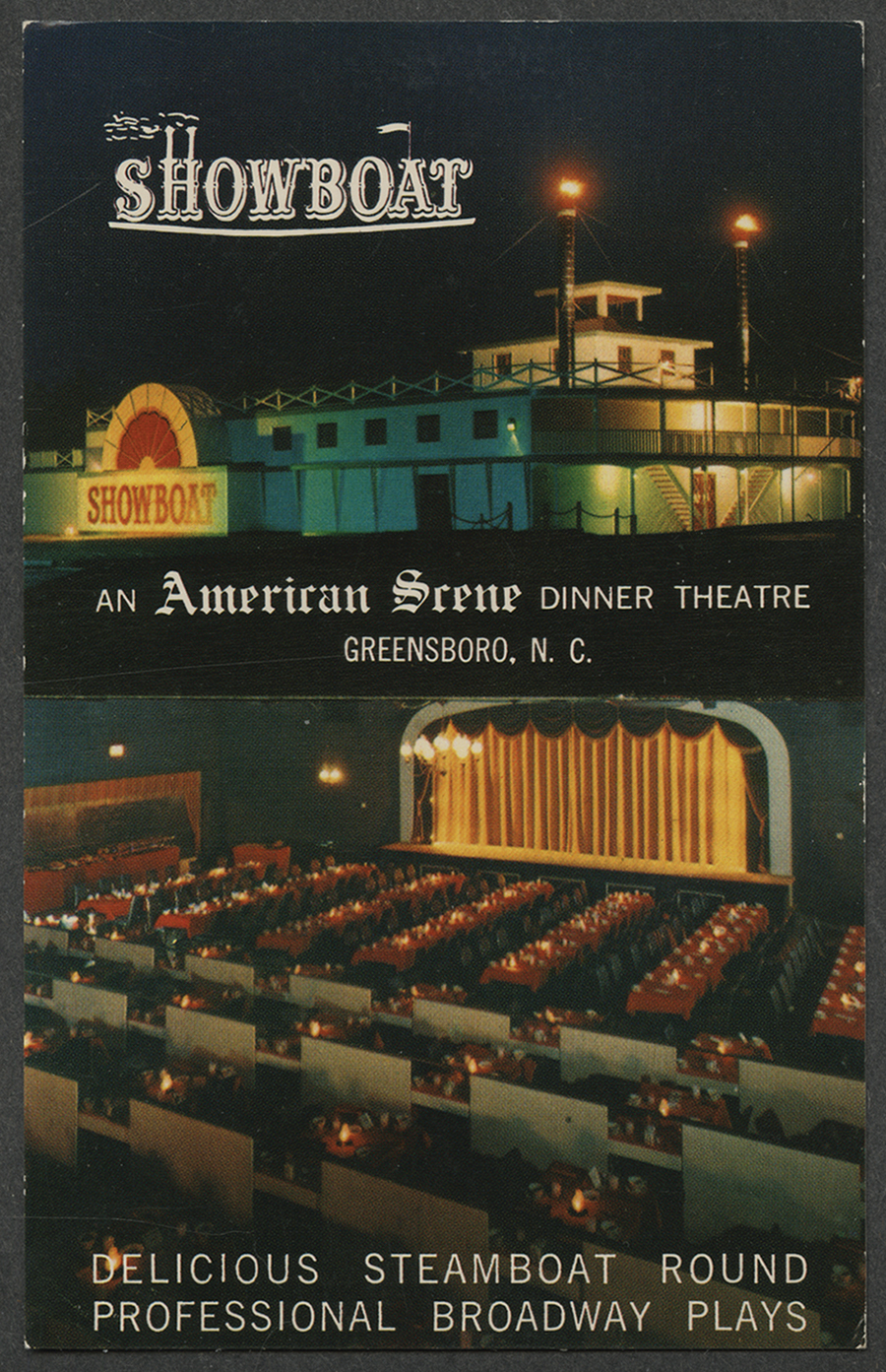
In 1965, Showboat Dinner Theater, An American Scene Dinner Theatre, opened off N.C. Highway 68 on Gallimore Dairy Road in a building resembling a New Orleans riverboat. Patrons crossed a bridge over a man-made lagoon to traverse from the parking lot to the theater. Just about every night, Conley Jones would corral an employee to drive him over to the Showboat to count the cars in the parking lot.
“The Showboat used, if I’m not mistaken, union Equity actors,” Barry Bell notes. “And Conley, at The Barn, didn’t. He didn’t even pay the actors to rehearse the new play.” There’s a legendary story about what happened when Actor’s Equity came down from New York to organize a protest. “If you look at the front of The Barn, there are two windows up in the peak,” Bell says. “Conley’s desk was right there by that window and he threw M-80 fireworks out the window at them.” One of the trade papers sported a headline that read something like, “North Carolina Theater Producer Fires on Equity Protestors.”
Around 1969, budding actress Mina Penland was in rehearsals for I Do, I Do, directed by Bobby Bodford at the Showboat Dinner Theatre, which had opened four years earlier. That production never made it before an audience due to someone in management absconding with the funds, leading to the theatre closing. She ended up doing plays at The Barn and her brother Dodie Penland became the Barn’s stage manager, who greeted the audience as it arrived.
Showboat went under after just a few years and became Jung’s Galley, the new location for Jung’s Chinese restaurant, formerly located in a Tudor inspired mansion on Church Street, close to Summit Avenue. In 1977, the site became Bill Griffin’s Boondocks nightclub for a time. OH

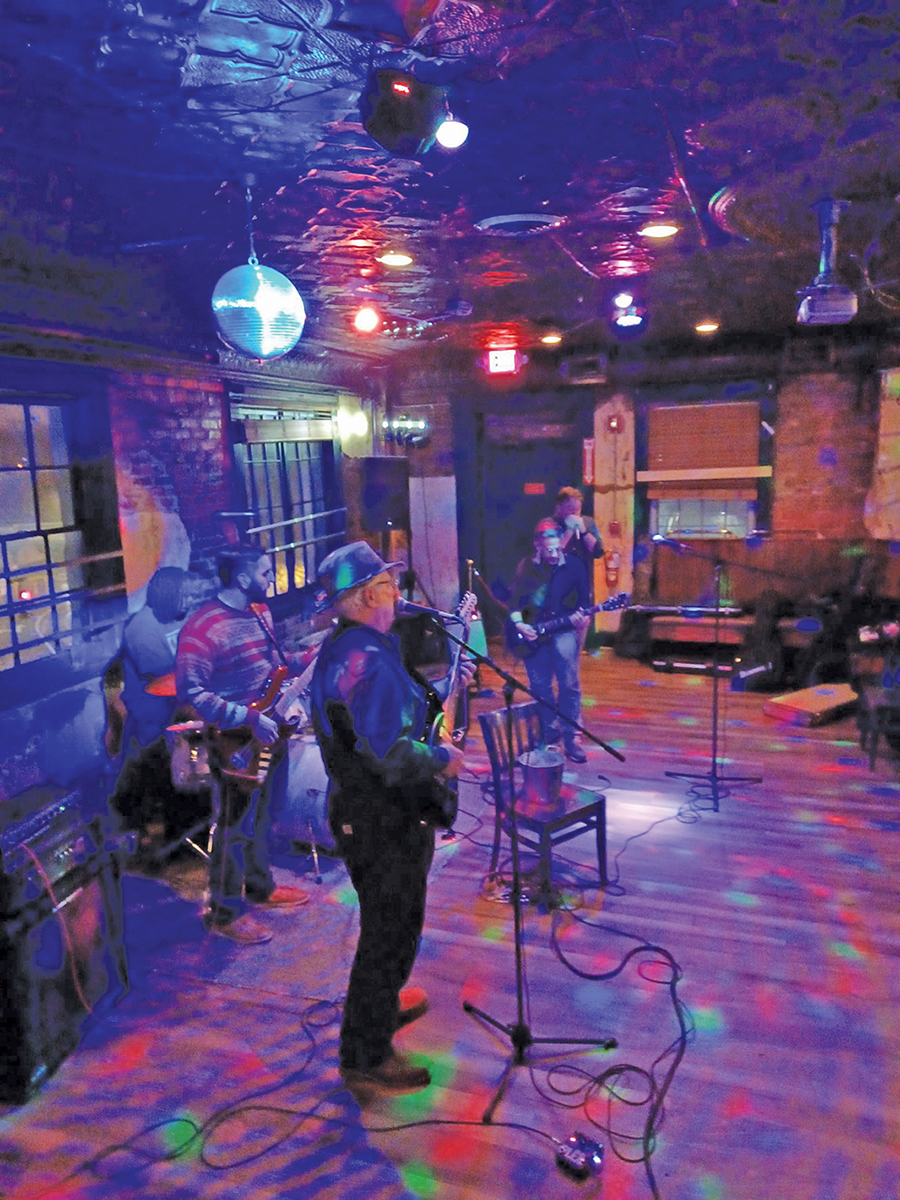 Wednesday Night Blues Jam at Ritchy’s Uptown Restaurant and Bar is fast becoming the place to be. Hosted by Shiela Klinefelter, an accomplished bass player and vocalist with Shiela’s Traveling Circus, and Chuck Cotton, it’s a great night of raucous melodies sure to get your feet moving.
Shiela’s been heading up jams on Wednesday nights for over 30 years, beginning with her former band, The Ladies Auxiliary. “The one at Ritchy’s started in the winter of 2021, about a year-and-a-half ago,” she tells me.
The opportunity is open to any musician who wants to play the blues, whether professional or still learning. “We provide backline,” Shiela says. “So they just show up with a guitar or their drum sticks, sign up, and I’ll put them up in groups. Each group plays four songs so we get a lot of great music that way.” They are occasionally joined by Shiela’s husband, Robert Klinefelter, aka “Big Bump” of Big Bump and the Stun Gunz, one of the Triad’s longest-running boogie bands.
In the heart of Hamburger Square on the most happening corner downtown, Ritchy’s is located above Longshank’s, which is above Shortshank’s, around the block from Little Brother Brewing on McGee Street at South Elm. — Billy Ingram
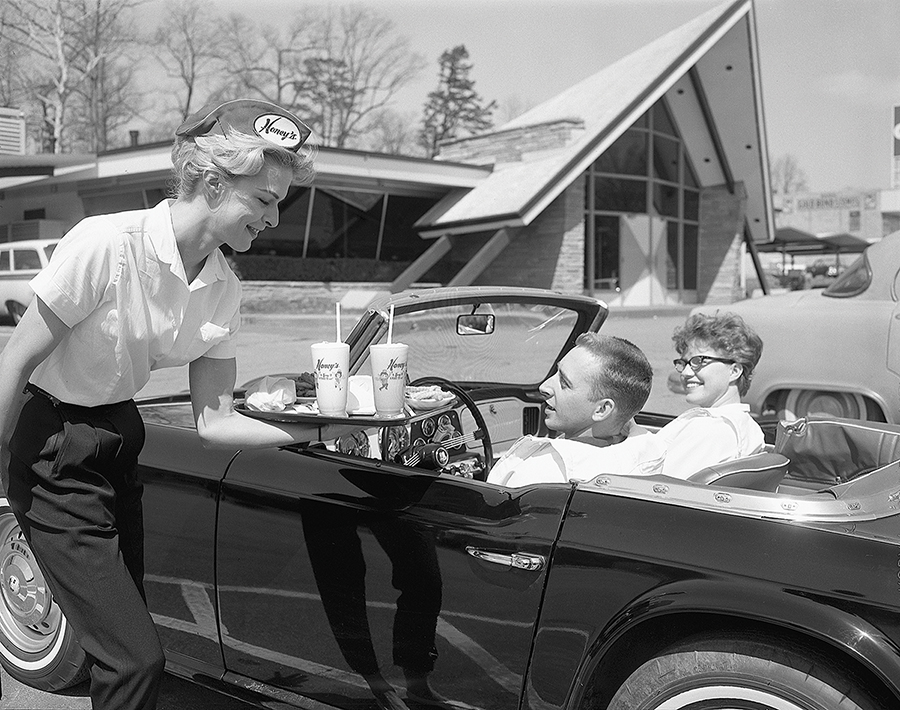
Photograph © Carol W. Martin/Greensboro History Museum Collection
Taking your honey on a diner or drive-in date has been a sweet idea for over 60 years. Thanks to the Greensboro History Museum for this snapshot of the past, taken at Honey’s in 1963.

Those of us who are proud members of the bleak midwinter — meaning February — birthday club believe our month gets a really bad rap. Yes, the geniuses at the National Weather Service say it’s typically the coldest and snowiest month. But it’s also the shortest of the year — and its days grow noticeably lighter.
Besides, for all you shivering ninnies who whine that Old Man Winter just won’t go away, there’s so much to take your mind off the weather. If history is your thing, February brings us Black History Month and Presidents Day, celebrating the birthdays of Honest Abe and Old George (assuming they are still in fashion), not to mention the Chinese New Year and the happiest day for florists and chocolate fanatics everywhere, St. Valentine’s Day.
If religion is your thing, February 2 is quite special both here and abroad. In addition to being your humble scribe’s birthday (Home Depot gift cards most welcome), many cultural historians believe Candlemas Day — celebrated across the U.K. and much of Europe to commemorate the day Jesus was presented to the Temple — is the inspiration for our own bizarre belief in the forecasting abilities of a sleepy rodent named Phil: If Candlemas be fair and bright / Winter will have another flight / But if it be dark with clouds and rain / Winter is gone, and will not come again.
Once upon a time, back in jolly old 713 BC, the Romans added January and February, a time previously known simply as “Winter,” to their calendar, designating February as the last month of the year. Three hundred years later, however, in order to give Christmas a proper home based on a celebration of their Sun God, Sol Invictus, Roman Christians invented December and rudely pushed January and February into the next year.
However this most misspelled month came into being, those of us who dearly love the bleak midwinter with its still and frosted mornings would like to advise you simpering winter haters to just relax and remember Mother Nature cherishes her rest just below the surface of the frozen garden.
If all else fails, take a nice warm bath with the last of the holiday wine and scented candles. The word February, after all, comes from the Latin word Februa — meaning to “cleanse.”
In the meantime, with a little luck this month, we’ll be out making angels in the snow. — Jim Dodson
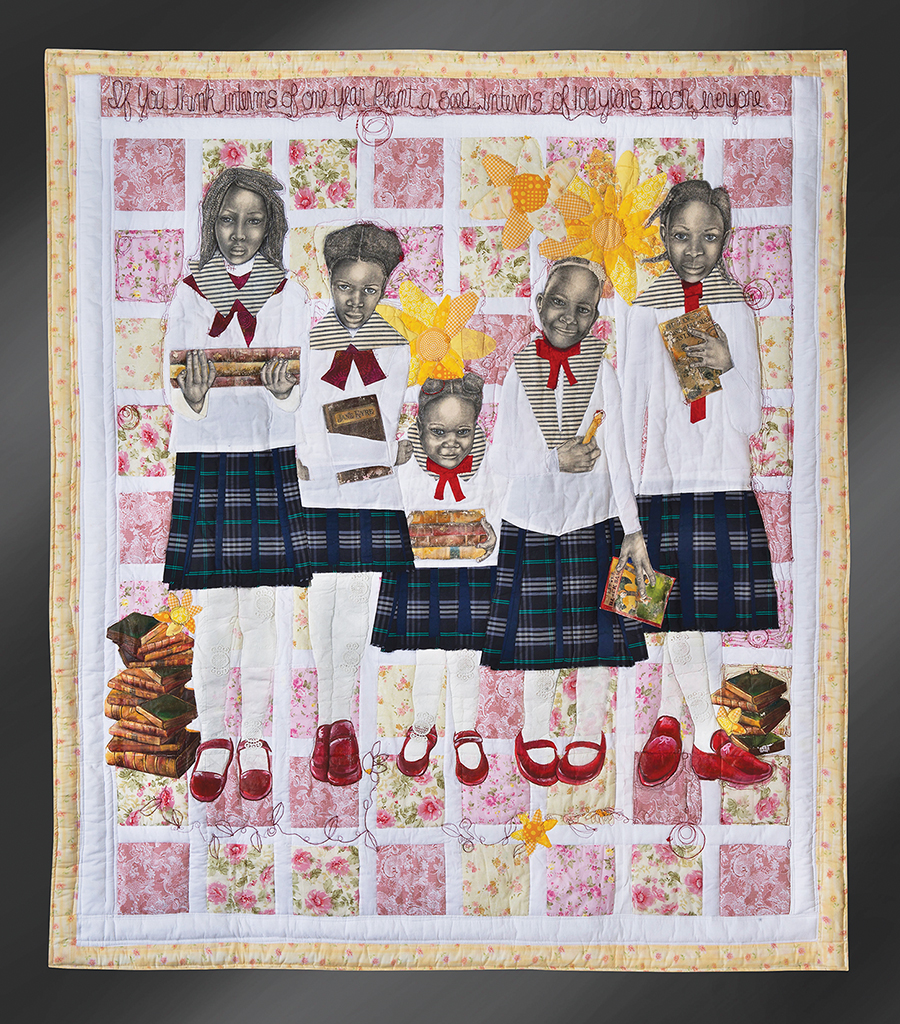
“Conversations with my mother, grandmother and aunts have always inspired me to base my artworks on Southern expressions and idioms,” says Beverly Y. Smith, whose quilt is featured in the Center for Visual Artists’ Woven into Our Fabrics exhibit. Smith says her work may be sparked by a childhood memory. Often, during its creation, she says, she sometimes encounters an unexpected epiphany. Mixing media such as machine-stitched fabric, embroidery, paint and transferred images, the epiphany portrayed in Plant a Seed strongly suggests a rich family tradition of books, both cherished and shared. “For this exhibition, we wanted to show the diversity and range of 10 North Carolina textile artists working in traditional and nontraditional ways,” says Devon Knight, the center’s art and community coordinator. “Textiles have a unique way of weaving themselves into the fiber of our being, while providing a thread between our past, present and future.” Info: mycvagreensboro.org.

Let others search for what may turn out to be America’s most unwelcome Valentine’s Day gifts (according to one survey) — heart-shaped boxes of chocolates (22 percent say please don’t), flowers (28 percent!) and furry handcuffs (34 percent). Nope, not me. And I’m going to let you in on a very dirty little secret. The Sage Gardener’s partner in grime really digs receiving seeds and plants on February 14th. This year, for instance, I’m focusing on stinking lilies, members of the aromatic allium family, such as Bulgarian giant leeks, Walla Walla sweet onions and Dutch yellow shallots. Imagine the pleasure of spending more than half a century with someone who loves raw onions on top of pinto beans, 40-clove garlic chicken and scallion pancakes as much as I do. And on the off-chance you don’t have access to the internet, “Like oysters, chocolate and hot peppers, the allium is a secret aphrodisiac.” That, revealed in a no less authoritative source than Well+Good’s YouTube series, “You Vs. Food.” So buy now, plant now, and reap, ahem, the benefits of alliums in the spring, summer and fall. NCSU says it’s prime time to get most of them into the ground. My green-thumbed fairy already has leeks bedded down. Me? I’ve planted a platoon of Egyptian walking onions, which are reproductive wonders, multiplying underground while also producing what my neighbor called “bubbies,” botanically referred to as topsets or bulbils, proliferating at the top of the stalk where flowers and seeds would normally be. Let’s face it. What plants could be sexier than alliums? Suggestions welcomed. — David Claude Bailey


Remembering a local legend in ink
By Billy Ingram
“Comic books helped me to define myself and my world in a way that made both far less frightening. I honestly cannot imagine how I would have navigated my way through childhood without them.” — Bradford W. Wright
 Wright’s not wrong. As a young comic book collector, one of my fave artists was Murphy Anderson. His fluid brushwork bestowed an air of sophistication few artists of that genre possessed. I was surprised to learn, years later, that Anderson was born and raised in Greensboro before moving to New York to work for DC Comics.
Murphy C. Anderson Jr. recognized early on the transformative power that words commingling with pictures could have on the imagination. As a youngster in the 1930s, he’d spend hours lying on the living room floor of his North Spring Street home poring over the comic pages of local papers and, on Sundays, the New York Journal-American, which allowed him to follow the adventures of The Phantom, Mandrake the Magician, and his favorite strip, the scientifically forward-looking Buck Rogers in the 25th Century.
Amy Hitchcock, a former classmate, says, “At Central Junior High there were two boys that sat together all the time and they drew in their notebooks all the time. My impression of Murphy was that he was withdrawn, quiet and always did his own thing, but he was pleasant.” Later, Anderson and Greensboro newspaper legend Irwin Smallwood would become co-editors of Greensboro Senior (now Grimsley) High School’s newspaper.
A college dropout facing certain military service in 1944, Anderson borrowed $100 from his skeptical father to make the rounds of New York City’s funny book publishers. Unknowingly, he was marching into what has become known as the Golden Age of Comics, so christened because sales were so astronomical, upwards of 6 million copies per title.
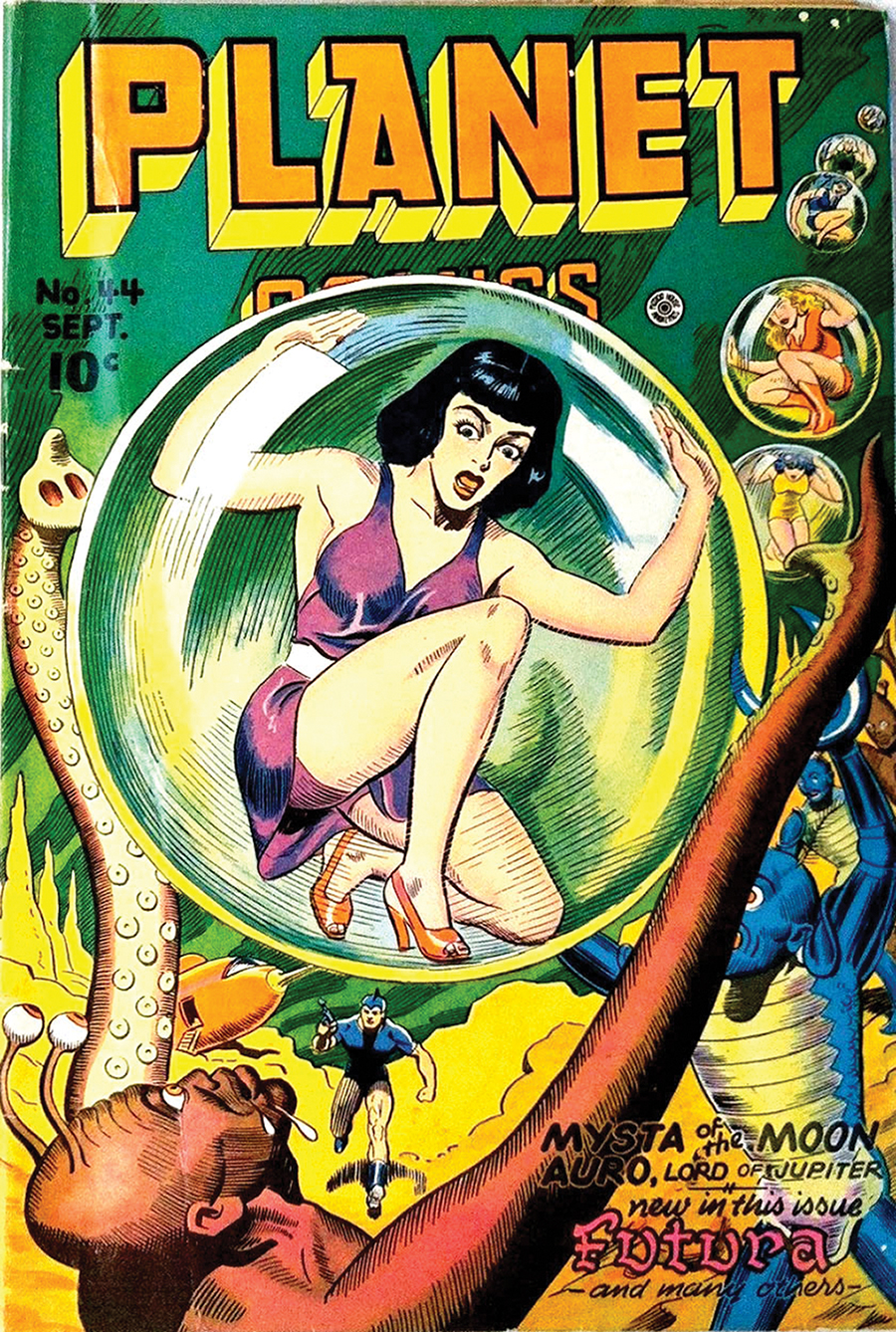
Anderson landed a gig illustrating for Planet Comics, whose main selling point seemed to be the undulating breasts belonging to whichever curvaceous blond was being snatched up by salivating bug-eyed monsters that month. He continued slinging ink for Fiction House while serving two years in the Navy, stationed in Chicago, where he met his soon-to-be wife, Helen. Completing his military stint in 1946, he happened upon a notice from the National Newspaper Service in search of an artist for Buck Rogers in the 25th Century. Anderson took over daily art chores in 1947. “I grew up on Buck, it was a dream come true,” he related decades later.
Anderson left Buck Rogers in 1949 just as the golden age of comics was drawing to a close. He and his bride made their way to Greensboro, where, during the day, he served as office manager for his father’s fledgling business, the Blue Bird Cab Company.
Before long, Anderson was once again canvassing the concrete jungle. Julius Schwartz, editor for National Periodical Publications’ (as DC Comics was known in 1951) new line of science fiction comics, recognized Anderson’s work as compositionally superior to and more finely rendered than many of the company’s slickest artists. Schwartz met with him and sent him home with a script to illustrate.
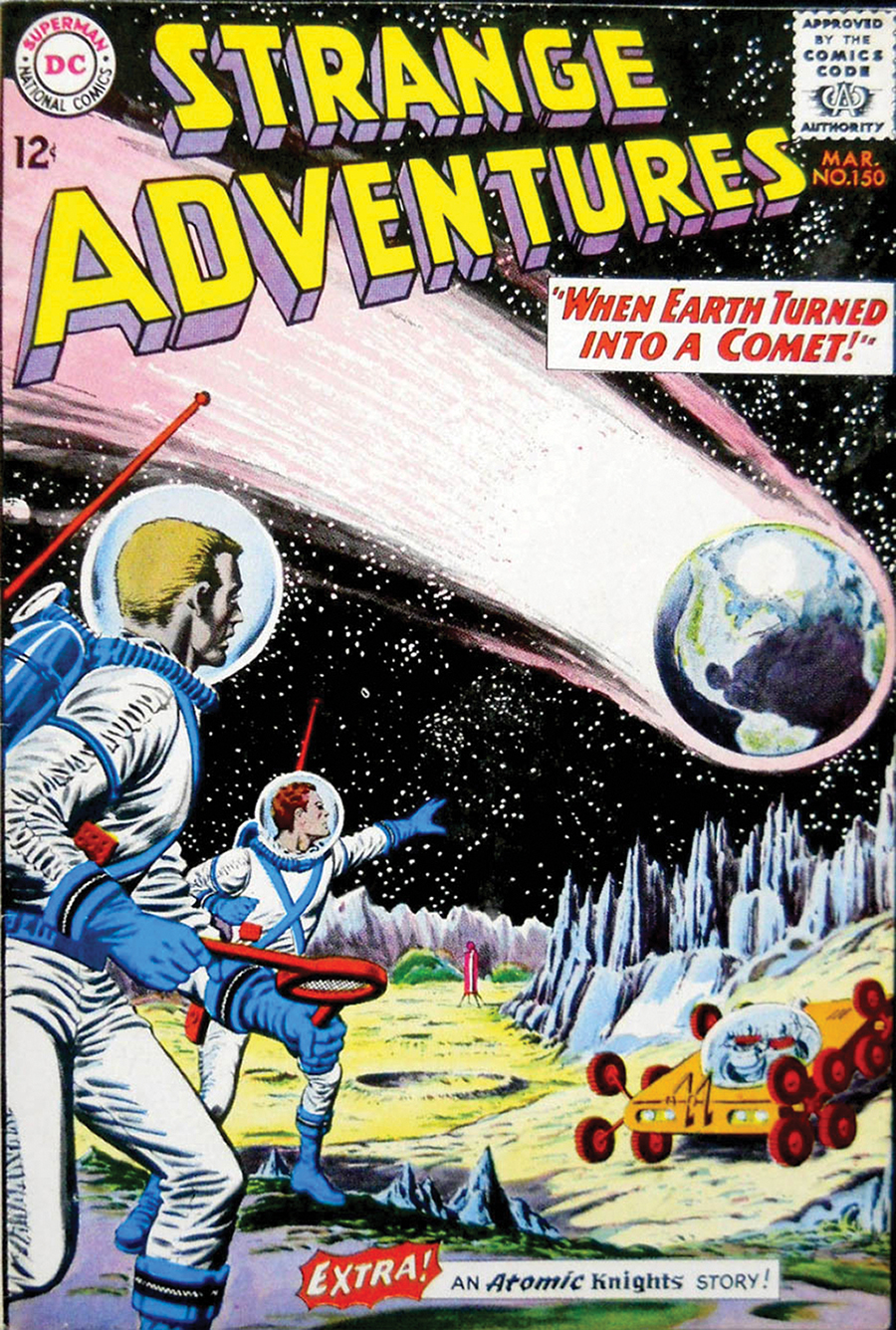
Schwartz allowed Anderson, now with children and not ready to give up his Carolina roots, to mail his contributions in from Greensboro, an unheard of arrangement. Still trafficking for Blue Bird Cab, Anderson spent his nights conjuring up compelling covers populated with pointy-eared giants capturing fighter jets in butterfly nets, radioscopic weirdos from other dimensions invading and terrifying the tourists, and genetically superior gorillas confounding the laws of man and nature. Stories were then written around his phantasmagorical scenarios.
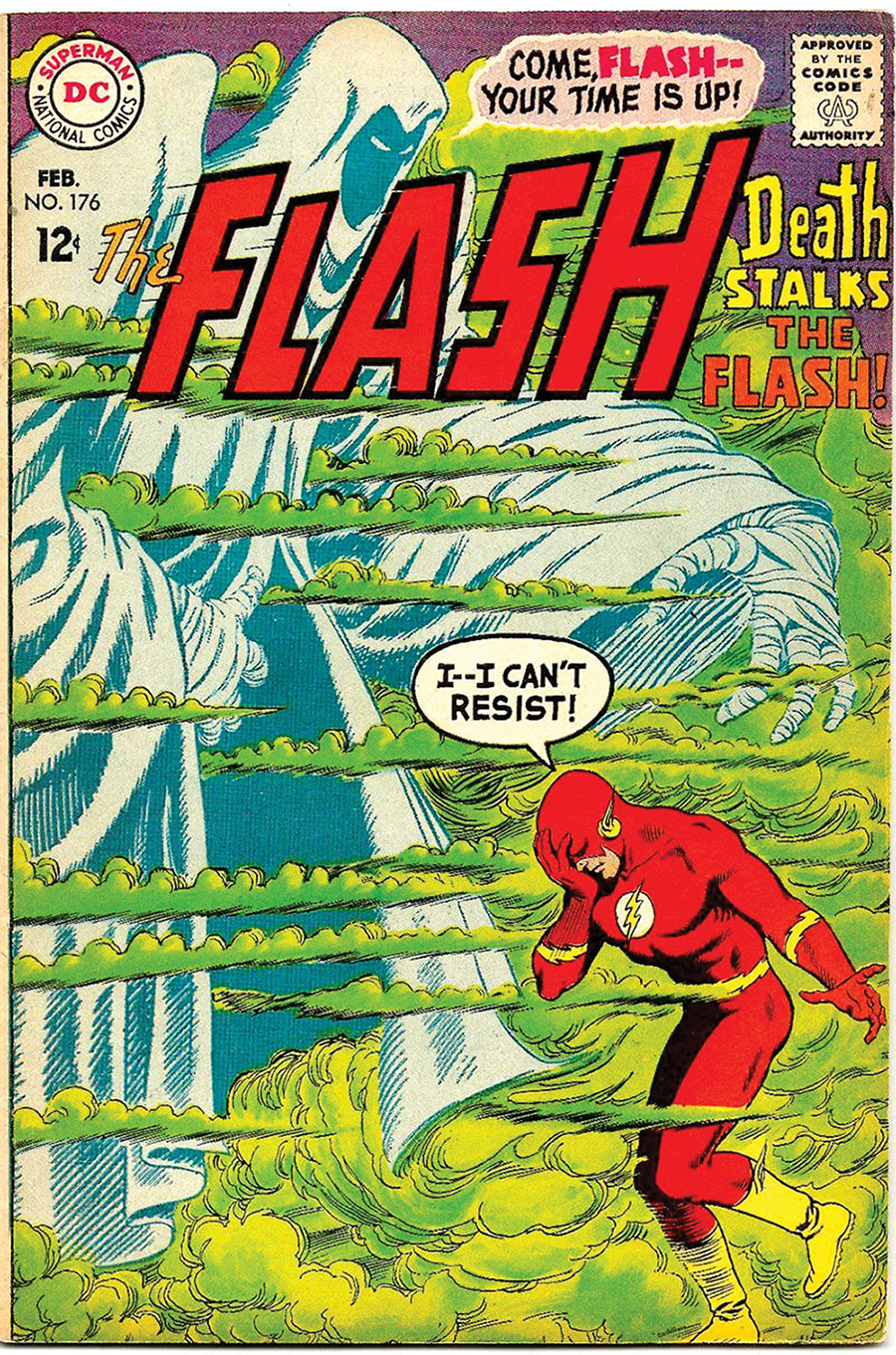
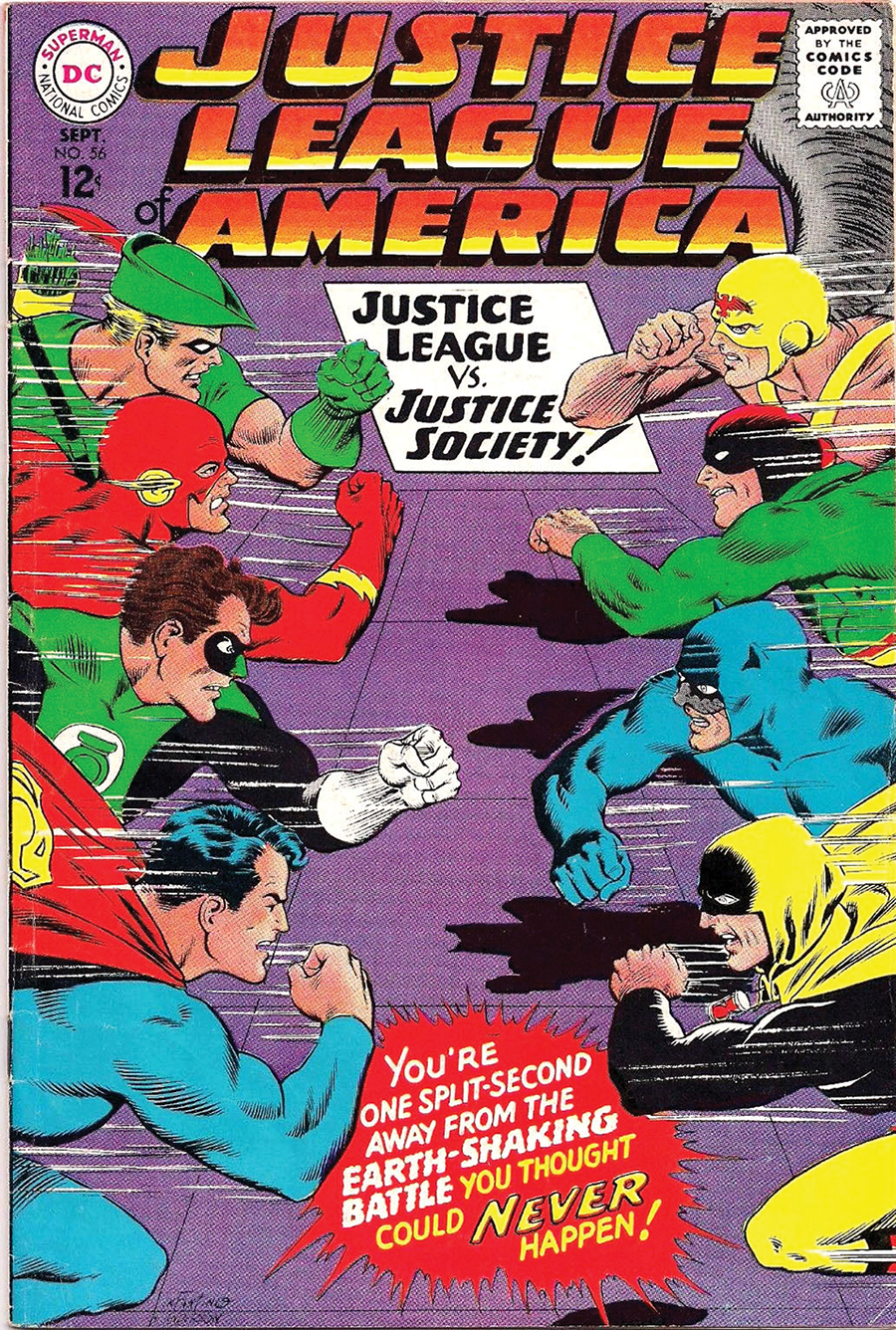
The family relocated to New York in 1960 in order for Anderson to work full-time for DC, a company undergoing an unexpected resurgence. On a whim four years earlier, editor Julius Schwartz had re-imagined one of the brand’s dead-as-a-doornail superheroes from the 1940s, The Flash. With this act, the Silver Age of Comics was born. Anderson’s meticulous flourishes defined DC Comics’ house style of the ’60s and early ’70s — so much that Schwartz preferred to have him inking others’ pencilled art, most notably Carmine Infantino (Adam Strange, Batman) and Gil Kane (The Atom, Green Lantern).
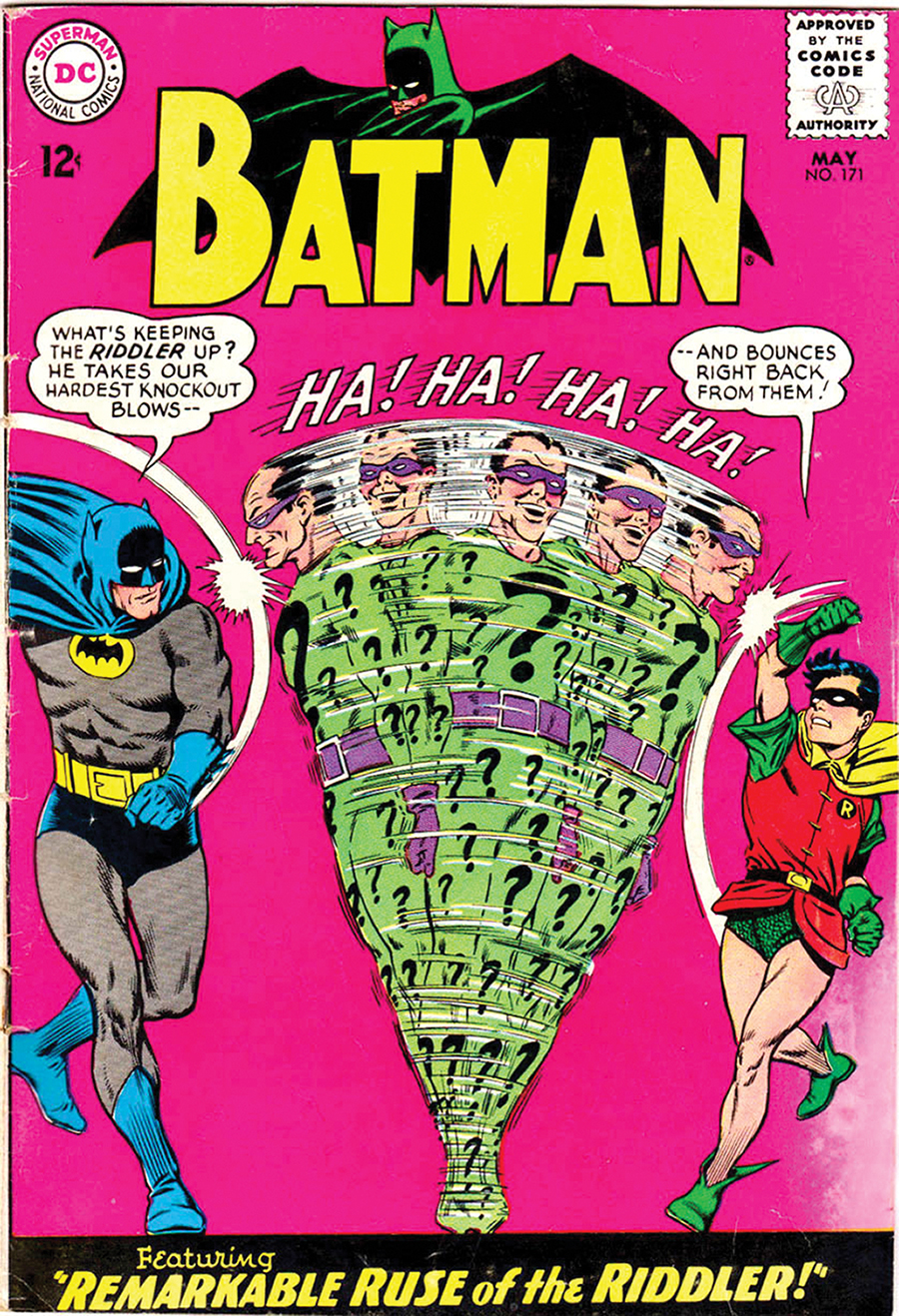
Meanwhile, years of poorly drawn short stories with Batman, Robin, Batwoman and Ace the Bathound confronting bulbous-bodied aliens and overcoming silly transformations (“Batman Becomes Batbaby!”) led to sales so dismal that cancellation of the entire Batman line was all but certain. Schwartz was yanked off the sci-fi comics in 1964 and given six months to save the bat-franchise. The result was a monthly onslaught of playfully gripping covers sketched by Infantino, the best of which were inked by Anderson, re-introducing The Joker, Riddler, Catwoman and Batgirl to a new generation. By 1966, business was booming when the Batman TV show sent DC’s sales into hyperdrive.
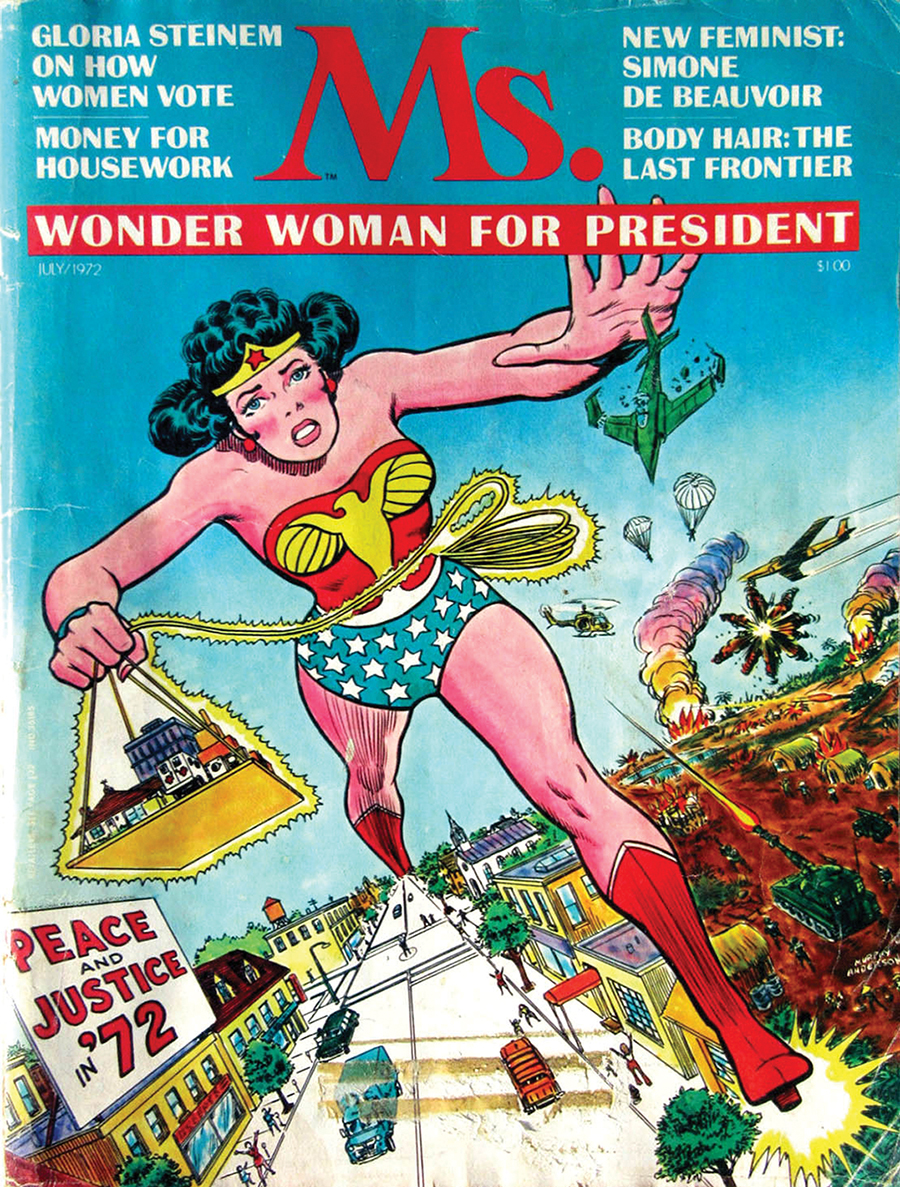
When Schwartz rebooted Superman in 1970, Anderson was teamed with Curt Swan. So meshed were their styles that the duo took to crediting their art as “Swanderson.” Then, in 1972, the Greensboro native’s dynamic portrayal of Wonder Woman graced the first issue of Ms., becoming one of the most striking and culturally significant magazine covers of that decade.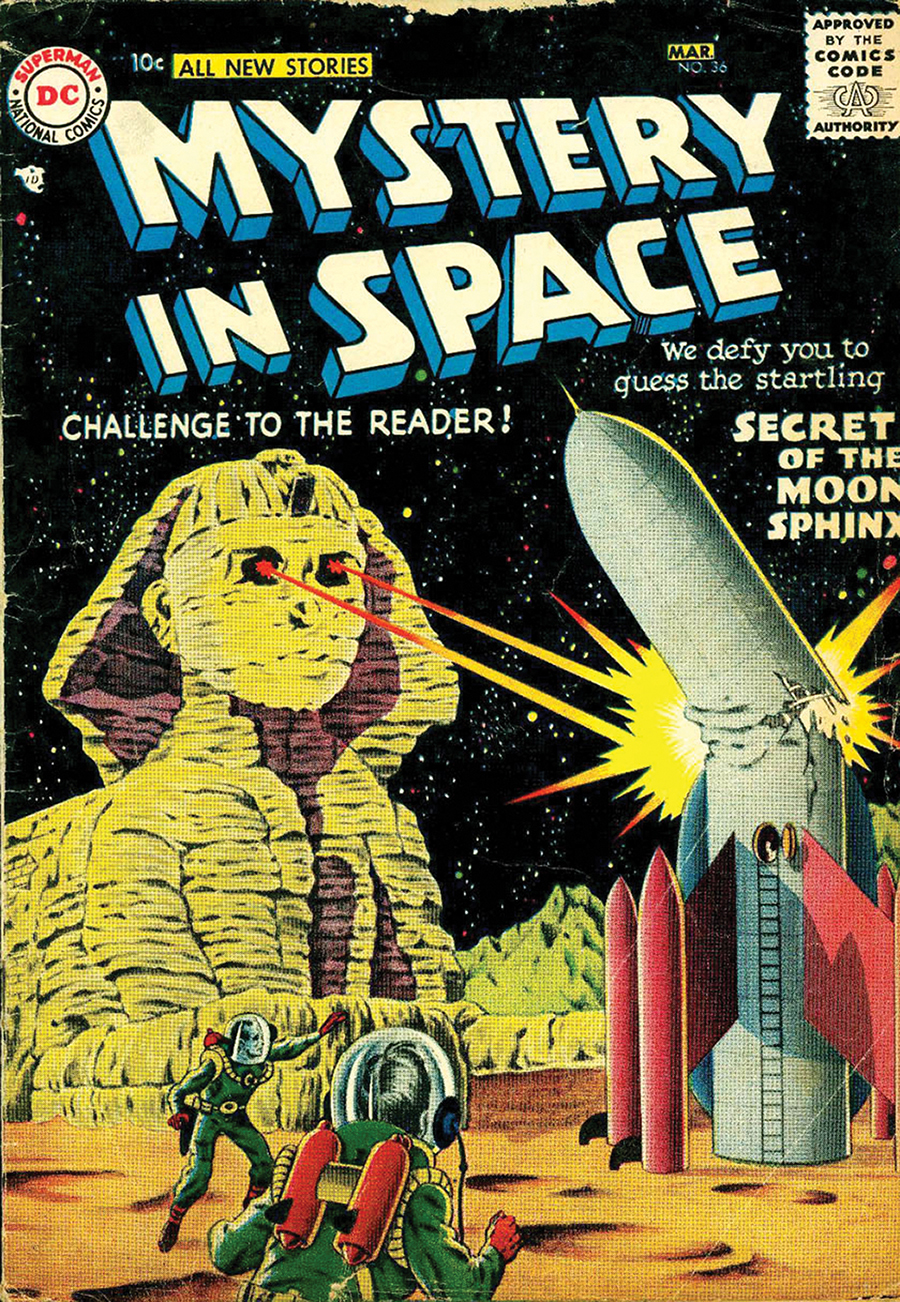
In a twist not unlike those found in the comics, it was Anderson’s one time schoolmate Amy Hitchcock’s son, John, who organized Greensboro’s first major comic convention in 1983, featuring Murphy Anderson as a guest of honor. “Murphy was here in 1985 when Jack Kirby was here,” John Hitchcock (owner of Parts Unknown: The Comic Book Store) says, a significant moment since the only controversy in Anderson’s career came when he was asked to redraw Kirby’s Superman faces to more closely conform to the DC style. “[Anderson and Kirby] were in the kitchen of my apartment when Murphy went up and apologized to Jack. He was always embarrassed that he had to change his artwork because he had so much respect for Kirby. Jack went out of his way to thank him and say, ‘Murphy, that’s OK. That’s the way business was back then. I have no ill will,’ and they shook hands. That shows you what a great guy Murphy was — it bothered him all those years.”
Murphy C. Anderson Jr., universally respected as both draftsman and gentleman, passed away in 2015 at the age of 89. He left behind his wife of 67 years, Helen, two daughters, a son, grandkids and an indelible impression on millions of thrill-seeking comic book lovers everywhere. OH
Billy Ingram still has comic books he purchased from a spinner rack located next to the back entrance of Woolworth’s downtown.