The Great Wagon Road Odyssey

THE GREAT WAGON ROAD ODYSSEY
THE GREAT WAGON ROAD ODYSSEY

A pilgrimage half a century in the making

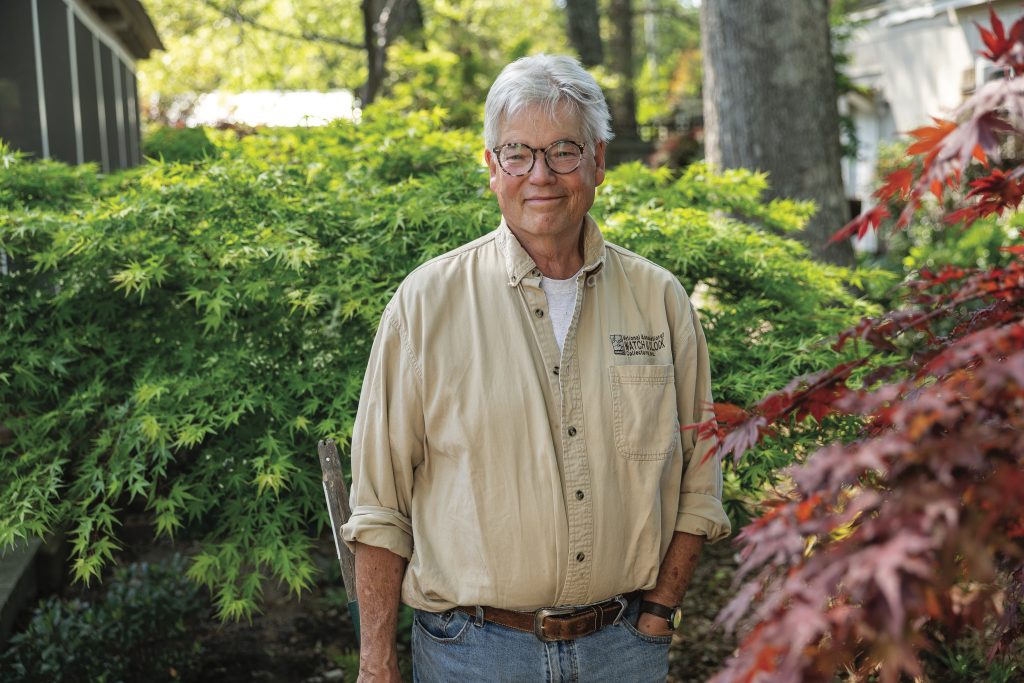
By Jim Dodson

Not long ago, during a breakfast talk in a retirement community about my forthcoming book on the Great Wagon Road, I was asked by a woman, “So, looking back, what would you say was the most surprising thing about your journey?”

“Everything,” I answered.

The audience laughed.

The first surprise, I explained, was that it took me more than half a century to find and follow America’s most fabled lost Colonial road that reportedly brought more than 100,000 European settlers to the Southern wilderness during the 18th century. As I point out in the book’s prologue, I first heard about the GWR from my father during a road trip with my older brother in December 1966 to shoot mistletoe out of the ancient white oaks that grew around his great-grandfather’s long-abandoned homeplace off Buckhorn Road, near the Colonial-era town of Hillsborough.

The first of many surprises was the discovery that my father’s grandmother, a natural healer along Buckhorn Road named Emma Tate Dodson, was possibly an American Indian who had been rescued and adopted as an infant by George Washington Tate, my double-great-grandfather, on one of his “Gospel” rides to establish a Methodist church in the western counties of the state.

A second surprise came during the drive home when the old man pulled over by the Haw River to show my brother and me a set of stones submerged in the shallows of the river — purportedly the remains of G.W. Tate’s historic gristmill and furniture shop.

“Boys, long ago, that was your great-great-granddaddy’s gristmill, an important stop on the Great Trading Path that connected to the Great Philadelphia Wagon Road that brought tens of thousands of European settlers to the South in the 18th century, including your Scottish, German and English ancestors.”

This was pure catnip to my lively eighth-grade mind. Owing to a father whose passion for the outdoors was only matched by his love of American history, my brother and I were seasoned explorers of historic Revolutionary and Civil War battlefields.

“Can we go find it?” I said to him.

He smiled. “How about this, Sport. Someday I’ll give you the keys to the Roadmaster, and you can go find the Wagon Road.”

I searched for years but found only the brief occasional mention of the Great Wagon Road in several histories of the South, but nothing about where it ran and what happened along it. The road seemed truly lost to time.

Forty years later, however, the Great Wagon Road found me.

On my first day as writer-in-residence at Hollins University in Virginia in 2006, I took a spin up historic U.S. Highway 11 — the famed Lee-Jackson Highway — and was surprised to come upon a historic roadside marker describing the “Old Carolina Road” that was part of the 18th century’s “Great Philadelphia Wagon Road.”

The sweet hand of providence was clearly at work, for the next day, while browsing shelves at a used bookshop in the Roanoke City Market, I found a well-worn copy of a folksy history called The Great Wagon Road: From Philadelphia to the South, by Williamsburg historian Parke Rouse Jr. I purchased the book (originally published in 1973 and long out of print) and read it in one night, taking notes. I also attempted to track down author Parke Rouse Jr. but discovered he’d been deceased for many years.

Still, the cosmos had cracked open a door, and I began collecting and reading all or parts of every history of America’s Colonial era that I could lay hands on for the next decade, eventually building a personal library of more than 75 books. About that same time, I purchased a 1994 Buick Roadmaster Estate station wagon from an elderly man in Pinehurst, almost identical to the one owned by my late father in the mid-1960s. Pinehurst pals playfully nicknamed it “The Pearl,” which turned out to be among the last true “wagons” built by Detroit before they switched to making SUVs.

I suddenly had my very own wagon. Now all I had to do was find the most traveled road of Colonial America to travel in it. 

Eight years later, thanks to the late North Carolina historian Charles Rodenbough and other history-minded folks, I discovered that I wasn’t alone in my quest — that, in fact, a small army of state archivists and local historians, genealogists, “lost road” experts, various museum curators and ordinary history nuts like me had finally cracked the code on the road’s original path from Philly to Georgia.

By the spring of 2017, I and my traveling pal, Mulligan the dog, were ready to roll when another big surprise — an exploding gallbladder and a baby carrot-sized tumor in my gut — required surgery and a four-month recovery.

Finally, on a steamy late August night, I began my journey (minus Mully, alas, owing to her age and one of the hottest summers on record) at Philadelphia’s historic City Tavern, which claims to be the birthplace of American cuisine. As I enjoyed a pint of Ben Franklin’s own spruce beer recipe and nibbled on cinnamon and pecan biscuits from Thomas Jefferson’s own Monticello cookbook, I eavesdropped like a tavern spy from Robert Louis Stevenson on three couples having a rowdy celebration of matrimony and a game of trivia based on American history that kept going off the rails.

At one point, a young woman called out a question in clear frustration: “Where and what year were the Articles of Confederation, the nation’s first constitution, adopted?”

None of her mates answered.

So, I did. “I believe it was York, Pennsylvania, in November 1777.”

Her name was Gina. She gave me a beaming smile and scooted her chair close to mine. “Correct! How did you know that?”

“Because it happened on the Great Wagon Road.”

What ensued was a delightful conversation about a frontier road that shaped the character and commerce of early America, the historic Colonial road that opened the Southern wilderness and became the nation’s first immigrant highway — the “road that made America,” as my friend Tom Sears, an Old Salem expert on Colonial architecture, described it to me.

Gina was thrilled to learn about it and apologized that she’d never heard its name.

I assured her that she wasn’t alone. Most Americans living today have never heard its name spoken, yet it’s believed that one-fourth of all Americans can trace their ancestral roots to the Great Wagon Road in one way or another.

Charmed and fascinated, Gina wondered how long it would take me to travel the road from Philly to Augusta, Georgia.

I mentioned that settlers took anywhere from two months to several years to reach their destinations depending on the weather and unknown factors like disease, getting lost or encountering hostile native peoples or wild animals.

“I plan to travel the entire road in three or four weeks,” I said. “I’ve spent years researching it.”

Silly me. God laughs, to paraphrase the ancient proverb, when men make plans.

A third big surprise came at the end of my third week on the road. I hadn’t even gotten out of Pennsylvania.

On the plus side, I’d met and interviewed so many fascinating people who were passionate keepers of their own Wagon Road stories, I realized I’d just tapped the surface of the trail’s saga.

Instead of writing an updated history of the Great Wagon Road, as originally planned, I borrowed a strategy from my late hero Studs Terkel and decided that the real story of the Wagon Road lay in the voices of the people living along it today, keeping its stories alive — the flamekeepers, if you will, of the “road that made America.” If it took a full year to complete my travels, so be it.

Instead, subtracting 12 months for COVID, it took six years and counting.

My focus on the storytellers proved to be deeply rewarding, introducing me to a broad array of Americans from every walk of life and political persuasion whose vivid and often untold tales about the development of a winding and once forgotten Colonial road (originally an American Indian hunting path that stretched from Pennsylvania to the Carolinas) carried our ancestors into the Golden West and shaped the America we know today, hence the book’s main title: The Road That Made America. Unexpectedly, their voices and stories ultimately restored my faith in a country where democracy — and civic discourse — was supposedly in short supply.

Looking back, this was the nicest surprise of all. For what began simply as an armchair historian’s quest to find and document America’s most famous lost road ended as nothing less than a powerful, emotional pilgrimage for me.

At the journey’s end, while I was heading home through the winter moonlight on a winding highway believed to be the path Lord Cornwallis took while chasing wily Nathanael Greene to the Dan River, I had a final revelation of the road’s impact on me:

. . . a true pilgrimage is said to be one in which the traveler ultimately learns more about himself than the passing landscape.

Perhaps this is true. But for the time being, it’s enough to think about some of the inspiring people and stories that gave me hope in a nation where democracy is said to be hanging by a thread: an old Ben Franklin and a young Daniel Boone, the Susquehanna Muse, real Yorkers, the candlelight of Antietam, a Gettysburg living legend, an awakening at Belle Grove Plantation, Liberty Man, the passion of Adeela Al-Khalili, good old cousin Steve, a lost Confederate found, a snowy birthday in Staunton, and final road trips with Mully.

Without question, my life and appreciation of my country have both been enriched by the people and stories of the Great Wagon Road.

This was the nicest surprise of all.

Almanac July 2025

ALMANAC

Almanac July 2025

By Ashley Walshe

July is a backyard safari, dirt-caked knees, the heart-racing thrill of the hunt.

Bug box? Check. Dip net? Check. Stealth and determination? Check and check.

Among a riot of milkweed, blazing star and feathery thistle, the siblings are crouched in the meadow, waiting for movement.

“There,” points one of the children.

“Where?” chimes the other.

“Follow me!”

As they slink through the rustling grass, playful as lion cubs, life bursts in all directions. Monarchs and swallowtails stir from their summer reverie. Dog-day cicadas go silent. A geyser of goldfinches blast into the great blue yonder.

“He’s right there!” the child whispers once again, inching toward a swaying blade of grass.

At once, the black-winged grasshopper catapults itself across the meadow, popping and snapping in a boisterous arc of flight. The children scurry after.

On and on this goes. Hour by hour. Day by day. Grasshopper by grasshopper.

Or, on too-hot days, tadpole by tadpole. 

“Race you to the creek!” chime the siblings.

Shoes are cast off with reckless abandon. Bare feet squish into the cool, wet earth. Laughter crescendos.

The whir of tiny wings evokes an audible gasp.

“Hummingbird!” says the younger one, scanning the creekbank until a flash of emerald green catches their eye.

As hummingbird drinks from cardinal flower after vibrant red cardinal flower, the children, too, imbibe summer’s timeless magic.

Finally, awakened from their fluttering trance, the children bolt upright.

“Race you to the wild blackberries!” they dare one another.

Such is the thrill of wild, ageless summer.

Mythical Creature Alert

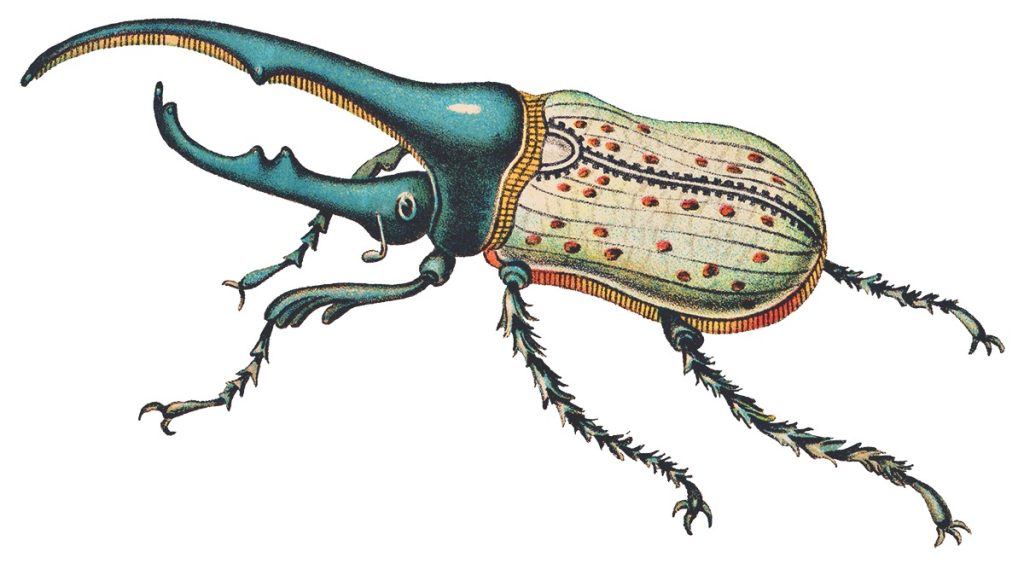
What in all of Gotham City was that? Eastern Hercules beetles are in flight this month. Should you spot one of these massive rhinoceros beetles — native wonders — keep in mind that their larvae grub on rotting wood, breaking down organic matter to enhance our soil and ecosystems. As their name suggests, they’re sort of like superheroes without the lion skin or triple-weave Kevlar suit.

Life's a Peach

As burlesque icon Dita Von Teese once said, “You can be a delicious, ripe peach and there will still be people in the world that hate peaches.”

Oh, really? Who?

Peach season is in full swing. Dare you to drive past a local farm stand without braking for a quarter-peck or more. Kidding, of course. One should always make the pit stop.

True homegrown peach enthusiasts know that the annual N.C. Peach Festival takes place in Candor — Peach Capital of N.C. — on the third weekend of July. Get the sweet (and savory) details at ncpeachfestival.com.=

Life’s Funny

LIFE'S FUNNY

Here’s the Scoop

Dogs and humans find their joy, one lick at a time.

By Maria Johnson

It’s a homecoming for Cash.

Last year, the spotted pup — he’s probably a mixture of Catahoula leopard dog and pit bull — was adopted from the SPCA of the Triad and taken home to Sanford to live with his new owner, Alicia Ferreira, and her parents.

In a nod to his origin, 16-month-old Cash and his family have returned to Greensboro, appropriately enough on Mother’s Day, to support an SPCA adoption event at State Street’s Bull City Ciderworks.

The scene includes a truck that serves frozen confections made specifically for dogs. Alicia steps up to the window and orders a scoop for Cash, who waits patiently, even though he appears to be hungry. He sniffs then picks up a piece of gravel in the parking lot. Someone fishes it out of his mouth.

“He loves a rock,” Alicia says with a sigh.

A minute later, she offers him something more enticing: a taste of maple-bacon-flavored ice cream. With eyes riveted on the cardboard cup, Cash waits for Alicia to spoon feed him. He licks with gusto. And manners.

“He’s very respectful when it comes to treats,” Alicia says.

She offers him the garnish, a twig of a chicken crisp, and it disappears in one chomp.

“He’s very into it,” says Alicia, who’s wearing laser-cut dog earrings.

She’s smiling.

Her dad is smiling.

Her mom is smiling.

And the truck’s owner, Shelli Craig, is smiling. This is the response that she and her family have been getting ever since last summer, when they rolled out North Carolina’s only franchise of Salty Paws, a Delaware-based business founded on the notion that there are plenty of dog owners who want their charges to know the joys of lapping ice cream until they get brain freeze.

Yip-yip-yip. A little waggish humor, there. No one has reported seeing a pup pause mid-lick, shudder, howl and bury its head in its paws until the throb passes. Although, just for the record, Google AI says it’s possible for dogs to get ice cream headaches.

The point is, when Shelli, a professional photographer and longtime dog lover (“Puppy breath is my drug of choice”) heard about Salty Paws from her friend, Kathie Lukens, the owner of Doggos Dog Park & Pub in Greensboro, she thought a franchise would be the perfect business for her family.

With eight children in her family — some biological, some adopted, several with disabilities — perhaps it seems like a wild notion. But then, when her youngest, who lives with cerebral palsy and migraine headaches, graduated from high school, she had a question: “What am I going to do for a job?”

Shelli’s answer: We’ll create jobs by starting a business that everyone in the family enjoys. Her husband, Daniel, part-owner of another family enterprise, R.H. Barringer Distributing Co., a wholesale beer business, enthusiastically endorsed the plan.

Shelli was unleashed. She bought a slightly used cargo van in Florida and had it transported to Virginia, where it was wrapped in franchise decals featuring a puppy with an ice cream-dappled nose, licking a frosty scoop of Salty Paws’ finest.

She ordered the powders used to make the canine ice cream — basically dried lactose-free milk with a little sugar and some flavorings.

She and the kids mixed the powders with water, poured them into cartons and froze them at home. Because the product is not intended for human consumption, no health department inspections were required. The process was pretty easy.

On fair-weather weekends, the family rolled out in the van, which is technically considered a feed truck, not a food truck.

Usually, Daniel drove.

To dog parks.

And pet adoption fairs.

And fundraisers for animal rescues.

And to dog-friendly events, like some outdoor car shows. Rovers mingling with Land Rovers? Who knew?

Dog-friendly bars such as Doggos were a staple.

The brightly painted truck drew a lot of attention with its drool-inducing flavors, including pumpkin, vanilla, peanut butter, maple bacon, straight-up bacon, birthday cake, carob and prime rib, which appealed to all sorts of meat lovers.

Once, a man came to the window and explained that he wanted to try a scoop of prime rib in the same way one might want to try a Harry Potter earthworm-flavored jelly bean.

Shelli explained that Salty Paws products were not intended for humans, but also, if he bought a scoop and a spoon, she could not control what happened next.

The human verdict after licking? OK.

Another time, a woman and her two children came to the window and bought a scoop of vanilla and a scoop of peanut butter.

As they walked away, Shelli wondered if the woman had mistakenly bought the ice cream for her girls.

A few minutes later, a man came to the window asking if they sold smoothies, too. Shelli explained that they sold ice cream for dogs.

“Dogs?! Oh, crap,” the man said before muttering about whether his kids would start barking soon.

Shelli and Daniel, who was known for his dad jokes, shared more than a few laughs over the stories that spun out of Salty Paws. Underlying their bond, Shelli says, was a shared commitment to beings in need.

“He had a very, very tender heart,” Shelli says of Daniel.

Tears well in her clear, blue eyes.

In April, Daniel died unexpectedly, of a heart attack, at age 59.

Shelli parked the Salty Paws truck for about a month as she grappled with Daniel’s absence.

“We built a big life with a lot of moving parts,” she says. One of the moving parts was Salty Paws.

It took a lot of resolve for Shelli to set aside her grief, load the truck on Mother’s Day, of all days, today, drive it to the cidery with two of her sons and start scooping ice cream.

“I’ve had to compartmentalize somewhat. Children and animals can bring me out of it,” she says. No surprise coming from a woman who wears a T-shirt emblazoned with “Tell Your Dog I Said Hi.”

She looks around. An SPCA volunteer walks by, cradling a weeks-old puppy. Nearby, an older, adoptable dog gnaws happily on a bully stick, a freebie from Shelli and family.

Cash savors his maple-bacon treat, totally absorbed.

His owner, Alicia, captions the moment aloud: “Best. Day. Ever.”

Quick as a lick, Shelli laughs, suspended for a moment in another place.

O.Henry Ending

O.HENRY ENDING

Obits and Pieces

The tale of a quirky hobby practically writes itself

By Cynthia Adams

Collecting clever obituaries is a hobby of mine. 

It’s a far less time-consuming undertaking, erm, endeavor, than you might think.

Interesting obits are as rare as zorses (a zebra and horse hybrid). When they happen, the social media universe is alerted and the obit boomerangs around 10 jillion times. Fun, intriguing, even weird obituaries are snapshots of the strangest of hybrids: the rare, true originals who have roamed this Earth.

Douglas Legler, who died in 2015, planned his obit for the local newspaper in Fargo, N.D. “Doug died,” he wrote. Just two words guaranteed a smile and a wish that we had known him.

Yet navigating the truth about our dearly departed is a tricky thing. I know, having attempted writing tender, true or even mildly interesting obits.

Uncle Elmer’s beer can collection or lifelong passion for farm equipment may not a fascinating individual reveal, but it beats ignoring the details that made Elmer, well, Elmer. Maybe loved ones wish to eulogize a different sort than they actually knew, say, an Elmer possessing panache. Ergo, an unrecognizable Elmer.

My father, in fact, worried that his own obit might one day portray him as suddenly God-fearing, upright and flawless.

“I know some will probably show up for my funeral just to be sure I’m dead,” he’d joke, shucking off the funeral suit we nicknamed his dollar bill suit — the tired hue of well-worn money. It didn’t even complement his twinkling green eyes, which seemed especially twinkly after a funeral or wake.

Why so upbeat? “It wasn’t me,” he sheepishly confessed after the funeral of a prickly neighbor.

Bob, an older, popular colleague of mine, had a sardonic wit, too, even as personal losses mounted. Each Friday he’d drawl, “Guess me and Becky will ride down to Forbis & Dick tonight and see who died. Then we might go to Libby Hill for dinner.” 

In a similarly irreverent spirit, I offered to help my father with his funeral plans in advance, jabbing at his habitual lateness. “You’ll be late for your own funeral,” I accused.

“We’ll request the hearse to circle town before the service so we’re all forced to wait the usual half hour.”

Dad rolled his eyes.

He died suddenly at age 61. Much later, I wished we had mentioned in his obituary how his end was almost as he’d hoped: in the arms of a beautiful woman. 

True, his newest paramour had arms. They may, in fact, have been her best attribute. (My siblings never let me near his obituary.)

To our surprise, Preacher Lanier wanted to speak at Dad’s funeral. But Dad was not a churchgoer, we said delicately; the service would be at the funeral home. Then he revealed that they were old friends, breakfasting together each Wednesday.

Carefully, I asked that he not proselytize — as he was often inclined. He knew our father far too well to do that, he chuckled. 

True to his word and a shock to me, the preacher revealed that our father underwrote the church’s new well. 

Disappointingly, there would be no tour of town before the service either; the hearse wasn’t involved until we drove to the interment.

For once, therefore, Dad was exactly on time. 

Like funerals, obits offer the chance to surprise us in a good way. 

Lately, my friend Bill got me thinking about mine. Given my inglorious beginnings in Hell’s Half Acre, he knew exactly what he’d say at my end. 

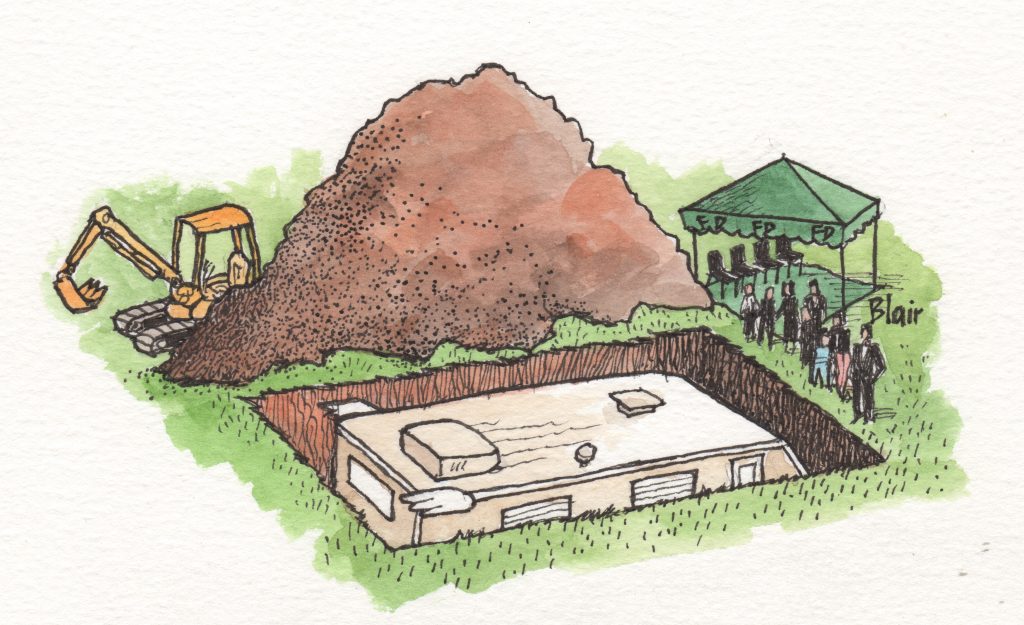
“I’d say I’d have you buried in a trailer, but it would cost too much to dig the hole,” he quipped, mocking my uncultured life.

I would never admit it to him, but that was pure genius; it ought to at least be mentioned in my obit.

For the Love of the Game

FOR THE LOVE OF THE GAME

For the Love of the Game

A baseball academy teaches all the fundamentals - especially character

By Ross Howell Jr.        Photographs by Tibor Nemeth

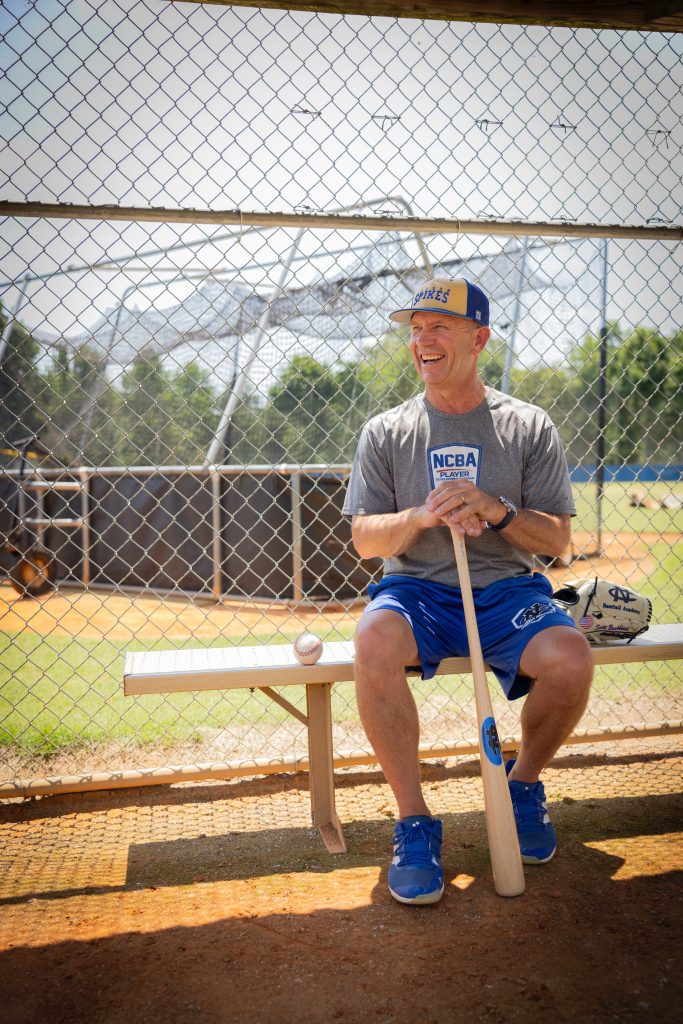
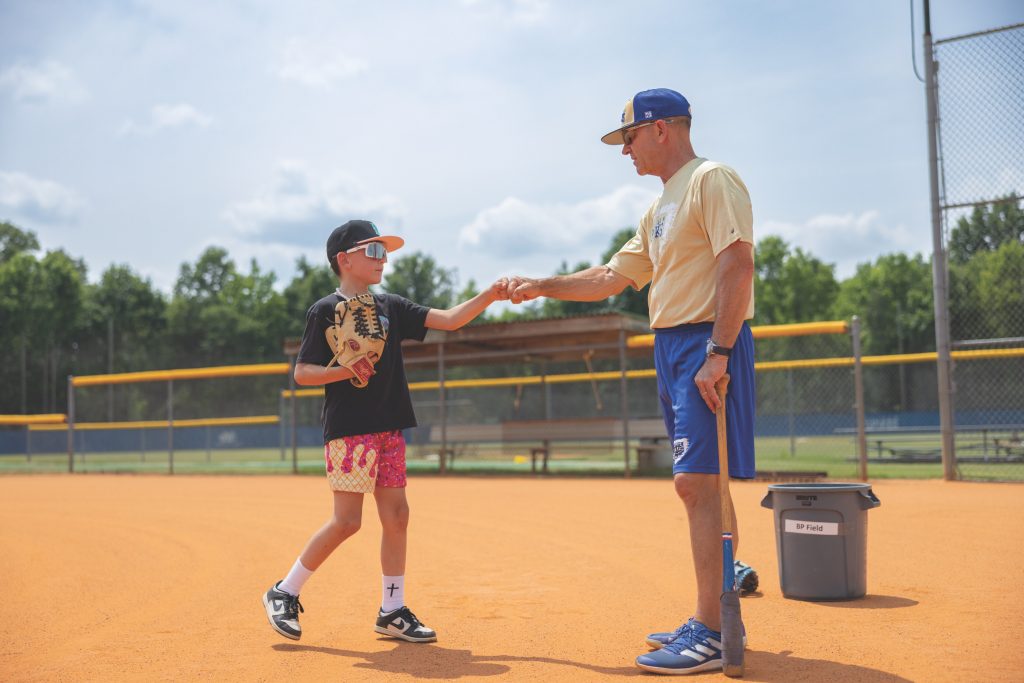
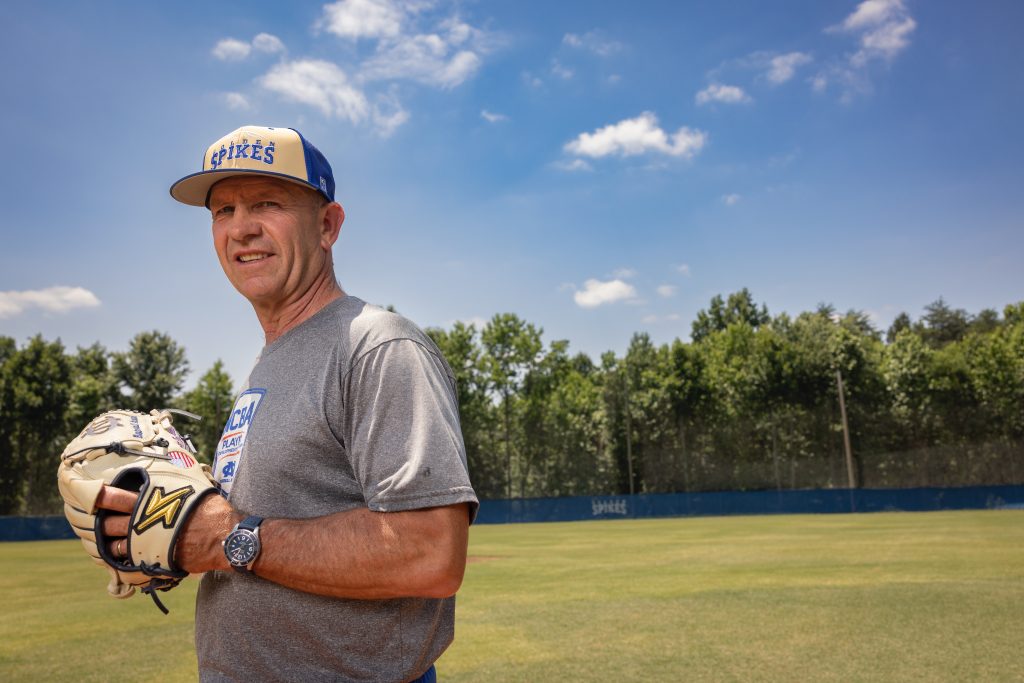
Scott Bankhead, a former Major League Baseball pitcher and founder of the North Carolina Baseball Academy, threw his first pitch for his Little League baseball team in Mount Olive when he was 7 years old.

“I enjoyed everything about the game,” Bankhead says. “I loved throwing the ball. I loved hitting the ball.”

Back then, there weren’t many professional games broadcast on TV during the summer. And there were hardly any special coaching camps.

But Bankhead was encouraged along by his older cousins, who played for a regional American Legion Baseball amateur team.

Bankhead went on to throw a lot more pitches — first, for his elementary school coaches in Reidsville, where his family moved when he was 9, then for the Reidsville Senior High School baseball team, then as a collegiate player at UNC-Chapel Hill, and finally, pitching for the Kansas City Royals, Seattle Mariners, Cincinnati Reds, Boston Red Sox and New York Yankees during a 10-year professional career.

After his retirement, Bankhead felt a real passion to pass along his knowledge and affection for the game and dedicated his post-professional baseball life to mentoring young players, both on and off the field.

Bankhead saw a need for better instruction at all levels of the game. He wanted to provide a resource for players of all ages and ability levels, a place where he could have a positive influence on them as athletes and as individuals.

The result?

NCBA, established by Bankhead in 1998.

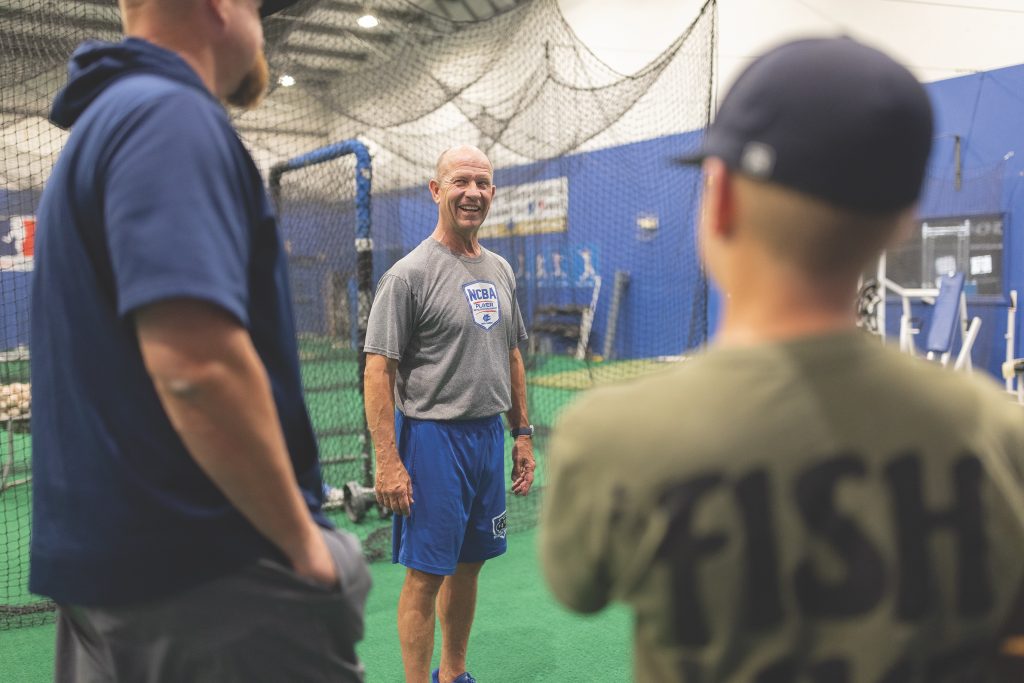
Located near the Piedmont Triad International Airport, the academy’s facilities are impressive. The campus comprises 12 acres and provides students with indoor- and outdoor-training areas for both baseball and softball, an instructional center, a weight room, indoor pitching mounds with retractable batting cages, performance stations, an artificial turf running track, and a pro shop for equipment.

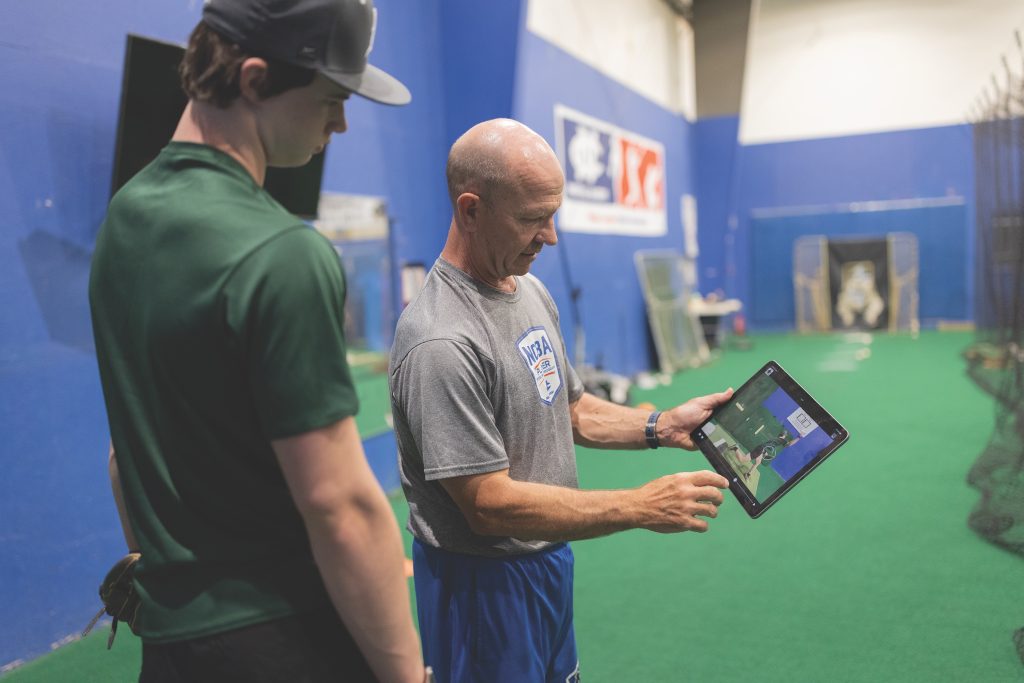
Students even have their hitting and pitching stills analyzed by Rapsodo and Blast Motion, the same technology used by all 30 MLB teams and 1,200 colleges.

“The philosophy here is to teach the fundamentals of the game,” Bankhead says. “That’s what we do day-to-day at the facility.” And then adds, “Our goal, first and foremost, is to enable players to do well in school, so they will be able to get into college.”

While state-of-the-art facilities and technology are important, the character, quality and experience of the academy’s instructors are essential.

And NCBA coaches have strong Greensboro ties.

Jeff Guerrie, assistant director of NCBA, moved from Florida to Greensboro during his senior year and played baseball at West Forsyth High School before playing for Greensboro College. He coached at Page High School before joining the academy and combines traditional coaching with his expert use of modern baseball training technology.

A graduate of High Point Central High School, Colin Smith played college baseball at North Carolina Central University, Southeastern Community College and Guilford College. He served as head coach of the Lexington Flying Pigs in the Old North State League and teaches NCBA students at all skill levels.

Shane Schumaker played baseball at UNCG and professionally in independent leagues. He returned to coach at UNCG, and later coached both baseball and softball in California. He was an associate scout for the Atlanta Braves before joining NCBA, where he teaches baseball and softball skills — including softball pitching.

A former baseball player at Grimsley High School, Winston-Salem State University and Guilford College, where he completed his degree, Saunders Joplin works with players of all ages, specializing in hitting, catching, pitching and basic skills.

Devin Ponton also played his college baseball at Guilford College. He is currently the head junior varsity baseball coach at Southwest Guilford High School in High Point. With years of baseball experience and knowledge, he coaches players in any area of the game.

To all these instructors, Bankhead drives home the point that personal attention is key to the academy’s success.

“We treat each player as an individual,” says Bankhead. “We help them learn to enjoy the game and to understand that hard work in baseball can lead to success in other endeavors.”

Players can sign up for one-on-one lessons with a coach by appointment. These sessions are tailored to the player’s specific needs — including hitting, pitching, catching, fielding and basic skills. 

Coaches also lead training camps throughout the calendar year that offer instruction, drills and practice routines mirroring professional baseball training methods. The goal is to help players gain knowledge, skills and confidence to take them to a higher level.

Finally, there are the NCBA Golden Spikes teams.

The academy’s Golden Spikes program is recognized as one of North Carolina’s premier player development and college prospect initiatives.

Teams are selected through tryouts and bring together the region’s top talent to compete against some of the strongest teams in the nation.

There is a development program for elementary and middle school age players and a college prospect program for high school age players.

“Since the inception of our team program in 2002,” Bankhead says, “we’ve placed more than 100 players at the college or professional level.”

Producing that number of elite players certainly gives Bankhead bragging rights.

But he’ll tell you that’s not the endgame.

Recently, he was out on the golf course and ran into a former NCBA student he remembered well.

This one had gone on to play college baseball and then earned a medical degree.

“Now, he’s a vascular surgeon,” Bankhead says with a smile.

“Sure, we like to see our students reach the highest levels of professional baseball, if that’s what they want,” he adds. “But we’re also a resource for the future doctors of the world.”

Wandering Billy

WANDERING BILLY

Who Killed TV’s Superman?

A chance encounter may have revealed the answer

By Billy Ingram

“In the future, everyone will be famous for fifteen minutes.”

— Andy Warhol

Life’s stopwatch began ticking off my 15-minute strut across its proscenium in 2002, upon the release of my first book, TVparty! Television’s Untold Tales, a look at classic TV shows produced during that medium’s messy adolescence. In January of 2003, my publisher had positioned me at The Hollywood Show, a twice-yearly weekend event in North Hollywood, where former 1960s child actors such as Butch Patrick (Eddie Munster) and Jody Whittaker (Family Affair) as well as assorted soap opera and ’80s sitcom luminaries gathered to meet fans and sign autographs.

There was only one celebrity in attendance I was interested in meeting, so I made a beeline to Noel Neill. One of TV’s first single, working “gals,” thanks to afternoon reruns of The Adventures of Superman throughout the ’60s, Noel Neill’s portrayal of that “pesky reporter from the Daily Planet,” Lois Lane, became enshrined in Boomer minds, legendary like Lucy and Ethel. I presented her with my book, opened to the sordid story surrounding the death of George Reeves, who portrayed her Superman in the television series. Illustrated with a screen capture of her star-crossed co-star, Neill gazed at the photo wistfully for a moment then sighed softy, “Oh, George . . .”

Months later, I was confronted with a possible answer to one of Tinsel Town’s most enduring mysteries: Was George Reeves’ death a suicide or murder?

Almost every aspect and detail of the following story is contradicted by someone or other so buckle up: At 1:15 a.m. on June 16, 1959, Reeves, his fiancé, Lenore (Leonore) Lemmon, and two guests were drinking heavily at the actor’s home before he went upstairs to sleep. Moments later, the partiers told police a shot rang out and Reeves was dead, sprawled on his bed naked with a bullet hole through his right temple. Faster than a speeding bullet, Reeves’ death was ruled a suicide.

Lemmon offered no explanation as to why police weren’t called until around 45 minutes after the incident. Following an autopsy, LAPD Chief Parker stated he “was satisfied with the verdict” of suicide. So, why were two detectives still rummaging around in Reeves’ bedroom looking for yet more bullet holes? The two they found embedded in the wall were explained away by Lemmon as earlier recklessness on her and Reeves’ part. And Lemmon had fled to New York, never to return.

Exactly how many stray slugs were dislodged from that room is anyone’s guess, but Noel Neill once revealed, “I had a friend whose husband was later hired to repair the drywall in George’s bedroom. He said the place was riddled with bullet holes.”

Lemmon’s account (one of them, anyway) proved perplexing: After a night of drinking with Reeves and others, she was alone downstairs when, around 1 a.m., two tipsy guests arrived. Their revelry prompted Reeves to awaken and storm angrily downstairs. After everyone apologized, Reeves returned to his bedroom. That’s when Lemmon maintains that she quipped, “He’s going upstairs to shoot himself . . . he’s opening the drawer to get the gun.” When the shot was heard, Lemmon remarked casually, “See there, I told you; he’s shot himself.” Subsequently, she told police she was “only kidding” and, years later, claimed none of that happened.

No secret, Reeves was depressed about being typecast in 1959, but, in recent weeks, he’d signed on for a movie in Spain. Plus, Kellogg’s had secured him, with a hefty raise, for another season of The Adventures of Superman in 1960, even agreeing to let him direct several episodes.

If not suicide, who would want George Reeves dead? He’d recently ended a seven-year affair with Toni Mannix, the wife of Eddie Mannix, a very powerful MGM executive known as “The Fixer,” whose mob and political ties could disappear any problem. Toni had purchased Reeves’ house, car and clothes for him, and was left devastated when their relationship came to a halt in 1958. Lemmon claimed the jilted lover was ringing up Reeves repeatedly, day and night, for months before his death. Had Eddie Mannix ordered a hit to avenge his wife? He certainly could have and was considered the most likely suspect, excluding suicide.

Reportedly, one of those guests that night confessed to a close friend that, after the shooting, Lemmon ran from upstairs saying, “Tell them I was down here, tell them I was down here!” A neighbor approaching Reeves’ front door that fateful hour hesitated when, observing through a window, he saw the couple engaging in a heated argument moments before hearing a single gunshot.

I discovered this just a few weeks ago. In 2021, Lee Saylor published, Wild Woman: Lenore Lemmon, extrapolating from two 1989 phone interviews he conducted with Lemmon mere months before her death. Through impressive research, the portrait he paints of the socialite after Reeves’ death was of a woman who returned to nightclubbing before becoming a reclusive alcoholic.

This portrayal was significant because it corroborated a backstory told to me in 2003, again in Los Angeles when I was promoting TVparty!, this time at Bookstar in Studio City. Regaling an audience with stories from the anthology, I noticed, from the corner of my eye, a woman feigning interest in whatever publications she was picking over but clearly intently listening after I began speaking about Reeves’ demise.

The bookworms dispersed and an attractive woman in her 30s, with a “black sheep of the family but still in somewhat good graces” vibe, emerged from the stacks. “I knew Lenore Lemmon in New York,” she told me. “I used to stay up late nights drinking in her penthouse, listening to her talk.” As I recall, she told me that her family lived in the same building as Ms. Lemmon and, over time, the young woman gained Lemmon’s confidence and ultimately became a drinking buddy.

She related to me that Lemmon had become a recluse, burying disappointments beneath bottles of bourbon and cartons of cigarettes. During one or more of their midnight meanderings, Lemmon confessed to being responsible for George Reeves’ death, but never elaborated. This person only approached me because she happened to be in the shop and heard me talking about her one-time acquaintance.

Very convincing, but could I believe her? It wasn’t common knowledge in 2003 that Lemmon had spent a decade or so in an alcoholic haze prior to passing. Saylor’s book depicts the Lemmon described to me in that bookstore encounter.

Mystery solved? Hardly. Without knowing the identity of the woman I met at Bookstar, there’s no way to verify her (or my) tale of Lemmon’s late-night, late-in-life confession. I’m convinced the unidentified woman would have gone public if she was attempting to insert herself into this narrative. Nor am I; a more opportune time to reveal a story like this would have been in 2003 when I began writing and appearing on shows for VH1.

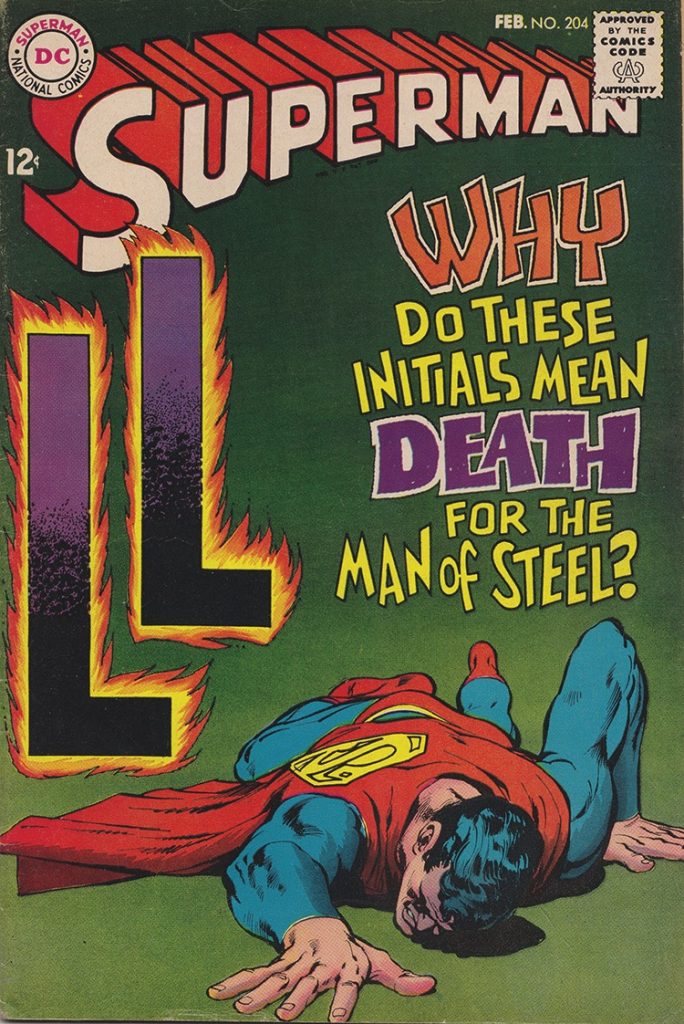
Great Caesar’s ghost! Yet another ultimately unsatisfying layer of intrigue surrounding one of Hollywood’s most enduring mysteries. On the other hand, applying Occam’s Razor, naturally Lenore Lemmon would be the most likely culprit, considering that, in the comics, Clark/Supes was plagued in myriad ways by individuals with double “L” initials: Lois Lane, Lana Lang, Lori Lemaris, Lex Luthor. Lady Luck, it seems, was not on his side.

Birdwatch

BIRDWATCH

Call of The Wild

The summer sound of the Eastern forests

By Susan Campbell

It is the sound of summer: You may not be paying attention, but it’s there. The slurring “pee-a-wee” of the eastern wood-pewee is echoing all over central North Carolina at this time of year. On the hottest of afternoons this bird continues to call even though its brethren are now quiet. The spring cacophony of breeding birds may have been replaced by the buzzing of cicadas and chirping crickets, but the pewee continues making his trademark vocalization. The species has long been considered a hallmark of Eastern forests. Although not as plentiful as it was before humans began altering the landscape, it can still be found widely throughout the region.

Eastern wood-pewees are flycatchers: carnivorous birds that have the talent for snapping insects out of midair. They are acrobatic fliers that use a perch to scan for large, winged insect prey such as dragonflies, butterflies, moths and beetles. As a result of this foraging strategy, pewees spend much of their time in the open during the warmer months. However, if it were not for their loud calls, these little birds would be easily overlooked. Both males and females are a drab gray-brown above, dusky below, and have buff barring on their wings.

Flycatchers found in the Eastern United States are, as a whole, not a colorful bunch. They tend to be brownish with subtle differences in bill shape, tail length or the color of the small feathers on the wing or around the eye. Habitat may lend a clue, since they have preferences for different types of vegetation. When they vocalize, however, it is a different story. In fact, the eastern wood-pewee has virtually indistinguishable plumage from the western wood-pewee, which is found closer to the West Coast. The western wood-pewee makes a nasal “bree-urr” call that has a much rougher quality in tone. These birds may give a thin, whistled “peeaa” as well. Generally, the quality of the vocalizations is very different from that of our Eastern birds.

Given their diet, the eastern wood-pewee is not likely to appear at a feeder. However, this species may frequent birdbaths or water features within their territory. Also, individuals tend to use the same perches for foraging and can be found predictably in an area. They prefer forest edges so they’re easier to spot than their forest-dwelling cousins, such as the Acadian or willow flycatcher. Pewees also hover for very short periods to catch prey, and will actively move through the vegetation in search of caterpillars and slower moving insects in the canopy. They tend to utilize the midstory in locations where there are deciduous trees. As a result, it is believed that their occurrence in some areas of the Northeast has been affected by the over-grazing of white-tailed deer. The loss of smaller trees and shrubs has eliminated not only pewee perches but the necessary vegetation for their prey species.

Female eastern wood-pewees build a shallow cup nest of woven grasses lined with plant fibers, animal fur and/or moss. It’s well camouflaged on the outside with lichens and blends in with the horizontal limb that it is built on. Pewees have a limited ability to defend their eggs and young, so invisibility is the name of the game.

These little birds are migratory, spending the winter months in South America, where prey is abundant. Eastern wood-pewees can be found through Peru down into Brazil during the non-breeding season. They become active, solitary hunters that pursue prey in a variety of habitats that time of the year.

Before they begin to head south in August, see if you can spot one of these vocal, talented fliers. You may have to look closely to find this familiar summer friend motionless on a favorite perch.

Omnivorous Reader

OMNIVOROUS READER

The Essential Twain

The life of America’s premier writer

By Stephen E. Smith

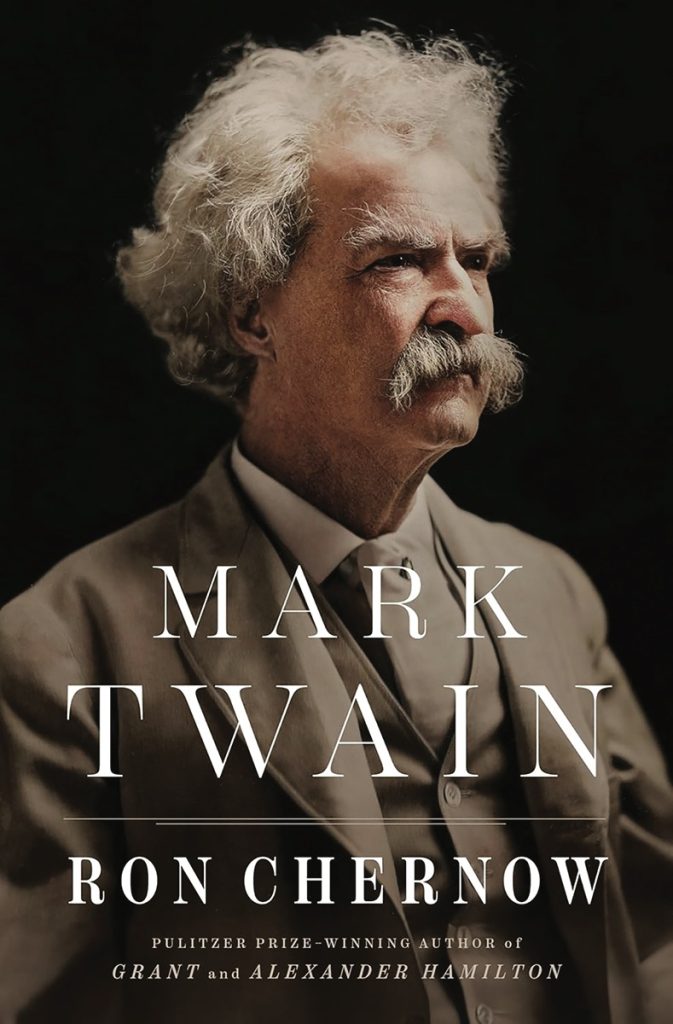
Most Americans and a generous portion of the literate world — probably consider themselves experts on Mark Twain, even if they have never read a word he wrote. After all, the white-suited former riverboat pilot was his own best PR man. The cottony hair, drooping mustache, bushy eyebrows and cutting one-liners were all a product of his unrelenting quest for fame and fortune, and his physical and intellectual attributes remain ingrained in our national character. His knack for producing quotable and acerbic squibs has left us with the impression that he was an urbane 19th-century Yogi Berra. Which is reason enough to read Ron Chernow’s latest biography, Mark Twain. In 1,000 pages of beautifully crafted prose, Chernow explores in excruciating detail the life and times of America’s premier writer and consummate self-promoter, setting the record straight, for the time being.

Nothing about Twain is simplistic or straightforward. He was endearing, irascible, temperamental, plainspoken, mean-spirited, sentimental, generous, loving, neglectful, conscientious, lazy, etc. And he lived a triumphant and calamitous existence as a typesetter, riverboat pilot, journalist, failed businessman, stand-up comedian, world-renowned author, inventor, book publisher, political wit, and staunch campaigner for racial equality and against jingoism and imperialism. To his immense credit, he was the bane of every benighted politician, from presidents to school board members. He was also guilt-ridden, holding himself responsible for the fatal scalding of his younger brother in a boiler explosion and the death of his 19-month-old son, Langdon, whom he had taken out in inclement weather. He buried his wife and two daughters, and during his later years, his behavior was often problematic.

Chernow manages to include every significant detail of Twain’s life, and he supports his occasional judgments with meticulous research, including 180 pages of endnotes and citations. He also energizes the most mundane elements of Twain’s existence with his talent for narrative pacing and a prose style that reads effortlessly. It makes little difference if the reader is a longtime Twain aficionado or a superficial fan who learned of Twain’s achievements from Cliff Notes; Chernow’s narrative is so enthralling that his copious text seems vaguely insufficient.

More than half the book details Twain’s Horatio Alger years, his ascent from Hannibal to Hartford. The halcyon days of his literary success and blissful family life make for pleasurable reading, but the latter years of Twain’s existence — his descent from Olympus — will likely be a challenge for the casual reader.

The last quarter of the biography, which covers the three periods of Twain’s life that are the least fascinating and most disquieting, is not an easy read. His obsession with his “angelfish,” girls ages 10 to 16, with whom he surrounded himself, requires a lengthy and convoluted explanation that is likely to strike contemporary readers as, well, a trifle creepy.

After the death of his wife, Olivia, Twain sought out the company of young girls. These visits were frequent, occurring almost daily. In his 40s, Twain wrote, “Young girls innocent & natural — I love ’em same as others love infants.” Twenty years later, he said, “Nothing else in the world is ever so beautiful as a beautiful schoolgirl.” Twain didn’t find these liaisons embarrassing or shameful: “I have the college-girl habit,” he confessed, and when he visited Vassar to speak at a benefit, he surrounded himself with 500 college girls and noted that almost all were “young and lovely, untouched by care, unfaded by age.”

A few biographers have claimed that Twain was a latent pedophile, but Chernow maintains that Twain “had an insatiable need for unconditional love and got it from the angelfish, not from his daughters.” His daughters regarded the angelfish camaraderie with a mild degree of jealousy, but Twain had, over the course of his later years, intentionally disengaged from his grown children. Susy was dead at 24 of bacterial meningitis, Jean suffered from epilepsy, and Clara avoided her overbearing father by pursuing a singing career.

There is never a hint of sexual involvement with any of the angelfish. Chernow notes: “If Twain thrashed himself with guilt about many things, he never had regrets about the angelfish. Far from being ashamed, he was positively proud of this development and posed with the girls for the press.”

Twain’s writing and lecturing made him rich, but he was an incompetent investor. He poured money into the Paige typesetting machine, a device so complex that it never functioned correctly. He also lost money investing in a publishing company. Having made a small fortune by issuing the memoirs of Ulysses S. Grant, he frittered away the money on foolish projects. Eventually, the publishing company failed, and Twain went bankrupt and had to embark on a world lecture tour to repay his creditors. Chernow manages to untangle Twain’s complicated finances while holding the reader’s undivided attention.

Later in his life, a disconcerting soap opera entanglement developed within Twain’s household. After his wife, Olivia, died, he and his surviving daughters relied on Isabel Lyon as a stenographer, confidant and household assistant, and an ambiguity arose regarding Lyon’s position in the household. Was she an employee or a family member? Had she assumed the position of Twain’s late wife? As Lyon gradually took over Twain’s affairs, her attachment to Jean and Clara grew strained. She eventually contrived to have Jean hospitalized, and her relationship with Clara collapsed. Twain fired Lyon for misappropriating household funds and became embroiled in a series of scandalous and exasperating lawsuits.   

In setting the record straight, Chernow tarnishes Twain’s carefully crafted image, revealing a human being who could be greedy and vindictive, but also a writer whose words are as fresh and clear today as when he first wrote them.

Home Grown

HOME GROWN

On the Pontoon

Life on the disquiet waters

By Cynthia Adams

The pontoon boat, bearing coolers of food and drink plus sweaty bathing-suit clad adults and children munching on chips, slid across the brown-gray waters of Lake Lookout. The boat slipped into a shoal, a barely-there sandbar where the children jumped off into the waist-high water as adults waded over to unload the coolers for a communal Fourth of July cookout.

Oppressively hot when still, the boat, thankfully, moved back into the lake and resumed a meandering tour.

Life on a major holiday on Lake Lookout, about halfway between Hickory and Statesville, was comatose by comparison to the buzz-sawing jet skis and power boats thrashing the waters of nearby Lake Norman. There were no water skiers, and little noise broke the quiet. Lookout also lacked Norman’s NASCAR mansions, replete with elevators.

A woman aboard pointed, murmuring approval of a new A-frame, clad in stained cedar, that could have been a mountain chalet. “That’s nice,” she affirmed. It reminded her of the understated family places on lakes she and her family knew in upstate New York.

Others nodded.

Such places, where working people could get a toe — or a fishing line, or a pontoon boat — in the water — are the holy grail of vacationers.

Her neighbor, a retired community college instructor, had spent several years fixing up his Lookout cottage. “He’s at it all the time,” she said. “Works hard. It’s his kid’s inheritance.” She had bought her own place, a rustic fisherman’s cabin, before things “got so crazy.”

Little by little, she was working to make it a home. Adapting to a one-bedroom, one-bath place. “The water is why I’m here.”

The boat owner had bought-in a decade before the market pushed it out of reach. He’d since invested as much as it cost, but his children loved it. They talked about how much they liked the simplicity and quiet, and bemoaned certain sections, where the affluent were building bigger, fancier homes.

“I don’t want it to change,” the woman said quietly.

As the pontoon continued, the boat owner suddenly slowed to a stop. In one of the busiest channels and the most developed section of the lake, another pontoon boat passed and, nearby, a few fishermen cast lines from a Jon boat. He pointed to the very top of a power line.

The New York woman lowered her voice. “The eagles.”

And there they were. One suddenly swooped down into a nest.

Nobody spoke; nobody needed to mention the symbolism: Fourth of July. Bald eagles in the wild.

Opposite their nest, someone had stacked three pallets of fireworks, enough for a commercial fireworks show. More fireworks than anyone on board had ever seen.

“Here?” the woman suddenly said. “So many. That’ll make an awful racket.”

Her face fell. “I worry about my dogs. They are petrified of fireworks.”

Somebody ventured, “You could commit the perfect crime during a racket like that.”

All eyes returned to the eagles’ nest.

Eagles soon to be subjected to a violent blast of fireworks.

The woman exhaled. The soaring of wings, the exhilarating sensation of only moments earlier, seemed ruined.

“I hope they come back next year,” someone muttered.

The boat bobbed over a gentle wake as the boat owner navigated back to drop us before returning to the sand bar. The eagles grew smaller and smaller until invisible.

Silence swallowed the boat. Sweat trickled down faces. Collectively, we struggled to shake off a disquieting mood. 

Nearing the woman’s dock, only the sound of waves gently slapping the pier beneath the silent, sheltering pines. “I have cold drinks,” she said, as an old, shaggy dog lumbered down to greet us, his tongue hanging, panting.

“Fireworks got real bad last year,” she added, staring sadly as she disembarked before opening her arms to give him a hug. “I’ll stay with him.”

Sharp reverberations would pierce the night across this and other lakes, across parklands and the most remote of places. Refracting off the rooftops of the hamlets, towns and cities of a fitful nation.

As contrails of explosives still lit the sky, a gibbous waning moon rose at midnight.

It is said that those born under such a moon are attuned to the natural world, yet feel as if they never quite belong.

Simple Life

SIMPLE LIFE

Bravo, Ben Franklin

And may there be more questions and answers on the road ahead

By Jim Dodson

My wife, Wendy, and I are a true marriage of opposites. She’s your classic girl of summer, born on a balmy mid-July day, a gal who loves nothing more than a day at the beach, a cool glass of wine and long summer twilights.

I’m a son of winter, born on Groundhog Day in a snowy Nor’easter, who digs cold nights, a roaring fire and a knuckle of good bourbon.

With age, however, I’ve come to appreciate our statistically hottest month in ways that remind me of my happy childhood.

Growing up in the deep South during an era before widespread air conditioning, I have fine memories of enjoying the slow and steamy days of midsummer.

Like most American homes in the late ’50s and early ’60s, the houses where we lived during my dad’s newspaper odyssey across the deep South were cooled only by window fans and evening breezes. The first time I encountered air conditioning was in a small town on the edge of South Carolina’s Lowcountry, where only my father’s newspaper office and the Piggly Wiggly supermarket were air-conditioned.

Trips to the grocery store or his office were nice, but I had my own ways to beat the heat. I’d pedal my first bike around the neighborhood or crawl beneath our large wooden porch, where I’d conduct the Punic wars with my toy Roman soldiers in the cool, dark dirt.

On hot summer afternoons, I’d sit in a wobbly wicker chair on the screened porch, reading my first chapter books beneath a slow-turning ceiling fan, keeping a hopeful eye out for a passing thunderstorm, probably the reason I dig ferocious afternoon thunderstorms to this day.

July also brings the Fourth of July, our national Independence Day, which I unexpectedly gained a new appreciation for during my long journey down the Great Wagon Road over the past six years. The Colonial backcountry highway brought my Scottish, German and English ancestors (and probably yours) to the Southern frontier in the mid-18th century.

My fondest memory of celebrating the Fourth was sitting on a grassy fairway at the Florence Country Club, watching my first fireworks display. My mother brought along cupcakes decorated with red, white and blue icing.

That same week, Mr. Simmons, a cranky old fellow on our street, told my best friend, Debbie, and me that “only Yankees celebrate the Fourth of July because they won the War Between the States.”

My dad, a serious history buff, told me this was complete hogwash and began taking my older brother and me to hike the Revolutionary War battlefields of South Carolina at Camden, Kings Mountain and Cowpens, drawing us into the story of America’s fight for independence from Great Britain. When we moved to Greensboro in 1960, one of our first stops was the  Guilford Courthouse National Military Park, where the pivotal battle of the Revolutionary War was fought.

My favorite Fourth of July celebration took place at Greensboro’s Bur-Mil Club in the mid-1960s. It was a lovely affair that featured races in the swimming pool and a par-3, 9-hole golf tournament for kids, followed by a huge company picnic in the dusk before a fireworks display.

That summer, I joined the club’s swim team and even briefly set a city record for 10-and-under in the backstroke, developing a daily routine that made beating midsummer heat a breeze. Every morning after swim practice, I played at least 27 holes under the blazing sun (bleaching my fair hair snow-white by summer’s end), grabbed a hot dog and Coke in the club snack bar for lunch, then headed back to the pool to cool off before my dad picked me up on his way home from work. Looking back, it was hard to beat that summertime routine.

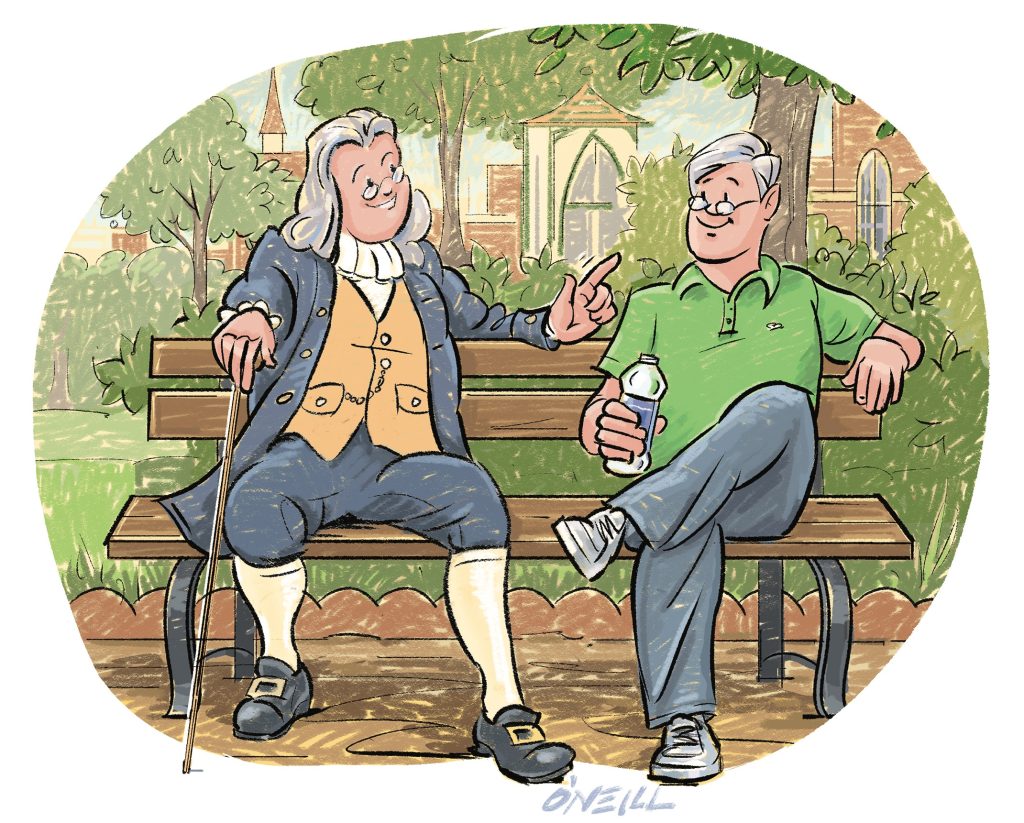
Fast forward several decades, I was thinking about these pleasant faraway summers on the first day of my journey down the Great Wagon Road, beginning in Philadelphia. The city was still draped in the tricolors of Independence Day amid a record-breaking heat wave. After a morning hike around the historic district, I walked into the shady courtyard of the historic Christ Church, hoping to find some relief, but found, instead, Benjamin Franklin sitting on a bench.

I couldn’t believe my good luck. Rick Bravo was a dead ringer for Philly’s most famous citizen and said to be the most beloved of Philly’s Ben Franklin actor-interpreters. 

He invited me to share the bench with him while he waited for his wife, Eleanor, to pick him up for a doctor’s appointment.

Over the next hour, Ben Franklin Bravo (as I nicknamed him) regaled me with several intimate insights about my favorite Founding Father, including how “America’s Original Man” shaped its democratic character and even had a hand in designing the nation’s first flag, sewn by Betsy Ross.

I thanked him for his stories and wondered if I might ask one final question.

He gave me a wry smile and a wink.

“God willing, not your last question nor my last answer,” he replied with perfect Franklin timing, casually mentioning that he was scheduled to undergo heart surgery within days.

I asked him what it was like channeling Benjamin Franklin.

Rick Bravo glanced off into the shadowed courtyard, where a mom and three small kids were cooling off with ice cream cones, chattering like magpies. My eyes followed his.

He grew visibly emotional.

“Let me tell you, it’s simply . . . wonderful. Next to my wife and children, being Ben Franklin is the most meaningful thing in my life.”

He told me how he met Eleanor many decades ago in the first of their many musical performances together, a major production of Oliver!

“Like America itself, we’ve weathered the ups-and-downs of life with lots of grace from the Almighty and a good sense of humor. As Ben Franklin himself observed, both are essential qualities for guiding a marriage or shaping a new country.”

Looking back, my hour with the man who was Ben Franklin proved the most memorable conversation of more than 100 interviews I conducted along the Great Wagon Road.

He even suggested that I drop by Betsy Ross’s shop over on Arch Street to buy a replica of the young nation’s first flag as a symbol of the birth of America.

Over the next five years, I carried this beautiful Ross flag, with its red-and-white stripes and circle of 13 stars, the only purchase I made during my entire 800-mile journey, down the road of my ancestors.   

To celebrate publication of my Wagon Road adventure this month, my Betsy Ross flag will proudly hang in front of my house for the first time, a gesture of gratitude to the dozens of inspiring fellow Americans I met on my long journey of awakening.

It will also hang in memory of my dear friend, Ben Franklin Bravo, my first interview on the Great Wagon Road, who died in January 2022.

I understand that Eleanor sang “Where is Love?” to him from their first musical together as he passed away.