Omnivorous Reader

Omnivorous Reader

Portrait of a Genius

When art and politics collide

By Stephen E. Smith

At a moment in our cultural/political history when we disagree about almost everything, you’d expect an ambitious pundit to pen a bestseller titled America vs. America: A Definitive Analysis of Our Cantankerousness. Although books aplenty attempt such revelations, it’s difficult, if not impossible, to articulate the forces at work in the here and now, but literary critic Scott Eyman has given us the next best thing to an explanation: Charlie Chaplin vs. America: When Art, Sex, and Politics Collided, an exposé/biography of a man who defined, at least in part, the last century, and who suffered the slings and arrows of an America gone wacky.

Eyman’s latest offering — he’s authored six previous books on the film industry and various movie stars — may strike readers as a story told a trifle too late. After all, Charlie Chaplin is ancient history, a wobbly, bowler-topped, black and white stick figure balanced on a rubbery cane who inexplicably entertained our grandparents with the silent knowledge that authentic comedy has its source in the concealment of anguish. The day-to-day details of Chaplin’s life notwithstanding, there’s insight aplenty in this cautionary tale of an artist whose universal popularity among Americans diminished to the point that he was run out of the country and forced to take up residence in Switzerland for the later years of his life.

Chaplin was born in England and suffered a childhood of poverty and hardship. His alcoholic father abandoned the family, and he and his brother were sent to a workhouse. His mother was committed to a mental institution when he was 14, and Chaplin was forced to find work touring theaters and music halls as a stage actor and comedian. At 19, he toured with a company that traveled the United States, where he eventually signed with Keystone Studios. By the age of 20, he was the best-known man in the world.

Chaplin co-founded United Artists and went on to write and produce The Kid, A Woman of Paris, The Gold Rush and The Circus. After the introduction of talkies, he released two silent films, City Lights and Modern Times, both film classics, followed by his first sound film, The Great Dictator, which satirized Adolf Hitler. After abandoning his Tramp persona, his later films included Monsieur Verdoux, Limelight and A King in New York. His credits and awards would fill this page, but less-than-knowledgeable readers need only grasp this basic fact: Chaplin was a creative genius who had a profound influence on popular culture and the art of filmmaking.

The focus of Eyman’s biography is Chaplin’s fall from grace. Early in his career, Chaplin was accused in a paternity suit in which he was found guilty, although blood tests proved conclusively that he was not the father (at the time, the state of California didn’t recognize blood tests as evidence); but the scandal was enough to attract the attention of gossip columnists, Hedda Hopper foremost among them, who were always collecting dirt on celebrity targets that would sell newspapers.

More destructive to Chaplin’s reputation was the public curiosity regarding his politics. Although he lived much of his life in the United States — indeed, he made most of his fortune here — he never applied for citizenship, which generated a cloud of suspicion that never quite dissipated. Chaplin claimed to be an anarchist, “not in the bomb-throwing sense,” Eyman writes, “but in his dislike of rules and a preference for as much liberty as the law allowed, and maybe just a bit more.” In truth, he was little interested in politicians and politics, outside the restraints placed on the arts by contemporaries who were politically minded.

Having suffered through a childhood of poverty, he harbored a great concern for the underprivileged, which is evident in all his films. But when he released Modern Times, which thematically explored the unending struggle against authoritarianism, and The Great Dictator, which mocked Adolf Hitler, both films, humorous but essentially didactic in intent, further thrust Chaplin into the political arena. Prior to our involvement in World War II, he publicly advocated an alliance with the Soviet Union, and members of the press and the public were scandalized by his marriage when he was 54, to 18-year-old Oona O’Neill, the daughter of playwright Eugene O’Neill.

Because of his support of Russia, Chaplin was accused of being a communist sympathizer, and the FBI opened an investigation, all of which fed into the Red Scare and McCarthyism of the early 1950s. Chaplin fell into such disfavor with the public that he was denied re-entry to the U.S. after leaving for the London premiere of his film Limelight.

Eyman’s book is a “social, political and cultural history of the crucial period in the life of a seminal twentieth-century figure — the original independent filmmaker who gradually fell into moral combat with his adopted country precisely because of the beliefs that form the core of his personality and films.”

Certainly, the activities of the press — particularly the gossip columnists who fed on Chaplin’s foibles; and the FBI, which launched a long, out-of-control investigation of Chaplin’s life — will give the thoughtful reader pause. FBI files on Chaplin ran to over 1,900 pages, mostly hearsay procured from dubious sources, material that was fed to friendly reporters who used the misinformation to besmirch Chaplin’s character and promote themselves.

Are there definitive elements in Chaplin’s life that precisely parallel the political/cultural moment in which we find ourselves? Probably not. As usual, Mark Twain is credited with having said it best: “History doesn’t repeat itself but it often rhymes,” and readers, regardless of their politics, are likely to find themselves singing along with whatever sad tune history is humming at the moment.   OH

Stephen E. Smith is a retired professor and the author of seven books of poetry and prose. He is the recipient of the Poetry Northwest Young Poet’s Prize, the Zoe Kincaid Brockman Prize for poetry and four North Carolina Press Awards.

O.Henry Ending

O.Henry Ending

I Watched Aliens from Another Planet Clean My Kitchen

A grandmother comes to her sensory senses

By Marianne Gingher

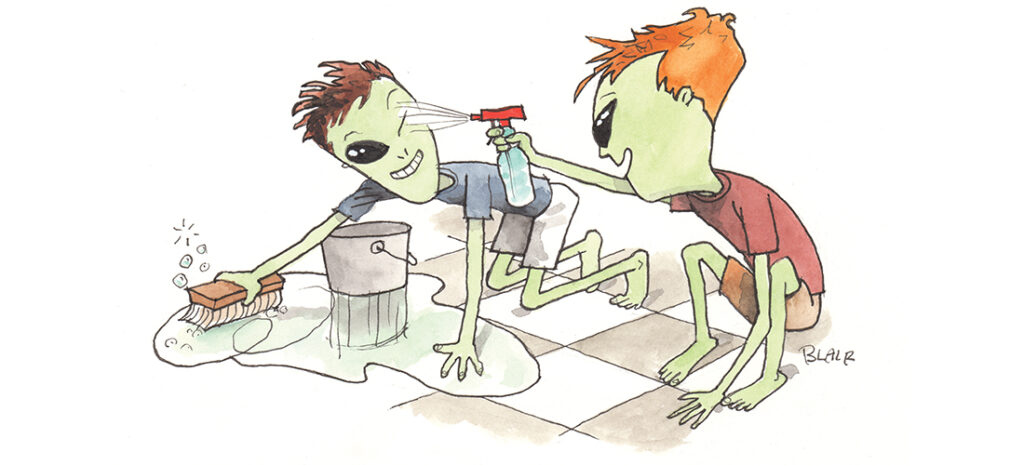
When Greensboro’s Friendly Center opened in 1957, I was 10 years old and my favorite store there was Woolworth’s. The heart of the store was the candy counter — a child’s dream — where you could buy orange jelly slices, little boxes of Goobers, Nik-L-Nips, candy corn, licorice whips, Sugar Daddies and chocolate-covered peanuts by the scoop. Brimming with the aromas of sizzling hotdogs twirling on skewers, popcorn, fountains of orange and lemon-flavored drinks bubbling down the sides of their glass containers, the store smelled nearly as delicious as the Greensboro Fairgrounds. There were other enticements: single-play records for 99 cents, gag gifts like Whoopie cushions and, in the back of the store fluttered blue and green parakeets in cages. Near the candy counter, I hovered over copies of The Weekly World News and National Enquirer with such memorable headlines as “Baby Born With Tattoo of Elvis” and “I Watched Aliens from Another Planet Clean My Kitchen.” After a trip to Woolworth’s, my imagination was stoked, my senses on overload.

Fast forward six decades. In the interval I became a writer, and I think now, in a weird way, Woolworth’s played a role in that. Remembering that famous five-and-dime’s delights got me thinking a lot about where kids today derive that sort of simple sensory pleasure and inspiration. My grandchildren, two wild boys ages 2 and 5, spent the summer with me while their family transitioned from Arizona back to North Carolina. My ransacked house bore no resemblance to its former self. I stepped on a piece of broccoli in my bathroom one night during their stay. I found the sprayer that attaches to the garden hose in the hall upstairs. They broke one of my kitchen chairs, flooded the upstairs bathroom and turned the AC thermostat to 50 degrees. It felt like I was living on a different planet. But I rose to physical challenges I never thought possible, danced to poopie songs, took them to every park and museum in Guilford County and witnessed delight on their little sunbeam faces as the carousel at Country Park revved up. I was exhausted but determined to hang on to the tilt-a-whirl of them until they headed off to the mothership.

Midway through their stay, when the 5 -year-old said he was bored, weary of the usual entertainments, I wished Woolworth’s still existed. But then a brainstorm hit.

“How would you like to help me wash the kitchen floor?” I asked. Nobody had ever given him such a fantastic opportunity.

His eyes widened. “Oh, yes!”

“Me, too!” hollered little brother.

Nothing glamorous or high-tech about that job, but both boys were thrilled with the adventure of it (and the spray bottle that came with the assignment). They’d discovered joy in a simple, sensory (and productive!) activity, far from the razzle-dazzle of commercial amusements. I stood on the threshold of the kitchen, watching them beaver away in their goofy way. It was happening before my very eyes: Two aliens from another planet were cleaning my kitchen!   OH

Marianne Gingher is an Earthbound writer living in Greensboro.

Life’s Funny

Life’s Funny

You’re a Green One

A visit with a homegrown Grinch

By Maria Johnson

In the interest of avocado-tinted transparency, I confess that I love everything about the Grinch, especially the 1966 animated version of his redemption story, a masterpiece of visuals, narration and music.

I love how the Grinch gets a “wonderful, awful idea” to steal Christmas, causing the tuft of green fur on his head to part and unfurl with his smile.

How he saws off a tree branch and ties it to the head of his dog, Max, to make him a reindeer.

How he scissor-cuts material for his Santa suit, leaving jagged holes in the shape of a hat and jacket.

How he slyly nabs candy canes from the grips of sleeping children.

How he deceives little Cindy Lou Who, who is no more than 2, with a promise of taking her Christmas tree back to his workshop to mend a light: “I’ll fix it up there, and I’ll bring it back here.”

How his heart grows three sizes that day, breaking the frame around it with a sproing!

How, when he returns to Whoville with trumpet blaring, the circle of Whos swings open like a gate.

And, naturally, how he — “he himself, the Grinch” —  carves the roast beast.

So you can imagine the thrill I felt upon learning that McLaurin Farms, on the northern edge of Greensboro, would be offering pics and visits with the Grinch at its Christmas Festival starting later this month.

Keep in mind that McLaurin Farms is the same operation that funnels tens of thousands of people through its bloodcurdling Woods of Terror haunted attraction around Halloween.

But in the last dozen years or so, the farm, which is run by Eddie McLaurin and his wife, Peggy, has grown into a year-round destination. They’ve added warmer-and-fuzzier draws such as a kid-friendly Pumpkin Patch, Trunk-or-Treat, an Easter Egg Hunt, the tulip-centric Blooms & Butterflies, a Summer Fun Festival and a farm market featuring ice cream and milkshakes.

So I was a little surprised and a lot delighted to see the farm touting the presence of the Grinch at the yuletide event.

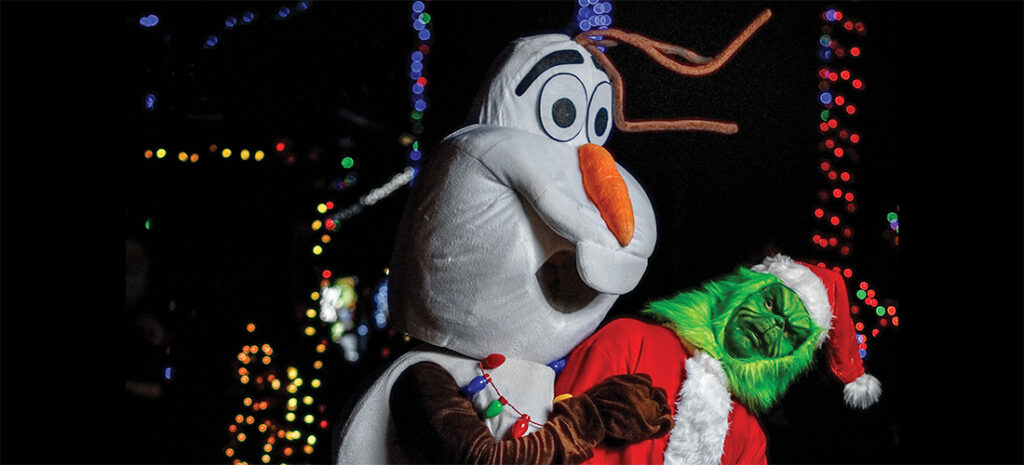
Yes, Virginia, the plus-size guy in red fur will be there, too — ho-ho-ho-ing, posing for pics and listening to endless lists — along with the uber-grouch, who will occupy his own little niche complete with a store selling Grinch-obilia.

That’s pure green genius in my book — in terms of both fun and finance.

Witness the enduring popularity of the character, who first appeared in a written story published by Theodor Seuss Geisel, aka Dr. Seuss, in 1957.

The ’66 animated TV classic that won my heart was narrated by Boris Karloff.

In 2000, Jim Carrey portrayed him in a live-action movie.

In a 2018 animated movie, Benedict Cumberbatch voiced a Grinch with smoother edges, appropriate to his world of Minion-like characters.

A touring stage production of How the Grinch Stole Christmas! The Musical, which debuted on Broadway in 2006, will run at Greensboro’s Tanger Center November 21–26.

And at McLaurin Farms, our homegrown Grinch, 29-year-old Nate Hudson, says the Green King of Mean outdraws Santa, maybe because Santa is more common at shopping centers, parades and the like.

“You would think it would just be kids,” Hudson says, reflecting on his fans. “But I have adults who come just to meet my Grinch. They’ll come dressed in their Grinch gear, and they’ll say I’ve been waiting the whole year to meet you.”

Hudson, who graduated from Southeast Guilford High School and snared a theater degree at Indiana Wesleyan University, gets it.

At age 8, he started memorizing dialogue from Jim Carrey’s Grinch, which his mom watched every Christmas season after it was released. About the same time, Hudson joined the family passion for spooky, dressing up as a scary clown for the haunted houses they put on. His dad was an extra in one of the Hellraiser movies.

After college, Hudson did a turn with a repertory company in Michigan and spent autumns working at haunted houses, refining his clown character.

He brought Rellik, which is “killer” spelled backward, to Woods of Terror about eight years ago. Two years later, the folks at McLaurin Farms asked him to help with the Christmas Festival.

“I said, ‘I’m not a fan of kids, and I’m not a fan of Christmas,” says Hudson. “They said, ‘Perfect! You’re the Grinch!’”

Hudson loved the idea. Bullied as a child, he identified with Carrey’s version of the Grinch, who is raised in Whoville and teased for being different until he finds love and acceptance one magical Christmas.

Likewise, Hudson says, he found a safe harbor among theater people and haunted house actors. He enjoys the same grace inside the McLaurin tribe at Christmastime, when he plays the Grinch with crackly-voiced snark.

People who ogle and smile at him are likely to be greeted with a terse, “What?!”

Ask him if he’s seen Santa, and he’ll shamelessly hack a line from the movie Elf: “You mean the fat guy dressed in red who smells like beef and cheese?”

If Olaf the snowman, a roving character from the movie Frozen wanders by and embraces him, Hudson will probably start singing “Let me go, let me go . . . ” a riff on the hit song “Let It Go” from the same movie.

The only time he breaks character — or actually adheres to character — is during the last show before Christmas. At that point, Hudson says, the Grinch becomes his better self, which is what people find irresistible about the character: the hope he offers.

“He has a story,” Hudson continues. “He was misunderstood. Everything was not all rainbows and sunshine with the Grinch. I think that’s where people sympathize with him. Toward the end, he grows his heart. He’s more human than Santa.”

It’s an evergreen thought.  OH

Maria Johnson is a contributing editor of O.Henry. Email her at ohenrymaria@gmail.com.

Tea Leaf Astrologer

Tea Leaf Astrologer

Scorpio

(October 23 – November 21)

Everyone knows that the greatest revenge story never told is currently playing on a loop inside the dark and secretive mind of a Scorpio sun child. Relax. While the mischievous glint in your eyes does raise some suspicion, they’ll never know what you’re really thinking. On Monday, November 13, a new moon in your sign will offer a fresh perspective. Are you ready for a plot twist? You just might surprise yourself. 

Tea leaf “fortunes” for the rest of you:

Sagittarius (November 22 – December 21)

You’re going to taste that more than once.

Capricorn (December 22 – January 19)

Splurge on the fancy cheese.

Aquarius (January 20 – February 18)

Clear the cobwebs.

Pisces (February 19 – March 20)

Your eyes give you away.

Aries (March 21 – April 19) 

Two words: buffet etiquette.

Taurus (April 20 – May 20)

You’re clenching your teeth again.

Gemini (May 21 – June 20)

Leave your shoes by the door.

Cancer (June 21 – July 22)

Dress for the part you want.

Leo (July 23 – August 22)

Try chewing between bites.

Virgo (August 23 – September 22)

Make space for a new houseplant.

Libra (September 23 – October 22)

Ever tried kickboxing?  OH

Zora Stellanova has been divining with tea leaves since Game of Thrones’ Starbucks cup mishap of 2019. While she’s not exactly a medium, she’s far from average. She lives in the N.C. foothills with her Sphynx cat, Lyla. 

Sazerac November 2023

Sazerac November 2023

Unsolicited Advice

A little something on the side? Don’t mind if we do. But this year as you’re planning the Thanksgiving feast, can we all agree to keep the canned cranberry sauce where it belongs? In the can — or better yet, on the grocery store shelf — where it can stay until we’re hiding from the end of the world, in a bunker, and it’s your absolute last resort. Like, even after you’ve eaten the can of Spam that your cat won’t touch. Leave it on the shelf and try one of these unique dishes found at popsugar.com instead:

  1. You can’t spell “sausage stuffing” without “sage,” but you can stuff something other than your turkey. Like your slow cooker. Frankly, it’s a much safer process with a big bonus: The two cups of onion will give your breath a “savory” aroma that will have your relatives happily keeping their distance.
  2. Meatlovers, meet your veggies. Think Brussels sprouts are disgusting? Think again. Pan-fry bacon and use its fatty grease in place of olive oil for roasting sprouts, squash and fresh cranberries. Lastly, sprinkle said veggies with bacon bits and walnuts and they becomes a delicious, salty treat.
  3. In a world where cauliflower can be anything — we’re talking pizza and even a Chick-Fil-A sandwich — why not make it a Thanksgiving side? Just add white cheddar. And bacon.
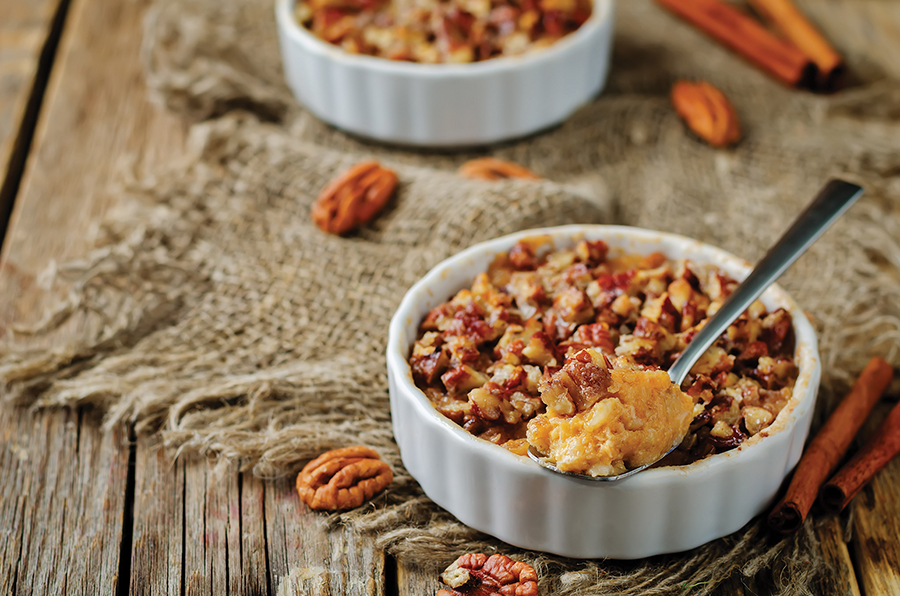
  4. We saved the best for last. We’ll take a heapin’ helping of sweet potato casserole with butter-pecan crumble topping. Does that mean we can’t have just a sliver of sweet potato pie and a wee bit of pecan pie? Nope, there’s still room for dessert if you skimp on the cranberry sauce. Find more interesting ideas here: popsugar.com/food/unique-thanksgiving-side-dishes-32388172

Just One Thing

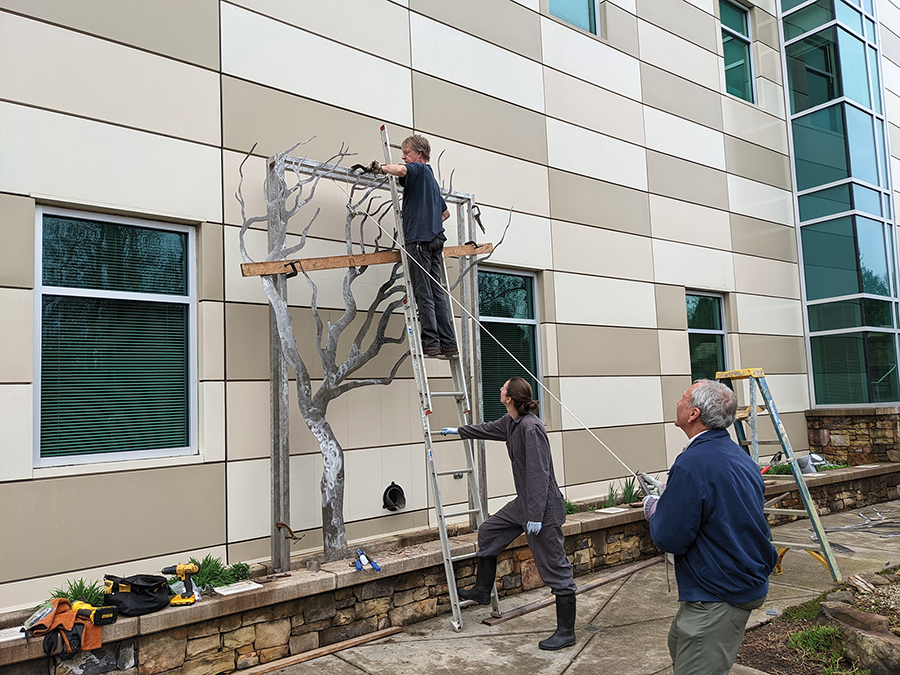
Lawrence Feir, a Greensboro sculptor and cancer survivor, once sketched trees in Wesley Long’s Healing Garden while waiting for a ride home after chemo and radiation treatment. “Those doodles eventually evolved into the Tree of Hope sculpture,” says the Canadian-born artist, who got his start “painting jean jackets in a Long Island neighborhood, emblazoned with ’60s rock ’n’ roll stars like the Grateful Dead and Bob Dylan.” Disillusioned with life in crowded New York, “I moved to North Carolina, went to art school and discovered photography.” Feir, pronounced fayr, says a lucky break at the Greensboro airport landed him a job jetting the world shooting photos for aerospace pub Airways International until September 11, 2001. “Flying and photography would never be the same for me,” he says. After Dr. Bill Bowman, a general surgeon for 30 years and a Cone Health VP, died unexpectedly in 2021, family and friends donated money for a memorial, and Feir, who had reinvented himself as a contemporary artist working in welded steel, kinetic, abstract and figurative sculpture, was tapped to create it. A silver silhouette of a tree came to mind, Feir says, that would reflect the garden’s lush green vegetation with an almost moss-like border in the morning, turn silver as the day progressed and then take on a warm, crepuscular glow as dusk descended. Fabricated from stainless steel with a welding tool “that uses jets of hot plasma to cut through metal like butter,” the 12-foot-high tree sprouted and grew in Feir’s Greensboro studio over several weeks. Feir hopes its wind-swept branches inspire feelings of comfort and serenity in others dealing with cancer while serving as a shimmering tribute to Dr. Bowman and others who “supported me through a very difficult time,” he says. “They saved my life.”

Window to the Past

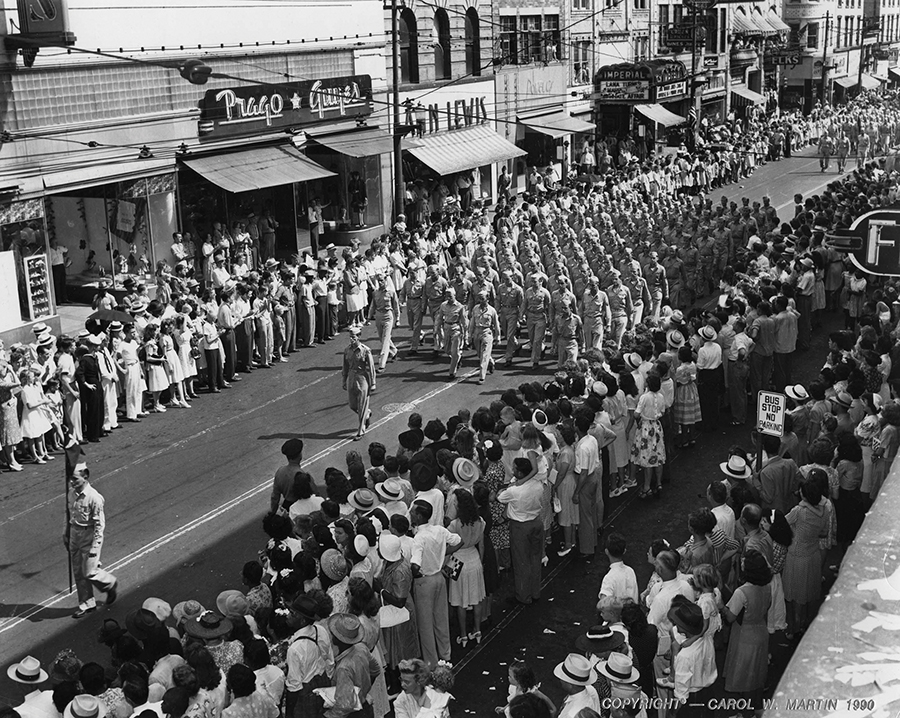
Photograph © Carol W. Martin/Greensboro History Museum Collection

Don’t miss this year’s Greensboro Honors: Veterans Day Parade, beginning on the corner of Elm and Lindsay, and kicking off at noon on November 11.

Sage Gardener

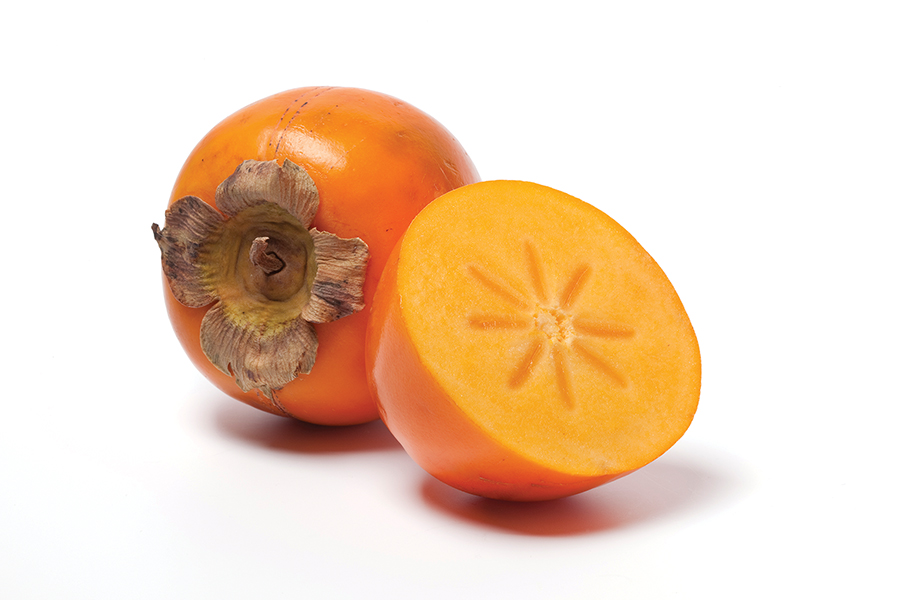
For decades, Betty, my sister, and I have scouted out persimmon trees just before Thanksgiving. After carefully removing the fruit’s orangey, pulpy mass from the ground and separating out the leaves, twigs and dirt, we cook up some persimmon pudding for the big holiday feast. I’ve always used my late mother’s recipe, distinguished by sweet potatoes, corn meal, pecans and nutmeg with no other spices. I wondered aloud to Betty whether she uses the same recipe.
“Doesn’t matter,” she said.

“What?”

“I don’t care one way or another about persimmon pudding,” she said. “It’s momma’s hard sauce that I like.” Brandy, sugar and butter. What’s not to like, but Zella Bailey’s son sure does love persimmons and persimmon pudding.

A corruption of the Algonquin word “putchamin,” persimmons charmed Spanish Conquistador Hernando de Soto, who liked them better than red plums. English Colonial Governor Captain John Smith declared them “one of the most palatable fruits of this land” — when ripe — observing how they can “draw a man’s mouth awrie with much torment” when eaten too soon.

The Oxford Companion to Food observes from an ocean away that it is “a fruit which used to be valued . . . but is now little eaten,” eclipsed, they say, by the big, fat Asian-engineered persimmons ubiquitous in grocery stores nowadays. Right.

In Seasoned in the South: Recipes from Crook’s Corner and from Home, celebrated Chapel Hill chef Bill Smith says his favorite recipe passed down to him by Bill Neal, Crook’s founder, is persimmon pudding (no sweet taters and no cornmeal, but good nonetheless). Pick your own persimmons, he insists, and sprinkle in some nutmeg, ginger and cinnamon.

In the plant sex department, persimmon trees are diocesius (from the Greek two [di-] and house [oikos]), meaning it takes two trees, a male and a female, to tango and make persimmons. I have proof of this in my yard, where a lonely female tree flourishes, but longs for a stately male companion. The wood from persimmon trees, by the way, is hard and closely grained and used for golf-club heads, billiard cues and once upon a time for preparatory school paddles.

In sweetness, the fruit is only exceeded by the date in sugar content. They are “as eagerly sought out by possums and other wild creatures as human beings,” says The Oxford Companion, showing they do know a little something or another.

Finally, as the onset of winter blisters the landscape with dying leaves and sets our roads on fire with a kaleidoscope of colors, let’s hear it for the persimmon tree, which goes out in a blaze of yellow-to-orange-to-purplish-bronze glory. “Nothing evokes the warm, lazy feeling of a fall afternoon in the Southern countryside,” writes an anonymous horticulturist on the J.C. Raulston Arboretum’s website, “like the sight of two or three persimmon trees lounging against a split-rail fence, their devilishly delicious fruit hanging just out of reach.”   David Claude Bailey

Simple Life

Simple Life

A Cure for the Summer Blues

And a homecoming for a flat-coated retriever

By Jim Dodson

As I write this, I’ve just returned from East Hampton, New York, where I sat on the porch of a beautiful old house that belongs to my friends, Rees Jones, the famous golf architect, and his wife, Susan. The sun had just come up and the first birds were chirping. Susan’s gardens were lush from recent rains. It was the day after Labor Day and the summer crowds were finally winding their way home.

I’d be lying if I said I was sad to see this particular summer go. It was a real doozy back home in Carolina, the hottest and driest summer I can recall, which explains why I spent many days watering my wilted gardens, which seemed prepared to give up the ghost.

But I’m already in a November state of mind.

November, you see, is one of my two favorite months, when I pause to take inventory of the year, count my blessings and thank the Lord for unexpected gifts.

This year I’m starting early with a dog named Blue. He was the one great thing about summer’s end — besides summer’s end.

Up till the moment my wife, Wendy, found him, I was feeling intense lingering grief over the loss of my beloved dog Mulligan at the end of August last year.

Mully, as I called her, was 17 and had been my faithful traveling pal since the October day in 2005 when I found her running wild and free on the shoulder of a busy highway near the South Carolina line, a filthy, joyful, black pup that raced into my arms as if she knew I was there to save her — though I’m convinced it was the other way around. Whichever it was, we found each other and shared an uncommonly powerful bond to the very end.

One of the saddest moments of my life was watching her soulful brown eyes close for the last time as she lay at my feet in the garden she helped me build. Or it felt like it at the time.

Grief is such untidy business. It squeezes your heart at unexpected moments. Every time I saw a dog that looked like Mully — a flat-coated retriever and border collie mix — I found myself almost aching with returning sadness.

Even our aging and sweet old pit bull, Gracie, whom I call Piggie for the way she snorts when eating and sleeping, seemed to keenly feel Mully’s absence, despite the fact that pits are not known for displaying much emotion. 

One day last fall, I happened to open an app to Red Dog Rescue and there was a black-and-white female puppy looking for a forever home. I was sure Mully was sending her to us. So, on a lark, I filled out the paperwork and supplied proper references. A week or so later, we drove to a farm down in Asheboro to pick her up.

We named her Winnie — either after Winnie-the-Pooh or my late friend Winnie Palmer, Arnold’s wonderful wife — I’m still not sure which.

It wasn’t long before I started calling her Wild Winnie. She is an exceptionally smart and insanely joyful mix of Labrador retriever, English springer spaniel plus something her DNA results termed as “Super Mutt.” She is every bit that and more.

In truth, however, I wasn’t sure life in an old suburban city neighborhood would be sufficient for our beautiful Super Mutt’s needs.

But I was wrong. Winnie quickly attached herself to Gracie the Bull and my wife, Wendy, who took her to training classes and soon had her performing an impressive repertoire of obedient commands. Wendy also began taking Winnie to Country Park’s BarkPark, where she fell in with a band of rough-and-tumble regulars named Roger, Jack and Ellie, who run, wrestle and chase each other until they drop from exhaustion.

Winnie, in short, has been a joy. Without fail, she jumps into my lap every morning to give me a soppy lick of gratitude for finding her.

But she’s clearly one of the girls. Wendy is her sun and moon. I’m just Wild Winnie’s fun playmate.

I was OK with that until the end of August, when the first anniversary of losing Mully approached.

My intuitive wife seemed to divine that my normal “summer blues” were worse than ever this year. One afternoon as we shared a cool drink beneath the shade trees, she handed me her iPhone and said, smiling, “So what do you think?”

It was a photo of a beautiful black flat-coated retriever that looked exactly like Mully.

“He’s over in Tennessee, a rescued young male who belonged to a lady who had to give him up. They say he’s sweet as can be, loves other dogs and even cats. They’re taking a load of rescued dogs to New England and will be passing through western Virginia this Friday evening. If you’re interested. I’ve already cleared our references.”

For several seconds I said nothing, just stared at the photo.

“You need your dog,” my wise wife quietly said.

So we drove to western Virginia and picked him up. On the two-hour drive home, he climbed up front placed his head in my lap and fell asleep.

We named him Blue, my forever cure for the summer blues. After a bath, he was so black he was blue. My daughter, Maggie, suggested the name.

Blue follows me everywhere, lies at my feet and already answers to his name. Piggie and Winnie adore him. Ditto Boo Radley, the cat.

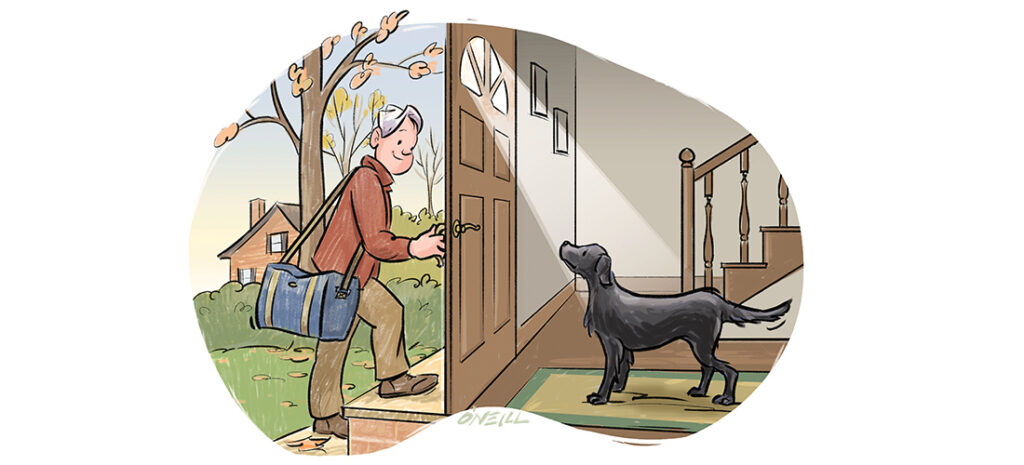
On the evening I arrived home from New York, Blue was the first one to greet me at the door, hopping up to give me a lick on the chin.

It was good to be home.

For both of us.  OH

Jim Dodson is the founding editor of O.Henry.

Chaos Theory

Chaos Theory

Cold Turkey

A first-time Thanksgiving cook’s frozen failure

By Cassie Bustamante

Growing up, Thanksgiving was always a big family affair. Dad’s dad had six siblings and they’d all be there with their kids, who also had kids. My older brother, Dana, and I were the eldest of our generation, and we had to sit at the dreaded kids table, where we made sure none of our little cousins shoved peas up their noses.

During high school, Dana and I graduated from the kids table, but it was a decade later when I hosted my first Thanksgiving in New Orleans that I finally felt like an adult.

Because Chris works in retail management and will be schlepping it to the mall on Black Friday, dreams of the classic Thanksgiving return “home” — to either my or his parents — are dashed. Dana, who lives in Los Angeles, decides to visit our little family so he can spend time with his 1-year-old nephew, Sawyer.

While I am sure Mom and Dad will miss seeing their first grandchild, they’re glad we’re spending the holiday together. And I know we will miss them — and Mom’s pecan rolls. One thing I won’t miss? Having to stare at one of Dad’s favorite sides on the table: the jiggling, can-shaped, gelatinous cranberry sauce, ribs still visible.

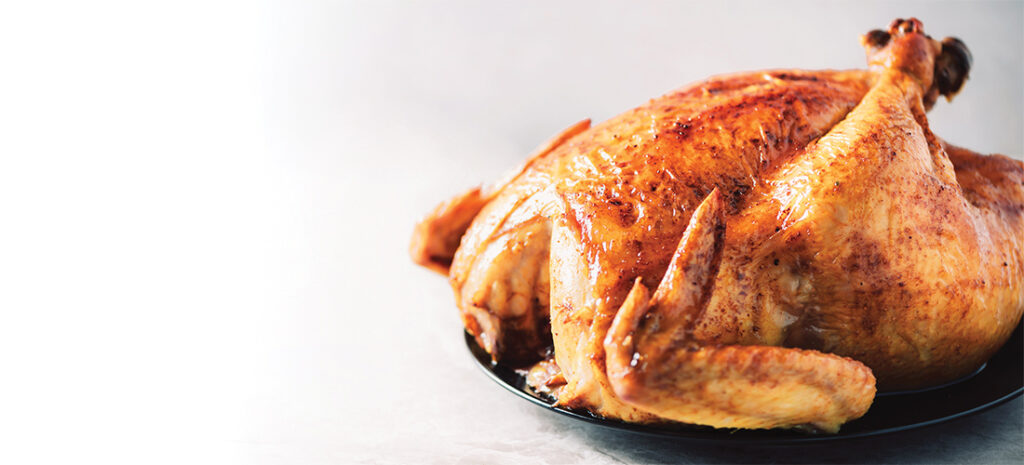
Since I am the chef de cuisine, I delight in crafting my own menu: a cooked-to-nut-brown-perfection turkey, creamy mashed potatoes, sweet potatoes sprinkled with cinnamon and nutmeg, haricot vert spiked with lemon and garlic, glazed maple carrots, a simple salad — always a great palate cleanser between bites — and pillowy, golden rolls. And no canned cranberry sauce. For dessert, rich, silky pumpkin cheesecake.

We hit the grocery store the weekend before, like every other bayou shopper and purchase a sensibly small bird in advance, which goes into the freezer for safekeeping.

The day before Turkey Day, Chris plays on the floor with Sawyer while I follow the steps of a Food Network pumpkin cheesecake recipe. I pop it in oven to bake and lick the spatula.

“Do we even need anything else?” I ask no one in particular. “Can’t we just sit around the table with cheesecake? I mean, that’s what the Golden Girls always do.” Lost in the delight of the batter and the excitement of my big brother arriving that evening, I take my eye off the ball. The ball being the ice-bound Butterball.

The morning of Thanksgiving, I wake from a dead sleep at 6 a.m., fully aware of what I’ve done — or, more accurately, not done. “Oh, no!” I yell. “We forgot to take the turkey out of the freezer!”

I rush to the kitchen in my pajamas as Chris groggily drags behind me. I yank the bird from the freezer, slamming it on the counter with a rock-solid thud and look exasperatedly at him. “Now what? Thanksgiving is ruined!!!”

“Let’s just give it a water bath,” Chris answers calmly, adept at handling my (over)reactions. “Fill the sink and we’ll put it in there and just keep changing the water. It will thaw more quickly that way.”

Fill, drain, repeat — every 15 minutes. After the first hour, the turkey is frighteningly firm. When the Macy’s Thanksgiving Day Parade begins to roll, I can just about poke a finger into it. I imagine my parents, the smell of turkey wafting through their home, while, down in New Orleans, their daughter spends the day giving a turkey a bath.

But Chris and Dana assure me they’ll be happy to eat whenever the turkey is ready. “I hope you like a big meal for breakfast then, because it’s looking like tomorrow morning,” I lament.

To my surprise, our diligence pays off. Hours later, around 4 p.m., our bird is oven-ready and, because it’s small, cooks quickly. The four of us finally gather around the table. I pour us each — except for the baby, of course — a large glass of pinot grigio. “Cheers,” I say. “I’m grateful for so much — your visit, for one, Dana — but mostly that we’re eating at 7:30 p.m., a very respectable mealtime.

I look around the table at our little crew. With Dana and Chris across from me, and Sawyer in his high chair beside me, it’s a far cry from those big family gatherings of my youth. But, even with my frozen faux-pas — maybe especially because of it — I know that we’re creating new memories.

After putting Sawyer to bed, Dana, Chris and I gather ’round one more time for a 10 p.m. cheesecake session. I don’t care how stuffed I still am. Sweatpants were made for this.

“Mmmmm . . . ,” we all groan contentedly.

Since then, I’ve not once forgotten to thaw the turkey. Of course, that’s probably because I no longer eat — or cook — it. Too traumatic. But pumpkin cheesecake? There’s always room for that.  OH

Cassie Bustamante is editor of O.Henry magazine.

Almanac October 2023

Almanac October 2023

October dares you not to look away.

These early days of autumn, deciduous trees edging toward full glory, you wouldn’t dream of it. Brisk mornings enliven your senses. You can nearly taste the crispness through your skin.

As golden light alchemizes a brightly colored skyline, yellow becomes more than yellow; red, sharper and truer; orange, otherworldly so.

The merging of light and leaves mesmerizes you. There is nothing soft about this symphony of color. Nothing subtle. The dance is as stunning as molten gold.

Trees become torches. Foliage laps against cerulean skies like ravenous flames licking silent blue heavens. This amalgam of color transforms your very being. You feel both awestruck and emboldened. Ancient and brand new.

Suddenly, a gust of wind sends a wave of leaves swirling earthward. Another gust follows, releasing howling, coppery flurries.

The wind goes rogue.

Wave after furious wave, the leaves descend with reckless abandon. As starling murmurations flash across a brilliant sky, the fleeting beauty makes you ache.

The paradox is arresting: The season has reached its full potential, and there’s nothing to do but watch it make a raging, riotous exit. 

Do not look away, you tell yourself. A shock of crimson shakes from open branches. Do not miss one glorious moment.

October commands your faithful presence. As the trees free themselves of all adornment, you soften to their naked truth. This, too, shall pass

Hold tenderly this precious knowing — this visceral aliveness — and, in the next breath, let it go.


There is a far sweet song in autumn

That catches at my throat,

I hear it in each falling leaf

And in each wild bird’s note . . .   

 — George Elliston,
“Mine Own” (1927)

Birds of Autumn

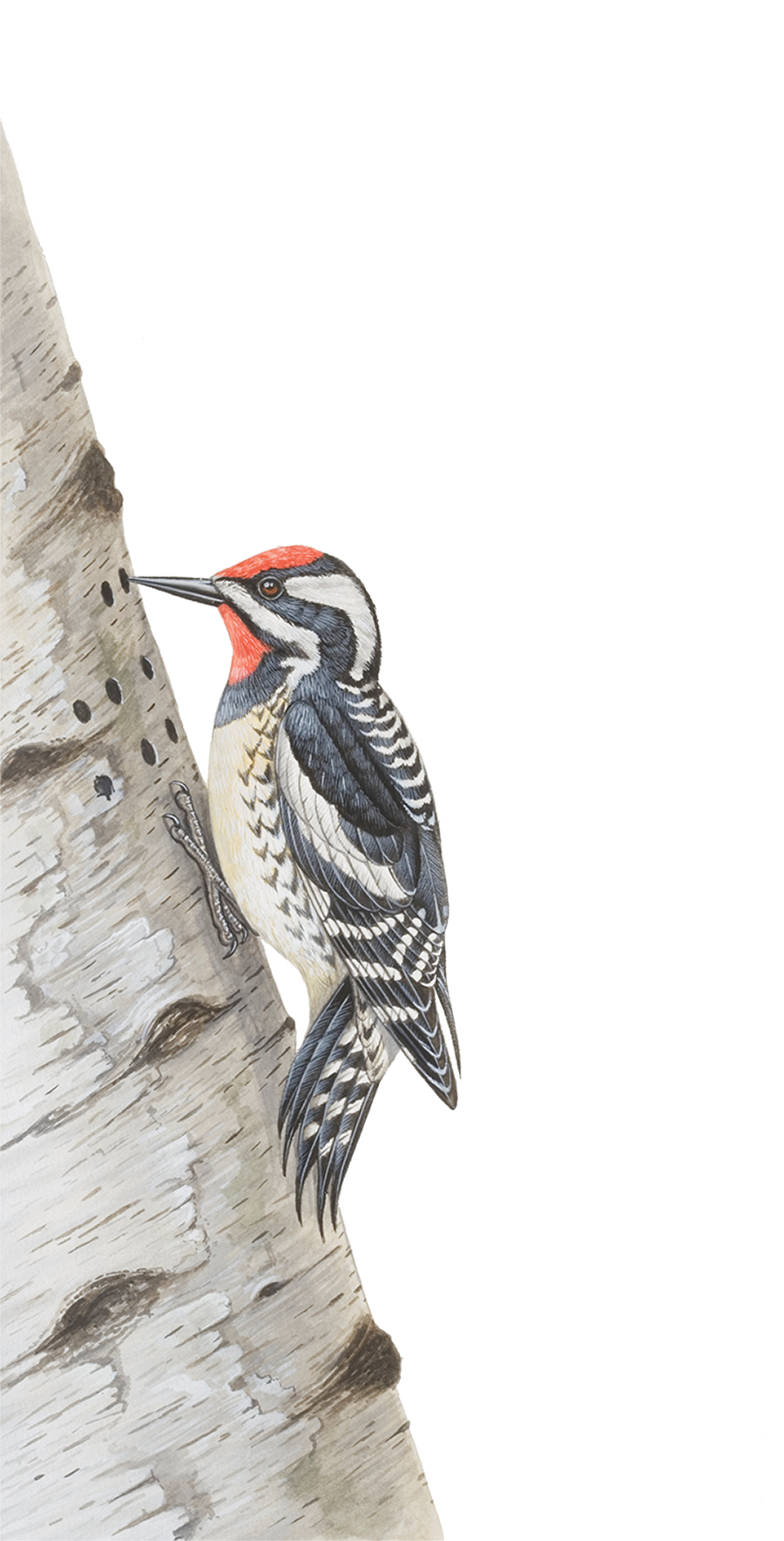
Yellow-bellied sapsuckers arrive; ruby-throated hummingbirds depart for warmer climes. Birds come and birds go.

This month, as nature dazzles us with her warm and glorious hues, keep watch for white-throated sparrows, pine siskins and yellow-rumped warblers — winter residents whose songs are as distinctive as their field marks.

Oh, Sweet Canada, Canada, sparrows whistle.

Warblers perform their soft, slow trills. 

Pine siskins stun us with their harsh and wheezy zreeeeeeet.

Winter is nigh, the birds seem to say.

In other words: Enjoy the show. 

Flower of the Dead

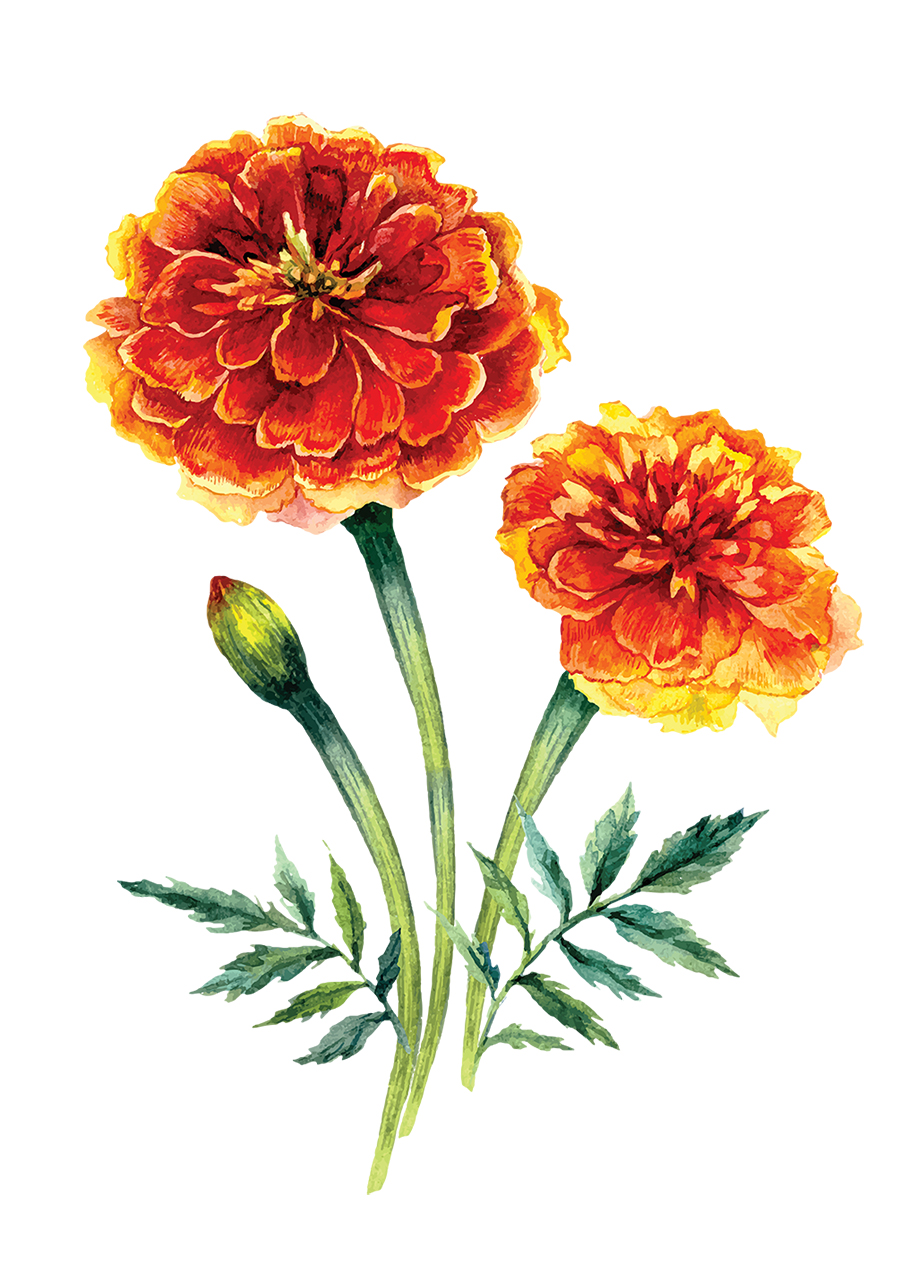
Nothing says autumn like a field of fiery marigolds. Or a tidy garland of them. 

Although October’s vibrant birth flower has long been associated with grief and loss, its uses have been — and continue to be — vast. Because their sunny orange and yellow hues are believed to dispel negativity — and to help guide wandering spirits to altars for the dead — marigold garlands are commonly used in religious ceremonies in Asia, Latin America and Mexico.

They’re also a choice natural dye, companion plant and, depending on the variety, edible flower. Bust out a batch of marigold-and-saffron shortbread this season and see if you ever crave pumpkin spice again.  OH

Wandering Billy

Wandering Billy

Grave Matters

Creating cleaner, greener pastures at Green Hill Cemetery

By Billy Ingram

“Never check an interesting fact.”     – Howard Hughes

It may seem odd that someone possesses warm fuzzies for a graveyard, but my fond memories of Green Hill Cemetery go back as far as I can remember.

At 10 years old, I convinced my younger brother and sister that my foot was stuck between the wooden ties of the railroad tracks along the western edge of Green Hill. With one ear on the rails, I could feel (or so I told them) the vibrations of a locomotive speeding toward us, imploring my siblings to run, to save themselves — there was no longer any hope for me.

My sister’s first name is Rives, same as my mother’s maiden name. Mom’s family has a plot at Green Hill centered with a monument that simply reads “Rives.” When she was 7 years old, I told my sister that she had an incurable disease and was going to pass away soon, so mom and dad were just waiting until she died to carve the dates on this, her headstone. She cried and cried and I guffawed like a peg-legged pirate. Was I an awesome brother or what?

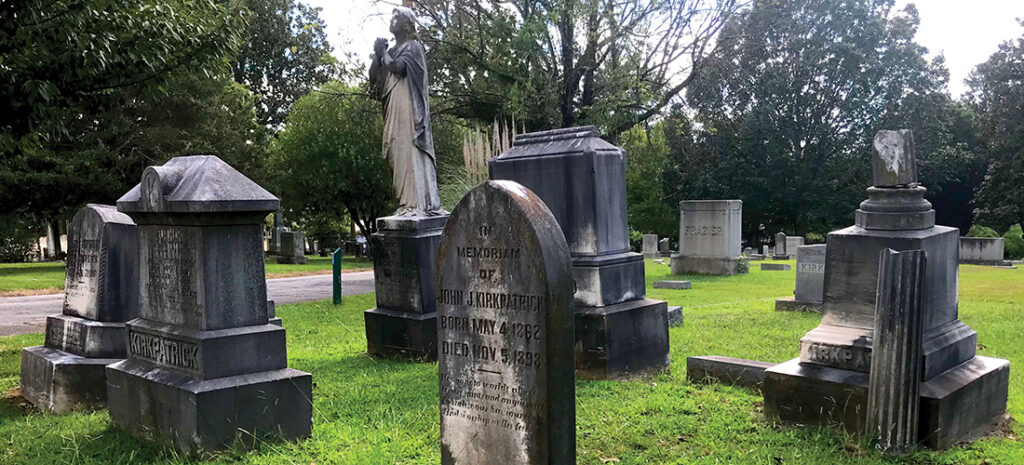
It’s been a decade or so since I’ve wandered over to Green Hill, where I recently caught up with my one-time neighbor David Craft, who, alongside a dozen or so stalwart volunteers from the Friends of Green Hill organization, are selflessly assessing, sprucing up and restoring smaller headstones that, over time, have become unmoored by mudslides. These crafty citizens dig out those sunk several feet into the ground and clean covered-over carved marble tablets long ago toppled onto their backs, presently embedded into the soil. At a glance, they tend to go unnoticed, this multitude of mangled monuments, askew stones of all sizes and shapes, spires weighing hundreds, perhaps thousands of pounds, cracked and fractured, resting on their sides, primarily in the oldest tracts.

“You’re walking and you see these gravestones fallen over,” David says about what spurred him into action, pointing out monoliths and burial sites in dire need of rehabilitation. “They’re in the wrong places, they’re broken, and these things are so beautiful, they’re almost like artwork. And I was kind of looking for something else to do.” David dubbed this merry band of recreational restorationists the “Billies” as a hat tip to his dad, Bill Craft — but he’d prefer if you didn’t preface that nickname with “Green Hill.”

In his own way, David is advancing a legacy that took root more than a half-century ago, when his father began implementing his sylvan vision for Greensboro, one that continues to flourish and likely will for generations to come.

As a teenager in the 1970s, I’d notice Bill Craft almost daily planting assorted flora directly across the street from our Blair Street home. Guilford County’s Johnny Appleseed, with persistent prodigality, transformed a perfectly ordinary two-block-long, grassy, creekside strip into a lush environ, what is now known appropriately as Bill Craft Park. With virtually nowhere left to dig at that location, he turned his attention to Green Hill Cemetery’s relatively sparse surroundings beginning in 1980, toiling in that soil for the next 20 years.

When this self-taught botanist began his arbor days-turned-years at Green Hill, there were around 100 trees dotting the 51-acre landscape. By the time Bill was done, he’d seeded an additional 400 saplings and shrubs, just about every species known or suspected to survive here: a rubber tree from China, live oaks from the coast, Florida palms, Atlantic white cedar, Chinese pistache, Savannah holly, Japanese maple, Tupelo gum, Colorado blue spruce, to name a few. Bill Craft passed away in 2010, his herculean efforts costing this city not one dime.

Last year, David attended a seminar in Statesville led by Shawn Rogers, director of Jamestown’s Mendenhall Homeplace, on the proper methods for restoring and repairing marble, slate, and granite markers and footstones without being invasive or intrusive. A precision-oriented approach appealed to David, who likes “doing things with my hands, simple things.” He continues, “So we got permission to straighten [smaller stones and slabs], which is kind of within our skillset.” The goal for these Green Hill aficionados is to perform as many minor repairs as possible while raising money for larger, more difficult projects that will require heavy machinery and extensive expertise.

In addition to this behind-the-scenes undertaking, there are two October happenings at Green Hill I’m personally looking forward to.

Not far from the southern gate (near Fisher Avenue) stands a most striking monument, a 7-foot-tall depiction of a firefighter standing at the ready, carved in Italian marble, perched atop a 10-foot-high granite plinth. Dedicated in 1924, this became the annual site for a service devoted to Greensboro Fire Department personnel who had perished over the last year. For whatever reason, this custom ended around 1970, but in 2021 that yearly ceremony was revived with a well-attended memorial honoring the 16 line-of-duty and retired GFD deaths during that dormant period. On Saturday, October 7, at 2 p.m., the city will once again honor the fallen.

Separately, for the 15th year, Ann Stringfield of the Friends of Green Hill Cemetery’s leadership team leads a tour on October 29 at 1 p.m. Her topic? “The Plants and the Planted” that inhabit the southern portion of Green Hill. Interested in assisting with restoration or want more info about these events, including rain dates? Visit: FriendsOfGreenHillCemetery.org.

A couple of months back, I profiled Gerald Smith, a charming, colorful gentleman who’d recently published a terrific memoir entitled Cotton Mill Hillbilly. Sadly, Gerald passed away on June 26, but what a privilege it was to have met him. Before my time comes, I can only hope to be blessed with even a fraction of his enthusiasm for life and the abundant love that obviously surrounded him.  OH

Despite so many familial connections at Green Hill, Billy Ingram’s final resting place will likely be Potter’s Field.

Birdwatch

Birdwatch

Enticing the Baltimore Oriole

Red carpet treatment for an occasional guest

By Susan Campbell

Northerners who relocate to central North Carolina often ask me about birds familiar to them that seem absent here in our fair state. One that is close to the top of the list is the Baltimore oriole. Its striking plumage and affinity for sweet feeder offerings make it a real favorite among backyard bird lovers.

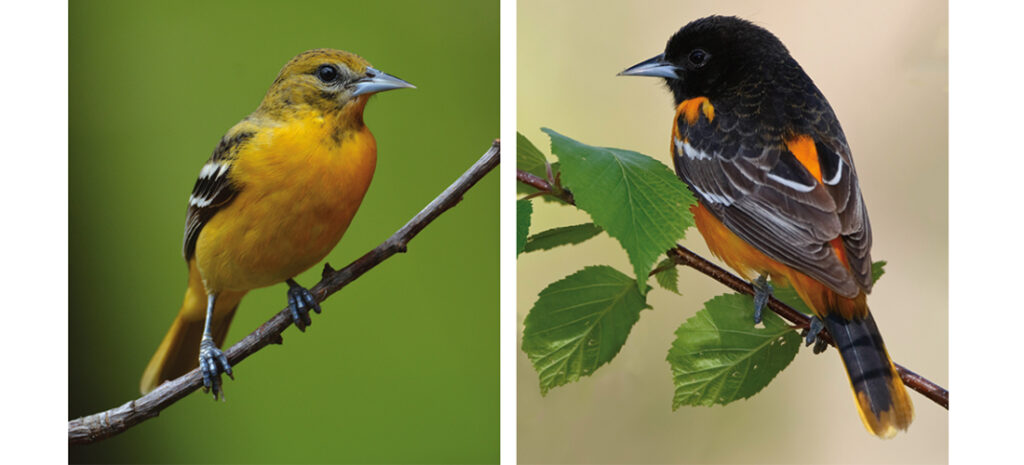
Male Baltimore orioles are unmistakable with bright orange under parts, a black back and head, as well as two bold white wing bars. Females and immature birds are yellow to light orange with the same white wing bars. They have relatively large, yet pointed, bills, which are very versatile while foraging. Males sing a very melodic song made up of several clear, whistled notes.

As it turns out, Baltimore orioles actually do nest in North Carolina — if you venture far enough west. In our mountains they can be found weaving their elaborate nests that dangle from high branches, often over water. Following two weeks of incubation, the young will spend another two weeks before they fledge. By mid-summer the adults spend their days in the treetops, looking for caterpillars and small insects to feed their growing families.

However, since these birds winter throughout Florida and all the way down into Central America, you might spot a few as they pass through in spring or fall. There is also a chance one or two might spend the winter in your neighborhood if you have the kind of habitat they seek out in the cooler months. Should your yard be to their liking, they may return year after year, bringing others (presumably family members) with them. I know winter oriole hosts in the eastern half of the state who count a dozen or more birds frequenting their feeders October through March every year.

Baltimore orioles will seek out areas with lots of mature evergreen trees and shrubs of which a significant portion bear some sort of fruit. These birds are relatively large and colorful so require thick cover for protection from predators — especially fast-flying bird hawks such as Cooper’s and sharp-shinneds. Without this, it has been my experience that they will not linger long even if food is plentiful. Should they feel safe, the odds are they will settle in and become a regular backyard fixture. Baltimore orioles will continue to consume any insects they happen upon but will switch to a diet of berries and whatever fruit or sweet treats they find at bird feeders. They are known to enjoy not only suet mixes with peanut butter but also orange halves, grape jelly and even marshmallows. They also will avail themselves of sugar water from hummingbird feeders they find still hanging. There are special, large sugar water feeders made for orioles that usually contain partitions for placing other solid treats as well. Baltimore orioles definitely enjoy mealworms, too, should your budget allow.

A few very lucky people have been treated to the out-of-place Scott’s oriole, as well as Bullock’s oriole, here in North Carolina. Interestingly, these mega-rarities have turned up at sites without any other orioles present. Keep in mind that we sometimes find western tanagers at feeders in winter. The females and immature birds of this species look very similar to female or immature Baltimore orioles, differing only in the shape of their bills and the color of their wing bars.

Personally, I have had Baltimore orioles show up for a week or so but then move on. In spite of setting out the red carpet (including suet, jelly, oranges, mealworms and sugar water), they have not been enticed to stay long. Maybe this fall will be a different story . . . OH

Susan Campbell would love to receive your wildlife sightings and photographs at susan@ncaves.com.