Simple Life

Simple Life

Squirrelly Business

A seedy family of rodents drives an old dude nuts

By Jim Dodson

Another summer is ending.

And once again, the squirrels have won.

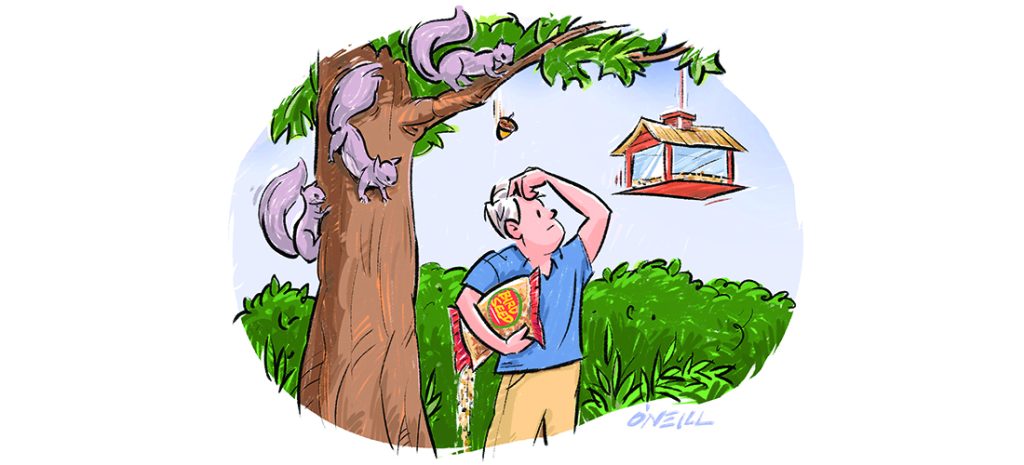
Last year about this time, you see, I made a promise to myself — not to mention the many wild birds that regularly visit our four hanging feeders — to find a way to outfox the large crime family of gray squirrels that inhabits Old George, the handsome maple tree that anchors our front yard.

The problem began rather innocently six years ago when we moved back to the heavily forested neighborhood where I grew up and rescued George from death by English ivy. The old tree flourished and, one afternoon, I noticed a couple gray squirrels had taken up residence in a hollow nook halfway up the tree. They seemed to be a respectable couple, perhaps elderly pensioners looking for a nice place to tuck in for their quiet retirement years. Our property is also home to several towering oaks, so come autumn there would be a plentiful acorn supply.

I hung a couple bird feeders by wires from George’s upper branches. Soon the wild birds were all over them. What a peaceable kingdom it seemed.

The next spring, however, there were four squirrels residing on Old George. Clearly, they were no elderly pensioners, for within months, two baby squirrels appeared and I found a juvenile delinquent regularly helping himself to premium birdseed, scattering it on the ground below the feeder, having somehow slid down the 10-foot wire like a paid assassin from a Bond flick.

He soon returned with two bushy-tailed pals from across the street. Word was out. Party at the Dodson house, all-you-can eat birdseed buffet, pay no attention to the old dude waving his arms and shouting obscenities.

By the next year there were at least seven or eight tree squirrels residing on Old George, a budding Corleone family of furry rodents regularly raiding the feeders, costing me a bundle just to keep them filled up. I bought expensive “squirrel-free” feeders and fancy bird feeder poles equipped with “baffles” guaranteed to keep the gymnastic raiders on the ground. These sure-fire remedies, alas, only baffled me because they posed only a minor challenge to the squirrels. So I made a deal with the big fat squirrel that seemed to be the head of the family. Whatever they found on the ground at the feet of Old George was theirs to keep. Thanks to the jays, the sloppiest eaters in the bird kingdom, there was plenty of seed for them to gorge on. For a while, this protection racket seemed to work until one afternoon as I was filling up “their” feeder, I heard a pop and turned to find the big fat crime boss squirrel dead on the ground. He’d been pushed off a high limb where two younger squirrels were looking down with innocent beady-eyed stares. Just like in the movies, a younger more ambitious crime boss was in charge.

I considered giving up and moving to northern Scotland. Instead, I asked my neighbor, Miriam, a crack gardener and bird fancier, how she handled pesky squirrels. By “crack gardener,” I don’t mean to suggest that sweet elderly Miriam was growing crack cocaine, merely that if anyone could tell me how to stem the tide of ravenous tree squirrels it was Miriam. She’d lived in the neighborhood for 40 years. She is my turn-to garden and bird guru.

Miriam thought for a moment before coming out with a chilling laugh. “They’re impossible to stop.” She pointed to her Jack Russells. “That’s why I have Jake and Spencer. They do a pretty decent job on the squirrels and chipmunks.” She admitted that she always wondered whether squirrels are the smartest or dumbest of God’s creatures. “How can squirrels be so smart they can get into any kind of bird feeder — but always stop suicidally in the middle of the street whenever a car is coming?”

It was a good question I had no time to ponder.

Our other neighbors down the block, Miriam explained, had taken to humanely trapping their squirrels and releasing them in the countryside. “But I read somewhere that if you don’t take them more than 10 miles out of town, they’ll come straight back.”

That was all I needed — country cousins joining the feast.

Next, remembering my former neighbor, Max, I actually gave thought to arming myself with a Daisy BB gun. It’s right there in the second amendment, after all — the right to bear arms against unreasonable threats from hostile elements, both domestic and foreign. True, the Constitution doesn’t mention thieving gray tree squirrels per se, but one doesn’t have to be a strict constitutional originalist to interpret the broad meaning of those historic words.

Max was my neighbor down in Southern Pines, a fabulous gardener famous for his giant tomatoes, succulent sweet corn and luscious collards. To protect his bounty from the herds of deer that roam the Sandhills, Max essentially erected a Russian-style penal colony around his veggie garden, complete with electrical voltage and 24-hour monitoring system.

The first evening I dined with Max and his beautiful wife, Myrtis, as the salt and pepper came my way on the lazy Susan, I noticed a large jar of Taster’s Choice — circa 1976 — festooned with several sheets of notepaper attached by rubber bands. The sheets were covered with dozens of dates written in tiny, neat handwriting.

“What are these dates?” I asked. “The last time you tried really old instant coffee?”

Myrtis laughed. “Oh, no. Those are dates of Max’s squirrel kills. He shoots them.”

Max just smiled. “Haven’t had a squirrel problem in years. It’s either them or my vegetables.”

I was in the presence of evil genius, a terminator of problem squirrels.

Call me a tree-hugging man of peace — Rocky and Bullwinkle were my favorite childhood cartoon characters — but I decided to forgo the gun and simply rely on Miss Miriam’s way to put the fear into the furry crime family that inhabits Old George.

Nowadays I wait until I see them climbing up poles, dangling upside down to feed or diving insanely from tree limbs onto our feeders, whereupon I strategically release our 75-pound Staffordshire pit bull and fleet-footed border collie-spaniel puppy and watch the merry chase begin. There’s been more than one narrow escape and parts of furry tails have been brought back to master of the hounds.

True, it’s not a permanent solution to the problem. But for now, Gracie and Winnie enjoy the exercise and I am sending an unmistakable message to the squirrelly Corleones.

They’d best stay out of the middle of the road when this old dude is at the wheel.  OH

Jim Dodson is the founding editor of O.Henry.

Wandering Billy

Wandering Billy

Poetry Is Life

And life is poetry for Greensboro’s first Poet Laureate

By Billy Ingram

“Poetry is just the evidence of life. If your life is burning well, poetry is just the ash.”      – Leonard Cohen

For the first time ever, the City of Greensboro has appointed a Poet Laureate, Josephus Thompson III. Some people might envision a pointy-headed intellectual with a snowy beard spouting iambic pentameter while safely ensconced inside an ivy-covered garret. In contrast Josephus is a tall, lithe 46-year old who appears considerably younger in person.

It was a fourth grade classroom assignment that led Josephus into discovering his previously undiagnosed love for wordplay. “I won a fourth place ribbon for an essay about my father,” he tells me. “And I was ecstatic that I won fourth place.” Later, in high school, Josephus composed a poem for an English course that he performed in front of the entire student body. “I got a few accolades for it and I was like, people like my writing. I should do more of it.”

Although it’s a part of every school’s curriculum, “So often the poetry that we hear — the Mayas, the Frosts — it doesn’t sound like us, doesn’t look like us,” Josephus remarks about society’s overall failure to connect students to creative expression. “It’s all about education through correlation, something they can actually relate to.” This dichotomy led to the creation of The Poetry Project in 2005 for, “using poetry to teach, inspire and build the communities that we call home.”

What began inside individual classrooms turned into packed school assemblies. “When I go into a space, maybe 70 percent of the kids probably don’t like poetry,” Josephus says. “They think it’s whack, it’s boring. But when I’m able to relate it to hip-hop, to music, to empowering their voice, all of a sudden the light switch goes on. They’re like, ‘Wait a minute. You wanna hear what I have to say?’”

Over time, Josephus developed a scintillating Monday through Thursday curriculum rooted, but not mired, in traditional English Language Arts. “Then on Friday,” he says, “I’ll bring in a poet, a singer, a rapper, a guitar player, so they are able to see what we’ve talked about all week in real life.” Wildly popular, this avant-garde bard poetically pied piper-ed impressionable audiences, winning over a multitude of restless, attention deficient pupils, a paroxysm attributable not only to Josephus’ charismatic delivery, but also his impressive lexiconical athleticism.

Funded primarily by fees for service plus occasional grants, The Poetry Project has provided literacy-based programming not only in Guilford and Forsyth Counties, but also in Harrisburg, VA, and as far afield as Malaysia and the Phillippines. “I had the pleasure of performing with the Greensboro Symphony in 2019,” says Josephus. “It was phenomenal.” For that event, every third and fourth grader in the county school system was transported to Grimsley High School’s auditorium for five daily jam sessions, experiencing for themselves Josephus’ participatory prestidigitation. The result? It’s poetry emotion: “A thousand kids singing along and chanting.”

“I’m able to talk about the fact that the money is in songwriting,” Josephus remarks, explaining that most youngsters don’t realize musical artists generally don’t compose their hit songs. “The people that write the music are sitting at home collecting a check, a lot more than the singer. By the end of the class everyone wants to be a writer.”

Having piqued students’ interest, Josephus realized budding authors had nowhere to hone their craft. “There’s a place for Frisbee, and basketball and soccer, but, if you’re going to be a writer, where do you go?” To fill that void, Josephus partnered with the McGirt-Horton branch of the Greensboro Public Library to establish an after-school outlet for aspiring scribes. “Every person has a voice,” Josephus says of his motivation. “Everyone wants to be heard, period.”

As a side gig that has since expanded exponentially, Josephus launched The Poetry Café at Triad Stage in 2009 to serve as a launching pad and showcase for emerging regional wordsmiths. It was then that one of his mentors, D. Cherie’ Lofton, at that time operations manager and content manager for N.C. A&T State University’s radio station, began urging him to adapt his concept for the airwaves. “I didn’t want to be on the radio, but I had no idea the number of people I could reach.” It took Lofton more than a year to talk him into it, but in 2012 Josephus began broadcasting The Poetry Café over 90.1 FM, WNAA.

Earlier this year, The Poetry Café became a weekly syndicated radio show, airing Sundays at 6–7 p.m. on WUNC radio, recorded in his studio on the second floor of Triad Stage. “We already have artists that are coming now to Greensboro to be featured on the show because it’s statewide.”

Last year, Josephus created a monthly retreat called Poetry Field Trip in conjunction with the Van Dyke Performance Space located in downtown’s Cultural Center. “We were able to bring in 300 kids for 90 minutes to experience poetry up close and personal with a full band,” Josephus says, somewhat amazed. “Before they leave, I’m giving autographs to fourth graders — as a poet in Greensboro.”

Josephus is on track to host a combined 3,000 kids for October’s Poetry Field Trip at the Van Dyke Performance Space (info@thepoetryproject.com). “Beginning at 9 a.m., there’s ‘Poetry is Life’ breaking down what poetry is, how it connects,” our Poet Laureate explains. “In the afternoon, we do a second part called ‘The Cypher: From the Page to the Stage.’ The same kids can come back and write their own poetry, then get up on stage to perform it. Three hundred kids coming in the morning and the afternoon for a full day field trip.”

It’s not just about poetic license, but poetic licensing. The Poetry Café is headed to the National Public Radio convention this month. “The goal is to pick up another 10 to 12 stations,” Josephus says, “so the show will be national by the end of the year.” He’s already submitted a proposal to PBS North Carolina. “We’d love to get on their network with The Poetry Café, featuring North Carolina artists, which means advertising dollars.”

In April of 2024, The Poetry Project returns to Tanger Center. “We’re talking about video, audio, all of that being accessible, sellable and licensable,” Josephus notes. In 2025, he’s looking to export The Poetry Café to London, Dubai and Durban, South Africa. Having grown up a military brat with frequent upendings, he says, “I’ve been to those places, so I know it’s possible.”

Set the clock for inevitability. “As Poet Laureate of Greensboro, it’s my due diligence to make it happen,” Josephus contends. “We’re setting the mold, breaking barriers, proving every single day that poetry is life and life is indeed poetry.”  OH

Billy Ingram is O.G. — Original Greensboro.

Almanac September 2023

Almanac September 2023

September is the last stand of sunflowers — thick with bumbles and honeys — wistfully facing east.

Sown in the softest days of summer, when early berries fairly tumbled from their vines, the seeds of these yellow giants held more than plumule and root. They held the glory of summer, a timeless cure-all, the warmth and likeness of the sun.

Weeks after their shoots burst through fertile earth, the sunflowers whispered patience. Ever reaching toward the light, their stalks grew tall and sturdy; their rough leaves wide as open palms. Soon, the buds emerged — tidy cinch purses as splendid as stars — holding their treasures tight.

Summer burst in all directions. Cicadas emerged screaming. Queen Anne laced meadows and roadsides. Thistle and clover reigned supreme.

Butterflies teetered on purple coneflowers, feasted on milkweed, drifted among sage, sedum and hibiscus.

At last, when early giants withered on their fibrous stalks, the luminous beauties unfurled.

Summer fades. And yet, the last wave of sunflowers beams.

Here now, they sing.

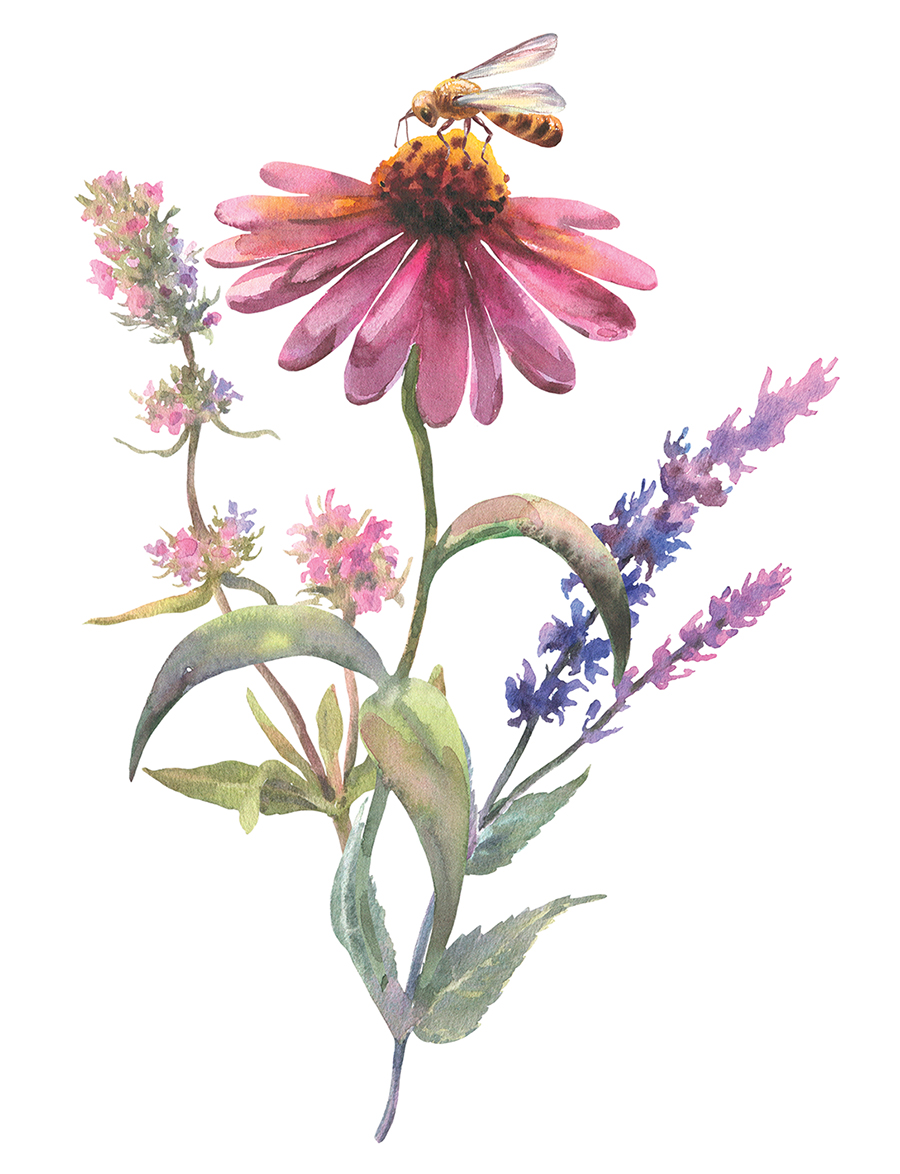
The bees know, sharing communion at their golden centers. Whirling in ecstasy. Humming an ancient prayer for grace.

We know, too. We hold tight to summer — let it transform us — then wistfully look toward the autumn sun.


New beginnings are often disguised as painful endings.   — Lao Tzu


The Thick of It

Muscadine season is here at last.

Hypnotically sweet, this native grape thrives in the sticky heat of our Southeastern states, ripening from late August through early October. Ranging in color from greenish bronze (we call them scuppernongs) to deep purple, this thick-skinned whopper (Vitis rotundifolia) is the official fruit of North Carolina.

Muscadine wine. Muscadine jelly. Muscadine grape hull pie.

For some, muscadines by the handful take the cake.

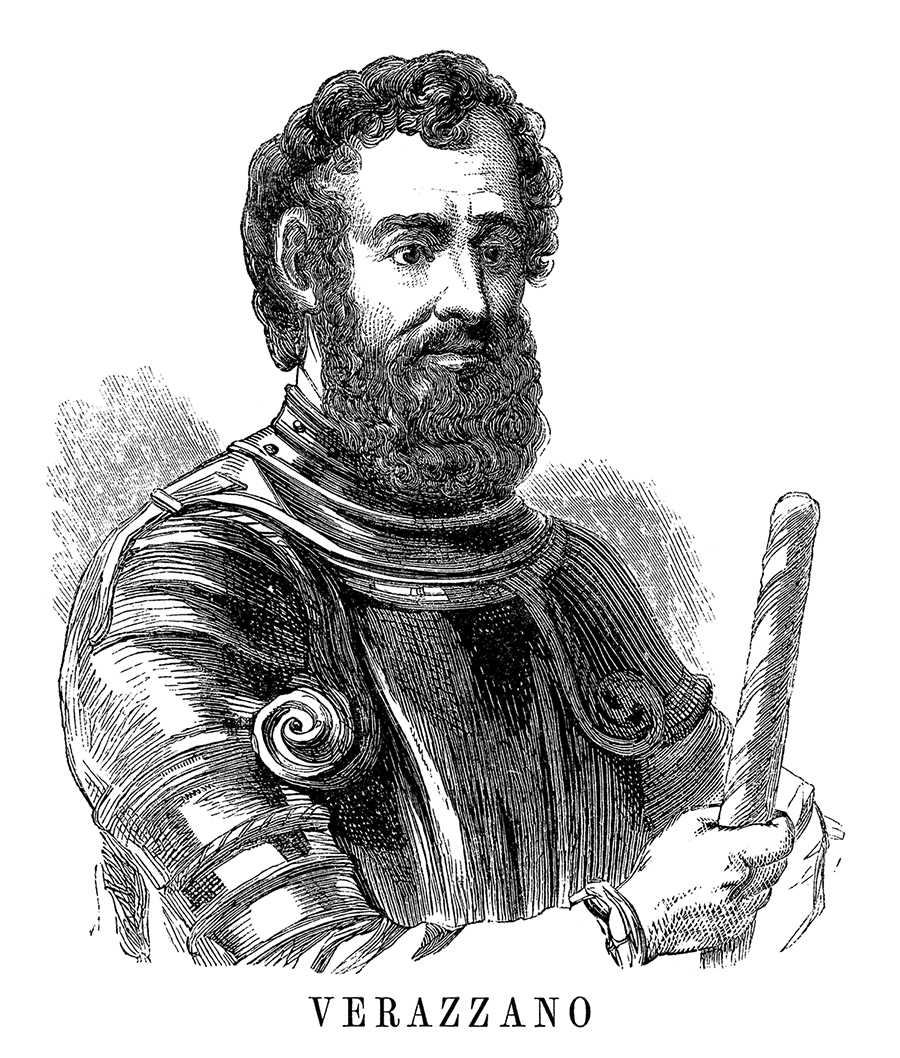
According to the State Library of North Carolina’s online encyclopedia, early English explorers of the Outer Banks reported that this fruiting vine “covered every shrub and climbed the tops of high cedars.” This was 1584. Italian explorer Giovanni da Verrazzano wrote about the curious “white” grape some 60 years prior.

Perhaps you’ve heard of the half-acre “Mother Vine” in Manteo, now over 400 years old? Planted by Croatan Native Americans or, perhaps, settlers of the Lost Colony, this legendary scuppernong is the oldest known cultivated grape vine in the country. It’s aging, no doubt, like a fine, sweet wine. 


Crisscross Equinox

Apples blush. Whippoorwill sings his final song. Things end and things begin.

The autumnal equinox occurs on Saturday, September 23. As the turn of the season graces us with equal amounts of day and night, we prepare for the final harvest. We celebrate the abundance here now, soak up the remnants of summer, and ready ourselves for the darkening days.  OH

Birdwatch

Birdwatch

Straying Inland

The great egret pays a visit

By Susan Campbell

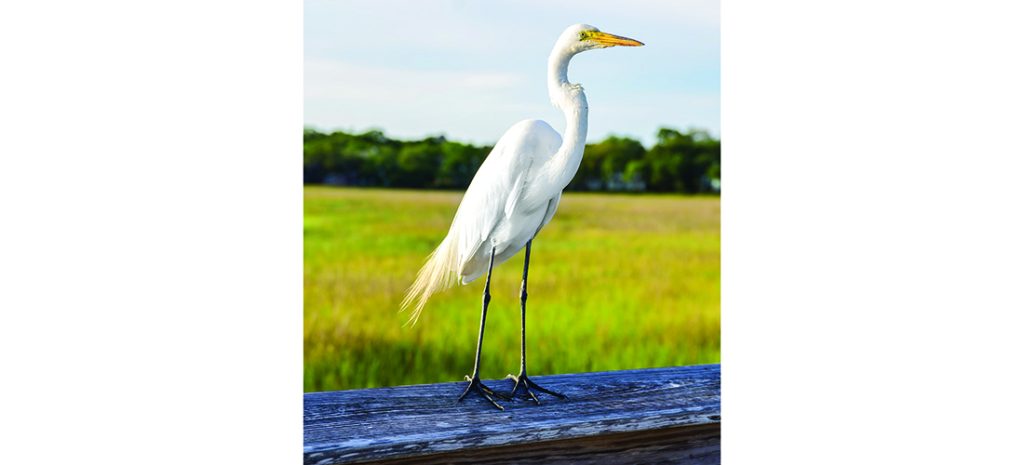
’Tis the season of odd sightings: Birds are wandering in all directions. After breeding and ahead of fall migration, it is not uncommon to spot out-of-place individuals here in central North Carolina. One that gets reported annually is the great egret, or mistakenly referred to as a “white crane.” This is a large wading bird with all-white plumage, a long, pointed, bright yellow bill and black legs.

Although far more likely to be found along the coast, individuals or small groups turn up on inland ponds from late July through September. Egrets stalk small fish, frogs, crayfish and other small prey in the shallows. Occasionally they will snatch a snake, small bird or large insect as well. They will roost in thick, older pines over water, where ground predators are not likely to reach them. In coastal areas, they may join dozens or even hundreds of other individuals, finding safety in numbers.

During the breeding season, from March through June, great egrets sport long plumes along their backs. At the turn of the century, the species was nearly wiped out as a result of the millinery trade. Plume hunters decimated rookeries throughout the coastal United States. But, as with most of our wading species, great egrets have made a good recovery. On the verge of extinction, they became the symbol of the National Audubon Society, the oldest and largest bird conservation organization in the United States, originally founded to protect birds from being killed for their feathers.

Great egrets are found in heronries, most often alongside great blue herons, throughout the Coastal Plain. Nesting habitat consists of sturdy trees usually on islands, free of mammalian predators. Simple stick platforms are constructed by the males and placed high in the canopy. Nests can be quite large, being up to a few feet across and a foot or so deep. One to six eggs are laid and incubated for almost four weeks by the female. The young are then fed by both parents for about a month before they are capable of flight. If there is a shortage of food, aggressive larger siblings are known to kill smaller ones. Fledglings may follow their parents for a few weeks or may become independent quickly, if food resources are scarce.

Both great egret adults and young of the year will disperse from their breeding areas to find new feeding areas. They are often seen in late summer on inland lakes, even in our mountain counties. In our area, they may use lakes, beaver ponds, creek or river floodplains, even water hazards on golf courses. They do not tend to stay in one place for very long so, should you come upon an egret this season, enjoy it because it likely will not be around more than a few hours — a day or two at most.   OH

Susan Campbell would love to receive your wildlife sightings and photographs at susan@ncaves.com.

Omnivorous Reader

Omnivorous Reader

Portrait of a Rock Icon

The good, the bad and the ugly

By Stephen E. Smith

When organizing the 1967 Monterey Pop Festival, the promoter phoned Chuck Berry to invite him to perform, explaining that the acts were donating their fees to charity. Berry replied, “Chuck Berry has only one charity and that’s Chuck Berry.” End of discussion.

That was Chuck Berry at his most generous, and readers of RJ Smith’s Chuck Berry: An American Life will likely be taken aback by the unsavory details of the life of the man who gave us “Maybellene,” “Roll Over Beethoven,” “Sweet Little Sixteen,” “Back in the U.S.A.,” “Reelin’ and Rockin’,” “School Days,” “You Never Can Tell” and “Johnny B. Goode,” rock ’n’ roll classics that pop culture will not willingly let die.

Smith’s biography has been widely lauded in print, online and over the airways, and his study of Berry’s life is as close to a complete examination available to the public. Court records offer even more objectionable details. This much is certain: The more you read about Chuck Berry’s lifestyle, the less likely you are to ever listen to “Maybellene” with a sense of nostalgia.

Berry grew up in a solid middle-class St. Louis family. He wasn’t a blues guy who spent his youth picking cotton and banging on a catalog guitar. He did, however, suffer discrimination early in his life, and Smith devotes the opening chapters of the biography detailing the effects of Jim Crow on Berry’s formative years.

Berry’s trouble began when he was convicted of armed robbery as a teenager and spent almost three years in juvenile detention. When he was released, he drifted into music, became an early master of the new electric guitar, and created an original sound by combining country music with boogie-woogie.

We can argue about who invented the concept of “rock star,” but certainly Chuck Berry, Elvis Presley and Jerry Lee Lewis could lay claim to the term. Berry’s shtick was to sing with impeccable diction while blasting glib rapid-fire lyrics that teenagers could instantly comprehend and dance to. This straightforward blueprint for early rock ’n’ roll attracted Black audiences in the early ’50s. By the mid-’50s Berry’s fanbase was integrated. In the 1960s, he was playing to almost entirely white crowds, at which point his performance was simply called “rock.”

The bulk of Smith’s biography is taken up with the upsetting stories that accompany Berry’s hundreds of performances. His business plan was straightforward. Berry would sign a contract with a promoter who was responsible for supplying the backup band and amplification equipment. He’d arrive in a Cadillac, also supplied by the promoter, minutes before he was to take the stage. There’d be no rehearsal, no interaction with the band, and he’d demand payment in cash before performing. Berry would count the moola, play for the designated amount of time, duckwalk for the audience’s edification, and bang out the hits for which he was best known. Then he’d exit the stage. If there was an encore, he’d demand additional cash. When the concert was over, he’d pack up his guitar and make a clean getaway.

Generally, the audience loved it, dancing, cheering and having a fine time. Berry made money, the promoter usually made money, and the audience left satisfied. The late Rick Nelson summed it up best in his hit “Garden Party”: “Someone opened the closet door and out stepped Johnny B. Good,/playing guitar like ringing a bell, and looking like he should.” Ray Kroc would have been proud — Berry cooked up musical cheeseburgers, each one a tasty clone of its predecessor. Consistency was the key.

All of which was fine and dandy with American audiences. But there was one overawing problem: Chuck Berry. He was irascible, mercurial, essentially unknowable, and had an affinity for trouble. After serving his time in juvie and achieving fame as a rock ’n’ roller, he began traveling the county with a 14-year-old Native American girl he claimed was his assistant. The cops weren’t buying it and nailed Berry for violating the Mann Act — transporting an underage female across state lines for immoral purposes. He spent two more years in prison. Then the IRS began tracking the cash Berry received for his performances and nailed him for income tax evasion, and late in his career he was busted for installing covert cameras in the restrooms of a restaurant he owned, an act of voyeurism that gave rise to an investigation that uncovered a trove of pornographic material in which Chuck Berry was the star. 

As Berry’s antisocial behavior was becoming common knowledge, he was being roundly honored by the American public. On Whittier Street in St. Louis, the National Register of Historic Places listed his home as a monument, and after his release from prison for violating the Mann Act, NASA blasted gold-plated recordings of Berry’s “Johnny B. Good” into interstellar space aboard Voyagers 1 and 2. (Voyager 1 is now 14.1 billion miles from Earth, a far distance from the prison cells Berry occupied in the ’60s and ’70s.) His IRS indictment was greeted with a universal shrug, and his voyeurism conviction was likewise ignored by the press. Chuck Berry went right on performing and raking in the big bucks, playing out the string until the bitter end.

Smith has included all the facts: the good, of which there’s little enough; the bad; and the ugly, of which there’s plenty. Two questions remain. First, who was Chuck Berry? Did anyone truly know the man? Berry explained his sense of self in an interview: “This is a materialistic, physical world. And you can’t really KNOW anybody else, man, because you can’t even really know yourself. And if you can’t know yourself then sure as hell no one else can. Nobody’s been with you as long as you and you still don’t know yourself real well.”

The second question is more complex, encompassing the American penchant for revering individuals, whether rich, talented or charismatic, who are given to violating legal and social norms. Are we willing to accept outrageous behavior from unrepentant religious leaders, corrupt politicians and wayward rock ’n’ roll stars because they’ve somehow made themselves infamous? Apparently so. After all, nothing is quite as American as hypocrisy. OH

Stephen E. Smith’s latest book, Beguiled by the Frailties of Those Who Precede Us, is available from Kelsay Books, Amazon and Local bookstores.

The Pleasures of Life Dept.

The Pleasures of Life Dept.

The Eras Experience

(Cassie’s Version) 

By Cassie Bustamante


I pause on the pedestrian bridge to Nashville’s Nissan stadium, taking a moment to soak it all in. Together, we are a shimmering rainbow of colors and costumes, arching toward a privileged pot-of-gold: The Taylor Swift Eras Tour. Everywhere I turn, glitter make-up, sequined garments, T-shirts emblazoned with “Not a Lot Going on at the Moment.” I spy two floral-sheeted “ghosts” sporting hats and sunglasses. Even my daughter, Emmy, who lives in leggings and hoodies, is wearing a dress — the first in years. The outfits are almost as over-the-top as Comicon and I’m feeling a little underdressed in my long aqua dress.

What is it that draws a record-breaking crowd of over 210,000 people to one stadium for a weekend of concerts? While I can’t speak for the rest of ’em, this 45-year-old has been a card-carrying Swiftie since the 2008 release of her second album, Fearless. The track that caught my ear? “You Belong with Me,” which speaks to anyone who’s ever been an awkward teen — my hand is up! — sidelined in the friendzone:She’s cheer captain and I’m on the bleachers/dreaming about the day when you wake up and find/that what you’re looking for has been here the whole time.” Dressed in marching band attire, Swift played that as the opening song on the Fearless Tour. I know because I was there.

For those of you who are Swift-deprived, Taylor is somehow able to turn her joy and anguish into a mix of catchy tunes that are totally relatable, everything from her mother’s battle with cancer to being taken advantage of by an older man. (I’m looking at you, John Mayer.) She’s not afraid to admit to a carnal desire for revenge that most of us pretend doesn’t exist. After listening to an entire album, we’re left feeling like she’s one of us. And that someone out there understands our pain and knows how to celebrate life’s joy with us.

Emmy’s entire childhood has been set to a soundtrack of Taylor Swift, and, as she’s grown into a teen, the songs have become more than just snappy singalongs. During the great stay-at-home of 2020, while my two teens were hiding from their parents and toddler brother behind closed doors, Swift was busy writing two albums worth of songs. Every day felt like the same challenge on repeat, but the releases of Folklore and Evermore drew Emmy out of her room and gave us something to share. Our kitchen Alexa was mighty tired of Taylor that year.

In fact, Emmy’s love for Swift has — dare I say? — outgrown my own, her bedroom a twinkling shrine. So, when a 2023 tour is announced, my husband, Chris, and I decide that an Eras experience will be Emmy’s Christmas and birthday gift. After chatting with friends — Chandra, Erienne, Jessika and her daughter, Vivienne — we all set our sights on Nashville for Swift’s first tour since 2018.

Almost six months later, after lucking out during Ticketmaster’s Swiftgate, the moment is finally near. We enter the stadium and add our LED concert wristband to our arms, already stacked with friendship bracelets we’d made that morning. (Most Eras concertgoers — inspired by the lyrics, “So make the friendship bracelets, take this moment and taste it — craft beaded bracelets to exchange.)

Everywhere we turn, we see strangers exchanging smiles and bracelets. I take note of boyfriends wearing “Karma” shirts (“Karma is my boyfriend”), fathers sporting pink button-downs that match their daughters’ dresses and friends in matching sequined ensembles. On this night, one thing is clear: We are all unified, in this together. And that’s no easy feat after a few tumultuous years in America. I look at my own little crew, each of us representing different eras, and tears spring to my eyes. I choke them back before Emmy — who rarely cries and teases me for my constant waterworks — notices.

We continue our search for our second tier seats. After struggling to figure out how to reach our level, we decide to ask a stadium attendant for help, a fortuitous encounter that changes everything.

Erienne approaches a young, Black attendant with warm brown eyes. The attendant, let’s just call her Janie, notices the friendship bracelets piled on Erienne’s arm. She smiles shyly and says, “Those are some nice bracelets you have.”

Erienne kindly removes a green beaded strand that reads “Ivy” and hands it to Janie, asking if she’s a fan.

Janie lights up at the gesture. “Well, I wasn’t before last night [the first of the Nashville shows]. But now, I think I am becoming a Swiftie — that’s what it’s called, right?” she asks. “I listened to her music for two hours last night on my way home and, man, she’s talented.”

After a few minutes of us filling Janie in on all the must-know Swiftie info, she directs us to the escalator that will take us to the second level. But then she glances at us sheepishly, walks a few steps down the hall, away from her coworker, nodding for us to follow. “You know, the front few rows of this section are usually empty,” she says. “If y’all come back here around the time the show starts, I can probably get you into those seats.” (We can only assume they’re typically reserved for potential celebrities or special guests.)

Our mouths drop. Front row stadium seats? As in, just behind the floor seats? Quick-thinking Chandra pulls out her phone and exchanges numbers with Janie. We thank her and I give her one more bracelet: a sunny yellow beaded loop with “Happiness” spelled out.

We make our way to our ticketed seats to catch the opening acts, Gayle and Phoebe Bridgers. Just after their sets conclude, Chandra texts Janie, who gives us the thumbs up emoji, signaling that we are good to go. Back in Janie’s section, she breaks our crew of six into two, placing half of us in row A, the other half in row B.

I sit in the front row, Emmy between me and Chandra. Erienne, Jessika and Vivienne pile in just behind us. We all exchange glances of disbelief. Emmy’s face is happier than I’ve ever seen, her blue eyes, one of which is outlined in a pink glitter Lover heart, wide with excitement. Already sweating from the sunshine and body heat of thousands of fans, my palms begin to perspire. I wonder if I am the only one fearing a tap-tap-tap on the shoulder followed by “This isn’t your seat!”

But then a montage of melodies from each era, intermingled with “It’s been a long time coming,” envelopes us. Showtime! Seven background dancers, each trailing a lavender-and-pink parachute, slowly saunter down the length of the catwalk. They come together, parachutes collapsing on top of one another. And when the chutes open back up, there she stands in a gold-and-silver sparkling bodysuit, the first chords of “Miss Americana” barely audible as 70,000 Swifties rejoice.

Once again, I look to my right at Emmy, wanting to capture this moment of her pure joy in my mind, and I am shocked by what I see. Tears — real tears — stream down her cheeks. At that, my own eyes water once again.

The next three-and-a-half hours rush by, all five senses swimming in an experiential tide. Around the stadium, as Swift performs a total of 44 songs — a number that’s almost unheard of in a single-artist concert — our LED bracelets light up in sync, flashing blue, pink, red, purple, yellow or green, depending on the song playing. It’s like a stadium wave as colors seem to magically flow from one section to another in the dark. At one point, during “Bad Blood,” blazing streams of fire shoot forth to the beat around the stage floor, the faces of Swifties around me glowing reddish-orange. Tissue-paper pieces of confetti fall not once, but twice, a kaleidoscope of color swirling in the air as Emmy reaches her hand out, collecting bits to take home as souvenirs. Of course, Swift also pares it down for her mellow Folklore and Evermore eras, a moss-covered piano and raw wood cabin lending a woodsy and mystical vibe.

Just before her surprise songs — she plays two, never repeated, at each concert — Swift emerges in a long, ruffled, emerald-green gown. As she speaks, she notices that her dress sleeve is not on properly, a green ruffle dangling under her armpit rather than gracing her shoulder. She awkwardly maneuvers, trying to get her arm into the hole, but gives up. Shrugging, she laughs it off, saying, “Just pretend you didn’t see that. It’s fine.” And just a few moments later, when she messes up the lyrics on surprise song No. 2, “Out of the Woods,” she giggles and asks the audience to join her in a repeat of the bridge. On stage, in front of all those fans, she’s still that awkward teen she once was and we all fall in love with her a little bit more.

After the show, we make a very slow trek back over the footbridge into downtown Nashville. As tired as everyone is, someone in front of us starts singing “Love Story” and soon the tune travels through the chorus of strangers — strangers who came together for one night, swapping bracelets, stories and costume compliments.

The contagious joy of the concert crowd lingers in my mind as Emmy and I drive home from the Raleigh-Durham Airport. “You know, Emmy, every single person I talked to in that stadium was kind,” I say, my tired eyes focused on the highway in front of me. “That really says a lot about the person Taylor Swift is to have cultivated such a friendly, caring community.”

Emmy nods in agreement. I may have — OK, I have had — many failures as a mother, but I did something right in introducing her to Taylor Swift’s music all those years ago. Not only has it brought the two of us together during some of the hardest times, but it’s helped us find common ground with friends and virtual strangers alike. We continue along, headlights shining in the dark, as I hear Swift’s voice in the back of my mind: Long live all the magic we made.  OH

The Creators of N.C.

The Creators of N.C.

The Adventurous Child

Illustrator Jesse White’s major minors

By Wiley Cash

Photographs By Mallory Cash


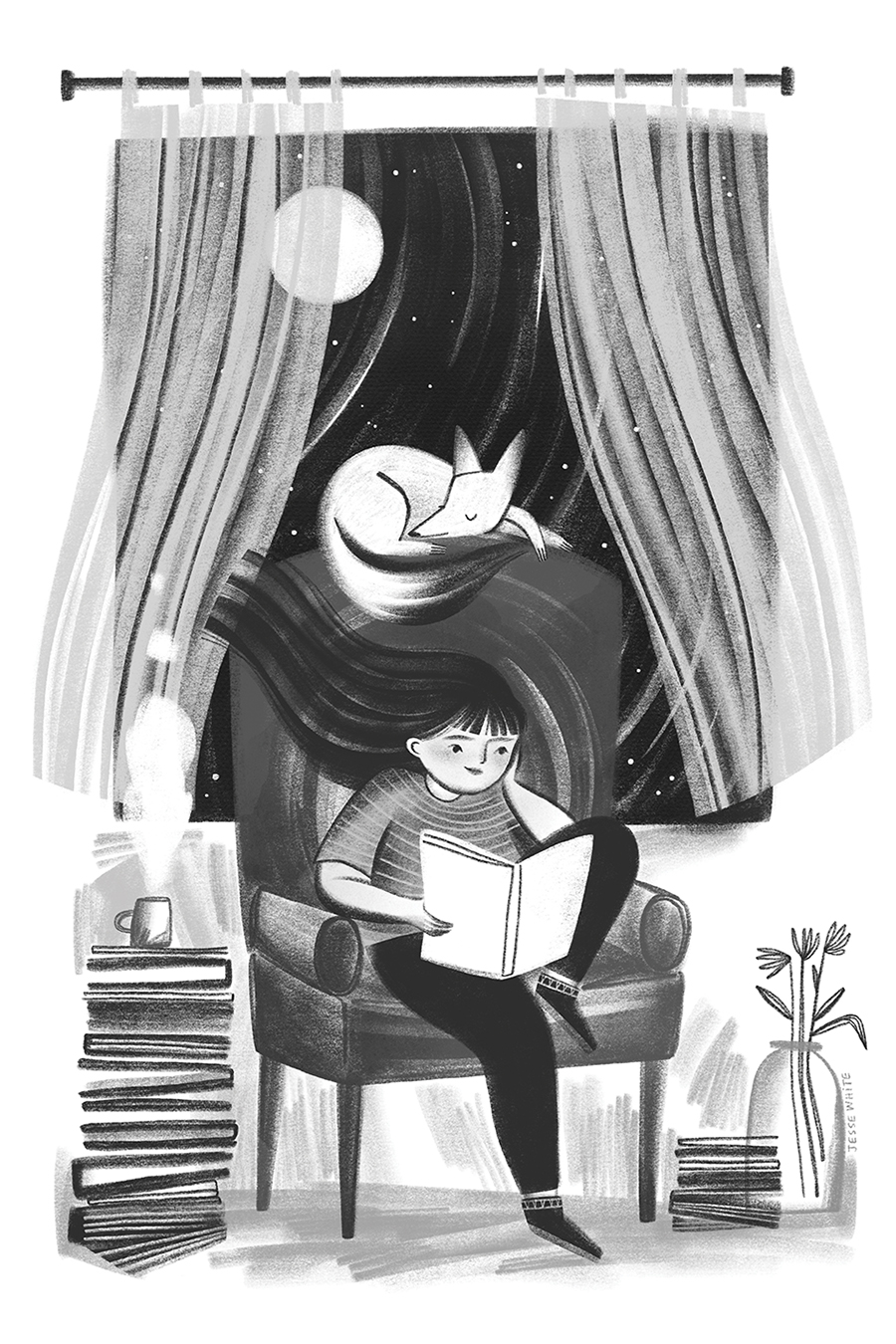
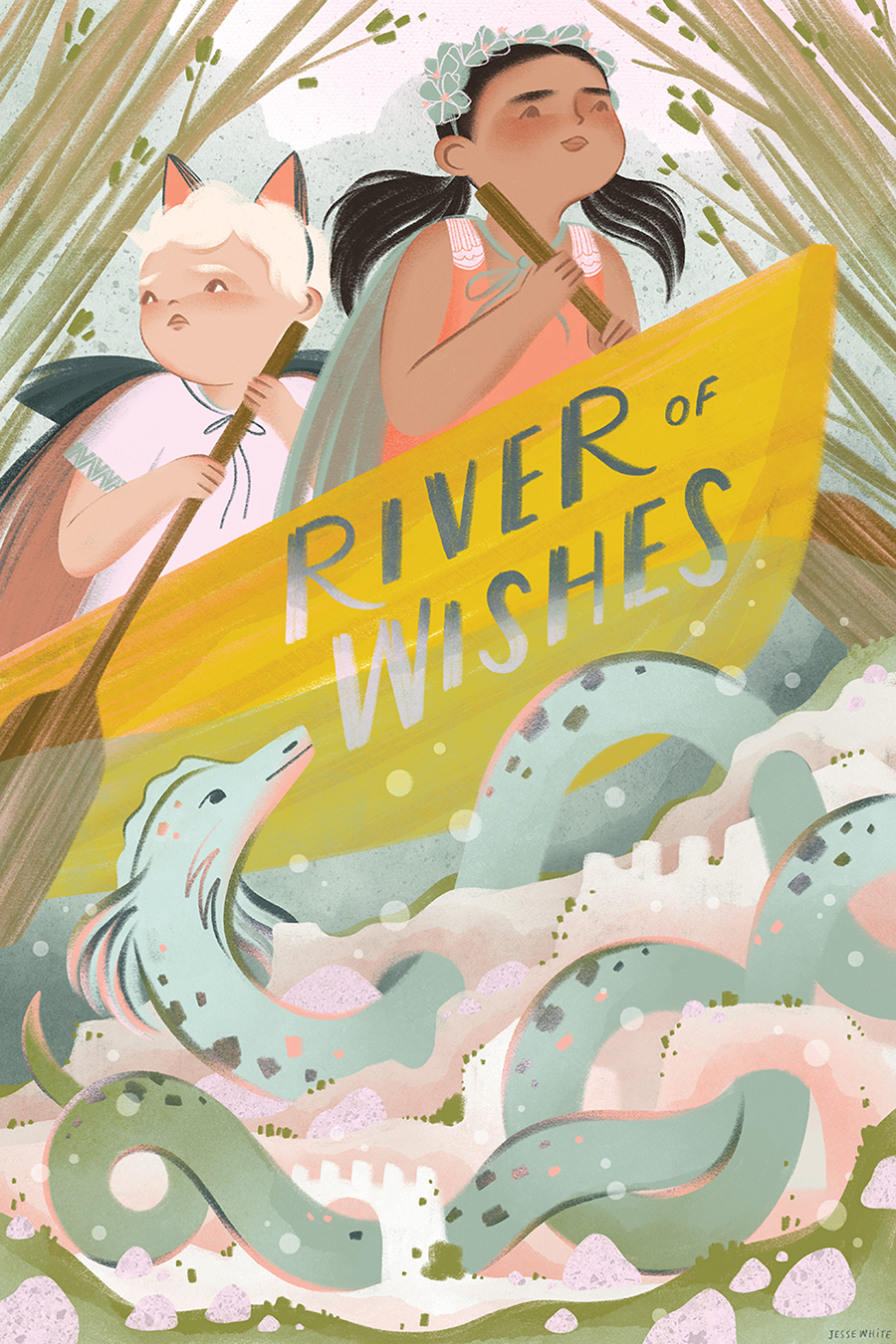
When former teacher Jesse White discovered that her young students’ personalities and identities weren’t reflected in the teaching materials she was provided, she decided to take their education into her own hands, literally: She drew all of her classroom materials by hand in an effort to bring their lives more into her classroom. White, who is now a full-time illustrator, hoped her efforts conveyed how much she valued and believed in each child and how they saw themselves represented in the world. This conviction to portray the world as children see themselves in it comes from her own childhood outside Siler City, where she grew up with her mother, Gwen Overturf, and her father, Eddie White, on 10 acres of land along the Rocky River.

“Childhood is a primary inspiration for me,” she says on a bright afternoon at her home in Durham. “I’m someone who loves nostalgia and likes thinking about ways that we can reconnect with our childhood or just the child inside of us. And so that’s what I do all day; I go back to little Jesse, who was spending a lot of time in the woods with my mom and by myself exploring the rocks near our house, coming up with games, ideas and secret missions that I would go on. My primary inspiration is my childhood and the time that I spent outside in nature.”

Jesse was home-schooled until second grade and spent a lot of time accompanying her mother to various jobs where she worked in landscaping and at a goat dairy. She was left free to explore.

“I would spend a ton of time with the dog and the goats, and go wandering off into the woods.”

When her mother began teaching at the former Community Independent School, Jesse followed. And then she was off to public school for middle and high school.

“I’ve had a pretty big range of educational experiences. Looking back on it, even though there were some difficult transitions, I wouldn’t trade, it for sure. I value a lot of what I picked up and learned at each of those different types of schools,” she says.

But she felt different from other kids. After years of learning to milk goats, roaming the woods and developing elaborate games on her own, how could she not? As an artist, she was more intent on drawing the natural world than superheroes or Barbies.

“I was drawing stuff that my classmates had never really seen before,” she says. “So maybe that’s where that difference showed up.”

Jesse gained inspiration not only from the woods around her, but also from her parents, both of whom were arts-oriented. Her mother, Gwen, had a background in graphic design and experience in education. Although Eddie, her father, had a background in graphic design as well, he designed and built houses for much of her childhood. When she was in middle school, he shifted away from construction and became a full-time artist, creating large-scale metal sculptures and installations, including one for the Hilton Hotel in Kuala Lumpur.

It was in college at UNC-Chapel Hill that Jesse first considered pursuing a career in arts education.

“It was this wonderful answer to what had been missing for me,” she says. “I enjoyed making art, but I was like, ‘Man, this is missing a social aspect somehow. What can I be doing to use this to engage people and help them reflect on their own identities and their own lives and their own learning?’ And so art education blew my mind in that way. I could not only make art, but I could facilitate learning through art.”


Fresh out of graduate school, the first time she stepped into her own classroom, Jesse admits to having “life altering lessons” that she planned to present to her students. She quickly found that having a class of 25 to 32 kids was as much about function as it was creativity. But she absolutely loved it. “It was one of the most exciting and rewarding things that I’ve ever done,” she says, and by her second year she had learned how to balance the practical demands of curriculum and classroom management with her creative ideas on how to engage students.

After four years in the classroom, she decided to go out on her own and pursue a full-time career as an illustrator. Once she focused on her own art, she recalled the power of creating the materials that represented who her students knew themselves to be and the ways in which she once saw herself as a young girl who thrived in the outdoors. The results were illustration after illustration of young girls exploring natural landscapes, much like Jesse had.

“I don’t know why it took me so long to realize this,” she says, smiling, “but I just don’t draw kids inside very much.”

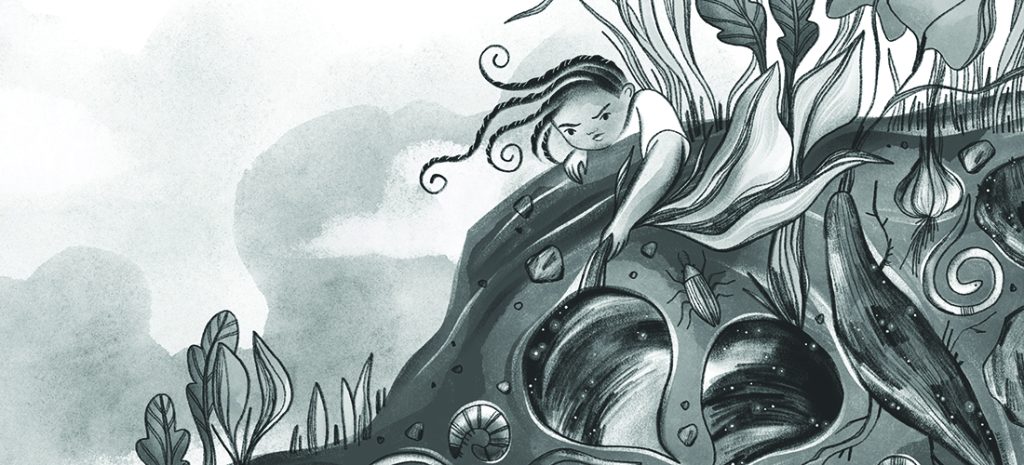
A quick perusal of her website or Instagram page reveals this to be true. In one illustration, a little girl in a rainslicker peers over the bow of a storm-tossed ship, the tentacles of a sea monster snaking below her. In another, a girl sits comfortably atop a rock and pours a cup of tea, a blue snake encircling her neck.

Jesse’s work also reveals a lack of adult characters, something others — including the editors of her forthcoming book, Brave Like Fireweed, which she both wrote and illustrated — have brought to her attention.

“‘We can’t have these kids just wandering by themselves out in the middle of nowhere without any adult supervision,’” she says, paraphrasing her editors. “I totally get that. But a huge focus and motivation for my artwork is to show kids as the capable and intelligent and independent beings that they are, and that doesn’t always require having an adult presence in order to be like that.”

People might also wonder where all the boys are because Jesse’s main characters are primarily young girls. “I’ve always found it to be incredibly important to include girls in my work who are outside, playing, exploring, adventuring, just because that’s not something that they’re always allowed or encouraged to do,” she says. “It’s something that I was allowed and encouraged to do, and that became a really important part of who I am.”

Studies examining children’s books of the past 60 years show that not only have boys been better represented than girls, but girls have also been portrayed as more emotional and less likely to engage in adventurous exploration.

Viewing Jesse’s work, it’s not hard to imagine these girls leaping from the page and striking out for places as yet undiscovered. And it’s not hard to imagine young Jesse doing the same. She still is. OH

Wiley Cash is the Alumni Author-in-Residence at the University of North Carolina at Asheville. His new novel, When Ghosts Come Home, is available wherever books are sold.

Chaos Theory

Chaos Theory

Little Orphan Cassie

The curtain opens on a world of possibility

By Cassie Bustamante

Live theater has had a piece of my heart for almost as long as I can remember. My love affair, especially with musicals, began the summer I turned 6. My mom had taken me to see Annie at the Ogunquit Playhouse in Maine. There, I discovered theater has the power to bring dreams to life.

Before that moment, I’d seen the movie and played the album on my Fisher Price record player, singing along while putting myself in Annie’s tattered orphan shoes. Our family dog, a golden retriever named Butterscotch — far from a mangy street mutt — often found himself locked in my bedroom so that I could pretend he was following me, just like Sandy followed Annie.

Once, I tried to sit in my bedroom window to look woefully out at the sky while musically musing, “Maybe far away, or maybe real nearby . . . ” As the window screen gave to the pressure of my leaning body, my feet caught on the very sill I’d been perched on, holding me in place as the rest of me dangled dangerously a story above our driveway. My older brother, Dana, heard my cries and pulled me back in. (And yes, my parents had told me over and over to stay away from the windows, but when it came to being Annie, I followed no one’s rules.)

“As far as I was concerned, you could have had a much less healthy obsession,” my mom recalls. “You were happy being Annie and acting and singing, so, why not?” Plus, she adds, “It was entertaining.” A talented seamstress, she had sewn me my very own red-and-white dress, just like Annie’s. And, along with those live show tickets, my parents had given me a golden, heart-shaped, broken locket for my birthday.

I knew the songs. I had the locket, the dress and the black, patent-leather shoes. There was just one major problem: my hair. It was long, straight and dirty-blonde, a far cry from a headful of fiery red ringlets.

But in that Ogunquit theater during the final moments of the curtain call, something I’d never imagined was possible happened. After clapping enthusiastically for the actors who played Daddy Warbucks, Miss Hannigan, Grace, Punjab and the other orphans, the last actor emerged to receive her applause. Alyson Kirk, who played the role of Annie, walked to centerstage and whipped off her curly-haired wig to reveal a mane of straight hair that wasn’t red at all.

“Look!” I gasped, telling my mom what this meant for me. “I can be Annie!” In that moment, I realized that in the world of theater, anything is possible.

Now, as a mother, there’s nothing I want more than for my kids to see that their own worlds can stretch as far as their imaginations can reach.

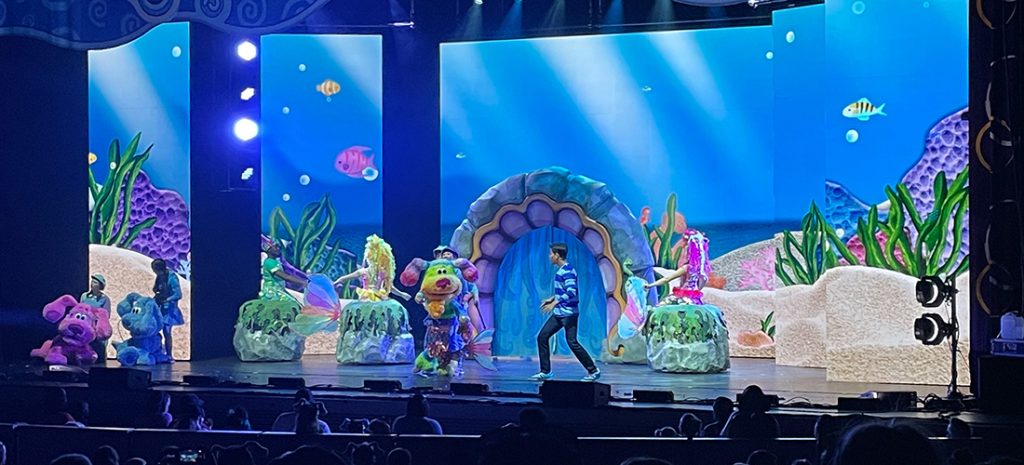
Last year, my husband, Chris, and I introduced our youngest, Wilder, to live theater at the Tanger Center — first, to Paw Patrol Live for his 4th birthday. Then, in September, it was off to Blue’s Clues & You Live.

A week before the Blue’s Clues tour stop in Greensboro, I had a chance to chat with Josh Blackburn, producer of Round Room Live, the company responsible for bringing many Nickelodeon and licensed kids’ shows to life onstage all over the world. Like many of us, his own love for musical theater began during his childhood, evolving into a passion “to show kids opportunity” through his work.

Blackburn says his “favorite part” is watching kids enjoy his live shows, and I understand why. Chris and I were more enthralled by Wilder’s reaction to Blue and company than by what was actually happening on stage, despite the “huggable” and “larger than life puppets.” And it wasn’t just us. Looking around that theater, the faces of many-a-parent were aglow with wonder as they watched their own little ones sing along, dance and dream.

We walked out of the theater together that day, holding hands as we stepped into a world that was, indeed, our oyster.

At 45, I’ve long since outgrown the red-and-white dress and black patent-leather shoes. I’ve said good-bye to my beloved Butterscotch. The broken heart-shaped locket has been lost, perhaps now another child’s treasure. But, until my final curtain call, I am going to continue to let my imagination run wild in this world — with or without a red, curly-haired wig.  OH

Cassie Bustamante is editor of O.Henry magazine.

O.Henry Ending

O.Henry Ending

La Mona Lisa Gioconda

Value is in the eye of the beholder

By:  Cynthia Adams

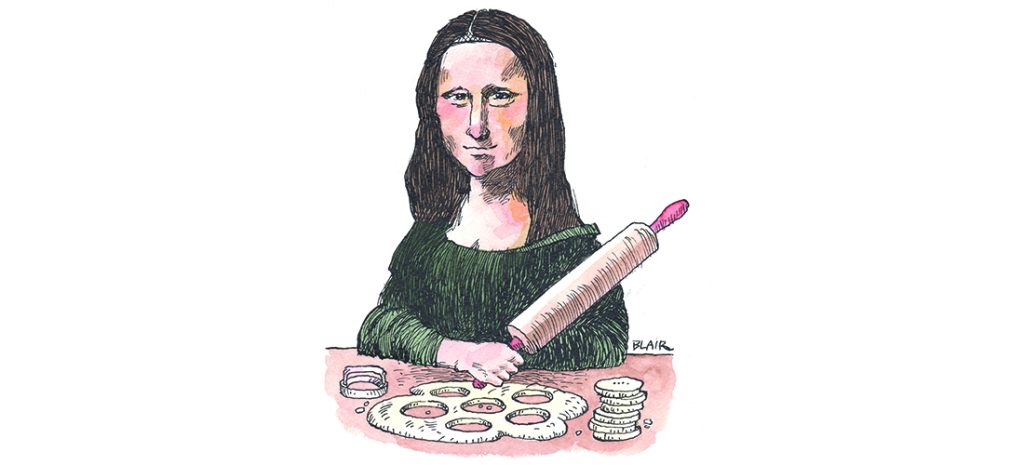
I have a not-so-secret fascination with Mona. Mona and I go way back.

The Italians call the Florentine beauty La Mona Lisa Gioconda — Madam Lisa Giocondo. She is La Joconde to the French.

As Nat King Cole crooned, she is Mona Lisa to the rest of us. 

My first reproduction of Mona was set in a chippy frame beneath wavy glass. This prized possession cost $1 at the former Sedgefield Flea Market. 

More recently, I’ve acquired others: two oversized giclées by Randy Slack titled Mona Ghost and Mona Citrus. I own books on the infamous Louvre thefts and tussles over the world’s most famous portrait, replete with accounts of when she went missing or was subjected to unwarranted attack. Five times and counting, Mona has been either outright stolen (the first time in 1911) or vandalized. Rocks, tea cups and paint have been hurled at the impassive face

Why all this drama? Salvador Dali said Mona with the mystic smile had “a power, unique in all art history, to provoke the most violent and different kinds of aggressions.”

Recently, a film critic reviewing Glass Onion suggested that Mona symbolizes legacy. The villain in the film “wants to be remembered in the same breath as the Mona Lisa . . . standing the test of time.”

Her legacy was burnished with every assault, Mona’s fame escalating after the 1911 heist.

She epitomized Da Vinci’s greatness. No visible brush strokes. The lifelike countenance. Mona’s ambiguous physicality. And . . . that smile. We experience Mona as faintly masculine, lacking eyebrows or lashes (overzealous restoration removed them).

Da Vinci began the commission of Mona, the wife of a wealthy Italian merchant Francesco del Giocondo, in 1503. He worked on it until 1507.

When he left Italy on horseback for France in 1516 at the invitation of an admiring King Francis I, he took Mona’s portrait with him.

Installed by Francis at the Château du Clos Lucé in Amboise, he hung Mona on his bedroom wall. 

He himself regarded her as his opus. (Or not; an art dealer earlier this year argued this: what if the artist wanted to hide her?) Mona held his attention because he never considered her quite finished.

Working in splendid style befitting a genius, he died at age 67 in 1519 in the arms of the weeping King, who called Da Vinci “Father.”

It is entirely possible that Mona’s was the last face he saw at his death.

Afterward, Da Vinci’s painting was claimed by the French King much to the consternation of the Italians. The Chateau was preserved by the French as a Da Vinci Museum.

The embittered Italians want her returned. When first stolen from the Louvre by an ordinary workman in 1911, she was whisked off to Italy.

Mona became an international celebrity. You get the picture: Cabbages and kings alike obsessed over Mona.

I placed Dollar Mona, the chippy, cheap one, over the kitchen stove. There was and is something inspiring about Mona’s presence.

House-poor as we were, Mona somehow sustained our determination to revive and make worthy the tatty kitchen. 

We scraped, painted, plastered and sweated over the monstrous job we faced. We fashioned new cabinet doors and tiled the counters. Too poor to replace the ancient stove, we polished till it gleamed. 

My brother showed up one weekend to reinforce the sagging dining room floor. Slowly, the careworn, early-1900s house responded.

Feeling celebratory, we opened it up for a party. A niece’s ex, famously befuddled, disappeared into the kitchen for an inordinate amount of time. 

What the heck was he doing?

Walking through the butler’s pantry to the kitchen, I overheard as he ground out the words, “That’s the Mona Lisa,” stopping me in my tracks.

“Yeah, I know,” replied my niece.

“Well, they’ve got to have money if they own that,” he said sourly.

Wearing an enigmatic smile of my own, I reversed course and rejoined the party. True enough, even Dollar Mona had grown beyond price.  OH

Life’s Funny

Life’s Funny

OUTFOXED

How faux predators scare pests — and others

By Maria Johnson

My friend was looking out for me.

“I have to tell you before I forget,” she texted. “About 5:45 p.m. yesterday, I was returning from a cousin’s graduation up the road from you, and as we passed the field behind your house I saw a white-gray wolf in the center of that field! Is that a stuffed wolf, or did I see what I thought I saw? If so, lock the doors and keep your sweet pooch inside.”

I’ll set aside, for a moment, the fact that my friend waited a day to tell me about a possible wolf near my home. She’s busy. And so am I, when I’m not being mauled by an oh-dang-it-WAS-a-real wolf.

In any case, about the same time I read her message, Nextdoor was blowing up with warnings about a creature on the same baseball field.

“Beware!” posted one user. “I saw a very LARGE coyote . . . Came home and Googled it, and it is definitely a coyote.”

I’d already seen the beast, out of the corner of my eye, while driving home.

My heart jumped at the sight of the low-slung, four-legged critter standing in center field.

I slowed down and craned my neck.

Bushy, reddish tail. Pointy face and ears. Fox, I thought.

My mind skipped to my dog, who is a foxhound — tally-ho — but she’s a sweet runt. Was she outside? Had she smelled the intruder? Was she kicking up a fuss? I needed to go see about her.

But first I took another pass at the field. The animal was still there.

“Sonuva . . . ,” I thought. “Bold. Brazen. Possibly rabid. And so . . . very . . . still.”

That’s when it dawned on me: I’d been punked.

The critter was a decoy, designed to fool the Canada geese who sometimes camped in the field and scorched the carpet-like grass with their droppings.

Sure enough, there were no geese around. The plastic carnivore — placed there by the school that maintains the field — had fooled the geese. Among others.

Brilliant.

I thought of how people used other faux predators to scare off unwanted wildlife.

I’ve done it myself, once raiding our sons’ menagerie of plastic animals — a collection amassed over many visits to museums and zoos, as well as that cultural education center, Party City at Halloween — to solve a real-live bird problem.

Robins liked to build their sloppy nests on the pergola over our patio, so to discourage construction, I borrowed a rubber snake, climbed a ladder and placed the pseudo-viper in the robins’ favorite spot.

It worked. We enjoyed a robin-free spring that year — at least on the patio — and forgot about the anti-nesting system until the following year, when, while we were eating on the patio, the rubber snake fell onto the concrete.

It mattered little that the toy landed “Made in China” side up and didn’t move, except for a slight bounce. I was out of my chair and off the patio in milliseconds.

So that was, um, an effective deterrent.

I put the rubber snake back in the toy box and pondered other options for harbinger-of-spring control.

The life-sized rubber vulture that we wired to a fence at Halloween?

That startled trick-or-treaters. And me, every time I pulled into the driveway and saw its hulking black outline.

The 6-foot muslin-wrapped mummy that moaned and darted its eyes side-to-side whenever someone tripped a motion sensor near the front door?

That sent the little ones screaming. Me, too, when I fetched an Amazon package off the front porch a couple of days before Halloween.

The truth was, every time I’d tried to spook a real creature with a faux creature, I’d frightened myself.

The only fake predator I could abide was a swan, which some people plop into their swimming pools to keep away other water birds. Swans, as it turns out, are very territorial, which clashes with my idea of swans as the Switzerland of waterfowl. But, until I wake up as a heron, I’m not gonna sweat it.

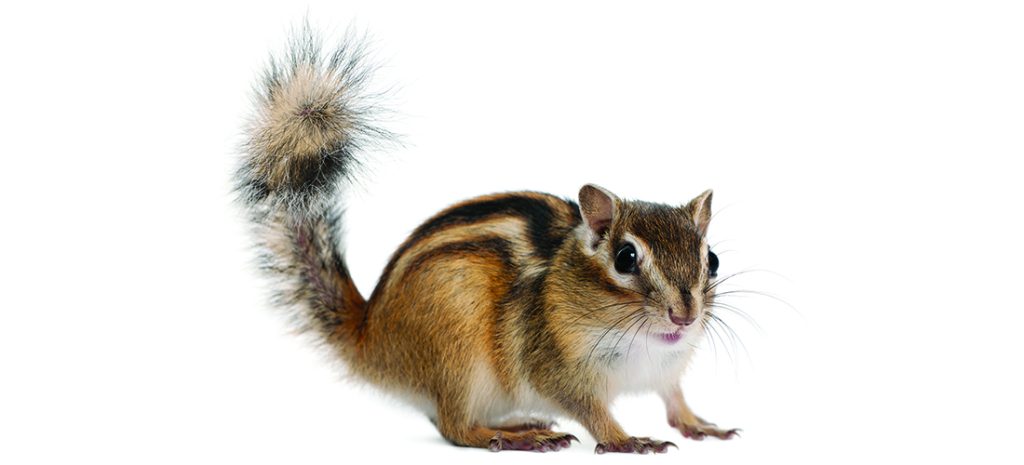
Unfortunately, faux swans will not help the chipmunk infestation around the exterior of our home. (See Marianne Gingher’s delightful column about an interior chipmunk in O.Henry’s July issue.)

Apparently, there is no fake animal — startling or friendly — that will deter the hardy citizens of Chip City, a thriving metropolis that lies just under our home, judging from the many subway entrances around our foundation.

Truthfully, I don’t have a problem with the chips, but I do have a problem with their effect on our sweet Millie.

She hounds them with an incessant ark-ark-ark-ark, her best shot at flushing them out from behind the trash bins, even when they have darted out the other side, leaving their scent — adrenaline-spike pee? — which sends her into overdrive.

What to do? On a recent sweltering day, I mixed up a pint of homemade pepper spray, doused the bins, reached up to wipe the sweat from my brow and promptly set my eyelids on fire with eau de cayenne.

I can tolerate a lot of things. But the sound of chipmunks giggling at me is not one of them.

Which is how I found myself using my best vegetable peeler to whittle a bar of Irish Spring around the trash cans while wearing safety glasses to protect myself from a spray of lime-green soap shavings.

It was one of those moments when you ask yourself, “How did I get here?”

Here’s how: According to my rodent-based research, chipmunks and other animals hate the scent of the pungent deodorant soap, which I would describe as refreshingly gagging.

As I whittled, the jingle from the late ’70s Irish Spring TV commercial played in my head. You know the ad: a rugged Irish chap compliments an equally handsome fellow on his manly, soapy smell, and a Farrah Fawcett lookalike chimes in: “Manly, yes, but I like it, too.”

I made a small gagging sound as I whittled, and it wasn’t from the scent.

So far, the Irish Spring method seems to be working.

Either the chips hate the smell, or Millie hates the smell. In either case, she’s staying away from the bins.

Which is good, because I have only one bushy-tailed trick left, and the prospect truly scares me. And much of Nextdoor.  OH

Maria Johnson is a contributing editor of O.Henry. Email her at ohenrymaria@gmail.com.