Simple Life

Simple Life

Sweet September Lessons

From freshman tomfoolery

By Jim Dodson

Illustration by Gerry O’Neill

During the years we lived on the coast of Maine, I was always amused by the visible relief and joy locals expressed over the arrival of September.

Every year like clockwork, it marks the departure of summer tourists in Maine when tens of thousands of vacationers pack up and head home to the lower 48, leaving Maine bank accounts flush and pockets of local merchants brimming with cash.

With Labor Day weekend done and dusted, the annual sight of the Maine Turnpike backed up for 25 miles — folks “from away” creeping through the southbound tolls in vehicles loaded down with suitcases, bicycles and kayaks —  is a sign of liberation to many Mainers.

Within days of the annual exodus, the price of the average shore dinner drops by at least 30%, town traffic returns to its sleepy pace, and locals begin to venture out from their hiding places to shop and greet neighbors and friends they haven’t seen since Memorial Day.

Up on our forested hill west of town, I had my own way of welcoming September. Afternoons were visibly shorter and the abundant wildlife around us — like their counterparts in town — became much more visible and active. A herd of white-tailed deer and a lady porcupine that terrified our dogs never failed to waddle into my garden, finishing off my daylilies, hosta plants and ostrich ferns. And almost every time I walked down our long, gravel lane to pick up the mail, a gorgeous ring-necked pheasant or a congregation of wild turkeys would cross my path, unconcerned by my presence in our peaceable September kingdom.

Down here in North Carolina, the autumnal equinox that arrives around September 22 is a far more subtle affair, as white bucks and seersucker are put away even before the intense heat of summer begins to fade. Swimming pools close for the year, and the young ones — to mom’s delight — go back to school while the older kids trek off to college.

Last September, a former university suite-mate passing through town invited me for coffee. His grandson was headed off to college. With a smile, he reminded me of my chaotic start as a freshman at East Carolina in 1971. It briefly became something of a freshman dorm legend.

My folks dropped me off at my College Hill dorm with a window fan, my bicycle and 50 bucks for the student dining program. The first thing I did was hop on my bike and follow a winding country road to New Bern, mesmerized by the flat green landscape of eastern North Carolina. I had no idea that it was a 40-mile trip each way, however, and it wore me out like an old shoe. As a result, I slept through the first day of mandatory freshman orientation.

A few days later, I foolishly allowed new friends in the dorm to convince me to try out for the school’s club football team. There was a rumor that incoming football coach Sonny Randle was looking to find a handful of walk-ons to use as practice squad dummies. In a galaxy long ago and far away (junior high days), I’d been the starting cornerback on a city-league championship team. Foolish sports dreams die hard.

Not 10 minutes into tryouts, I stepped on a rubber kicking tee and tore the cartilage in my right knee. One of Randle’s highly regarded recruits on an adjacent practice field helped me hobble to the fieldhouse. His name was Danny Kepley. The coaches were already taking notice of him. We chatted a bit and he wished me well.

I returned to school on crutches after Labor Day, just in time to commit my third stupid act that faraway September. A pair of friends from back home and I met a trio of cute girls at Greenville’s (in)famous Elbow Room that Friday night, and they invited us to a party down the road in Little Washington. Freshman couldn’t have cars at school in those days, but these girls had a new VW Bug because they were sophomores. 

On the way to Little Washington, our “dates” demanded beer. So, we purchased a couple six-packs and wound up at a gorgeous house overlooking the Pamlico River. My date’s name was Trisha. Suspiciously, her parents, who owned the home, were away. As my buddies and their dates wandered off to other parts of the house, Trisha and I settled on the couch, my sore leg propped up, to watch the Miss America Pageant. Suddenly, Trisha’s annoying little brother appeared, announcing, “Trisha, Jerry is outside. And he’s really mad!”

Jerry turned out to be Trisha’s boyfriend. She hadn’t lied. She was indeed a sophomore — in high school. Jerry had brought along half a dozen beer-buzzed pals to defend his girlfriend’s blemished honor. Having realized our horrible mistake, I hobbled out on crutches, hoping to smooth things over. The negotiations did not go well and took a worrying turn when Jerry snapped the antenna of Trisha’s VW Bug and waved it at me. At that point, my college buddies appeared and Trisha burst into tears, wailing that her daddy was going to murder her when he got home.    

Mercifully, a police car rolled up. When the officer learned that we were just a trio of stupid college freshmen, he ordered us into his car, probably saving us from getting murdered.

He drove us to the edge of town and put us out. It was a nice September night and only 23 miles back to campus. We walked for several hours until the sun began to come up. Somewhere after sunrise, a drunk in a weaving Cadillac picked us up and dropped us at the bottom of College Hill. I got back to my dorm as my new roommate was heading out for breakfast. He wondered where I’d been all night.

“Learning I’m not a good party guy,” I said. A few days later, I swore off beer, joined the school newspaper and soon became The Fountainhead’s columnist and features editor.

Forty years later, on another memorable September Southern evening, I was about to give a fundraising speech at Wayne Community College in Goldsboro, when my host said, “There’s a guy who wants to say hello to you.”

It was Danny Kepley. During his playing years at ECU, Danny became an All-American linebacker known for crushing tackles, earning the nickname “Captain Crunch.” Drafted by the Dallas Cowboys, Danny chose to join the Edmonton Eskimos of the Canadian Football League and went on to lead them to six Grey Cup championships as MVP of the league.

I asked him if he remembered helping a foolish fellow freshman off the practice field way back when.

“I think so,” he replied, pointing out that his memory was a bit foggy from a career of issuing crushing hits. “What I remember most is your stories in the school paper. I liked them. And now, you are a famous sportswriter about golf.”

And then Captain Crunch added with a smile, “So, we both did kinda OK, I guess.”

“Yes, we did,” I agreed.  OH

Jim Dodson is founding editor of O.Henry.

Omnivorous Reader

Omnivorous Reader

Seeing Spirits

And the decisions that haunt us

Jim Moriarty

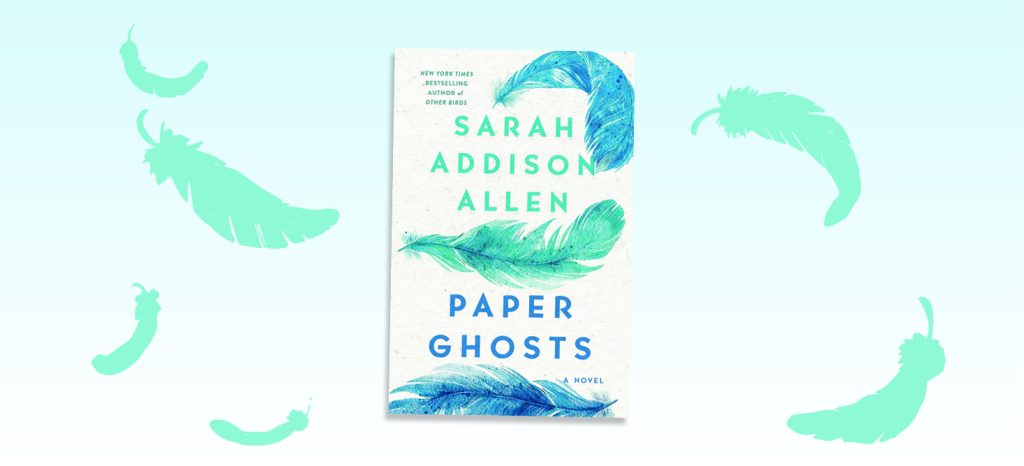
Let’s dispense with the easy part. “Gram calls photographs paper ghosts. She says they’re the only ghosts everyone can see.” So says Willamena Wester — Wills to her friends — the central character of Sarah Addison Allen’s new novel, Paper Ghosts. The real apparitions show up later.

Gram is Alice Wester, the dowager of Hen Town. Nothing escapes Alice’s ability to know it or divine it in some quasi-mystical way. “Rewind,” the first of the novel’s three parts, takes place in 1976. Wills is a teenager, and her posse is known as The Feathers, named for their teased-to-the-max hairstyle. “By the time the bell rang, Wills had managed to get Dorothy’s feathers back in place, though she’d used so much hair spray that Dorothy was now combustible,” writes Allen.

We meet Andy Smooth, the head of a traveling musical group, and Jack Vaughn, the band’s youngest member and the person Wills falls desperately in love with. “He was quoting Shakespeare again, while dancing to a song no one could hear under an umbrella when there wasn’t a storm, with his hand to her waist as if it was meant to be there.” Ratted out by one of The Feathers — with a Polaroid, of course, of the young clandestine couple — Gram is determined to keep Willamena in Hen Town and tries to buy off young Jack, who accepts the money as a get-out-of-town stake, then tries to convince Wills to go with him.

“And I lie awake at night thinking about a beautiful girl I just met whose grandmother has made her believe that she can only exist here, that she will vanish like magic if she steps outside of this place, so she’s afraid to leave. And I can’t stay,” says Jack.

A tussle ensues in Gram’s “redbrick, federal-style home . . . three stories tall and imposing with more windows to see what was going on than any other house in town.” Jack tumbles down a flight of stairs — perhaps or perhaps not helped along by Gram — and dies. He’s buried in the basement but his ghost remains.

And so does Wills. We “Fast Forward” in part two, and Wills, who married (and outlived) the man she was supposed to marry before Jack came along, has remained in Wester House and, in almost every respect, morphed into her grandmother. Her nickname, to the living, has morphed, too, into Mim. At the door are her widower son, Tug (Terrance), and her granddaughter Bailey, who are moving in. “‘You’re a remarkable woman, Wills, but even you can’t open a door without turning the knob first,’ she heard Jack say from behind her.”

Tug gives Bailey the tour. “For the next half hour, the presence in the house followed them as Tug made sure Bailey knew every nook and cranny, most of it off-limits due to what he called the Wester Rules,” writes Allen. “The Wester Rules weren’t actually his rules. They were Mim’s. And they weren’t made up on the spot, either. They’d been around for a long time.” Those rules included no visitors, no music and a double-lock on the basement door.

Bailey, it turns out, can see Jack if Jack wants to be seen. “To her astonishment there was now a handsome young man standing next to the piano. He looked like someone from decades ago with his dark hair touching his shoulders and a shaggy mustache shaped like a horseshoe. His jeans had bell bottoms so long they touched the floor, and the snaps of his shirt were undone nearly to low-rise at this hips. There was a yellow rose pinned to the wide collar. He seemed so happy to see her that he didn’t know what to say. Or maybe he was just happy for her to finally see him.”

Mim becomes as protective of Bailey as her grandmother had been of her, a choice that leads to a different kind of disaster when Bailey is accosted, not by a true love like Jack, but by a thug of a man named Clutch, which calls for a different kind of accident altogether. Let’s just say, Clutch gets his — another mystery solved in the end. “I know I made you dependent on only me and your father for companionship, but I thought it was the one thing that would keep you safe until you could make your own decisions,” says Mim. “But what really happened was you grew up desperate to feel connection, which led you to Clutch. If I had just told you this story of the man I fell in love with, instead of imposing on you something you didn’t understand, things would have ended differently.”

Allen writes in the opening of her epilogue, “Once upon a time, there was a family of witches. But witches, it turns out, are sometimes only women who have been hurt, and are determined not to be again.” The toing and froing through the generations can get a bit confusing at times, but the trip is worth it. The great fiction writer Raymond Chandler once counseled others to try to put three things on every page that mean something to you as a writer. A sentence, a description, maybe just a word. The cumulative effect will be quality. Allen’s ability to turn a phrase is a fine example of it.

Of Jack: “It was such a vulnerable moment, his guard down, loneliness beaming through the cracks.”

Of Mrs. Orr, the housekeeper: “… taking every smudge on the furniture as a personal insult . . .”

On Jack: “It was Jack. Her beautiful Jack. He looked so out of place, a wildflower in a manicured garden.”

On Wester House: “This was an old house and the floorboards creaked like knee joints.”

On the neighborhood in Hen Town: “There was a curious element of the unseen, like if money could haunt you, it would haunt you here, where the air was as soft and cottony as a veil.”

When Mim leaves the house: “People immediately got on their phones and called their neighbors, tracking her movements across town the way they might have tracked a grizzly bear that wandered out of the woods.”

On Bailey: “Every time she colored her hair, she liked this moment best — looking in the mirror and seeing someone she didn’t recognize, hoping it was someone she finally wanted to be.”

And so on. They were among the many little treats that made Paper Ghosts a pleasure to read.  OH

Jim Moriarty is the editor of PineStraw. He can be reached at jjmpinestraw@gmail.com

A Portrait of O. Henry

A Portrait of O. Henry

A Portrait of O. Henry

The mysterious master of short stories and tall tales

By Cynthia Adams

By the time he arrived in New York City in 1902, writer William Sydney Porter was in his 40s and had effectively disappeared into his identity as O. Henry. Living in a Gramercy Park apartment, he was grinding pieces as fast as he could produce them, committed to writing a short story weekly from 1903 to 1906. 

One biographer, David Stuart, said he wrote his opus, “The Gift of the Magi,” in a few feverish hours as The New York Sunday World’s Christmas edition waited on press. (To further burnish the legend, he was said to have written “Magi” at Pete’s Tavern near his apartment.) Porter produced nearly 400 short stories by 1910.

He sought anonymity, refusing to allow publications to print his photo. He haunted the city by night, including the Bowery and Hell’s Kitchen. And he drank.

During a rare 1909 New York Times interview at home before his death, he suggested the writer describe him as a “healthy butcher.” The writer duly noted his full head of hair. But Porter, in the last stages of cirrhosis, was a dying man.

He reported earning $750 for a short story in the same interview. However, he also shaved five years off his age, saying he was born “in Greensborough” in 1867. 

It was a common pattern for the chameleon-like author, having successfully hidden his three years in an Ohio Penitentiary for embezzlement by changing his name. Incarceration, The New Yorker once observed in a piece about Porter, “is the secret he spent the rest of his life trying to hide — even from his daughter.”

By the early 1900s, Marquis Who’s Who in America described him as “a cowboy, sheep herder, merchant, miner, druggist, and extensive traveler.” (He denied being a miner.)  

The truth was remarkable enough: Porter was, in fact, a trained pharmacist, sketch artist, ranch hand, editor, bank teller, short-story writer — and, definitively, inmate.

In the fall of 1916, a full six years after his death, The New York Times outed the secret of his incarceration.

Undeterred, in 1918, the Twilight Club, later known as the Society of Arts and Letters, in New York established a national writing prize in his honor. It continues today.

One of Porter’s closest friends from Greensboro, Professor C. Alphonso Smith (buried in Green Hill Cemetery), soon published his biography.  

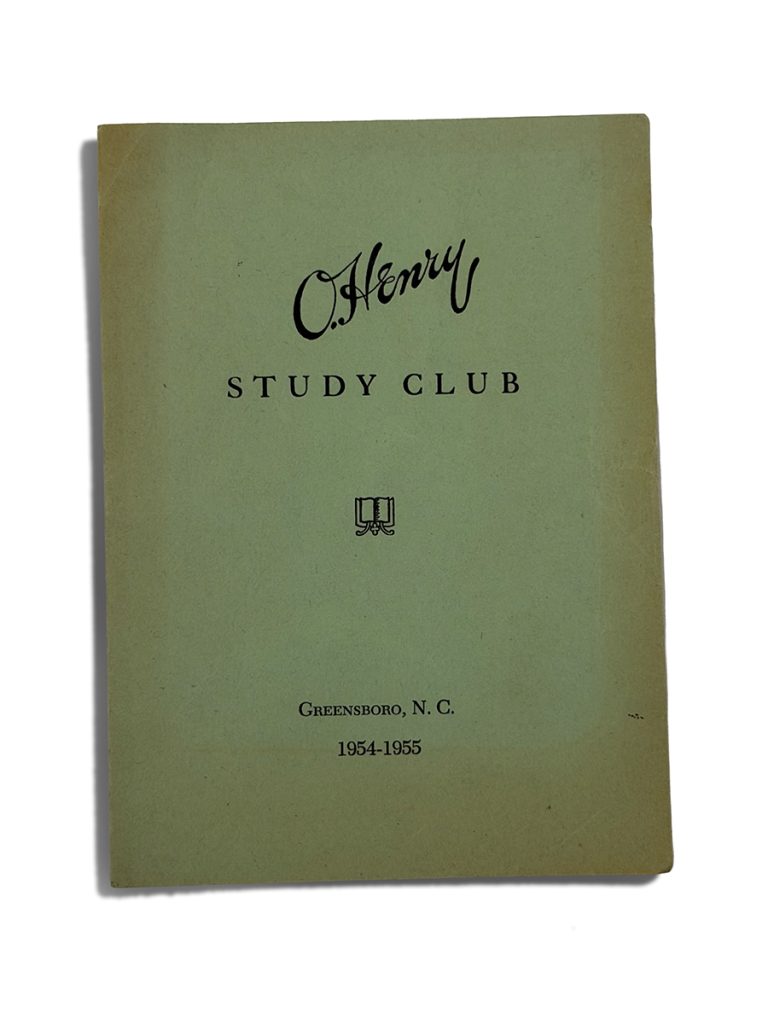
By 1923, a group of well-heeled women met in the home of Mrs. W. Justice to organize the O. Henry Study Club. Initially limited to 24 members, it was later expanded to 35, given its popularity. 

In 1925, the club awarded its first O. Henry Short Story Prize, according to a club history by Mary L. Herbert archived at the Greensboro History Museum. A collection of club minutes and programs resides at the Greensboro History Museum.

“When Greensboro had only one senior high school, we established an award for the best short story written by a member of the senior class,” the historian noted. The first-place winner received cash or a government bond and a leather-bound set of O. Henry’s books.

Our magazine’s founding editor, Jim Dodson, won the O. Henry prize in 1970 as a Grimsley High School student. “It was a set of O. Henry books — still have them — and a sweet little certificate,” he recalls. A high school athlete at the time, he adds, “Very embarrassing, instant loss of cred with my buddies.”

According to archives at UNCG, the O. Henry Study Club continued into the 1990s, surviving longer than Porter’s 48 years. Recently, Greensboro resident Teresa Moore discovered a tranche of programs from the 1930s–50s belonging to her great-aunt, founding member Mrs. W. E. (Mary) Blair, depicting member names and duties.

By 1948, the O. Henry Study Club paid an $18.75 government bond to the first-place winner, and $10 to the second-place winner. Payouts were recorded from 1948–1965, when first place had risen to $25. (The writing contest was later overseen by UNCG’s literary magazine.) 

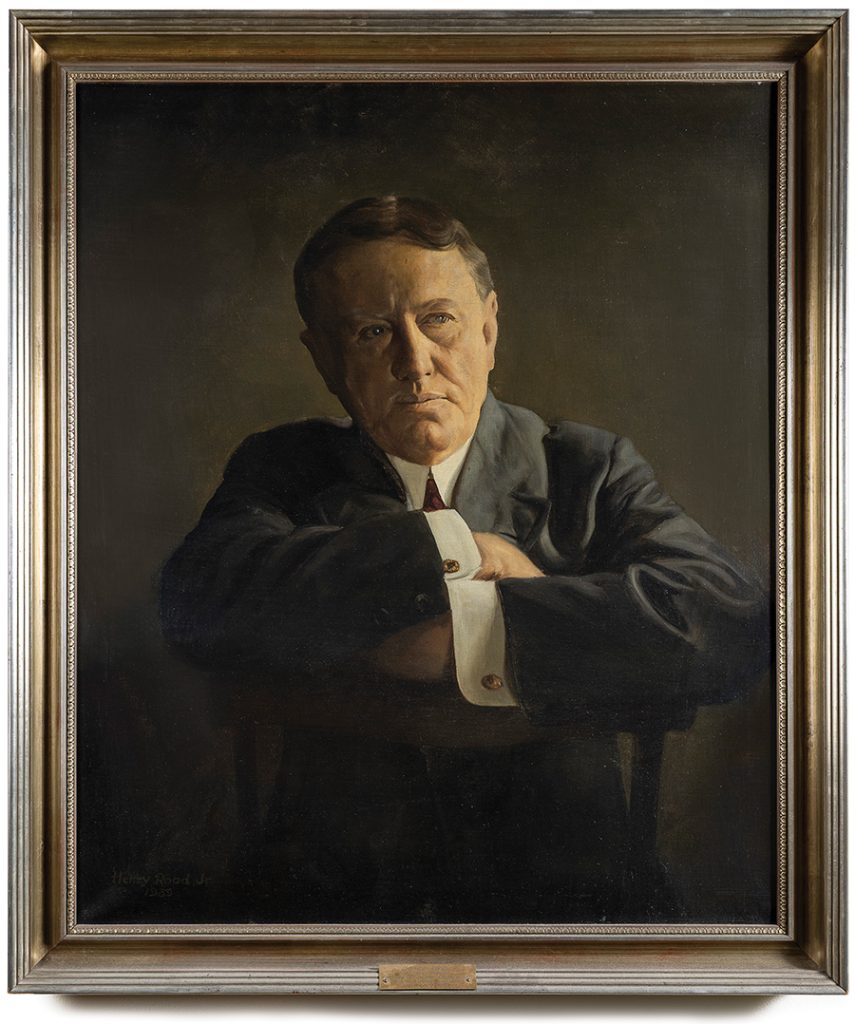
Approaching the O. Henry Study Club’s 25th anniversary in 1939, Nellie Rowe, head of the Greensboro Public Library and an O. Henry Study Club member, proposed something ambitious. An original portrait of Greensboro’s native son O. Henry should be presented to the library.  

The club raised $500 from its members, equivalent to nearly $12,000 today, commissioning artist Henry Rood Jr.  

The club planned the unveiling for September 27, 1939. Mrs. Henry P. (Ada) Foust, invited The Saturday Review from New York, using her finest monogrammed stationery. The Review sent regrets but requested a print of the portrait for publication.  

O. Henry’s oil portrait was hung in the library, which occupied the first floor of what is now the Greensboro History Museum. Today it hangs in the Greensboro Public Library downtown. 

Surprisingly, the pen name on this magazine’s masthead, created in 2011, was not the only pen name Porter adopted.  

Former O.Henry contributing editor Jim Schlosser, who has researched Porter extensively, mentions his use of S. H. Peters and Sydney Porter. 

The writer says Porter also considered James L. Bliss, T. B. Down, Howard Clark and Olivier Henry.

While on the lam in New Orleans, he had also flirted with the name Shirley Worth, his older brother’s first and middle names, filing newspaper assignments as Worth.

“A newspaper once wrote and asked me what the ‘O’ stands for,” Porter once said. “I replied, ‘O’ stands for Olivier, the French for Oliver. And several of my stories accordingly appeared in that paper under the name Olivier Henry.”

Only as inmate #30664 at the Ohio State Penitentiary did Porter settle on O. Henry. 

The year before his death, Porter told The New York Times reporter, “It was during these New Orleans days that I adopted my pen name of O. Henry. I said to a friend: ‘I’m going to send out some stuff. I don’t know if it amounts to much, so I want to get a literary alias. Help me pick out a good one.’ He suggested that we get a newspaper and pick a name from the first list of notables that we found in it. In the society columns we found the account of a fashionable ball. ‘Here we have our notables,’ said he. We looked down the list and my eye lighted on the name Henry. ‘That’ll do for a last name,’ said I. ‘Now for a first name. I want something short. None of your three-syllable names for me.’ ‘Why don’t you use a plain initial letter, then?’ asked my friend. ‘Good,’ said I, “O” is about the easiest letter written, and “O” it is.’”

Austin, Texas, where he had worked, married and became a father, went unmentioned. It was the place where he had faced the death of a son and wife, plus ruin and conviction for embezzlement. It is also the home of the O. Henry Museum, housed in Porter’s former residence.

He produced as many as 14 short stories in 39 months of imprisonment. Some characters were modeled after friends and inmates. Jimmy Valentine in “A Retrieved Reformation” was based on another drug clerk in the prison hospital who was a “notorious safe blower,” according to a 1916 news story.

Twelve of his “best known stories belong to that period,” noted a posthumous article. The New Yorker piece noted that “bankers, millionaires and politicians . . . are the true grifters” and that Porter sided with “the marginalized and the downtrodden.”

To his close friend Smith, “O. Henry was the composite smile of Greensboro.”  

Yet “The Gift of the Magi” differed: “Life is made up of sobs, sniffles, and smiles, with sniffles predominating.” Porter wrote those words at 43.

After his death, the writer’s popularity was undiminished, even as his secret was exposed.

Porter’s childhood friend wished to set the record straight. “Professor C. Alphonso Smith of the University of Virginia has decided to publish the complete story of O. Henry’s trial and imprisonment,” The New York Times reported in 1916. 

The Times said listening to convicts “from Arizona, Texas, and the Indian Territory” informed his popular works, “turning a stumbling block into a stepping stone . . .”

In an improbable twist to his personal story, prison was where “he passed from journalism to literature.”

Smith’s biography devotedly compared Porter to Rudyard Kipling, Bret Harte and Guy de Maupassant, saying he had been hailed as “the Homer of the Tenderloin” in New York. He corresponded lifelong with Porter.

Smith had previously declared, “Unarguably, the greatest living master of the short story” was none other than Will Porter of Greensboro. 

“Even in 1953, the final year of Stalin’s dictatorship, the Soviets printed almost a quarter of a million O. Henry books.” A century later, O. Henry’s popularity in Russia endures.   

Porter’s last two stories were for Cosmopolitan magazine. The first, “Let Me Feel Your Pulse,” is eerily sentient and published on June 5, 1910 — the day he died. The final one, “The Dream,” was found on his desk, incomplete but with an outline. (It was published posthumously in September that year.) 

He told the publisher he wanted to write something straightforward, completely different. A condemned man approaching death imagines a different life. 

“Murray had dreamed the wrong dream,” he wrote.  

With the story stopped mid-sentence, he was taken to the Polyclinic Hospital, where he checked in under a false name. Perhaps America’s greatest short story writer, O. Henry died alone two days later.

“About the only chance for the truth to be told,” he wrote another publisher that same year, “is in fiction.”  OH

Chaos Theory

Chaos Theory

Always the Chorus Girl

Never the star

By Cassie Bustamante

Some of my favorite childhood memories are rooted within the walls of my local Blockbuster, where my older brother, Dana, and I would cruise through the aisles, hoping the hot new release we wanted would be waiting on its shelf. When it wasn’t, I’d hit my second-favorite section: musicals. My mom had me hooked on the classics — My Fair Lady, A Chorus Line and anything with the adorably-dimpled Shirley Temple. One of my favorites was Gigi, starring the exquisite Leslie Caron. Of course, I now realize it’s a highly problematic story about grooming a coltish teenage girl to become a much older man’s mistress. French accents can make anything seem romantic. An avid musical theater fan, I imagined I’d one day be a star, as elegant as Caron or Audrey Hepburn.

Dear reader, I did not become that girl. Not even close. Over the years, I’ve had to admit that I will never be a star of stage, screen or television. Nor a chanteuse, though I can carry a tune. But, just before high school, my mother introduces me to Bye Bye Birdie, a film in which the beautiful Ann-Margret stars as Kim McAfee. Kim is a high school senior who’s just been pinned by Hugo but is randomly chosen to plant “One Last Kiss” on Elvis-inspired rocker Conrad Birdie before he deploys with the Army. In that film, I finally see the role I was born for.

I know what you’re thinking — “She’s no Kim McAfee.” And you’re right. But her hyper-enthusiastic brunette of a best friend, Ursula Merkle? That’s more like it.

It just so happens that the summer before my freshman year of high school, we spy a casting call in our small-town paper for a local theater production of, you guessed it, Bye Bye Birdie, just a couple towns over. For days, I practice Ursula’s lines in my bedroom mirror and work on the vocals to “We Go Together” from Grease because the music has a similar vibe. Plus, I already know that song well. So well, in fact, that I’m feeling cocky and even sprinkle in a little movement. It’s no Jennifer Beals Flashdance moment, but it’ll do.

Audition day arrives and my mom and I are piled into a room with all the other hopeful stage actors. We’ll all be trying out in front of everyone else. A little nerve-racking, for sure, but if you can’t do that, what business do you have performing for a packed house?

While I wait for my name to be called, I watch and cheer politely for everyone else as anticipation builds, my heart racing and my hands clammy.

“Tricia,” the director, Mark, calls. A young woman (and, yes, she’s over 18) walks confidently to the stage, waving at the director with a glint in her dark-brown eyes. It’s clear that she’s worked with this director before — their exchange of glances seems just a little chummy to me. “And what role are you auditioning for?

“Ursula,” she says. Her chestnut tresses bounce with the cocky bob of her head. She already knows this part is hers. And, truly, she’s really good. My palms start sweating something fierce as uncertainty creeps in. I take a deep, calming breath.

My turn arrives. I introduce myself and am given the same lines that Tricia has already read. The scene is one where Ursula is fan-girling for all she’s worth to Conrad Birdie. I begin, reciting the lines I know so well, then drop to my knees, clutching my heart as I say, “Speak to us, oh beautiful one, tell us how you make that glorious sound, that even now an anticipation of it has reduced me to a snarling, raging, panting, jungle beast!”

In that brief moment, I am Ursula. I have just owned that part. Mark exchanges knowing looks with his colleagues. My mom is beaming in her seat, her hazel eyes gleaming.

Someone else notices, too — Tricia. She stalks over to the director’s table and leans in toward Mark, whispering. His head, covered in dark-brown curls, nods along. And before I can say, “We love you Conrad,” Tricia is back on stage, having been given a second chance and reading yet another Ursula scene.

I look at my mom and panic: “What do I do? Do I ask if I can go again, too?” No, I decide. I know that I’ve given my best. And, at 14, I’ve already dealt with my fair share of mean girls. My mom has taught me exactly how to handle them: Do not let them get under your skin. Well, more like, don’t let them see that they’ve gotten under your skin. And never stoop to their level.

A few days later, back at home, our hunter-green kitchen telephone rings and Mom picks up. She hands it to me while putting her hand over the receiver: “It’s Mark!”

Still holding onto hope, I stretch the cord as far as I can and lean on the hallway wall, out of my family’s earshot.

“Your audition was really something,” Mark says, “and we’d love to have you in the chorus. In fact, we want to give you several speaking lines.”

Holding back tears, I accept the small part. I show up at the first rehearsal, head held high, knowing that I made a fully-grown woman sweat it out and worry that she was going to lose her part to a child. Over the course of the next several weeks, I shimmy, shake and belt out tunes along with a handful of other chorus teens who become close friends. Tricia, with an air of her “you-know-what doesn’t stink,” keeps her distance from our lowly chorus crew.

Sure, she got to play Ursula, but I learned something that’s stuck with me: Sometimes, it’s not about who you know, but how well you know yourself.  OH

Cassie Bustamante is editor of O.Henry magazine.

O.Henry Ending

O.Henry Ending

A Hard Pass

Turns out, fourth time’s the charm

By Joi Floyd

Illustration by Harry Blair

It is an unusually hot summer day, even by North Carolina standards, when my stepdad, Gerald, finishes his latest project. He’s been working all summer on a go-cart. Hands sticky from my melting popsicle, I, a thrill-seeking 15-year-old, am ecstatic.

Both a mechanic and welder, he built it from scratch with a spare motor and leftover materials found under our carport. Then, he spray painted it teal to match our trampoline. When revved up, it makes a VROOM sound just like the sports cars he’s been fixing up the past few years.

Ready to race around, my sister, Bre, and I eagerly hop in. Within seconds, all three of us are strapped in and pulling out of the driveway. We swerve around the neighborhood, wind blowing through our hair and nothing but the sound of the motor and an occasional happy scream from the three of us.

Gerald spins the wheel effortlessly. His way of driving includes carefully gracing every turn with ease and he has no problem going a little over the speed limit to enhance the exciting squeals. “Who wants to drive next?” he asks as we pull back into the driveway. Bre jumps into the driver’s seat first. Her love for driving started early — obviously inherited from her car-loving birth-father, Gerald. And, just like him, she steers effortlessly. Swerving through the streets of the neighborhood like a professional NASCAR driver, she only steers toward home when we beg.

“Your turn, Joi,” Gerald says. I take the wheel, though I don’t quite have my drivers license, and immediately drop the clutch, sending us zooming backwards down the driveway. “Brake!” he yells, trying to keep his calm after the sudden rush. And brake I do, sending us flying forward — thank God for seatbelts. Every move after is just as disastrous. Speeding feels too fast, yet braking hits too hard. And the turns? Well, I crashed us straight into the curb. In no time, I discover that the NASCAR gene is a case of nature versus nurture and I don’t have it.

As I approach 16, I want nothing to do with getting my drivers license, but Gerald insists that it’ll be good for me. So, next thing I know, I’m in Driver’s Ed, scowling at the instructor. Only a few sharp turns and sudden brakes later, I manage to pass the class. But that only means I have to take the official test at the most hated place on Earth, the DMV. Luckily for me, but unluckily for most of the world, the COVID-19 pandemic means I don’t have to take the driving portion, but that doesn’t mean a guaranteed pass. In fact, I end up failing three times in a row — what even is a three-point turn?

“You’ll get it next time,” my mom says as I came out of the DMV after each failure, tears rolling down my face — somehow I don’t think she fully believes it herself.

I’m determined to make the fourth test my final. “Back again?” the DMV lady asks with a snicker as I march into the building, head held high. Indeed I was. Twenty minutes and four missed questions later, I pass. A cheesy grin grows across my face as the DMV lady snaps my picture for my license — and no, I will not be back again.

Though I didn’t start as the strongest, I grow confident in my driving skills and knowledge every day. Who needs a NASCAR gene when you have perseverance and a willingness to learn? Now that I know the ins and outs of the road, maybe I can tackle parallel parking — or maybe not.  OH

Joi Floyd is assistant editor of O.Henry magazine. When not spending all her time lost in a book or catching up on a TV show, you’ll most likely find her outside wandering around in search of a stray cat to feed.

Storytellers

Storytellers

Storytellers

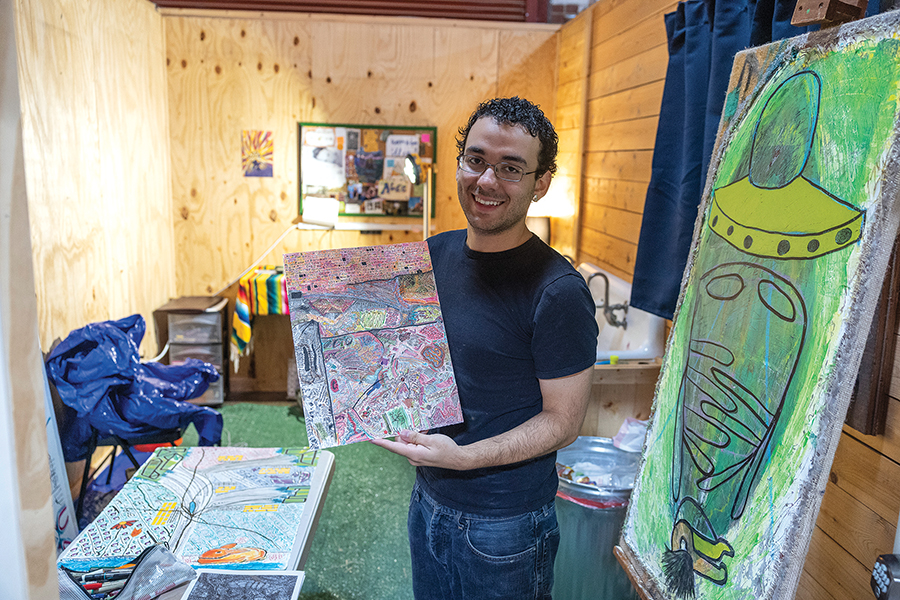
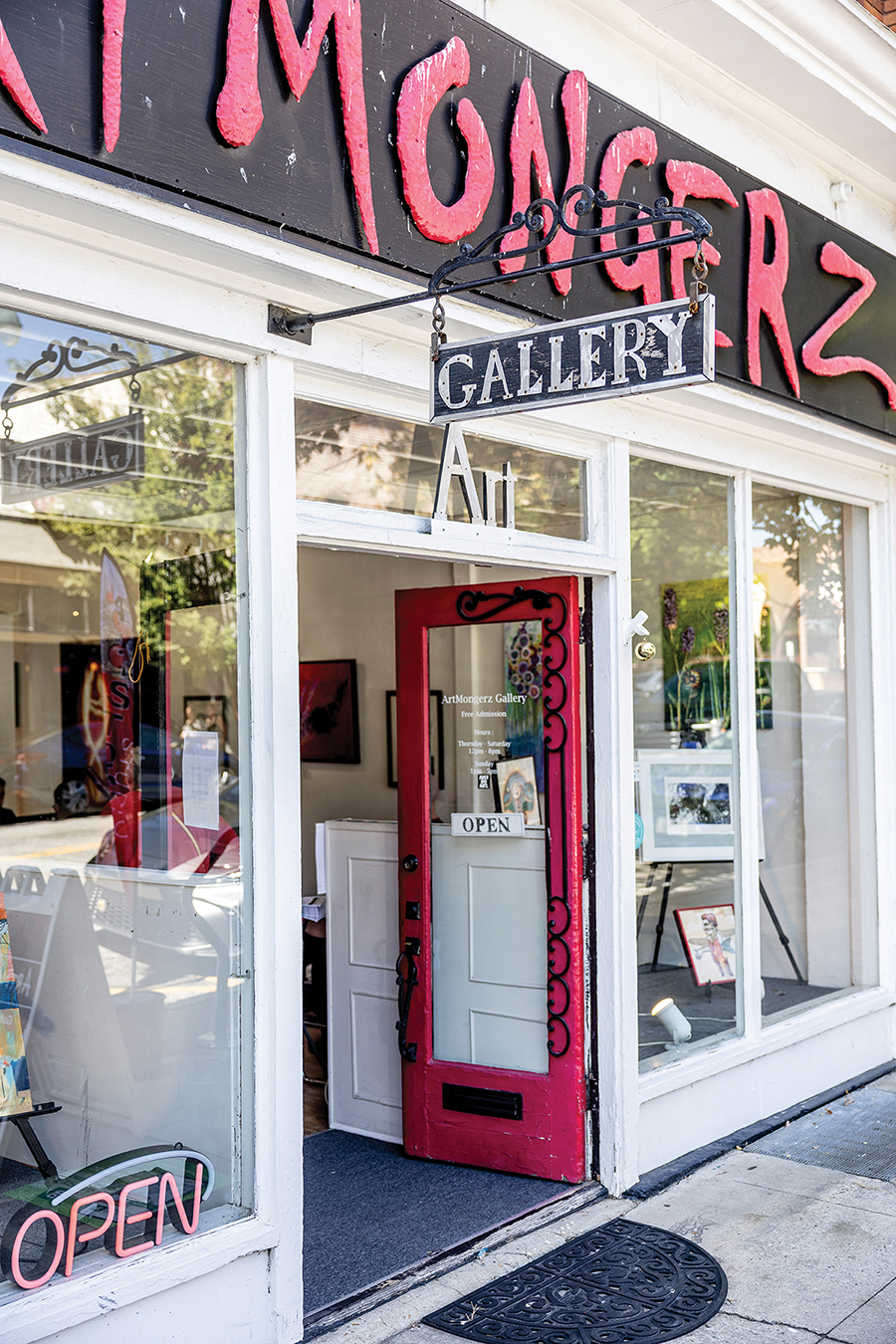
For decades, ArtStock Studio Tour has connected artists with the greater Greensboro community

By Ross Howell Jr.

Photographs by Bert VanderVeen

W

hat sells a painting is its story,” says Natalie Eversole, the new director of ArtStock Studio Tour, a program now celebrating 30 years of providing essential services for artists’ careers in Greensboro and Guilford County.

Nodding in agreement, Terry Wessling, who served as ArtStock’s director the past three years, has stayed on as assistant director so he can mentor Eversole.

“Yep,” Wessling says. “The story behind the piece. Or the story behind the artist.”

So how do those stories get shared? Well, the concept is simple.

Back in 1996, when the program was established in Greensboro by a husband-and-wife artist team, Keith and Betsy Rose, the concept of open studio tours was just being introduced across the U.S. — from Portland, Ore., to Philadelphia. If people could meet artists in their studios and homes, and see close up the artwork they produce and how they produce it, those people would be more likely to become active consumers of art.

While we may entertain romantic visions of solitary artists laboring over their passion, the simple fact is that artists can’t sustain their careers without people buying their work. Professional artists themselves, Eversole and Wessling are keenly aware of that reality.

So, on their own time and with no compensation, they’re working hard to sustain the ArtStock tradition.

They’re perfect for the job.

With her bright artist’s eyes, Eversole — the mother of a toddler — looks even younger than her years and her voice brims with the energy of youth, while Wessling — retired from a successful graphic design and marketing business — sports the grizzled hair and beard of a seasoned veteran.

Eversole was born in Raleigh and later moved to Wilmington with her parents, who own a fine art gallery.

“I grew up around artists,” she says. She never set out to be an artist, but did feel a pull to work behind the scenes.

“So I took to the science of art,” Eversole explains. “I wanted to be a painting restorer.”

Her academic choices in the U.S. were limited. Art restoration is a subset of art conservation, and the only undergraduate academic program in conservation was at the University of Delaware. And the major required a healthy dose of chemistry.

Eversole opted to begin her chemistry studies closer to home at East Carolina University. While still a freshman, she was invited to attend the Moscow Surikov State Academic Institute of Fine Arts in Russia.

“I was there about two years and finished the program in conservation,” Eversole continues. “From there, I went directly to New York, where I got a job banging on people’s doors!” She laughs at the thought.

The purpose of the knocking was to solicit business for her employer, Simon Parkes Art Conservation, a highly regarded painting restoration studio that was based near the offices of Sotheby’s. (It closed in August 2025 following Parkes’ death.)

“Simon Parkes was Sotheby’s go-to art restorer,” Eversole explains. “So I’ve worked on Picassos, Sargents, Monets, you name it. That was a special experience.”

In 2017, she returned south to Greensboro, discovering that sometime during the years of study and work, the artist bug had bit.

Here, Wessling takes up the narrative.

At the time Eversole moved to Greensboro in 2017, Wessling was sharing space with his daughter at Studio 503, where he offered graphic design while his daughter was concentrating on photography. But he also had a side quest.

“I got hooked on old, manually-operated printing equipment,” Wessling acknowledges. He has five letterpresses that are more than 100 years old. They’re enormous, cast-iron machines that were used to print newspapers and books back in the day.

“I use them to print artwork,” Wessling says with a grin. (In 2018, he started marketing his prints through ArtStock.)

Eversole also had a space at Studio 503 that she shared with a friend. Her work caught Wessling’s eye.

“As I recall, she was doing some art conservation and some painting,” Wessling says. “I think she had a couple commissions from people to paint portraits.”

At any rate, the two got to know each other.

When Wessling agreed to take over the ArtStock directorship in 2023, he hired Eversole to curate that year’s gallery show.

“I needed somebody who had gallery experience,” he explains. “She was a natural fit.”

“And the rest is history!” Eversole quips.

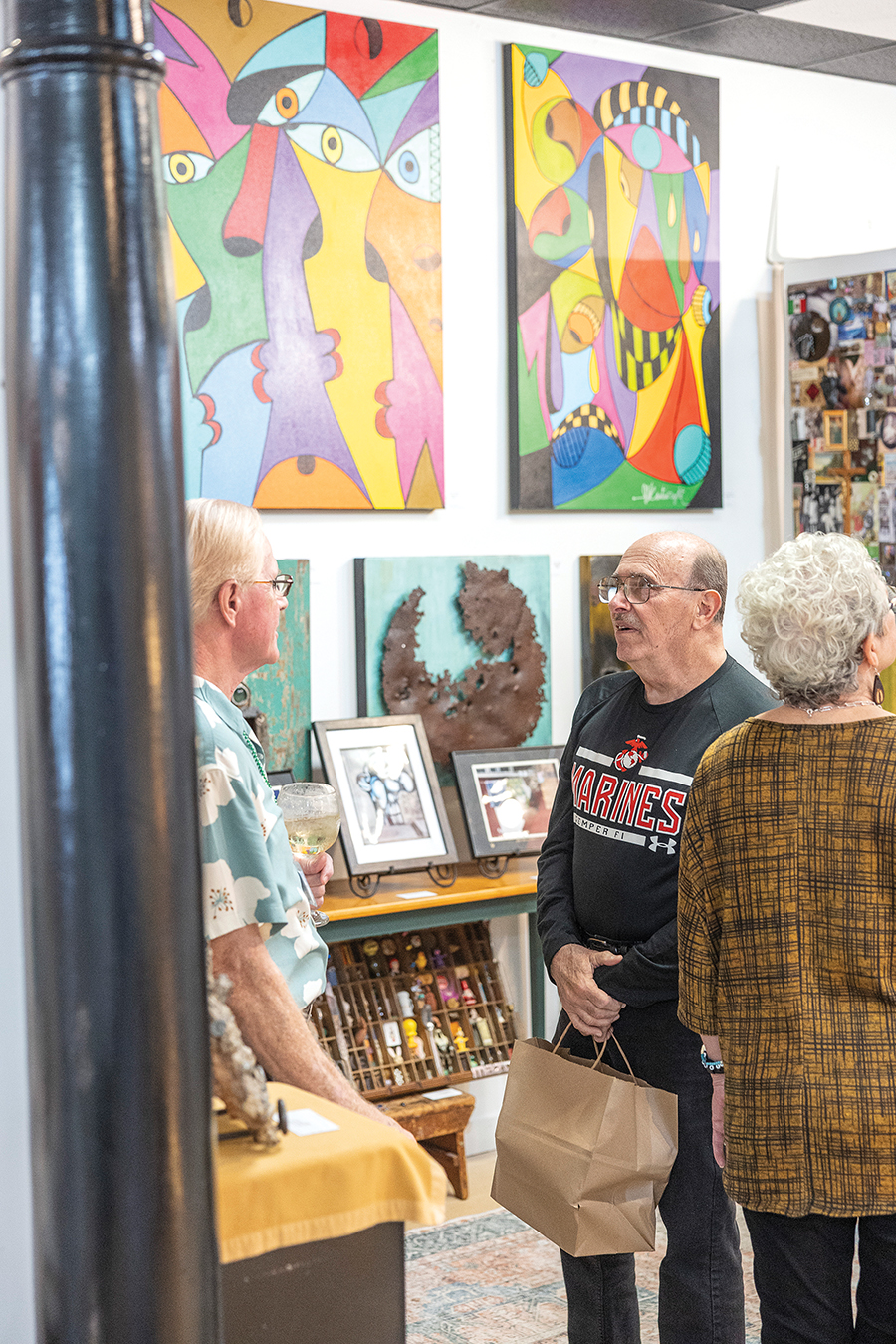
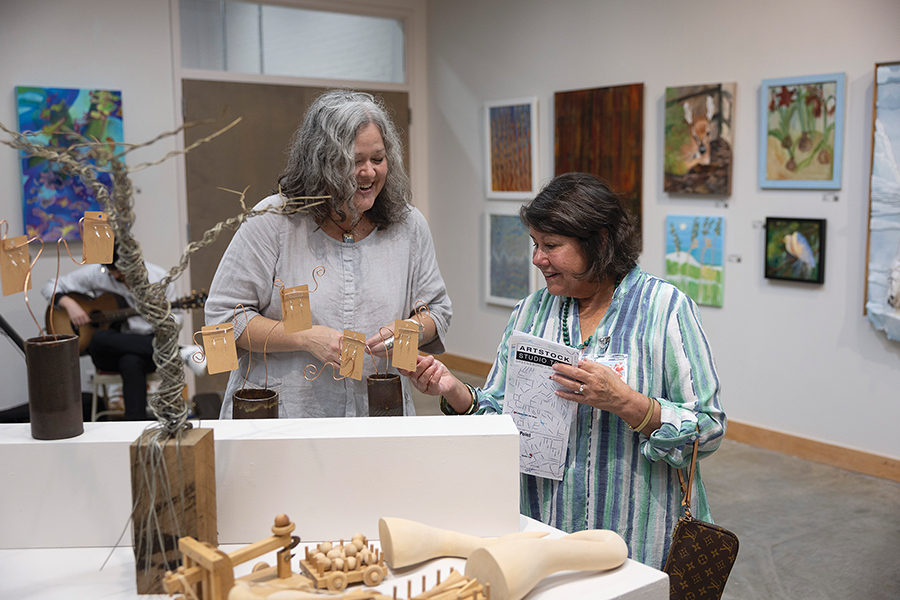
You’ll discover a broad range of mediums and styles in the artworks displayed throughout the ArtStock Studio Tour, which begins on Thursday evening, October 1, with a plenary gallery show at the Center for Visual Artists, found inside the Cultural Arts Center downtown. The show presents three new works of art from each of the 50 or so artists participating.

No judges decide what works will hang in the show. As long as the works the artists submit are recent, they will be displayed.

Side by side, you’ll see the artworks of amateurs, skilled newcomers and talented, experienced artists who’ve been part of ArtStock for years.

That’s by design — for the two distinct audiences the event draws together.

First is the audience of collectors or potential collectors of art.

“Education is so important in what we do,” Eversole says. “I like talking to people about the value of bringing beauty into your home, a one-of-a-kind piece that a human being created, the joy you feel when you see it.”

“Whether you’re just starting out as a collector or your family’s collected for generations, you learn to hone your eye,” she continues. “You’ll come to recognize composition, color, design and technique, regardless of where you are in your art journey.”

The second audience is the artists themselves.

“As an artist, you can find yourself doing the same thing over and over again, whether it’s good, bad or indifferent,” Wessling says. But he believes that if local artists study the work of other artists, it can help them see how to do things better or at least differently, and how to expand as an artist.

“We’re not here to teach you that,” he adds. “That’s something that you need to do as an artist on your own.”

And finally, the special sauce of the Thursday night gallery social event is served — the maps guests take with them to navigate weekend visits to artists’ open studios and homes on October 3 and 4. For many, the weekend’s studio tour is the highlight of ArtStock.

Why?

It all comes down to stories.

“People get to hang out with the artists whose paintings they saw at the gallery,” says Eversole. “They want to know more. So they can sit down out in the back yard, have a glass of wine and just chat.”

Some of the artists are real masters as hosts, offering French desserts, rosé and champagne. A few homes will feature multiple artists, making it convenient for tour hoppers — less driving, more admiring.

For local artists, however, perhaps the critical component of the ArtStock Studio Tour is the placement they receive on the service’s website, www.artstocktour.com. (You can also follow ArtStock Studio Tour on Facebook.)

For a year’s time — and for a very modest fee — artists have their own individual webpages on the ArtStock site, featuring the artist’s profile and the works displayed at the gallery show. The website is e-commerce friendly, so the artists can sell their work directly to buyers.

“We’ve developed ArtStock Studio Tour to provide a marketing and promotion component for local artists who don’t have the knowledge, skills, time or money to do their own promotion,” Wessling says.

But a broad, art-savvy community committed to its artists is essential to success.

“I think that Greensboro loves its art,” Eversole says. “But if you want to keep art in your community, you have to provide for it. You have to buy the work.”

Ever the marketing guy, Wessling chimes in.

“We’ve got a lot of great artists who are going to make a name for themselves. Get in early, before their artwork’s priced by a large gallery!”

Eversole reflects for a moment.

“My earliest patrons were people who saw my work in my backyard gallery,” she says.

Be sure to attend ArtStock Studio Tour this October. Look at the art. Visit with the artists. Listen to their personal stories. Hear why they created that piece you especially like.

You might just find yourself face to face with the artist you didn’t even realize you’d been searching for. OH

Ross Howell Jr. is a contributing writer.

ArtStock Studio Tour 2026 Artists​

Jessamyn Bailey collage, etching, fiber-and-fabric, mixed-media, oil, printmaking, photography, watercolor

Susanne Baker paper-making, collage, fiber-and-fabric, mixed-media

Jennifer Ballard acrylic, collage

Franchone Bass fiber-and-fabric, acrylic, mixed-media, jewelry, wood

Janet Berry oil

Sidney Branch acrylic, collage, mixed-media, jewelry

Laura Bricker oil

Brownlee Bryant oil

Celia Bucek acrylic, fiber-and-fabric

Amy Buchanan acrylic, collage, mixed-media, oil, watercolor

Jerry Carpenter mixed-media, papier mache

Joie Lola Chapman acrylic, collage, mixed-media, oil, paper, watercolor, pastel

Terry Chavis ceramics-pottery

Laura Cooke ceramics-pottery

Maddie Cratch collage, mixed-media, papercutting, sculpture

Sally Donnell Rilee oil

John Easton collage, ceramics-pottery, mixed-media, glass sculpture, jewelry

Natalie Eversole oil

Stacy Fogleman acrylic, collage, mixed-media, paper, ink, watercolor

Janet Gaddy ceramics-pottery

Page Gleeson charcoal

Veronica Grossi oil, pastel, watercolor

Ash Hein acrylic, ceramics-pottery, digital, oil, ink

Martha Hicks acrylic, ink, mixed-media, oil, watercolor, sculpture

Christina Hill acrylic, mixed-media

Jenny Jones B. acrylic, collage, watercolor

Gail Kelly ceramics-pottery, glass sculpture

Christopher Koenig acrylic, collage

Alexis Lavine watercolor

Elizabeth Lemon fiber-and-fabric

Andrea Lewis photography

Judy Lomax glass, ink, jewelry, oil, watercolor

Jane McAuliffe pastel

Judy Meyler oil

Terri Millard collage

Crystal Miller acrylic, mixed-media, watercolor

Carol Moates acrylic, calligraphy, oil, watercolor

Timothy Moran ceramics-pottery

Paul Nixon acrylic, mixed-media, wood, sculpture, photography

Brenda Olds Carter acrylic, collage, mixed-media, glass, watercolor

Nirmal Panchal digital, acrylic, collage, mixed-media, glass, sculpture, wood

Kathryn Patterson oil, watercolor

Katie Podracky painting

Joanne Rich collage, acrylic, mixed-media, papercutting, watercolor, photography

Craig Richards acrylic, oil

Susan Ridenour ceramics-pottery

Natalie Schorr collage, mixed-media

Dorothy Sellers acrylic, oil

Bruce Shores sculpture, watercolor, printmaking

Chana Smith acrylic, fiber-and-fabric, glass, mixed-media, sculpture

Elizabeth Stafford watercolor

Renee Swink acrylic, oil

Ronda Szymanski mixed-media

Kathryn Beam Troxler oil, pastel, watercolor

Bethany Vigilante acrylic, collage, digital, mixed-media, pastel, photography, printmaking, watercolor

Terry Wessling printmaking

Fay Wood collage, fiber-and-fabric, ink, mixed-media, oil, paper sculpture, watercolor, wood

The Five Faces of O. Henry

The Five Faces of O. Henry

The Five Faces of O. Henry

Local artists turn paint, sequins and ephemera into portraits of William Sydney Porter

By Joi Floyd

In honor of O.Henry magazine’s 15th anniversary this month, there’s no better time to celebrate the many faces of our namesake, Greensboro-born William Sydney Porter — more commonly known by one of his pen names, O. Henry. In just a few decades, he went from a prison inmate in Texas to one of America’s most popular writers, selling nearly 5 million copies of his books in the U.S. We asked five local artists to take a crack at portraying the elusive storyteller through their own creative lens. Maybe their interpretations will reveal something new or maybe they’ll only deepen the mystery. Either way, we’re happy to keep the legend alive — and we’re raising our Sazerac to another 15 years of carrying on his literary legacy. (See page 60 to learn more about O. Henry.)

Artist: James Celano

“It’s a visual art. Just look at it,”

Some people can’t resist looking for the hidden meaning in a work of art. Others are happy to let it have the last word. William Sydney Porter trusted his stories to speak for themselves, and Greensboro artist James Celano, a graduate of the Pennsylvania Academy of the Fine Arts, takes the same approach. The best way to experience art, he says, is simply to look at it.

Much like our esteemed O. Henry, Celano chose to focus solely on the image, allowing viewers to create their own interpretations. “The trickiest part was working from a black-and-white photograph,” he says. Still, where there’s a will, there’s a way. Using oil paint on a birchwood panel, Celano transformed the reference image into a striking portrait.

When asked about his process, Celano prefers to keep the mystery intact. Referencing a quote from renowned Frenchman Paul Valéry, he says, “I think a French poet once said, ‘One must apologize for talking about painting.’”

Artist: Sky Bradshaw

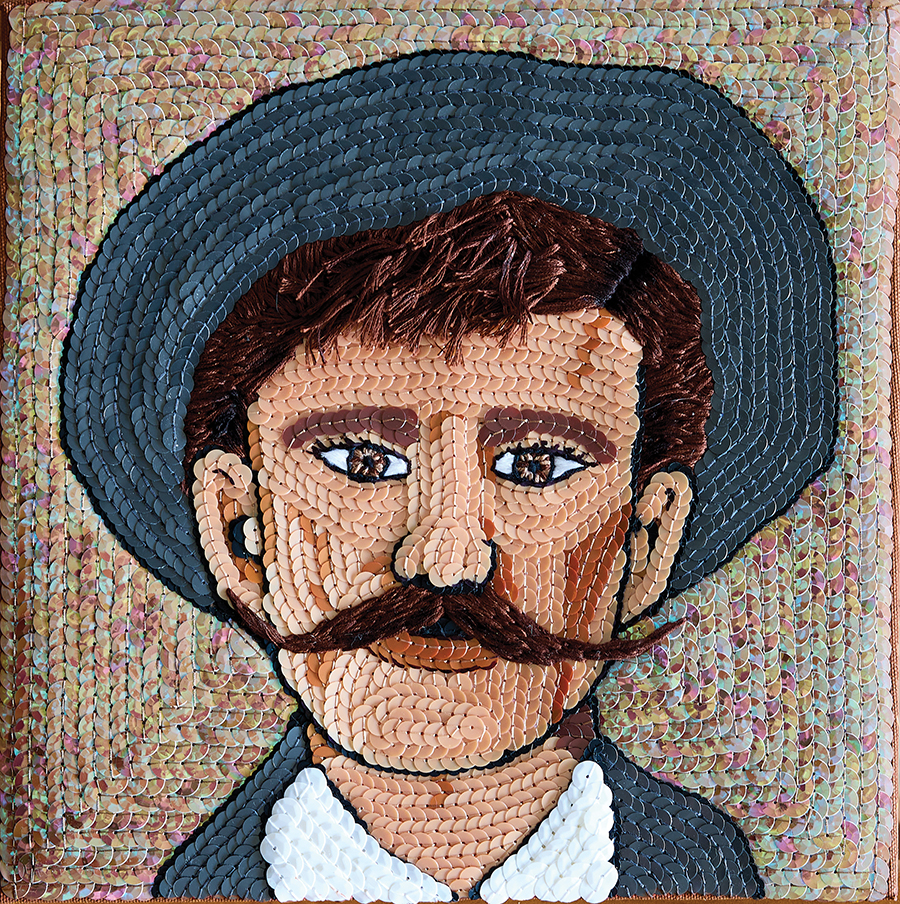
“Stitch by stitch, sequin by sequin.”

In Porter’s prime years he was a short-story star. His writing is where he shone most, whether fiction or poetry. And what better way to commemorate a life that sparkled than with sequins?

Sky Bradshaw, a sequin and textile artist, says her creative process brought her a deeper understanding of Porter as well as the city she calls home. “I felt like it rooted me in a lot of ways with history in Greensboro that I never touched on,” says Bradshaw.

With needle, thread and thousands of glimmering sequins, Bradshaw stitched a scintillating adaptation of O. Henry’s face, drawing on the myriad of stories that were told about him. Beginning with a simple white cloth, she sat quietly with her sketch, letting it unfold through meditation before weaving embroidery and shimmering embellishments into a portrait worth a thousand stories.

“Connecting with his energy, history and story allowed me to tune into the underdog aspects of myself,” says Bradshaw. One O. Henry quote specifically spoke to her: “There are stories in everything.” And in this piece, Bradshaw has connected an invisible string from herself to Porter, artist to artist.

Artist: Christina Hill

“It just goes to show that your life doesn’t have to

be perfectly lived in order to be something amazing.”

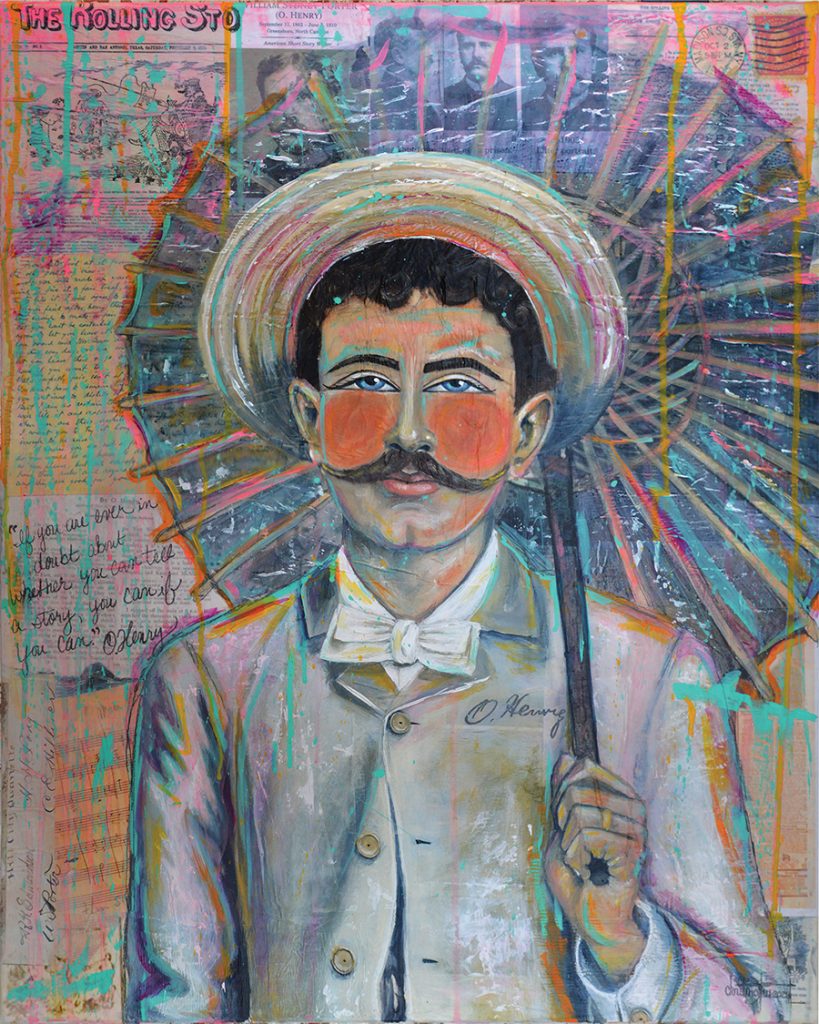
William Sydney Porter’s talent carried him to remarkable heights. From founding The Rolling Stone — no, not that Rolling Stone — magazine to writing for The New York Sunday World magazine, he painted the picture of a successful writer. But, behind every carefully crafted portrait lies a different story.

Greensboro artist Christina Hill, known for her bold color palettes and blushing portraits, chose to focus on the more flawed side of Porter’s life rather than presenting an idealized image. “There’s so much more to him that you can’t speak through him, so I felt like it needed to be behind him to show who he was,” Hill says.

Through her research, Hill found beauty in Porter’s imperfections. His life was marked by setbacks, including an embezzlement conviction and time in federal prison. Yet under the pseudonym O. Henry, he transformed hardship into enduring short stories. To reflect the complexity of his life, Hill incorporated layers of vintage materials, such as old newspaper articles, into the work. “The paper is from the 1950s. I found it years ago at the Salvation Army,” she explains.

Hill’s portrait invites viewers to see more than just face value. Embedded within the painting are traces of his past and the experiences that shaped him as a writer.

Artist: Leti Reis

“It was kind of like a lost story.”

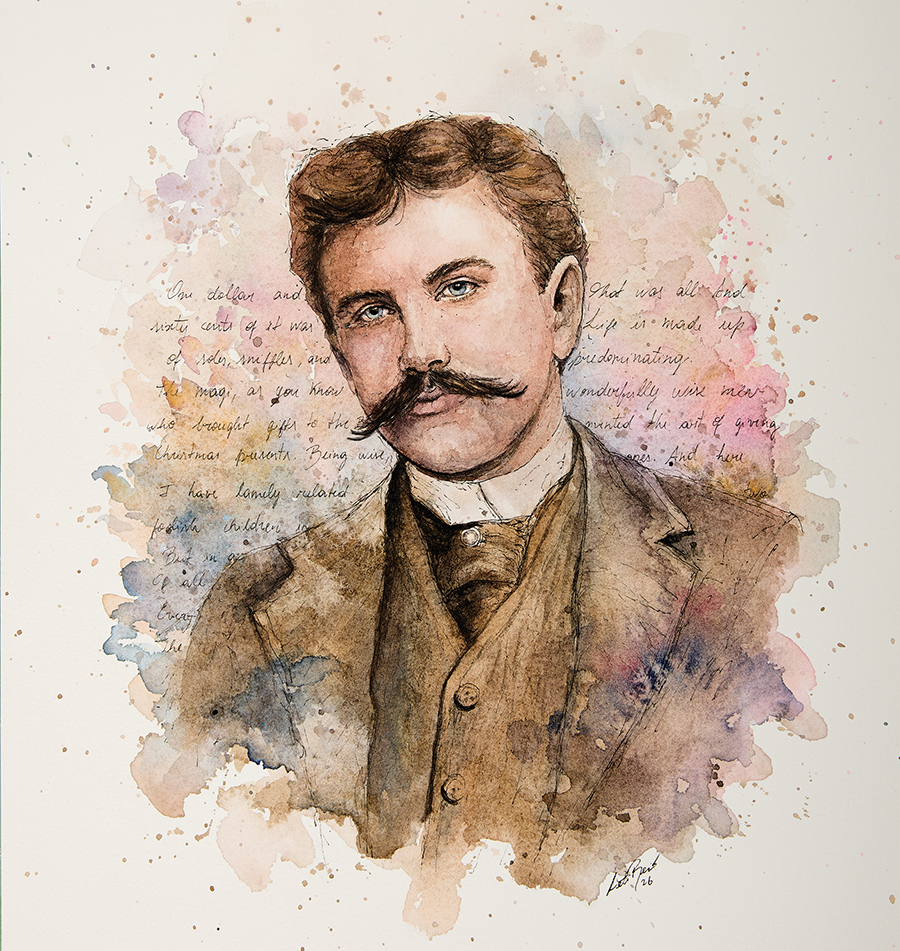
“For me, what I was trying to give with the painting was that he was [immersing] himself in the story,” says Leti Reis, a Greensboro-based artist. Rather than focusing solely on technique, Reis painted from feeling, creating a portrait that she can only describe as “emotional.”

“I like to have this watercolor background and just let the paint flow,” Reis says. Because Porter was a writer, she wanted his words to become part of the piece itself. Layering blooming watercolor with passages from O. Henry’s writing in ink, she created a portrait that blends the author’s words with his image, inviting viewers into both his world and his work.

For Reis, the tie between an artist and their art begins with the eyes. “I couldn’t find any pictures with him looking at the camera, so I changed it. I wanted that connection in the painting,” she says. By meeting the viewer’s gaze, her portrait creates an intimate encounter with Porter, much like his short stories.

Artist: Rukiya Williams

“I wanted to know what’s in between.”

There are many ways to describe William Sydney Porter; clever, witty, a genius storyteller. But, for Rukiya Williams, local artist and filmmaker, “layered” suits her fancy best.

Working with recycled cardboard and acrylic paint, Williams built O. Henry’s portrait one layer at a time, creating a face that reflects the many stories he told — and the many lives he lived — while suiting her creative mission. “The repurposed supplies and layer concept speaks to me more as an artist, so I incorporated that into the painting,” she says. For her, one facial feature mattered most: “The main thing I wanted to showcase was his eyes.” Piercing blue and hard to overlook, Porter’s eyes steal the show, rivaled only by his signature ’stache.

“Art is about trying to find another angle and perspective,” notes Williams. It’s a sentiment our beloved Porter himself might have appreciated. No stranger to seeing the world from a different point of view, in his 1904 novel Cabbages and Kings, O. Henry writes, “I wanted to paint a picture some day that people would stand before and forget that it was made of paint. I wanted it to creep into them like a bar of music and mushroom there like a soft bullet.”  OH

Sazerac September 2026

Sazerac September 2026

Sazerac September 2026

En garde!

Photography courtesy of Serge Timacheff/USA Fencing

It’s easy to underestimate 17-year-old athlete Abe Kaplan. He’s not a big kid. Cerebral palsy limits the use of his right hand and leg. By the age of 13, he’d tried karate, soccer, flag football and horseback riding. Then his parents, Eric and Karen, encouraged him to try a class at the Greensboro Fencing Academy — and something clicked.

“Abe’s mom took him to an introductory class on Saturday morning and he asked her to take him back for another that afternoon,” Eric says with a laugh. Within months of taking up the sport, Abe was winning tournaments against competitors who had no disabilities. While he understood that his disability would hold him back in able-bodied competition, he was reluctant to transition to para fencing, an adaptive form of fencing for athletes with physical impairments.

In 2023, Abe and his dad were visiting Washington, D.C., when they had the opportunity to attend a para fencing tournament. It was not what they’d expected. “If you haven’t seen it, you think, ‘Oh, it’s just disabled fencing,’” Abe says.

“But these people were athletes — strong, fast,” Eric comments.

A month later, the Kaplans were invited to Florida for a weekend training camp led by a para fencing coach for the U.S. team. After more months of training with national coaches in Atlanta, Abe flew with his father to his first competition in Warsaw, Poland.

The learning curve was steep. “Especially when you’re 14 years old and fencing grown men,” Eric explains.

Now, after three more years of training and international competition, Abe has advanced his world ranking. He could earn a spot on the team that will compete in the Los Angeles Paralympic Games in 2028.

He fences three hours a day, six days a week. He’s lithe as a panther and just as quick. I wouldn’t underestimate Abe Kaplan.

Ross Howell Jr.

Window to the Past

Photography Courtesy of High Point Historical Society, High Point, N.C.

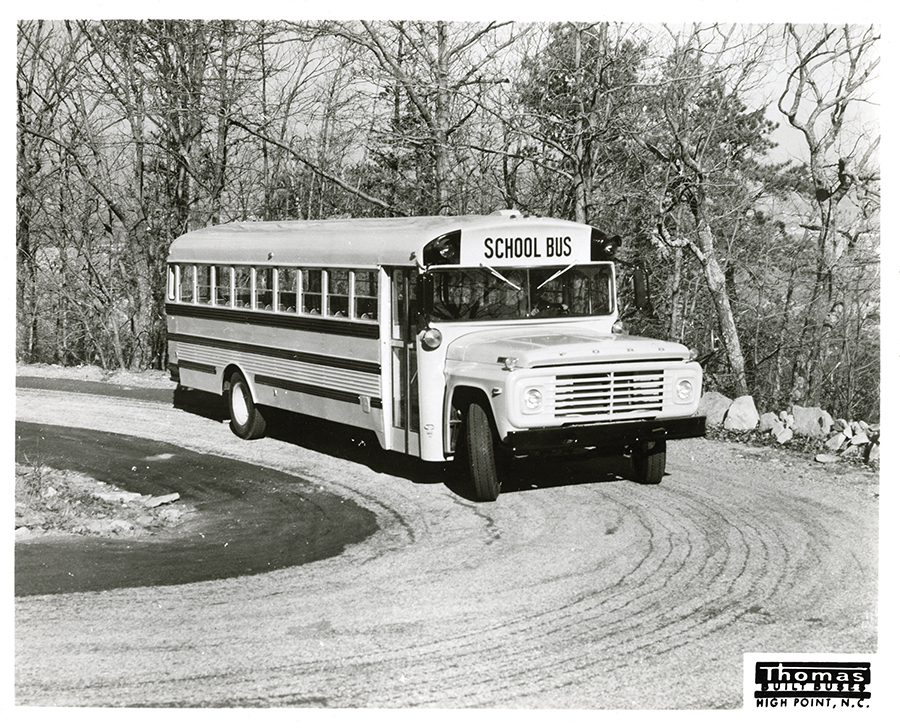
Thomas Built school buses are an iconic part of the American school experience. Built and manufactured in High Point since 1936, when Perley A. Thomas swapped cars for buses, these unmistakable vehicles have carried generations of students. Painted an iconic golden-yellow — now named National School Bus Glossy Yellow, according to Canada and the U.S. — they’re easy to spot but much harder to catch once they’re on the move, especially if you’re a sleepyhead running a minute or two late. After all, those wheels were made for rolling, so that’s just what they’ll do.

Indie Scene

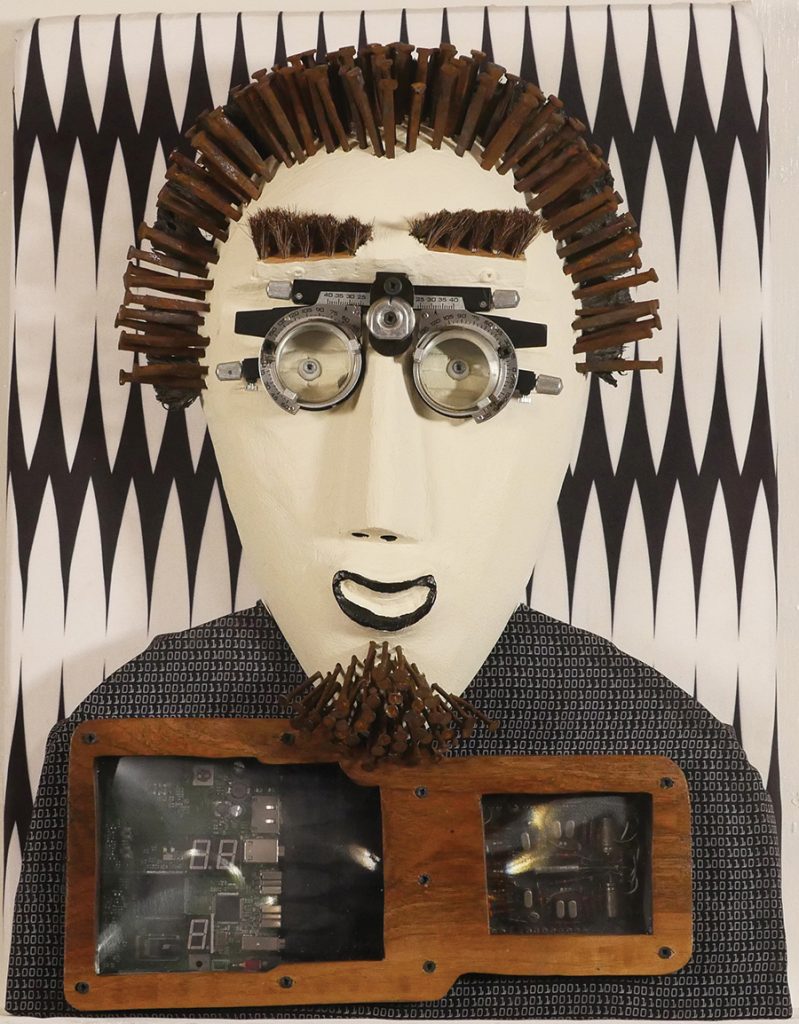
Ingram, Brett. Digital-to-Analog Converter. 2019–26. Mixed Media, 19″ x 14″ x 8″.

From junk to treasure: Brett Ingram — UNCG graduate, director of two documentary features (Monster Road and Rocaterrania) and author of novel The Secret World of Renaldo Kuhler — has recently added tactile artist to his growing list of accomplishments, giving life to objects that would otherwise be tossed. And, what better way to showcase his love for salvaged parts than through assemblage art, a 3D medium that blends disparate parts, obsolete everyday objects and scraps into sculptural works. Ingram sources his materials almost exclusively from the world around him. “Largely, I get stuff off of the street when people put it out there to be picked up by the city,” he says. His pieces often feature analog items including microphones, cameras, gears, lenses and other mechanical components. If it once had a motor or moving parts, chances are Ingram can breathe new creative life into it.

While analog technology has experienced a resurgence in recent years, Ingram never abandoned his appreciation for it. In fact, the shift toward digital equipment became an unexpected advantage. “I could find lenses that are obsolete and could take them apart and use them in my art,” he says. What many considered outdated became the building blocks of his artistic vision.

From Kernersville news reporter to high school physics teacher to author, he has made use of his many skills throughout the years. So, how did he discover assemblage art? For Ingram, 2020’s COVID-19 isolation wasn’t just a boredom fest, it sparked some newfound creativity. “At one point, I had done stop-motion animation. I made the puppets out of found objects and that got me into that aesthetic.” He stopped making films, but kept on amassing parts and soon his art form was born.

Ingram doesn’t see assemblage art as making do with less, he sees it as making possibilities where others see waste. His approach shows that limitations inspire innovation and creativity can grow when resources are scarce. “I used to teach my students that a lot of the time what you end up doing is driven by the obstacles that you have to overcome.”

Though Ingram’s first ever solo exhibition at The Center for Visual Arts passed by earlier this year, you can still find pieces of his 3D art, his short documentaries and keep up with his works through his website, brettingram.org.

Unsolicited Advice

They say breakfast is the most important meal of the day, but we’d like to think our morning drink plays a major role in that as well. Your choice of morning bevvy has just as much significance as your stack of pancakes. Some reach for caffeine  while others prefer something milder. Either way, we bet your sip choice says a lot about who you are as a person.  

If a piping hot mug of salubrious tea is what shakes the slumber out of your eyes, then we’re going to guess your yoga set matches. While you probably flaunt a healthy heart, we can’t help but think that your daily tea craving is just for show. Though, with a gut as clean as yours, who cares what others think? You’re healthy and you know it, so toot that health horn as loud as you want.

For those addicted to the bitter taste of coffee, we’re almost certain you’re the backbone of our society. From unexpected deadlines to awkward conversations, there’s nothing they can throw at you that you can’t handle after you’ve indulged in your morning cup of joe. We bet your planner is packed to the brim and we know that you will check off every last one of those tasks — but first, coffee. 

Energy drinks? More like pure rocket fuel. Whatever problems our carbonated connoisseurs are faced with in the morning, we know it won’t stand a chance against them and their can of spark. With an overly fizzy flavor and enough sugar to match a jumbo bag of Skittles, only the ones committed to utilizing every second of the day are among this group. Tea drinkers fear you and coffee lovers commend you — but you’re probably too jumpy on your jitter juice to notice.

JOI DE VIVRE

The other day I decided to take a walk. After spending the day comparing my life to that of other people my age — those who had moved out of state, started new chapters or seemed to have everything figured out — I know it’s time to shut off my overthinking brain and get some fresh air at Country Park. As soon as I step foot on the path, that familiar Carolina breeze runs through my hair and the barks of excited pups greeting each other in the dog park can be heard from a mile away — as if a simple butt sniff greeting isn’t enough. A little girl, so captivated by the pedal boats that she isn’t watching where she was going, wanders right into my path. We bump into each other. “Oh, excuse me. Sorry ma’am,” she says as she picks up speed. A man and his dog lie in the dirt near the lake, guarded by a family of ducks. The ducks take turns splashing in the lake but ultimately return back to their post, protecting the man and his dog from the dangers of the lily pads. That’s when it hits me: I wouldn’t have my life any other way. I have a Tar Heel soul in need of that refreshing North Carolina air — even if it is hot and humid. Just then, that curious little girl and her parents make their way back from the pedal boat station. They’re soaking wet from head to toe, but the little girl flashes a toothy grin. Her mother playfully scolds her father for agreeing to let her in the driver’s seat. As they walk by, I catch a glimpse of the words on the mother’s shirt, “North Freaking Carolina.” I can’t help but smile. Yes ma’am, indeed it is. 
  Joi Floyd