O.Henry Ending

O.HENRY ENDING

Please Pass the Salt

Tickled pink, but feeling blue

By David Theall

Bad news in my email just now: “FINAL NOTICE: Your Discount on the Pink Salt Weight Loss Solution Expires Today.” Unless I can come up with $79 fast, all of my friends are going to be posting about the great deal they got on Pink Salt Weight Loss Solution and I’ll be the unlucky loser, relegated to plain-old white salt, no weight loss solution in sight.

With my customary Mountain Dew in hand I’m compelled to learn more. What is pink salt and how do I get this miracle weight loss solution? Knowing that sometimes there can be unsavory operatives in the weight loss industry, it’s a relief to see that the email came from Diet Science Review, an organization that likely rivals The New England Journal of Medicine in addressing critical emerging topics in modern medicine.

I then make the dream-crushing mistake of using the web to learn more about the Review. From the AI feature on Google: “As of October 2025, there is no major publication titled ‘Diet Science Review.’ The name appears to be used in some blogs and for book promotions, rather than representing a formal scientific source.”

Damn! My dream is not completely crushed, however, because the email also mentions Harvard researchers . . . more than once! “Harvard Researchers Shocked: Women Are Using This ‘Pink Salt Hack’ to Drop 20 Pounds Without Giving Up Burgers or Wine.” That stops me, dead in my tracks. I don’t want to give up burgers or wine, sure, but the Harvard researchers only mention women. Is the Pink Salt Weight Loss Solution gender specific?

I guess that’s it for this guy. No miracle pink salt for me. I can’t target my arm, belly and thigh fat while continuing to decimate area buffets. I visit the website link in the email to see if there’s a male version, but find this statement instead: “Some reviews or testimonials may be fictitious.” So, I’m starting to think all this “miracle weight loss” talk should be taken with a grain of salt (pink salt, to be specific).

Honestly, this whole weight loss business is new to me. Is it common for these products to be gender specific? Does the whole internet think I’m an overweight woman? Should I try to find a Blue Salt Weight Loss Solution?

More bad news. After checking online, I learn there’s no male alternative for the pink salt hack. Digging further, I discover that there is no such thing as blue salt either. With no way to redress this senseless gender inequality, maybe I’ll just go out and discover blue Himalayan salt for my own self, even if it means bringing food dye to find it.

Then, using retired meth lab equipment purchased at a New Mexico police auction, I’ll cook up a formula for Dave’s Famous Himalayan Blue Salt Weight Loss Solution. We’ll keep production cost low and sell it for $59 per half-ounce bottle. We’ll hire Zach Galifianakis or Jack Black to post on socials and — bingo! — I get to retire rich, relinquishing all concern for my public appearance as well as basic daily hygiene.

No weight loss, no problem! 

Any Way You Slice It

ANY WAY YOU SLICE IT

Any Way You Slice It

Pi Day, you say? We couldn’t think of a better way to celebrate than by stuffing ourselves silly with a local sampling.

By David Claude Bailey     Photographs by Amy Freeman

What is it about pies? “I suspect that people feel a sense of tradition and simple goodness when eating pie,” says Maxie B’s owner, Robin Davis, who was featured in a 2012 Southern Living best-cakes-in-the-South article. Robin also knows a little something about pies. Chocolate chess, pecan, coconut custard, coconut cream, chocolate cream, lemon meringue, cherry, blueberry, peach, blackberry, sweet potato, pumpkin — 40 in all, seasonally available. “They are a little lighter than cake since they do not have icing.” Almost healthy, eh?

And then she adds, “Mostly, I think eating pie is just a comforting experience.”

Amen.

Robin is just one of a wealth of seasoned pie-o-neers who have made Greensboro, at least in our view, pie central.

Grab a fork and dig into one of my own favorite comfort foods. We know we’ve missed some of our favorites and your favorites, but there are only so many notches in our belt and these six slices were pushing its limit.

THE PIE HOLE: Maxie B’s

If you’re not able to visit a pâtisserie any time soon, Maxie B’s interior comes pretty close to transporting you à Paris. How many other bakeries feature chandeliers, tufted banquettes, plump, comfy couches and a private, hideaway booth for intimate gatherings? Or, naturellement, snag a seat at the sidewalk café in front and order a café au lait and, of course, a piece of good ol’ American pie.

THE PIE: Chocolate chess

THE LOWDOWN: While the butter in the hand-made, rolled-daily crust hails from Europe, not to worry: the pastry flour is from North Carolina. The only other ingredients are a little sugar, some salt, some vinegar, ice water and TLC. The filling ingredients are equally simple — Swiss chocolate, butter, local cage-free eggs, vanilla, sugar and salt. The cacao beans? From Ghana.

MY TAKEAWAY: Forget Frenchified soufflé au chocolat or chocolate mousse. Sit down to a Southern favorite that dates back to Martha Washington — chess pie. This version is intense, dominated by a jolt of chocolate that dances all over your tongue. The crust is textbook, so rich and flaky you look forward to attacking what’s sometimes left uneaten on other pies — the crust’s shoulder.

MOST POPULAR PIE: Chocolate chess, of course

THE PIE MAKER: Robin Davis, the owner of Maxie B’s (named after pugs Max and Bitterman), never meant to run a cake shop. It was her late husband, Lewis, a workout fanatic, who in 2002 urged her to, please, stop filling the house and kitchen with tempting cakes. So she moved her baking operation to the yogurt shop she was running. While pregnant, she craved a devil’s food cake like the ones she remembered from family reunions. The rest, like our slice of her pie, is history. Two articles in Southern Living brought, quite literally, busloads of people to try this devil’s (and angel) food, and, as business boomed, Robin’s shop expanded, gobbling up two adjacent storefronts. The devil’s food cake is still available, along with red velvet, hummingbird, coconut, caramel and dozens of others.

THE INSIDE SCOOP: Pies featured year-round include chocolate chess, pecan, coconut custard (and cream) and chocolate cream. Seasonally, expect lemon meringue and cherry, plus, when available, fruit pies with local, freshly picked produce, including blackberry pies (stuffed with Climax Creek Homestead berries) and sweet potato pies (with taters from Faucette Farms in Brown Summit).

2403 Battleground Ave., Greensboro
336-288-9811, maxieb.com

THE PIE HOLE: Delicious Bakery

Sit down to your pie in Delicious’ new, light, bright and airy venue on Battleground. The dining area is spacious, affording privacy if you want to share the latest crumb of gossip (or pie) with a confidante. Or seek out a nook where you, your laptop and an espresso can get some work done — or eat as much pie as you want away from prying eyes.

OUR SLICE: Lemon meringue

THE LOWDOWN: The crust is hand-rolled, butter-based and made from scratch. The filling, made from egg yolks, sugar, butter, lemon juice and zest, is thickened with corn starch. A stunning swirl of meringue made from egg whites, sugar and vanilla is torched to a golden brown finish.

MY TAKEAWAY: It seemed a shame to take a knife to the towering, mile-high meringue, but, when I did, the aroma of fresh-sliced lemons permeated the air. The filling bristled with a sweet-and-sour tang while the meringue provided a great
balance to its tartness, not too rich or sweet. The pre-baked crust served as a tasty vessel — and not over-baked. Here’s a dessert that’s a classic for a good reason.

BEST SELLER: Chocolate chess

THE PIE MAKERS: Owner Mary Reid, as much an artist as a baker, got things going in her home kitchen in 2004, whipping up and decorating cakes for neighbors and friends. She soon opened a storefront and then a sit-down location with Lori Loftis, her sister and a pie enthusiast, who has dipped her spoon in and out of the business for the last 20 years.

THE INSIDE SCOOP: As a full-service bakery with seasonal offerings including cakes, cupcakes, cheesecakes, cookies, brownies and breakfast pastries, it’s become a really popular meet-and-eat spot. My only battle in this space that once housed Burger Warfare is which pie to order.

1209 Battleground Ave., Greensboro
336-282-1377  |  336-288-3657  |  delicious-cakes.com

THE PIE HOLE: Gardener Bob Homestead Kitchen

A modest storefront with a few tables on the sidewalk out front, Bob’s spot has a sort of alternative, organic vibe, just like Gardener Bob.

OUR SLICE: Pecan

THE LOWDOWN: The crust is homemade with King Arthur’s wheat-and-barley flour, water, salt and butter. The custard filling, baked in the pie, is a confection of sweet-cream butter, flour, evaporated milk and brown sugar — no high-fructose corn syrup. 

MY TAKEAWAY: A variant on your traditional Southern pecan pie, Bob’s version is a three-part harmony beginning with sort of a praline topping that crinkles up across the top and is good enough to pick off and eat like candy. The filling is a caramelly melody of pecans, butter and brown sugar with a grace note of vanilla. The fairly thin crust is a cracker sponge that I used to sop up the syrup that spilled across my pie plate.

BEST SELLER: Pecan

THE PIE MAKER: Working in kitchens since attending culinary school as a teen, Robert (please call him Bob) Thomas has cooked for a living all his life, including three years as a baker. He’s always had a soft spot for making desserts. Recovering from alcohol and heroin addiction at 33, Bob was surprised that he continued to be plagued by digestive issues. Determined to leave preservatives, dyes, chemicals, artificial ingredients and processed foods behind, Bob gardened, baked, fermented and cooked his way to better gut health. In 2021, he began selling his goods in farmers markets, along with his home-grown vegetables. He opened his Spring Garden storefront in November 2023.

THE INSIDE SCOOP: Determined to share his journey to good health with both advice and merch, Bob specializes in foods that promote good gut health — sourdough bread, all things fermented — from sauerkraut to pickles, kimchi to kombucha — along with baked goods (some gluten-free) and, of course, pies of every ilk.

2823 Spring Garden St., Greensboro
743-222-3933  |  gardenerbob.com

THE PIE HOLE: POUND by Legacy Cakes

THE PIE: Key lime cream

THE LOWDOWN: The recipe, passed down from her mother, Margaret S. Gladney, is a bit of a family secret, but Margaret Elaine, who is, of course, named after her mom, did reveal that it’s whipped, not cooked, and the filling involves sweetened condense milk. And she, naturally, uses those itty-bitty key limes, organic please.

MY TAKEAWAY: Unlike heavier key lime pie filling, cooked with egg yolks and condensed milk, Margaret’s filling is light and creamy, almost fluffy, with a subtle, not citrusy balance of sweet and sour. (It’s so good that, if left unattended on a table top, swipe marks from family fingers inevitably appear!) Playing against the tart filling, the golden graham-cracker crust is a neutral palate with scrumptious, crunchy crumbles around the pie’s edge.

MOST POPULAR PIE: Key lime cream

THE PIE MAKER: Margaret says her Key lime pie is a spin-off of the one her mother would make, along with the famous lemon pound cake her mom baked for revivals at the 120-year-old Goshen United Methodist Church. As the youngest of 13 children, Margaret recalls her momma telling her to tiptoe across the kitchen floor so the cake wouldn’t fall. If lucky, she’d get to be the one to lick the bowl and beaters — or scoop up some crumbs that might have stuck to the pan. Margaret prides herself on incorporating her passion for science, chemistry, home economics, fashion and interior design into a legacy her mother would have been proud of.

THE INSIDE SCOOP: Other pies featuring her mother’s recipes include lemon cream pie, million dollar cream pie, pecan pie and sweet potato pie. But Margaret says her real specialty is baked-fresh-daily, hot-from-the-oven pound cakes in 150 varieties, some traditional made from 100-year-old recipes, others with a more contemporary twist, like her banana pudding pound cake or her sweet potato pound cake. There’s even a bubble gum pound cake available on special request.

3008 Spring Garden St., Greensboro 336-383-6957  |  facebook.com/POUNDbyLegacyCakesInc

Second location
1620 Battleground Ave., Greensboro
336-383-6957

THE PIE HOLE: The Cherry Pit Cafe & Pie Shop

Walk into pie central and prepare to get a face full of pies and a friendly greeting from a waitstaff wearing cherry-red pie T-shirts. The walls are covered with pie slogans, pictures of pies and pie-making implements. And why not? Owner Brian Cotrone (along with his wife and business partner, April Douglas) estimates they have sold over 100,000 pies since opening July 1, 2013. The decor is cheery and modern, with bright-red upholstered banquettes and fast-casual service where your food is delivered to your table after you order at the counter.

OUR SLICE: Cherry lattice

THE LOWDOWN: This pie, made in-house from scratch like all their pies, is all about the filling, chock full of Michigan cherries. It is cooked in a steam kettle to assure the proper thickness and balance of sweet and sour. The homemade pie dough is latticed across the top, six vertical, six horizontal, and then coated with an egg wash to achieve a toasted-brown sheen.

MY TAKEAWAY: The cherries are the money in this pie, plump and piled high, with a gloriously gooey and addictive binding. The shell and the lattice are slightly sweet, balancing the tartness of the cherries. And since sour cherries are packed with melatonin and tryptophan, we’re totally convinced that cherry pie is good for you.

BEST SELLER: Pecan

THE PIE MAKERS: Twenty-five years ago, Brian, a corporate restaurant supervisor, and April, a restaurant general manager, met in Las Vegas. There, they ended up running a restaurant with a heavy pie focus. In July 2013, they launched their own pie-centric concept in Greensboro.

THE INSIDE SCOOP: Yes, they sell 10,000 pies a year, including a savory chicken pot pie, but The Cherry Pit Cafe also offers breakfast, lunch and dinner seven days a week for those of you who don’t think pie is a main course.

11 B Pisgah Church Rd, Greensboro
336-617-3249  |  cherrypitcafe.com

THE PIE HOLE: Dessert Du Jour

Catch Wendy Dodson and her Dessert Du Jour tent almost any Saturday it’s not raining or snowing along the back row of The Corner Farmers Market. The market, located at the corner of West Market and Kensington in the St. Andrew’s Episcopal Church parking lot, is open from 8 a.m. until noon Saturdays year round.

OUR SLICE: Apple crumb

THE LOWDOWN: Granny Smith apples are dusted with flour and sugar and then oven-roasted. Next? Brown sugar, spices and a whole stick — in bits — of butter. Once mixed and cooled, it goes into her handmade crust. Hand mixing the dough allows little globs of high-fat (Plugra) butter to melt and puff up during baking, similar to a croissant. Lastly, the crispy crumb layer, made of sugar, spices, flour and, you guessed it, more butter, tops it all.

MY TAKEAWAY: As my first bite, loaded with each layer — crust, apple filling and crumb — neared my own pie hole, my nose twitched, triggered by the smell of cinnamon-kissed apples and toasty, brown butter. Moist and tender, the caramelized apples are perfectly paired with the golden, flaky crust, resulting in a palate-pleasing balance of sweet and salty. And, for me, the cherry on top was the satisfying crunch of the golden crumb topping, of which, well, I left no crumbs.

BEST SELLER: Husband and O.Henry magazine founder Jim Dodson insists her chocolate chess pie is so decadent you’ll end up licking your fork clean.

THE PIE MAKER: As a child, owner Wendy Dodson spent two weeks of every summer at her grandmother’s house. There, she learned the art of baking and making the perfect pie crust. Dessert Du Jour came into full fruition following COVID. Retiring from her HR job, Wendy put all her eggs into her baked-goods basket. Dessert Du Jour celebrates five years in business this month.

GOOD TO KNOW: Wendy offers market pre-orders so you can sleep in on a Saturday morning and rest assured that your pre-ordered pie, cookies or cake will be waiting for you until at least noon at the market.  OH

The Corner Farmers Market, 2105 W. Market St., Greensboro 910-585-2584  |  dessertdujour.net

Pleasures of Life

PLEASURES OF LIFE

Greensboro’s Perfect Pastry

The apple fritter at Donut World can love you back

By Brian Clarey

Gigi Williams knows exactly what she wants.

She breezes right through the front the door of Donut World’s Battlegrounds Avenue location, past dozens and dozens of donuts — twisted ones, rolled ones, the standard one-hole punch — and beelines to a particular spot in the long, glass case.

“May I have an apple fritter, please,” she says, gesturing to the dozen fritters behind the glass, arranged in a glistening grid on a parchment-papered baking tray.

“Make it two,” her partner jumps in, peering into the display cases. “And a cup of coffee.”

Behind the counter, Luz Martinez gathers the order. The couple hunches over their fritters at a corner table before a day of shopping. But the real reason they made the drive into Greensboro from Oak Ridge this morning is in their hands: It’s the fritter.

“I’m shopping,” Williams says, “but I can’t do it without this.”

After culinary school, she spent decades working in high-end kitchens around the country before settling in Oak Ridge with her partner. And of all the dishes she’s tried from kitchens all over the world, this simple one keeps her coming back.

“She started asking for an apple fritter yesterday,” her partner reveals.

Martinez confirms. Indeed, the apple fritter is the most popular item on the Donut World menu, which should come as no surprise to the thousands of Gate City residents who have already discovered it on their own or through the advice of a trusted palate. The day began with about 10 dozen of them; now, at the noon hour, she is halfway through her inventory.

This apple fritter stands alone among the offerings at Donut World: cake and rise donuts, buttermilk bars, filled donuts, twisted donuts, little donut holes topped with glaze, Jimmies, crystalline sugar, fruity cereal, chopped peanuts, shaved coconut, crumbled Oreos and straight-up chocolate chips, all of which are uniformly excellent. But the fritter? It is a near-perfect example of the form, elegant in its simplicity, impeccably portioned, faultlessly prepared and highly accessible — you can get one in your hands at either the Battleground Avenue or West Market Street location for a couple of bucks.

There is nothing fancy about a fritter. It’s nothing but a bit of dough or batter, folded with an ingredient or two and then deep-fried. You can fritter just about anything, savory or sweet. There are corn fritters, blueberry fritters, conch fritters, pumpkin fritters, chicken fritters, banana fritters, cheese fritters, with variations around the globe. You could arguably label croquettes as a type of fritter, along with tempura and pakora.

The apple fritter is perhaps the lowest common denominator of fritter, available at every donut shop across the nation, in the packaged pastry section of the grocery, even inside the occasional vending machine.

But a first encounter with the Donut World apple fritter might leave the customer wondering if they had ever truly eaten a fritter before.

Its soft, light interior is encased in a toasty, brown bark formed when the crenellations in the dough succumb to the deep fry, its crunch intensified by a thin layer of glaze icing. The ratio of apple filling to dough is practically Fibonaccian — enough so that you get some in . . . almost . . . every bite, but not so much as to turn the whole thing into a mashed-up jelly donut.

“I just love pulling it apart,” says Williams, tearing into her fritter. “That first bite, you can tell it’s handmade, not machine-made.”

Shop owner Lean Ly brought the recipe with her when she and her family moved to Greensboro from San Luis Obispo, Calif. She comes from a long line of donut-makers — her family owns the Sunrise Donuts chain in Southern California — but she wasn’t thinking about donuts when she first got here. They came across the country for her husband’s job, and Ly wasn’t sure how she would contribute to the family finances. The answer quickly became clear.

“We did not see any family-owned donut shops in Greensboro like we had in California,” she says, “so I bring one into the area.”

The first shop, on West Market Street, is where the apple fritter began to make a name for itself in Greensboro. It quickly became the flagship store’s best-selling item.

The reason for the pastry’s popularity is simple as pie: “People love them very much,” she says.

The recipe is extraordinarily simple, with just three ingredients: dough (not batter), apple filling and cinnamon.

“You mix them together, you let them rise, fry until golden brown and then pour glaze all over them,” she says. Just like everywhere else. “The difference is the care and love we put into them.”

I suspect the “care and love” translates into the perfect fry time — just long enough to develop that magnificent, crunchy bark but not so long that the fritter becomes drenched with oil, first one side and then a practiced flip to brown the other.

“That’s just technique,” Ly says. “When you do something for so long and with so much love, you know exactly how long to fry them, and exactly when to spin them.”

Back in the donut shop, Williams has finished her apple fritter and is ready to begin her shopping. But before she does, she has a request on this day for a reporter working the pastry beat.

“Please,” she says, “do not share this secret. Not everyone needs to know. I want to be able to get my fritters.”

Sorry, GiGi — that’s not how we do things around here. Something this delectable needs to be shared.

Poem March 2026

Poem

Poem

Julian

In christening gown and bonnet,

he is white and stoic as the moon,

unflinching as the sun burns

through yellow puffs of pine

pollen gathered at his crown

while I pour onto his forehead

from a tiny blue Chinese rice cup

holy water blessed

by John Paul II himself

and say, “I baptize you, Julian Joseph,

in the name of the Father, and of the Son,

and of the Holy Spirit.”

Nor does he stir when the monarchs

and swallowtails,

in ecclesiastical vestments,

lift from the purple brushes

of the butterfly bush

and light upon him.

  — Joseph Bathanti

Simple Life

SIMPLE LIFE

My March Awakening

Finding the Kingdom of God in my own backyard

By Jim Dodson

Every year as March returns and my garden springs to life, I think of the remarkable woman who changed my life.

Her name was Celetta Randolph Jones, “Randy” for short, a beloved figure in the city of Atlanta’s business, arts and philanthropic circles. Five years my senior and leagues ahead of me in terms of spiritual growth, Randy was introduced to me by my editor, Andrew Sparks, during my first week on the Atlanta Journal-Constitution Sunday Magazine staff.

At that time in the spring of 1977, Randy was running The Georgia Trust for Historic Preservation and had stopped by the magazine to introduce herself and plumb my interest in historic preservation.

“Something tells me you two are bound to become best friends,” Andy wryly observed, a prophetic remark if there ever was one. 

In short order, Randy became my best friend and confidant, the one person I felt comfortable with discussing matters of life and death, heart and soul. Our love affair was a case of what the ancients called agape, transcending romance and superficial attraction. Besides, Randy was secretly dating an Episcopal priest, which I kidded her about relentlessly. She loved to give the needle back about the young women I went out with in those seven years of our deepening friendship.

Though she never married, “Aunt Randy” was the godmother of half a dozen of her nieces and nephews and, eventually, my own daughter, Maggie.

During my first few years in the so-called “city too busy to hate,” I frequently wrote about the darker side of the booming New South — race violence, corrupt politicians, unrepentant Klansmen, the missing and murdered, and young people who flocked to the city seeking fame and fortune only to lose their way and sometimes their lives.

A life-changing moment came one Saturday night when I was waiting for a squad from the city morgue to pick me up for a story I was working on about Atlanta’s famed medical examiner. As I stood in my darkened backyard waiting for my dog, McGee, to do her business, I witnessed my next-door neighbor, an Emory University med student, being gunned down in an alleged drug hit. He died as we waited for the ambulance to arrive.

Not surprisingly it was Randy who helped me make sense of this. The morning after my neighbor’s murder, I’d opened my Bible to the Book of Matthew for the first time in years and was struck by a reference that Jesus repeatedly makes about the “Kingdom of Heaven.”  That evening at dinner, I grumbled, “So where the hell on Earth is the so-called Kingdom of Heaven?”

Randy simply smiled. “It’s already here, my love. Inside us. You just have to see it.”

I was a wee bit annoyed by her calm assurance.

Randy was a classy and calm Presbyterian with an unshakable faith in God’s grace. I was a backslid Episcopalian who hadn’t darkened a church doorway since the murder of my girlfriend during our college days.

Purely because of Randy, however, I attended services the next Sunday at historic All Saints’ Episcopal in downtown Atlanta — a place where the doors were always open to the homeless. I soon took a job writing about the suffering of the Third World for the Presiding Bishop’s Fund for World Relief, and even made a vow that, going forward, I would only write about subjects and people who had a positive impact on life. Randy Jones was my inspiration.

I lived up to that vow, and even briefly entertained taking myself off to the Episcopal Seminary until a crusty old bishop from Alabama suggested that I could “probably serve the Lord much better by writing than preaching.”

My pal Randy gave her famous, sultry laugh when I mentioned his somewhat frank comment — and she agreed with him.

During my final years in Atlanta, Randy and I met at least once a week for lunch or dinner to talk about the events of the day and the mysteries of this world. She also spent several Christmases with my family in North Carolina, attended both of my marriages, visited my young brood in Maine and joined us for a joyous spring vacation at our favorite Georgia beach.

In many ways, she became the Dodson family godmother and probably the closest I’ll ever come to knowing a living saint — though she would respond with her sultry laugh at such a silly notion.

Over the decades, as Southern springtime returned, wherever I happened to be in the world, Randy would track me down by phone. She’d finish our talk with a couple meaningful questions: So, Jim, are we any closer to the Kingdom of Heaven? And . . . How is your beautiful garden growing?

She and I had visited public gardens together many times. Randy hailed from Thomasville, a small South Georgia town known as “City of Roses,” and knew that once I’d swapped big-city life for small-town living, I’d become a committed man of the Earth like my rural kin before me. There was no going back, she knew, on gardening or faith.

As my spiritual life grew and deepened across the years, I’d come to believe the Kingdom of Heaven might indeed be nearby. It’s no coincidence that Jesus mentions it 32 times in the Book of Matthew. His partner, Luke, simply calls it the “Kingdom of God” and makes clear — as Randy did — that it “lies within” everyone.

My favorite reference comes from the Gospel of Thomas, when Jesus’ followers pester him to explain where the “Kingdom” exists:

Jesus said, “If those who lead you say to you, ‘See, the kingdom is in the sky,’ then the birds of the sky will precede you. If they say to you, ‘It is in the sea,’ then the fish will precede you. Rather, the kingdom is inside of you, and it is outside of you.

Wherever it exists, I have my late friend, Randy Jones, to thank for putting me on a winding path to the Kingdom within. 

And I’m not alone.

Randy Jones passed away peacefully in October 2022. Her funeral service at Atlanta’s First Presbyterian Church was packed with people whose lives Randy had touched, from business leaders to artists, from church members to childhood friends, including a half a dozen godchildren and yours truly. The sanctuary overflowed with stories of her generosity and quiet wisdom, each person recalling how Randy’s kindness had shaped their own journeys. The service was a testament to the wide effect she had not only in Atlanta but in the hearts of everyone fortunate enough to know her.

Including a former backslid Episcopalian.

Omnivorous Reader

OMNIVOROUS READER

The Theft That Wasn’t

The tale of the lost and found Picasso

By Anne Blythe

Most of us have heard that old cliché “Kids say the darnedest things,” but few of us could imagine getting the kind of phone call that Whitcomb Mercer Rummel Sr. received in March 1969 from his eldest child. There was nothing cliché or cutesy about it.

“Hey, Dad, I accidentally stole a Picasso,” Bill Rummel said to his father nearly 57 years ago. What happened afterward is a bit of creative skullduggery that has been concealed in the annals of one family’s history far longer than one of the key participants would have liked.

Whit Rummel Jr., a filmmaker who lives in Chapel Hill, and Noah Charney, an American art historian and fiction writer based in Slovenia, have written The Accidental Picasso Thief: The True Story of a Reverse Heist, Outrunning the FBI and Fleeing the Boston Mob to share that story with the rest of the world.

Disclosure: I have known Whit Rummel, the author, for many years, relishing in his stories and adventures. Although I’ve heard bits and pieces of this story before, this is the first time I’ve been able to soak it all in.

As Whit Rummel, the only surviving member of the trio that pulled off the so-called “reverse heist” writes, the book — part memoir, part true crime — “is the story of one of the oddest art crimes in American history.”

It’s a tale Rummel has wanted to share in full for decades but couldn’t — for reasons ranging from fear of the famous mobster Whitey Bulger, to respect for a brother’s wishes and a dogged hunt for the location of the painting. In June 2023 The New York Times ran a story titled “Hey Dad, Can You Help Me Return the Picasso I Stole?” but Rummel had more to say.

It begins in 1969. Whit Sr. was an empty-nester with his wife in Waterville, Maine. He was the owner of a popular restaurant near Interstate 95 and an ice cream store with in-house creamery serving up unique and enticing flavors like Icky Orgy.

Bill Rummel was in his mid-20s at the time, working as a forklift operator at Logan Airport in Boston moving crates around the world for Emery Air Freight. A historic snowstorm hit the East Coast, leaving chaos in its wake. As flights were delayed and diverted, Bill loaded several flats into the trunk of his car from pesky “orphan” piles clogging up the outbound area. Wrapped up in one of those flats was a Pablo Picasso original, Portrait of a Woman and a Musketeer, that was en route from Paris to a gallery owner in Milwaukee.

Unlike his younger brother, Whitcomb Mercer Jr., Bill wasn’t particularly interested nor appreciative of art and didn’t realize a valuable painting was in his possession. When he found out what he’d inadvertently done, he called his brother, a passionate art lover, who was at Tulane University at the time. After several phone calls, Bill and Whit decided it was time to call their dad, a man they called “the fixer.”

Whit Sr. and his wife, Ann, had moved to Maine in the ’50s and raised their sons there. The boys had a mischievous streak in them, perhaps inherited from a father who relished taking them on “wild goose chases.”

Whit and Bill, now in young adulthood, needed their father’s guidance. What should they do with the stolen Picasso? This was no wild goose chase. They had heard the FBI was on the hunt for the painting. To make matters worse, rumor was that Whitey Bulger’s notorious Winter Hill Gang also was searching for it, threatening anyone trying to move in on their airport turf.

“Our father, after all, was the grand fixer. The one guy who’d always been there for us, pulling us out of whatever kind of jam we’d found ourselves in (and there had been many),” Whit writes. Their dad reeled off several options. One was keep the painting, bury it under the floor of the Waterville restaurant and uncover it some years later, feigning shock and surprise. The other option? “He said maybe there was a way to return it. Without letting anybody know who took it,” Bill told his brother.

That’s the option they chose. Whit Jr. got instructions from his dad. “I want you to write a brief note to accompany the return of the painting,” his dad said. “Nothing long or complex. Just a few mysterious sentences to put them off the track of someone like Bill.”

To this day, Whit chuckles at the note he composed with intentional “grammatical quirks.”

PLEASE ACCEPT THIS TO
REPLACE IN PART SOME OF THE PAINTINGS REMOVED FROM MUSEUMS ACROSS THE COUNTRY. —  ROBBIN’ HOOD.

Whit Sr. and Bill would don costumes, fake mustaches and fedoras, get in a Chevy Impala and set off to return the Picasso at the Boston Museum of Fine Arts. An unexpected sighting of an employee near the loading dock upset their plans, but eventually the painting made it to the museum. A blurb announcing its return was in the news, and the Rummels went on with their lives, though their dad would die suddenly just a few years later, in 1972.

As the years went by Whit wanted to make a movie about the unwitting theft, but his brother wanted it to remain a secret, though Bill did do an interview about the incident with This American Life that never aired. He passed away in 2015.

There are some differences in the version Bill told then and what Whit remembers from their phone calls when his brother first told him he had “a friggin’ Picasso.” In the book, Whit shares both versions of how his brother recounted coming into possession of the crate. Though Whit never accuses his brother of knowingly taking the painting, he acknowledges there could be doubts about his intentions.

The book details the surviving Rummel brother’s search for the painting now and his hope to one day have his picture taken in front of it with his son, another Whit Rummel, and a nephew who shares their name, too. If that were to happen, the three — named for “the fixer” — would be “smiling proudly and loudly now, because our story has finally been told.”

For anybody who cares about art, the creation of it, and the quirkiness that makes families special, it’s a story worth telling, reading and even telling again.

Almanac February 2026

ALMANAC

February 2026

By Ashley Walshe

February leans in close, icy breath tingling the nape of your neck, and asks you to pick a door.

“A what?” you blurt, turning toward the raspy voice. No one. But that’s when you see it. A door straight out of a fantasy novel.

Approaching slowly, you take in the intricate details and lifelike carvings: apple blossoms and honeybees; pregnant doe and spring ephemerals; fiddleheads and fox kits.

Wood as frozen as the earth below, your fingers ache as they trace the grooves and ridges, then fumble across a secret panel. Beneath it? A round peep window with an unobstructed view to spring.

Bone-cold and weary, you press your face against the cold glass and glimpse a drift of wild violets, trees gleaming with sunlit leaves, a bouquet of ruby-throated hummingbirds.

“Yes, please,” you nearly sing, reaching for the frigid brass knob. Your heart sinks when you find that it’s locked.

Rapping the knocker for what feels like ages, desire becomes agony.

You wait, desperate for the door to open — desperate to bypass the bitter cold and step into the warm embrace of spring.

That’s when you remember the voice.

Pick a door.

Of course, there’s another. You spin on your heel and set out to find it.

As you walk, you notice how the frost resembles glittering stardust; the moon, a silver smile in the crystalline sky. How naked trees stand in praise and wonder of what pulses, unseen.

This is the doorway, you realize, feeling your breath deepen, your heart open, your jaw and belly soften.

There is peace here, at this threshold of endings and beginnings, where life moves slowly, where early crocuses burst through the wintry soil. Peace and wonder. But only if you choose it.

Early Signs of Spring

Love and birdsong are in the air. On mild days, mourning cloaks trail yellow-bellied sapsuckers, sipping maple, birch and apple sap from tidy rows of wells.

No vintage perfume smells as delicate and sweet as the trailing arbutus blooming in our sandy woodlands. And — oh, dear — a striped skunk rejects an unwanted suitor.

Soon, toads will begin calling. Gray squirrels will bear their spring litters. Bluebirds will craft their cup-shaped nests.

Spring makes her slow and subtle entrance, even when we can’t yet see it. 

Year of the Horse

The Year of the Fire Horse (aka, the Red Horse Year) begins on Tuesday, Feb. 17. According to the Chinese Zodiac, 2026 will be a spirited year of passion, dynamism and boundless freedom.

In other words: It won’t be a year for the sidelines.

Souls born this year are said to be bold, adventurous leaders, quick-witted and headstrong, magnetic and rebellious. Parents of Fire Horse children: Let it be known that they can’t be tamed. 

Tea Leaf Astrologer

TEA LEAF ASTROLOGER

Aquarius

January 20 – February 18

Buckle up, space cadet. The new moon eclipse on February 17 is going to be what the normies call “a moment” — especially for you. Yes, you’re different. We know, we know. But when you’re done trying on hats for the thrill of it, a seismic shift will occur in the quirky little core of your being. Reinvention is no longer performative. It’s the only path forward. Believe it or not, the world is ready for the weirdest version of you. Are you ready?

Tea leaf “fortunes” for the rest of you:

Pisces (February 19 – March 20)

Wear the lacy blue ones.

Aries (March 21 – April 19) 

A little dab will do.

Taurus (April 20 – May 20)

Milk and honey, darling.

Gemini (May 21 – June 20)

Don’t forget the reservations.

Cancer (June 21 – July 22)

Three words: breakfast in bed.

Leo (July 23 – August 22)

You can buy yourself flowers.

Virgo (August 23 – September 22)  

Order the fancy entrée.

Libra (September 23 – October 22)

Just tell them how you feel already.

Scorpio (October 23 – November 21)

Edible is the operative word.

Sagittarius (November 22 – December 21)

Try flirting with a deeper perspective.

Capricorn (December 22 – January 19)

Hint: polka dots.

Home Grown

HOME GROWN

Kissing Fashion Crimes Goodbye

Confessing to questionable dressing

By Cynthia Adams

A few friends met at a wine bar where our topics flowed as freely as the wine. We’re a book club, yet we discuss (in no particular order) books, travel, headlines and get-ups we deeply regretted having ever worn outside the house.

It took getting wine-d up to confess regrettables we not only had worn but that we still had hanging in our closets. Bohemian garb the late Diane Keaton might have managed to swan around in, but not us mere mortals.

Somehow, crimes of the heart figured into our respective fashion offense confessionals.

I will not name names, but, among other things, one friend confesses to wearing Boogie Nights-like neon running shorts with pantyhose, topped by a yellow scoop-neck shirt (sporting a frog graphic). This was her “kiss outfit,” so-named not after Kiss the band, but because it was worn to sneak with her sixth-grade boyfriend to the attic for a long-planned smooching session. 

She lost her nerve and bolted before kiss consummation, a shame because the boyfriend moved away and became an actor in Friends.

“He was much more complex than the character he played,” she insists as we mopped tears of laughter from our eyes.

Another friend, who formerly owned a vintage clothing store, thought nothing of wearing a head-to-toe tie-dyed ensemble. “I thought I looked great,” she says, laughing and choking on a sip.

Tie-dye, overalls, suede jackets with long fringe were all cherished fashion staples. She especially enjoyed sporting a beloved polka-dotted tent dress.

A favorite admission following a pinot noir: “If the hemline of my skirt was longer than my fingertips, then it was too long.” We envision our friend twirling away in her polka-dotted dress and laugh even harder.

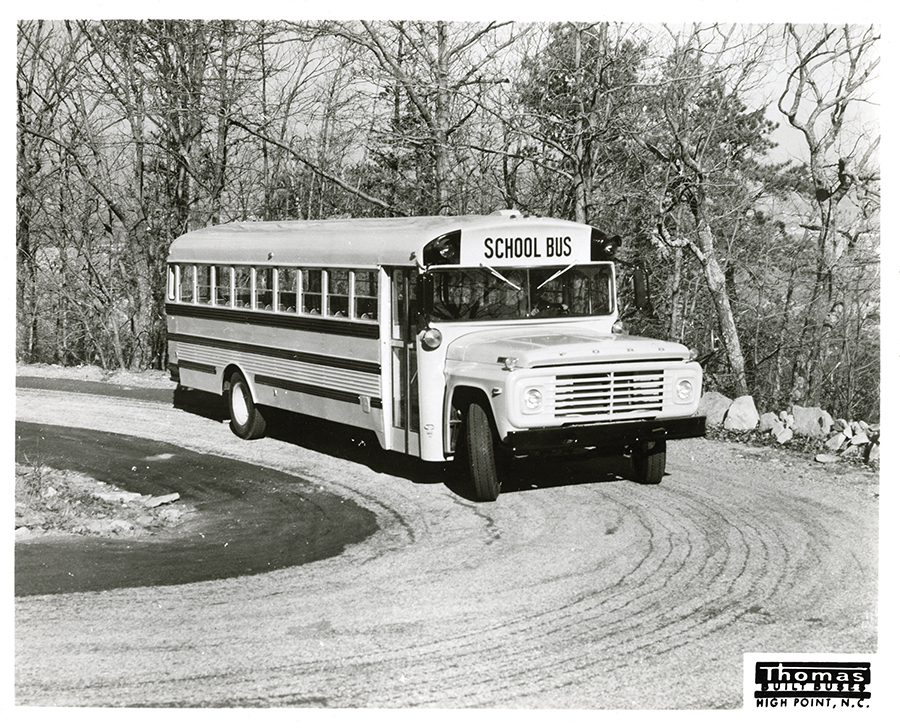
My own confession centers around a big yellow school bus and Johnny Teeter, my first big crush, who drove No. 15 to Bethel Elementary. 

Love for Johnny drove me to commit a most regrettable fashion misfire.

As Mom tamed my hair into a ponytail most mornings, Johnny honked the horn and waited. My skinny knees knocked together as I ran down the gravel drive, kicking up a cloud of dust. I was breathless by the time the bus door swung open; not due to exertion but the thundering of my heart as Johnny flashed his beautiful pearly whites. He had many assets, but I thought he had the most amazing smile I’d ever seen.

If I got into a scuffle with Buddy the bus bully, Johnny would stop the bus and intervene, pulling me safely to a seat.

Johnny was the perfect guy.

Regrettably, he thought I was too young, which increased my ardor to prove a 12-year difference between a 6- and 18-year-old meant nothing. 

But how?

One fine morning, I slipped out of the house wearing my mother’s purloined girdle (pinned up) and sexy stockings. It was my version of a kiss outfit, hoping to strike Johnny with just how mature I had grown in recent weeks. As I crossed the road with shoulders high, hoping to catch his eye, the thing fell down, puddled around my brown penny loafers. 

I had certainly caught his eye.

Johnny jumped out, bundling the girdle and hose into my book bag. Red faced, I took a seat on the bus as Buddy bellowed with laughter. 

Was it love that was driving me and my friends to assorted, well-intended, fashion mortifications? 

Like toting my awkward leather prison purse — the one my father tooled during his unfortunate incarceration at Maxwell Air Force Base. 

Dad, you see, was a free spirit — so free he stopped paying his income tax until the actual Men in Black from the IRS came to our door and served notice that his life was about to change. 

Say what you will about minimum-security prisons: The godawful fact was that Dad just so happened to be incarcerated with White House counsel Charles Colson. My father protested to the warden that being sent to the same prison as a Nixon defender was cruel and unusual punishment.

He and Colson peeled potatoes while dissecting the finer points of Watergate. They made prison purses and string art. Despite a wary truce, Dad never trusted Colson’s “jailhouse religion.”

When Dad returned, he presented the leather bag to a daughter who had missed him so with pride. After all, he had spent much of his three months at Maxwell making it. The purse accessorized my permed hair, maxi dresses, pink corduroy hip huggers. It could have been worse. 

But I never wore a girdle and hose again, not even in the name of love.

White House Drawing Room

WHITE HOUSE DRAWING ROOM

White House Drawing Room

John Hutton says he can teach anyone to draw U.S. presidents and first ladies. We put him to the test.

By Maria Johnson

Photographs by Mark Wagoner

A Friday afternoon.

A few cans of seltzer water.

A half dozen No. 2 pencils.

A projector.

A teacher who knows what he’s doing.

And a half dozen good-humored students.

Welcome to art class, O.Henry style.

Recently, we drafted a sketchy crew, in the best sense, to mosey over to the magazine’s office in Greensboro’s Revolution Mill.

Our recruits accepted the invitation — OK, it was more of a plea sweetened by the promise of snacks — to test the skills of John Hutton, a professor of art history at Salem College in Winton-Salem.

Hutton claims that he can teach anyone to draw a U.S. president or first lady, and he’s willing to put his executive powers on the line, with good reason.

Last year, his book, aptly named How to Draw U.S. Presidents and First Ladies, was published by the White House Historical Association and won the 2025 American Book Fest Book Award for Best Children’s Novelty and Gift Book.

The workbook gives step-by-step instructions for rendering the 45 men who have served as president.

The book also depicts 47 women — most of whom were actually married to a POTUS.

Two presidents — Woodrow Wilson and John Tyler — were widowed and remarried while in office. They’re shown with two wives each.

One prez, James Buchanan, was a lifelong bachelor. His niece, Harriet Lane, served as the de facto first lady, socially speaking, so she graces Hutton’s pages just as she graced 1600 Pennsylvania Avenue.

Back to art class. On the day we gather, Hutton is full of fun facts for our students, who are friends and office neighbors of the magazine.

Participants include State Farm Insurance agents Margo and Archie Herring; Susan Sinnott, office manager of Alem Dickey Keel Interior Design; Pam Garner, president of Triad Sales & Recruiting Solutions; Harsha Mirchandani, development director for College Pathways of the Triad; and Moe Miles, who, with his wife Autumn, owns and operates Greenlove Coffee.

As they arrive, everyone wants to make one thing clear: In no way does their drawing ability reflect their professional prowess.

1Notch a “V” just below the second horizontal line on the grid, he tells them. That’s the tip of the nose.

Add flared nostrils and keep your pencils moving upward.

This brings you to the eyes, which land smack dab on the first horizontal line. Start simply: dot, dot. Brows undulate above that.

Now, drop down to the mouth. Abe’s lips fall just above the bottom line.

At this point, the faces on everyone’s papers — as well as the image that Hutton projects on the wall — bear no resemblance to Abe.

The magic happens when Hutton instructs his pupils to add high cheek bones — “question marks,” he calls them — and the sidelines of a lean face.

Suddenly, six Abes emerge.

And so do astonished smiles on the faces of our of budding artists.

They can draw.

The mood loosens as Hutton guides them through Abe’s wrinkles.

Obviously, Abe lived preplastic-surgery era, several people observe. His elevens — worry lines between his eyebrows — also indicate that the late unpleasantness might have been even more unpleasant, cosmetically speaking, owing to the absence of Botox.

A few lines later, Abe’s face is fully fleshed out with his wavy hair, large ears and real-deal bow tie. No clips-ons for No. 16.

He looks fit for a play-money penny in each of the students’ drawings.

“Everybody does it a little bit differently,” says Hutton.

Except for Margo and Archie’s Abes. They’re essentially twins.

What is it they say about married couples? After a while, their drawings of Abe Lincoln start to look alike?

Chitchat flows between our newborn Picassos as Hutton brings up the second subject of the day:

Jacqueline Kennedy Onassis, the wife and later widow of John F. Kennedy. She also founded the White House Historical Association.

There’s another piece of trivia worth preserving.

In sharp contrast to Lincoln, Jackie was a style maker, setting fashion standards with her bouffant hairdo, flip curls and pearl chokers.

Hutton flashes his example on the wall and instructs his students to start again with the nose.

“She has a broad nose, but not as broad as Abraham’s,” he says. “Her eyes are going to be well below the eye-line. They’re fairly wide set, much more than ordinary.”

Jackie’s lips, he points out, are rather full, and her mouth turns up slightly at the corners.

“That’s what makes her look friendly,” he says.

By this time, our students are getting friendly with each other.

“Do you need an eraser?” Harsha asks Susan.

“You don’t have any left,” Susan teases back.

They speculate about whether Jackie’s lips were plumped by filler.

When Susan draws one of Jackie’s bob earrings next to her jaw, Harsha joshes that it looks like a cyst: “She’s got to get that thing drained!”

Pam texts her husband to ask what he’s doing at work. She sends him pics of her sketches to flaunt her fun.

Moe is so impressed with his work that he considers adding it to the Greenlove menu.

Next to a decaf Lincoln latte perhaps? A caramel Jack-iat-O.?

These reluctant creatives — who initially wanted to leave their names off their papers for fear of being ridiculed — now want to show off their works.

“I have skills!” marvels Archie, looking at his handiwork.

Margo asks Hutton if he’s ever met an unteachable student.

Every ounce the teacher, Hutton refuses to say yes.

Learning is a process, he says, and the important thing is to stay at the process.

“I try to help them do it better,” he says.

In the end, the class gives Hutton thumbs-up on his teaching ability.

“I think your method is highly effective, the way you break it down,” says Harsha.

Class is dismissed and everyone leaves clutching sketches worthy of the White House — refrigerator. 

Well, Hello, Dolley!

Try your hand at drawing Greensboro’s
own Dolley Madison

She was the OG of FLs.

Before anyone called the first ladies “first ladies,” Dolley Todd Madison, who spent her babyhood in what’s now Greensboro, shaped what people would later regard as the role of a first lady.

She was married to James Madison, who would become the country’s fourth POTUS, but before that, she handled the White House social life of their friend, Thomas Jefferson, whose wife had died before he assumed office as the third U.S. president.

Dolley, who famously threw small parties called “squeezes” — think what you will — was known as the D.C. hostess with the most-est, which is probably why the Hostess snack cake company once had a line of Dolly (with no “e”) Madison baked goods.

Raise your hand if you remember raspberry Zingers.

Anyhoo, Dolley was on-point, stylistically, and more than a little rebellious for her time.

She made turbans with tassels a thing.

She dipped snuff.

She also turned the White House into a veritable Baskin-Robbins on the Potomac, generously dishing out the frozen confection that Thomas Jefferson, a former ambassador to France, first introduced to the White House as a taste of continental culture.

Let’s face it: if Dolley were around today, the girl probably would be pierced and tatted, though maybe not for her official portrait.

Which brings us to an actual portrait of Ms. Madison. Because no one posted pics — or even took pics — back in Dolley’s day, paintings are the only way we have of knowing what she looked like.

If you want to try John Hutton’s method for yourself, pick up some colored pencils and use the grid we’ve provided to create your own version of DM. Feel free to take some creative liberties and send your best sketch to cassie@ohenrymag.com or drop your work in an in-feed Instagram post and tag us in the image: @o.henrymag.

The winner will receive a copy of John Hutton’s book and a place in a forthcoming issue.

Step 1

Step 2

Step 3

Step 4