Omnivorous Reader

Omnivorous Reader

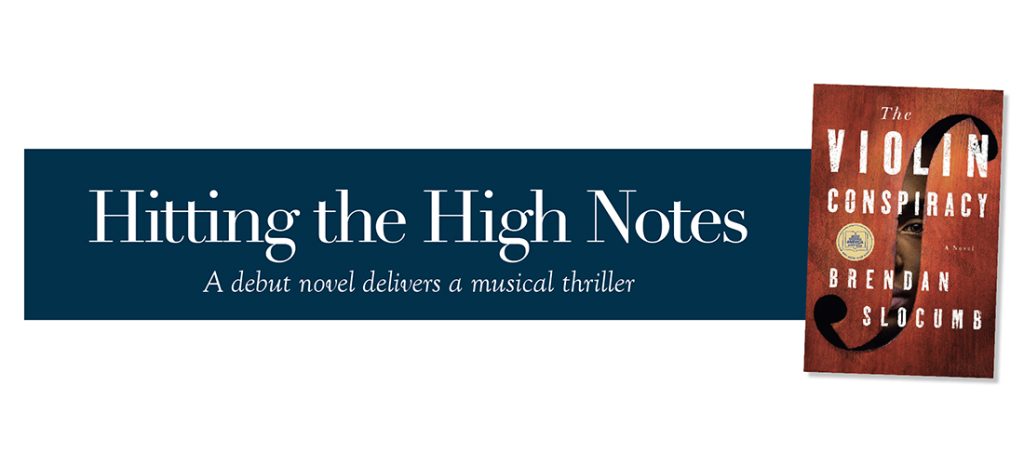
Hitting the High Notes

A debut novel delivers a musical thriller

By Anne Blythe

Brendan Slocumb’s literary debut, The Violin Conspiracy has been billed as a mystery, a musical thriller that takes readers across continents on a page-turning hunt for a valuable Stradivarius violin. While the story is suspenseful enough, the whodunnit is not much of a mind-boggler in the end. The true hair-raiser revealed in this coming-of-age story is the institutional racism that persists in the classical music world and the talented musicians of color these stubborn customs threaten to mute.

Slocumb is familiar with the story. He grew up in Fayetteville, received a degree in music education from the University of North Carolina Greensboro, and has performed in symphonies, where he typically is one of few Black men playing a violin.

Only 1.8 percent of musicians performing in classical symphonies are Black, Slocumb writes in an author’s note attached to the end of the novel. Only 12 percent are people of color.

“Music is for everyone,” Slocumb writes. “It’s not — or at least shouldn’t be — an elite aristocratic club that you need a membership card to appreciate: it’s a language, it’s a means of connecting us that’s beyond color, beyond race, beyond the shape of your face or the size of your stock portfolio.

“Musicians of color, however, are severely underrepresented in the classical music world — and that’s one of the reasons I wanted to write this book.”

Readers are plunged into the story of Rayquan “Ray” McMillan, Slocumb’s protagonist, in a New York hotel room “the morning of the worst most earth-shattering day” of his life.

The aspiring violinist orders scrambled eggs, juice and coffee from room service for him and his girlfriend. Lost in thought in the shower, he ponders the fingering of Tchaikovsky’s Concerto, the piece he plans to play almost a month later at an international competition. When he prepares to leave New York on a flight home to Charlotte, he discovers that inside the case that typically holds his nearly priceless violin — a Stradivarius his grandmother (unaware of its immense worth) had given to him as her grandfather’s old fiddle — was a white Chuck Taylor shoe with a ransom note on a sheet of paper folded in thirds.

SEND $5 MILLION

IN BITCOIN FROM BISQ

TO WALLET 34U69AAV89872

Not only does the note launch an international investigation into the whereabouts of the violin, it serves as the instrument to delve back into Ray’s boyhood and the school music classes that changed the trajectory of his life.

Like Slocumb, Ray grew up in North Carolina in a family that expected him to “get a real paying job” instead of taking a path toward a classical music career in a world where few people looked like him. Instead of encouraging her son to follow his dreams, Ray’s mother told him to “stop with that noise,” take the GED and get a job at Popeyes so he could help with the family expenses.

Ray meets a music teacher who becomes a mentor who pushes him beyond such confining expectations and encourages him to join a world where he would be the quintessential underdog, an endearing and hardworking protagonist who is easy for readers to rally behind.

Ray’s grandmother, Nora, recognizes his affinity for music and pulls out an old “fiddle” from her closet for him to practice on in the summer, when the school rentals were not available. It had belonged to her grandfather, a former enslaved man, who had a musical gift, too.

That “fiddle,” spruced up and revealed for what it was, quickly drew interest from extended family members who were more interested in its value than in Ray — until he became a rising star in the classical music world and a bit of a media darling able to coax a better living than they had imagined from its strings. Not only does his own family seek to share in the value of the instrument, Ray has to fend off claims of ownership from the family that had enslaved his great-great-grandfather. None of them appreciates the questioning they face when Ray’s dilemma casts suspicion on them all.

As Ray frets over the whereabouts of his kidnapped violin, leaving most of the investigation to law enforcement and an insurance agent, he also has to continue practicing for the international Tchaikovsky competition. His musical talent transcends the bow and strings in his hands. Even without his prized hand-me-down, the unlikely competitor is a real contender, one who will not be held back by ransom notes and side dramas.

Through a cast of characters, some better developed than others, readers learn about the jockeying of musicians in the classical world, vying for bragging rights that come with lucrative invitations to perform solos and lead prestigious symphonies. Ray describes the difficulties that a Black artist — especially one from humble roots without exclusive connections from famous conservatories — faces as he pursues his passion.

“You work twice as hard,” Slocumb writes. “Even three times. For the rest of your life. It’s not fair, but that’s how it is. Some people will always see you as less than they are. So you have to be twice as good as them.”

Ray didn’t need his PopPop’s instrument on the international stage. Though the kidnapped Stradivarius remained missing during the competition, his talent shone brightly. As opportunities from around the world came his way, he got the clue that helped him — not the team of investigators he’d relied on — discover who slipped the sneaker into the violin case.

There’s a crescendo when Ray opens a door, testing his theory about who made off with the family heirloom. “PopPop’s fiddle — his own most prized Stradivarius violin — grinned up at him unharmed,” Slocum writes. “Perfect.”

In the end, without totally spoiling the whodunnit, it really doesn’t matter where the violin is throughout the pages of Slocumb’s mystery. Its presence and absence string together a tale that will strike a chord.   OH

Anne Blythe has been a reporter in North Carolina for more than three decades. She has covered city halls, higher education, the courts, crime, hurricanes, ice storms, droughts, floods, college sports, health care and many wonderful characters who make this state such an interesting place.

Behind The Barn Doors

Behind The Barn Doors

A groovy roll in the hay with some guys and dolls on the outskirts of town
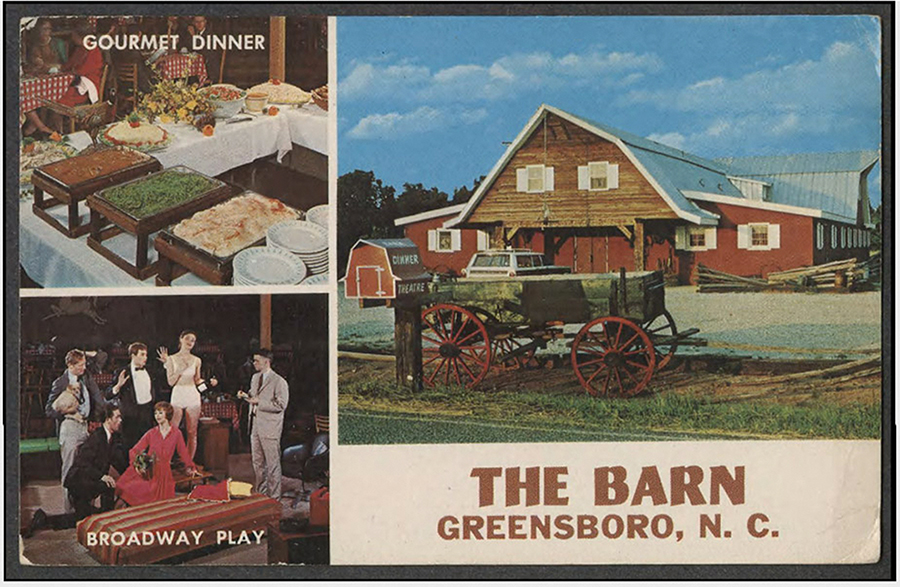
This is not the story of a place, but a snapshot from a bygone era, when a madcap company of young, stage-hungry performers were tossed into a singing and dancing whirlwind of entertainment that blossomed into lifelong friendships and happily-ever-after romances.

The Barn Dinner Theatre on Stage Coach Trail, the oldest continuously running dinner theater in America, has treated our community to remarkable performances for almost 60 years now, providing an outlet for creative expression by artists who have inspired generations of actors and directors.

The very first Barn Dinner Theatre was established in Roanoke, Va., in 1964 by Howard Wolfe, followed quickly that same year by The Barn in Greensboro. Within a short span, 27 Barn Dinner Theatres spread out across the country, concentrated mostly in the South. Wolfe’s insurance underwriter, Conley Jones Sr., took notice of how phenomenally successful this “play with your food” dinnertainment concept was. Conley, who died in 2015, ultimately purchased The Barn in Greensboro.

Productions were cast and produced by J. G. Greene in New York City, then directed in Roanoke before making their way to Greensboro, on to Atlanta, down to Marietta in Florida, and out to the other Barns. As soon as one show moved on, another was positioned to hit the ground running.

Advertisements touted the fact that “New York actors” were staging Broadway quality shows. Performers were guaranteed a six-month run with dinner and a free room on the premises. Stars who came through town in the 1960s included a young Fannie Flagg, Robert Blake and Mickey Rooney, but most of the working actors were unknowns.

After an all-you-can-eat buffet, the “Magic Stage” with actors and props in place descended from above via hydraulic motors. Within a minute the show was underway.

“I got called in by [UNCG theater department head] Herman Middleton,” actor Bobby Bodford says of his introduction to The Barn in 1969. “He said that the Barn Dinner Theatre had lost an actor and was looking for a young male that could learn lines quickly. This was early afternoon and I had to go on that night.”

Bodford was told by Conley Jones that his salary would be $50 a week plus tips, “And I said, ‘Tips for what?’ And he said, ‘You’ll wait tables up until about 20 minutes before the show.’” This was the era of brown bagging, and, in North Carolina, no alcoholic drinks were served. Customers brought their own booze and ordered whatever they wanted to mix it with.

At the end of each performance the actors would line up near the exit where customers had to walk past them. “I didn’t want to do it,” Bodford recalls. “The New York actors told me, ‘No, you definitely want to do this. You watch, they’ll shake your hand and remember you waited on them, run back to the table and put down a few bucks.’” One summer Bodford bought a motor home just from his gratuities. Not long after, professional waiters were hired and actors started making more than $50 a week.
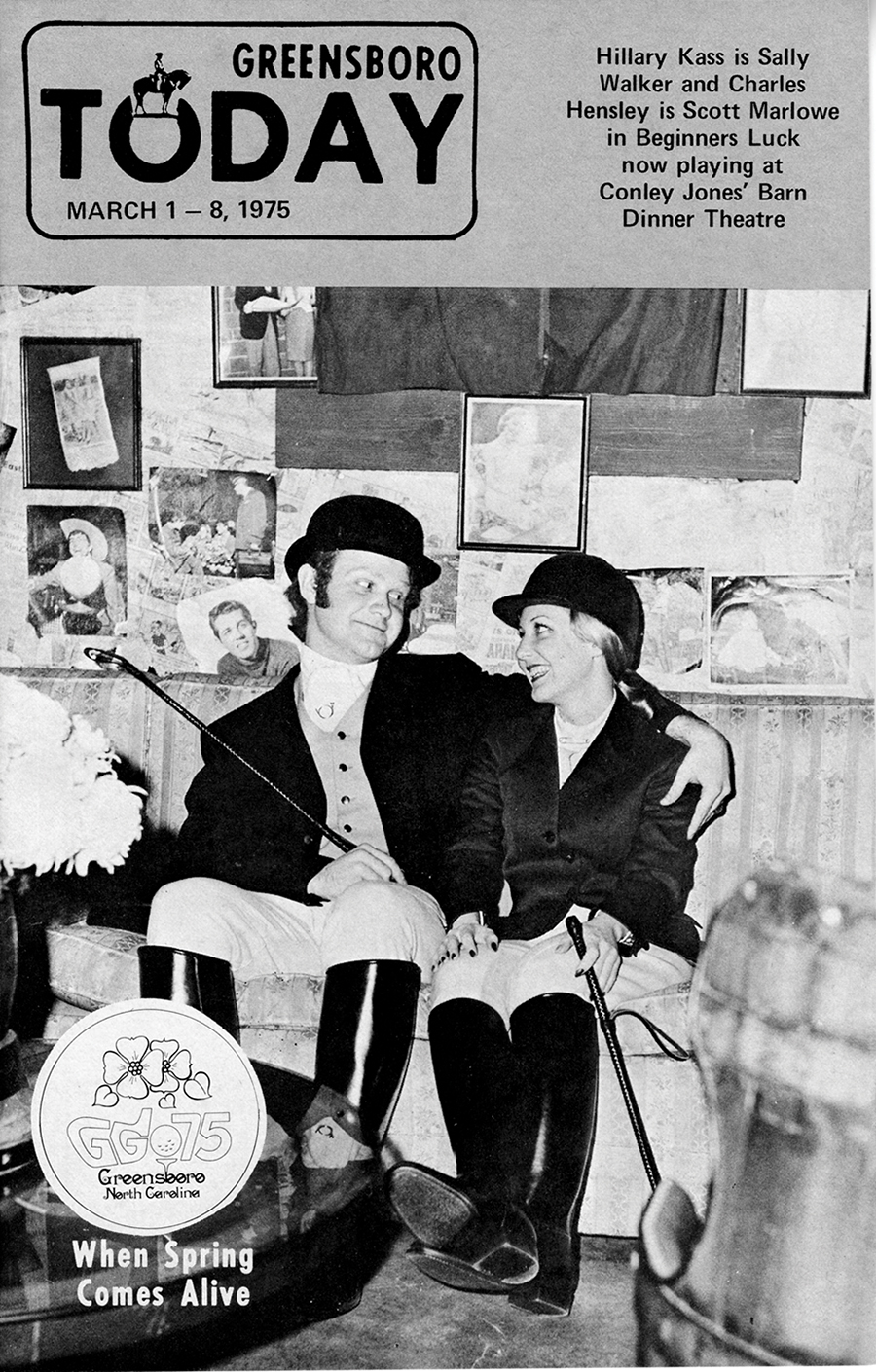
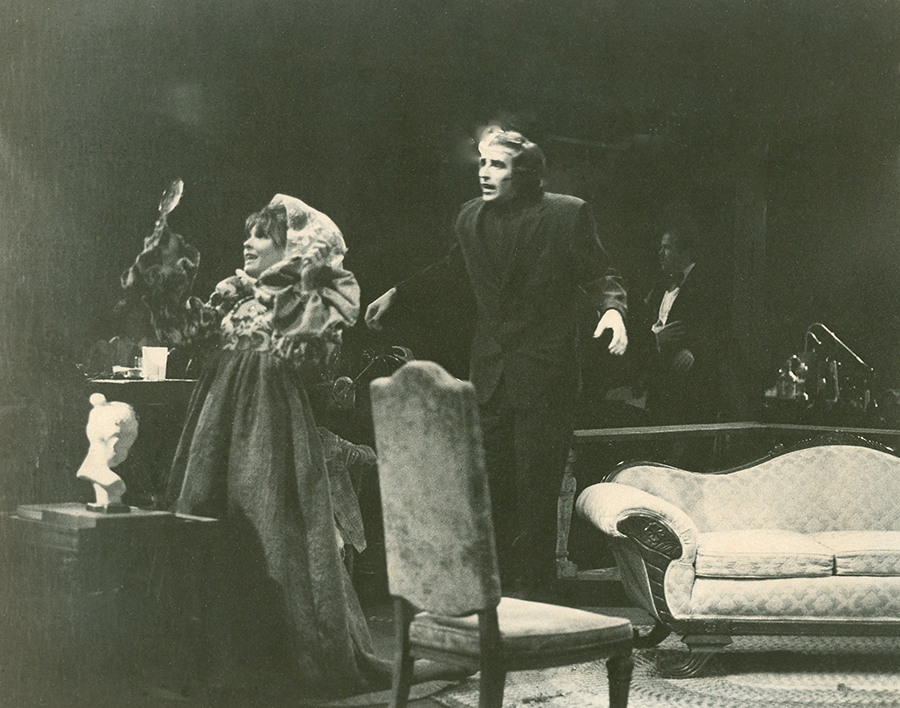
    

Around 1969, some of the theater owners in the chain decided it would be more cost effective to hire their own actors and produce plays themselves. “They would refuse to pay the franchise fees,” Bodford says. Eventually a court ruled that theater owners could do as they please, even use The Barn name. “Once they figured that out, theaters started cropping up everywhere,” Bodford says. The Barn Dinner Theatre here switched over to locally produced productions as well. Still, almost every night the house was sold out.

Barry Bell was studying drama at UNCG when he first became associated with The Barn. “We weren’t supposed to work out there or do theater anywhere but school, but I did anyway,” he says. “The first couple of shows I did there were in 1969, so I missed Robert De Niro by two years.”

Did De Niro actually appear at The Barn? “My cousin, Michael Lilly, was wardrobe on Raging Bull,” Bell says. “De Niro told him, yeah, he was there. As the lead in a play called Tchin-Tchin, this was one of the budding actor’s first paid gigs, receiving $80 a week for a performance described as, “heart-warming” and “a delightful escape into romantic comedy.” De Niro was quoted as saying he enjoyed his experience in Greensboro, but Conley Jones circulated a rumor that the 23-year-old actor was fired because he refused to wait tables.

“Somebody was supposed to direct a show and didn’t come down,” Bobby Bodford says about transitioning from actor to director. “It was one of those things like, well, somebody’s gotta do it. Once I started directing, I really didn’t want to act anymore.” Not having to hang around for the monthlong run of the play, “I could open up a show here, then go to Tennessee and open a show there. I really enjoyed that more.”

James (Jimmy) Fisher was in graduate studies at UNCG in 1974 when Bodford cast him in one of his shows. “It was a play called Beginner’s Luck,” Fisher recalls. “The first play I directed was called Spinoff. Neither of them are great dramatic works. They were the kind of sitcom things that were very typical in those days.”

“It’s a funny thing about the theater,” Fisher says. “Because you really do build relationships very, very quickly — relationships that you remember the rest of your life. And sometimes you never see those people again, you know?” Bodford was directing Fisher in a production of Annie Get Your Gun starring an actress from New York, Dana Warner. “After a considerable effort on my part,” Fisher says, “she finally went out with me. And we’ve been married for almost 46 years.”
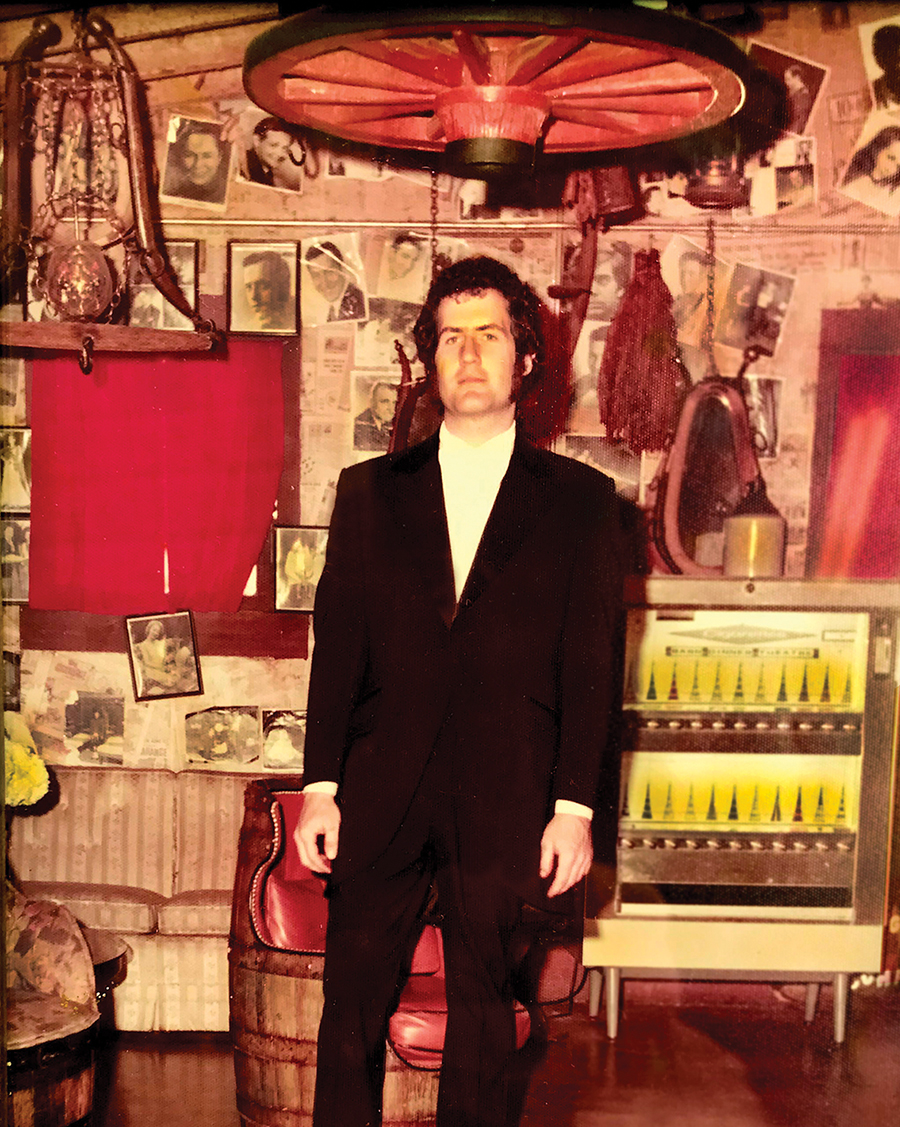
Katina Vassiliou Madison had been appearing in productions at Page High School and with Livestock Players in the early ’70s. As an undergrad at UNCG she made her debut at The Barn. “I jumped at the opportunity,” Madison tells me. “You rehearsed all day for two weeks and then boom, you had to be ready to perform two matinees and performances every night. Your energy had to always stay up.” Madison accepted a day-time position in the reservation office. When not onstage, she served wine and beer in the lobby. “I’d be stage manager, whatever job they had open,” she says. When an actor’s zipper ripped open on stage it fell on Madison to stitch it up: “I had to get down on my hands and knees to sew up his fly in the lobby,” she says. “You can imagine how funny that looked. I can vividly remember thinking, ‘Please God, don’t let anybody go to the restroom at this moment.’” Naturally there were mishaps and mischief galore this is the theater after all.

“A rat fell out of the vent one time into somebody’s plate,” Bodford recalls. “Conley came over and said, ‘I am not gonna charge you for that. You got something extra special for free.’ Seriously, and then he just left.”

“Brenda Lilly was playing a Cockney maid,” says Mina Penland recalling an onstage prank. “An actor named Randy Ball packed his suitcase with bricks and she’s supposed to go off the stage with it but she couldn’t lift it. So she ad-libbed for 10 minutes and the audience loved it.”

“In Last of the Red Hot Lovers, there’s a scene where Barry Bell’s character has to roll a joint,” Bodford recalls. “Barry said, ‘I’ve been told if you take Lipton tea and roll it up, it kind of has the same smell.” After a few performances smoking that tea, “We’re sitting in the green room when two detectives come in and want to go through our props because somebody said they’re smoking marijuana on the stage at The Barn Dinner Theater.”

It’s a distinct, irreplicable, zen-like experience when everything clicks, audiences and actors become like one, momentarily inhabiting a world entirely unto themselves. After the final bow, it takes hours to decompress from a peculiar form of exhilarating exhaustion. “We had lots of wild parties running around in the field behind the Barn, butt-naked, drunk . . . ” Bodford says. “That’s something you probably shouldn’t write.” Oops!

Conley Jones was, by all accounts, a colorful character who wore pistols in a holster on his hips, parading around like the caricature of a Southern sheriff — the sort of person who had people continually thinking, “I can’t believe you just said that out loud.” He considered actors a necessary evil. “He didn’t understand that we were the reason he was there,” Bodford says. With “no love for theater and no knowledge of how it worked,” Jones would refer to the players as “them goddamn actors.”
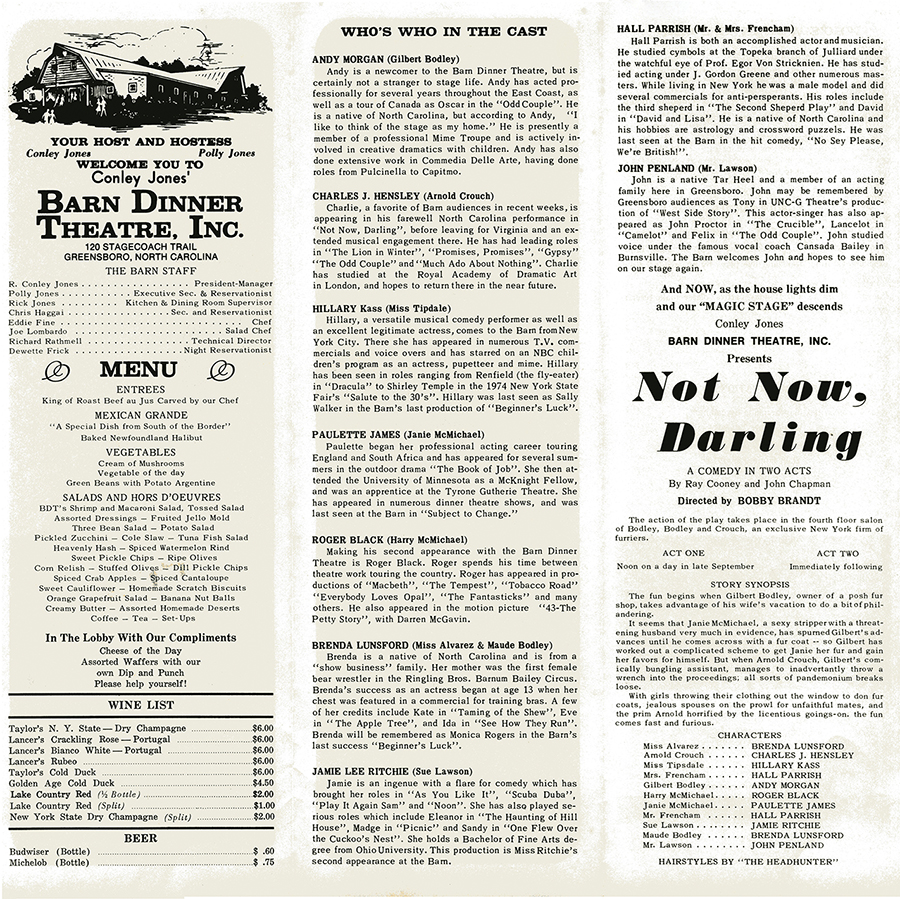
The performers’ quarters upstairs could house around eight people.  An intercom system allowed them to monitor the show going on downstairs. “This big actor named Steve accidentally walked into Conley’s office one night and he was listening into our rooms,” Bodford recalls. “Steve was so upset the next morning he got a screwdriver and disabled every single one of them. And Conley never said a word about it.”

Barry Bell returned from working in New York to run The Barn from 1981 until 1992. “I did Fiddler on the Roof three times,” he says. “Fiddler and Oklahoma were licenses to print money. We normally ran straight plays about four-and-a-half weeks and musicals about six. I think Oklahoma ran like 16 weeks.”

The most difficult aspect of Bell’s tenure was dealing with The Barn’s owner, who could, at times, engage in shady practices. “Conley Jones finally got caught and burnt by the IRS,” Bell recalls. “I got a check for almost $7,000 and the waiters were getting checks for 3,500 bucks.” On the other hand, Bell says, “If a show sold really well, Conley would come up to me the next morning and say ‘Thank you Barry, thank you a lot,’ and stick $600 in my pocket.”

Barry Bell insists the buffet was good for what it was. “They always had that huge steamship round of beef. And the giant halibut, some of them 150, 160 pounds that were five feet long. A lot of people loved that fish, but, to this day, I can’t eat halibut or roast beef.”

Lorrie Lindberg, who was in grad school at UNCG in the early ’80s when she began working at The Barn, recalls “I did A Couple of White Chicks Sitting Around Talking and Cat On a Hot Tin Roof.” Lindberg worked at a few out-of-town venues after she graduated. “When I came back to Greensboro, I had been told by tons of people that I needed to meet Barry Bell, but we never were in The Barn at the same time.” Bell would be in New York when Lindberg was at The Barn or vice versa. “Everybody that had told us that we needed to meet each other were all standing in the lobby at The Barn because I was dropping off a friend of mine who was doing The Mousetrap. They were all in that show that Barry was directing. So they all saw us meet in the lobby at the Barn.” That was 1983, “We started living together maybe a week after that and we’ve been together ever since.”

As one of several Barners who moved to Los Angeles to pursue a career, Bobby Bodford eventually found himself working as Angela Lansbury’s costumer on Murder She Wrote. “She liked what I did and she liked working with me,” he says of the legendary actress. “But she was always saying, ‘Go back to the theater.’” Bodford had fallen in love on the courthouse steps of the Back to the Future set and was now married. “I never understood why the heck I was in Los Angeles.” Wanting children but having no desire to raise them in the City of Anything but Angels, in 1992, “We decided we were going to move back to Greensboro and Angela was delighted to hear it.”

Barry Bell severed his ties with the theater in 1992. That’s when, on the road to Greensboro, Bobby Bodford received a most unexpected phone call. “Conley Jones heard that I’m coming back and he says, ‘I’ve got people here that say you would never direct another play for me.’ I went, ‘Oh, no, I will! I don’t have a job,” he recalls. It felt something like home and Bodford spent the rest of the ’90s as The Barn’s creative director. “It was more sophisticated than it had been previously. It was a big deal. I think even then it was six or eight bucks for dinner and a show.”

Lots of young actors who cut their teeth at The Barn went on to bigger things. “Beth Leavel, who just won a Tony a couple of years ago, worked at The Barn a bunch,” Bell says. Lillias White achieved stardom after wowing audiences in Barn presentations of Love Machine and The Color Purple. Nominated twice for a Tony Award, White brought it home in 1997 for Best Featured Actress in a Musical. Winning both an Obie and Drama Desk Awards for her musicality, she’s well-known to youngsters as the voice Calliope in the Disney flick Hercules.

When Conley Jones passed away in 2015, Ric Gutierrez had been manager and producer at The Barn for two decades. Barry Bell and Lorrie Lindberg moved to Richmond, where they both taught at Virginia Commonwealth University. He has since retired. Bobby Bodford still directs theater productions in the area. “My wife Nicole became a member of our theatre family the minute my friends met her. I’m no longer Bobby — it’s Bobby and Nicole,” he says.

“I ended up teaching in Indiana for 29 years,” James Fisher says of his post-Barn days. “My wife, Dana, and I talked all the time about retiring in Greensboro. UNCG was looking for a department head and got in touch with me about the possibility of applying.” Fisher served as head of the theater department at UNCG from 2007 until he retired in 2019, winning multiple awards for excellence and authoring several books.

“It’s all interwoven,” Fisher says upon reflection. “Barry Bell, Billy Wagner, Bill Rollerson, Jan Powell, Charlie Hensley, Michael and Brenda Lilly, on and on. These are people who have come in and out of our lives over what is now getting close to 50 years. We always talk about getting together and doing one more show. I doubt it’ll ever happen, but it’s fun to think about.”  OH

An abundance of thanks to Barn alumnus Charlie Hensley who provided connections to these esteemed performers and educators, allowing this humble scribbler to witness from the wings a magical moment of theater history.


Showboat Dinner Theater
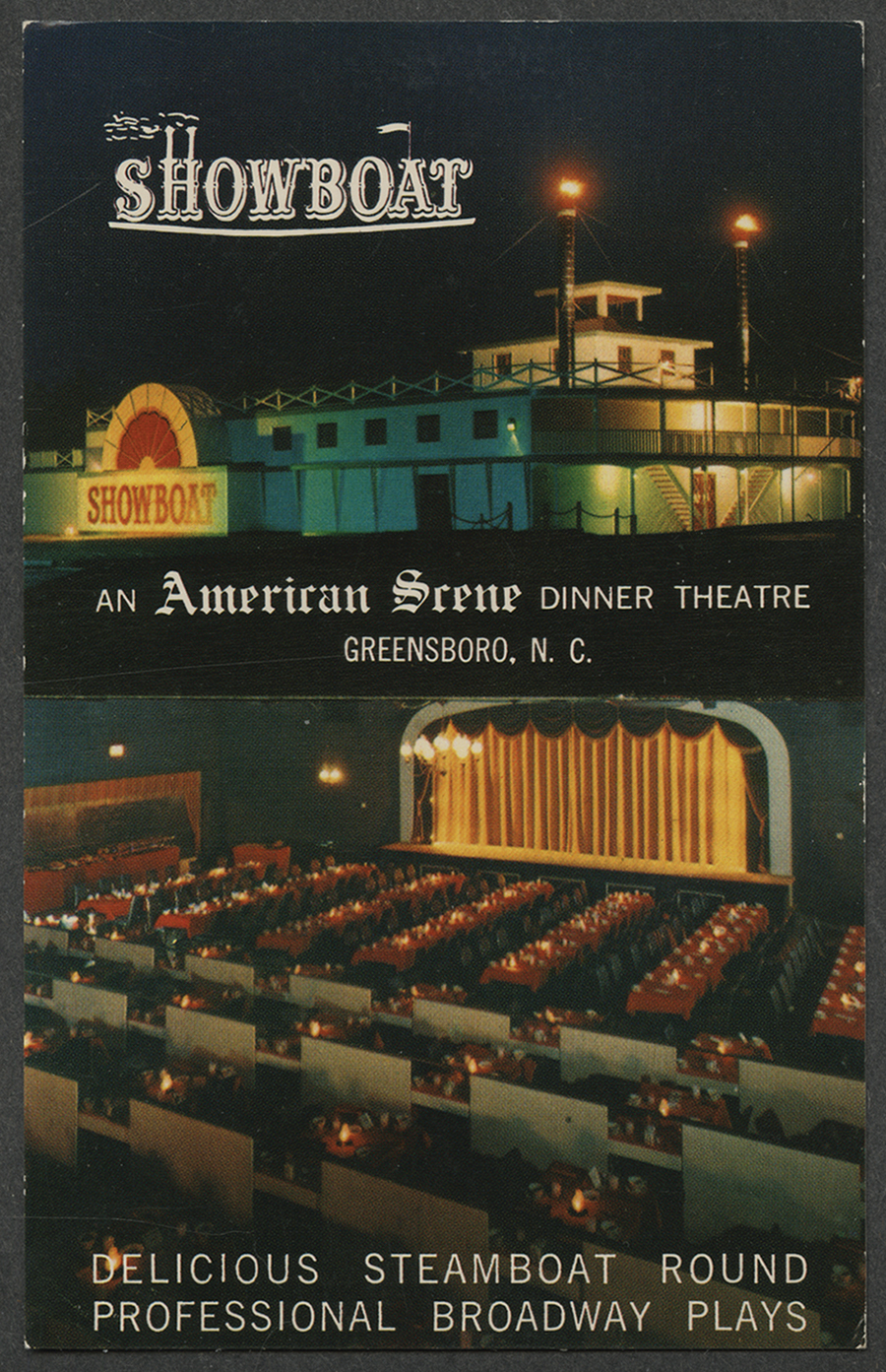
In 1965, Showboat Dinner Theater, An American Scene Dinner Theatre, opened off N.C. Highway 68 on Gallimore Dairy Road in a building resembling a New Orleans riverboat. Patrons crossed a bridge over a man-made lagoon to traverse from the parking lot to the theater. Just about every night, Conley Jones would corral an employee to drive him over to the Showboat to count the cars in the parking lot.

“The Showboat used, if I’m not mistaken, union Equity actors,” Barry Bell notes. “And Conley, at The Barn, didn’t. He didn’t even pay the actors to rehearse the new play.” There’s a legendary story about what happened when Actor’s Equity came down from New York to organize a protest. “If you look at the front of The Barn, there are two windows up in the peak,” Bell says. “Conley’s desk was right there by that window and he threw M-80 fireworks out the window at them.” One of the trade papers sported a headline that read something like, “North Carolina Theater Producer Fires on Equity Protestors.”

Around 1969, budding actress Mina Penland was in rehearsals for I Do, I Do, directed by Bobby Bodford at the Showboat Dinner Theatre, which had opened four years earlier. That production never made it before an audience due to someone in management absconding with the funds, leading to the theatre closing. She ended up doing plays at The Barn and her brother Dodie Penland became the Barn’s stage manager, who greeted the audience as it arrived.

Showboat went under after just a few years and became Jung’s Galley, the new location for Jung’s Chinese restaurant, formerly located in a Tudor inspired mansion on Church Street, close to Summit Avenue. In 1977, the site became Bill Griffin’s Boondocks nightclub for a time.  OH

Sazerac February 2023

Sazerac February 2023

Scene & Heard

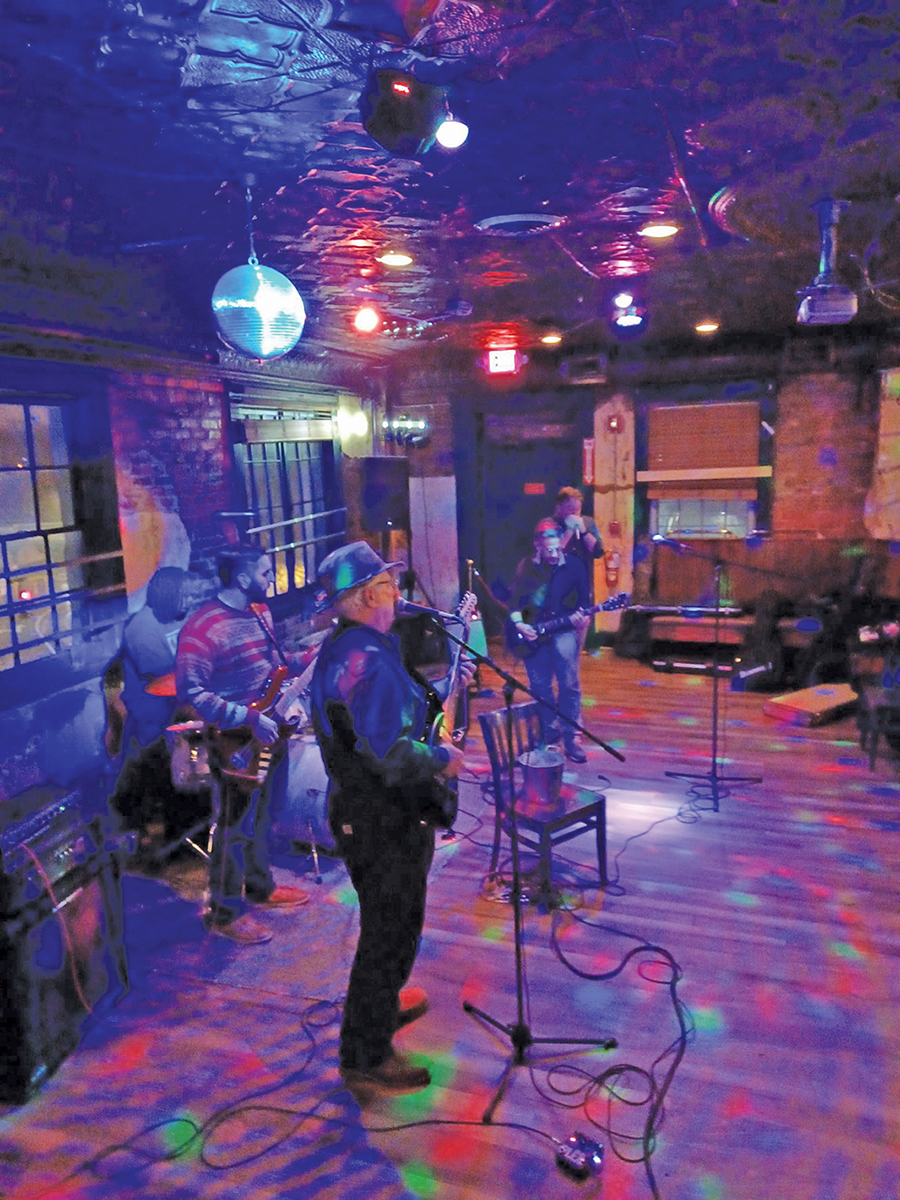
Wednesday Night Blues Jam at Ritchy’s Uptown Restaurant and Bar is fast becoming the place to be. Hosted by Shiela Klinefelter, an accomplished bass player and vocalist with Shiela’s Traveling Circus, and Chuck Cotton, it’s a great night of raucous melodies sure to get your feet moving.
Shiela’s been heading up jams on Wednesday nights for over 30 years, beginning with her former band, The Ladies Auxiliary. “The one at Ritchy’s started in the winter of 2021, about a year-and-a-half ago,” she tells me.

The opportunity is open to any musician who wants to play the blues, whether professional or still learning. “We provide backline,” Shiela says. “So they just show up with a guitar or their drum sticks, sign up, and I’ll put them up in groups. Each group plays four songs so we get a lot of great music that way.” They are occasionally joined by Shiela’s husband, Robert Klinefelter, aka “Big Bump” of Big Bump and the Stun Gunz, one of the Triad’s longest-running boogie bands.

In the heart of Hamburger Square on the most happening corner downtown, Ritchy’s is located above Longshank’s, which is above Shortshank’s, around the block from Little Brother Brewing on McGee Street at South Elm.      Billy Ingram


Window to the Past

Photograph © Carol W. Martin/Greensboro History Museum Collection

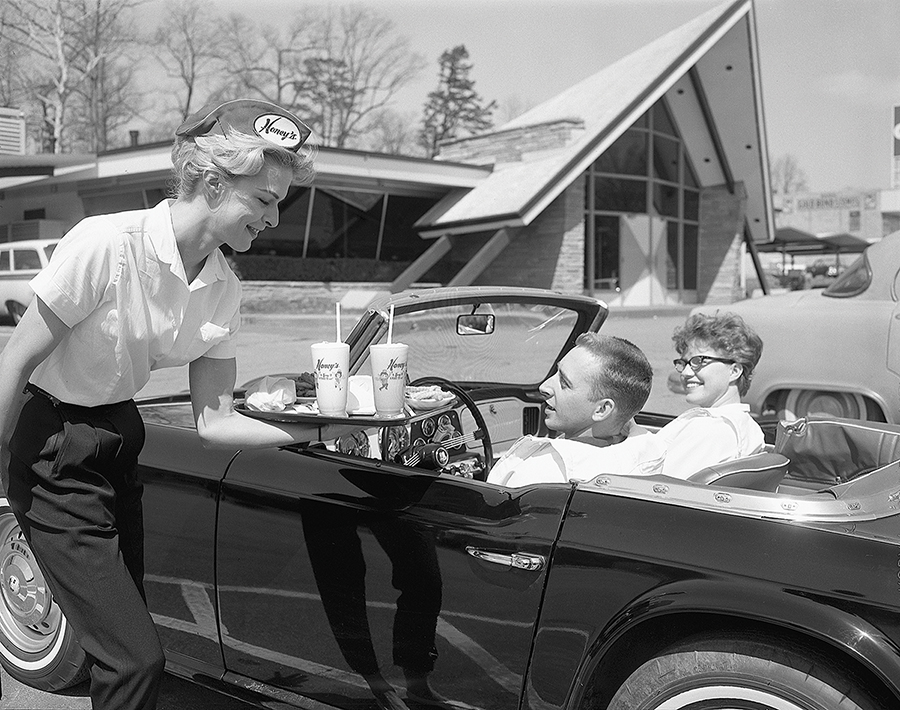
Taking your honey on a diner or drive-in date has been a sweet idea for over 60 years. Thanks to the Greensboro History Museum for this snapshot of the past, taken at Honey’s in 1963.


Unsolicited Advice

Those of us who are proud members of the bleak midwinter — meaning February — birthday club believe our month gets a really bad rap. Yes, the geniuses at the National Weather Service say it’s typically the coldest and snowiest month. But it’s also the shortest of the year — and its days grow noticeably lighter. 

Besides, for all you shivering ninnies who whine that Old Man Winter just won’t go away, there’s so much to take your mind off the weather. If history is your thing, February brings us Black History Month and Presidents Day, celebrating the birthdays of Honest Abe and Old George (assuming they are still in fashion), not to mention the Chinese New Year and the happiest day for florists and chocolate fanatics everywhere, St. Valentine’s Day.

If religion is your thing, February 2 is quite special both here and abroad. In addition to being your humble scribe’s birthday (Home Depot gift cards most welcome), many cultural historians believe Candlemas Day — celebrated across the U.K. and much of Europe to commemorate the day Jesus was presented to the Temple — is the inspiration for our own bizarre belief in the forecasting abilities of a sleepy rodent named Phil: If Candlemas be fair and bright / Winter will have another flight / But if it be dark with clouds and rain / Winter is gone, and will not come again.

Once upon a time, back in jolly old 713 BC, the Romans added January and February, a time previously known simply as “Winter,” to their  calendar, designating February as the last month of the year. Three hundred years later, however, in order to give Christmas a proper home based on a celebration of their Sun God,  Sol Invictus, Roman Christians invented December and rudely pushed January and February into the next year.

However this most misspelled month came into being, those of us who dearly love the bleak midwinter with its still and frosted mornings would like to advise you simpering winter haters to just relax and remember Mother Nature cherishes her rest just below the surface of the frozen garden.

If all else fails, take a nice warm bath with the last of the holiday wine and scented candles. The word February, after all, comes from the Latin word Februa — meaning to “cleanse.”

In the meantime, with a little luck this month, we’ll be out making angels in the snow.       Jim Dodson


Just One Thing

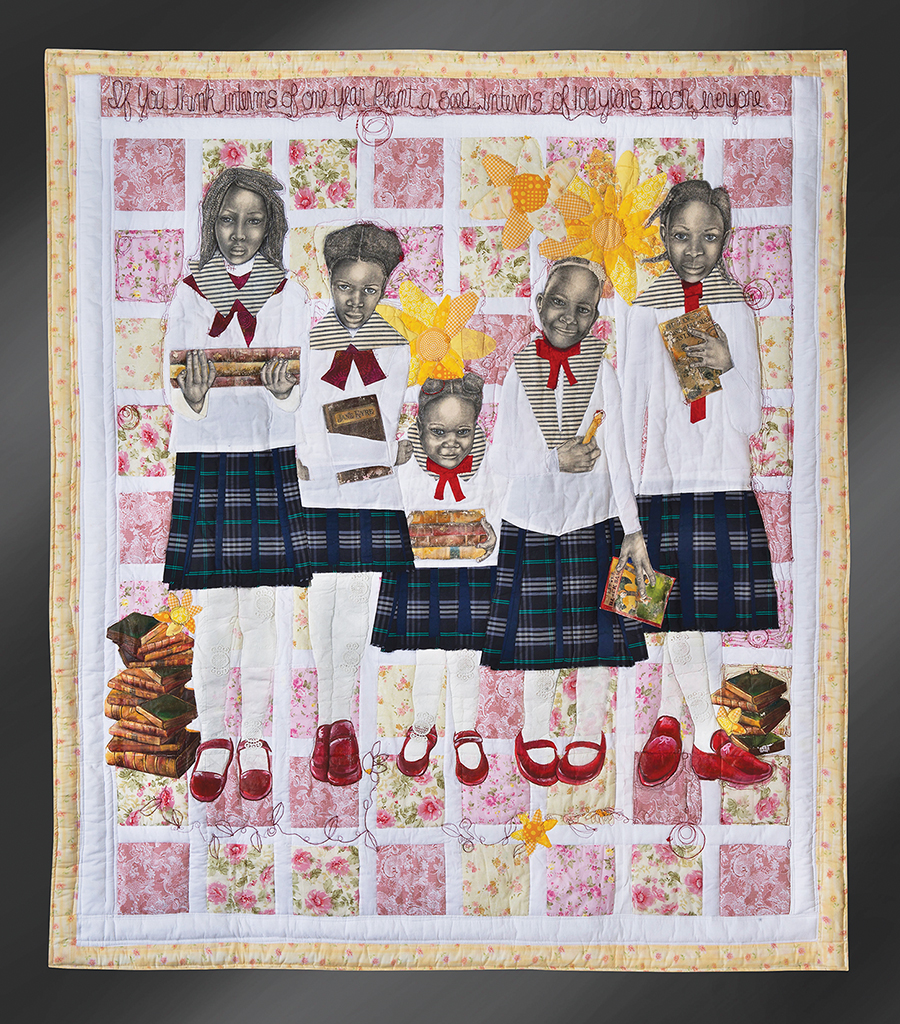
“Conversations with my mother, grandmother and aunts have always inspired me to base my artworks on Southern expressions and idioms,” says Beverly Y. Smith, whose quilt is featured in the Center for Visual Artists’ Woven into Our Fabrics exhibit. Smith says her work may be sparked by a childhood memory. Often, during its creation, she says, she sometimes encounters an unexpected epiphany. Mixing media such as machine-stitched fabric, embroidery, paint and transferred images, the epiphany portrayed in Plant a Seed strongly suggests a rich family tradition of books, both cherished and shared. “For this exhibition, we wanted to show the diversity and range of 10 North Carolina textile artists working in traditional and nontraditional ways,” says Devon Knight, the center’s art and community coordinator. “Textiles have a unique way of weaving themselves into the fiber of our being, while providing a thread between our past, present and future.” Info: mycvagreensboro.org.


Sage Gardener

Let others search for what may turn out to be America’s most unwelcome Valentine’s Day gifts (according to one survey) — heart-shaped boxes of chocolates (22 percent say please don’t), flowers (28 percent!) and furry handcuffs (34 percent). Nope, not me. And I’m going to let you in on a very dirty little secret. The Sage Gardener’s partner in grime really digs receiving seeds and plants on February 14th. This year, for instance, I’m focusing on stinking lilies, members of the aromatic allium family, such as Bulgarian giant leeks, Walla Walla sweet onions and Dutch yellow shallots. Imagine the pleasure of spending more than half a century with someone who loves raw onions on top of pinto beans, 40-clove garlic chicken and scallion pancakes as much as I do. And on the off-chance you don’t have access to the internet, “Like oysters, chocolate and hot peppers, the allium is a secret aphrodisiac.” That, revealed in a no less authoritative source than Well+Good’s YouTube series, “You Vs. Food.” So buy now, plant now, and reap, ahem, the benefits of alliums in the spring, summer and fall. NCSU says it’s prime time to get most of them into the ground. My green-thumbed fairy already has leeks bedded down. Me? I’ve planted a platoon of Egyptian walking onions, which are reproductive wonders, multiplying underground while also producing what my neighbor called “bubbies,” botanically referred to as topsets or bulbils, proliferating at the top of the stalk where flowers and seeds would normally be. Let’s face it. What plants could be sexier than alliums? Suggestions welcomed.       David Claude Bailey

O.Henry Ending

O.Henry Ending

Halfway And Home

“Making a life around here”

By John Adamcik

“He ain’t from around here,” my new friend said as she introduced me to others.  Although it’s been over 10 years, I remember her smiling just enough to inform me that she was joking. Mostly. After all, I had failed the shibboleth by mispronouncing her town of Sophia (I still couldn’t tell you how to pronounce it). And, in her favor, remnants of my Michigan accent told the tale plainly to everyone I met. Still, I was trying to endear myself to these people.

A few months later I revisit the topic with her. “When will I be here long enough to be from around here?” I ask.

“Never,” she says. She points to her husband. “He’s been here over 40 years, he still ain’t from around here.”

He nods. “It’s true,” he says, nonplussed. 

Around here.

Approaching our 20th anniversary of making the Piedmont Triad our home, my family still ponders whether we qualify as being part of “around here.” Admittedly, we’ve been welcomed by the community and engaged in the community. We’ve done our part to strengthen the community. We feel at home.

Our children attended grade school through high school around here. They played sports, joined scouts and made lifelong friends. They worshipped God around here. As our children move forward to new places and new careers, my wife and I reflect on how blessed we have been by all the people “around here” who call this their home and have made us feel welcome.

When we moved here, family and friends asked us where we had planted roots.

“Halfway,” we answered.

It was true. Halfway between family and friends in Michigan and Florida. Halfway between the mountains and the coast. Halfway between the southern and northern borders of our adopted state. Here in southwest Guilford County, we were even halfway between many of the places we frequented in Greensboro, High Point and Winston-Salem. Halfway between closing on our home and our actual move-in date, a memorable ice storm hit the area and knocked down several trees in our new yard, splitting the Bradford Pear in half.

We were halfway in elevation and in weather patterns (according to our observations and at least one reputable seed catalog). We were also halfway in the biblical tracking of a, “three score and ten years” lifespan.

Reflecting on this milestone, I’m reminded that we hadn’t been here long when we realized this community is not at all halfway. Rather, we are at the center. The center of land and space and culture and dreams and life. The center of the hope of growth and of resolute determination.

Like us, thousands upon thousands will be coming to make new homes “around here” as the legacies left by generations of textile, furniture and agricultural pioneers pave the way for a future of new industry. I look forward to helping others plant roots around here.

My family and I are privileged to be around here and to have invested our time in this community. We have grown in ways we could not have imagined. We will celebrate with neighbors, with friends and with family that we are not halfway. We are home.   OH

John Adamcik and his wife Jeanneen live with their family in High Point. John enjoys his role in human resources with a Triad-based nonprofit human services religious organization. In addition to ministry, writing, speaking, and hosting his podcast (Fore Yore Lore), he can be found accompanying Jeanneen to craft shows as public relations for her vintage craft jewelry business.

Wandering Billy

Wandering Billy

12 Cent Dreams

Remembering a local legend in ink

By Billy Ingram

“Comic books helped me to define myself and my world in a way that made both far less frightening. I honestly cannot imagine how I would have navigated my way through childhood without them.”   — Bradford W. Wright

Wright’s not wrong. As a young comic book collector, one of my fave artists was Murphy Anderson. His fluid brushwork bestowed an air of sophistication few artists of that genre possessed. I was surprised to learn, years later, that Anderson was born and raised in Greensboro before moving to New York to work for DC Comics.
Murphy C. Anderson Jr. recognized early on the transformative power that words commingling with pictures could have on the imagination. As a youngster in the 1930s, he’d spend hours lying on the living room floor of his North Spring Street home poring over the comic pages of local papers and, on Sundays, the New York Journal-American, which allowed him to follow the adventures of The Phantom, Mandrake the Magician, and his favorite strip, the scientifically forward-looking Buck Rogers in the 25th Century.

Amy Hitchcock, a former classmate, says, “At Central Junior High there were two boys that sat together all the time and they drew in their notebooks all the time. My impression of Murphy was that he was withdrawn, quiet and always did his own thing, but he was pleasant.” Later, Anderson and Greensboro newspaper legend Irwin Smallwood would become co-editors of Greensboro Senior (now Grimsley) High School’s newspaper.

A college dropout facing certain military service in 1944, Anderson borrowed $100 from his skeptical father to make the rounds of New York City’s funny book publishers. Unknowingly, he was marching into what has become known as the Golden Age of Comics, so christened because sales were so astronomical, upwards of 6 million copies per title.


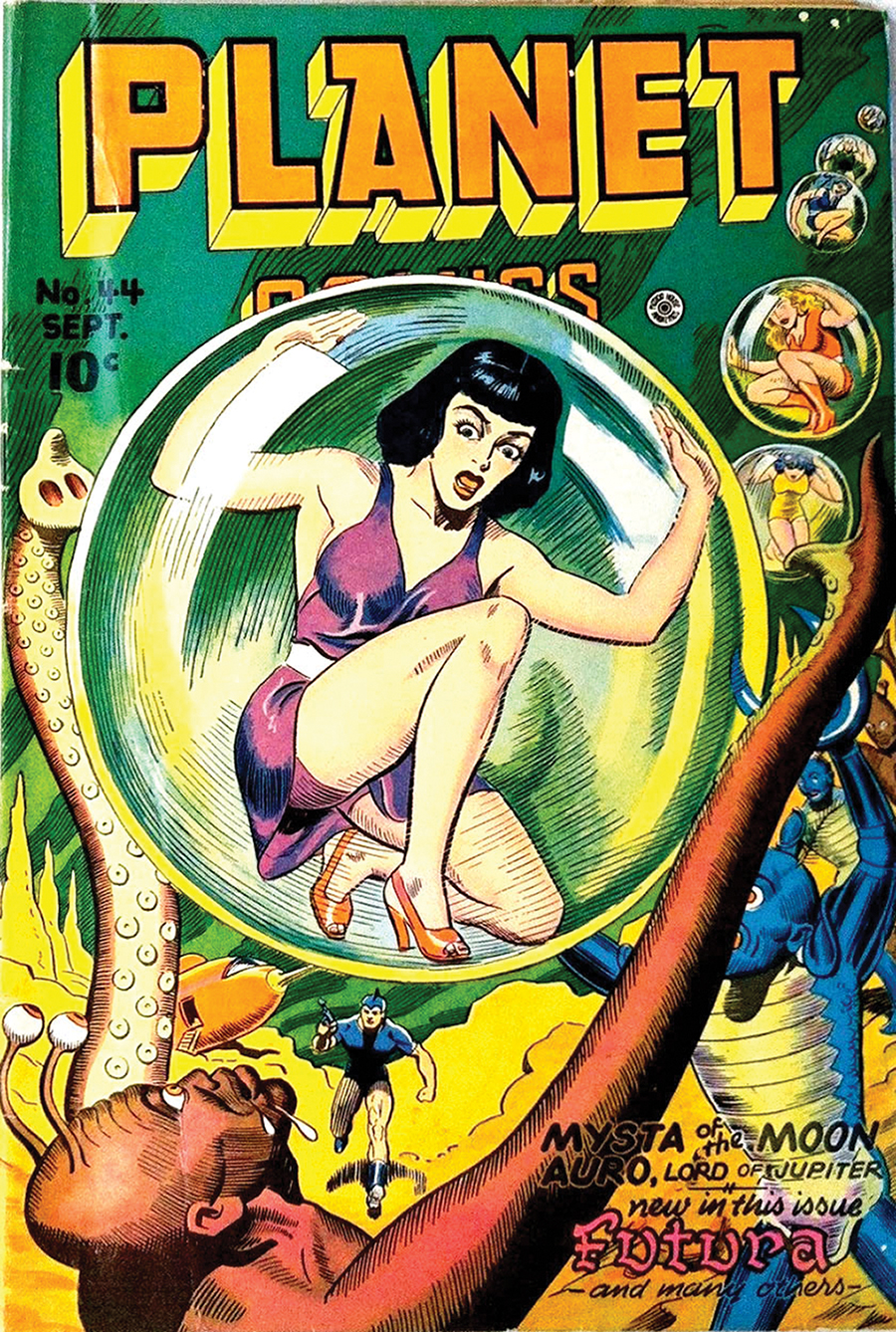
Anderson landed a gig illustrating for Planet Comics, whose main selling point seemed to be the undulating breasts belonging to whichever curvaceous blond was being snatched up by salivating bug-eyed monsters that month. He continued slinging ink for Fiction House while serving two years in the Navy, stationed in Chicago, where he met his soon-to-be wife, Helen. Completing his military stint in 1946, he happened upon a notice from the National Newspaper Service in search of an artist for Buck Rogers in the 25th Century. Anderson took over daily art chores in 1947. “I grew up on Buck, it was a dream come true,” he related decades later.

Anderson left Buck Rogers in 1949 just as the golden age of comics was drawing to a close. He and his bride made their way to Greensboro, where, during the day, he served as office manager for his father’s fledgling business, the Blue Bird Cab Company.

Before long, Anderson was once again canvassing the concrete jungle. Julius Schwartz, editor for National Periodical Publications’ (as DC Comics was known in 1951) new line of science fiction comics, recognized Anderson’s work as compositionally superior to and more finely rendered than many of the company’s slickest artists. Schwartz met with him and sent him home with a script to illustrate.

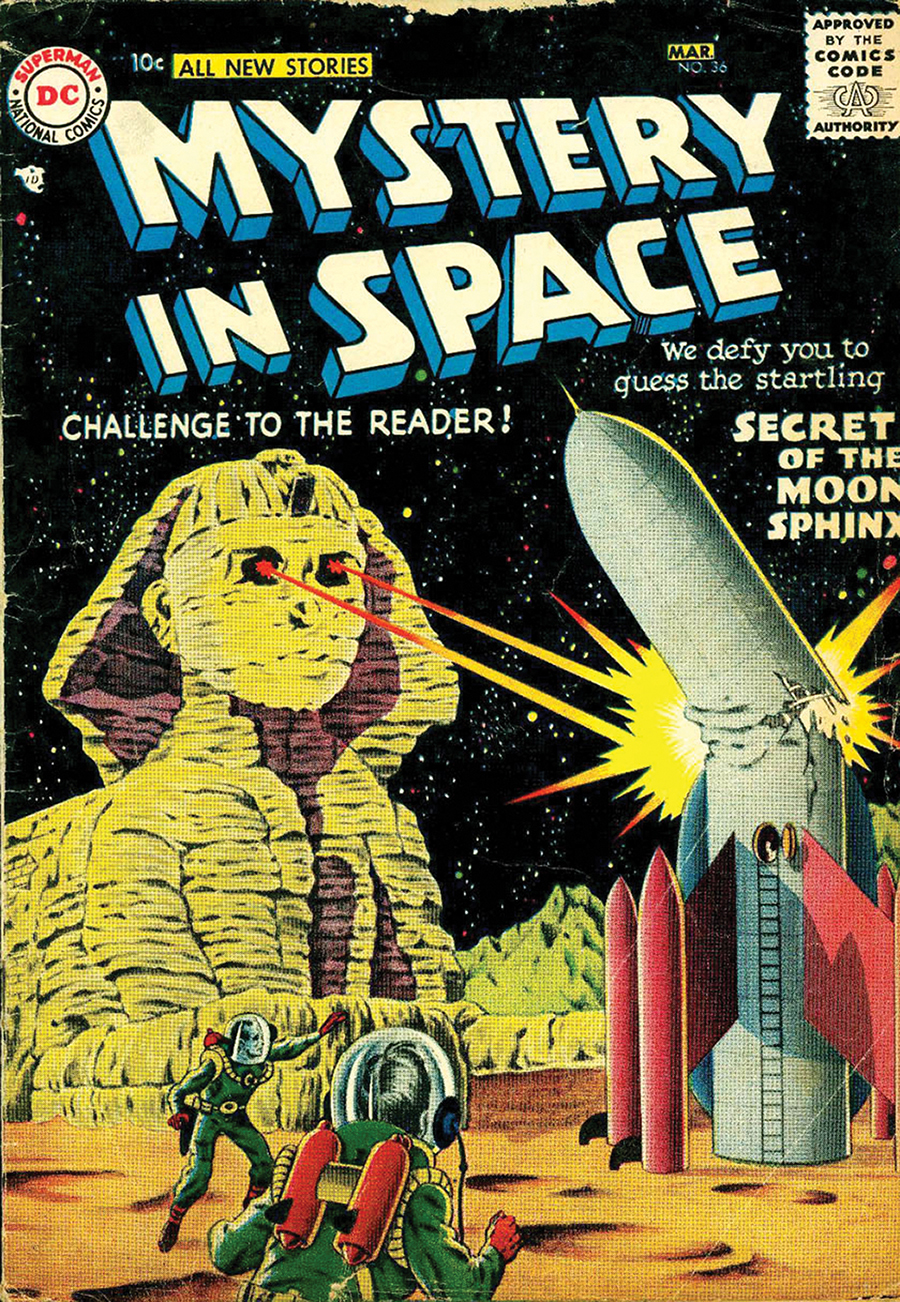
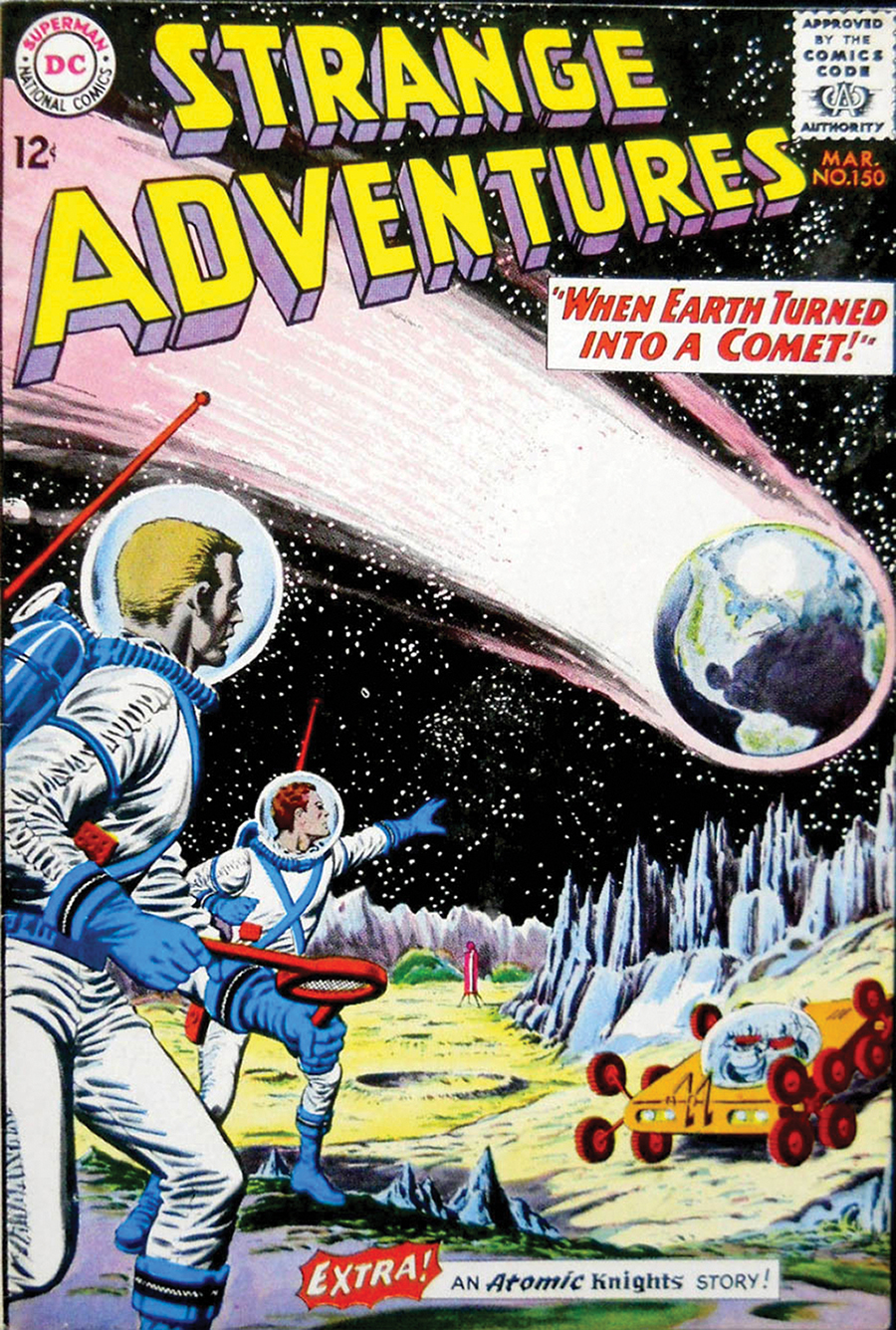
Schwartz allowed Anderson, now with children and not ready to give up his Carolina roots, to mail his contributions in from Greensboro, an unheard of arrangement. Still trafficking for Blue Bird Cab, Anderson spent his nights conjuring up compelling covers populated with pointy-eared giants capturing fighter jets in butterfly nets, radioscopic weirdos from other dimensions invading and terrifying the tourists, and genetically superior gorillas confounding the laws of man and nature. Stories were then written around his phantasmagorical scenarios.


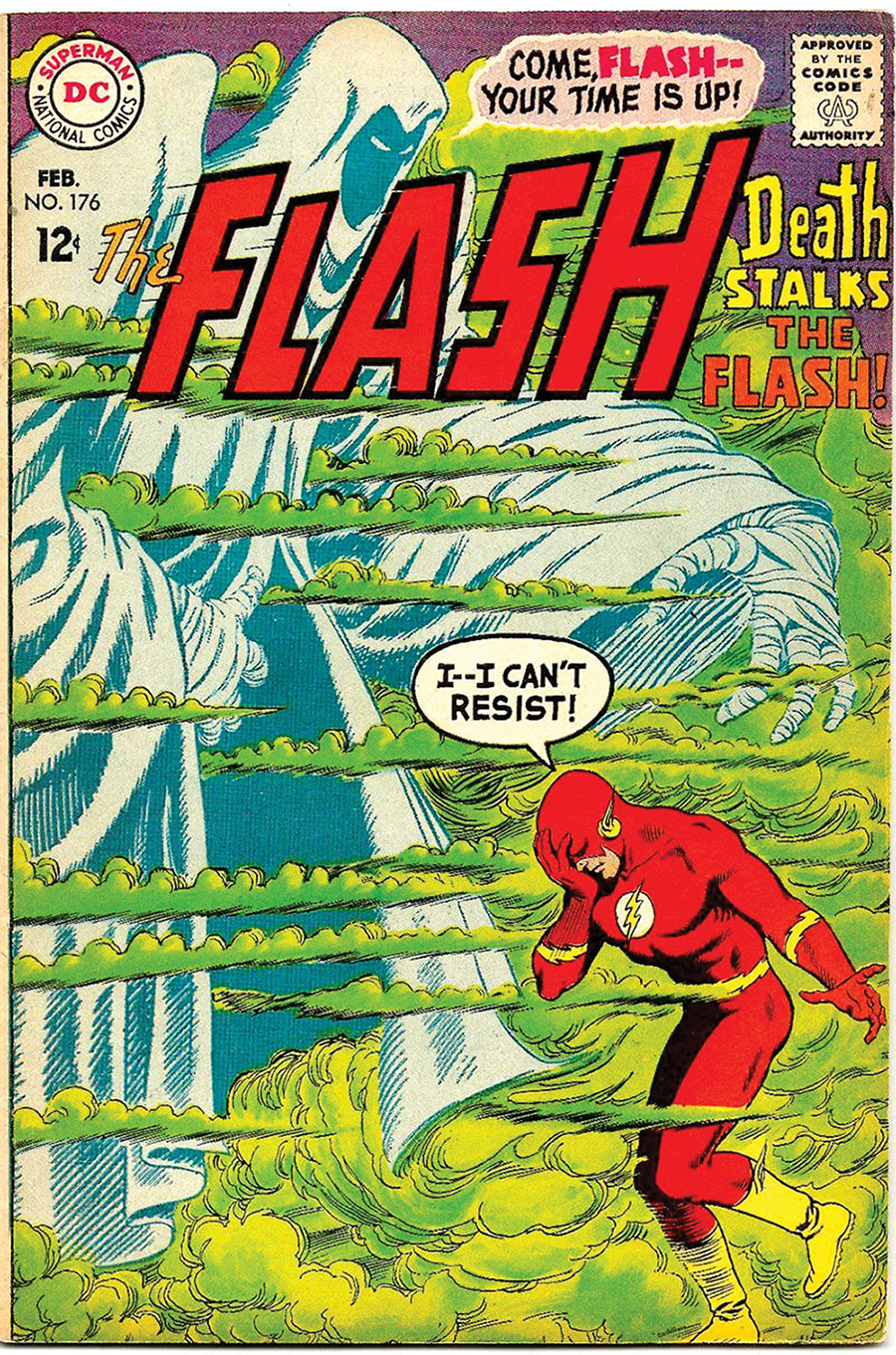
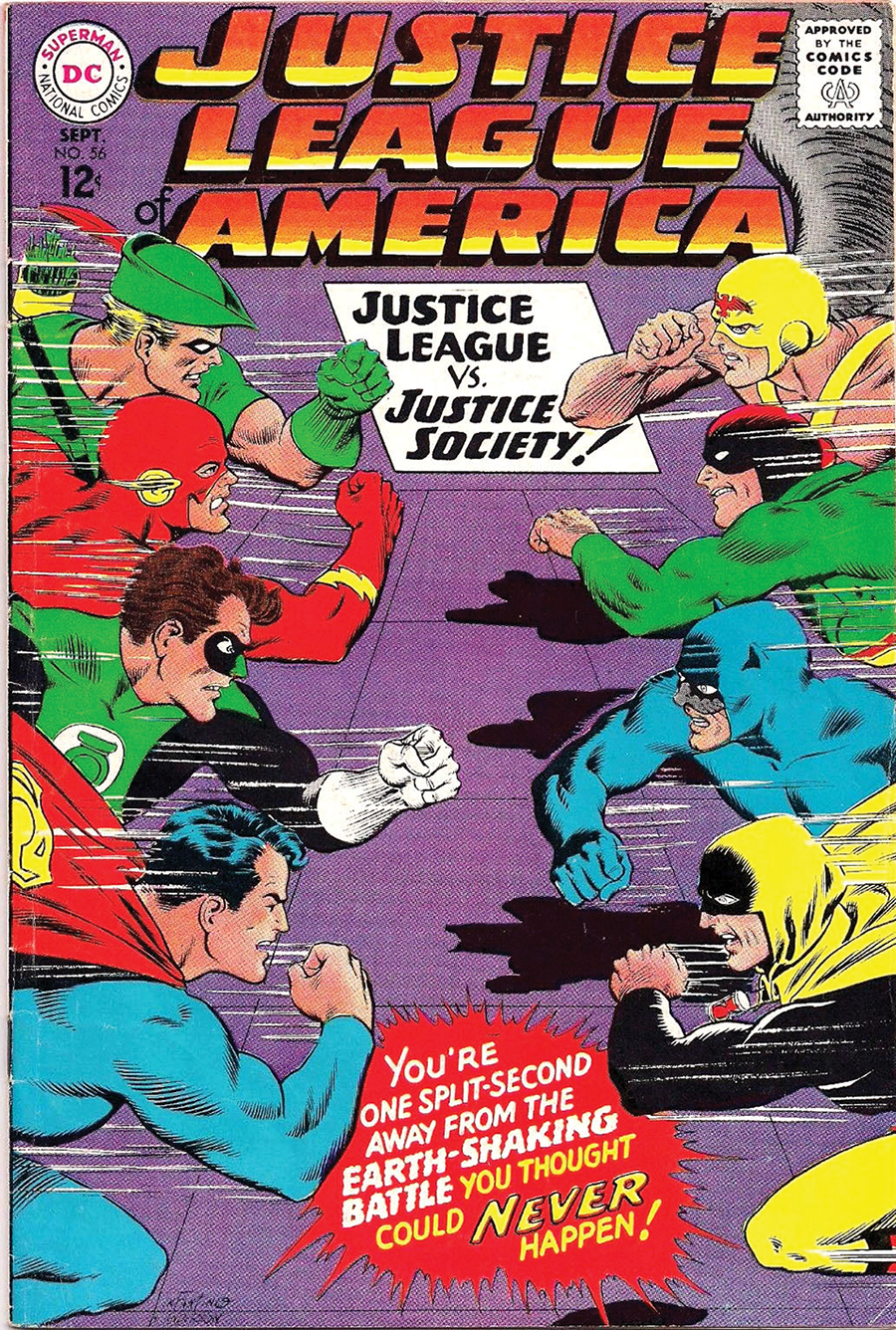
The family relocated to New York in 1960 in order for Anderson to work full-time for DC, a company undergoing an unexpected resurgence. On a whim four years earlier, editor Julius Schwartz had re-imagined one of the brand’s dead-as-a-doornail superheroes from the 1940s, The Flash. With this act, the Silver Age of Comics was born. Anderson’s meticulous flourishes defined DC Comics’ house style of the ’60s and early ’70s — so much that Schwartz preferred to have him inking others’ pencilled art, most notably Carmine Infantino (Adam Strange, Batman) and Gil Kane (The Atom, Green Lantern).

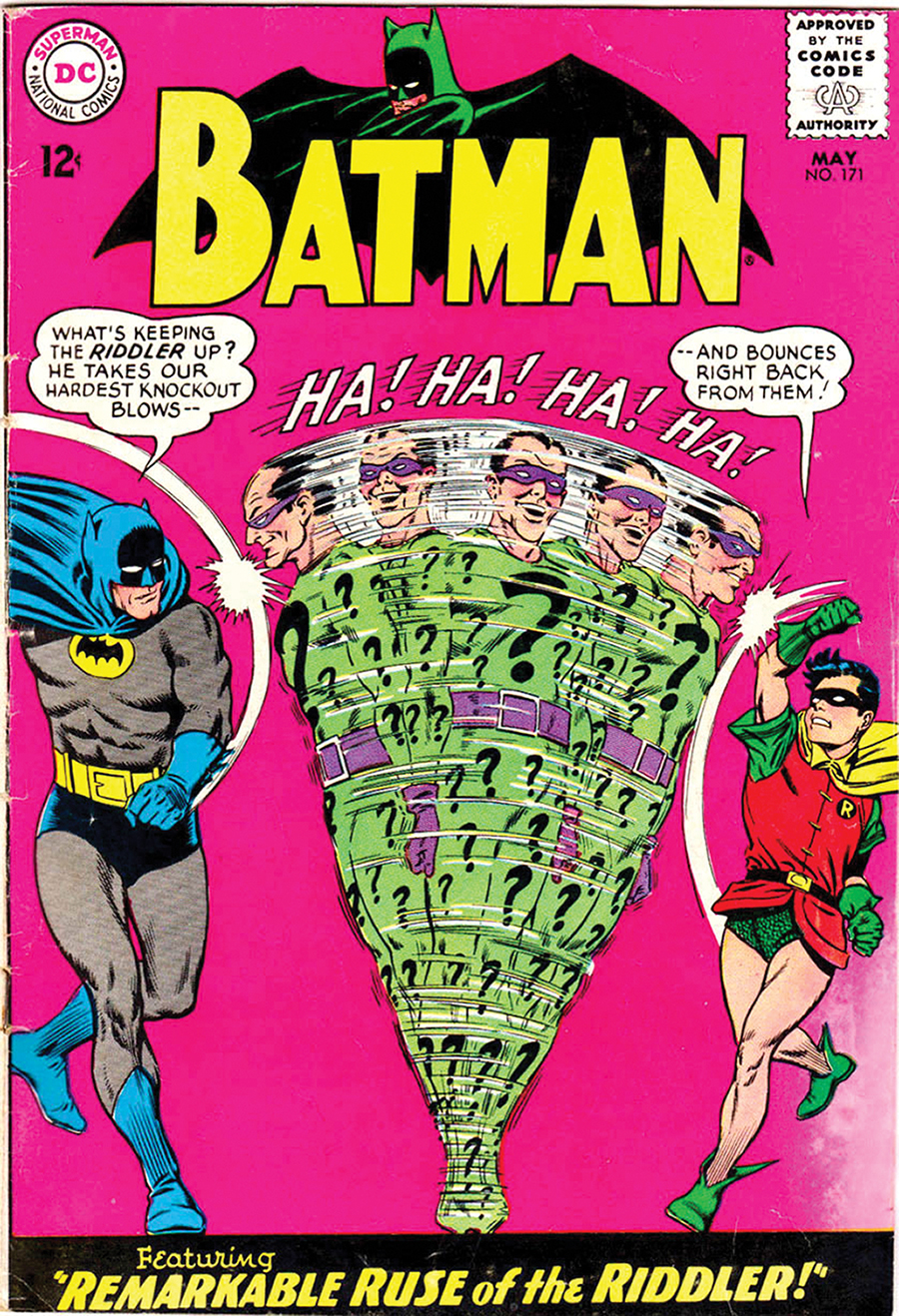
Meanwhile, years of poorly drawn short stories with Batman, Robin, Batwoman and Ace the Bathound confronting bulbous-bodied aliens and overcoming silly transformations (“Batman Becomes Batbaby!”) led to sales so dismal that cancellation of the entire Batman line was all but certain. Schwartz was yanked off the sci-fi comics in 1964 and given six months to save the bat-franchise. The result was a monthly onslaught of playfully gripping covers sketched by Infantino, the best of which were inked by Anderson, re-introducing The Joker, Riddler, Catwoman and Batgirl to a new generation. By 1966, business was booming when the Batman TV show sent DC’s sales into hyperdrive.

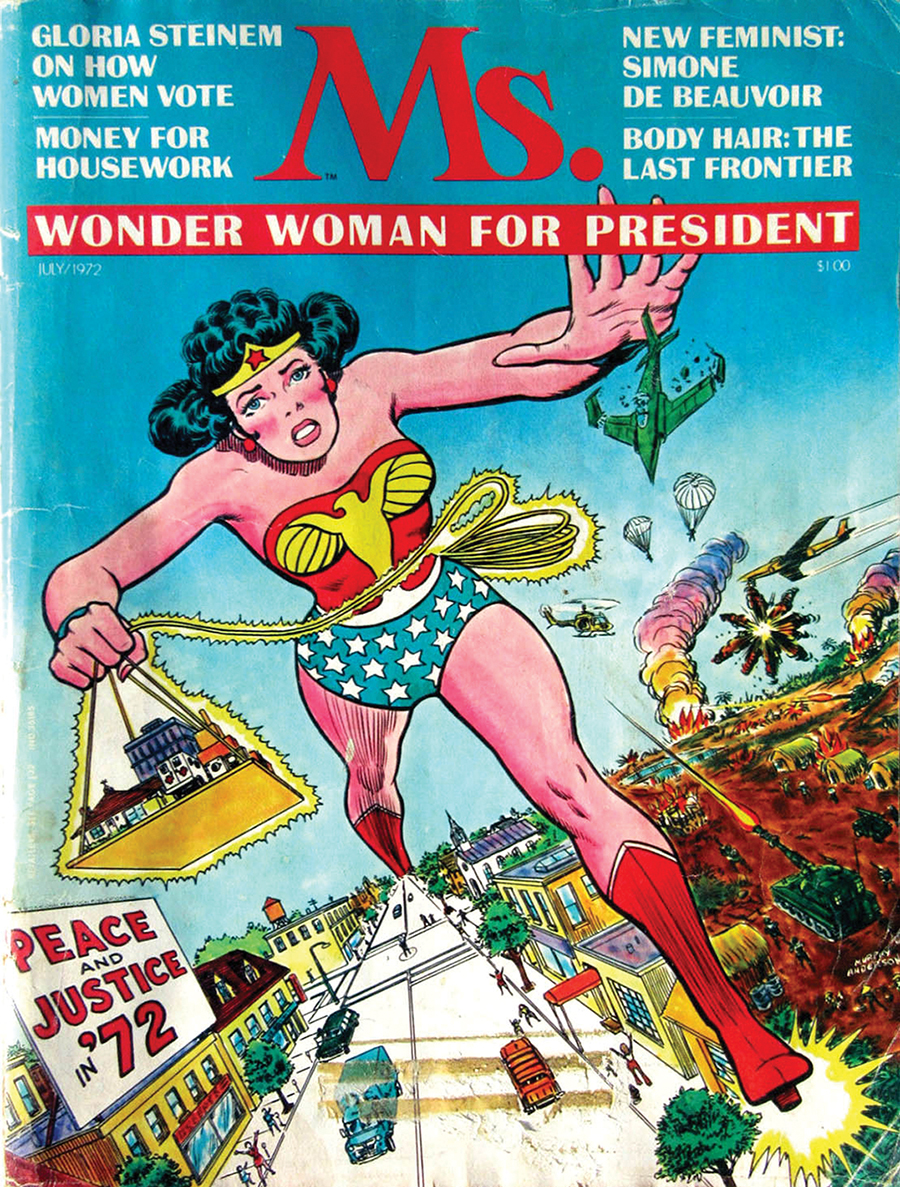
When Schwartz rebooted Superman in 1970, Anderson was teamed with Curt Swan. So meshed were their styles that the duo took to crediting their art as “Swanderson.” Then, in 1972, the Greensboro native’s dynamic portrayal of Wonder Woman graced the first issue of Ms., becoming one of the most striking and culturally significant magazine covers of that decade.


In a twist not unlike those found in the comics, it was Anderson’s one time schoolmate Amy Hitchcock’s son, John, who organized Greensboro’s first major comic convention in 1983, featuring Murphy Anderson as a guest of honor. “Murphy was here in 1985 when Jack Kirby was here,” John Hitchcock (owner of Parts Unknown: The Comic Book Store) says, a significant moment since the only controversy in Anderson’s career came when he was asked to redraw Kirby’s Superman faces to more closely conform to the DC style. “[Anderson and Kirby] were in the kitchen of my apartment when Murphy went up and apologized to Jack. He was always embarrassed that he had to change his artwork because he had so much respect for Kirby. Jack went out of his way to thank him and say, ‘Murphy, that’s OK. That’s the way business was back then. I have no ill will,’ and they shook hands. That shows you what a great guy Murphy was — it bothered him all those years.”

Murphy C. Anderson Jr., universally respected as both draftsman and gentleman, passed away in 2015 at the age of 89. He left behind his wife of 67 years, Helen, two daughters, a son, grandkids and an indelible impression on millions of thrill-seeking comic book lovers everywhere.  OH

Billy Ingram still has comic books he purchased from a spinner rack located next to the back entrance of Woolworth’s downtown.

Tea Leaf Astrologer

Tea Leaf Astrologer

Aquarius

(January 20 – February 18)

You’ve heard the tale of the two wolves, right? The good wolf and the bad wolf at battle within each of us? The one you feed is the one who wins. This wisdom is particularly applicable for you this month, Water Bearer. Although your wolves may have different names — visionary and fool, perhaps — the message is the same. Which animal will you feed?

Tea leaf “fortunes” for the rest of you:

Pisces (February 19 – March 20)

It’s time to shake some dust.

Aries (March 21 – April 19) 

Rainbows and sunshine, baby.

Taurus (April 20 – May 20) 

Say it with flowers.

Gemini (May 21 – June 20)

Probiotics with the assist. 

Cancer (June 21 – July 22)

You can’t rush your own spring.

Leo (July 23 – August 22)

The cake is not done.

Virgo (August 23 – September 22) 

Just use what you’ve got. 

Libra (September 23 – October 22)

Trust your inner compass. 

Scorpio (October 23 – November 21)

Don’t forget to claim your prize.

Sagittarius (November 22 – December 21)

Sometimes the shortcut isn’t a shortcut. 

Capricorn (December 22 – January 19)

Shake it and start over.  OH

Zora Stellanova has been divining with tea leaves since Game of Thrones’ Starbucks cup mishap of 2019. While she’s not exactly a medium, she’s far from average. She lives in the N.C. foothills with her Sphynx cat, Lyla. 

Birdwatch

Birdwatch

The Eagles Have Landed

America’s bird is on the rebound

By Susan Campbell

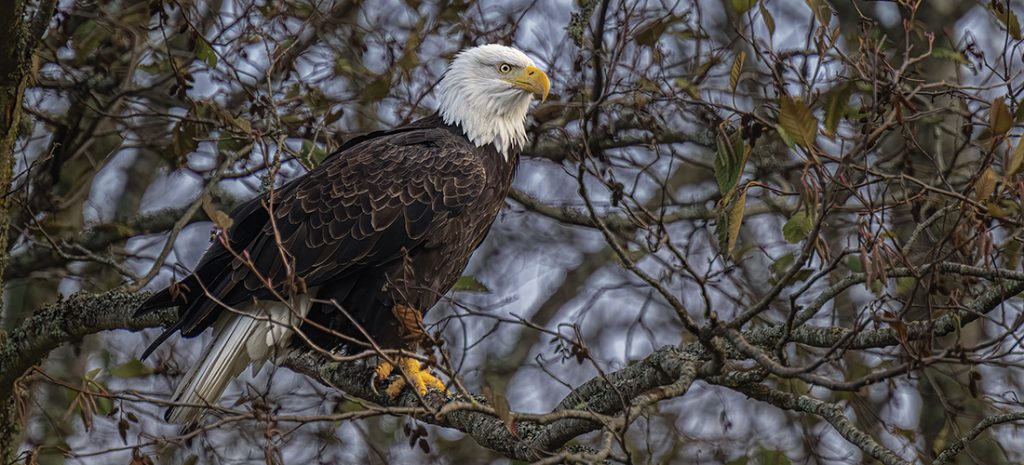
Anyone who has had the good fortune to spot a bald eagle, whether soaring overhead or perched along a waterway, cannot help but be awed by their handsome appearance. This large raptor is not only our national symbol but the only eagle found solely in North America.

Benjamin Franklin supposedly lobbied for the wild turkey, the only endemic bird species to the United States, to be our national bird. But Congress decided on the bald eagle in 1782, as a result of its perceived fierce demeanor. In actuality, bald eagles are mainly carrion eaters but will attack wounded mammals, birds and aquatic animals as well. They are very opportunistic and will also snatch prey from crows if they get the chance.

During the first half of the 20th century, eagles were erroneously persecuted by raptor hunters, often by ranchers who were attempting to protect their investments. They were also affected by metal toxicity as a result of feeding on game containing lead shot. Additionally, during the period of broad-scale DDT application, as most people know, the toxin accumulated in carnivores at the top of the food chain. And, as was the case in several bird species, it caused eggshell thinning such that eagle eggs broke long before they could hatch.

Bald eagles were declared an endangered species in 1967. Following the ban on DDT and the passage of the Endangered Species Act in 1973, their numbers began to rebound. On June 28, 2007, the species was declared recovered. Here in North Carolina they are being closely monitored by state biologists. Although the number of nests and young has been increasing, they are still considered threatened here.

In the Sandhills, there are year-round sightings of individuals, most commonly on larger lakes such as Lake Surf (Woodlake) or Lake Pinehurst. At least one pair has been nesting in Moore County for a few years now: in (wait for it) Eagle Springs. Farther north, they can be frequently spotted around Falls or Jordan Lake in the Triangle or Lake Townsend in Greensboro.

In mid-winter, birdwatchers and endangered species biologists are on the lookout for eagle nests. Bald eagle pairs return to their breeding territories and lay eggs ahead of most other raptors (the exception being great horned owls, which begin breeding activities a bit earlier). Their sizable platforms of dead branches and large sticks may or may not be easy to spot. Eagle nests, if they are reused from year to year, will be gradually enlarged but not massive affairs. Newer nests can be well concealed in the top of a live evergreen or large snag.

Eagle young, who typically fledge in April, take three to four years to mature. They will not successfully attract a mate until they have a fully white head and tail. Should you see an adult in the weeks ahead, keep an eye out for a second bird. A pair of adults may mean there is a nest somewhere nearby. If you suspect that you have found a nest, definitely give me a holler!   OH

Susan Campbell would love to receive your wildlife sightings and photographs at susan@ncaves.com.

Life’s Funny

Life’s Funny

HOT DOG! 

Our intrepid reporter goes for a whirl in the Wienermobile

It was the perfect evening for a winter festival.

The air was pleasantly chilly — or perhaps I should say chili — and spiked with the smell of fried dough and the bump of live music.

Revelers lined up to try their luck aboard a mechanical, bucking Rudolph the Red-Nosed Reindeer. In another particularly American display of affection for the holiday, children in padded red suits and headgear tried to knock each other down in spirited rounds of Sumo Santa.

Yes, it really was shaping up to be an ideal Festival of Lights as my husband and I threaded our way down Greensboro’s Elm Street, when what to my wondering eyes should appear but curvilinear gleams of orange and yellow.

“Wait, is that . . . ?”

“What?”

“Oh, my God.”

“What?”

“It is!”

“What are you looking at?”

“It’s the Wienermobile!” I said, breaking into a trot.

I stopped in front of a bubble-shaped windshield, giddy at the fact that I was in the presence of an American icon.

I can’t say for sure when the Wienermobile first entered my consciousness. As a child of the ’60s and ’70s, I’m sure I saw it on TV, in holiday parades and Oscar Mayer commercials.

I have a vague memory of our family car passing a huge rolling wiener on Interstate 75, but I could be confusing that with a colorful tanker. Or it could be the result of wishful thinking and an excellent jingle.

Oh, I wish I were an Oscar Mayer wiener,

That is what I truly want to be—ee—ee,

‘Cause if I were an Oscar Mayer wiener,

Everyone would be in love with me.

Obviously, all these years later, seasoned by life’s experiences, I believe . . . that’s still true.

Everyone loves a hot dog, even a mostly plant-based foodie like myself. Wave a Carolina dog — slaw, chili, onions, extra mustard — in front of me, and I cannot be responsible for what happens next.

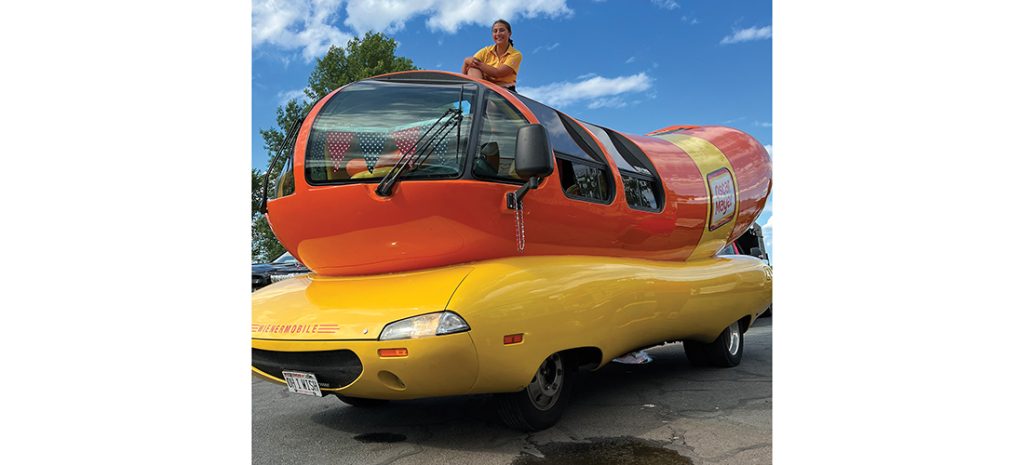
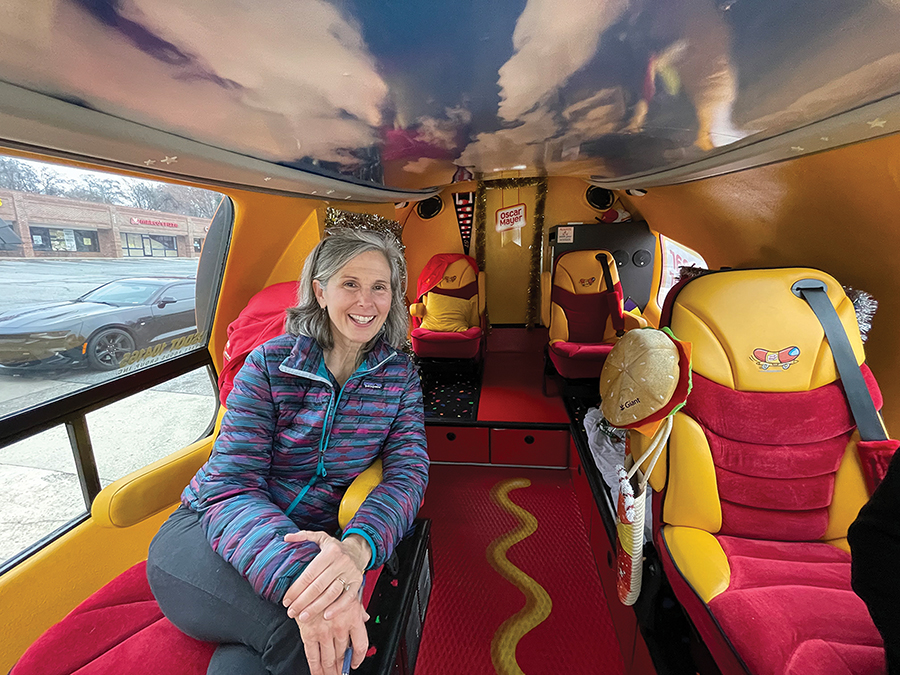
And now? There I was, standing next to the Wienermobile, all 27 feet of it, parked curbside with its gull-wing door lifted so that gawkers could marvel at the luxurious interior, which included six bucket seats upholstered in bright red and yellow, as well as a squiggle of yellow painted on the floor.

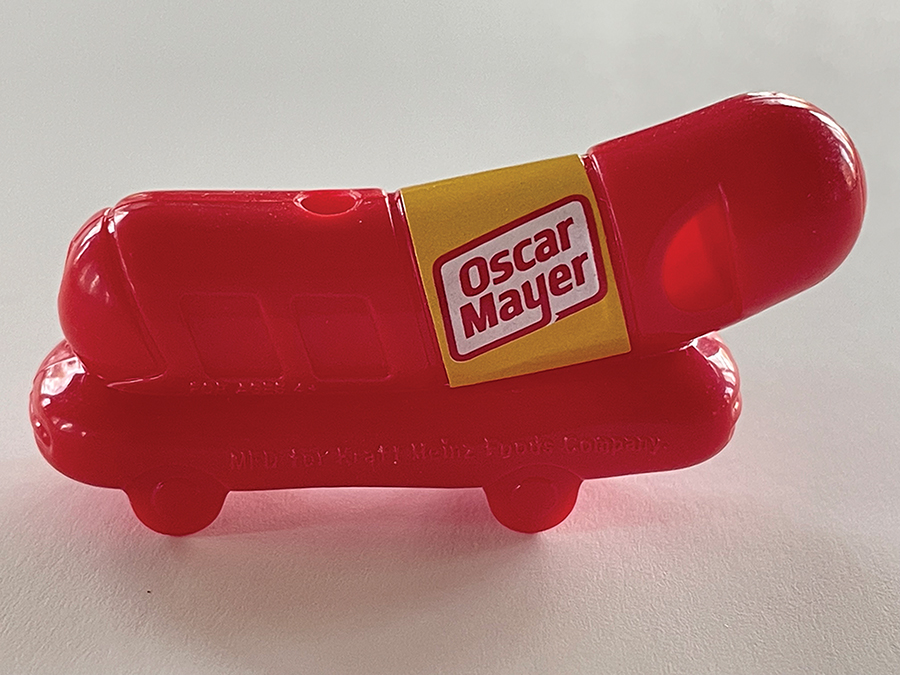
In Wienermobile culture, red equals ketchup. Yellow, mustard. That’s why the keepers of the wiener, two young dynamos named Keagan Schlosser and Chad Colgrove, were dressed in red and yellow pullovers. They invited the crowd to stick their heads inside the Wienermobile, pose for pictures and take home individually packaged, red plastic Wiener Whistles.

I asked Keagan if I could, for journalistic reasons, arrange for a ride in the Wienermobile during their stay. She said that would be “bun-derful.” Two days later — after the Festival of Lights and the Christmas parade — I climbed aboard for a Sunday morning spin.

Keagan asked where I wanted to go.

In a perfect world, we would have picked up my 90-year-old mom from church, the Wienermobile’s jingle-horn tootling just as the postlude faded.

My mom would have been slightly — OK, a lot — aghast, but also flattered. Ultimately, I thought, she’d cave to peer pressure from church pals who would want a ride, too.

As it turned out, my mom stayed at home with a mild illness that morning. Damn it.

My second choice was the Guilford Courthouse National Military Park because it, too, represented a significant piece of American history. Plus loads of people walk there on Sunday mornings. Off we went, as Keagan and Chad, both 23, shared how they became regional wiener drivers.

A native of Carbondale, Illinois, Keagan — who is no relation to the Greensboro Schlossers, sorry, guys — was about to graduate from the University of Wisconsin last spring with a degree in journalism. She’d interned at a local TV station. But the news biz was too serious, she felt, so she started looking into Hotdogger jobs, one-year gigs offered to recent college graduates by Madison-based Oscar Mayer.

Her journalism professors encouraged her to go for it. I repeat: Her journalism professors urged her to shun the Fourth Estate in order to pilot a giant fiberglass wiener around the country for a year.

I could not argue with their advice.

Chad, on the other hand, had known about the Wienermobile from the time he was a tyke in Boise, Idaho. Every year since he was 6, his family would sniff out nearby Wienermobile appearances and snap a picture of Chad grinning beside the seven-ton sausage.

As a teen, Chad rolled his eyes at this tradition, but his mom insisted, saying, “You never know. You might want to drive it one day.”

Naturally, Chad submitted all of those pictures with his job application, and he was chosen as one of 12 Hotdoggers from among 2,000 applicants.

“My mom literally started crying,” he said.

“I think my family was a little more confused,” said Keagan, explaining that they’d been pulling for graduate school, but they softened when she told them that it was harder to get into Hot Dog High than to be accepted at Harvard University.

Among the things Keagan and Chad learned in weenie school:

*The original Wienermobile was created in 1936, in Chicago, by Oscar Mayer’s nephew Carl. The open-cockpit novelty car gave out samples. After a fleet of Wienermobiles was deployed in 1988, they stopped dispensing free hot dogs.

*There are six Wienermobiles cruising America’s “hot dog highways,” stopping for gatherings such as car shows, sporting events, parades, festivals, as well as promotional appearances at stores that sell Oscar Mayer products. (Track the Wienermobiles at https://khcmobiletour.com/wienermobile)

*Built on GMC cab-forward truck chassis, Wienermobiles are powered by 8-cylinder gas engines. They get roughly the same gas mileage as a large SUV. The bodies are fabricated 40 miles from Greensboro at a Pfafftown company called Spevco Inc.

*Jay Leno drove the Wienermobile for a 2017 episode of Jay Leno’s Garage. Actor Tim Allen blew a Weiner Whistle in the 1994 movie, The Santa Clause. Bible-thumping Ned Flanders, of all people, drove the Wienermobile in a 2019 episode of The Simpsons. Inexplicably, Jerry Seinfeld has not asked to borrow the Wienermobile  for Comedians in Cars Getting Coffee.

*The best place to wash a Wienermobile is a fire station. “We ask them if we can use their scrubby brushes and water to clean our wiener,” says Keagan. So far, they have not been refused. “Firemen love the Wienermobile,” she adds.

You could argue that a Harvard degree would better prepare a young person to serve the world than a hitch in the Wienermobile, but after tooling around the military park with Keagan and Chad, I’m not so sure.

You’ve never seen such immediate and whole-hearted smiles, followed by cell-phone fumbling and picture taking.

By the older guy in the San Francisco 49ers sweatshirt.

And the supercool driver of the Tesla stopped at the crosswalk.

And the young guy with the topknot. And the middle-aged couple walking two big white fill-in-the-blank-a-doodles.

And by 11-year-old Layla Jordan and her mom, Mojgan, who quickly waved her daughter into a photo beside the Wienermobile when we stopped at a light.

Keagan and Chad popped the hatch, jumped out and handed Layla a plastic Wiener Whistle.

“Your brother is going to be so jealous,” Mojgan said.

They handed mom another whistle and invited Layla to pose for a picture with them.

“Say ‘Cheeeeeeesy Wieeeeener!’” they coaxed.

Back inside the Wienermobile, Chad and Keagan mused about what would come next for them. Chad hopes to land a corporate wiener job with Oscar Mayer. Keagan, who has successfully driven the Wienermobile around Manhattan several times — and therefore feels, justifiably, that she can do anything — dreams of a big-city job with one of the marketing firms that contracts with Oscar Mayer.

“We’re relishing this while we can,” said Chad with a face as straight as a foot-long.  OH

Applications are now open to become the next hotdogger. For more information, visit oscarmayer.com/wienermobile.

Maria Johnson is a contributing editor of O.Henry. Contact her at
ohenrymaria@gmail.com.

Almanac

Almanac

February knows you’re weary.

She can tell by the longing in your eyes, the ache in your chest and shoulders, how you carry the cold like a burden.

On these frost-cloaked mornings, you dream of soft earth and tender blossoms, spring peepers and swallowtails, songbirds and sunny afternoons.

February knows. She cannot give you what she does not have. And yet, she offers hope.

At dawn, the frigid air nips your face and lungs, stuns you with its jarring presence. It’s hard, at first, to see beyond the dense clouds of your own breath. This is where you start: Breathe into the mystery. Let the formless take form. Watch your own warmth shape the world around you.

As the pink sky slowly brightens, two silhouettes appear in the glittering distance.

A pair of rabbits.

Something about their gentle presence softens the very landscape, softens your edges and your gaze. Weeks from now, their quiet stirrings will have conjured the first of many quivering litters. Something deep within you stirs.

February offers contrast.

Suddenly, you notice early crocus, jewel-like petals drenched with more color than you’ve seen in months. For now, this luscious purple is enough.

But there’s more.

When the first golden daffodil emerges from the frozen earth, a sunbeam lights upon your face. You close your eyes, basking in this subtle warmth, this fleeting glimpse of what’s to come.

The cold becomes quiet. As you walk the icy bridge between the harsh clutch of winter and the tender kiss of spring, you carry yourself differently. Hope is gleaming in your eyes, glittering on the horizon, tucked inside your chest like a sacred gift.


Bridge Between Seasons

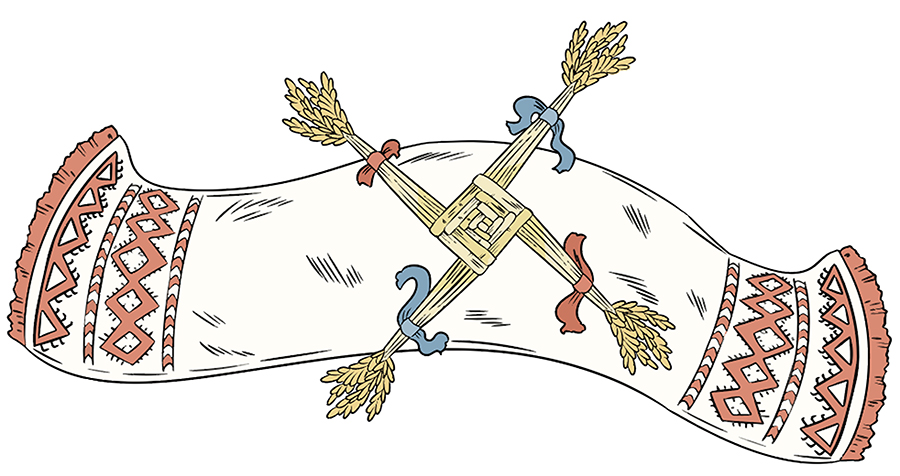
The ancient Celts looked to the Wheel of the Year to celebrate and honor nature’s cycles, drawing wisdom from the turning of each season. Imbolc (observed on Feb. 1) marks the midpoint between the winter solstice (Yule) and the spring equinox (Ostara). In other words: Imbolc is a bridge between death and rebirth. Also known as Candlemas or Brigid’s (pronounced Breed’s) Day, this festival honors the return of the sun and celebrates the Celtic fertility goddess Brigid.

The days are growing longer. The sun, stronger. The earth opens to a quickening rhythm.

Soon, the seeds from last year’s harvest will be sown. As spring awakens within and around us, the great wheel turns and turns.


While it is February one can taste the full joys of anticipation. Spring stands at the gate with her finger on the latch.  — Patience Strong


Crocus Pocus

Perhaps you know that saffron, the complex and costly spice, comes from the red stigmas of the autumn-blooming saffron crocus (C. sativus), not the snow crocuses you see now, bursting through the frozen earth. And yet, these winter-blooming beauties offer something of even greater value: the ineffable promise of spring.
Plant your own corms this fall. They’ll need full sun, moist but well-drained soil and a quiet winter to unlock their incomparable magic.  OH

Simple Life

Simple Life

Where Does the Light Go?

Reflections on a beloved friend’s passing — and growing older

By Jim Dodson

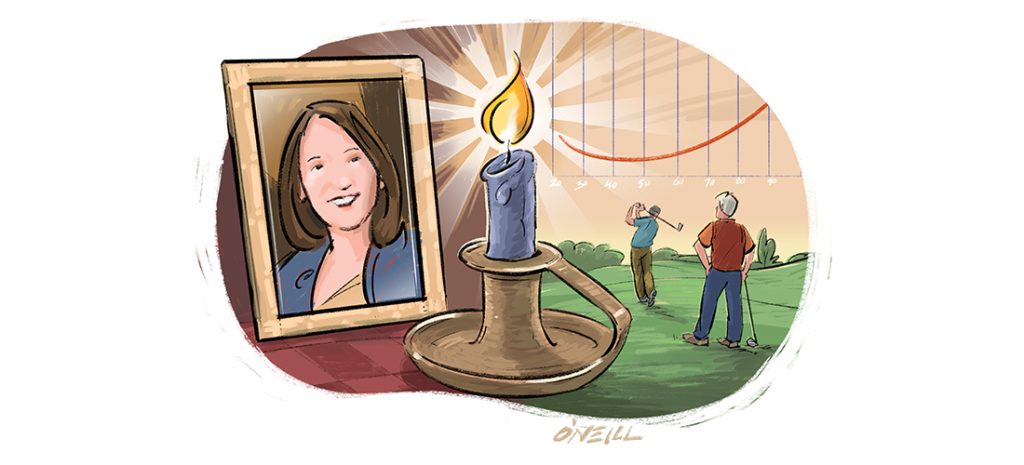
In an early time, according to the late Irish bard and spiritual thinker John O’Donohue, Medieval mystics loved to pose the beguiling question: Where does the light go when the candle is blown out?

I couldn’t help but think of this conundrum one recent Saturday morning as I sat in a pew of the First Presbyterian Church in downtown Atlanta, having taken a redeye flight from Los Angeles in order to attend a dear friend’s funeral service.

Celetta Randolph Jones — Randy  as she was affectionately known by hundreds, if not thousands of people — was one of my oldest and closest friends. She walked into my life in 1977 at the Atlanta Journal-Constitution two days after I arrived at the oldest Sunday magazine in the nation. Editor Andy Sparks believed we needed to meet because we were both single, students of American history and Randy knew the city like the back of her most elegant hand.

I’d just turned 24, a wide-eyed bumpkin from North Carolina. Randy was almost 30, the sophisticated media officer of The Georgia Trust for Historic Preservation. I think perhaps Editor Sparks believed sparks might fly between us, which they did. Just not the kind he envisioned.

We discovered instead a friendship for the ages. During my nearly seven years in Atlanta, Randy became my frequent dinner companion during which no subject was out of bounds — God, politics, my literary ambitions and her string of colorful boyfriends who could never keep up with her. 

By the time my career carried me off to New England, Randy had started her own public relations firm and was quickly becoming a megastar representing the likes of Coca-Cola, British Airways and dozens of other A-list regional and international clients. Despite the distance, our friendship only deepened and grew. When my daughter, Maggie, was born in 1989, Randy, who never married, was delighted to become my daughter’s godmother. She came to New England and North Carolina many times for holidays and family occasions, and I never failed to stay with her whenever I passed through Atlanta. She truly was one of the great lights — and gifts — of my life.

It was lovely to learn from the words of remembrance from her adoring brothers, Harry and Powell Jones, that “Aunt Randy” actually had a dozen or more godchildren she faithfully lavished attention and wisdom upon over the decades, even after a freakish illness destroyed her immune system and forced her to sell her thriving company. She moved to a high rise apartment in Atlanta’s Four Seasons Hotel where she became a tireless fundraiser for Emory University Hospital, The Woodruff Arts Center, her church and many other charities. According to brother Harry, everyone in the building, from the hotel doorman to her neighbor, Charles Barkley, considered Randy their best friend. Her generosity to friends and strangers alike knew no bounds.

I saw Randy a month or so before she passed away. She was frail but mentally vibrant and connected to people as ever, wanting to hear about my latest book project and her goddaughter’s life in L.A. We sat together for almost two hours. When I got up to go and bent to kiss her cheek, she remarked, with her wonderful, sultry, deep Georgia accent, “We have traveled pretty far together, haven’t we?”

“And we’re not done,” I replied. “You helped light the way.”

She patted my hand. “Don’t worry. That light will never go out.”

I think she knew we would never see each other again in this world. But had no doubt whatsoever about the next.

So where does the light go when the flame is blown out?  I’ll leave that debate to the Medieval mystics and take my friend Randy at her word that the light will never go out.

The passing of one you love, however, inevitably calls up thoughts of your own brief mortality.

This month, with not a lot of fanfare, I reach my Biblically proscribed threescore years and ten, a phrase popularized by Psalm 90, which was read at Randy’s service. Seventy was considered a ripe old life in ancient times.

Fortunately, I have two best buddies — Patrick and Joe — who are also reaching 70 around the same time I am: Joe in January, Patrick in March. At our regular luncheons of the Stuffed Potato Philosophy & Adventure Club, we often talk about how pleased we are to be “older” dudes who are still working at jobs we love and appreciating life more than ever. True, body parts don’t work as fluidly as they once did, but it’s amazing what we never worry about anymore, including death, taxes, career ups and downs, and the inevitability of growing older. This spring, Patrick and I plan to celebrate 58 years of playing golf together in America and Britain by setting off for a final roving match across Ireland, Scotland and England for perpetual bragging rights. Our legs may grow weary, but, I assure you, not our spirits.

A recent study shows that we are not alone, revealing that the vast majority of older Americans are as happy — and busy — as they have ever been in American society. As anti-ageism activist Ashton Applewhite recently pointed out in her outstanding TED Talk, older people tend to become more optimistic as they age, worry far less than younger folks, and really only have two things to be concerned about — that someday the people you love will die, and that parts of your body will eventually quit working. Fear of death doesn’t even make the list. Remaining open to new adventures and connected to people turns out to be a path for a long and meaningful life. Applewhite calls it the U-Curve of Happiness.

Was it simply the hand of sweet synchronicity that I happened to hear her inspiring TED Talk on the radio during the long drive home to North Carolina following Randy’s memorial service, or maybe something only a mystic could explain?

I’ll probably never know. But in the meantime, I’ll happily follow the flame wherever it leads next.  OH

Jim Dodson is the founding editor of O.Henry.