Poem June 2024

Poem June 2024

Poetry

This came before Hip Hop

This plants street crops

Won’t stop for red octagons

This thing sings songs

Prolongs life after death

Moves in stealth

Improves the quality of your life

Flows through pipes to irrigate land and turn grass green

This thing steams the wrinkles out of my daily

Therefore you’ve got to pay me

For this is Poetry

And. I never realized the power of my voice in this world

The power of this ink merged with this paper

And each day I laugh at my countless attempts to make sense of this gift

And each day it lifts me higher

Lights my soul on fire

And I wire these words like a telegraph to anyone that will listen

And some that won’t, so please don’t test me

Because this is dangerous

It’s like skin to me, it’s like kin to me

This thing befriends me when all else seems lost

I’ve paid my way by showing a way to the lost

And it came before Hip Hop

This plants street crops

Won’t stop for red octagons

This thing sings songs

Prolongs life after death

Moves in stealth

Improves the quality of your life

Flows through pipes to irrigate land and turn grass green

This thing steams the wrinkles out of my daily

Therefore you’ve got to pay me

For this is Poetry

                  — Josephus Thompson III

Greensboro’s first poet laureate, Josephus Thompson III, has created both a
song and a book out of this poem. The book,
Poetry Is Life, can be found here: josephusiii.com/product-category/books; the song can be found here: youtube/91K-WmDcMpQ.

Wooden It Be Nice?

Wooden It Be Nice?

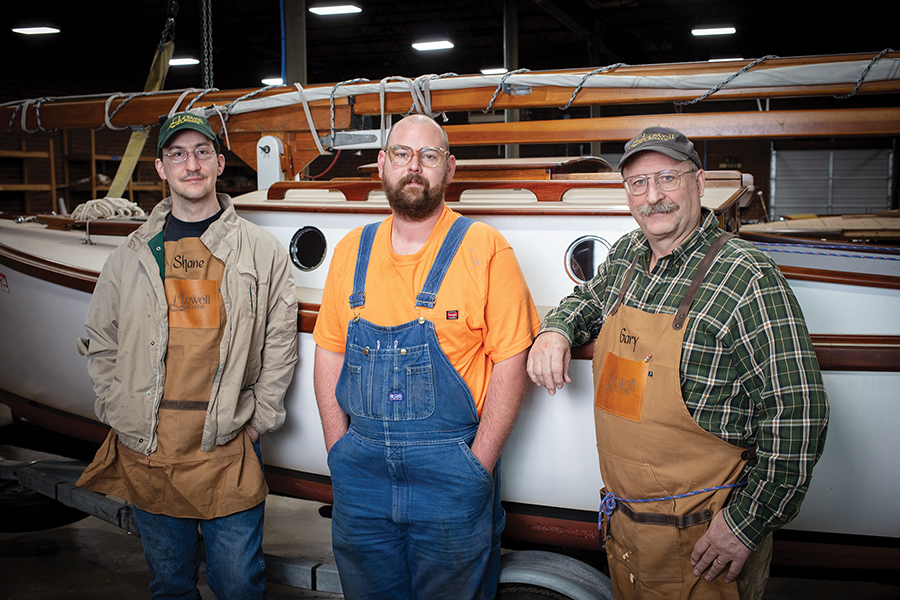
With Gary Lowell at the helm, weathered vessels take on the waters again

By Billy Ingram  

Photographs by Mark Wagoner

There’s a cautionary, oft-shared adage among well-healed seafarers that I’ve heard more than once: “You don’t own a boat; the boat owns you.” That commonly refers to those unwieldy, 130-foot floating hotels with which few of us will ever be financially burdened. But it may also be true, albeit in a much different sense, when it comes to smaller, vintage, wooden watercrafts, where ownership manifests itself as more of an emotional, familial connection.

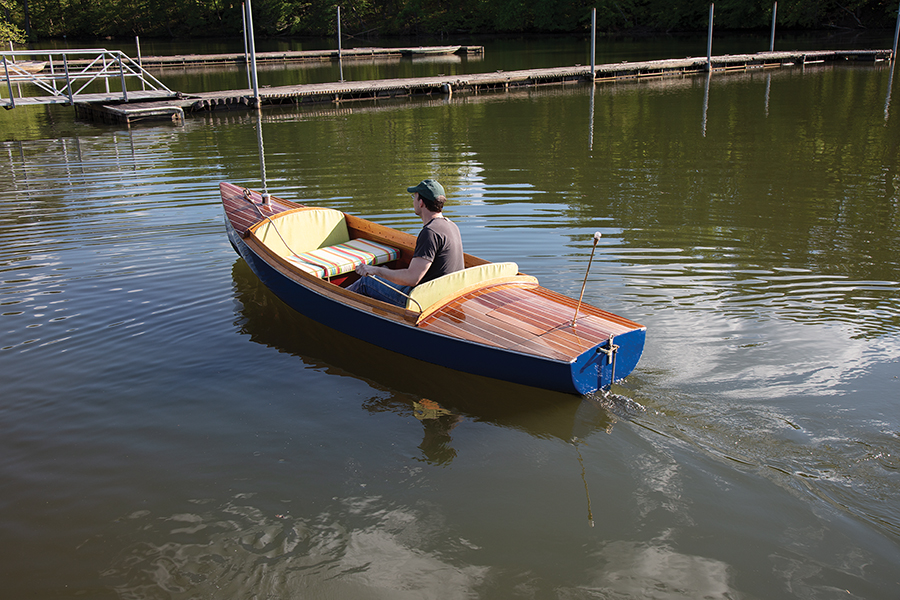
There’s an unmistakable allure to those magnificent American-made maritime machines of the 20th century — the bold contours and fanciful interior chrome accents of a 1958 Century Arabian; the elegant simplicity associated with a 1949 Chris-Craft Racing Runabout; the playful luxury that defines a 1941 Gar Wood Flagship Streamliner; the distinctive shark-like fin of the 1955 Chris-Craft Cobra, a genuine aquatic hot rod, powered by a 331 Hemi Chrysler Marine Engine; or consider the aerodynamic sleekness of a Glastron GT-150, which James Bond piloted (on land, sea and air!) across the Louisiana bayou in Live and Let Die.

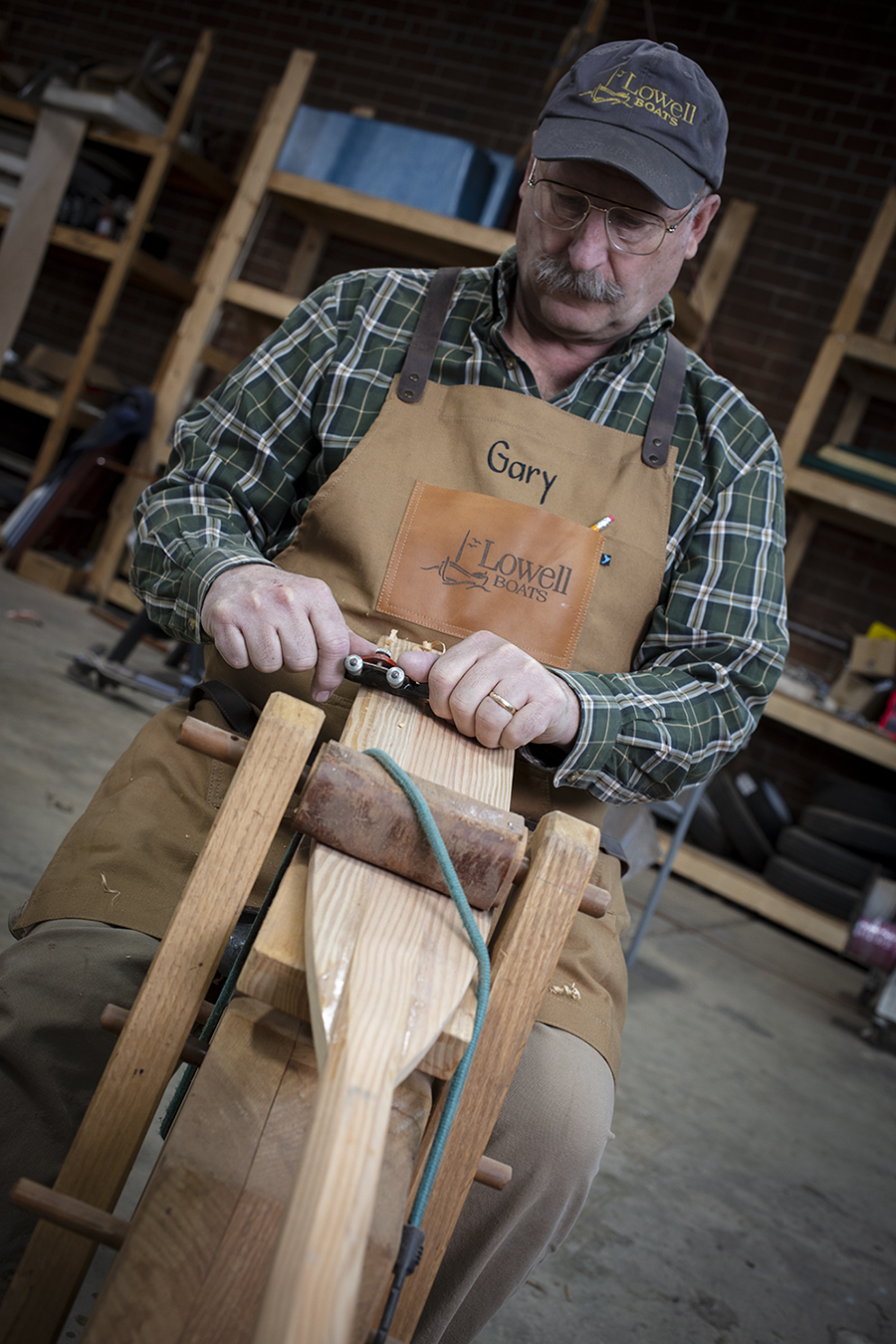
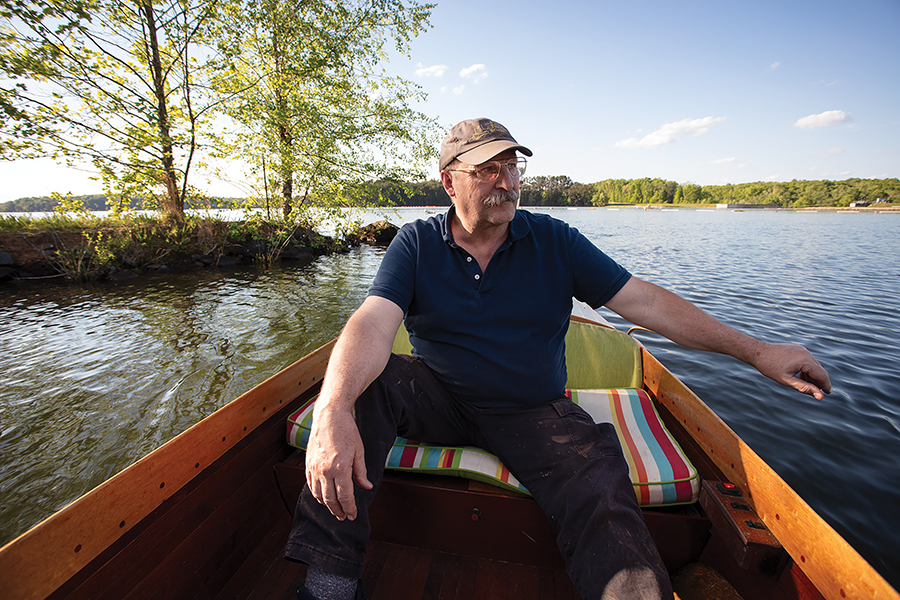
It’s been 30 years since Gary Lowell dropped anchor on a career restoring — in many cases, resuscitating — these highly sought after collectors items, having discovered his love of vintage boats at an early age. “When I was about 10 years old, my dad bought his first wooden boat and I just got into them then,” Lowell says of that initial spark. “My first job right out of high school was in television. I was the director of The Good Morning Show at WFMY and a puppeteer for The Old Rebel Show.” On weekends, Lowell would make a run for the coast to haul back some old wrecked vessel in an effort to make it seaworthy once again.

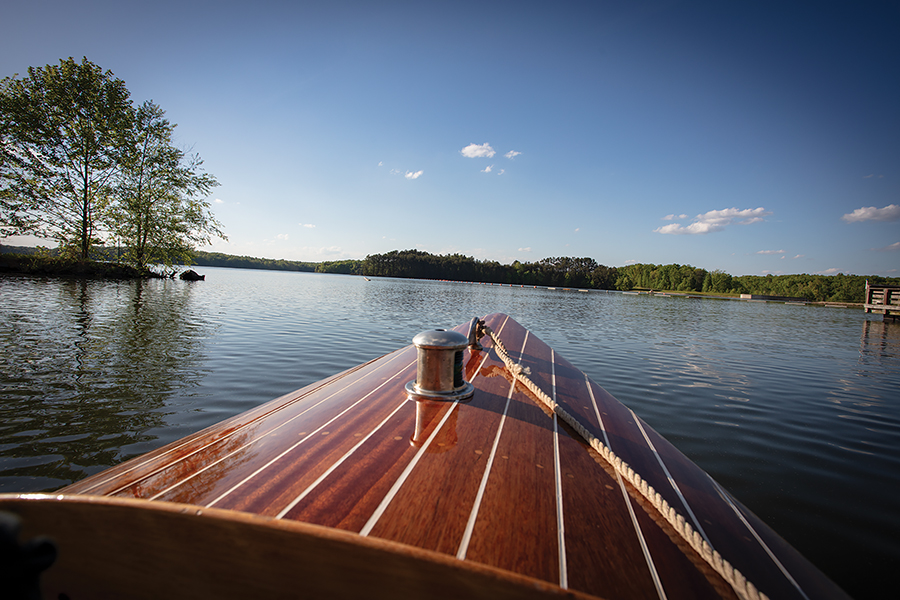
Emblematic of one’s personal style and appreciation for the finer things in life, any boat from a bygone era is sure to attract attention and spark lively conversations. And ones crafted from wood almost universally are regarded as the most impressive in any harbor, partly because each plank is meticulously handcrafted and laid. These veritable works of art are imbued with a singular personality not merely reflected in their appearance but also in the idiomatic sensations its skipper feels when breaking through choppy waters, rocking to rest in a slip or quietly cruising placid waterways.

Those salvaged boats he dragged home to restore? Inevitably, “Somebody would say to me, ‘That’s nice. Let me buy it from you.’” That pattern continued until Lowell realized he’d unknowingly stumbled upon his true calling. “I started working in my backyard and then I got a little shop — and then a bigger one.”

Lowell expanded his operation from 1,800 square feet to his present day cavernous 18,000-square-foot studio on Blue Bell Road, where dozens of boats are dry docked or hanging from the rafters in various stages of completion. While he has clients here in the Gate City, “the regional lakes like Lake Norman, Lake Gaston, Kerr Lake and Smith Mountain are where a lot of my customers come from.”

The golden age of compact wooden boats is considered to be 1948 through about 1959, which tracks with the rise of automobile ownership in America. “Some of those boats actually took on the look of cars,” Lowell notes of the time when molded fiberglass chassis offered a viable alternative to wood, allowing for more extravagant body types. “Especially in the ʼ50s with the tail fins, cars loaded with chrome and big ornate steering wheels.” Indeed, from 1956 into the early-1960s, independent manufacturers began using more sculptural fiberglass to create outboard motorboats that mimicked the streamlined modernity of automobiles.

For vacationers seeking motorized symmetry, a tail-finned 1959 Chevrolet Impala land yacht could be paired with a virtually indistinguishable (from the rear) Reinell Jet Flight runabout. A ’57 DeSoto (“Tell ‘em Groucho sent you!”) might have been cruising that year over one of the nation’s brand new interstate highways in tandem with its Hurters Flying Fish doppelgänger. The iconic red-and-white 1957 Corvette convertible sporting a powerful, 265 cubic-inch V8 under the hood could easily tow behind it a matching two-toned, Fiber-Glassic Lone Star Meteor speedboat — the ultimate in after-market automotive accessories. But those once-fashionable hybrids are of little interest to Lowell, who focuses his efforts exclusively on refurbishing mahogany- and oak-framed watercraft.

Every classic boat comes with a backstory, having weathered the elements for a half-century or more. Gesturing to a gas-powered Sea Skiff designed to ferry a dozen or so revelers, Lowell explains, “A teacher over in Wake County bought this because he used to spend a lot of time on the lakes up in upstate New York.” After stripping away the paint on both sides, “We found carved into it the name ‘Canoe Island Lodge.’ We looked it up and [that resort] is still in operation. So I contacted them and sent them a picture of it, and they sent me a photo from a 1958 brochure that showed people on their lake in this very boat.” The boat’s owner told Lowell his grandfather used to vacation at Canoe Island Lodge. “By coincidence, he’d bought a boat that his grandfather had actually ridden in.”

Naturally, what every client wants to know up front is: how much is it going to cost and how long is it going to take? It’s a great deal more complicated estimating how much time and effort will go into reconstructing a craft that spends most of its life in the water, which lends itself to harboring unseen damage that doesn’t come to light until peeling back the lower layers. That’s why, as an investment, the return is not going to be a financial one. “It will cost more to restore a boat than the resale value,” Lowell says. “You have a boat that you might be able to sell for $25,000 but we’re going to have to put $75,000 into it. But if it’s your grandfather’s boat and you want to fix it up for your grandkids, which some of these projects are, then it’s worth it.” Sentimental value? Priceless.

While an automotive “barn find” is unusual, it does occasionally still happen; the maritime equivalent might more likely be uncovering a watercraft that’s been sleeping with the fishes. “I had one project we called the ‘Fish Boat,’” Lowell recalls. “It belonged to an older couple, one of whom had a grandfather who kept a boat on Lake Norman.” To their dismay, the couple discovered the boathouse had structurally collapsed, causing the boat inside to become fully submerged for an extended period. “When we hauled it up, it was full of fish, hundreds of them. It stunk for months so we kept it outside here, ripped it apart, hosed it down and restored it. It’s just a gorgeous boat that’s now on the show circuit going around the country.”

While he’s taken in fixer-uppers from as far away as the West Coast and New England, most of Lowell’s clientele reside in the mid-Atlantic area. “This is the typical boat that we do today. This one is in for a touchup,” he says, pointing to a compact Chris-Craft runabout. In the past, he’d already worked maritime magic on this very boat. “We ripped everything off, flipped the boat over, replaced the broken framing, then installed an all new bottom on it.”

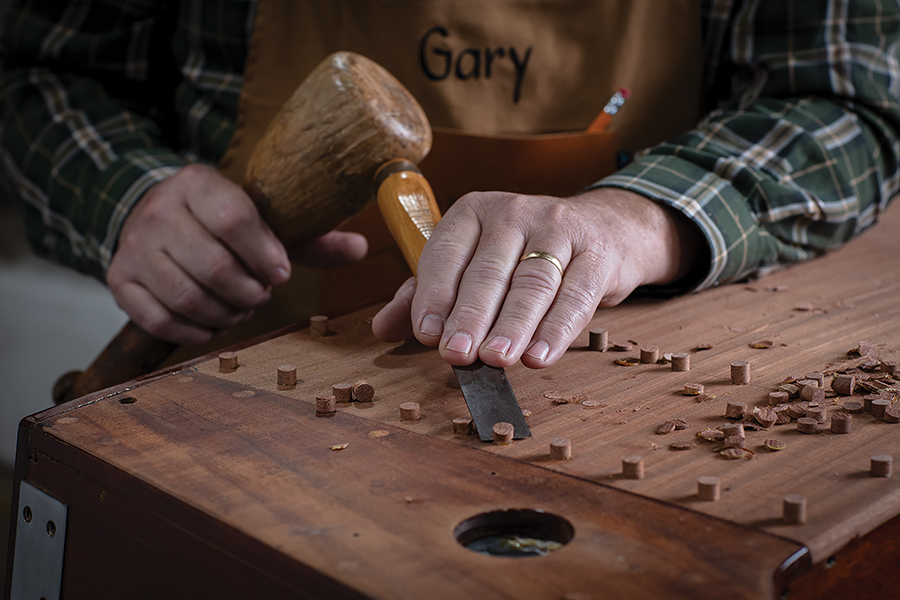
Utilizing tools and techniques boatbuilders have employed for hundreds of years, there’s very little that can’t be accomplished under this studio’s towering roof. “The engines, if it’s minor, like the external workings and regular tuning up and all of that, we do in-house,” Lowell says. Many of those old boat motors were originally installed in tractors, tanks, and landing craft during World War II. “So there’s a lot of that left over, but the actual mechanical parts are sometimes hard to find.” As for the seat coverings, some higher-end boats are appointed in marine leather, others covered in a marine vinyl with a faux leather texture. These can be repaired using remnants on site. “In a lot of older boats, you’ll find the upholstery is in good shape. If it needs all new foam and cushions we have vendors that specialize in that.” Lowell turns to a local artist for the calligraphic flourishes that spell out the often clever nicknames inscribed across these crafts. “There’s a guy in town I use, Mike Gregson, who does all the gold leaf on the county’s fire trucks.” Lowell insists one of his hardest tasks was coming up with names for his personal vessels. “Most powerboat names are tacky or even crude,” he says referring to double entendres often based on the term “wood.” “The best are ones that are named after someone’s grandmother, such as Lena, Maren, Mozel or Amelia Jean.”

Mahogany and oak are the main boat-building materials so, with Greensboro’s proximity to the furniture capital of the world, there are ample avenues for acquiring hardwoods. Currently, Lowell is restoring several mid- to late-1950s, 18-foot and 23-foot Chris-Craft Continentals, an almost iconic mid-sized model adorned in dark mahogany siding with white pin striping up top. “Just a fluke that we’ve got all of these Continentals in at the same time,” he quips. He’s also putting the finishing touches on a 1954, 18-foot Riviera, which connoisseurs regard as the “quintessential 1950s Chris-Craft runabout.”

Some of the more unusual water crafts Lowell and his crew have on deck are a fleet of small electric models from 1934 and 1935. “They reside at a lake up in the North Carolina mountains,” Lowell says. “Most people don’t realize there are electric boats that old.”

While it wasn’t uncommon for manufacturers to install easily attainable automobile steering wheels in their boats, customized chrome ornaments, frames, and dial casings can be difficult to come by at times. “Even with a rare car, they still made thousands of them. Some of these boats, they maybe only made two of some models.” Making such a limited number wouldn’t have been the plan but, “if they made a 16-footer in 1953, but everybody bought the 18- or 20-foot versions, the next model year they’re not going to make the 16 anymore. You end up with a rare 16-footer you can’t find parts for, so you have to recreate them yourself.”

When it comes to bending those long mahogany planks to conform with a boat’s outline, Lowell explains, “They go into a big box that we hook up to a beer keg with a burner under it to boil water and we steam the wood for about an hour or so. When it’s ready, we pull it out and fold it around a mold or sometimes directly on the boat so it takes in not only the curve but the twists as well. That’s kind of a fun process.”

While he and his precision-oriented crew will take on any type of boat as long as it’s wooden, sailboats are Gary Lowell’s true passion. What’s their “it” factor? “Something about the mast and the rigging that I like better than the mechanical power.” Not to go all Christopher Cross here, but there is a majestic quality to the art of sailing where sun, wind, canvas, punctuated by the ocean’s salty spray, induces an unparalleled level of serenity that, for thousands of years, sailors and adventurers have continued to chase.

“It wasn’t until years later that I came to find out that I’m part of a famous Lowell boat-building tradition that dates back to 1793.” Distant relative Simeon Lowell is credited for producing the earliest shallow-draft American Dory fishing vessels, for which his shop became famous. Positioned alongside the lower Merrimack River shore in Massachusetts, Lowell’s Boat Shop, the nation’s oldest, still operating, remains dedicated to the art of “preserving and perpetuating the art and craft of wooden boat building.” Lowells are still building watercraft in Maine and throughout the rest of New England.

Born in Greensboro but raised in Maine, Lowell returns to The Pine Tree State every summer to visit family and to teach restoration, marine painting and varnishing techniques at the prestigious Wooden Boat School in Brookline, which he’s done for 25 years. Closer to home, he’s conducted seminars at the N.C. Maritime Museum in Beaufort. Plus, one of his crew is a graduate of Cape Fear Community College, where a degree in traditional woodworking skills and precise joinery techniques required for assembling wooden boats is offered, as well as a diploma in composite boat manufacturing and service.

Lowell also invites interns and school groups to drop by the shop. “With one intern, we’re making several oars to be donated to Greensboro Parks and Recreation to use on row boats they rent.” He’s also a part of TWSBA, Teaching with Small Boats Alliance, an international organization of boat builders educating young people on subjects related to boating, such as geometry.

Wooden boat shows, like their classic car counterparts, are always a big draw, where 40 or 50 antique crafts will be gawked over by thousands of boating enthusiasts converging from around the country. In September, Smith Mountain Lake will host one of these festivals, where you’re bound to encounter an array of Lowell’s cultured pearls-of-the-sea. If you’re thinking of dipping your toe into the water, so to speak, the 34th annual Georgetown Wooden Boat Show in South Carolina will be held in October, an event that kicks off with the Goat Island Regatta Auction. Bring your checkbook, but leave room for plenty of zeros.

Perhaps one of these gatherings will ignite your own infatuation for navigating cool waters in a vintage custom-crafted wooden boat, unleashing your inner James (or Jane) Bond.  OH

Omnivorous Reader

Omnivorous Reader

Letters from Death Row

Finding purpose behind bars

By Anne Blythe

Much has been written about how the art of letter writing has been in decline for years — except in prisons. Behind the barbed fences, putting pen to paper remains a vital connection to the world outside the prison walls. It was one such letter that launched Rap and Redemption on Death Row: Seeking Justice and Finding Purpose Behind Bars, a book by Alim Braxton and Mark Katz.

Braxton, born Michael Jerome Jackson on June 1, 1974, has been in prison since he was 19 years old, incarcerated more than a quarter-century of that time on North Carolina’s death row. His co-author, Katz, is a music professor at UNC-Chapel Hill who started the Carolina Hip Hop Institute in the summer of 2019.

Braxton, who chose the Muslim name Alim in prison, read a newspaper story about the program and wrote a letter to Katz in August 2019 asking for help. Rap music had been a big part of Braxton’s life, even before prison. He had been writing and recording lyrics over the phone but was not pleased with the sound quality.

Let’s get this out of the way: Braxton killed three people and robbed two others. He accepts responsibility and apologizes for killing Emmanuel Ogauyo, Donald Bryant and Dwayne Caldwell, as he does for robbing Susan Indula and Lindanette Walker.

“I know my situation may seem despairing and perhaps unlike anyone you’ve worked with before, but despite the circumstances I still have faith and I still have a dream, and I believe that with the right sound and someone who knows what to do with my vocals I can accomplish something BIG!” Braxton wrote to Katz, who held on to the letter for a month.

“I wasn’t sure I wanted to offer my help,” Katz writes in the preface to the book. “I didn’t know him, and after all, this request was coming from a convicted murderer.” He decided to respond anyway.

“I was intrigued by his passion. I also saw an earnestness is his neatly handwritten letter that amplified the sincerity of his words,” Katz writes.

That led to a relationship and the exchange of many letters to build a team of people who worked with Braxton to record his first album — the first-ever recorded from death row — and to this book.

“It wasn’t long into our correspondence that I came to believe that Alim’s letters were worth preserving and making public, and that is what spurred me to suggest the possibility of a book,” Katz writes. “Earlier in my career, I had spent many hours in archives reading correspondence by famous musicians. I would count myself lucky anytime I found a single paragraph of interest out of a batch of letters. That is not the case with Alim’s letters.”

Braxton’s blunt but colorful accounts of how he got to prison and his life inside it are contemplative and eye-opening. He gives readers a glimpse of the inmate hierarchy, the violence, the loss of dignity, privacy and rights, the code of survival and his path to redemption, love, a wife and even hope for the future despite his circumstances.

His rap, which is interspersed with the narrative, is personal and wide-ranging. His lyrics offer views of the George Floyd protests, COVID, pop culture and much more. In telling his story, Braxton wants to make sure that the stories of others — those on death row who maintain their innocence and have cases he believes involve wrongful convictions — are lifted up with his rap.

Braxton grew up in a rough-and-tumble Raleigh neighborhood about 2 miles from Central Prison. There are times he dreams of nearby places he visited as a boy or the rolling Dix Park across the busy boulevard from the prison cell “the size of a bathroom” he now lives in.

“I have fond memories of my childhood growing up in Raleigh, but as I wrote in my song, ‘Unremarkable,’ it’s also where I learned ‘to thug it properly.’ Stealing, fighting and drinking were rites of passage in my neighborhood,” Braxton writes. “My descent into crime didn’t happen overnight. I got my feet wet shoplifting around the age of 11. By the time I was 16 I had gone to prison for two months for stealing a car. I soaked up more criminal knowledge while inside, and after my release, the front gate became a revolving door, with three dozen arrests and three additional stints in prison.”

In vivid detail, Braxton goes on to describe his first time with a gun, his move from a pistol to a sawed-off shotgun, the first time he killed a person, and the almost out-of-body experience he had during those times. It was as if he was playing a role in a movie or a TV show, he wrote. He says the adage “the decisions you make today determine your tomorrow” rolls around in his head, especially when he thinks about the 1993 robbery spree where he claimed the lives of two people.

“Why didn’t I just leave at some point during that February night in 1993?” Braxton writes. “The truth is that I was afraid that I would look weak. I know now that it’s not weak to walk away from something you don’t want to be involved in. . . . Not walking away was a pivotal decision that changed the course of my life forever.”

Not walking away from a conflict in prison is what landed him on death row. He had been spared the death penalty and given two life sentences plus 110 years for the 1993 robbery-turned-kidnapping-turned-murder. Then he stabbed a fellow inmate to death.

Although North Carolina has had a de facto moratorium on the death penalty since 2006 while lawsuits make their way through the courts, the possibility of executions starting again looms.

“The true reality of life on Death Row is that every day is a life of fear, regret and humiliation . . . ,” Braxton wrote in a newspaper letter to the editor published in the book. “I live every day with the fear of standing before my God and accounting for my deeds.”  OH

Anne Blythe has been a reporter in North Carolina for more than three decades covering city halls, higher education, the courts, crime, hurricanes, ice storms, droughts, floods, college sports, health care and many wonderful characters who make this state such an interesting place.

O.Henry Ending

O.Henry Ending

The Gift of the Fan Belt

What goes around . . .

By Harry Roach

Note from the editor: This was second place in our 2023 O.Henry Essay Contest.

In the summer of 1969, I was driving a 1965 Chevrolet Corvair. Yes, a Corvair, not a Corvette. Manufactured from 1960–1969, the Corvair was America’s first and only automobile with an air-cooled, rear-mount engine. That engine was the heart of the vehicle, and near the center of this story.

After a long day trip to a state park in southeastern Missouri, my wife and I were in the Corvair, engine off, waiting in line for a ferry to carry us across the Mississippi River to southern Illinois. We chatted and laughed, recounting the highlights of the day.  From the ferry landing, fields of corn flowed north and south to the horizon, filling thousands of acres of bottom land between the river and the levee. I could say that the scene reminded me of that ominous Stephen King story, but he didn’t write it until 1977.   

With the late afternoon sun behind us, we could see the ferry crossing toward us from the east bank, slow as a tortoise on vacation. It was carrying its maximum, just nine cars. On our side, the Corvair was seventh in line and, because the ferry did not operate after dark, ours would be the final crossing of the day.

As the ferry maneuvered toward the slip, drivers ahead of us started their cars. I turned the key in the ignition, the engine immediately fired up. Bang! What was that? Red lights on the control panel lit up like a Christmas display. I got out and opened the hatch over the engine. The Corvair had thrown its fan belt. Late on a Sunday afternoon. Miles from nowhere. We were stuck.

The fan is essential to an air-cooled engine, and its belt also runs the generator and the power steering. I was thinking maybe we could coast down the incline and onto the ferry, then, after the crossing, get help pushing the car up the ramp onto the Illinois shore. Where we’d probably have to sleep in the car. Not a bright prospect.

“Can I help you, buddy?” It was the guy in the truck behind us. Who happened to be a Chevy mechanic. Who also owned a Corvair. And had a Corvair fan belt in the back of his truck. What were the odds? Our miracle mechanic installed the new belt so quickly that we were ready to roll just when it was our turn to board. My wife and I were two very thankful people.

Years later, I was on the Pennsylvania Turnpike, driving a different vehicle with an air-cooled rear-mount engine: a Volkswagen bus, the vehicle of choice for happy hippies, van campers and large families on a budget. By then, I had learned how to install a fan belt, change the plugs, adjust the timing, and other rudiments of amateur automobile maintenance. A quarter mile ahead, a red VW bug sat sadly on the shoulder of the road, its open engine hatch gaping at three perplexed women. Their bug had thrown its fan belt. I got out my tools and spare belt and in 15 minutes had those very thankful people back on the road. And I, too, was grateful for the opportunity to return the gift of a fan belt bestowed by that miraculous Samaritan so long ago.  OH

Harry Roach and his wife, Liz, live in downtown Greensboro, where they spend a lot of their time dancing.

Simple Life

Simple Life

When Losing is Winning

Seeing the world through missing glasses

By Jim Dodson

“Oh I have been to Ludlow Fair. And left my necktie God knows where.” – A.E. Houseman

The other day, I lost my latest pair of expensive eyeglasses. Sadly, I seem to lose my spectacles on a regular basis. My wife, Wendy, jokes that she keeps a running account with Warby Parker.

Just for fun, I made a rough count of eyeglasses I’ve lost over the past 23 years of our marriage. I gave up the count after six, which happens to be this year’s total alone. At least one of those pricey pairs of specs was never found. It vanished into the magical Land of Lost Things without a trace. Of the remaining missing five, Wendy found two pairs in the pockets of old work shirts and a third in a sports coat I haven’t worn since Christmas. The fourth pair turned up in a rose bush where I was doing some early spring pruning. The fifth and final missing pair — my hip, whiskey-hued tortoiseshell sunglasses — finally revealed themselves in my golf bag, where I left them two weeks ago.

Dame Wendy’s theory to explain my penchant for losing my glasses is that I have so much on my mind — i.e. deadlines, books to read, garden stuff, my aging golf swing, the general state of the world, etc. In short, there’s little room remaining to remember where I leave things that I don’t particularly deem essential.

My explanation for this perpetual problem comes from my being nearsighted and only needing glasses to see objects in the distance, including, but not limited to, golf balls, birds at the feeder in the yard, street numbers, the fine print on billboards, UFOs and interesting cloud formations. When I’m reading, writing or examining something up close, I typically remove them and — apparently — forget where I put them down. Out of sight, out of mind.

All of this invariably has me pondering lost things in this world, including people.

We Americans are obsessed with winning and losing. The worlds of politics and sports are the most obvious examples. One presidential candidate calls people “losers” and insists that America will cease to exist if he isn’t re-elected Commander in Chief next November; while the other declares that democracy is doomed if his opponent somehow wins. Meanwhile, billions of dollars from wealthy team supporters flood our college sports, where winning is the only name of the game.

Up on Wall Street, meanwhile, where predicting winners and losers is the holy writ of American commerce, we watch the record Dow rise as if we’re running with the bulls, staying one step ahead with the nettlesome awareness that what goes up inevitably comes down. As the gap between the haves and have-nots ever widens, we associate wealth with winning and poverty as a stubborn inconvenient truth. Jesus, after all, said the poor will always be with us. He also asked what profit it is for a man to gain the whole world, but lose his soul?

Sometimes being lost or losing is the best thing that can happen to you.

Last year, I lost 40 pounds and have never felt physically better. I’ve even managed to give up (mostly) my gifted baker wife’s unearthly delicious cookies, pies and cakes, though I draw the line at giving up her lemon-ginger scones and a daily large chai tea latte.

More than once I have been lost on America’s country back roads in some of the most beautiful cities in the world, only to discover wonderful people, places and things I would never would have encountered otherwise. One of the sad truths of our GPS-equipped smart phones is that we can never truly be lost anywhere in the world these days unless the juice runs out.

Losing one’s fear of those who don’t share our opinions, tastes, gender, lifestyle, religion, race or brand of politics can be a courageous and very healthy thing, quite possibly the first step toward regaining the kind of social civility that could heal this divided country and bring us all a step closer together as Americans.

Many years ago, due to my  work and strengthening faith, I even lost my fear of dying by choosing to believe that each day is actually a reason to feel grateful for being alive — even on so-called “bad” days when nothing seems to go right.

Losing a loved one to disease or tragedy, on the other hand, exists in a category all its own, though the passage of time and memories can often be an unexpected path to healing and awakening. I lost both of my parents more than two decades ago, yet today I seem to hear their wonderful voices and wise words clearer than ever.

My mom was the one who stressed the importance of losing one’s fear and judgment of others in a multi-hued world where everyone is different, a value system I saw her live every day of her life. It’s something I aspire to but admittedly still struggle with at times. Forever a work in progress, I suppose.

My dad was a fine baseball player in his youth and, later in life, became a terrific golfer. Following in his wake, I was something of a hotheaded kid who hated to lose at either of those games. It was he, however, who pointed out that my boyhood sports hero, the great amateur golfer Bobby Jones, said he never learned anything from winning a golf tournament.

In truth, it took me many years — and no shortage of lost games and golf matches — to appreciate my old man’s belief that being a good loser is, in fact, the road to someday being a gracious winner. When I was about 10 years old, he placed a framed copy of Rudyard Kipling’s poem “If” on my bedroom wall. I can still recite my favorite passages by memory.

And I don’t even need glasses to see the timeless vision of these words.

If you can make one heap of all your winnings

And risk it on one turn of pitch-and-toss,

And lose, and start again at your beginnings

And never breathe a word about your loss;

If you can talk with crowds and keep your virtue,   

Or walk with Kings — nor lose the common touch,

If neither foes nor loving friends can hurt you,

If all men count with you, but none too much;

If you can fill the unforgiving minute

With sixty seconds’ worth of distance run,   

Yours is the Earth and everything that’s in it,   

And — which is more — you’ll be a Man, my son!  OH

Jim Dodson is the founding editor of O.Henry.

Tea Leaf Astrologer

Tea Leaf Astrologer

Gemini

(May 21 – June 20)

They say the longest trek a soul can take is the one between the head and heart. While this is doubly true for you, Gemini, suffice it to say that the Venus Cazimi on June 4 is going to expedite your journey. While you’re used to staying camped out in the frenzied chambers of your own mind, get ready for a month that’s all about feeling. Despite past experiences, being vulnerable with others is not, in fact, your kryptonite. Bon voyage!

Tea leaf “fortunes” for the rest of you:

Cancer (June 21 – July 22)

Easy does it.

Leo (July 23 – August 22)

Two words: airplane mode.

Virgo (August 23 – September 22)

Take your vitamins.

Libra (September 23 – October 22)

Don’t pick the scab.

Scorpio (October 23 – November 21)

There’s treasure to be found.

Sagittarius (November 22 – December 21)

Listen for what’s behind the words.

Capricorn (December 22 – January 19)

Give yourself some grace.

Aquarius (January 20 – February 18)

Breathe into your belly.

Pisces (February 19 – March 20)

It’s going to be dicey.

Aries (March 21 – April 19) 

Hit the pause button.

Taurus (April 20 – May 20)

Just walk away.  OH

Zora Stellanova has been divining with tea leaves since Game of Thrones’ Starbucks cup mishap of 2019. While she’s not exactly a medium, she’s far from average. She lives in the N.C. foothills with her Sphynx cat, Lyla.

Sazerac June 2024

Sazerac June 2024

Unsolicited Advice

According to Simon & Garfunkel, June will change her tune. And according to the Gregorian calendar, she’ll change her season from spring to summer. Typical Gemini. So take your fae-thful friends and family to the arboretum and celebrate at the Greensboro Summer Solstice Festival from 2–10 p.m., Saturday, June 22. We’ve got some tips to help you make the most of this magic moment. Fairy thee well!

Make like a mermaid and scale up on the water intake or you’ll be one parched pixie. Don’t worry — porta-potties abound. As do adult beverages — you know, for hydration.

Speaking of sweat, three words: waterproof body paint.

Show a little elf control? Not here. Let your inner fairy fly for the day — glitter, wings and all!

The evening culminates in an outstanding fire show, where the lawn at Lindley Park turns into gnome man’s land. Set your derriere on your fairy chair on the early side for a stellar view.


Photograph © Greensboro History Museum Collection

Window to the Past

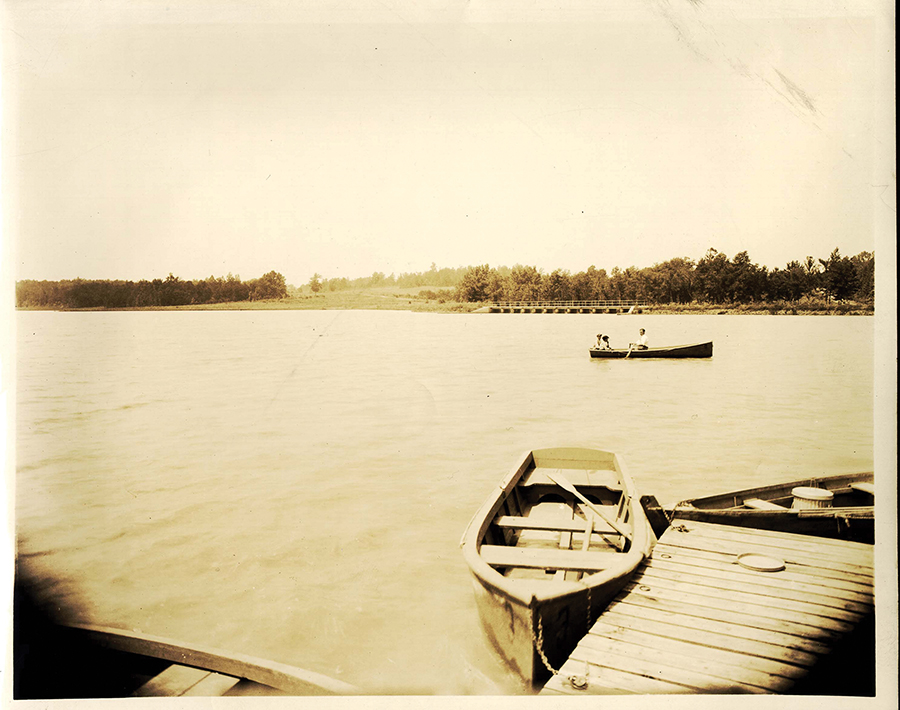
Ready oar not, summer is arriving later this month. Lake Brandt has been welcoming water lovers since 1925.

Sage Gardener

We hope you’re sitting down, because according to The New York Times, “2024 is going to be a really exciting year in cabbage.” Celebrity chefs are stir-frying it, banking it into beds of hot coals and, in Asheville’s Good Hot Fish restaurant, adding it to pancakes served with sorghum hot sauce.

My momma used to braise it in bacon grease, a technique I’ve since discovered seals in the mustard compound that cabbage shares with horseradish, onions and mustard greens — the very compound that, according to the Times, “can make your house smell like a 19th century tenement” but has become “the darling of the culinary crowd.”

Mom, you always did know what was hot and what was not — and that everything tastes better with bacon.

Mark Twain observed that “cabbage is nothing but cauliflower with a college degree.” Cauliflower and Brussels sprouts — in the same family as kale, broccoli and bok choy — have both recently had their moment in the superfood spotlight. Now, it’s cabbage that’s taking center stage on white tablecloths in New York and L.A.’s elite boîtes, going for $18–20 as an appetizer paired with the likes of anchovy breadcrumbs and brown-butter hollandaise. Try serving one of those instead of corned beef and cabbage next St Paddy’s Day.

Brassica oleracea, aka wild cabbage, though not mentioned in the Bible and apparently unknown to early Jewish cuisine, is “a plant that has accompanied mankind throughout the ages,” according to The Oxford Companion to Food. Prized by the Egyptians and Romans, it was sacred to the Greeks, purportedly springing full-grown from no less than Zeus’ own sweat — perhaps because of how it smells?

I’ve grown it only once or twice. I’ve never had well-drained, sandy loam, which it prefers. And being an organic gardener, by the time my cabbage begins to head, aphids, flea beetles, cabbage loopers, diamond-back moths and cabbage maggots get a lot more of it than I do. Besides, cabbage is incredibly cheap, organic or not, even when purchased in a farmers market. (I find N.C. mountain cabbage particularly tasty and it makes terrific sauerkraut. North Carolina, by the way, grows something like 12,000 acres of cabbage a year.)

So remember, you heard it here first (unless you read The New York Times story): “Among the food-forward, cabbage fever is rising.”

        David Claude Bailey

Growing Goodwill

Survey four of the Triad’s youngest residents and one of them will tell you they face food insecurity. Share the Harvest board president Linda Anderson, a retired educator, does her best to improve that grim statistic. Sometimes, she says, it’s as simple as grabbing a hoe or driving a truck.

“There are times during the growing season when our gardens are overflowing with vegetables and we don’t know what to do with the excess. This is when Share the Harvest can help both the gardener and the individuals in need,” says Anderson.

Anderson says donations have grown since 2012 from a few community and church gardens donating food to local nonprofits into an expanding program benefitting organizations, collecting and distributing food to the needy via various programs offering meals and food pantries. For its 10 core volunteers, the need has motivated them to collect, coordinate and distribute donations from groceries, restaurants, gardens, farmers markets and even N.C. State A&T University’s farm.

From May through October, the growing season, they collect, aggregate, then store fresh products at a central collection site for distribution.

“In the beginning, the first year, we had 1,200 pounds of veggies. Last year it was 15,241 pounds received.” See sharetheharvestguilfordcounty.org for more information. 

                                              By Cynthia Adams

Letters

Dear Editor,

OK, I look a little grumpy, I admit. How would you feel after eating dirt in the dark for 17 years?

If you find my surreal red eyes deeply disturbing, I say, “Good!” It’s not like anybody asked me how I wanted my DNA arranged. You think your kids are so cute. They don’t even have exoskeletons! No wonder you’re running them to the ER every other day.

A cicada’s life isn’t much when you think about it. In 30 days’ time above ground, the most dramatic thing that can happen is having a cat or dog eat enough of us to spew up a blob of legs and wings on somebody’s living room carpet. Or having kids trap us in Mason jars to amplify the sound. Like that’s really a science experiment. Stick to the fireflies and leave us alone!

This spring, all you heard was “Total Eclipse! Won’t be another until 2044!” Everybody bought special eyeglasses and threw a party.

Well, this summer, not only are we 17-year cicadas emerging, but our 13-year cousins are, too. Guess the last time that happened. 1803, when Thomas Jefferson was president. You know, author of the Declaration of Independence. How about throwing a cicada celebration, we, the people?

And who’s this Harry Blair joker, anyway? When in our conversation did I grant him permission to reproduce my likeness? Please spare me the public figure argument. I’m a bug!

You’ll be receiving a letter from my attorney.

    Sincerely,

    A. Cicada, Esq.

Just One Thing

During a residency at Charlotte’s Village at Commonwealth, muralist and fine artist Liz Haywood decided it was time to try “something totally different, something to inspire me to branch out of my comfort zone.” Her focus up until then had been on the “many different faces” of diversity, she says. And that something different? Space exploration. The twist? A series she’s calling “Alien Worlds”: “By using a palette of warm pinks, purples and sunset hues, I bring an updated feel to a subject often seen through a masculine lens.” No surprise. Haywood is constantly doing her own dive into the unknown through film and literature. “I’ve basically read every science fiction novel available,” she notes with a laugh. Her canvas offers her a way to imagine the world beyond and bring it back to this planet through a feminist lens. Just as space is full of unanswered questions, Long Walk Home, seen here, is also open to interpretation, she says. “She’s walking into the distance. You don’t know — is she walking back to her ship? Or is she leaving and going somewhere else?” Haywood encourages her viewers to use their own imaginations. This painting is part of her second iteration of “Alien Worlds,” on display at GreenHill Center for NC Art’s “LEAP: Artists Imagine Outer Space” exhibition. “Space is the next frontier,” she muses. “I hope we venture out with open hearts and curious minds.” And does she hope to explore space one day? “I need to be around people ,” she says. “If my dog and my boyfriend and other people could go, then yes!” Info: lizhaywood.com

Chaos Theory

Chaos Theory

Curb Alert

Freedom, fear and fahrvergnügen

By Cassie Bustamante

The first car I ever bought myself — with funds matched by my parents — was a brand-new 1997 little black Jetta, purchased right after I finished my freshman year at Wake Forest. One of my close friends, Krista, had a similar car she called LBJ; so I dubbed mine LBJ Jr.

“Junior” was my ticket to freedom. Far from my Massachusetts home, that car and I made many scenic drives to Pilot Mountain, an area that reminded me of the rolling New England countryside. Cruising, windows open and mix CD blasting, was all the escape I needed when undergrad life felt overwhelming.

Over 20 years later, with kids who are just shy of my age then, it’s time to pass my current car, a 13-year-old cherry-red Ford Flex, aka station wagon on steroids, onto my son, Sawyer, and get myself a new ride. Neither of my eligible children has a license yet, but both Sawyer and his younger sister, Emmy, are permitted.

Fondly recalling my travels with Junior, I book an appointment at the Flow VW dealership. My only rule? No bold colors. I’ve had enough of people telling me they spotted me in my bright-red bus. Let that be Sawyer’s problem soon, God willing.

Behind the wheel of a dark gray 2021 Touareg, I’m smitten. It seems — at least compared to the 2011 clunker I’ve been schlepping around in — to have all the bells and whistles. Seat warmers and steering wheel warmer? It might be June, but my cold winter hands will thank me in December. But practical Chris, along for this car-shopping ride, wants to visit another dealership before going home to confer.

“What’s there to discuss?” I ask in our kitchen that evening. “I liked the first one. Sold!”

“This is a big decision,” he replies, hoping I’ll put a little more thought into my choice. Where he likes to take time to assess all angles, I go with my gut.

“The moment I sat in it, I knew. It’s got everything — even a sun roof!” I exclaim. “Plus, loads of people drive gray cars — no one will know it’s me!”

Later that week, we sign on the many dotted lines and make it official. In the parking lot, keys in hand, my heart races, giddy with excitement. Chris zips off, homebound, while I take time to adjust mirrors and seats.

I start the ignition, open the sun roof and cruise home, wind whipping strands of silver hair every which way. I pull into the driveway behind Chris’ car and open the door to the anxious faces of my three children and Chris all asking, “How was it?”

Glorious.

Fourteen hours after completing our purchase, Chris offers to take 16-year-old Emmy on a driving lesson. My recommendation? Grimsley parking lot, perfect for pulling into and backing out of spaces, a skill she needs to practice.

“Do you wand to play car Tetris, or do you think it’s safe parking in the street?” I ask, apprehensive about passing drivers accidentally scraping it.

“It’ll be OK for a little while,” Chris assures me, knowing I am headed to the office shortly.

Brand-new car now nestled into the side of the street, I turn my attention back to my open laptop, waving as Emmy and Chris exit.

A moment later, I hear it. A light thud. Not a crash, but strange and alarming. My gaze follows the sound to outside, where Chris’ small white SUV is angled directly into the left rear of my VW.

“Are you even kidding right now!” I shout to no one. Breathe. Maybe they’ve just hit the bumper.

Chris marches from the passenger to the driver side. Even from my vantage point, I can see Chris’ clenched jaw, fighting back a stream of frustration. Red-faced, Emmy bolts inside in a blur. Her bedroom door slams, followed by the click of her lock.

Meanwhile, Chris reverses his car, and my own drops about a foot back down to the ground. Nope, definitely not just a little love tap.

I feel the rage bubbling up and there’s no shoving it back down as Chris walks in the front door. “What were you thinking?!” I scream. “She’s not ready to back out of our driveway! And my car, my new car, was right there!!!!”

Chris does not rise to meet my level of emotions and calmly says, “She did great backing up. She put it into drive and then saw a car coming behind her and panicked.” Like a deer in headlights, she froze, foot off the brake, and rolled right into my car.

Exasperated, I leave him to deal with the insurance filing for not one, but two cars — his is in even worse shape than mine — and turn my focus to the real damage control.

I stand outside Emmy’s door. “Can I come in?”

“No!” she says between sobs.

“I’m not mad, Emmy. I just want to talk.”

A click. I’ve been granted entrance.

“I told Dad I wasn’t ready,” she hiccups. “I didn’t want to pull out of the driveway!”

“I know,” I reply, rubbing her back. “Look, you’re OK. The car will be OK. And on the bright side, you — and my car — have had your first fender bender. It has to happen at some point and why leave home to do it!”

She’s calming down. “I’m just really sorry.”

“This is not your fault, Emmy. They’re called accidents for a reason,” I say calmly. Then, with fire behind my voice, “It’s 100 percent Dad’s fault!”

That coaxes a laugh out of her. And I know in time, we’ll all be laughing about it.

A year later, we all see the humor in it. A core family memory for sure. We’re still slowly chipping away at having two more licensed drivers in our household, but, one day, we’ll get there. And those new-driver nerves? They’ll be replaced by the exhilarating thrill that comes with facing the open road, outstretched before you, beckoning you to enjoy the ride.  OH

Cassie Bustamante is editor of O.Henry magazine.

Life’s Funny

Life’s Funny

Just Doo It

The long way around a colonoscopy

By Maria Johnson

One of the pleasures of writing for O.Henry is hearing from readers who say, “That’s such a classy publication.”

Well, nothing lasts forever.

To be fair, the magazine remains a classy book. But this space, this month, might soil that reputation a tad.

So if you’re one of those people who likes to pretend you never doo, and even if you do doo, it doesn’t stink, please skip this column. But if you’re like the rest of us, and you’d try anything to avoid a colonoscopy, read on.

I’ll start with gratitude: I’m one of the lucky ones, intestinally speaking.

I have no family history of colon cancer, and therefore it was an option for my physician’s assistant to prescribe a noninvasive screening kit called Cologuard.

I had used earlier versions, and lemme just say that poo technology has come a long way since those first at-home tests, which were basically a few sheets of gift-wrapping tissue and some popsicle sticks.

Other advances — in cellular communication, point-to-point shipping and pharmaceutical-based musical theater — have made the process a true reflection of our times.

Recently, for example, I saw a television commercial that featured an animated box bearing the stylized letters “CG,” a sort of modern-day Kool-Aid Man, skipping through scenes where random adults, who all seem to know each other, converge in a park and sing the Cologuard song joyfully.

The chorus: “I did it my way.”

Somehow, I don’t think this is what Frank Sinatra had in mind.

But back to my tale.

My PA tells me she will have a test sent to my home.

About a week later, I get a text announcing that my kit is being shipped. Save the date!

Another text informs me when it’s delivered to my doorstep. For once, I’m not worried about porch pirates.

The next text reminds me to do what needs to be done.

Yet another text leans on me even harder. It says my provider is awaiting my test. I envision my bright and busy PA wondering — maybe over lunch— “Where is Maria’s poop sample?”

I am not moved.

The CG people know it. A brochure titled “Let’s Get Going” arrives in the mail, complete with diagrams and step-by-step instructions.

I flip through the brochure, which, I must say, editorially and graphically, is very well done.

I even open the Cologuard box, which rests on my bathroom counter, and unpack the contents.

First, I encounter a heavy-duty plastic bracket that I mistake for packing material. It’s so sturdy — and seemingly multipurpose, with a large hole in the middle — that I make a mental note to save it and hang it on the pegboard above my husband’s workbench. Never mind the stamped instruction to “Place Under Seat.”

Next layer: a sheaf of paper with 30-plus pages of instructions and inserts with the latest updates.

I start reading and get so nervous I have to go immediately. The test will have to wait for another day.

In the meantime, coincidentally, I see my OB-GYN for an annual exam.

She asks if I’ve done a Cologuard test recently.

“Funny you should ask,” I say. “It’s in progress.”

“In progress?” she probes.

“On my bathroom counter.”

“Oh yes, that’s where I put mine,” she says. “For about a year.”

My kinda doctor.

“The instructions stopped me,” I confess. “So much to read.”

She waves her hand.

“Just follow the diagrams. Like putting together a piece of furniture.”

“There are a lot of pieces in the kit,” I continue. “And when you’re done, you have to drop off the box at UPS.”

“And you know that they know what’s in there,” she said, barely suppressing a smile.

“And you know there have been mishaps!” I add.

So now, we’re laughing, my doc and I, about the potentially leaky life of Cologuard returns. And suddenly, there and then, I resolve to do it. The test, I mean. At home.

A couple of days — and a couple of cups of coffee — later, the time seems right. I go straight to the diagrams, referring to them as I quickly assemble a small plastic chamberpot over the toilet bowl.

I feel increasing pressure about hitting the target. I read on and hit another stressor: The volume of my contribution can be no greater than the liquid preservative that I’m supposed to pour over it.

Great. A mathematical word problem.

Dancing in place, I pick up the bottle of preservative, which says it contains 290 milliliters.

This really helps.

The instructions also warn against drinking from the bottle, which tells me that some poor souls have done this, hoping, I suppose, to shortcut the preservation process.

Obviously, Cologuard has heeded the advice of lawyers rather than, say, Charles Darwin, in writing these instructions.

I have dallied long enough. I dive in, hitting the brakes at an estimated 290 milliliters of relief, and add the liquid preservative.

At this point, I wonder why the kit doesn’t include a test for stomach cancer, because I nearly hurl at what I’m shipping to some poor unfortunate soul at Exact Sciences Laboratories on Badger Road in Madison, Wisconsin.

I apologize silently and seal the container tightly.

Not one hour later, I receive another text:

“Urgent reminder: Complete and ship your Cologuard kit ASAP.

Was there a camera in the box, too?

I hustle to the UPS store, chuck the box onto the scale, snatch a shipping receipt with eyes averted, and drive off in search of my tribe who, I’ve been led to believe, have done it their way, and are joyfully singing in a park somewhere.  OH

Maria Johnson is a contributing editor of O.Henry magazine. Email her at
ohenrymaria@gmail.com.

Birdwatch

Birdwatch

Easy Listening

But the whip-poor-will is harder to spot

By Susan Campbell

If you live adjacent to wet woods well away from the city, I am betting that you have been treated to a loud, repetitive call at dusk — probably for some weeks now. The raucous, distinct vocalizations most likely originate from a medium-sized, extremely well camouflaged bird. Not surprisingly, the endless three-syllable chants of “whip poor will” are made by the Eastern whip-poor-will. But make no mistake: This bird is as hard to find as it is easy to hear. Its mottled gray, brown and white plumage makes it virtually invisible either perched on a low branch or, as it does more often, sitting on the forest floor.

Should you scare up one of these birds or catch a glimpse at dawn or dusk, you will see that little about their plumage really stands out. Whip-poor-wills have a distinct white throat patch as well as pale coloring on the corners of the tail but otherwise are quite dull. The outer tail patches on males are white but buff-colored on the females — otherwise they are identical. One other important difference is that only the males do the calling.

In early spring, whip-poor-wills make their way north from winter locations ranging from Central America to perhaps as far north as the Gulf Coast. Their overland route, which they cover at night, brings them up through the Southeastern states quite early in the season but, by the time they arrive, larger insects have already taken flight. This is critical given the fact that they dine solely on bugs. Their huge mouths scoop up a variety of invertebrates, including moths, beetles, grasshoppers, fireflies, and even wasps and bees. They are known to feed all night long if there is a full moon. Whip-poor-wills are versatile hunters, searching for prey items in leaf litter or, at times, rotting wood.

Because they spend most of their time flying in the forest, whip-poor-wills require open terrain like the open pine woodlands of the Sandhills region. Nests are simple scrapes on the ground made by females who typically lay two marbled eggs that are amazingly camouflaged in the leaf littler. Although it is the female who incubates, the male may perform a convincing distraction display at the nest site to lure would-be predators away. It is curious to note that nesting may be delayed so that hatching coincides with the full moon when the parents can spend more of the night hunting insects for their growing family. Young whip-poor-wills will move from the nest after hatching, perhaps to avoid predation.

Unfortunately in the East, many whip-poor-will populations have been in decline due to habitat loss. Woodlands continue to be replaced by both agriculture and, even more so, housing developments. Human activity has significantly reduced potential territories here in central North Carolina. But where they hang on, their summertime chorus rings loud and clear.  OH

Susan Campbell would love to hear from you. Feel free to send questions or wildlife observations to susan@ncaves.com.