Home Grown

Home Grown

Fringe Movement

Bitchin’ kitsch-in

By Cynthia Adams

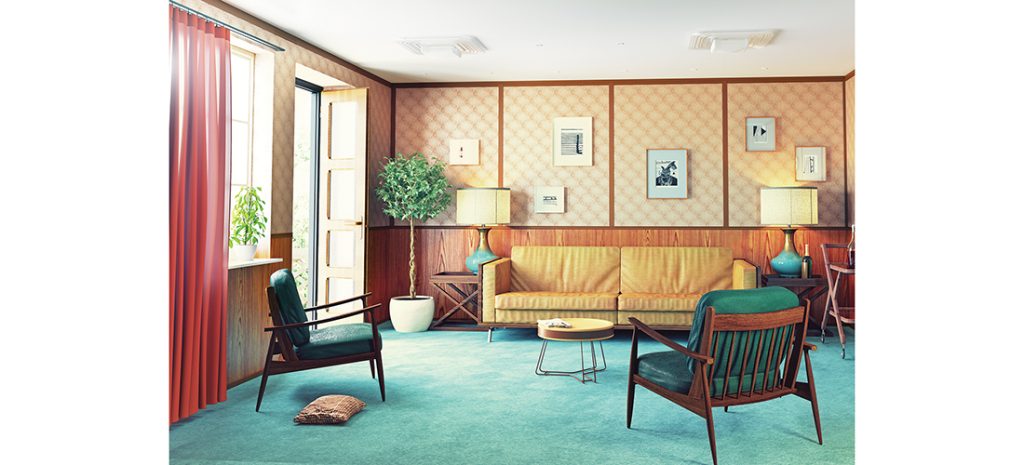
There it was in the venerable Architectural Digest. Shag carpet everywhere. The “rise of kitschy themed vacation rentals.”

“Kitschy” and “themed” extolled in AD, arguably the most revered design publication.

Before I could get my eyeballs back down from the top of my head, there in the magazine’s online edition unspooled images of pink, shaggy, fur-covered floors, walls and ceilings. Boudoirs with round beds — as in Elvis’ Vegas era, Pocono-honeymoon-style round beds. And more vinyl, glitz, brass, acrylic, glass, unidentifiable materials, and Elvis-gold and Vegas neon colors than have been on view since Plan 9 from Outer Space hit the movie screen and pre-rib removal Cher was on TV.

Forget Granny Chic, Granny Core‚ or Millennial Chic. Forget Coastal Grandma Chic. Forget anything you’ve read about Minimalism, Houston style, New York style, West Coast cool. Forget it and gird your design loins.

Something else, something very strange, is afoot.

Something tacky this way comes.

And the most unsettling part? When Architectural Digest embraces tacky, readers are expected to simply submit as their discomfort scale ratchets up. How bad must things be in modern life for us to embrace kitsch taken to extreme lengths?

The taste-makers at the vaunted Architectural Digest are not alone in claiming that kitschy décor, kitschy homes and kitschy boutique hotels are rare and hot-hot-hot.

Among the renters of such hip-to-kitsch grandparents’ abodes was even — wait for it — a fire department.

I sort of get it, in that case, anyway. Wouldn’t such an interior kitsch so bad that design mavens wave their magic design wands in order to position it as good, just cry out for combustion? Hot-hot-hot so incendiary as to burn-burn-burn? That would seem to be a pyrrhic victory. 

But it seems there is no making kitsch, nor any extreme, go away for good. Bad taste exists because how else might we know how to define the antithesis?   

According to the BBC, kitsch was supposedly killed by the Modern Art movement. But, no. (Spoiler: Andy Warhol has a big role in the offing of really bad taste by conflating it with hipster taste.) Here’s what the BBC says about it:

“This is one reason for the emergence of a wholly new artistic enterprise, which I call ‘pre-emptive kitsch.’ Modernist severity is both difficult and unpopular, so artists began not to shun kitsch but to embrace it, in the manner of Andy Warhol, Allen Jones and Jeff Koons.”

Here, friends, comes the best part. Pre-emptive kitsch as defined by the BBC themselves:

“The worst thing is to be unwittingly guilty of producing kitsch. Far better to produce kitsch deliberately, for then it is not kitsch at all but a kind of sophisticated parody. Pre-emptive kitsch sets quotation marks around actual kitsch, and hopes thereby to save its artistic credentials.”

The BBC editorialist has examples: “Take a porcelain statue of Michael Jackson cuddling his pet chimpanzee Bubbles, add cheesy colours and a layer of varnish.” Certainly a strong visual. They continue: “Set the figures up in the posture of a Madonna and child, endow them with soppy expressions as though challenging the spectator to vomit, and the result is such kitsch that it cannot possibly be kitsch. Jeff Koons must mean something else, we think, something deep and serious that we have missed. Perhaps this work of art is really a comment on kitsch, so that by being explicitly kitsch it becomes meta-kitsch, so to speak.”

Meta-kitsch lives. Deliberately, some say, deliciously (or deliriously) kitsch redux, as in, “the 1980s were far more than just the ’50’s redux,” a direct quote from an online dictionary.

Beat them to the punch, in other words. Be in on the joke.

And then we have, thanks to design writer Kelsey Lawrence, an exposition on the “rise of kitschy, themed vacation rentals,” which includes motel rooms, Airbnbs and even travel trailers. (Especially Air Stream trailers.)

It’s nostalgia-tinged, Lawrence says. Those Pepto-Bismol, Strawberry-Shortcake-doll pink walls and carpeting, crushed velvet as the fabric of the moment, and the must have on repeat: once again, Playboy mansion style round, velvet-covered beds.

Bow-kitsch-a-bow-bow.

Lawrence blames the trend on the hardship of the times; the barrage of bad news, which apparently can only be shut out by focusing upon kitsch.

So, if you stare at hardcore kitsch long enough, you can blot out the images of fellow Americans demonstrating for their civil rights?

Pre-emptive, meta-kitsch, if taken to its logical conclusion, would extend to all matters of taste. For example, if you wore Tammy Faye cry-me-a-river makeup to the office on Mondays, your Bobbie Brown-tastefully-neutral face would be far more appreciated — perhaps even celebrated! — on Tuesday.

Or if you ditched your Talbot’s jacket for a Kimmy Schmidt getup for the PTA meeting, everyone would applaud your knowing irony. A hipster, in-on-the-joke? 

Like the green Jell-O with marshmallow-and-grated-carrot-salad brought to the elegant dinner party, temerity wobbling on a platter, the laugh wouldn’t be on you . . . it would be with you.

After the applause dies, enter FOMO. 

What exactly, one worries privately, inside a tasteful home with pale lacquered ceilings, industrial-chic doors, upcycled floors and Jeff Koons-inspired art, what deep and serious thing, did I miss out on?  OH

Cynthia Adams is a contributing editor to O.Henry.

Simple Life

Simple Life

“The Birds of Paradise”

The bad news Birds help a tired journalist find good news

By Jim Dodson

I hear a voice and look up. The face is much older, the voice deeper. But both are so familiar.

“Hey, Coach,” says Peter Gay, giving me what I used to call his sly fastball grin.

I stand up and we hug.

“You grew up, buddy.”

“And you grew old, Coach.”

“Funny how that happens.”

We both laugh.

Forty years ago, Pete and his brothers, Fred and Rodney, and their friend, Alvin, were the invincible infield of an inner-city baseball team I coached for two spring seasons called the Highland Park Orioles. I nicknamed them the Birds of Paradise because most of the players came from a tough inner city neighborhood where, by agreement with their anxious parents and guardians, I dropped them off near a street named Paradise after every practice and game.

Atlanta, in those years, was anything but a paradise. Due to the infamous “Missing and Murdered” crisis that besieged the city between 1979 and 1981, in which 30 Black kids and young adults were abducted and murdered by an unknown person or persons, the city that declared itself “too busy to hate” earned the distinction of being the “Murder Capital of America” for several years running.

Looking back, going out at my editor’s suggestion to write a sweet little feature story about the hopefulness of spring baseball tryouts in my Midtown neighborhood and getting strong-armed by a frantic league director to take on a wild bunch of Orioles whose coach never bothered to show up was one of the most fortunate things that ever happened to me.

In the spring of 1982, I was the senior writer of the Atlanta Journal-Constitution Sunday Magazine, the oldest Sunday magazine in the nation, where Margaret Mitchell worked when she wrote Gone with the Wind. During my six years there, I’d written about everything from unrepentant Klansmen to corrupt politicians, presidential campaigns to repo kings, a constant stream of violence and social mayhem. Upon reaching age 30, I decided that I was rapidly becoming a career burn out case. In a nutshell, I’d had enough of covering the sorrows of my native South.

An early tipping point came while working on a story about Atlanta’s famed medical examiner, Dr. Robert Stivers — reportedly the inspiration for the hit TV show, Quincy — when I actually saw my next-door neighbor, a med student, gunned down in his darkened backyard doorway by an assailant. The young man died as his hysterical girlfriend and I waited for the EMTs and cops to arrive. The cops took their own sweet time, shrugging it off as just another drug deal gone sideways. I followed the ambulance hauling my neighbor’s body downtown to the ME’s office to await his autopsy. Talk about art imitating life’s worst moments.

My editor, a charming true-blue Atlantan named Andy Sparks, who’d been on the magazine since the days of Margaret Mitchell, had spotted my brewing crisis and suggested I write about “lighter” subjects for a time. So I went over to the rutted ball field with pen and pad and not a lot of hope in hand.

Our first practice was chaos. The team horsed around and barely paid attention as I placed them into tentative playing positions. Somehow, I managed to get the four best players into key spots. Pete and Alvin would rotate between pitching and playing third; Fred at first base, and Rodney catching.

On the way home, I stopped at a popular neighborhood joint called Woody’s just two blocks from the ball field, foolishly thinking that if I bought them a milkshake and got to know them better, the four best players on the team might help me whip the Birds into shape. Instead, they hooted and hollered and made such a rude ruckus that the owners tossed us out and warned us not to come back unless we could learn to behave.

“I remember how you gave us a lecture about being gentlemen in public places,” Pete says as we sit together at Woody’s 40 years later. The place is now owned by a Black couple. Its milkshakes and steak-and-cheese sandwiches are better than ever.

Peter Gay is 53 today, a hard-working father of three grown children, and a popular volunteer football coach and recruiter for Booker T. Washington High in the center city. He’s dressed in the bright blue colors of the Washington Bulldogs.

Two years ago, he called me out of the Bulldog blue. 

“I remembered the story you wrote for the Reader’s Digest about us,” he explained on the phone that afternoon. “And I remembered that you left Atlanta to write books. That’s how I found you on the internet.”

“Tell me,” I said. “Is Woody’s still there?”

A day later, Pete sent me a photo of himself in front of the Woody’s sign. We made a plan to meet there when I came to Atlanta for my latest book research.

That first season, the Birds of Paradise never lost a game. Or if we did, I don’t recall it. We often won by football scores. Pete had a lethal fast ball. Alvin’s curve was unhittable. Rodney was an awesome catcher and Fred played first base like a pro. Even better, the Birds calmed down and became true gentlemen on and off the field, though I spent a small fortune on milkshakes once the other members of the team learned about my gambit and got in on the post-game treat.

“You kind of bribed us to behave with milkshakes,” says Coach Pete Gay today. “But I get that now. It really worked.”

Because of the Birds, I stayed for one more spring in Atlanta. In year two we went undefeated. A coach from the all-White northern suburbs even proposed a “Metro” championship game at his team’s immaculate facility north of the city. We set a date for the game, and I went out and purchased new orange jerseys with my own money. A few days before the match-up, however, my opposing coach called back to say that some of his parents were concerned that my kids might feel “intimidated about playing in such a nice facility.”

I assured him the Birds wouldn’t be intimidated. We both knew the meaning of his code words.

“Well,” he said uneasily, “maybe . . . next year.”

There was no next year.

After the season, the owners of Woody’s threw us a party and I left Atlanta for Vermont, where I learned to fly-fish, knocked the rust off my golf game and found a whole new career — and happiness — writing about people and subjects that enrich life. 

I also realized that the Birds of Paradise gave me a gift those final two years — a healing glimpse of what real happiness is like.

As another spring dawns, I’ve seen Pete and Fred several times and even attended the beautiful wedding of Pete’s daughter, Petera, last summer. Very soon, on my next trip to Atlanta, I’m planning to take my entire infield to a very nice, grown-up dinner, with or without milkshakes. OH

Jim Dodson is the founding editor of O.Henry.

Omnivorous Reader

Omnivorous Reader

The Great Escape

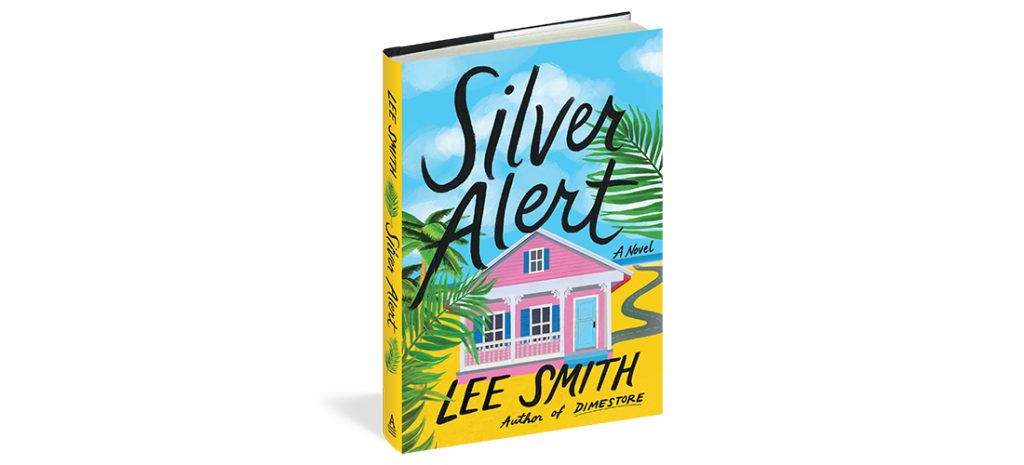
Silver Alert is a bewitching joyride

By Anne Blythe

Lee Smith, a treasure of the North Carolina literary world, takes you on an unusual journey in her newest novel, Silver Alert. She’s predictably funny in her typically marvelous, unpredictable way. Her characters are beguilingly quirky. Yet amid all the humor and occasional madness in this tale about an octogenarian’s “one last joyride,” Smith plunges her readers into the depths of tough topics such as aging, sex trafficking, emotional abuse, poverty and wealth.

There are two protagonists. One is Herb Atlas, a curmudgeonly but ever so lovable retiree on his third marriage who we meet in his lovely — and very pink — Key West home. In his golden years now, Herb is perpetually mining for the gold he really didn’t know he had in his youth as he does his best to care for his once lively, artistic, adventurous and beautiful wife, Susan. He longs for the fancy and fast cars of his earlier years, alluring courtships and an escape from the dementia that has relegated Susan to a rattan chair by the bay window, where she remains lost in her own world.

The other central character, Dee Dee, or Renee, or whatever name the victimized but optimistic woman from Appalachia decides to use, is a young pedicurist fleeing hard-knock days. She is whip-smart, resourceful and endearing. Her parents died when she was a child. She bounced from household-to-household, man-to-man, lives in a bread-shaped trailer with a pink roof and fends for herself in a world in which those she encountered rarely had her best interest at heart.

Dee Dee is running from her past with hopes of a brighter future. Herb wants little to do with his future and yearns for the past. Their paths converge in Key West, a place with celebrated sunsets and a seize-the-day vibe.

Key West is a character in the novel, too. Smith takes her readers down Duval Street and its offshoots, into shops, cafes, Laundromats, and the nooks and crannies where people come to remake themselves, start anew or sometimes disappear.

Herb is in his home at 108 Washington Street, “a primo address,” as Smith describes it, wearing red-and-black plaid pajama pants, lime green crocs and a Hawaiian shirt covering his considerable gut, when he opens the door, and his life, to Dee Dee.

Using Renee, instead of her real name, Dee Dee has come to give Susan a pedicure. “She looks like a kid, with those wide brown eyes beneath the blond bangs, her high, shiny ponytail swinging as she steps forward in her white, white tennis shoes,” Herb thinks to himself. He gives her an earful as he walks her back to his wife’s quarters. Susan’s daughter, Maribeth, “the hippy one,” as Herb calls her, and her partner Pat DeVine, “the bossy one,” who arranged the appointment, have come down to help care for his wife.

Herb is unenthusiastic. “I never asked them, you understand. I don’t need them, this is a classy operation. But this Pat, you can’t tell her no, you can’t tell her nothing.”

Dee Dee, dressed in jeans, a pink tunic and carrying a big bag of nail polishes, clippers and salon tools, is not just a pedicurist, it turns out. She has a knack for dealing with Susan. The “crazy whisperer,” as Herb dubs her, can make his Susan laugh, smile and even seem happy with colorful markers, a tablet and easel from the Walmart children’s section. For hours at a time, Susan sits in the garden in front of her easel, using only one color on each sheet of paper, drawing “crazy art.”

The makeshift art corner delights Herb as he tries to ignore the signs of aging thrust at him — the living wills, the health care power of attorney, confounding medical forms and that humiliating clock he had to draw for the nurse, showing the hands set at 7:15, to assess his mental acuity. Then there’s his constant urge to pee — “Old age is all about urine, who knew?” Smith writes.

Smith takes on some of the difficult topics of aging as she introduces her readers to the cast of adult children in Susan and Herb’s world. She shows the push and pull, and the sometimes painful juxtaposition, as children take on the difficult roles of being parents for their parents.

Smith craftily explores the wealth dichotomy so prominent in Key West as readers follow Dee Dee, whose hardscrabble beginnings have left her with few nickels to scrape together. Her travels take her from the trailer park where drug trafficking sometimes pays the rent to the affluence of the Atlas house and the “tree house,” where she has a romance with a well-to-do graduate student taking a break from his scripted life to live like a Bohemian and write poetry.

Herb and Dee Dee go about their business for much of the first half of the book at a pace that — like a child chomping at the bit to grow up — is not always as swift as desired.

Then Herb and Susan’s family stages an intervention and they can see their dreams unraveling. As the adult children talk about moving Herb into an assisted living facility in Del Ray with Susan, he fishes keys to his Porsche from his secret hiding place in a shoe and sets off with Dee Dee on a madcap adventure.

Herb’s last joyride is a joy for readers, as well. Even though there are cringing moments as the pair starts out along the streets of Key West, then on the highways north, eventually headed to Disney World, it’s difficult not to cheer them on.

Silver Alert will make you squirm over the wistfulness of aging, but it will leave you with a big smile from getting to know characters who worm their way into your heart.  OH

Anne Blythe has been a reporter in North Carolina for more than three decades. She has covered city halls, higher education, the courts, crime, hurricanes, ice storms, droughts, floods, college sports, health care and many wonderful characters who make this state such an interesting place.

O.Henry Ending

O.Henry Ending

Good Grief

An aunt’s legacy of funeralizing lives on

By Cynthia Adams

On the occasion of my Great Aunt Fola’s death, we funeralized.

This was a term coined by her maid, Ella. Funeralizing, according to Ella, meant cooking and baking (in anticipation of drop-ins, primarily family, friends and neighbors who would come by in order to pay their respects). This required being sure there was cold chicken, iced tea and pound cake for anyone who stopped by before or after the formal service. (Funeralizing, she would explain, always makes you hungry.)

It meant earmarking ample time for the first public phase of grief — reminiscing, remembering and mourning the dead with all of those drop-ins. Which required, too, being sure your best (black, navy or gray) funeral clothes were cleaned and prepared, and the home was readied “to receive.” 

And, of course, funeralizing included wearing your bravest face at the wake, plus standing at the funeral home in the “receiving line” with the family as mourners wept and made the loss their own.

We funeralized first when Ella died, and we followed suit with Fola.

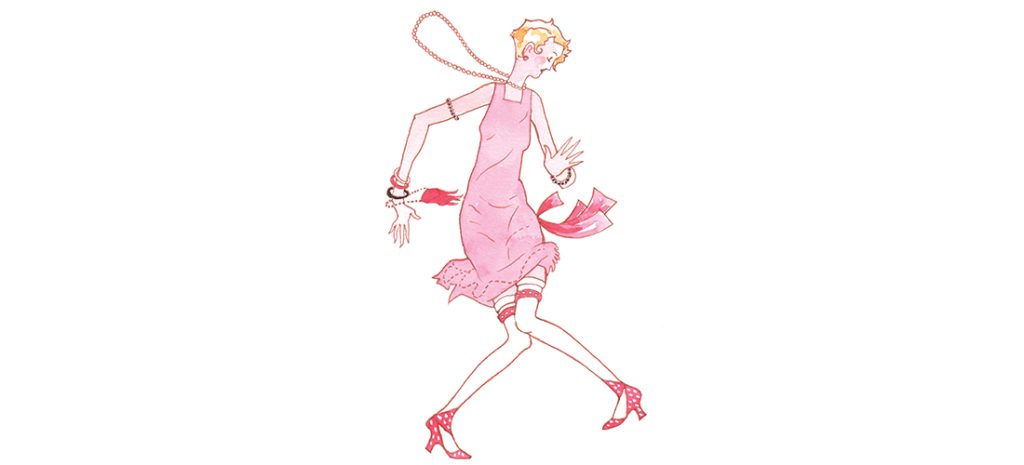
Fola McClellan Williams, born in 1904, was the youngest child in a Scotch-Irish family in Union County. Her sisters became homemakers. Her brothers, businessmen. But Fola, with strawberry blonde hair and bright blue eyes, was a child of the modern age. She was a Flapper.

Fola dressed and danced prettily. She was the first woman in Monroe to drive a car. She deliberately married late and was childless. Fola shunned health fads and cooked “with seasonings,” a term for the liberal use of fatback and salt in a pot of greens or beans. 

She became a buyer for Belk at the original Monroe department store. Fola took the train to New York City for buying trips, with hat and gloves — plus a tiny salt shaker tucked into an alligator purse. Unconstrained by traditional housewifery, thanks to Ella, she became president of the Business and Professional Women’s Club, and traveled.

Fola was a consummate lady, but cussed under her breath if the occasion demanded. It was her lifelong habit to enjoy a happy hour, and neighbors and friends often joined her. Upon her death, Fola relegated her worldly goods to the women in the family. Among other things, I inherited her souvenir shot glasses (including one depicting the World Trade Center, and another which looks like a thimble, engraved with “Just a Thimble Full”).

At her funeral, no less than John Belk, son of Belk founder William Henry Belk, was one of five men to eulogize her. Fola’s elderly Baptist minister dramatically cleared his throat before describing her as “a feminist.” He entreated God to overlook this aspect of an otherwise God-fearing woman, pointing out that “she wasn’t obnoxious about it.”

As the minister helpfully warned God, “Watch out for Fola in Heaven, for she has her own ideas about things,” one of my sisters grabbed my kneecap and hissed. Our mother refused to look at us, keeping her eyes fixed upon a spray of pink flowers.

The rheumy-eyed minister had been partly right. Fola was a woman who had her own ideas. She volunteered for good causes, was a town booster and was unapologetically progressive. 

The speakers at her funeral were also right. Our aunt was an anomaly:

Fola resided in her home town till death.

She didn’t think somewhere else was better than where she was — small-town, North Carolina.

She collected a gold pin from the company where she began her career 50 years earlier.

She remained with the man she finally chose to marry.

When things went wrong, Fola didn’t think it was up to somebody else to fix things; instead, she figured she was somebody, and did something.

After the eulogizing, my sisters and I accepted the tone-deaf minister’s sympathies. Although I later cussed under my breath like Fola might have done, I still murmured courteous thanks to him on the church steps. 

This was funeralizing, after all. Fola would have insisted upon nothing less. OH

Sazerac April

Sazerac April 2023

Sage Gardener

We were, in fact, eating some freshly-picked, beautiful, blue-green Lacinato kale, aka dinosaur kale. My dining partners were impressed, but what they didn’t know, and soon learned, was how runty our plants were. “You should have ordered the Walking Stick kale,” says my wife, Anne, grabbing our dog-eared copy of the Baker Creek Heirloom Seeds catalogue. There, pictured in the kale section, was a gray-whiskered gardener atop a teetering ladder, plucking kale from a 20-foot-high stalk.

It’s that time of year when brown grass gets browner every day while multicolor splashes of brilliant Pippin’s Golden Honey peppers, Kyoto Red carrots and kaleidoscopic Glass Gem popping corn jump right off the catalogue pages into our imagination. “I planted Glass Gem popcorn and the ears were the size of your thumb,” one dinner guest says. And we’re off, all of us digging up dirt on seeds that have let us down by only sprouting disappointment: the oh-so-challenging ramp and garlic seeds; the Dutchman’s pipe seeds, terribly expensive and requiring three months of refrigeration and six months’ germination — before dying; the Amazing Grey Poppies that did anything but amaze; caper seeds; miner’s lettuce and even pine nut seeds. “How much of it is our trying to grow something that’s never meant to thrive in our soil and climate?” another dinner guest wonders. “Probably, but I feel so betrayed when I compare my plants to the ones in the catalogue. Worse yet, I feel like such a bad gardener,” Anne admits. “Does that mean you decided not to buy the package of 1,500-Year-Old Cave Beans?” I wonder. “They’re already in the mail,” Anne says.

David Claude Bailey


Window to the Past

Photograph © Carol W. Martin/Greensboro History Museum Collection

“Gimme all your eggs and nobody gets hurt.”


How I Saved Jesus

There are countless stories of wayward souls saved by Jesus Christ. But did I ever tell you the story of how this irredeemable sinner rescued Jesus?

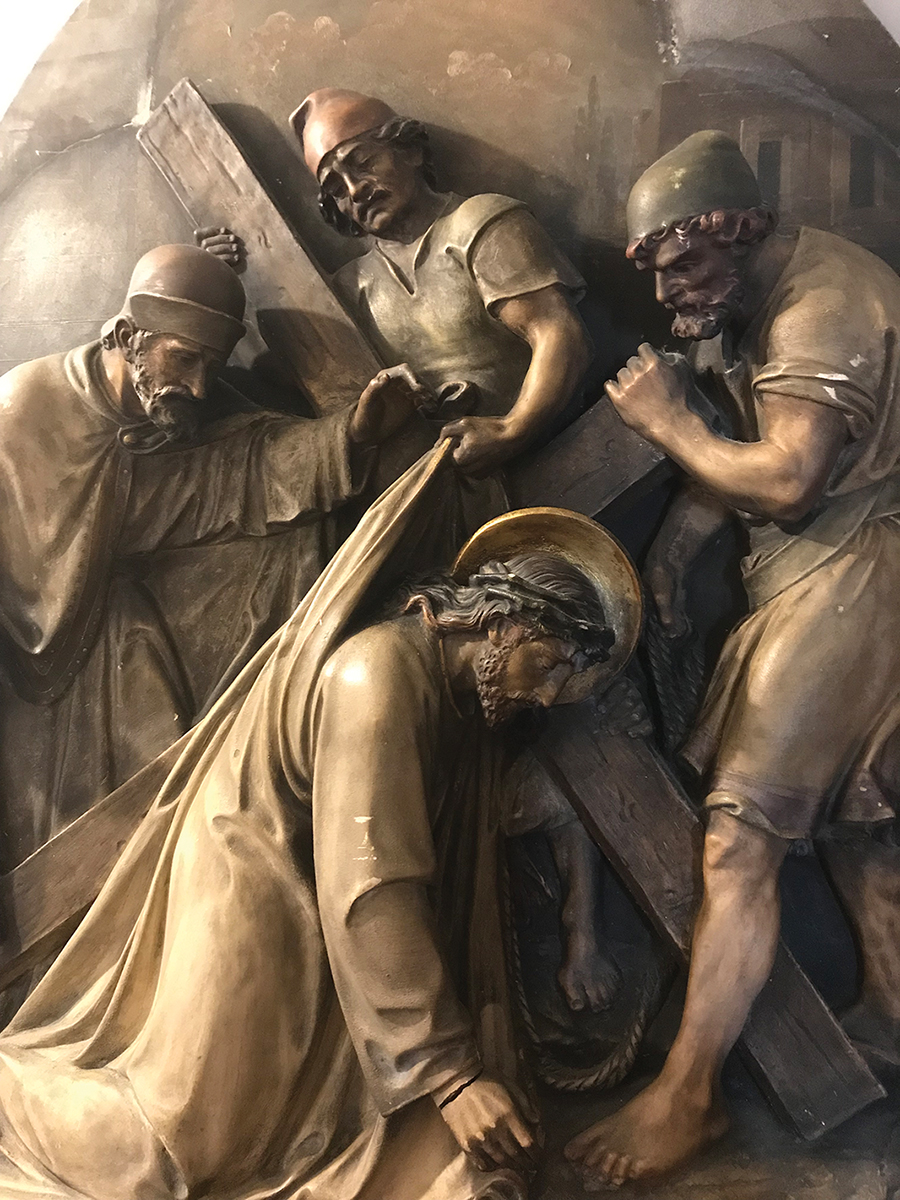
Cinematographer Philip Dann retrieved this magnificent depiction of one of the stations of the cross from a construction dumpster. There were originally 14 of these detailed monuments — this one being the ninth station, divinely depicting Christ’s suffering at the hands of Roman soldiers.

Dating back to the 1930s, it weighed about 60 pounds and was sculpted in painted plaster mounted on a solid wood backing. Sadly, only three of the stations survived. It seems an old church along the Carolina coast that was modernizing and renovating felt these magnificent dioramas were too old fashioned — so they just chucked them, most reduced to rubble. Can you imagine?!?

Philip pulled the three less severely damaged sculptures out of their ignominious resting place and gave them a brief cameo in a 2012 motion picture I performed in, Lake of Fire.

On the last day of filming I was asked to take those three sculptures home since they had no place to reside. Of course, I said no. I mean, these things were huge and would dominate any space, plunging a room’s Feng Shui into total turmoil!

After a moment of reflection I realized I couldn’t let something so unique and symbolic end up on Storage Wars. Or worse in some frat house, converted into a beer bong. So I rescued the most dramatic depiction, which now sits in my Time Tunnel-esque hallway, serving as a nifty conversation starter.    

     Billy “Mr. Sanctimonious” Ingram


Just One Thing

Steisha Pintado, The Fruit of Goodness, 2019. Acrylic and fabric on paper, 32”x32”. Courtesy of the artist. © Steisha Pintado, 2019.

Artist Steisha Pintado, whose work can be seen as part of the Weatherspoon Art Museum’s 2023 UNCG MFA Thesis Exhibition, recalls her childhood as one of “isolation, guilt and fear.” After years of feeling as if her life was “predetermined and designed around being a Jehovah’s Witness,” Pintando left the church and now explores her narrative through her interdisciplinary work, including drawing, painting, puppetry and animation. The Fruit of Goodness, a multimedia acrylic-and-fabric on paper, is about Pintado’s coming to terms with realizing that the paradise that was promised to her as a child is fictional. The colors in this particular piece were informed by childhood nostalgia and amplified by films such as Charlie and the Chocolate Factory and The Wizard of Oz in which the palettes are “sickeningly sweet” while sinister forces lurk underneath. Now using her voice and art as expression, Pintado says, “I make this work for myself, for others who have also had these experiences and to create a public awareness around these issues.” The MFA exhibit opens April 22. Info: weatherspoonart.org/exhibition-2023-mfa.


Unsolicited Advice

Unless your bunny is highfalutin, it’s likely that your yard will be filled with nothing but rabbit, um, pellets on Easter morning. We came up with some alternative solutions that the E.B. can stash in your gardens.

Painted rocks. Who doesn’t love a colorful stone, especially with a motivational “You rock” message? And Easter Rocks-travaganza has a nice little ring to it. Better yet, don’t paint them. Don’t even hide them. Tell the kids the bunny hid rocks and watch them go to town with nature’s bounty.

Socks. So that’s where all the missing socks are. You can even use that hopeful easter egg dyeing kit you bought in January to color them in spring pastels. They pair perfectly with Crocs.

Peeps. Trust us. No one wants those sugar-coated marshmallow fluffsters in their baskets. Don’t worry — none of God’s creatures are interested in munching on them either, so they’ll be safe. And you can likely find them for free. In your pantry, untouched from last year.

Birdwatch

Birdwatch

Nesting Season

There’s no place like home

By Susan Campbell

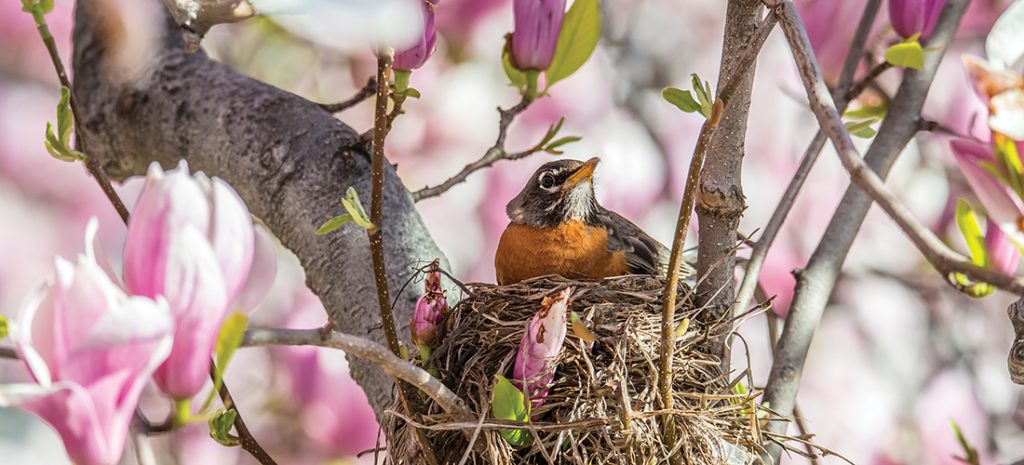
It is almost that time again for our feathered friends: nesting season. Pairs of birds will team up to bring forth the next generation. In some cases, they will even repeat the process once or twice before the days shorten and temperatures begin to drop.

As with so many behaviors, reproduction is triggered by hormonal changes, which are the result of changes in day length. Females will become responsive to the advances of males as daylight increases. And before long, the hunt for a spot to nest will begin. Interestingly, the strategies vary among the bird species we find in central North Carolina.

The investment in nest building for some species is minimal. Killdeer, for instance, only create a slight scrape in a sandy or pebbly surface. They are ground nesting birds whose splotched eggs blend in perfectly with the substrate. Furthermore, killdeer young are precocial, meaning that they are mobile as soon as they hatch and will instantly begin following their parents. There is no nestling phase, so protection of the young birds is unnecessary.

In the Sandhills it is not unusual for mourning doves to nest at ground level in a layer of grasses or small twigs. Even when doves nest in small trees or shrubs, their nest platform is minimal. It is amazing that the eggs or young do not fall through the nest. Then again, this species is known to raise young in virtually any month of the year, so losing an egg or youngster through the cracks is not problematic in the long run.

Cup nests are a very common strategy for nesting — especially among songbirds. Northern cardinals, blue jays and American robins all form a typical nest from small branches, twigs and grasses. Such nests can be visible through the leaves and are not infrequently depredated. As a result, some species, such as blue-gray gnatcatchers and ruby-throated hummingbirds, have evolved to use camouflage in the form of mosses or lichens on the outside of the cup so that the nest is not obvious to predators on a bare limb.

Hawks and eagles have taken nestbuilding to the next level and may create an enormous, cupped platform for their young. These huge stick nests, placed high in a live tree or snag, typically are enlarged with more material every year. They can be very noticeable given their bulk. However, given the size and ferocity of these birds, the strategy is not problematic. Furthermore, one of the adults typically guards the nest until the young are close to fledging.

And then there are the species that use holes: the cavity nesters. Woodpeckers and nuthatches can carve out a cavity in dead wood using their powerful bills with little trouble. Species such as chickadees, titmice, bluebirds or wood ducks will move right into these spaces when the architects move on. It is these birds that many of us have been giving a helping hand by erecting bird boxes. Box design varies by species, of course, given the different reproductive requirements of different birds. The height, the depth of the box and, most importantly, the size of the entrance hole will determine who will move in.

So, if you have not yet done so, this is the time to be cleaning out and repairing nest boxes for the breeding season. Old nests should be removed, and the boxes should be aired out for a day or two.  It would not hurt to give them a rinse with the hose as well — but do NOT use cleaning products. And then stand back: It will not be long before your first feathered tenants will be moving in!  OH

Susan Campbell would love to receive your wildlife sightings and photographs at susan@ncaves.com.

Wandering Billy

Wandering Billy

Grab Your Popcorn

A locally produced WWII film hits the big screen

By Billy Ingram

“Strip away the phony tinsel of Hollywood and you’ll find the real tinsel underneath.”       — Oscar Levant

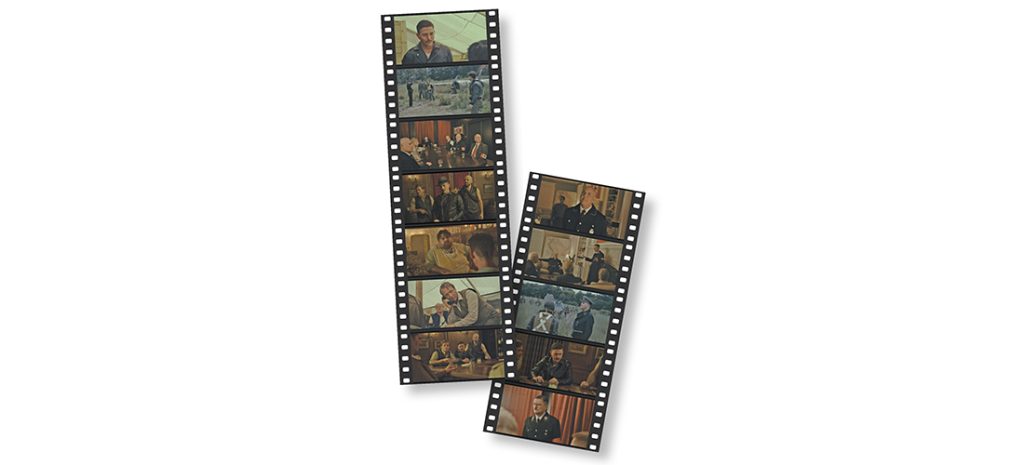
Our fair city has been a hotbed of independent filmmaking over the last quarter century or so. Recently, perhaps inevitably, a number of locally produced motion pictures have been attracting worldwide audiences. With the wide release of Condor’s Nest in January, one cadre of Greensboro-based filmmakers, Lost Galleon Films, has burst onto the Hollywood landscape in a big way with a rollicking, star-studded revenge flick set in 1950s South America focused around a search for Nazi war criminals.

While writer/director Phil Blattenberger grew up hither and yon, he’s considered Greensboro home for more than two decades now. “So yeah, I’m a local filmmaker if you wanna call it that, kind of by default,” he tells me. “I grew up on all the ’80s pastiche.” His favorite films as a youngster were those blockbuster, so-called popcorn flicks that didn’t take themselves too seriously. “Obviously all the classic Indiana Jones and Back to the Future movies.”

In Blattenberger’s latest motion picture, Condor’s Nest, a German Colonel played by Arnold Vosloo (Imhotep in The Mummy) sadistically executes an American bomber crew during WWII. Ten years later, the commander of that doomed mission travels to South America to exact revenge and, in the process, uncovers a sinister plot to ignite a Fourth Reich to finish what Hitler had only just begun.

It’s a fact that thousands of high ranking Nazis fled Germany after the fall of the Third Reich, establishing new lives and new identities in South America. It’s been convincingly posited that Hitler and Eva Braun lived out their lives in Argentina.

“It’s a really rich narrative that’s not been touched on, surprisingly,” Blattenberger says of what he proudly calls his own popcorn flick. “The type of film that your older brother brought you to when you were 13 and not supposed to see R-rated movies, and you sat in the theater with a bag of popcorn and just watched a bunch of Nazis get their asses kicked. Nazi ass-kicking movies do extremely well globally and have a grand appeal.”

Condor’s Nest is a motion picture shot on a grand scale, including constructing an 85-foot-long, 80-year-old historic aircraft. It serves as a major set piece for the opening scenes, which take place alongside a little farmhouse in Eastern France. “We built a full scale crashed B-17 bomber down to the centimeter in terms of engineering,” Blattenberger notes. “Museums donated original pieces from B-17s to really build this thing out.”

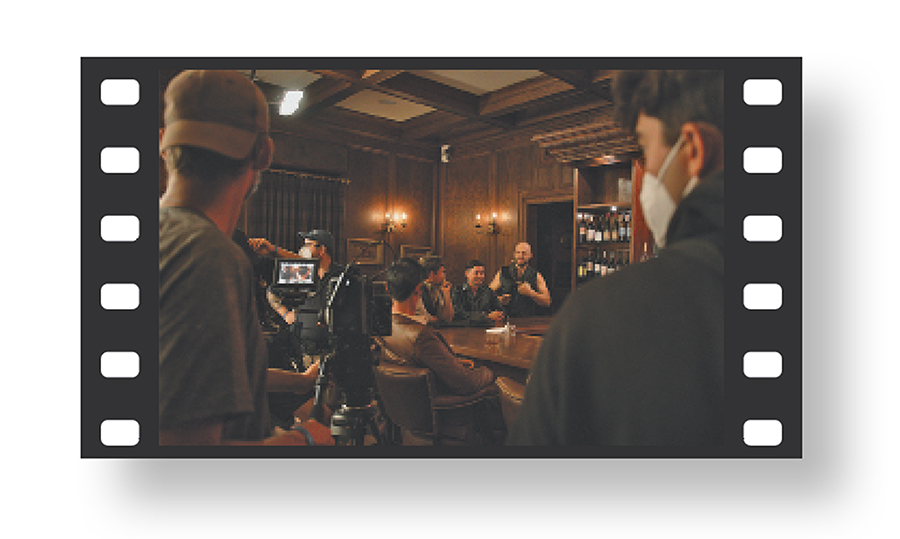
Making a motion picture of this caliber means there are thousands of moving parts and, if any one of them doesn’t look right, the whole thing falls apart. “We were amazed the first time actually looking at scenes through the monitor on the day we were shooting,” Blattenberger says. “All right, smoke’s pouring out the engines — these things look like real engines. We have car chases and explosions, some really high production value elements that are so easy to fall flat if you don’t have the crew that can put it together right. In fact, those elements became some of the strongest points in the film.”

Name actors invariably help to sell films, giving it more commercial cache globally. “Obviously Nazis are bad,” Blattenberger says, chuckling. “It’s been done so many times. What you don’t want to do is just get the stereotypical Nazi with an evil laugh. We wanted to find somebody with gravitas who was going to bring a bit of nuance to the role, in the sense that his character was internally justifying his own horrible actions, actually making him the good guy in his own head. And we knocked it out with Arnold Vosloo who went toe-to-toe as the villain in Blood Diamond up against Leonardo DiCaprio.”

Michael Ironside appears as a Russian agent. He’s been in dozens of movies like Starship Troopers and Total Recall, and was featured in Top Gun. “We pulled in Twilight star Jackson Rathbone to play a really seedy character,” Blattenberger says. “He shows up about halfway through the movie and turns into one of the big third-act villains.” Cast as Heinrich Himmler is James Urbaniak (Robert Crumb in American Splendor). “He had never spoken a word of German in his life,” Blattenberger says of Urbaniak’s performance. “He had to learn his entire role in German, doesn’t speak a word of English in the entire movie. We cast Academy Award nominee Bruce Davison (Longtime Companion). He did his whole scene in German.”

Key setups with these actors were filmed in and around the Julian Price House, a Tudor-revival estate that looks as if it could exist anywhere in the world, most improbably in Greensboro. “That’s actually the Condor’s Nest,” Blattenberger notes. “The titular location for this film that’s supposed to be set in the mountains of Bolivia.”

Lost star Jorge Garcia portrays a turncoat bartender in Buenos Aires spying for both the Russians and Germans. The basement of Havana Phil’s Cigar Company, for some four decades known as Cellar Anton’s, one of the city’s most revered dining rooms, served as his bar. “We shot our big wide establishing shots in South America,” Blattenberger explains, “selling the idea that you’re in another continent, so we could jump in the movie to the interior of a bar that’s on a different continent. Greensboro was a great location for that.”

“The real guy to talk about is Jacob Keohane,” Blattenberger says of his lead actor. “He’s been active on the East Coast theater circuit for years. He had a major role in Halloween Kills that came out last year. The guy’s absolutely brilliant.”

This locally produced picture proves there’s no need to lower expectations just because a film isn’t made in Hollywood. No less than Paramount Pictures picked up the distribution rights for a dozen or so major cities including New York and Los Angeles, and the movie is available on streaming platforms as you read this.

I can tell you first hand, there is no other experience in life comparable to working on a movie set. The writer/director agrees: “Running around with a crew of 30 or 40, there’s a mania and an energy to it, a coordinated chaos. It’s addictive. It’s something that you latch onto and, man, you just wanna keep making movies, you know?”

As for Phil Blattenberger and Lost Galleon Films’ next project, “We’re officially in pre-production on Without Consequence, a crime thriller set in the American West in the early 1960s, shooting in New Mexico this October or November. We’ll pull a few familiar faces from Condor’s Nest on it and there will probably be a scene or two shot in Greensboro.”  OH

In another of life’s moments reminding us just how old we are, Billy Ingram actually worked on the posters and trailers for Indiana Jones and the Last Crusade and Back to the Future 2 and 3.

O.Henry Ending

O.Henry Ending

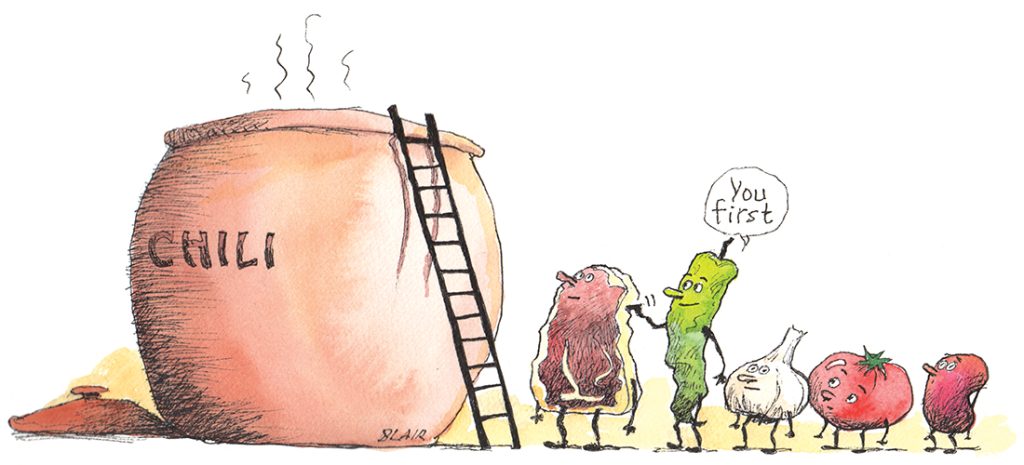
The Chili Queen

The prize is in the pot!

By Barbara Rosson Davis

It has been widely reported that capsicum spices make one wickedly hot. Even dreams catch fire! Billy the Kid, a lover of chili, once supposedly said “Anybody who eats chili can’t be all bad . . . even when the bed-linens tend to levitate after eating three bowls.”

This chili tale is not one of enraged cannibals butchering conquistadors, seasoning them with chiles, cinnamon, cilantro, cocoa and corn, simmering the lot, then feasting. Rather, it’s a spicy story of a “Chili-Cook-off” that takes place at the original — and no longer in existence — Roosters Gourmet kitchen shop on State Street.

Chili, the concoction, with or without beans, has many versions. Recipes abound — some guarded, some misguided and some worthy of a prize. Thousands of known chili-pepper varieties exist, ranging in hotness and assorted colors. “Carolina Reaper” (grown in Rock Hill, S.C.) is a hybrid cultivar, rated the world’s hottest pepper, as referenced in Guinness World Records, circa 2012.

At Roosters, proprietor Mary James Lawrence bags the spices I’ve selected and points to the newly-arrived Calphalon pots, the largest of which catches my eye. But the price of $145 is beyond my budget.

Then I see a sign that tempts the competitor in me: “Enter Roosters’ Chili Cook-off and Win the Pot!”

Fortune favors the brave. I fill out an entry form, fire up the brain, chili on my mind, and go home to simmer some beef. Roosters’ contest requires a recipe plus a sample of the contestant’s homemade chili to be judged by local chefs and restaurateurs. If my chili is going to stand a chance of winning, it has to be truly “after-burner” distinctive, mouthwatering, and so irresistible the Judges cannot stop eating it. Damn the mouth, defy the stomach! I add some kicker-ingredients: authentic Spanish chorizo, smoked (hot) pimenton (Spanish paprika), Tio Pepe Fino Sherry, tons of garlic and an assortment of fresh chiles: Anaheim, jalapeño, habañero, serrano, poblano and pasilla. The beef is grass-fed, Guilford-county-raised, simmered for hours in chili powder, cumin, cinnamon, onions, oregano and garlic, plus chiles, with a whole bottle of Corona beer and more sherry. In the morning, I add sautéed chorizo chunks, more onions, fresh peppers, smoked paprika, dark kidney beans, a can of enchilada sauce and tomatoes.

I then let my chili meld its aromatic flavors for two days and serve it with chopped fresh cilantro and three shredded cheeses melted on top.

Judgment day arrives: Twenty contestants and onlookers surround the tasting table at Roosters. The five judges sample — and re-sample — each recipe from numbered bowls. I have no idea which bowl holds my chili as the judges taste, nod and whisper. Their eyes begin watering . . . Mary James announces, “Only one female entry, folks.”

Me? Up against a passel of good old Southern boys? More buzz. Thirty minutes go by. Now I’m sweating. 

Finally, after conferring with the judges (for what seems eons), Mary James announces, “It’s unanimous! — Number four is the winning chili!” She smiles at me.

“Congratulations to Greensboro’s Chili Queen!“ she beams, handing me the huge Calphalon pot. My eyes start to water, but not from chiles.  OH

A native Californian, Barbara Rosson Davis is a writer living in Greensboro since 1979. A lover of chili, she concocts new versions of her original winning chili, whatever the season.

Chaos Theory

Chaos Theory

Chaos Theory 101

An introduction

By Cassie Bustamante

Ever since I was a child, I’ve been enthralled by magazines. My parents gifted me my very first subscriptions — to Highlights and National Geographic, which I would anxiously await each month, religiously checking our mailbox daily anticipating their arrival. And when I was old enough to walk to the drugstore in our small New England town center, I’d use my own babysitting money to purchase high quality publications — Bop and Seventeen (plus wet n’ wild Pink Frost lipstick— it was the early ’90s). Holding those glossy pages filled with bright images and stories felt magical in my hands.

Years later, as a senior at Wake Forest University, I knew I wanted to move to New York City after graduation and work my way up to editor at a magazine, to be a part of something that always brought me so much joy. However, that same year, I met my husband, Chris, and, much to my college advisor’s chagrin — sorry, Dr. Zulick! — I put my own dream on the back burner.

I’ve spent the last 20 years all over the career map as a retail manager, personal trainer, group exercise instructor, vintage store owner and DIY blogger/influencer. I’ve raised two kids who are almost ready to fly the coop and added a preschooler to the mix. We’ve moved from North Carolina to Tennessee to Texas to Louisiana to Maryland, and back to North Carolina in 2019. Through it all, one thing has remained constant: my love for magazines. OK, two things: my love for magazines and my love for my husband.

I’d long since buried that dream of working in the magazine world, but a chance meeting with a neighbor reminded me that it still lived within me, simmering quietly all along. On an early, pre-dawn morning walk in the midsummer of 2020, I met Jim Dodson, the founding editor of O.Henry. It was one of those moments when your soul responds to another with, “Oh, it’s you. I know you.”

A couple months later, knowing that I had social media experience, he called me about “a job you’d be a perfect fit for,” and asked me to attend a driveway meeting, as one did in 2020. At the time, I wasn’t looking for a job, but, after thinking it over, I decided to give it a shot and applied.

For the past two-and-a-half years I’ve worked as O.Henry’s digital content manager, adding the role of managing editor in 2022. Now, 23 years after putting that dream of being an editor on the back burner, it’s bubbling over with excitement. The fact that I get to play an integral part in delivering into your hands a magazine filled with beautiful, hopeful and humorous writing paired with stunning photography and artwork is the fourth greatest joy of my life, ranking just under my kids.

German philosopher Arthur Schopenhauer once said, “When you look back on your life, it looks as though it were a plot, but when you are into it, it’s a mess: just one surprise after another. Then, later, you see it was perfect.”

Full disclosure: We’re still a hot mess at our house. There are currently dirty dishes piled in the sink, dog slobber streaks on the windows and dried Play-Doh crumbs under my feet as I write. Life with three kids, two rescue dogs and two full-time careers can be, at times, utter chaos, but it’s given me pages upon pages of content — sometimes funny, sometimes bittersweet, always honest. And finally, I can see the storyline developing in the midst of the mess.  OH

Cassie Bustamante is editor of O.Henry magazine.

Omnivorous Reader

Omnivorous Reader

Courage and Candor

Daniel Wallace’s thought-provoking memoir

By Stephen E. Smith

If you read the promo material for Daniel Wallace’s new memoir, This Isn’t Going to End Well: The True Story of a Man I Thought I Knew, you’ll assume the message is straightforward: Hero worship is an exercise in disillusion. But the “hero” in Wallace’s memoir isn’t a hero in the accepted sense (the sociological definition for “significant other” is a more accurate term); and the message, although essential and timely, is predictably ambiguous.

Wallace is the author of the bestselling novel, Big Fish, and six other much-praised works of fiction, and the qualities evident in his earlier works are perfectly transferable to his first foray into nonfiction. He crafts a compelling narrative that pulls the reader headlong into a story whose energy never wanes. He’s thoughtful and thought-provoking. He makes sense of the past in order to free the reader to face the future, and he writes with courage and candor.

Wallace introduces his hero, his future brother-in-law, William Nealy, in a scene where he happens upon Nealy attempting a perilous leap from the rooftop of the family home into a swimming pool 25 feet below. Nealy takes flight, plunges into the water, climbs out and repeats the jump over and over. “It was pretty magnificent,” Wallace writes. “It wasn’t some unformed idea I had about masculinity or manliness in him that I was drawn to; I wasn’t into that, then or now. It was just the wildness, the derring-do, his willingness to take flight — literally — into the unknown, an openness to experience and chance that so far in my short life had not been previously modeled to me by anyone.” Wallace admits that he didn’t need to emulate Nealy’s behavior but that he learned “. . . how to become the me I wanted,” and that he would think of that day — he was 12 at the time — as the moment he was born again.

The first third of Wallace’s memoir is a biography of Nealy’s short life: his need for constant adrenalin highs, his success as a cartoonist and writer, his marriage to Wallace’s sister, their loving but troubled relationship, and how Nealy’s example encouraged Wallace to become something other than a cliché — not a writer, but someone “demonstrably unique, amusing,” someone living on the fringes.

Following Nealy’s example Wallace threw himself into several unsatisfying pursuits, eventually settling on the writing of fiction — the telling of quirky tales in which nothing is as it seems — that led to the success of Big Fish.

The Nealys settled near Chapel Hill, where they purchased a large tract of wooded land and William built a house, wrote books and produced cartoons and maps about the challenges of outdoor life. In the context of contemporary existence — the use of drugs and alcohol notwithstanding —  it all seemed idyllic, skewed perfection in a humdrum world that was constantly encroaching. But that encroachment became all-consuming when a close mutual friend, Edgar Hitchcock, a drug dealer whom Wallace characterizes as “the kindest man I have ever met,  so smart, funny and loving,” a dealer who confesses that “selling drugs is the final frontier,” is murdered.

The second part of the memoir centers on the mystery surrounding Hitchcock’s death. Nealy became obsessed with finding the man who murdered his friend, and the road led almost immediately to a likely suspect. Relying on simple intuition, Nealy was able to identify the culprit when he first shook his hand. “It was a notion that would be lodged into the marrow of his very being and would not be dislodged, not ever, not for as long as he lived.”

For purposes of the memoir, the suspect’s name is Stanley, a personable enough acquaintance whom Nealy “befriended” in an attempt to discover the truth surrounding Hitchcock’s murder. When Hitchcock’s body was discovered five months after his disappearance, Stanley began to subtly reveal his culpability.

It’s a long and tangled tale that leads to Stanley’s indictment and his eventual release because of convoluted legal circumstances that hindered prosecution. Nealy was powerless to avenge his friend’s murder, and his continuing obsession with the unpunished culprit damaged his marriage to Wallace’s sister. For one of the few times in his adult life, Nealy found himself powerless to influence events. His need to control the uncontrollable becomes apparent in a brief journal entry: “My whole life has been a struggle against the world to preserve my ‘being’ and it’s put me in dire conflict with the people I love . . . I MUST NOT LET THEM SEE WHO I REALLY AM!”

Nealy committed suicide in his early 40s, Wallace’s sister died in 2011, and Wallace inherited their ashes and Nealy’s journals, leaving him to piece together the events that led to his friend’s tragic end. The journal entries aren’t particularly revealing, but one laconic passage exposes the source of Nealy’s recklessness. Nealy’s hero, a Scoutmaster, sexually assaulted him while at summer camp. Nothing more is revealed about the encounter — and what more needs to be said? A physical dissociation from oneself is the inevitable outcome of such a traumatic event and might explain Nealy’s reckless behavior.

Wallace is left to manage his grief and grapple with the psychological pain suffered when the person upon whom he modeled his life proved himself fallible. He eventually comes to what he believes is a satisfactory understanding of William Nealy’s life and death, but that solution isn’t simple or straightforward. There are no easy answers — and the conundrum remains: What becomes of us when our significant other stumbles? “Can we ever know why we are who we are,” he writes, “the recipe that makes us the unique, bewildering, beautiful and sometimes insane creatures we end up becoming?”

Wallace doesn’t shy from the final truth: There are many ways to die — murder, suicide, illness — and he’s philosophical about the state in which we find ourselves: “. . .  there appear to be no safe places left in the world, on our streets or in our hearts.” How true are those simple words?

This Isn’t Going to End Well is not an easy or uplifting read, but it is a memoir borne of intense experience and introspection, which is the only available panacea for what troubles us. Suicide is a perilous subject for the writer and the reader, but Wallace acknowledges that contemplating the taking of one’s life is the most damaging secret a person can have. The “Author’s Note” lists The National Suicide Prevention Lifeline number.  OH

Stephen E. Smith is a retired professor and the author of seven books of poetry and prose. He’s the recipient of the Poetry Northwest Young Poet’s Prize, the Zoe Kincaid Brockman Prize for poetry and four North Carolina Press Awards.