Birdwatch

Birdwatch

The Early Bird

American robins usher in spring

By Susan Campbell

It is early spring in central North Carolina and few migrants are this far north, let alone back and ready to breed. Flocks of American robins have been evident all winter, feasting on dogwoods, hollies and other berry-laden shrubs. But now they are less interested in eating and ready to start a new family. They are, indeed, the “early birds.”

American robins are found throughout most of the United States and Canada. They are one of the most familiar birds on the continent. In winter, thousands from across Canada and the northern tier of states move southward, not as a response to the drop in temperatures but in search of food. Although robins are insectivorous during the warmer months, they become frugivorous in winter. Flocks of thousands are known to forage and roost together here in the Southeast.

Both male and female robins have long black legs, orangey-red breasts and dark gray backs. Males, however, have a darker head and more colorful breasts. Robins use their thin, yellow bills to probe the vegetation and soft ground for invertebrates in the warmer months. Spiders and caterpillars are common prey as well. These birds use both sight and sound to locate prey. It is not unusual to see a robin standing still and then cocking its head as the bird zeroes in on a potential food item just under the soil surface.

Here in our area, come March, male robins return to the territories they have defended in past summers. In bright, fresh plumage, they will sing most of the day from the tops of trees and other elevated perches, attempting to attract a mate. Their repeated choruses of “cheer-ee-o, cheer-ee-up” echo from lowland mixed woodlands to high elevation evergreen forests as well as open parklands in between. Females will accept a male for the season, but once summer draws to a close, so does the pair bond.

Females are the ones who select a nest site and build the nest. Suitable locations are typically on a branch lower in the canopy and support a hefty, open cup nest. Twigs and rootlets are gathered and then reinforced with mud, often the soft castings of the very earthworms they love to eat. The nest will then be lined with fine grasses before the female robin lays three to five light blue eggs. Constant incubation by the mother robin takes about two weeks, followed by two more weeks of feeding by both parents before the young fledge. Robins can potentially raise four broods in a season — although rarely do all nestlings survive. And fewer yet (about 25 percent) will make it through their first year, to breeding age.

Surviving young of the year will wander, often with siblings or a parent, until late summer, when they will flock up with other local birds. Small groups in North Carolina may move farther south if winter food here is scarce or if competition with larger northern flocks is too great. But not long after the New Year dawns, the same birds will be on the way back. Increasing day length triggers their return journey. And thus, the cycle will begin anew.  OH

Susan Campbell would love to receive your wildlife sightings and photographs at susan@ncaves.com.

Peony Passion

Peony Passion

A Reidsville attorney’s beautiful living legacy

By Ross Howell Jr.  

Photographs by Lynn Donovan


At the end of a woodsy farm road near Reidsville, I drive up to a snug, modest house that was built by the late Benjamin Ross Wrenn.

I park on a circular drive in front of the house. As I get out of the car, I notice a horse paddock just beyond the yard.

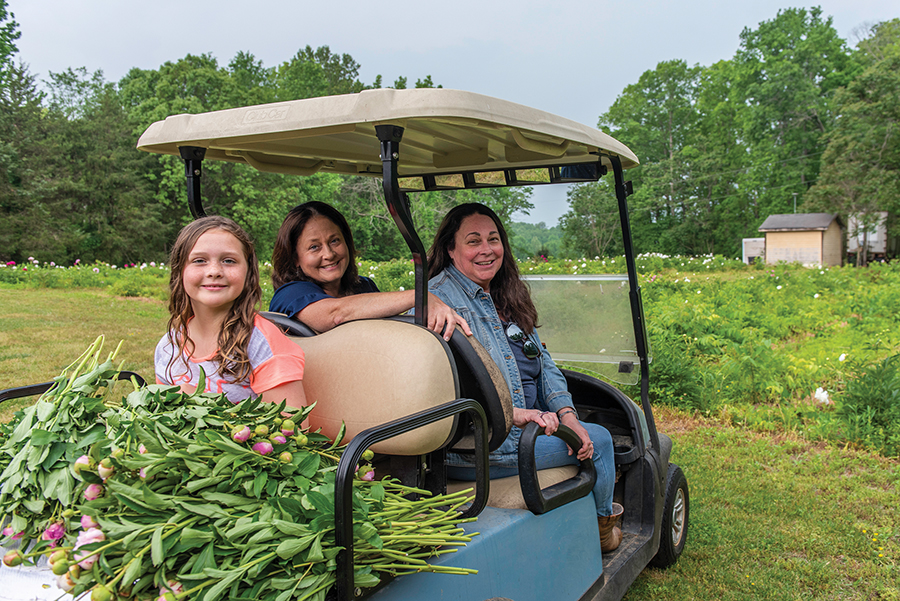
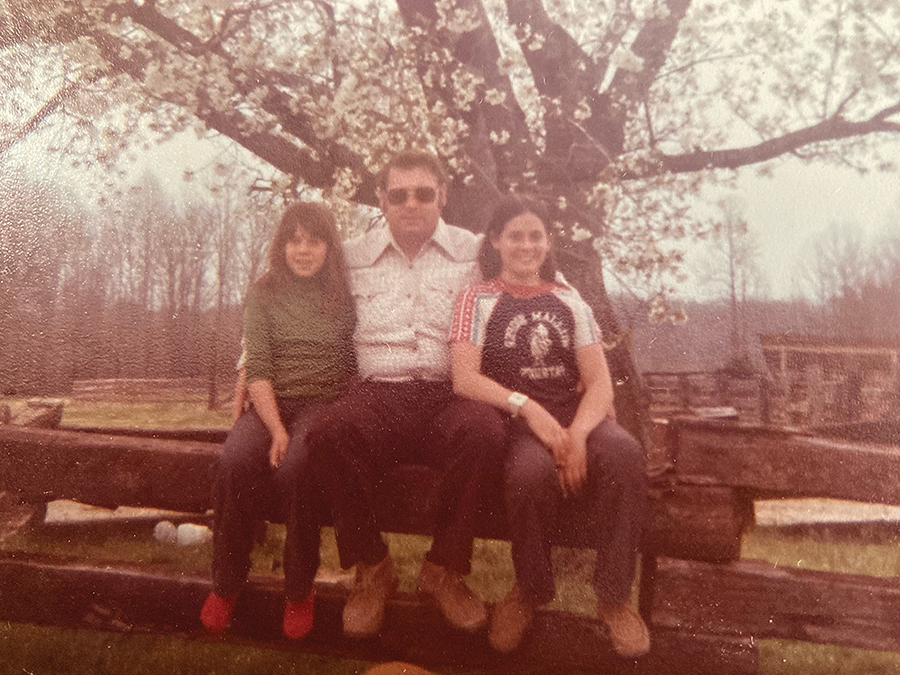
Wrenn’s daughters, Nancy and Heather, accompanied by a shaggy farm dog, come out the front door of the house to greet me.

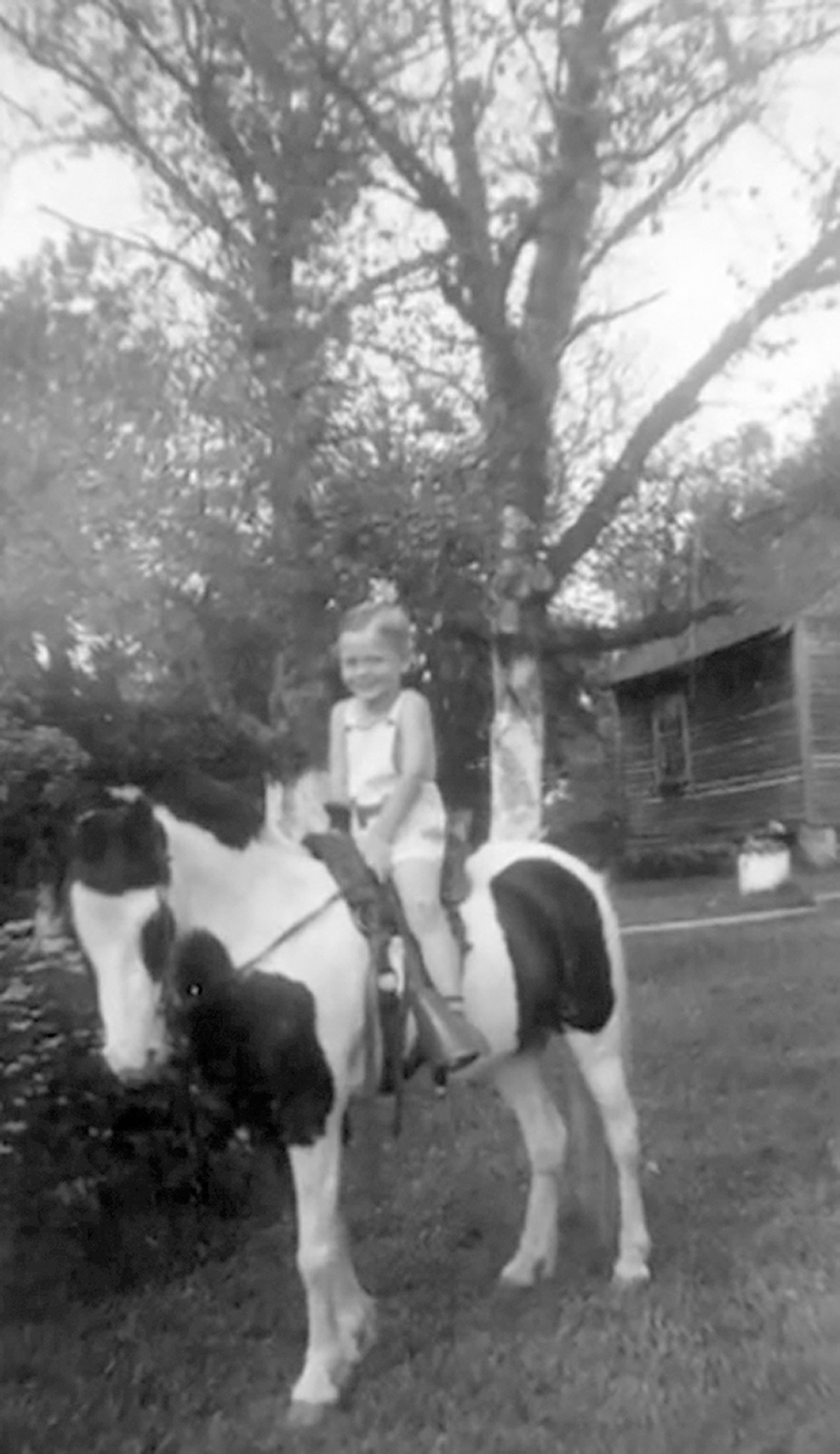
Born in Greensboro to a mother who’d kept lovely perennial gardens in her native Virginia and a father who was a renowned greenskeeper, “Benny” Wrenn grew up loving the outdoors. He was given a pony by a friend of the family, Edward Benjamin, the developer of the Starmount neighborhood and Friendly Shopping Center.

“When the neighborhood boys were out riding bikes,” Heather says, “Dad’d show up riding his pony.”

Young Wrenn was the namesake of developer Benjamin and famed golf course designer Donald Ross, another family friend.

He attended Wake Forest University on a golf scholarship and earned his law degree there. For 55 years, Wrenn ran a successful criminal law practice in Reidsville. And he was a man of many interests.

“Dad taught himself to read, write and speak Spanish at the age of 70,” Heather tells me. “He was a lifelong learner.”

I take a seat at the dining room table with his daughters.

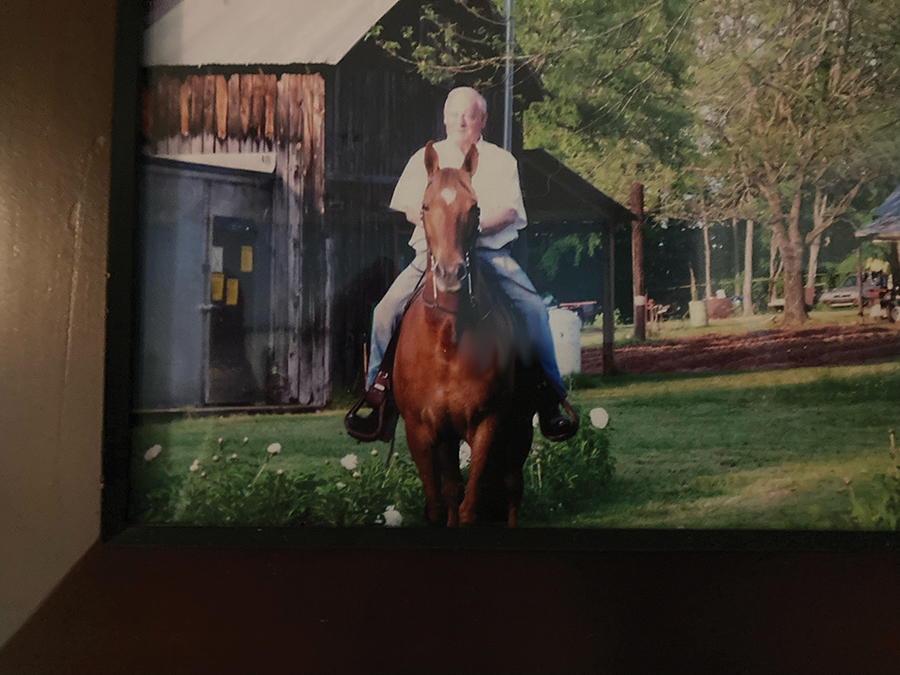
Though he passed away in 2017, Wrenn’s presence suffuses the place. Facing me is a floor-to-ceiling mural of rolling Piedmont farmland painted by an artist friend. Heather points out a cabinet that her father made by hand. There are paintings of horses hanging on the walls, along with photos of Wrenn and his daughters on horseback.

“He rode right up to age 75,” Nancy says. “He always thought of himself as a cowboy.” The sisters smile at each other.

Over the entrance to the adjoining room hangs a sign that reads “Benny’s Kitchen.”

“He loved to cook, too,” Heather says. “He was a phenomenal cook!”

The farm dog that greeted me whines to go out, and Nancy rises to open the door.

She tells me her father purchased the 70-acre farm in 1965.

   
Everly Long, Nancy Wrenn,  Heather Wrenn

“The farmer who owned the place was mowing the bottom pasture with his mule,” Nancy continues, returning to her seat. “Dad bought it from him right there on the spot.”

“I think initially he thought of the farm as his respite, his getaway from law work, where he could follow his passion,” she adds. “This was his happy place.”

But her father also wanted the farm to sustain itself financially. Ever the visionary, he set up a corporation, naming it Heathernan Inc., in honor of his daughters, to provide the framework.

Wrenn started with livestock.

“He named the farm the Cherokee Cattle Company,” Heather says. But raising cattle didn’t prove to be profitable. And since he wasn’t living on the property full-time, there were other problems.

“It always seemed like in the middle of the night, somebody would call Dad to tell him his cows were out in the road,” Heather says.

Wrenn gave up on the livestock and decided to plant Christmas trees. But the summer sun of the Piedmont proved to be too strong for the white pines he’d brought from the North Carolina mountains.

“Dad was always thinking about the future, how to sustain the farm, how to get revenues coming in,” Nancy says.

So he decided to build greenhouses.

“We started with five greenhouses to propagate annuals,” Heather says. Wrenn purchased flats of flowering plants from suppliers, then potted them in terra cotta containers he’d found at a good price in Georgia.

Ever resourceful, Wrenn designed a production line.

“He built this great big box,” Heather continues, “and he’d take his bulldozer and shove mulch and good soil in, and everybody had a cubbyhole, and you’d grab your soil, pop your plant in a pot. It was mass production!”

The potted annuals were so well received at farmers’ markets that Wrenn and his daughters expanded their selection, offering hostas, daylilies and tuberoses.

“Remember those beautiful tuberoses?” Nancy asks.

Heather nods.

But again, there were problems, especially for a father with a full-time law practice. Even with perennials, potting was labor-intensive. The greenhouses were expensive to maintain and costly to irrigate, heat and cool.

Then Wrenn announced his semi-retirement from his law practice.

“He got real serious about what he was going to do next on the farm,” Heather says.

“So he started his research,” Nancy adds.


This was before the internet. Wrenn read book after book. He researched plants and growing zones. He studied soil types.

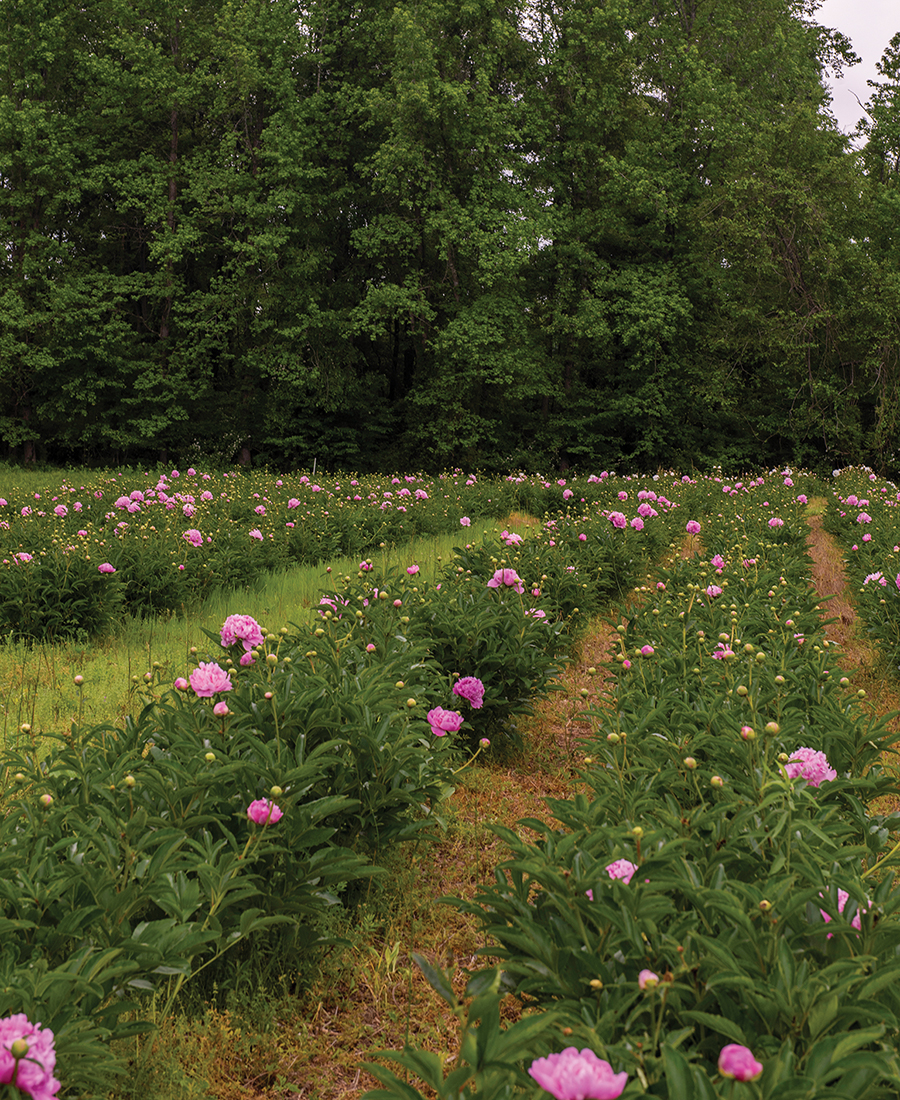
What he discovered was that the farm was situated in a region well-suited to grow an elegantly beautiful flower that had been cultivated in China for millennia. Even better, it was a hardy flower requiring relatively little maintenance in order to thrive.

“And deer won’t eat them,” Nancy adds.

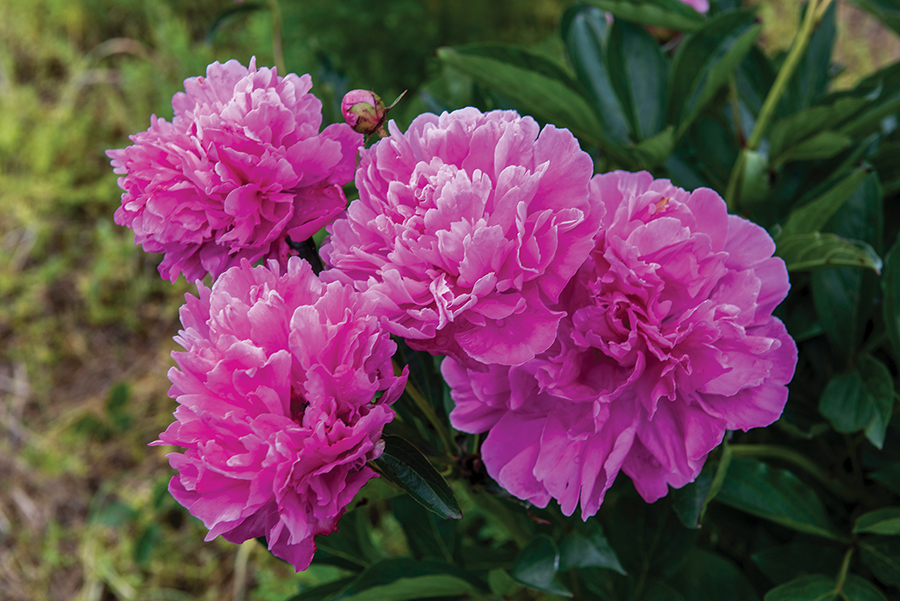
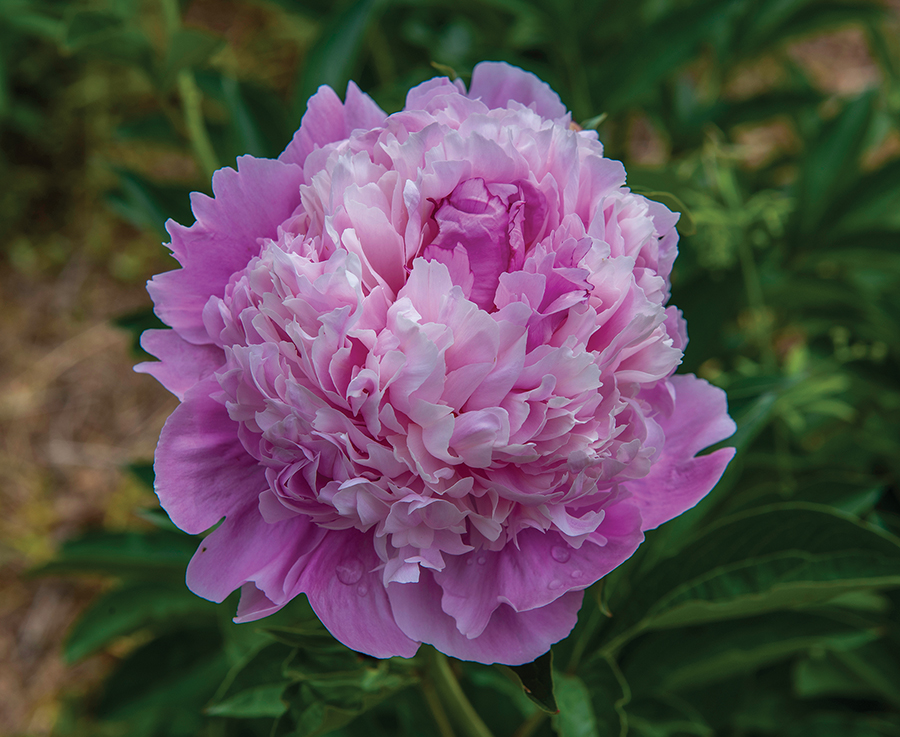
Genus Paeonia. The peony.

And so, in time, Cherokee Cattle Company became The Peony Patch.

“He bought bulbs in batches direct from Holland,” Heather says.

“He started very simple, with whites and pinks,” Nancy continues. “He was thinking about marketability. Peonies are a big flower for weddings. Brides love the whites.”

Initially, Wrenn planted 2 acres, carefully measuring the distances between the bulbs, their depth in the soil and the grassy paths between rows. The peonies flowered beautifully the first year, but there could be no harvest.

“It’s a long-term investment,” Heather says. “By rule, you should not cut stems from a peony till it’s 3 years old.”

Seeing that first “blush,” with the peonies in peak bloom, Wrenn wanted more.

“He made me cut my horse pasture in half,” Heather laughs.

Carefully, incrementally, Wrenn added field after field.

Today, The Peony Patch comprises some 15 acres, with more than 50,000 bulbs in the ground.

There are four varieties. Duchesse de Nemours and Festiva Maxima are the whites, and Monsieur Jules Elie and Sarah Bernhardt are the pinks. All are double-blossom varieties, so they’re enormous.

In a typical year, the peonies are cut over a 14- to 21-day period beginning May 1, depending upon the weather.

This is a time of intense labor.

“The first couple days, we’re cutting maybe a couple hundred stems, walking each row, each field,” Nancy says. By the third or fourth day — especially if there’s a day of full sunshine with temperatures in the 70s or 80s — the cutters might harvest 3,000 to 4,000 stems a day.

Fortunately, there are three laborers who have been with the farm for years. They see to it that each stem is individually cut, placed carefully in stackable bins and stored in a walk-in cooler at 34–36 degrees Fahrenheit for no more than two weeks.

“The flowers have to be cut at just the right time,” says Heather. “You can have one that’s not just right at 7 o’clock in the morning but at 4 o’clock in the afternoon that same day, you’d better get it.” Cutters walk each row in each field, gathering flowers, sometimes twice a day.


“Ideally we harvest stems that are at least 24 inches long,” Nancy says. “And since the blossoms are so big, they’re very heavy.”

The primary market for the peonies is wholesalers. Many come directly to the farm to pick up their orders, though Nancy or Heather might make deliveries on a limited basis as far away as Raleigh or Charlotte.

One of their most loyal customers is Randy McManus of Randy McManus Designs in Greensboro.

“Randy has been a real business partner since my Dad put his first peony in the ground,” Nancy says. “He’s a true peony lover.”

After the back-breaking surge of the blush, the harvest gradually tapers off. In a typical season, The Peony Patch will sell 10,000–12,000 stems. Even after harvest, the fields remain colorful for a few more days.

“We always leave at least three blossoms on each bush,” Heather says.

In preparation for the next season, the stackable bins will be washed and stored. The cooler will be shut down and cleaned with bleach. The fields will be bush hogged. Later — and only after at least two hard frosts — the fields are burned and raked for debris, as wind and rain permit.

Usually Nancy and her family — including grandchildren — will drive up from her home in Wilmington to celebrate Christmas at the farm with Heather and her husband.

Then it’s a waiting game. Waiting to see when the tiny red buttons of new peony shoots begin to show themselves for spring.

There are ongoing challenges for Wrenn’s daughters, of course. The need to replace equipment costing thousands of dollars. A new species of tree invading the fields. The creeping vines of poison oak choking the bulbs. And, since fields have yielded cuttings for well more than 20 years, they are long past the time when most growers dig up, clean and sterilize bulbs to rotate them into new fields.

And there’s slim payoff on the investment and work after expenses. Nancy and Heather tell me it’s actually the income from rental houses their father put on the farm that goes farthest to sustain it.

So why continue?

“Sometimes the phone rings during harvest and it’s a little old man looking for peonies to give his wife for their 70th anniversary celebration,” Heather says. “Or it’s a bride’s mother who says all her daughter wants for her wedding are peonies. Or it’s just someone who remembers the flowers that grew in their grandmother’s garden. People feel such passion for the peony. I think that’s why Dad selected it.”

Wrenn’s other daughter answers this way.

“I’m a project manager for an information technology company and Heather’s a nurse,” says Nancy. “The peonies are a real change of pace for us. Here we go from service jobs to production jobs, where we can work hard and see what we’ve accomplished during the day. That’s rewarding.”

“But mainly I do it out of honor and love and respect for my sister and Dad,” Nancy concludes. “When I’m on this farm, I feel very close to him.”  OH

For more information or to contact Nancy and Heather, visit www.thepeonypatch.com.

Ross Howell Jr. is a peony lover and an O.Henry contributing writer. Email him at ross.howell1@gmail.com.

O.Henry Essay Contest Semifinalists

O.Henry Essay Contest Semifinalists

The Big Year

By Art Williams

It was the year I turned 15 when I had changes in my life that I would never have imagined. My parents announced that our family was moving from our home in Tennessee to North Carolina.

For my father it was an opportunity to get a promotion with his company, Du Pont, and finally return to his hometown of Greensboro. His life journey had begun here after The Great War. His path led to a degree from NC State, marriage, and then four years in World War II as an officer before returning to start life anew with the wife he adored. So, yes, he was glad to return to his roots. As for me, it meant jumping into a new culture, changing schools, and losing all my friends, including a girlfriend of almost two years. She was a good kisser.

My mother was glad for the change as well. Returning to North Carolina meant she had her relatives close by in Raleigh and Hamlet. Our nuclear family was already familiar with the state. Every summer we vacationed through the Blue Ridge, Triad, and Triangle and on to the beaches.

But that year would be different – a permanent move. It was like going through a time warp. In Tennessee, the schools taught history about that state – often related to the Civil War. North Carolina focused on the Revolutionary War, and I had to adjust my perspective. Other adjustments here were disorienting for a teenager who was trying to get a grasp on a new life. I also had to overcome a Tennessee accent.

In addition to hiking the Chickamauga Battlefield near Chattanooga, I had grown up watching cars go by our house and could name the makes and models from memory as they approached our intersection. Some of the license plates portrayed the stars and bars flag of the South and the phrase “Forget. Hell no!”

Chattanooga was proud of its historic tourist attractions. It boasted of Rock City as the place to see – promoted in red and blue paint on barn roofs throughout the region. The Lookout Mountain Incline, where you could take a tram to the peak, allowed a great view of the cityscape and surrounding countryside.

I remember it was while waiting to ride that tram, as an 8-year old boy, that I started to drink from a water fountain when my mother and sister called me back. I stopped and looked up as they pointed to a sign that read “Colored”.

That is one of my first memories of such a thing as a separation between races. The concept was confusing for a young boy who just wanted to play sports, ride a bike, shoot fireworks, run free with his friends, and maybe kiss a girl or two. For all of Tennessee’s teaching of history we didn’t discuss segregation, discrimination, or race relations. Those would be new words and ideas brought home to me in 1963 as we arrived in Greensboro.

My parents bought a fine house just outside the city limits, near the end of a road named Hobbs, and the big move was underway. We stayed at the Journey’s End Motel along Battleground Road – that building is long gone – the site turned into shops.

The day we expected to move in, the trucking company called and said the moving van’s clutch had burned out going through the mountains, and it would take an extra day to deliver all our worldly possessions. So, for one more night we went to another motel across the street from First Baptist Church – the church to which we would later transfer our membership.

That day, as part of getting to know the area, and to distract my two sisters and me, dad and mom piled us into the car. We went for a drive along Friendly Avenue and Market Street, down to Elm and Davie.

Dad recalled, as a kid, he had a newspaper route, so he took us by the building that housed the Greensboro News & Record, now the Arts Center. Unknown to me at the time, the newspaper was the company where I would work as an intern reporter while studying journalism at Chapel Hill only five years later, and then work in the advertising department.

We drove further down memory lane as Dad took us past the bus station at the corner of Edgeworth and Friendly, across from the Sears store. As a teenager, he had also worked as a soda jerk at the bus station. The next few turns took us past the Myers Department Store, Mayfair Cafeteria, and the Woolworth’s buildings.

As we turned onto Friendly toward the S&W Cafeteria, we saw people carrying placards in front of the restaurant. I remember my father saying something like ‘Uh, Oh’, as he turned the car away from the area. It was the first time I saw picket line, a protest of any kind. And the protesters were all black. I didn’t have time to read what the words were on the signs.

That fall, I discovered our next-door neighbor was the manager of the S&W. As part of a carpool, he gave his daughter and me a ride to Grimsley Senior High. I found out he was the man who had stood in the doorway of the S&W with a shotgun during that long hot summer. He explained that he saw no reason why black people should not eat at his cafeteria. Most of his kitchen and serving staff were black. He worked beside them every day, and said he would defend their right to eat there.

That year taught me many things. I could survive change, a broken heart, and losing friends. I could face new realities and strive to understand the world around me better as it changed and as I changed. I learned that sometimes we are in the middle of history while it is being made.


The Red Ticket

By Kay Cheshire                                            

The idea of luck to me as an 8 year old simply meant my friends were lucky to have more toys, a bigger house or they didn’t have to walk to school. When I told my father the neighbors were lucky because they had a new car, he told me luck had nothing to do with it. Hard work is what gets the things we need. Only fools rely on luck, he’d warned me.

That same year the Catholic elementary school I attended in the early 1960s was raffling off two Schwinn bicycles, one for a boy and one for a girl. The boys’ tickets were blue, the girls’ were red, and each ticket cost twenty-five cents. I was determined to own one of those red tickets. My second-grade friends had theirs, comparing numbers, each convinced they would be the lucky winner. Everyone kept asking me why I didn’t have a ticket. One night at dinner I asked for twenty-five cents to buy a ticket.

My father said, “You won’t win. It would be like throwing money into a river.”

The disappointment rolled over me, flattening any hope I would get a red ticket. All through the night I tried to think of how to get a quarter, even praying. As though higher beings carried coin purses to drop change from Heaven. I didn’t care about the bicycle I just wanted a ticket like my friends.

The next morning, my mother handed me three cents to buy milk in the school cafeteria. We called those three pennies the “milk money” and each day she would give me my milk money.

Walking to school I counted on my fingers how many days of saving three pennies until I had twenty-five cents; it would take nine days. The raffle was in fourteen days. So, at lunch I put the milk money in my sock and drank water for the next two weeks. I was proud of myself for figuring out the math.

At the end of the nine days, I took the pennies and bought my red ticket. It became my most prized possession.  I looked at that ticket every night before I went to sleep.

The drawing for the bicycles was the last day of school before summer break and when the big day arrived all the students packed into the cafeteria. The bikes gleamed on the stage, black and silver for a boy, red and silver for a girl.

The parish priest was asked to pick the winners. He spun the drum full of blue tickets first, revolving it several times for dramatic affect. All the boys waited anxiously. He picked a ticket, called the number. A fifth grader yelled, raising his hands over his head, running like a sprinter up the stage to receive his prize. Everyone clapped, others shook his hand as he beamed.

Then the priest rolled the girls’ drum turning it over and over, finally selecting a ticket. He called out the number, but no one yelled. Instead, there was a low murmur like a swarm of bees. The priest repeated the number and waited. A girl next to me yelled.

“She’s got the number!” Pointing at me

I looked at her, looked at my ticket, looked at the number.  I don’t remember much after that as people started pushing me, clapping, and slapping my back. I eventually made it up the stage and stood next to the boy winner while a picture was taken for the school newspaper. Then someone helped me and my bicycle off the stage.

I had to walk the bike home because I didn’t know how to ride a two wheeler. The neighborhood kids followed me like the Pied Piper, touching the chrome and the red and white streamers dangling from the handlebar grips. It was better than any Christmas morning I had ever known.

Someone ran ahead to my house to announce I’d won. I rolled the bike down our driveway eager to prove there really was such a thing as luck. But my parents weren’t as thrilled as I thought. They both wanted to know where I got the money and when I explained I’d saved my milk money, my mother accused me of stealing.

“I didn’t steal anything,” I protested. “You gave the money to me. I thought you’d be glad I’d figured out the math.”

To me, stealing meant taking money belonging to someone without them knowing it. I had no idea what I’d done was considered stealing. I worried how long I would have to stay in jail for stealing twenty-five cents.

But my father said he was glad I’d won the bike, giving my mother a strange look. The money was never mentioned again.

During those summer months while my father taught me to ride that Schwinn two-wheeler, I kept turning around to be sure he was holding on.

Then one afternoon he let go and I stayed upright. It was the first taste of freedom all children discover, and for me I’d bought that freedom with twenty-five cents.

I’m sure it was luck I’d won the bike it certainly wasn’t hard work. It was the only bike I ever owned and when I left home to attend college, my parents gave the bike to a charity who refurbished bicycles for disadvantaged children as Christmas gifts. I was always glad another young girl would be lucky enough to own that bike.

As an adult, I often experienced that force of good fortune, known as luck. I’ve won other raffles, door prizes, and small amounts of money from lottery tickets, but I’ve also worked hard for the things I needed. Like my father said, only fools rely on luck.


1999

By Myra J. Stephens

I felt as though I’d been slapped across the face with an admonition from the Universe to, “Pay attention, Woman!” It was a small notice in the Sunday paper, ‘Auditions: 3:00 – 5:00p.m.’, that had virtually reddened my cheek. As I checked the time and place, I announced, “I’m going to audition for this play!”

My nearly college-age daughter replied, “Can you act?” She said this as if she were asking me if I were certain I had the skills to hunt wild boar. To make a long story short, I went to the audition and was cast in a leading role.

The things I learned performing in that production, and the bonds of friendship that were forged changed my life and expanded my horizons. I’m pleased to say that I was fortunate to meet one of my very good friends during that show and we have maintained that relationship to this day.

There is nothing like being alone on a stage with the audience’s eyes trained on only you. It was the most difficult part of the role for me; to forget the audience existed and to stay firmly in the moment of the story. But in learning it, I gained confidence in my own creativity and my own worth and not long after, I began to seriously write. It took some time to get it right, but four years later, I wrote and directed my first play.

This time in my life was a learning experience in many ways and just as it’s

important to take your car to the dealer when the ‘check engine’ light flashes red, our bodies also have the same kind of warnings. The tricky  thing is being aware and paying attention to those personal ‘check engine’ lights. Something as simple as a minor sniffle can morph into a sinus infection, then slyly slip down the respiratory system and decide to hang around as viral pneumonia if we don’t take care when the original sniffle arrives, and there are even more insidious warnings that can be easy to ignore.

In my case, burning the candle on not two, but four ends, was a stressful

situation. I was working, acting, writing, and keeping a house and family in order, which to my twisted way of thinking was perfectly normal and I could handle it. Handling it, apparently included, using my time during lunch and after work to learn my lines, and/or go to rehearsal, and then staying up until one or two o’clock in the morning to write. This didn’t leave much time to sleep or eat and I subsequently lost twenty-five pounds

without even noticing. That was a bright red, flashing ‘check engine’ light that I was choosing to ignore. But everyone knows what happens when you pretend those red lights aren’t flashing.

It would be like playing chess in the park with a six-hundred-pound gorilla who cheats. Are you going to be the one to tell him that you know he’s been cheating? Of course not, because it would be a disaster for you.

To put it politely, my engine stopped running, as in broke down. After four days of being unable to get out of bed and crying non-stop for no reason I could identify, my doctor put me in the hospital for my own safety. Unkind people were much more descriptive; ‘she’s lost her marbles’, ‘she’s gone bye-bye’ and my favorite – ‘she’s gone to the loony bin’. But the truth is, it was probably the best thing that could have happened. It identified a manageable problem and once the problem was identified, I was able to get back on track. Once I was back on track, I took steps to stay there. This

included developing coping skills, learning to deal with stress and time management, and of course balancing the chemicals in my brain through medication, which cannot be stressed enough.

When I was ready, my writing and the rest of my life was waiting for me; from fairy tale princesses managing OCD and nymphomania to Southern Gothic Christmas fare to a journey through a crisis of faith, I’ve tackled them all. Apparently, I don’t fit into a specific genre.

Eventually I became close friends with an actor who played opposite me in

several productions, and we became so close that we married in 2007. Our marriage has been a joining of two creative forces that together form a shining light. We’ve retired to Greensboro and are currently dipping our toes into what appears to be a wonderful theatrical environment, and it all began with a small audition notice for The Cemetery Club. Apparently I do have the skills to hunt wild boar.


The year that changed everything

By Wanda Kersey

Thousands of people are told something every day that changes the rest of their life. In January 2022 I was sitting in a drab doctor’s office chair and remember looking up at the doctor as he stood, leaned against the white office cabinet and delivered the news that no one wants to hear: I was going to die. My diagnosis was acute myeloid leukemia. I was told I might have 3 months to live.

I just sat there. My mind went blank. Did I just hear that I was going to die?

My thoughts and perspective changed immediately.

When I left the cancer center, my mind went racing. I had so much to do. I am a “collector of things”, especially snowmen, milk glass, and toys. I’m not a hoarder, but I did see a lot of value in things. After the initial shock, all I could think about at first was my stuff. All of a sudden, my stuff lost all its value. I really felt the need to get rid of so much. It makes me ask the question, “What really matters?” I feel my answer now is to not be afraid, and to have a good attitude and outlook, no matter the odds. Possessions and things just don’t matter like they used to. I have been able to let go, and put my trust in God (though I still have a soft spot for sweets).

My son, my sister, my brother, and many others have been right there for me, and they still are, 11 months later. Yes that’s right, I am still kicking, against all odds. I told my doctor that I wanted to enjoy the life I had left to live and not be sick. I want quality, not quantity of life. Though there was no available treatment for me, due to my age and other health issues, he told me they would bring in hospice to my home. But I can say I never thought I would see this Christmas.

I don’t know what I would do without my family.  I mean, I have a friend-base beyond all belief. I am so grateful for the love I have received this year and don’t have the words to express it to them.

At this present time I am still under hospice care, and have a daily trickle of family and friends always popping by to say hello or sitting on the porch with me. God is giving me time, but I am ready when He is, and I am not afraid. In a sense, we all live on borrowed time. But this year I have paid attention to the blessing of time and of each and every day.

My new mantra that I have learned this year is: Love God, family and friends. Don’t worry (about stuff), be happy, and don’t forget to smile.


The Year That Changed Everything

By Renee Skudra

     In the past year it seems that the winds of fortune blew black and indomitable.  My best friend, a woman from war-besieged Ukraine, died suddenly of lung cancer, there were two job losses in our home, scary medical incidents and hospitalizations, and a 42% increase in our rent.  Each day brought new calamities – a heretofore reliable car which inexplicably developed engine trouble and gave up its automotive life, necessitating the unexpected purchase of another vehicle despite scant monies to do so.  The roof of the house developed a leak and a small mouse decided to adopt our place as his ancestral home.  A relationship that looked promising ended abruptly in a “this is not working for me” declaration, leaving me bereft and heartbroken.    Family members did odd things, calling in the middle of the night screaming while others leveled accusations which had no known basis in fact.    A cousin demanded that I give her money because “you have a lot of it and I cannot pay my bills anymore.”  Although I retorted that I now found myself in the unenviable position of going twice-weekly to food banks to augment the food stamps I had finally been given, and taking whatever form of work came my way she loudly exclaimed that I was a liar and probably had large sums of money sitting in Swiss banks.

     Each bad day seemed to breed another one full of mishaps and complex problems that riled up against logic and clear thinking.    In these moments everything became magically amplified.  I found myself thinking about my brother who didn’t invite me to his daughter’s wedding because incomprehensibly “you might cause a problem.”    When my niece relocated to Minnesota and had her first and second children, I was also not advised of those facts because “it’s not your business.”  The past rose up like a seven-headed hydra, recalling other wrongs perpetuated against me: a failed love affair where a brilliant and darling Irish-American lad demanded I change my religion (which in good conscience I could not do) to suit his stalwart Catholic parents; my own mother and father who constantly told me that I wasn’t pretty or good enough and needed to do better, several gal pals who had betrayed my confidence by chasing after my gorgeous but chronically unemployed husband.  Sometimes I found a person to commiserate with but even that did not obviate the growing list of woes that had attached themselves to me and the anger kept increasing exponentially whenever I felt wronged – whether it was simply for a utility shut-off that occurred for a one-day-late paid bill or rejections from magazines for story pitches I had sent their way.  Ironically, being a victim can sometimes feel like recompense and be satisfying.

    My faith fortunately allows me the belief in miracles and such a one arrived in a mental landscape which was admittedly bleak and desolate.  On a random night I turned on the TV and watched a PBS show called “Captain Scott B and the Great Adventure.”    The movie, made as a tribute by his daughter, captured the life of her amazing free spirit and naturalist North Carolina-born father, Scott Bertram.  The beautifully nuanced photographs revealed a man of extraordinary sensitivity and wisdom who infected everyone with his positivity and love for life, family, art, the ocean, animals and his boyhood home of Hendersonville.   What struck me was the enormous effect he had on others, encouraging with unmitigated enthusiasm each to be their very best selves.  He drew pictures, laughed loudly and often, shared easily, and leaned into others’ experiences with kindness and generosity.  His wife and children and apparently the world at large adored him.   At the end of his life, on his deathbed, he offered his daughter Betsy these words: “forgive, forgive everything”.  At that exact moment I felt something like a huge “ping” go off in my head.  These are the very words that changed everything in this year.  Some people might call this an epiphany but that wouldn’t be a large enough expression to describe the massive sea change, the re-set of my mental apparatus that finally and fully took in the import of that three-word oh-so-pithy advice.

           The next morning, with my son and wayward Bichon Frise in tow, we went to the lake, luminous in the mid-day light, on the Guilford College campus in Greensboro.  That setting has always been a kind of sacred space for me, sitting in a portal of oft-remarked history and the nearby presence of the famous Underground Railway tree.  A flock of Canada Geese was by the water’s shimmering edge and a group of turtles was settled on an overarching limb by the lake’s periphery.    I took out of my purse two quotes that I had copied on a piece of dog-eared paper. One, authored by California writer Annie Lamott,” said that “forgiveness means it finally becomes unimportant that you hit back.”  The other by a psychologist named Bernard Baruch averred “one of the secrets of a long and fruitful life is to forgive everybody everything, every night before you go to bed.” I picked up two handfuls of leaves, still redolent with their autumn hues, and one by one scattered them on the lake, each which I silently denoted as carrying a grudge or resentment, thereby forever releasing those.  When I recited out loud the experience where my son, despite two Master’s degrees was told by an employer that they did not hire people with developmental disabilities, and the grave hurt that that had caused each of us, the beating of my heart increased ten-fold until it felt like it and the winds around me were roaring.  Moments later, I threw a large maple leaf onto the lake’s tiny waves and said “I forgive you too.”    I didn’t know Scott Bertram but his words changed the trajectory, the architectonics of my life.  God bless this man from the mountains of North Carolina.


The Year that Changed Everything—1970

By Samuel C. Newsome

University was a big transition for a farm boy with hopes of a medicine career.  Passing is not good enough. One must excel.  That summer, before my senior year, I finished my med school applications.

There was very little I could do now but await some response to my applications and hope I got an interview.  On a hot Saturday in late June, I got a call from my uncle Hermie.  “Can you get dressed up tomorrow afternoon and come with me to see Robert?”

I had met or more correctly seen Robert at a family gathering years before.  He was a small man in a dark suit who was aged even then and had particularly gnarled and wasted hands.  “Sure, any special reason we’re meeting Robert.”

“You’d best call him Dr. Robert when we meet him.  He’s Dr. Robert Moore.  He’s got a lot of friends at the medical school.”

Uncle Hermie picked me up in his old Buick on Sunday afternoon and we leisurely drove to the home of Dr. Robert and Nellie Moore.  Their home was in an older genteel community about two blocks from the Bowman Gray School of Medicine.  The house appeared spotless white on a clear and sunny afternoon.  Nellie—Mrs. Moore, met us at the door.  “Well, if it isn’t Hermie Moore.  It seems like we haven’t seen you in years.  And this must be Sammy who you told us about.  Well, come on in, Robert is somewhere in the house.  Let’s go out on the breezeway and he’ll be with us in a minute.”

Nellie soon returned with three glasses of iced tea and Dr. Moore in tow.  He was smaller than remembered and now in white pressed shirt and dark slacks rather than a black suit.  “Hermie, good to see you again.  It’s been too long.  And this is Sammy, you told me about.  He’s Carl’s son, isn’t he?  I remember Carl.  When he was a boy, he used to throw rocks at our mules.  I guess he thought that if he riled them up, he wouldn’t have to plow.”  He looked at me and asked, “Why would you ever want to be a doctor?  You can certainly find easier and richer pursuits.”

I had rehearsed my answer to the question I knew was coming, but couldn’t remember it. I said something like, “I’ve focused so much on pre-med courses, that I don’t have any fallback plan.  Once my interviews are over, I’ll be forced to consider something else.”

His only response was, “I see.”  He took my copies of transcript and MCAT scores and looked at it for a second before he looked at me and said, “I’ll write your recommendation.  It may help you and good luck in getting into medical school.  Medicine is changing and God only knows if it’s for the better.”

Dr. Moore and uncle Hermie talked a while about farms, relatives and weather and before I knew it, we were on our way home.

A week later I received a copy of Dr. Moore’s letter.  It was a short, but warm recommendation.  A week later, the local paper had a story about a well-known local physician dying of natural causes—Dr. Moore.

I was granted an interview in November, that was a positive sign.  I arrived at the conference room amid the typical confident interviewees.  Each applicant was assigned to a chaperone to guide them about the offices of the interviewing professors.  Ms. Catherine Davis was my guide.  She was polite and friendly and asked about my reasons for choosing Bowman Gray School of Medicine.  I was soon at the office of Pathologist, Dr. Robert Pritchard.  Dr. Prichard reviewed my application, transcript and Dr. Moore’s letter.  He informed me that he had been a good friend and neighbor of Dr. Moore.  He enjoyed his sense of humor and especially that of his wife, Nellie.  He told me a story of Nellie’s attempt to collect debts.  “She went to see a fellow who had recovered from a complicated leg injury.  When she arrived at his home, he was in the process of putting in central air.  ‘Doc and I are getting older and need that central air, but if people don’t pay their bills, we can’t afford it.’

His smile never wavered and he casually pointed to three window units sitting on the lawn.  ‘Why don’t you just take those.’

Nellie turned around and left in a huff.”

Dr. Pritchard chuckled at the thought.

That concluded our interview on an amiable note and Ms. Davis was waiting outside to usher me to my last interview.  I sat down in the hall and waited.  After a while I peeked around the corner into his office and no one was there.  When Ms. Davis returned, I told her the professor was a no-show.  She was flustered for a moment; then her smile lighted up.  “We’ll just go see Doug.  He’ll give you that interview.”

Dr. Doug Maynard was a professor of radiology and as I later learned, a pioneer in the infant science of ultrasound.

After reviewing my papers, we spoke mostly about farming.  Like myself, he had grown up on a farm.  He saw similarities in medicine and good farm practices.  He had also known Dr. Moore.  As an orthopedist, who was very familiar with x-rays.  Ms. Davis soon arrived and the interviews were finished.

A week later I received my coveted acceptance letter.  My suspicion is that both doctors valued the letter from Dr. Moore.  I also suspect that Ms. Davis, who was the secretary of the hospital president for thirty years was an unofficial, but powerful member of the board.

1970 was for me, a notable year.  Looking back, fifty-two years, I can’t imagine how my life would be different without medicine, or how my career hinged on the kindness of Drs. Moore, Pritchard, Maynard, uncle Hermie and the patient and kindly Ms. Davis.


The Year That Changed Everything

By Porter Halyburton

1965 started off pretty well. Two years before, I had graduated from Davidson College, joined the Navy, gotten married, and started Naval Preflight School in Pensacola, FL. In April 1965, I finished Navy flight training, my first daughter Dabney was born, and I joined an F4 Phantom fighter squadron in Oceana, VA. In May we left for Vietnam aboard the carrier USS Independence. When I saw Dabney for the last time, she was five days old.

Flying combat in the war over North Vietnam was dangerous but exciting. I did not know much about Vietnam, but believed we were there to stop the spread of Communism and help the people of South Vietnam to remain free.

Our carrier and Air Wing were “on the line” for 45-day periods, flying missions for 12 hours a day. In between those periods, we enjoyed some Rest and Relaxation for a week or 10 days.

The Philippines, Hong Kong, Japan were exotic ports of call, full of adventure and wonder for a young Naval officer of 24.

I flew 75 combat missions without serious incident and was looking forward to being back home for Christmas, but I knew home would be different with all of the race riots and anti-war protests that were beginning to tear our society apart. We did not get much news, but I knew the riots were bad with people dying and cities burning.

My luck ran out on my 76th mission and I was shot down and captured north of Hanoi. I did not know that I would be declared Killed in Action nor that my wife Marty would begin life as a widow and single mother, believing that I was dead. She did say that being KIA was probably better than being a POW in North Vietnam. After a year and a half, she was to learn that I had not been killed and was a POW and the years of uncertainty began for her.

I did know that when I pulled the ejection handle and parachuted from that stricken plane, I was severing all connection to my previous life and falling into a strange, foreign, and hostile land. There was nothing but fear and uncertainty for me in the future that I could see. All I had was my determination to do everything possible to survive whatever lay ahead. What lay ahead was more than seven years of captivity, solitary confinement, denial of all rights and human dignity, hunger, thirst, unbearable heat, bitter cold, extreme physical violence.    

Despite these terrible conditions in the early years, things did improve for the last two and I lived a different life with other prisoners and improved health. We had learned how to adapt to our conditions and make the hard choices that were critical to the preservation of honor and dignity.

I learned much about myself and others, about life and how to live productively in the worst of circumstances. I made many friends, many memories and learned many things I could not have learned in any other way. The bad years have faded to the back of my remembrance in favor of forgiveness and gratitude.

Since release from that prison and the prison of hatred, my life has been one of joy and fulfillment with a beautiful family and meaningful work.

I have a tombstone in my garden under the grape arbor that looks across the croquet court and the vegetable garden to the bay. The teak bench and coffee table make it a perfect place to watch croquet with a glass of wine or simply admire the sunset.

The flat stone there says that I died on October 17, 1965.

In Memory of

Porter Alexander Halyburton

Lieutenant Junior Grade, USNR

JAN.16, 1941 – OCT.17, 1965

KILLED IN COMBAT OVER NORTH VIETNAM

Son of Katherine Porter Halyburton

Husband of Martha Carrel Duerson

Father of Dabney Lorimer Halyburton

If my life stood for nothing more, I would be satisfied to have been a son, a husband, a father.

Yet somehow, I was spared this death and have had many years of joy, happiness, freedom, and prosperity. Each time I look down at that gravestone, I give thanks for this life and for the critical choices I made back in 1965.

So, 1965 really did change everything.


Click Here to Read the Finalist Stories

Chaos Theory

Chaos Theory

The Definition of Home

Finding meaning after the storm of the century

By Cassie Bustamante

What do you take with you when you’re evacuating for a hurricane? Baby, check. Baby accoutrements, check. Both dogs, check. Toiletries, check. Enough clothes for just a few days — because surely, we won’t be gone that long — check. (Though overpacking was a nonissue since my two-week-postpartum body wasn’t squeezing into much besides drawstring sweatpants when Katrina made a beeline for New Orleans.)

After living it up for a year in an old, baby-blue, converted Victorian in New Orleans’ Garden District, Chris and I moved across Lake Pontchartrain to Slidell to begin our more “respectable,” suburban newlywed life in 2003. The Lake Village rancher was our very first home and I took much pride in making it ours.

A year-and-a-half later, I coated the walls of the soon-to-be nursery in buttery yellow and filled the space with blue-and-green furnishings from my own childhood. And, much to my current self’s embarrassment, I decorated with a frog prince theme. Royal amphibians in place, we were as ready as we’d ever be. In August of 2005, we welcomed our first baby, a boy, into our home.

As if being frazzled new parents isn’t enough of a sleepless whirlwind, an actual cyclone had just announced its impending arrival. Lucky for us, my dad was visiting. His timing couldn’t have been better because it turned out that we needed him. Since I wasn’t yet allowed to lift anything heavy, Dad and Chris boarded up the windows of our rancher.

Together, we hurriedly packed up all the essentials and loaded everything into our two cars. Chris drove his Jeep Liberty, our two pups panting anxiously in his ear, and Dad took the driver’s seat of my Ford Escape, with 2-week-old Sawyer and me riding in the back. One by one, we joined the slow-moving interstate parade of evacuees. Because I was still nursing every couple of hours, highway truckers — who had a straight line of sight into our car — got quite a show. Helpless, I simply waved and smiled as we passed them.

Our hours-long drive finally landed us in Knoxville, Tennessee, home to my in-laws who welcomed the four of us, plus our canines, to crash their house for what we’d wrongly assumed would be just a few days. My mother-in-law, Pam, raved about how I was holding it all together, especially as a new mom in crisis. Honestly, I didn’t know to do any differently. What else could we do but accept things as they were and keep putting one foot in front of the other?

But, eventually, my breakdown came. We watched the news relentlessly to find out the latest at home. All of our friends had evacuated as well, so no one was there to fill us in except for reporters who tend to exaggerate. The tears finally fell when an anchorwoman said, “Eighty-five percent of homes in Slidell have been destroyed.” At that moment, it finally occurred to me that we may not have a house to return to.

Noticing my wet eyes, Chris put his arm around me reassuringly. I looked around and took in my surroundings. Baby asleep in hand-me-down Moses basket, check. Partner by my side, check. Dogs sitting at my feet, check. In short, we were lucky to all be alive.

In the coming week, though, we’d learn just how lucky we were. Aside from needing a new roof, our house, which sat less than a mile from where flooding reached, survived. But that experience redefined what home means to me. It’s not a building filled with precious things you’ve put on walls and collected over the years. It’s a feeling of safety and security, a knowing that everything you need is within reach and that your family will be by your side throughout any storm. That is home.  OH

Cassie Bustamante is editor of O.Henry magazine.

Art of the State

Art of the State

Creative Genius

The reclusive Mel Chin creates deeply engaging artwork at an international scale

By Liza Roberts

   
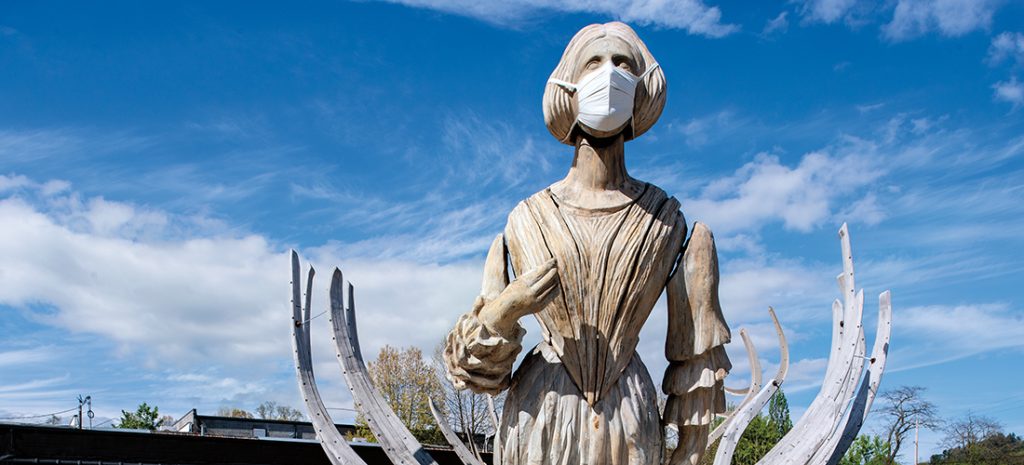
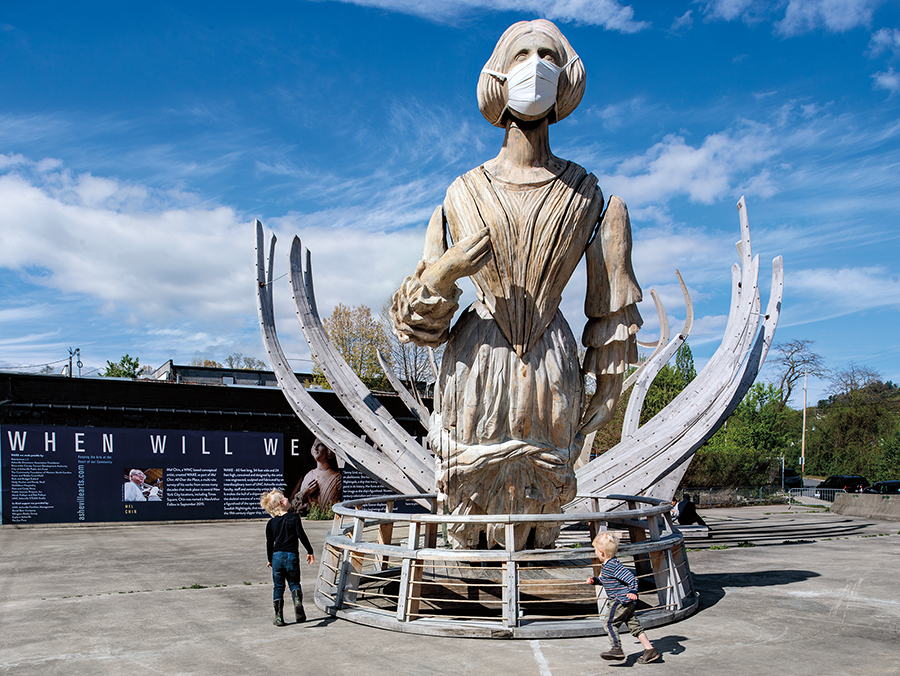
Wake, 2018

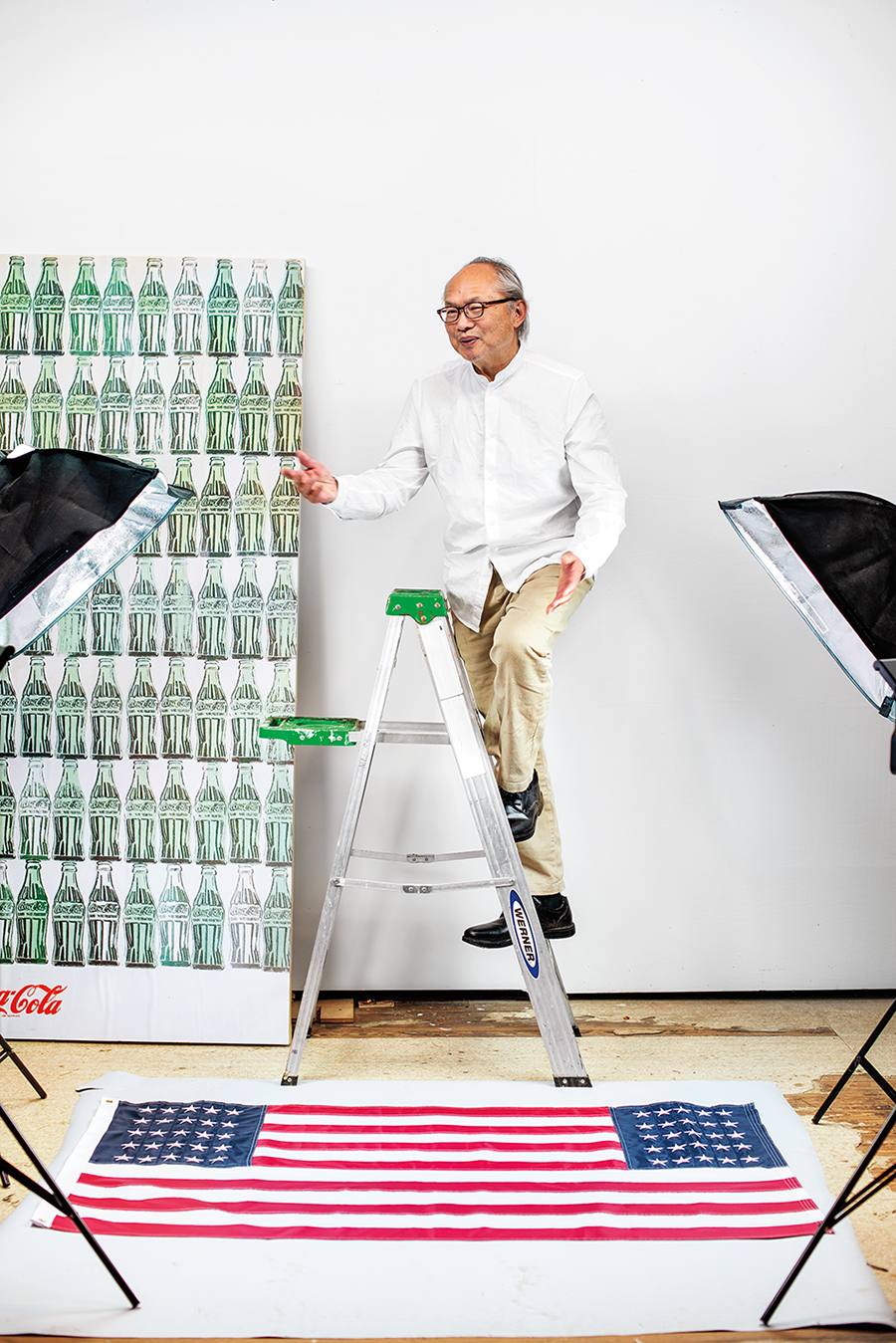
The only visual artist in North Carolina ever to win a MacArthur Genius award, Mel Chin manages to hide in plain sight in his home state, where only the most art-informed even know he’s here.

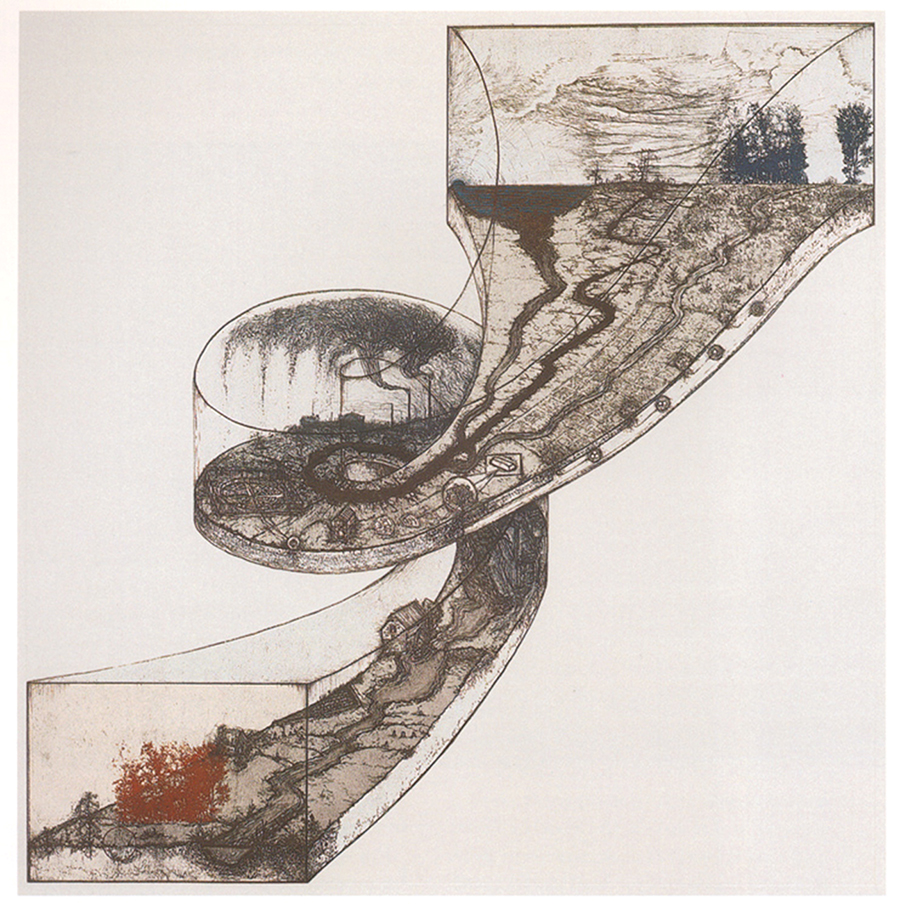
Tucked into Higgins, N.C., a distant corner of Yancey County near the Tennessee border, this world-renowned artist has space and time for his creativity to expand and his engagement with the wider world to ignite. His massive public sculpture, augmented-reality, subversive video, collage and interactive installations address issues as wide-ranging as climate change, political division, the environment, community health and the Black Lives Matter movement.

Chin says his conceptual work is a tool for civic engagement and a way to raise awareness of social issues. Through art, he believes questions can be asked and possibilities raised in uniquely effective ways. “I have always described the practice of art as providing an option, as opposed to an answer,” he says, sitting back in the shade of a porch at his stone house. Ivy and overgrown shrubs blur its edges as the Cane River rushes nearby.

He was here in 2019 when the MacArthur people called to tell him of his remarkable award, including its no-strings-attached check for $650,000. Chin “is redefining the parameters of contemporary art and challenging assumptions about the forms it can take, the issues it can address, and the settings it can inhabit,” the Foundation said in announcing its decision.

“When people ask about what inspires you,” Chin says, “I no longer speak in terms of inspiration, but of being compelled. Because how could you not?” The issues that compel him are not necessarily new, he points out, but they’re in the news, which provides new opportunities.

   
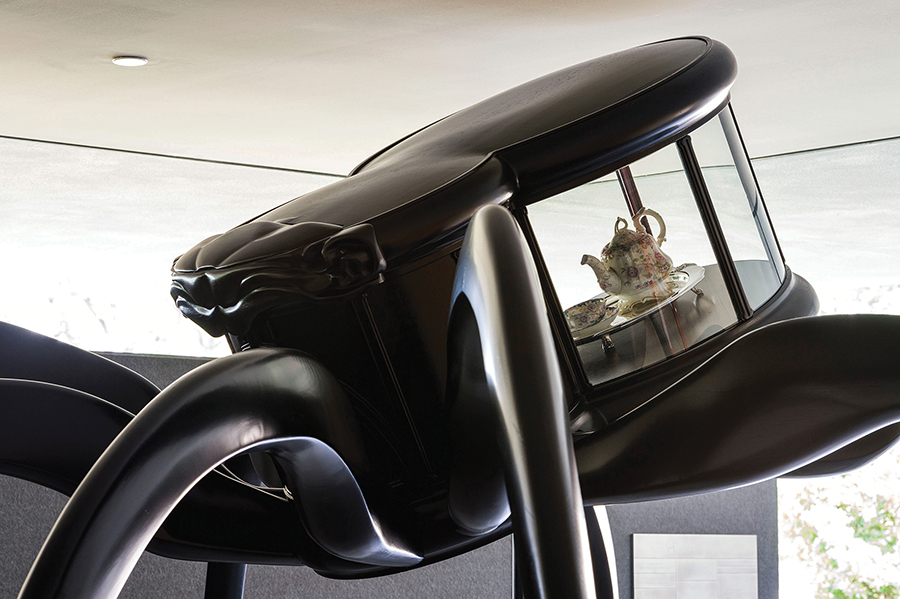
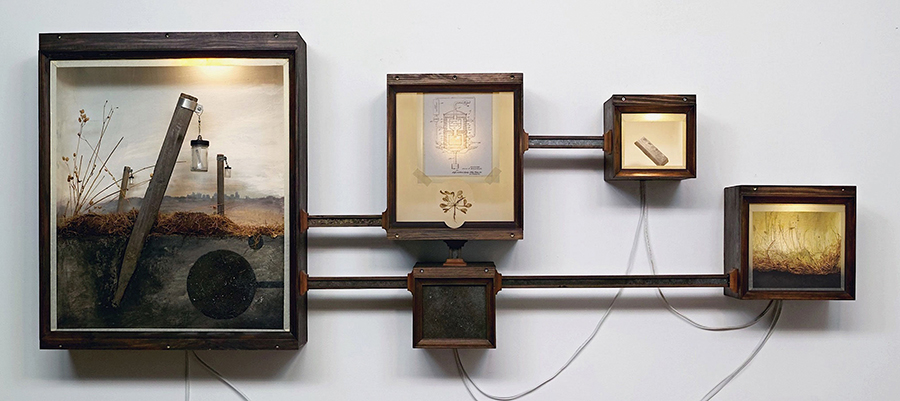
Cabinet of Craving, 2012

Remote as he is, much of Chin’s work is done in collaboration with others, near and far. His 60-foot-tall animatronic sculpture Wake, which resembles both a shipwreck and a whale skeleton, was created with University of North Carolina Asheville students and was installed in Asheville’s South Slope after forming the focal point of a larger installation in Manhattan’s Times Square. There it was accompanied by Unmoored, a mixed-reality mobile app he designed with Microsoft that depicted the square as if it were 26 feet under water, submerged by rising sea levels. It was one of several installations in a New York City-wide survey of Chin’s works in 2018. 

The creative expression of scientific information and the use of technology to inspire empathy is a Chin hallmark. One ongoing project uses plants to remediate toxic metals from the soil; a Mint Museum installation used oceanographic data to create “cinematic portraits” of the Atlantic and Pacific Oceans; and a viral, community-based work circulates hand-drawn hundred dollar bills to draw attention to lead contamination in soil, water and housing. “You could say that I’m involved with the process of bridging science and community,” he says. 

Revival Field (Diorama), 2019, mixed media, 40 x 66 x 8 in

Community in the traditional sense seems far removed from his remote corner of the world, but Chin’s dogged social conscience, regular travel, wide network and the connected reality of 21st-century life keep him plugged in. He’s turned the stately 1931 stone mansion at the center of his compound into a rambling archive and workshop for his many artistic pursuits. The mansion was originally built as a library and community center for the creation and distribution of local crafts. It became part of a regional study on poverty and was visited in 1934 by Eleanor Roosevelt; it also served as a school and was used as a birthing hospital. The place had fallen into disuse and disrepair when Chin acquired it in the late 1990s as an inexpensive place to store his work. A few years later, he left New York, where he had lived for many years, and moved here himself — not into the mansion, but into the relatively modest house a few feet away, one originally built for the hospital’s chief doctor. 

Etching Revival Ramp, 1996

Chin says he was drawn to this part of the country not just for space and the chance to live deeply within the natural world, but also by the region’s history of racial injustice and his own lifelong commitment to fighting it. The American-born child of Chinese immigrant parents, Chin grew up in Houston in the 1950s, worked at his parents’ grocery store in the city’s predominantly African-American Fifth Ward, and became aware of and thoughtful about issues surrounding race from an early age. 

“To be engaged in the world,” he says, “it’s OK to be in places where the engagement is very real and uncomfortable.” Lately, that engagement transcends geography. “It’s an important time,” Chin says. “We’re at this bridge. It’s about consolidating a commitment to actually begin again, listen more and reorient actions, and respond.” The role of an artist, he says, is to “excavate” the questions such issues provoke, provide a starting point and draw collective attention. Still, Chin points out that from his perspective, the “job description of artist” is constantly evolving: “People think it’s kind of funny when I say that I’m still trying to be one, to be an artist. But I mean it, actually.”  OH

This is an excerpt from Art of the State: Celebrating the Art of North Carolina, published by UNC Press.

Wandering Billy

Wandering Billy

As Seen on TV

Greensboro native Shannon Cochran returns from screen to stage

By Billy Ingram

“Many roads lead to Rome, it doesn’t matter which one you take, as long as you mean to get there and you keep walking.”      — Author Unknown

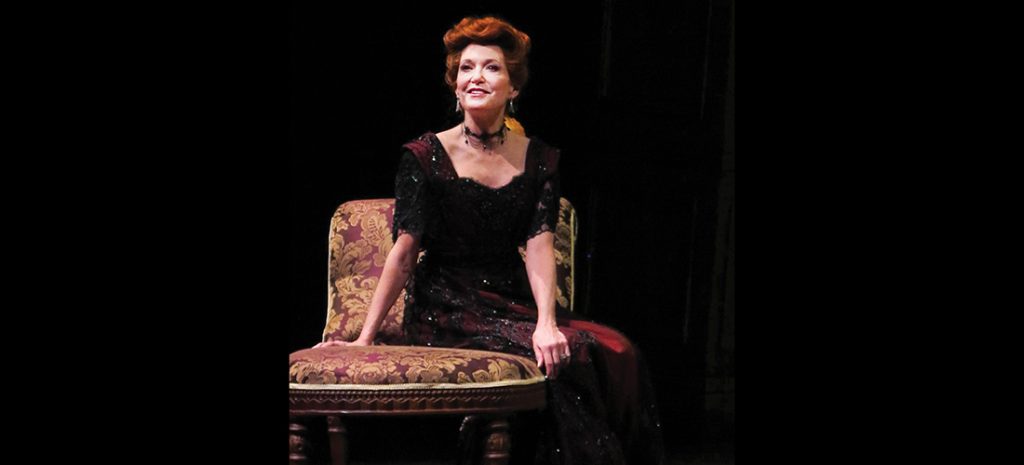
Recently, I caught up with a former Page High School classmate, Shannon Cochran, who has appeared on an impressive number of the comedy and drama series you’ve likely watched over the last 30 years: NCIS, Fringe, Grey’s Anatomy, Desperate Housewives, Law & Order, Modern Family . . . the list goes on and on. She emasculated George Costanza (“What’s wrong with you?!?”) in the seminal Seinfeld episode, “The Parking Space.” On the big screen, she was Senator Tal’aura in Star Trek: Nemesis; and best known, perhaps, for invoking nightmares as Anna Morgan’s sinister spirit in the horror classic, The Ring.

However, theater is Shannon’s true calling, primarily but not exclusively in Los Angeles and Chicago. In fact, she has been nominated no less than a dozen times for the Windy City’s prestigious Joseph Jefferson Equity Award for acting excellence, winning twice. This talented Greensboro gal has also brought home Obie and Theatre World Awards for a role she originated in the psycho-thriller, Bug, at London’s esteemed Gate Theatre.

Shannon made her original TV debut on my weekly, summer of ’75 Public Access comedy half-hour comedy show that boasted a budget of 23.5 cents. Can I spot talent or what?

Shannon contracted the acting virus — no vaccine anticipated — at Page in Louis Hrabovsky and Frank Holder’s whimsical (I can say it  ’cause I saw it) 1975 production of West Side Story. “I was Anita,” Shannon recalls of her transcendent performance. “Funnily enough, for a skinny, 5-foot-10 Irish girl, I played Anita four times in my career before it became completely inappropriate for me to play a Puerto Rican.” Page’s music teacher, Sam Doyle, was the show’s choral director. “He was a huge influence on me,” Shannon recalls. “Fortunately I’ve been able to tell him that.”

As a teenager, this statuesque ingenue blitzed the stage in productions mounted by Youth Theater, and Barbara Britton and Carol Lindsay’s Livestock Players Musical Theatre, which was situated during the summer in a sprawling cattle barn on Burlington Road where, perhaps hours earlier, the spotlight shone more on cud than scenery chewers. “I did that for several years in high school,” Shannon says. “Those people introduced me to theater and were my first teachers.”

After a stint at Wake Forest University, then graduating Summa Cum Laude from the Cincinnati Conservatory of Music, Shannon barnstormed the boards up and down the East Coast. “When the rights for A Chorus Line were released nationally, I came to Chicago to audition,” she says. At age 24, she landed that role, and then another immediately after. “I just fell in love with Chicago. Sometimes you land in a city and you know it’s the right place to be. I started working and never stopped.”

In the late-1980s, she began making three-month-long excursions into Los Angeles for pilot season before returning to the Windy City. She did that for about five years, then, as demand for TV spots increased, moved to Los Angeles around 1995.

Distinct differences exist performing for the stage as opposed to television and movies, where you arrive on set, character established. “I love the rehearsal period where you’re stumbling around, trying to figure things out,” says Shannon. Also missing for her is that visceral audience reaction theater affords. “In TV and film there’s lots of sitting around and waiting. At times it just seems more technical than anything else, but the money is obscene compared to what you make onstage.”

In Los Angeles, an actor can endlessly guest-star on TV shows, never get typecast, make piles of money, and still be available for theater gigs. “That’s kind of what happened,” Shannon says. “I thought, ‘Oh my gosh, this is the greatest thing.’ I did probably 50 or 60 commercials in my 20s and 30s.”

In The Ring, no one stroked a mane more menacingly than Shannon, depicting a malevolent matriarch who comforts a vulnerable child by bagging her head before chucking her into the well. “I had a great, great time because I got to wear waist-length hair extensions for a month,” she says. “It was thicker than a horse’s tail. People stopped and stared at me wherever I went.”

On television, you might recognize her as Pam’s raven-haired mom on The Office. “I got so much feedback from that,” Shannon tells me. “They decided to do another storyline with Pam’s mom, but I was on the road so Linda Purl replaced me.”

Shannon was particularly impressed working alongside Patrick Stewart, who directed the Star Trek: Next Generation episode for which she was cast. On day one, “He gathered all the actors together to talk about the scenes, like they were [individual] acting scenes. And I thought, ‘Somebody pinch me!’” That’s highly unusual on a television production, but, “People that come from the theater have a kind of humility because they did the same thing we all did, going into a barn and putting on shows.”

She made a guest appearance at her first Star Trek convention last summer: “I got to be a Klingon on Star Trek: Deep Space Nine. I’ve never felt so powerful in my life. And I met my husband on the set.” She was seen on two episodes of that series, but “had never been to a convention. The people were so great and they also wanted a picture from The Office or from Seinfeld, my first Hollywood job.”

Portraying Barbara Fordham in the touring company of Tracy Letts’ Tony Award-winning melodrama, August: Osage County, led to brawling under the lights with Oscar-winner Estelle Parsons. “She’s known for being irascible,” Shannon confesses of her choleric costar. “A great actress who did a very, very believable job, but she was not pleasant to tour with and not nice to most of the cast. So we all kind of rallied around each other. A wonderful show to be a part of but I cannot bring myself to compliment Estelle Parsons’ personality.”

Shannon’s dream role? “The one I’m playing now, which I also got to play seven years ago, Regina in The Little Foxes, one of the great roles of the theater. It’s a mature actress’s dream. A Little Night Music is probably my favorite musical, but Regina is my favorite role.” This may surprise you but the theater isn’t all curtain calls and stage door Johnnies. The night before we spoke, Shannon broke a finger onstage, requiring emergency surgery.

Her undoubtedly proud mother resides in Greensboro. While she visits every two or three months, Shannon Cochran is not likely to return to the Gate City to live. “I’m sure I could fall back in love with Greensboro. It’s just that I’ve gotten used to bigger city environments. San Francisco [where for almost 2 years she demolished audiences in Harry Potter and The Cursed Child], Los Angeles, Chicago, I’ll probably always live adjacent to one of those cities.”

So, no more shows between cattle auctions?  OH

Billy Ingram’s new book about Greensboro, EYE on GSO, is available wherever books are sold or pulped. Shannon Cochran’s hauntingly beautiful rendition of “Send in the Clowns” from a Writer’s Theatre performance of A Little Night Music can be found on YouTube.

O.Henry Essay Contest Winners

O.Henry Essay Contest Winners

The Year That Changed Everything

Last fall, we asked our readers to submit essays under 1,000 words that captured a year that changed the course of their lives. Our inbox was pleasantly stuffed with heartfelt stories from our community. There were stories of loss and grief, war, and devastating diagnoses. And there were tales of triumphing over cancer, adopting new pets, holding the winning tickets and attending first concerts — featuring no less than the Beatles!

Every single entry made us feel something. We laughed, we grieved, we cried right along with our essayists. And then we cried again when we had to choose just three from such a stellar collection.

To all who entered, thank you. We do not take for granted that you shared your stories bravely — and so eloquently — with us. And to all who didn’t enter, we’ll be looking forward to reading your story next time. And finally, to our winners, congratulations!    

O.Henry editorial team


First Place

Now What Are You Going to Do With Your Hands?

By McCabe Coolidge

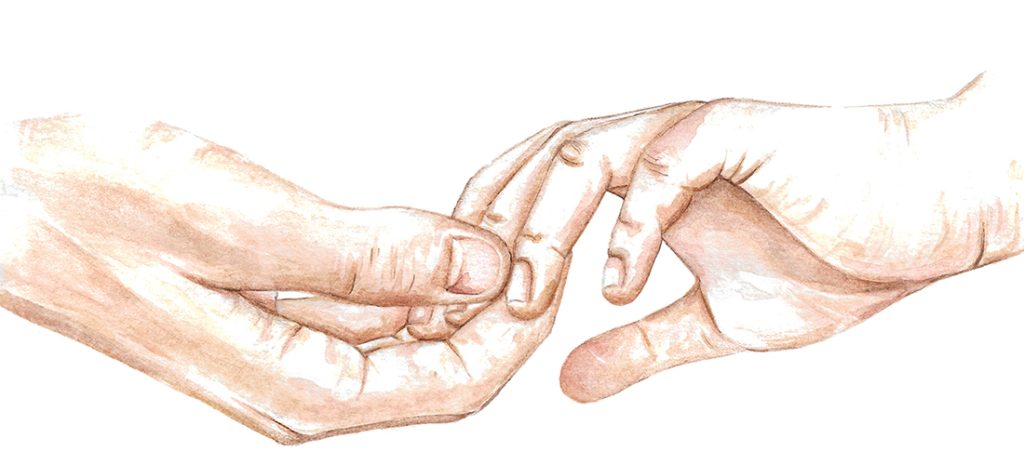
Our hands cupped around glasses of red wine, a candle flickers, almost in cadence with our short spurts of words. We sit, bereft, until the pause becomes pregnant with another offering. My friend, Susan, looks at me, right above the candle flame and says, “Now, what are you going to do with your hands?”

I glance at my wife, Cathy, still focused on her glass of wine, empty? Needs filling, maybe she isn’t listening. She drifts away. Often.

I stare at Susan, a frown on my face, waiting to hear more words. “What ever does she mean?” I wonder. “Hands?”

Through the evening we have been listening to Leonard Cohen. Especially “Suzanne,” these long, lonely days I am in free fall, “Suzanne takes you down.” I get it. In that moment, the three of us begin weeping. That question going way below the surface of our lives, spiraling down.

Robin is seated on the side of her hospital bed. Her left arm has an IV attached to it; her feet are stretched out. A man sitting on a stool is leaning down and painting her toenails. Robin giggles. “Wait a minute,” I say to myself. “It’s Charlie Schafer, her pediatrician.” His hands gently, slowly paint each toenail. It’s October 27, Robin’s birthday. She has been admitted to UNC Hospital and we have just been told that tomorrow we should take Robin home. “Nothing more we can do for her here; take her home and just love her,” the attending physician speaks low, glancing to his right, then left, like he wants to be somewhere else.

We clung to an elusive hope. Robin was diagnosed with cystic fibrosis when she was 2. We were taught to do a light, steady “tapping” — three and often four times a day — percussive-like, with cupped hands on each lobe of her lungs. We named it, “time for tat.”

We were told this would keep her alive. Longer. The goal of “tat” was to loosen up the phlegm in her lungs so she would cough and cough, staving off pneumonia. Coughing hurt Robin and she resisted and tried to hide a cough. A double bind for us. Tapping on the lobes of her lungs hurt her and yet, to keep her alive, we had to hurt her.

On Christmas Day we stopped tat. Her mother and I looked at each other and we stood there, quiet, allowing Robin to sleep in.

In the midst of the celebration of the United States Bicentennial Year early in the morning of Martin Luther King Day, Robin woke us up at 5 a.m. I picked her up and checked her fingers, blue. Her breathing slow, faint. I went to her mother, “Better come into Robin’s room.” We held her, smothered her with kisses and prayed that her journey home would be without pain.


Susan takes another sip of her wine and asks again: “So what are you going to do with your hands?” She pauses, holds the wine glass in both hands: “I have signed up for a pottery class, a week after Easter. At Meredith. 68 p.m., Thursdays. I want you to come with me.”

In my mind I am reviewing my life: “B.A. in economics. M.B.A. in marketing, an advanced degree in theology and she wants me to sign up for an art class!”

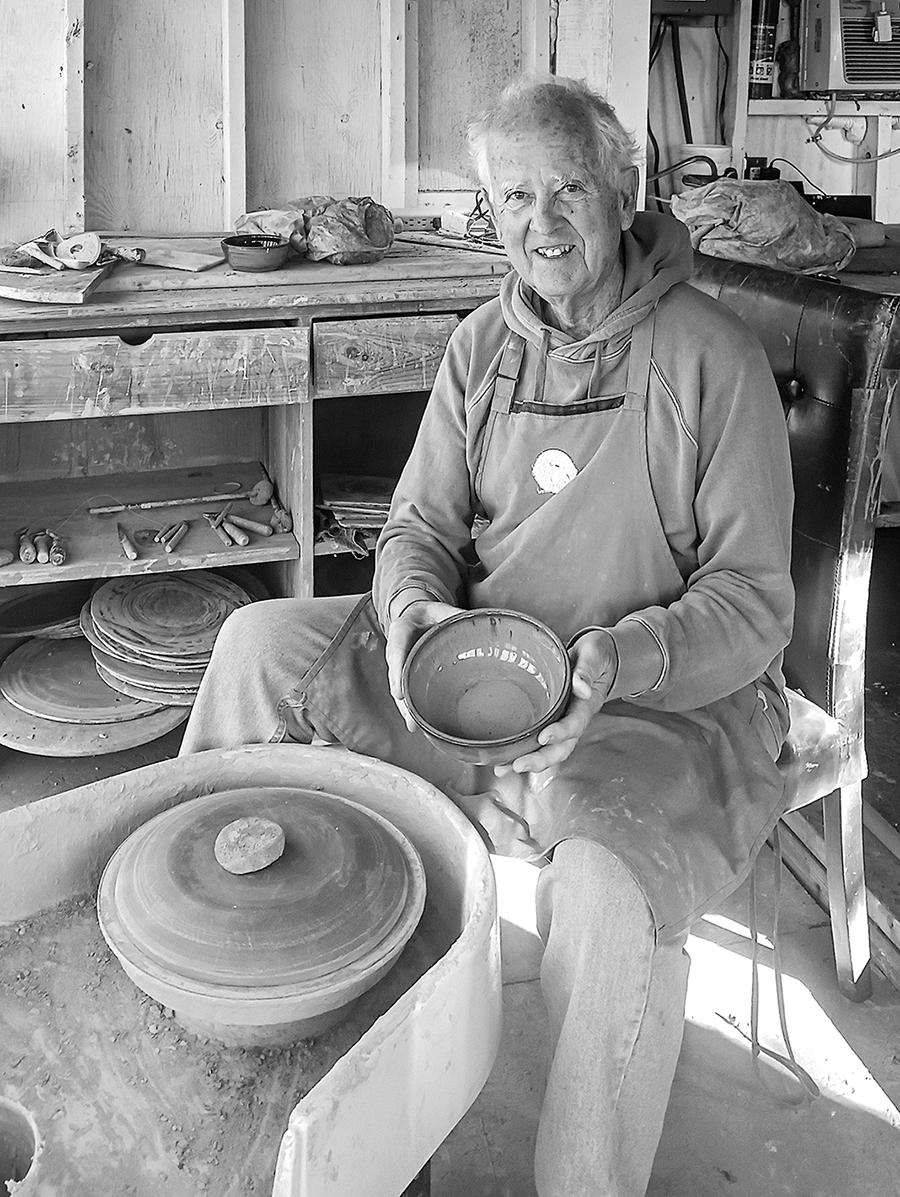
Thursday night. There is a porch. Four kilns. Susan and I walk into the white cottage. A shaggy guy, tall and bulky with a winsome smile on his face speaks: “Welcome, I’m John. John Givens. This is a beginning pottery class. Take a seat at the wheel, any wheel.”

What do you do when your child dies in your arms? When you have been helpless in stopping the pain? Emptied out of any hope and meaning? An avid reader of poetry, Mary Oliver continues to ask of me, “What are you going to do with your one wild and precious life?”

Sitting at that wheel, wedging that clay. Mesmerized by the turning of the wheel, the mystery of form emerging from a chunk of earth. When sorrow overwhelmed and sadness took me way down, Thursday nights arrived with a little Stan Getz and his saxophone in the background. I would tie my apron. Sit down, cup my hands, and the journey into the unknown would begin.


What was I going to do with my one wild and precious life, when I couldn’t keep alive a life, so precious, that was given to me? Wander. Pay attention to longings and yearnings. So I did. Bought an abandoned farm on a river, down a long gravel road, an hour from Chapel Hill.

Many years later, I took dance classes at Harvard, separated from my wife, moved onto a sailboat in San Francisco Bay. Started up a big rambling home for HIV folks in Asheville with my beloved. Still through all this grief and searching, I kept my hands in clay.

It’s the first weekend in December and I am sitting on a stool in the parking lot of High Point Library. It’s a craft fair for those wanting handmade art for Christmas presents. Although a bit nippy, I am wedging clay, throwing it down on the wheel to begin centering and pulling up. A family of five is watching me, the two youngest children held by the mother. The older one and the father are intent on the movement of my palm and fingers . . . a cup slowly emerges.

The dad looks at me as I take a short break to breathe a little more deeply and to inspect how this pot is coming along. He asks, “I love watching your hands and what you can do on that wheel, how did you get into pottery? What got you going?”  OH

McCabe Coolidge wants to live fully with these passions: surrounded by love from his sweetheart and three daughters; and with his hands in clay, pen on paper, paddle in water, feet celebrating Tracy Chapman singing “Give Me One Reason” and Leonard Cohen singing “Suzanne.”


Second Place

A Friendship That Changed Everything

By Sarah Ross Thompson

It all started in 1995 with an Alanis Morissette cassette tape and a few outdated dELiA*s catalogs. We were two seventh grade girls in a small, Bible Belt town dreaming of becoming writers and finding cute boys who really “understood” us. The year that changed everything was the year I found a true friend.

Not to harp on a truth that any feeling human already knows, but middle school is vicious. While I was figuring out what parts of the world felt authentic to me, I also experienced rejection for many of those very same things, and, in the beginning, I found it to be a lonely time.

So, I don’t remember exactly how it happened, but I think it involved a homeroom class turned free-for-all where there were too many kids and not enough teachers to maintain any sort of order.  A cassette tape was passed from her to me, and, looking back, it was quite a generous offering because I did not provide one thing in return. I took it home for a week and memorized every single word. In fact, I’m pretty sure I damaged the tape by rewinding it so many times to get the lyrics just right. Afterwards, I felt changed. Enlightened. “Jagged Little Pill:” my first experience with music as a religious experience. All made possible by a girl from homeroom.

The simple fact that we both loved the album made me feel as if she and I were kindred spirits, and, to this day I still think music is one of the best ways to find your people. But, mainly, that she had shared one of her prized possessions with me so freely and easily made me know that she was kind. And it truly meant the world. Her name was Shenell, by the way.

After that we were inseparable. We browsed through dELiA*s catalogs, of course never buying anything, and she didn’t pass judgment on my pre-internet, mostly failed attempts at ’90s grunge. We compared notes on boys. Often. To this day, the middle schooler that lives on in me prevents the naming of our two main crushes here, but they likely know who they are.

We found that we shared a love for writing. In fact, we thought of ourselves, not so modestly, as “up-and-coming” literary voices. We kept a shared journal that got passed back and forth between classes, and we made up new words that we used in day-to-day conversation (“Manistified” was one we were especially proud of). We discussed books that would shape us for the rest of our lives. We cried when Asher escaped with baby Gabe in The Giver and stood wide-eyed and heartbroken on our class trip to the Holocaust museum after reading The Diary of Anne Frank. We wrote poems, mastered origami-style note folding and scripted very detailed messages in each other’s yearbooks in which we referred to each other as “Soul Sisters.”

And while the brutal, confusing and miserable parts of middle school still happened, I was not alone. At such a young age, I experienced the pure joy of being known, and it changed everything.

Almost 30 years have passed since that seventh grade year, and we have inevitably grown apart and back together and apart again. While too much time passes, sometimes years, between visits, I’m happy to say that my first true friend remains a part of my life.  Shenell was by my side when I married a boy who actually does understand me, and a few years later we both cried when her beautiful, literary daughter read a book to my baby boy. And while I would never dream of calling myself a writer, I knew that one of my first fumbling attempts at putting my heart on paper had to be a tribute to her.  OH

Sarah Ross Thompson lives in Greensboro with her husband, John, and two children, Owen and Ellie. A psychologist by training, she finds getting lost in the woods and writing short stories to be two of the greatest therapies. 


Third Place

You Know I Feel Alright

By Christine Garton

Fifth grade was shaping up to be a good year for me in Elkin, my cozy North Carolina foothills hometown. I was earning an impressive array of Girl Scout merit badges and had learned to ride a unicycle after school at the YMCA. Our Methodist youth handbell choir had mastered “Fairest Lord Jesus,” set to debut at Easter service. Best of all, I was president of my Beatles fan club.

We preteens expended enormous amounts of energy dancing to Beatles records, swooning over magazine photos and collecting Beatles bubblegum cards. Seeing the movie A Hard Day’s Night, elevated our Beatlemania to a new level, and my handheld transistor radio accompanied me everywhere. On rotation, club members phoned the local radio station before leaving for school to request that the DJ play a specific Beatles’ tune precisely at 10:10 a.m. during morning recess. I’d flick the radio on, and, if the DJ complied, our day was made.

When my parents gave my sisters and me the news in early spring of 1965, I cried: We were moving because Daddy had taken a new job in Chicago. My two sisters were young enough that they didn’t fully grasp the ramifications of this turn of events, but, for me, it was earth-shattering. Elkin was all I had known since the age of 4, and I would essentially be leaving behind a lifetime.
Once school let out for the summer, we made preparations to leave 188 Edgewood Drive. I packed up my books, dolls, record player and Beatles collection, then made the heartbreaking drive with Daddy to take my beloved beagle, Hazel, to a farm out in the country. After the movers finished and we bade the neighbors farewell, the five of us crammed into our little black Peugeot and headed north.

Our new home was a townhouse in a suburban neighborhood of townhouses whose residents were almost exclusively young marrieds with little ones. As soon as they saw me, the Swardenskis next door lit up as they considered the prospect of my babysitting their infant, toddler and preschooler. I experienced a similar reception from other parents in adjacent buildings, and thus began a miserable summer in the company of small children.

Most mornings were spent entertaining the aforementioned trio of siblings in their wading pool, where they splashed in water that, by lunchtime, had turned oddly yellowish. Afternoons, I took the 3-year-old across the way to the park so her mother could sunbathe, reclining behind sunglasses while balancing a large tumbler of ice water on the arm of her lounger – or I assumed it was ice water until I noticed the olives at the bottom of the glass. Evenings were first come, first served for whichever desperate couple snagged me to play ringmaster to their hyperactive youngsters while they celebrated a night on the town.

At 25 cents an hour, I was flush with cash and made weekly bicycle trips to town to spend my earnings on Teen World magazines and an ever-growing stack of Beatles 45s. My parents, to their credit, were determined to take advantage of all Chicago had to offer, so we visited museums, went to the Brookfield Zoo, and swam in Lake Michigan. Our family joined a church, but Sunday school classes were a bust in terms of making friends. My clothes were all wrong, and my Southern accent provided a convenient target for endless snide jokes.

I moped in my bedroom nights when I wasn’t babysitting, penning sad letters to faraway friends and listening to my radio in hopes I would fall asleep as Paul McCartney crooned a tender ballad into my ear. Dozing off to WLS Chicago late one night, I was jolted awake by the DJ’s announcement that the Beatles’ upcoming U.S. concert tour would bring them to the Windy City in August. The next morning, I flew downstairs to breakfast, armed with this new revelation. I begged. I pleaded. My parents said they’d think about it. Then Daddy left for work. Waiting all day for him to come home was excruciating, but, yes, he would take me to the concert on one condition — no screaming.

Sears, Roebuck and Company sold the tickets, which were purchased for $2.50 each and dated 3 p.m., August 20, at Chicago White Sox Comiskey Park. I counted the days until the afternoon of the performance arrived at last, and we entered the stadium along with 25,000 other fans to take our seats high above the field, the atmosphere crackling with excitement. The opening act, Cannibal and the Headhunters, was received politely, but when a stream of blue-shirted policemen emerged from the dugouts and encircled the stands, the crowd exploded.

Paul, then Ringo, George, and finally John, in his black newsboy cap, strode across the infield to the raised stage constructed over second base. Amidst deafening screams, the Beatles kicked off with a rousing “Twist and Shout.” I kept my end of the bargain as promised, though it was hard to hold back. Each successive number from the playlist stoked the crowd’s delirium to the point one could barely hear the music. Daddy tried unsuccessfully to shush the teenagers shrieking all around us, but I was transfixed. It was a dream I did not want to wake up from, and the cloud of misery that had been my summer floated away.

On stage there was a pause, a conversation among the Liverpool lads, heads together as though they were making a decision. The crowd quieted. George nodded to John and Paul, who resumed their positions, and then . . . twaaang . . . the unmistakable opening chord of “A Hard Day’s Night” split the air, and 25,000 fans went wild. Climbing upon my seat to see past the flailing bodies in front of me, I sang along with all my heart: “You know I feel alright . . . You know I feel alright . . .”

And in the magic of that moment, I did.  OH

Christine Garton is a closet humorist who resides in Greensboro with her infinitely patient husband, Ken. She currently works as a staff writer for Advancement Communications at UNCG.


Click Here to Read the Semifinalist Stories

Home Grown

Home Grown

Fringe Movement

Bitchin’ kitsch-in

By Cynthia Adams

There it was in the venerable Architectural Digest. Shag carpet everywhere. The “rise of kitschy themed vacation rentals.”

“Kitschy” and “themed” extolled in AD, arguably the most revered design publication.

Before I could get my eyeballs back down from the top of my head, there in the magazine’s online edition unspooled images of pink, shaggy, fur-covered floors, walls and ceilings. Boudoirs with round beds — as in Elvis’ Vegas era, Pocono-honeymoon-style round beds. And more vinyl, glitz, brass, acrylic, glass, unidentifiable materials, and Elvis-gold and Vegas neon colors than have been on view since Plan 9 from Outer Space hit the movie screen and pre-rib removal Cher was on TV.

Forget Granny Chic, Granny Core‚ or Millennial Chic. Forget Coastal Grandma Chic. Forget anything you’ve read about Minimalism, Houston style, New York style, West Coast cool. Forget it and gird your design loins.

Something else, something very strange, is afoot.

Something tacky this way comes.

And the most unsettling part? When Architectural Digest embraces tacky, readers are expected to simply submit as their discomfort scale ratchets up. How bad must things be in modern life for us to embrace kitsch taken to extreme lengths?

The taste-makers at the vaunted Architectural Digest are not alone in claiming that kitschy décor, kitschy homes and kitschy boutique hotels are rare and hot-hot-hot.

Among the renters of such hip-to-kitsch grandparents’ abodes was even — wait for it — a fire department.

I sort of get it, in that case, anyway. Wouldn’t such an interior kitsch so bad that design mavens wave their magic design wands in order to position it as good, just cry out for combustion? Hot-hot-hot so incendiary as to burn-burn-burn? That would seem to be a pyrrhic victory. 

But it seems there is no making kitsch, nor any extreme, go away for good. Bad taste exists because how else might we know how to define the antithesis?   

According to the BBC, kitsch was supposedly killed by the Modern Art movement. But, no. (Spoiler: Andy Warhol has a big role in the offing of really bad taste by conflating it with hipster taste.) Here’s what the BBC says about it:

“This is one reason for the emergence of a wholly new artistic enterprise, which I call ‘pre-emptive kitsch.’ Modernist severity is both difficult and unpopular, so artists began not to shun kitsch but to embrace it, in the manner of Andy Warhol, Allen Jones and Jeff Koons.”

Here, friends, comes the best part. Pre-emptive kitsch as defined by the BBC themselves:

“The worst thing is to be unwittingly guilty of producing kitsch. Far better to produce kitsch deliberately, for then it is not kitsch at all but a kind of sophisticated parody. Pre-emptive kitsch sets quotation marks around actual kitsch, and hopes thereby to save its artistic credentials.”

The BBC editorialist has examples: “Take a porcelain statue of Michael Jackson cuddling his pet chimpanzee Bubbles, add cheesy colours and a layer of varnish.” Certainly a strong visual. They continue: “Set the figures up in the posture of a Madonna and child, endow them with soppy expressions as though challenging the spectator to vomit, and the result is such kitsch that it cannot possibly be kitsch. Jeff Koons must mean something else, we think, something deep and serious that we have missed. Perhaps this work of art is really a comment on kitsch, so that by being explicitly kitsch it becomes meta-kitsch, so to speak.”

Meta-kitsch lives. Deliberately, some say, deliciously (or deliriously) kitsch redux, as in, “the 1980s were far more than just the ’50’s redux,” a direct quote from an online dictionary.

Beat them to the punch, in other words. Be in on the joke.

And then we have, thanks to design writer Kelsey Lawrence, an exposition on the “rise of kitschy, themed vacation rentals,” which includes motel rooms, Airbnbs and even travel trailers. (Especially Air Stream trailers.)

It’s nostalgia-tinged, Lawrence says. Those Pepto-Bismol, Strawberry-Shortcake-doll pink walls and carpeting, crushed velvet as the fabric of the moment, and the must have on repeat: once again, Playboy mansion style round, velvet-covered beds.

Bow-kitsch-a-bow-bow.

Lawrence blames the trend on the hardship of the times; the barrage of bad news, which apparently can only be shut out by focusing upon kitsch.

So, if you stare at hardcore kitsch long enough, you can blot out the images of fellow Americans demonstrating for their civil rights?

Pre-emptive, meta-kitsch, if taken to its logical conclusion, would extend to all matters of taste. For example, if you wore Tammy Faye cry-me-a-river makeup to the office on Mondays, your Bobbie Brown-tastefully-neutral face would be far more appreciated — perhaps even celebrated! — on Tuesday.

Or if you ditched your Talbot’s jacket for a Kimmy Schmidt getup for the PTA meeting, everyone would applaud your knowing irony. A hipster, in-on-the-joke? 

Like the green Jell-O with marshmallow-and-grated-carrot-salad brought to the elegant dinner party, temerity wobbling on a platter, the laugh wouldn’t be on you . . . it would be with you.

After the applause dies, enter FOMO. 

What exactly, one worries privately, inside a tasteful home with pale lacquered ceilings, industrial-chic doors, upcycled floors and Jeff Koons-inspired art, what deep and serious thing, did I miss out on?  OH

Cynthia Adams is a contributing editor to O.Henry.

A Lofty Life

A Lofty Life

What’s black and white and artistic all over? The barn-inspired home of Janine Wagers and Ty Pruitt

By Maria Johnson Photographs by Amy Freeman

She drove the building contractor and subcontractors crazy, she admits.

But Janine Wagers knew what she wanted her and her husband’s new home to look like: a barn.

A gussied up barn, to be sure. Stylish. On point. Artistic. But still, a barn.

“A modern barn,” Wagers says.

Design-wise, she was confident she could mold the details, inside and out, to achieve the desired effect. After all, she’s the director of visual merchandising for High Point-based Universal Furniture, a stalwart of the contemporary furniture world.

A 38-year veteran of the industry, Wagers supervises all-things-eyeball in the company’s massive local showroom, open to trade customers only, and on other carefully curated sets around the country.

Comfy in a barrel-back chair covered with plush lavender, she pauses our interview to take a call about an upcoming show in the Hollywood Hills to promote a new line of furniture bearing the name of Australian model Miranda Kerr. The line is sold exclusively through retailer One Kings Lane, a collaborator in the show.

She hangs up and apologizes for the four cats and three dogs that rush inside through a door that she has left open. There’s a brisk breeze outside, and, well, why not invite it in, too? Flies? No worries. She uses a leaf blower to knock their bodies off the upper window sills, should they not find the exits.

“Welcome to the funny farm!” she announces.

The farm part is true. The home of Wagers and her husband, Ty Pruitt — who retired from the veneer business last year —  occupies land that belonged to a working farm in northeast Davidson County in the not too distant past.


A horse barn stood on the graveled flat that doubles as the home’s front yard and parking area. The old barn had collapsed by the time the couple bought their 50-acre parcel in 2019. They paid someone to raze the structure before the 2021 construction of their new digs, a stylized homage to its vanished cousin.

Rooted in a simple rectangular footprint and flanked by lean-to porches, the three-bedroom, 3,300-square-foot home stands like a glowing beacon — with silver roof and milky board-and-batten siding —  on a grassy hill. From this crest, Wagers and Pruitt look out, through 55 windows with nary a blind or drape, over the swells and troughs of their land. In most directions, horizon meets tree line

“It’s wonderful waking up in the morning. You can see the sun coming up. It’s very freeing,” says Wagers, who sits in the great room, which might be better described as a great big ol’ room.

It is vast, a white-walled space that soars 24 feet, past dangling geometric lighting fixtures, to the vaulted ceiling above. The expansive room is anchored to the Earth by thoughtful tethers, most notably a black, slate chimney chase that stretches all the way up one wall, gleaming like a monolithic monument.

Contractors worried about the weight of the slate.

You’ll figure it out, Wagers said.

They did.

The result: a visual wow that slacks the jaw and bends a smile in appreciation of creative nerve.


You could think of the home as a series of abstract paintings. Most of the canvases — walls in this case — are left blank, white. The frames, in the form of black-mullioned windows and other hard lines, are inky. The energy comes from splashes of color, in this case furniture and accessories, and from Wagers herself.

A fusion of down-home and up-to-date, she’s dressed in strategically ripped, cuffed jeans, a loose gray pullover and clear rectangular earrings. Her naturally gray hair, cut into a sharp A-line bob, still contains more coal than ash. Her eyes stand out like blue, steel rivets.

When she pours her honeyed Georgia accent (born in Dalton, schooled in Athens, go ’Dawgs) over her observations, you can’t help but laugh.

Example: The three-pronged lighting fixtures hanging overhead are called “talons” in the catalog.

“I call ’em chicken feet,” she muses. “But ‘talons’ is much more refined.”

She is surrounded by the trappings of her professional life.

Two curved, teal-green sofas face each other like parentheses in the center of the room. They clasp a shaggy, splashy rug and a glass-topped coffee table with a truss-like base. The end tables are amoeba-shaped pillars. All of the pieces, save the rug, are by Universal.

It makes sense. Wagers has spent the bulk of her career — a 10-year stint in the ’80s and ’90s and the current 15-year run — with the outfit.

But her home is no company showroom.

Ironically and honestly, Wagers pooh-poohs interiors that are lifted straight from showroom floors, especially if the cutting-and-pasting happens all at once.

Instead, she favors the picker approach. Pick the pieces you like. Fold them into what you have. Take your time. Don’t be afraid to veer off the designer-approved path into yard sales, flea markets, family attics, antique shops and consignment stores. See what calls to you.

Gradually, bring the pieces into concert. They should tell a story. Your story.

She has painted the couple’s own story with care and a keen eye.

“Want a tour?” she asks.

First stop, kitchen and dining area, which is really a part of the great big ol’ room, though the kitchen is technically tucked under a second-story loft that serves as the couple’s home office with side-by-side desks.

The overhang is underlined by a cosmetic beam salvaged from the barn that once sat outside.

Directly below, the metal-topped family table is headed by two office chairs, businesslike in gray steel and dark green Naugahyde, that were plucked from a Salvation Army store. As looser counterpoints, modular plastic chairs from Target line the sides. Wagers has her eyes peeled for replacement chairs. Ditto a new tabletop.

“I want to put a brass top on it,” she says.

She’s happier with the kitchen, where waterfall granite countertops fold over the island and base cabinets. The black wall-mounted cabinets extend to the 10-foot ceiling. She insisted.

The cabinets installers pushed back: “What will you do with the top cabinets?”

Wagers countered: “Store my once-a-year things. I have a folding ladder.”

She tilts her head back to eye the upper cupboards. Her grandmother’s stemware is up there, she assures. Word taken.

“The look is important,” she says of the cabinets.

Don’t confuse “the look” with perfection. Wagers not only tolerates imperfections, she insists on leaving the naturally occurring ones. She points to gouges in the sealed-but-unstained concrete floor. The contractor wanted to fill them with epoxy.

“I was like, ‘No! I like it messed up!’” she recalls.

The same goes for a section of the kitchen floor that had to be cut out to reach a clogged pipe. She taps the spot with the toe of a leopard print bootie. The patched floor is going to be a slightly different color, the concrete people warned.

Fine, she said.


“I like defects,” she explains. “I find it easier to live life with defects.”

Her heels peck the imperfect floor as the tour proceeds past a gigantic blackboard where she and her granddaughter like to doodle everyday hieroglyphics in white chalk.

She stops at the powder room, an exception to the rule of blanched backgrounds. The room is a visual sink hole, but in a good way, sucking the eye into a dramatic statement uttered with black peel-and-stick wallpaper, navy-hued subway tile, smoky floor tile and a counter hewn from a cedar tree that Wagers saved from road-widening near the couple’s former home in Sedgefield. Most of the tree’s wood went into Universal pieces. She nabbed a nub.

“You can have fun with a powder room,” she says.

Click-click-click to the primary bedroom.

Does she mean the master bedroom?

Nope, that term is out, she says. Think about it.

Used to changing with the times, Wagers absorbs the update and moves on. The couple’s bedroom is simple and airy. Ballast comes from wooden wardrobes on opposing walls. The cabinets came from the school where her parents taught in Dalton, Georgia.

Chipped, dinged and dated with black-marker graffiti on the shelves, Wager’s free-standing closet is home to T-shirts, socks and other dresser staples. For hanging clothes, she and Ty share a walk-in closet in the bathroom. They use the same flat-bottomed tub and glass-enclosed shower, too, but they “go” their separate ways with his-and-hers toilet rooms.

“This is my favorite room in the house because it’s all mine,” she says. “Don’t come in here. Don’t use it.”

She has personalized the room with a wall full of necklaces that hang from nickel drawer pulls screwed directly into the wall. Practical. Funky. Changeable. A vertical playground.

That sense of fun permeates the house. One hallway pops with a bank of orange basket-style gym lockers found in a junk store. Their son, Will, used the array in his room while growing up.

More mirth lurks in an upstairs TV room, where a jigsaw puzzle sprawls on a lemony Formica table ringed by vintage Bertoia-style wire chairs. On a nearby wall, Wagers assembled a collage of family memories.

A watercolor painting by Will.

A plaque recognizing Ty’s service as Wolf Tribal Chief at the High Point YMCA.

A postcard with a wry drawing of eggs dripping from a shower head, a memory of the sulfur-smelling water they encountered in Iceland.

Wagers tinkered with more than a dozen pieces, hanging and rearranging until she was satisfied.

“What was the worst that could happen?” she shrugs. “A few extra holes in the wall?”


She was more deliberate with a gallery of family photographs that plaster both sides of another hallway, an allée of DNA.

“That’s my son. That’s my step-daughter. That’s my dad and his sister. That’s Ty when he was a baby,” Wagers says, pointing as she goes.

To get the composition right, she measured the frames — all in tawny tones — and laid them out on a computer. Most of the pictures are rendered in black and white, an intentional stroke. The exhibit includes a non-photographic item: a note written in ink and torn from a small memo pad.

“Janine, I love you. Grandma.”

Wagers’ grandmother pressed the paper into her hand when Wagers visited her in assisted living. Wagers carried the note in her billfold for a long time before she flattened it and surrounded it with a sumptuous gold frame — a jot of personal history elevated to its rightful place in the emotional pantheon.

Wagers, soon to be 60, smiles at her grandmother’s shaky script. These days, she catches tiny changes in her own handwriting, a reminder that she must make hay while she can.

A modern barn is a good place for that.  OH